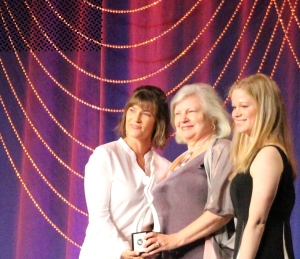
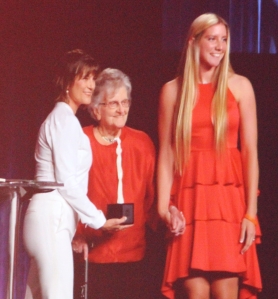
Holly Fish, chair of the Arkansas Women’s Hall of Fame board (left), presents Ruth Hawkins, executive director of A-State Heritage Sites (center), with the 2017 induction award. Also pictured is Shelby Worsham, a girl of distinction. Photo by Kimberely Blackburn
By Kimberely Blackburn
Delta Digital News Service
LITTLE ROCK – The Arkansas Women’s Hall of Fame inducted nine women and one convent into its 2017 class Thursday evening in the third-annual award ceremony held at the State Convention Hall.
Immediately preceding the event, the board of directors unveiled a permanent installation celebrating all the women inducted into the hall of fame. Located downstairs in the Convention Hall, the interactive installation shares the stories of these inspirational women and their accomplishments.
John Owens, president of the North Little Rock Chamber of Commerce, said although his organization involves itself in several community events, this is his favorite due to the impact these women have on Arkansas.
“These women have a positive impact on social change and make it easier for the next generation (to invoke change),” Owens said.
This year’s inductees include:
- Olivetan Benedictine Sisters, for ministry and medicine
- Maya Angelou, writer and activist
- June B. Freeman, advocate for the arts
- Ruth Hawkins, for honoring history and heritage
- Brinda J. Jackson, groundbreaking architect
- Bernice Jones, philanthropic leader
- Pat Lile, community champion
- Judge Elsijane Trimble Roy, legal trailblazer
- Dr. Joanna Seibert, healthcare pioneer
- Dorothy Stuck, force for equality
Still Making a Difference From the Past
Accepting the award on behalf Maya Angelou, Patricia McCraw said she finds honor in accepting any award for her friend.
Perhaps best known for her writing, Angelou found inspiration in Malcolm X and Martin Luther King Jr. and moved to Egypt to join the anti-apartheid activists. After returning the United States, Angelou joined the civil rights effort.
McGraw said when Angelou saw evil upon any person, she would try to help and Angelou strived to inspire others to love and respect all.
In 1993, Angelou achieved history by becoming the first woman and the first African-American to read a presidential inaugural poem.
McGraw said she composed a poem calling Angelou a “shero of the ages,” due to her desire for peace within the human race. Angelou herself composed a poem where she says, “We are more alike, my friends, than we are unalike.”
Bernice Jones and her husband Harvey committed themselves to contributing a large amount of their fortune to the betterment of Arkansas families. Founded in 1933 by Harvey, The Jones Truck Lines eventually turned into an $80 million-per-year business. After being unable to start a family, Jones and her husband began a philanthropic endeavor to better the state for other families.
Jones paid the salaries of Springdale’s teachers during The Great Depression and helped fix the public school facilities in order to better the education of the children. Although they created a charitable foundation in the 1950s, they chose to make most of their contributions anonymously. In 1995 the Jones Center for Families opened, offering educational opportunities as well as recreation for the community.
Ed Clifford, CEO of the Jones Center of Springdale, accepted the award in Jones’ honor and said her spirit lived on through her contributions, but also through the Jones Center.
Jones’ nephew, Jeff Curtis, also accepted the award in her honor. Curtis said Jones believed the three ways to be successful in were to “follow God, treat everyone the way you would like to be treated, and to follow your passion.”
Judge Elsijane Trimble Roy’s long list of accomplishments includes being the first female judge on the Arkansas Supreme Court.
Roy grew up saying she wanted to follow in her father’s footsteps by becoming a lawyer, but that plan changed when she learned of Amelia Earhart. However, after Roy’s uncle took her on a ride on his crop duster, her mother quickly ended her daughter’s aviation dreams.
After being appointed as a federal judge in 1977, Roy served in the same courtroom as her father for many years. Roy’s son, Jimmy, said his mother often looked at her father’s photo, displayed in the courtroom, for inspiration and guidance when making difficult decisions.
Accepting the award in her honor, Jimmy Roy said his mother loved what she did and she wanted to serve the people.
Serving the Community Together
Inducted into the group category, the Olivetan Benedictine Sisters of the Holy Angels Convent serve the citizens of Jonesboro through various ministries. Established in Pocahontas, the convent moved to Jonesboro in 1889. The original six sisters from Switzerland opened St. Bernard’s Medical Center in 1900. Currently, the sisters try to visit every patient admitted to the Medical Center daily.
Sister Mary Claire of the convent said the sisters believe tending to a patient’s spiritual needs greatly impact their physical condition. Sister Claire said she felt as if her predecessors in the convent felt compelled by God to achieve their mission against all odds. Although not trained in medicine, the sisters rely on their faith and sense of community to fulfill their mission.
“Praying together, eating together is an important part of our lives. We’re kind of scattered with our ministries, but we still want that community feeling, that family feeling and those real bonds you get from living together,” said Prioress Johanna Marie Melnyk in a prepared statement provided by Arkansas Business Publishing Group.
In addition to their ministry at St. Bernard’s Medical Center, the sisters also visit prisoners and work at the Hispanic Center of Jonesboro. Accepting the award for the convent, Sister Teresa Marie said they only want to love their neighbors, as Jesus commanded.
Making a Difference in the State Today

A senior picture of Brinda Jackson was featured at the 2017 Arkansas Women’s Hall of Fame Induction ceremony. Jackson served as the first black valedictorian of Lake Village High School. Photo by Kimberely Blackburn
As the final group of women inducted, the contemporary category held six women currently striving to serve.
Brinda Jackson, the first black women registered in Arkansas to practice architecture said she received inspiration in a surprising way.
The tube of drawings Mike Brady of “The Brady Bunch” brought home appealed to her, inspiring her to speak with her high school counselor about architecture. Even after having to explain the craft to her counselor, Jackson said she did not let it deter her.
As the first black valedictorian of Lake Village High School, Jackson said she expected to receive the same college scholarship awarded to past students in the past situation. However, after the school decided to make a change, they awarded the scholarship to the salutatorian instead.
After crying for some time, her father comforted her by saying he would still ensure she went to college. Jackson became only the second black woman to complete the architecture program at the University of Arkansas.
Many tried and failed to deter her from the profession, leading Jackson to begin work with the Army Corps of Engineers in 1990. After being sent to Iraq at the beginning of Operation Iraqi Freedom, she faced her fears when her truck broke down while traveling from Kuwait to Iraq.
Refusing to accept the same fate as Jessica Lynch, a soldier captured a few weeks earlier, Jackson said she flagged down a passing convoy and asked if they could head north. By finding a way out of the situation, she earned the 555 Combat Engineer Group Commander’s Award and the honor of being named battlefield hero of the day.
The award surprised Jackson as she said she did not know how many she inspired, but she accepted the award in honor of her parents. She said her parents deserve the credit for her success. Her father would come home from working on the farm and do his children’s chores so they could concentrate on their homework.
Jackson said to never give up because there will always be someone who does not value you as you should be valued.
“Don’t let anyone deter you. Other people cannot determine your success,” Jackson said.
Dorothy Stuck said she came to Arkansas to teach history. She said the thought of being part of Arkansas history makes her very proud. Stuck began her philanthropy career after helping to further the cause of desegregation inspired her. She said she believed segregation to be inconsistent with the nation’s ideals, and one should be judged by their abilities, not the color of their skin.
Owning three newspapers with her husband, Howard, Stuck wrote the news, sports and lifestyle sections, as well as writing editorials and selling advertisements. The Arkansas Gazette published her editorials against segregation, and in 1964 and 1969, she was named Press Woman of the Year. Stuck worked with the 1969-1970 Constitution Committee to repeal the poll tax.
In 1970, the U.S. Office for Civil Rights named Stuck regional director for the Department of Health, Education and Welfare. Over the five-state region of Arkansas, Texas, Oklahoma, Louisiana and New Mexico, Stuck continued her desegregation efforts. While regional director, she worked to integrate public schools, schools of higher education and public-health facilities.
According to a prepared statement provided by ABPG, Stuck chaired Southern Bancorp’s nonprofit, called Southern Bancorp Community Partners. Their mission remains to address poverty in the Delta by providing low-interest mortgages and education with loans to small businesses in the area.
Stuck said she never dreamed she would be considered for such an award. She advises others to never give up, to never give in, and above all, to be stubborn.
A photo of Dorothy Stuck accepting her award is projected onto the big screen. Also pictured are Fish and Savana Melton, a girl of distinction. Photo by Kimberely Blackburn
“Courage is just being stubborn when you’re scared,” she said.
Dr. Joanna Seibert began to consider medicine as a career late in college. Becoming the first trained pediatric radiologist in the state, she decided to work with children because she always loved them.
She moved to Arkansas with her family in 1976 as the nation celebrated its bicentennial, saying that Arkansas welcomed them with fireworks.
She and her husband, Dr. Robert Seibert, worked to develop Arkansas Children’s Hospital. Siebert said she would often play the harp for the parents, with her favorite area being the neonatal intensive care unit.
Siebert remembers playing the harp as a child suffered a cardiac arrest. She thought she should stop playing, but the doctor working with the baby told her to keep playing. The music seemed to help the medical team as they worked with the patient.
Siebert often kept contact with her patients. She still speaks to a now elementary-aged child who, when born, weighed only 500 grams.
Seibert began training to be a deacon in her church over 20 years ago and is now ordained in her Episcopal faith. Serving at St. Mark’s Episcopal Church, she said she never feels a conflict between her faith and medicine. She said medicine taught her to be curious, but not to fear illness or death.
Siebert said she hopes to live up to the honor of this award.
Committed to making Arkansas better through the arts, June Freeman’s father told her at a young age she would not make a living being an artist. Moving to Arkansas after earning her bachelor’s degree at the University of Chicago, Freeman missed the museum. She began the Little Firehouse Community Arts Center in Pine Bluff, which housed not only an art gallery, but community art classes as well.
After the art center became the Southeast Arkansas Arts and Science Center, Freeman kept the exhibits circulating through the state so Arkansans could enjoy them in their hometowns. She served the state as a cultural entrepreneur.
Freeman also helped to establish Pine Bluff Sister Cities, which encourages trade and friendship with cities in foreign lands. Through Freeman’s efforts, Pine Bluff became the first Arkansas city with a sister city in Iwai City, Japan.
Freeman said one’s life can take many roads, but the key is to never ask permission.
Pat Lile became a full-time community volunteer after being privileged to have full-time help in her home.
After attending a national conference in child advocacy, Lile said the problems the children face in Arkansas overwhelmed her. She then realized something could be done about it, and as long as she could bring something to the table, she would.
In her career, Lile served on several nonprofit boards. In 1999, President Bill Clinton appointed her as the lone Arkansan to attend the White House Conference on Philanthropy.
Serving from 1996-2007 as the president and CEO of the Arkansas Community Foundation, Lile said a sign on Little Rock’s Broadway Bridge inspired her to move forward.
The sign said, “Who will build Arkansas if our own people do not?”
Lile said although she did not know everyone in attendance, she viewed them as a beautiful crowd of Arkansas builders.
Being the second oldest of 12 children, Ruth Hawkins said her parents never questioned that they would all go to college. After beginning her professional career as a journalist, she developed a love of the stories of the state’s Delta region.
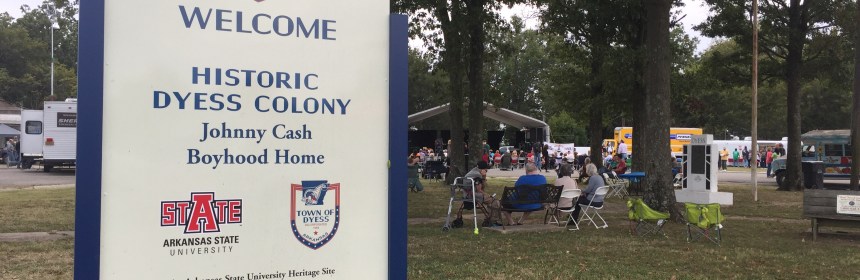
As director of Arkansas State University Heritage Sites, Hawkins worked to restore historical sites, such as the childhood home of Johnny Cash and the barn studio in Piggott where Ernest Hemingway wrote “A Farewell to Arms.”
In 2012, she authored a book titled, “Unbelievable Happiness and Final Sorrow: The Hemingway-Pfeiffer Marriage” after 12 years of research. She said the book sets the record straight about Hemingway’s marriage to his second wife, Pauline Pfeiffer.
Hawkins said her interest lies not in the buildings themselves, but in the stories that could be told through them.
“We have a very rich heritage here. There are so many stories out there beginning to disappear because the material things associated with them are beginning to disappear,” Hawkins said.
Hawkins is currently working on the 2017 Johnny Cash Heritage Festival being held in Dyess on Oct. 19-21. Performers include Roseanne Cash and Kris Kristofferson. Hawkins said Cash’s family wanted the restoration of his childhood home for many years.
Attendees of the event will be able to view the house behind the performers.
Arkansas Women’s Hall of Fame
Past inductees include Hillary Rodham Clinton, civil rights crusader Daisy Gatson Bates, Alice Walton and the first woman ever elected to the Senate, Hattie Caraway.
Alex Howland with ABPG said the North Little Rock Chamber of Commerce began the event and a partnership with ABPG to help elevate the status and impact of women.
Arkansas’ First Lady Susan Hutchinson serves on the board of directors. She said the hall of fame serves to bring together and honor those women who make a difference in the state.
A selection committee decides who will be honored based on established criteria. Such criteria include the nominee’s positive impact on women and girls, and her impact on the state.
The board uses three separate categories for inductees. Hutchinson said the board decided on a posthumous category to help preserve the past from the “shadows of time.” The contemporary category highlights women still making a difference for today’s society. The group category showcases groups of women making a difference together.
Girls of Distinction
Howland said they chose five area high school girls to escort the honorees to the stage. Those chosen for this honor serve in student government positions, maintain high academic standards and strive to make their communities a better place.
This year, they chose Jennifer Bond, Zharia Harris, Savana Melton, Stephanie Verdaris and Shelby Worsham to serve as “Girls of Distinction.”
Verdaris serves as student body president at Mount St. Mary’s Academy in Little Rock, as well as a student ambassador for the school and member of both the National Honor Society and Beta Club.
Verdaris said her inclusion in the ceremony humbles and honors her, and being around such women makes her nervous but excited. She escorted Pat Like and the Olivetti Benedictine Sisters.
Harris, a Little Rock native, started “Socks for the Rock,” a nonprofit that provides socks for Little Rock’s homeless population. Other than their basic uses, Harris said that socks can block the passage of certain bacteria to help ward off infection.
Harris said being included in this ceremony makes her want to do more to improve society.
For more information on nominations, visit The Arkansas Women’s Hall of Fame website.