Rice in Schools plants seeds of learning statewide
Story by DDNS Reporter Jerry Don Burton
Schools across Arkansas are learning to embrace the natural state’s top crop as the Rice in Schools program pilot run continues.
The Arkansas Rice in Schools program, launched by the Arkansas Department of Agriculture in collaboration with Arkansas Rice and USA Rice, is an initiative to teach students how to cook with rice and educate them on the significance of the grain.
Leslee Tell, the farm-to-school coordinator for the United States Department of Agriculture, directs the program. She said Rice in Schools will teach students where their food comes from.
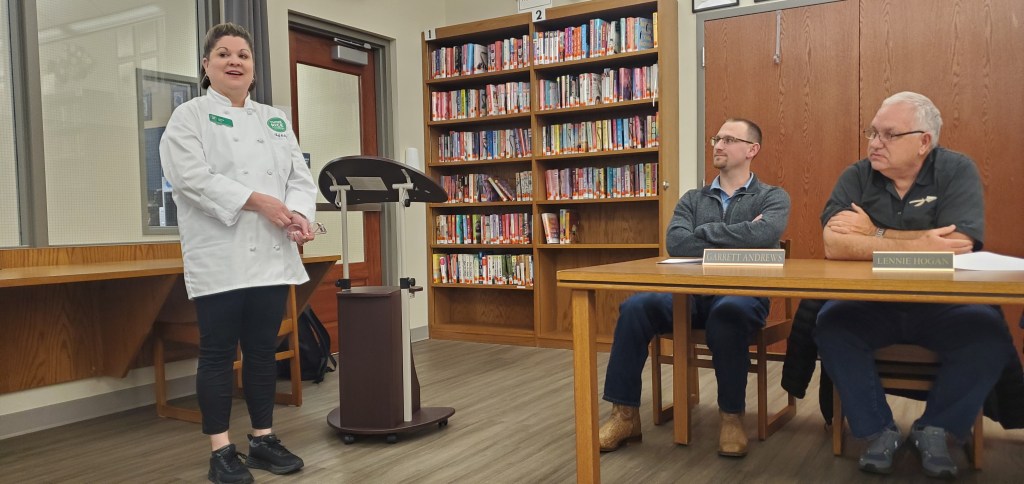
“Our goal is simple, increase the use of Arkansas-grown rice in schools, while helping students learn about agriculture, nutrition and where their food comes from,” Tell said in a YouTube video introducing the program. “This program is about more than just meals, it’s about connecting students to Arkansas agriculture and supporting our local farmers.”
Arkansas Governor Sarah Sanders developed the program in fall 2025, following the transition of nutrition programs to the Arkansas Department of Agriculture.
In December 2025, the Arkansas Rice Research and Promotion Board approved $15,000 in funding to support the program’s implementation. These funds provided schools with equipment to encourage the usage of Arkansas rice in their menus.
Sanders said the new program will teach students how farmers use rice to feed families around the world. She said students will use food made in Arkansas to develop healthy eating habits.
“Rice isn’t just part of Arkansas’ economy; it’s part of who we are,” Sanders said in a press release published Nov. 13, 2025.
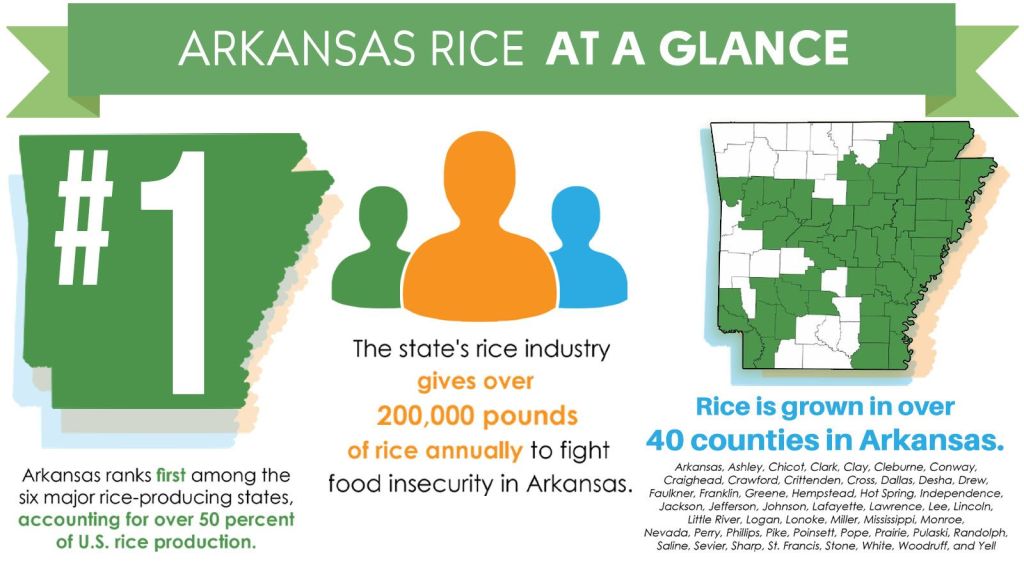
Arkansas is the largest rice-producing state, accounting for more than 40% of rice production in the United States, according to Arkansas Rice. Tell said a majority of this rice is produced in Arkansas’ northeast region.
Almost 20 Arkansas schools and districts are scheduled to participate in the program’s pilot phase, which began in February at Ward Central Elementary in Cabot, Arkansas. The pilot will wrap up in May at Forest Park Elementary in Little Rock.
As part of the program, Tell travels to participating schools with a team to involve students in cooking demonstrations and interactive educational lessons. She also introduces meals with local rice to school menus and trains cafeteria staff in preparing them.
On April 9, Tell traveled to Newport, Arkansas, to introduce the program to students at Newport High School.
Leanne Bradley, the family and consumer science teacher at Newport High School, said Rice in Schools was a beneficial experience for her students.
Bradley said rice’s significance to Arkansas demonstrates the program’s importance.
“I think everybody is aware that if you don’t take care of what you have, you can lose it,” Bradley said. “(Rice) is something that we have that not every other state has.”
Bradley said her food production and culinary students passed out stir-fried rice samples Tell made for elementary students. After sampling different meals made using rice, students placed stickers on a bulletin board to indicate how much or little they enjoyed the meals.
Tell said they compile student opinion data from every participating school. Then, in June, she said they will analyze the data to determine which recipes students liked most and least and make appropriate changes.
Bradley said the students greatly enjoyed the Rice in Schools program. She said her students cooked with rice before, but Tell’s contributions provided them with new ways to use the grain.
The family and consumer science teacher said she appreciated how the program helped her students realize how much rice Jackson County, where the Newport School District is located, produces.
According to the 2022 USDA Census of Agriculture, Jackson County produced almost 80,000 acres of rice, second only to soybeans.
“So just for the kids to realize this is a huge staple that Arkansas provides for the state, and it’s easy and it does not have to be Minute Rice,” Bradley said. “It really doesn’t take that much longer to actually cook your own rice and the quality is just so much better.”
Julie Isbell, superintendent at the Harrisburg School District, where Tell visited in March,
also said she loved how the program connected her students with local rice production.
Poinsett County, where Harrisburg is located, produced about 90,000 acres of rice, according to the same USDA census.
Tell also brought the program to the Nettleton School District in March. Nettleton School Board Vice President, Donnie Hauge, said he supported the program and thinks helping kids learn cooking skills and understand where their food comes from is an important undertaking.
Wes Ward, Arkansas secretary of agriculture, said the program emphasizes how Arkansas’ dominance over rice production could be used to support students and education. He said the program is a good step toward getting Arkansas to buy and use more of its own rice.
Bradley said rice is also versatile and can be stretched further than other ingredients. She said this is especially important for those who cannot afford as much food.
“It’s a very quick and easy staple that you can keep in your pantry and it can go for a wide variety of different types of food,” Bradley said. “If your family is financially disadvantaged, you can pair beans and rice together, and that actually makes a complete protein.”
Bradley said her favorite part of the program was how it helped students interact with and cook rice in different ways than they’re used to. For some, Bradley said this program represents an introduction to rice as an ingredient.
However, the family and consumer science teacher said Tell’s visit to Newport was not without challenges.
Tell was scheduled to return to Newport High School on April 10, but Bradley said she fell ill and missed the second day.
“She could have talked so much more and given the information about it. She did not get to go into depth like she would at other places,” Bradley said.
In the time they did spend together, Bradley said Tell was a very energetic and fun, but professional person to work with.
“I think she’s phenomenal and I liked having the opportunity,” Bradley said. “I hope that this is something that takes off and is able to be utilized in schools across Arkansas.”
Tell said the student feedback, recipe evaluations and participation data gathered in the pilot will refine the program and prepare it for statewide expansion.
In the final iteration of the program, Bradley said she would like to see taste testing and activities for all grade levels.
Tell said the program continuously searches for and develops new and more effective methods of engaging schools.
Bradley said the school will continue building on the foundation laid by Tell and the Rice in Schools Program. She said the school’s student-run restaurant, the Hungry Hound Cafe, started implementing rice meals based on what they learned from the program.
Tell said she is a teacher at heart and loves to cook, so working with students to prepare recipes in the classroom was a great combination.
“We are bringing Arkansas-grown rice to schools across the state,” Tell said. “One plate at a time.”
More information about the Rice in Schools program may be found on the Arkansas Department of Agriculture’s website. Program organizers also created a digital guide featuring rice data and recipes from USA Rice.


