Monthly Archives: April 2026

Rice in Schools plants seeds of learning statewide

Story by DDNS Reporter Jerry Don Burton

Schools across Arkansas are learning to embrace the natural state’s top crop as the Rice in Schools program pilot run continues.

The Arkansas Rice in Schools program, launched by the Arkansas Department of Agriculture in collaboration with Arkansas Rice and USA Rice, is an initiative to teach students how to cook with rice and educate them on the significance of the grain.

Leslee Tell, the farm-to-school coordinator for the United States Department of Agriculture, directs the program. She said Rice in Schools will teach students where their food comes from.
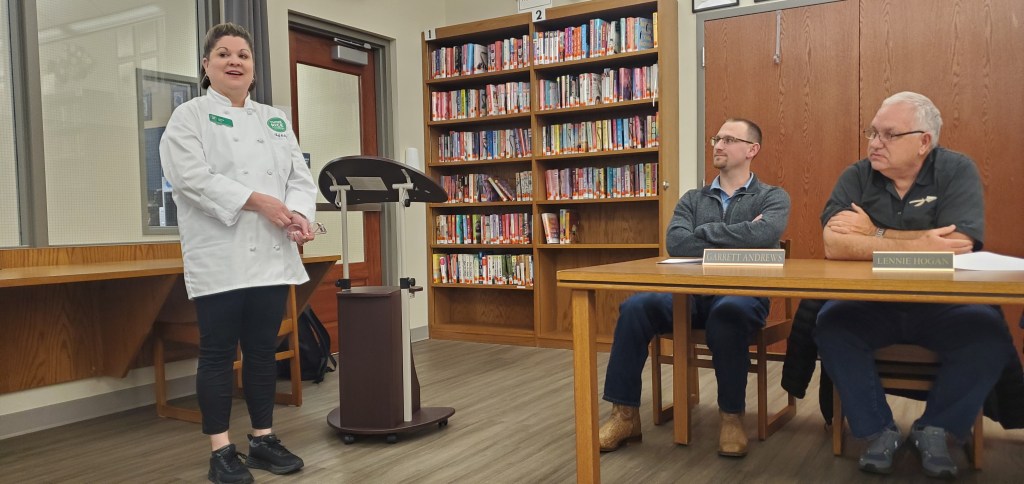
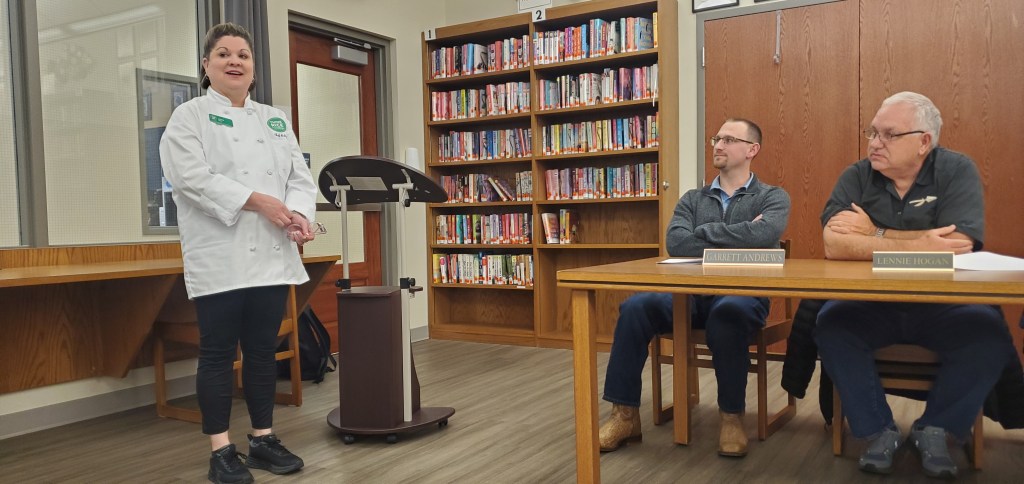
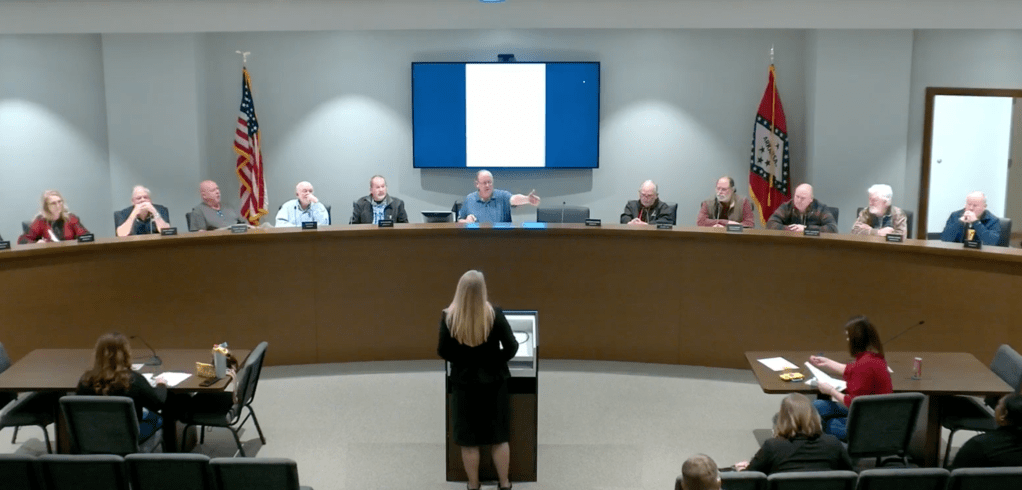
(Left) Leslee Tell, farm-to-school coordinator for the United States Department of Agriculture, describes the Rice in School Program to the Nettleton School Board at a March 17 meeting. According to the USDA website, the program, which is in a pilot phase, gives schools the tools to serve locally grown rice in healthy meals. PHOTO COURTESY OF JERRY DON BURTON

“Our goal is simple, increase the use of Arkansas-grown rice in schools, while helping students learn about agriculture, nutrition and where their food comes from,” Tell said in a YouTube video introducing the program. “This program is about more than just meals, it’s about connecting students to Arkansas agriculture and supporting our local farmers.”

Arkansas Governor Sarah Sanders developed the program in fall 2025, following the transition of nutrition programs to the Arkansas Department of Agriculture.

In December 2025, the Arkansas Rice Research and Promotion Board approved $15,000 in funding to support the program’s implementation. These funds provided schools with equipment to encourage the usage of Arkansas rice in their menus.

Sanders said the new program will teach students how farmers use rice to feed families around the world. She said students will use food made in Arkansas to develop healthy eating habits.

“Rice isn’t just part of Arkansas’ economy; it’s part of who we are,” Sanders said in a press release published Nov. 13, 2025.

Arkansas is the largest rice-producing state, accounting for more than 40% of rice production in the United States, according to Arkansas Rice. Tell said a majority of this rice is produced in Arkansas’ northeast region. 
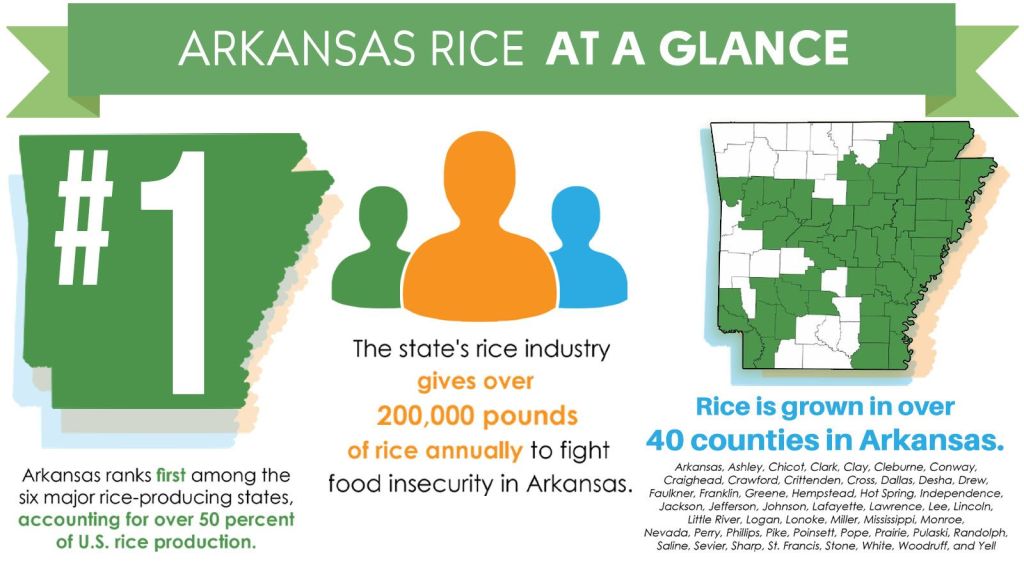
A graphic presents quick facts about Arkansas rice production. Arkansas is the largest rice-producing state, accounting for more than 40% of rice production in the United States, according to Arkansas Rice. GRAPHIC COURTESY OF ARAKNAS HOUSE OF REPRESENTATIVES

Almost 20 Arkansas schools and districts are scheduled to participate in the program’s pilot phase, which began in February at Ward Central Elementary in Cabot, Arkansas. The pilot will wrap up in May at Forest Park Elementary in Little Rock.

As part of the program, Tell travels to participating schools with a team to involve students in cooking demonstrations and interactive educational lessons. She also introduces meals with local rice to school menus and trains cafeteria staff in preparing them.

On April 9, Tell traveled to Newport, Arkansas, to introduce the program to students at Newport High School.

Leanne Bradley, the family and consumer science teacher at Newport High School, said Rice in Schools was a beneficial experience for her students. 

Bradley said rice’s significance to Arkansas demonstrates the program’s importance.

“I think everybody is aware that if you don’t take care of what you have, you can lose it,” Bradley said. “(Rice) is something that we have that not every other state has.”

Bradley said her food production and culinary students passed out stir-fried rice samples Tell made for elementary students. After sampling different meals made using rice, students placed stickers on a bulletin board to indicate how much or little they enjoyed the meals.

Tell said they compile student opinion data from every participating school. Then, in June, she said they will analyze the data to determine which recipes students liked most and least and make appropriate changes.

Bradley said the students greatly enjoyed the Rice in Schools program. She said her students cooked with rice before, but Tell’s contributions provided them with new ways to use the grain.

The family and consumer science teacher said she appreciated how the program helped her students realize how much rice Jackson County, where the Newport School District is located, produces.

According to the 2022 USDA Census of Agriculture, Jackson County produced almost 80,000 acres of rice, second only to soybeans.

“So just for the kids to realize this is a huge staple that Arkansas provides for the state, and it’s easy and it does not have to be Minute Rice,” Bradley said. “It really doesn’t take that much longer to actually cook your own rice and the quality is just so much better.”

Julie Isbell, superintendent at the Harrisburg School District, where Tell visited in March,

also said she loved how the program connected her students with local rice production.

Poinsett County, where Harrisburg is located, produced about 90,000 acres of rice, according to the same USDA census.

Tell also brought the program to the Nettleton School District in March. Nettleton School Board Vice President, Donnie Hauge, said he supported the program and thinks helping kids learn cooking skills and understand where their food comes from is an important undertaking.

Wes Ward, Arkansas secretary of agriculture, said the program emphasizes how Arkansas’ dominance over rice production could be used to support students and education. He said the program is a good step toward getting Arkansas to buy and use more of its own rice.

Bradley said rice is also versatile and can be stretched further than other ingredients. She said this is especially important for those who cannot afford as much food.  

“It’s a very quick and easy staple that you can keep in your pantry and it can go for a wide variety of different types of food,” Bradley said. “If your family is financially disadvantaged, you can pair beans and rice together, and that actually makes a complete protein.”

Bradley said her favorite part of the program was how it helped students interact with and cook rice in different ways than they’re used to. For some, Bradley said this program represents an introduction to rice as an ingredient.

However, the family and consumer science teacher said Tell’s visit to Newport was not without challenges. 

Tell was scheduled to return to Newport High School on April 10, but Bradley said she fell ill and missed the second day. 

“She could have talked so much more and given the information about it. She did not get to go into depth like she would at other places,” Bradley said.

In the time they did spend together, Bradley said Tell was a very energetic and fun, but professional person to work with.

“I think she’s phenomenal and I liked having the opportunity,” Bradley said. “I hope that this is something that takes off and is able to be utilized in schools across Arkansas.”

Tell said the student feedback, recipe evaluations and participation data gathered in the pilot will refine the program and prepare it for statewide expansion.

In the final iteration of the program, Bradley said she would like to see taste testing and activities for all grade levels.

Tell said the program continuously searches for and develops new and more effective methods of engaging schools.

Bradley said the school will continue building on the foundation laid by Tell and the Rice in Schools Program. She said the school’s student-run restaurant, the Hungry Hound Cafe, started implementing rice meals based on what they learned from the program.

Tell said she is a teacher at heart and loves to cook, so working with students to prepare recipes in the classroom was a great combination.

“We are bringing Arkansas-grown rice to schools across the state,” Tell said. “One plate at a time.”
More information about the Rice in Schools program may be found on the Arkansas Department of Agriculture’s website. Program organizers also created a digital guide featuring rice data and recipes from USA Rice.


Earth Day: A great time to review the natural state’s environmental practices, policies

Story by DDNS Reporter Jerry Don Burton

April 16, 2026

From city-wide cleanups to research demonstrations, several organizations are gearing up to host events for Earth Day in Arkansas.

Earth Day, held on April 22 every year since 1970, is a global event observed to spread awareness and support for environmental issues and practices.  

Melissa Dooley, director of the Arkansas State University environmental, health and safety office, said Earth Day assigns a specific day in which people can sit down and talk about what they are doing or could be doing to help the environment.

“Earth Day is a kind of celebration and a recognition and awareness of things that we can do to help maintain and improve our environment,” Dooley said. “But it’s also a celebration of the Earth as a whole and that we all are here sharing this big rock floating in space together and it’s all our home.”

EARTHDAY.ORG, the global coordinator for Earth Day events, announces a unique theme for Earth Day every year. This year, they chose “Our Power, Our Planet.”

Dooley said centering Earth Day around a theme keeps everyone on their toes and prevents the same events from happening each year. 

Upcoming events

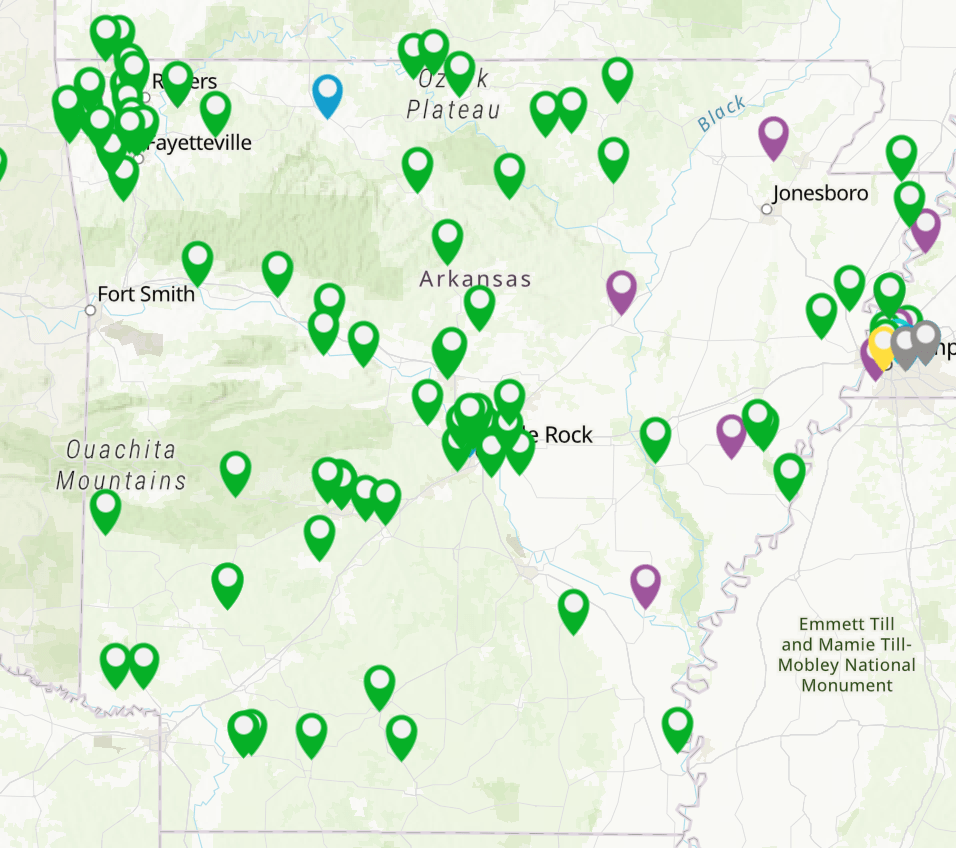
Over 10,000 Earth Day events are scheduled worldwide. More than 60 official EARTHDAY.ORG events are registered in Arkansas alone. 

EARTHDAY.ORG offers an interactive map on its website with the locations and dates of all registered events.

A map of Arkansas with pins denote Earth Day events registered through EARTHDAY.ORG. Organizers registered over 60 events in Arkansas as of April 16, 2026. MAP GRAPHIC COURTESY OF EARTHDAY.ORG.

Keep Arkansas Beautiful lists seven pages of environmentally focused events across Arkansas on its website, though not all are organized specifically for Earth Day. 

Keep Arkansas Beautiful is a division of the Arkansas Department of Parks, Heritage and Tourism and a certified affiliate of Keep America Beautiful Inc.

In Jonesboro, an Earth Day event is scheduled from 10 a.m. to 2 p.m., April 22, at the Heritage Plaza Lawn on the A-State campus. 

Several clubs and organizations will table at the annual event to spread awareness on several topics related to Earth Day. Dooley said some participants will even present their research. 

“We also invite a lot of local vendors who might be interested in setting up a table and talking about what they’re doing for environmental progress, sustainability and whether they have a focus on that this year,” Dooley said. 

An art contest is also scheduled, which will feature works made from recycled materials by local primary school students.

Dooley said the main goal of the event is to reach out to the younger generation and open their eyes to their impact on the world and the importance of sustainability. 

“It’s making them knowledgeable, so as they grow up, and they see mom and dad throw something out the window, they’re like, ‘you shouldn’t litter, mom and dad,’” Dooley said. “If we get everybody as they’re young, they grow up with these good responsibilities of being a steward for this planet and that also gives an opportunity to start thinking of things outside the box that this generation didn’t think of.”

Beverly Parker, Keep Jonesboro Beautiful commission chair, said giving children early experience with practices like litter removal and proper trash maintenance will establish more eco-friendly habits in the future.

Dooley said while the event is generally geared toward elementary and middle school students, anyone can come out and learn something.

The event is funded entirely by donations and volunteering. The EHS director said her department sponsors the event alongside Jennifer Bouldin, dean of the science and mathematics department and director of the ecotoxicology research facility. Dooley said this event represents a significant collaboration between several campus organizations. 

One town over and three days later, Paragould will host a city-wide cleanup from 8 a.m. to noon. The event is led by volunteers and designed to bring together residents and local businesses to improve public areas.

More Earth Day events across the Arkansas Delta are listed below:

  • Marianna/Lee County cleanup
    • When: April 18, 2026, from 8:30 a.m. to 12:30 p.m.
    • Where: No. 1 Court Square, Marianna, Arkansas
    • What: Volunteers will clean up litter in downtown Marianna
    • Coordinator: Pat Audirsch, 870-821-1403, pataud@sbcglobal.net 
  • Lake Chicot cleanup
    • When: April 18, 2026, at 9 a.m.
    • Where: Lake Chicot State Park
    • What: Volunteers will clean up areas across Lake Chicot State Park 
    • Coordinator: Brandi Hanson, 870-265-5480, brandi.hanson@arkansas.gov 
  • Helen-West Helena cleanup
    • When: April 25, 2026, from 9 a.m. to 1 p.m.
    • Where: 319 Philips St., Helena-West Helena, Arkansas
    • What: Volunteers will engage in a city-wide cleanup across Helena-West Helena
    • Coordinator: Chris Schaffhauser, 501-410-5562, schaffhauserchris@gmail.com 

More important than ever

Cherie O’Mary, executive director of the Arkansas Recycling Coalition, said Earth Day excels at highlighting advancements in environmental policies, practices and issues. 

Dooley said one of the biggest environmental issues facing Arkansas now is the amount of trash on the interstates, highways and parking lots.

“You can go anywhere, there’s just trash everywhere,” Dooley said. “All of that trash eventually makes it ways into our stormwater systems and our rivers, our streams, our lakes, where it clogs up the heavy, dense areas in the woods where animals are, and it affects their habitats as well.”

Parker said areas with poor litter or debris management give off an unsafe feeling. 

Arkansas Department of Transportation assistance chief engineer for maintenance, Steve Frisbee, said litter is a problem, from the largest interstate to the smallest back road.

Emma Goad, a writer for ARDOT, said the department spent about $8 million on cleanup efforts. She said the cost comes from several programs, contracts and other services intended to keep Arkansas highways litter-free.

Frisbee said organizations like Keep Arkansas Beautiful help engage the community in cleanup efforts and reduce the environmental damage litter causes.

A litter report form may be filed on the IDrive Arkansas website here.

Recent environmental policy also highlights the significance of Earth Day. 

On July 25, 2025, Arkansas Republican Representative Bruce Westerman introduced the Standardizing Permitting and Expediting Economic Development Act

The SPEED Act limits the scope of the National Environmental Policy Act and changes the environmental review of major federal actions under NEPA to restrict the number of federal actions that trigger NEPA review and expedite the review process. 

According to House Majority Whip Tom Emmer, more than 300 stakeholders support the bill. Organizations like the Aluminum Association, Steel Manufacturers Association, Data Center Coalition and even Google state they support the SPEED Act because it will accelerate projects and lower costs.

Despite this support, the bill remains controversial legislation.

David Watkins, director of government affairs for the climate and energy program at the Union of Concerned Scientists, said this bill means bad news for the environment.

“It includes goodies like shielding fossil fuel projects from meaningful review or public input before they are permitted, then shielding them from legal recourse after they are approved,” Watkins wrote in a UCS article. “Circumventing science and denying reality will only lead to greater harm to our environment and worse outcomes for communities.”

The SPEED Act is pending approval from the Senate after the House of Representatives voted to pass the SPEED Act on Dec. 18, 2025.

Despite the controversy surrounding this bill and others, Dooley said she thinks, generally, Arkansas does its fair share for the environment.

“We have beautiful parks, beautiful places to go and visit, enjoy and we have some rules in place,” Dooley said. “Could we do better? Yeah, I mean, there’s always room for improvement. But I think we’re headed in a good direction.”

Dooley said stormwater permit requirements are an example of good policy in Arkansas.

The Arkansas Division of Environmental Quality requires any construction project over one acre to apply for a stormwater permit under the National Pollutant Discharge Elimination System program. 

An infographic illustrates how rain or melted snow carries construction waste like concrete, oils and pesticides, into stormwater drains. These construction pollutants cause ecological damage when they drain into bodies of water. INFOGRAPHIC COURTESY OF NEVADA DIVISION OF ENVIRONMENTAL PROTECTION.

According to the ADEQ website, stormwater carries dirt, chemicals and other pollutants that could harm water quality. Stormwater permits regulate this runoff and prevent pollutants from entering streams, creeks, ditches and other waterways.

While Dooley said the laws in place and penalties for breaking them are effective, she knows there will always be bad actors. She said this is why speaking up is important.

The ADEQ pollution complaint form may be found here.

O’Mary said Arkansas’ glass recycling programs are another example of how Arkansas is leading the charge in certain areas of sustainability.

The ARC executive director said the real impact of Earth Day may only be felt in the future. Still, O’Mary said now is always the best time to get involved.

Keep the conversation going

Although Earth Day is only celebrated on a single day, Dooley said awareness should continue year-round. She said people are constantly interacting with the environment, making Earth Day an everyday conversation. 

O’Mary, who has served the recycling industry for 15 years, said she feels Earth Day is more prevalent now than in previous years. 

In her five years as the EHS director, Dooley said she noticed younger people becoming more interested in sustainability. Dooley, who also sits on the Keep Jonesboro Beautiful commission, said the community has expressed interest in Earth Day events like city cleanups.

“I was relatively surprised with the amount of people that really want those types of things,” Dooley said.

O’Mary and Dooley said one does not have to wait until Earth Day to start taking care of the planet. 

Dooley said many people do not realize all the different ways they can participate in Earth Day.

O’Mary said calling the local solid waste district and asking how to offer support is a good first step for those interested in recycling but unsure how to start.

The ARC executive director said she is constantly on the phone, helping direct people to where they can recycle unwanted items.

“That’s the ultimate goal, keep it out of the landfill,” O’Mary said. “Reuse, reuse, reuse.”

The ARC may be contacted by calling 866-290-1429 or emailing mail@recycleark.org.

Dooley said events like clothing swaps and practices like electronic recycling are things people don’t think about often, but still help the environment.

The EHS director said, even if Earth Day did not exist, people would still raise awareness for environmental issues and engage in eco-friendly practices. 

“I think we, as a race, as a human race, all recognize that something should be done,” Dooley said.

More information about Earth Day, local events and environmental issues may be found linked below:

Nettleton School Board discuss educational rice program, effective AI usage

Photos and Story from DDNS Reporter Jerry Don Burton

March 18, 2026

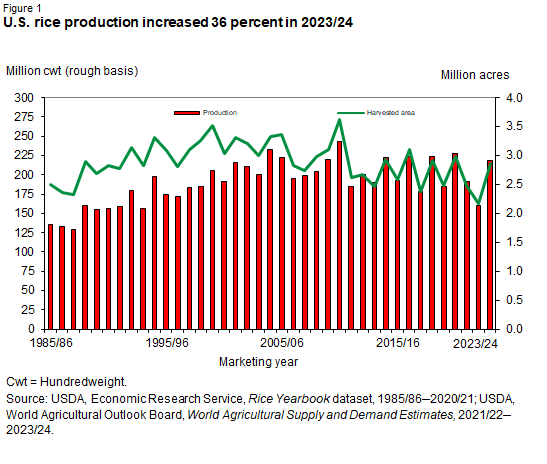
Bar graph depicts U.S. rice production (red) and harvested area (green) from the years 1985 to 2024. Rice production increased by nearly 1 million acres between 2023 and 2024. Courtesy of the United States Department of Agriculture.

The Nettleton School Board heard presentations on an initiative to educate students about rice and effective AI use in classrooms at its monthly meeting.

Rice in Schools Pilot Initiative

(Left) Leslie Tell, farm-to-school coordinator for the United States Department of Agriculture, explains the Rice in School program at the Tuesday, March 17, Nettleton School Board Meeting. According to the USDA website, the program, which is in a pilot phase, gives schools the tools to serve locally grown rice in healthy meals. Photo by Jerry Don Burton.

Leslee Tell, farm-to-school coordinator for the United States Department of Agriculture, addressed the board at the meeting Tuesday, March 17, to provide an overview of the Rice in Schools program.

Tell said the initiative aims to provide schools with the resources to serve local rice and educate students about the significance of rice in Arkansas. She said Arkansas Governor Sarah Sanders saw the importance of rice in the state and developed the initiative in fall 2025.

“So her idea was that, number one, students know where their food is coming from. Number two, that it’s local food as much as possible,” Tell said. “If we’re growing this much rice, then we should probably be serving rice and teaching kids to love rice as well.”

According to the USDA, the United States accounts for less than 2% of global rice production, but ships 5% of global exports. Arkansas is the largest rice-producing state, accounting for more than 40% of rice production in the U.S.

Tell said a majority of rice production in Arkansas is concentrated in the state’s northeast region. 

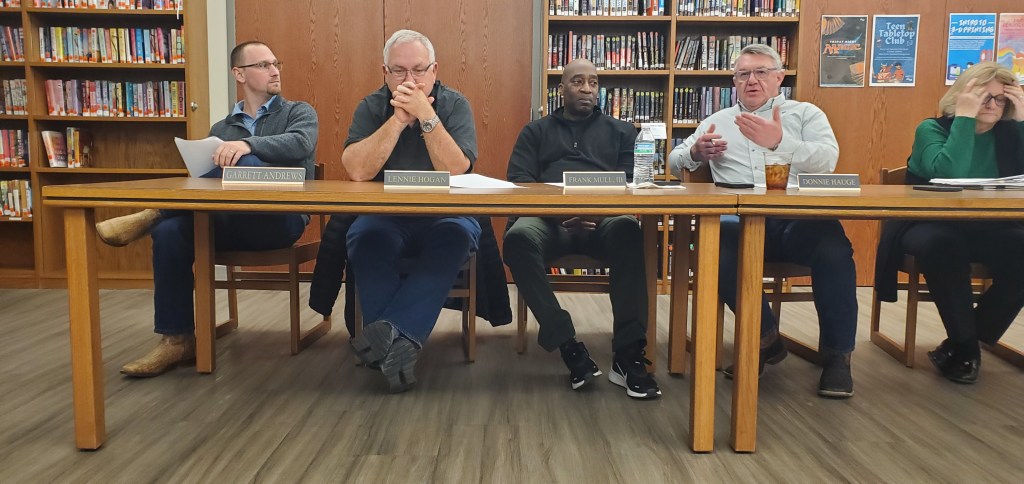
(Third from left) Donnie Hague, Nettleton School Board vice president, asks USDA Farm-To-School Coordinator Leslee Tell a question about the Rice in Schools program. Photo by Jerry Don Burton.

Donnie Hauge, Nettleton School Board vice president, said a program for helping kids understand where rice comes from and how to cook with it is a great idea.

The farm-to-school coordinator said about 20 schools have signed up for the program. 

Participating schools will introduce classroom lessons on Arkansas agriculture, participate in hands-on cooking demonstrations, train cafeteria staff and include local rice in school meals at least once a month.

Tell said schools may also engage in taste tests and interactive experiences. She said the program is continuously expanding and introducing new ways to highlight Arkansas rice. 

One such development is the creation of a cookbook containing 50 rice recipes for students to take home and prepare with their family. 

“In the food banks and blessing boxes, there’s a lot of rice,” Tell said. “ If you have kids wanting to eat rice at school and they’ve made it at school, they get their recipe book, and they can go home, and maybe that bridge can happen between the parent and the child, and we could encourage that.”

Tell said the program also engages with the current national interest in eating real food. 

“You can’t get any more real than this,” Tell said. “We’re eating real food, we’re eating real rice, real chicken, real vegetables and we’re making it right here from scratch, in front of the kids.”

Currently, the initiative is in a pilot phase. Tell said feedback from participating schools will be used to improve the program and shape future expansions.

Effective AI Usage in Classrooms

Following Tell’s presentation, the Nettleton High School principal, elementary school principal and three junior high school students addressed the school board to explain how they’ve implemented artificial intelligence in their respective fields.

Philip Cook, Nettleton High School career and technical academy principal, said he and other educators use AI to increase productivity and generate content. He said he uses AI to outsource elements of his workflow. 

(Right) Philip Cook, Nettleton High School career and technical academy principal, explains how the high school uses AI coaching assistant Edia to those in attendance at the Nettleton School Board meeting. Cook said AI, when used properly, helps educator lessen their workload. Photo by Jerry Don Burton.

“What we do at NHS right now is we have teachers that use it to generate worksheets. We use it for coaching students and to help with our summative evaluations,” Cook said. “Then also, to look at and align some of our different curriculum with each other.”

Using the Arkansas academic standards and ATLAS achievement level descriptors for geometry as an example, Cook demonstrated how AI can be used to parse and summarize dense information. 

The high school principal said projects like creating curricula that meet various standards, something which could take all summer to complete, are achievable in a single weekend with AI like ChatGPT. 

Cook said Nettleton High School is also incorporating Edia, an AI coaching assistant, in the classroom.

Despite embracing AI, Cook said education will always need a human element. 

“That’s what we’re trying to do in our critical algebra is not just turn it over to the AI–because then we become a facilitator–but use that where it’s appropriate to support that learning and then go ahead and let the teacher break kids into small groups, interact with them, give them those alternative learning methods,” Cook said. “I think it takes a good marriage of both to really be as effective as we can.”

University Heights Elementary Principal Sarah George said she uses Upraiser, an AI software designed to enhance teacher evaluations, in her administrative duties.

(Right) Sarah Geoge, University Heights Elementary principal, explains how she uses Upraiser AI when giving teacher evaluations. She said she uses Upraiser to provide actionable feedback to teachers. Photo by Jerry Don Burton.

“This platform has really helped, because it’s narrowed down the feedback that is given to teachers because it’s directly aligned to standards,” George said.

Garrett Andrews, the newest member of the Nettleton School Board, asked George if the AI she uses is accurate. George said Upraiser is mostly accurate, but agreed with Cook that a human element will always be necessary.

The elementary school principal said she is transparent with teachers and lets them know when the feedback they receive is partially AI-generated.

After George’s report, Nettleton Junior High School students Collins Baker, Jace Stegall and Brik Hogan presented a slideshow to detail how they use AI.

Baker said she learned how to use AI in 2025 and mostly utilizes it as a search engine, like Google. She said, while a helpful tool, AI can nonetheless introduce biases in its responses.

Stegall said he uses AI for coding help and in certain class assignments, specifically one project using drones to map hazardous conditions in Jonesboro.

“We want to know how to use it right, how to use it responsibly and how to use it for our school work instead of cheating,” Stegall said.

Hauge said the students’ presentation taught him how they use AI not for short answers or cheating, but productively and responsibly.

Other business 

In other business, Athletics Director Tommy Raffo announced several upgrades and additions to the athletic facilities:

  • New track and field sand pit
  • New baseball bullpen
  • New televisions installed near concession stands
  • New and updated spirit banners installed in gym

Raffo also said he was proud of the boys and girls basketball teams, who were seeded fourth and second in the state, respectively.

Finally, the Nettleton High School Choir performed three songs ahead of the school’s production of “Hairspray.” Showings will be held April 24 and 25 at 7 p.m. and April 26 at 2 p.m. More information may be found on The Raider Spotlight’s Facebook page.
The next school board meeting will be held at 6 p.m., April 21, at the Nettleton Central Office.

Pollution Control and Ecology Commission adopts new business plan for Used Tire Program

Story by DDNS Reporter Jerry Don Burton

March 1, 2026

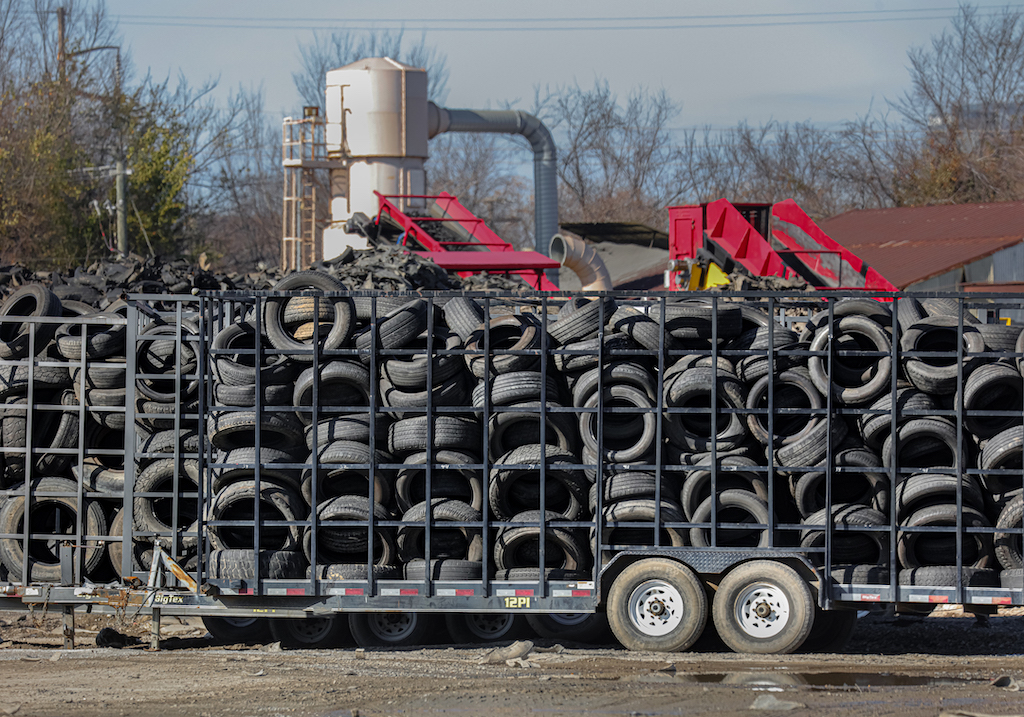
Loads of tires sit on trailers at the Davis Rubber Company facility in east Little Rock in December 2022.

The Arkansas Pollution Control and Ecology Commission (PC&EC) adopted a new business plan for the District 4 Used Tire Program (UTP-4), increasing reimbursement rates to $4.84 per tire in Southeast Arkansas.

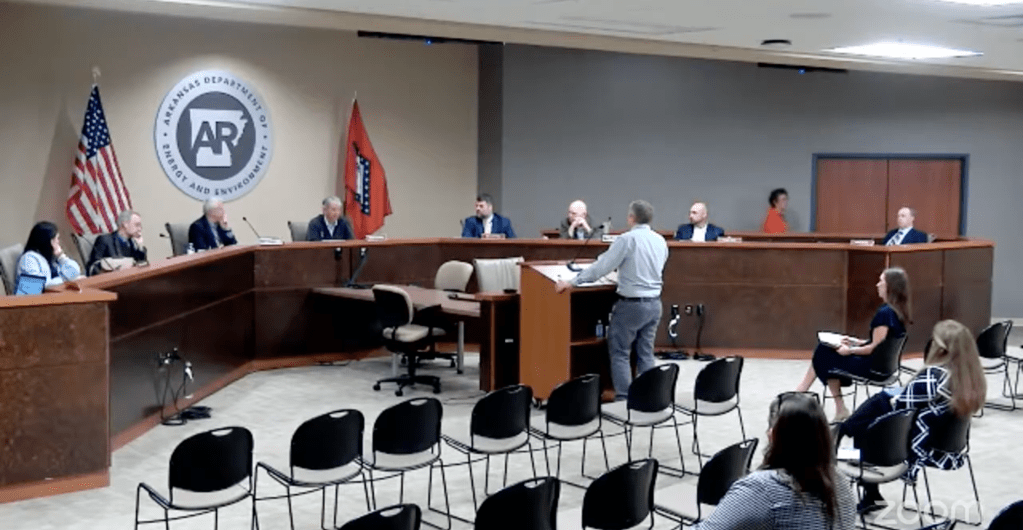
Bailey Taylor, chief environment administrator for the Arkansas Division of Environmental Quality, presented the UTP-4 business plan at the Friday, Feb. 27, PC&EC meeting.

Taylor said the plan is structured to address the backlog in Southeast Arkansas tire processing and resulting health and environmental concerns.

“For human health and the environment, we’re looking at getting these tires off the ground,” Taylor said. “There’s been almost two full quarters that tires have not been picked up. We’re getting lots of calls that tires are stacking up all over the district.”

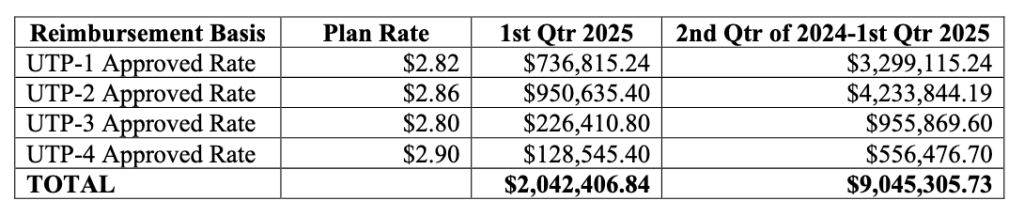
The plan proposes increasing the reimbursement rate per tire from $2.90 to $4.84 in District 4, which encompasses Southeast Arkansas. Taylor said this increase is based on administrative, processing and transportation costs, including costs for an out-of-state contracted processor.

Courtesy of the Arkansas Pollution Control and Ecology Commission.

Taylor said she recommended the plan only be approved temporarily for one or two quarters to establish a collector, transporter and processor to manage the tires in Southeast Arkansas. Then, she said, they would evaluate how to save costs and return with a revised plan.

“We’re hopeful that with just a quarter that they can pick up the backlog and also what is produced this quarter,” Taylor said. “And then go out for bid at a much more reasonable rate.”

However, Justin Sparrow, director of the West River Valley Solid Waste District in Clarksville, Arkansas, said this plan may do more harm than good.

Justin Sparrow, director of the West River Valley Solid Waste District in Clarksville, Arkansas, presents his concerns regarding the new business plan to the PC&EC.

“My major concern with the proposed reimbursement rate for UTP-4 being $4.84 is that this will quickly deplete a fund that is already in the red,” Sparrow said. “By statute, once that money runs out, DEQ has to prorate what they send out to all four districts.”

Prorate is a verb, meaning to allocate or distribute funds pro rata, or proportionally. Taylor said she wants to avoid prorating if possible.

Sparrow said if the fund runs out, the other three districts will feel the effect. 

Sparrow operates in District 1, Northwest Arkansas, where the reimbursement rate is $2.82 per tire. He said his district collects and processes 360,000 tires annually from 11 counties.

“I think UTP-4 should probably reopen the bid process and take another look at this before this commission approves a rate of $4.84,” Sparrow said.

Following Sparrow’s comments, PC&EC Chair Al Eckert III asked Taylor if the new reimbursement rate would result in a quicker shortfall, or deficit.

Taylor said they already see a shortfall between $300,000 and $400,000 every quarter with the current rates. She said any reimbursement rate over $2.31 per tire will result in a shortfall and the new rate would contribute to an extra $150,000 deficit for two quarters. 

Charlie Spakes, district 4 commission member, said the out-of-state contractor might be taking advantage of the situation. 

“It just seems like the cost is way higher, they have us kind of over a barrel where we have to get these tires picked up and they kind of have us hostage at this $4.90, compared to everyone else,” Spakes said.

Taylor said while the processing cost per tire is higher than other districts, the extra transportation cost inflates the rate much more.

Once the discussion concluded, the PC&EC passed a minute order adopting the business plan.

In other business, Angela Russell, mayor of Tontitown, Arkansas, continued asking the commission for help with her city.

Aerial view of the Eco-Vista Landfill in Tontitown, Arkansas. Many Tontitown residents claim the landfill produces dangerous fumes.

Tontitown citizens and government officials, including Russell, have attended several PC&EC meetings to seek help regarding declining air quality from the nearby Eco-Vista Landfill.

Russell said she will keep voicing her concerns and asking for stricter rules or regulations. She said if something catastrophic does happen, someone will be held accountable. 

“I want it recorded that citizens have come here to ask for help,” Russell said. “Nothing has been done to alleviate the problem.”

She said her grandson has made multiple hospital visits as a result of the dangerous fumes emitted from the landfill. 

“I myself have had to go to the hospital in the middle of the night because I woke up and the fumes were so strong in my bedroom I couldn’t breathe,” Russell said.

After the mayor’s comments, Eckert asked Taylor to address Russell’s concerns and prepare an update for the next meeting.

The PC&EC will meet again at 10 a.m. March 27, in the Arkansas Department of Energy and Environment’s Commission Room. Meetings are also livestreamed on YouTube.

Quorum court adopts transfer ordinance, hears hot check report, responds to poverty concerns

Story by DDNS Reporter Jerry Don Burton

February 23, 2026

Craighead County Judge Marvin Day (center) explains one of the large ticket items on the annual transfer ordinance to District 4 Justice of the Peace Linda Allison (second from left). The item concerned a $2.5 million transfer from the county general fund to the capital fund to support department operations. Photo by Jerry Don Burton.

The Craighead County Quorum Court adopted an annual transfer ordinance, heard a hot check report and responded to a public comment regarding rising poverty. 

Annual transfer appropriation ordinance

The annual transfer appropriation ordinance, adopted unanimously at the Tuesday, Feb. 23, Craighead County Quorum Court meeting, appropriated funds from special revenue accounts into the county general fund.

Craighead County Judge Marvin Day said the transfer ordinance is the first step of an annual cleanup process. 

“So that’s basically what we’re doing is we transfer money from one spot to the other to keep those balances whole, and the quorum court, on an annual basis, has to acknowledge, you’re not spending any new money, any additional money,” Day said. “Just acknowledging what we’ve done to keep the budget afloat.”

Day said, to think of it in simpler terms, it’s like they have 50 different checking accounts and the court appropriates money out of each of those accounts based upon an estimated revenue.

“Somebody may want to spend something in February, but their money doesn’t necessarily come in until September, October, and so we move money around to keep those balances in the positive, best we can,” Day said.

Hot check report

Also in new business, Charlene Davidson, a prosecuting attorney for the second judicial district of Arkansas, presented a hot check report, as required by state law. 

Craighead County Judge Marvin Day (center top) introduces Charlene Davidson (center) and Sarah Burnett (right) before they give the hot check report. The report is required by state law. Photo by Jerry Don Burton.

Davidson said while terminated in April 2021, the hot check program still takes in money the Craighead County Sheriff’s Office receives.

In 2025, Davidson said the hot check program:

  • Received $10,217.51 from the Craighead County Sheriff’s Office, to be entered as payments received from defendants for the hot check program prior to 2021.
  • Distributed $19,384.46 toward merchant restitution
  • Dispersed $3,770 toward merchant fees, which is a fee that merchants can charge the defendant if they write a hot check.
  • $2,899.95 in prosecutor fees, a statutory fee the office can charge for maintaining the program.

Davidson said the preceding fees were all previously ordered prior to 2021. She said the total check amount for 2025, not including journal entries, was $26,054.41. The current account balance for the hot check trust account is $28,653.41.

The court unanimously accepted the report as prepared.

Public comments

After Day opened the meeting for public comments, Jonesboro resident Robin Martin said she was concerned about rising poverty in Craighead County.

She said the poverty rate in Craighead County is 21.5%, almost double the 11% national rate and much higher than the 15.3% Arkansas poverty rate.

Martin said similarly sized Arkansas counties, such as Garland, Sebastian, Saline and Faulkner, also have poverty rates lower than Craighead.

Her data is nearly accurate with the latest census data from the American Community Survey. The national official poverty measure is 10.6%, while the Arkansas poverty rate is 15.5%.

“I don’t want to live in a district or a county that has a poverty rate of 20%,” Martin said. “I like Saline County’s 9% a whole lot better.”

District 11 Justice of the Peace Dan Pasmore said Craighead County’s rising population could be correlated to the rise in poverty.

“If you’ll check the population that moves into Jonesboro, there’s a lot of people that move from areas that are depressed, moving here for better opportunities,” Pasmore said. “They don’t always find it, but they’re coming here from other areas that are in worse shape than we are, and that’s driving ours up also.”

According to the United States Census Bureau, the estimated population in Craighead County rose from 111,242 in 2020 to 115,852 in 2024, an increase of 4,610.

Darrel Cook, district six justice of the peace, said he agreed with Pasmore.

“There’s a lot of rental opportunities here and there’s a lot of job opportunities, but sadly, some of the people moving here from other towns don’t want to take those jobs,” Cook said.

District Four Justice of the Peace Linda Allison said people with low income are attracted to Jonesboro when the city approves apartment complexes. She said this could also drive the poverty rate up.

Other business

In other business, the transportation and finance committees gave their reports.

Transportation Committee Chair and District 10 Justice of the Peace Steve Cline said the transportation committee met on Feb. 9. He said the committee, run by justices Garrett Barnes, David Tennison and Terry Couch, spoke with John James, the Craighead County road department superintendent, about current work projects and county road conditions following the recent snowstorm. 

The committee reviewed and approved a motion for a construction plan on Highway 141.

Finance Committee Chair and District Nine Justice of the Peace Josh Longmire said the finance committee also met on Feb. 9. Longmire said, at the meeting, Craighead County Tax Collector Wes Eddington provided a tax collection report. The report stated tax collection rose 16%, while delinquent personal taxes fell 12.7%.

Craighead County Treasurer Terry McNatt presented the January 2026 financial report and 2025 annual financial report at this meeting as well.

Tennison, district eight justice of the peace, motioned to move the next quorum court meeting date, originally scheduled for March 23, to avoid it falling during spring break week. The motion passed unanimously. 

The Craighead County Quorum Court will meet again at 5:30 p.m., March 16, after spring break.

Copenhaver addresses City Stars concerns

Story by DDNS Reporter Jerry Don Burton

February 4, 2026

Jonesboro Mayor Harold Copenhaver.

 Jonesboro Mayor Harold Copenhaver addressed previous concerns and responded to new complaints about the City Stars booster club during the City Council meeting.

Public and council interest in City Stars remained high at the Tuesday, Feb. 3 city council meeting. Discussion began with Copenhaver’s response to Public Facilities Board Chairman Matt Modelevsky’s presentation at the last meeting.

Copenhaver’s response

“ My responsibility as mayor is to administer city-operated programs, which City Stars was not, in accordance with city council-approved budgets,” Copenhaver said. “I presented verifiable facts, not feelings, not understandings or beliefs like many of the documents presented at the previous city council meeting contained.”

At the previous meeting, Modelevsky said Copenhaver failed to respond to past concerns he raised about City Stars and Danny Kapales, the now-resigned parks director who ran the program.

The City Stars booster club, a youth sports program, was created in 2001. Copenhaver said the original agreement between Jonesboro and the booster club was approved by the council in 2004. He said this contract established mutual agreements, such as the shared goal of providing athletics at no cost for Jonesboro youth.

Despite a shared vision for youth athletics in Jonesboro, Copenhaver said City Stars operated independently.

“Their revenue was their money, their business, not the city’s,” Copenhaver said. “ Fiduciary duties fall to the boards and management of private nonprofit organizations and cannot be delegated, giving them full and exclusive authority over their own money and how it is handled and how their chart of accounts is organized and how their accounting entries are made. Look it up.”

Copenhaver said he asked the management of City Stars to voluntarily undergo an audit, to which they agreed. The Thomas Speight and Noble firm completed the audit and presented it in June 2025. 

“ The independent auditor’s report expressed the opinion that the City Stars financial statements present fairly in all material respects and assets, liabilities, net assets of the City Stars Booster Club,” Copenhaver said. “ In other words, clean audit.”

On Dec. 5, 2025, the City Stars board announced the club will cease operations as a private, 501(c)(3) nonprofit and will transfer operational responsibilities, including banking accounts, funds and sports equipment, to the city of Jonesboro.

Copenhaver said now should be an exciting time for the program and the upcoming generations who will make use of City Stars. 

“Moving forward means moving beyond the past, and now we need to focus,” Copenhaver said.

However, in the public comments that followed, several citizens expressed a desire to stay on the topic of City Stars. 

Public comments

Jeremy Terrell, who ran for Jonesboro mayor in 2024, addressed Copenhaver and said he does not understand why some act like the investigation is not a big deal. He said the mayor has the responsibility to ensure taxpayer money goes to organizations that act in the best interest of the public.

“This is about the responsibility that you hold and that the city council hold to make sure that taxpayer’s money is being dealt with in a manner that is proper and legal,” Terrell said. “So those of us that are asking questions, we deserve answers, period.”

Bill Campbell, who previously served as the mayor’s communication director, said citizens should exercise patience and not jump to conclusions during a federal investigation. 

“I don’t know what the answers are. I do know that you have a mayor who has had clean audits every time,” Campbell said. “So I think I would lean on that and we can’t pretend we know something different.”

Dean Macdonald, a Jonesboro native, said he agrees with Terrell that any allegations of misconduct are serious and should be investigated. However, he said some of the discourse surrounding the investigation has broken down recently. 

Following comments from the public, many city council members voiced support for Copenhaver, but agreed communication must be improved.

Council member comments

LJ Bryant, Ward 5, Position 1 council member, said the public clearly cares and the situation should not be dismissed as something minor. 

“Despite any of the gaslighting going on tonight, the FBI didn’t show up for no reason. So we’re in a very serious situation and as the stewards of the taxpayer’s resources, I feel like we have to take action,” Bryant said.

Joe Hafner, Ward 5, Position 2 council member, said while he supports Copenhaver, the mayor should not have let concerns go unresolved for so long.

“I think that’s one thing that definitely needs to be improved and that’s let something fester, it turned from a little snowball into a big avalanche,” Hafner said. “And now that we got the public here with eroded public trust, just frustrated, the problems have escalated. I don’t take that lightly.”

Ward 2, Position 2 City Council Member Chris Moore said many issues would be absent today if Copenhaver addressed concerns sooner. He said trust should be restored between the council, mayor and community.

Hafner said the relationship between the mayor and council is built on trust. He said they must be transparent with each other.

Copenhaver said he understands many people had honest questions about the City Stars operation. He said while he never meant to come off as dismissive of these questions, the city council never had the answers. 

“Those questions should be properly directed to its own officers and board of directors, which had the full fiduciary responsibilities and duties. The mayor’s office did not have answers about the accounting or handling of money of City Stars,” Copenhaver said. “Part of all the confusion has come from people asking questions or emailing or texting complaints and concerns about City Stars to the wrong place.”

Anthony Coleman, Ward 6, Position 1 council member, said while he appreciated Copenhaver sharing his side at the meeting, he believes the council does have a responsibility to ask questions and look into City Stars. 

“ Maybe not handling a lot of it fiduciarily, but we do have a responsibility to share, to talk, to ask questions, to make certain that we are doing what’s right for our children,” Coleman said.

Chris Gibson, Ward 3, Position 2 council member, said the council has a good platform to build on moving forward and the future is optimistic.

Copenhaver said he appreciated the input from the council and is always up for constructive criticism.

“I apologize to this city council because the last thing I ever want to do is draw a wedge between us because that does not benefit our community,” Copenhaver said. 

Looking ahead, Copenhaver said he is excited for the future of City Stars under the leadership of Jim Stearns, interim director of parks and recreation. 

Other business

In other business, Copenhaver announced InnovAsian Cuisine Enterprise Inc. will construct a frozen food manufacturing facility in Jonesboro. He said this development will create about 200 jobs.

The council also read the following ordinances:

  • On first reading:
    • Ordinance 26:004 would amend a zoning ordinance providing for changes in zoning boundaries from R-1 to RS-7 for a property at 1306 Charles Drive. 
  • On second reading:
    • Ordinance 26:001 would change the zoning boundaries from R-1 to C-3 general commercial district for a property at 2620 Alexander Drive.
    • Ordinance 26:002 requested approval of a private club permit for Monarca’s Mexican restaurant.
    • Ordinance 26:003 requested approval of a private club permit for Walk-On’s Sports Bistreaux.

The Jonesboro City Council meets at 5:30 p.m. on the first and third Tuesdays of each month at the Jonesboro Municipal Center. Meetings are also livestreamed on the City of Jonesboro Facebook page.

Jonesboro woman says father buried in wrong grave, raising oversight concerns

Story by DDNS Reporter Benjamin McDowell

JONESBORO, Ark. — A Jonesboro woman told city leaders her father was buried in the wrong grave, raising concerns about oversight and recordkeeping at a municipal cemetery.

During public comment, LaToya Yarber told Council members her father was buried in the wrong grave at Oakland Cemetery and must now be exhumed and reburied.

“How do you expect me to trust you,” Yarber asked, “when my father lies in a grave that does not belong to him?”

Yarber said the mistake disrupted her family’s ability to grieve.

“For the last week of my life, where I was supposed to be grieving my father, has been disrupted,” she said. “It is unfair to my 81-year-old mama to have to be going through this .”

City officials said they have met with the family and aim to correct the burial mistake, including covering the full cost of exhumation, raising questions about how cemetery records are maintained.

“If you want to do something for the city of Jonesboro, get the records together so that we will know where our people are or where they’re supposed to be,” Yarber said.

Other public comments surrounded concerns about city operations. Patty Lapp said she worried about a lack of financial reporting from a volleyball tournament.

“We don’t really know where those numbers are,” Lapp said. “It needs to be crystal clear what is spent and what is taken in.”

Linda Wright said she is concerned about supervision at sports events, saying children should always be protected.

“I’m just wondering why we are spending money on these tickets,” Wright said. “I just wonder what kind of supervision is going on out there.”

Eugene Holloway, of Marshall Street, said housing conditions are deteriorating and urged the council to take action.

“People are living in terrible conditions,” Holloway said. “We’ve got to do something here.”

Despite concerns raised, the council continued its routine business. Members approved resolutions requesting City Water and Light provide free utility services at 423 W. Huntington Ave. and 6106 Southwest Drive. The resolutions allow utilities to be provided at no cost for projects serving a public or governmental purpose, a common practice for city infrastructure such as lighting and municipal facilities.

Several zoning ordinances advanced, including a request to rezone property at 1601 Granger Drive to allow it to be split for two single-family homes.

A new ordinance, 26013, would establish a Sports Advisory Committee, outlining its membership, purpose and duties. The measure received its first reading and will return for further consideration. Other ordinances concerned traffic signage and zoning changes.

During council reports, Anthony Colman, (Ward 6, Position 1), highlighted growth in Jonesboro but raised concerns about east-side infrastructure and speeding.

“There’s a lot of traffic, and there’s a lot of speeding going on,” Colman said. “I’d like for us to consider another study.”

Mayor Harold Copenhaver highlighted ongoing projects, including a six-month downtown traffic pilot program.

“We’ve had a lot of input – most of it is very positive,” Copenhaver said of the Main Street project, noting the evaluation of Washington Avenue will involve public surveys and comments.

Officials also continued work on Plan Jonesboro, a long-term development strategy focused on growth, infrastructure and quality-of-life improvements.

“Please visit PlanJonesboro.com to ensure your voice is heard,” Copenhaver said. He also noted recent meetings in Washington, D.C., with federal officials to discuss funding for public safety, infrastructure and economic development projects.

The council recognized City Clerk April Leggett for her 10 years of service, praising her support in maintaining city records. While the meeting covered routine business, Yarber’s comments highlighted a deeper issue of human impact and public trust. City officials said they will continue reviewing the cemetery issue as questions remain.

-30-

Severe weather preparedness vital as Arkansas tornado season reaches peak

Story by DDNS Reporter Jerry Don Burton.

April 6, 2026

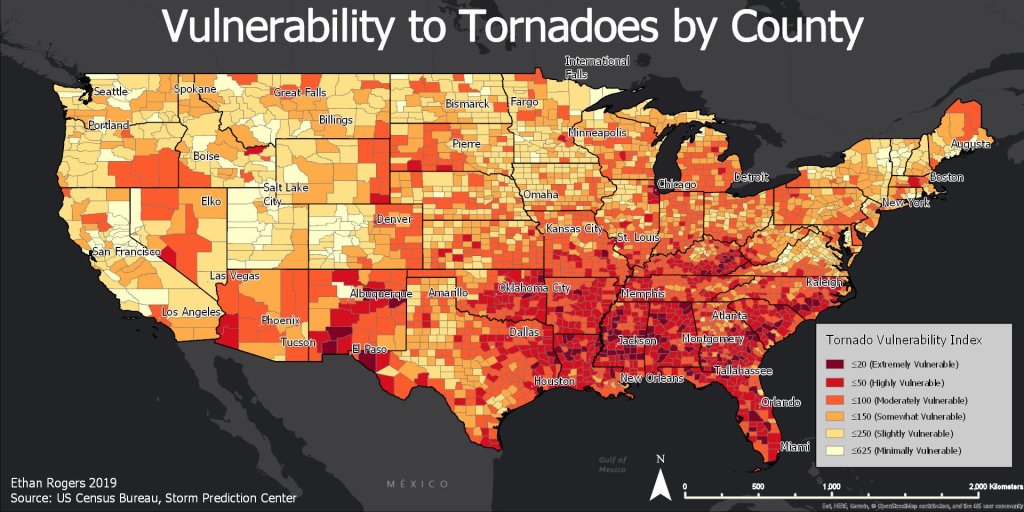
A graphic depicts the vulnerability of tornadoes in each county in the United States. Areas of greater vulnerability largely concentrate in the southeastern portion of the U.S. GRAPHIC COURTESY OF ETHAN ROGERS

 Severe weather preparedness remains vital as Arkansas enters the peak of tornado season.

Kory Ward, fire chief for Wynne, Arkansas, said those who don’t take severe weather seriously are making a bad move.

“There’s people that think, ‘oh it’ll never hit here,’ and it’s been very true to hit here within the last two years,” Ward said. “I say it all the time, stay weather aware. Pay attention to the news. Pay attention to your local radio station. Don’t be surprised by it.”

How can I stay safe during tornado season?

Anthony Coy, director of the Craighead County Office of Emergency Management (OEM), said always knowing the location of a nearby safe spot is vital for tornado season preparedness. 

A list of public storm shelters across Arkansas may be found at https://arkansasstormshelterlist.phonesites.com/. This list was last updated March 2025.

Coy said those living in manufactured homes or mobile homes, also called trailers, should especially take advantage of these community safe rooms. 

Manufactured homes are particularly susceptible to tornado damage because they are usually constructed with lighter, less durable materials. 

In a 2018 research article published by the American Meteorological Society’s Weather, Climate, and Society journal, Stephen Strader and Walker Ashley found that 72% of all tornado fatalities occur in homes and 54% of these deaths occur in mobile or manufactured homes. 

Amber Schlessiger, a National Weather Service (NWS) meteorologist, said overnight tornadoes are another distinct threat because they strike when most people are asleep. She said those who find themselves in the path of an overnight storm should set up multiple methods to receive warnings and be ready to wake up if a threat approaches.

Ward echoed this sentiment and said having some form of early warning system, such as phone notifications or a crank radio, is indispensable. 

Coy said keeping up-to-date with the weather is always good advice.

“There are a hundred different ways you can get those weather warnings on your phone,” Coy said. “But almost every county has some sort of information platform. In Craighead County, we use CodeRED.”

CodeRED, a community emergency notification system, allows individuals to sign up for alerts on Jonesboro’s website. The CodeRED mobile app may also be downloaded on the Apple App Store and Google Play Store.

Coy also said to exercise caution when determining trusted sources. He said some severe weather information, especially on social media, may be misleading or originate from questionable sources. 

The OEM director said creating and maintaining a preparedness kit is another step in staying safe. 

A well-prepared kit may include the following items: Several days’ worth of food and water, a flashlight, batteries, first-aid, a change of clothes, a whistle, maps, hygiene items, prescription medicines and pet food, if applicable.

Ultimately, Coy said, even the most seasoned preppers will overlook something. Still, even small acts of preparation will make a lasting impact, he said.

“Each time you chip away at that, you’ll become more prepared than you were before,” Coy said. “Don’t ever let it become a back-burner item.”

What are the impacts of tornado season?

Tornadoes are one of the deadliest and most costly natural disasters in the United States.

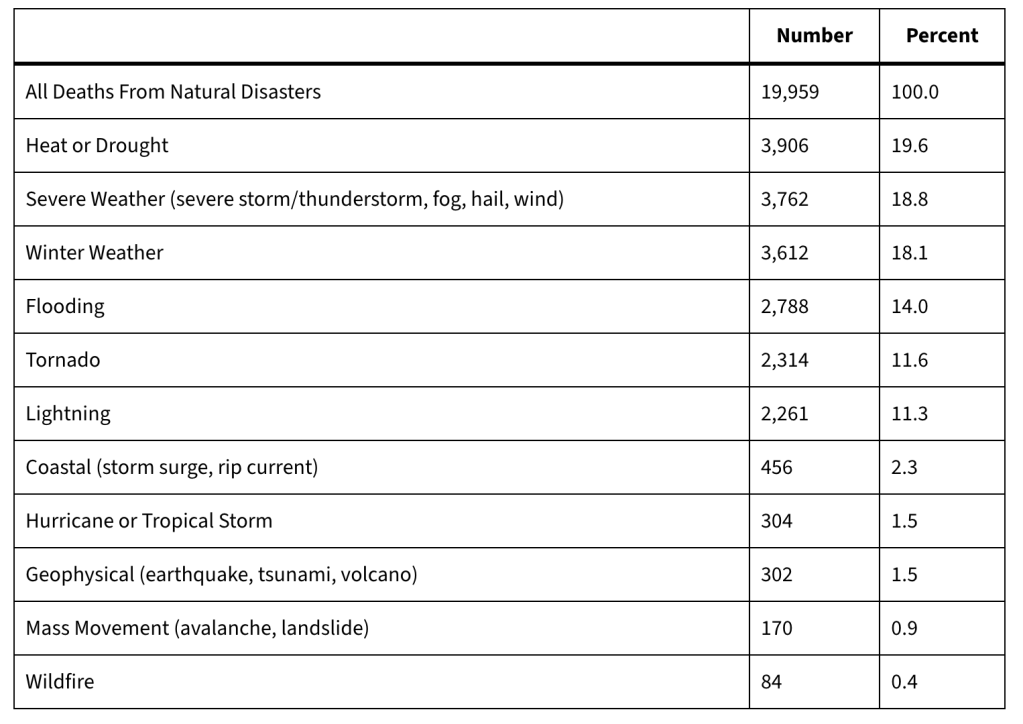
In a 2008 research article concerning patterns among natural disasters and mortality, Kevin Borden and Susan Cutter found, of 11 disasters researched, tornadoes accounted for the fifth-highest deaths in the U.S. between 1970 and 2004.

A list of natural disaster-related deaths recorded in the United States between 1970 and 2004. Tornadoes accounted for the fifth-most deaths in this list. LIST COURTESY OF KEVIN BORDEN AND SUSAN CUTTER

The article, published in the International Journal of Health Geographics, reported deaths caused by tornadoes constituted almost 12% of all natural disaster-related deaths in the U.S. during the same time.

Arkansas, in particular, shares a lengthy history with tornadoes.

From 1950 to 2024, 2,478 tornadoes hit Arkansas, killing 412 people, according to the NWS Little Rock office.

A study conducted by the National Oceanic and Atmospheric Administration (NOAA) found, from 1950 to 2025, tornadoes in Arkansas caused 5,567 direct injuries, $3.5 billion in property damage and $4 million in crop damage.

Northeast Arkansas is no stranger to lethal tornadoes either.

On March 31, 2023, an EF3 tornado tore through Wynne, Arkansas, killing 4 and causing over $150 million in property damage, according to the NWS Memphis office. The Wynne High School, which found itself directly in the center of the tornado’s path, was razed.

Three years prior, on March 28, 2020, another EF3 tornado damaged about 300 buildings, caused an estimated $300 million in damages and injured 200 people in Craighead County. 

However, despite the destruction they cause, Coy said, blessings exist in every disaster.

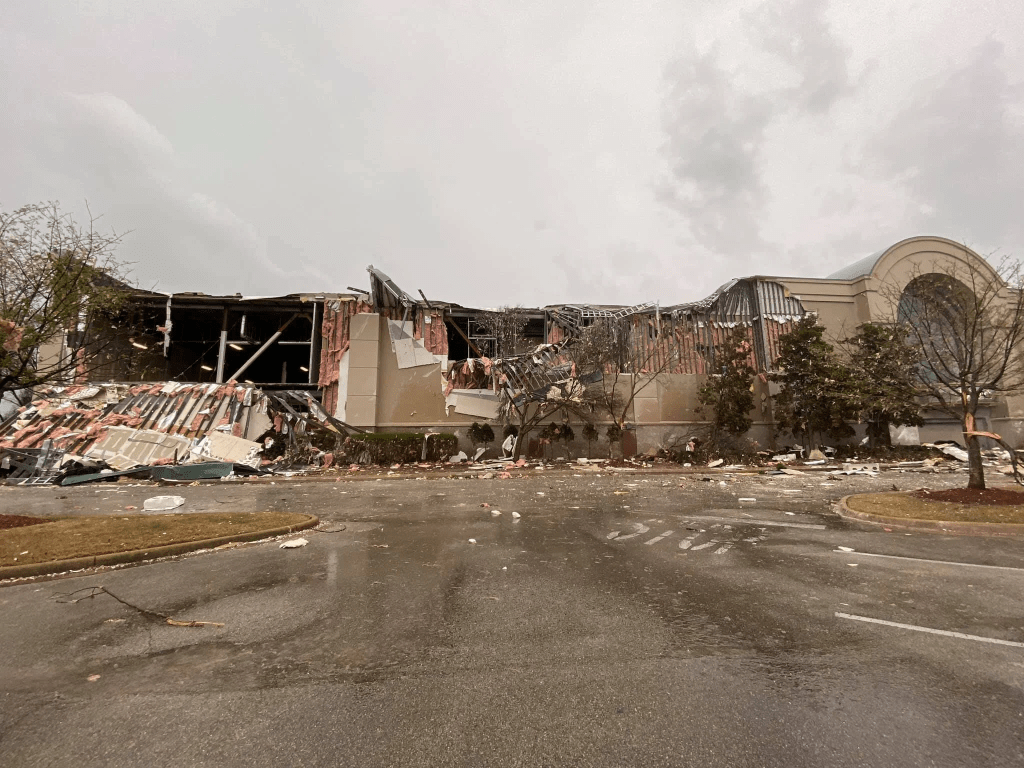
For example, Coy said the COVID-19 pandemic actually saved lives during the aforementioned 2020 tornado. He said the pandemic kept people at home rather than in commercial buildings, like The Mall at Turtle Creek in Jonesboro, which the tornado almost completely destroyed.

View of The Mall at Turtle Creek in Jonesboro after a tornado nearly destroyed the entire 73-acre plot. The tornado hit Craighead County on March 28, 2020. PHOTO COURTESY OF JONESBORO POLICE DEPARTMENT FACEBOOK

He said the tornado also taught him to have plans in place before disaster strikes.

“I was very new in the position at that time, I didn’t have my volunteer teams gathered yet, didn’t have changes to our emergency operations plan, none of that,” Coy said. “And here I am sitting at home on a Saturday and I watch a tornado drop down in the middle of Jonesboro. That’ll get your attention.”

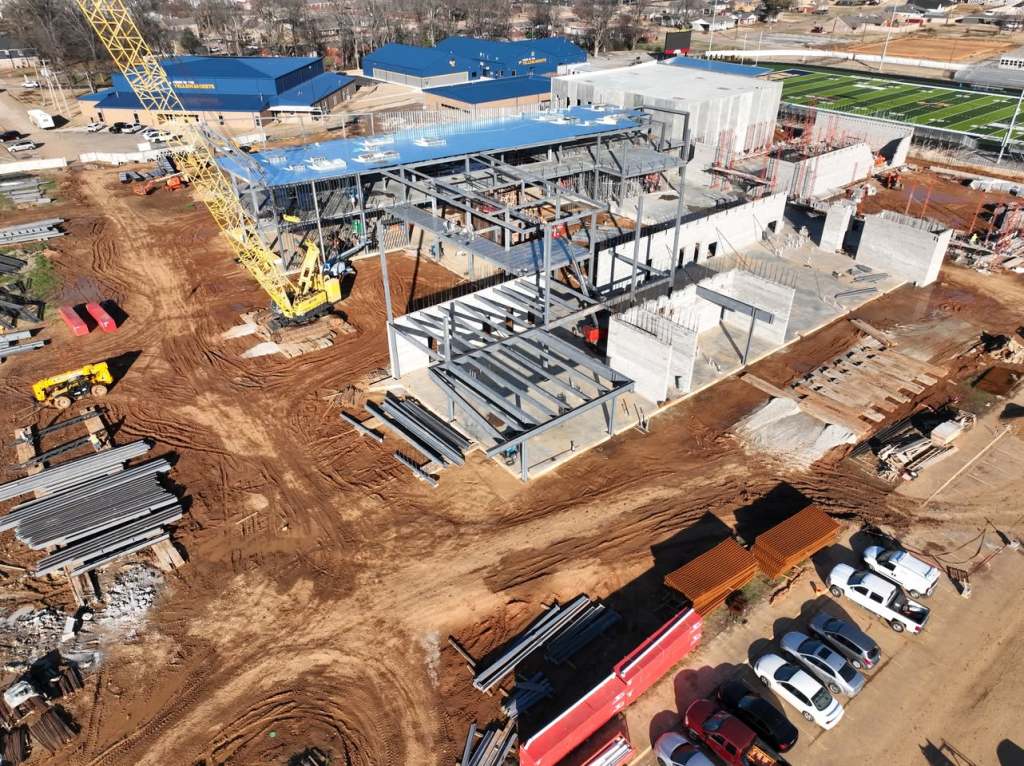
An aerial view shows ongoing construction at the site of the new Wynne High School. A tornado that struck Wynne, Arkansas on March 31, 2023, destroyed the previous high school. Nabholz Construction Corporation was contracted to lead construction on the high school. PHOTO COURTESY OF NABHOLZ CORPORATION FACEBOOK

As for Wynne, the company contracted to build a new campus for the high school, Nabholz Construction Corporation, stated in a Jan. 13 Facebook post that progress is moving steadily. 

“It’s exciting to see this project transition from structure to the spaces that will soon support learning, creativity, and community,” Nabholz Corporation wrote.

Why is there a tornado season, anyway?

According to the NWS, the months of peak tornado occurrence, also known as tornado season, last from March to May in Arkansas.

As temperatures transition from colder to warmer in the spring, atmospheric instability creates conditions favorable for the formation of tornadoes. Since this transition happens at slightly different times throughout the country, tornado season varies depending on the state.

Other climate factors also play a role in creating a tornado season.

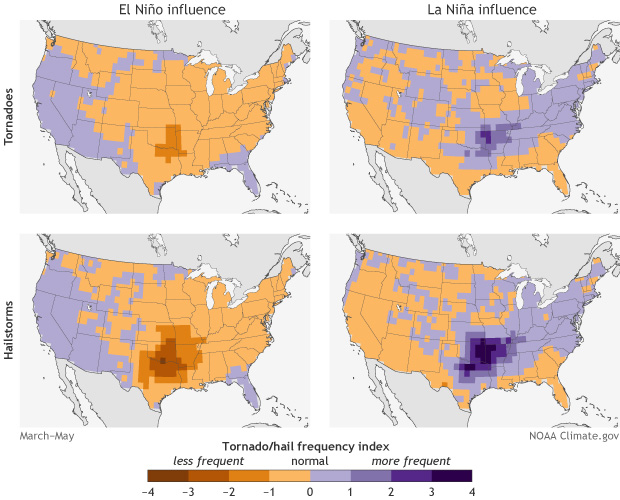
In a 2015 feature published by the NOAA, Michon Scott reported a relationship between tornado frequency and the natural weather patterns El Niño and La Niña.

Graphic depicts maps of the United States, representing the influence La Niña and El Niño have on the frequency of tornadoes and hailstorms in March and May, the peak months of tornado occurrences in Arkansas. The maps suggest La Niña increases the frequency of such severe weather in the southern U.S. GRAPHIC COURTESY OF NOAA

“Specifics vary, but in general, springtime tornadoes and hailstorms are less frequent in the southern central United States during El Niño and more frequent during La Niña,” Scott wrote.

El Niño is a natural weather pattern, usually lasting about a year, that occurs when warm water accumulates in the central and eastern Pacific Ocean. La Niña is the opposite and happens when cool water develops in the Pacific Ocean.

Coy, however, said Arkansas experiences severe weather regardless.

“The meteorologist will explain it has to do with whether you are in a El Niño or a La Nina and, I’ll be honest, they’ve explained it to me and I don’t always understand it,” Coy said. “It seems like we get severe weather regardless of which one we’re in.”

According to the NOAA’s National Severe Storms Laboratory, while tornado season denotes the period in which tornadoes are more frequent, a twister can form at any time of the year and in any location. Tornadoes occurred during all 12 months and in all 50 states.

According to a 2025 article published in the research database EBSCO, Mark Dziak wrote that “Tornado Alley” can be a misleading term because those living outside of its poorly-defined boundaries may believe they are less vulnerable to tornadoes.

Tornado Alley is a common geographic term used to define areas in the central U.S. where tornadoes are more frequent.

“Despite the focus on Tornado Alley, experts note that tornadoes can and do occur in every state, highlighting a phenomenon known as Dixie Alley in the southeastern U.S., where tornadoes may even be more frequent and damaging than in Tornado Alley,” Dziak wrote. 

Is tornado season getting worse?

As of April 3, 2026, the NWS confirmed nine tornadoes in Arkansas, near the average for that time of year.

Coy said, in his time working in emergency management, he experienced increasingly frequent and deadly weather. Coy, who is also the treasurer of the Arkansas Emergency Management Association, has worked in the industry since 2006. 

Research supports Coy’s experience. 

The Arkansas Tornado Database, using data from all NWS offices serving Arkansas, found that between 1970 and 1999, Arkansas averaged 25 tornadoes per year. 

Between 1991 and 2020, that number rose to an average of 37 tornadoes a year.

In a 2018 journal article published in the npj Climate and Atmospheric Science journal, Vittorio Gensini and Harold Brooks found while the national annual frequencies of tornado reports remained relatively constant, they documented positive trends in the Midwest and Southeast U.S. 

While no definite reason exists for this increase in tornado sightings, several theories offer possible hints.

Hazards geographer and meteorologist Stephen Strader, in a 2024 interview with NPR, told host Ari Shapiro that advancements in detection technology contribute to the apparent increase in tornadoes. Strader said tornadoes – especially weaker, short-lived ones – posted on social media are sometimes added to severe weather databases, which also increases the statistics.

Strader said population growth and urban development may also be partly responsible for the increasing severity of tornadoes. Many areas once forested or used for farmland developed into dense population centers, thus increasing the likelihood of a tornado causing significant damage.

“There’s just more things to hit, which means more potential disasters,” Strader said.

A 2021 journal article published in Scientific Reports found population density and the installation of Doppler Radar systems contribute to the increasing trend of damaging tornadoes.

Another possible culprit, climate change, may offer more complex impacts on tornado season.

Climate change, a hotly politicized and controversial weather phenomenon, refers to long-term changes to Earth’s average weather patterns, according to NASA.

Strader said, while the connection between climate change and tornadoes is not fully understood, many researchers suspect tornado sightings will increase as the impacts of climate change create environments conducive to severe weather.

Data from the NOAA reports a greater risk of off-season tornadoes in a future warmer climate. However, the various intricate weather conditions at play during the formation of tornadoes make it difficult for scientists to determine the impact climate change is having or will have on tornado season.

A report from the Center for Climate and Energy Solutions (C2ES) also states factors such as limited data collection methods, high variability and the relatively small geographic size of tornadoes as challenges for attributing climate change to a worsening tornado season.

“As scientists improve their physical understanding of the processes that cause tornadoes, and as climate models are run at higher spatial resolutions, our understanding of the climate change influence on tornadoes will improve,” the C2ES report stated. “Likewise, as the observational record increases over time, trends will likely become more obvious.”

Coy said while some people debate whether climate change is to blame, he focuses more on preparation.

“Whatever reason that is, I don’t know and I don’t have to know,” Coy said. “I just need to know when’s the next one and how strong do we think it might be.”

Coy said Craighead County is due for a break from severe weather. He said every year he hopes the weather is better than the year before.

However, the OEM director said he will never suggest any particular tornado season might be less severe because that might encourage people to let their guard down.

“I don’t want to cry wolf, I’d rather people be prepared and then not need to use that preparedness as the other way around,” Coy said.

Where can I find more tornado season resources?

The Craighead County Office of Emergency Management may be called at (870) 933-4575, found online at craigheadcountyar.gov/oem, or visited in person at the Craighead County Courthouse Annex. 

More local information about tornado preparedness from Craighead County may be found here.

Arkansas Weather Watchers, a digital media platform offering real-time coverage and community-driven reports from across the state, may be found here.

Meet Robin Myers, the “calm, steady force” named to return as ASU system interim president.

Story by DDNS Reporter Jerry Don Burton

January 25, 2026

Interim ASU System President Dr. Robin Myers.

 The Arkansas State University (ASU) System Board of Trustees named Robin Myers to return as interim president.

Myers, who previously served as ASU system interim president in 2024, was again named to the position on Dec. 12, 2025, following the previous president’s resignation. He said he was honored to return.

Jeff Hankins, ASU system vice president for strategic communications and economic development, said the chancellors and system staff were relieved by Myers’ second appointment. He said they are confident he was the best individual to step back into the interim president role.

“Dr. Myers is a calm, steady force who’s very experienced,” Hankins said. 

In his role, Myers said he is responsible for enacting board policies and overseeing the operation of the system office as it interacts with each campus under the ASU system. 

The ASU system oversees the educational, cultural and economic development of six campuses across Arkansas (Arkansas State University, Henderson State, ASU-Beebe, ASU-Newport, ASU-Mountain Home, ASU Mid-South and ASU Three Rivers) and several other satellite institutions.

Regardless which campus they belong to, Myers said, students should know the ASU system works on their behalf to support and assist them.

“There is a group of people working on their behalf and I think that’s important to understand for students,” Myers said. “Unfortunately, because we are remote from the campuses, it is hard to have that interaction with students.”

Despite this limited contact, Myers said over 30 years of interactions with students in various educational positions gave him the experience needed to succeed as interim president. 

Myers served as chancellor of ASU-Mountain Home for 11 years from 2012 to 2023, where he said he learned how students integrate and work together with campus operations. 

“I think those are the things, just having that exposure and experience over the years, that provide me with a good background to understand what our campuses are going through on a day-to-day basis and the kinds of support and conversations that they need from me,” Myers said. 

As a child, Myers said he worked closely with his dad’s business, gaining experiences and opportunities that shaped his current skill set. 

The interim president said his greatest strength is his ability to listen to people and understand their perspective. He said he is not quick to judge or make decisions, but instead exhausts all information on a topic before moving forward.

However, Myers said his methodical nature is sometimes a weakness. 

“I try to maybe do too much or get too involved sometimes, just because I want to help and assist,” Myers said. “Maybe I should take a step back occasionally.”

Jerry Morgan, ASU system board of trustees chair, said the board named Myers because of his previous experience as interim president and comprehension of system priorities.

Hankins said the board of trustees turning to Myers again is a significant compliment. He said he does not recall any particular challenges from Myers’ first appointment as interim president. 

“If anything, we came away disappointed that he couldn’t have stayed on as president,” Hankins said.

The interim president said it’s too soon to tell if his current appointment will be different or similar to his first, although the circumstances are similar. 

Myers was first named interim president in 2023, following the resignation of the second system president, Chuck Welch.

In 2024, Myers stepped down after the board completed its search for a permanent system president, naming Brendan Kelly to fill the position. However, Kelly resigned in early December 2025 upon being offered to serve as president of Eastern Michigan University, his alma mater. 

Myers said he enjoyed his time working with Kelly through both transitions. 

“Just an exceptional person, incredible skills and ability,” Myers said. “To be able to go back to his hometown and the school in which he graduated and be the president of that, no one can blame him.”

Hankins said the board of trustees held a special meeting to accept Kelly’s resignation. Soon after, at the next scheduled meeting, the board named Myers to be interim president. 

Myers said the timing of the transition required him to pivot quickly.

“In addition to trying to transition and get an apartment and get moved to Little Rock, I had to also try to celebrate the holidays with my family,” Myers said. “It was a challenge, but it was also exciting and it worked out perfectly.”

In a statement published after Kelly’s resignation, A-State Chancellor Todd Shields said continuity of purpose is vital during system president transitions. 

“As the trustees identify a new system president, our job is to stay the course and stick to the vital mission of educating tomorrow’s leaders and bridging our four-year and two-year colleges, industry and workforce needs for the ultimate good of Northeast Arkansas and the entire state,” Shields said.

Myers said he wants to be remembered as someone who cared about people, supported students and worked on behalf of everyone to find the best solutions for every issue presented to him.

“In the end, everything we do is focused on providing the best educational experience and opportunities we can for our students,” Myers said. “It is both an honor and a privilege to get to work with these folks.”

Myers will serve as interim president until the board of trustees completes its search for someone to fill the position in a long-term capacity. The board will meet again Feb. 13 to outline next steps in the search for an ASU system president.