Category Archives: Education: HigherEd

Meet Robin Myers, the “calm, steady force” named to return as ASU system interim president.

Story by DDNS Reporter Jerry Don Burton

January 25, 2026
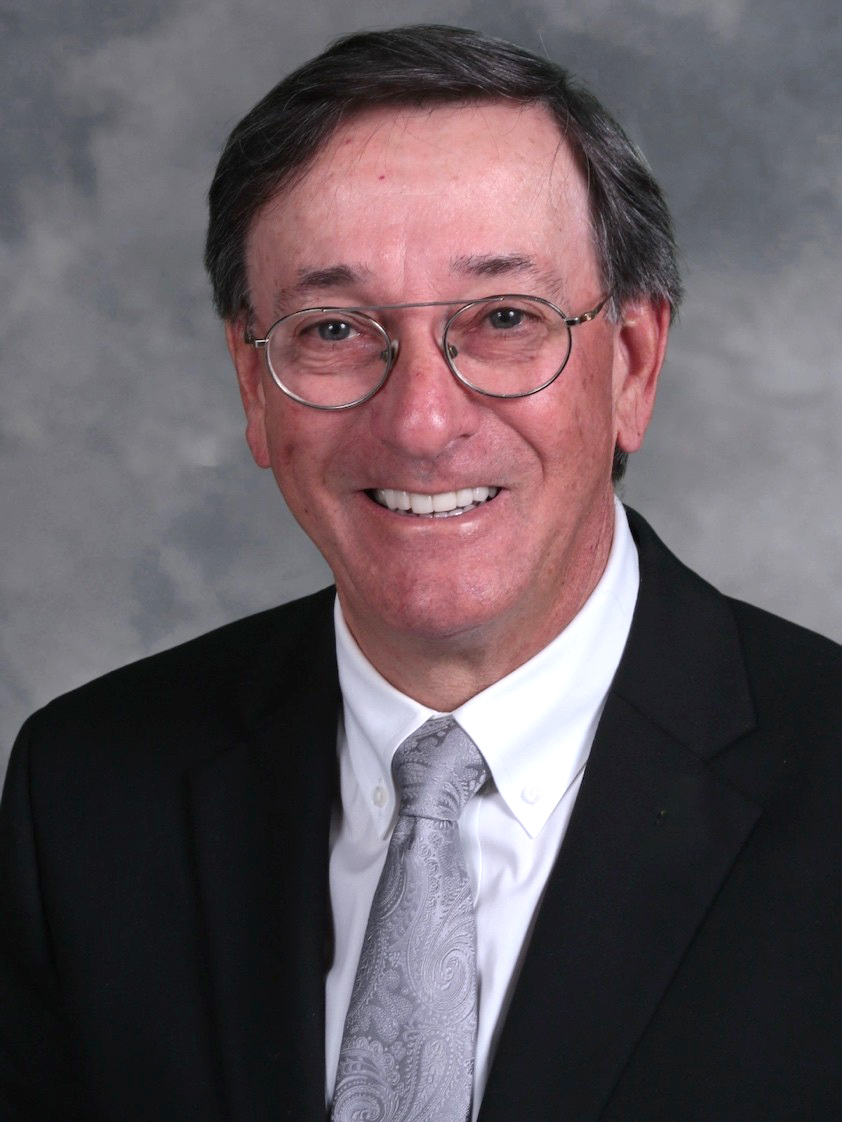
Interim ASU System President Dr. Robin Myers.

 The Arkansas State University (ASU) System Board of Trustees named Robin Myers to return as interim president.

Myers, who previously served as ASU system interim president in 2024, was again named to the position on Dec. 12, 2025, following the previous president’s resignation. He said he was honored to return.

Jeff Hankins, ASU system vice president for strategic communications and economic development, said the chancellors and system staff were relieved by Myers’ second appointment. He said they are confident he was the best individual to step back into the interim president role.

“Dr. Myers is a calm, steady force who’s very experienced,” Hankins said. 

In his role, Myers said he is responsible for enacting board policies and overseeing the operation of the system office as it interacts with each campus under the ASU system. 

The ASU system oversees the educational, cultural and economic development of six campuses across Arkansas (Arkansas State University, Henderson State, ASU-Beebe, ASU-Newport, ASU-Mountain Home, ASU Mid-South and ASU Three Rivers) and several other satellite institutions.

Regardless which campus they belong to, Myers said, students should know the ASU system works on their behalf to support and assist them.

“There is a group of people working on their behalf and I think that’s important to understand for students,” Myers said. “Unfortunately, because we are remote from the campuses, it is hard to have that interaction with students.”

Despite this limited contact, Myers said over 30 years of interactions with students in various educational positions gave him the experience needed to succeed as interim president. 

Myers served as chancellor of ASU-Mountain Home for 11 years from 2012 to 2023, where he said he learned how students integrate and work together with campus operations. 

“I think those are the things, just having that exposure and experience over the years, that provide me with a good background to understand what our campuses are going through on a day-to-day basis and the kinds of support and conversations that they need from me,” Myers said. 

As a child, Myers said he worked closely with his dad’s business, gaining experiences and opportunities that shaped his current skill set. 

The interim president said his greatest strength is his ability to listen to people and understand their perspective. He said he is not quick to judge or make decisions, but instead exhausts all information on a topic before moving forward.

However, Myers said his methodical nature is sometimes a weakness. 

“I try to maybe do too much or get too involved sometimes, just because I want to help and assist,” Myers said. “Maybe I should take a step back occasionally.”

Jerry Morgan, ASU system board of trustees chair, said the board named Myers because of his previous experience as interim president and comprehension of system priorities.

Hankins said the board of trustees turning to Myers again is a significant compliment. He said he does not recall any particular challenges from Myers’ first appointment as interim president. 

“If anything, we came away disappointed that he couldn’t have stayed on as president,” Hankins said.

The interim president said it’s too soon to tell if his current appointment will be different or similar to his first, although the circumstances are similar. 

Myers was first named interim president in 2023, following the resignation of the second system president, Chuck Welch.

In 2024, Myers stepped down after the board completed its search for a permanent system president, naming Brendan Kelly to fill the position. However, Kelly resigned in early December 2025 upon being offered to serve as president of Eastern Michigan University, his alma mater. 

Myers said he enjoyed his time working with Kelly through both transitions. 

“Just an exceptional person, incredible skills and ability,” Myers said. “To be able to go back to his hometown and the school in which he graduated and be the president of that, no one can blame him.”

Hankins said the board of trustees held a special meeting to accept Kelly’s resignation. Soon after, at the next scheduled meeting, the board named Myers to be interim president. 

Myers said the timing of the transition required him to pivot quickly.

“In addition to trying to transition and get an apartment and get moved to Little Rock, I had to also try to celebrate the holidays with my family,” Myers said. “It was a challenge, but it was also exciting and it worked out perfectly.”

In a statement published after Kelly’s resignation, A-State Chancellor Todd Shields said continuity of purpose is vital during system president transitions. 

“As the trustees identify a new system president, our job is to stay the course and stick to the vital mission of educating tomorrow’s leaders and bridging our four-year and two-year colleges, industry and workforce needs for the ultimate good of Northeast Arkansas and the entire state,” Shields said.

Myers said he wants to be remembered as someone who cared about people, supported students and worked on behalf of everyone to find the best solutions for every issue presented to him.

“In the end, everything we do is focused on providing the best educational experience and opportunities we can for our students,” Myers said. “It is both an honor and a privilege to get to work with these folks.”

Myers will serve as interim president until the board of trustees completes its search for someone to fill the position in a long-term capacity. The board will meet again Feb. 13 to outline next steps in the search for an ASU system president.

ASU System Reports Preliminary Fall Total Enrollment Growth

Picture and story by ASU System.

LITTLE ROCK — Arkansas State University System institutions reported strong 11th-day preliminary fall total enrollment growth of 7.6% with multiple record-setting performances, System President Dr. Brendan Kelly announced today.

“Six of our seven campuses had an overall enrollment increase, including record enrollment for A-State and an extraordinary upswing for Henderson,” Kelly said. “Our two-year institutions also attracted more students as workforce training programs grew. I appreciate the work of our teams across the ASU System to seek out and meet the needs of students and Arkansas employers.”

Total ASU System preliminary 11th-day enrollment was 30,339, up 2,132 students or 7.6% compared with official final enrollment of 28,207 in fall 2024. Full-time equivalent totals were up 7.2%.

Kelly noted that the traditional 11th-day enrollment measure, while positive for the ASU System, has become antiquated in today’s higher education environment because it doesn’t reflect collective enrollment throughout the year.

“Our campuses are enrolling and serving new students almost every week through online and non-credit training programs,” he said. “And ASU-Newport is piloting an initiative for eight-week general education courses that simply doesn’t align with the traditional reporting periods. The ASU System’s ultimate service numbers throughout the year are substantially higher.”

Arkansas State led the growth for the system with a record 17,926 students – a 7.4% increase of 1,239 over last fall’s record of 16,687. First-year students totaled 2,222, a 12% rise over last year, and include 1,764 Arkansans – who make up 79% of the class and represent a 30% increase from a year ago.

“This class is a clear sign that Arkansas families see A-State as their home for opportunity,” A-State Chancellor Todd Shields said. “It means they believe in what we are building here, and they trust this institution to shape their future and strengthen our home state.”

A-State on-campus enrollment grew by 7.8% while online program enrollment is up 6.7%. The A-State total also includes 1,053 students at Campus Queretaro in Mexico, which is a 10% increase over fall 2024.

Total preliminary enrollment at Henderson climbed 9.9% to 2,258, up 203 students from the fall 2024 total of 2,055. The number of first-time freshmen jumped 46% to 572 compared with 391 a year ago while transfer students were up 32% to 196 compared with 149.

“The Reddie Spirit is alive and well on campus as we welcome our returning students and the largest freshman class in six years,” Henderson Chancellor Trey Berry said. “Our faculty, staff, alumni and friends are committed to the success of our students, and it is inspiring to see the growth and tremendous energy throughout our campus community.”

Leading the way for the system’s two-year institutions in the fall reporting are ASU-Beebe with 3,588 students, which is an 9.5% increase over 3,277 last fall; ASU-Newport with 2,118 students, a 13.4% increase over 1,868; ASU-Mountain Home with 1,318, a 0.2% increase over 1,315; and ASU Mid-South with 1,180, a 15.5% increase over 1,022. ASU Three Rivers reported 1,951 students, a 1.6% decrease from 1,983.

The two-year institutions and A-State reported robust growth in high school concurrent credit enrollment with 5,650 students as the ASU System works with the state’s high schools to fulfill goals outlined in the Arkansas ACCESS Act.

A-State, NYIT to Train More Doctors for Arkansas

Wilson Hall at Arkansas State, home of NYIT College of Osteopathic Medicine. Story and photo courtesy of Arkansas State University.

JONESBORO – Arkansas State University and the NYIT College of Osteopathic Medicine (NYITCOM) at A-State today announced the launch of the Freshman to Physician Pathway, a new opportunity for Arkansas students to secure early admission to medical school and begin preparing for careers in healthcare from the first day of college.

The initiative is designed to grow the number of physicians serving rural and underserved areas of Arkansas. Since opening its Jonesboro campus in Wilson Hall in 2016, NYITCOM has graduated 650 new doctors in six classes — and nearly 70 percent of those from Arkansas have chosen to stay and practice in the state.

“This is a game-changer for the health of Arkansas,” said A-State Chancellor Todd Shields. “By eliminating traditional barriers and offering early admission assurance, we’re making medical education more accessible for high-achieving students who want to stay and serve right here at home. This is about investing in the next generation of healthcare leaders — and in the well-being of every corner of our state.”

A Streamlined Pathway to a Medical Degree

The Freshman to Physician Pathway offers a direct route from undergraduate enrollment at A-State to NYITCOM, provided students meet clearly defined academic and professional standards. Participants pursue a Bachelor of Science in biological sciences with a pre-professional studies emphasis and apply for admission to NYITCOM during their third year.

To qualify, students must maintain a 3.5 GPA in science and overall coursework (with a one-time waiver option for a single semester), complete all required pre-med classes, receive a favorable recommendation from A-State’s pre-medical committee and pass an admissions interview with NYITCOM faculty. Students who meet these criteria will not be required to take the MCAT, significantly reducing the cost and complexity of applying to medical school.

“The path to medical school is difficult and challenging, however there are hurdles that can be overcome when we have strong academic partners at the collegiate level that are preparing the students for the rigor of medical education,” said Dr. Shane Speights, dean of NYIT College of Osteopathic Medicine at Arkansas State. “Leveraging our higher education relationships creates a stronger university, medical school, and most importantly, future physicians.”

A Proven Commitment to Arkansas

NYITCOM’s osteopathic philosophy emphasizes whole-person wellness, prevention and community health — making it particularly aligned with the needs of Arkansas. Graduates go on to pursue a wide range of specialties, with many choosing family medicine, internal medicine, emergency care and OB-GYN — fields in especially high demand throughout the state.

With access to world-class instruction, early clinical experience and the full resources of the A-State campus, students in the pathway program are well prepared for the demands of medical school and a future of serving Arkansas communities.

“At most colleges, the path to becoming a doctor feels far removed from the undergraduate experience. But at A-State, it’s a part of everyday life,” said Chancellor Shields. “Having a medical school in the heart of campus creates a culture that few universities can offer.  It sets A-State apart, giving our students a front-row seat to the next chapter of healthcare, and in many cases, the inspiration to pursue their own bold career path.”

Applications for the Freshman to Physician Pathway open this fall for students entering A-State in 2025. A similar program is in development for A-State’s College of Veterinary Medicine, expected to launch in fall 2026.

For more details, one may visit AState.edu/FreshmanToPhysician.

Six A-State Students Selected for Distinguished Service Awards

Courtesy of Arkansas State University

JONESBORO – Six outstanding students from Arkansas State University have been selected as Distinguished Service Award (DSA) winners for 2024-2025. The DSA recipients will be recognized during the Convocation of Scholars as the institution’s most outstanding graduates based on their record of leadership, scholarship, and citizenship. 
 
One of these students will be announced as the 2025 recipient of the university’s highest honor, the R.E. Lee Wilson Award, on Thursday, April 24, at a campus dinner for the DSA winners.  
 
This year, the recipients are Elizabeth England of Piedmont, Mo.; Rachel Mooneyham of Jonesboro; Sabrina Pierce of Maumelle; Braden M. Ross of Nashville, Ark.; Jonathan Schaufler of Salem; and Amber Yates of Salem. 
 
Faculty, staff, and advisers nominate top students for the prestigious annual awards.  
 
All of the nominees have achieved excellent academic records and provided countless hours of service to the community, their classmates, campus organizations, their departments and colleges, and Arkansas State University. 
 
A committee comprised of students, faculty, staff, and previous Wilson Award recipients makes the final selections. Here are some highlights about each of this year’s DSA winners. 
 
Elizabeth England of Piedmont, Mo.  
With a double major in political science through the College of Liberal Arts and Communication and economics with the Neil Griffin College of Business, England will graduate in May. During her time at A-State, she has been on the Chancellor’s and Dean’s Lists and been awarded numerous scholarships.  
 
England interned at the Washington Center, was a Truman Scholarship nominee, and was awarded the Public Policy and International Affairs Graduate School Scholarship. She served as director of food pantry operations with the A-State Volunteer Council, was a senator of the Student Government Association, and volunteered with the A-State Women’s Business Leadership Center. 
 
Following graduation, England plans to pursue a master’s degree in public policy. Her advisers are Natasha Neal, instructor in political science and Dr. Chris Brown, professor of economics.  
 
Rachel Mooneyham of Jonesboro 
Mooneyham will graduate from the College of Liberal Arts and Communication in May with a bachelor’s degree in strategic communication with a minor in marketing. During her time at A-State, she achieved a 4.0 GPA and was named to the Chancellor’s list for the past four years. 
 
The awardee of many scholarships, Mooneyham received the Gena and Neil Griffin Business Scholarship, Alpha Gamma Delta Foundation Pearl Johnson Essay Scholarship, and Adrian Headley Memorial Textbook Scholarship.  
 
She wore many hats as part of the Student Government Association serving as a senator, chief of staff, and public relations director. She is a member of Alpha Gamma Delta, where she served in leadership roles. She is currently studying in England for her final semester. Her adviser is Rachel Freeze, instructor in strategic communication. 
 

Sabrina Pierce of Maumelle 
A psychology major in the College of Education and Behavioral Science, Pierce will graduate in May. With a cumulative GPA of 4.0, Pierce has been on the Chancellor’s and Honors Director’s Lists and was also named the 2024-2025 Bachelor of Science Psychology Student of the Year.  
 
A recipient of numerous scholarships, Pierce was awarded the Global Student Leaders Scholarship, Jo Anne J. Trow Scholarship, and was a Barry Goldwater Scholarship nominee in 2024. In addition to her studies, Pierce has been involved in several extracurricular activities. She serves as president for Psi Chi: International Honor Society in Psychology, A-State Society for Neuroscience, and vice-president of Alpha Lambda Delta. On campus, she was part of the Student Activities Board, Volunteer A-State, the Honors College, and several more organizations. 
 
She worked as a Communication Center coach on campus and said that experience gave her a sense of belonging and connection. Following graduation, she plans to attend graduate school seeking a Specialist in Education degree in clinical mental health counseling. Her adviser is Dr. Anthony Eldridge, assistant professor of psychology. 
 
Braden M. Ross of Nashville, Ark.  
A pre-professional studies biological sciences major in the Beck College of Sciences and Mathematics (BCSM), Ross will graduate in May. He has been on the Chancellor’s and Dean’s Lists, as well as the Honors Director’s List.  
 
Ross is the winner of several scholarships. He interned as a grant-funded research assistant with New York Institute of Technology’s neuroscience research lab, held numerous leadership roles within the Student Government Association, served as a tutor and ambassador for BSCM, and was involved in the pre-professional club. 
 
Described as being a very determined student, Ross plans to continue his education at A-State to attend graduate school. He also plans to attend flight school. His adviser is Dr. Kyle Gustafson, assistant professor of biology and environmental health. 
 
Jonathan Schaufler of Salem 
Graduating in May with a bachelor’s degree in nursing from the College of Nursing and Health Professions, Schaufler has been on the Chancellor’s and Dean’s Lists and was the 2024 Arkansas Nursing Student of the Year.  
 
He serves as president of the Student Nurses Association, president pro tempore of the Student Government Association, and is a member of the College of Nursing and Health Professions Dean’s Student Advisory Board. A Chancellor’s Ambassador, Schaufler has also served in leadership roles in his fraternity, Phi Delta Theta.  
 
In addition to his campus involvement, Schaufler has been involved with the community. He has interned at NEA Baptist Memorial Hospital where his ingenuity and drive were recognized. His adviser is Addie Fleming, associate professor of nursing. 
 
Amber Yates of Salem 
Yates graduated in December with a bachelor’s degree in communication studies from the College of Liberal Arts and Communication. She has been on the Chancellor’s and Deans’s Lists and is the winner the Excellence in Student Diversity Award in 2022, and the Black Student Association (BSA) Advocate and BSA Humanitarian awards in 2024.  
 
She served as president of the National Pan-Hellenic Council and held several leadership roles with the Omicron Tau chapter of Sigma Gamma Rho Sorority. In her time at A-State, she was pivotal in reactivating the sorority on campus after a 16-year hiatus. Yates was a volunteer with the A-State Food Pantry, a Pack Leader, a Communication Center coach, and served on the Student Government Association. Yates also served as an ambassador for the Multicultural Center. 
 
Her adviser was Matthew Robins, instructor in communication studies and director of the Communication Center.

Carole Farmer Appointed to ASU System Board of Trustees

Carole Farmer, ASU System Board of Trustees. Image courtesy of the ASU System.

LITTLE ROCK — Gov. Sarah Huckabee Sanders has appointed Carole Farmer of Fayetteville to a seven-year term on the Arkansas State University System Board of Trustees.


Farmer succeeds immediate past board chair Christy Clark of Little Rock, who served seven years after being appointed by Gov. Asa Hutchinson in 2018 and reappointed by Gov. Sanders in 2023.

ASU System President Brendan Kelly said he welcomes Farmer to the board.


“Carole Farmer will be an outstanding addition to our Board of Trustees,” Kelly said. “Her experiences in health care, management and finance will be welcome on the board and in the ASU System. We look forward to working with her in the years ahead.”


“I’m also grateful to Christy Clark for her service during the past seven years,” Kelly added. “She has been part of many significant achievements in the ASU System, and I worked closely with her as board chair during the last six months as I came on board as president. She’s been a tremendous resource and asset to the ASU System.”

Farmer is a Certified Medical Practice Executive (CMPE) and owns Arkansas Medical Management Consulting, LLC, a medical consulting firm that provides support for physician-owned practices. She worked 17 years for the largest multi-specialty physician medical clinic in northeast Arkansas. Her last seven years, she served as the clinic’s administrator and managed more than 120 employees.

She served for five years on the Board of Directors for Arkansas Medical Group Managers Association, her last year as chair of the organization.  Prior to her medical management career, she worked in the banking industry focusing on internal auditing and regulatory compliance. She is a member of the board of directors of Farmer Enterprises Inc.

“First, I want to thank Governor Sanders for her confidence in me,” Farmer said. “I look forward to working with President Kelly and the other trustees to improve educational and workforce opportunities for our students and all Arkansans.” 

Farmer is a graduate of Arkansas State University with both her bachelor’s degree in accounting (2005) and master’s in business administration (2008). She also served as an adjunct professor of accounting at A-State for two years, primarily focused on managerial accounting. 

A native of Palestine, she is married to Alec Farmer, a 1986 Arkansas State University graduate.  They are 1924 Sustaining Life Members of the A-State Alumni Association and endowed the Dalton A. Farmer Family Scholarship in 2015.

Together they have four adult daughters. Emily, their youngest daughter, is an A-State graduate. The ASU System, based in Little Rock, serves 35,000 students annually through on-site and online options. Member institutions include Arkansas State University in Jonesboro with an additional campus in Queretaro, Mexico; ASU-Beebe, with additional campuses in Heber Springs and Searcy and an instructional site at the Little Rock Air Force Base; ASU-Mountain Home; ASU-Newport, with additional campuses in Jonesboro and Marked Tree; ASU Mid-South in West Memphis; ASU Three Rivers in Malvern; and Henderson State University in Arkadelphia. For more information about the ASU System, visit ASUSystem.edu or follow on X @ASUSystem.

A-State College of Veterinary Medicine to Open Fall 2026

Rendering of the forthcoming College of Veterinary Medicine at Arkansas State University.

Story by DDNS Reporter Shailey Wooldridge.

The Arkansas State University College of Veterinary Medicine (CVM) will open in Fall 2026, pending accreditation, giving students an experience differing from the average veterinary medical school. 

Heidi Banse, dean of the College of Veterinary Medicine, said the college will have unique aspects based on how they have structured their curriculum, such as using a distributive model where students participate in clinicals in their final year of schooling. 

Dr. Heidi Banse, Dean for the College of Veterinary Medicine at Arkansas State University

“It’s a very community-centered program, which I think fits the state of Arkansas and does position us with some educational elements that other programs may not be able to offer. All programs have their niches and own areas that they emphasize, and for us, it’s community.“ Banse said. 

Banse formerly served as associate dean for educational strategy at Louisiana State University School of Veterinary Medicine (LSU Vet Med).

At LSU Vet Med, Banse led implementation of a new competency-based veterinary program by restructuring the educational framework to ensure students are prepared to enter practice when they graduate. 

“The thing that enticed me here at Arkansas State University was the opportunity to build a program, really starting at the ground floor,” Banse said. “Having just built a new curriculum at LSU, it seemed the next logical step in a career progression to build an entire program.”

In the first three years, Banse said A-State’s vet school curriculum will focus on developing skills, communication, ethics, practice management, and clinical reasoning. In the final year, students will go out into community practices across Arkansas and in other states to hone their skills and prepare to enter into practice.

Len Frey, senior advisor for strategic initiatives and senior associate dean of the CVM, said the distributive model of structuring veterinary medical schools is becoming more common. 

“We’re very comfortable with the distributed model because we saw it work at NYIT (New York Institute of Technology),” Frey said. “Again, it’s not the norm. It’s not the way it’s always been done. It’s a newer theory on delivering practice-ready doctors or practice-ready veterinary medicine physicians.”

Banse said one of the college’s primary goals is to train veterinarians across the breadth of species to prepare them to enter general practice. To accomplish this, something she wants to leave behind as much as they can is the traditional lecture format of education. 

“Our goal is to ensure that our students are engaged in learning and have active learning experiences,” Banse said. “Our classrooms that we’re constructing in our new building are flexible-use classrooms so they can be used for lectures, but we hope we’re doing a lot of small group learning to support some of the clinical reasoning.” 

Banse said around 190 practices, 85 in Arkansas, have signed up to be part of the clinical year teaching network. 

Since there is no veterinary school in Arkansas, students hoping to become veterinarians must go to college out of state to finish their schooling in veterinary medicine.  

“We are one of the most underserved states regarding the number of veterinarians per capita. We have 10 counties currently with no veterinarians, making it harder for clients to seek care,” Banse said. 

Amy Schmidt, director of the Northeast Arkansas Humane Society (NEAHS), said one of the reasons veterinary costs are so high right now is the lack of veterinarians. She said one of the problems in the community they see often is people who love their animals but can’t afford to take care of them. 

“The more vets we have in the area, the more we’ll be able to service the community in an accessible way,” Schmidt said. “I think there’s a great need to have a vet school in the area, and I’m super excited that we’re getting it here in Jonesboro.” 

NEAHS is one practice that will partner with the veterinary school for students in clinicals to give them hands-on experience. 

Banse said students will be able to practice doing physical exams on dogs and cats at the shelter and learn to provide veterinary care under the oversight of a practicing veterinarian. 

“They’ll get lots of experience talking to clients, working with animals in the community to make the quality of life for animals and hopefully make client experiences meaningful,” Banse said. 

Schmidt said a room in the isolation building on-site at NEAHS will be explicitly remodeled so students can learn isolation protocols. 

The NEAHS does a low-cost clinic three days a week that offers spays, neuters, and vaccinations. Schmidt said they have difficulty keeping up with the demand, with low-cost surgeries booked until May. 

“The vet school is going to help us with some of that volume so that they will be helping with low-cost surgeries. Not just helping us, but helping the community,” Schmidt said. “We also have that indoor dog kennel area; they’ve talked about using that to teach students how to make clinical rounds and assess everyone, especially post op.”

Banse said the vet school will include two flexible-use classrooms with tables that can be set up in multiple ways to easily change the room’s configuration. 

The building will also feature an almost 3000-square-foot clinical skills lab where students will learn procedures, an anatomy lab, cooler, freezer, a place to store anatomy specimens, a clinical skills laboratory space, storage for models from suture pads to full sized horses and cows, a practice lab for students that will be set up with 24/7 key-card access, a surgical skills training suite with a pre operative area, a sterile surgical area for their spay experience, for their spay surgeries and kennels for dogs and cats in case they need to be housed overnight.

Banse said plans for continuous improvement include collecting feedback from students, instructors, and course coordinators as the program is built and as students go through and making adjustments as needed. She said they will also use the national standardized exams, the veterinary education assessment, and the North American Veterinary Licensing Examination, all veterinarians take as part of their licensure, to help inform changes immediately.

 “One of the things that’s important for us too is once our students go out into the community, we then collect feedback from them one year out and five years out as well as from their employers one year out, to see how prepared they were when they entered into practice,” Banse said. 

She said it will also be vital for them to keep tabs on the changes and anticipated changes in the field of veterinary medicine and industry trends to ensure they’re responding to any needs within Arkansas.

The college has collaborated with the College of Agriculture and will continue to do so. Banse said they will use the Equine Center and one of the bovine barns to teach students skills-based training. 

“Hopefully, that creates better facilities for animal science students, too. It’s not like those are ours only; we share all of that,” Banse said. “I’m grateful that the College of Ag has invited us in. And feel like part of the same part of the same team training students.”

Sarah Hooper, associate dean for student programs and admissions, joined the CVM on February 27.  She will oversee student programs from recruitment through graduation and refine admission processes and the recruitment of students when that time comes. 

Hooper said she will be working on creating new website content for admissions. 

“I’m just excited to be able to help start the first state vet school in Arkansas. I had the advantage of going to a state university with a vet school in my home state, and it’s beneficial and advantageous when students like myself have our support systems,” Hooper said. “It’s exciting in my mind to help initiate this new school and to give the residents of Arkansas something that they’ve not been able to access before.”

The proposed class size is 120 students admitted once per year in the fall. In-state tuition will be $35,000 yearly, and out-of-state tuition will be $55,000 yearly. 

The groundbreaking ceremony for the CVM was held today at 11 a.m., and construction will begin later this month to early April. 

Banse said they can start recruiting students after receiving a letter of reasonable assurance from the Council of Education, which they may receive after a comprehensive visit this summer. 

“I’m most excited to have students. It’s exciting to build a program and think about how we construct a student-centered curriculum, but ultimately, it doesn’t feel real until the students are on site,” Banse said. “We’re doing it for the students, and it’s really fun to hear the excitement on campus from our students about the vet school, and I just can’t wait for them to get here.” 

Living Legends Awards to Honor Seven Individuals

JONESBORO — The seventh annual Living Legends Awards will be held at Arkansas State University to honor five new recipients as well as honor two individuals posthumously.  
 
The ceremony honors those who have enriched the community, excelled at their fields, and inspired younger generations.  
 
This year, honorees include the following:

Dr. Jenifer Rice-Mason retired from A-State in 2020 after serving more than 40 years where she led the department of Access and Accommodation Services. 

Dr. Wilbert Gaines, an emeritus professor of physical education, was one of the first Black professors on campus. During his tenure he taught countless numbers of students and helped guide them to success through his work in the classroom and with campus organizations.  

Shamal C. Carter, has spent his career working in the non-profit sector, volunteering in the community, and serving on various boards to benefit Jonesboro residents. 

Dr. Nikesha Nesbitt is dean of the University College at A-State. She is part of several committees on campus and in the community. 

Jervonne Newsome is an A-State graduate who remains the highest-ranked moot court competitor in university history. She works as a partner at a law firm in Dallas. 
 
Legacy Awards will be presented to the families of two late members of the community: 

Rennell Woods was an A-State graduate and a longtime member of the Jonesboro community. He was a licensed minister and received numerous accolades due to his giving nature. 

Tierre Hamilton, a 2005 A-State graduate, was part of Kappa Alpha Psi where he provided metorship and support for others. He was known for volunteering and being an active member of the community.  

“Selections are made by a committee and are based not on the quantity of nominations but the quality of the submitted nominations. We deliberate on both the A-State influence and the impact the nominee has made on the community,” said Ian Buchanan, Living Legends committee chairman.  
 
“This event shines light on those who may not get it elsewhere. It also shows students that the impact they make can be legendary in the future. We believe this honor and distinction help recognize the work and footprints that are sometimes not noticed or given their proper due,” Buchanan added.  

This event is held in conjunction with events at A-State for Black History Month. The Multicultural Center oversees the month of activities with the assistance of campus employees and student organizations. 

A-State to Present Black History Month Programs through February

JONESBORO – Several events will occur on the Arkansas State University campus throughout February to mark Black History Month. The theme for the programs this year is “African Americans and Labor: Celebrating our Achievements.” 

“My desire is to provide students with an opportunity to be empowered by the legacy of those who have come before them, connect with one another to build community, a chance to engage with the Northeast Arkansas community, alumni, and one another to build networks and enhance their sense of belonging to A-State,” said Dr. Carlitta Moore, vice chancellor for access and institutional engagement. 

The month filled with programs kicks off at 6 p.m. on Monday, Feb. 3, in Centennial Hall inside the Reng Student Union for a Night of the Arts. 

Performers across campus and the community will showcase their talents, including the A-State National Pan-Hellenic Council (NPHC), Jonesboro High Steppers, Brittany Duke, Evolve: The Student Organization. 

“These programs are thoughtfully designed to educate, inspire and foster a sense of unity. By attending, you’ll not only gain knowledge but also build meaningful relationships and contribute to the ongoing dialogue about valuing all,” said Trinity Haynes, education program coordinator of multicultural affairs. 

From 6-8 p.m. on Friday, Feb. 7, the community is invited to the 18th annual Soul Food Dinner and Program. The dinner will occur at the Baptist Collegiate Ministries building, 115 North Caraway Road, hosted by the Strong-Turner Alumni Chapter of the A-State Alumni Association. Following the meal, attendees can expect performances by singers and speakers. 

Feb. 9 – 13 the Black Student Association will celebrate BSA Week with several events taking place each day of the week. 

At 11 a.m. on Feb. 9, Sunday service from Word Baptist Church will occur inside the Reng Student Union Auditorium. 

Get your dancing shoes ready, the public is invited to a line dancing class at 6 p.m. on Monday, Feb. 10, inside Centennial Hall. 

As part of BSA Week, the Black Business Expo will return to Centennial Hall, beginning at 6 p.m. on Tuesday, Feb. 11. 

At 6 p.m. on Feb. 13, the Black Student Association will wrap up BSA Week with a talent show inside Centennial Hall.  

The events continue at 6 p.m. on Tuesday, Feb. 18, with the Tour of Black Voices. Guest artist Anitra Jay will take attendees on a journey of Black history with captivating songs, videos and performances. This program will be presented by the Student Activities Board and will take place inside the student union auditorium. 

The Jonesboro Alumnae Chapter of Delta Sigma Theta Sorority, Inc., welcomes the Northeast Arkansas community to “Democracy at Work: Your Role, Your Rights, Your Responsibility.” 

The conversation explores the importance of civic engagement and the role each individual plays in democracy. Participants can learn about their rights and responsibilities as community members at 6 p.m. on Thursday, Feb. 20, in the student union auditorium. 

The month of celebrations begins to wrap up at 5 p.m. on Saturday, Feb. 22, with the seventh annual Living Legends Awards inside Centennial Hall. Established in 2019, the ceremony honors A-State alumni and Northeast Arkansas community members who excel in their fields, enrich the community, and inspire future generations. This is a cocktail attire event. 

“The Living Legends Ceremony holds a particularly special place in my heart. It’s an incredible opportunity to honor and celebrate those who have selflessly given back to A-State and the broader community,” said Moore. “This ceremony allows us to express our gratitude and appreciation by giving them their flowers while they are still with us, a gesture which is both meaningful and profound.”

The festivities conclude at 3 p.m. on Tuesday, Feb. 25, as the A-State Museum transports attendees back in time for the Jonesboro Black Business District exhibit. The exhibit offers a glimpse into the legacy and contributions of Black-owned businesses in the local community.  

“My hope is that attendees walk away with a deeper understanding of the contributions and resilience of Black individuals throughout history and in contemporary society. I want them to feel empowered to celebrate access for all, engage in meaningful conversations about systemic change, and reflect on their own role in creating welcoming communities. Ultimately, I hope they leave feeling inspired and motivated to be lifelong learners,” said Haynes, chair of the Black History Month committee. 

ASU Trustees Approve $30.6 Million Bond Issue to Finance New A-State Veterinary School Facility

LITTLE ROCK — The Arkansas State University System Board of Trustees today in a special meeting approved a $30.6 million bond issue to finance construction for the new College of Veterinary Medicine at the A-State campus in Jonesboro.

Design and construction of the College of Veterinary Medicine facility is estimated at $33.2 million. The university plans to finance the building through the issuance of taxable Student Fee Revenue Bonds and use of institutional reserve funds. Tuition and fees from CVM students will ultimately fund debt service for the construction.

The move follows a recent consultative site visit by the American Veterinary Medical Association’s Council on Education, which reviewed A-State’s progress on facilities, policies and personnel for the college. The university plans to admit its first cohort of students in 2026 in what would become the state’s only public vet school.

The bond funding plan also allows for the refunding and reissuance of $11.6 million in existing student fee revenue bonds that were used for capital improvements on the A-State campus. The total 30-year bond issue must have an interest cost of no more than 7%, and the refunding must produce a savings of at least 4%.

Stephens Inc. and Crews & Associates Inc. will serve as bond underwriters. PFM Financial Advisors LLC is the financial advisor, and Friday, Eldredge & Clark is the bond counsel. 

In other action, the board authorized Henderson State University to explore the disposition of three university-owned houses as part of its efforts to pursue cost savings and future growth.

The properties in Arkadelphia include the Ramsauer House at 327 North 11th Street, the Smith Garner House at 324 North 12th Street and the Evans Street House/Lot at 1228/1226 Evans Street.

Disposition may include the sale of each property, which would require surveys and appraisals.

LISTEN: Students have a new food delivery service option this semester: Kiwibots.

Audio and story by Jerry Don Burton

The cube-shaped robots on wheels autonomously deliver from Godfather’s Pizza, Einstein Bros Bagels and Freshens to over 60 locations on campus. The Kiwibots also deliver food from virtual dining services including Mr. Beast Burger and AQ BBQ.

Richard Matthews, Sodexo interim general manager, said Arkansas State University is the first college in Arkansas to use the Kiwibot service.

“This was the technology that Sodexo suggested that might benefit the campus,” Matthews said. “We want to make sure this is something that is not only utilized but something that you guys want here.”

Around 300 Kiwibot deliveries have been completed since the semester began. Matthews said A-State’s current fleet of 15 Kiwibots could comfortably handle 500 to 700 deliveries every day.

Luke Caldwell, a senior history major from Conway, Arkansas, used the Kiwibot service during the first week of school.

“I heard about it, I downloaded the app and I gave it a shot,” Caldwell said. “It was fairly user friendly.”

Orders are placed using the Everyday app. From the app, users can select a delivery location, arrange a time for pickup and choose a payment method. The Everyday app accepts payment via Flex dollars.

Caldwell said his order was cheaper than he anticipated. He said his order cost the same as it would if he had ordered in person because there was no delivery fee.

Justin Lewandowski, retail operations manager for Sodexo, said Sodexo uses Everyday as their food hub app. Kiwibots cannot deliver food from Chick-Fil-A and Starbucks because they partner with Grub Hub, a competitor food delivery app.

Caldwell said his experience ordering with Kiwibot was pleasant overall, but the wait time was slower than expected.

“I think the estimated time was 15 or 20 minutes. An hour and a half later, it had not even left the Union yet,” Caldwell said.

Matthews said Kiwibots may encounter issues in very cloudy conditions or when the network is busy or slow. He said they ordered network boosters to increase the effectiveness of Kiwibots in areas that may see disruptions.

Caldwell said he submitted a support ticket concerning his delayed order. He said a Kiwibot customer employee messaged him apologizing for the wait and offered free orders as compensation.

He said when he received his order, the Kiwibot stopped at a designated location outside his dorm at North Park Quads. Caldwell said he scanned a QR code on the Kiwibot to open the chassis and retrieve his food.

Caldwell said he will keep using the Kiwibot service, but would like to see more accurate wait times in the app.

According to Kiwibot’s website, the bots can detect people, cars, and other bots. Kiwibots utilize GPS, artificial intelligence, cameras and sensors to travel autonomously, plan routes and avoid obstructions.

Matthews said Kiwi Campus, the company that owns the Kiwibot service, sent an employee to A-State for two weeks over the summer to help create routes for the Kiwibots. He said they utilized geo-mapping to plot out optimal pickup locations and delivery routes.

Sodexo employees underwent training over the summer to learn how to use the Kiwibots. Matthews said there are also two Kiwi Campus employees stationed at A-State.

“Each employee has been trained on how to load it, how to accept the orders, how to open the bot and load the food in,” Matthews said.

Lewandowski said employees use a tablet to accept orders and open the Kiwibot. Employees then load the order, close the bot and the rest of the process is hands-off.

Matthews said Sodexo is looking to promote the Kiwibots across campus. He said he wants to raise awareness by having the Kiwibots participate in events like football games and hosting giveaways.

“We are going to make things fun with Kiwi. This October, coming up, you should start seeing more,” Matthews said. “We are going to have you guys name the robots so instead of them having a number they would have a name and they can respond to their name.”

Lewandowski said they run their ideas and plans through Kiwi Campus. He said the two Kiwi Campus employees at A-State also help with planning.

Lewandowski said he wants Kiwibot to become another member of the A-State community.

“We really want it to be a part of this campus where it is a reliable resource for the students,” Lewandowski said. “This is a partnership with Kiwi that we want to see grow and expand in the future.”

Dr. Brendan Kelly Begins Tenure as New President of Arkansas State University System

LITTLE ROCK – Dr. Brendan Kelly today officially began his appointment as only the third president of the Arkansas State University System. The ASU System Board of Trustees voted to hire Kelly, who had served as president of the University of West Georgia since 2020, on June 5. He succeeds interim president Dr. Robin Myers and the second system president, Dr. Chuck Welch, who left the system in January after nearly 13 years to become president and CEO of the American Association of State Colleges & Universities (AASCU) in Washington, D.C.

“The ASU System is open for business and will expand the state’s economy by improving lives and opportunities – starting with our students and their families,” Kelly said. “I believe strongly that if we do what’s right for a student, and then we make it work for the institution, we’ll never go wrong. The energy that exists in most communities emanates from institutions like the ones that we represent. I’m excited that the ASU System comprises not only seven outstanding campuses, but also some terrific communities in Arkansas.

“We have the opportunity to galvanize communities, look to the future to ensure the ASU System is ready to meet it and work to expand the impact of higher education within Arkansas and beyond,” he added. “From cutting-edge research initiatives to skilled workforce training, I’m confident the ASU System has the ability to meet the demands of our rapidly evolving economy.”

Kelly said the ASU System role appealed to him “because it represents one of a handful of roles in the United States in which one has the ability to influence and shape higher education throughout an entire state. I am grateful to each member of the ASU Board of Trustees for their faith in me to offer leadership to a university system that has the capacity to provide access to high quality, higher education to the vast majority of Arkansans and many more beyond the state borders. This is an opportunity to support the economic evolution of the state at large.”

Prior to joining UWG, Kelly was chancellor at the University of South Carolina Upstate in Spartanburg and Greenville from 2017-2020 and was appointed as interim president of the University of South Carolina in 2019. He was vice president of university advancement and president of the UWF Foundation, Inc., at the University of West Florida in Pensacola from 2013-2017, where he led a successful $50 million capital campaign. His teaching career spanned 13 years in Florida and Michigan in communication arts.

His focus at UWG has been innovative programming both inside and outside the classroom with an emphasis on creating valuable life and career outcomes for students, with a commitment to launch and advance student careers upon graduation. He served on the board of directors of multiple regional and state economic development entities, as well as the Atlanta Regional Higher Education Consortium.

While leading and implementing the “Becoming UWG” Institutional Strategic Plan, Kelly has led UWG to record-breaking fund-raising efforts, including the largest gift in institutional history, and oversaw an enrollment resurgence. The UWG campuses in Carrollton, Newnan and Douglasville have a combined 12,769 students and are expected to exceed 14,000 this fall.  Its spring enrollment was 11.4% higher than last year, while its graduate enrollment surged 41%. UWG recently completed a move in athletics from the NCAA Division II Gulf South Conference to the Division I Atlantic Sun Conference.

“We’re thrilled to have Dr. Kelly officially beginning his leadership of the ASU System,” Board Chair Christy Clark said. “I know he is eager to get busy, and our board is eager to support him and his vision for the System and our campuses. We look forward to a smooth transition as he leads our experienced System team and chancellors.”

Trustee Price Gardner, who chaired the search on behalf of the board, said: “We are excited to welcome Brendan Kelly as our new System president. We believe Dr. Kelly’s experience and outstanding record of achievement throughout his career will continue the growth and development of our System and lead us in addressing the ever-changing challenges facing higher education and our focus on student success. He has been described as a visionary, talented communicator and a person with the ability to elevate the reputation of the institution and further its mission. Our board looks forward to the opportunity to work with him.”
Kelly is a member of the AASCU board of directors and was named “One of the Most Influential Georgians” by Georgia Trend magazine and James Magazine. He was active with the National Forensic Association (NFA) and speech/debate competitions for many years and was honored as a NFA Hall of Fame inductee and with the NFA Eddie Myers Distinguished Service Award.

He received a Bachelor of Science degree in public relations and a Master of Arts degree in communication at Eastern Michigan University and his Doctor of Philosophy in rhetoric and political communication at Wayne State University.

Kelly and his wife, Dr. Tressa Kelly, have three children – Bree Luckey (married to Drew Luckey), Liam and Kieran.

A-State receives almost $2 million grant to conduct research into oral health

Courtesy of Arkansas State University

The team that will be leading the research includes (from left) Ana Karen Solano Morales, master’s student in biology; Sangam Chudal, biotechnology major; Dr. Robert Shields, principal investigator; Emanuel Cazano, biological sciences major, pre-professional program; Shawn King, lab manager; and Bikash Kumar Dwivedi, doctoral student in molecular biosciences. Image courtesy of Arkansas State University.

The team that will be leading the research includes (from left) Ana Karen Solano Morales, master’s student in biology; Sangam Chudal, biotechnology major; Dr. Robert Shields, principal investigator; Emanuel Cazano, biological sciences major, pre-professional program; Shawn King, lab manager; and Bikash Kumar Dwivedi, doctoral student in molecular biosciences. Image courtesy of Arkansas State University.

JONESBORO – While most people know that tooth decay can result in an unsightly smile, the impact of this disease has serious implications for one’s overall health.

A faculty member in Arkansas State University’s Beck College of Sciences and Mathematics has secured a federal grant to conduct extensive research into the problem with the goal of better understanding the causes and effects.

Dr. Robert Shields, assistant professor of microbiology in the Department of Biological Sciences and principal investigator for the grant, sought the funding through the National Institute of Dental and Craniofacial Research, a division of the National Institutes of Health (NIH).

“Tooth decay is one of the most common diseases affecting people,” he added. “It has a significant health and economic burden on the U.S. population.”

Shields will guide a team of faculty members, doctoral degree candidates, student researchers, and lab professionals who will delve into the intricate molecular mechanisms underlying tooth decay pathogens.

The research team also includes Dr. Lisa McLellan at Purdue University – Fort Wayne who is a molecular microbiology expert with her own research lab.

“In this study, we will investigate the movement of genetic information between bacteria, a process that spreads antibiotic resistance and fuels pathogen evolution,” Shields explained. “We will focus our studies on understanding this process in the oral cavity and determining the role it plays in assisting in the development of tooth decay.”

The $1.77 million grant over a five-year period will support the work of the research team and provide a supply of chemical reagents, travel expenses to present results at scholarly conferences, and other expenses associated with their work.“

Dr. Robert Shields’ grant is an exciting opportunity to enhance his research in oral health,” stated Dr. Jennifer Bouldin, dean of the Beck College of Sciences and Mathematics. “This highly competitive NIH R01 grant supports health-related research by an investigator in their area of expertise. The Beck College is excited to see Dr. Shields receive this prestigious award and further his research in this important topic.”

Dr. Travis Marsico, vice provost for research, innovation and discovery, and executive director of Arkansas Biosciences Institute at A-State, noted this grant, the NIH R01, is the premier funding mechanism for those researching human health. The NIH R01 is the gold standard because it supports important hypothesis-driven research that is backed by preliminary data; recent funding rates are just over 21% of applications received nationwide.

“I am thrilled that Dr. Rob Shields has secured an NIH R01 award for his work on dental decay bacteria,” he stated. “The discoveries that will result from his team’s work have important basic science and human health implications for the people of Arkansas.”

This new grant represents only the second R01 and only the eighth NIH award in A-State history. It is also the largest NIH grant in the university’s history, he said.

“With our recent emphasis on expanding research development, the goal of the Research and Technology Transfer team is to help make these kinds of awards a regularity on campus.”

A related development with A-State’s blossoming research enterprise will get underway early next year.“As part of our expansion of NIH-funded programs, A-State has been selected in a new program called Engagement and Access for Research-Active Institutions (EARA), which will assist campus researchers with identifying appropriate funding opportunities from NIH,” Marsico continued. “The program should begin in February 2025. Fourteen faculty members have expressed interest, and Dr. Shields has agreed to mentor faculty pursuing NIH funding. His efforts have been successful, and he has built a strong relationship with his NIH program director.”

ASU-Newport Awarded $200K ITAC Planning Grant for Training Program


NEWPORT, AR — Arkansas State University Newport (ASUN) has been selected to receive a $200,000 award from the U.S. Department of Energy (DOE) as part of the DOE’s Industrial Training and Assessment Centers(ITAC) program. This funding will support the development of an Industrial Controls Technician Registered Apprenticeship and an Industrial Maintenance apprenticeship readiness program, aimed at enhancing technical education and economic prosperity in the Northeast Arkansas Delta region.

The ITAC Planning Project at ASUN will create new pathways for incumbent workers at small and medium-sized manufacturers (SMMs) to gain valuable skills and improve their workplace efficiency and productivity. By collaborating with local manufacturers, the program will provide hands-on training that addresses the growing demand for skilled technicians in the clean energy and industrial sectors.

Dr. Typhanie Myers, Provost and Vice Chancellor for Academic and Student Affairs at ASUN, expressed enthusiasm about the initiative: “This grant represents a significant step forward for ASUN and our community. It not only provides essential training opportunities for our local workforce but also supports the broader goal of enhancing industrial efficiency and sustainability. We’re excited to partner with local manufacturers and provide high-quality education that will help our region thrive in the evolving economic landscape.”

The ITAC program, managed by DOE’s Office of Manufacturing and Energy Supply Chains, aims to reduce barriers to decarbonization and promote clean energy jobs that do not necessarily require a four-year degree. The initiative is part of the Biden-Harris Administration’s Investing in America agenda, which seeks to bolster workforce training opportunities and support union labor.

ASUN’s project is one of 21 selected projects across 20 states, supported by a total of $24 million in funding. These projects will help train over 4,000 students, apprentices, and incumbent manufacturing workers, preparing them for quality careers in emerging sectors like advanced manufacturing, clean energy, and more.

For more information, view the official press release at energy.gov:*

*****************


« Older Entries