Courtesy of Jonesboro Public Schools Facebook Page
JONESBORO, Ark. – Jonesboro Public Schools launched a new counselor website and approved additional compensation for teachers who teach more than 150 students per day and more during its monthly school board meeting on March 10.
Mandy Zipful, district school improvement specialist, presented the new counselor website, highlighting the new and improved course catalog for Jonesboro High School. The JPS School Counselors’ website provides a hub for connecting students with counselors, finding mental health resources, booking appointments, accessing grades and graduation requirements, and viewing a detailed course catalog. While the site is live, the district is working to connect the site to each school’s tab.
“This is a great tool for the students and parents,” Zipful said. “We’re super proud of this work.”
Zipful highlighted the new “Academics at Jonesboro High” course catalog, noting that the old version was just a Word document, while the new one lists every course offered and includes a detailed description. The new catalog also makes it easier to find graduation requirements, concurrent credit courses at both Arkansas State University and Black River Technical College, Success-Ready Pathways, and more.
“What would it look like to be more supported socially and emotionally?” Superintendent Misty Doyle asked students. Students said to be able to better get in touch with their counselor.
The website helps students easily book appointments with their counselor in 30-minute increments. Students can schedule an appointment by going to the JPS School Counselors website, clicking “Academics at JHS,” clicking the “Counselor Appointment” tab, selecting the counselor they wish to meet with and choosing a time that works best for them. Doyle even gave an example of how a student had an appointment scheduled for 9 a.m. and was surprised to actually be called out of class on time.
During the superintendent’s report, Doyle asked Von McDaniel, director of student health services to give an update on mental health.
“As of today, we’ve had 167 student contacts for this school year. Some of them we spend a lot of time with, and some of those we don’t,” McDaniel said.
Counselors meet with and contact students for a variety of behavioral and mental health concerns. Students can meet with counselors as many or as few times as needed. While some students have the resources needed to head in the right direction, others don’t and the district recognizes that.
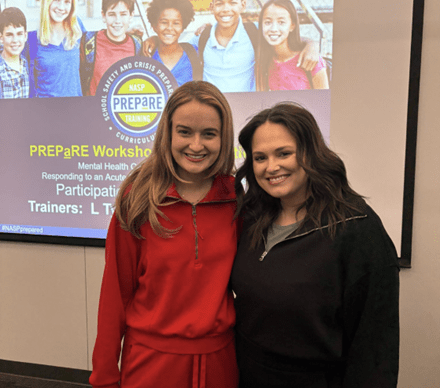
Photo courtesy of JPS School Counselors website. (Left) Lene Pierce, Jonesboro High School Health and Human Services counselor, and Emily Aycock, Visual and Performing Arts Magnet school counselor.
The board passed the motion to approve additional compensation for teachers teaching more than 150 students per day for the first semester in the 2025-26 school year. The JPS finance office recommended six teachers, including two from JHS, two from Douglas MacArthur Junior High School and two from Annie Camp Junior High School, for the supplemental teacher contract pay.
“A teacher is not required to teach more than the maximum number of students permitted per day under the Standards for Accreditation of Arkansas Public Schools and School Districts, but a teacher may agree to teach more than the maximum number of students permitted per day,” according to Arkansas Code § 6-17-812 (2024).
The district will pay the teachers an additional amount in addition to their regular salary, proportionate to the additional number of students they taught.
The board also passed the motion to approve the purchase of a new $153,054 77-passenger school bus.
The cast of “The Thanksgiving Play,” going through the play one full final time the night before opening night. Photo courtesy of DayDay Robinson.
JONESBORO, Ark.- The Arkansas State University Theater Department rounds out the Fall semester with a show with the perfect blend of satirical comedy and cultural commentary with “The Thanksgiving Play.”
“The Thanksgiving Play” centers around a group of four well-intentioned educators who are trying to come up with and write a Thanksgiving pageant without any Native American representation, but they get trapped in a loop of being socially aware, political correctness and trying to do what they believe is ‘the right thing.’
The play selection committee, which includes the director of The Thanksgiving Play, Dallas Martinez, as well as other professors in the theater department and three students, begins looking at plays for the next season almost a year in advance. They look at productions done in recent years and what the needs of students are.
“We want our students to have a well-rounded resume when they graduate so that it doesn’t show that they have only done one thing. So we start thinking about the needs, such as have we done a language play. Have we done a particular type of musical that takes place in like a golden age versus a modern age? Have we done ensembles? Have we done farces? Things like that so that when they leave here they’re able to not just say, ‘I can only audition for blank,’ right,” Martinez said.
This production takes place in a round in their black box Simpson theater. A round is when the audience is on all sides of the stage and can therefore see the actors at all times. The department typically has one show a season in the Simpson Theater, but this is the first time in several years that it has been set up in the round style.
“My favorite part of being in this production has been doing a show in the black box. I’ve never really had an opportunity to do a show in there, and this show takes place in the round, which means the audience is all around you, so it’s been really fun to dig into new acting skills. And there’s just nowhere to hide,” Zane Brewer, senior theater major from Conway, Arkansas
Joanna Crites plays Logan, a drama teacher and director who wants to put on a culturally and politically correct Thanksgiving play at her school.
Brewer plays Jaxton, Logan’s boyfriend, an actor in the play, and an ultimate yoga bro who is always ready to add his opinion.
Nico Stark plays Caden, a history teacher tasked with keeping the play historically accurate.
Kamyron Lefebvre plays Alicia, an actress hired by Logan as the Native American representation. Logan later finds out that Alicia is not actually Native American and only auditions for roles in different ethnicities. As no one is actually Native American, the four now have to come up with a way to tell the story of Thanksgiving with no native American representation.
This will be Crites’ first time in a leading role; she has been in an A-State production in the past, but it was more of an ensemble position.
“I think every show is very different; there’s really no comparing one show to another in my mind. I think that every cast and every crew, every director is different, and there’s just so much to love about each experience that I get to have. This is definitely the first time that I’ve had such a leading role, and so that’s been really exciting and different for me.”
The four become trapped in a never-ending spiral of social awareness, political correctness, and doing the ‘right thing.’ The audience is sure to leave laughing once they find out what the final concept is for the play they have spent so much time and turmoil putting together.
“Come see the show, ‘cause it’s fun. It’s Thanksgiving. Come out and have a good time. It’s a comedy and they’re gonna leave laughing, we promise. Like it’s really, really fun. They’re just gonna have a great time, it’s the holiday season, come on out people,” Brewer said.
There will be three more performances, 7:30 p.m. Friday and Saturday, and 2:30 p.m. Sunday, at the Fowler Center in the Simpson Theater, 201 Olympic Drive. You can purchase tickets online, at the A-State Box Office in First National Bank Arena or by calling (870) 972-2781. For the general public, tickets are $15. A-State students are admitted free with their student ID.
-30-
JONESBORO, Ark.- The Arkansas State University Theater Department rounds out the Fall semester with a show with the perfect blend of satirical comedy and cultural commentary with “The Thanksgiving Play.”
“The Thanksgiving Play” centers around a group of four well-intentioned educators who are trying to come up with and write a Thanksgiving pageant without any Native American representation, but they get trapped in a loop of being socially aware, political correctness and trying to do what they believe is ‘the right thing.’
The play selection committee, which includes the director of The Thanksgiving Play, Dallas Martinez, as well as other professors in the theater department and three students, begins looking at plays for the next season almost a year in advance. They look at productions done in recent years and what the needs of students are.
“We want our students to have a well-rounded resume when they graduate so that it doesn’t show that they have only done one thing. So we start thinking about the needs, such as have we done a language play. Have we done a particular type of musical that takes place in like a golden age versus a modern age? Have we done ensembles? Have we done farces? Things like that so that when they leave here they’re able to not just say, ‘I can only audition for blank,’ right,” Martinez said.
This production takes place in a round in their black box Simpson theater. A round is when the audience is on all sides of the stage and can therefore see the actors at all times. The department typically has one show a season in the Simpson Theater, but this is the first time in several years that it has been set up in the round style.
“My favorite part of being in this production has been doing a show in the black box. I’ve never really had an opportunity to do a show in there, and this show takes place in the round, which means the audience is all around you, so it’s been really fun to dig into new acting skills. And there’s just nowhere to hide,” Zane Brewer, senior theater major from Conway, Arkansas
Joanna Crites plays Logan, a drama teacher and director who wants to put on a culturally and politically correct Thanksgiving play at her school.
Brewer plays Jaxton, Logan’s boyfriend, an actor in the play, and an ultimate yoga bro who is always ready to add his opinion.
Nico Stark plays Caden, a history teacher tasked with keeping the play historically accurate.
Kamyron Lefebvre plays Alicia, an actress hired by Logan as the Native American representation. Logan later finds out that Alicia is not actually Native American and only auditions for roles in different ethnicities. As no one is actually Native American, the four now have to come up with a way to tell the story of Thanksgiving with no native American representation.
This will be Crites’ first time in a leading role; she has been in an A-State production in the past, but it was more of an ensemble position.
“I think every show is very different; there’s really no comparing one show to another in my mind. I think that every cast and every crew, every director is different, and there’s just so much to love about each experience that I get to have. This is definitely the first time that I’ve had such a leading role, and so that’s been really exciting and different for me.”
The four become trapped in a never-ending spiral of social awareness, political correctness, and doing the ‘right thing.’ The audience is sure to leave laughing once they find out what the final concept is for the play they have spent so much time and turmoil putting together.
“Come see the show, ‘cause it’s fun. It’s Thanksgiving. Come out and have a good time. It’s a comedy and they’re gonna leave laughing, we promise. Like it’s really, really fun. They’re just gonna have a great time, it’s the holiday season, come on out people,” Brewer said.
There will be three more performances, 7:30 p.m. Friday and Saturday, and 2:30 p.m. Sunday, at the Fowler Center in the Simpson Theater, 201 Olympic Drive. You can purchase tickets online, at the A-State Box Office in First National Bank Arena or by calling (870) 972-2781. For the general public, tickets are $15. A-State students are admitted free with their student ID.
-30-
Kamyron Lefebvre, playing Alicia, and Jo Crites playing Logan in “The Thanksgiving Play” written by Larissa FastHorse. Photo by Amelia Young.
(From left) Jeff Rosenzweig and Paul Ford listen as Dan Stidham speaks during the West Memphis Three panel discussion. All three men were attorneys involved in the defense of the West Memphis Three and were invited by the Arkansas State University Sociology and Criminology Association to attend the panel. Photo by Jerry Don Burton.
JONESBORO – Attorneys who defended three freed men convicted as teenagers, known as the West Memphis Three, spoke in a panel discussion at Arkansas State University to share insight, advice, and theories regarding the case.
The highly publicized and controversial case originated from the murders of three boys in West Memphis, Arkansas, in 1993. Damien Echols, Jessie Miskelley Jr., and Jason Baldwin were convicted of the murders, despite questionable evidence.
The A-State Sociology and Criminology Association (SCA) hosted the public panel on Thursday, Nov. 6, in the Reng Student Union Auditorium.
Stacy Dewald, faculty co-adviser for the SCA, said she wanted the event to bring attention that the criminal justice system is flawed, show wrongful convictions exist and offer new perspectives for those who still think the West Memphis Three are guilty. She said she believes the panel discussion achieved this goal.
The three attorneys who participated in the panel, Jeff Rosenzweig, Paul Ford, and Dan Stidham, began the discussion by detailing their connection to the case. Rosenzweig was on the team responsible for releasing the West Memphis Three in 2011, Ford was on the original defense team for Baldwin, and Stidham represented Miskelley as an attorney. Ford said this case highlights the power of confirmation bias.
“Once you have this notion, all new information is going to be sorted to reaffirm whatever that notion is. If your first notion is ‘they’re guilty,’ you’re going to hold on to that,” Ford said. “So when you meet people who are less than 40 years of age and their first involvement in this proceeding was to watch the HBO documentaries, they can’t believe they were convicted. Because that was the first story that they heard, but that was not the first story that people heard in 1993.”
Ford said the citizens of West Memphis needed somebody to blame so they could feel their community was safe. The existence of multiple potential suspects other than the West Memphis Three contributes to the controversial nature of the case and is the topic of many ongoing debates.
The three panelists said they are confident the West Memphis Three are innocent and have their own theories as to who committed the murders.
Rosenzweig said one valid suspect is “Mr.Bojangles,” referring to a bleeding man who was seen entering the nearby Bojangles restaurant about two hours after the boys were reported missing. Witnesses said the man was mentally disoriented and entered the women’s restroom. The next day, police took blood samples from the restroom that were later lost.
Ford said he has always been suspicious of Chris Morgan, a teenager who unexpectedly traveled to California with Brian Holland, another teenager, four days after the bodies were found. During questioning, Morgan said he had a history of drug and alcohol use and experienced blackouts and memory lapses. He said he might have killed the victims, but recanted this statement. This recanted statement was debated in the trial, but was found inadmissible as evidence.
Stidham said he has a suspect, a serial killer, whom he can place in the vicinity of the murders. He said he will explore the lead further and hopefully have more information to present before he retires.
Prevalent media coverage represents another element that generated controversy for the case.
Ford said national attention in the case, specifically from the media, was a double-edged sword.
“To have a CNN truck pull up outside of the courthouse in Corning, Arkansas, that’s like finding Bigfoot,” Ford said. “It was a big deal. Everywhere you went, there were reporters, cameras, people wanting interviews, producers from talk shows.”
Ford said if he could do anything differently in the trial, he would trust the media less. However, without a relationship with the media, he said, there would never have been a documentary and the West Memphis Three would still be in prison.
Dewald said the 1996 HBO documentary, “Paradise Lost: The Child Murders at Robin Hood Hills,” saved Echol’s life. Echols was the only teenager sentenced to death in the trial.
The case is also associated with the Satanic panic, due to the prosecution’s assertion that the children were murdered as part of a Satanic ritual. The Satanic panic was a social panic that began in the 1980s and continued throughout the late 1990s, involving widespread cases and accusations of Satanic ritual abuse.
Rosenzweig said some still believe the West Memphis Three are guilty for a number of reasons, ranging from having personal connections to being ill-informed.
“You’re never going to convince everyone, no matter what,” Rosenzweig said. “You just have to move on and go to the next person.”
Stidham said the use of the Alford Plea in the case is a common source of confusion that many people struggle to understand.
In 2011, the West Memphis Three entered an Alford Plea, meaning they pleaded guilty while maintaining their innocence. Judge David Laser accepted the plea, which simultaneously freed the men after serving 18 years in prison and put the case to rest.
Rosenzweig said he agrees with Stidham that the Alford Plea is a confusing part of the case and is controversial in its own right. Rosenzweig said if the state really thought the West Memphis Three killed the boys, they would still be in prison.
Ford said if the prosecution felt the teenagers actually killed the three eight-year-old boys, they should feel ashamed for letting them go free.
“Why would you ever agree to let people you think killed eight-year-olds walk free?” Ford said. “That, to me, is the greatest evidence that they really didn’t believe it.”
Scott Ellington, the prosecuting attorney at the time, said he recognized the compromise was not ideal. Still, he said, it gave the state the guilty plea it wanted and the defendants the ability to continue asserting their innocence.
“It certainly was not a perfect resolution to the case for the state, but it was much better than having three trials, trying to convince 36 jurors of the defendants’ guilt using old evidence, failed memories, changed minds, dead witnesses and the parents of two of the victims who now say they believe the defendants are innocent of the crimes,” Ellington said in a 2011 article from the Thomas Jefferson School of Law.
Rosenzweig said procedural mechanisms, which are rules designed to secure a fair and consistent application of due process, have not improved in Arkansas since the original West Memphis Three trial. He said forensic advancements make scientific evidence much more precise, but misunderstandings still persist and proliferate on social media.
Stidham said documenting is important, and interrogations should be recorded in their entirety. Ford said what he found egregious about the case was that adolescents were questioned by law enforcement without a parent present or knowledge.
The discussion ended after the panelists advised the audience on what to do if they are ever falsely accused of a crime. Stidham and Ford said to stay quiet and get a good lawyer, and Rosenzweig said to recognize that the exoneration process takes time.
Dewald, who is also an assistant professor of criminology, said planning for the event began in August, when A-State students Lesleigh Sullivan and Anna Hartley expressed an interest in the West Memphis Three for their honors project. Dewald said she feels a connection to the West Memphis Three because she grew up around the same time and shared similar interests in music and books.
“I kind of felt connected to them, but what was different is they grew up in the South, I grew up in the North,” Dewald said. “So it wasn’t so frowned upon in the North to like Metallica and Stephen King.”
The assistant professor of criminology said the case remains nationally relevant because DNA evidence remains to be tested and many questions remain unanswered. She said community interest endures because many people feel a local connection to the case.
Stidham said interest in the case will persist for many years.
“People are going to be talking about this case in 300 years, like we talked about the Salem witch trials,” Stidham said. “It’s essentially the same thing.”
Dewald said she didn’t think the panel would draw as many attendees as it did. Nevertheless, she said she appreciates the interest and hopes the event raises awareness and helps dispel some myths surrounding the West Memphis Three and the criminal justice system.
On Aug. 1, 2025, new DNA testing for evidence from the original crime scene was ordered by Crittenden County Circuit Court Judge Tonya Alexander. At the time of writing, however, no other updates have been announced.
JONESBORO – KASU is welcoming photographer Art Meripol to Arkansas State University with a reception and “art talk” for his photo exhibit, “We Shall Overcome.”
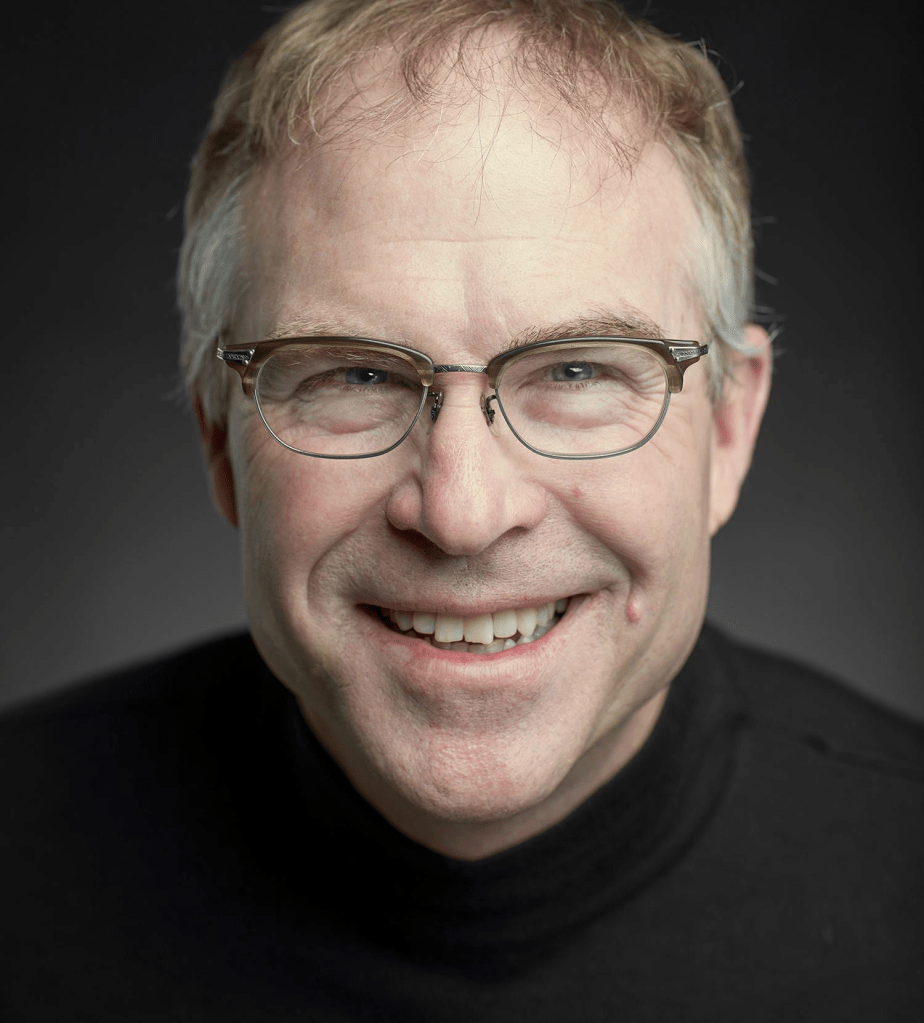
Headshot photo of Art Meripol. Photo courtesy of Art Meripol
The reception, hosted by KASU, will be held from 5:30 p.m. to 7:30 p.m., Oct. 29, in the Humanities and Social Sciences building atrium.
The photo exhibit, also located in the humanities building and presented by KASU, comprises 25 photographs of various landmarks along the Civil Rights Trail. The exhibit opened to the public June 13. Meripol said his Civil Rights Trail photography is some of his most rewarding work.
“I’ve had a 50-year career and I’m more proud of this work than probably anything I’ve done in those 50 years, and I wanted to share it,” Meripol said.
LaDawn Lee Fuhr, KASU corporate relations specialist, said Meripol’s background in journalism, passion for history and skill in photography will be of interest to a wide range of people at the “art talk” and reception.
“We feel like bringing this history and this art together is great for the overall community,” Fuhr said. “We’re hoping that people will come out and see it and meet Art, talk to him, and understand his process.”
Audio story by DDNS Reporter Jerry Don Burton
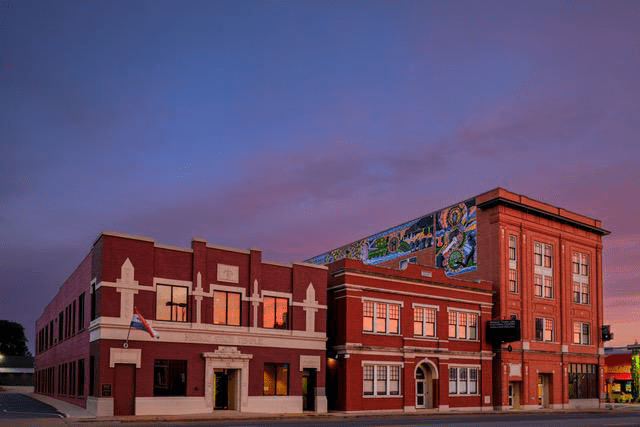
Mosaic Templars Cultural Center. Meripol said he woke up at 4:30 a.m. to capture the center in pre-dawn light. Photo courtesy of Art Meripol.
Fuhr was a major force in bringing Meripol’s photography to A-State. She said the concept of the exhibit and reception blossomed from a conversation between her and Meripol.
After not having seen each other for decades, Fuhr and Meripol reconnected at the Old State House Museum in Little Rock on July 12, 2024. Fuhr said she was impressed by his photography work on “The Official United States Civil Rights Trail: What Happened Here Changed the World,” a book published in 2021 by Alabama tourism director Lee Sentell, and wanted to create an exhibit of his Civil Rights Trail photographs.
Meripol said he knew the project would be worthwhile, but was initially daunted by the work, time and logistics it would take to complete such an exhibit.
“Once I got started, I got pretty excited about the possibilities to go through all the work I did on the U.S. Civil Rights Trail and narrow it down,” Meripol said. “I think that was what intimidated me more than anything was trying to pick 20 or 25 pictures out of all that.”
A majority of the photos featured in the exhibit were taken in 2017, when Meripol said he traveled to 10 states in 12 days to expand coverage of the Civil Rights Trail. Starting in Alabama, where he is based currently, Meripol covered sites in Louisiana, Mississippi, Arkansas, Kansas, Washington, D.C., Virginia, North Carolina, South Carolina, Georgia and Tennessee.
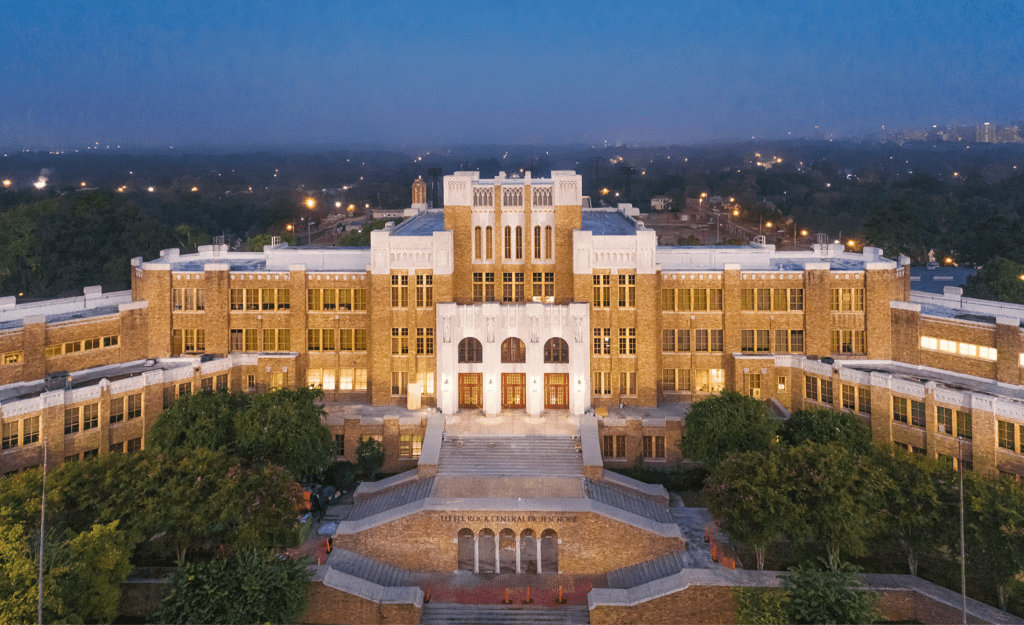
Little Rock Central High School. In 1957, nine teens known as the “Little Rock Nine” were the first African American students to enter the school following the 1954 Brown v. Board of Education Supreme Court ruling that made segregated schools illegal. Photo courtesy of Art Meripol.
Meripol said some of his favorite career experiences came from his work photographing the Civil Rights Trail.
Meripol said one such experience was his visit to Medgar Evers’ home. Evers, a civil rights activist and the first NAACP field secretary in Mississippi, was assassinated in the driveway of his home in 1963.
Prior to his arrival, Meripol said the caretaker of the home did not know he was coming to take photos. He said she was suspicious at first, but they ended up having a wonderful time together.
“We ended up sitting at the kitchen table at Medgar Evers’ home with her, and she was telling stories of when she was in high school and how they all adored Medgar Evers,” Meripol said. “Just seeing her face as her mind went back to that time and her memories was just magic.”
Evers’ home was designated a National Historic Landmark in 2017.
Medgar Evers’ home. Evers was dedicated to ending racial segregation at the University of Mississippi, enforcing voting rights and expanding opportunities for African Americans prior to his assassination in 1963. Photo courtesy of Art Meripol.
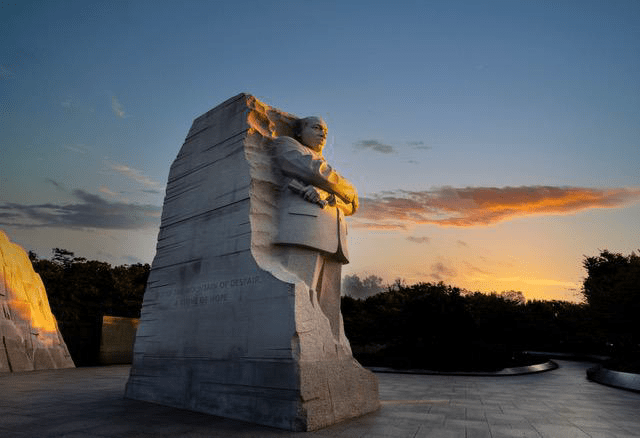
Meripol said another particularly memorable experience was his time in Washington photographing the Martin Luther King Jr. and Lincoln memorials.
Due to flight delays caused by storms, Meripol didn’t arrive in Washington until midnight. He took an Uber at 4 a.m. to the memorial to capture it before sunrise. He said he could not have asked for better lighting and was so inspired in fact, he decided to walk to the nearby Lincoln Memorial.
Martin Luther King Jr. Memorial, located in Washington, D.C. Photo courtesy of Art Meripol.
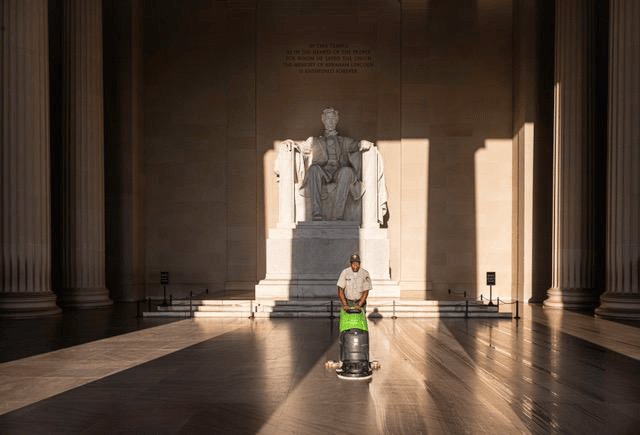
The Lincoln Memorial is typically a high-traffic tourist attraction, making it hard to photograph. But, due to the storms, Meripol said the memorial was empty, save for one employee.
“A U.S. government employee, an older Black man, was polishing the floors in front of Abraham Lincoln with the morning lights streaming through the columns and lighting him up,” Meripol said. “And I shot maybe one of my single favorite pictures of my life.”
Lincoln Memorial. Photo courtesy of Art Meripol.
Meripol said he hopes his work inspires viewers to visit the historic landmarks in his photos.
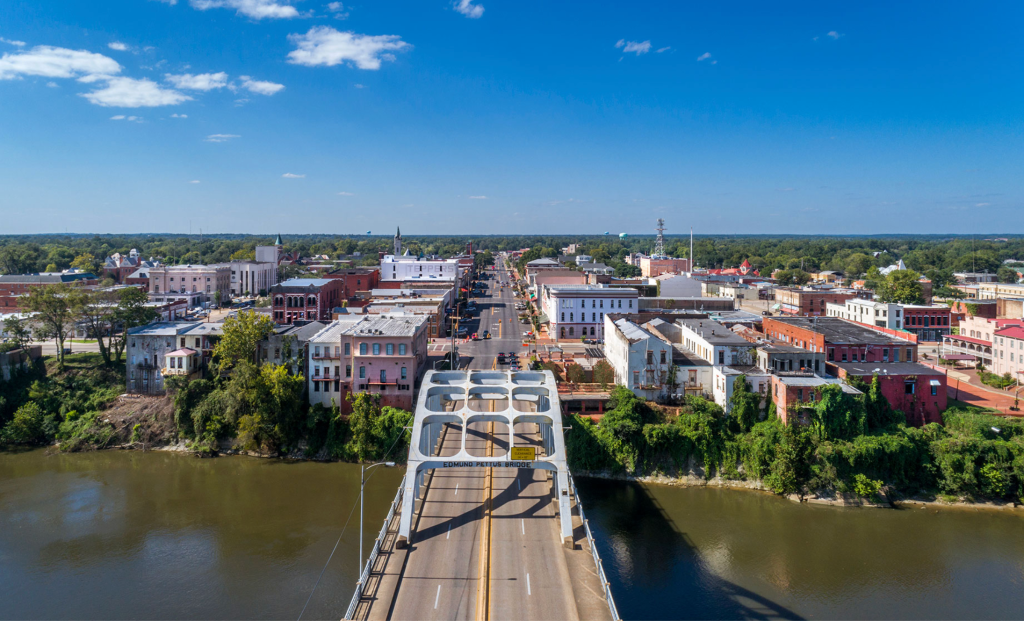
“I have a picture of the Edmund Pettus Bridge where the Bloody Sunday marches happened for voting rights,” Meripol said. “I hope they see that picture and want to go experience the bridge themselves. If they do, they’ll walk over the bridge as the marchers did back in the early sixties.”
Edmund Pettus Bridge, located in Selma, Alabama. The bridge was the site of Bloody Sunday, a conflict on March 7, 1965, when police attacked civil rights demonstrators as they were marching to the state capital. Photo courtesy of Art Meripol.
Fuhr said Meripol’s photography is important for preserving and highlighting the history of the United States.
“It’s a trite statement, but it’s true. If we don’t know our history, we’re doomed to repeat it,” Fuhr said. “I think any of us have a connection to the history that made this country. I feel it’s important to be seen in such a beautiful way. Because there was such pain, but it’s presented in such an appealing, beautiful way that people can appreciate.”
Meripol said the United States has always acknowledged its failures, but the current political climate is leading to the burial of some history.
“When we start hiding those failures, then you don’t know what needs to be paid attention to,” Meripol said.
In March, President Donald Trump signed an executive order targeting funding for programs that “degrade shared American values, divide Americans based on race, or promote programs or ideologies inconsistent with federal law and policy.” A few months later, in August, the Wall Street Journal reported that the White House ordered a review of exhibits at the Smithsonian Museum to align with Trump’s interpretation of American history.
Civil rights leaders, advocates and historians have criticized these moves as singling out content on slavery and civil rights in an effort to minimize the contributions of Black Americans.
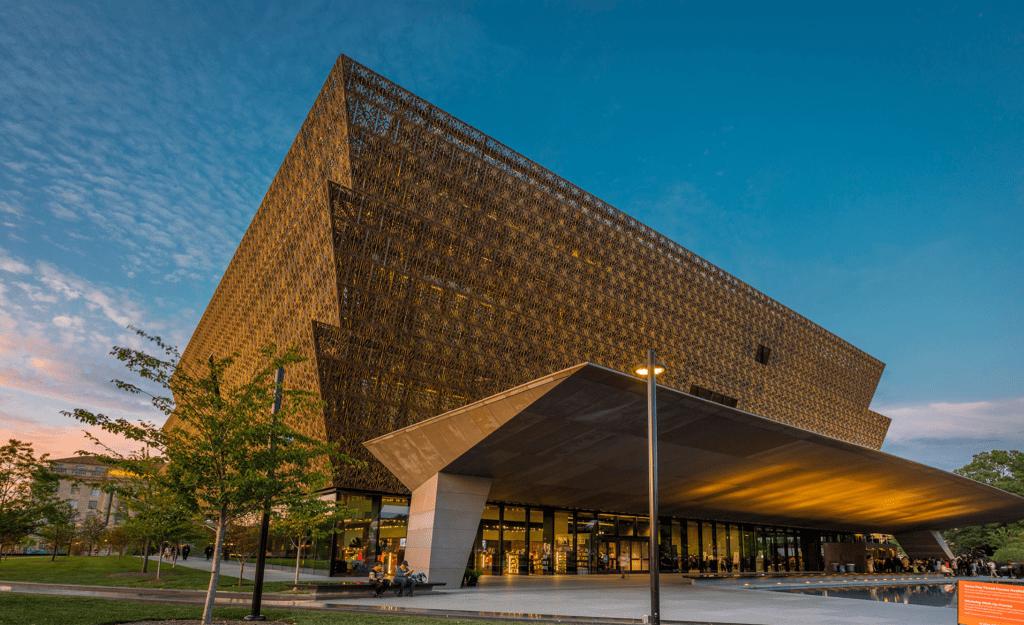
National Museum of African American History. Photo Courtesy of Art Meripol.
“There is an effort to try to hide those things, hiding Black history, which is American history. It hurts to see it happen,” Meripol said. “I’m hoping this exhibit will keep people discussing these things and finding ways to move forward.”
Fuhr said KASU’s involvement in creating the exhibit and reception aligns with the non-commercial public radio station’s mission to be a resource for the community.
“This is the kind of thing that public radio does that others don’t really do, which is to go deeper in the world and be able to bring this to the community.”
Mark Smith, KASU station manager, said the radio station is excited to bring Meripol’s photographs to the community. He said viewers will be immersed in the rich history and the craftsmanship on display.
Fuhr said bringing the exhibit to A-State was a joint effort between many individuals, both within and outside of A-State.
The event is sponsored by the A-State Office of the Provost, A-State College of Liberal Arts and Communication, Mosaic Templars Cultural Center and Arisa Health.
Kendall Moody, interior/exterior team leader for facilities management project services at A-State, was responsible for much of the physical preparation regarding the exhibit. Fuhr said his contributions were integral in ensuring the photos were placed properly without damaging the walls and columns of the humanities building.
Fuhr said the exhibit is planned to stay up until early 2026, but is interested in presenting the photos at other venues as a traveling exhibit.
“Each time I look at a photograph, I get a different sense of it, and so I want it up long enough for people to really appreciate it and really feel it,” Fuhr said.
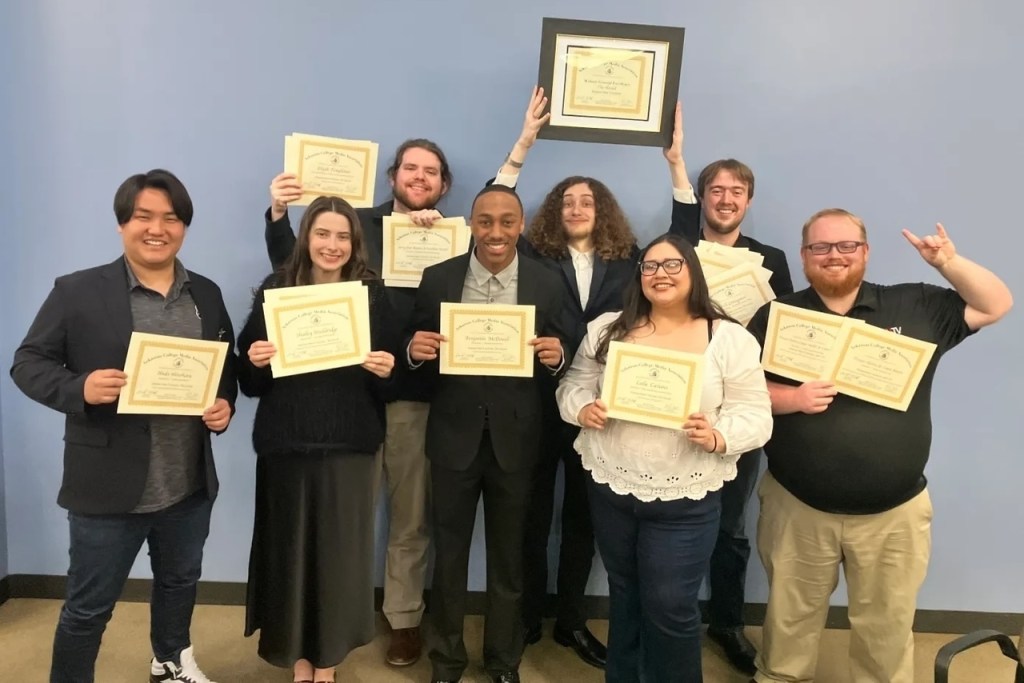
Students (from left) Ibuki Hinohara, Herald photo editor; Shailey Wooldridge, Herald news editor; Elijah Templeton, Herald life editor; Benjamin McDowell, Herald staff writer; Jerry Don Burton, Herald editor-in-chief; Laila Casiano, Herald opinion editor; Will Livingston, Herald sports editor; and Tristan Harlen, ASU-TV station manager, celebrate with their awards received at ACMA.
BENTONVILLE, Ark. — Arkansas State University’s student media outlets from the School of Media and Journalism earned 60 awards at the Arkansas College Media Association’s annual spring conference and awards banquet.
The Herald, A-State’s student newspaper, won 52 awards, including Website of the Year and honorable mention as Newspaper of the Year in the General Excellence categories.
“This is exciting!” Herald adviser Sandra Combs said. “The students worked hard and it showed. They had big smiles and great hope that they would come away with a big win.”
Retiring after 17 years of service to A-State, Combs has served as adviser to The Herald since 2015. Gretchen Hunt of NEA Premiere Magazine assisted as Herald adviser in the fall 2024 semester.
“The Herald staff members are already putting into practice real-world journalism skills as they produce a weekly newspaper and maintain a website and social media accounts, and they are doing it very well,” Hunt said. “They are already learning that having multiple skill sets is advantageous and provides them with the ability to present the news in a variety of forms. Obviously, I’m very proud of them for the work they do and the accolades they have earned.”
ASU-TV and Red Wolf Radio won four awards each. ASU-TV adviser Dustin Sullivan also praised the student work.
“We are proud and honored that students involved with ASU-TV and Red Wolf Radio were recognized for their hard work and efforts in providing professional and entertaining content for our viewers and listeners,” Sullivan said. “We thank ACMA for the opportunity to have our students recognized as award winners.”
Students attending the conference hosted by Northwest Arkansas Community College went through breakout sessions covering media job opportunities, sports reporting, audio reporting/producing, the business beat, magazine visual storytelling, entertainment, breaking TV news in digital formats, yearbook publication, and magazines in the digital age.
Award winners included:
Laila Casiano of Paragould won first place for newspaper election/political coverage, newspaper headlines, online arts and entertainment article, social media breaking news, and social media promotion; second place for audio podcast, online election/political coverage, online meeting/speech coverage, editorial page layout and online feature writing; third place for in-depth news and editorial page layout; and honorable mention for online newswriting.
Shailey Wooldridge of Caraway won second place for newspaper meeting/speech coverage, newspaper newswriting, online breaking news (within 24 hours), online election/political coverage, and online personality profile; and third place for online breaking news (within 24 hours) and online meeting/speech coverage.
Caroline Averitt of Jonesboro won first place for newspaper meeting/speech coverage and online headlines; second place for newspaper personality profile, in-depth news, and social media promotion; and honorable mention for newspaper feature page layout.
Former editor Rachel Rudd of Searcy won first place for online news photo, second place for newspaper election/political coverage, newspaper feature writing, and online feature writing, as well as third place for online personality profile.
Editor-in-Chief Jerry Don Burton of Vanndale won first place for newspaper meeting/speech coverage; second place for in-depth news; and third place for editorials/commentary/blogs and online breaking news (within 24 hours).
Anna Cox of Paragould won first place for personality profile and sports feature writing, and second place for online breaking news (within 24 hours), and newspaper meeting/speech coverage; and third place for sports page layout.
Will Livingston of Hot Springs won first place for sports feature writing; second place for sports feature writing; and honorable mention in online editorials/commentary/blogs.
Shelby Russom of Paragould won second place for newspaper news photo, online news photo, and audio podcast.
Elijah Templeton of Jonesboro won second place for newspaper review writing and honorable mention for online arts and entertainment review and online arts and entertainment article.
Abigail Leggett of Jonesboro won first place for online sports photo and third place for newspaper sports photo.
Allie Carson of Jonesboro won third place for online headlines, and Jack Douglas of Paragould won third place for online news photo.
Ibuki Hinohara of Nagano, Japan, won second place for online sports photo, and Benjamin McDowell of Wynne won second place for newspaper sports story.
Luke Morse of Jonesboro won first place for best specialty music show, while MacKenzie White of Trumann won first place for best radio documentary.
Emily Pilkington of Clinton won second place for best radio documentary. and Christian Sandoval of Jonesboro won second place for best specialty music show.
ASU-TV’s Tristan Harlen, Cooper Melder and Caton Marsh, all of Cabot, won first place in television sports reporting. Harlen and Marsh also took first place in television sports feature.
ASU-TV’s Makenzie Cutler of Harrison, Carson Campbell of Jonesboro, Pilkington and Christian Wilcox of Jackson, Tenn., won second place for television political coverage.
ASU-TV’s Colby Thompson of Conway, Jack Roach of Paragould, Markell McCoy of Clarksdale, Miss., and Mehr Aslam of Garden West Karachi, Pakistan, won third place in television feature.
Photo courtesy of the Northeast Arkansas Career and Technical Center
The Northeast Arkansas Career and Technical Center (NEACTC) celebrated 50 years of opening doors for students on Friday, March 14.
“It’s just nice that I’m able to contribute to the legacy of the place. So this is, this is most definitely a very special place in Northeast Arkansas,” Alex Ragsdale, special projects manager for the NEACTC, said.
The career technical school serves 14 school districts across Northeast Arkansas, it has undergone multiple name changes over the years but its purpose of preparing students for a variety of career skills remains constant.
Ragsdale said the center offers free college credit to high school students, free industry certifications, and clubs.
“This is a good place for students to get experience in the job field that they’re thinking about going into because we know how costly college can be, so it’s nice to kind of get your feet wet in this situation,” Ragsdale said. “Just an amazing place for students just to kind of fill out what they want to be.”
Robert Stephens and Mell Stephens attended the celebration. Robert taught computer-aided drafting at the technical school for 27 years, and Mell taught a parenting skills class for three years.
Robert Stephens and Mell Stephens look at a photo of themselves from their time at the Northeast Arkansas Career and Technical Center. Robert Stephens taught computer aided drafting for 27 years and Mell Stephens taught parenting skills for three years. Photo by DDNS Reporter Shailey Wooldridge.
“We had a great time,” Robert Stephens said. “I have a lot of students I see around town in places that appreciate what they learned here. Had several state winners.”
Mell Stephens said that many Roberts students became architects.
“It’s good that kids are getting recognized that come here. For years, we always said that more kids ought to be taking because they would be needed later on, and now, today, that’s exactly what’s happened. More and more folks in these classes are needed out on the job,” Robert Stephens said.
Mell Stephens said she enjoyed her time teaching at the NEACTC.
“I loved it. I loved the girls. Yeah, I had some challenges, but boy, I loved the girls. Loved teaching, and I had a couple of boys that came to it,” Mell Stephens said.
Isabella Stanton, a senior at Jonesboro High School and the president of the NEACTC SkillsUSA chapter said she discovered her passion for the EMT program through NEACTC.
“I did not know what I wanted my job or anything I was interested in until I learned this is here. I spoke with all the teachers, but I fell in love with the EMT program. I think it’s really why many people can figure out what they want to do,” Stanton said.
She said the NEACTC has supported her in many ways.
“I’m in EMT school, but Medic One wants to hire me already. It’s given me many opportunities, and I’ve made many friends and mentors from here as well. So, the NEACTC is a good place to find what you want to do,”
JONESBORO – Several events will occur on the Arkansas State University campus throughout February to mark Black History Month. The theme for the programs this year is “African Americans and Labor: Celebrating our Achievements.”
“My desire is to provide students with an opportunity to be empowered by the legacy of those who have come before them, connect with one another to build community, a chance to engage with the Northeast Arkansas community, alumni, and one another to build networks and enhance their sense of belonging to A-State,” said Dr. Carlitta Moore, vice chancellor for access and institutional engagement.
The month filled with programs kicks off at 6 p.m. on Monday, Feb. 3, in Centennial Hall inside the Reng Student Union for a Night of the Arts.
Performers across campus and the community will showcase their talents, including the A-State National Pan-Hellenic Council (NPHC), Jonesboro High Steppers, Brittany Duke, Evolve: The Student Organization.
“These programs are thoughtfully designed to educate, inspire and foster a sense of unity. By attending, you’ll not only gain knowledge but also build meaningful relationships and contribute to the ongoing dialogue about valuing all,” said Trinity Haynes, education program coordinator of multicultural affairs.
From 6-8 p.m. on Friday, Feb. 7, the community is invited to the 18th annual Soul Food Dinner and Program. The dinner will occur at the Baptist Collegiate Ministries building, 115 North Caraway Road, hosted by the Strong-Turner Alumni Chapter of the A-State Alumni Association. Following the meal, attendees can expect performances by singers and speakers.
Feb. 9 – 13 the Black Student Association will celebrate BSA Week with several events taking place each day of the week.
At 11 a.m. on Feb. 9, Sunday service from Word Baptist Church will occur inside the Reng Student Union Auditorium.
Get your dancing shoes ready, the public is invited to a line dancing class at 6 p.m. on Monday, Feb. 10, inside Centennial Hall.
As part of BSA Week, the Black Business Expo will return to Centennial Hall, beginning at 6 p.m. on Tuesday, Feb. 11.
At 6 p.m. on Feb. 13, the Black Student Association will wrap up BSA Week with a talent show inside Centennial Hall.
The events continue at 6 p.m. on Tuesday, Feb. 18, with the Tour of Black Voices. Guest artist Anitra Jay will take attendees on a journey of Black history with captivating songs, videos and performances. This program will be presented by the Student Activities Board and will take place inside the student union auditorium.
The Jonesboro Alumnae Chapter of Delta Sigma Theta Sorority, Inc., welcomes the Northeast Arkansas community to “Democracy at Work: Your Role, Your Rights, Your Responsibility.”
The conversation explores the importance of civic engagement and the role each individual plays in democracy. Participants can learn about their rights and responsibilities as community members at 6 p.m. on Thursday, Feb. 20, in the student union auditorium.
The month of celebrations begins to wrap up at 5 p.m. on Saturday, Feb. 22, with the seventh annual Living Legends Awards inside Centennial Hall. Established in 2019, the ceremony honors A-State alumni and Northeast Arkansas community members who excel in their fields, enrich the community, and inspire future generations. This is a cocktail attire event.
“The Living Legends Ceremony holds a particularly special place in my heart. It’s an incredible opportunity to honor and celebrate those who have selflessly given back to A-State and the broader community,” said Moore. “This ceremony allows us to express our gratitude and appreciation by giving them their flowers while they are still with us, a gesture which is both meaningful and profound.”
The festivities conclude at 3 p.m. on Tuesday, Feb. 25, as the A-State Museum transports attendees back in time for the Jonesboro Black Business District exhibit. The exhibit offers a glimpse into the legacy and contributions of Black-owned businesses in the local community.
“My hope is that attendees walk away with a deeper understanding of the contributions and resilience of Black individuals throughout history and in contemporary society. I want them to feel empowered to celebrate access for all, engage in meaningful conversations about systemic change, and reflect on their own role in creating welcoming communities. Ultimately, I hope they leave feeling inspired and motivated to be lifelong learners,” said Haynes, chair of the Black History Month committee.
The Arkansas Dr. Martin Luther King Junior Commission partners with the Dr. Martin Luther King Junior Commission in Nevada. This partnership bridges the most active commission in the nation (Arkansas) and the world’s largest Dr. Martin Luther King Junior parade in Las Vegas. The parade in Las Vegas started in 1981 and has attracted commissions from across the nation to Las Vegas for the parade.
As part of the work done in Nevada around the celebration of the late Dr. Martin Luther King Junior, a technology summit is held annually to inform freshman through high school seniors about job opportunities. The technology summit was started seven years ago by Duana Malone, known as the Tech Queen.
“We wanted to serve by letting students know about the technology opportunities available,” says Malone. “This was especially important for outreach to go toward students who are in underserved and underrepresented communities. Back then, students did not know about high-tech opportunities, robotics, and other areas. We want to ensure that today’s students know about all available technological opportunities”.
Malone said that when the community started learning about the technology summit, it grew exponentially. One challenge was finding a space large enough to hold it. The Friday summit was held at Las Vegas City Hall in the city council chambers, which was large enough to hold a couple hundred students from area high schools to learn about technology and jobs.
The Arkansas Dr. Martin Luthe King Junior Commission is one of the most active commissions in the nation. Executive Director of the Commission Dushun Scarbrough has been excited about the partnership between Arkansas and Nevada.
“We have one of the largest days of service on Dr. Martin Luther King, Junior’s Day, and we participate in over 70 activities statewide through the year,” says Scarbrough. Scarbrough has been grateful for the partnership and says the Technology Summit coming to Arkansas will be a game changer. “Just as this did for Nevada, we are going to do the same thing in Arkansas and positively impact the children in Arkansas.”
Malone expects to be in Arkansas later this year to help with the establishment of a technology summit in Arkansas. More details on the technology summit in Arkansas will be released as soon as everything is finalized.
JONESBORO – Several events will take place around Jonesboro and the Arkansas State University campus to honor the life and legacy of Dr. Martin Luther King Jr. as part of the annual NEA Dr. Martin Luther King Jr. celebrations.
The NEA Dr. Martin Luther King Jr. Day Parade Committee will host a youth program kickoff at 4 p.m. Sunday, Jan. 19, at the Jonesboro High School Performing Arts Center, 301 Hurricane Drive.
“This program will highlight the voices and talents of our youth, fostering the next generation of leaders inspired by Dr. King’s values,” said Ashley Wilson, committee co-chairman.
The community is invited to attend and celebrate the legacy of the civil rights leader.
The festivities will begin at 10 a.m. on Monday, Jan. 20, with the annual Martin Luther King Jr. Day Parade. The parade will start at the Lt. Col. Frederick Turner Jr. Military Science Building on the A-State campus.
It will depart the military science building, travel up Marion Berry Parkway to Johnson Avenue, proceed down University Loop, and conclude at the Fowler Center.
Performances from the Forrest City High School Band, Osceola High School Band, Jonesboro High School Steppers, and Drumline will be featured during the parade.
“We encourage community organizations to bring banners and participate in the parade to showcase their commitment to Dr. King’s vision of freedom, justice and democracy,” said Wilson.
Following the parade, the public is encouraged to gather at noon at Fowler Center, 201 Olympic Drive, for the 23rd annual Dr. Martin Luther King Jr. Day celebration.
The theme for the program this year is “Mission Possible: Protecting Freedom, Justice & Democracy in the Spirit of Nonviolence.”
Jonesboro native Jervonne Newsome will serve as the keynote speaker for the event.
“As a licensed attorney, minister and community advocate, Elder Newsome will deliver an empowering and thought-provoking message aligned with Dr. King’s mission of unity and social justice,” said Wilson. “The program will also feature inspiring performances, reflections on Dr. King’s legacy, and a call to action for continued community activism.”
Jonesboro Mayor Harold Copenhaver and A-State leadership will also speak during the program.
Dr. Carlitta Moore, vice chancellor for access and institutional engagement, says it’s a time to unite, reflect and carry on Dr. King’s vision.
“We are thrilled to be able to embark on this wonderful opportunity bringing together our community in partnership with Arkansas State University while honoring and celebrating the enduring legacy of Dr. Martin Luther King Jr. This event not only serves as a chance to gather and strengthen bonds, but to reflect on the vision of Dr. King. Together, we look forward to creating a meaningful and inspiring experience which will continue to realize his ideals and ignite our shared values,” said Moore.
Officials with the Arkansas Martin Luther King Junior Commission will celebrate the King Holiday in both Las Vegas and Arkansas, honoring the legacy of the late Dr. Martin Luther King, Jr. The Arkansas Martin Luther King, Jr. Commission is recognized as one of the most active commissions in the nation. In recognition of the service of the Arkansas Commission, an invitation was extended for the Arkansas Commission to come to Las Vegas to participate in the world’s largest King Holiday Parade, which occurs on Monday, January 20.
The national partnership will bring the MLK Tech Summit to Arkansas, introducing high school students to technology careers. The Las Vegas City Council will also honor the Arkansas Martin Luther King Junior Commission for its work, with a special salute from the city of North Las Vegas and a presentation of the city’s key.
Some of the events that will occur in Las Vegas involving the Arkansas Martin Luther King Junior Commission include:
The Ultimate Measure of a Man at the West Las Vegas Library on Thursday, January 16
The 7th Annual MLK Tech Summit at the Las Vegas City Hall on Friday, January 17
The Interfaith Service at the Nehemiah Ministries Christian Church in Las Vegas on Friday, January 17
43rd annual Dr. Martin Luther King, Junior Scholarship Banquet at the Orleans Hotel and Casino, Las Vegas, Friday, January 17
43rd annual Dr. Martin Luther King Junior Parade in Downtown Las Vegas on January 20
Additionally, the Executive Director of the Arkansas Martin Luther King Junior Commission, Dushun Scarbrough, will be recognized for his work with the commission. KASU and DDNS will cover these events from Las Vegas across multiple platforms starting Friday, January 17th, and running through Monday, January 20th.
This year’s events theme is “Living the Dream: Honoring the Past, Embracing the Future.”
Story by DDNS Reporters Shailey Wooldridge and Jerry Burton
Photo by Jerry Don Burton, DDNS
In its final meeting of the semester, the Student Government Association (SGA) reflected on the work accomplished, including passing a resolution to create a committee for a housing scholarship at the Nov. 20, meeting
Micayla McGowen, SGA president and a senior marketing major from East End, Arkansas, said she is very thankful that they are finally having a good conversation about the housing scholarship.
Louis Gonzalez, a sophomore biology major from Kansas City, Missouri, said the recently passed housing scholarship committee resolution has the potential to help many people.
“I fought so hard for just the scholarship committee. I would say that out of everything I’ve done this semester, it is probably the most rewarding one because I can continue to work with that, and it can turn out to be something big,” Gonzalez said.
McGowen said SGA is still determining the right direction for the housing scholarship, but she hopes students will see more progress and impact from it next semester.
Gonzalez said he plans to continue working on the housing scholarship during the Spring semester.
“If I don’t do it, nobody else will, so I’m most definitely behind that. I’m rooting for that so it doesn’t get abolished,” Gonzalez said.
Gonzalez said students can expect progress when it comes to the housing scholarship next semester, but it probably wouldn’t be active for another year because there is a lot of foundational work that needs to be put in.
Gonzalez said the next steps will be finding donors, forming a scholarship committee, and adding a subsection on the SGA website with scholarship guidelines. He said there is no concrete plan yet on how to get donors for the scholarship, and some senators still oppose the scholarship committee.
“It’s gonna take some time to build up some confidence from the senate and the senators to have a functioning scholarship committee,” Gonzalez said. “If I’m not working on it constantly and making consistent progress, I believe it might end up like the previous housing scholarship, abolished.”
Micayla McGowen, president of SGA and a senior marketing major from East End, Arkansas, said the resolution passing is excellent news because it means SGA is moving in the right direction to make a substantial impact.
“Considering that this is something that has started, I want to say, fall of 2023, this is honestly fantastic,” McGowen said. “It’s getting to a point where we’re going to make some progress, and there’s going to be something that actually happens now.”
Gonzalez said he thinks the reason the resolution didn’t pass unanimously is that some senators believe the scholarship will be detrimental. He said this is because the former housing scholarship resolution proposed pulling from the SGA budget.
“We formed it this way, so it’s not taking anything away from SGA. Rather, it’s just giving to the student body,” Gonzalez said. “It’s a donation-based scholarship, so we’re hoping for donations from alumni and local businesses, which we can give to students.”
McGowen said the resolution was well-written when initially proposed and that Gonzalez did a great job ensuring the resolution had content that would benefit students in need.
The SGA president said she hopes the scholarship committee will help the SGA find a solution for students struggling to pay for housing. This issue has become prominent over the past year, so she is glad SGA is making progress toward helping these students.
Chauncy Betts, a sophomore strategic communications major from McGee, Arkansas, is one of the senators who helped create this resolution.
Betts said he helped Gonzalez with the resolution’s grammar and content. He said they thought a lot about how future senators would react to the resolution, and he is happy it was passed.
“We have all worked on it for a long time, but especially Louis, he’s very passionate about SGA and this scholarship resolution,” Betts said. “College can be costly, and many students now tend to continue to live on campus. So, this resolution will help decrease the amount the students will have to pay.”
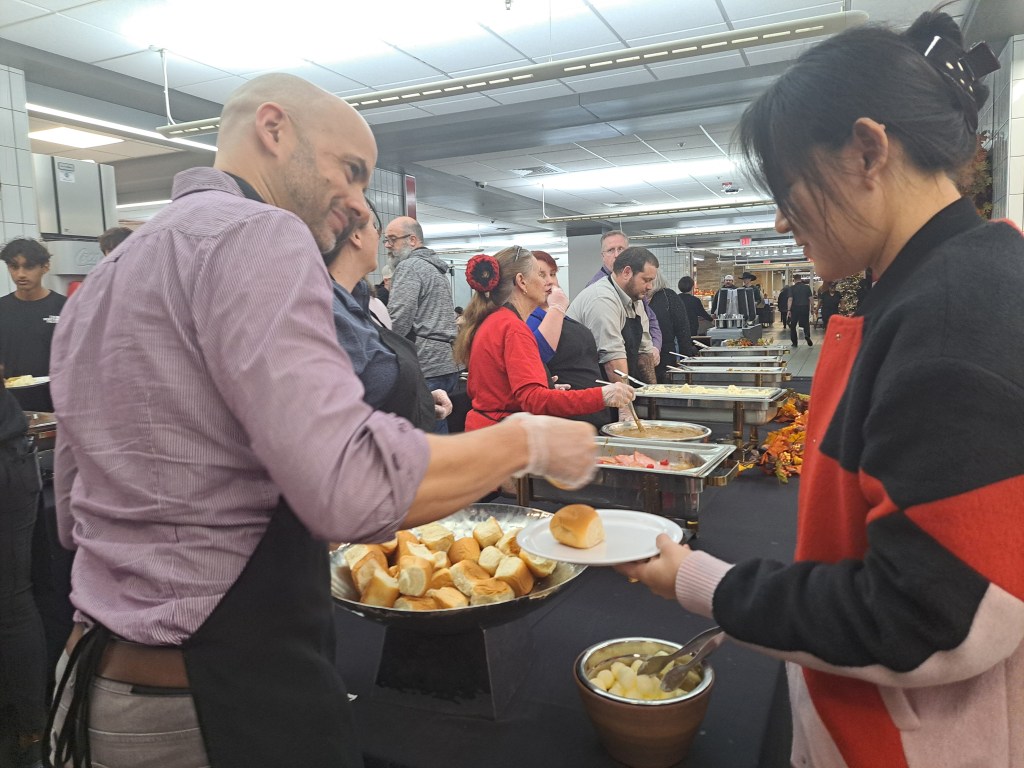
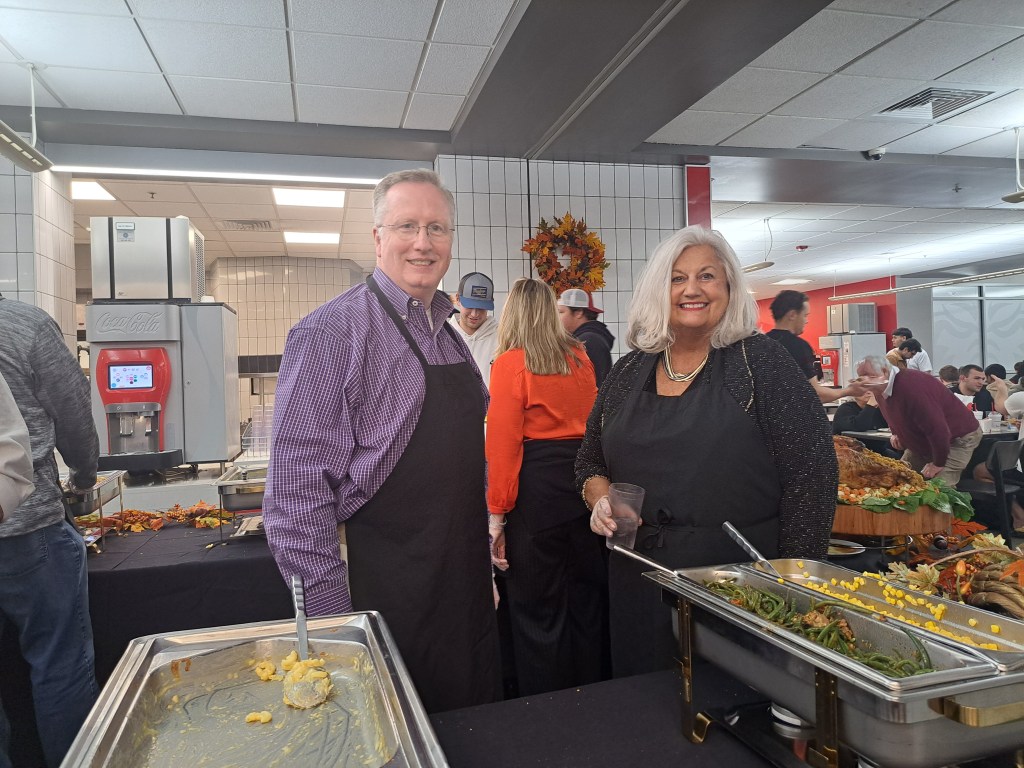
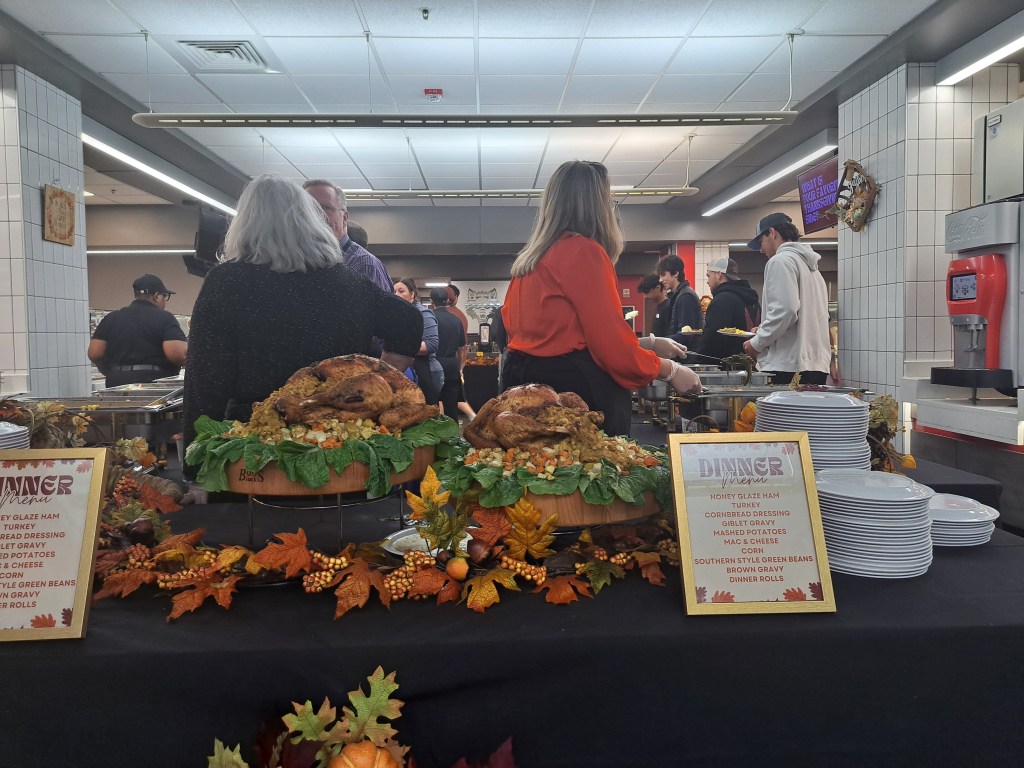
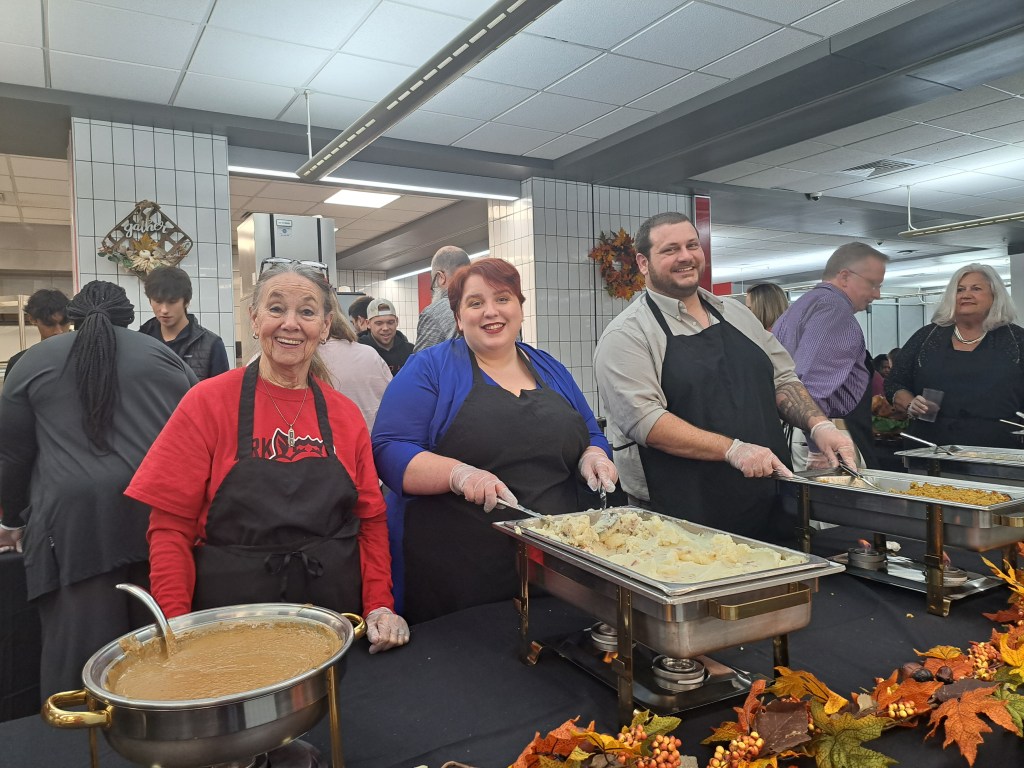
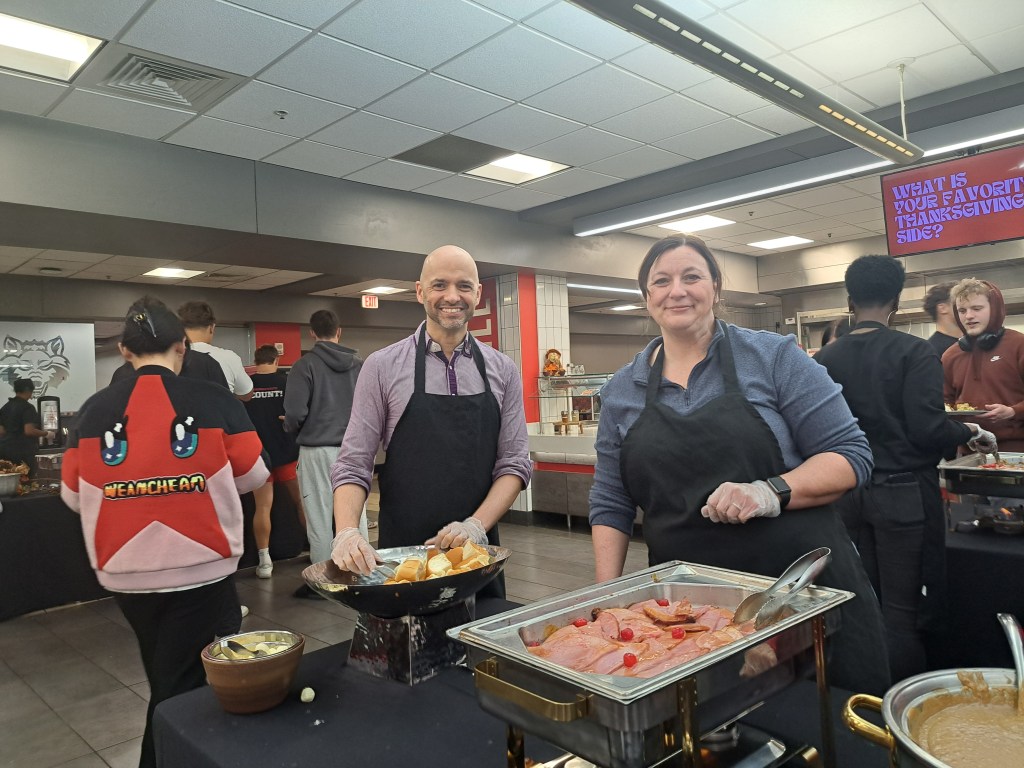
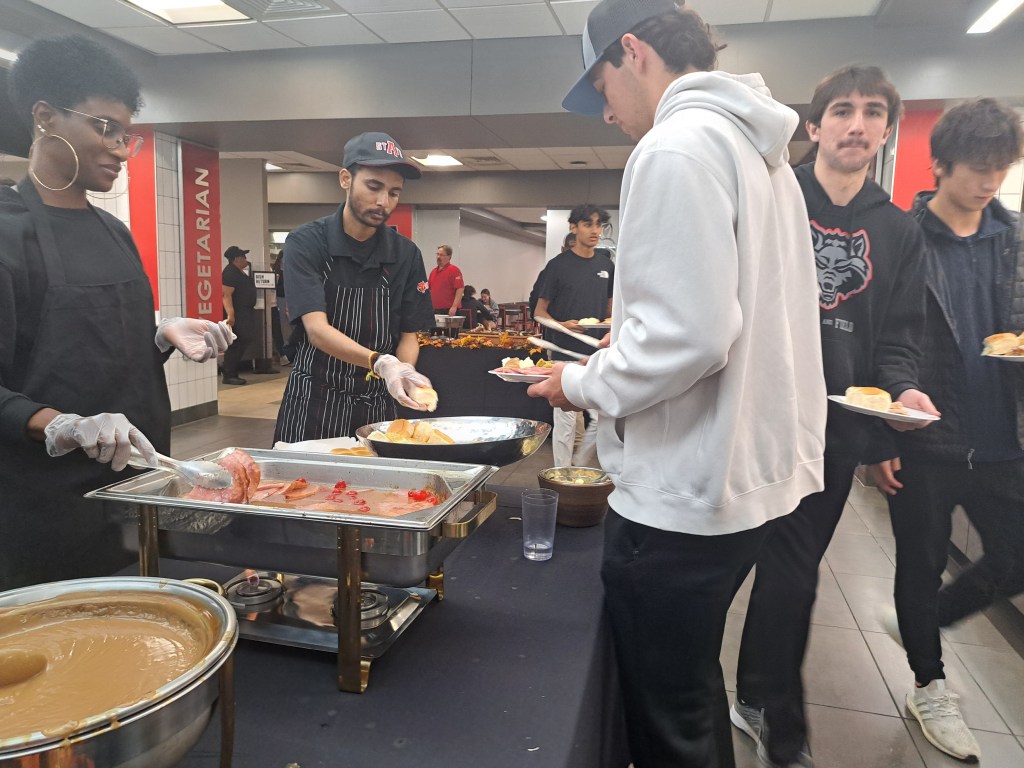
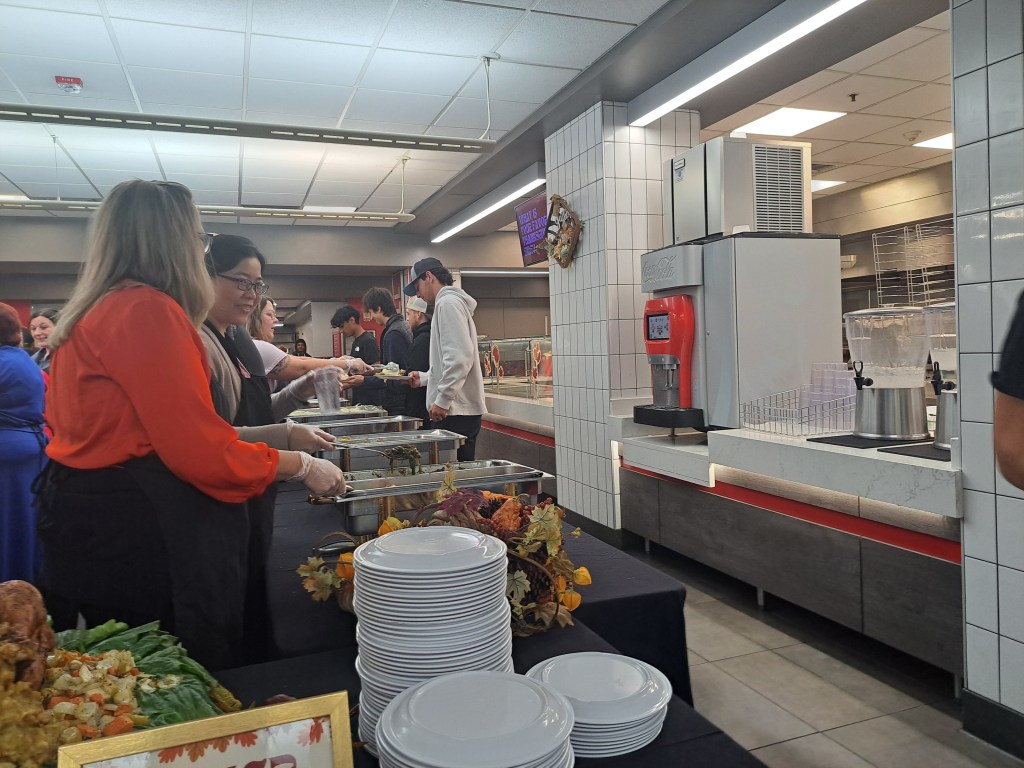
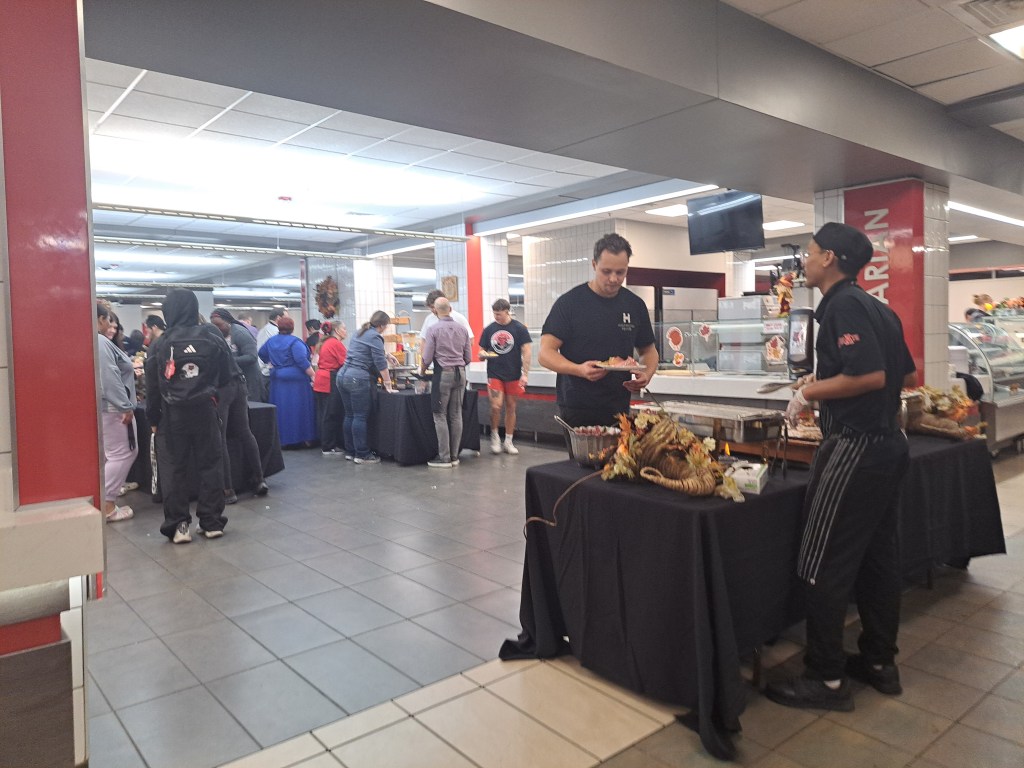
Arkansas State University held the annual Thanksgiving dinner in the Acansa Dining Hall Wednesday.
Craig Johnson, assistant vice chancellor for auxiliary services and volunteer coordinator for the Thanksgiving dinner, said the event provides for faculty, staff and students alike.
“For faculty, this gives them interactions outside of the classroom or outside of the offices,” Johnson said. “For our students, it gives them an opportunity to meet with faculty and staff in a different environment. It provides for those folks who can’t be able to go home for Thanksgiving.”
Emily Martin, a first-year nursing major from Viola, Arkansas, attended the Thanksgiving dinner. She said her favorite food served at the event was the macaroni and cheese, while her least favorite was the stuffing. Martin said the food lines never felt slow and the servers were very hospitable.
“We probably got here at a good time, we got in right after the initial people,” Martin said. “I had to go back and get mac and cheese because they were out, though.”
Yurizzia Macias, a first-year nursing major from Little Rock, said the food was great overall. She also said the stuffing was her least favorite food served at the event. She said while the food for the Thanksgiving dinner was being served in the middle of the Acansa Dining Hall, the space never felt claustrophobic and the food lines were never congested.
Johnson said he has helped plan the annual Thanksgiving dinner for 27 years. He said it was harder to find volunteers in the early 2000s. This year, Johnson said he had to turn people away because so many wanted to help.
The volunteer coordinator said he sent an email at 9 a.m. asking faculty and staff to help with the event and by 9:19, the first shift of volunteers was already full.
43 volunteers comprising faculty and staff members helped serve food at the event. Johnson said volunteers receive no formal training other than guidance on giving equal food portion sizes to students.
“We really just put an apron on, put gloves on and say ‘serve’”, Johnson said.
The volunteer coordinator said 100 students were already through the line in only the first half hour of the event. He said he thinks the volunteers served about 600 to 650 students during the event.
Johnson said it was fun to see a full cafeteria again. He said A-State is still rebounding from COVID-19, which caused a drop in the on-campus student population
“I consider a place like this to be the heartbeat, where folks have the ability to engage and interact,” Johnson said.
Macias said she thinks the Thanksgiving dinner will have a positive impact on students, especially those who won’t be able to go home or see their family during Thanksgiving or Christmas break.
“If they see how it is all family-friendly, they will be more motivated to stay here,” Macias said.
Johnson said he hopes the Thanksgiving dinner provided a warm holiday experience for students who cannot travel home while on break.
“I don’t think you can ever replace what it means to go home, we just can’t match that,” Johnson said. “But it does give that holiday feeling that you have during Thanksgiving.”
Johnson said since Thanksgiving is a holiday based on American history, some international students may not celebrate it. He said this event still serves to give these students another taste of American culture and what the holiday is all about.
Martin said while she enjoyed the event, she did notice areas that could be improved. Martin and Macias said having another table for serving food would have helped students get more food. Five volunteers couldn’t attend the event to help because they had the flu. Johnson said their absence didn’t affect the event very much because he probably had more volunteers than he needed anyway.
Johnson said he would like to see more food options served next year when the event is held again. He said he told the head of operations for the event he would particularly like to have candied yams available for students next year.
Macias said she would be interested in coming to the same event next year and similar events in the future.
JONESBORO – The Department of Military Science at Arkansas State University will induct three new members into the ROTC Hall of Heroes at the 28th annual ceremony, announced Lt. Col. Morgan Weatherly, professor of military science.
The induction will start at 9 a.m. Saturday, Nov. 23, in Cooper Alumni Center, 2600 Alumni Blvd.
The three to be honored with the prestigious recognition are Albert (Al) G. Martin, former Captain (Promotable), U.S. Army; Robert A. Barker, retired Colonel, U.S. Army; and Jerry W. Cheatom, retired Lieutenant Colonel, U.S. Army.
Following the ceremony, placards will be hung in the Hall of Heroes by the inductees. The honorees also will be recognized during halftime of the 2 p.m. Red Wolves football game against UL-Monroe at Centennial Bank Stadium.
All three are alumni of the ROTC program in the A-State Department of Military Science. Here are the profiles of this year’s inductees:
Albert (Al) G. Martin, Captain (Promotable), U.S. Army Special Mission Force, Strategic Technical Directorate Assistance Team-158
Former Captain (Promotable) Al Martin is a native of Helena. In 1969, upon graduation from A-State with a degree in political science and as a member of Tau Kappa Epsilon fraternity, he was commissioned as a Distinguished Military Graduate into the Active Duty force as a Military Intelligence officer.
2nd Lt. Martin attended his MI Officer Basic Course and volunteered for Airborne and Special Forces training. As a lieutenant, he served with the 6th and 5th Special Forces Group (Airborne) at Fort Bragg, N.C. While there, he earned his Green Beret and completed U.S. Army Ranger School and Vietnamese language school prior to his deployment to Vietnam.
In Vietnam, 1st Lt. Martin served with Special Mission Force, Strategic Technical Directorate Assistance Team-158. SMF had a classified mission of POW, MIA, and Downed-Pilot Recovery. They also ran other non-classified company and platoon-size operations. SMF was composed of 124 indigenous mercenary Montagnards, 41 of which were in 1st Lt. Martin’s platoon.
Upon redeploying to the states, 1st Lt. Martin attended his MI Officer Advance Course and was promoted to captain. He then attended flight school to receive a rotary and fixed-wing pilot rating at Fort Rucker, AL. His follow-on assignment was with the First Army Security Agency Aviation Company (CEFIRM Leader) as the operations officer at Ft. Bliss, Texas. The unit flew modified U-21 aircraft with direction-finding, signal intelligence, and radio signal jamming capabilities.
Capt. Martin was reassigned to the 25th Infantry Division, 3/4 Cavalry at Schofield Barracks, Hawaii, as a rotary-wing pilot. Following his tour in Hawaii, Capt. Martin resigned his commission and began a 42-year career as a commercial real estate agent, in Honolulu, and Austin, Texas, retiring in 2019.
His awards and decorations include the Special Forces tab with Green Beret, Ranger tab, Combat Infantryman Badge, Aviator Wings, Senior Jump Wings and Jumpmaster Qualification, Bronze Star Medal, Air Medal (numeral “2”), Army Commendation Medal (1 OLC), Vietnam Service and Campaign Medals, Vietnam Cross of Gallantry w/Palm (Unit), and National Defense Service Medal.
Martin is a 100% Disabled American Veteran living with his wife, Joyce, in Austin. They have three children, and they now engage in Christian ministry and travel.
Robert A. Barker, Colonel, U.S. Army Chief of Staff to the CG, Fort Gordon And Cyber Center of Excellence
Retired Col. Barker is a native of Jonesboro. In 1985, he was commissioned through the A-State ROTC program with a reserve commission as an Army Signal Corps officer. He graduated Arkansas State in 1986 with a degree in mechanical engineering.
Col. Barker was the Distinguished Honor Graduate of his Signal Officer Advance Course. He also completed Command and General Staff College (2000)—receiving an M.S. in computer resources and information technology (Webster University); the U.S. Army War College (2009)—earning an M.A. in strategic studies, and the U.S. Army War College Senior Leader Seminar (2014).
Col. Barker’s notable assignments include Operations Officer, Theater Communications Control Cell (TCCC) (Fwd), Dhahran, Saudi Arabia. As part of an eight-person Army cell operating at Khobar Towers in Dhahran the night of the Khobar Towers bombing, he was instrumental during recovery operations and the reactivation of the operations center after the terrorist attack. In 2004, he commanded the 63rd Signal Battalion during combat operations in Iraq. In 2008, Col. Barker was tasked to deploy to Moscow, Russia, in support of a Joint Operation’s exercise with the Russian General Staff to develop a working relationship with Russia for future joint operations. He served as the director, Concepts, Requirements, and Doctrine Division (CRDD) and the director, Capabilities Development Integration Division (CDID) of the Signal Center of Excellence, and was the garrison commander at Ft. Gordon, Ga. Col. Barker retired in 2016 as the chief of staff to the Commanding General Cyber Center of Excellence (CCoE) and Ft. Gordon, where he was directly involved in the activation of the CCoE, Cyber School, and the new command and control, and training facilities for Ft. Gordon to support the transition to Cyberspace Operations and the move of Army Cyber Command to Ft. Gordon. He wore the uniform for over 30 years.
His noteworthy awards and decorations include the Legion of Merit (1 OLC), Bronze Star (1 OLC), Defense Meritorious Service Medal, Meritorious Service Medal (1 Silver OLC), Air Force Achievement Medal with “V” Device, Joint Staff Officer’s Badge, and Basic Parachutist Badge.
Col. Barker now resides in Harrisburg with his wife Barbara and two granddaughters, Kya and Aunna. He manages the family business, Brasco Service Inc.
Jerry W. Cheatom, Lieutenant Colonel, U.S. Army Director of Army Instruction, San Antonio Independent School District
Retired Lt. Col. Jerry Cheatom is a native of El Dorado. In 1976, upon graduation from Arkansas State University with a degree in printing technology, he was commissioned as a Distinguished Military Graduate into the Active Duty force as an Infantry officer. A recipient of the Distinguished Service Award, he was also the president of the Black Students Association and a member of Omega Psi Phi fraternity and Scabbard and Blade Military Society.
Lt. Col. Cheatom’s education includes a master’s degree in adult education (Kansas State University) and a master’s in school administration (Trinity University), as well as a doctorate in educational leadership (UT-San Antonio).
His senior level assignments included Space Surveillance Commander, Space Defense Commander, and Chief, Training Evaluations, Standardization, and Exercises, U.S. Space Command, Cheyenne Mountain Space Force Base, Colo.; and professor of military science, Florida Agriculture and Mechanical University, Tallahassee.
Lt. Col. Cheatom has served an additional 22 years in uniform with JROTC as Senior Army Instructor (SAI) at Theodore Roosevelt and Sam Houston High Schools in San Antonio, and as director of Army Instruction for San Antonio Independent School District, where he continues service today. He also served as assistant principal for five years at Roosevelt High. He concurrently serves as a senior counselor for Texas American Legion Boys State and is a member of the Alamo Area, Texas, and National Alliances of Black School Educators. In essence, Lt. Col. Cheatom transformed 21 years of military experience into 27 years and counting of youth mentorship.
His awards include the Ranger Tab, Expert Infantry Badge, Basic Parachutist Badge, Air Assault Badge, and U.S. Army Space Operations Badge.
His civilian awards and recognitions include the North East Independent School District Superintendent’s Award, induction into Phi Delta Kappa Educators Hall of Fame, the Lifetime Achievement Award, Psi Alpha Chapter of Omega Psi Phi Fraternity, National Board of Rocks Incorporated Chairman’s Award for Exceptional Service, and Rocks Incorporated Robert B. Burke Award.
Lt. Col. Cheatom and his wife Judith are the parents of four daughters—Keyna, Amber, Mila and Asante, and five grandchildren—Quinten, Camryn Lane, Grayson, Julius and Cassian.