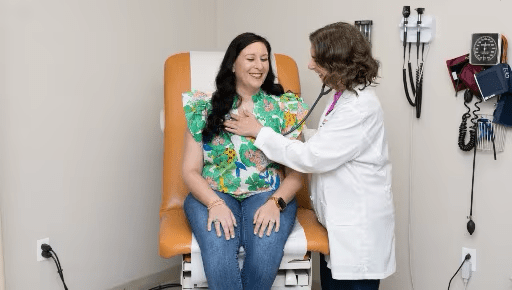
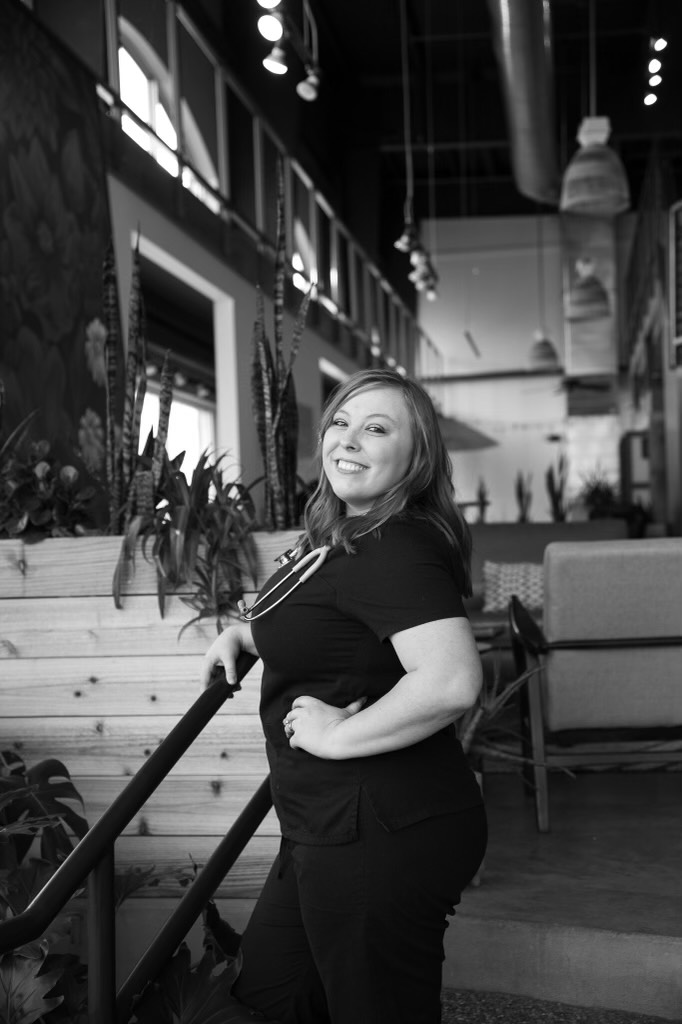
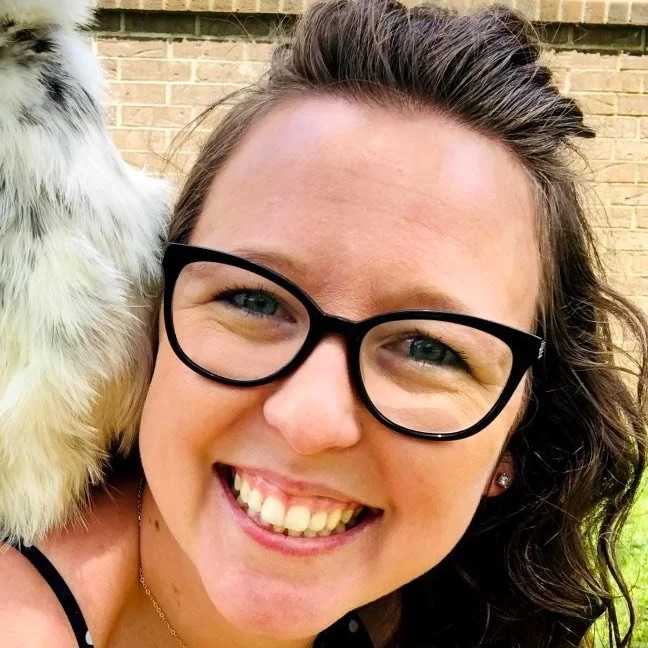
St. Bernard’s health care physician Dr. Christina Carl (right) performs a heart and lung auscultation for a patient during a routine wellness exam in Jonesboro, Arkansas. Photo courtesy of St. Bernard’s.
JONESBORO, Ark. — As St. Bernard’s Health Care approaches its 126th anniversary on July 5, leaders say the oganization is balancing a legacy of community care with the growing challenges of modern health care.
St. Bernard’s has been in medicine for 125 years, evolving alongside the social service industry rather than the city, economy, or technology. Kevin Hodges, senior vice president, said rising costs and increasing insurance requirements continue to strain providers in the post-COVID era.
“Every time they add requirements, it adds cost to us,” Hodges said. “Someone has to make sure those requirements are met just for us to get paid. Those are uncompensated burdens.”
Health care systems face high operational costs, including labor, transportation, utilities, and food insecurity. Hodges said balancing expenses while navigating reimbursement challenges has become increasingly difficult. Hodges also noted funding for social service programs has stagnated, often coming from federal and state sources, and emphasized the importance of volunteers from churches, students, and other community groups.
“To have high-level social services in communities, you have to have strong volunteer programs,” he said.
Michael Givens, administrator and chief operating officer, said the vision of the Sisters who founded St. Bernard’s 126 years ago continues to guide the hospital. Over his 25 years, Givens has seen growth in heart care, stroke care, robotic surgery, and technology, including artificial intelligence.
“We already use a system called Rapidan. It works with our CAT scanners to analyze brain scans and quickly identify strokes or aneurysms,” Givens said. “That kind of speed can save lives.”
Givens said St. Bernard’s aims to expand services further, recruit specialists, and become a top-10% hospital in the U.S. Kevin Byron, assistant vice president for Behavioral Health Services, said the rise in mental health issues has driven growth in inpatient and outpatient care. The hospital has 108 beds serving patients with a wide range of needs, from severe psychosis to depression and suicidal thoughts.
Mental health remains central to St. Bernard’s mission, he said, inspired by the founding Sisters. Programs like the recuperative care program at the CSU allow patients to stay up to three months post-discharge, supporting those experiencing homelessness.
“I’ve been in health care for about 27 years, and Jonesboro has grown significantly. As the population grows, so does the need for infrastructure and services,” Byron said. He hopes to create a crisis response team that works with law enforcement and 911 and a psychiatric residency program to train new psychiatrists locally.
Mitchell Nail, media relations manager, said his role has shifted since the pandemic from health guidance to encouraging residents to address health issues early, including finding primary care providers and attending screenings.
Increased awareness of social services has led St. Bernard’s to provide prenatal and postpartum care regardless of a patient’s ability to pay. Nail said patient stories remain the hospital’s most effective way to connect with the community.
“I want people to see St. Bernard’s as their trusted source for health information and care,” he said. “I want them to feel confident they can find expert guidance and treatment right here in their community.”
NEA Baptist hosts programs that promote heart-healthy behaviors through community screenings and educational programs that raise awareness of risk factors and promote healthy lifestyle choices.
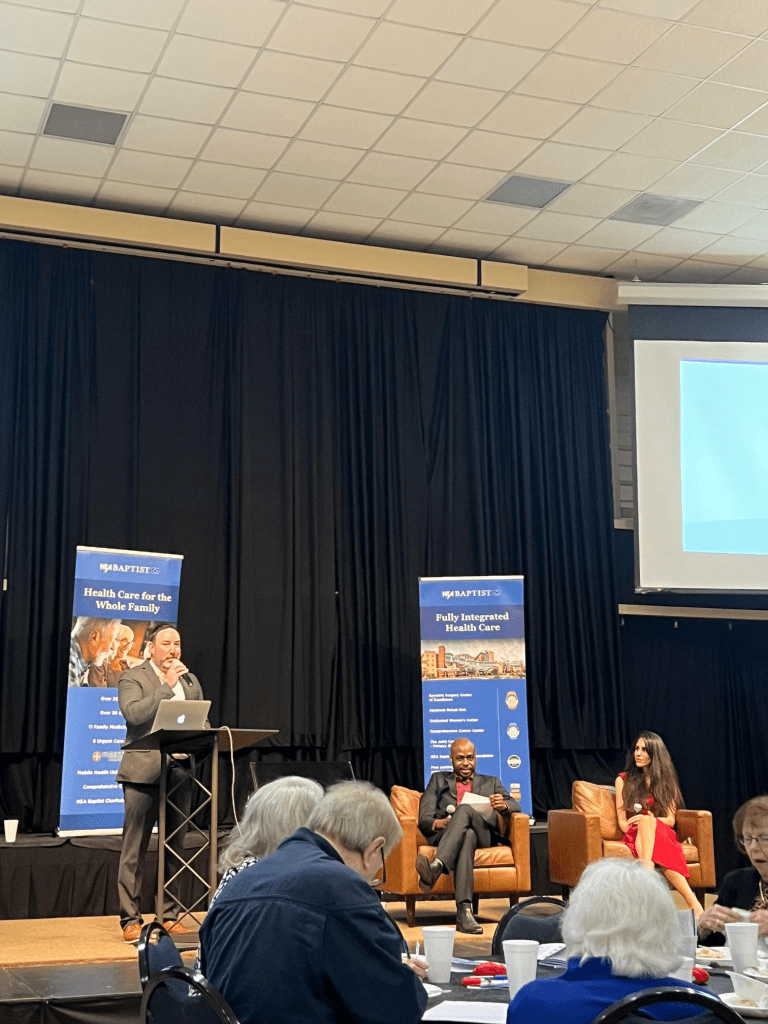
NEA Baptist hosted a Heart Talk on Feb. 26, 2026, at Southwest Baptist Church.
Ty Jones, director of marketing at NEA Baptist, said his goal is to create opportunities for community engagement and education.
The organization focuses on community engagement and education through health screenings and risk-factor education. Outreach efforts include digital marketing, terrestrial radio, and television advertisements. Jones said balancing medical accuracy with creativity is crucial.
“As a company, we seek perfection every day, whether or not perfection is ever really attainable,” Jones said. “As human beings, we try to seek that in everything that we do. When you balance that with marketing and making sure you’re staying inside the box — which a lot of people find more difficult than just going with any creative whim — it’s a lot of fun.”
Jones said NEA Baptist always strives to partner with local schools, churches, and organizations to promote heart health and target the next generation of cardiologists.
“The big thing for us is making sure that we’re engaging students at a young age, letting them know not only what clinical health care careers look like — physicians and nursing — but also letting them meet residents to see what that educational track looks like from school to becoming a doctor,” Jones said.
Jones said balancing medical accuracy with creativity in marketing campaigns and materials helps convey heart health information in an engaging and impactful way.
“Understanding the roles in health care that may be behind the scenes — laboratory scientists who run tests to help physicians determine a patient’s root cause, as well as financial, billing, and marketing staff — is also important,” Jones said.
“Our goal at the end of the day is to take care of our community, whether that’s patients admitted to our emergency room, patients seeing primary care providers, establishing a baseline for preventive medicine, or providing free education,” Jones said.
Jones said community impact is measured by individualized patient care and tailoring medical services to each person. Lena Awar, an interventional cardiologist at NEA Baptist, said it is important to educate people to recognize and not ignore early warning signs of heart disease, such as fatigue, leg swelling, and chest pain.
“Coronary artery disease is very prevalent in this area,” Awar said. “We live in what’s called the Stroke Belt, and part of this talk discusses risk factors that contribute to that, including hypertension, obesity, and a sedentary lifestyle. All of that increases heart disease risk.”
Awar said stress management techniques such as walking in nature, reading, taking a hot bath, or practicing yoga or meditation can improve heart health.
“In our community, recommending smoking cessation is probably the most important thing, followed by getting in those 10,000 steps a day,” Awar said.
Awar said about 50% of health outcomes are genetically inherited and cannot be controlled. However, lifestyle choices can make a significant difference.
“One thing we can control is how we live our lives — diet, exercise, and routine checkups,” she said.
She also addressed misconceptions about heart medications.
“A lot of people think of us as drug pushers who just want to prescribe another medicine,” Awar said. “We wish all our patients could achieve their goals with diet and exercise alone, but sometimes that’s not enough. Some medications, like statins, have a bad reputation, but they save lives. We work with patients to tailor medications so they maintain a good quality of life.”
Oreoluwa Oladiran, a cardiac electrophysiologist at NEA Baptist, said it is important to recognize heart disease symptoms such as chest pain and heartburn, which are often overlooked.
He stressed the need for early heart health management beginning in a person’s 30s and highlighted preventive measures such as maintaining a healthy weight, eating well, and avoiding smoking.
“Heart disease is the most common cause of mortality not only in the United States, but worldwide,” Oladiran said. “In the United States, it kills nearly a million people every year,” Oladiran said.
Oladiran said monitoring blood pressure and blood sugar levels is an effective way to track heart health.
“We see patients in their 30s having heart attacks,” he said. “The earlier, the better. Don’t wait until you’re 40 to establish care with a primary care provider and pay attention to your health. Many of these issues are lifestyle-related, not necessarily medication-related.”
Young: Arkansas State University and the NYIT College of Osteopathic Medicine are working together to make the path to becoming a doctor a little bit smoother for Arkansas State students. The Freshman to Physician Pathway is a new partnership this year between A-State and NYITCOM that lets qualified students secure early admission to medical school while they are still undergraduates. Jennifer Wharton, media contact for the program, knows the ins and outs of the program and how it can help students. [0:31]
Wharton: Our goal is to help students who are interested in going into healthcare, specifically becoming a physician, become more confident and a more competitive applicant for medical school. We’re seeing a lot of need in the delta region for students who not just have an education, but have a quality education. And one of the things we know about medical education is that students who are from an area, who are able to stay in that area and go to school are going to be more likely to in turn, practice medicine in that area. [0:34]
Young: Students in the pathway will major in biological sciences with a pre-professional emphasis. If they maintain at least a 3.5 GPA, complete the required coursework, and pass an interview, they will earn a spot in NYITCOM after graduation. Program leaders say the collaboration between the two schools will give students extra mentoring, academic support, and confidence, along with peace of mind about their medical future. Jamie Howell is a prospective student for the Freshman to Physician pathway. [0:30]
Howell: I would like to do this program because it provides me with a quicker opportunity to pursue my dream of becoming a doctor. I also believe, if I understand the program correctly, that it can help you get into med school without taking the Mcat. This can be beneficial to me because I typically struggle with test anxiety and tend to not do as well as I should or as well as I believe my knowledge permits. [0:23]
For more information about the program go to AState.edu/FreshmanToPhysician. I’m Mia Young and you’re listening to KASU. [0:09]
Members of Red Wolves for St. Judge who attended the Scarlet Formal pose with a check of the amount raised for the 2024-2025 fundraising year, totaling $71,475. Members who raised $100 or more for St. Judge were invited to the Scarlet Formal.
Red Wolves for St. Jude, a philanthropic initiative organized and operated by students at Arkansas State University to support St. Jude Children’s Research Hospital, hosted the Scarlet Formal at the Woodard McAlister Family Club to celebrate the end of the fundraising year with dinner from Olive Garden, dancing and giveaways.
At the end of the Scarlet Formal, Red Wolves for St. Jude executives announced the total amount of money raised in the 2024-25 fundraising effort: $71,475, surpassing their goal of $65,000.
“It’s super impressive what they have done. I mean, you go to other colleges. This is not normal at all, but it’s super inspiring, and it really helps us inspire the next generation,” Sebastian Villegas, a development representative for St. Jude and a Memphis native, said. “I think that’s super important, is getting the messaging out and Arkansas State does an amazing job with that.”
Olivia Wham, executive director of Red Wolves for St. Jude, said the Scarlet Formal culminates everything they have worked towards for the year.
“Showing students that their hard work comes together is very important to create a sense of community,” the senior finance and global supply chain double major from Mountain Home, Arkansas, said. “Red Wolves for St. Jude is not only an organization to raise money for St. Jude Children’s Hospital but also to spread awareness of what we have in our backyard in Memphis.”
Kristin Rodgers, a Jonesboro woman and mother of a St. Jude patient, attended the event.
Rodgers said St. Jude gives people hope in the darkest moments of their lives and allows them to focus on getting their children better.
“You don’t have to worry about bills, you don’t have to worry about where you’re going to eat, anything like that. They just try to make it the happiest place for your child while they’re sick and the least stressful place for a parent,” Rodgers said. “We will do anything to help raise money for St. Jude because we’ve been the recipients of the money raised.”
Rodgers said she was blown away by how much money was raised by college students.
“I’m very thankful that college kids can think outside themselves and do something for others when they could do so many other things. They are busy with college and choose to spend time getting donations and raising money for such a wonderful place,” Rodgers said.
Wham said it’s hard not to be passionate about raising money for St. Jude.
“St. Jude is a children’s hospital that provides research from its findings worldwide and has significantly strengthened and advanced the medical community. They also give children world-class medical care for free. So that takes a lot of stress off of families,” Wham said. “In my family, we’ve had people pass away from cancer, and being able to give back and donate to a place that can advance medical care like this really warms my heart.”
Christina Green, a first-year nursing major from Memphis, raised $1840 and was recognized as the highest individual fundraiser.
Green said St. Jude means a lot to her and her family.
“My mom always worked in the restaurant industry, but she always saw St. Jude as her dream job, and she worked hard for it, and she got there, and she’s been there for coming up on four years now, and it moved us up to Memphis,” Green said. “It’s cool to know your mom works there, but to know you’re making a difference, kind of on your own adds a little bit more. I feel a bit of pride for it, a good amount of pride.”
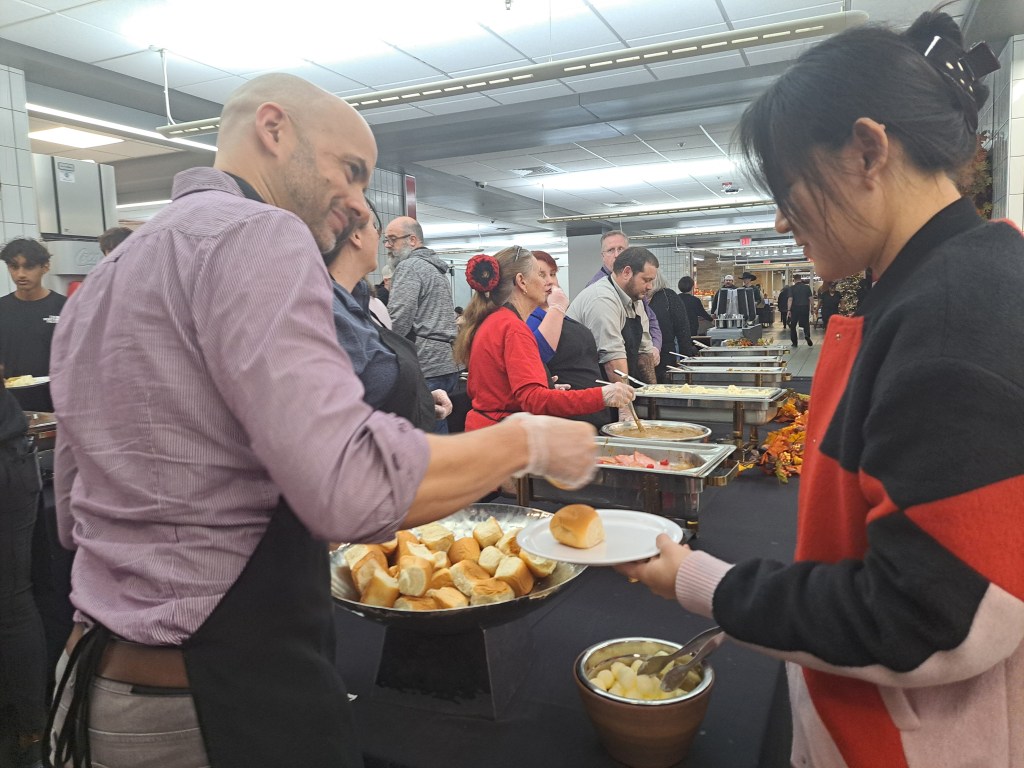
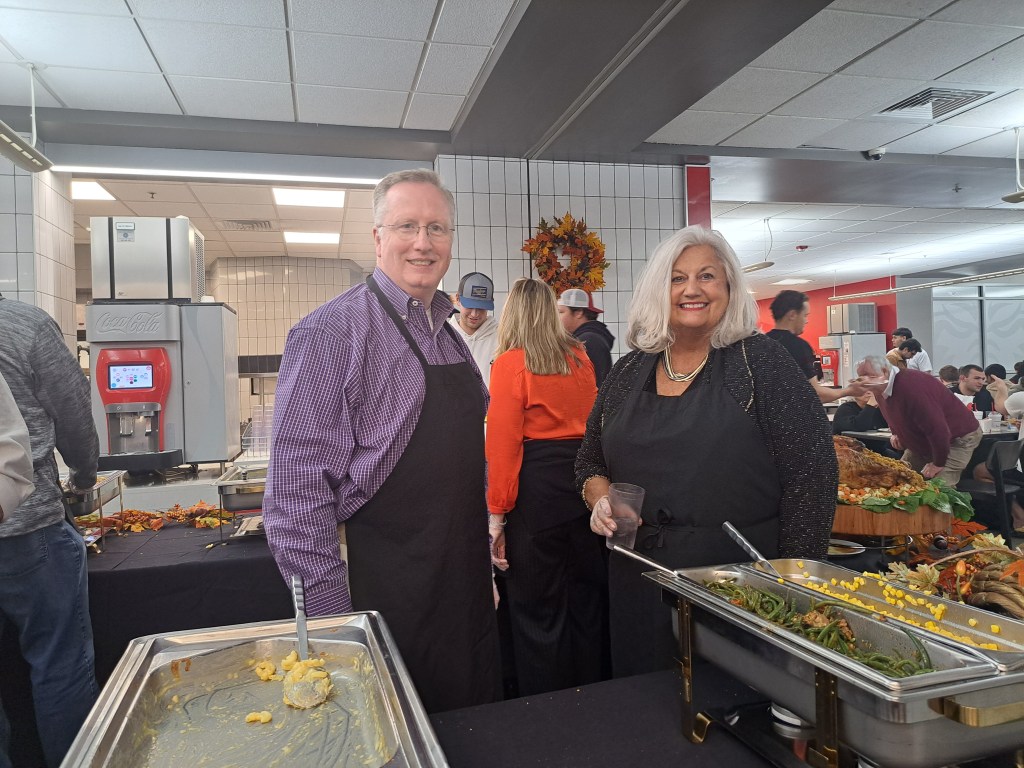
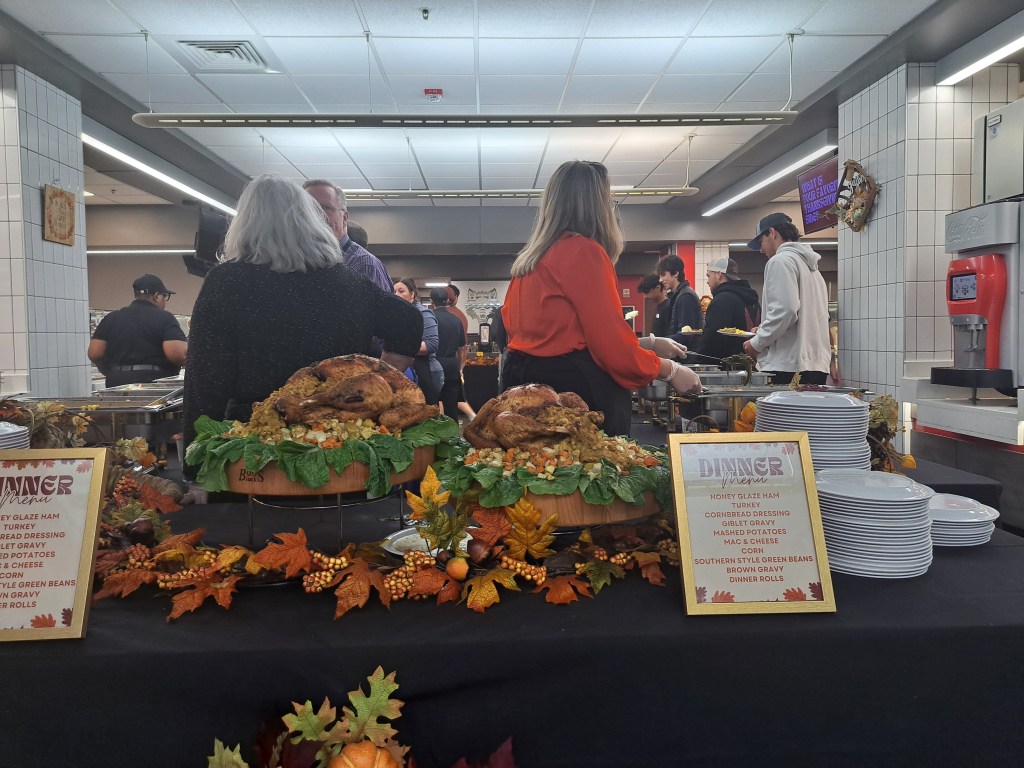
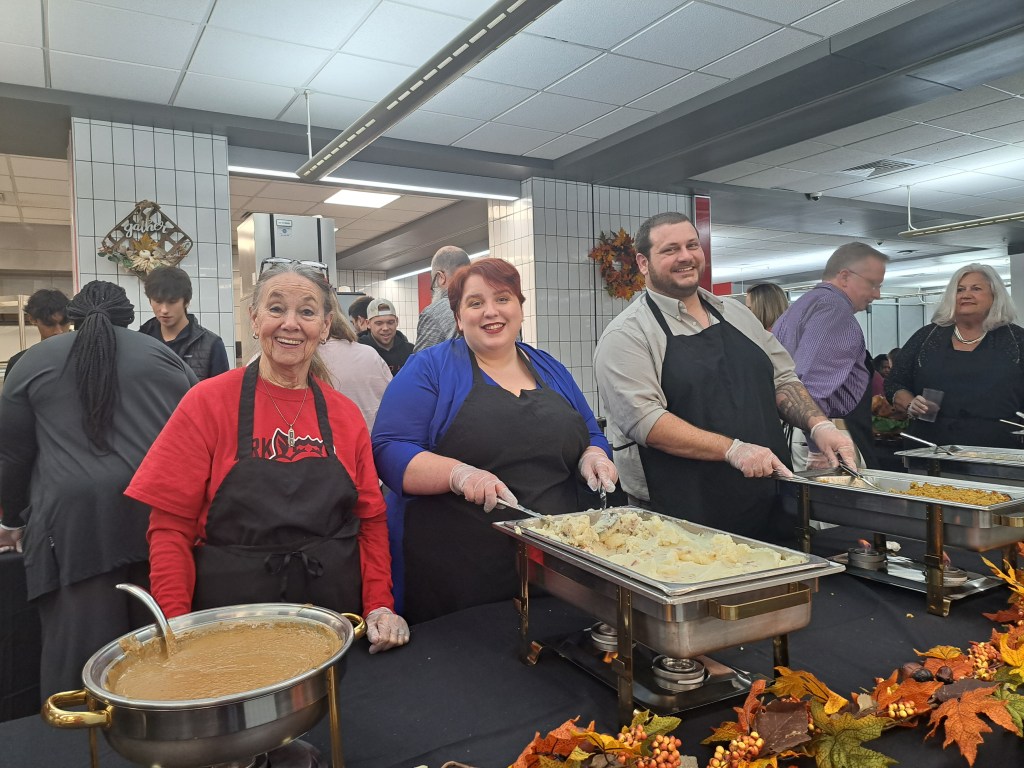
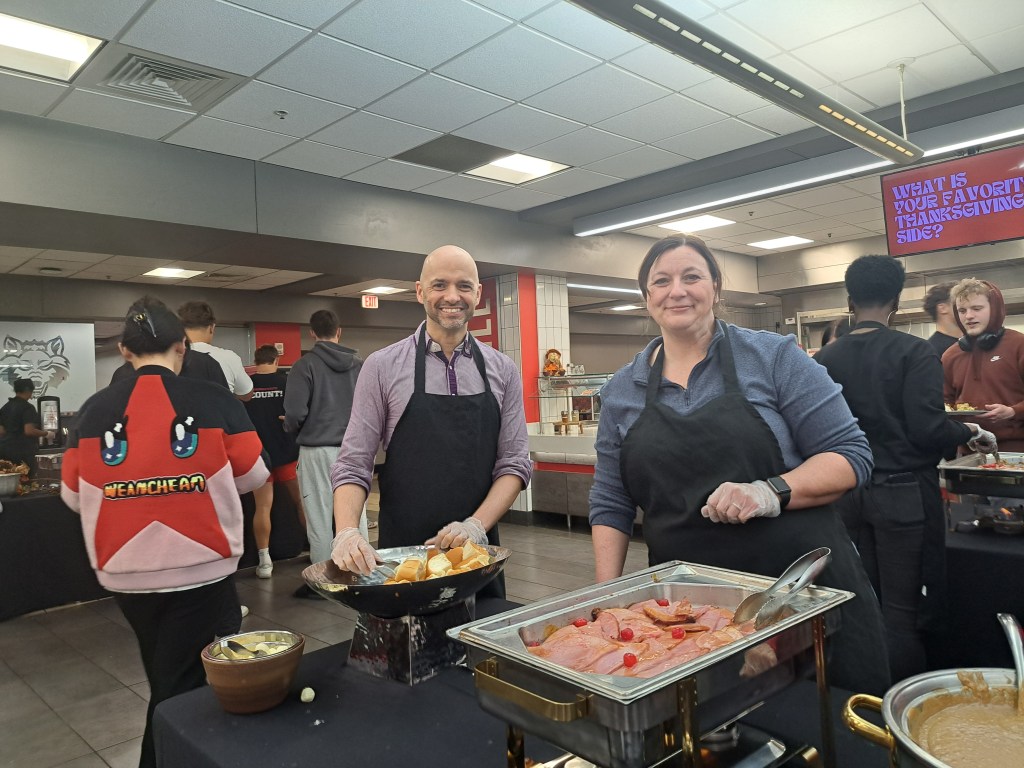
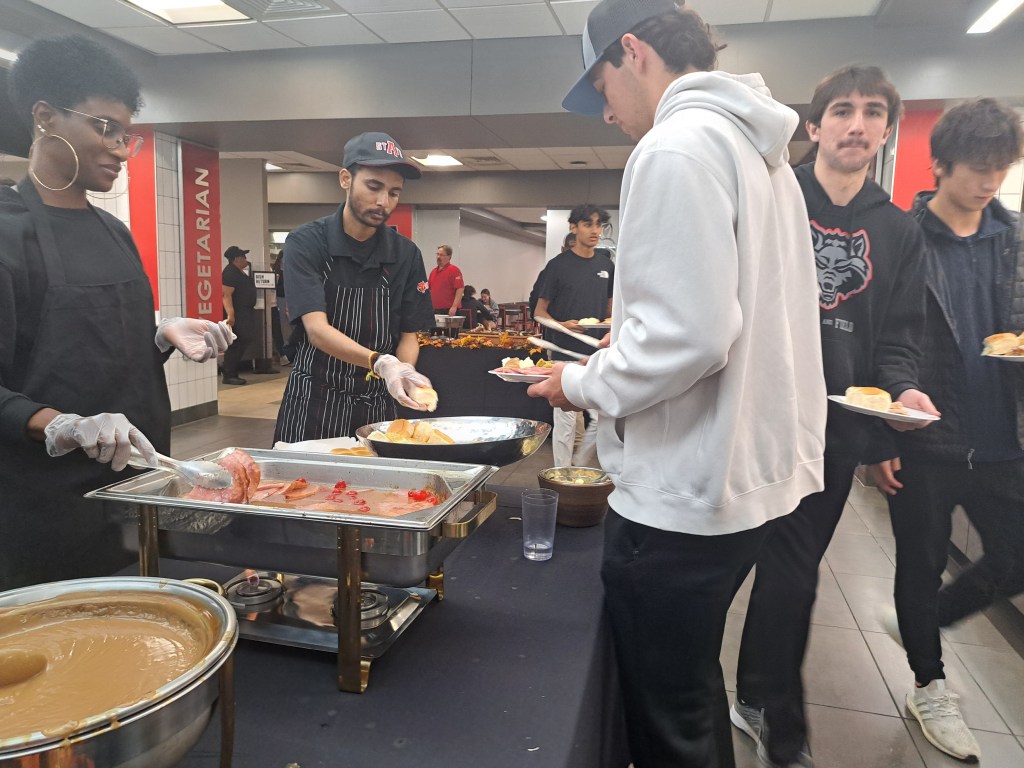
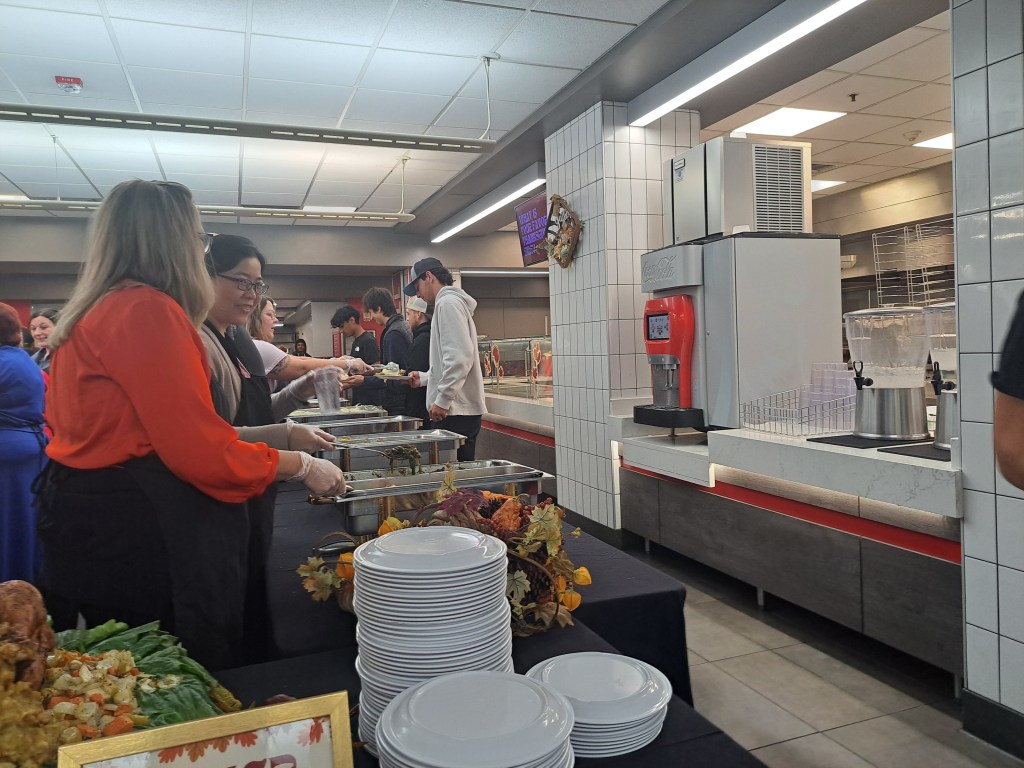
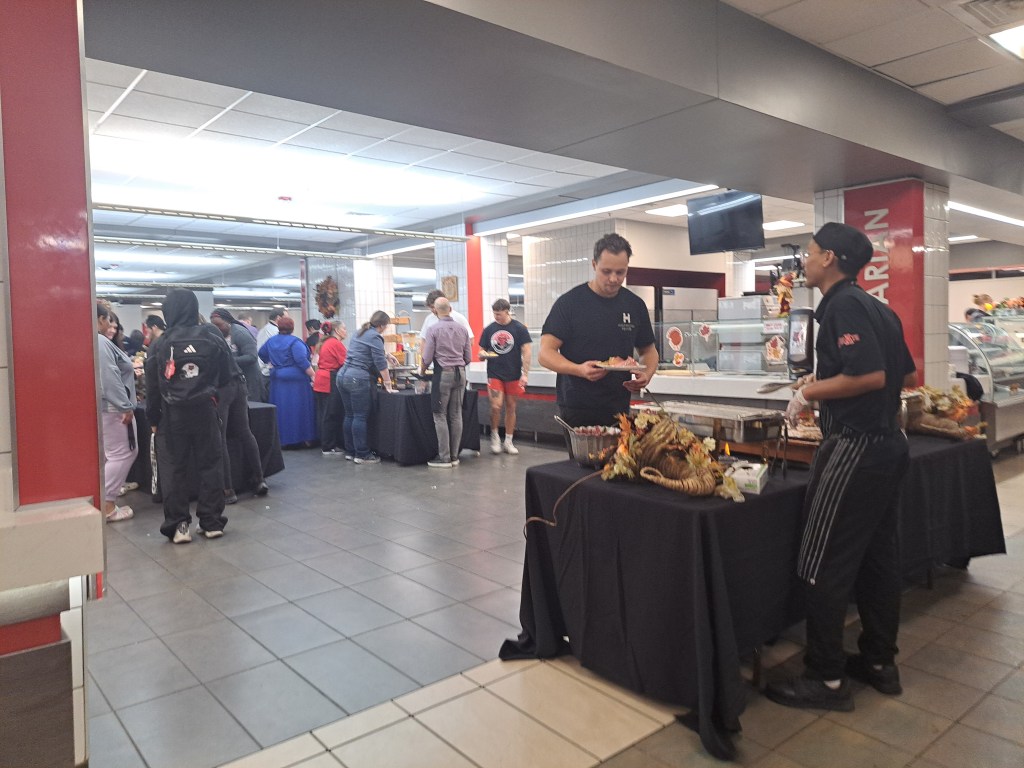
Arkansas State University held the annual Thanksgiving dinner in the Acansa Dining Hall Wednesday.
Craig Johnson, assistant vice chancellor for auxiliary services and volunteer coordinator for the Thanksgiving dinner, said the event provides for faculty, staff and students alike.
“For faculty, this gives them interactions outside of the classroom or outside of the offices,” Johnson said. “For our students, it gives them an opportunity to meet with faculty and staff in a different environment. It provides for those folks who can’t be able to go home for Thanksgiving.”
Emily Martin, a first-year nursing major from Viola, Arkansas, attended the Thanksgiving dinner. She said her favorite food served at the event was the macaroni and cheese, while her least favorite was the stuffing. Martin said the food lines never felt slow and the servers were very hospitable.
“We probably got here at a good time, we got in right after the initial people,” Martin said. “I had to go back and get mac and cheese because they were out, though.”
Yurizzia Macias, a first-year nursing major from Little Rock, said the food was great overall. She also said the stuffing was her least favorite food served at the event. She said while the food for the Thanksgiving dinner was being served in the middle of the Acansa Dining Hall, the space never felt claustrophobic and the food lines were never congested.
Johnson said he has helped plan the annual Thanksgiving dinner for 27 years. He said it was harder to find volunteers in the early 2000s. This year, Johnson said he had to turn people away because so many wanted to help.
The volunteer coordinator said he sent an email at 9 a.m. asking faculty and staff to help with the event and by 9:19, the first shift of volunteers was already full.
43 volunteers comprising faculty and staff members helped serve food at the event. Johnson said volunteers receive no formal training other than guidance on giving equal food portion sizes to students.
“We really just put an apron on, put gloves on and say ‘serve’”, Johnson said.
The volunteer coordinator said 100 students were already through the line in only the first half hour of the event. He said he thinks the volunteers served about 600 to 650 students during the event.
Johnson said it was fun to see a full cafeteria again. He said A-State is still rebounding from COVID-19, which caused a drop in the on-campus student population
“I consider a place like this to be the heartbeat, where folks have the ability to engage and interact,” Johnson said.
Macias said she thinks the Thanksgiving dinner will have a positive impact on students, especially those who won’t be able to go home or see their family during Thanksgiving or Christmas break.
“If they see how it is all family-friendly, they will be more motivated to stay here,” Macias said.
Johnson said he hopes the Thanksgiving dinner provided a warm holiday experience for students who cannot travel home while on break.
“I don’t think you can ever replace what it means to go home, we just can’t match that,” Johnson said. “But it does give that holiday feeling that you have during Thanksgiving.”
Johnson said since Thanksgiving is a holiday based on American history, some international students may not celebrate it. He said this event still serves to give these students another taste of American culture and what the holiday is all about.
Martin said while she enjoyed the event, she did notice areas that could be improved. Martin and Macias said having another table for serving food would have helped students get more food. Five volunteers couldn’t attend the event to help because they had the flu. Johnson said their absence didn’t affect the event very much because he probably had more volunteers than he needed anyway.
Johnson said he would like to see more food options served next year when the event is held again. He said he told the head of operations for the event he would particularly like to have candied yams available for students next year.
Macias said she would be interested in coming to the same event next year and similar events in the future.
LITTLE ROCK — The Arkansas State University System Board of Trustees today in a special meeting approved a $30.6 million bond issue to finance construction for the new College of Veterinary Medicine at the A-State campus in Jonesboro.
Design and construction of the College of Veterinary Medicine facility is estimated at $33.2 million. The university plans to finance the building through the issuance of taxable Student Fee Revenue Bonds and use of institutional reserve funds. Tuition and fees from CVM students will ultimately fund debt service for the construction.
The move follows a recent consultative site visit by the American Veterinary Medical Association’s Council on Education, which reviewed A-State’s progress on facilities, policies and personnel for the college. The university plans to admit its first cohort of students in 2026 in what would become the state’s only public vet school.
The bond funding plan also allows for the refunding and reissuance of $11.6 million in existing student fee revenue bonds that were used for capital improvements on the A-State campus. The total 30-year bond issue must have an interest cost of no more than 7%, and the refunding must produce a savings of at least 4%.
Stephens Inc. and Crews & Associates Inc. will serve as bond underwriters. PFM Financial Advisors LLC is the financial advisor, and Friday, Eldredge & Clark is the bond counsel.
In other action, the board authorized Henderson State University to explore the disposition of three university-owned houses as part of its efforts to pursue cost savings and future growth.
The properties in Arkadelphia include the Ramsauer House at 327 North 11th Street, the Smith Garner House at 324 North 12th Street and the Evans Street House/Lot at 1228/1226 Evans Street.
Disposition may include the sale of each property, which would require surveys and appraisals.
The City of Jonesboro has been awarded a $1,000,000 grant from the United States Department of the Interior’s National Park Services, through the Outdoor Recreation Legacy Program. This significant award will be administered by the State of Arkansas Department of Parks, Heritage, and Tourism. Jonesboro City Council previously approved a local match of $1,129,675 which is represented in the 2024 Annual Budget. The Junior Auxiliary of Jonesboro has also committed $100,000 toward the development of this project.
“This is exciting news for our city and reinforces the great work of our Grants, Parks and Engineering departments who put together a great application for a long overdue park in Northeast Jonesboro,” said Jonesboro Mayor Copenhaver. “This park is a key investment in the well-being and quality of life for residents of Northeast Jonesboro. We are grateful to the National Park Service, the State of Arkansas, Junior Auxiliary, and both Cornerstone and Journey Churches for their partnership in making this vision a reality.”
The funds will be allocated to the creation of a new community park in Northeast Jonesboro, at the end of Disciple Drive. The park will cover at least 13 acres, with potential to expand to 23 acres, contingent on further land acquisition. Planned features will include:
A fully accessible adventure playground
Walking and biking trails
Tennis Courts
Pickleball Courts
A Dog Park
Multiuse Sports fields
An expanded entrance road
Parking lot
An abundance of natural greenspace
“When we first met with Mayor Copenhaver about how we could help improve Jonesboro, his pitch for a park in east Jonesboro was an immediate ‘yes’ as it lined up perfectly with our mission to improve lives for local youth. We are so proud to be a part of this wonderful project,” commented Junior Auxiliary President, Jessica Baker.
The City of Jonesboro’s Parks and Recreation Director Danny Kapales stated, “As the Master Parks Plan indicated, this location was lacking in park space and was a priority. This grant and future park represent what is possible to achieve as a collective group.”
This project aligns with the Social Determinants of Health Plan, with plans for the new park to be fully accessible to residents of all abilities. Notably, there is currently no city park within one and a half miles of the project site, making this development a resource for the surrounding community. Thousands of residents who live and work near the project area will have better access to outdoor recreation.
“This project is a culmination of more than two years of coordination between the City, the State of Arkansas, and the National Parks Service. We are excited any time we win a grant, but to secure the largest parks grant the City of Jonesboro has ever received is special and personal for our hard-working staff,” commented Jeremy Biggs, Director of Grants for the City of Jonesboro.
Next, the Jonesboro City Council will hear a resolution to accept the grant and purchase the property, to be presented to the Public Services Committee later this week. After approval from Public Services Committee, full council will consider next week. If approved, construction will begin in the Summer of 2025.
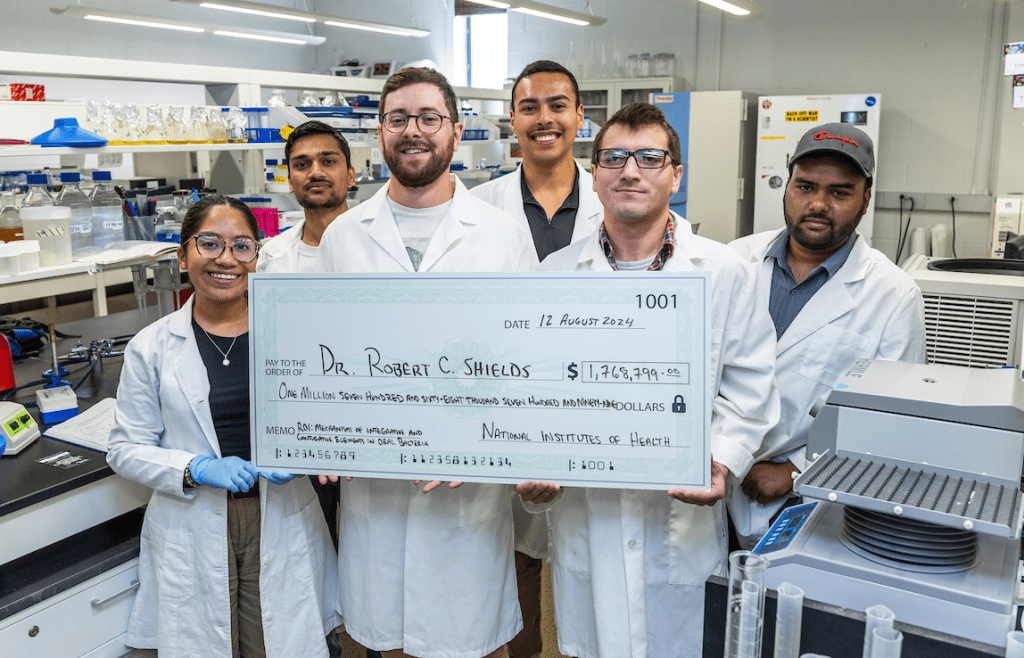
The team that will be leading the research includes (from left) Ana Karen Solano Morales, master’s student in biology; Sangam Chudal, biotechnology major; Dr. Robert Shields, principal investigator; Emanuel Cazano, biological sciences major, pre-professional program; Shawn King, lab manager; and Bikash Kumar Dwivedi, doctoral student in molecular biosciences. Image courtesy of Arkansas State University.
JONESBORO – While most people know that tooth decay can result in an unsightly smile, the impact of this disease has serious implications for one’s overall health.
A faculty member in Arkansas State University’s Beck College of Sciences and Mathematics has secured a federal grant to conduct extensive research into the problem with the goal of better understanding the causes and effects.
Dr. Robert Shields, assistant professor of microbiology in the Department of Biological Sciences and principal investigator for the grant, sought the funding through the National Institute of Dental and Craniofacial Research, a division of the National Institutes of Health (NIH).
“Tooth decay is one of the most common diseases affecting people,” he added. “It has a significant health and economic burden on the U.S. population.”
Shields will guide a team of faculty members, doctoral degree candidates, student researchers, and lab professionals who will delve into the intricate molecular mechanisms underlying tooth decay pathogens.
The research team also includes Dr. Lisa McLellan at Purdue University – Fort Wayne who is a molecular microbiology expert with her own research lab.
“In this study, we will investigate the movement of genetic information between bacteria, a process that spreads antibiotic resistance and fuels pathogen evolution,” Shields explained. “We will focus our studies on understanding this process in the oral cavity and determining the role it plays in assisting in the development of tooth decay.”
The $1.77 million grant over a five-year period will support the work of the research team and provide a supply of chemical reagents, travel expenses to present results at scholarly conferences, and other expenses associated with their work.“
Dr. Robert Shields’ grant is an exciting opportunity to enhance his research in oral health,” stated Dr. Jennifer Bouldin, dean of the Beck College of Sciences and Mathematics. “This highly competitive NIH R01 grant supports health-related research by an investigator in their area of expertise. The Beck College is excited to see Dr. Shields receive this prestigious award and further his research in this important topic.”
Dr. Travis Marsico, vice provost for research, innovation and discovery, and executive director of Arkansas Biosciences Institute at A-State, noted this grant, the NIH R01, is the premier funding mechanism for those researching human health. The NIH R01 is the gold standard because it supports important hypothesis-driven research that is backed by preliminary data; recent funding rates are just over 21% of applications received nationwide.
“I am thrilled that Dr. Rob Shields has secured an NIH R01 award for his work on dental decay bacteria,” he stated. “The discoveries that will result from his team’s work have important basic science and human health implications for the people of Arkansas.”
This new grant represents only the second R01 and only the eighth NIH award in A-State history. It is also the largest NIH grant in the university’s history, he said.
“With our recent emphasis on expanding research development, the goal of the Research and Technology Transfer team is to help make these kinds of awards a regularity on campus.”
A related development with A-State’s blossoming research enterprise will get underway early next year.“As part of our expansion of NIH-funded programs, A-State has been selected in a new program called Engagement and Access for Research-Active Institutions (EARA), which will assist campus researchers with identifying appropriate funding opportunities from NIH,” Marsico continued. “The program should begin in February 2025. Fourteen faculty members have expressed interest, and Dr. Shields has agreed to mentor faculty pursuing NIH funding. His efforts have been successful, and he has built a strong relationship with his NIH program director.”
JONESBORO, Ark. – Since Medicaid began unwinding in a year ago, 13,147 Jonesboro residents lost coverage, including 4,693 children.
After a long hiatus of no doctor’s visits, families might take their children to get their once-a-year wellness check or physical and realize they are no longer covered. Families might not understand how they are no longer covered and may not understand how the unwinding process began.
Anna Strong, executive director of the Arkansas Chapter American Academy of Pediatrics, explains what factors led to the unwinding.
“During the COVID-19 public health emergency, state Medicaid agencies received enhanced federal funding to keep people from losing their coverage during the pandemic. After the public health emergency ended, states had to re-evaluate the eligibility for everyone on the Medicaid roster. Because individuals may have moved, changed phone numbers, divorced, married, had children, or otherwise changed their circumstances, they may have missed efforts to reach them to update information and renew their eligibility. After a period of time, Medicaid had to remove them from the program if they had not received updated information,” Strong said.
Families and children have been impacted in many ways. According to the Arkansas Department of Health, nearly 1 in 3 children ages 3-17 have reported one or more mental, emotional, developmental or behavioral health problems. Identifying and treating these issues such as depression, anxiety, and addiction requires specialist treatment.
Healthy children are more likely to attend school regularly and more likely to reach the cognitive, social and emotional milestones needed to ensure success in the classroom and beyond.
Jonesboro pediatrician at The Children’s Clinic, Dr. Jane Sneed, details some challenges she has seen people face.
“Raising kids is difficult enough, but thinking you have medical coverage and then finding out that you don’t is a major stressor for families. Insurance is really important for those unpredictable moments. You never know when you’ll break an arm, step on a piece of glass and need stitches, or something worse that you never saw coming,” Sneed said.
Sneed also explained how people and the profession have been impacted.
“We have done a lot of legwork since the unwinding began, sending text messages, making calls sending portal reminders to people who were going to be affected. We wanted to make sure our patients were able to re-enroll as quickly as possible in Medicaid or find another option. Still, we lost about 30 percent of our Medicaid patients. That’s certainly affected our clinic, but you really worry about the patients,” Sneed said.
Fortunately, Arkansans can still find affordable options for healthcare coverage. Applications for Arkansas Medicaid, ARHOME, and ARKids First are accepted year-round, and those impacted by coverage losses when their Medicaid eligibility is ending has an extended open enrollment period through the My Arkansas Insurance marketplace.
The Arkansas Chapter American Academy of Pediatrics made a few notes on why families need insurance coverage. Medical debt is the No. 1 cause of bankruptcy in the U.S., which causes lots of financial stress for families. Families may find it difficult to maintain their standard of living and their savings due to the rapidly rising cost of medical coverage.
When parents know their children are covered by medical insurance, it reduces stress and anxiety about medical bills and unplanned medical emergencies. Coverage lets parents focus on their child’s health and well-being instead of constantly worrying about the finances. In the long run, having health insurance translates to a healthier, more fulfilling life. Re-enrollment enables parents to guarantee that their kids get the healthcare they require, resulting in happier, more cohesive families and communities.
Brayden Morse is a junior in the multimedia journalism program in the School of Media and Journalism at Arkansas State University in Jonesboro. He can be reached at brayden.morse@smail.astate.edu.
JONESBORO, Ark. – Amidst a unanimous decision by the U.S. House of Representatives to ban TikTok nationwide, mental health experts discuss concerns over social media’s negative impact on young people’s well-being.
The use of TikTok created a point of contention in the United States, with national security concerns being the primary reason for its potential ban. Yet, additionally, state lawmakers raised concerns about the impact of social media, particularly TikTok, on the mental health of young people. This resulted in the implementation of age parental consent policies. However, the importance to question whether TikTok specifically is a genuine concern for young people’s mental health decline remains crucial.
“Research shows that teens are spending upwards of five plus hours a day consuming social media (such as TikTok and YouTube), and one of the most relevant links has been girls’ social media use and loss of confidence,” Daniel Wysocki, a licensed psychological examiner for Wysocki Psychological Services, said.
“Research shows that teens are spending upwards of five plus hours a day consuming social media (such as TikTok and YouTube), and one of the most relevant links has been girls’ social media use and loss of confidence.”
Daniel Wysocki
Wysocki identified social media as significantly shaping the mental health of young people outside of family dynamics. According to the 2023 Girl’s Index, 57% of girls reported social media influence on their desire to change their appearance and to plummet their self-confidence by falling under social pressures to “feel pretty.”
However, this does not just affect young girls; Wysocki advises parents to be alert to teenage boys’ growing distress with their physical appearance.
“In my practice, I’ve observed an increase in distress and obsession with appearance among young men compared to earlier years of my practice,” Wysocki said.
Wysocki said as a provider, he offers Attention-Deficit Hyperactivity Disorder (ADHD) testing and experienced many people coming into his clinic based on TikTok recommended videos to identify ADHD tendencies or through ADHD “hack” videos. Wysocki notes an additional positive outlook as he is also seeing young people’s social media usage encouraging teens to seek help and to learn how they can lead a promising life, reducing the stigma of asking for support/help and talking with mental health professionals about their wellness.
“TikTok has changed how children consume social media as it is now endless,” Wysocki said. “It is no longer a connection to friends and acquaintances; it has expanded into every aspect of daily life, and they can live vicariously alongside their favorite influencer. TikTok is (still) the leader in creating an endless loop of consumable snacks.”
Wysocki said critics may not address the root causes of mental health issues among the youth and should at least offer alternatives.
“There are no simple answers to most of the issues we are facing when raising our children, but free and endless access to unrestricted social media is a big enough risk to developing minds that regulation should be considered. It would be no different than a license to drive a vehicle,” Wysocki said.
As Wysocki highlighted the transformative nature of TikTok on social media consumption, JoAnne Powell, a licensed professional counselor from Elysian Counseling Service, discussed the nuanced complexities surrounding TikTok’s impact, emphasizing both positive and negative attributes.
Powell claims that connection, support, access to information, expression and creativity highlight these positive attributes of the social media app. The negatives consist of young people comparing themselves or fearing missing out (FOMO). This often manifests itself in creating an “unrealistic portrayal of life” and leads to teens feeling inadequate, inhibiting low self-esteem and FOMO. Other negatives Powell recites are cyberbullying, addiction, distraction (decreased senses of productivity, poor sleep quality, increased feelings of loneliness and isolation) and validation seeking (manifest in difficulties in creating boundaries).
“Teaching youth ritual thinking skills and media literacy can help them navigate social media more responsibly and discern between accurate information and harmful content,” Powell said. “While social media has the potential to positively impact the mental health of youth, it is essential to address the negative consequences and implement strategies to promote responsible and healthy usage.”
Powell said through her professional observations, she noticed an increase in young people’s anxiety, stress, their sense of negative self-perception, and an impact on social and interpersonal relationships, which affected other social skills like trust, conflict resolution and basic communication skills.
In therapy sessions, Powell said exploring these observations with clients help them develop better coping strategies, build resilience and cultivate a healthier relationship with social media.
“This may involve psychoeducation on the impact of social media on mental health, teaching stress management techniques, fostering self-compassion and promoting a balance in online and offline activities,” Powell said.
In line with Powell’s emphasis on compressive approaches to addressing social media’s effects, Jessica Richardson, licensed clinical social worker and therapist for The Best Of You, discussed the importance of maintaining open communication and setting boundaries with youth to ensure their safety and well-being in the social media world.
“As a therapist and parent of a teen, I understand it’s difficult to navigate that area between respecting privacy while also trying to protect them. I think that modeling appropriate behavior and interactions could be a good start,” Richardson said. “So many people behave in ways that startle me a bit on social media. I’m not sure why we would expect kids to avoid things like bullying when many adults do it.”
Richardson said it’s important to provide education related to safety and moderation rather than rely on government regulations on certain social media platforms. Additionally, she said social media may not be the singular cause of mental health concerns and banning a specific platform isn’t going to resolve the issue.
“For some, the concerns might be directly related to mental health, and for others, there could just be benefits to limiting the use of screens/technology in general,” Richardson said. “I think we can acknowledge the positive aspects of being connected through social media and the creative options that it provides while also being responsible with it and its use.”
As Richardson highlights the nuanced perspectives on social media usage, the pending decision on the national TikTok ban emphasizes the ongoing battle of balancing social media’s benefits and potential risks, like TikTok, in modern society.
The platform’s future remains unclear until the Senate votes for the national TikTok ban, but President Joe Biden announced he would sign the bill once it is sent to him. For now, the bill resides with the Senate Commerce Committee until the six-month deadline for TikTok CEO Shou Zi Chew to either sell the company from its Chinese parent company, ByteDance, or be banned nationwide.
Laila Casiano is a junior in the multimedia journalism program in the School of Media and Journalism at Arkansas State University in Jonesboro. She can be reached at: laila.casiano@smail.astate.edu
JONESBORO, Ark. – The community of traditional maternal care known as midwives and doulas, is currently growing in Arkansas. Conventional maternal care, such as OBGYNs and hospital births, are the typical choices presented to expectant mothers, but the high maternal mortality rate in Arkansas along with the high costs of conventional care are causing people to seek other options.
Similar in nature, midwives and doulas differ in practice, albeit with a common goal of providing the best support for an expecting mother. Midwives are trained and licensed to offer medical advice and do examinations while doulas focus more on offering emotional support, coaching, and care. Quite naturally, the two communities often intersect.
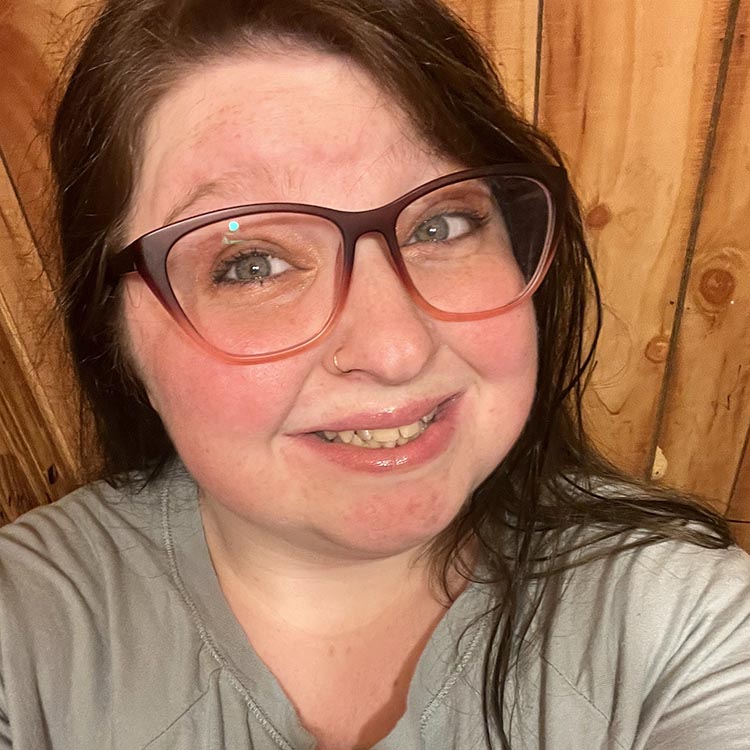
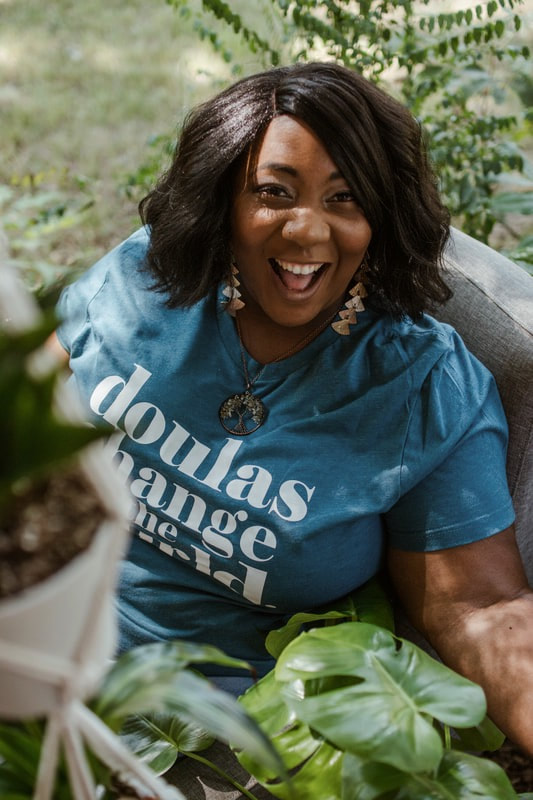
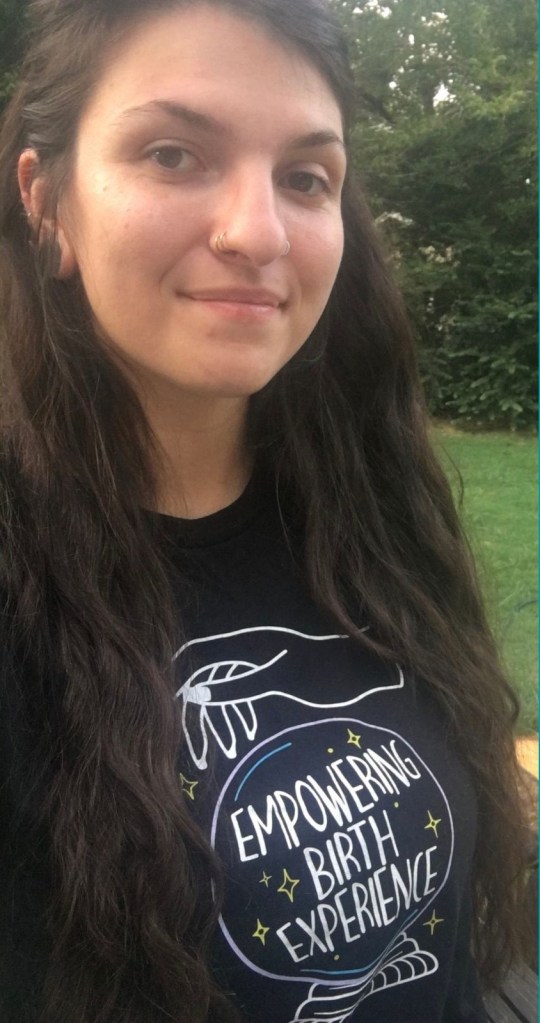
Cassi Mason is a midwife in Fayetteville that works with a team of doulas and midwife apprentices. Nicolle Fletcher in Conway is a doula that is also Mason’s apprentice. Taylor McGinnis, Ariel Wisdom, and Dillon Harvey-Williams, all located in the Northeast Arkansas area, are doulas as well. Harvey-Williams and McGinnis are also currently in training to be midwives.
Mason works as The Rural Midwife and has been a midwife since 2017. She travels throughout Arkansas to see her clients. Fletcher, who works through her company Nurturing Arrows, has been a doula since 2009 and started her midwife apprenticeship in 2020.
Fletcher also founded Ujima, a nonprofit organization that aims to address the maternal health issues that black women face by increasing the number of black birth workers in the community. She attends speaking engagements to raise awareness, and the organization does maternal care outreach events in Arkansas.
Taylor McGinnis
McGinnis is the owner of His Hands and Feet doula services and has been a doula since 2019. Wisdom of Womb Wisdom Doula Services has been a doula since 2022. Harvey-Williams, Taking Root Birth, has been a doula since 2017 and started training as a midwife in December 2022.
Mason was inspired to become a midwife after she experienced a home birth with a midwife herself. When she had her first child, she suffered from postpartum depression and struggled nursing. Mason decided to do a home birth for her second child and hired a midwife. She didn’t experience postpartum depression this time and fell in love with the concept of midwifery.
“I found a midwife in Northwest Arkansas, and she made my experience a hundred times better,” Mason said. “It was like a night-and-day difference, and after my experience, I just fell in love with the care that I received…you see one person throughout your entire pregnancy, and we really got to know each other, and I just honestly felt safe.”
“I found a midwife in Northwest Arkansas, and she made my experience a hundred times better.”
– Cassi Mason
Nicholle Fletcher
Fletcher originally wanted to be a midwife, but there were no midwife training programs at the time, so she decided to become a doula first. She felt that it was what she was made to do.
“My objective is to be a part of the solution to the problem which is maternal mortality,” Fletcher said.
McGinnis wanted to become a doula after the birth of her fifth child. It was her first VBAC (vaginal birth after caesarean), and she felt underprepared and under supported. She wished that her provider had explained the situation to her more thoroughly.
“I left that birth with quite a lot of birth trauma,” McGinnis said. “In my heart, I was feeling like, if I’m struggling with this, if I had this experience, then I know I’m not the only one.”
In a similar way, Wisdom wanted to become a doula so that women like her would have a better birth experience than she did. For Harvey-Williams, the more she learned about how the medical system treats mothers, the more she realized that being a doula was her calling.
Most doulas go through either Birth Arts International or DONA (Doulas of North America) International for their training. McGinnis and Harvey-Williams went through Birth Arts while Wisdom enrolled in DONA. Both programs are similar in that the students do assignments online, read textbooks, write papers, and attend a certain number of births before they’re certified.
The standard education that most midwives take is the PEP (Portfolio Evaluation Process) established through NARM (the North American Registry of Midwives). To start, the student has to find a preceptor, which is an experienced, NARM-certified midwife, for their apprenticeship.
Ariel Wisdom
The student studies textbooks and shadows their preceptor to births as well as pre-natal and postpartum appointments. The preceptor decides when the apprentice had learned enough to become certified. To become officially certified, the student must pass a 300-question exam, which is taken in 2 4-hour segments.
Mason stated that she was fortunate to have a great support system during her training so that she could work and study. However, it was often difficult to connect with physicians who would treat her clients well and were willing to work with a midwife.
“You don’t want somebody to be treated badly just because they made a choice to have a baby at home,” Mason said. “I’ve actually had some people who, maybe they wanted a circumcision for their child after postpartum, and they were calling up pediatricians in different places, and they actually said, we don’t take home-birth babies. Because sometimes they’re considered dirty babies.”
It can also be difficult to connect with preceptors according to Fletcher. In the early stages of her apprenticeship, she had to train with a preceptor three hours away because there aren’t many midwives, and some midwives don’t want to train new midwives due to competition for business.
Doulas have similar problems in how it can be difficult to find clients who will trust them and to compete with medical providers who don’t want to work with doulas, according to Wisdom, Harvey-Williams, and McGinnis.
Dillon Harvey-Williams
A further complication is that in Arkansas, patients legally must have a risk assessment in the beginning and near the end of their pregnancy if they plan to work with a midwife for a home birth. They have to see a third party, either the health department or a nurse-midwife, that will look over their history to make sure that they won’t have any complications.
“It’s just like a routine prenatal that’s not needed,” Mason said. “It’s like an extra step that our patients have to do that they don’t really need because we are the ones that are assessing care. Most states don’t require that, but Arkansas does.”
Midwives and doulas offer many types of care, and they can overlap sometimes, but the two are very different. Doulas focus on emotional support and typically don’t offer medical advice or treatments, while midwives focus more on physical and medical services.
Both midwives and doulas typically offer some form of preconception, pregnancy, birth, and postpartum support. During preconception care, Mason focuses on detoxing the body, cleansing the lymphatic system, and making sure the patient’s body has the best start possible.
McGinnis offers a similar service. She does fertility support, which means she goes with her clients to fertility appointments and helps them learn how to track their cycles. Fletcher does fertility and nutrition coaching.
Mason also offers regular prenatal appointments with the patient. She does all of her patients’ labs, knows what their diet is like, knows what their family and home is like, knows if they have good support or not, knows how they react to different medications, etc. She tailors her services individually for each person.
“It’s kind of like if you have a whole team of people—the doctor, the nurses, the APRNs, the billing, all of those things—and you wrap it all into one person,” Mason said. “Also, we don’t take as many people as OBs do…whereas you would go to an OB and spend fifteen to twenty minutes in their office, we spend an hour doing our prenatals, educating and making sure that they’re not afraid and whatever their fears are, we can address…we can really tailor that to each individual person.”
Fletcher, McGinnis, Harvey-Williams, and Wisdom also offer prenatal appointments. As doulas, they provide comfort, guidance, and education regarding pregnancy and birth.
“Doulas are huge advocates,” Fletcher said. “I am having conversations that are empowering you to understand what is your baseline, what is normal for you…then you can have a leg up, and you have information, so any time you have information, you have power…the truth is, this is your body…that’s where the midwifery model of care and doula support separates from the medical model of care because it’s individualized.”
Towards the end of a patient’s pregnancy, Mason listens to the baby more, does non-stress testing to make sure the baby sounds good and blood flow is sufficient, and sends off biophysical profiles to analyze amniotic fluid levels and make sure the placenta is still doing what it should.
Mason’s clients get unlimited postpartum support, so she helps with whatever they need regarding the baby. She checks up on them to make sure they’re doing well emotionally and can get them support from a lactation specialist if need be.
McGinnis, Harvey-Williams, and Fletcher also provide postpartum support. For a certain amount of time, McGinnis and Harvey-Williams will cook small meals, care for children and pets, do household chores, or run errands to let the new mother recuperate. Fletcher is also a lactation specialist.
According to Mason, the difference between traditional maternal care and conventional maternal is choice. She makes sure to educate her patients about their body, but she doesn’t force them to do something they don’t want to do, like STD testing for example.
“A lot of my patients have said, They [doctors] made me feel stupid for my choices or they made me feel like I didn’t know what I was doing. When you are instilling fear upon somebody, fear can do a lot of different things to the brain,” Mason said. “If you think about animals, they want to go the most secluded place where they can protect their baby…if they don’t feel safe, they just won’t [go into labor] or things will not happen the way it needs to happen.”
“A lot of my patients have said, They [doctors] made me feel stupid for my choices or they made me feel like I didn’t know what I was doing. When you are instilling fear upon somebody, fear can do a lot of different things to the brain.”
– Cassi Mason
In addition, Arkansas is almost 50% maternal health care deserts according to Fletcher. What this means is there are several areas where maternal health care isn’t offered, and so a patient has to drive hours away into a bigger town. For some, this isn’t possible because they don’t have time outside of work or it’s too expensive.
Fletcher founded Ujima to address this issue and provide more maternal health care options in those areas, focusing specifically on black mothers. Midwives used to be prolific before the advent of modern medicine, especially in black communities where the “grand midwives”—mostly grandmothers—were professionals of birth, medicine, and counseling, and all of this was done in the home.
Since the shift from this mindset, the rate of black maternal mortalities has increased significantly. However, according to Fletcher, 90% of maternal mortalities—not just for black mothers but for everyone—are preventable.
The cause of higher maternal mortality rates for black women are often due to systemic racism, lower socioeconomic status, and lack of education. Within the healthcare system, the mother’s problems and preexisting conditions are sometimes brushed off because of falsities spread about black people, like they supposedly have a higher pain tolerance.
According to Wisdom, it’s been statistically proven that mothers who hire a birth worker are less likely to need a caesarean and rate their birth experiences higher. Additionally, Mason stated that birth is 80% mental, 20% medical. In other words, the more educated and emotionally prepared a mother is for birth, the smoother the birth will go. That’s where midwives and doulas come in.
Avery Jonesis a sophomore in the Department of English and Philosophy at Arkansas State University in Jonesboro. She can be reached at: avery.jones@smail.astate.edu
Note: Feature photo courtesy of Dillon Harvey-Williams.
JONESBORO, Ark. — Spring. Plants are blooming, and the weather is finally warming. For some, spring is wonderful time of year. For others, spring means coping with seasonal allergies.
According to the Asthma and Allergy Foundation of America, allergies are reactions to allergens people come into contact with. Allergens, like pollen, cause seasonal allergies that affect approximately 81 million people in the United States and vary depending on location and time of year.
Dr. Debra Schulte, a part-time nurse practitioner in Mountain Home and full-time assistant professor of nursing at Arkansas State University, said seasonal allergies are more common in the spring months but can affect people all year round.
“You see a lot more because you have your typical spring pollen,” Schulte said.
A-State sophomore Sarah Purcell studying studio art said she does not believe her allergies are severe but does notice that the symptoms worsen during the warmer months of the year. Purcell said her allergies cause her to get mucus, but the symptoms of seasonal allergies can range from runny nose and sneezing to watery eyes and itchy throat.
Dr. Audrey Folsom, A-State assistant professor of clinical laboratory, said preventing seasonal allergies is nearly impossible because people cannot avoid things like trees, flowers and pollen that release allergens into the air. However, people can manage their seasonal allergies through lifestyle and diet changes.
To combat allergy symptoms, Schulte said people should change their surroundings by replacing carpet with hardwood in their homes, frequently washing their curtains and even putting plastic covers on their pillows and mattresses. Folsom said changing the foods people eat and adding vitamin D supplements to their daily routine can help the body fight against allergens.
“It is ultimately tied to gut health,” Folsom said. “Because I would say, probably 80% of your immune system is around your gut. So the worse your gut health is, the more likely you are to have allergies.”
Folsom herself battles with allergies. To combat her allergy symptoms, she cut out the big five foods that trigger allergies: wheat, gluten, dairy, soy and corn. Folsom said if people have very bad problems with allergies they should try to cut all five of those food groups out of their diet. Folsom said it is necessary to cut all five food groups out for at least a month and then reintroduce them back into the diet one at a time to properly find which is causing a spike in a person’s seasonal allergies.
Because of the wide range of options, buying allergy medication can be a daunting task. People should do their research before deciding which medication is right for them. (Photo re-enactment by Shelby Russom)
Several medications are available to combat seasonal allergies. These medications include over-the-counter antihistamines, prescription medications, as well as allergy shots.
“If those classifications of medications are not good options, there’s definitely different families of medications that your provider can prescribe,” Schulte said.
Schulte said all these medications are easy to access, but all require a few uses before a noticeable change will occur.
In Northeast Arkansas, it is common for farmers to burn their fields to clearf any leftover crops to prepare for planting new crops. This practice releases copious amounts of smoke into the air that people will breathe in. Folsom said burning fields severely worsens everyone’s breathing and allergies.
“It’s horrible and I wish they would stop it,” she said. “People think it’s normal, but there’s other places in the nation that do not do that.”
JONESBORO, Ark. — Since their creation, headphones continue to grow in popularity. But these personal listening devices have their pros and cons.
Invented in the early 1800s, headphones allow users to listen to their choice of audio privately. This allows those who love to listen to music in their cars and on personal radios to finally bike, walk and so much more while never having to put away their tunes. Timothy Hsu, of Phys.Org, headphones work through the turning of electrical audio signals into cycles of high and low pressures that the ear interprets as sound. This constant, close-contact vibration can be damaging if music is listened to for a long amount of time at a high volume.
A headphone user and Arkansas State University junior from Jonesboro studying graphic design, Kennedy Crawford said she is aware of the potential dangers of headphones but values them too much to not use them.
“I use them for a lot,” she said. “Like cleaning, working out, doing homework, so I pretty much always have them on me.”
According to the Centers for Disease Control and Prevention, exposure to loud sounds may damage structures and nerve fibers in the inner ear, resulting in noise-induced hearing loss. Causes of noise-induced hearing loss range from a single exposure to a very loud sound, to constant listening to loud sounds over an extended period.
Crawford said she uses her headphones every day with her music at max volume but does not yet notice a change in her hearing.
“If I have any change, I haven’t noticed it, but I wouldn’t be able to notice unless I got tested,” Crawford said.
Dr. Lindsay White, doctor of audiology and assistant professor of communication disorders at Arkansas State University, said she pays attention to if her headphone’s audio level is safe for her ears.
“You need your program to be loud enough that you can understand and get the full effect of your program or music you’re listening to but I think being an audiologist, I’m more aware of the harmful effects,” she said.
White said the cause of noise-induced hearing loss results from damage to the extremely sensitive sensory-receptor cells found in the ear. These cells easily become damaged from loud sounds over time. The volume and duration of noise in a user’s headphones, can worsen the effects of noise-induced hearing loss.
“I kind of think about it like sun exposure,” White said. “It’s accumulative over time. A little bit of listening today, plus a little bit of listening tomorrow over a duration of time can result in permanent damage to the ears.”
Chase Overholser, an Arkansas State University junior graphic design major from Wynne, uses headphones while completing a class assignment. Loud headphone use may damage the ears. (Photo by Shelby Russom)
The louder a sound is, the shorter the amount of time a person can safely listen. White said Listening to sounds at 85 decibels for more than eight hours a day can damage the ear. The average pair of headphones can reach levels up to 110 decibels. According to the Harvard Health Blog, exposure to a volume of 105 to 110 decibels damages the ear in five minutes. White said that the louder the people listen to music, the shorter the amount of time they can safely listen.
Dr. Matthew Taylor, a doctor of audiology at Taylor Hearing Centers in Mountain Home, said he recommends programming headphones to ensure they cannot go above certain audio levels. To alert their users they are listening to music at unsafe levels, phone companies implemented a warning system tasked with sending a notification to the users’ phone if audio levels are too high. White said listeners should not ignore those warnings.
“You can actually get apps,” White said. “Like parents, for example, can put an app on their child’s phone that will limit the amount of volume that they have access to.”