Category Archives: Economy

Food insecurity rises in northeast Arkansas as costs climb

Story by DDNS reporter Benjamin McDowell

Photo courtesy of the Food Bank of Northeast Arkansas

As grocery prices climb and paychecks fall short, more Northeast Arkansas families are waiting in food bank lines to make ends meet.

Food insecurity is rising in northeast Arkansas as inflation drives up the cost of groceries, gas and housing, putting increased pressure on local food banks.

The Food Bank of Northeast Arkansas secures donations from food and grocery industries, government agencies, individuals and other organizations to provide for people in need. The food is stored in the organization’s 59,600-square-foot distribution facility in Jonesboro.

Terry Austin, a development officer focused on fundraising and communications, said demand for food assistance has increased over the past year due to inflation, rising gas prices and cuts to federal support programs such as the Supplemental Nutrition Assistance Program, or SNAP.

“Demand has risen already just from the cuts that we’ve taken so far from the economy being in rough shape,” Austin said.

Austin said donors are also feeling financial strain, forcing them to be more cautious with their contributions as they balance their own household expenses. He said the food bank has seen an increase in senior citizens and families seeking assistance.

“Everybody right now is watching gas prices go through the roof,” Austin said. “Everything is more expensive at the grocery store.”

According to Feeding America, about 240,000 people in Arkansas benefit from SNAP, including 113,000 children and 36,000 senior citizens. A University of Arkansas study estimates that 28.8% of Arkansans face food insecurity.
“The price of one pound of ground beef is now higher than the federal hourly minimum wage,” Austin said, describing the current conditions as a “perfect storm” of rising costs and reduced assistance.

Austin said he is concerned about the food bank’s ability to meet growing demand as grocery prices continue to rise and federal assistance programs face potential cuts.

“I’m honestly worried about making sure that we’re able to meet the needs that may be coming our way,” Austin said.
Feeding America estimates that cuts to SNAP benefits could result in a loss of up to 41 million meals for Arkansas families.

Laura Dunivan, who works on the programs team managing fundraising and grant efforts, said rising costs are bringing more first-time clients to food pantries.

“What used to be occasional support for some families is now something they rely on more heavily,” Dunivan said. “We’re consistently serving more households each month.”

Dunivan said many families use food assistance to fill gaps during financial hardship, allowing them to afford other essentials such as gas, rent or medication.

“Would you sit in a car line for an hour for a box of food if you could just go to Walmart and get it in 10 minutes?” Dunivan said.

She said transportation remains a major barrier in rural communities, where access to food pantries can be limited. To address this, the food bank operates the Nourish Mobile, which delivers fresh produce at no cost to underserved areas.
“Some of the people can’t come to the pantries, we have to go out to them,” Dunivan said.

Natalie Neal, the USDA coordinator for the food bank, said federal food programs play a critical role in addressing hunger across the state.

“With the rising price of food, it is more expensive to purchase food, and our neighbors can’t afford everything they need,” Neal said. “It really starts to feel like there’s a greater gap.”

Neal said the food bank has seen a decrease in USDA food shipments, limiting the amount of food available for distribution.

“We are seeing less come into the food bank, so we have less to go out to the community,” Neal said.

She said the organization works with mayors, churches and community partners to expand access and reach new households.

“USDA foods provide a pivotal source of food,” Neal said. “It helps keep food in the pantry to help us all get through difficult times.”

Bonnie Mamula, office manager at the food bank, said rising food costs combined with stagnant incomes are key drivers of food insecurity.

She said senior citizens are especially vulnerable because many live on fixed incomes while expenses continue to rise.
“Some counties only have a few pantries, and they’re only open a couple of times a month,” Mamula said. “People in more remote areas have fewer choices.”

Mamula said the food bank is also seeing more working individuals and recently unemployed residents seeking assistance.

“Even people with jobs can’t make ends meet,” Mamula said.

Jennifer Hannah, chief program officer, said inflation has affected not only how many people the organization serves but also the quality of food it can provide.

“If we look at our data over the last few years, what we’re seeing is consistently serving more people,” Hannah said. “Demand is always there; it’s just how urgent it is.”

Hannah said many families fall into a gap where they earn too much to qualify for assistance programs but not enough to consistently support their households.

“It’s not so much changing the services we deliver, it’s changing how much we’re able to deliver,” Hannah said. “When prices go up, the quality of people’s food is going to decrease.”

-30-

Food insecurity remains challenge for Food Bank of NEA

Story by DDNS Reporter Jerry Don Burton

JONESBORO – Following the government shutdown and with the holiday season approaching, food insecurity in Northeast Arkansas (NEA) remains a challenge for food banks.

Arkansas faces the highest rate of food insecurity in the nation, according to a since-discontinued annual report published in 2024 from the U.S. Department of Agriculture (USDA). The USDA defines food insecurity as a household-level economic and social condition of limited or uncertain access to adequate food.

Terry Austin, development officer at the Food Bank of NEA, said the rural nature of Northeast Arkansas contributes to the high rates of food insecurity. Many areas of Arkansas are also classified as food deserts.

Food deserts are areas where access to affordable, healthy food is restricted or nonexistent due to the absence of grocery stories within convenient distances, as defined by Food Empowerment Project.

“Statistically speaking, 21% of Northeast Arkansas citizens are in food insecure households,” Austin said. “Which is a staggering statistic to me.”

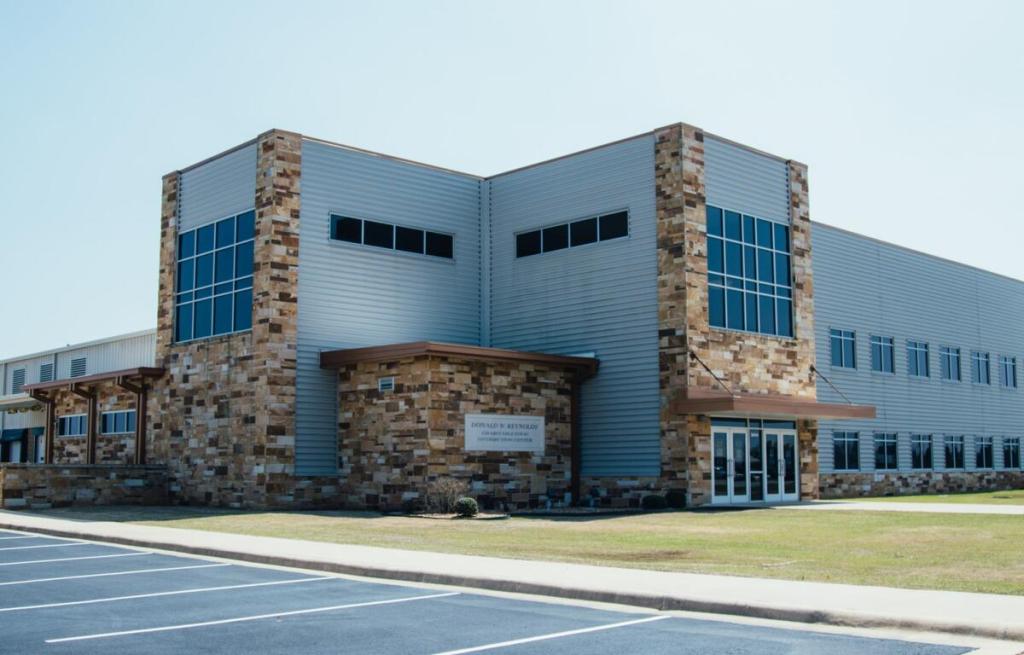
The Food Bank of NEA entrance, located at 3414 One Place in Jonesboro. Photo courtesy of Food Bank of NEA Facebook.

Food deserts are not the only elements worsening food security in NEA, though. National factors have further increased demand for food banks.

Lingering Impacts of Government Shutdown
Austin said the latest government shutdown, which lasted from Oct. 1 to Nov. 12 put a spotlight on food insecurity. He said those who depend on food assistance, such as the Supplemental Nutrition Assistance Program (SNAP) and federal employees, were particularly impacted.

The Food Bank of NEA saw a 16% increase in SNAP recipients who received food assistance during the shutdown compared to that same period in 2024. 8% of those served were new households that had never received assistance from the Food Bank of NEA before.

The One Big Beautiful Bill Act, signed into law by President Donald Trump on July 4, is also expected to impact food security nationwide.

President Donald Trump displays the One Big Beautiful Bill Act, after signing it. Photo Courtesy of Leah Millis, Reuters.

“[The act] is estimated to reduce the number of meals for SNAP beneficiaries in the nation by some six billion meals year to year over the next 10 years,” Austin said. “We’re gonna see that kind of cut in food assistance and that’s going to mean a very steady rise in demand.”

Another factor influencing the increased pressure on food banks is the approaching holiday season.

Holiday Season Challenges
“Regardless of what your family’s financial picture may be, you still want to have those holiday gatherings,” Austin said. “You want to have a table of food to share with your loved ones.”

The holiday season further contributes to an increase in demand because, since many children will be on break, they’ll miss out on school-provided meals. One in three children are at risk for hunger in NEA.

Austin said the Food Bank of NEA orders traditional seasonal food during this time of year to give families in need the food to make a holiday meal.
Food insecurity is not an issue limited to NEA, either.

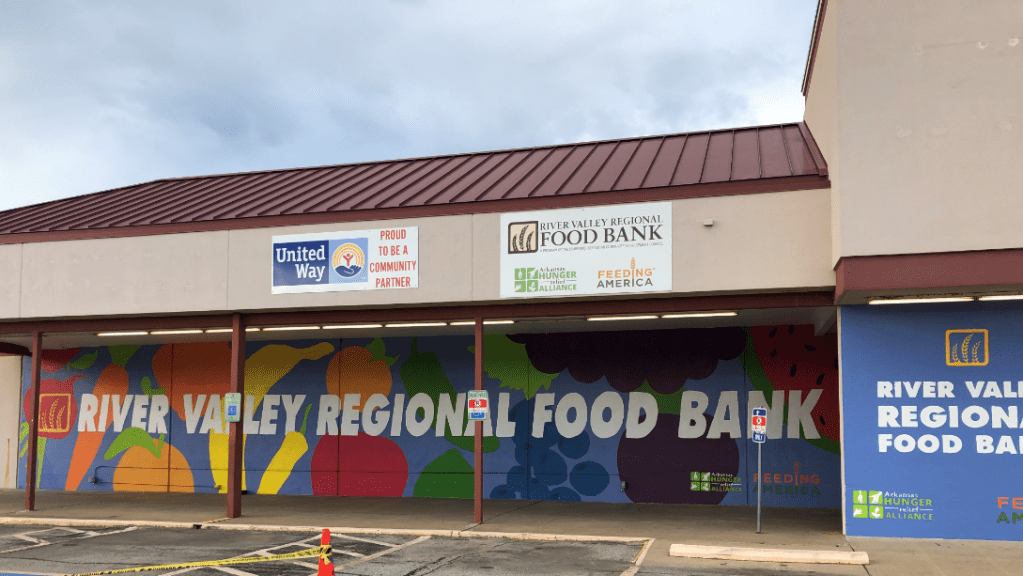
The River Valley Regional Food Bank entrance, located a 1617 Zero Street in Fort Smith.

Food Insecurity Affects Arkansans Everywhere
On the opposite side of the state, the River Valley Regional Food Bank in Fort Smith serves 140 pantries across eight counties in Western Arkansas.

Hattie Hamilton, interim food bank director and operations manager for the River Valley Regional Food Bank, said they have reached out to Feeding America for extra food. She said the additional product will help the food bank better supply the pantries as need increases.

Feeding America is a non-profit network of food banks nationwide that helps feed more than 46 million people.

“Our battle here to help fight against it is just to get the food in to help get to the neighbors in need,” Hamilton said.

State Funding Support
In an effort to combat SNAP cuts and relieve pressure on food banks, state funds have provided support to food banks across Arkansas.

On Oct. 31, Arkansas Governor Sarah Sanders directed $500,000 to be split among the six Feeding America partnered food banks in the state. On Nov. 9, with the shutdown still in effect, Sanders assigned $500,000 more to food banks.

“As the shutdown continues, my administration will stand with our partners in the legislature, at churches and in food banks to help Arkansans stay fed,” Sanders said.

Back in NEA, Austin said their food bank received about $83,000 from the state. He said the Food Bank of NEA priortized buying protein products with the funds.

“Protein is a critical part of a diet and it’s also part of a diet that’s hard for us to provide enough of in our distributions,” Austin said. “We get a lot of canned goods and a lot of dry goods. Protein can be tricky to fit into that parameter, so that’s why we focused using those dollars on protein purchases.”

Austin said he wants to stress that the food bank is grateful for the money, but more help is needed to meet the rising need.

Demand Rising in Northeast Arkansas
One of six food banks in Arkansas, the Food Bank of NEA serves a 12-county area in the northeast region of the state, serving about 8,000 square miles.

Austin said the Food Bank of NEA primarily raises money and food and then distributes products to 176 partner agencies. These agencies include churches, schools, food pantries and homeless shelters.

In 2024, the Food Bank of NEA distributed 8.2 million pounds of food to those facing food insecurity. 25% of that food was fresh products like meat, vegetables and fruit.

A Food Bank of NEA delivery truck, parked in the loading dock of the Food Bank of NEA. Photo Courtesy of the Food Bank of NEA website.

In addition to distributing food to partner agencies, Austin said the Food Bank of NEA travels to each of the 12 counties as least four times a year to hold a mobile distribution.

Through these distributions, Austin said the food bank arrives to a central location and hands out food themselves. He said the increased demand is felt even in these mobile distributions.

During a mobile distribution held in Craighead County in early October, Austin said the food bank brought 24 more boxes of food than normal and still had to turn away about 30 households because they ran out of food.
Similarly, during a distribution in Lawrence County, Austin said they brought 64 additional boxes of food and had to turn away 42 households.

“We simply ran out of food,” Austin said. “The demand has definitely spiked and it spiked in part because of the shutdown, but honestly, the demand was already beginning to climb.”

How to Receive Assistance and Offer Support
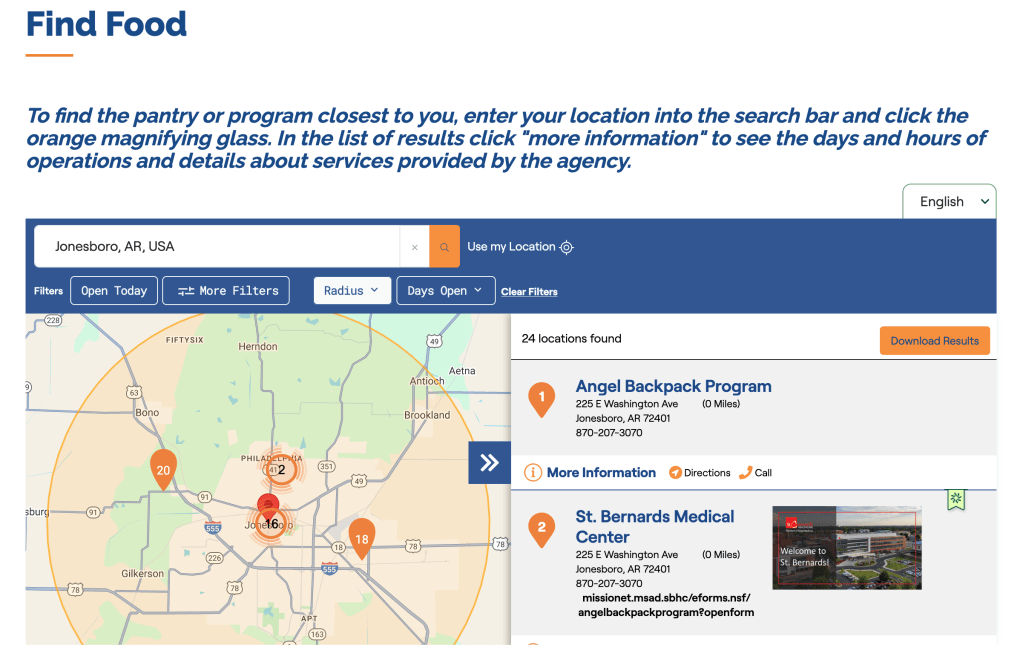
For those in need of food assistance, Austin said one of the best resources they offer is an interactive map on their website that allows users to find what food distributors in NEA are closest to them. Phone numbers, addresses and more information is included in the map to help guide users to help they need.

A screenshot of the Food Bank of NEA interactive map. The map allows users to search for food distributors in their location. Screenshot retrieved from the Food Bank of NEA website.


“We have done this a long time and we know all the ins and outs and the best way, the most efficient ways to get food to people who need it,” Austin said. “We stand ready to help if we need to.”

The Food Bank of NEA also has links under the “How to Help” section of their website for those interested in donating or volunteering. 1,157 volunteers donated 3,847 hours in 2024 to support the Food Bank of NEA.

Some of the most needed food items include peanut butter, canned soups, pasta, cereal, boxed meals, canned meats, and canned fruits and vegetables.

Austin said fresh food is always a challenge, so shelf-stable products are preferred. He also said popular foods that are flexible in meal prep are favored, such as spaghetti, corn, green beans and macaroni and cheese.

More than food, though, Austin said the Food Bank of NEA–and most food banks in general–actually prefer money donations.

Austin said donating money directly would serve the food bank more than canned goods, as the food bank buys product in bulk at reduced prices.
“We typically say that $1 donated can provide up to three meals,” Austin said. “We’re able to really stretch those dollars a long way.”

Austin said money donations can be used to pay for freight costs and other fees needed to keep the food bank running, too.

Still, Austin said any form of support–food donations, money donations, volunteer work or otherwise–is greatly appreciated.

The Food Bank of NEA is open from 8 a.m. to 5 p.m. weekdays and is located at 3414 One Place in Jonesboro. The food bank can also be reached by phone by calling 870-932-3663.
-30-

Hybar Steel Expands Footprint in Arkansas

MISSISSIPPI COUNTY, Ark. (March 11, 2024) – Hybar Steel has joined the “Work Here. Live Here.” (WHLH) housing incentive program in Mississippi County as an industry partner. With an investment of $500,000 to help its employees purchase homes in the county, Hybar becomes the 15th employer to participate in WHLH. Since the program launched in 2023, it has generated $36.1 million in new home value and facilitated 122 home purchases.

WHLH was created to strengthen Mississippi County’s workforce by making homeownership more accessible for employees of participating companies. Overseen by the Grow Mississippi County Community Foundation, WHLH is a cooperative partnership between the foundation, participating industries and several Mississippi County financial institutions. ​Funded by the participating industries, the program offers up to $50,000 toward the cost of a new home and up to $25,000 toward an existing home. 

“The program takes us one step further in terms of attractive benefits at Hybar,” said David Stickler, CEO of Hybar. “We pay great wages, have a robust healthcare program, a bonus for perfect attendance, a partnership with Arkansas Northeastern College (ANC) and, now, housing incentives through ‘Work Here. Live Here.’”

Hybar is nearing completion of its state-of-the-art steel rebar mill in Osceola, which is designed to be powered by 100% renewable energy, making it the most environmentally sustainable facility of its kind. Expected to begin production in May of this year, the steel mill is joined by Hybar’s adjacent solar field and its port facility on the Mississippi River, which, according to Stickler, could one day become the largest port between New Orleans and St. Louis. 

The company currently employs more than 100 people, with plans to expand to 200 direct employees and 50-60 indirect workers. While recognized for its competitive pay — aiming to have the highest-paid steel workers in the world — Hybar’s career opportunities and benefits also extend to employees in human resources, marketing, IT, logistics and more.

“We’re very pleased that Hybar has joined the growing number of companies who have contributed to the Grow Mississippi County Community Foundation and embraced the WHLH program,” said Clif Chitwood, president of Mississippi County Economic Development. “Their participation will help us continue to attract and retain the high-quality employees necessary to fill the increasing number of excellent jobs here in the county.”

WHLH has already made a measurable impact in Mississippi County, with 38% of homeowners in the program moving in from outside the county and 60% being first-time homebuyers. WHLH continues to expand its reach beyond the steel industry as participation from companies across manufacturing, logistics and other key sectors continues to grow. 

“Arkansas is a great place to do business, and Mississippi County, in particular, is a great place to do steel business,” said Stickler. 

For more information about “Work Here. Live Here.”, visit workhereliveherear.com.

About Hybar: Hybar Steel is a steel manufacturer based in Osceola, Ark., focused on producing high-quality rebar using renewable energy. The company is developing a modern steel mill in Mississippi County designed for efficiency and environmental sustainability. With access to the Mississippi River and other key transportation routes, Hybar is positioned to serve customers across various markets. Learn more at hybarsteel.com.

About “Work Here. Live Here.”: “Work Here. Live Here.” (WHLH) is a pioneering housing incentive and relocation initiative designed to attract and retain workers within Mississippi County, particularly those in the manufacturing sector. Launched two years ago, the program has successfully facilitated the sale of over 120 homes, contributing to $36.1 million in new home construction across Mississippi County. WHLH currently partners with 15 employers. Employees of those 15 businesses are eligible to receive up to $50,000 toward the cost of a new home or up to $25,000 for an existing home, making first-time homeownership a reality for 60% of participants.

Overseen by the Grow Mississippi County Community Foundation, Work Here. Live Here. is a cooperative partnership between the foundation, cooperating industries, and cooperating Mississippi County financial institutions. The cooperative industries invest in the program to incentivize their employees to build new homes or purchase existing homes in Mississippi County. The program is funded by the cooperating industries in the Work Here. Live Here. Program.

# # #

ASU Trustees Approve $30.6 Million Bond Issue to Finance New A-State Veterinary School Facility

LITTLE ROCK — The Arkansas State University System Board of Trustees today in a special meeting approved a $30.6 million bond issue to finance construction for the new College of Veterinary Medicine at the A-State campus in Jonesboro.

Design and construction of the College of Veterinary Medicine facility is estimated at $33.2 million. The university plans to finance the building through the issuance of taxable Student Fee Revenue Bonds and use of institutional reserve funds. Tuition and fees from CVM students will ultimately fund debt service for the construction.

The move follows a recent consultative site visit by the American Veterinary Medical Association’s Council on Education, which reviewed A-State’s progress on facilities, policies and personnel for the college. The university plans to admit its first cohort of students in 2026 in what would become the state’s only public vet school.

The bond funding plan also allows for the refunding and reissuance of $11.6 million in existing student fee revenue bonds that were used for capital improvements on the A-State campus. The total 30-year bond issue must have an interest cost of no more than 7%, and the refunding must produce a savings of at least 4%.

Stephens Inc. and Crews & Associates Inc. will serve as bond underwriters. PFM Financial Advisors LLC is the financial advisor, and Friday, Eldredge & Clark is the bond counsel. 

In other action, the board authorized Henderson State University to explore the disposition of three university-owned houses as part of its efforts to pursue cost savings and future growth.

The properties in Arkadelphia include the Ramsauer House at 327 North 11th Street, the Smith Garner House at 324 North 12th Street and the Evans Street House/Lot at 1228/1226 Evans Street.

Disposition may include the sale of each property, which would require surveys and appraisals.

City of Jonesboro receives $1M grant for Community Park

The City of Jonesboro has been awarded a $1,000,000 grant from the United States Department of the Interior’s National Park Services, through the Outdoor Recreation Legacy Program. This significant award will be administered by the State of Arkansas Department of Parks, Heritage, and Tourism. Jonesboro City Council previously approved a local match of $1,129,675 which is represented in the 2024 Annual Budget. The Junior Auxiliary of Jonesboro has also committed $100,000 toward the development of this project.

“This is exciting news for our city and reinforces the great work of our Grants, Parks and Engineering departments who put together a great application for a long overdue park in Northeast Jonesboro,” said Jonesboro Mayor Copenhaver. “This park is a key investment in the well-being and quality of life for residents of Northeast Jonesboro. We are grateful to the National Park Service, the State of Arkansas, Junior Auxiliary, and both Cornerstone and Journey Churches for their partnership in making this vision a reality.”

The funds will be allocated to the creation of a new community park in Northeast Jonesboro, at the end of Disciple Drive. The park will cover at least 13 acres, with potential to expand to 23 acres, contingent on further land acquisition. Planned features will include:

  • A fully accessible adventure playground
  • Walking and biking trails
  • Tennis Courts
  • Pickleball Courts
  • A Dog Park
  • Multiuse Sports fields
  • An expanded entrance road
  • Parking lot
  • An abundance of natural greenspace

“When we first met with Mayor Copenhaver about how we could help improve Jonesboro, his pitch for a park in east Jonesboro was an immediate ‘yes’ as it lined up perfectly with our mission to improve lives for local youth. We are so proud to be a part of this wonderful project,” commented Junior Auxiliary President, Jessica Baker.

The City of Jonesboro’s Parks and Recreation Director Danny Kapales stated, “As the Master Parks Plan indicated, this location was lacking in park space and was a priority. This grant and future park represent what is possible to achieve as a collective group.”

This project aligns with the Social Determinants of Health Plan, with plans for the new park to be fully accessible to residents of all abilities. Notably, there is currently no city park within one and a half miles of the project site, making this development a resource for the surrounding community. Thousands of residents who live and work near the project area will have better access to outdoor recreation.

“This project is a culmination of more than two years of coordination between the City, the State of Arkansas, and the National Parks Service. We are excited any time we win a grant, but to secure the largest parks grant the City of Jonesboro has ever received is special and personal for our hard-working staff,” commented Jeremy Biggs, Director of Grants for the City of Jonesboro.

Next, the Jonesboro City Council will hear a resolution to accept the grant and purchase the property, to be presented to the Public Services Committee later this week. After approval from Public Services Committee, full council will consider next week. If approved, construction will begin in the Summer of 2025.

Investors see gold and silver security as stock markets become turbulent

Delta Digital News Service

By Cameron Bandy | Contributor

JONESBORO, Ark – Gold and silver are valuable investments to fall back on if the dollar depreciates, a catastrophic event occurs or the economy collapses.

   Gold and silver give the buyer a tangible item used for trades or sold for needed products.

   Northeast Arkansas Coin Company, managed by Ryan Poole, sells rare coins, paper money and artifacts. Poole helps people invest and educate potential buyers about gold and silver and their value.

   Poole said, “Buying gold and silver is the safest investment you can have. It’s tangible. Stocks can crash at any minute; the dollar could debunk at any minute and if your dollar debunks then we will have a new currency that will take the dollar’s place.”

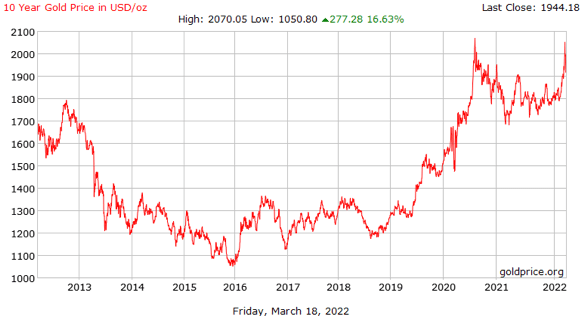
10 Year Gold Price

   Gold provides an alternative to the dollar, a tangible asset and your best bet against the dollar.

   Poole said, “Yes you can make money, break even, or lose money but the risk is not there. You will never lose 100% of your money.”

   Gold holds wealth without the government interfering constantly. Gold is a risk-free investment and a hedge against inflation. The smartest investment is gold because at any given time you need money, you can go to any fair marketplace and get it.

   Alex Mitchell, an employee at Memphis Gold and Diamond Buyers in Memphis, Tennessee primarily handles liquidation. Buyers are more comfortable with buying gold online and sending it to their house, so the field is becoming smaller and consolidated.

   Mitchell said, “The main thing about buying gold would be it is still a tier-one asset at any bank and anybody and everywhere will know what an ounce of gold is especially overseas. It is still considered money where cash isn’t a tier-one asset like treasures and gold.”

   Having gold is like a savings account with complete control. Cash is king in many scenarios.

   Mitchell said, “You want to be diversified, and holding cash doesn’t make you any money. Cash is becoming less valuable every day. The truth is, the more you buy gold now, the less money you have to spend in the short term.”

   Having gold benefits the buyer and keeps the government honest. Every country recognizes gold and worries about pricing. Having an ounce of gold can be traded for something useful which could come in handy. When you have gold, then you’re the bank. Every nation recognizes gold in value which makes it a good investment.

    Sam Tuck, a recent buyer, always had an interest in gold since he was little and collected coins as a kid. Gold and silver won’t lose their value over time like a tradable commodity and it’s a good fallback.  

   Tuck said, “Only about 20% of my portfolio has gold and silver in it just to fall back in case the dollar goes into the tank, then I’ll have something to barter or trade with.”

   Gold and silver are safe investments because of the no risk factor. Precious metals are going to hold value. Tuck encourages people to buy gold and silver to trade as a currency.

Essential workers provide much needed care during winter weather

Preparation and precaution is needed during winter weather

Delta Digital News Service

By Cameron Bandy | Contributor

JONESBORO, Ark. – Business and public services are especially important during winter weather because crime and hunger don’t stop during extreme conditions. People need police, nurses and businesses like grocery stores to help them survive the cold.

   Winter weather pummeled Northeast Arkansas bringing an abundance of snow, sleet and freezing rain which caused multiple power outages and traveling issues. Inclement weather prompted many businesses like Pak Mail, Cracker Barrel, Jets Transit and surrounding schools to close. Police Officers, nurses and grocery stores are necessities in cold weather and must stay open to assist the public. These professions don’t get the choice of staying home.  

   Bill Brown has worked as a police officer 14 years on patrol and is now a detective for the department. Winter weather can be a struggle for police officers and preparation for any type of weather is important.

   Brown said, “When it gets closer to fall, officers will get prepared by getting their cold-weather gear out.  The cold-weather gear is different for different officers.  Mine consists of thermal layers to keep in my vehicle along with gloves, thermal beanie, coat and HotHands hand warmers.  I will also keep a blanket or two just in case I have a call where people are stuck in the weather, till they’re able to get back indoors.”

I will also keep a blanket or two just in case I have a call where people are stuck in the weather, till they’re able to get back indoors.”

– JPD Detective Bill Brown

   Brown expressed the importance that all officers should become acclimated to all weather conditions. At any time of the year, officers have no idea what the next call will be or how long they will be in the elements with the number one goal of providing safety. 

Being prepared for the weather is part of the officers’ responsibility. During winter weather accidents, officers will do what they can to keep the drivers warm and dry. Some calls might be to direct traffic at an accident scene where the temperature is cold while containing many forms or precipitation, or out looking for a lost juvenile or an elderly patient that walked away from the nursing home.

   Hanna Koons is a respiratory therapist at St. Bernards Hospital and has been for about 15 years. Hospitals are essential for those needing medical assistance during car accidents, the current pandemic and with helping other medical emergencies.

   Koons said, “Generally, falls and wrecks are the most reported incidents in snowy weather.”

   During winter weather, the hospital allows all staff to use rooms that are available to sleep if they’re not comfortable driving home during winter weather. Koons expressed the importance of getting to work during winter weather, “With the option of staying at the hospital, there is no excuse not to make it to work, she said.” Medical emergencies don’t stop during winter weather, so doctors and nurses can’t either.

“With the option of staying at the hospital, there is no excuse not to make it to work, she said.”

– Respiratory Therapist Hanna Koons, St. Bernards Hospital

   Danny Phillips has been an asset manager at Walmart on Parker Road for nearly eight years. Grocery stores must stay open because people must be able to get groceries in case of weather-related emergencies like the 2009 ice storm that left many residents without power for weeks. People always rush to grocery stores to pick up the usual milk and bread along with other necessities; so, these stores must be prepared.

   Phillips said, “we try to keep pallets out of customer’s way” to have efficiency as people shop for what they need. Safety is the main concern of grocery stores as they have an influx of people preparing for the storm.

 “The rugs get cleaned during rain and we have a snow-removal contract with a landscape company that helps clear the parking lot for customers,” he said.

   Preparation and efficiency for businesses and public services are vital to helping the public prepare for extreme weather. Without police, nurses and important businesses, people couldn’t survive, especially if an accident, injury or lack of food impacted someone. These professions can’t call into work because of road conditions or weather because they help others survive.

COVID-19 hampers holiday, economy

By Yu Bai
Delta Digital News Service

The first Monday in September is the traditional Labor Day in the United States. However, due to the impact of COVID-19, most people recognized the holiday at home rather than attending public settings.

Jonesboro physician Chance Smith stayed home for the holiday. “I did have a barbecue, and I swam with friends and family only on Labor Day,” said Smith.

Smith practiced safety precautions by staying home and only being close to those familiar to him.

To contain the spread of COVID-19, the city Jonesboro strongly encourages residents to keep social distance and avoid gatherings of more than 10 people.

Businesses such as restaurants and bars are limited to takeout or delivery while personal care services, and gyms have been closed.

Slowing customer traffic has caused small businesses to have limited profits limiting funds for overhead costs. The city provides some grants and loans to help these companies survive the temporary closures and loss of customers.

Director of Communications for Jonesboro Bill Campbell said, “We have built reserves to get through what we call ‘rainy days,’ which means the periods of emergency or catastrophe or anything like that.”

Employment in the leisure and hospitality industry has always been a dominant area of Jonesboro’s economy, and the permanent closure of these businesses will make many people in Jonesboro unemployed.

Labor Finders is a temporary staffing and employment agency in Jonesboro, which provides good short-term services for those who are unemployed. It can immediately provide jobs for people who need to find a job and pay a daily salary.

Debra Dunaway, the assistant manager of Labor Finders, said, “ We provide construction workers and construction clean up, and we give them money right away when they’re in need.”

However, Dunaway said that they did not recruit too many workers to work in recent days compared with before because so many things are shut down right now.

Jessica Tran is a local resident whose parents have a business. “My parents were forced to close their business for a few months due to a mandate ordered by the governor. As for me, I actually had a job as a desk assistant. However, when the virus started spreading more, everyone was sent home, including me.”

The epidemic has suppressed the development of many private small businesses, and it also has diminished the government sales tax. Companies continue to develop their business while expanding social distancing requirements to stimulate economic recovery.

CITY OF POCAHONTAS SEES 11% REVENUE GROWTH

By Christine Miyawa
Delta Digital News Service

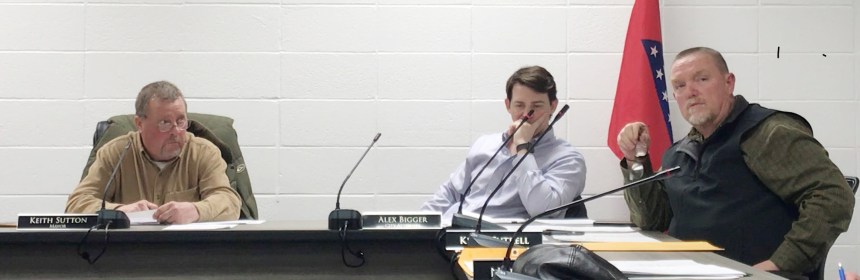
POCAHONTAS – Mayor Keith Sutton said February 11, residents will have to haul items during the spring clean-up to the Randolph County Transfer Station. A move to cut the cost of operations at the street department.

“There would be no charges at the transfer station between March 23 to March 27. However, the transfer stations will require payment to dispose of oil, tires, paint, or shingles. During the week, the city council will require residence to have a water bill and a driver’s license to dispose of items.”

Members voted and passed the resolution.

Sutton said the city plans to award Glosson Waste Management Company in Pocahontas the tender to carry out the spring clean-up and pick-up. He said the move to outsource would save the city a considerable amount of money. Previously the city’s street department picked up items from the curbside during spring cleaning.

On the matter of waste management, owners of non-running vehicles sitting on the yard may face charges failure to remove the vehicles from their yard Councilman Keith Futrell said during the meeting.

The council also agreed to lease the 3238 square feet office space and 6650 square feet of hangar space at Black River Technical College Aviation Building to station its fire department temporarily. The building located at 2022 Highway 67 south will cost the city council $1250 per month.

The council also passed an ordinance to charge any damages to the city water meter component to the premise owner or occupant. The move came as a result of the high cost of repairs on the water meter the city is facing. The mayor said the city would repair the damages and charge to the account the water meter serves.

Employees of the city council will now see an increase in their paycheck as the city council vote to approve the 2019 employee wage increase. The increase came as a result of the growth in revenue by 11%.

On another matter, City Attorney Alex Bigger said the court granted summary judgment in favor of the city in the case of Smith v. The City of Pocahontas.

Allen Smith, a former police officer for the city, sued the city for disability discrimination and breach of implied contract.

Bigger said Allen Smith failed to establish any evidence of disability discrimination by the city.

“He failed to show that the city’s stated motive to terminate his services was discriminatory,” Bigger said.

The presiding judge also granted summary judgment in favor of the council because Smith was an at-will employee and the city did not create a contractual agreement for his employment.

“The case was dismissed with prejudice,” Bigger said.