Author Archives: Christine Miyawa

Volunteers spruce up Brockett Cemetery

By Christine Miyawa
Delta Digital News Service

Organizers called off the annual Brockett Cemetery Fall Cleanup Day after a morning downpour interfered with the cleaning.

Volunteers showed up at the cemetery to mow, arrange displaced tombstones, pick up leaves and cut off dry tree branches, but began to leave when rain arrived. The rain, which started as a drizzle before they arrived, continued for the better part of the morning hours.

Lyda Davidson, secretary of the Brockett Cemetery committee, said,

“We couldn’t stay with this rain and you know, coronavirus, we don’t want anyone catching the virus in this weather, we had to call it off.”

Trent Ingram, a member of the committee, said the cleaning event takes place annually.

“Most people who show up volunteer their services,” he said.

The majority of the volunteers buried their families at the Brockett Cemetery.

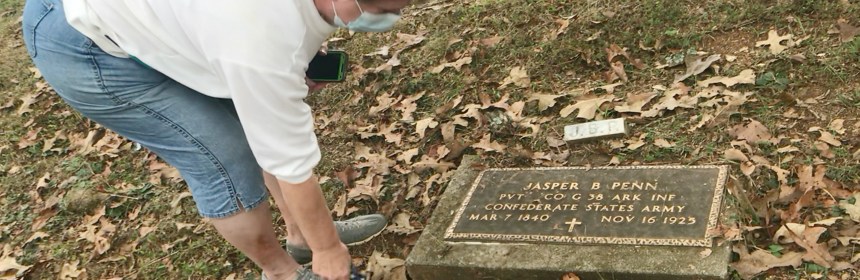
Five generations of Davidson’s family lay buried there, starting with her great-great-grandfather Jasper B. Penn, born in 1841, having died in 1925. Penn served during the Civil War in the Confederacy as a postmaster. She said the late Penn delivered mail on horseback and wagons.

Not too far from her great-great-grandfather, lay the tombstone of her great-grandfather Solomon Steven Mack and his wife, Barbara Mack.

Next to their grave, her grandfather and grandmother Aaron O. Mack and Ollie F. Mack, behind them, her grandfather’s brother John Adams Mack and his sister Carrie E. Milam.

Then her grandfather, Robert H. Milam and wife, Sara E. Milam, her father Alvin Andrew Milam and mother Eula Mack- Milam’s tombstone lay beside each other on one long black and grey marble stone a little distance away.

Her uncle and aunt lay behind her parents. Her late brother- in- law’s tombstone lay next to her sister’s, who is still alive. And many other family members.

“This cemetery is like home for me. When I’m here, I feel peace,” she said.

In 2015 after her brother-in-law died, Davidson bought a tombstone for herself. A mixture of pink and black marble the size of three soccer balls combined.  The marble rock, neatly cut on the engraved side and rough on the other side, bore her birthdate and engraved motto on the stone which read,

“Death is swallowed up in victory,1 Corinthians 15:54.”

At 75 years old, Davidson said she does not fear death.

“Death is not a lasting thing. We live on. For Christians, it’s a happy feeling,” she said.

Each generation of her family took care of the Brockett Cemetery. They would carry their lunch to work, take breaks to eat and go back to work until they completed the job.

“Sometimes people move the tombstones away to the road nearby, and these rocks are markers. We pick them up during cleaning and return them to their proper positions. We keep this place up to preserve our genealogy, for anyone interested in genealogy, this is a good way to preserve it,” she said, as she pushed out of the way into a stockpile cut weeds from a gravesite.

The weed is called “pork salad”, she pointed. It grows a lot here, and I like it; it’s edible. In the olden days, people used their black seeds as a dye for clothes and ink for writing.

The original name of the Brockett Cemetery was Knotts Cemetery, named after the late Joseph L. Knotts.

Knotts donated the piece of land for burial. Many of his family’s tombstones lie on the cemetery along a line, each bearing the name Knotts, young and old.

The name later changed to Brockett, the name of the community at the location of the cemetery.

Every year, they organize for clean-up in March and in October weather permitting. Volunteers show up from various states.

She said they also get donations from people and use the funds to hire for help in cutting grass and dry tree branches at the cemetery when they cannot find volunteers.

Davidson said they also sponsor community members not able to afford burial sites or tombstones.

“Anyone can be buried at the Brockett Cemetery,” she said.

Davidson says she believes at least three more fresh graves came in 2020. So far, 400 people call Brocket Cemetery their permanent home, even in death.

Davidson said the committee meets twice a year, and they have not come up with a new day to reschedule the clean-up after the rain sabotaged their plans.

She said people could find their contacts at the local funeral homes in Randolph County and neighboring towns.

JONESBORO RESIDENTS PREPARE FOR A CURFEW

By Christine Miyawa
Delta Digital News Service

JONESBORO – The Jonesboro City Council passed an ordinance April 7, allowing Mayor Harold Perrin to impose a curfew of no longer than 120 days in response to the COVID -19 pandemic.

Perrin chaired the meeting with council members participating via webcam.  Accompanied by City Attorney Carol Duncan, they both wore filtered face masks and practiced social distancing by seating several feet away from each other.

“This is not a time to look good, you just look good in your masks,” Mayor Perrin said as he began the meeting.

The agenda for the meeting did not contain any special presentation as members voted to postpone several items to a time when the council would meet physically.

Several members also complained that the audio system wasn’t clear enough to allow proper participation via webcam.

Dr. Charles Coleman requested the council postpone to the first meeting in June, a proposal to change the single-family residential to family residential, on a property located at 1130 Jonesboro Rd. Coleman said the postponement would allow several members of the public to physically be present at the meeting to participate in the discussion.

Members also voted to postpone other zoning codes, including the ordinance to amend Section 117 of the zoning code to the next city council meeting.

Some of the items the council passed included a unanimous vote to purchase a property at 409 North Fisher St. at $2,243 plus regular closing cost. A unanimous vote was attained to condemn property at 304 Walnut St.

Also, an ordinance to place traffic signals at determined locations as determined by the Traffic Control Commission.

Mayor Perrin said, so far, the city’s revenue exceeded expenditure, but because of the COVID-19 and the Tornado that recently swept the city, they are watching the finances for any significant deviation.

He said the city received $7.8 million for emergency services for COVID-19 and tornado damage relief and because a few homes in tornado affected areas did not have insurance, the city will clear the debris but will charge a fee for re-building.

Councilwoman Anne Williams commended KAIT 8 News for warning the public in time about the tornado.

Councilmen John Street and Joe Hafner thanked the mayor, police department and fire department for their swift action during the tornado.

“You did your best under the circumstances, no deaths,” Street said to Mayor Perrin.

Street and Hafner both said the hand of God played a role in saving the lives and properties during the tornado.

“People as far as Conway and Little Rock came to help. I see the hand of God in this- everybody, hang in there,” Hafner said.

Councilman David McClain also thanked JPD for keeping patrol around the community to ensure no looting of property.

Perrin asked members of the public to send in their comments via email through councilcomment@jonesboro.org, via phone (870) 336 7248 or via Facebook live on the city’s Facebook page.

Members of the public participated by sending messages via email and Facebook live to the meeting.

Dr. Paul Vellozo, a physician in the Jonesboro area, requested the council pass a resolution for food handlers and grocery workers to wear masks.

Several members of the public sent in requests. A woman requested to have all churches closed because a particular church in her neighborhood was still holding meetings and posing a threat to her safety. Another complained that the park equipment and basketball court were still open. Someone requested the city council to close child-care centers during the pandemic because the centers put the health of children and workers at risk for lack of social distancing and a physician requested that all Jonesboro residents wear masks in public.

The North East Arkansas Bicycle Coalition said there is an increase in the number of cyclists and pedestrians during the pandemic and requested the public through the council to increase public outreach to motorists to be aware of cyclists and pedestrians using roads.

Photo by Martin Sanchez on Unsplash

POCAHONTAS SCHOOL DISTRICT TO CLOSE TO PREVENT THE SPREAD OF CORONAVIRUS

By Christine Miyawa
Delta Digital News Service

POCAHONTAS – The Pocahontas School District to close March 17, amid fears of the Covid-19 catching the students, faculty and staff.

“The division of Elementary and Secondary Education instructed the Pocahontas School District to close beginning Tuesday, March 17 to Friday, March 27,” the Superintendent, Jerry Martens, said on the school district website.

The closure includes all academic and extracurricular activities.

So far, no report of anyone testing positive for coronavirus reported in Pocahontas.

The school gave the students Alternative Methods of Instruction (AMI) packages to guide in their studies at home.

Martens said the school would resume classes Monday, March 30.

“No student is allowed on campus for any reason as per the request of the commissioner of education and the governor of Arkansas,” Martens said.

He said students would be able to contact their teachers through email for questions concerning AMI assignments.

Editor’s Note: Photo by Viktor Forgacs on Unsplash

DEMOGRAPHIC CHANGE IN POCAHONTAS BRINGS NEW BUSINESSES

By Christine Miyawa
Delta Digital News Service

POCAHONTAS – The demographic in Pocahontas has changed tremendously in the past five years, as new businesses mushroom to cater to a growing populace of diverse cultures.

Until 2016, the town consisted of 93.6% Caucasian and 0.0% Pacific Islander. In 2015 plans to construct a chicken plant in Pocahontas began, setting in motion the wheel for economic growth the town currently enjoys.

In the beginning, many locals protested the construction of the chicken plant claiming it would open the town to foreigners. Local business owners feared it would cause minimum wage to rise, posing competition for the limited workforce. The city council went through great lengths to educate the locals about diversity and tolerance and how beneficial the chicken plant would be to the town’s economy. After several town hall meetings to convince the locals and business owners, Peco, the chicken processing plant, finally opened its doors in the Spring of 2016. Located along Highway 67 at the border of downtown Pocahontas and Lawrence County.

“Since Peco opened in 2016, our company has recruited 3,879 workers,” said Joie Saienni, the branch manager of Onin Staffing Company that recruits staff for Peco.

The plant hired many locals from management staff to track drivers and sanitation workers. Many locals found jobs in the hatchery, live processing, de-bone unit, evisceration unit and packaging section in quality assurance department, raising the local hourly wages from a minimum of $8.25 to $22 an hour for those working in the live processing.

Initially, the plant hired only locals from Pocahontas and nearby towns within Randolph and Lawrence Counties, but have since replaced them with workers from as far as the Marshall Island, in the Pacific.

With the opening of Peco, the demographic of Pocahontas began to change. The 2010 census shows a population of 6,608, and as of July 2018, the population had risen to 6,644. The 2020 census will tell how much the number has grown since. However, evidence shows a shift in the race composition and growth in new businesses. From 93.6% white, consisting of an older generation above 18 years old, according to the 2010 census, to young Micronesian families from the Marshall Islands.

Many Marshallese have enrolled their children in the Pocahontas Public School system. The superintendent of the Pocahontas School District, Jerry Martens, said Pocahontas School District has 250 new pupils from the Marshall Island.

In 2017 the Pocahontas School District began plans to build a new elementary school to cater to the growing population. The former Pocahontas School District Superintendent Daryl Blaxton predicted in 2017 a rise in the number of new students from 200 – 500 students by 2018. The new elementary school project is underway.

Because of the population shift, several new businesses mushroomed, adding to the growth of the city’s economy.

The city reported steady growth in the past few years with 2019, seeing a rise in revenue of 11%.

Paula Thorpe, who works for the Pocahontas Water and Sewer Company, said that in the past five years, she saw a rise in new water customers from 440 in 2015 to 500 in 2019.

Several businesses, including the grocery chain store Harps, opened in Feb. 15, 2017, giving competition to Walmart Superstore. Harps added to its services, a butchery, providing custom beef cuts and pork cuts.

Soon after the construction of Harps grocery store and a gas station was completed, the First National Bank built a second branch next to Harps, along Highland Boulevard, offering banking opportunities to newcomers and new businesses.

Among its customers is Herman Lopez, who owns a Mexican restaurant in Pocahontas. He has been through the lows of business. A shoe factory, which was a primary employer in the city outsourced when the government signed NAFTA, and with its move, most of the mom and pop businesses in town died. The town square had been left with a few stores as most shops closed down. For more than seven years, Lopez runs his Mexican restaurant, one of the only two Mexican restaurants in town.

Two years ago, he expanded his business, opening a mini-market grocery adjacent to his restaurant to cater to the needs of the Marshallese customers who have moved in town.

The mini-market called Mercadito Latino contains exotic food ranging from Fufu flour-a special kind of flour made from Plantain or Cassava to potteries and house deco. Lopez imports his groceries from far and wide, including Mexico. Lopez says business is booming.

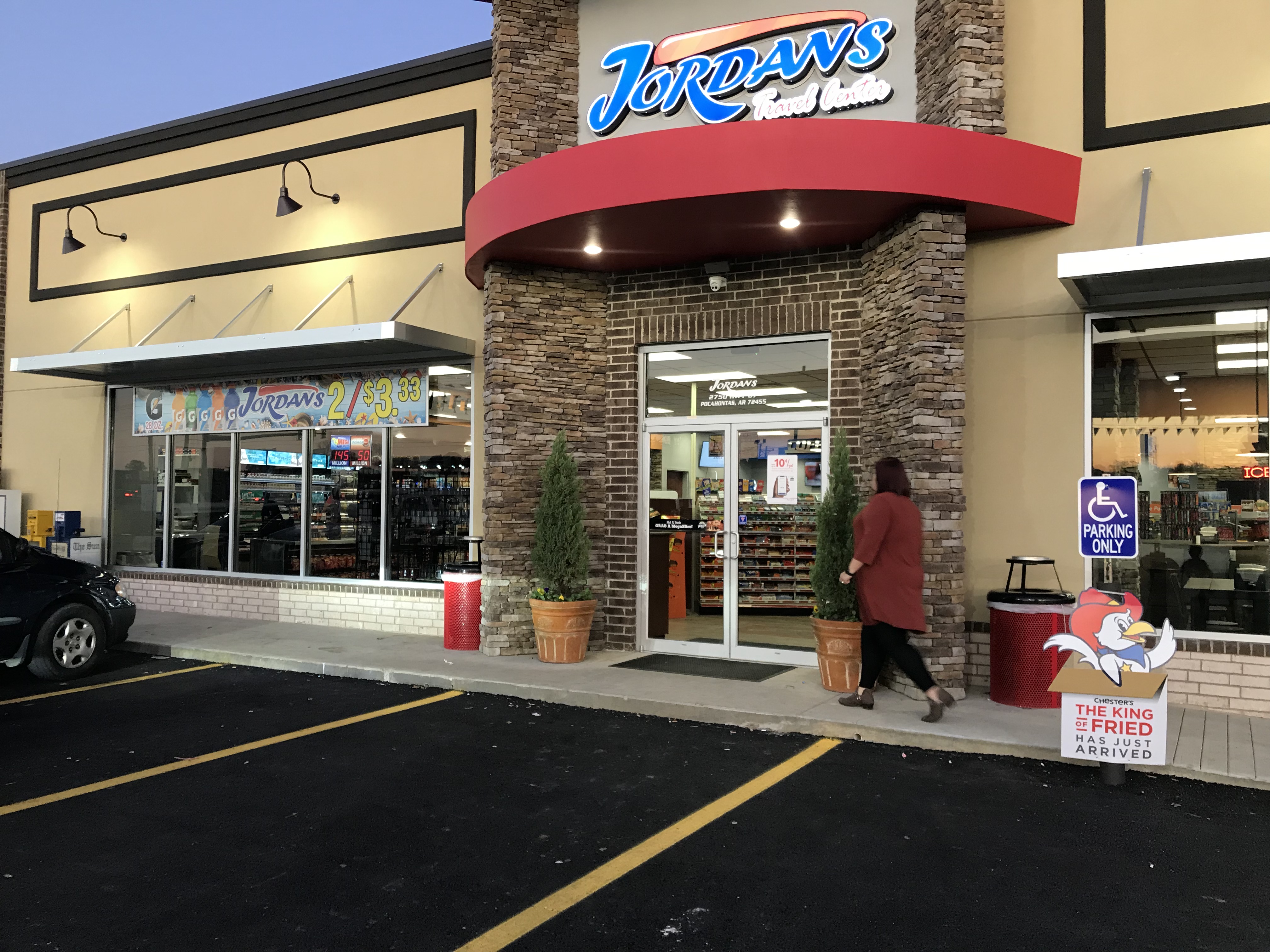
Across the road from Lopez’s store, a new convenience chain store, Jordan’s Kwik Stop 52, a gas station and a travel center opened November 2019. Adding to the growth of the economy of the city. Jordan’s Travel Center is the only travel center in Randolph County along Highway 67.

With many new people in town from different places, the city, which was within a dry county for a good number of years, finally managed to gather enough votes to pass a liquor ordinance. And, as from fall 2019, Walmart, the biggest supermarket in town, began stocking liquor. Pocahontas has since seen its first bar in many years. Located across the road from the Randolph County Chamber of Commerce.

The city has also started work in 2018 to expand its court and jail size.

With the progress the city made due to the change in demographic, there are fears the scourge of the coronavirus outbreak may pose significant setbacks to the progress made over the past few years. But there is faith in the city’s capacity to handle the situation, especially with the merger of St. Bernards Medical Center and the Five Rivers Medical Center in Pocahontas in 2019 to improve services.

POCAHONTAS SCHOOL BOARD TO OPEN NEW CHECKING ACCOUNT AFTER DETECTING FRAUDULENT ACTIVITY

By Christine Miyawa
Delta Digital News Service

POCAHONTAS – The school board of the Pocahontas School District voted March 16, to open a new checking account for the new elementary school amid reports of fraudulent activity on the current checking account.

“There has not been any money lost by the district at this time, Jerry Martens, the superintendent said.

The board is yet to file a police report as per the audit request. Martens said the bank suggested the board close the current account and open a new one. The bank also required minutes of the school board meeting approving the changes to open a new account.

During the executive session, the six- member-board agreed to increase the grade 7 cheerleader stipend to $1538, paid in the remainder of the 2019-2020 school year.

The board hired Amy Story as grade 7 cheer sponsor, Junior assistant cheer sponsor and senior citizen cheer sponsor for a stipend of $1400 for the school year 2020-2021.

The board also voted to hire a new cafeteria worker for the Junior high.

On a separate note, Martens said a couple of boys requested to transfer from Pocahontas School District to Sloan Hendricks School District.

He told the board, the Sloan Hendricks superintendent declined the request saying, the school would not be able to accommodate the boys because grade 9 is full and he would have to hire a new teacher should he take the boys.

Editors Note: Photo by Markus Spiske on Unsplash

WATER VOLLEYBALL COMING TO THE POCAHONTAS AQUARIUM

By Christine Miyawa
Delta Digital News Service

POCAHONTAS – The department of parks and recreation will, in mid-Spring, begin a water volleyball league for both men and women at the aquarium located at the Pocahontas Community Center.

Parks and Recreation Officer Mark Turner said during a city council meeting on February 11 he was in the initial planning stages of forming the league. He said the committee would hold monthly meetings from 5 p.m. at the center to work on getting more members to join.

“We will have schedules and hopefully, we will have four teams to compete in the league. Come the next city council meeting; I will have more rules for the park and recreation committee to review,” Turner said.

He said there would be league fees to help pay for officials and referees. However, the city council will fund the purchase of other equipment.

During the meeting, Councilman Wayne Broadway suggested that Turner look at gym equipment Gary Snow, the owner of a local gym, proposed to sell to the Pocahontas Aquarium.

Snow said he was ready to dispose of the gym equipment at a quarter the cost of new equipment.

POCAHONTAS SCHOOL DISTRICT TO PURCHASE NEW SCHOOL BUS

By Christine Miyawa
Delta Digital News Service

POCAHONTAS – The Pocahontas School District will acquire a new school bus. Board members voted unanimously Feb.24 to approve the purchase of a 2021 Blue Bird 89 passenger All American School bus for $112,740.

“This is exactly the same as the bus we ordered last year, this one we would have netted the option of a swing-out radiator. Anytime you do something to the front, you have to pull out the whole radiator. This new one will swing out on the hinge it will be a lot easier for them to get into,” Supt. Jerry Martens said.

The art students will have an art sale and the proceeds will go towards visual art scholarship award of $200 to one or two of the best senior art students during the annual senior award. The board approved the proposal the visual art teacher presented. Two art teachers and administrators will choose the winners from the applicants.

Charles Parten, a parent at the school, complained over a misplaced school band drum he was reimbursing the school for. He said his son returned the drum back and placed the instrument into the band room. Judy McClain, a board member, said the students must hand over the drums to the band director when leaving. Any drums not handed to the director of the band and left in the band room will be charged to the parent’s account if lost. The board, however, agreed to discuss the matter further and get back to Parten with regards to the payment.

In other business, three staff members resigned, four students in grades 2, 5 and 9 transferred to Sloan Hendrix School District and an 11th grade student relocated to Hoxie School District.

The school hired a new assistant cheer coach and technology-support, specialist.

The board agreed to increase the seventh grade cheerleading stipend to $1,538 for a staff member for the remaining part of the year.

Martens said the next school year would begin August 13, 2021, and the last day of school will be May 26, 2021. This year, the school will break for summer May 23.

Editors Note: Photo by James Day on Unsplash

CITY OF POCAHONTAS SEES 11% REVENUE GROWTH

By Christine Miyawa
Delta Digital News Service

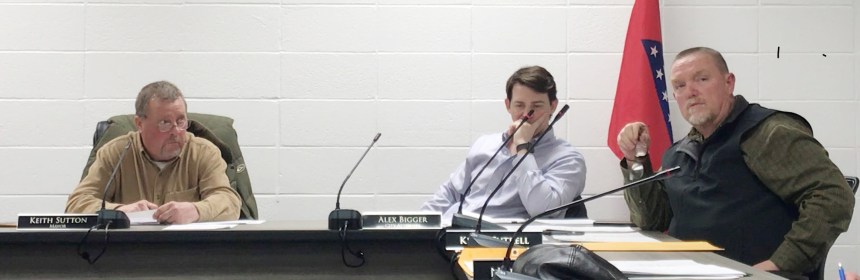
POCAHONTAS – Mayor Keith Sutton said February 11, residents will have to haul items during the spring clean-up to the Randolph County Transfer Station. A move to cut the cost of operations at the street department.

“There would be no charges at the transfer station between March 23 to March 27. However, the transfer stations will require payment to dispose of oil, tires, paint, or shingles. During the week, the city council will require residence to have a water bill and a driver’s license to dispose of items.”

Members voted and passed the resolution.

Sutton said the city plans to award Glosson Waste Management Company in Pocahontas the tender to carry out the spring clean-up and pick-up. He said the move to outsource would save the city a considerable amount of money. Previously the city’s street department picked up items from the curbside during spring cleaning.

On the matter of waste management, owners of non-running vehicles sitting on the yard may face charges failure to remove the vehicles from their yard Councilman Keith Futrell said during the meeting.

The council also agreed to lease the 3238 square feet office space and 6650 square feet of hangar space at Black River Technical College Aviation Building to station its fire department temporarily. The building located at 2022 Highway 67 south will cost the city council $1250 per month.

The council also passed an ordinance to charge any damages to the city water meter component to the premise owner or occupant. The move came as a result of the high cost of repairs on the water meter the city is facing. The mayor said the city would repair the damages and charge to the account the water meter serves.

Employees of the city council will now see an increase in their paycheck as the city council vote to approve the 2019 employee wage increase. The increase came as a result of the growth in revenue by 11%.

On another matter, City Attorney Alex Bigger said the court granted summary judgment in favor of the city in the case of Smith v. The City of Pocahontas.

Allen Smith, a former police officer for the city, sued the city for disability discrimination and breach of implied contract.

Bigger said Allen Smith failed to establish any evidence of disability discrimination by the city.

“He failed to show that the city’s stated motive to terminate his services was discriminatory,” Bigger said.

The presiding judge also granted summary judgment in favor of the council because Smith was an at-will employee and the city did not create a contractual agreement for his employment.

“The case was dismissed with prejudice,” Bigger said.

Civil Rights Struggle Come to life

By Christine Miyawa
Delta Digital News Service

JONESBORO – An exhibit of the civil rights struggle and African American culture at the Arkansas State University Museum attracted locals as far as Batesville. The “For all the world to see” exhibits until March 16.

The tour coordinator at the ASU museum, Michelle Friend, said The National Endowment for Humanity together with the Office of Diversity and Community Engagement at ASU organized the traveling exhibit to commemorate the black history month.

Several visuals, including videos, photos, newspaper cut-outs, books, booklets, newsletters, and relics on display, brought the civil rights struggle back in time.

Walking through the museum, the exhibit reveals how television and advertising visuals of the period reflected constant racist visage of blacks in America.

“I remember when this happened, I was a little girl then and there were talks about it in the newspaper. It was a sad moment,”  said Marti Allen, the director of the museum, as she stares at a portrait of Mamie Till Bradley, weeping over the casket of her slain son Emmett Till.

The writings on the portrait said white supremacists murdered Till, a 14-year-old boy, while he visited family members in Mississippi on August 28, 1955. Carolyn Bryant Donham, a white girl, accused Till of touching her hand and waist and using vulgar language. Accusations that Donham later recanted in 2017.

Isaiah Koffi Poku is a junior work-study undergraduate student at the ASU nursing school. He checks-in guests at the museum. While exploring the exhibits on display, he said he realized during the civil struggle positive advertisement only focused on white families. Almost none contained images of black families and if they did, the it was stereotypical. He said he’s glad he can see a lot of changes.

Other items also fill the museum.

“On display, we also have a wildlife exhibit, a war exhibit, a space exhibit and more. The exhibits are always changing. You can come to the museum and learn a different thing every time,” Poku said.


    NO MORE CONCUSSIONS FOR THE POCAHONTAS REDSKINS

POCAHONTAS – The Pocahontas School District football team will have new helmets as Coach Charles Baty requested the board to purchase new, improved concussion resistant helmets from Xenith, a new helmets manufacturing company, on Feb. 24.

Baty said they could buy the Xenith helmets which, go for $440 each through a Stack program where the school will pay $125 per helmet. He said the Xenith helmets are made with the latest technology which include an adjustable pad and band, and can be custom adjusted to fit large and small size heads.

“My main concern is to keep our children safe, and the new helmets are of superior quality, number one rated according to a Virginia Tech study. We received a case of reported concussion and we don’t want that to happen to our children. My goal is to put them in the best helmet; we all look alike; we all feel valued,” Baty said.

Baty said the helmets they used before, although of durable quality, did not have the adjustable pads and bands to keep the helmet tightly fixed on the players’ heads. The team currently has only 12 concussion resistant helmets. The new helmets, if purchased, will cost $40 each to recondition every year for five years.

Baty said both junior and senior high school teams needed a total of 115 helmets. Currently, the school spends $41,000 a year to recondition the current helmets.

“From the financial step, I think this is a good deal, coach your looking after the kids impresses me,” Gary Cole, the vice president of the board, said.

Cole said putting the children’s welfare first was more important. He said the helmet was also affordable and within the football budget.

“What I like about this Xenith helmet is you can tighten the bands and custom it to fit your child’s head such that when it’s knocked, it doesn’t fall off,” Secretary Karen Baltz reiterated.

In the girls’ basketball games, senior girls will play Pulaski Robinson in the first round of regionals at Valley View Thursday, Feb. 27, beginning at 4.p.m.

‘THE ROOST’ PROVIDES COMPETITION FOR CHAIN STORES

By Christine Miyawa
Delta Digital News Service

POCAHONTAS – Walking into The Roost, one may mistake the furnishings on sale as brand new. The touch of snow-white color exudes the ambiance of a rich country with a splash of Bohemian flavor.

The merchandise may look new, but most of the furnishings are from a different era. An era when quality and functionality trampled the mere aesthetic value. Quality quite elusive in most of today’s house furnishing. But don’t be mistaken, the store refurbished all the furnishings.

From a hobby to a full-time occupation, Kimberly Jo Chaffin started refurbishing and selling furnishings while still in college. She did it for five years while in business school. Chaffin taught herself from watching videos.  She began by painting her furniture.

“I had junk furniture and did not have a lot of money, so I painted it to make it look nice. I would disassemble the furniture and play around with the pieces to create a new pattern. It takes practice and patience,” she said.

It wasn’t until a year later when she could paint a profitable furnishing.

“I look back at the furniture I did when I started and say, ‘Geez, did I do that?’”

After attaining her degree from business school, she worked in the public school system for eight years. Chaffin said she felt she needed a more flexible schedule to cope with family demand.  She decided to revisit her old hobby, rented a booth in a store in Walnut Ridge and engrossed herself into refurbishing.

In 2016, she moved the business to Pocahontas. She opened her store in 2,200 sq. Feet building across the road from the Pocahontas Municipal Airport along Highway 67.

By the seventh month after the store opened, the business expanded so fast she needed more space. She moved the store to its current location in 7,000 sq. Feet building along Highway 62. She named the store “The Roost”.

Chaffin said the name ‘The Roost’ started with the coming to Pocahontas of Peco Foods Company a chicken processing plant.

She said Peco made a big difference in the economy of Randolph County and they wanted a throwback to Peco.

“I affiliate the name “Roost” with chicken and since our store theme is a farmhouse, we thought, why not use the name “The Roost,” she said.

Chaffin buys used furniture, mostly made of wood like hickory and White Oak. She refurbishes and re-sells them.

“All the furnishings in the store are mostly real wood,” she said.

Chaffin said most of her buyers like the looks of the items. The piece may remind them of their childhood. The store focuses on the farmhouse look, which most locals like. The store custom paints too.

She said to buy a dresser in a store chain, one would pay over $1,000. Whereas one can come to the Roost and find something trendy, midcentury look or farmhouse look for a fraction of that cost. Sometimes a third of the cost.

Recently, a refurbished hardwood dresser at The Roost went for the price of a new vanity dresser with a similar design at Bed Bath and Beyond, a chain store for furnishings and housewares.

“We are not a flea market. We are an upscale resale store. We base our prices on what we paid for the item,” Chaffin said.

In setting her price point, she factors in the cost of hiring someone to run the store while she moves around sourcing for items.

She sources furnishings from Texas, Illinois and upper western Arkansas. Sometimes people call them or send them messages on their Facebook page to pick up items for re-sale.

“A lady I sold to a piece of furniture two years ago and she wanted to re-sell it again, so I went, looked at it and saw it was still in good shape. Bought it and resold it a few days after,” she said.

Chaffin said her business extends to the states of Missouri, Tennessee and most parts of Arkansas. She markets her goods on Facebook and receives customers from as far as South Dakota.

“A customer was sending children to Williams Baptist College and arranged to have a two-sitter glider set shipped from The Roost to South Dakota,” she said

Myra Alexander, a frequent customer at The Roost, said she likes shopping there because the store sells authentic items.

“They are livable; they are comfortable with my grandkids. They have good stuff,” she said.

She said the store calls her when they bring in items she may like.

“I couldn’t find something for less than 1,500 at Hesner, so I called The Roost, told them what I wanted, and they went looking for it and called me. They are personable with me,” Alexander said.

She said her living room contains a modern section and she uses items from the Roost to blend her furnishings. Alexander said the art of painting furniture also inspires one to get creative and do something beautiful to their old furniture.

She said she likes shopping at places like Bed Bath and Beyond, but their products are too commercial looking, and they produce many pieces of the same thing.

“The Roost sells authentic and different items you won’t see anyone where else. If you see something at The Roost, you better get it because next time it won’t be there and it’s not like you can get the same kind at Walmart or Bed Bath and Beyond,” Alexander said.

Chef Donald Smith moved to Pocahontas from New Orleans six weeks ago to work as the new executive chef of Rolling Hills Country Club in Pocahontas.

Moving into a new town, Smith needed furnishings for his new house.  He first bumped into the Roost by chance as he walked across the road from a nearby supermarket.

“I’m the type of guy that likes antique stuff, so I don’t mind if it’s refurbished.  If it’s nice, I buy it and the price point at the Roost is good. Some of their prices are not expensive at all, but I didn’t find what I wanted,” Smith said.

Smith wanted a TV stand and not finding one at the Roost, he decided to look at Walmart. He said even though he did not find the TV stand at the Roost, he will go back there to look for other stuff.

Human resource manager at Walmart, Sherley Ringo said she knows there are other stores out there, but she is confident about the products Walmart offers.

“Walmart stocks a variety of items to meet higher demand,” Ringo said.

If spoilt for choice on a place to shop for furnishings, Smith said, “I prefer buying at the Roost because it’s local and the money stays within the community.  If I buy in stores like Walmart, the money won’t stay here in the community.”

Chaffin said the benefit of shopping at a re-sale, refurbished shop like The Roost can replicate looks at a fraction of the cost.

So far, two individuals approached her and asked if she would consider opening a branch of The Roost in Missouri. The second one offered to run the store three days a week if she would open a branch in Paragould. But Chaffin said the present store takes all her energy and leaves no time to spare nor desire to open branches.

She does not consider franchising either because she did not patent the name “The Roost.”

She said her goal is to give customers pleasant shopping experience. She wants to help them get what they want without looking through a bunch of junk to get it or spending so much money on a low-quality item at a chain store.

Chaffin said her main challenge is to keep the right attitude when running behind on a customized item. She said working with family member poses its kind of problem, especially when dealing with illness in the family. However, the store allows her flexibility to take care of her ill mother.

The popularity of her refurbished goods continues to drive up the cost of the materials she uses for refurbishing, which in turn, raises the price of the items. But the niche market for her kind of goods continues to snowball.

A-State African Students Association gives a hand to the homeless

By Christine Miyawa
Delta Digital News Service

PARAGOULD – The A-State African Student Association visited the Mission Outreach of Northeast Arkansas, a homeless shelter based in Paragould, to donate consumables, which included; disinfectant wipes, detergent, tissue paper and paper towels.

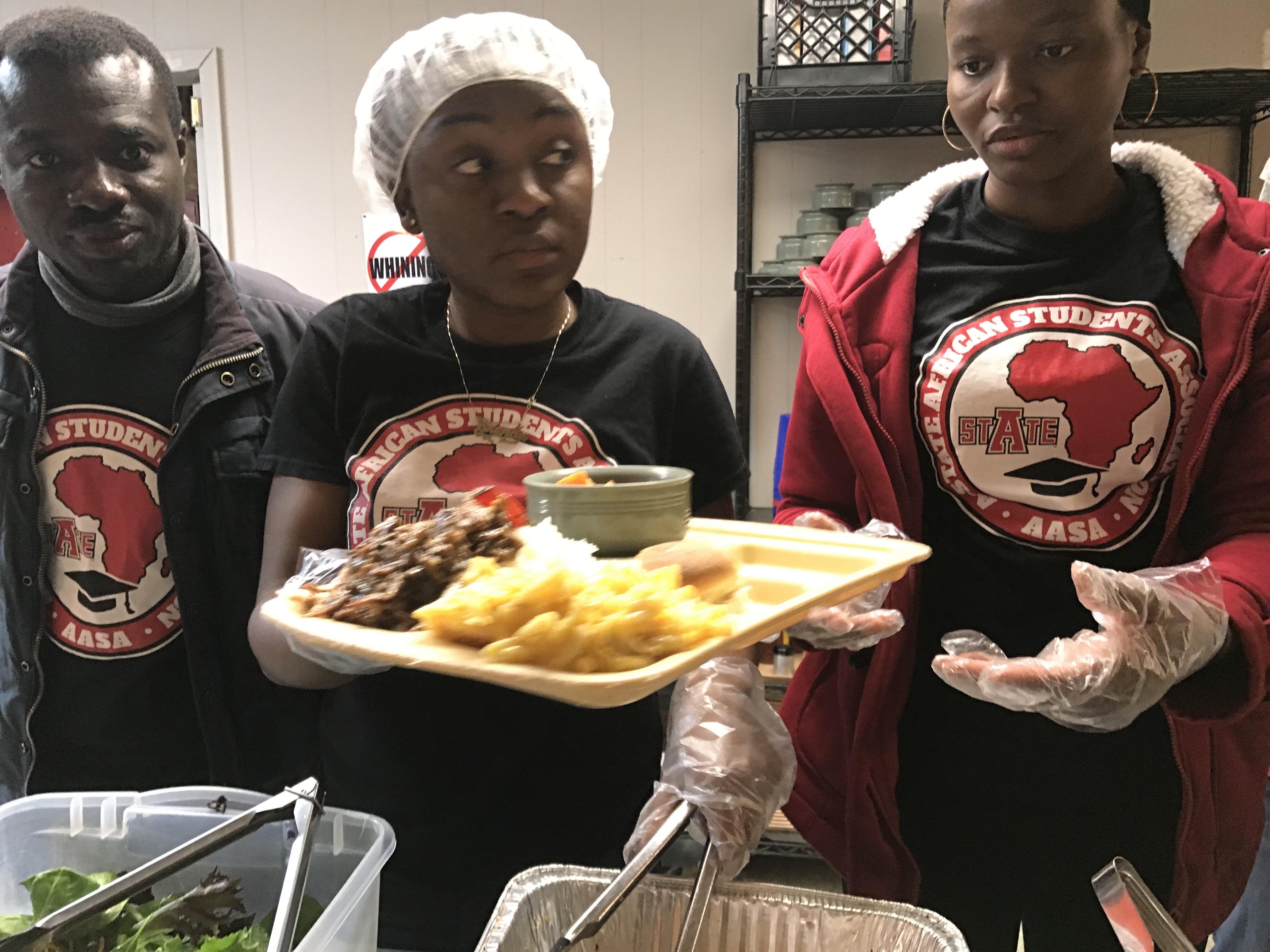
In 2018, the first time when the AASA students visited the same shelter, they prepared African dishes and brought to feed the homeless people at the Shelter.
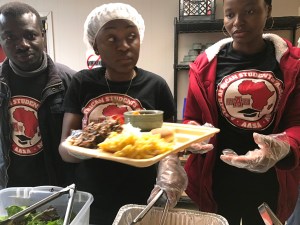
The outgoing president of AASA Samuel Noi said the purpose of the visit was part of AASA’s community outreach program.

“Coming here today is about giving back to society. It’s not only about being students but, being compassionate, fulfilling the needs of others who are less privileged. We called before coming and they told us what they needed and that’s what we brought,” Noi said.

About the Shelter. 

Cheri Peters, the executive director of MONEA, said the shelter is the largest homeless shelter in Northeast Arkansas. She said it holds 58 beds and houses men, women, children and families.

The shelter contains three family dorms. Currently, 11 children are at home.

Peters said helping homeless people get back on their feet is the purpose of the shelter.

They assist homeless people with employment, transportation and health insurance.

Management requires residents at the shelter who have jobs to save 75% of their earnings once they start working.  Teaching them how to save and budget so they can stand on their own once they leave the shelter.

Peters said the shelter offers benevolent services.

She said they have a food pantry open to the public and a soup kitchen that serves three meals every day.

People come from all over Arkansas for the shelter’s services.

Peters said Jonesboro has the Salvation Army which only has 14 beds. Because the shelter is located in the ‘boot heel’ of Missouri, they get a lot of people from the state of Missouri, too.

She said most of the people are referred; few are walk-ins.

“We have a website and get phone calls every day for placements. Many people who come to the shelter are experiencing drug addiction, meth and mental illness. We have a therapist here at the shelter and recommend that anyone who comes to the shelter receives counseling services,” Peters said.

She said those who come to the shelter seeking help could live at the shelter for up to two years.

“When someone is homeless, and all they have is clothes on their back, you can’t get them to be where they need to be in life in 90 days. They have to get a job, get a vehicle and decided to move out and those things take time,” Peters said.

She said if the residents at the shelter follow the rules and goals set, they can stay for up two years.

“We have repeated, but we don’t want to enable people,” Peters said.

The management carries out random alcohol and drug tests on residents.  Once someone has come and stayed at the shelter three times, they must pass a drug test to come back in.

The program doesn’t work for some people. They must be ready to change their lives for it to work.

Peters said 60% of their support comes from residents of Greene County in the form of donations and 40% is from grants.

“Providing paper towels for over 50 people gets very expensive. And so, we rely on donations like what the AASA students gave,” Peters said.

The majority of the volunteers lived at the shelter at some point. They want to come back to give back.

This year marks the sixth year since Peters’ started working at the shelter. She says it’s a blessing but a challenging job.

“It’s not a job you can leave at work when you go home. You take it home with you. When you see people struggling with addiction or mental illness and when you see children in need, it doesn’t leave your mind when you go home,” Peters said.

Peters comes from Mississippi. She worked for a hospice and nursing home before moving to work at the homeless shelter.

“I like working with people and helping people. It’s a rewarding job,” Peters said.

She said the mission outreach is 37 years old and she hopes that they can add more dorms to enable them to accommodate more people.

Peters said the shelter received a grant of $200,000 from the Arkansas Developmental Council to carry out renovations in the toilets, bathrooms and dormitories.

“Every day is a challenge when you work here. We are not just here for the people who live in the shelter, but we are for people on the street too. We have people walking in and say, ‘can you help me get on rehab.’ We have molested children and victims of domestic violence,” Peters said.

She said they take them to doctor’s appointments.

Peters said all the local churches in Greene County are so involved in helping the shelter. The majority come to serve and people will be coming to serve during Thanksgiving and Christmas.

“Some of our children here, this will be the best Christmas they ever have,” Peters said.

Peters said her dream is there would be so many mission outreaches out there because it works. She said if it didn’t, the shelter wouldn’t be here for 37 years. She wished there was an outreach like this in all the communities that needed it.

‘If there was an outreach like this in every community that needed it, we could solve this problem,” Peters said.

Meet Ashley Smith- A resident at the shelter.

Ashley Smith, one of the residents at the shelter, came from Kennett, Missouri. She lost custody of her children while in Missouri. Smith said the state of Missouri took the children when a neighbor called in to alert them of children left at home alone. Smith said she left the children at home without adult supervision whenever she went to work.

She said she initially moved to Missouri from Memphis to get away from people using drugs around her and to be somewhere no one knew her who would want to give her drugs.

Smith said she started experimenting with marijuana when she was 11 years old.  She said she was adopted, grew up in foster care and lost her foster mom when she was 20. She said she did not have anybody and turned to the streets to cope with the pain she was experiencing.

“I just wanted to fill an empty spot in my heart, so I started popping pills, doing cocaine and drinking and it just got awful and that’s how I ended up in Missouri,” Smith said.

She said while in Missouri, she did not have any support with the children. Smith has four children.

She said she was off drugs for a year while in Missouri before the state took her children, after which she relapsed.

“So, during summertime, I left my children at home as I go to work. I felt I would check on them. That’s how the state took them,” She said.

Smith said the father of two of her children is deceased, another’s father is not a part of her life and another’s father was convicted for sex trafficking and is serving 55 years in prison.

Smith said Peters and Jana Burnett, the resident case manager, went with her to her court date scheduled approximately three weeks at the time she arrived at the shelter. She said the two helped her get back custody of her children and they currently live with her in the dormitory at the shelter.

“I feel like the shelter has terrific people. They are not doing it just for doing it. If I didn’t come to this shelter, I would still be living in hotels mixing with the wrong people, drinking heavily and doing cocaine because it was within my reach, right in my fingertips,” Smith said. “I  was lost without my children. I become delusional. I just thought everyone was out to get me. I was crazy and paranoid. I was under depression. If you had met me then, you would say, ‘ is this girl crazy? What’s wrong with her?’ My mind was not right,” Smith said.

Smith said the shelter helped her find a good job. She said she thought of going to settle for a job at a fast-food restaurant like McDonald’s, but she works at the American Railcar Industries making $14 an hour. She said she is saving her money and plans to get a house for her and her children when she gets out of the program.

She said she stayed in a shelter before and did not get much help but, the shelter at Mission Outreach is in touch with what the residents are doing and try to lead them in the right way.

When she is not at her regular job working, she volunteers at the soup kitchen in the shelter.

Burnett said she does the intake of new arrivals. She assesses the need, set goals for them. If they need identification cards, birth certificates, or if they are disabled. She meets with the residents regularly and follows upon them to ensure they are doing what they need to be doing.

She said the shelter does not take people in a wheelchair because the accommodation has two flights of stairs and no ramp. She said they do not accept sex offenders either or violent felons because of the presence of the children and the safety of the children is their priority.

She said the soup kitchen is open three times a week and anybody can come in and eat. She said the shelter is part of Feed America and gets their food supply from Walmart and Kum and Go.

Cassie Grant’s Story

Cassie Grant, 32, of Marked Tree, Arkansas, also received help from the shelter. Following her release from a hospital admission in Jonesboro after a short illness, she went to the Salvation Army to find shelter. Because the shelter did not take her in, a man brought her to Mission Outreach. Grant was on the streets for a while before she went seeking help. She was doing drugs. Grant was 25 when she started using drugs.

She moved to New York, where she met a friend who influenced her into drinking and using drugs. For her, it was peer pressure. She got sick a lot and got tired. She said she used to “pin handle,” which is standing at a gas station and request to pump a customer’s gas for change. She would then spend the money on drugs.

“I just felt like the black sheep of the family. I didn’t care about life; I didn’t know which way to turn, so I turned to drink and using drugs. I felt like the family disowned me. I felt like nothing; I felt like I was all alone with no one to turn. I felt loved in the drinking and dragging, yet after I drunk, everything went wrong,” she said.

Grant said she grew up in the church.

“I’m a Christian. I want better things in life. So even deep after drinking, I got tired of doing it, it got old,” she said.

Grant said she looks at other families and other people not on drugs, dressed up and looking good and she said she wants. She said because they are dressed-up does not mean they have no problems, but when drinking and drugging everything goes wrong, nothing good comes of it.

She said some family members understood her and did not judge her while others laughed at her and disowned her. She said even when she tried to get help, it did not matter.

“The people who helped me prayed for me, spoke positive words, they gave me money and support,” Grant said.

She said she loves the Lord. And the Lord brought her through the darkest moments.

Grant said there are plenty of times she just wanted to give up in life. She said some people showed up and gave her hope. They told her, regardless of what she is doing in the streets, they were there for her if she wanted someone with whom to talk.

Grants say when she gets out of the program, she plans to get herself an apartment, come back to the shelter to volunteer. She wants to join a missionary church, go to Africa and other countries and volunteer, help feed the hungry and build churches. She said she wants to help people.

She said she doesn’t hold any grudges towards her family members. Now she knows she doesn’t have to prove a point to anybody; her heavenly father is her best friend.

Grant said she is in a place where she gets the needed help and has faith; she is going to do better. She said she would love her family from a distance.

Grant goes to True Life Church in Paragould. She was 7 years old when she got baptized at St. Johns Baptist Church in Marked Tree, Arkansas.

She said she is taking a day at a time. She plans to leave the shelter in a month.

She would like to advise people out there dealing with drug addiction not to give up.

“If you’re running from your problems, know there is someone out there who loves you and when you feel like you are alone, there is your heavenly father by your side. Stand on your own two feet as a woman and a man and take one day at a time. Keep faith, hope and believe and know that anything is possible if you keep your mind to it,” she said.

Joseph Cox’s story

It’s four years since Joseph Cox become homeless. He said he battles paranoia and schizophrenia’.

He thought people were out to get him.

He said he is tired of living in the street and would like to start a different life.

At the age of 3, Cox joined the foster care system and when he was 6 years old, he got adopted.  When he turned 17 years old, he wanted to visit his biological mother, but the court terminated his mother’s rights to see him. His adoptive parents took him to Searcy, where his mother worked at a restaurant. He stayed with his mother for three months until he turned 18 years old.

Cox said he found out that his family has relations with outlaws and gangsters and he did not want to be part of it and because of schizophrenia so, he left home and started hitchhiking to Texarkana, Texas, where he lived in the street.

His mother came for him in Texarkana and brought him and his adopted brother to their adopted dads’ home in Jonesboro.

He said at his adopted dad’s home, his other adopted brother and adopted dad did not like them, so he and his adopted brother moved to live in a friend’s house but his friend offered them an insulated doghouse to live in instead. At that point, they met a man who brought them to the Mission outreach.

He said he hopes the shelter will help him obtain documents like social security numbers to enable him to find work. He said someone pickpocketed him and stole his social security card.

He said the shelter promised to enroll him in medical insurance to enable him access treatment for Schizophrenia and Paranoia.

Cox said he found Jesus hitchhiking through the desert. He was so tired and almost passing out when he saw Jesus and said, “bring water my way,” two Hispanics appeared from nowhere with two bottles of water. He remembers when hitchhiking to Texarkana, he was tired and almost giving up when he picked a rubber band on the side of the road written “press on” and after just three miles someone came along and offered him a ride to Texarkana

Cox said no matter what someone is going through; God is always going to be by their side.

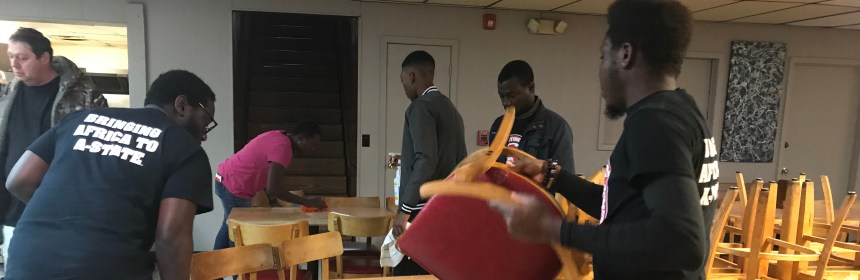
Victor Omowonuola, the incoming president of the association, joined other female members of the association in serving food. When dinner was over, the male members of the association cleaned up the cafeteria.

Peters and Burnett thank the AASA for their kind gesture.

Lawrence Yawson, the vice-president and events co-ordinator of AASA, said the shelter is welcoming and he looks forward to the association coming more often to Mission Outreach to help the homeless people.
New travel center opens in Pocahontas

By Christine Miyawa
Delta Digital News Service

POCAHONTAS – A new convenience store opened its second location in Pocahontas.

The Jordans Kwik Stop #52 is located at Highway 67 and Carter Lane in uptown Pocahontas, beside Randolph Memorial Gardens Cemetery. Unlike the current convenience store, the new travel center contains a diesel truck stop, however, no showers are included.

Although the first store is still operating, Jordan’s Kwik Stop #52 Manager Devin Soles said more people are coming into the new travel center since it opened Nov. 1.

“It’s crazy. Many people are walking in from all the doors. They say they like the store because it’s new, clean and a family environment, so it’s good,” Soles said.

The store side doors open to a lounge with black leather couches where customers can relax and watch television or sit at the dining area next to the lounge with a restaurant-style setting. The service center has four diesel pumps and over 20 spaces for big trucks to park. Soles said they take Comdata, EFS, T- check and a variety of fuel cards.

Kenny Rasmussen, a driver associate working for Crete Carrier Trucking Company said he liked the travel center because it’s clean, the workers are friendly, the center has a large parking space for trucks as well as a clearly marked truck entrance and exit.

“It’s nice to have a place to park a big truck. There are not enough places to do that. This is our first time at this center; we definitely will keep it in the memory bank for being able to park here safely,” Rasmussen said.

Soles said, “Unlike a regular truckstop, the downside to the center is we currently do not have showers for the trucker.”

A.J. Parker, a customer traveling on his way to Texas, stopped at the store to charge his phone on the available plug-ins the store provides for customers.

Soles said store 52 is the first of the Jordans’ stores to sell Big Rock Pizza in its food deli inside the store while all its other stores are selling Hunts Pizza.

“People are loving the food and pizza. Our pizza is quick and takes only three minutes to make from scratch.  Before those in the trucking business are even done fueling, we’ve made a fresh high-quality pizza. That’s hard to beat; people here are loving it,” Soles said.

He said they can custom make the pizza for a customer. The deli also makes specialty pizza with beer sauce wings. Pizza price ranges from $7.99 to $11.99.

The store offers free coffee for police officers on duty, so more police officers are visiting and helping with security.

Sara Caster, the nightshift lead at the store said it’s her first time working at a convenience store. She works with 20 other co-workers. She said the store runs three shifts.

“We get so busy at the deli; we are open 24 hours. There is a rush hour when Peco employees come to the store; they come in groups and they want hot food and energy drinks,” Caster said.

Peco is a chicken plant just a few blocks away from the store.

Caster said the minimum wage the store pays is $9.65 an hour but she is not worried about the salary competiton from Peco, which pays a minimum of over $13 an hour.

“Peco is a factory, they are mass producing and the workload is just not the same. Besides, I don’t and have not earned a minimum wage in a long time,” Caster said.

Soles said so far, the travel center filled all the employee positions.

T’Ricks, the closest convenience store is located just on the opposite side of the road to the new Jordans currently faces a lot of competition from the new Jordans Travel Center. T’Ricks also hosts the Citgo gas station. Citgo changed all its old and slow fuel pumps and replaced them with new ones a few weeks before the opening of the new Jordan’s Kwik Stop.

“The old pumps dispensed gas slowly. We went 50/50 with Citgo company on the new pumps,” Mohamed Zoro, the T’Ricks manager said.

With the more efficient fuel pumps, they may keep their old customers from running away to the new Jordans.

“Business is slow, we are headed to the holidays,” Zoro said.

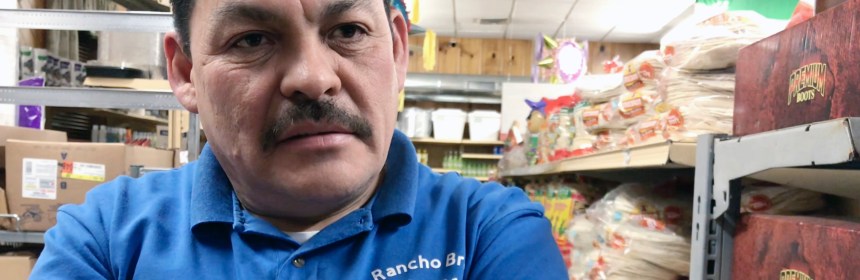
Rancho Bravo, a Mexican restaurant and store also opposite the new Jordans gave its building a new face-look keeping up with the competition.

All three stores serve hot meals and are competing for the same customers, especially the customers from Peco food processing plant.

Presently, Exxon, the oil and gas company stationed at the new travel center, has a reward program giving its customers a discount of $.50 per gallon on gas. The station sells gas cheapest compared to all other fueling stations in Pocahontas.

“Everyone seems to be going to the new travel center, but, after the novelty dies down, we know they will be back,” Zoro said.

Soles said they foresee a brighter future for the travel center because it’s the only one currently in Pocahontas. They also look forward to getting a liquor license Nov. 13 and are expecting more customers to come to the store to utilize their lounge and dining area.

Editor’s Note-Feature Photo taken by Christine Miyawa

« Older Entries