Graphic Courtesy of the Little Rock Touchdown Club.
NORTH LITTLE ROCK, AR. — Bill Clinton and Jerry Jones talk about Arkansas ties at the Little Rock Touchdown Club.
This past Monday, Little Rock Touchdown Club guest speakers Bill Clinton, former U.S. president, and Jerry Jones, owner of the Dallas Cowboys, spoke to an estimated 3,000 attendees in Simmons Bank Arena.
Both men are Arkansas natives and returned to their home state to share favorite Razorback memories and discuss the current state of the football world, and Jones concluded by announcing a sizable donation to the Clinton Foundation.
The Little Rock Touchdown Club, founded by media personality David Bazzel, is in its 22nd year celebrating football across Arkansas. With over 500 members, the club is one of the largest of its kind in the nation.
With two prominent Arkansas figures at the club, Bazzel said, “Today, to me, I think it’s a historic day because we’re welcoming two of the world’s most recognizable, high-profile figures, successful people in this country, and more importantly, two Arkansans.”
Jones graduated from North Little Rock High School, then played offensive line at the University of Arkansas in Fayetteville, co-captaining the 1964 undefeated football team. In 1989, he bought the Dallas Cowboys, which became one of the world’s most recognizable and profitable sports franchises.
Clinton was raised in Hot Springs and would go on to serve as Attorney General in 1977 and Governor of Arkansas in 1979, before ultimately becoming the 42nd president of the United States.
Clinton and Jones shared the stage for an hour, with questions from Bazzel, reminiscing about their favorite memories of past football teams, starting with Jones discussing Clinton’s 1978 decision to support former Razorbacks coach Lou Holtz.
Holtz had a “do right” policy that held players to a high standard, both on and off the field. When three star players violated this rule, Holtz suspended them from attending the Orange Bowl. The suspended players sued Holtz, who had gained the support of then-Attorney General Clinton.
“It looked like a bad career move for Lou Holtz, and a worse career move for me.” Clinton comments.
After winning the case, Holtz took the Razorbacks to Miami for the Orange Bowl. Jones credits the win with inspiring the team as they faced the Oklahoma Sooners, who were heavily favored over Arkansas.
“And the Razorbacks kicked their ass,” stated Jones.
The Razorbacks beat the Sooners 31-6 in the Orange Bowl, what Clinton describes as “the largest upset in Arkansas football history.”
After graduating from Hot Springs High School, Clinton attended Georgetown University for undergrad, the University of Oxford for his graduate studies, and Yale Law School. But through it all, he remained loyal to the Razorbacks.
“I didn’t have any conflicts about my football loyalty. I listened to every ball game, and they made fun of me because I could remember the stats. Then I would start describing the game, and they said nobody wants to hear that much detail.”
As the landscape of both college and professional sports changes, athletes are making more and more money through NIL, or “name, image, likeness.” In 2021, the NCAA officially allowed college athletes to monetize their personal brands and sponsorships. Before, players made no money from their likeness or the publicity they brought to their universities, but coaches’ salaries steadily increased.
Bazzel says, “When you don’t have to pay players, and all you do is pay your coaches and facilities, you’re making millions of dollars…Looking back, do you think the NCAA was just a little too slow to realize what was coming down the pipe? That legislators around the country will look and say, ‘My gosh, the coaches are making $10 million a year, and the players are getting nothing.’”
Jones states that he had always wanted to be a coach, especially after his own experience on the Arkansas football team, but ultimately wanted more money than coaches were making in the 60s.
“Had I known that I was going to be paying them what I’m paying them today, I’d have been a damn coach,” says Jones.
As for the current state of college athletic finances, Jones remarks that “the financial tide did rise for college football, and the climate around it gave incentive to go in and challenge the rules.”
As for Clinton, he says there are conflicting interests around the recent NIL changes.
“It would be a good thing if people who are recruited to play in the system are able to have some compensation from the beginning…We want young people to have some mobility, especially if they get stuck at a school. It’s a terrible situation, but it’s a balance beam…You don’t want to screw up what NIL has decided to do, which is to make it attractive to people to take the risks of playing professional football.”
Towards the end of the program, Bazzel announces that Jones has something very special to share with President Clinton. Jones first discusses how much Arkansas means to him, describing his family lineage and ties to the state.
“They have been indispensable in any kind of success that we might have had is really the culture of what we learn as we all spent our lives growing up here in Arkansas.”
Jones continues on to his special announcement.
“We want to give money today to the Clinton Library, particularly aimed at, if you will, the Clinton School for Public Service. We want to give that money today to lead the way, and hopefully others will follow for something that we’re very, very proud of, certainly you and what it stands for.”
Bazzel asks to disclose the donation amount, excitedly telling the crowd that the Jones family has donated $ 10 million to the Clinton Foundation.
Clinton graciously thanks the family for the donation and discusses future plans for the Clinton School of Public Service, such as creating a space for all of Secretary Clinton’s archives and expanding public access, and bringing more people to the school. He ends with a special thanks to Jones.
“I’m grateful that it is now my responsibility to hand along all these things we’re doing onto the next generation in good shape and make room for further growth”, stated Clinton. “But I couldn’t do it without help, and I am more grateful than you know. You’re a good man.”
“Well, Mr. President,” Jones says, pausing dramatically. “I ain’t going to let the old man in.”
Clinton jerks his thumb toward Jones and laughs. “That’s a good line.”
Story by DDNS Reporters Gracie Lunceford and Kinley Rainwater
U.S Representative Arkansas District 1 Democratic Challenger Dr. Terri Yarbrough Green.
U.S. Representative Arkansas District 1 Libertarian Candidate Dr. Steve Parsons
October 8th marked the second political debate at Arkansas State University. In the race for U.S. House District 1, candidates Dem. Terri Yarbrough Green and Lib. Steve Parsons attended, while Representative Rick Crawford declined.
Jonathan Reaves moderated the event, with the same four panelists as last week’s debate: LaGanzie Kale, Samantha Mitchell, Allie Carson, and Levi Seward. Both candidates agreed to the debate terms: a 2-minute opening statement, 2 minutes for each panelist’s question, an additional minute for the initial candidate to respond, and a 3-minute closing statement.
Green opens by saying she is a “semi-retired pathologist,” not a politician. She describes herself as a wife, mother, grandmother, and daughter of a World War II veteran.
“I am more comfortable behind a microscope than a microphone, which I think is a good thing.”
Green says she has practiced pathology in northeast Arkansas since 1988, and as a doctor, they are taught to look for what isn’t working and find a way to fix it.
Green says when she looks at America, and looks at Arkansas, she sees things that need fixing.
She says she sees farmers being “squeezed by forces beyond their control,” farm bankruptcies, families stretched by costs of housing, healthcare, groceries, fuel and childcare.
Green mentions struggling rural hospitals and how many are closing. She criticizes the incumbent for the worsening situation.
“The incumbent has had 16 years to do something about these problems,” stated Green. “They have only gotten worse. And I hope tonight to draw a distinction between what the incumbent has and has not done. And what I would like to do for the people of the 1st district of Arkansas.”
Parsons begins his opening statement by explaining how being a third-party candidate has made it difficult to find platforms to voice his stances. Growing up in a small, family-owned business shaped his core politics.
“We lived on 17 cents an hour,” stated Parsons. “All the money that we earned went back into building that business…My parents complained the taxes and regulations made it increasingly difficult to create many new jobs. They believed that both political parties had failed them.”
He went on to earn two fellowships that let him attend a writing school for a PhD in economics, then made a living helping companies around the globe make business decisions, doing corporate training, and teaching the economics of technology at Washington University in St. Louis, Missouri.
Parsons’ campaign focuses on offering voters another choice aside from the typical two-party system that controls the U.S. government.
“Voters deserve another choice besides the two parties that have a stranglehold on politics in this country…My campaign is about less government and more freedom.”
The first panelist was LaGanzie Kale, founder of Jonesboro’s first minority-owned radio station KLEK. His first question concerns how the democratic party has struggled to connect with rural voters, and asked, “Is that because rural voters misunderstand democratic policies, or because the Democratic Party has fundamentally lost touch with the values and priorities? What is your party getting wrong?”
Green couldn’t answer for her party; she says she just knows what rural voters need.
“I’ve been visiting throughout the district and talking with people in rural areas so that I know everything,” stated Green. “And what I discovered that, uh, rural areas need is infrastructure, maybe clean water, sewer systems, roads that are passable, jobs, but they’re not going to get businesses to go back into rural areas, uh, to provide those jobs if you don’t have clean water.”
Since Parsons is a libertarian candidate, Kale clarified his question to, “What do you think the libertarian party can do that the other parties are not doing?”
Parsons explained that two years ago, 97% of U.S. House incumbents won their races, making it a difficult jurisdiction to compete in. He says the issues most important to rural voters also matter to all Americans. For instance, stopping the surplus of money in corporate welfare.
“Part of the reason that’s important in more rural areas is, there are not big corporations in rural America in general, and certainly not new corporations in the vast majority of rural areas in District 1,” said Parsons.
He went on to talk about reducing federal regulations because smaller local companies can’t fully understand them.
“That’s because if you’re a large company, you can specialize in bringing someone who understands the regulations. Small companies can’t do that.”
Green responded to say that she totally agrees with reducing the burden of regulations, especially in areas such as healthcare.
Kale’s second question regards raising the federal minimum wage. “Many small businesses in rural Arkansas operate on extremely thin margins. What should happen to a small business that genuinely cannot afford a federally mandated wage increase? Would you accept business closures or job losses as a necessary trade-off, or what else would you do to help alleviate that?”
Green made it clear first that she would not accept job losses or closures as a result of raising the minimum wage. She says she would like to see something gradual and with safeguards in place.
Green says part of the problem with wealth inequality and why people can’t afford things isn’t the living wage; it’s the expenses of other things.
She stated there has to be a way to get back to the economy that allows for comfortable, one-income households.
In Parsons’ response, he says many well-intentioned policies have unintended consequences and proposes other steps instead of a minimum wage.
The next panelist was Samantha Mitchell, an Arkansas State alum and news director for KASU public radio. Her first question for Dr. Parsons focused on ensuring everyday voters have the same resources to make their voices heard as those with political influence. “How will you ensure that a single parent working two jobs, a senior living on a fixed income, or a resident of a small rural community has the same opportunity to influence your decisions as someone with political power?”
Parsons describes the issue as “amazingly difficult,” and part of his solution is to recognize the varying circumstances that affect policymaking.
“I will try to recognize the nature of the diversity and the geographic areas in which people live, and what their circumstances are, and propose good policies that correspond to dealing with circumstances.”
He continued by discussing inflation control and how to “neuter the Federal Reserve” as part of his policies.
“(The Federal Reserve) is the one that has the greatest long-term influence on inflation, because they have control over the money supply,” said Parsons. “There have been massive increases in the money supply over the last six years or so, and that is at its heart one of the basic causes of inflation.”
Green believes the government exists to level the playing field and ensure corporations don’t have a louder voice than working people.
Green mentioned reversing the Citizens United decision as a possible way to help, along with getting the money out of politics, including stock trading in Congress.
Green mentions that ensuring rounds around the district are done is important for a representative, especially during breaks. She says this helps elevate individuals’ voices over corporations.
Mitchell’s next question raised concerns about Flock cameras and government surveillance. “At what point does a public safety tool become an infringement on individual freedom, and who should have the authority to make that determination?”
Parsons argued that although the cameras are technically legal, those legal interpretations do not match his views. He continued, saying that any jurisdiction with data from these surveillance tools should be held to a higher standard to ensure the data is not abused.
“Perhaps there needs to be a law passed to make it easier for people to sue when (infringement of privacy) happens,” stated Parsons.
Green argued that the individual right to privacy should be “paramount,” although she understands the need for security and public safety.
With the creation and implementation of AI and facial recognition, Green says the amount of data the government has on us is frightening.
“I do not trust that the people that have that information are going to use it wisely,” stated Green. “I think we need much more regulation in place, and to protect the individuals working for us.”
In his rebuttal, Parsons states, “I want government to be at the lowest geographical level possible.”
He follows by explaining that the federal government is “bureaucratic” and that he hopes laws, like those concerning flock cameras, are championed at the local level.
Allie Carson, editor of A-State newspaper The Herald, was the third panelist. Her first question went to Green and addressed the growing university population and rural communities. Carson asks, “How would you balance the needs of those two populations when making federal policy?”
Green says that, although difficult, balance is key.
Policy can help residents by building infrastructure, and Green says the university can help with that.
“I think it’s better when you don’t separate those needs, that these needs are different than those needs, but to look at the system as a whole, and how they interact, and different parts of the system benefit from another,” stated Green.
Parsons began by saying he believes this is another example where the federal government should have little role. He says that at the local level, rules should be established early so they don’t change people’s incentives.
As Arkansas State University is one of the largest economic drivers in northeast Arkansas, Carson’s second question to Green was “What role do you believe the government should play in supporting the university?”
Green says that when she was in school, student loans were interest-free until you had a job and could pay them back, when they began to accrue interest.
Now she says students are being asked to take out loans that, by the time they retire, they still owe as much as they did originally.
Green says the government has a responsibility to educate citizens and provide low-interest or no-interest loans.
Parsons responded that the American public has been sold a “bill of goods” to entice them into earning a four-year degree in college, but he claims that this belief is incorrect. He encourages universities to have “more skin in the game.”
“If you have a student who graduates from your university, in whatever program it is, if they can’t make the loan…(the university) would have to repay part of that loan…it incentivizes them pushing students to more productive degrees you can earn a living in,” stated Parsons.
The federal government provides grants for basic research. Green says the current administration is slashing many of these, and without the ability to advance knowledge, other countries are recruiting American scientists.
Levi Seward, president of A-State’s pre-law club and an aspiring law school student asked his first question for Parsons, discussing the statement found on Parsons’ 2024 campaign website claiming that Social Security is “the worst social program ever created,” and that “Congress has an ethical responsibility to avoid cutting benefits.”
As the national libertarian party moves toward phasing out the program, Seward asks Parsons, “Do you support phasing out Social Security?”
Parsons replied that Social Security is “one of the hardest nuts to crack” because of its complexity and said action should’ve been taken long ago to avoid “not be in the circumstance we’re in.” This concern grows as the Social Security fund approaches running out by 2032.
Green says we may be in a bad situation with Social Security but that we’re stuck with it, so we need to fix it.
Although she admits there are many proposed ways to do so, Green says she will not advocate for or go into detail on any of them.
Parsons says he might have been exaggerating when he called Social Security the worst program, but believes the program “should’ve been recognized as a failed pyramid scheme.”
In 2024, Representative Crawford was involved in a class-action lawsuit over congressional pay. Seward’s second question for Parsons is, “Should members of Congress get a pay raise, why or why not?”
Parsons described this question as exceptionally easy to answer, with a strong no. He notes that Crawford also sued for an increase in back pay, which Parsons finds “repugnant”.
Green said “no” to Congress receiving a pay raise.
“I don’t think that congressional pay should be increased until tax dollars are going to the people and we have an economy that is working for the working people,” according to Green.
Parsons did not disagree with Green and pointed out that the national debt is now three times what it was when Rep. Crawford first ran for office. He proposes that Congress’ pay should depend on whether it ends up with a deficit.
“I would love to see it where if you end up with a deficit, you get no pay,” stated Parsons.
The national midterm election is on November 3rd, including the vote for the House of Representatives. For voters in Craighead County, ballots can be cast at the Election Annex, 315 W. Jefferson Avenue in Jonesboro, from 7:30 am to 7:30 pm.
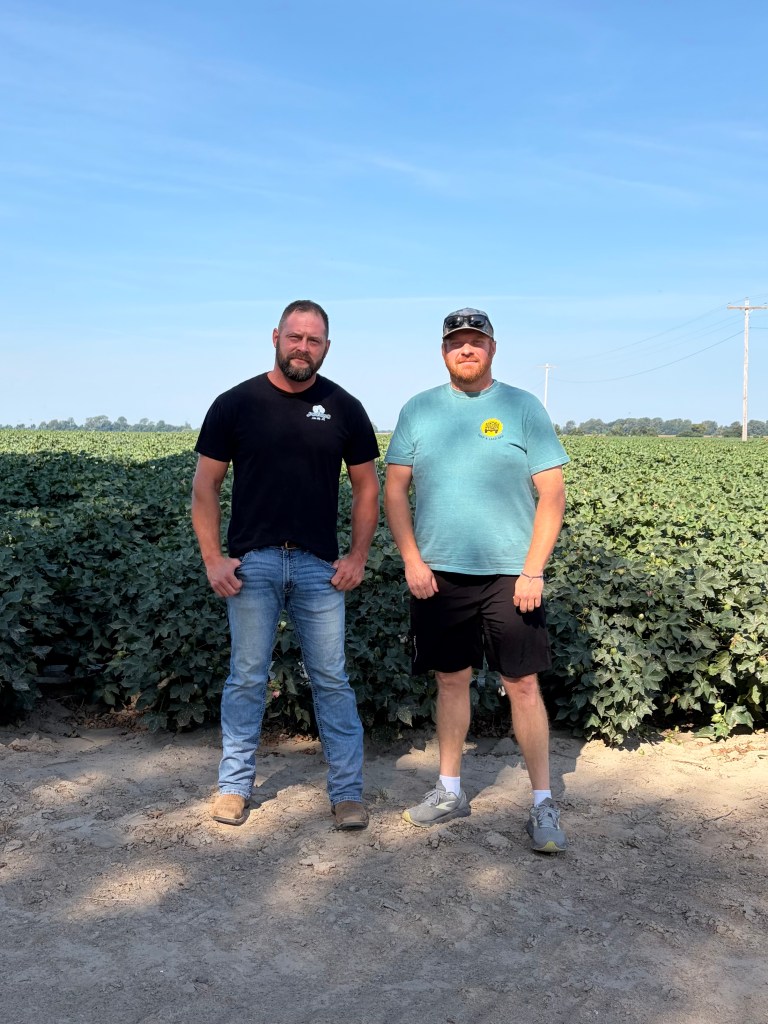
Jonathan Bobbitt (left) and Ryan Bane (right) stand near field at Apex Ag Solutions. Photo courtesy of DDNS reporter Kinley Rainwater.
For farmers, the stress of running a farm can extend far beyond long hours and unpredictable weather. With financial uncertainty, rising costs, and pressure to keep their farms afloat, farmers’ mental health has taken a toll. These challenges make an already demanding lifestyle even harder.
Jonathan Bobbitt is a fourth-generation farmer who runs JAB Farms in Bay, Arkansas. He grows corn, cotton, and peanuts. Bobbitt bought his first acres in 2004 and has been adding on for the last 22 years. He grew up on a farm where he regularly saw and assisted with farm work. Bobbitt started driving tractors at thirteen, and after graduating, he worked full time for his father on the farm before getting his own farm loan at 19.
“Even on the days I don’t want to do it anymore, there’s still nothing else I want to do,” says Bobbitt.
Bobbitt spoke about his struggles both on and off the farm. Bobbitt says the current financial crisis has been going on for years. Bobbitt says his major struggles started in the early 2020s.
“We’re doing our jobs, we’re producing good crops, but we aren’t getting paid for them,” said Bobbitt. Bobbitt described the uncertainty and financial concerns farmers across the state faced as a time of despair. Bobbitt states the worst time for his mental health struggles started in 2022. “ The financial crisis that we’re in has been this steady bottleneck effect to the point where it’s just gushing out all over everybody.” He states that farmers are making crops but not being paid for them, which has had a detrimental effect on his mental health.
Branon Thiesse is the Staff chair of the Craighead County extension and works with the University of Arkansas System Division of Agriculture. He says farmers are facing an issue that has been a topic of discussion for years but has grown in the last year.
“Well, just about like every year, but this year is even worse, is the price that they’re receiving for their commodities. You know, all those are low,” says Bobbitt. “The input costs that they’ve experienced this year have been extraordinarily high, and that’s causing them to have money flow problems. Plus the diesel prices and that kind of stuff is just out of sight right now, and it’s not getting any better, and we’re in the meat of harvest right now, so it’s costing them more to harvest their crop.”
Thiesse says this is leading to the loss of 4th- and 5th-generation farmers.
“You know, the farmer is one of the only occupations that I know that they don’t set their price for the goods that they sell. They just have to rely on what the market will pay. You know, if you have a restaurant or something and your food costs go up, you just raise the price of the menu to cover those costs. Farmers don’t have that ability to do that, and that’s kind of how we’ve gotten in this shape.”
Thiesse shares a concern about what could happen if no change arrives. He says the possibility of corporate farming lingers in this issue, and he doesn’t believe it’s good for farmers or the economy.
“I don’t think that’s a good thing for our farmers because, you know, especially in Arkansas, you know, farming provides so much income and things for the state, you know, it’s a multimillion-dollar operation, and we start losing that, and farmers start losing their identities, and I just don’t like that.”
Thiesse says he is concerned about the loss of small farms in Arkansas.
“I don’t think that it would be a good idea to have these big corporate farms running, you know, because well people will be losing their jobs, and so, you know, it’ll hurt the economy of these small towns that the farmers use, you know, buy goods and services from them.”
From a citizen’s standpoint, Thiesse says you would notice this in the control of these farms. They wouldn’t be run and regulated by a local farmer, but by a corporation that may not even be based in Arkansas.
Thiesse says the Craighead County Agriculture Extension tries to be a resource for farmers to reach out to with economic questions, fertilizer recommendations, and help with insect and disease control.
Bobbitt shared the thoughts he carried during his struggle. “You do it year after year for four years, and you aren’t promised any hope.” He says there’s some hope on the market now, but for years there wasn’t.
Another stress Bobbitt shared was maintaining his personal life off the farm while feeling needed there.
“It’s just this crushing factor that you have with a job you love and don’t want to let go of, and then you have your personal life on top of that. Whether you’re going through a divorce, or relationship problems in general, or just anything in general, it combines to a point where it’s just a crushing situation where you don’t have anywhere to really turn.”
He said depression led up to him seeking out a therapist because he felt he “had become cynical and bitter.” This led to a new set of challenges, however.
Farming comes with a unique set of struggles, and that became evident in my conversation with Bobbitt. “We’re built different. We talk different. We’re just different individuals,” said Bobbitt. Bobbitt said the therapist he had did get through to him enough to help, but that it wasn’t the same as sitting and talking with someone who understood.
Pride was a word given by Bobbitt to explain why a lot of farmers don’t reach out. “Farmers don’t like to be seen involved in any of this. It’s a very egotistical type of situation,” said Bobbitt. Throughout the conversation with Bobbitt, phrases such as “Men don’t get help” and “Pick yourself up by your bootstraps” were brought up as ideas that stop many farmers from reaching out.
Bobbitt says, “We’re supposed to toughen up through it, and we’re losing too many, so that situation is not working. So it’s time to do something else. We have to somehow get over that barrier of letting people know that it’s okay, you know, to reach out for help. That there’s no harm in it.” Bobbitt’s story led him to use it to help others and inspire them to reach out, too.
Tailgate Time is a non-profit located in Bay. This is a mental health service centered around the agriculture industry by getting rid of the red tape and financial concerns.
Ryan Bane is the co-executive director of Tailgate Time, as well as the CEO of Apex Ag. Solutions in Bay. He has worked in the agriculture industry for 24 years, mainly on the retail side.
Bane shares that he had gone to a meeting at a church in Brookland where a woman stood up and said her area alone had lost three farmers. He knew he needed to do something to help.
After seeing Bobbitt post on Facebook offering an ear to those struggling, he reached out to talk, and they agreed something needed to be done; Bobbitt just said he wanted to be a part of it.
Bane says he doesn’t know a lot about mental health, but he knows how to build a team. So he played to his strengths and found Mandy Young, who he describes as “the best of both worlds.” She knows how to relate to the farmers, but she also knew the gray areas he didn’t.
Mandy Young is a licensed clinical social worker, community outreach, and educator for Tailgate Time. She grew up with an agriculture background and started working in the mental health field in 2007/2008, so she truly felt she was in the middle of both worlds.
She says their partnership began with a coffee date, where they discussed non-profit work and how to reach men in agriculture.
Bane states that he has never found a group quite like Tailgate Time. The closest things were hotlines and other small groups in other states or countries. There were campus groups that offered telehealth visits every so often, but nothing like what they offer.
Young says this therapy is unlike anything you would receive locally or even nationally. She says it isn’t restricted by the same red tape most therapists face, such as confined spaces or time limits.
Tailgate Time will go to the farmer, whether you want to talk at your tailgate, the shop, or on the combine. They can meet for as long as the farmer needs, but typical sessions run about 50-60 minutes. Young says this sets them apart.
When a farmer first reaches out, they don’t schedule therapy right away unless requested. They maintain a working relationship with Young and are eventually matched with a therapist when the farmer is ready.
When meeting with farmers, Young says the main goal is to let them know they aren’t alone.
“They often are very private individuals. They care deeply, but sometimes that comes out in very inappropriate emotions or reactions to behaviors that have been a pattern in their families for years.”
Young mentions again that they often have mentalities of “picking yourself up by the bootstraps,” and they often forget to check on themselves or on their families and to assess how they are coping.
Tailgate time eliminates the financial worry from therapy, so they do not charge for their services.
They mainly run on donations. They receive not only monetary donations, but also items like furniture and flooring for their physical therapy space and office, and even citizens’ time and labor.
As a 501 C3, they are tax-exempt and can apply for some grants, which they are currently looking into, as well as some fundraising options.
Young says the ones benefiting are also the ones choosing to donate so heavily.
Bane also believes pride to be the biggest barrier between farmers and the mental health care they need. He says they often would rather hurt themselves than see someone else hurt.
Bane gives an example with air masks on an airplane. He says you’re told to put your mask on first in an emergency so you are strong enough to help someone else, even if it feels selfish in the moment.
A misconception Bane says people often have is that you have to be in full crisis mode to reach out. This is far from the case; they can make one phone call to let you know you aren’t alone, or offer multiple sessions depending on the farmer’s needs.
One thing Bane thinks helps farmers feel more comfortable is that he’s also had therapy, as he considers himself the “first line of defense.” He can give you a listening ear, or he can direct you to one of the therapists.
“We have people in place, whether it’s personal or on the business side. It’s something that we believe in. It’s something all of Apex believes in. And we’ll make sure at least that part of the structure will carry on and move forward.
Young says they actively see about 6 people at this time. She says even though the number may seem small, the volume of calls they get isn’t. They allow call-ins to continue calling and often express appreciation for it.
The name originated from the idea that there are two times you spend with a farmer. Windshield time and tailgate time, and tailgate time is usually the end of the day.
“I think that kind of signifies the end of a journey or a crossroads. That there’s a lot of problems solved around a tailgate.”
Bane jokes that there’s an Irish goodbye where you leave without saying goodbye, and there’s an Arkansas goodbye where you tell each other goodbye about 10 times and you’re still standing around the tailgate talking.
JONESBORO, Ark. — At Arkansas State University, students are concerned about a myriad of issues during this year’s midterm elections.
With the 2026 midterm elections coming this November, citizens are eager to vote on a range of issues. After interviewing three students at Arkansas State University, it was found that top concerns are healthcare, the rising cost of living, and protecting agriculture. Voters are seeking out candidates who are focused on protecting their community.
Evelyn Rogers, a wildlife biology major at Arkansas State, says her biggest concern is farming and agriculture. According to Rogers, the condition of the state’s agriculture is a crucial part of Arkansas’s economy and identity.
“Supporting farmers in rural communities, while also protecting our water, land, and wildlife, is important to me because I want to see those resources available for future generations,” says Rogers.
Although she identifies as a Democrat, Rogers agrees with the Republican Party’s support for agriculture in Arkansas.
“When it comes to supporting farmers in rural communities and protecting wildlife, I think it’s important to look at individual issues and candidates rather than automatically agreeing with everything one party represents.”
Aspen Frank, a strategic communications major, says what is driving her to the polls is a concern about the high cost of living in Arkansas.
“Coming from a state where every day I have to witness firsthand the suffering, [due to] the struggle that comes from high poverty rates, it’s important to me that the extra costs of living can be diminished rather than increased,” says Frank.
Along with the rising cost of living in rural areas, access to healthcare is also one of her biggest concerns, specifically as a type 1 diabetic herself. According to Frank, her firsthand experiences of receiving life-saving healthcare, but dealing with extremely high costs of medicine, have had a profound impact on her personally.
“There are people in Arkansas that can’t even afford rent due to the overwhelming cost of medical care. Insulin is a necessity for survival, and we should not have to question whether you’ll be alive by the end of the week if your paychecks don’t come in on time,” according to Frank.
Many young people are excited to get to the polls and fulfill their civic duty as American citizens. Nathan Boone, a chemical engineering major and cadet in the Red Wolf Battalion, is passionate about voting in the midterms this year. Part of the reason for his passion comes from being in a migrant family.
“We escaped communism,” says Boone. “I believe voting is half the luxury of being an American. You get to speak out about your government, participate; in Vietnam, if you spoke out, you were directly taken to a re-education camp.”
This election season, many students are eager to have their voices heard on the issues that matter most to them: healthcare, agriculture, and the rising cost of living in Arkansas.
Early voting in Arkansas begins October 19th through November 2nd, with the general election on November 3rd. In Craighead County, voters can cast ballots at the Election Annex, 315 W. Jefferson Avenue in Jonesboro, from 7:30 am to 7:30 pm. This is part of the national midterm elections.
JONESBORO – Arkansas State University’s ASU-TV will host three political debates in October for candidates vying for office.
The debates will begin at 6 p.m. Thursday, Oct. 1; Thursday, Oct. 8; and Thursday, Oct. 22.
The Oct. 1 debate will focus on the Arkansas House District 36 race between Republican Rep. Johnny Rye and Democratic challenger Shamal Carter. Rye was invited, but they have not confirmed if they will attend. Carter has confirmed that he will be present at the debate.
The Oct. 8 debate will highlight the U.S. House District 1 race between Republican incumbent Rick Crawford, Democratic candidate Dr. Terri Yarbrough Green, and Libertarian candidate Dr. Steve Parsons. Crawford will not attend, but Green and Parsons will be present.
The Oct. 22 debate will focus on the U.S. Senate race between Republican incumbent Sen. Tom Cotton, Democratic challenger Hallie Shoffner, and Libertarian candidate Jeff Wadlin. Cotton will not be present, but Shoffner and Wadlin will attend.
“We are excited to air these three political debates because they help connect voters with the candidates seeking to represent them. Meaningful debates are essential, as they allow the public to compare ideas, hear differing perspectives and make informed decisions at the ballot box,” said Johnathan Reaves, instructor of mass communication, who will also serve as producer.
Panelists for the debates include Allie Carson, editor-in-chief of The Herald; Lexie Burns, KASU reporter; LaGanzie Kale, KLEK general manager; Samantha Mitchell, KASU news director; and Levi Seward, A-State Pre-Law Club president.
Marty Scarbrough, KASU program director, will serve as moderator for the Oct. 1 and Oct. 22 debates. Reaves will moderate the Oct. 8 debate. Students in instructor Galen Perkins’ Video Production Two class will organize the programs.
“I am excited to see our students play such a vital role in bringing these debates to the viewers. Not only is this an invaluable learning opportunity, but it also gives them valuable real-world experience in live television production while contributing to an important civic event. There is no better classroom than working on a broadcast that directly serves the community and helps inform voters,” Reaves added.
The debates will air on ASU-TV, KASU Public Radio at A-State, Red Wolf Radio, and KLEK-FM. They will also be available on ASU-TV’s YouTube channel and social media channels.
Nettleton BRIDGE program students presenting and watching their final video projects about Nelson Mandela and Zodwa Dlamini. Photo by Mia Young.
JONESBORO, Ark.- The Nettleton BRIDGE program introduces middle school students at Nettleton Junior High to the learning environment of a college student by teaching them about multimedia journalism in the School of Media & Journalism.
The Nettleton BRIDGE program began as a way to help Nettleton Junior High students experience what it is like on a university campus, so they can imagine themselves as a student at Arkansas State University or any other university. Many first-generation college students struggle to imagine college life.
Chris Moss, principal of Nettleton Junior High, contacted Gina Houge, associate dean for the College of Liberal Arts and Communication, because he wanted to target his eighth-grade students young enough to benefit from an experience that could encourage them to become college students. Last year, the program began by bringing in a small group of Nettleton students who were interested in multimedia journalism, especially the media aspect.
“I mean, that’s what students know, right? They have their phones, and they’re engaged in media constantly,” Hogue said. “But to get an experience within an academic field was what Mr. Moss wanted them to experience.”
Hogue and Moss also wanted to add a historical component to the program, as they are both passionate about history. But last year’s pilot program focused on building the students’ multimedia journalism skills, and they were unable to build out any historical component. Jonathan Reaves, instructor in the school of media and journalism, played a critical role in working with the students and developing their multimedia journalism skills.
“The first year of the program (last year) was a challenge in that we were developing a program from scratch,” Reaves said. “In the first year, we had to decide which media we wanted to use. We primarily focused on video packages, and I have been working on audio podcasts separately. I expect we will incorporate more audio podcasting next year.”
The program changed significantly from the first year to the second. Last year, the group of students interested in media activities merged with the group who were interested in STEM activities. This meant some Mondays, the group would work on multimedia projects and other Mondays, they would work on STEM projects.
This year, the two groups remained separate, and they focused on adding a historical component along with learning the elements of writing, audio and video.
“So we wanted to continue with street talks, and we wanted to expand and add the audio component in so they could do more audio editing. Then Alina and Jonathan wanted them this semester to do an actual video report that encompassed all of these elements of interview, audio and also video,” Hogue said. “To build in the historical component, we wanted students to be able to meet people from many places around the world and learn about the culture in other places and to interview people, so that they’re doing their research, ’cause when you research like a journalist, you’re researching like a historian.”
Throughout the last year, students completed several multimedia projects based on what they learned about different historical topics in the Nettleton BRIDGE program class.
One of the first things Alina Sakayeva taught the students about was her hometown of Kazan, Russia. Sakayeva talked about her family traditions, the food they eat and the relationship between her and her family. She showed them some of the historic buildings and contemporary athletic facilities where they host global soccer matches, and taught the students about the ancient culture and the traditions there.
“The students sat on the edge of their seats, listening and looking at the images, and watching the videos of the cultural dancers in Kazan, conveying the history of that region of the world to these young people, these eighth graders, from Nettleton Jr. High School,” Hogue said.
At the end of the nine weeks, the students created their video story about Kazan and something from Sakayeva’s culture they were interested in, and then presented it to the class.
“The Kazan video (was my favorite), it gave us a lot of freedom to do whatever with the video, and it was super fun to learn about,” Brylin Smallman, eighth grader in the Nettleton BRIDGE program, said.
During the second nine weeks, the students learned about the Pine Ridge Indian Reservation in South Dakota. They also individually created videos on the topic using interviews with Alice Phelps, a former educator on the reservation, and their own research.
During the third nine weeks, they read “The Story of Nelson Mandela” by Floyd Stokes and learned about him, and Zodwa Dlamini, who was in his administration in South Africa and who brought several school districts together there. The students also interviewed Dlamini over Zoom.
For their final projects in the fourth nine weeks, the students spent time in the K-labs learning about audio production and editing their videos about what they learned from their reading, their research and the interview with Dlamini.
Not only are the students learning audio, video, storytelling and a little bit about history but they are also learning life lessons they will carry with them throughout their lives.
“(I learned) to be open-minded. I wasn’t very open-minded at the beginning, and now I’m just like ‘OK, this is what’s going to happen, and that’s OK,’” Fielder Franks, an eighth grader in the Nettleton BRIDGE program, said. “Sometimes life happens, and it doesn’t go your way, and sometimes that’s just how it works, and so, you’ve just gotta be OK with that and move on.”
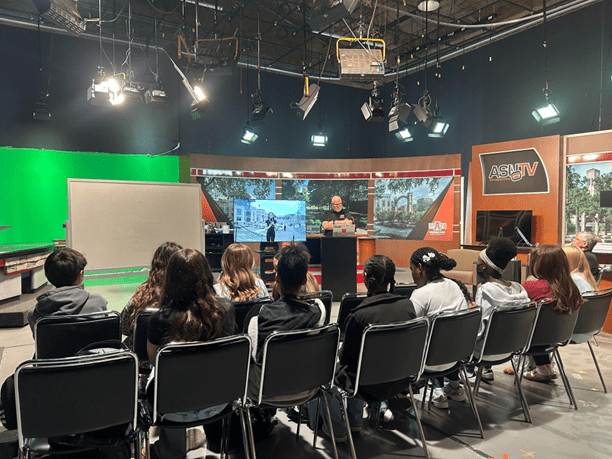
Every Monday, the group of 12 students would meet in the TV studio in the A-State College of Media and Journalism for two hours. This means these students would be missing three class periods and would be responsible for making up the classwork they missed. To be in the BRIDGE program, the students have to meet certain requirements, like having good grades (because they miss a lot of work) and not having any behavioral issues at school.
Karley Barnes incorporates multimedia elements into her EAST class, which each of the students attends. Barnes, an A-State alum, also travels with the students to and from the A-State campus and gives students a participation grade based on whether or not they came out and did their best.
“I think it benefits them because they get out of the classroom, they get to be challenged. It might be kind of taboo to say, but public school education is very watered down, and it’s not watered down out here,” Barnes said.
Click to View!
Next year, the program will see a new group of eighth graders with many of the same and many different projects. Each year the students move up in school, the program continues to support them, but they have less time to visit campus. Reaves and Hogue are still excited for what next year will bring, even though the current eighth graders may not be on campus as much next year as they are now.
“I would tell these students to stay curious, keep working on their editing skills and be proud of what they have done,” Reaves said.
The Nettleton BRIDGE program does not just give students a chance to learn and improve their media skills, but “to help them, to inspire their learning, and to find their pathway in life. That’s the goal,” Hogue said.
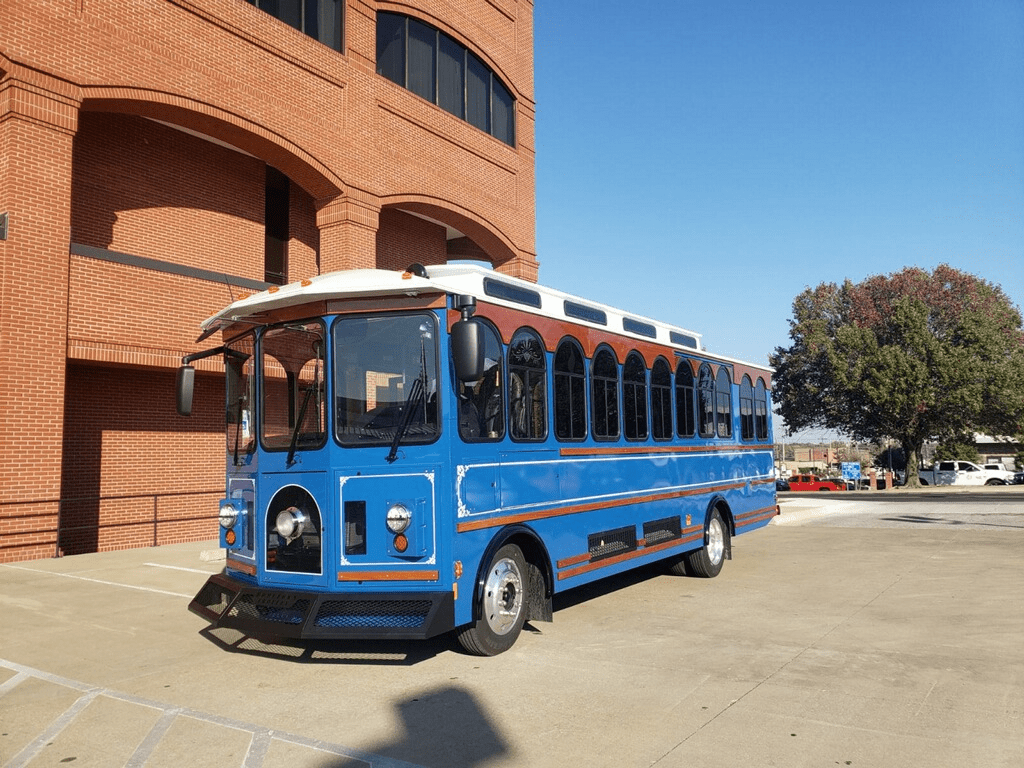
A blue trolley-style bus parked at the Jonesboro City Hall building. These buses offer transportation services using the GoJo Transportation System. Photo courtesy of the City of Jonesboro website.
JONESBORO, Ark. — The City of Jonesboro’s new GoJo Transportation System provides a convenient service to Arkansas State University students, offering free, campus-wide transportation. However, limited outreach to students has kept many from using the service.
The new GoJo system, previously JET, provides service to A-State and the surrounding Jonesboro area. It features six routes, ranging from on-campus hotspots to countless places in the city. The new Let’s GOJO! The app and website provide a map of all stops and routes to help users locate the nearest available transportation, as well as live tracking of all buses and trolleys.
The service is free to students with a valid student ID, providing an accessible alternative to driving or walking.
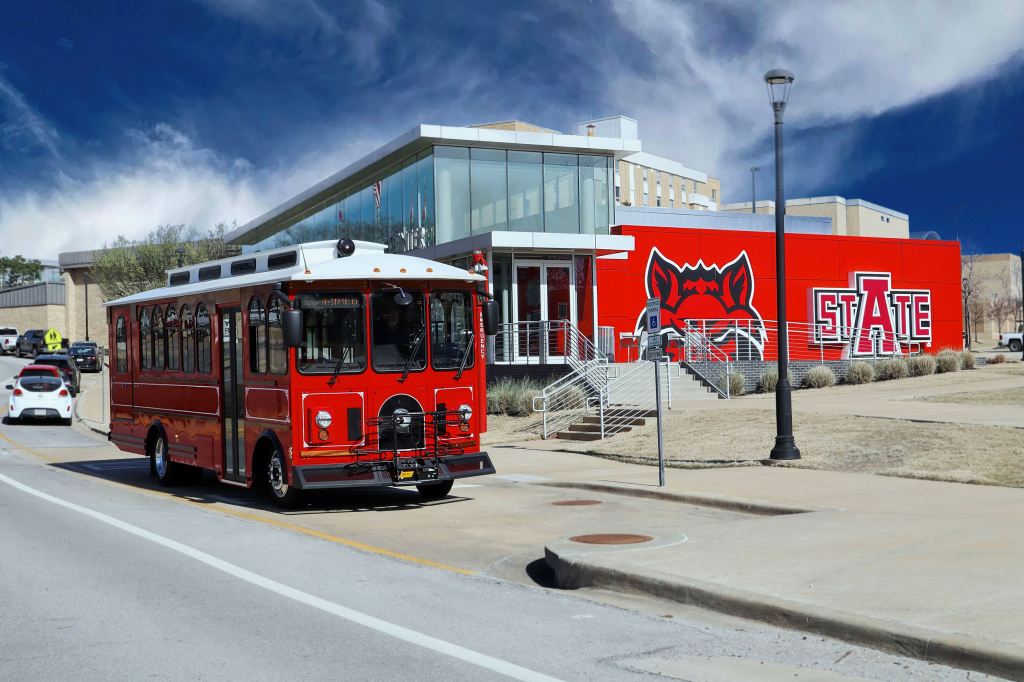
One of the most notable features of the system is the new Trolley-style buses. These vehicles provide classic aesthetics with modern functionality, which gives students a comfortable ride that is also more visually appealing than traditional transportation options.
A red trolley-style bus parked in front of the Arkansas State University Welcome Center. Photo courtesy of the City of Jonesboro website.
City officials and transportation coordinators said GoJo is meant to connect residents, visitors and students to the city of Jonesboro through expanded connections throughout the city, including A-State.
Despite the advantages to students, GoJo is relatively unknown amongst them. International student Boaz Muteba said she followed the news surrounding the new system.
“In the fall of 2024, when public transportation options were expected to increase, I was one of the individuals who participated in the meeting to get more buses,” Muteba said. “Recently, when the idea took shape, I spotted the bus on campus and even saw it featured on Instagram. Unfortunately, I never got the chance to utilize it.”
The system’s impact goes beyond convenience. By encouraging students to use public transit, Gojo supports sustainable efforts and accessibility for those without personal vehicles and eases parking demand that comes with a growing campus.
As Jonesboro and student enrollment at A-State continue to grow, GoJo presents an opportunity to strengthen connections between the city and it’s academia scene. However, its success will depend on public awareness of this new system.
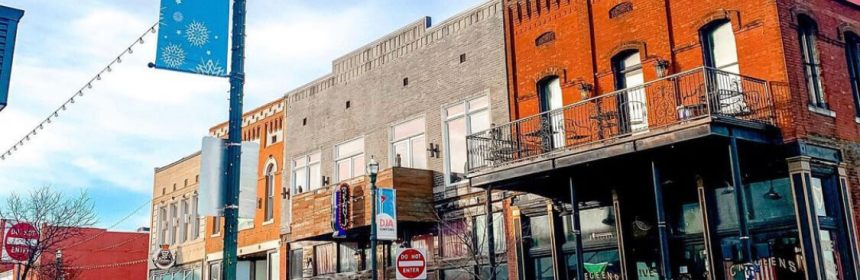
Pedestrians walk through downtown Jonesboro beneath a “Welcome to Downtown Jonesboro” banner, highlighting the connection between Arkansas State University and the local community. Photo courtesy of Arkansas State University.
JONESBORO, Ark. — As Arkansas State University continues to grow alongside the city of Jonesboro, students and community leaders say the relationship between campus and community is evolving, but not without challenges.
From economic inequality to shifting social values, both groups are working to better understand their roles in a shared space. While students often focus on academics, identity and campus life, many Jonesboro residents are more concerned with jobs, healthcare and the rising cost of living, highlighting a need for stronger collaboration.
Local organizations say collaboration is critical as community needs continue to grow.
At the Jonesboro Human Development Center, officials say demand for services has increased in recent years, creating new challenges for staffing and care.
“We are struggling to hire people to provide hands-on care for adults with disabilities,” said Diane Keith, a nursing home administrator at the facility. “We need employees with a CNA license.”
Keith said the center also maintains a waiting list for services, reflecting a broader need for support across Northeast Arkansas. She said A-State students help fill some of those gaps through internships in nursing, dietetics and speech therapy.
“We receive several A-State students for internships,” Keith said.
Volunteers request roadside donations for the 2022 United Way Day of Caring. More than 500 volunteers attended the event in 2022. Photo courtesy of UWNEA Jonesboro YouTube Channel.
Community leaders say those partnerships are key, but there is still room to grow.
Heather Coats, executive director of United Way, said A-State has already made strong efforts to connect students with the community.
“I think what’s important, and A-State already does a great job of this, is letting students, especially young adults, know what resources are available,” Coats said.
However, she believes the responsibility does not fall solely on the university.
“I think the community could do a better job of being present on campus when it’s not just for sporting events,” Coats said. “We need to have more of a presence that isn’t just about our own entertainment.”
Coats said increased engagement from Jonesboro residents could help integrate students into the community and encourage long-term involvement.
Erin Calhoon, development director for United Way, said improving awareness is essential to strengthening that connection.
“I would say finding ways for people on A-State’s campus to be more aware of what’s available in the community,” Calhoon said.
Student leaders agree that awareness remains one of the biggest barriers.
Jaycee Davis, president of Volunteer A-State, said her organization has made it a priority to connect students with local opportunities.
“Our mission last year was to connect campus to the community,” Davis said. “We had organizations from Jonesboro come to campus, and we introduced ourselves and shared how we could help each other.’
“Our goal this year is to have students make a bigger impact in the Jonesboro community by making them more aware of volunteer opportunities,” Davis said. “So many students don’t know what’s available in Jonesboro.”
Davis said students can get involved through activities like packing food boxes, participating in community events and supporting organizations like Hope Found, which raises awareness about human trafficking.
“Right now, the community gives a lot to the campus, which is great,” Davis said. “But I think our mission moving forward is to give that same energy back.”
Lavonda Evans, an instructor of sociology and criminology at Arkansas State, said differences in age and life experience often shape priorities.
“Students are in that space between being supported by their families and stepping into the real world,” Evans said.
Evans said campus conversations often focus on identity and diversity, while broader community concerns center on economic stability and infrastructure. She said there is a growing shift toward individualism.
“Everything is more individualized and specialized, which creates less collective support,” Evans said. “People tend to focus on their immediate circles rather than the community as a whole.”
Despite those differences, Evans said collaboration is both possible and necessary.
Click to View!
“Jonesboro is already making efforts to connect the campus with the city,” Evans said.
She said projects like walking trails and plans to better link the university to downtown are some examples of this effort.
Evans said expanding paid internships or job-shadowing opportunities could help students gain early experience while strengthening ties to the community.
“Overall, both city and university leaders are making strong efforts to connect students and the community, but there is always room for improvement,” Evans said.
As both sides continue to grow, leaders agree that bridging the gap will require greater awareness, stronger partnerships and a shared commitment to engagement on campus and in the community they will eventually call their own.
St. Bernard’s health care physician Dr. Christina Carl (right) performs a heart and lung auscultation for a patient during a routine wellness exam in Jonesboro, Arkansas. Photo courtesy of St. Bernard’s.
JONESBORO, Ark. — As St. Bernard’s Health Care approaches its 126th anniversary on July 5, leaders say the oganization is balancing a legacy of community care with the growing challenges of modern health care.
St. Bernard’s has been in medicine for 125 years, evolving alongside the social service industry rather than the city, economy, or technology. Kevin Hodges, senior vice president, said rising costs and increasing insurance requirements continue to strain providers in the post-COVID era.
“Every time they add requirements, it adds cost to us,” Hodges said. “Someone has to make sure those requirements are met just for us to get paid. Those are uncompensated burdens.”
Health care systems face high operational costs, including labor, transportation, utilities, and food insecurity. Hodges said balancing expenses while navigating reimbursement challenges has become increasingly difficult. Hodges also noted funding for social service programs has stagnated, often coming from federal and state sources, and emphasized the importance of volunteers from churches, students, and other community groups.
“To have high-level social services in communities, you have to have strong volunteer programs,” he said.
Michael Givens, administrator and chief operating officer, said the vision of the Sisters who founded St. Bernard’s 126 years ago continues to guide the hospital. Over his 25 years, Givens has seen growth in heart care, stroke care, robotic surgery, and technology, including artificial intelligence.
“We already use a system called Rapidan. It works with our CAT scanners to analyze brain scans and quickly identify strokes or aneurysms,” Givens said. “That kind of speed can save lives.”
Givens said St. Bernard’s aims to expand services further, recruit specialists, and become a top-10% hospital in the U.S. Kevin Byron, assistant vice president for Behavioral Health Services, said the rise in mental health issues has driven growth in inpatient and outpatient care. The hospital has 108 beds serving patients with a wide range of needs, from severe psychosis to depression and suicidal thoughts.
Mental health remains central to St. Bernard’s mission, he said, inspired by the founding Sisters. Programs like the recuperative care program at the CSU allow patients to stay up to three months post-discharge, supporting those experiencing homelessness.
“I’ve been in health care for about 27 years, and Jonesboro has grown significantly. As the population grows, so does the need for infrastructure and services,” Byron said. He hopes to create a crisis response team that works with law enforcement and 911 and a psychiatric residency program to train new psychiatrists locally.
Mitchell Nail, media relations manager, said his role has shifted since the pandemic from health guidance to encouraging residents to address health issues early, including finding primary care providers and attending screenings.
Increased awareness of social services has led St. Bernard’s to provide prenatal and postpartum care regardless of a patient’s ability to pay. Nail said patient stories remain the hospital’s most effective way to connect with the community.
“I want people to see St. Bernard’s as their trusted source for health information and care,” he said. “I want them to feel confident they can find expert guidance and treatment right here in their community.”
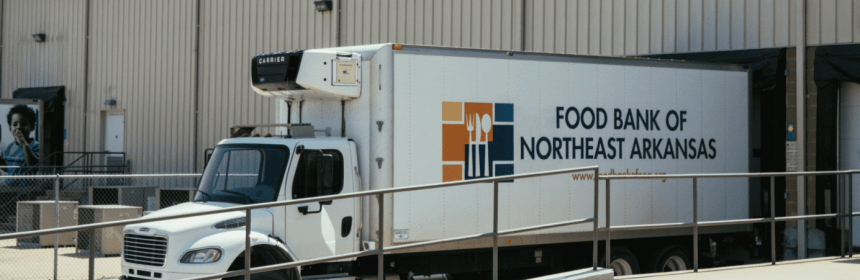
Photo courtesy of the Food Bank of Northeast Arkansas
As grocery prices climb and paychecks fall short, more Northeast Arkansas families are waiting in food bank lines to make ends meet.
Food insecurity is rising in northeast Arkansas as inflation drives up the cost of groceries, gas and housing, putting increased pressure on local food banks.
The Food Bank of Northeast Arkansas secures donations from food and grocery industries, government agencies, individuals and other organizations to provide for people in need. The food is stored in the organization’s 59,600-square-foot distribution facility in Jonesboro.
Terry Austin, a development officer focused on fundraising and communications, said demand for food assistance has increased over the past year due to inflation, rising gas prices and cuts to federal support programs such as the Supplemental Nutrition Assistance Program, or SNAP.
“Demand has risen already just from the cuts that we’ve taken so far from the economy being in rough shape,” Austin said.
Austin said donors are also feeling financial strain, forcing them to be more cautious with their contributions as they balance their own household expenses. He said the food bank has seen an increase in senior citizens and families seeking assistance.
“Everybody right now is watching gas prices go through the roof,” Austin said. “Everything is more expensive at the grocery store.”
According to Feeding America, about 240,000 people in Arkansas benefit from SNAP, including 113,000 children and 36,000 senior citizens. A University of Arkansas study estimates that 28.8% of Arkansans face food insecurity. “The price of one pound of ground beef is now higher than the federal hourly minimum wage,” Austin said, describing the current conditions as a “perfect storm” of rising costs and reduced assistance.
Austin said he is concerned about the food bank’s ability to meet growing demand as grocery prices continue to rise and federal assistance programs face potential cuts.
“I’m honestly worried about making sure that we’re able to meet the needs that may be coming our way,” Austin said. Feeding America estimates that cuts to SNAP benefits could result in a loss of up to 41 million meals for Arkansas families.
Laura Dunivan, who works on the programs team managing fundraising and grant efforts, said rising costs are bringing more first-time clients to food pantries.
“What used to be occasional support for some families is now something they rely on more heavily,” Dunivan said. “We’re consistently serving more households each month.”
Dunivan said many families use food assistance to fill gaps during financial hardship, allowing them to afford other essentials such as gas, rent or medication.
“Would you sit in a car line for an hour for a box of food if you could just go to Walmart and get it in 10 minutes?” Dunivan said.
She said transportation remains a major barrier in rural communities, where access to food pantries can be limited. To address this, the food bank operates the Nourish Mobile, which delivers fresh produce at no cost to underserved areas. “Some of the people can’t come to the pantries, we have to go out to them,” Dunivan said.
Natalie Neal, the USDA coordinator for the food bank, said federal food programs play a critical role in addressing hunger across the state.
“With the rising price of food, it is more expensive to purchase food, and our neighbors can’t afford everything they need,” Neal said. “It really starts to feel like there’s a greater gap.”
Neal said the food bank has seen a decrease in USDA food shipments, limiting the amount of food available for distribution.
“We are seeing less come into the food bank, so we have less to go out to the community,” Neal said.
She said the organization works with mayors, churches and community partners to expand access and reach new households.
“USDA foods provide a pivotal source of food,” Neal said. “It helps keep food in the pantry to help us all get through difficult times.”
Bonnie Mamula, office manager at the food bank, said rising food costs combined with stagnant incomes are key drivers of food insecurity.
She said senior citizens are especially vulnerable because many live on fixed incomes while expenses continue to rise. “Some counties only have a few pantries, and they’re only open a couple of times a month,” Mamula said. “People in more remote areas have fewer choices.”
Mamula said the food bank is also seeing more working individuals and recently unemployed residents seeking assistance.
“Even people with jobs can’t make ends meet,” Mamula said.
Jennifer Hannah, chief program officer, said inflation has affected not only how many people the organization serves but also the quality of food it can provide.
“If we look at our data over the last few years, what we’re seeing is consistently serving more people,” Hannah said. “Demand is always there; it’s just how urgent it is.”
Hannah said many families fall into a gap where they earn too much to qualify for assistance programs but not enough to consistently support their households.
“It’s not so much changing the services we deliver, it’s changing how much we’re able to deliver,” Hannah said. “When prices go up, the quality of people’s food is going to decrease.”
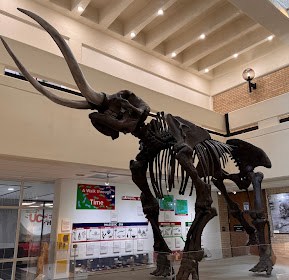
JONESBORO, Ark. – The Arkansas State University Museum is not only a place where people can see parts of history, but also an educational resource for teachers, professors and students.
Many students spend four or more years at A-State without visiting the museum, missing a valuable interactive educational experience that could help them better understand what they learn in history classes. The museum focuses not only on Arkansas history, but also on preserving and showcasing the history of northeast Arkansas and the Delta region.
The museum serves as an informal learning environment, according to Elisabeth Engel, director of the A-State Museum.
“You don’t have to be here. It’s not like class,” Engel said. “So, you know, we value the people that come through because they’ve made an effort to come see us. We hope that they walk away feeling like that effort to brave campus, find a parking spot, and all of those kinds of things, in our particular environment, was well worth it.”
Students, faculty, staff and Jonesboro residents can visit the museum on their own or book a tour with Jill Kary, curator of education at the museum. For teachers and professors, the experience can be especially valuable.
Lillie Fears, professor and interim director in the School of Media and Journalism, brings her classes to the museum every semester to help students understand historical events in ways a textbook cannot.
“My favorite part about taking students to the museum is seeing their reactions when they see something old that we’ve talked about in class, or that is mentioned in our book or in a documentary. These types of experiences can allow them to step out of present-mindedness and to realize how the tools and technology they use in modern times evolved at different eras in U.S. and world history,” Fears said.
Many groups, Engel said, visit the museum with a specific purpose. For some groups, Engel pulls artifacts from storage and creates a “mini exhibit” tailored to their interests.
Fears prefers tours focused on communication history and artifacts, so Engel often brings out old newspapers, cameras and photographs for her students.
“I really appreciate how the director, Elisabeth Engel, is always willing to bring out old artifacts that pertain to mass communications and provide us with special lectures on the history of these media tools. A textbook or video could never do what she and Jill Kary, education coordinator, do for my classes,”
For some students, a focused tour helps them better understand what they have been learning in class.
“It made a lot of the concepts feel more real. In class, we talk about the history of media, but actually seeing the artifacts and examples in person helped me connect everything more clearly, especially how media has evolved and impacted society,” Kaysen Lomax, a junior creative media production major from Jonesboro, said.
For other students, seeing everything the museum offers gives them a perspective they otherwise might not have considered.
“Yes, I did thoroughly enjoy the tour Dr. Fears took us on. Seeing how passionate Jill Kary was about the black business district was inspirational. I enjoyed looking at all the old pictures of old businesses and equipment/technology, and find it crazy to see how much those things have changed,” Alexander Riggs, a junior creative media major from Forrest City, Arkansas, said.
While the museum serves as a tool for professors on campus, teachers in surrounding school districts also can use it as a resource.
Photo courtesy of Arkansas State University.
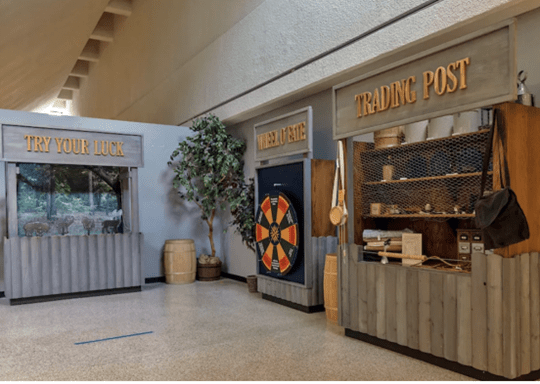
Traveling suitcase exhibits are smaller exhibits teachers can check out for two weeks at a time. They offer hands-on materials, visual aids and lesson plans for each exhibit. Teachers can choose from five options, including Pioneer Living, Portals of the Soul: Native American Culture, World War II on the Arkansas Homefront and more.
“All of them are linked to the educational standards that are dictated by the state,” Kary said.
Visitors can also explore the tinkering studio to test whether they have the same innovation skills as people on the Arkansas frontier.
“If the kids have been paying attention, in every gallery they’re seeing innovation happen,” Kary said. “So they are told to invent things, make something, and if it doesn’t work, tweak it, fix it.”
Learning does not just happen in the classroom; it can happen in many places, including the museum. And learning is not just for students. Anyone who visits the museum is welcome, whether for a specific purpose or simply for fun.
JONESBORO, Ark. — A Jonesboro woman told city leaders her father was buried in the wrong grave, raising concerns about oversight and recordkeeping at a municipal cemetery.
During public comment, LaToya Yarber told Council members her father was buried in the wrong grave at Oakland Cemetery and must now be exhumed and reburied.
“How do you expect me to trust you,” Yarber asked, “when my father lies in a grave that does not belong to him?”
Yarber said the mistake disrupted her family’s ability to grieve.
“For the last week of my life, where I was supposed to be grieving my father, has been disrupted,” she said. “It is unfair to my 81-year-old mama to have to be going through this .”
City officials said they have met with the family and aim to correct the burial mistake, including covering the full cost of exhumation, raising questions about how cemetery records are maintained.
“If you want to do something for the city of Jonesboro, get the records together so that we will know where our people are or where they’re supposed to be,” Yarber said.
Other public comments surrounded concerns about city operations. Patty Lapp said she worried about a lack of financial reporting from a volleyball tournament.
“We don’t really know where those numbers are,” Lapp said. “It needs to be crystal clear what is spent and what is taken in.”
Linda Wright said she is concerned about supervision at sports events, saying children should always be protected.
“I’m just wondering why we are spending money on these tickets,” Wright said. “I just wonder what kind of supervision is going on out there.”
Eugene Holloway, of Marshall Street, said housing conditions are deteriorating and urged the council to take action.
“People are living in terrible conditions,” Holloway said. “We’ve got to do something here.”
Despite concerns raised, the council continued its routine business. Members approved resolutions requesting City Water and Light provide free utility services at 423 W. Huntington Ave. and 6106 Southwest Drive. The resolutions allow utilities to be provided at no cost for projects serving a public or governmental purpose, a common practice for city infrastructure such as lighting and municipal facilities.
Several zoning ordinances advanced, including a request to rezone property at 1601 Granger Drive to allow it to be split for two single-family homes.
A new ordinance, 26013, would establish a Sports Advisory Committee, outlining its membership, purpose and duties. The measure received its first reading and will return for further consideration. Other ordinances concerned traffic signage and zoning changes.
During council reports, Anthony Colman, (Ward 6, Position 1), highlighted growth in Jonesboro but raised concerns about east-side infrastructure and speeding.
“There’s a lot of traffic, and there’s a lot of speeding going on,” Colman said. “I’d like for us to consider another study.”
Mayor Harold Copenhaver highlighted ongoing projects, including a six-month downtown traffic pilot program.
“We’ve had a lot of input – most of it is very positive,” Copenhaver said of the Main Street project, noting the evaluation of Washington Avenue will involve public surveys and comments.
Officials also continued work on Plan Jonesboro, a long-term development strategy focused on growth, infrastructure and quality-of-life improvements.
“Please visit PlanJonesboro.com to ensure your voice is heard,” Copenhaver said. He also noted recent meetings in Washington, D.C., with federal officials to discuss funding for public safety, infrastructure and economic development projects.
The council recognized City Clerk April Leggett for her 10 years of service, praising her support in maintaining city records. While the meeting covered routine business, Yarber’s comments highlighted a deeper issue of human impact and public trust. City officials said they will continue reviewing the cemetery issue as questions remain.
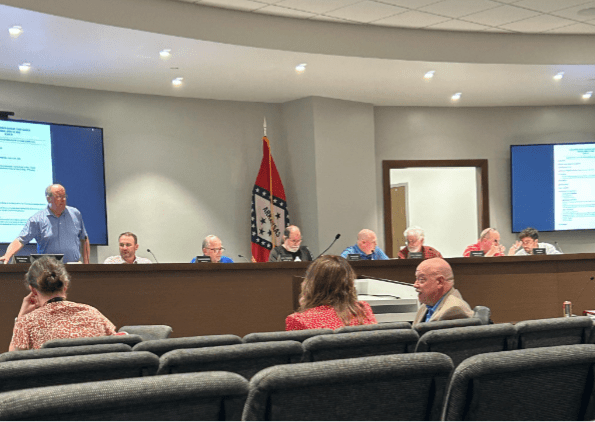
Members of the Craighead County Quorum Court meet. Photo by DDNS Reporter Mia Young.
JONESBORO, Ark. – The Craighead County Quorum Court advanced two ordinances to their next readings to amend the county’s salary administration policy and job classifications in the County Judge’s Office during its meeting on April 13.
During old business, the court held the second reading of an ordinance amending the county’s salary administration policy to include cost-of-living increases. The ordinance proposes employees would be eligible for cost-of-living raises after one year of employment. Supervisors, however, would be able to approve the increases after 90 days based on performance. The policy would be guided by the Consumer Price Index, but not a specific rate.
The 13 justices also voted to untable a recommendation from the Job Evaluation and Salary Administration Policy committee involving the County Judge’s office, which Judge Marvin Day previously tabled. The ordinance will reclassify and restructure the Secretary Coordinator I position as an Administrative Coordinator I position.
“We’re not changing the budget. This is just going to change the position,” Day said. “If we do decide we want to change the budget, we will come to finance.”
Wendy French previously served as Administrative Coordinator I, in which she worked with elected officials and department leaders to help with daily operations and coordinate internal processes. However, officials appointed French as Craighead County Administrator in January 2026. Since leaving the position, Day said French held skills the Judge’s Office would like to mandate and look for.
The county presented the changes as part of its efforts to retain employees, recognize and support their work and improve the county as a whole. Day said if there was a possibility of hiring someone with the skills in place, he would come back and ask for a salary adjustment.
Once the court broke into committee meetings, Shannon Kee made a second attempt before the Public Service Committee to open a restaurant and obtain a liquor license after the committee rejected his previous application last year. Kee plans to open 141 Prime at Sterling Springs, 2761 County Road 766, near the Highway 141 intersection.
“Born and raised, I’m 53 years old and never had anything out there other than a gas station,” Kee said. “Nowadays, we don’t really have a gas station because all the gas stations are shut down.”
He said North Jonesboro has no restaurants and if he wants customers to choose to come to his restaurant and not just “drive right past,” they will expect a beer with their dinner. The committee, after hearing no additional public comments, voted 3-1 to advance the proposal to the full Quorum Court for a vote when it meets again on April 28.
During public comments from the full Quorum Court, Robin Martin raised the issue that a recent Freedom of Information Act request showed Day’s email was included in the list of people emailed when someone emails quorumcourtmembers@craigheadcounty.org. However, Day’s name did not appear anywhere on the list of email recipients.
“That seems a little deceptive,” Martin said.
Martin also said there is no way for citizens to email Quorum Court members individually, as the only email address provided is the group email. Day said it would be possible for him to be removed. But the role was already set up that way when he took office, and he would not commit to anything during the meeting.