JONESBORO, ARK – The Bradbury Art Museum is working to expand its connection with the Jonesboro community through outreach, partnerships and access to free art.
BAM Education coordinator Paden DeVita said building trust in a largely rural community has been key to the museum’s growth.
“We’ve built a lot of trust with the community. We hope to continue expanding programs while strengthening relationships we already have,” DeVita said.
The museum started as a gallery in 2001 and became a museum in 2007. It serves both Arkansas State University and the surrounding community.
The museum increased its outreach and programming in recent years, including partnering with the fine arts department on campus to showcase art, as well as expanding its reach to other colleges on the university campus. Outreach efforts expanded through summer workshops and partnerships with local organizations such as the Craighead County Public Library, offering programs and activities for students.
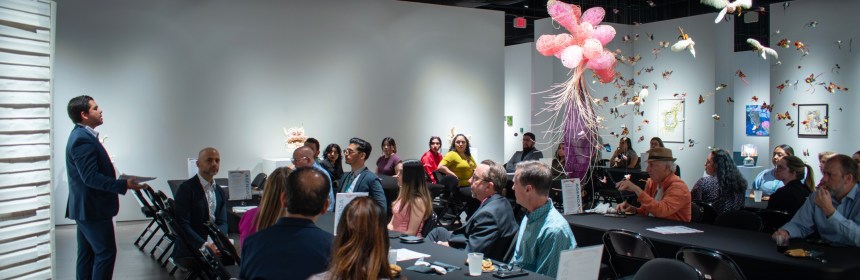
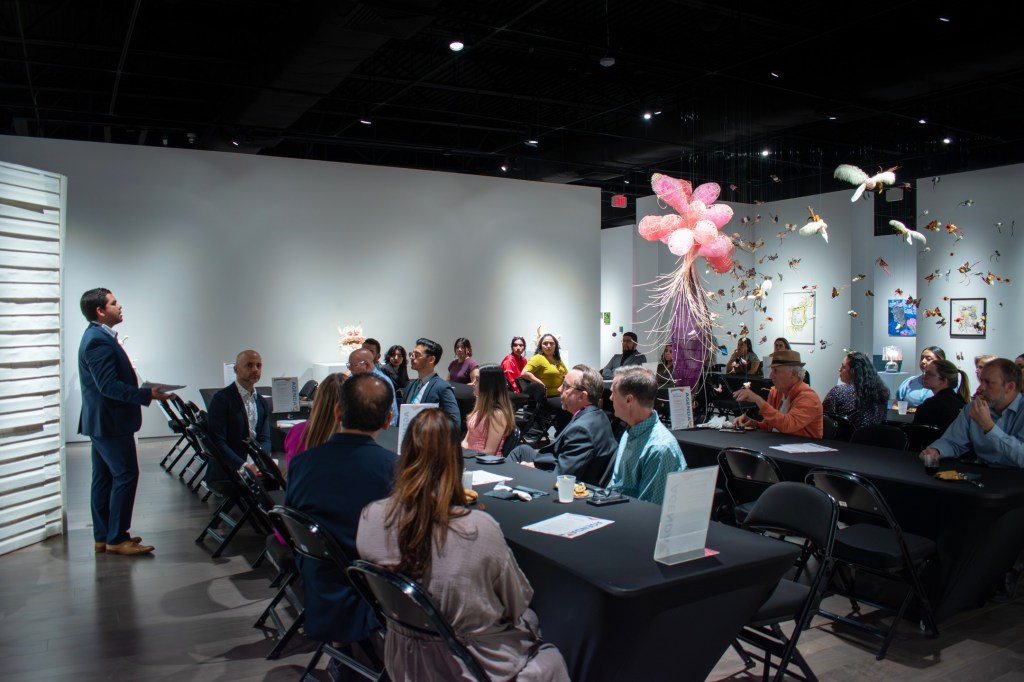
Attendees listen to a presentation at An Evening At The Museum, an event hosted by BAM and the Northeast Arkansas Hispanic Professional Network. The event, held April 23, 2026, represented a partnership between BAM and local organizations. Photo Courtesy of BAM Facebook page.
One recent workshop focused on linocut printmaking, a hands-on art form that allows students to carve designs and create prints. Museum photographer and outreach assistant Savannah Sifford said programs like these help introduce different types of art to the community.
“These workshops give people the chance to experience art in a hands-on way,” Sifford said.
Being located on a college campus, the museum draws a mix of students and local residents. Front desk manager and Graphic Designer AnnEllise Jarrett said recent visitors have included students and adults in their 20s and 30s.
Click to View!
“Recently, many have said they have found the museum through social media and online searches,” Jarrett said.
Even with increased engagement, visibility remains a challenge as the museum is tucked away on the side of the Fowler Center.
“Getting people through the door is one of the biggest challenges. We’re always trying to increase engagement,” DeVita said.
Jarret said having a museum like BAM is important, especially in rural communities, for allowing students and adults the opportunity to engage with art.
The museum plans to continue expanding its programming with additional gallery activities and partnerships aimed at increasing community engagement.
JONESBORO, Ark. — At Arkansas State University, theater productions like “Leading Ladies” depend greatly on the presence of a live audience, many of whom come from the surrounding Jonesboro community.
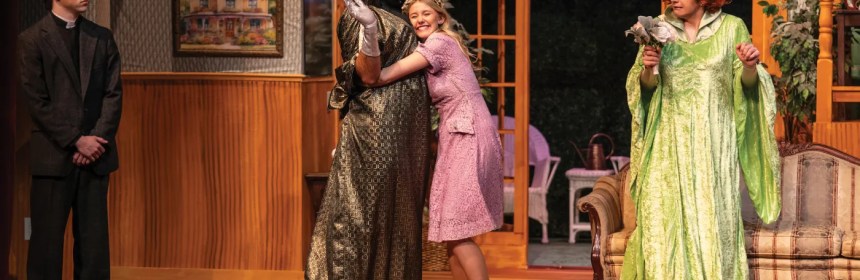
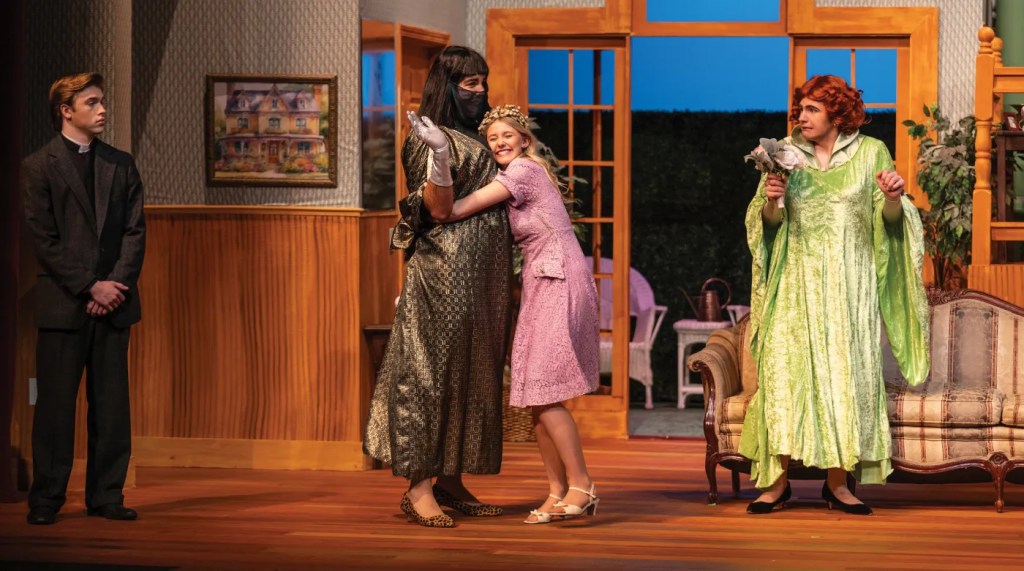
(Left) Garrett Veal, Zane Brewer, Zoey Newcomb and Donovan Walters playing Duncan, Leo, Meg and Jack, respectively, in A-State Theater’s production of “Leading Ladies.” Photo courtesy of Arkansas State University
While the Department of Theatre produces the show, students alone cannot complete the experience without a live audience. Performing in front of live audiences night after night gives the students the most authentic acting experience possible.
Assistant stage manager and A-State student Emalee Gillean said the difference is noticeable.
“When audiences are reactive, laughing and engaged, our actors can feed off of that energy and put it into our show. Without a real audience, the feel of the show is very different,” Gillean said.
Because theater is performed live, each audience brings something new to the experience.
“Each audience has their own personality,” Gillean said. “Each day, our audiences are entirely different because of the energy they bring to the performance.”
For students who are involved in the production, that interaction is part of what makes theater different from regular classroom experiences. Director DayDay Robinson said students gain valuable insights through productions like this.
“Students gain real, hands-on experience that you just can’t replicate in a classroom,” Robinson said.
That experience is not only about rehearsals, but also performing in front of others and responding to audience reactions in real time. Gillean said audiences include more than just students.
“We see a wide variety of students, professors, family members and Jonesboro community members in our audiences,” Gillean said.
That mix of audience members shows how productions bring the Jonesboro community onto campus while also giving the students a chance to perform for a wider audience. In addition to performance, visual elements also contribute to the audience’s experience. Costume designer Claire Abernathy said actors bring those elements to life on stage.
“The two actors wear the costumes with such confidence and really embrace the fun, absurd playfulness of the moment,” Abernathy said.
For many students, the opportunity to perform in front of a live audience is one of the most important parts of the process.
“We spend months building a show and creating a special experience. Getting to showcase it is the highlight of the process for many,” Gillean said.
Click to View!
For performers, that connection between the stage and the audience is what makes live theater special. Donovan Walters, a student actor who performed in the A-State Theater production, “Leading Ladies,” said theater is a communal experience.
“Theater is a shared experience that connects a tie between all the people on stage and everybody in every seat,” Walters said.
For a city like Jonesboro, this connection between community and school is valuable.
The university’s theater program depends on community members to attend performances, while those same community members benefit from access to live theater and creative work produced by the students. Both sides have an important role in the success of the school and the community.
JONESBORO, Ark. — The College of Education & Behavioral Sciences’ interconnection with the Northeast Arkansas community benefits education majors, NEA school districts and Arkansas State University.
Makenzi Davis graduated in December with a bachelor’s degree in physical education. A-State awarded her the Chancellor’s Scholar at the College of Education & Behavioral Sciences Convocation of Scholars Ceremony.
She was also one of the first students at the college to be accepted into the new Aspiring Teacher Program. The program allows students who make a high enough score on their exam to waive their year of residency and become full-time teachers immediately.
“Before, I was just a college kid who stuck to their inner circle and this really stretched me as a person. It’s made me a lot more connections than what I had before I got here,” Davis said.
Davis now teaches physical education at the Nettleton Intermediate School and serves as the junior high girls’ head basketball coach. She said this position has made her feel a lot closer to the NEA community.
Lacy Baker, the Nettleton School District Assistant Superintendent of Curriculum and Assessment, has been involved in the district’s hiring process for many years. She said at least half of the Nettleton School District teaching staff working there currently has some sort of certification degree from A-State.
The school district also takes in as many A-State residency placements as possible. For the 2026 fall semester, the district had 27 placement requests and she predicts they’ll be able to take in all of them.
“Anything we can do here at Nettleton to reinforce what A-State is doing there and, of course, keep up our numbers of teachers,” Baker said.
Baker said she’s a big fan of the Aspiring Teacher Program because it’s good for the students. It gives college students early access to teacher benefits and salary. She said A-State graduates come to the workplace very well prepared.
“Arkansas State is doing beautifully by preparing their students. I think it’s such a wonderful opportunity for student that are already ready to go ahead and go on into that third year,” Baker said.
Baker said student-athlete visits, professor presentations and staff meetings are some other ways A-State stays involved in the Nettleton School District.
Valarie Hilson, an assistant professor and program coordinator of Physical Education Teacher Education at A-State, said the Aspiring Teacher Program strengthens collaboration with the NEA school districts.
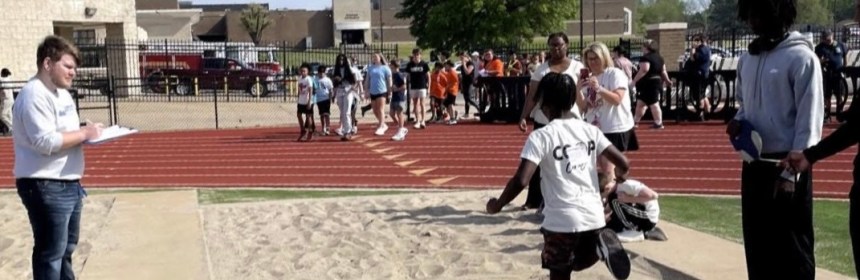
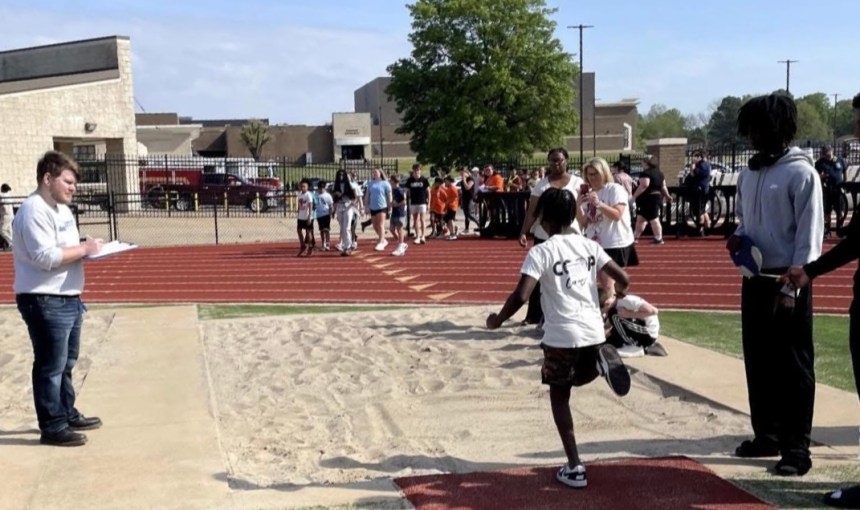
Faculty from Community Care & Miracle Kids volunteer at the Area Seven Special Olympics Track Meet, held April 10 at Jonesboro High School. Photo courtesy of Special Olympics Arkansas Area Seven
Click to View!
Hilson, who coaches the Special Olympics of Arkansas and serves as the Area Seven training director, has served as a Special Olympics coach for over 20 years. An A-State colleague introduced her to the nonprofit organization. The organization hosts regular sporting events across the state.
Jonesboro High School hosted the last event April 10, which included 565 athletes ranging in ages from 2 to 60 participating. The Nettleton High School track team, local businesses and A-State faculty and students were all involved in the event.
The commitment to helping one another succeed is vital in maintaining the relationship between the education majors, NEA school districts and A-State.
JONESBORO — The Arkansas State University Aggie Market is doing more than selling locally processed meat. The market to many students and community members provides a visible connection between A-State and the larger city.
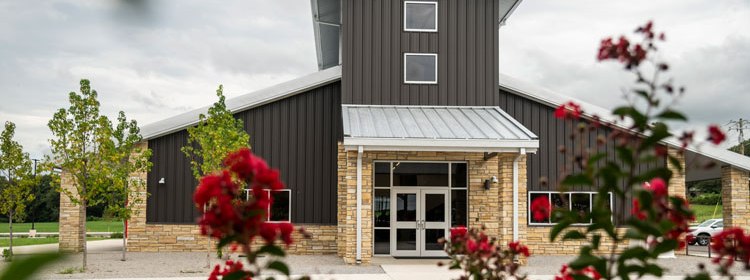
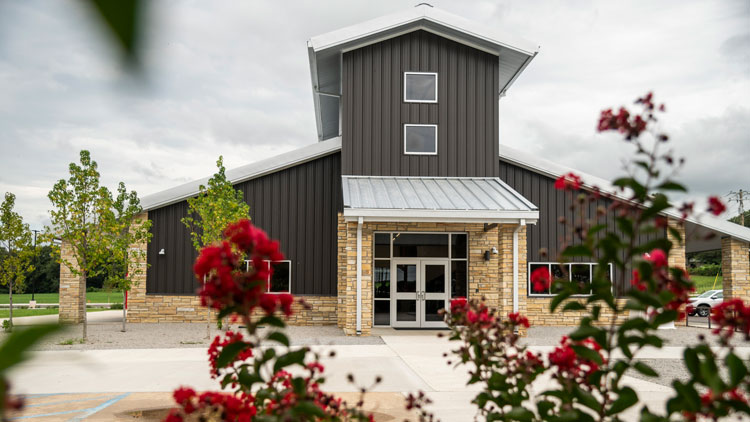
View of the front of the Arkansas State University Aggie Market. Photo courtesy of Arkansas State University
Part of the College of Agriculture, the Aggie Market serves as both a student learning facility and a public retail space. Students help process, market and sell products while interacting directly with Jonesboro residents during weekly retail hours and community events.
Richard Readnour, meat laboratory manager, said the market’s role extends beyond education by creating direct interaction between students and the Jonesboro community.
“The Aggie Market’s target audience is anyone within the Jonesboro community, or surrounding areas. We seek to build relationships with students, staff, faculty, and strengthen our community ties,” Readnour said.
The Aggie Market first opened in 1971 as the ASU Meat Lab under the leadership of Raymond Hostetler. The meat lab originally focused primarily on teaching and USDA-inspected processing.
In 2021, the College of Agriculture received grant funding from the Arkansas Department of Agriculture that allowed the facility to undergo major renovations. The market reopened in 2023 under the new name A-State Aggie Market as the first state-inspected facility in Arkansas.
The renovation also expanded opportunities for students beyond meat processing. Students can now participate in nearly every step of production, from raising livestock at the university farm to developing and marketing retail products sold to the public. Students working inside the market are often the face of those interactions.
Hannah Johns, a student employee at the Aggie Market, said they provide hands-on learning opportunities and even employment for students.
“We are committed to producing products handmade by students and being engaged with the community,” Johns said.
The market opens weekly to the public, allowing residents to purchase products directly from students working in the facility. Readnour said those face-to-face interactions help students gain experience while also giving customers a better understanding of agriculture and food production.
According to Readnour, the market isn’t a one-time stop.
“We have several repeat customers who come back often to pick up their favorite products. We use this as an opportunity to tell them about the importance of agriculture, and our students who help us through every stage of production,” Readnour said.
Still, awareness of the Aggie Market itself may not be widespread throughout Jonesboro.
Craig Rickert of the Jonesboro Advertising and Promotion Commission said he was more familiar with the broader Judd Hill Farmers’ Market than the Aggie Market specifically. Rickert said community-centered agriculture events hosted through A-State play an important role in connecting the university with Jonesboro residents.
“The great appeal of the Judd Hill Farmers’ Market is that it brings people to campus,” Rickert said. “Those Saturday morning and Tuesday afternoon trips can be as much about being social as shopping. You can get great local products in a lot of places. But the farmers’ market gives you community on top of that.”
Click to View!
Rickert said the Aggie Market should be viewed as a community resource and not exclusive to the university.
“When you see the full parking lot, the families, the kids running around snagging a free taste of something, that’s special,” Rickert said. This most definitely strengthens the connection between the city and the university. A-State is the heart of our city.”
While the Aggie Market operates on a relatively small scale compared to other university outreach efforts, it continues to provide one of the few spaces where students and Jonesboro residents regularly interact through a shared local experience.
“We need to drop the sentiment that something is only A-State or only Jonesboro. The city and the university live together hand-in-hand,” Rickert said.
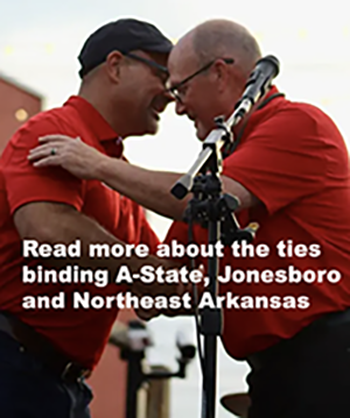
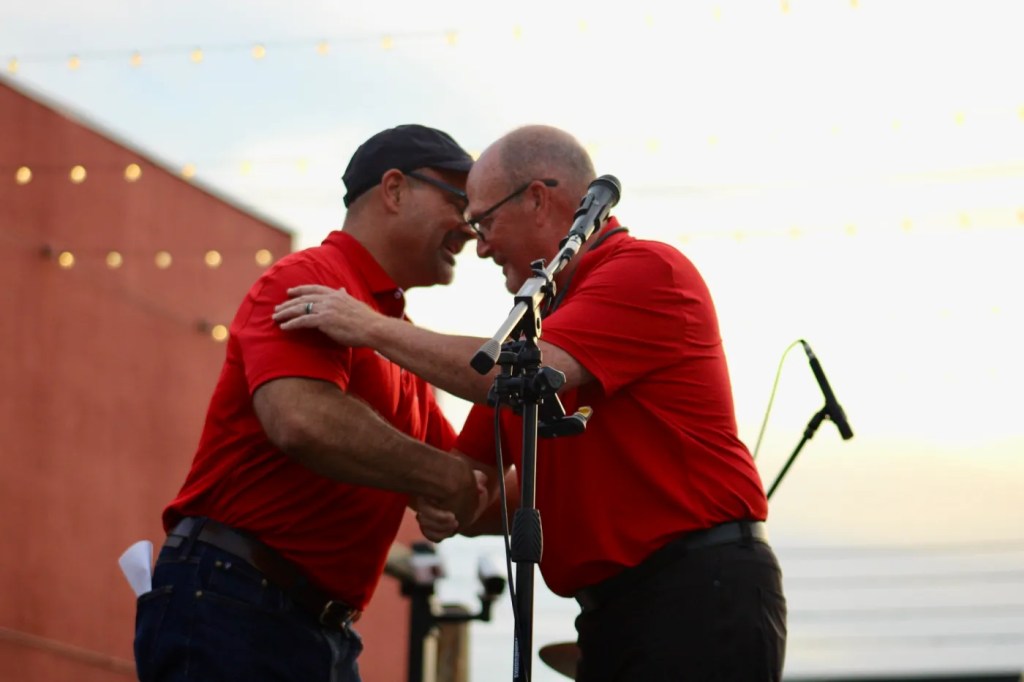
(left) Arkansas State University Chancellor Todd Shields and Jonesboro Mayor Harold Copenhaver shake hands during the 2025 Paint the Town Red block party, held in downtown Jonesboro. Cody Slater, vice president of chamber programs, said the event emphasized the importance of A-State’s connection with the Jonesboro community. Photo courtesy of Allie Carson.
Arkansas State University provides many connections to Northeast Arkansas and the Jonesboro community. Students in the Civic Reporting and Media Writing courses investigated those as the spring 2026 semester ended.
Benjamin McDowell explores student involvement in Jonesboro.
Amelia Young examines the partnership between Arkansas State and Nettleton Junior High School.
Levi Collins inspects associations between A-State Market and the Jonesboro community.
Jaden Haley emphasizes the relationship between A-State theater and the NEARK community.
Ali Lara details affiliations between Northeast Arkansas and A-State’s College of Education & Behavioral Science.
Shawna Whitehurst explains how the Bradbury Art Museum provides more than art to the region.
Special thanks to project editor Jerry Don Burton.
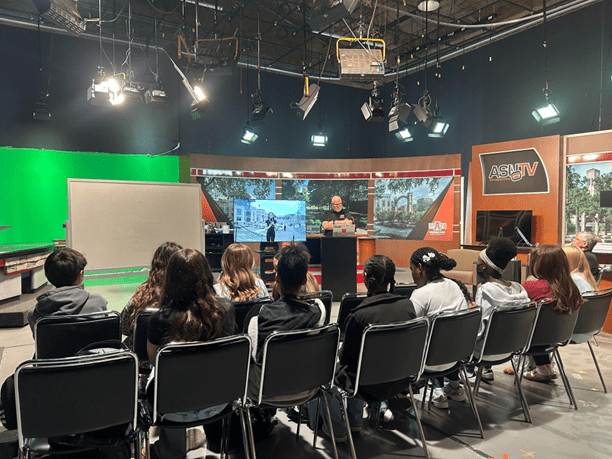
Nettleton BRIDGE program students presenting and watching their final video projects about Nelson Mandela and Zodwa Dlamini. Photo by Mia Young.
JONESBORO, Ark.- The Nettleton BRIDGE program introduces middle school students at Nettleton Junior High to the learning environment of a college student by teaching them about multimedia journalism in the School of Media & Journalism.
The Nettleton BRIDGE program began as a way to help Nettleton Junior High students experience what it is like on a university campus, so they can imagine themselves as a student at Arkansas State University or any other university. Many first-generation college students struggle to imagine college life.
Chris Moss, principal of Nettleton Junior High, contacted Gina Houge, associate dean for the College of Liberal Arts and Communication, because he wanted to target his eighth-grade students young enough to benefit from an experience that could encourage them to become college students. Last year, the program began by bringing in a small group of Nettleton students who were interested in multimedia journalism, especially the media aspect.
“I mean, that’s what students know, right? They have their phones, and they’re engaged in media constantly,” Hogue said. “But to get an experience within an academic field was what Mr. Moss wanted them to experience.”
Hogue and Moss also wanted to add a historical component to the program, as they are both passionate about history. But last year’s pilot program focused on building the students’ multimedia journalism skills, and they were unable to build out any historical component. Jonathan Reaves, instructor in the school of media and journalism, played a critical role in working with the students and developing their multimedia journalism skills.
“The first year of the program (last year) was a challenge in that we were developing a program from scratch,” Reaves said. “In the first year, we had to decide which media we wanted to use. We primarily focused on video packages, and I have been working on audio podcasts separately. I expect we will incorporate more audio podcasting next year.”
The program changed significantly from the first year to the second. Last year, the group of students interested in media activities merged with the group who were interested in STEM activities. This meant some Mondays, the group would work on multimedia projects and other Mondays, they would work on STEM projects.
This year, the two groups remained separate, and they focused on adding a historical component along with learning the elements of writing, audio and video.
“So we wanted to continue with street talks, and we wanted to expand and add the audio component in so they could do more audio editing. Then Alina and Jonathan wanted them this semester to do an actual video report that encompassed all of these elements of interview, audio and also video,” Hogue said. “To build in the historical component, we wanted students to be able to meet people from many places around the world and learn about the culture in other places and to interview people, so that they’re doing their research, ’cause when you research like a journalist, you’re researching like a historian.”
Throughout the last year, students completed several multimedia projects based on what they learned about different historical topics in the Nettleton BRIDGE program class.
One of the first things Alina Sakayeva taught the students about was her hometown of Kazan, Russia. Sakayeva talked about her family traditions, the food they eat and the relationship between her and her family. She showed them some of the historic buildings and contemporary athletic facilities where they host global soccer matches, and taught the students about the ancient culture and the traditions there.
“The students sat on the edge of their seats, listening and looking at the images, and watching the videos of the cultural dancers in Kazan, conveying the history of that region of the world to these young people, these eighth graders, from Nettleton Jr. High School,” Hogue said.
At the end of the nine weeks, the students created their video story about Kazan and something from Sakayeva’s culture they were interested in, and then presented it to the class.
“The Kazan video (was my favorite), it gave us a lot of freedom to do whatever with the video, and it was super fun to learn about,” Brylin Smallman, eighth grader in the Nettleton BRIDGE program, said.
During the second nine weeks, the students learned about the Pine Ridge Indian Reservation in South Dakota. They also individually created videos on the topic using interviews with Alice Phelps, a former educator on the reservation, and their own research.
During the third nine weeks, they read “The Story of Nelson Mandela” by Floyd Stokes and learned about him, and Zodwa Dlamini, who was in his administration in South Africa and who brought several school districts together there. The students also interviewed Dlamini over Zoom.
For their final projects in the fourth nine weeks, the students spent time in the K-labs learning about audio production and editing their videos about what they learned from their reading, their research and the interview with Dlamini.
Not only are the students learning audio, video, storytelling and a little bit about history but they are also learning life lessons they will carry with them throughout their lives.
“(I learned) to be open-minded. I wasn’t very open-minded at the beginning, and now I’m just like ‘OK, this is what’s going to happen, and that’s OK,’” Fielder Franks, an eighth grader in the Nettleton BRIDGE program, said. “Sometimes life happens, and it doesn’t go your way, and sometimes that’s just how it works, and so, you’ve just gotta be OK with that and move on.”
Every Monday, the group of 12 students would meet in the TV studio in the A-State College of Media and Journalism for two hours. This means these students would be missing three class periods and would be responsible for making up the classwork they missed. To be in the BRIDGE program, the students have to meet certain requirements, like having good grades (because they miss a lot of work) and not having any behavioral issues at school.
Karley Barnes incorporates multimedia elements into her EAST class, which each of the students attends. Barnes, an A-State alum, also travels with the students to and from the A-State campus and gives students a participation grade based on whether or not they came out and did their best.
“I think it benefits them because they get out of the classroom, they get to be challenged. It might be kind of taboo to say, but public school education is very watered down, and it’s not watered down out here,” Barnes said.
Click to View!
Next year, the program will see a new group of eighth graders with many of the same and many different projects. Each year the students move up in school, the program continues to support them, but they have less time to visit campus. Reaves and Hogue are still excited for what next year will bring, even though the current eighth graders may not be on campus as much next year as they are now.
“I would tell these students to stay curious, keep working on their editing skills and be proud of what they have done,” Reaves said.
The Nettleton BRIDGE program does not just give students a chance to learn and improve their media skills, but “to help them, to inspire their learning, and to find their pathway in life. That’s the goal,” Hogue said.
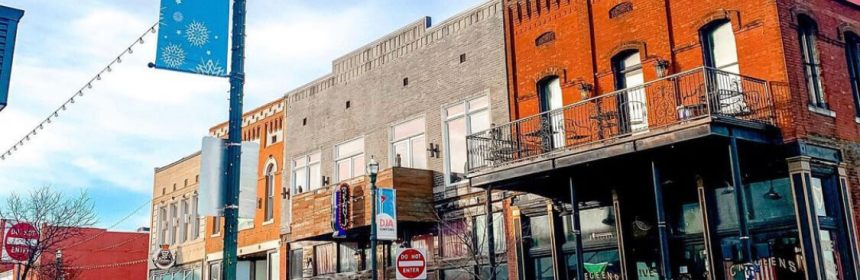
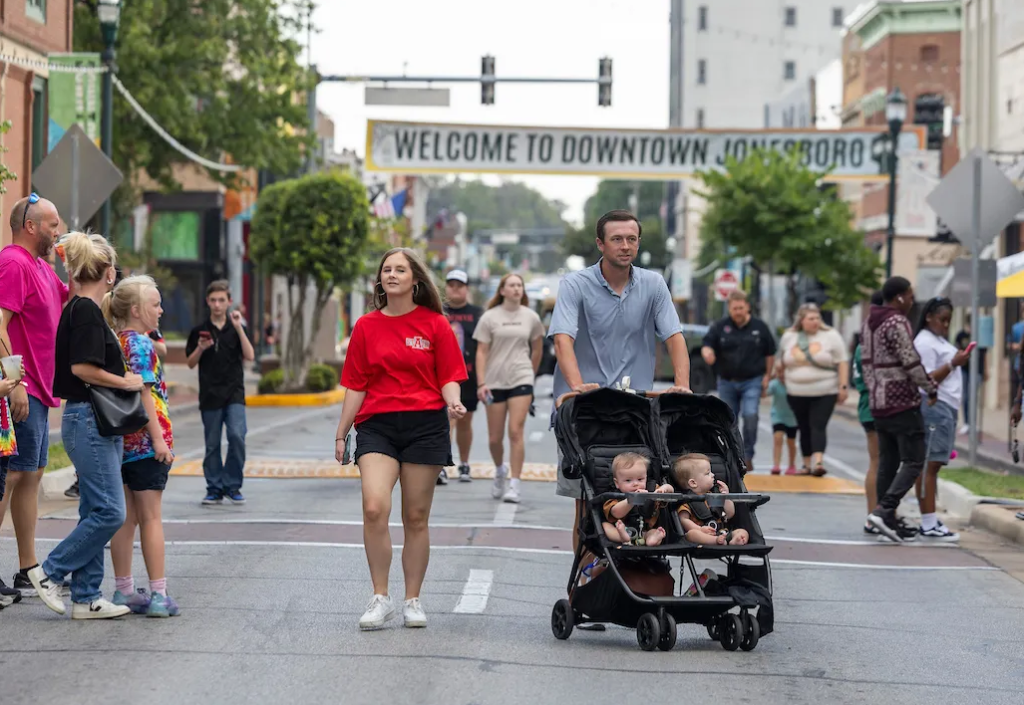
Pedestrians walk through downtown Jonesboro beneath a “Welcome to Downtown Jonesboro” banner, highlighting the connection between Arkansas State University and the local community. Photo courtesy of Arkansas State University.
JONESBORO, Ark. — As Arkansas State University continues to grow alongside the city of Jonesboro, students and community leaders say the relationship between campus and community is evolving, but not without challenges.
From economic inequality to shifting social values, both groups are working to better understand their roles in a shared space. While students often focus on academics, identity and campus life, many Jonesboro residents are more concerned with jobs, healthcare and the rising cost of living, highlighting a need for stronger collaboration.
Local organizations say collaboration is critical as community needs continue to grow.
At the Jonesboro Human Development Center, officials say demand for services has increased in recent years, creating new challenges for staffing and care.
“We are struggling to hire people to provide hands-on care for adults with disabilities,” said Diane Keith, a nursing home administrator at the facility. “We need employees with a CNA license.”
Keith said the center also maintains a waiting list for services, reflecting a broader need for support across Northeast Arkansas. She said A-State students help fill some of those gaps through internships in nursing, dietetics and speech therapy.
“We receive several A-State students for internships,” Keith said.
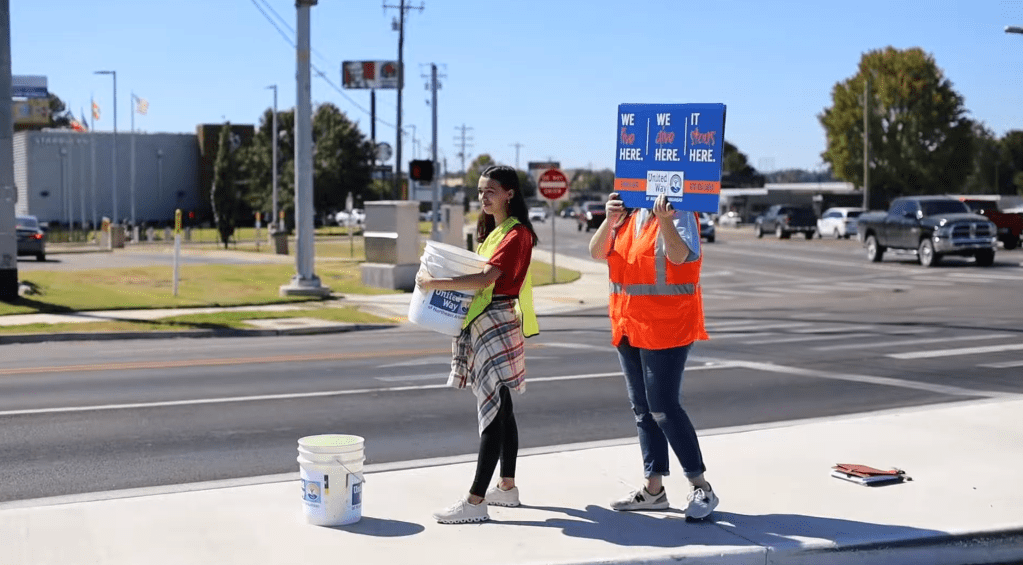
Volunteers request roadside donations for the 2022 United Way Day of Caring. More than 500 volunteers attended the event in 2022. Photo courtesy of UWNEA Jonesboro YouTube Channel.
Community leaders say those partnerships are key, but there is still room to grow.
Heather Coats, executive director of United Way, said A-State has already made strong efforts to connect students with the community.
“I think what’s important, and A-State already does a great job of this, is letting students, especially young adults, know what resources are available,” Coats said.
However, she believes the responsibility does not fall solely on the university.
“I think the community could do a better job of being present on campus when it’s not just for sporting events,” Coats said. “We need to have more of a presence that isn’t just about our own entertainment.”
Coats said increased engagement from Jonesboro residents could help integrate students into the community and encourage long-term involvement.
Erin Calhoon, development director for United Way, said improving awareness is essential to strengthening that connection.
“I would say finding ways for people on A-State’s campus to be more aware of what’s available in the community,” Calhoon said.
Student leaders agree that awareness remains one of the biggest barriers.
Jaycee Davis, president of Volunteer A-State, said her organization has made it a priority to connect students with local opportunities.
“Our mission last year was to connect campus to the community,” Davis said. “We had organizations from Jonesboro come to campus, and we introduced ourselves and shared how we could help each other.’
“Our goal this year is to have students make a bigger impact in the Jonesboro community by making them more aware of volunteer opportunities,” Davis said. “So many students don’t know what’s available in Jonesboro.”
Davis said students can get involved through activities like packing food boxes, participating in community events and supporting organizations like Hope Found, which raises awareness about human trafficking.
“Right now, the community gives a lot to the campus, which is great,” Davis said. “But I think our mission moving forward is to give that same energy back.”
Lavonda Evans, an instructor of sociology and criminology at Arkansas State, said differences in age and life experience often shape priorities.
“Students are in that space between being supported by their families and stepping into the real world,” Evans said.
Evans said campus conversations often focus on identity and diversity, while broader community concerns center on economic stability and infrastructure. She said there is a growing shift toward individualism.
“Everything is more individualized and specialized, which creates less collective support,” Evans said. “People tend to focus on their immediate circles rather than the community as a whole.”
Despite those differences, Evans said collaboration is both possible and necessary.
Click to View!
“Jonesboro is already making efforts to connect the campus with the city,” Evans said.
She said projects like walking trails and plans to better link the university to downtown are some examples of this effort.
Evans said expanding paid internships or job-shadowing opportunities could help students gain early experience while strengthening ties to the community.
“Overall, both city and university leaders are making strong efforts to connect students and the community, but there is always room for improvement,” Evans said.
As both sides continue to grow, leaders agree that bridging the gap will require greater awareness, stronger partnerships and a shared commitment to engagement on campus and in the community they will eventually call their own.
PARAGOULD – The Greene County Animal Farm is asking for donations from the community as they gather items to sell for their semi-annual flea market.
“It’s to make money to pay for the dogs and cats at the shelter-for their food and their vet bills,” Sharon Vines, a volunteer for the shelter, said.
Located between Paragould and Jonesboro, the animal farm hosts flea markets every Saturday. But, in November, they will host a bigger sale, to bring more funds to the shelter. More items will be up for sale during this event.
Vines said donations for the flea market can include items such as furniture, pictures, clothes, shoes, or knickknacks.
The shelter houses animals of all kinds including dogs, cats, horses and pigs. Vines said they could also use donations of dog and cat food, treats, collars, paper towels, and cleaning supplies.
The shelter can’t take in any foster animals at this time because they are at capacity. The animals at the shelter have needs that are hard to meet without help from the community.
“We’re always full. We always have a full plate of animals. So many animals,” Vines said.
Because the animal farm is usually at full capacity, they want people from the community to make sure an animal is homeless before picking them up and taking them to a shelter. Many times, a loose animal is actually someone’s pet that is lost. If the animal looks to be starving, injured, or has parasites, it can be assumed that they are homeless and need help.
The same idea applies to wild animals. Finding a baby opossum or raccoon with no sign of the mother is no reason to worry. The mother is probably looking for food and will come back to its baby shortly. In this situation, it’s best to leave the animal alone and come back later to make sure the mother came back for it.
The Greene County Animal Farm is run only by volunteers. All of the supplies and money earned from donations, adoption fees, and the flea-markets go to the animal’s needs. The animal farm is a no-kill shelter, so every animal gets the best care possible.
The shelter hopes to provide forever homes to all of their animals, but the COVID-19 pandemic has strained their operations. The shelter has seen a decrease in adoptions and the number of volunteers that care for the animals.
“Not as many people go out there to volunteer or see the animals. They may not adopt or donate as much because they’re out of a job,” Vines said.
Individuals interested in helping the animal farm can volunteer or adopt, however, if neither is possible, donate. Donating unwanted items for the flea markets helps the shelter pay for the animal’s necessities.
The semi-annual flea-market will be Nov. 7 from 9 a.m. to 5 p.m. and the shelter is open by appointment only. Call (870) 240 8117 to have volunteers pick up any donated items for the flea market or to ask about volunteering or adopting.
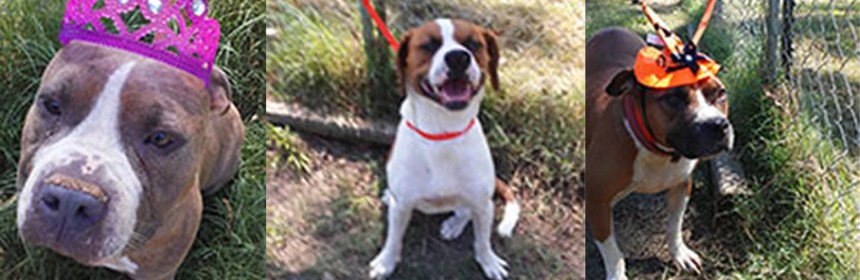
Note: Featured photos courtesy of Greene County Animal Farm.
JONESBORO — For one group of people in Jonesboro, the past 20 years remains a time of healing from wounds that never seem to close.
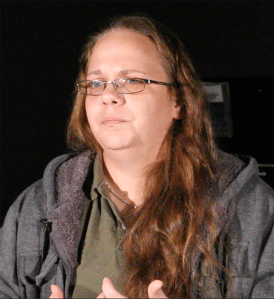
Valerie Grass (photo by Seth Cleveland)
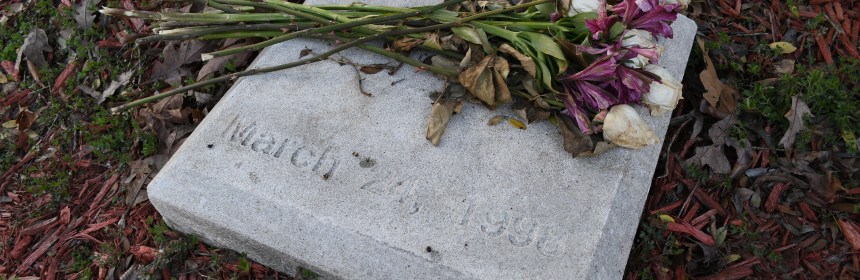
By all accounts, March 24, 1998 began as a pretty average day. The students of Westside Middle School started fifth period. The teachers began the lesson. Then two middle-school students pulled the fire alarm, went up on a hill and began shooting, killing four students and a teacher, and wounding 10 more.
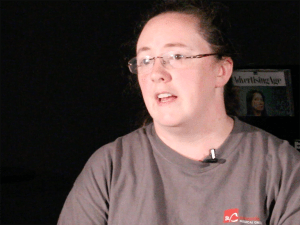
“No time for questions. It was just run and take cover,” said Valerie Grass, a student at Westside at the time of the shooting.
Brandy Myatt said she remembers hearing, “Don’t walk, run!” on that day.
“We just took off helter-skelter, and right as soon as we got to the gym, I noticed my friend holding her arm,” she said.
Brandy Myatt (photo by Seth Cleveland)
Myatt started piecing together what happened. And, she said, things began to change. From there began a long and arduous healing process.
That’s the truth for many people who have experienced similar events. Those who have experienced these atrocities must learn to move on.
The Westside survivors want to aid in the healing process of other survivors.
“We usually try to offer something to say, ‘You’re not alone in this,'” Myatt said.
After every school shooting since 1998, the Westside survivors have gotten together and figured out a way to help. After the Sandy Hook Elementary School shootings in Newtown, Connecticut, the Westside survivors sent the children stuffed animals like they received. In other cases, the Westside survivors have gone to school to talk to the students.
For many of the Westside shooting survivors, Parkland felt different. The similarities between the shootings, the approaching 20-year anniversary and the helplessness — it all opened the wounds of the past.
“This most recent shooting has just flooded so many memories back,” Grass said.
Others in the group agreed.
“As soon as we heard about Parkland, we all got on our Facebook group … and the first thing that I asked is ‘What are we going to do?'” Myatt said.
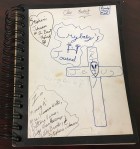
Myatt’s journal (click photo to enlarge)
Their idea stemmed from something the survivors did after the shooting.
Ferncliff, a camp in Little Rock, offered the survivors a getaway from the media coverage the summer after the shooting. The survivors learned journaling as a way to cope.
“From that came a lot of healing,” Grass said. “When we got there they had a starter backpack with a flashlight, a journal and a teddy bear.”
Jennifer Roshto, a Westside survivor, appreciated the journals.
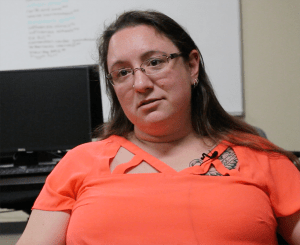
Jennifer Roshto (photo by Seth Cleveland)
“It gave me a place to say all these things and put all these things down, without having somebody tell me, ‘Well, you need to get over it,'” she said.
The Westside survivors want to gather 3,400 journals to send to Parkland survivors so that every high school student can have one.
“We’ve had several donations already, but I still feel that we’re very shy of what we need,” Roshto said.
Northeast Arkansas residents can donate until April 1 at several Journal Donation Locations around Jonesboro.
They also offer up their advice. “Take it day by day,” Myatt said.
Students from the Spring 2018 Advanced Reporting and Reporting for Electronic Media courses investigated the 20th anniversary of the Westside Middle School shootings and the ramifications of Arkansas’ soon-to-be-implemented college campus concealed-carry law.
Miranda Reynolds details remembrances from the Westside School Board, a student and a former A-State faculty member.
Seth Cleveland examines how Westside survivors continue to help other victims of school shootings.
Katie Woodall examines how the Westside shootings changed active-shooter procedures.
Tucker Crain details Arkansas’ Congressional leaders’ stances on gun violence and school safety.
Christopher Lee examines contention at Arkansas State over the new campus concealed-carry law.
DDNS Editor-in-Chief Kimberely Blackburn examines regional reactions to the campus concealed-carry law.
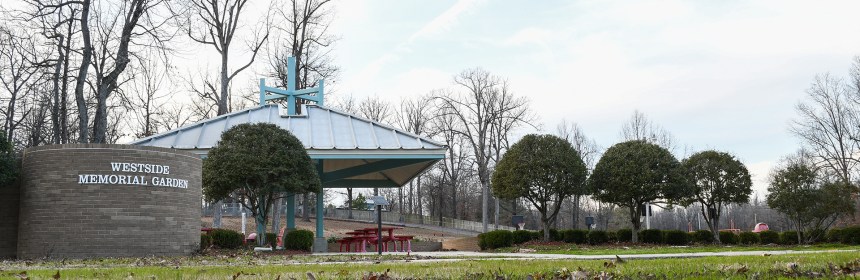
Ammar Taqi of the Advanced Photography class provided featured pictures of the Westside Middle School Memorial Garden. View the full pictures below.