Category Archives: Special Topic

Campus Concealed Carry Remains Contentious

by Christopher Lee
Delta Digital News Service

JONESBORO — New interests in school safety have emerged with the mass shooting at Parkland, Florida, and the Westside Shooting’s 20th anniversary fresh on everyone’s mind.

In light of the Parkland shooting, President Donald Trump advocated for arming teachers in the hopes of preventing more mass shootings in a tweet.

The debate of having firearms on campus is not isolated to public schools; it provides a point of contention for colleges and universities as well.

According to the National Conference of State Legislatures, 10 states including Arkansas currently have provisions allowing concealed carry on postsecondary campuses. Provided a person has passed the required courses — including the standard concealed-carry courses and the specialty enhanced-carry courses — gun owners may legally carry their weapon on college grounds.
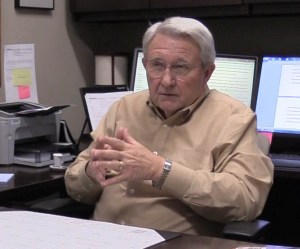
Dr. Michael McDaniel

Dr. Michael McDaniel, A-State Faculty Senate chair (photo by Christopher Lee)

Arkansas State University Faculty Senate chair Michael McDaniel explained how A-State’s Faculty Senate reacted to the new law.

“It’s hard to speak for the entire faculty. About the only thing I feel comfortable saying is that I believe that the faculty were reasonably comfortable with the situation we had prior to this new law,” McDaniel said.

Prior to House Bill 1249, now Act 562, colleges could opt out of allowing concealed carry on their premises, but with the passing of Act 562 this is no longer an option.

“With the new law we lost that option, so now we can’t opt out. It is the rule and it is the law,” McDaniel continued.

Bill Smith, A-State’s associate vice chancellor for marketing and communications, echoed the idea in a short but strong statement.

“The law is the law and we can’t change that,” Smith said.

Even though the law has officially gone in effect, understanding faculty and student opinions about the new conceal carry law is important for gaining insight into how the law and its implementation are perceived.

Some faculty members like associate professor of political science Richard Wang said they feel they were ignored.

“As you know, the university said, ‘No, we’ll opt not to have concealed carry on our campus.’ Joining with A-State are all the other universities in this state, plus junior colleges, plus the campus police forces, plus the local police, the county police and county sheriff offices all around the state, joining … It’s a coalition, and they all said, ‘No, we want to keep the local option, the option here,” Wang said.

Wang has taught at Arkansas State University for 31 years. He said he was surprised to hear the law  passed. You can hear more of Wang’s opinions about the concealed carry law by watching the video below:
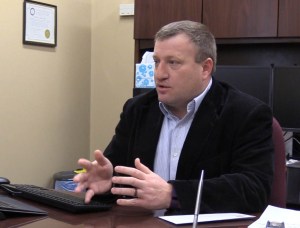
Dr. Brandon Kemp, interim Dean of associate engineering programs

Dr. Brandon Kemp, interim Dean of associate engineering programs (photo by Christopher Lee)

Brandon Kemp, A-State’s interim associate dean of engineering programs, echoed this sentiment when he heard the new concealed carry law had gone into effect.

“My first opinion was that it was ridiculous. As a faculty we have voiced our opinions over and over again that we don’t want guns on campus,” Kemp said.

A Jonesboro native who has worked at Arkansas State University for over seven years, Kemp said allowing guns on campus added unnecessary risk to the campus. He said it also adds confusion to first responders during an active-shooter threat.

“If we have an active-shooter situation and we have people on campus — whether it be faculty or students — who are pulling out their firearms to combat the situation, then the first responders — the police and SWAT — now they have a much more difficult situation,” Kemp said.

Dr. Erik Gilbert

Dr. Erik Gilbert, professor of history (photo courtesy of Arkansas State)

While concerns about increased gun violence with more guns on campus is rational, Erik Gilbert, professor of history at A-State, has already written two articles about the topic of concealed carry on college campuses.

Gilbert cited his articles as his opinion of the new concealed carry law.

In the first article, “Stop Worrying About Guns in the Classroom. They’re Already Here,” published in The Chronicle of Higher Education in March 2016, Gilbert spoke to college faculty in Texas about their concerns with the concealed carry law.

In the article, Gilbert encouraged faculty to relax about the idea of guns being on campus.

I can almost guarantee that if you have a few semesters of teaching under your belt, at some point there have been students with guns in your classroom. If those illegally armed students were not moved to violence by the content of your course or the statements of their fellow students, it seems highly improbable that a new group of legally armed students will prove to be more volatile or violence-prone than their scofflaw peers.

Gilbert ended the article by stating, “Don’t worry about the presence of legally carried guns in your classrooms. If you are going to worry, worry about someone illegally bringing a gun on campus with the intention of causing mayhem, not someone who legally carries a gun in the hope of protecting himself from harm.”

In his second article, “Campus Carry Is Not About Preventing Mass Shootings,” Gilbert argued the choice to allow concealed carry on campus is less about the ability to stop mass shootings and more about letting individuals choose how they wish to defend themselves.

Gilbert wrote, “If you happen to be locked down in a classroom during a mass shooting, wouldn’t you rather be able to shoot back if the shooter comes through the door? If you would rather resort to throwing coffee cups or iPads, as some campus police might advise, that’s a valid choice and I would not try to dissuade you.”

The article, published by Inside Higher Ed in 2017, cites many sources to show how concealed carry has affected mass shootings in states where it is allowed, and how concealed carry benefits students.

College Republicans Rep. Chandler Jones

College Republicans Rep. Chandler Jones (photo by Christopher Lee)

Members of both the College Republicans of A-State and the Young Democrats discussed their opinions on the topic of concealed carry on campus.

“I’m thankful for the state of Arkansas legislature to pass this because it shows that they think of us as humans, they think of us so that we’re allowed to protect ourselves,” College Republicans Rep. Chandler Jones, a pre-professional biology major, said. “I’m thankful and I do think it will be more of a preventative measure; someone who is mentally ill would know that they’re also going to be met with force.”

Jones said he sees the new law as an opportunity, ensuring students have the right to defend themselves if necessary during a mass shooting. You can listen to more of his points below.

Dominique Phillips and Anthony Sumlin of A-State’s Young Democrats discussed the organization’s opinion of the law.

Young Democrats Rep. Dominique Phillips

Young Democrats Rep. Dominique Phillips (photo by Christopher Lee)

Phillips also serves as president of student diversity and recruitment.

“I feel like I speak not only for myself but for my party when I say that I feel like the new laws might cause a bit of a problem,” she said. “In general, you can’t fight violence with violence, you can’t fight fire with fire. You’re allowing guns to be on campus now, even going throughout the so many courses that you have. That doesn’t change when a person has a mental breakdown or a mental issue.

“As far as someone acting as a guardian, it’s a little tricky because I see that and I can see the positive side of how they will be able to fight back,” Phillips said. “But at the same time, is it guaranteed that someone will be able to muster up enough courage to go out and shoot someone back?”

While the College Republicans and Young Democrats sit on opposite sides of the concealed carry on campus debate, both parties agreed mental health reform is necessary to prevent mass shootings like Westside and Parkland.

“I feel that not only in public schools — in high schools and elementary, middle schools — but also in colleges there needs to be a more open discussion about mental health awareness,” Phillips said.

A-State’s Young Democrats Anthony Sumlin, a biology and chemistry major, echoed Phillips’ opinion.

“I think the response should not be, ‘Oh well, let’s give more people guns to hide on themselves.’ Personally I feel like we should do more with educating teachers on how to spot mental health issues and really getting rid of that stigma that mental health is something to be ashamed of,” Sumlin said.

You can listen to more of Sumlin’s statements below.

Jones also said he believes mental health reform provides the key to stopping mass shootings.

“Restricting buying guns now really isn’t going to slow down someone who wants to get a weapon from getting it cause they’re on the streets, they’re sold illegally. So I think it needs to be more mental health,” he said. “Screening these people, getting more help for these people, more … maybe facilities. More money distributed there, I think that’s what needs to be our first step.”

The new conceal carry law has clearly struck a nerve with faculty and students alike, but it is unclear how it will affect the educational climate of colleges and universities. Even with the division the new law has caused, what is clear is the law will continue to create debates about campus safety.


Featured image made by adapting Ibro Palic’s “Gun Holster” [CC BY-SA 2.0]

Lawmakers Take Stances on Shooting

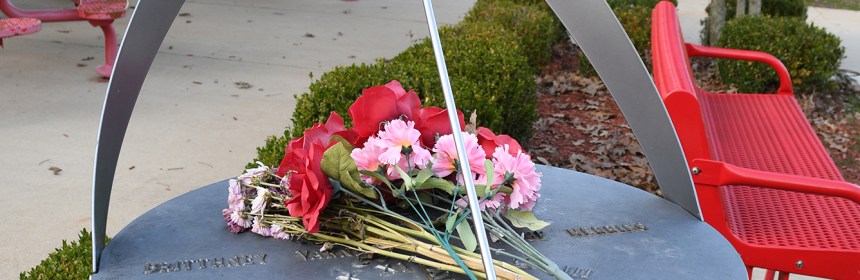
Sculpted sundial by Curtis Steele at Westside Middle School Memorial Garden

by Tucker Crain
Delta Digital News Service

JONESBORO – Arkansas lawmakers weighed in on the 20th anniversary of the Westside Middle School shooting, occurring March 24.

Gun violence and school safety continue to be prominent issues across the nation, particularly in light of the recent school shooting at Marjory Stoneman Douglas High School in Parkland, Florida.

Similar tragedy struck Arkansas in 1998 with the shooting at Westside Middle School in Jonesboro.

U.S. Rep. Rick Crawford represents Arkansas’ 1st Congressional District, which contains Jonesboro. In an interview with KASU News Director Johnathan Reaves, Crawford said a school-safety commission was established almost immediately after the tragedy in Parkland, and the commission resembled the style of the commission formed after 9/11.

Crawford said he took the time recently to meet with people involved with the tragedy at Westside to find solutions that do not require congressional action.

“What we do know is we’re not going to wait around for that legislation to appear,” Crawford said.

Crawford’s office did not respond to requests for comment regarding further legislative solutions the congressman may be working on in terms of gun violence and school safety.

Meanwhile, the 3rd Congressional District’s U.S. Rep. Steve Womack’s press secretary Heather Neilson said Womack is not looking to add new laws regarding gun safety.

“Rather than searching for new, more stringent ways to go against Second Amendment rights, (Womack) wants us to enforce our current laws more forcefully,” Neilson said.

Neilson said tragedy causes debate over the Second Amendment, but Womack does not believe new restrictions hold the answer.

U.S. Sen. John Boozman also participated in an interview with Reaves. Boozman said the Health Insurance Portability and Accountability Act of 1996 created issues for law enforcement.

Boozman said HIPPA laws prevent mental health professionals from reporting people who hint of a desire to commit a violent act to law enforcement.

“I think that’s something that we need to look at, and those are the kind of things that Congress will be looking at,” Boozman said. “Those are the kinds of things that the states can be looking at.”

Boozman’s office did not respond to requests for comment regarding any legislative actions the congressman may be taking regarding gun violence and school safety.

The office of Arkansas’ other U.S. Senator, Tom Cotton, said although Cotton has made no comments regarding gun violence and school safety, any future statements and announcements will be posted to his website and sent to email subscribers.

The office of U.S. Rep. French Hill, who represents the 2nd Congressional District, did not respond to requests for comments. Similarly, the office of the 4th Congressional District’s U.S. Rep. Bruce Westerman declined to comment when asked for comments regarding gun violence and school safety.


Featured photo by Miranda Reynolds

Remembering the Westside Middle School Tragedy

Sculpted sundial by Curtis Steele at Westside Middle School Memorial Garden

by Miranda Reynolds
Delta Digital News Service

JONESBORO – School shootings continue to bombard America; for some schools, it serves as a reminder of the past.

Westside Middle School experienced a school shooting March 24, 1998. This month marks the 20-year anniversary of the tragedy that killed five people.

  • Natalie Brooks, 11
  • Paige Herring, 12
  • Stephanie Johnson, 12
  • Brittheny Varner, 11
  • Shannon Williams Wright

The anniversary of the shooting remained in the Westside Consolidated School Board members’ thoughts in the February meeting. Vice President Darren Harpole addressed the board and audience with information regarding the Florida school shooting.

“We are working on this as a district. Our security team, we looked over our procedures. We talked about ways we can tighten stuff up so that we don’t leave anything out there,” Harpole said.

In further discussion of the topic, Harpole said the school strives to keep students safe.

Brandy Myatt, a student of Westside Middle School at the time of the shooting, remembers the day vividly.

She said talking her experiences through with friends and family proved to be difficult.

“With them not being there that day, they honestly don’t understand fully what we were going through,” Myatt said.

Myatt did not begin coping with the experience until the following summer.

Myatt does not support guns in school as a protection of students.

She said many ways exist to help those trying to coping.

“Take their time. Don’t rush the healing process, honestly. That’s where the ‘take their time’ comes in. Talk it out, if they can. If they can’t talk to their parents, then talk to their peers. If they can’t talk to their peers, then seek help. Get help any way that they can,” Myatt said.

Listen to more of Myatt’s interview with Miranda A Reynolds

Richard Carvell, retired department chair of Arkansas State University’s Radio and TV Department, worked from 1971 to 2008 in various positions. Carvell and his students stayed very hands on during the Westside Middle School shooting media coverage.

One of the more vivid memories Carvell explained dealt with the aftermath of the shooting.

As school shootings continue to occur, Carvell said he reacts in three ways.

“Of course I’m saddened at the loss of life and then I get angry. I think to myself and sometimes I say out loud, ‘Why aren’t we doing something to help the people who are going off the deep end and take out their frustration?’ We just don’t know enough to help those with mental problems,” Carvell said.

Listen to more of Carvell’s interview with Miranda Reynolds.

The Westside Middle School keeps those lives lost in a Memorial Garden located on campus.

New Weapons’ Policy Evokes Anger, Fear

by Kimberely Blackburn
Delta Digital News Service

MONTICELLO, Ark. – Arkansas’ new weapons’ policy brings up memories of the past for one faculty member.[1]

An assistant professor at the University of Arkansas at Monticello said gaining a tenure-track job excited her. However, after she moved, she learned of the new weapons’ policy.

“I want to teach certain books, I want to teach certain things and I’m having to censor myself,” she said. “I’m having to pull back on what I would do in the classroom normally because I’m scared.”

The new weapons’ policy triggers memories of a previous shooting at Virginia Tech. While doing post-graduate work at a nearby university, she learned a former classmate, Seung-Hui Cho, killed 32 people and wounded another 17 in two separate attacks before turning the gun on himself.

Blaming the tragedy partially on herself, she said the attack changed the way she conducts her classes. Remembering behavior she said she will not allow in her classes, she said classmates and professors teased Cho mercilessly. She said the teasing came from his struggle with the English language.

Dr. Richard Wang

Dr. Richard Wang, associate professor of political science (photo by Christopher Lee)

Richard Wang, Arkansas State University associate professor of political science, said the new law changes the climate of his campus. His immediate concerns include the safety of the staff, his students and the faculty, many of whom he counts as friends.

“The law, now in effect, denies me the right to control my work environment,” he said. “I’m not allowed to prevent, to get in the way, to ban concealed weapons carry from my classrooms or my office or anywhere else.”

The assistant professor agreed and said learning by its very nature makes people uncomfortable. Some people display violence when uncomfortable. She said she believes no one truly addressed the reason behind campus gun violence.

Although legislation passed by Arkansas lawmakers took effect Sept. 1, 2017, instructors just received the necessary training to teach the needed classes. The law still prohibits the carrying of weapons in campus childcare centers, athletic events and disciplinary meetings.

Brad Phelps, A-State’s general counsel, said each campus will need to designate a specific area for disciplinary meetings. The area must be cordoned off and there must be 9-hour notice given. He said the new signage, once fully installed, will answer all questions on where guns can and cannot be carried.

The legal offices in Arkansas university system offices worked together to interpret the new legislation. Phelps said they did so in order to ensure all campuses applied the law consistently. Interested parties can read the frequently asked questions on how the new legislation impacts ASU campuses.

Mark Rushing, University of Arkansas’s assistant vice chancellor for university relations, said they held four public forums asking for feedback from the campus community. He said the U of A System considers the law fully implemented on its campuses. Read more on U of A’s frequently asked questions here.

Both Wang and the assistant professor said they considered forms of protest. She said she thought about wearing a bulletproof vest to class. Wang said he considered wearing a helmet or flak jacket. He said he might use humor in his protest because of the absurdity of this law.

The assistant professor said universities spend a lot of time creating emotional support for students. They also need to spend time giving educators the right frame of mind, so they can teach. She said this situation impacts her essence of ethics.

“Do you jeopardize your own standards, do you jeopardize your own morals to keep employment?” she asked. “Do you lower your standards for your students to stay alive?”


1. The UAM faculty member requested anonymity due to concerns about the interview’s effects on potential tenure status.


Featured photo made by adapting wiz72’s “Gun Support” [CC BY-SA 2.0]

Active Shooter Procedures Changed After Westside

Westside Middle School Memorial Garden


Westside from Katie Woodall

by Katie Woodall
Delta Digital News Service

JONESBORO – Twenty years have passed since the shooting that changed the lives of so many in Northeast Arkansas.

On March 24, 1988, two middle school students shot and killed four classmates and one teacher. It still haunts the people of Jonesboro. Westside Superintendent Scott Gaunt said the threat of violence serves as a worry for superintendents everywhere.

“Any superintendent will tell you that’s a nightmare that all of us have. Bad people have bad intentions; they’re going to do bad things,” Gaunt said. You know, we can only hope that we can put protocols in place that can stop it.”

One thing that can be taken from tragedies like Westside’s involves how law enforcement handles active-shooter situations. Sgt. Lyle Waterworth, Jonesboro Police Department’s community outreach and recruiting coordinator, said 20 years ago police officials waited for special forces, a policy that changed after the Columbine school shooting. The Columbine shooting happened a year after the Westside shooting, and also involved two minors shooting and killing their classmates and one teacher.

In the last 20 years, officials placed active-threat procedures in place in schools all over the nation. Many schools put in place precautions like student resource officers and civilian response courses.

“It’s important for people to know that they can defend themselves,” Waterworth said.

Whether it’s a course like the one taught to incoming freshman at Arkansas State University or the training Jonesboro Police go through with local schools, current training procedures include the same basic concepts.

“Different programs use different names, but they all kind of break down to this: run, hide or fight,” said Bill Smith, A-State’s associate vice chancellor for marketing and communications.

Something Smith said improved over last 20 years include the willingness to create training programs and talk openly about what people need to do in active-shooter situations.

“I think one of the things that over time we’ve seen as a change in the response to active threats is more of a response toward the aggression,” Smith said.

The anniversary of the Westside shooting arrives with painful memories for Jonesboro residents, but it also brings with it valuable lessons and advances in procedures to prevent active threats in the future.


Featured photo by Christopher Lee

Confronting Arkansas’ Opioid Crisis

Opioid Crisis

The Multimedia Reporting course (Spring 2017) investigated the Opioid Crisis in the Delta:

  • Destini Lattimore examines how regional rehabilitation centers help those with dependency.
  • Meagen Matuszyk details the Jonesboro Police Department’s response to the issue.
  • Madison Gomez examines three high schools’ efforts to confront the issue.
  • Seth Cleveland examines how pharmacists are approaching the issue.
  • Jama Domerese discusses the politics behind the issue.

Banner made by adapting frankieleon’s “pop life” [CC BY-SA 2.0]

High Schools Tackle Opioid Problem

by Madison Gomez
Delta Digital News Service

Opioid Crisis

Click the picture to view special topic index.

JONESBORO — Opioid use and addiction have become a crisis in the United States, but area high schools are working to help raise awareness and promote prevention.

High school students often encounter opioids, mainly through prescription medicine found in relatives’ cabinets.

“Probably one of the things that we struggle with most here at the high school would be pills, such as something you are going to find in your grandmother’s cabinet or your parents’ cabinet,” said Michelle Crain, assistant principal at Valley View High School.

A study of prescription opioid use among high school seniors found nearly one out of four high school seniors had exposure to prescription opioids.

Valley View High School works with an organization, Out of the Dark, which helps raise awareness of drug and alcohol abuse and awareness for teenagers. The community volunteer movement is located on East Mathews Avenue. This organization, and others like it, can be helpful in awareness and prevention. These clubs can help students band together while promoting safe habits.

“We have one of the most marvelous programs here,” Crain said. “We probably run right now around 85 – 95 in this club. I strongly feel that that sort of thing, sort of club, where like-minded individuals could come together is probably the best thing for teenagers.”

Valley View isn’t the only high school addressing the opioid problem and raising awareness. Jonesboro High School also is raising awareness and prevention amongst its students.

“I know that the school is very proactive now at trying to prevent drugs from coming into the school,” JHS school resource officer Brian Sawyer said, “and they deal with it if the drugs do come into school.”

If a student is found in possession of illegal substances — such as opioids — they are not only brought to the school’s resource officer, but also dealt a punishment through the school.

“If you are caught with any prescription that could be considered a drug of abuse … then we investigate that,” Westside High School principal Michael Graham said. “And if you have possession of it or distribute it or are under the influence of that while at school, then the policy says that the principal shall make a recommendation to the superintendent that the student be suspended for 10 days and recommend to be expelled from school.”

High schools use locker searches or backpack searches to help locate and deter drugs and other illegal substances from being in the high school. Jonesboro High School has an “open-door” policy with the K-9 unit that allows the police dogs to sweep parking lots and classrooms.

High schools are also attempting to tackle the problem outside of school by providing after-school programs and activities for students.

Parents and guardians are also encouraged to take action in prevention by locking up and keeping track of prescription medications for themselves and the teenager. Sawyer said parents must take steps to ensure their children do not abuse or sell household medications.

Politics Aside, Opioid Crisis Must be Stopped

by Jama Domerese
Delta Digital News Service

Opioid Crisis

Click the picture to view special topic index.

JONESBORO – With political opinions more heated than ever, both parties agree the opioid crisis is an epidemic that needs to be stopped.

The death rate due to prescription drug abuse in the United States has escalated 313 percent over the past decade. Opioid prescription drugs alone were involved in 16,650 overdose-caused deaths in 2015, accounting for more deaths than from overdoses of methamphetamine and cocaine. The U.S. Centers for Disease Control and Prevention determined prescribed drugs or painkillers sometimes can lead a patient to a life-long addiction.

Opioids help those who suffer from chronic pain and need help dealing with it. Not only are they easy to obtain from doctors, but they are relatively cheap for those with or without insurance. The long-term effects of using the prescriptions can lead to a dependence that leads to other health issues including brain and liver damage, a built-up tolerance, and a change in character that can influence a person’s life.

It can have long-term effects on personal relationships with friends and families causing divorce and child custody battles. It can affect someone’s career by not being able to pass a drug test and not being able to keep a steady job. The use of prescription medications is also used as a gateway drug that can lead to much harder and more expensive illegal drugs. The abuse of substances can also lead to criminal acts. Whether it’s driving under the influence or stealing to obtain more money to buy the drugs, opioid use can cause people to make poor decisions that can ultimately ruin their life.

When it comes to the political side of this situation, the two primary U.S. parties are often torn. Republicans often suggest opioid abusers should be punished ultimately for the misuse of prescription medications to try and get ahead of the problem of them upgrading to harder drugs. Conservatives are known to vote to enforce punishment because they see opioid abuse as a choice.

“When it comes to being a Republican, it is often seen as us trying to jail drug users instead of sending them to rehab like most Democrats want to do,” said A-State College of Republicans member Wesley Armstrong.

Many Democrats see drugs abuse as a mental illness. They claim punishment is not the answer to this problem; it needs to start with rehabilitation and medical attention. Liberals suggest reducing the number of unnecessary prescription drugs would help the nation economically.

The Food and Drug Administration’s Center for Drug Evaluation and Research and programs such as the Prescription Drug Abuse Prevention Plan are helping to develop a way to control unnecessarily prescribed drug consumption. The first phase of the Prescription Drug Abuse Prevention Plan is to educate medical school students, prescribers, dispensers and the public about safe opioid prescribing.

A-State pre-med student Stephen Bell offered his thoughts on learning about the process.

“When you decide to take a step into the medical field, it comes with a lot of responsibility. Knowing the signs of abuse is a major key to determining how to continue prescribing and how to get someone the help they need. We as doctors have to understand that this is an ongoing issue that is unfortunately directly caused by us. It’s our job to help fix it,” Bell said.

Some states have passed mandatory prescribed education legislation. In addition, some administrations have continued to improve the system of safe disposal of expired opioids with the help of law enforcement agencies, successfully disposing of over 2.8 million pounds of unused medication since 2013.

Prescription drug abuse strikes every sense of an individual’s life, including their intellectual health, conduct and even physical appearance. The consumption of drugs can be caused by events that produce an excess of anxiety, sadness or hyperactivity. The use of drugs in a household can lead to destructive and violent behaviors; the effect drugs have on a family can be present many generations later, causing a chain of bad events to unleash in the community throughout a time span.

Pilkington_Aaron

State Rep. Aaron Pilkington

District 69 Rep. Aaron Pilkington suggested government officials should compromise for the good of the country.

“If our political parties can learn to compromise and see that both have some great ideas to help, our nation will be able to help combat opioid abuse by being more aware of the drastic consequences of abusing something that was once a privilege given to the citizens of the United States of America to help with health problems,” he said.

Federal and state agencies have already started looking for solutions to end the misuse and abuse of prescription drugs by educating the general public, medical students, monitoring physicians and any opioid legal prescriber about this issue. This ensures they are not medicating excessively.

The methods and programs being implemented are small steps to get rid of the opioid epidemic that is taking over so many lives.

Law Enforcement Addresses Opioid Crisis


by Meagen Matuszyk
Delta Digital News Service

Opioid Crisis

Click the picture to view special topic index.

JONESBORO — A national crisis makes its way to Jonesboro as an influx in opioid addiction moves through the Delta region.

Most commonly found in painkillers, opioids act as pain relievers, and are most commonly found in heroin and prescription drugs such as hydrocodone and oxycodone. Jonesboro Police Department’s Sgt. Cassie Brandon said the rate of controlled substance charges for the area is steadily increasing.

“It is against the law to possess a controlled prescription medication if you don’t have a prescription for it,” Brandon said.

In 2015 more than a million Americans were arrested for possession of a controlled substance.

“We have officers within the department that are specifically trained to do some evaluations or assessments with people to determine what it is that they are under the influence of,” Brandon said.

According to the Centers for Disease Control and Prevention, drug overdoses killed more than 50,000 Americans during 2015. Dr. Mark Sifford of the St. Bernard’s Medical Center said introducing unfamiliar drugs to your body can slow down your breathing, lower your blood pressure and alter your level of consciousness.

“They will neglect their own health just to pursue what they have to do to get the medicine they’re addicted to now,” Sifford said.

Sifford said it’s no surprise that the use of heroin is growing in popularity since it is a cheaper alternative to morphine and pain relievers.

“That’ll develop a physical dependence on it where they’re hooked and essentially have to take the medicine or they’ll have problems coming off of it,” Sifford said.

Some prescription pain relievers such as hydrocodone can develop dependencies in as early as three weeks.

“It may be to the point where they’re no longer needing pain relief, they’re just getting the euphoria from it and your brain can’t separate that out,” Sifford said.

The use of narcotics and opioids in the presence of children can be especially dangerous, often requiring involvement from the Department of Human Services. Brandon said if abuse of a prescribed or an unprescribed drug is detected, DHS should be contacted immediately.

“You just don’t need to expose children to that,” Brandon said.

The Jonesboro Police Department is actively working to help diminish the abuse of opioids in the area and asks others to do their part in assisting the fight to end the national epidemic.

Pharmacists Provide, Monitor Opiates

by Seth Cleveland
Delta Digital News Service

Opioid Crisis

Click the picture to view special topic index.

JONESBORO — For the local medical community, the opioid crisis continues to be an uphill battle.

Recently highlighted by President Trump’s combative statements against the epidemic, awareness continues to grow.

A Growing Epidemic

According to the Department of Health and Human Services, Arkansas has one of the worst dependency rates and treatment capacities in the nation. With this crisis comes a new motivation for the medical community to combat the issue.

Natalie Hinton, a fourth-year pharmacy student at A-State, was not optimistic about medical advancements or research being done to decrease the severity of the issue. She said the way the body works, opioids are really the only current advancement that can sufficiently block pain receptors. Searcy pharmacist Nancy Showalter said she agreed.

There are other treatments, however. “NSAIDs, something like ibuprofen — there are other drugs in that class that works a little better than ibuprofen and they provide a longer time frame for their pain relief — I think drugs like that could be used, but in some situations, patients can’t use those drugs,” she said.

Who’s to Blame?

Sen. John Boozman highlighted steps the state is taking to provide some relief to the opioid epidemic: DEA policy reform, proposed legislation, increased area spending and pharmaceutical sanctions. Yet some local pharmacists seem to think that cracking down on the amount of pills they’re allowed to give out is antithetical to the treatment of the issue at hand.

“I think that pharmacies are already trying to fight it. I think that physicians really need to be held accountable. I think they write way too many opioid prescriptions,” Hinton said. “If the doctors were not writing so many prescriptions, it would not be nearly as big of an issue.”

Hinton said she does not place all the blame on physicians, but she was not alone in her discomfort.

“I hate that (opiates) would not be there for those that really need them,” Showalter said. “But I also understand that this is a crisis and something has got to be done.”

Several procedures in place allow Arkansas’ pharmacies to monitor the activities of prescription purchasers.

“You can look up a person by their name and it shows where they’ve gotten controlled substances, the date they got them,” Showalter said.

Arkansas is one of six states that have “refusal clauses.” These effectively allow a pharmacy to completely refuse service to a suspicious customer without fear of being sued.

“We would just simply refuse their prescription,” Showalter said.

As pharmacies already closely monitor the amount of drugs they administer, perhaps the solution lies in the hands of the doctors prescribing them. Thomas Day, an orthopedic surgeon, said he actually agreed with Hinton and Showalter.

“I blame physicians for the free prescribing of addictive medications,” he said.

Day said he could see the progression of over-prescribing from the mid-’90s to the early 2000s.

“More and more practitioners for whatever reason became more comfortable prescribing pain medication just because (patients) said they hurt,” Day said. “We created a whole generation of Americans that if they have any kind of pain, they think they need a pill for it.”

As a result of this, Day said there has been an uptick in “pain contracts.”

“I see anywhere between 70 to 80 patients a week and in that time, I see as few as five or as many as 10 patients that are on a pain contract,” he said.

Pain clinics are clinics that specialize in treating pain. They deal in a lot of opiates. When on contract at a pain clinic, a patient is supposed to be highly monitored through random urine tests. But in a lot of cases, Day sees something different.

“What happens is these pain clinics become a place where people go once a month, pay their money, and get their prescription and keep going back,” he said.

Future Hope

While there do seem to be many sides to this complex crisis, things can seem a bit forlorn. Hinton, Showalter and Day all expressed feelings of what appeared to be a hopeless desperation, i.e. desperate to discover a solution and hopeless to the discovery of the solution.

But with more understanding and more awareness, there comes progress. Software is being designed, legislation is being enacted and awareness is being raised, all in the name of this cause.

Rehabilitation Centers Combat Opioid Crisis

by Destini Lattimore
Delta Digital News Service

Opioid Crisis

Click the picture to view special topic index.


JONESBORO — Three Jonesboro rehabilitation centers are working diligently to combat the opioid crisis in Northeast Arkansas.

Stockton Medical Group, Northeast Arkansas Treatment Services and Northeast Arkansas Regional Recovery Center are fighting the crisis by offering necessary health care to Northeast Arkansas residents.

The opioid crisis refers to the rapid increase in the use of prescription and non-prescription opioids in the United States. Drug overdose deaths are the leading cause of injury death in the United States. Since 1999, the rate of opioid-involved overdose deaths quadrupled. In Arkansas, the number of drug overdose deaths per 100,000 in 2013 was 11,900-14,400. More people died from drug overdose in 2014 than any year on record and the majority of those deaths involved an opioid. On average, 78 people nationwide die every day from an opioid-related overdose. Heroin deaths surpassed homicides in 2015 and over 30,000 people died from opioid-related overdoses.

Behavioral Therapy

Stockton Medical Group of Jonesboro opened its doors in August 2016. The family-owned rehabilitation center also has other locations across the state.

Office manager and Substance Abuse counselor Nicholas Mastowski said he thinks Arkansas is a high-risk state and hopes his work in the field will help the lives of Jonesboro and Northeast Arkansas residents.

“Opioid addiction touches every aspect of life. There are no socio-economical boundaries,” Mastowski said.

Stockton Medical Group, an outpatient opioid rehabilitation center, administers a buprenorphine prescription and behavioral therapy to its patients. Patients receive counseling and group therapy sessions led by Stockton’s licensed and certified counselors. The federal Drug Enforcement Administration requires patients to comply with group therapy and counseling requirements to receive medication-assisted treatment.

As one of the certified counselors on staff, Mastowski works one-on-one with the patients.

“We are very patient-oriented,” he said. “We try to treat them as normally as possible.”

While medication-assisted treatment is beneficial to patients, it is often negatively viewed by outsiders.

“We are trying to break the stigma associated with medication-assisted treatment, which is very prevalent in Northeast Arkansas,” he said. “The response is not as welcoming or open-minded.”

Battling this stigma has been one of the most difficult parts of the business, Mastowski said. He said he thinks this stigma is rooted in the closed-minded, faith-based community in Jonesboro.

While he is now helping NEA residents with their addiction, Mastowski was once on the other side. At 13 years old, he began using drugs and alcohol recreationally and just three years later, he was taking hydrocodone or oxycodone every day. By the time he was 18, he’d developed a serious dependency to opioids. Once he was kicked out of the University of Central Arkansas, his drug abuse habits increased.

“I went from four or five pain pills every day to 400 milligrams of pain medication to eventually trying heroin,” Mastowski said.

When he was 19, Mastowski decided to work on his sobriety. It took him five years to get sober after 10 years of drug abuse.

“I did not utilize this style of treatment,” he said. “When I was trying to get sober, it wasn’t as well-known.”

Mastowski went through an abstinence-based addiction rehab process that requires immediate discontinuance of any drug abuse.

“Opiates took a hold of me,” he said. “If I didn’t have the drugs, then I’d get sick. Withdrawal is sort of like the flu, but a hundred times worse. The only way to make it better is to suffer for an extended amount of time.”

Once he was in recovery, he re-enrolled in school. Now a certified social worker, Mastowski makes it his mission to give back. He has given presentations at various events and schools talking about the dangers of drug addiction.

“Now that I’m in recovery, I have to do whatever it takes to be successful,” Mastowski said. “I take nothing for granted.”

Home-reduction Centers

Northeast Arkansas Treatment Services encountered a similar struggle with battling the stigma that comes with medicated-assisted rehabilitation, but hopes to aid its patients as much as possible despite public opinion.

NEA Treatment Services, a home-reduction rehabilitation center, aims to eliminate the riskiest behaviors and slowly reduce the patient’s exposure to medication.

“Most people think of substance-abuse treatment as a residential treatment where you follow an abstinence-based model,” Director of Clinic Operations Benny J. Leija said. “Quit everything immediately and you don’t do it again.”

Home-reduction centers take a different approach to drug addiction rehabilitation. This type of rehabilitation focuses on the patient’s safety and ensuring that, if they are going to continue the drug-related behavior, they do so in the safest way possible.

When patients come to NEA Treatment for drug rehabilitation, the first step is the induction phase. During this time, patients are medically stabilized. Then, they are required to see a counselor and attend group-therapy sessions. Because the process varies from patient to patient, there is no way to determine an average length of time for this type of rehabilitation.

Leija said he thinks medication-assisted rehabilitation provides the most effective way to eradicate drug addiction. The long-lasting effects of methadone allow the patients to eliminate withdrawal symptoms and the need to find more pills throughout the day. The medication is also administered under supervised conditions to confirm that the patient is using the medication responsibly.

“Everything is moving in that direction,” Leija said, referring to home-reduction rehabilitation.

This rehabilitation process is already a popular method overseas. In Europe, some clinics provide patients with a safe place to “shoot-up” with clean needles.

“The empirical research I have looked at shows that abstinence-based therapy is effective about 7 percent of the time,” Leija said.

This means 7 percent of the patients experience a year of sobriety after residential treatment. This number is significantly lower in comparison to home-reduction treatment patients, like those who are treated at NEA Treatment Services.

“If they do everything that is asked of them, our patients are 50 to 60 percent more likely to reach sobriety,” Leija said.

It’s also important to the staff that patients don’t feel pressured to immediately quit their drug use. The doctors and counselors work with patients at their own pace to encourage improvement.

“We meet patients where they are,” Leija said. “They may not be ready to quit.”

NEA Treatment Services also recognizes the need to work with patients as long as it takes for them to reach sobriety.

“I think that’s truly unique to this program that we don’t kick our patients out,” Leija said. “I’ve worked in abstinence-based programs where, if you mess up, they kick you out.”

With over 1,600 U.S. methadone clinics, the rehabilitation centers offer several benefits outside of drug-addiction. The presence of methadone clinics in cities reduces crime, specifically property crimes. IV needle use is also decreased in the community. HIV and venereal disease rates are reduced, as well.

“Opioid treatment programs are very beneficial to the community as a whole,” Leija said. “We’ve done some outreach to the community and we’ve talked to different people about the benefits of what we do.”

Northeast Arkansas Treatment Services serves about 225 patients. Leija said the goal for the rehabilitation clinic is to help all patients reach sobriety.

“We’ll take one million little steps as long as we reach our goal,” Leija said. “Our goal is abstinence.”

Residential Facilities

Northeast Arkansas Regional Recovery Center is a residential facility that also administers outpatient services to its patients.

The recovery center is funded by Mid-South Health Systems, which predetermines the duration of the rehabilitation process for each patient.

“Everyone is different,” said Lisa Holland, NEARRC substance abuse counselor. “Somebody may get 21 days, somebody may get 28 days and some may have 40 days.”

NEARRC has been operating more than 30 years, Holland said. Patients go to the treatment facility to undergo in-patient rehabilitation. Patients with opioid addictions may be required to undergo a period of detox before coming in for residential rehabilitation. The facility houses up to 40 patients.

“They go to classes throughout the day,” Holland said. “They work on identifying risky behaviors, triggers and cravings.”

Patients are assigned a counselor through a comprehensive treatment plan. Once their residential treatment is completed at NEARRC, most of the patients continue outpatient treatment through Mid-South Health Services.

Holland started working in the facility after she had completed her own drug rehabilitation journey at NEARRC. She is currently in recovery.

“I had gotten on methamphetamine,” Holland said. “It took over my life. I lost my home and myself, as well.”

Holland went through treatment at NEARRC and has been clean since May 2011.

“I just wanted to give back to the community,” Holland said. “My counselor helped me so much when I came through.”

As these issues steadily increase, Arkansas rehabilitation centers must brace themselves for an uphill battle and hope to save more lives.

Recent Entries »