Author Archives: destinilattimore

Living as ‘Trans’ in Northeast Arkansas

by Destini Lattimore
Delta Digital News Service

As the transgender population in the United States continues to increase in number, individuals on the state and local level are calling for their communities to as well.

The transgender population nationwide has increasingly become an important sector of the population. In fact, a 2016 study found 0.6 percent of adults in the United States identify as transgender. A separate study conducted in 2018 by the University of Minnesota concluded that about 3 percent of teens identified as transgender.

Luke Smith and Mason Graves* are no different. The two teenagers both said they feel as though they have always been different from other kids, and growing up in their respective hometowns was no easy feat.

“It’s a very small town, everyone there has the Confederate flag hanging from their house,” Smith said of his hometown, Booneville. “There was like a 1-to-1,000 ratio of ‘I’m very different from everyone here.'”

Graves said he had a similar experience growing up in Missouri.

“I’m actually from Southeast Missouri,” Graves said. “I went to school in Donovan and it’s one of those towns where everybody knows each other. If you’re different, it’s a 50/50 chance, either everyone loves you and thinks you’re interesting or you’re bullied.'”

While both of the teens had similar experiences as they grew older, their child lives were very different. Smith described himself as a quiet, reserved child who preferred “playing adventures” and “rough-housing” than playing with dolls and dresses.

Graves, however, considered himself to be a loud and outgoing child. Although he was born female, he always saw himself as his “dad’s kid,” but he still enjoyed both traditional girl and boy activities.

Smith and Graves both found solitude in “coming out” to their friends before telling their family members.

“I actually told my friends first. I just remember it kind of hit me, we were in the middle of choir pictures, and I went up to my friends and was like ‘I’m a dude.'” Graves said. “I transitioned to telling my friends, at first. The first time I told my mom, I just told her I feel like a boy and she said ‘No.'”

Graves said his mom eventually started to come around and she is slowly trying to become more understanding. However, Graves’ father is still unaware and the teen is afraid to tell his father out of fear of his reaction.

“I also told my friends first,” Smith said. “I kind of had hints of it in the back of my head for a couple years but I didn’t realize it until about a year ago. Over Christmas break last year, I told my dad.”

Smith said he felt like his father knew he had to tell him something important and that his father thought Smith was going to tell him he was pregnant.

“He was very nervous. He thought that I was pregnant, he thought that I had done something,” Smith said. “So whenever I said it, he was kind of relieved but he also didn’t really understand.”

Smith and Graves both use he/him as their preferred pronouns and said this has caused issues with them, specifically in the classroom. Both teenagers have experienced being misgendered and both said they were afraid to speak up to correct the mistake.

Graves specifically endures this because, although he identifies as male, he often dresses in clothes that are deemed to be for women.

“I’ve had a pretty good experience here with telling people I’m trans,” Graves said. “But there are still people who don’t get it and they use she pronouns and I have to correct them.”

Overall, the two said they feel as though they’ve had an overall good experience in Northeast Arkansas and the community they have found with each other and their respective friends helps them maneuver through daily life.

However, there are still a number of strides individuals need to take within the region, throughout the state and nationwide. Primarily, the pair wants people around them to make an effort to ask people for their preferred pronouns and make a conscious effort to use them.

Graves said. “When you assume a trans person’s pronouns and misgender them, it’s really hard for them and can put them in a really bad mental state.”

Smith said he encourages people to ask questions if they don’t understand and have a genuine interest in learning about the trans experience.

“Asking questions is always a good idea if you have a transgender friend and you don’t understand something very well and you want to,” Smith said. “Generally, I’m always ready to answer a question to help people understand because I want people to understand.”

***

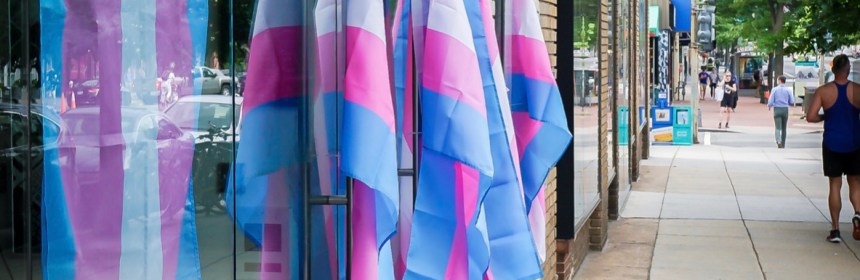
Editor’s Notes: *The names of individuals in this story have been changed to protect privacy. Featured photo by Ted Eytan [CC BY-SA 2.0]

El Dorado Seeks Destination Status via Music

by Destini Lattimore
Delta Digital News Service

EL DORADO, Ark. — A piece of East Atlanta visited South Arkansas this fall when rapper Gucci Mane brought life to a quintessential small town.

While the El Dorado Music Festival usually attracts country lovers and listeners, patrons gathered at the festival for a different reason this year. Two of Atlanta’s biggest rappers — 2 Chainz and Gucci Mane — headlined the show.

The artists brought a mixed crowd of concert-goers: the young, the older and a myriad of races jammed to the tunes of Gucci Mane during Saturday’s late night show.

Prior to Gucci’s performance, the crowd patiently waited to the sound of the rapper’s disc jockey, DJ Champ.

When the performer finally came to the stage, he provided the epitome of glitz and glamour. Donned in a Prada suit, Gucci shoes and a plethora of diamond jewelry, he definitely stuck out among the others in the music hall.

Perfectly contrasting with the lively, anticipatory behavior of the crowd, the rapper’s calm demeanor is his go-to way to perform.

MAD ABOUT EL DORADO

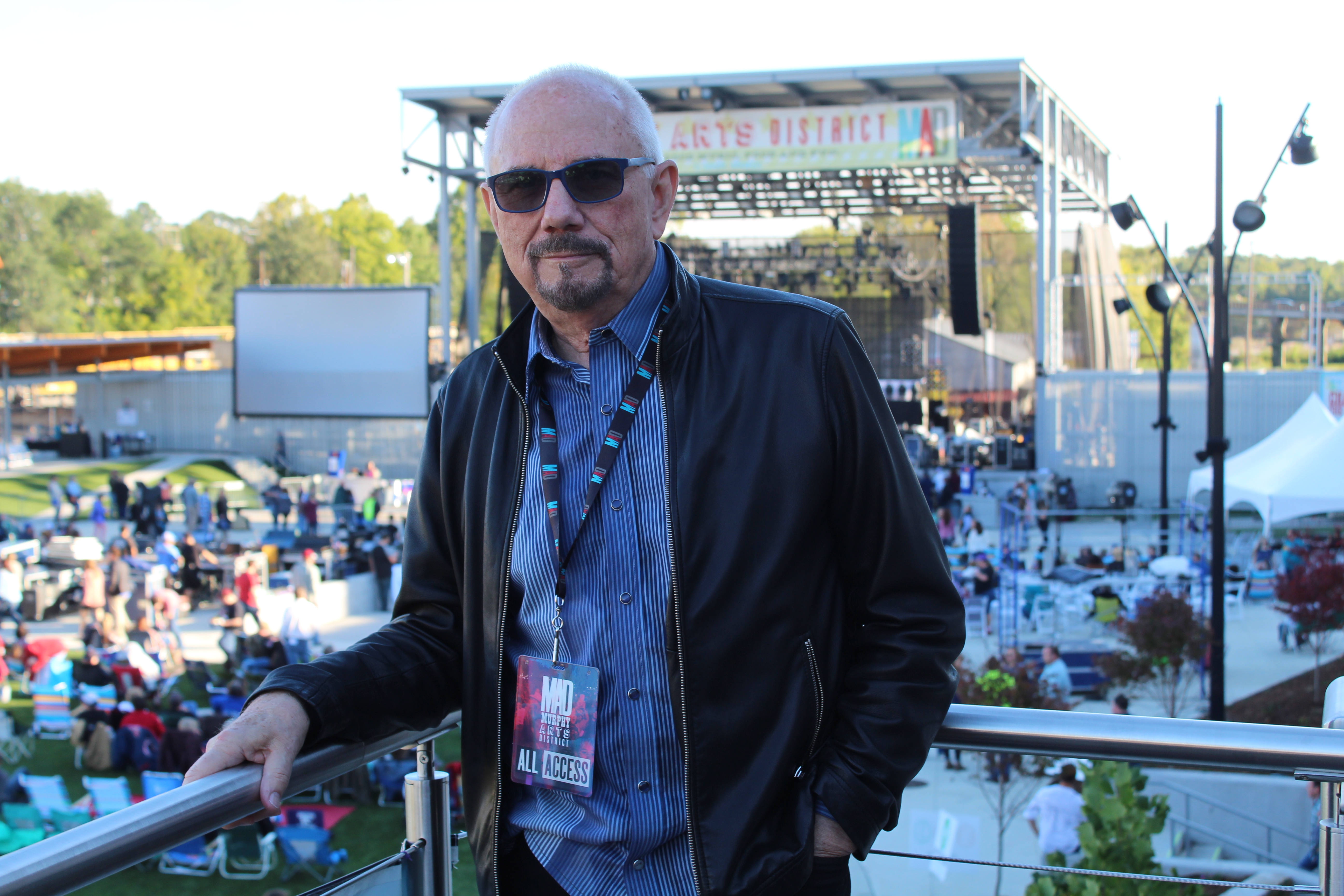
Terry Stewart

Terry Stewart, CEO of the El Dorado Music Festival in the Murphy Arts District, formerly worked as president at The Rock and Roll Hall of Fame. Now he works with the team in El Dorado to turn the city into a destination spot. (Photo by Justin Bryles)

Many were surprised to hear such a huge performer was set to hit the stage in El Dorado. The little town is not what many would consider to be a “destination spot” but leaders in the city are working to change that.

Terry Stewart, CEO of the Murphy Arts District in downtown El Dorado, wants to help the town become a hub for arts and entertainment. Stewart is able to take knowledge from some of his former roles, most notably president of Marvel Comics and the Rock and Roll Hall of Fame.

“I’m sort of the bigger picture guy. I got here when we were still trying to figure out what this was going to be,” Stewart said. “People wanted all kinds of entertainment, they wanted all genres of music, they wanted comedy, they wanted really good food, they wanted good service and — something we hadn’t really thought about — they wanted things for kids to do. That’s why we built a children’s playscape.”

Stewart said after conducting a feasibility study to determine what the residents wanted, bringing an artist like Gucci Mane seemed like the perfect move. Bringing such mainstream acts to the district will help turn the small town into a place that people want to visit.

EXCITED PATRONS

Gucci Mane

Rapper Gucci Mane headlined the El Dorado Music Festival. Concert-goers and citizens of El Dorado said they feel as though the rappers performance bring a different crowd to the area, a crowd that may have otherwise never visited the city. (Photo by Destini Lattimore)

During his performance, Gucci Mane performed some of his top hits and features, including “Black Beatles,” “Lemonade” and his latest release, “Wake Up in the Sky” featuring Bruno Mars.

As much of an oddity as a mainstream rapper in El Dorado might seem, many of the concert-goers and residents of the small town said they felt like the rap performance was just what the city needed.

“I’m excited to see Gucci because he’s a rapper that attracts younger people,” festival volunteer Ta’Nyeah White said. “I’m glad they’re bringing someone to attract the younger generation instead of just the older (generation).”

A major plus to having such names as 2 Chainz and Gucci Mane headline the festival is the type of crowd it attracts to the area.

“It brings people from out of town here,” El Dorado native Jameya Lovette said. “We get to see more people and meet new people.”

The rapper’s performance was aided by the voices of dedicated fans who recited every word to the top hits echoing through the music hall.

While the economic impact is a big plus, the Murphy Arts District is morphing into a area that preserves arts and entertainment and that art stretches across all genres, from Toby Keith to Gucci Mane. The holiday season will feature The Legendary Temptations, Roses and Revolvers, Josh Walker, Eskimo Brothers, and the Dirty Dozen Brass Band for New Year’s Eve.


Local auto shop accused of scams

by Destini Lattimore
Delta Digital News Service

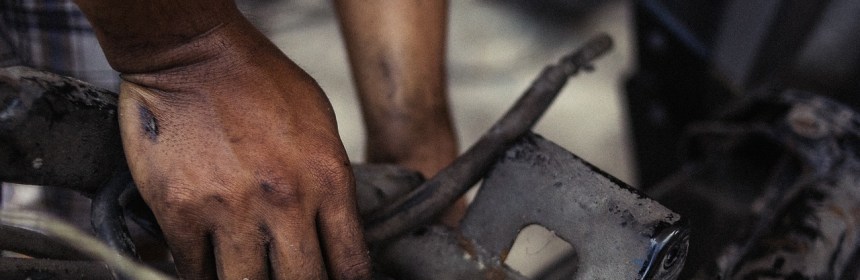
LaShea Robinson stands next to her 1999 Chevrolet Monte Carlo.

JONESBORO— A local auto repair shop faces scrutiny after recent claims alleged the mechanic scams his customers.

Jonesboro resident LaShea Robinson posted on Facebook warning her friends not to go to Mexican Ray’s Garage for service.

“Do not, I repeat, do not take your car to Mexican Ray’s body shop. He is a scam,” the post read. “Found out I need a new water pump and a starter, which he claims he put on my car earlier this year.”

Robinson said her business relationship with Ray Garza, also known as “Mexican Ray,” began when her grandmother recommended her to the mechanic.

“I was a little taken away by her saying ‘Mexican Ray’ because I thought it was insensitive,” Robinson said. “She assured me that was his name and he refused to be called anything else.”

Robinson noticed issues with her 1999 Chevrolet Monte Carlo when she started hearing a loud squeaking noise coming from under her hood. She also noticed her car would shake when she drove.

“After his assessment I was told that the front wheel bearing needed to be repaired and I had decided to go ahead and get a tune up, as well,” Robinson said.

The mechanic quoted Robinson $350 for the services she requested and the job took him three days to complete.

Robinson, who relies on her car for work, dropping her son off at school and making it to his soccer games, noticed around six months to a year later that she was still having issues with her vehicle.

“Within that year I had other things repaired such as thermostat, brakes, alternator and compressor. In November of 2017, I contacted Ray because my car had quit at a local neighborhood market,” she said.

According to Robinson, the mechanic assured her he could have her car towed from the market to his shop, but it would cost her an additional $50. Her car was still at the neighborhood market the next day.

The persisting issues Robinson had with her car were getting in the way of everyday tasks and some were putting her child’s health at risk.

“In the month of June the weather started to warm up. I noticed that my car would run hot when I ran the air conditioner and a greenish liquid was leaking onto the ground from my car,” she said. “My son is asthmatic and the hot, dry air can get him sick, especially riding around the car with no air.”

After dealing with Garza for over a year, Robinson said she began to question if she was being cheated. The mechanic serviced her car nearly every six months for issues he claimed he had already fixed, according to Robinson.

After the mechanic made several attempts to assure her that he was not “that kind of mechanic,” Robinson said she finally made the decision to go to another mechanic.

“I told Ray he will never touch my car again and what he did to me was wrong,” Robinson said. “He knew I was a struggling single mother and at one time attending college full-time, yet he continued to take my money without fixing my car.”

Robinson is still without a car. While her car is now being serviced by another mechanic, it will still cost around $500 to get her car up and running again.

Robinson said she made the decision to go public with her claims against Garza to ensure no one else deals with the mechanic.

“I worry about him doing this to other women and the elderly and that’s why I decided to go public because I don’t want this to happen to them,” she said.

Linda Bouey, another Jonesboro resident, also posted on Facebook claiming she had a similar encounter with Garza.

Bouey said she paid the mechanic $800 up front to work on her car. According the Bouey, after three months no work had been completed.

Garza started working as a mechanic when he was 10 years old.

Garza said the claims against him are disheartening because he tries to give all his customers a fair price.

“I try to give everybody a price before I even fix anything,” Garza said. “If I get the approval, then I go ahead. Other than that, it’s a no.”

Garza also said he feels as though the claims against him “don’t make sense” because he hasn’t had these issues with other customers and he tries to make all his customers content.

While Garza said he is not currently working because of family issues, he still values his profession.

“What I tell everybody is, ‘These cars, they might be under your name, but these are my cars.’ I’m going to fix them to the best of my knowledge and as cheap as I can, you know, so the customer can save some money,” Garza said.

Despite the allegations, Garza said he does his best to lend a helping hand to everyone.

“You do right, it backfires. You do wrong, it backfires,” Garza said. “You can’t please everybody.”

According the Mexican Ray’s Better Business Bureau business profile, the business is not accredited by the BBB. The business profile also reads indicates the business lacks a BBB rating because the organization “has information indicating it is out of business.”

A BBB Arkansas representative also said on at least one occasion an attempt to send mail to the business was made, but it was returned to the post office. In those instances, according to the representative, a business profile cannot be made on a business.


Rehabilitation Centers Combat Opioid Crisis

by Destini Lattimore
Delta Digital News Service

Opioid Crisis

Click the picture to view special topic index.


JONESBORO — Three Jonesboro rehabilitation centers are working diligently to combat the opioid crisis in Northeast Arkansas.

Stockton Medical Group, Northeast Arkansas Treatment Services and Northeast Arkansas Regional Recovery Center are fighting the crisis by offering necessary health care to Northeast Arkansas residents.

The opioid crisis refers to the rapid increase in the use of prescription and non-prescription opioids in the United States. Drug overdose deaths are the leading cause of injury death in the United States. Since 1999, the rate of opioid-involved overdose deaths quadrupled. In Arkansas, the number of drug overdose deaths per 100,000 in 2013 was 11,900-14,400. More people died from drug overdose in 2014 than any year on record and the majority of those deaths involved an opioid. On average, 78 people nationwide die every day from an opioid-related overdose. Heroin deaths surpassed homicides in 2015 and over 30,000 people died from opioid-related overdoses.

Behavioral Therapy

Stockton Medical Group of Jonesboro opened its doors in August 2016. The family-owned rehabilitation center also has other locations across the state.

Office manager and Substance Abuse counselor Nicholas Mastowski said he thinks Arkansas is a high-risk state and hopes his work in the field will help the lives of Jonesboro and Northeast Arkansas residents.

“Opioid addiction touches every aspect of life. There are no socio-economical boundaries,” Mastowski said.

Stockton Medical Group, an outpatient opioid rehabilitation center, administers a buprenorphine prescription and behavioral therapy to its patients. Patients receive counseling and group therapy sessions led by Stockton’s licensed and certified counselors. The federal Drug Enforcement Administration requires patients to comply with group therapy and counseling requirements to receive medication-assisted treatment.

As one of the certified counselors on staff, Mastowski works one-on-one with the patients.

“We are very patient-oriented,” he said. “We try to treat them as normally as possible.”

While medication-assisted treatment is beneficial to patients, it is often negatively viewed by outsiders.

“We are trying to break the stigma associated with medication-assisted treatment, which is very prevalent in Northeast Arkansas,” he said. “The response is not as welcoming or open-minded.”

Battling this stigma has been one of the most difficult parts of the business, Mastowski said. He said he thinks this stigma is rooted in the closed-minded, faith-based community in Jonesboro.

While he is now helping NEA residents with their addiction, Mastowski was once on the other side. At 13 years old, he began using drugs and alcohol recreationally and just three years later, he was taking hydrocodone or oxycodone every day. By the time he was 18, he’d developed a serious dependency to opioids. Once he was kicked out of the University of Central Arkansas, his drug abuse habits increased.

“I went from four or five pain pills every day to 400 milligrams of pain medication to eventually trying heroin,” Mastowski said.

When he was 19, Mastowski decided to work on his sobriety. It took him five years to get sober after 10 years of drug abuse.

“I did not utilize this style of treatment,” he said. “When I was trying to get sober, it wasn’t as well-known.”

Mastowski went through an abstinence-based addiction rehab process that requires immediate discontinuance of any drug abuse.

“Opiates took a hold of me,” he said. “If I didn’t have the drugs, then I’d get sick. Withdrawal is sort of like the flu, but a hundred times worse. The only way to make it better is to suffer for an extended amount of time.”

Once he was in recovery, he re-enrolled in school. Now a certified social worker, Mastowski makes it his mission to give back. He has given presentations at various events and schools talking about the dangers of drug addiction.

“Now that I’m in recovery, I have to do whatever it takes to be successful,” Mastowski said. “I take nothing for granted.”

Home-reduction Centers

Northeast Arkansas Treatment Services encountered a similar struggle with battling the stigma that comes with medicated-assisted rehabilitation, but hopes to aid its patients as much as possible despite public opinion.

NEA Treatment Services, a home-reduction rehabilitation center, aims to eliminate the riskiest behaviors and slowly reduce the patient’s exposure to medication.

“Most people think of substance-abuse treatment as a residential treatment where you follow an abstinence-based model,” Director of Clinic Operations Benny J. Leija said. “Quit everything immediately and you don’t do it again.”

Home-reduction centers take a different approach to drug addiction rehabilitation. This type of rehabilitation focuses on the patient’s safety and ensuring that, if they are going to continue the drug-related behavior, they do so in the safest way possible.

When patients come to NEA Treatment for drug rehabilitation, the first step is the induction phase. During this time, patients are medically stabilized. Then, they are required to see a counselor and attend group-therapy sessions. Because the process varies from patient to patient, there is no way to determine an average length of time for this type of rehabilitation.

Leija said he thinks medication-assisted rehabilitation provides the most effective way to eradicate drug addiction. The long-lasting effects of methadone allow the patients to eliminate withdrawal symptoms and the need to find more pills throughout the day. The medication is also administered under supervised conditions to confirm that the patient is using the medication responsibly.

“Everything is moving in that direction,” Leija said, referring to home-reduction rehabilitation.

This rehabilitation process is already a popular method overseas. In Europe, some clinics provide patients with a safe place to “shoot-up” with clean needles.

“The empirical research I have looked at shows that abstinence-based therapy is effective about 7 percent of the time,” Leija said.

This means 7 percent of the patients experience a year of sobriety after residential treatment. This number is significantly lower in comparison to home-reduction treatment patients, like those who are treated at NEA Treatment Services.

“If they do everything that is asked of them, our patients are 50 to 60 percent more likely to reach sobriety,” Leija said.

It’s also important to the staff that patients don’t feel pressured to immediately quit their drug use. The doctors and counselors work with patients at their own pace to encourage improvement.

“We meet patients where they are,” Leija said. “They may not be ready to quit.”

NEA Treatment Services also recognizes the need to work with patients as long as it takes for them to reach sobriety.

“I think that’s truly unique to this program that we don’t kick our patients out,” Leija said. “I’ve worked in abstinence-based programs where, if you mess up, they kick you out.”

With over 1,600 U.S. methadone clinics, the rehabilitation centers offer several benefits outside of drug-addiction. The presence of methadone clinics in cities reduces crime, specifically property crimes. IV needle use is also decreased in the community. HIV and venereal disease rates are reduced, as well.

“Opioid treatment programs are very beneficial to the community as a whole,” Leija said. “We’ve done some outreach to the community and we’ve talked to different people about the benefits of what we do.”

Northeast Arkansas Treatment Services serves about 225 patients. Leija said the goal for the rehabilitation clinic is to help all patients reach sobriety.

“We’ll take one million little steps as long as we reach our goal,” Leija said. “Our goal is abstinence.”

Residential Facilities

Northeast Arkansas Regional Recovery Center is a residential facility that also administers outpatient services to its patients.

The recovery center is funded by Mid-South Health Systems, which predetermines the duration of the rehabilitation process for each patient.

“Everyone is different,” said Lisa Holland, NEARRC substance abuse counselor. “Somebody may get 21 days, somebody may get 28 days and some may have 40 days.”

NEARRC has been operating more than 30 years, Holland said. Patients go to the treatment facility to undergo in-patient rehabilitation. Patients with opioid addictions may be required to undergo a period of detox before coming in for residential rehabilitation. The facility houses up to 40 patients.

“They go to classes throughout the day,” Holland said. “They work on identifying risky behaviors, triggers and cravings.”

Patients are assigned a counselor through a comprehensive treatment plan. Once their residential treatment is completed at NEARRC, most of the patients continue outpatient treatment through Mid-South Health Services.

Holland started working in the facility after she had completed her own drug rehabilitation journey at NEARRC. She is currently in recovery.

“I had gotten on methamphetamine,” Holland said. “It took over my life. I lost my home and myself, as well.”

Holland went through treatment at NEARRC and has been clean since May 2011.

“I just wanted to give back to the community,” Holland said. “My counselor helped me so much when I came through.”

As these issues steadily increase, Arkansas rehabilitation centers must brace themselves for an uphill battle and hope to save more lives.
Church Provides Nontraditional Services

By Destini Lattimore
Delta Digital News Service

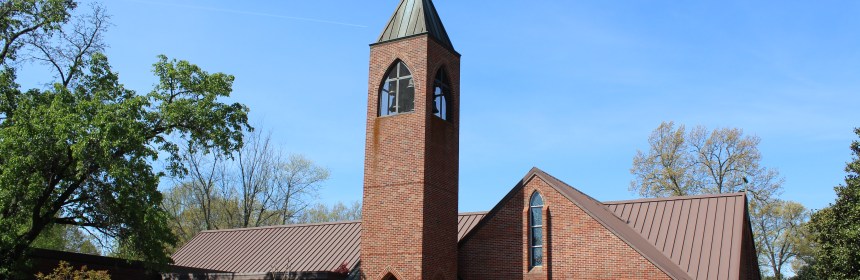
JONESBORO — Church bells ring every 15 minutes from the bell tower at St. Mark’s Episcopal Church. During the Easter season, the church bells and purple decorations provide an important aspect of worship.

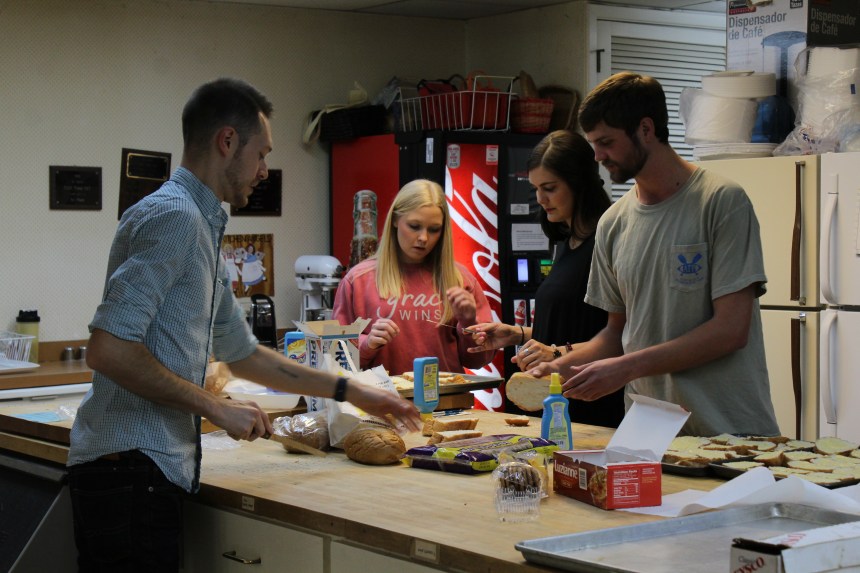
Members of the congregation gathered to prepare the church for a tradition practiced on the first day of Holy Week, Palm Sunday. Each member of the congregation wore a palm cross made by members of the congregation to acknowledge the first day of the sacred week.

“Our church is rich in pomp and circumstance,” church historian Janice Kroeter said. “We are a church full of tradition.”

The Rev. Hannah Hooker learns to make palm crosses with members of her congregation. Hooker has led the congregation for less than a year. (photo by Destini Lattimore)

The church services at St. Mark’s began in 1894. The Rev. C.H. Lockwood organized the congregation and started a mission in 1895. Rev. Hannah Hooker, a North Little Rock native, came to St. Mark’s in July 2016 after completing seminary in Virginia. She grew up Episcopalian.

“My dad was Episcopalian and so was his mother,” Hooker said.

When assigned to the St. Mark’s congregation, however, Hooker was only supposed to work as a curate, an assistant to the current priest.

“To everyone’s shock and surprise, the rector ended up leaving right after I got here. I was supposed to be an intern and now I’m the only priest here,” Hooker said.

Hooker said the most challenging thing she’s faced as priest at St. Mark’s was being placed into a congregation with such a long history.

However, the young priest said the most rewarding part of her time at the congregation has been the moments she’s been able to share with the members. Hooker acknowledged the time they were spending making palm crosses as one of those invaluable moments.

“Things like this are rewarding,” Hooker said. “I love gathering with my folks and just being a part of the church.”

A few characteristics set St. Mark’s Episcopal Church apart from many other congregations and denominations. A branch of the Catholic church, Episcopalian churches have some similarities to the Catholic faith. Yet key differences exist in the way they view communion and the leaders in the church.

The church doubles as a day school. During the week, children attend classes at St. Mark’s. On Wednesdays, Hooker holds chapel with the children. Another important feature of the church is its community service. Every Saturday, teams of church members take turns cooking and serving meals to anyone who is hungry.

“We are very giving,” Children’s Minister Rose Mary Latanich said. “Our church is very community-oriented.”

One of the most important features that differentiate the Episcopalian faith from other faiths is their views on the LGBTQ community and same-sex marriages.

“If you want a place that is accepting, where you can feel the word of God and the presence of Christ in the worship, then St. Mark’s is the place,” said St. Mark’s member Lyse Cater, who has been a member since 1961. “No matter your race, creed or whatever, you will be welcomed here.”

In the early 2000s, the Episcopal church published a service to use for the same-sex blessings, to which they were referred at the time since same-sex marriages were not legal yet. Once the marriages were made legal, the priests were authorized to perform same-sex unions, as well.

“It’s been tricky because not too many churches do them and it’s even trickier in a place like Jonesboro,” Hooker said.

Because the decision to perform these unions is sometimes on a church-by-church basis, St. Mark’s has received a reputation as the only congregation who performs the unions.

There is also another catch to the unions. Priests are supposed to marry same-sex couples within their congregation. So, those who wish to be married must be members of the congregation first.

“We encourage weddings to be done with your church family,” Hooker said. “I am technically only approved to perform ceremonies for members of my church.”

She makes exceptions for people who are willing to do premarital counseling with her.

“We try to be as helpful as we can to people who don’t have anywhere else to go,” she said.

As far as membership, Hooker said she wants the LGBTQ community to know they can find a church home at St. Mark’s.

“Give us a shot. Come on by. We would love to worship with you,” she said.

Members of the congregation gather together to prepare a meal for anyone in need. The church provides free meals every Saturday to the public. (photo by Destini Lattimore)

St. Mark’s member, Donald Mankin said he has always felt the love and acceptance of those around him. Mankin became a member of the congregation in 2012.

“Everybody has been very friendly. Everybody seems to get along. Everybody’s welcome. We don’t look down on people,” Mankin said.

St. Mark’s holds services every Sunday at 8 a.m. and 10 a.m. and Wednesday at 6:15 p.m.

The Truck Patch Wants Better Food For All

By Destini Lattimore
Delta Digital News Service

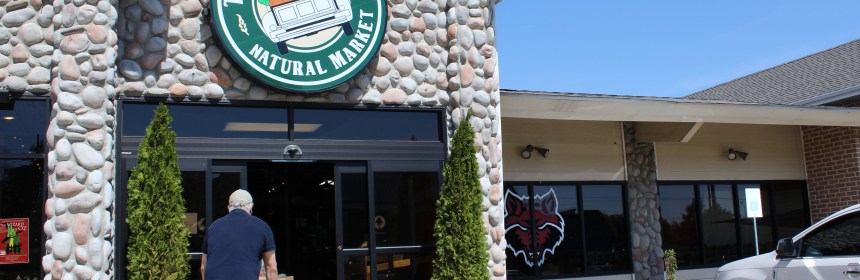
JONESBORO, Ark. — Eat real food. Since 2010, The Truck Patch’s mission has been to deliver clean, quality food to the residents of Arkansas.

Co-owner Sarah Adler started The Truck Patch, a natural food grocery store, with her husband, opening their first store in Mountain Home. The Jonesboro location opened in October 2015 on Southwest Drive.

Adler said natural foods have become a passion for her family. Her husband handles the business aspect of the store, while she is often seen in the store interacting with employees and customers.

Jasmine Jacobs spends her time working the cash register and assisting customers throughout the rest of the store. Jacobs, a new employee at The Truck Patch, said she has enjoyed her time there so far. (photo by Destini Lattimore)

“Our hope is that we offer better quality, cleaner food that you can’t find anywhere else,” Adler said. “And I know we pull that off.”

Adler also said the store focuses on offering clean ingredients. They do not sell any food items that contain high fructose corn syrup, MSG, artificial flavors or colors.

“I want customers to have an experience where they can come in and shop with ease, knowing that we won’t ever let that kind of stuff in the products,” she said.

She also noted a number of health issues are related to the processed foods consumed each day.

“If you look at how our food has changed over the last 50 to 60 years, I mean, now we all eat processed, unidentifiable foods,” Adler said.

Though other grocery stores like Walmart and Kroger offer some natural foods, they are often mixed in with various other products. so customers must search for the healthier options.

The Adlers noticed Jonesboro lacked a natural food store. Residents drove to Memphis to shop at the nearest Whole Foods or traveled to Mountain Home to shop at the original Truck Patch location. The healthy options offered at The Truck Patch were virtually unavailable to Jonesboro residents.

“It seemed a little ridiculous for a town this size to not have those options,” she said. “We just really felt like the need was there.”

The Adler’s wanted to ensure Jonesboro citizens had easy access to cleaner sources of food without the stress of having to search through larger grocery stores.

The Truck Patch offers a variety of features to attract and maintain its consumers. They have a loyalty program available that allows customers to earn 2 percent back on all purchases.

Their store also offers monthly sales that feature about 200 items each month, along with various coupons that are available. Adler said she knows this helps customers be more cost effective while shopping at the store.

“We honor coupons from manufacturers. So if someone wants to be a fairly savvy shopper, they can really shop this way and still get their money’s worth,” Adler said. “You do have to be smart about it.”

Adler advised following specific sales, using coupons and utilizing the store’s bulk section to stretch your dollar while shopping.

Another unique feature offered at The Truck Patch is its café housed at the back of the store. The Stem and Spoon offers a variety of juices, smoothies, sandwiches and many other items. Customers can also use a salad bar.

“The café is a big thing for us as far as growth and possibility. It’s been doing really well,” Adler said.

Customers enjoy the delicious and fresh options available at the Stem and Spoon café inside The Truck Patch grocery store. The café features a Grab’N’Go section, a salad bar and various smoothie and juice options. (photo by Destini Lattimore)

The Stem and Spoon also features a “Grab’N’Go” section.

“I go every few weeks,” A-State student Emily Moran of Sherwood said. “It’s close to work, so I go for a sandwich on my lunch break.”

The Truck Patch may also be the ideal destination for Jonesboro residents with restrictive diets and food intolerances or allergies.

“I enjoy shopping at The Truck Patch because it has some of the best things nature can offer,” Arnelle Jones of Osceola said. “Likewise, it has more foods and products for more morally conscious individuals, such as vegans and vegetarians.”

Although it may be easy to make assumptions about the “typical Truck Patch” customer, Adler said there really isn’t one.

“(Our customers) are really across the board. You know, you would assume sometimes it would be a more affluent customer, but some of our best customers pay with EBT,” she said.

The same goes for employees, as well. Adler said the Truck Patch hires anyone from high school students to retirees.

“Organic is something we should get back to because you don’t have to worry about all the unhealthy stuff in foods,” employee Jasmine Jacobs said. “It’s good to eat as natural as you can.”

As the company enters its seventh year in existence, Adler said there are still a number of goals they’d like to reach.

“We just want to keep growing and help people find their health by just learning that eating cleaner food is such a key to living healthier and longer,” she said.

Adler said they plan on expanding the options offered in the Stem and Spoon Café, and will do what they can to remain above the competition when it comes to customer service. The Truck Patch employees are available throughout a customer’s shopping experience and will walk around the store to assist customers with finding products that best fit their needs.

She also said the store will continue to support the community by selling locally grown products.

As The Truck Patch continues to grow, the Adler family hopes to help the Jonesboro community develop a new, healthy lifestyle.