Author Archives: Tucker Crain

Lawmakers Take Stances on Shooting

Sculpted sundial by Curtis Steele at Westside Middle School Memorial Garden

by Tucker Crain
Delta Digital News Service

JONESBORO – Arkansas lawmakers weighed in on the 20th anniversary of the Westside Middle School shooting, occurring March 24.

Gun violence and school safety continue to be prominent issues across the nation, particularly in light of the recent school shooting at Marjory Stoneman Douglas High School in Parkland, Florida.

Similar tragedy struck Arkansas in 1998 with the shooting at Westside Middle School in Jonesboro.

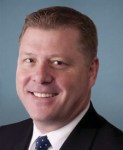
U.S. Rep. Rick Crawford represents Arkansas’ 1st Congressional District, which contains Jonesboro. In an interview with KASU News Director Johnathan Reaves, Crawford said a school-safety commission was established almost immediately after the tragedy in Parkland, and the commission resembled the style of the commission formed after 9/11.

Crawford said he took the time recently to meet with people involved with the tragedy at Westside to find solutions that do not require congressional action.

“What we do know is we’re not going to wait around for that legislation to appear,” Crawford said.

Crawford’s office did not respond to requests for comment regarding further legislative solutions the congressman may be working on in terms of gun violence and school safety.

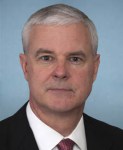
Meanwhile, the 3rd Congressional District’s U.S. Rep. Steve Womack’s press secretary Heather Neilson said Womack is not looking to add new laws regarding gun safety.

“Rather than searching for new, more stringent ways to go against Second Amendment rights, (Womack) wants us to enforce our current laws more forcefully,” Neilson said.

Neilson said tragedy causes debate over the Second Amendment, but Womack does not believe new restrictions hold the answer.

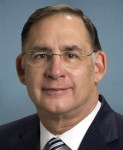
U.S. Sen. John Boozman also participated in an interview with Reaves. Boozman said the Health Insurance Portability and Accountability Act of 1996 created issues for law enforcement.

Boozman said HIPPA laws prevent mental health professionals from reporting people who hint of a desire to commit a violent act to law enforcement.

“I think that’s something that we need to look at, and those are the kind of things that Congress will be looking at,” Boozman said. “Those are the kinds of things that the states can be looking at.”

Boozman’s office did not respond to requests for comment regarding any legislative actions the congressman may be taking regarding gun violence and school safety.

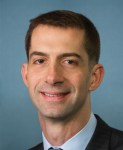
The office of Arkansas’ other U.S. Senator, Tom Cotton, said although Cotton has made no comments regarding gun violence and school safety, any future statements and announcements will be posted to his website and sent to email subscribers.

The office of U.S. Rep. French Hill, who represents the 2nd Congressional District, did not respond to requests for comments. Similarly, the office of the 4th Congressional District’s U.S. Rep. Bruce Westerman declined to comment when asked for comments regarding gun violence and school safety.


Featured photo by Miranda Reynolds

Media Specialist Visits A-State in Speaker Series

by Tucker Crain
Delta Digital News Service

JONESBORO – A media relations specialist returned to Arkansas State University as a speaker in the Joel Gambill Alumni Speaker Series during Homecoming Week to talk about his media experiences.

Aaron Sadler, who graduated from A-State in 1999, currently works at Ghidotti Communications in Little Rock. As a third-generation A-State graduate, Sadler said his family’s history with A-State steered him toward the university.

“I’d heard so much – as someone who had an interest in journalism – of the College of Communications, and how well-received a diploma and a degree from ASU’s College of Communications and the journalism department was across the world,” Sadler said.

Before making it to Ghidotti, Sadler worked for various attorneys general in Arkansas, Louisiana, Mississippi and Pennsylvania. During his time at these offices, Sadler came to the forefront of consumer-awareness initiatives.

Sadler’s love for all things media and communication began at a young age. When he was only 5, Sadler said he asked for a typewriter for Christmas instead of more conventional toys.

Sadler’s grandfather was a justice of the peace in Arkansas, and his influence led him to initially pursue a career in law. After coming to A-State, Sadler said his interactions with department chair at the time, Joel Gambill, led him to instead pursue a career in media.

“When I was a freshman, (Dr. Gambill) asked me why I was majoring in political science. He said journalism is a more appropriate major for you, because you learn writing,” Sadler said.

As he became more involved in the department, Sadler said he realized journalism was indeed the right path for him.

While in college, Sadler said his biggest struggles came when he would try to cram before a test. Quoting Mark Twain, Sadler said if you must “eat a frog,” you might as well do it in the morning and get it over with.

Now, as a professional who interacts with clients every day, Sadler said he looks to John Brummett for inspiration. Brummett is a political columnist based in Little Rock. In addition, Sadler said he can always look to his boss, Natalie Ghidotti, for the know-how needed for accomplishing his goals.

Since Ghidotti is located in Little Rock, most of Sadler’s clients are based in the area. He said this location influenced how he interacts with the media, looking primarily toward Little Rock- and Arkansas-based news outlets.

Sadler said the most important evolution of modern media is the decline of newspapers.

“Reporters (need) to be fundamentally sound and comfortable in additional disciplines, like broadcast media and content marketing,” Sadler said. “Being a reporter in the 21st century involves much more than a pen, a pad and an ability to write.”


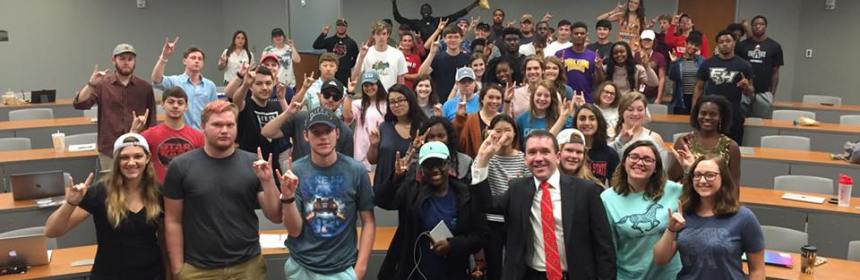
Editor’s Note: Sadler, pictured in tie, spoke with a Mass Communication in Modern Society class in the featured photo.

Delta Writing Project Impacts Thousands

by Tucker Crain
Delta Digital News Service

JONESBORO – A local branch of the National Writing Project, the Arkansas Delta Writing Project focuses on the overall goals of teacher leadership and writing instruction, shaping the styles of teaching in the region.

Opportunities for the NWP to shape instruction occur throughout the year, but the biggest draw in the region occurs during the ADWP summer program at Arkansas State University. The two- to three-week program emphasizes placing teachers in the same role as their students, allowing for an understanding of how each activity and training session is carried out in the classroom.

A federally-funded program, the ADWP is one of approximately 150 sites across the country that utilize this training. Though the program resides in Jonesboro, it draws in teachers from schools across the Delta region.

“It’s authentic,” ADWP director Dixie Keyes said. “The teachers-teaching-teachers method – rather than people who aren’t teachers trying to tell teachers what to do – is really the heart of it. That’s the gold mine.”

The NWP does not place strict guidelines on these regional sites. Instead, these sites are considered grassroots programs. This allows for greater specialization of instruction based on the region.

Teachers from the Delta have their work published in an anthology at the end of the program. This anthology acts as a model for teachers, showing how to apply all they have learned in the program.

IMG_9949

Heather Neeley, English teacher at East Poinsett County High School. Neeley participated in the summer 2017 program. Photo by Tucker Crain

Heather Neeley, an English teacher at East Poinsett County High School in Lepanto, attended the program this past summer.

“I hate to use the cliché word ‘revolutionized,’ but it revolutionized the way I think about even assigning non-writing units. I’m connecting things I would not have put together before and having it be meaningful for the kids,” Neeley said.

During the program, every teacher leads a daily activity, such as a demonstration lesson on a specific part of writing. The teachers collaborate on projects, write daily journals about the activities and discuss what problems their students encounter.

The ADWP is open to all teachers in the Delta region from kindergarten through college. Though few college professors have attended, teachers from all subjects and all grade levels regularly attend. Neeley said this cross-subject discussion lets teachers learn what general styles of teaching are successful and that the program is beneficial to teachers regardless of subject.

IMG_9954

Kelly Webb, English teacher at East Poinsett County High School. Webb participated in the summer 2017 program. Photo by Tucker Crain

Kelly Webb, an English teacher at East Poinsett County High School, attended the program this past summer.

“I knew I wasn’t doing everything I needed to be doing, and this just gave me an arsenal. I still have my notebook, and I can flip through it and go ‘Oh, I can use this and this and this!’ Really, it was life-changing,” Webb said.

Part of this arsenal includes a “2 cents” activity. Webb said this activity involves reading an article, a short story or another piece and requires students to throw two pennies in a bucket. But, students cannot throw in their 2 cents until they give their insight into the reading. This hands-on approach runs throughout the activities taught at the ADWP summer program.

Even basic writing activities changed the classroom and the student response. Neeley said writing-based assignments like a daily journal give the students something they are confident in and want to talk about during class.

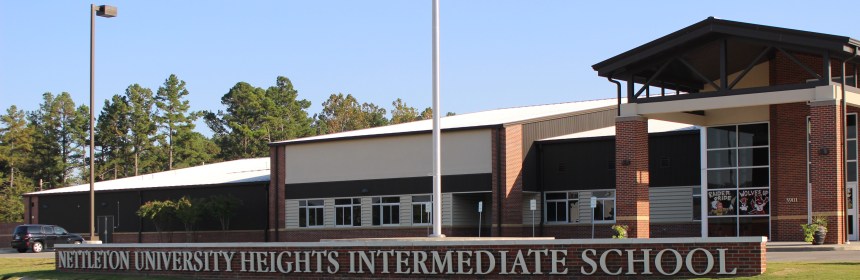
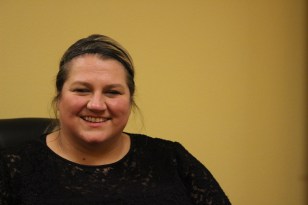
Debbie West, a technology coach at Nettleton Public Schools, went through the ADWP program in 2009 before helping facilitate the program from 2010-2012. Though not a teacher now, West taught during her time with ADWP.

IMG_9965

Debbie West, technology coach at Nettleton Public Schools. West participated in the summer 2009 program. Photo by Tucker Crain

West said the program helped her gain leadership skills and an ability to convey to other teachers what she was doing in the classroom, enforcing first and foremost that writing has worth. The program, in turn, shaped her teaching style.

“(My students had) an excitement for writing. It was important for me to write at the same time that my kids were writing. I also saw the kids beg me, ‘Please take me to the computer lab, we want to blog today!’ They really built an online community with each grade level. They loved reading each other’s stories,” West said.

The blog process incorporated into West’s class involved publishing online stories that the other students read and commented on. West said the students motivated each other regularly, with one student calling another student “as good a writer as J. K. Rowling.”

ADWP has taught around 75 teachers in total, with the summer program’s attendance staying around 10 teachers. One teacher can instruct hundreds or even thousands of students during their time as a teacher. Keyes said she believes this acts as the most beneficial impact of ADWP.

“As the years go by, you’re talking about thousands of students who are enriched just by one teacher,” Keyes said. “So when you think 75 teachers and all the students they’re impacting, that’s what gives me reason to sustain this and keep going.”

NEARK Schools Prepare for Solar Eclipse

by Tucker Crain
Delta Digital News Service

JONESBORO – Northeast Arkansas high schools are taking the necessary precautions in preparation for viewing the solar eclipse on Monday, Aug. 21.

The eclipse, which is predicted to take place around 1 p.m., will be visible in the United States from coast-to-coast for the first time since 1918. This brings a new challenge to the school districts, which have not faced the prospect of viewing a potentially hazardous eclipse in recent memory.

The Valley View School District opted out of allowing the students to view the eclipse altogether. Select schools in the Jonesboro, Nettleton, Westside and Ridgefield Christian districts are allowing students to view the eclipse.

“No one will be outside watching the eclipse. Our district made the decision to stay inside and watch a livestream instead,” said David Goodin, Valley View High School principal. “We were worried about the glasses. They’re supposed to be one-size-fits-all, but maybe they don’t fit some students. Younger students may not use the glasses properly, or someone might take their glasses off and get hurt.”

Valley View decided to stream the eclipse instead of going outside to watch even after consent forms were sent home with students. Glasses purchased for the event will go unused.

“Our older students may be checked out by their parents to watch the eclipse with their own approved glasses, and that’s fine. This decision is really just for the general welfare of our student body,” Goodin said.

At Jonesboro Public Schools, all students will be supplied with glasses and allowed to watch the eclipse with an approved consent form.

“We purchased approved solar eclipse glasses for all the students and faculty in the Jonesboro Public Schools district, except for our kindergarten and pre-K students,” Carol Neves, Jonesboro Public School District’s Science, Technology, Engineering and Math specialist. “Every student has a permission slip to get signed by a parent or guardian to be able to watch it. If they don’t get it signed, we’ll still be streaming the event inside our buildings.”

Jonesboro Public Schools is the only district allowing all of its students to watch the solar eclipse. Nettleton, Westside and Ridgefield Christian are only allowing older students to watch, though “older” is different at every district.

“Our eighth-grade through 12th-grade students can view the eclipse. We have contacted local eye doctors and developed a safety plan for what type of glasses to use,” said Michael Graham, Westside High School principal. “We’re conducting a safety briefing before the event. We’ve had some concerns, but our consultations with the local specialists made us feel like students will be safe to watch.”

Ridgefield Christian will also allow seventh-grade students to watch.

“Our secondary students will be invited to view the event. Our glasses will be provided free of charge, but the students must have their consent form approved by a parent or guardian. All our younger students will watch a stream online,” said academic adviser Veronica Reeves.

While other schools secured enough glasses for all students to view the eclipse, the Nettleton School District only secured enough for certain classes.

“All of our science classes will be viewing the eclipse, and we’re trying to find enough glasses to get the entire school out there,” said Brian Carter, Nettleton High School principal. “The ninth through 12th-grade students who are in a science class during the eclipse will be able to go outside and watch it if they have their consent form signed by a parent or guardian.”

The path of the solar eclipse will show between 75-90 percent totality in Jonesboro and the surrounding areas. The totality in each area lasts around 2 minutes and should not be looked at without using approved glasses.

AState President Hosts Town Hall on Jonesboro Campus

AState President Chuck Welch

AState President Chuck Welch listens to concerns at a Town Hall meeting on the Jonesboro campus. He said he expects to have an interim chancellor in place within a few weeks. (Photo by Tucker Crain)

by Tucker Crain
Delta Digital News Service

JONESBORO, Ark. — Arkansas State University System President Chuck Welch addressed the Jonesboro campus in an open town hall following the resignation of chancellor, Tim Hudson.

“There is not going to be any formal presentation taking place, instead, I want us to have a conversation. This is going to be very laid back,” Welch said.

Over 50 people attended the Aug. 24 meeting, and questions ranged from the minutia of running the campus to transparency.

“ASU-Jonesboro lacks transparency. From the top to the bottom; this is nothing new. The recent audits have just exacerbated that. How do we let our shared governance come in and keep this from being the case?” asked Michael McDaniel, professor of communication disorders. “We, the faculty and staff – and even the students – have achieved a seat at the table. But having that seat does not seem to be the same as having a voice. We want to be heard. These shared governance committees do not work like this.”

Welch insisted things will improve.

“I have sat in on many of the shared governance meetings, and there are certainly very vocal people on every single one. If we need to go through extra steps to make sure everyone feels like their voice is being heard, then we will,” Welch said.

Welch then explained how such a shared governance committees could actually work out.

“We have an issue with clearly defining shared governance, its committees and how they are executed. When it seems like something is being done that not everyone at ASU-Jonesboro likes, you must remember that we make decisions that affect more than just the ASU-Jonesboro campus and its community,” Welch said.

While the crowd seemed satisfied by the answers on transparency, students in attendance brought concerns of their own.
Brett Dush, a junior at ASU-Jonesboro, went on a recent study-abroad trip to Spain.

“We were all given documents specifying the exact cost of everything and where all our money was going. But we looked into it. A lot of our money went to a travel agency and we had to pay for some of our meals out of pocket, which was not the original plan. I will email them to you,” Dush said.

“Please do,” Welch replied, “because I will provide transparency. I’ll show everyone the receipts I have that are under question. We are hiring a full-time study-abroad director. We will not carry out any trip that will not let students get the most possible from it. That is why we had to recently cancel the upcoming trip to France. And for that, I am truly sorry. But if we do these, we are going to do them right.”

History professor John Beineke, a distinguished professor of educational leadership and curriculum, questioned if Welch knew of the improprieties of the Hudson administration. Welch denied prior knowledge.

“I hear a lot of things. I hear a lot of things that just are not true. Was I aware the Dr. Hudson’s leadership style was different than mine? Yes. However, the word ‘bully’ never came up until after everything else came to light,” Welch said.

Paul Mixon, the interim dean of the College of Engineering, questioned when the Jonesboro campus would have new leadership. Welch suggested an interim chancellor would be selected in weeks rather than months.

“What we really need right now is a chancellor who can act as a healer,” Welch said. He continued by addressing concerns brought by audience members who thought the search committee might not have done the best job picking the last chancellor.

“I cannot predict the future, and hindsight is always 20/20. But the search committee will come up with numerous capable candidates,” Welch said.

Mary Jackson-Pitts, professor of communications, questioned if the search committees actually had input.

“On the last search committee I was on, we were not allowed to vote for who we really liked,” she said.

Welch noted that would not have been his instructions.

“I have never been on a committee where I said we could not vote. Instead, I say this: I want to protect both members of the committee and the candidates. But we do a heavy background check on all the candidates. I call people on and off the reference sheet. I talk to former students and coworkers. I bring all this information to the committee and we discuss,” he said.

Welch assured everyone the flagship campus still has the most consideration of any in the system.

“People question a lot of things we do by saying, ‘But won’t that hurt ASU-Jonesboro?’ The decisions we make at the central office always help the flagship campus the most. You can look and see that at the University of Arkansas, the University of North Texas, and other schools we compare our systems to,” he said.

Welch emphasized the openness he demonstrated in the town hall was something he was looking for in the next interim chancellor and, eventually, the long-term chancellor.

“I underestimated how little this sort of thing was taking place – this openness. I want the next chancellor to be a listener, have a calming influence, an external perspective and to help me stay honest with you all. Last time, I wanted someone who was aggressive, progressive and inventive. Well, we sure got that,” he said.

During the conversations, Welch did not forget to mention how much he loves his job and Jonesboro.

“This is my hometown. I was a first generation college student, and my dad did not even graduate from high school. This job is not just a paycheck for me – it is a chance for me to give opportunities to others that my parents did not have. It is my passion. We cannot undo some things that happened but we can heal. I may not be the brightest, but I can learn a few things,” he said.

Welch will also meet with the following campus governance committees next month:

  • Student Government Association—Sept. 13
  • Faculty Senate—Sept. 16
  • Staff Senate—Sept. 21