Category Archives: Profile

Journalism alumna hosts 2025 Greenfield Lecture

Story by DDNS Reporter Jerry Don Burton
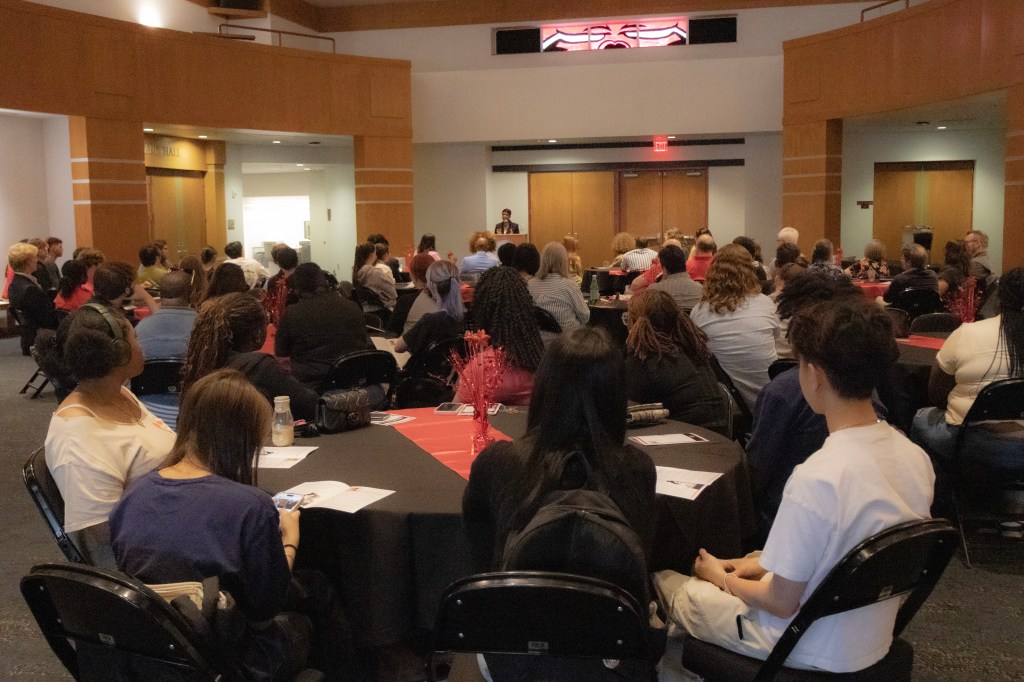
Students, faculty, staff, friends, and other Greenfield Lecture attendees listen to Rose Stuckey Kirk’s speech. Kirk is an Arkansas State University journalism alumna with a successful corporate career spanning 35 years. Photo courtesy of Ibuki Hinohara, Photo Editor, The Herald.

JONESBORO – Rose Stuckey Kirk, an Arkansas State University journalism alumna with a successful corporate career spanning 35 years, presented the annual Corinne Sternheimer Greenfield Lecture, sharing her journey with struggle, support, and success.

Kirk’s speech, titled “From Innocence to Innovation: A Lattice (not Ladder) Climb to the Top of Corporate America,” was given at 6:30 p.m. Sept. 17 in the Fowler Center at A-State.

Audio Story by DDNS Reporter Jerry Don Burton.

At the start of her speech, Kirk listed three things she wished to accomplish: break down the title of her speech, describe how she uses her support systems to have a successful corporate career and suggest how attendees can build on the platform of success she has laid out.

“It struck me a number of years ago that I was never climbing the corporate ladder, because when you are climbing a ladder, you are either going up or down and there are huge gaps in between those rungs and one wrong move, and you can seriously hurt yourself,” Kirk said. “Instead, I was clinging to a lattice. This grid-like structure is flexible and organic; its lines are sometimes diagonal, sometimes curved.”

The Greenfield Lecture speaker said she always made slow and steady progress, despite many missteps and lateral movements. She said that as she climbed, she never forgot her childhood aspirations.

“I never stopped remembering that little girl from Pine Bluff, Arkansas, who just knew one day she would take New York City by storm,” Kirk said.
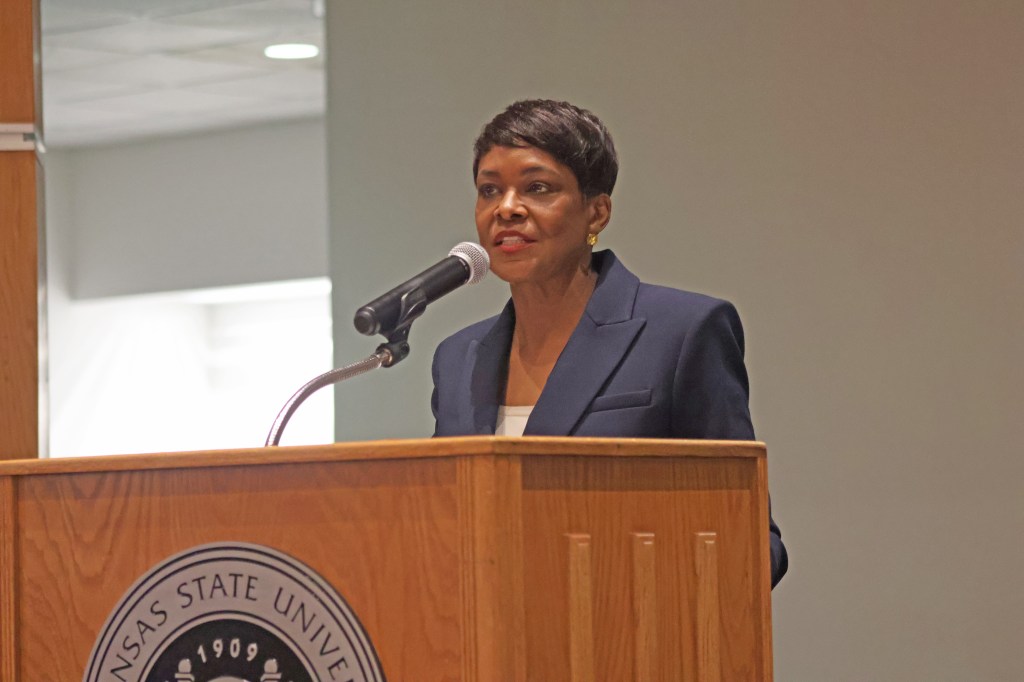
Rose Stuckey Kirk, presents her speech at the 2025 Greenfield Lecture. In her speech, titled “From Innocence to Innovation: A Lattice (not Ladder) Climb to the Top of Corporate America,” Kirk shared her journey with struggle, support, and success. Photo courtesy of Ibuki Hinohara, Photo Editor, The Herald.

Kirk said that while in elementary school, her teacher showed her class a picture of the Statue of Liberty and told everyone to remember what it looks like, because most of them would never make it to New York City to see the statue. She said this stirred something up inside her innocent self.

Decades later, Kirk said she lived in New Jersey and would drive to New York multiple times a week. Every single time the Statue of Liberty came into view during her commute, she said she would pause whatever she was doing and look at it until she could not see it anymore.

Kirk said she does not think her teacher meant any harm, but she would not let her life experiences be based upon what she saw in a book, but instead what she had personally experienced.

“Sometimes in life we look for signs, these big moments of lightning flashing or fireworks to affirm for us those dreams,” Kirk said. “But it’s often the quiet moments, the little things that come into your world that can and will set a path to live your best life.”

Kirk said her strategic mindset and self-reliance, developed from her childhood as one of eight children, helped her succeed as a student at A-State.

Lillie Fears, professor and interim director of the School of Media and Journalism at A-State, said she met Kirk when they were both undergraduates.

“I thought she was very energetic, very outgoing, popular, one of those outgoing personalities. When she said she was an introvert [during her speech], I thought, ‘you sure fooled me,’” Fears said.

Cherisse Jones-Branch, College of Liberal Arts and Communication (CLAC) dean, said Kirk’s status as an alum of A-State and CLAC set her apart from previous lecture hosts.

While hosts for the Greenfield Lecture series are not limited to A-State alumni, Jones-Branch said bringing successful graduates back to A-State to host the Greenfield Lecture is important.

“I like people like that to come back and talk to our students so that they can see what’s possible,” Jones-Branch said. “We saw someone who came from small-town Arkansas, who’s talking to students, many of whom come from small-town Arkansas. The way she was able to connect with them, because they come from the same place, was really special.”

During her time at A-State, Kirk worked at The Herald student newspaper, tutored students and attended a full course load, in addition to working as a clerk for the Social Security Administration. Kirk said college was one of the most impactful times of her life.

“I learned curiosity and how to translate that curiosity into written words that allowed me to explain both simple and complicated issues to the mass population,” Kirk said. “So you can only imagine how amusing it was to me when corporate America began to talk about attributes of successful leaders, and one of those key attributes is that great leaders, often, are great at storytelling.”

Before Kirk could face the corporate world, however, she first had to face rejection.

After graduating, Kirk said her eyes were set on working at the Southwestern Bell Telephone Company, one of the predecessor companies of AT&T. She sent her resume and was served back a rejection letter, stating they only hired people with at least two years of experience.

So, Kirk began work at the Pine Bluff Commercial newspaper. Eight months later, she moved out of state to work for The Times Daily, a set up from her hometown paper. However, she would soon face struggles again.

While working in Alabama, Kirk said she received news of her sister’s death. She said she grieved for weeks and was lost at work, which annoyed all but one of her coworkers.

She said one peer, a quiet man who was a Vietnam veteran, pulled her aside and spent time with her.

“He let me know he saw my suffering. He didn’t pry into my struggle, but instead, he told me a story about his own struggle,” Kirk said. “I learned from him the value of empathy and compassion in the workplace and the need to speak up for others when no one else will.”

Fears said the way Kirk confronted challenges, dealt with tragedy and helped others impressed her. Fears said a friend was having a hard time recently and she did not know how to help beyond listening. But, she said Kirk’s speech touched her and helped her understand what she can do to help in the future.

“It let me know that when I see somebody, it’s okay to reach out and help them,” Fears said.

While working in the journalism industry, Kirk earned awards from the Associated Press and the New York Times. Eventually, she updated her resume and applied again for a position at Southwestern Bell. Within weeks, she was hired.

“Rejection is not bad. What you do with it, how you learn from it, how you respond to feedback, is your choice,” Kirk said.

Even in the corporate industry, Kirk was not free from struggle. She said she spent six months under the leadership of someone who did not believe she was worthy of her position.

John Thompson, a sophomore political science pre-law major from Pine Bluff, Arkansas, attended the lecture. He said struggle was the most important theme Kirk explored in her speech.

“She really didn’t hold back on all the struggles that she experienced in her life. She claims that it did, in fact, shape her, but it shaped her in the best ways possible,” Thompson said.

John Thompson, a sophomore political science pre-law major from Pine, Bluff, Arkansas, asks Rose Stuckey Kirk a question following her speech. Thompson said he will take what he learned from Kirk’s speech about the inevitability of struggle and rejection and apply it going forward in his life. Photo courtesy of Ibuki Hinohara, Photo Editor, The Herald.

Years later, after Kirk said her career surpassed his, she bumped into her old boss. She said he was surprised by how far she had come in her career.

“I thought to myself, ‘my success is based upon my opinion of me.’ There will be many people along the way, for whatever reason, will not be your supporters. Sometimes you can change their minds, many times you cannot. Your goal is to build a massive amount of support in your circle so that non-believers don’t have the votes or the voice to block you.”

Thompson, a CLAC ambassador, said Kirk’s definition of success initially confused him. He said people usually gauge success by comparing themselves to others.

“I think I’m struggling with that concept of success,” Thompson said. “However, I do think that that is beneficial to me, because success really is in you and it is what you want out of this world.”

Carson Campbell, a junior creative media production major from Jonesboro, met Kirk during a breakfast event held before her speech. He said Kirk was very personable.

“She was a very down-to-earth person and very successful, so it was cool for her to come in and spend time with us and try to get to know us before her busy day,” Campbell said.

Kirk said she wanted to exhaust her life of all it has to give.

“When I die, I want the people at my funeral to go ‘yup, she did it. She exhausted this life,’” Kirk said.

Fears, Thompson and Jones-Branch said this phrase resonated with them.

Kirk concluded her speech by addressing A-State students.

“I hope that what you take from this is that you’ve got to believe in this institution. You’ve got to lean into whatever your professors are trying to teach you. You have to take advantage of everything that is here,” Kirk said. “Be flexible, build your lattice, network, be a good person and launch yourself into society in a way that you can make this institution proud and you can be proud that you are a graduate of Arkansas State University.”

Fears said one of the most important messages Kirk touched on is to take advantage of everything being taught in class.

“Even if you’re bored to death, you might be very surprised at how it’s going to help you later,” Fears said. “You can take the skills that you get here and take them to any workplace and keep developing them.”

Thompson said he anticipates rejection in his career and faces struggles already in college. However, he said he will take what he learned from Kirk’s speech about the inevitability of struggle and rejection and apply it going forward.

“In front of me was a woman who had struggled, not only in her adult life, but also as a young child, and here she is giving a lecture on 60 years of success,” Thompson said. “What I take from this is that struggle is going to be on my career path, but that’s just a part of the path itself.”

Thompson said he did not know much about Kirk before her speech, but loved her story. He said he had never been to a Greenfield lecture before, but believes the series is a great tradition because it allows students to spend a night listening to a success story from an A-State graduate.

Fears said even though she and Kirk are near the same age, she was still inspired by her speech.

“That lets me know you can never be too old, or too advanced, to get some inspiration from people,” Fears said.

After numerous promotions, setbacks and movements in all directions on the lattice, Kirk is successfully retired and said she is excited to work on her garden.


-30-

Rose Stuckey Kirk presents her award for hosting the 2025 Greenfield Lecture. The Greenfield Lecture is funded by an endowment established to honor Corinne Sternheimer Greenfield. Photo courtesy of Ibuki Hinohara, Photo Editor, The Herald.

Author Monica Potts Book holds book signing for first novel

Delta Digital News Service

By Avery Jones | Editor

July 1, 2023

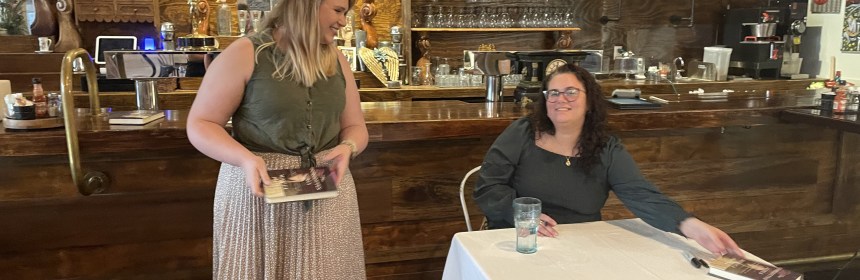
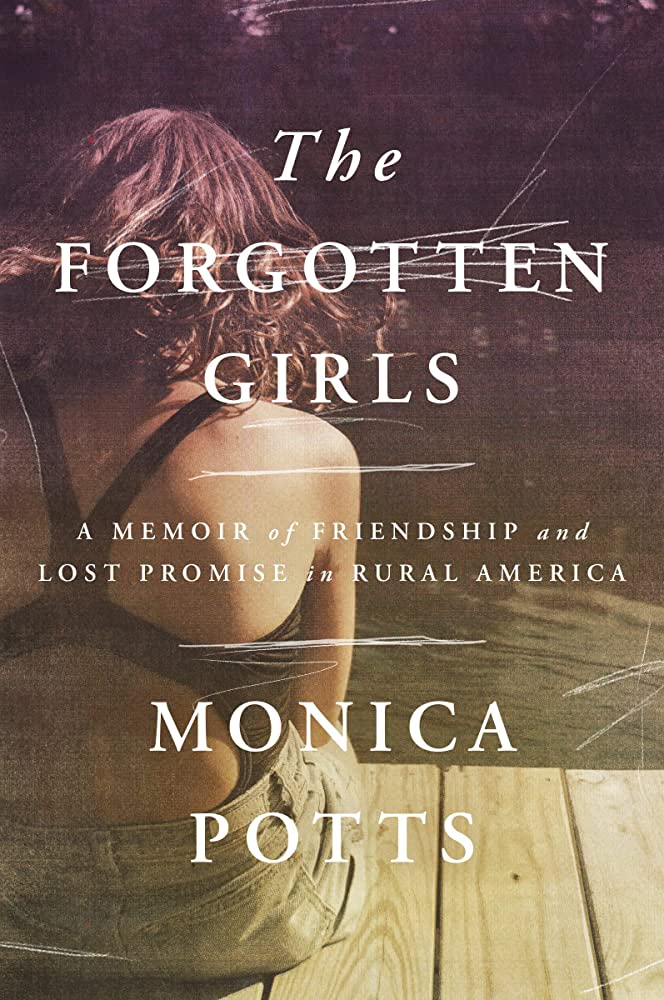
JONESBORO, Ark. – Monica Potts was recently hosted at The Parsonage restaurant in downtown Jonesboro for a discussion and signing of her new book, “The Forgotten Girls”. The event was put together by Verb Bookstore on Saturday, July 1 at 6:30-8 p.m.

Potts is a senior political reporter for the website FiveThirtyEight and has also been published in The New York Times and The Atlantic among others. The book was published in April of this year and is Potts’s first novel.

It’s a memoir about her childhood in Clinton, Arkansas that discusses the obstacles that women in rural communities face. Potts addresses poverty, religion, drug addiction, early motherhood, abuse, mental health, and lack of education.

Potts’s interest in the subject started when she heard of these studies that showed middle-aged white women in rural communities were starting to die earlier due to “deaths of despair”–deaths caused by drug addiction and suicide. 

Potts explores how these deaths are linked to the obstacles these women face in their communities, including the fact that many of these women only had high school degrees or less. It was shown in these studies that highly educated women generally live longer.

She saw these obstacles in her own community. Potts mainly writes about the life of her former best friend Darci, who unlike Potts, chose to stay in Clinton for all of her life and ended up struggling with drug addiction, early motherhood, poverty, and abuse.

When Sari Harlow, the owner of Verb and host of the event, asked the room who had cried while reading the book and how much of the issues in the book they had seen in their own lives and community, several hands went up. 

“Those first couple chapters were painful,” Harlow said. “I told Monica before I had to put it down and just process for a while and then come back to it because it really hits close to home.”

Potts herself had a similar experience writing the book. She said that she would often take a break to drive around in the mountains for a while to gather her thoughts. However, she also felt like it was a necessary process to endure.

She moved back to Clinton in 2018. She was working on her book by that point, and she stated that this was part of her reason for moving back, but she also had a lot of unresolved feelings about her hometown.

Despite the issues that are explored in her book, Clinton will always be home for Potts. However, it also sometimes feels like living in a fishbowl to her because everyone knows everyone. She misses city life sometimes.

“I actually felt in some ways more isolated than in the city,” Potts said.

When she moved away from Clinton to go to college, however, she sometimes felt guilty that she didn’t stay in touch with people from home, including Darci. She also felt like she had opportunities that many others couldn’t take advantage of.

Potts attended Bryn Mawr College in Pennsylvania and chose anthropology as her major even though she knew she didn’t want to be an anthropologist. However, she wanted the flexibility that comes with a liberal arts degree.

Additionally, as a first-generation college student, she believes that a liberal arts style education is more supportive than that of a state school, where it’s easier to get lost and feel adrift when one is trying to figure out the unfamiliar system.

Going into college, Potts didn’t realize the vast amount of career options that existed. For her, the importance of college was discovering what she was able to do and learning skills that would translate to several careers.

“I just can’t imagine a life without having had that,” Potts said. “It was just about having a different kind of life experience for myself…”

It’s difficult to name an ultimate solution for the kind of systemic and cyclical issues that people in rural communities face, but Potts believes that more opportunities for young people is vital to their growth.

“Figuring out who you are and who you’re going to be is a really hard job. It’s just an incredibly time-consuming endeavor, and I think teenagers have a really hard time…” Potts said. “…I think that the more grace and the more opportunities we can give young people to figure that out with as much support and kindness as we can, the better off they’re going to be.”

Potts said that the benefit of writing her book as a memoir was to connect Darci back to herself and encapsulate the whole life of someone. As for solutions to the issues that Darci and people like her face, Potts thinks that any solution couldn’t be finite or discrete; it’s a never-ending problem that can’t just be “fixed,” but instead must be addressed at a systemic level.

When asked about advice for adults that want to “escape” their small towns, Potts said that one probably has a bigger network than one believes. That person should reach out to anyone they’ve connected to in the past that might have resources or know about resources to help.

After the discussion, Potts signed books for those who had brought their own or those who were buying. Verb Bookstore had set up a table displaying copies of Potts’s book available for purchase, as well as books by other Arkansas authors and some currently popular picks.

“When we heard about her book and that she was an Arkansas author, we felt like we really needed to bring her viewpoint here to Jonesboro,” Harlow said. “It was definitely one that resonated with me personally…so I felt it was important to make those connections.”

–30–


Avery Jones is a sophomore in the Department of English and Philosophy at Arkansas State University in Jonesboro. She can be reached at: avery.jones@smail.astate.edu


Author Profile:

Youth proves no obstacle for Paragould historian and author Erik J. Wright

Historian researches century-old murder case in book

By Avery Jones | Editor

Delta Digital News Service

April 14, 2023

PARAGOULD, Ark. – On March 25, local historian Erik J. Wright signed copies of his 2016 book, “Main Street Mayhem”, at Weber’s Book House in Paragould. The book investigates the 1909 murder case of local resident Charles Gragg and the 1911 disappearance of suspect James Trammell.

 Wright has been an independent historian for more than 15 years. He’s 38 and currently lives in Paragould with a wife and two children. He’s originally from Tucson, Arizona, and was raised in Texas. 

He studied in an archaeology program from Pima College in Tucson, but decided not to finish since he was already working in archaeology without the degree. 

“I thought I was too good for it,” Wright said. “At that time, archaeology, and I was doing it, and so I thought, what do I need college for?”

He worked with various organizations to conduct archaeological surveys and provide public education. At one point, he was a safety manager for a geophysical company. He worked in this field in Arizona until the 2008 recession killed the local industry.

In 2014, he moved to Paragould where he started working with the local newspaper. Now, along with his independent work as a historian, he’s the director for the Greene County Office of Emergency Management.

Wright became interested in writing on Paragould’s history after locals started to ask him about it. They knew he was a historian and wanted him to write about local history. He was skeptical at first, but after doing some research, he discovered what would become the topic of his book. 

“They kept bugging me about, well, why don’t you do something local?” Wright said. “And I thought, just, like what? And they kept pestering me and pestering me, and finally, I started digging into Paragould’s history…and that’s when I started finding a lot of the violent episodes, and that was kind of the genesis of that book.”

“They kept bugging me about, well, why don’t you do something local?” …they kept pestering me and pestering me, and finally, I started digging into Paragould’s history…and that’s when I started finding a lot of the violent episodes…”

– Erik J. Wright, author & historian

Wright first became interested in history as a child. His father read books about Western history, so that’s what Wright liked to read as well. He also had good history teachers. When he was a teenager, his parents took him to Tombstone, Arizona, where he met the town historian.

“I was encouraged by my parents to go talk to him,” Wright said. “He learned I was from the Dallas-Fort Worth area, and he was like, if this is something you’re interested in, why don’t you go back and research some aspect of this story back in Dallas-Fort Worth?”

The historian told Wright that he should do some research on a story if he was interested. A year later, he published his first article in True West magazine about Doc Holliday and his history with Dallas, Texas.

He was 16 years old at the time and enjoyed the feeling of being published. He went on to say that his favorite part about being a historian is the research.

“Writing is a consequence of the research,” Wright said. “The research is fun…when you’re able to flesh out an event or a person that happened that people either have forgotten about or didn’t know about that adds to the contextual story of the Western movement, I think that’s a big deal.”

…“The research is fun…when you’re able to flesh out an event or a person that happened that people either have forgotten about or didn’t know about that adds to the contextual story of the Western movement, I think that’s a big deal.

– Erik J. Wright, author & historian

He had good mentors at True West who taught him how to do research and that he has to take into consideration global factors and how they motivate people in past eras. According to Wright, a lot of researchers who write about history make the mistake of not taking into account the events that are driving people’s decisions.

“I was fortunate to have some very good mentors,” Wright said. “They took me under their wing and showed me the right sources and taught me that if you want to understand ‘X’, you also have to understand everything around it. So I spent a long time not just focusing on this over here, but globally, what was going on to motivate the people I was writing about.”

His mentors recommended books that were important to read, and Wright built an extensive library. In addition, at the time, someone had populated the Wyatt Earp research with false documents, so all of that had to be rewritten. Wright’s reputation was made on writing about Earp and the Apache Wars.

“I came into the field in an era when…there was a gentleman around that time roughly…who had populated a lot of the Earp stuff with false documents,” Wright said. “When I came into it, they had just realized that this had happened, and everything had to be basically rewritten.”

Due to his youth and inexperience, Wright faced some struggles that other historians usually don’t have to deal with. Most of his peers were much older than him.

“While I had a lot of good mentors…there were some people that saw me as…a 20-something-year-old kid that doesn’t know what he’s doing, and that was a challenge,” Wright said. “I never had any formal writing classes, so I’ve kind of had to be self-taught with everything.”

“While I had a lot of good mentors…there were some people that saw me as…a 20-something-year-old kid that doesn’t know what he’s doing, and that was a challenge,” Wright said. “I never had any formal writing classes, so I’ve kind of had to be self-taught with everything.”

– Erik J. Wright, author & historian

He was never interested in teaching history or going back to school to get his degree because he’d already found success without it. In addition, he’s more interested in independence than being restricted by the world of academia, and his interests are too varied for teaching.

Today, Wright is the assistant editor of the “Tombstone Epitaph” and a contributing editor for “True West”. He mostly writes book reviews, contacts publishers, interviews other historians, helps other historians with their research, along with doing his own research.

However, even though his work with these publications is nearly ideal for him, he doesn’t get as much time as he’d like to work on independent projects. Right now, he’s interested in violence and how justice was served on the Oregon and California trails, and also the Mountain Meadows Massacre. 

According to The Church of Jesus Christ of Latter Day Saints, in September 1857, a branch of territorial militia in southern Utah composed entirely of Latter-day Saints, along with some American Indians they recruited, laid siege to a wagon train of emigrants traveling from Arkansas to California. The militiamen carried out a deliberate massacre, killing 120 men, women, and children in a valley known as Mountain Meadows. Only 17 small children—those believed to be too young to be able to tell what had happened there—were spared. This event is perhaps the most tragic episode in the history of the Church.

Wright said that in his research, one thing leads to another. He becomes interested in something because he’s researching something else, and he discovers another topic that connects to it. What he writes about might not have been his original area of interest, but something he found a lot of material about along the way.

“I could be researching the history of lemons, and then that leads me to the history of limes, which leads me to the history of oranges,” Wright said. “I’ve had numerous articles that have come out that have been just a chain reaction of looking into this guy, then, oh, I’ve got a lot on this guy, and now I’ve got a lot on this guy.”

His work as a historian can be frustrating when encountering misinformation about Western history in the media. According to Wright, most easily accessible sources, such as Wikipedia articles, are usually inaccurate. Views on the “Wild West” tend to be rather mythological.

However, Wright also said that forms of media like movies aren’t meant to be historically accurate. He believes that if it gets somebody interested enough in a historical event to go and do research of their own, that’s great. 

“If it gets some young kid out there interested in whatever historical event…and it makes him think and maybe go to the library and get a book on that subject, I think that’s fantastic,” Wright said.

“If it gets some young kid out there interested in whatever historical event…and it makes him think and maybe go to the library and get a book on that subject, I think that’s fantastic.”

– Erik J. Wright, author & historian

He said that there aren’t many people his age who are historians and interested in his area of expertise. When he goes to Western history conventions, most people there are much older than him. According to Wright, it’s vital that more young people get interested in history.

Wright believes that most people are bored by history because they had negligible history teachers in high school. He doesn’t want people to discredit history just because of this.

“You don’t have to just be crazy about history,” Wright said. “But if you can go and stand where something happened and have somebody credible explain that to you, I think that that’s a huge thing.”


Avery Jones is a sophomore in the Department of English and Philosophy at Arkansas State University in Jonesboro. She can be reached at avery.jones@smail.astate.edu


Author Profile:

Investigative journalist and author George Jared to present at Arkansas State University

 Jared will discuss the need and importance of investigative journalism

Delta Digital News Service

By Avery Jones | Editor

JONESBORO, Ark. – Local journalist and author George Jared is set to deliver a presentation on investigative journalism at Arkansas State University in the auditorium of the Rent Student Union Center on Tuesday, February 7. The public event is from 6 to 8 pm and coincides with the 50th anniversary of the U.S. Senate’s unanimous vote to create the select committee to investigate the Watergate break-in. 

As a journalist, Jared has been covering topics like crime, business, politics, government, healthcare, entertainment, and agriculture for nearly 20 years.

Journalist and Author George Jared

He has won several awards for his writings, including first place awards from the Associated Press Media Editors. He has also written novels, hosted podcasts, and been interviewed by a variety of newspapers and podcasts. Jared has given two presentations at CrimeCon, an immersive, weekend-long true crime convention that brings together thousands of fans of the genre.

He has written most extensively about the Rebekah Gould murder case and the West Memphis Three. The Gould case was featured in two of his books, The Creek Side Bones and Whispers in the Willows, as well as news articles. Jared wrote 100 articles about the West Memphis Three and chronicled his experiences in another book, Witches in West Memphis

Jared started his career as a journalist in 2004. He is a graduate of Lyon College with a major in history and a minor in political science. He originally thought he wanted to be a lawyer. 

He won awards participating in moot court during college and enjoyed it. However, he stated that he met “some miserable lawyers” and became disillusioned with the career. He always knew, though, that he wanted to be a writer of some kind.

Born in Lubbock, Texas, Jared spent his childhood in Salem, Ore. as a kid, where he loved reading and writing. When he was a teenager, he lived in Salem, Ark., and wrote for the newspaper at his high school. 

After he graduated college, he started writing for the newspaper in Salem, Arkansas, then soon got a job with Gannett, where he worked for a year. However, he missed his former boss, David Cox, so he decided to return to Salem.

Unfortunately, there were no writing jobs available, so he had to take a sales job, and he wrote on the side. He worked in sales for a couple years, then took a writing job with the Jonesboro Sun.

In 2004, while working at the newspaper in Salem, Arkansas, he began covering the Rebekah Gould murder case from Melbourne, Arkansas. This would be the first murder case he would cover.

When Gould’s murderer, William Miller, confessed in 2020, he said that he hated Jared. He confessed on November 7, Jared’s birthday, and was in Cottage Grove, Oregon, near where Jared grew up. 

“That was very ironic for me,” Jared said.

Jared covered Miller’s trial in court. He was sitting with Dr. Gould, Rebekah Gould’s father, when Gould gave his victim impact statement. According to Jared, Miller didn’t look at Dr. Gould, but stared at Jared instead.

The case Jared has written about the most is the ‘West Memphis Three’. “That case has taken me all over the country and the world because of how insane it is,” he said. 

He interviewed Damien Echols on Death Row in 2010 and is still keeps in contact with him today. The pair ate dinner together in Memphis in June of last year.

He also interviewed Terry Hobbs, the stepfather of one of the victims, who has been a suspect in the case. According to Jared, Hobbs rarely agrees to interviews. Jared recorded the interview over Zoom so that he could present the video at CrimeCon 2020, where it was analyzed by Jim Clemente, the executive producer of the TV show “Criminal Minds.”

While Jared’s investigative journalism has been a significant part of his career, he has reported on a variety of subjects. His areas of expertise are business, politics, entertainment, and even agriculture. He said that his favorite thing to write is feature stories.

Currently Jared writes for a company called Talk Business & Politics based in Little Rock, where he covers mostly business and politics in northeast Arkansas. A significant part of that is agriculture.

According to Jared, the Arkansas Farm Bureau told him that he’s the only reporter in the state who still covers subjects like soybeans, rice, and cotton. Jared can also sometimes be heard on early morning agriculture talk radio shows. 

He has also interviewed several high profile politicians such as Sen. Tom Cotton (R) , former Gov. Asa Hutchinson, and has met a few presidents. He has done stories with celebrities like William Shatner, Barbara Eden, Johnny Depp, Eddie Vedder, and Natalie Maines.

Jared also interviewed Bob Dorough, famous jazz pianist and composer and performer of several Schoolhouse Rock! songs, a week before he died in 2018. Dorough was an Arkansas native, but had been all over the world. According to Jared, Dorough refused at first to do the interview with Jared, but called him not much later to take up the offer.

Jared wrote a series of articles about Holocaust survivors and included their stories in his book Whispers in the Willows. The Black River Technical College in Pocahontas, Arkansas, would host a Holocaust survivor for presentations once a year. 

Jared covered Henry Greenbaum and Estelle Laughlin. He had visited some concentration camps during college and admired Greenbaum’s story.

“That story ripped my guts out,” Jared said.

Today, Jared rarely writes crime stories for work since the newspaper he currently writes for doesn’t cover that. However, he’s currently partnering with a criminology professor named Jennifer Bucholtz to cover crime on the side.

Bucholtz currently works for the American Military University. She was previously a counterintelligence officer in the U.S. Army. Bucholtz once heard Jared on a podcast discussing the Gould case and wanted to use it for a case study in her classroom.

She emailed him to talk, and the first time they called each other, they talked for over 3 hours, according to Jared. They decided to work together because their areas of expertise are different enough that they’re able to supplement each other’s work.

“Immediately I knew that she was a deadly serious human being,” Jared said. “She’s a wonderful writer…and very well-spoken.”

Together, they developed a criteria for deciding what cases to pursue. They also have a network of people to consult–for example, a knife expert and an arson expert. People send them cases, and they put them through their vetting process.

The criteria they use include solvability, family buy-in, and access to case files. According to Jared, if a case is’t solved, it’s usually because an investigator missed an important detail. If the case meets all the criteria, they’ll start investigating it.

They worked together on Gould’s case and made a Facebook page for discussion. A year before he was arrested, the killer had been posting theories about her death on the page and even direct messaging both Jared and Bucholtz. They presented the Gould case at CrimeCon 2021.

They’re currently working on two new cases: the murder of Judy Petty from West Virginia and the murder of Linda Malcom from Washington, both in 2008. They’ll host a podcast covering it, and Bucholtz is planning to write a series of articles about it for the American Military University magazine.

Jared has worked with a few other people in addition to Bucholtz who have furthered his career. He stated that his first boss, the editor of the newspaper in Salem, Arkansas, David Cox, taught him how to be a journalist.

“He kind of took me under his wing,” Jared said. “He taught me how to write. One thing I learned early on in journalism…is always tell a good story.”

“He kind of took me under his wing,” Jared said. “He taught me how to write. One thing I learned early on in journalism…is always tell a good story.”

– George Jared

He also admired two professors he knew at Lyon College, Dr. Scott Roulier and Dr. David Harrison. Roulier was his moot court coach and constitutional law professor, and Harrison taught him about writing and history.

Jared also finds inspiration in literature. James Michener and Sir Conan Doyle are among his favorite authors. The novels Raintree County by Ross Lockridge Jr. and Dracula by Bram Stoker are significant for him.

Jared’s education at Lyon College and brief interlude as a salesman were beneficial for his career as well. He finds that he’s able to use his skills in history and political science for his stories. He likes to do research on the background of a story and then incorporate that into his writing.

“I wrote a story about rice one time, and what I did to start the story is I went into the history of humans cultivating rice,” Jared said. “I would find some nuanced way to get into the story.”

He uses the skills he learned as a salesman when he’s interviewing and getting information out of sources. He found that the aggression used to get someone to buy something they don’t want is necessary when talking with people who don’t want to talk.

Jared stated that when he’s faced with difficult situations, he never hesitates to do what’s important. For instance, he’s not afraid to ask tough questions during interviews or take pictures of people mourning over their loved ones.

“People have asked me, ‘Don’t you feel callous in those moments?’” Jared said. “And I’m like, ‘No.’ I said, ‘We have to document that type of history…sometimes you gotta do the tough thing.’”

“People have asked me, ‘Don’t you feel callous in those moments?’” Jared said. “And I’m like, ‘No.’ I said, ‘We have to document that type of history…sometimes you gotta do the tough thing.’”

– George Jared

To aspiring journalists, Jared said to write for their reader and think about what the reader would find interesting. It’s important to open the story with a good hook or the “magic moment” that would pull the reader in.

Jared will be hosting a presentation at Arkansas State University on Tuesday February 7 for anyone who’s interested in his work. He plans to talk about his experiences as a journalist and his two most prominent cases, the Gould case and the West Memphis Three. 

Two professors from the faculty are planning to attend. Mr. Terrence Armstard, a journalism instructor, will be introducing Jared and Dr. Angelo Brown, a criminology professor, will be doing the Q&A at the end. 

“I think it’s great for Mr. Jared to come and share his experiences as a professional journalist with our students,” Armstard said. “His background as a true investigative journalist and author as well as having a podcast reveals to students the plethora of career possibilities available as a journalist.”

“Journalists like George Jared can greatly impact the criminal justice system in a positive way as it can help highlight errors in the system to push reform forward and highlight bad actors within the system,” Brown said. “As Jared’s work has highlighted the errors in the West Memphis case and the violation of the civil rights of the defendants, there are countless examples of justice being brought through the help of journalism.”


Avery Jones is a sophomore in The Department of English and Philosophy at Arkansas State University in Jonesboro, Arkansas. She can be reached at avery.jones@smail.astate.edu


Coronavirus symptoms plague student

By Courtney Edwards | Aspiring Journalist
Delta Digital News Service

JONESBORO, Ark. – COVID-19 cases in Arkansas have been declining, but people are still feeling the effects of the pandemic.

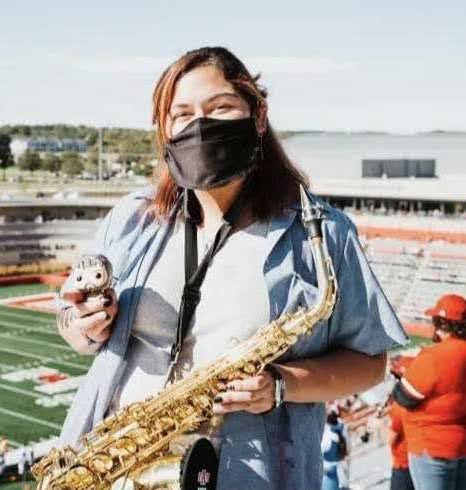
Arkansas State University junior, Shannon Johnson of Batesville, was exposed to coronavirus last year. Although research from the Centers for Disease Control and Prevention (CDC) suggests it can take up to two weeks after exposure to feel any symptoms, Johnson said she felt symptoms the day after being exposed and decided to get tested. It was positive.

Johnson said the loss of her taste and smell affected her the most while she was sick. Now, however, her sense of taste and smell have returned (for the most part), but she’s experiencing trouble breathing.

Arkansas State University student Shannon Johnson discusses her plight dealing with the post-Covid-19 symptoms.

“Around Jan. 22, I started being unable to breathe properly,” Johnson said. “And so, I had to go back to the doctor, and they were like, ‘so COVID has affected your lungs a little bit in the aftermath, so you’re going to have to start carrying around an inhaler.’”

“And so, I had to go back to the doctor, and they were like, ‘so COVID has affected your lungs a little bit in the aftermath, so you’re going to have to start carrying around an inhaler.’” 

– Shannon Johnson

Johnson said she had perfectly good lungs before being infected with coronavirus and never had to use an inhaler. As a music major, the ailment makes it difficult for her to play her favorite instrument, the saxophone.

Johnson’s goal is to become an elementary music teacher but hopes her struggles with post COVID symptoms won’t interfere with her goals. Johnson’s parents, Ben and Tina Johnson, said they were proud of how well their daughter has adjusted after having the coronavirus.

“We raised her to face her challenges [and] step up and do what you’ve got to do,” her father said. “I realize it’s been tough on her, but she’s been handling it.”

“I realize it’s been tough on her, but she’s been handling it.”

– Ben Johnson (Shannon’s father)

Johnson visited the A-State Student Health Center (SHC) operated by New York Institute of Technology College of Osteopathic Medicine at A-State, known as the NYITCOM at Arkansas State University Medical Clinic.

According to Johnson, the medical professional she saw told her that nothing looks physically wrong with her lungs. They didn’t give her a time frame describing how long her symptoms could last. They only told her it would take time to feel normal again.

“The doctor said, ‘you need to work your lungs back [to normal]. They might not come back to what they used to be, but there’s a possibility that they will,’” Johnson said. “It’s like 50/50 is what they told me.”

Gavin Lesnick, public information director for the Arkansas Department of Health, said it was unknown why some people with no preexisting conditions may suffer from long-term symptoms of COVID-19.

“Some young people may have medical conditions that make them more susceptible to COVID-19 complications,” Lesnick said. “In general, we find that severe COVID-19 cases are less likely in younger people than in older people.”

Johnson’s parents said Johnson is covered by Trustmark health insurance provided by her mother’s workplace, White River Medical Center. According to Johnson’s parents, the insurance covered all of her medical expenses up to the deductible. Johnson will be able to stay on this insurance plan until she is 27.

Although the symptoms took a hard toll on Johnson, she said the hardest part about having coronavirus was having to miss her family during Christmas.

CLICK THE LINK BELOW TO LEARN MORE OF JOHNSON’S COVID-19 EXPERIENCE.

COVID-19 – A Mild Case Could Result in Long-Term Symptoms


Courtney Edwards is a multimedia journalism senior in The School of Media and Journalism at Arkansas State University. She can be reached at courtney.edwards@smail.astate.edu.

Brooke Caraway to head to Miss Arkansas

By Maddison Smith
Delta Digital News Service

BLYTHEVILLE – Miss contestant competes in 17 prelims before winning a title. 

   Brooke Caraway is the winner of the Miss Lights of the Delta pageant. She received the Talent award and the Claudio Raffo “Dreamer Award.” 

   Brooke Caraway also won $6,700 of scholarship money and will be competing in the Miss Arkansas pageant June 13 through the 20 of 2020 in Little Rock, Arkansas. 

   Director of the Miss Lights of the Delta, Miss Northeast Arkansas and Miss River Delta Denise Holdaway said she wants someone that will proudly represent the lights and the Delta. 

   “What matters is that she is passionate about her platform and has an understanding of how they are representing the community,” Holdaway said. 

   “She nailed her interview and I thought her onstage talent was very creative,” judge Tiffany Hoskins said, “Her private interview went very well, and she was an overall great contestant.” 

   Caraway’s talent was a speed painting to a “Patriotic Melody.” 

   Caraway said this was the 17th prelim that she has competed in and she is excited to serve the Blytheville community.

  Caraway’s platform is foster care. “I’m looking forward to getting plugged into organizations throughout the state and see more foster kids find their home.” Caraway said. 

   Caraway will have her own lights display in the Lights of the Delta as well. 

   First runner up and other awards include: 

  • Katherine Beasley; First Runner Up, $500 scholarship prize and sponsorship into next year’s MLOD, MNA and MRD.
  • Apple Dennie; Second Runner UP, $200 scholarship prize
  • Apple Dennie; Evening Wear/Social Impact statement, $50 scholarship prize.
  • Katherine Beasley; Izzy Baughn Leadership Award, $100 scholarship prize. 

Editor’s Note: Feature photo courtesy of Susan Smith Photography 


Now Serving: International Flair

by Denton Postlewait
Delta Digital News Service

JONESBORO — International student-athletes provide rich culture, diversity and fierce competition to all Arkansas State University athletic programs.

According to www.ncaa.org, over 20,000 international student-athletes compete at NCAA-compliant schools. A-State happens to be one of those schools; Amelia Guevremont is one of those student-athletes.

40378767983_1c56b5a5dc_k

Amelia Guevremont (Photo by Denton Postlewait)

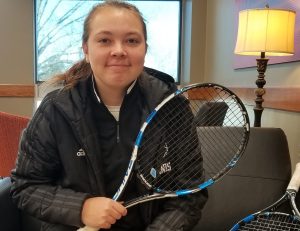
Guevremont, a sophomore studying mechanical engineering, plays tennis for A-State. She grew up in Montreal, Canada and said her sister influenced her decision to come to America.

“I saw my sister grow up playing tennis and she wanted to go to the states,” she said. “I wanted to do the same thing as her.”

Canada’s different educational system meant Guevremont graduated from high school a year earlier than her American-born competition. She thought she wanted to go straight to the states after graduation but ended up staying in Canada another year. This decision costed her numerous offers from college coaches. Eventually, she decided to attend the University of Illinois at Chicago. After a year in the city, Guevremont decided she wanted to transfer and began emailing coaches. During this process, she received a full-ride scholarship to A-State and decided to move to Jonesboro and become a Red Wolf.

The process of transferring colleges can be difficult. Students must make sure their classes transfer and that they stay academically eligible to compete. Apart from the academic stress, students may not know any of their new teammates, let alone a new city. Thankfully, A-State employs academic coordinators to help with the social and academic transition.

“There is always a bit of a disconnect when they come in because it’s such a shock-and-awe,” said A-State academic coordinator Nate Carr. “Our position as an academic coordinator for athletics is to reduce that shock-and-awe.”

Carr, a former international student-athlete at the University of Arkansas at Little Rock, understands the transition better than most. He said one of the biggest hurdles for international students can be the language barrier between them and the general population. Shannon O’Brien, a junior from Cleveland, also competes on the tennis team and said the language barrier can be tough to overcome.

“I’m pretty sarcastic,” she said. “Sometimes when I try to make a joke, they don’t always get it.”

Carr said being at the university makes most international student-athletes happy. They do not mind putting in extra studying or tutoring because it helps them succeed academically and socially. He said the best part of being an academic coordinator comes from seeing the personal growth the athletes show.

“You meet their parents on graduation day and they say, ‘They’re such a different person,'” he said. “I always say, ‘Your son or daughter disappeared for four or five years and now they have a degree and became a man or woman.'”

Carr said the uniqueness of international students makes his job great.

“A student may have trouble writing or speaking English, but then you find out it is their fifth language,” he said. “International students, like all students on campus, are a little bit unique.”

Guevremont said her coach does not really consider her international because of Canada’s proximity to the United States, but she still considers herself foreign.

“I’m not as foreign as them, English is something I might have learned at a younger age,” she said. “It is easier for me than them.”

Guevremont said the difficulty of her first semester stemmed from not being close with the team. Part of that disconnect came from her being new to the team and to the university. She said she became really close to the team this semester and that she trusts her teammates and can talk to them about anything. Guevremont said if she could, she would not change the path that led her to A-State.

“I believe everything happens for a reason,” she said. “There are ups and downs, but that’s part of life. I’m really happy to be here.”

For more information about A-State Tennis, go to www.astateredwolves.com, click on the Sports Tab and select “Tennis” under Women’s Sports.

DeltaYou: A 30-Year Impact

by Jessica Ladd
Delta Digital News Service

JONESBORO— An Arkansas State University department chair announced his retirement after 30 years with the institution.

Osabuohien Amienyi became chair of the department of media in 2007. For the first 18 years of his career, he taught classes including TV Production, Communication Research and Theory of Mass Communication. Amienyi also served as head of the Faculty Senate and dean of the Department of Communication.

46615113585_916da1545c_b

Family photos on Amienyi’s desk. (Photo by Jessica Ladd)

Born in Nigeria, he produced films and did videography there. After moving to the United States, he earned a bachelor’s degree from Tennessee State University, a master’s degree from Northern Illinois University and a doctorate from Bowling Green State University. His teaching specialties include video production, media management, international communication, communication theory and research. He has worked in radio and TV, while also being a published author.

“He is supportive, patient, kind and he sees every moment as an opportunity to teach. He truly cares about his students, faculty and staff. He is an inspiration and he will be missed,” Kimberly McDaniel said.

McDaniel, the media department’s administrative specialist, works closely with Amienyi and schedules all his appointments. McDaniel began working with him a year ago. She said he is a wonderful boss. She is sad to see him go and wishes him the best of luck in retirement.

More than an academic, Amienyi enjoys helping others and serves on the board of directors for Jonesboro’s Rotary Club. He joined the club in 2007.

Lisa Golden, president of the Jonesboro Rotary Club, met Amienyi when she transferred to Jonesboro in 2014. She said she always looks forward to seeing him every week.

“He is one of the nicest, energetic and most friendly people I’ve ever met. He is quick to laugh and great to work with,” she said.

He takes most of the photos for their meetings. Golden also said he is very active in the organization. He attends meetings and is currently involved in some of their ongoing projects.

Amienyi is passionate about Rotary. He said being a part of the club is fun. The organization undertakes projects to promote peace and fight disease. They help provide clean water, save mothers and children, support education and grow local economies. Their slogan is “service above self.”

Soccer is a big part of Amienyi’s life, as well. He could talk all day about his favorite sport. He learned to play the game at a young age. There weren’t many sports in Nigeria when he was growing up. He said it was something everyone played. Soccer was like a religion to them.

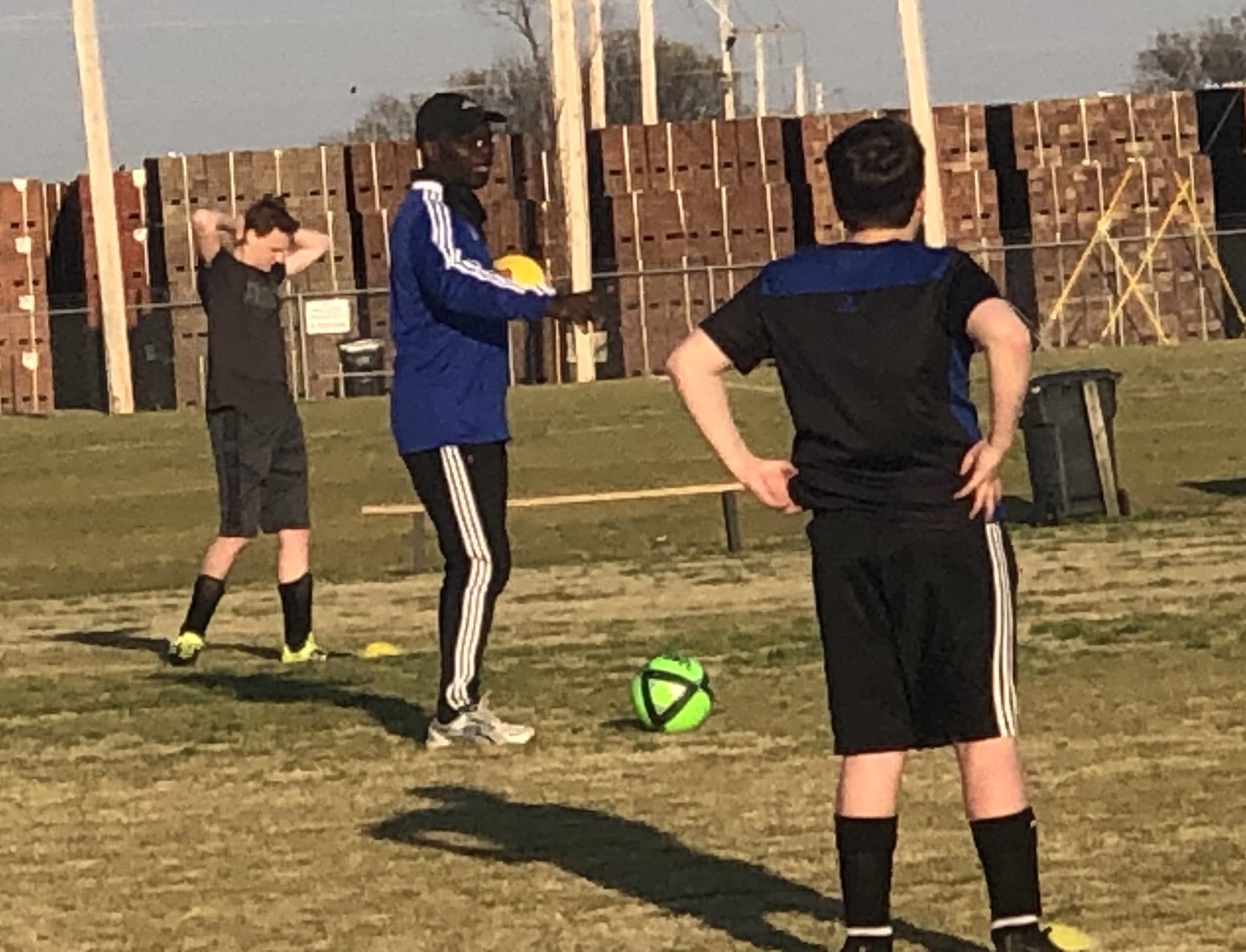
Amienyi (center) coaches during a youth soccer practice. (Photo by Jessica Ladd)

In Nigeria, he lived about three-to-four miles from the soccer stadium. He could hear the cheers from the crowd at his house. He also listened to the games on the radio. This is what sparked his interest in broadcasting.

He coaches in the Jonesboro Youth Soccer Program. Amienyi said there is a joke around the college that soccer is his full-time job and everything else he does is just for fun. He enjoys teaching young children about the game he loves. He has been coaching in the United States since 1990 after his eldest son joined the program.

He called soccer a thinking person’s game, as it’s all about problem-solving. Sometimes a person will have to try three or four different strategies before a move is successful. He is currently working with his youngest son, who hopes to play professionally one day.

Amienyi said it has been a long journey and he is excited about retirement. He’s not sure where he plans on moving yet, but everything else he has figured out. He wants to start his own soccer school where he will take 10-12 kids at a time and teach them the game. He also wants to focus more on research and even hopes to write some children’s books. He plans on spending more time with his family as well.

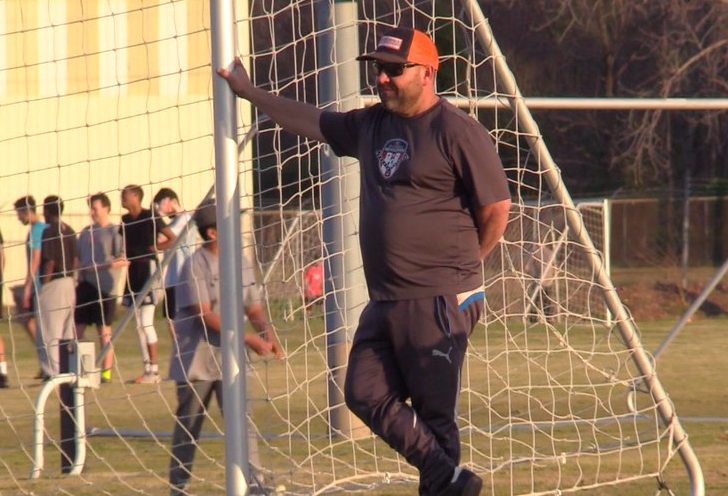
Assistant coach Welby Young watches practice. (Photo by Jessica Ladd)

Assistant soccer coach Welby Young met Amienyi in 2015. The two have been coaching together since. Young has great respect for Amienyi.

“It’s probably hard to put into words the impact he has had on the community. If you’re 12 or you’re 25, you’ve probably been coached by Osa or been on one of his teams or seen him play,” Young said. “I think this is his passion. It is not work for him.”

Amienyi said his favorite memory of A-State is being able to do the things he loves. He said he is leaving the department better than when he inherited it. He helped obtain more labs for media students. He was a part of creating Red Wolf Radio and Delta Digital News Service. He said he has enjoyed his time at A-State, and he will miss working with the students. He enjoyed seeing them develop themselves.

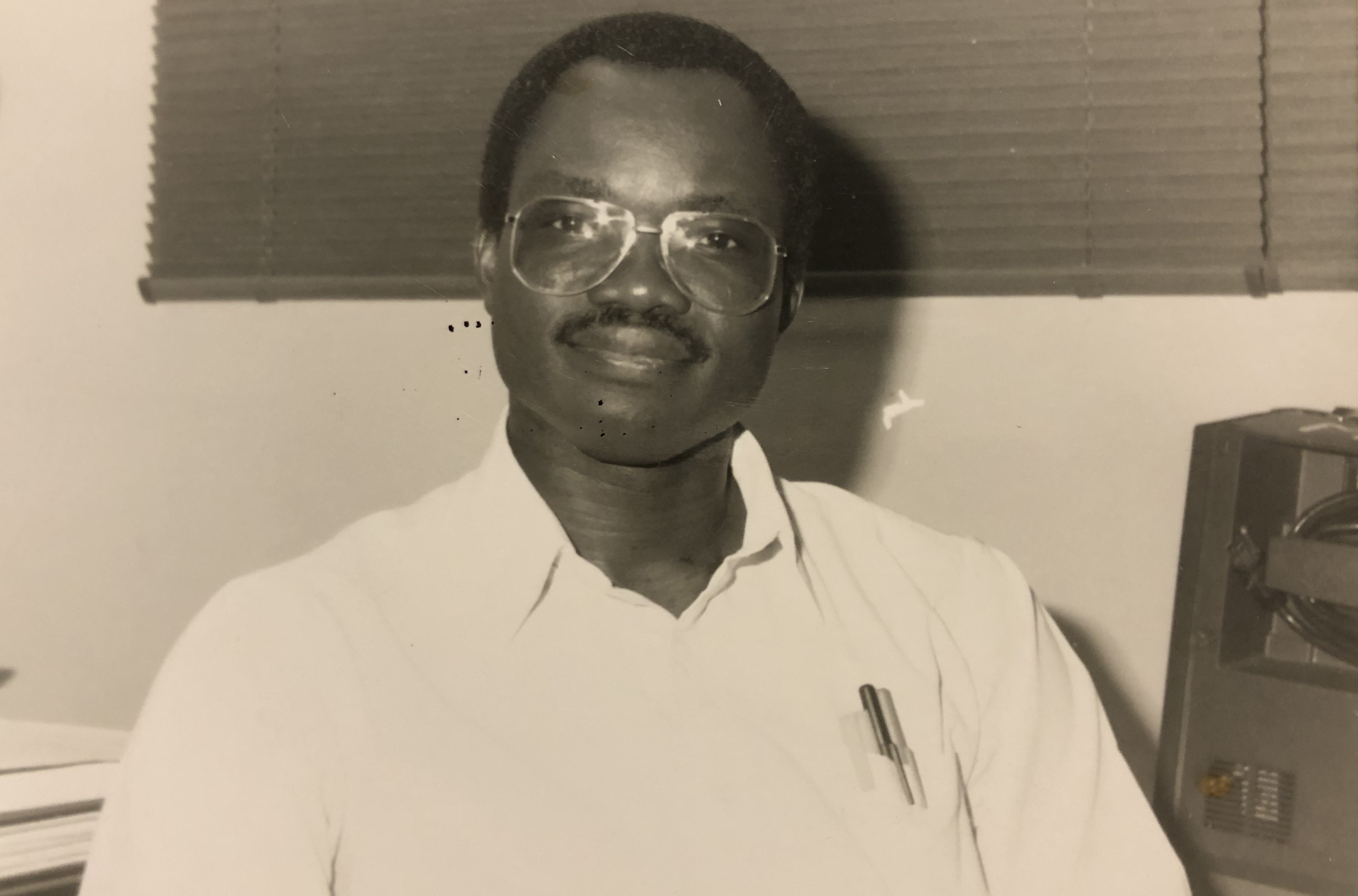
Earlier in his A-State career. (Photo courtesy of Lillie Fears)

Amienyi’s father use to say, “Always listen to the voice of experience.” This has stuck with him. He said often times people talk too much and don’t take the time to listen. He keeps an open mind and tries not to judge people. These are the keys to his success.

He would often be asked how long he planned to stay at A-State. He said he would give people what he thought to be a philosophical answer. He said there will come a day when he would outgrow the university, or the university would outgrow him.

“I couldn’t have chosen a better place to work,” he said. “I was allowed to do the things I enjoy. I could have gone to different places and not have had as much fun as I’ve had the last 30 years.”

Church Celebrates Lent under New Leadership

by Christine Miyawa
Delta Digital News Service

POCAHONTAS, Ark. — A new priest is leading parishioners of the local Roman Catholic Church through Lent this year.

The Rev. Mariadas Vallapaneni said the congregation of St. Paul the Apostle Catholic Church reflects deeply on its faith during Lent in preparation for Easter. Preparation includes reciting the rosary as the faithful observe the Way of the Cross. It also includes not eating meat every Friday for seven weeks following Ash Wednesday to Good Friday just before Easter. This year’s Lent period continues through April 20.

Vallapaneni has served in the parish for more than a year after spending time as associate pastor at Jonesboro’s Blessed Sacrament Church. He served in India before Bishop Prakasam posted him to the United States for 10 years under the request of Bishop Anthony Basil Taylor of the Diocese of Little Rock.

Fr. Mariadas Vallapaneni St.Paul Catholic Pocahontas, Arkansas.

Fr. Mariadas Vallapaneni (photo by Christine Miyawa)

Born in Sidda ya palm, India, Vallapaneni grew up among nearly 150 families of mostly farmers. He said the villagers, who number close to 1,000 residents, do not allow any churches apart from Catholics to occupy the area.

“Growing up, I struggled with learning,” Vallapaneni said. “I strongly believed that God called me to service. I was a dull student; I struggled to study. One day my teacher encouraged me to pray, and when I started to pray more and more, I got better and did better than other students. Then I started cooperating more with God. I felt that God was calling me to the priesthood. I went to different seminaries, but the main was Hyderabad in India.”

Vallapaneni said he was happy to serve the church in the United States.

“I like being here; this is the top-most country,” he said. “I like the different atmosphere. I like working with different people. I want to do something new; I want to help the parishioners.”

When he arrived in 2015, he found it difficult to eat American food — he said it took five months to get used to it. Vallapaneni said he was lucky because the parish he served in Jonesboro as an associate pastor had a chief pastor of Indian origin who made Indian food.

However, his greatest struggle is knowing what to do.

“I have to stick to myself because I do not know the rules,” Vallapaneni said. “In India, I know if I do something it’s right or wrong; here, I don’t. I always feel my home place is the best place. Being an alien, you are not free; you don’t know something, you feel like you are outside. However, when I am in the parish, I feel good. People here love me. They understand that we sacrifice everything to come here — we leave family and friends — so they are good and friendly to me.”

Although his church in India does things a little differently, he does not want to make many changes to this church because the congregation is used to what they have.

“Coming from a different background is not easy for me to implement new things,” he said.

Vallapaneni added one mass at 12:15 p.m. on Thursdays so parishioners on lunch break can come to pray. He said people are cooperating with him and although his way of thinking may be different, he must fit in the local culture because he is the one coming into their community.

Jason Liebnaber, who has attended the church since childhood, was at the church reciting the rosary with other faithful observing the Way of the Cross — a prayer commemorating every tribulation Jesus went through right before Easter.

“I don’t know Father Vallapaneni well, but he’s nice,” Liebnaber said. “He’s doing pretty good with Lent schedules and lots of Station of the Cross. They are having it here in the church every Friday for the children and the school, and again in the evenings for the community. I have not seen any major changes implemented yet, but we love our new priest.”

A lifetime member of St. Paul’s, Karen James said it’s sometimes hard to hear what Vallapaneni says due to his accent, but she finds the sermons lively. She and her husband moved back to Arkansas recently. She said she missed going to church for sometime when she was in Texas. She said negative rhetoric about the church on social media has affected the younger generation of congregants most, including her sister, Sue, whom she said is doing a lot of internet research and is currently torn over which church to attend.

“Sue used to be a staunch Catholic,” she said. “We both were but now she goes back and forth, she is not decided. Sometimes she tries other churches. I’m older and I think we, the older generation, are pretty much settled in our ways. Before we didn’t hear of such scandals and now it’s all over, things have really changed.”

Liebnaber discussed the scandals over sexual misconduct by Catholic priests.

“These scandals have happened over the decades, and they go in circles,” he said. “They affect some people and it’s sad. The priests need to learn better standards of morality.”

Vallapaneni said Pocahontas has a majority of Catholics — about 400 families — so he is not worried about declining membership even with the scandals in other Catholic parishes.

“First, all those priests who were involved in these scandals are dead and the recent ones do not belong to our diocese,” he said. “Secondly, people need to pray and then see the priests who are culprits in the context of family, as if this was your brother or child or relative.”

Vallapaneni noted the diocese had held conferences to reach out to the community and find healing from the scandals.

Sprinter Seeks Greatness

by Marvin Davis
Delta Digital News Service

Kden Johnson

Kden Johnson (photo by Marvin Davis)

JONESBORO — A returning junior at Arkansas State University plans to impact this track-and-field season.

Kden Johnson earned his first Sun Belt Conference Championship last year and wants another one this year.

A sprinter from Atlanta, Georgia, Johnson attended high school at Benjamin Banneker High School. In high school, he ran the 400-meter, 200-meter, 1×400 meter relay and the 4×400 meter relay. Johnson’s high school relay team ranked No. 1 in the country in the 4×400. It also broke the Georgia state record in the event.

“I knew I wanted to run track as a career my sophomore year in high school,” Johnson said. “I knew I was pretty good at it. I wanted to be great.”

He was inspired by watching Michael Johnson, who won four Olympic gold medals and eight World Championship gold medals as a sprinter.

Track and field head coach Jim Patchell expects big things from A-State’s Johnson.

“Kden didn’t run as well in conference as we would have liked, so we have to get there. Kden is a good teammate and does a good job in practice,” Patchell said.

Johnson will run the 400-meter, 200-meter, and the 4×400 meter relay this season. Johnson has made major strides to improve and said he aims to become a better teammate and athlete on-and-off the track.

“Kden is doing really well. He seems more motivated and pushes through workouts this year,” senior women’s hurdler La’Carol Baynes said. “Kden’s attitude improved a lot, and I see that his drive has grown since last year, as well.”

When Johnson goes home to Atlanta, he talks to the children at the local Boys and Girls Club he attended at a young age. Johnson gives the kids advice on how to make it in any sports they are pursuing.

“Keep grinding because your time will come,” Johnson said. “Keep working hard and something will happen for you.”

A creative media production major with an emphasis in audio and video, Johnson also participates in Brother to Brother, an organization that promotes brotherhood, academic success, professionalism and social skills.

Johnson and the A-State track team run their first meet Dec. 2 at the First National Bank Arena in Jonesboro.

***
EDITOR’s NOTE: This story has been updated to correct the first meet to Dec. 2 instead of Dec. 4.

DeltaYou: A Public Radio Leader Retires

by Kimberely Blackburn
Delta Digital News Service

JONESBORO – A changing of the guard will soon occur at KASU, Jonesboro’s public radio station as its current station manager retires after 32 years of service and a decade of leadership.

KASU staff members reflected on their time with Station Manager Michael Doyle positivity. Mark Smith, development director, said Doyle served as his mentor for many years. He said he hopes the community joins him in celebrating Doyle and his work throughout the region.

“He has been a good leader for KASU and his natural charm has endeared him to so many in his public appearances for the station throughout the region,” Smith said.

Doyle and Brandon Tabor

Michael Doyle (left) shares a laugh with KASU Morning Edition host Brandon Tabor. Doyle recently announced his retirement as KASU station manager. Photo by Kimberely Blackburn

Reflecting back on Doyle’s leadership in community involvement, June Taylor, KASU’s broadcast production specialist, said he understood the importance of connecting with the community. Doyle served the community in taking up the banner of both entertaining and educating the Jonesboro community. Concerts showcasing local acts include “Bluegrass Monday” in Paragould, “Bluesday Tuesday” in Newport and the Johnny Cash Heritage Festival in Dyess.

Helping local acts perform at the Johnny Cash Heritage Festival proved to be a source of pride for the station. Doyle said these acts performed on the concrete slab where the old commissary stood in Dyess. Cash’s childhood home — recently restored by Arkansas State University’s Heritage Sites — served as the backdrop during the concert.

Although local acts did not perform with headliners Rosanne Cash and Kris Kristofferson, Doyle said performing on that stage served as a source of inspiration and pride for these artists. Helping Arkansans find a sense of pride in the state proved to be important to Doyle. When Arkansas native Glen Campbell died, a social media post composed by Doyle noted while others portray Arkansans as ignorant hillbillies, the state’s rich musical heritage should be a source of pride.

Hear Doyle’s entire social media post and his thoughts on Arkansas music

Arkansas Roots

Doyle first considered a classical music program to fill the noon hour. But after brainstorming with KASU staff members, “Arkansas Roots” debuted. Program director Marty Scarbrough said Doyle shares his own personal knowledge of Arkansas musicians, resulting in the program greatly benefitting its listeners. He said those who tune into the program learn of pioneers who inspired not only Arkansans but many others.

“Without people like them, we wouldn’t have people like Bonnie Raitt or Sheryl Crow,” Scarbrough said. “There wouldn’t be a James Brown or a Ray Charles without people like Rosetta Tharpe or Louis Jordan.”

Not only does the show broadcast the state’s extensive musical history, it also plays current acts who make music for the love of making music. Taylor said the program quickly resonated with KASU’s listeners. Because the program focuses on the roots of Arkansas, people discover upcoming musical events and learn about their community. That, she said, fulfills the purpose of public radio.

Legacy

Doyle said he hopes he leaves KASU better because of his influence. He said 10 years ago, the station gave him an opportunity to do something other than teach four classes a day. This opportunity gave him a chance to make a difference.

KASU staff members said that change will be felt. Since Doyle established such a clear vision for KASU leadership, Scarbrough said he doesn’t foresee any large changes. Taylor agreed and said his leadership kept staff on the right track, continuing on to the goal. Smith said he plans to hold Doyle to his promise of continuing on working at the station as a volunteer.

Doyle told a story of a man he met while doing doctorate work at the University of Tennessee in Knoxville. After deciding to do something different for lunch one day, Doyle said he stopped in at the Wesleyan Center, a Methodist center for UTK students on campus. He said he found himself drawn to a man wearing a white shirt and tie and engaged him in conversation. After some time, Doyle learned the man served as the director of the center. Before the man’s tenure, very few students attended and the center appeared desolate and run-down.

The man worked to build the center up, performing repairs and engaging students in hopes they would visit. In doing so, the man’s doctorate work — the reason he first came to campus — fell by the wayside. Looking around, the man proclaimed the center became his doctorate. Doyle said he feels similarly about his work at KASU.

“I feel like I’ve left it better than I’ve found it,” he said. “So, this is my doctorate. I’ve never finished it, but I’m glad to have done something worthwhile. And I think this is it and I’m very appreciative of that.”

Kimberely Blackburn interviews Michael Doyle on NEA Expose’

DeltaYou: Redemption in Six Strings

By Christine Miyawa
Delta Digital News Service

POCAHONTAS, Ark. — Prison can make or break a person. It’s said some enter soft as silk but exit hard as nails. But the same cannot be said about a man who, after 12 years behind bars, has become a beacon of hope to many.

Time behind bars may have worked a number on Cameron Todd’s physical appearance, but behind the physique lies a heart of gold.

“Back in the days when he ran a martial-arts school called the Blue Dragon, he was all muscles and abs. He had tried to recruit me to join the school, but I had already enrolled in another,” said Jason Cummins, Todd’s former neighbor.

With a Dan rank (i.e. black belt) in martial arts among his accolades, one would not expect any less. Todd, 50, said he’s not worried about getting those six-pack abs back, but he’s slowly working on it.

Twelve years of confinement taught him patience, resilience and faith.

Resilience Through Adversity

Todd worked as a police officer in Houston, Mississippi and was on duty when police arrested him for sexual battery. Todd said he did not commit the crime and his original trial ended in a hung jury. During a second trial, he was convicted and sentenced to prison. Todd said his accuser retracted her statement, but the Supreme Court of Mississippi upheld the jury’s verdict in his direct appeal, as did the Court of Appeals during a second appeal.

“We were all shocked when we heard the charges brought against him. He was that guy who was just cool with everyone,” Cummins said.

When Todd went into Marshall County Correctional Facility in Holly Springs, Mississippi, he possessed only his GED. But while in prison, he immersed himself in books, finished his associate’s and bachelor’s degrees, pursued a master’s degree in music ministry and eventually graduated with a doctorate in theology from Gulf Coast Bible Institute and Seminary in Fort Walton Beach, Florida.

Todd, a “jack of all trades” as his former business partner Herman Lopez calls him, engaged in many businesses. Working with Lopez, he trained ex-inmates to work as freight agents. This provided opportunities to many former prisoners who found it hard to get jobs after doing time behind bars. While Todd consistently worked on new projects, Cummins said only music remained constant.

Todd said life as an inmate proved to be almost unbearable but faith, discipline, hard work and determination coupled with his guitar’s melodies brought him hope for a better tomorrow and saw him through.

An Underground Sanctuary

Todd calls the studio in his basement his “getaway island.” The bright-red walls with an occasional splash of black are strikingly inviting. The spirit of rock ‘n’ roll pours from all corners of the room.

A lonely chair in red leather sits in the middle of the room, swiveling left and right. Under the chair, a rag with a red cross lay flat on a zebra-print mat, contrasting with the rest of the floor covered by soundproof carpeting.

On the left of the room, a piano rests on a tabletop next to the wall. A painting on a black canvas of a white-and-red guitar camouflaged in a raging fire hangs on the wall above the keyboard — it looks like a masterpiece.

Adjacent to the door on the right, a small room with his guitar collection lining soundproof walls. Everything seemed carefully selected and arranged — red and black items made up his decor. Four speakers are strategically mounted in the room’s corners; two more rest on the table opposite the keyboard. That same table held two computer monitors. A long, black-leather sofa sits quietly adjacent to the door.

Cameron Todd plays guitar in his studio

Cameron Todd plays in his home studio. He said he wants to be known for contributing to music. (photo by Christine Miyawa)

“Hey, listen to this,” Todd said in an almost whispering voice while grabbing an electric guitar and striking a note. The sound of music brought a sudden calmness that instantly toned the room’s energy. Striking several notes in rapid but steady succession, his fingers gyrated back and forth on the strings as the music blared.

The bronze-looking cross dangling on a silver chain around his neck glowed from the reflection of light coming from the lampstand at the corner of the room. In a moment Todd seemed lost in his world, a world familiar to him, a man indeed in his forté.

“My interest in guitars started when I was 5 years old, but I never was serious about it. I would play and once my fingers began to get tired, I would break it off,” he said. “Besides, I was learning to play on my own, and the way the VHS and books back then taught was so difficult to master. It wasn’t until the year 2003 when the inspiration truly hit me.”

Todd said after he watched a CBS special when a man appeared on the show playing guitar using his toes, he thought to himself, if that guy could use his toes to play the guitar, he could handle his fingers getting tired. That became his turning point. He started doing what he loved.

His other inspiration came from listening to Mason Williams while he remained on the top of the classical chart in the 1960s. Todd said he doesn’t make music for money but for the passion. He only wishes to leave a legacy of music.

Todd said his genre resembles old gospel hymns, the kind of music that everyone can remember.

“Music from the ’40s, the ’50s all the way. The kind of music that people played when everything was simple, when life was so simple all you worried about was if you had air in your bicycle tires and a bologna sandwich waiting for you when you get home,” he said.

He struck the last chord and set the guitar on the chair, then grabbed a book titled “Rockin’ the Cross Guitar: Effortless Praise Guitar System,” available on Amazon. He said he published the book in 2016 to teach the guitar in a quick-and-fun way. He struggled to learn from the previous books he found.

He also published “C Scale Confident Zone.” Todd said the C scale method he developed makes basic guitar playing comfortably for beginners with its straightforward method. He said the large and easy-to-understand graphics, cut-out flashcards, practice exercise and easy-to-understand explanations make it easy to get one playing guitar in no time. He said his other books on Amazon cover topics from preferred internet marketing to mixed martial arts training.

Giving to Receive

Todd plays music regularly at Living Waters Church in Pocahontas and other events. Lopez said Todd proves to be a pro while playing the sacred gig. Todd’s wife, Teresa, only said beautiful things about the man she loves.

“Playing music is his passion, be it a keyboard or a guitar,'” she said. “But he enjoys playing guitar the most. I like to sing; we sometimes make music together. I don’t play any instrument, so Cameron plays and I sing. We do the same in church too.”

Todd interviews guest

Todd (right) interviews Bret Harris during his web-based Christian radio show. Harris is a proponent of Gospel Bluegrass. (photo by Teresa Todd)

Teresa Todd said her husband loves to inspire and make people happy. She said his positive and bigger-than-life outlook towards life initially attracted her. Todd inspires others to go beyond what they ever thought possible, she said.

Todd wants to give back to society. He stays busy helping clients building business websites. Todd also owns and runs a web-based Christian radio station that plays gospel music from all over the world. He said he’d use his studio to record others free of charge.

Although he would like to form a band, he said he still enjoys playing solo, which feels like therapy to him. He said he likes modern styles, too, and he would like to wear all leather and spiked hair.

“I’m sure people will make jokes saying, ‘Hey, check out this dude; he is so heavy-metal-Christian,'” he said. “I don’t mind doing something contemporary. I don’t just restrict myself to old Christian hymns.”

Todd said he enjoys contemporary break-up music as it’s more fun to hear somebody crying because they lost their love. He said the raw nature relates to feelings everybody feels at times. He cited examples such as Johnny Paycheck’s ’70s song “Friend Don’t Take Her She’s All I Got,” Johnny Rivers’ “Poor Side of Town” and the Eagles’ “Lyin’ Eyes.”

Todd sells his book on Amazon

Todd sells his book, “Rockin’ the Cross Guitar,” on Amazon. He wrote it to help others easily learn to play. (photo by Christine Miyawa)

Todd said he hopes to have a guitar line and would like to see every musician, church choir or interested person use the book “Rockin’ the Cross Guitar: Effortless Praise Guitar System” to learn how to play because of its easy-to-use and fun nature. He said those who want to learn to play music should find an instrument they like and learn as fast as they can.

Todd said he considers himself spiritual, but not religious. He said one should not let time go by without having some way to appreciate it.

Todd expressed his gratitude for his 24-year-old married son. He fondly remembers after his birth thinking, “‘Now I am responsible for this life. I can’t even balance my checkbook!’

“God has blessed me in so many ways; I feel like I’m trying to give back. I’ve got my hands, my fingers, but every time I see on YouTube or the web or TV somebody missing their hand or fingers, yet they are still doing amazing things.”

Over the last 20 years, Todd said he learned to give freely with no expectation of return in order to receive a blessing. He said using the time as an inmate to better himself helped him to no longer be bitter about the whole ordeal.

“I just hope people will take every minute of their lives to appreciate that they are alive and breathing. Life is not a guarantee.”

DeltaYou: Couple’s Impact Still Resonates

By Kimberely Blackburn
Delta Digital News Service

JONESBORO – Many Northeast Arkansans feel the influence of two educators long after they retired.

The Stricklands

Herman and Maxine Strickland display “The Circle.” A-State dedicated apartment buildings to its first four black facility members, known as “The Circle.” Photo by Kimberely Blackburn

Herman Strickland Sr. taught elementary school in Blytheville and moved up to principal. He considered teaching at Arkansas State University to allow his wife to return to school.

The university made the decision easier with a simple addition to the offer: a house. Until then, the Stricklands lived in an apartment. The house and the low tuition for his wife helped prompt the move.

As A-State’s second black faculty member, Strickland said his family did not face many racial issues. History professor C. Calvin Smith faced difficulties when he came the year before. But Strickland said he believed the university worked out all the issues before he arrived. Showing his love of sports, he compared his and Smith’s journeys to those of baseball players.

“Jackie Robinson had all the problems, but they worked them out before (Roy) Campanella and Don Newcombe came,” Strickland said. “It was sort of that way before me, I think.”

Maxcine Strickland planned to study social work, but said the university did not offer that discipline at the time. She said she believed divine intervention caused her to choose elementary education. The decision, she said, remains one of the best she made in her life.

Herman served A-State as associate professor of teacher education and dean of University College. He said he never thought he would stay in higher education. After Maxcine earned her degree, they planned to return to Blytheville. He said he thought he would return to primary education.

But his students made him change his mind. Herman fell in love with higher education and decided to stay. He worked to mentor students, both in the department and in his fraternity, Alpha Phi Alpha.

Their Impact

Rickey Greer, principal of Jonesboro’s Math & Science Magnet School, said Herman and Maxcine greatly impacted his life. He still strives to pattern his life after them.

Greer learned professionalism from Herman. Greer said Herman always looks at everyone as if they had potential. Greer said Herman’s positivity struck him as well. Although Greer knew the Stricklands faced obstacles due to their race, Herman did not dwell on them.

Greer said he does not know many men like Herman.

Maxcine taught first grade in Jonesboro. Retiring after 26 years, she said her “children” still visit, bringing “grandchildren” along.

In her first year of teaching, Maxcine said she thought every child would pass — she would make sure if it. Maxcine said a wise mentor told her she could not make them learn. Instead, she could provide the information to the children and encourage them.

Although most turned out fine, the students who struggled broke her heart. She said she still wonders what she could have done differently.

Greer worked as a student teacher under Maxcine. He said her dedication to her job and her children greatly affected him.

“She felt like or treated every kid as if they were queens and kings, or they were the best, or they were (gifted and talented) kids,” Greer said. “No matter what level they were on, she treated them that way.”

Maxcine tried to treat every child the same. She set a high bar and encouraged each child to reach it. She told them to never underestimate their abilities. She said if she expected it, they did it.

The Circle

Although the Stricklands moved four houses down from the Smiths in the neighborhood now known as “The Circle,” both families left Jonesboro every weekend. They started going to each other’s homes with the university’s hire of Wilbert Gaines, emeritus associate professor of physical education. The Circle became a family following the arrival of Mossie Richmond, who became A-State interim president, vice president for student affairs and dean of University College.

Maxcine said she never expected what came from The Circle. She said they came to Jonesboro to do a job, but instead, gained nephews, nieces and friends they will love until the day they die.

Herman said he never thought A-State would dedicate buildings to them. The thought overwhelms him. He said he hopes it inspires black students to know if they work hard and find mentors, they can do anything.

Greer said he wished his students could understand how the Stricklands affected their lives. He said he hopes his students spread the positive impact forward.

Herman said he still looks ahead.

“I hope in the future it won’t make any difference about race. I’ll see you as a sister and you’ll tell me about your parent. I’ll feel your parent did a really great job with you and I’ll know you want to leave a legacy for your parent,” he said. “My parent did a great job with me, didn’t have many means, and I want to be a legacy for them.”

(Featured photo courtesy of A-State Media Relations)

« Older Entries