Graphic Courtesy of the Little Rock Touchdown Club.
NORTH LITTLE ROCK, AR. — Bill Clinton and Jerry Jones talk about Arkansas ties at the Little Rock Touchdown Club.
This past Monday, Little Rock Touchdown Club guest speakers Bill Clinton, former U.S. president, and Jerry Jones, owner of the Dallas Cowboys, spoke to an estimated 3,000 attendees in Simmons Bank Arena.
Both men are Arkansas natives and returned to their home state to share favorite Razorback memories and discuss the current state of the football world, and Jones concluded by announcing a sizable donation to the Clinton Foundation.
The Little Rock Touchdown Club, founded by media personality David Bazzel, is in its 22nd year celebrating football across Arkansas. With over 500 members, the club is one of the largest of its kind in the nation.
With two prominent Arkansas figures at the club, Bazzel said, “Today, to me, I think it’s a historic day because we’re welcoming two of the world’s most recognizable, high-profile figures, successful people in this country, and more importantly, two Arkansans.”
Jones graduated from North Little Rock High School, then played offensive line at the University of Arkansas in Fayetteville, co-captaining the 1964 undefeated football team. In 1989, he bought the Dallas Cowboys, which became one of the world’s most recognizable and profitable sports franchises.
Clinton was raised in Hot Springs and would go on to serve as Attorney General in 1977 and Governor of Arkansas in 1979, before ultimately becoming the 42nd president of the United States.
Clinton and Jones shared the stage for an hour, with questions from Bazzel, reminiscing about their favorite memories of past football teams, starting with Jones discussing Clinton’s 1978 decision to support former Razorbacks coach Lou Holtz.
Holtz had a “do right” policy that held players to a high standard, both on and off the field. When three star players violated this rule, Holtz suspended them from attending the Orange Bowl. The suspended players sued Holtz, who had gained the support of then-Attorney General Clinton.
“It looked like a bad career move for Lou Holtz, and a worse career move for me.” Clinton comments.
After winning the case, Holtz took the Razorbacks to Miami for the Orange Bowl. Jones credits the win with inspiring the team as they faced the Oklahoma Sooners, who were heavily favored over Arkansas.
“And the Razorbacks kicked their ass,” stated Jones.
The Razorbacks beat the Sooners 31-6 in the Orange Bowl, what Clinton describes as “the largest upset in Arkansas football history.”
After graduating from Hot Springs High School, Clinton attended Georgetown University for undergrad, the University of Oxford for his graduate studies, and Yale Law School. But through it all, he remained loyal to the Razorbacks.
“I didn’t have any conflicts about my football loyalty. I listened to every ball game, and they made fun of me because I could remember the stats. Then I would start describing the game, and they said nobody wants to hear that much detail.”
As the landscape of both college and professional sports changes, athletes are making more and more money through NIL, or “name, image, likeness.” In 2021, the NCAA officially allowed college athletes to monetize their personal brands and sponsorships. Before, players made no money from their likeness or the publicity they brought to their universities, but coaches’ salaries steadily increased.
Bazzel says, “When you don’t have to pay players, and all you do is pay your coaches and facilities, you’re making millions of dollars…Looking back, do you think the NCAA was just a little too slow to realize what was coming down the pipe? That legislators around the country will look and say, ‘My gosh, the coaches are making $10 million a year, and the players are getting nothing.’”
Jones states that he had always wanted to be a coach, especially after his own experience on the Arkansas football team, but ultimately wanted more money than coaches were making in the 60s.
“Had I known that I was going to be paying them what I’m paying them today, I’d have been a damn coach,” says Jones.
As for the current state of college athletic finances, Jones remarks that “the financial tide did rise for college football, and the climate around it gave incentive to go in and challenge the rules.”
As for Clinton, he says there are conflicting interests around the recent NIL changes.
“It would be a good thing if people who are recruited to play in the system are able to have some compensation from the beginning…We want young people to have some mobility, especially if they get stuck at a school. It’s a terrible situation, but it’s a balance beam…You don’t want to screw up what NIL has decided to do, which is to make it attractive to people to take the risks of playing professional football.”
Towards the end of the program, Bazzel announces that Jones has something very special to share with President Clinton. Jones first discusses how much Arkansas means to him, describing his family lineage and ties to the state.
“They have been indispensable in any kind of success that we might have had is really the culture of what we learn as we all spent our lives growing up here in Arkansas.”
Jones continues on to his special announcement.
“We want to give money today to the Clinton Library, particularly aimed at, if you will, the Clinton School for Public Service. We want to give that money today to lead the way, and hopefully others will follow for something that we’re very, very proud of, certainly you and what it stands for.”
Bazzel asks to disclose the donation amount, excitedly telling the crowd that the Jones family has donated $ 10 million to the Clinton Foundation.
Clinton graciously thanks the family for the donation and discusses future plans for the Clinton School of Public Service, such as creating a space for all of Secretary Clinton’s archives and expanding public access, and bringing more people to the school. He ends with a special thanks to Jones.
“I’m grateful that it is now my responsibility to hand along all these things we’re doing onto the next generation in good shape and make room for further growth”, stated Clinton. “But I couldn’t do it without help, and I am more grateful than you know. You’re a good man.”
“Well, Mr. President,” Jones says, pausing dramatically. “I ain’t going to let the old man in.”
Clinton jerks his thumb toward Jones and laughs. “That’s a good line.”
Story by DDNS Reporters Gracie Lunsford and Kinley Rainwater
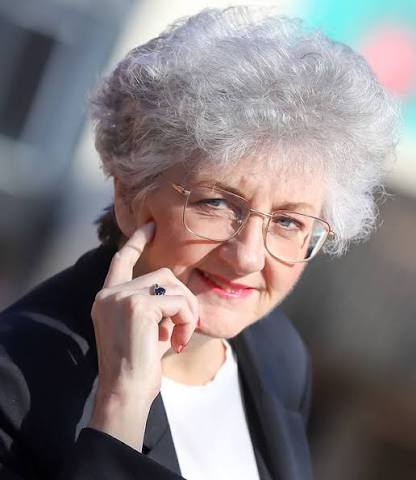
U.S Representative Arkansas District 1 Democratic Challenger Dr. Terri Yarbrough Green.
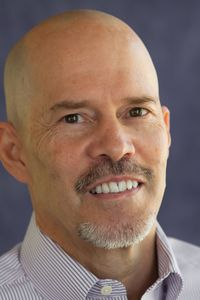
U.S. Representative Arkansas District 1 Libertarian Candidate Dr. Steve Parsons
October 8th marked the second political debate at Arkansas State University. In the race for U.S. House District 1, candidates Dem. Terri Yarbrough Green and Lib. Steve Parsons attended, while Representative Rick Crawford declined.
Jonathan Reaves moderated the event, with the same four panelists as last week’s debate: LaGanzie Kale, Samantha Mitchell, Allie Carson, and Levi Seward. Both candidates agreed to the debate terms: a 2-minute opening statement, 2 minutes for each panelist’s question, an additional minute for the initial candidate to respond, and a 3-minute closing statement.
Green opens by saying she is a “semi-retired pathologist,” not a politician. She describes herself as a wife, mother, grandmother, and daughter of a World War II veteran.
“I am more comfortable behind a microscope than a microphone, which I think is a good thing.”
Green says she has practiced pathology in northeast Arkansas since 1988, and as a doctor, they are taught to look for what isn’t working and find a way to fix it.
Green says when she looks at America, and looks at Arkansas, she sees things that need fixing.
She says she sees farmers being “squeezed by forces beyond their control,” farm bankruptcies, families stretched by costs of housing, healthcare, groceries, fuel and childcare.
Green mentions struggling rural hospitals and how many are closing. She criticizes the incumbent for the worsening situation.
“The incumbent has had 16 years to do something about these problems,” stated Green. “They have only gotten worse. And I hope tonight to draw a distinction between what the incumbent has and has not done. And what I would like to do for the people of the 1st district of Arkansas.”
Parsons begins his opening statement by explaining how being a third-party candidate has made it difficult to find platforms to voice his stances. Growing up in a small, family-owned business shaped his core politics.
“We lived on 17 cents an hour,” stated Parsons. “All the money that we earned went back into building that business…My parents complained the taxes and regulations made it increasingly difficult to create many new jobs. They believed that both political parties had failed them.”
He went on to earn two fellowships that let him attend a writing school for a PhD in economics, then made a living helping companies around the globe make business decisions, doing corporate training, and teaching the economics of technology at Washington University in St. Louis, Missouri.
Parsons’ campaign focuses on offering voters another choice aside from the typical two-party system that controls the U.S. government.
“Voters deserve another choice besides the two parties that have a stranglehold on politics in this country…My campaign is about less government and more freedom.”
The first panelist was LaGanzie Kale, founder of Jonesboro’s first minority-owned radio station KLEK. His first question concerns how the democratic party has struggled to connect with rural voters, and asked, “Is that because rural voters misunderstand democratic policies, or because the Democratic Party has fundamentally lost touch with the values and priorities? What is your party getting wrong?”
Green couldn’t answer for her party; she says she just knows what rural voters need.
“I’ve been visiting throughout the district and talking with people in rural areas so that I know everything,” stated Green. “And what I discovered that, uh, rural areas need is infrastructure, maybe clean water, sewer systems, roads that are passable, jobs, but they’re not going to get businesses to go back into rural areas, uh, to provide those jobs if you don’t have clean water.”
Since Parsons is a libertarian candidate, Kale clarified his question to, “What do you think the libertarian party can do that the other parties are not doing?”
Parsons explained that two years ago, 97% of U.S. House incumbents won their races, making it a difficult jurisdiction to compete in. He says the issues most important to rural voters also matter to all Americans. For instance, stopping the surplus of money in corporate welfare.
“Part of the reason that’s important in more rural areas is, there are not big corporations in rural America in general, and certainly not new corporations in the vast majority of rural areas in District 1,” said Parsons.
He went on to talk about reducing federal regulations because smaller local companies can’t fully understand them.
“That’s because if you’re a large company, you can specialize in bringing someone who understands the regulations. Small companies can’t do that.”
Green responded to say that she totally agrees with reducing the burden of regulations, especially in areas such as healthcare.
Kale’s second question regards raising the federal minimum wage. “Many small businesses in rural Arkansas operate on extremely thin margins. What should happen to a small business that genuinely cannot afford a federally mandated wage increase? Would you accept business closures or job losses as a necessary trade-off, or what else would you do to help alleviate that?”
Green made it clear first that she would not accept job losses or closures as a result of raising the minimum wage. She says she would like to see something gradual and with safeguards in place.
Green says part of the problem with wealth inequality and why people can’t afford things isn’t the living wage; it’s the expenses of other things.
She stated there has to be a way to get back to the economy that allows for comfortable, one-income households.
In Parsons’ response, he says many well-intentioned policies have unintended consequences and proposes other steps instead of a minimum wage.
The next panelist was Samantha Mitchell, an Arkansas State alum and news director for KASU public radio. Her first question for Dr. Parsons focused on ensuring everyday voters have the same resources to make their voices heard as those with political influence. “How will you ensure that a single parent working two jobs, a senior living on a fixed income, or a resident of a small rural community has the same opportunity to influence your decisions as someone with political power?”
Parsons describes the issue as “amazingly difficult,” and part of his solution is to recognize the varying circumstances that affect policymaking.
“I will try to recognize the nature of the diversity and the geographic areas in which people live, and what their circumstances are, and propose good policies that correspond to dealing with circumstances.”
He continued by discussing inflation control and how to “neuter the Federal Reserve” as part of his policies.
“(The Federal Reserve) is the one that has the greatest long-term influence on inflation, because they have control over the money supply,” said Parsons. “There have been massive increases in the money supply over the last six years or so, and that is at its heart one of the basic causes of inflation.”
Green believes the government exists to level the playing field and ensure corporations don’t have a louder voice than working people.
Green mentioned reversing the Citizens United decision as a possible way to help, along with getting the money out of politics, including stock trading in Congress.
Green mentions that ensuring rounds around the district are done is important for a representative, especially during breaks. She says this helps elevate individuals’ voices over corporations.
Mitchell’s next question raised concerns about Flock cameras and government surveillance. “At what point does a public safety tool become an infringement on individual freedom, and who should have the authority to make that determination?”
Parsons argued that although the cameras are technically legal, those legal interpretations do not match his views. He continued, saying that any jurisdiction with data from these surveillance tools should be held to a higher standard to ensure the data is not abused.
“Perhaps there needs to be a law passed to make it easier for people to sue when (infringement of privacy) happens,” stated Parsons.
Green argued that the individual right to privacy should be “paramount,” although she understands the need for security and public safety.
With the creation and implementation of AI and facial recognition, Green says the amount of data the government has on us is frightening.
“I do not trust that the people that have that information are going to use it wisely,” stated Green. “I think we need much more regulation in place, and to protect the individuals working for us.”
In his rebuttal, Parsons states, “I want government to be at the lowest geographical level possible.”
He follows by explaining that the federal government is “bureaucratic” and that he hopes laws, like those concerning flock cameras, are championed at the local level.
Allie Carson, editor of A-State newspaper The Herald, was the third panelist. Her first question went to Green and addressed the growing university population and rural communities. Carson asks, “How would you balance the needs of those two populations when making federal policy?”
Green says that, although difficult, balance is key.
Policy can help residents by building infrastructure, and Green says the university can help with that.
“I think it’s better when you don’t separate those needs, that these needs are different than those needs, but to look at the system as a whole, and how they interact, and different parts of the system benefit from another,” stated Green.
Parsons began by saying he believes this is another example where the federal government should have little role. He says that at the local level, rules should be established early so they don’t change people’s incentives.
As Arkansas State University is one of the largest economic drivers in northeast Arkansas, Carson’s second question to Green was “What role do you believe the government should play in supporting the university?”
Green says that when she was in school, student loans were interest-free until you had a job and could pay them back, when they began to accrue interest.
Now she says students are being asked to take out loans that, by the time they retire, they still owe as much as they did originally.
Green says the government has a responsibility to educate citizens and provide low-interest or no-interest loans.
Parsons responded that the American public has been sold a “bill of goods” to entice them into earning a four-year degree in college, but he claims that this belief is incorrect. He encourages universities to have “more skin in the game.”
“If you have a student who graduates from your university, in whatever program it is, if they can’t make the loan…(the university) would have to repay part of that loan…it incentivizes them pushing students to more productive degrees you can earn a living in,” stated Parsons.
The federal government provides grants for basic research. Green says the current administration is slashing many of these, and without the ability to advance knowledge, other countries are recruiting American scientists.
Levi Seward, president of A-State’s pre-law club and an aspiring law school student asked his first question for Parsons, discussing the statement found on Parsons’ 2024 campaign website claiming that Social Security is “the worst social program ever created,” and that “Congress has an ethical responsibility to avoid cutting benefits.”
As the national libertarian party moves toward phasing out the program, Seward asks Parsons, “Do you support phasing out Social Security?”
Parsons replied that Social Security is “one of the hardest nuts to crack” because of its complexity and said action should’ve been taken long ago to avoid “not be in the circumstance we’re in.” This concern grows as the Social Security fund approaches running out by 2032.
Green says we may be in a bad situation with Social Security but that we’re stuck with it, so we need to fix it.
Although she admits there are many proposed ways to do so, Green says she will not advocate for or go into detail on any of them.
Parsons says he might have been exaggerating when he called Social Security the worst program, but believes the program “should’ve been recognized as a failed pyramid scheme.”
In 2024, Representative Crawford was involved in a class-action lawsuit over congressional pay. Seward’s second question for Parsons is, “Should members of Congress get a pay raise, why or why not?”
Parsons described this question as exceptionally easy to answer, with a strong no. He notes that Crawford also sued for an increase in back pay, which Parsons finds “repugnant”.
Green said “no” to Congress receiving a pay raise.
“I don’t think that congressional pay should be increased until tax dollars are going to the people and we have an economy that is working for the working people,” according to Green.
Parsons did not disagree with Green and pointed out that the national debt is now three times what it was when Rep. Crawford first ran for office. He proposes that Congress’ pay should depend on whether it ends up with a deficit.
“I would love to see it where if you end up with a deficit, you get no pay,” stated Parsons.
The national midterm election is on November 3rd, including the vote for the House of Representatives. For voters in Craighead County, ballots can be cast at the Election Annex, 315 W. Jefferson Avenue in Jonesboro, from 7:30 am to 7:30 pm.