Mental Health Struggles on the Rise for Farmers

Story by DDNS Reporter Kinley Rainwater
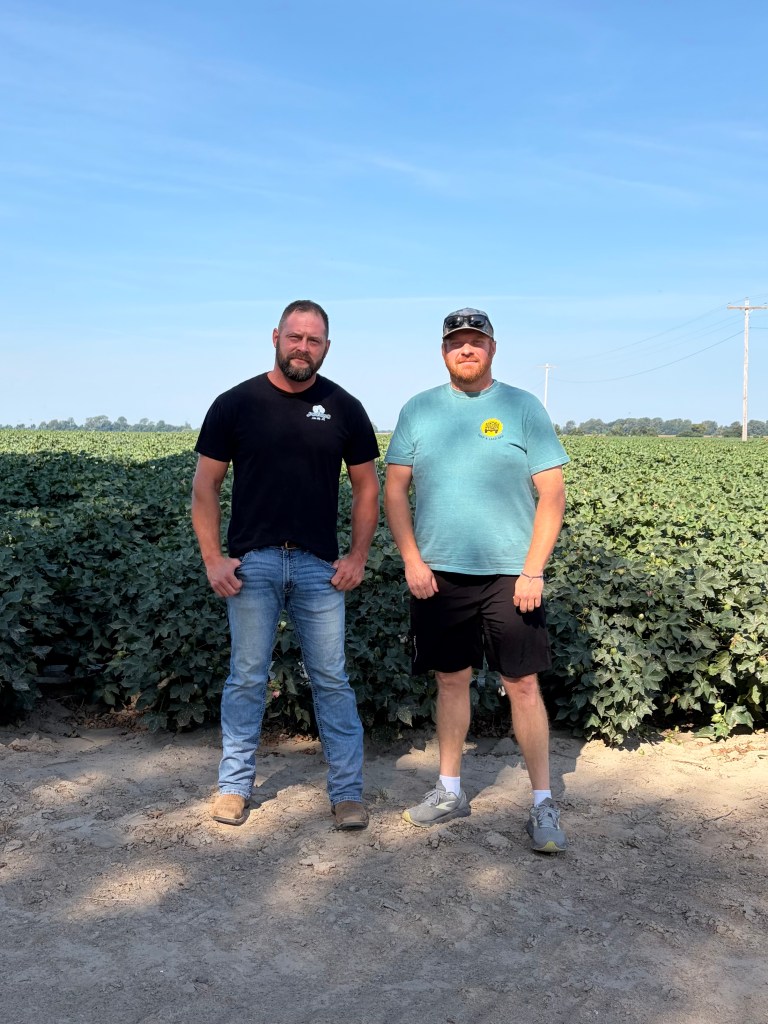
For farmers, the stress of running a farm can extend far beyond long hours and unpredictable weather. With financial uncertainty, rising costs, and pressure to keep their farms afloat, farmers’ mental health has taken a toll. These challenges make an already demanding lifestyle even harder.
Jonathan Bobbitt is a fourth-generation farmer who runs JAB Farms in Bay, Arkansas. He grows corn, cotton, and peanuts. Bobbitt bought his first acres in 2004 and has been adding on for the last 22 years. He grew up on a farm where he regularly saw and assisted with farm work. Bobbitt started driving tractors at thirteen, and after graduating, he worked full time for his father on the farm before getting his own farm loan at 19.
“Even on the days I don’t want to do it anymore, there’s still nothing else I want to do,” says Bobbitt.
Bobbitt spoke about his struggles both on and off the farm. Bobbitt says the current financial crisis has been going on for years. Bobbitt says his major struggles started in the early 2020s.
“We’re doing our jobs, we’re producing good crops, but we aren’t getting paid for them,” said Bobbitt. Bobbitt described the uncertainty and financial concerns farmers across the state faced as a time of despair. Bobbitt states the worst time for his mental health struggles started in 2022. “ The financial crisis that we’re in has been this steady bottleneck effect to the point where it’s just gushing out all over everybody.” He states that farmers are making crops but not being paid for them, which has had a detrimental effect on his mental health.
Branon Thiesse is the Staff chair of the Craighead County extension and works with the University of Arkansas System Division of Agriculture. He says farmers are facing an issue that has been a topic of discussion for years but has grown in the last year.
“Well, just about like every year, but this year is even worse, is the price that they’re receiving for their commodities. You know, all those are low,” says Bobbitt. “The input costs that they’ve experienced this year have been extraordinarily high, and that’s causing them to have money flow problems. Plus the diesel prices and that kind of stuff is just out of sight right now, and it’s not getting any better, and we’re in the meat of harvest right now, so it’s costing them more to harvest their crop.”
Thiesse says this is leading to the loss of 4th- and 5th-generation farmers.
“You know, the farmer is one of the only occupations that I know that they don’t set their price for the goods that they sell. They just have to rely on what the market will pay. You know, if you have a restaurant or something and your food costs go up, you just raise the price of the menu to cover those costs. Farmers don’t have that ability to do that, and that’s kind of how we’ve gotten in this shape.”
Thiesse shares a concern about what could happen if no change arrives. He says the possibility of corporate farming lingers in this issue, and he doesn’t believe it’s good for farmers or the economy.
“I don’t think that’s a good thing for our farmers because, you know, especially in Arkansas, you know, farming provides so much income and things for the state, you know, it’s a multimillion-dollar operation, and we start losing that, and farmers start losing their identities, and I just don’t like that.”
Thiesse says he is concerned about the loss of small farms in Arkansas.
“I don’t think that it would be a good idea to have these big corporate farms running, you know, because well people will be losing their jobs, and so, you know, it’ll hurt the economy of these small towns that the farmers use, you know, buy goods and services from them.”
From a citizen’s standpoint, Thiesse says you would notice this in the control of these farms. They wouldn’t be run and regulated by a local farmer, but by a corporation that may not even be based in Arkansas.
Thiesse says the Craighead County Agriculture Extension tries to be a resource for farmers to reach out to with economic questions, fertilizer recommendations, and help with insect and disease control.
Bobbitt shared the thoughts he carried during his struggle. “You do it year after year for four years, and you aren’t promised any hope.” He says there’s some hope on the market now, but for years there wasn’t.
Another stress Bobbitt shared was maintaining his personal life off the farm while feeling needed there.
“It’s just this crushing factor that you have with a job you love and don’t want to let go of, and then you have your personal life on top of that. Whether you’re going through a divorce, or relationship problems in general, or just anything in general, it combines to a point where it’s just a crushing situation where you don’t have anywhere to really turn.”
He said depression led up to him seeking out a therapist because he felt he “had become cynical and bitter.” This led to a new set of challenges, however.
Farming comes with a unique set of struggles, and that became evident in my conversation with Bobbitt. “We’re built different. We talk different. We’re just different individuals,” said Bobbitt. Bobbitt said the therapist he had did get through to him enough to help, but that it wasn’t the same as sitting and talking with someone who understood.
Pride was a word given by Bobbitt to explain why a lot of farmers don’t reach out. “Farmers don’t like to be seen involved in any of this. It’s a very egotistical type of situation,” said Bobbitt. Throughout the conversation with Bobbitt, phrases such as “Men don’t get help” and “Pick yourself up by your bootstraps” were brought up as ideas that stop many farmers from reaching out.
Bobbitt says, “We’re supposed to toughen up through it, and we’re losing too many, so that situation is not working. So it’s time to do something else. We have to somehow get over that barrier of letting people know that it’s okay, you know, to reach out for help. That there’s no harm in it.” Bobbitt’s story led him to use it to help others and inspire them to reach out, too.
Tailgate Time is a non-profit located in Bay. This is a mental health service centered around the agriculture industry by getting rid of the red tape and financial concerns.
Ryan Bane is the co-executive director of Tailgate Time, as well as the CEO of Apex Ag. Solutions in Bay. He has worked in the agriculture industry for 24 years, mainly on the retail side.
Bane shares that he had gone to a meeting at a church in Brookland where a woman stood up and said her area alone had lost three farmers. He knew he needed to do something to help.
After seeing Bobbitt post on Facebook offering an ear to those struggling, he reached out to talk, and they agreed something needed to be done; Bobbitt just said he wanted to be a part of it.
Bane says he doesn’t know a lot about mental health, but he knows how to build a team. So he played to his strengths and found Mandy Young, who he describes as “the best of both worlds.” She knows how to relate to the farmers, but she also knew the gray areas he didn’t.
Mandy Young is a licensed clinical social worker, community outreach, and educator for Tailgate Time. She grew up with an agriculture background and started working in the mental health field in 2007/2008, so she truly felt she was in the middle of both worlds.
She says their partnership began with a coffee date, where they discussed non-profit work and how to reach men in agriculture.
Bane states that he has never found a group quite like Tailgate Time. The closest things were hotlines and other small groups in other states or countries. There were campus groups that offered telehealth visits every so often, but nothing like what they offer.
Young says this therapy is unlike anything you would receive locally or even nationally. She says it isn’t restricted by the same red tape most therapists face, such as confined spaces or time limits.
Tailgate Time will go to the farmer, whether you want to talk at your tailgate, the shop, or on the combine. They can meet for as long as the farmer needs, but typical sessions run about 50-60 minutes. Young says this sets them apart.
When a farmer first reaches out, they don’t schedule therapy right away unless requested. They maintain a working relationship with Young and are eventually matched with a therapist when the farmer is ready.
When meeting with farmers, Young says the main goal is to let them know they aren’t alone.
“They often are very private individuals. They care deeply, but sometimes that comes out in very inappropriate emotions or reactions to behaviors that have been a pattern in their families for years.”
Young mentions again that they often have mentalities of “picking yourself up by the bootstraps,” and they often forget to check on themselves or on their families and to assess how they are coping.
Tailgate time eliminates the financial worry from therapy, so they do not charge for their services.
They mainly run on donations. They receive not only monetary donations, but also items like furniture and flooring for their physical therapy space and office, and even citizens’ time and labor.
As a 501 C3, they are tax-exempt and can apply for some grants, which they are currently looking into, as well as some fundraising options.
Young says the ones benefiting are also the ones choosing to donate so heavily.
Bane also believes pride to be the biggest barrier between farmers and the mental health care they need. He says they often would rather hurt themselves than see someone else hurt.
Bane gives an example with air masks on an airplane. He says you’re told to put your mask on first in an emergency so you are strong enough to help someone else, even if it feels selfish in the moment.
A misconception Bane says people often have is that you have to be in full crisis mode to reach out. This is far from the case; they can make one phone call to let you know you aren’t alone, or offer multiple sessions depending on the farmer’s needs.
One thing Bane thinks helps farmers feel more comfortable is that he’s also had therapy, as he considers himself the “first line of defense.” He can give you a listening ear, or he can direct you to one of the therapists.
“We have people in place, whether it’s personal or on the business side. It’s something that we believe in. It’s something all of Apex believes in. And we’ll make sure at least that part of the structure will carry on and move forward.
Young says they actively see about 6 people at this time. She says even though the number may seem small, the volume of calls they get isn’t. They allow call-ins to continue calling and often express appreciation for it.
The name originated from the idea that there are two times you spend with a farmer. Windshield time and tailgate time, and tailgate time is usually the end of the day.
“I think that kind of signifies the end of a journey or a crossroads. That there’s a lot of problems solved around a tailgate.”
Bane jokes that there’s an Irish goodbye where you leave without saying goodbye, and there’s an Arkansas goodbye where you tell each other goodbye about 10 times and you’re still standing around the tailgate talking.
#####


