Tag Archives: Arkansas

Rice in Schools plants seeds of learning statewide

Story by DDNS Reporter Jerry Don Burton

Schools across Arkansas are learning to embrace the natural state’s top crop as the Rice in Schools program pilot run continues.

The Arkansas Rice in Schools program, launched by the Arkansas Department of Agriculture in collaboration with Arkansas Rice and USA Rice, is an initiative to teach students how to cook with rice and educate them on the significance of the grain.

Leslee Tell, the farm-to-school coordinator for the United States Department of Agriculture, directs the program. She said Rice in Schools will teach students where their food comes from.

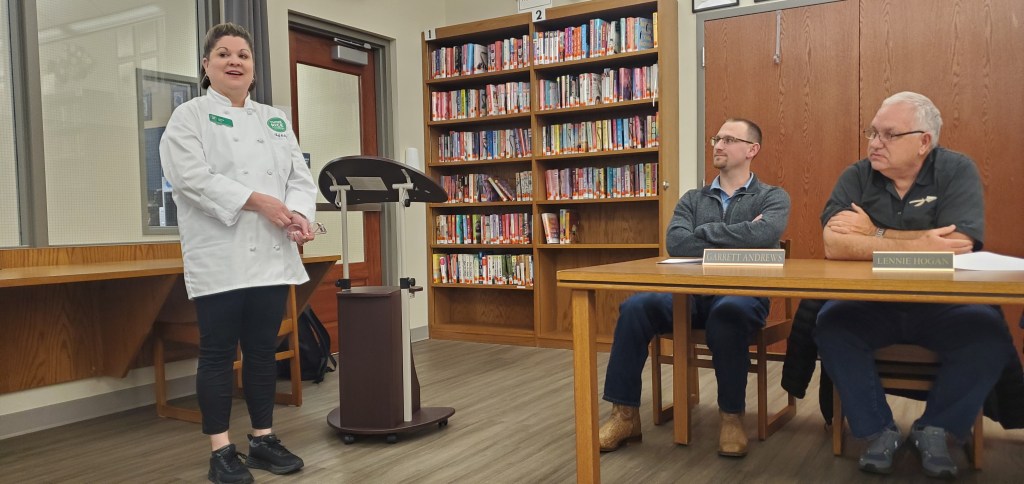
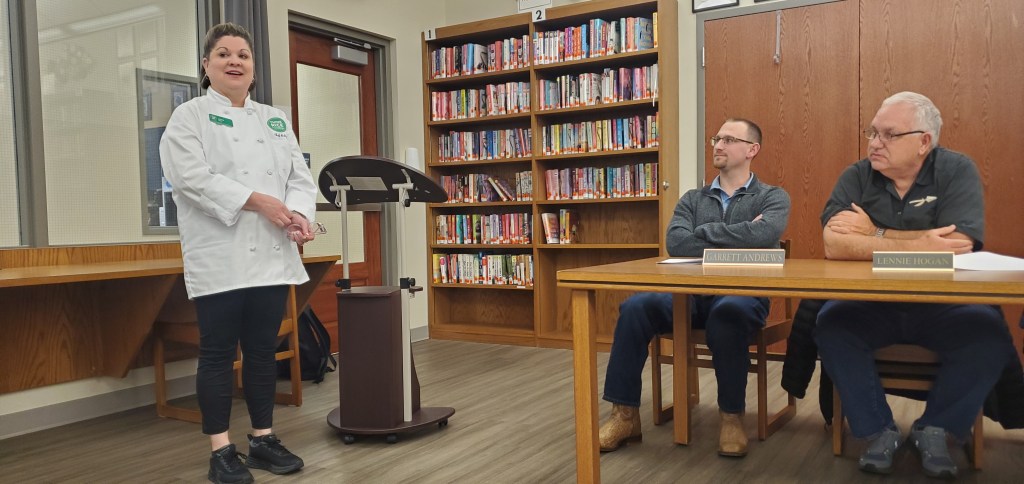
(Left) Leslee Tell, farm-to-school coordinator for the United States Department of Agriculture, describes the Rice in School Program to the Nettleton School Board at a March 17 meeting. According to the USDA website, the program, which is in a pilot phase, gives schools the tools to serve locally grown rice in healthy meals. PHOTO COURTESY OF JERRY DON BURTON

“Our goal is simple, increase the use of Arkansas-grown rice in schools, while helping students learn about agriculture, nutrition and where their food comes from,” Tell said in a YouTube video introducing the program. “This program is about more than just meals, it’s about connecting students to Arkansas agriculture and supporting our local farmers.”

Arkansas Governor Sarah Sanders developed the program in fall 2025, following the transition of nutrition programs to the Arkansas Department of Agriculture.

In December 2025, the Arkansas Rice Research and Promotion Board approved $15,000 in funding to support the program’s implementation. These funds provided schools with equipment to encourage the usage of Arkansas rice in their menus.

Sanders said the new program will teach students how farmers use rice to feed families around the world. She said students will use food made in Arkansas to develop healthy eating habits.

“Rice isn’t just part of Arkansas’ economy; it’s part of who we are,” Sanders said in a press release published Nov. 13, 2025.

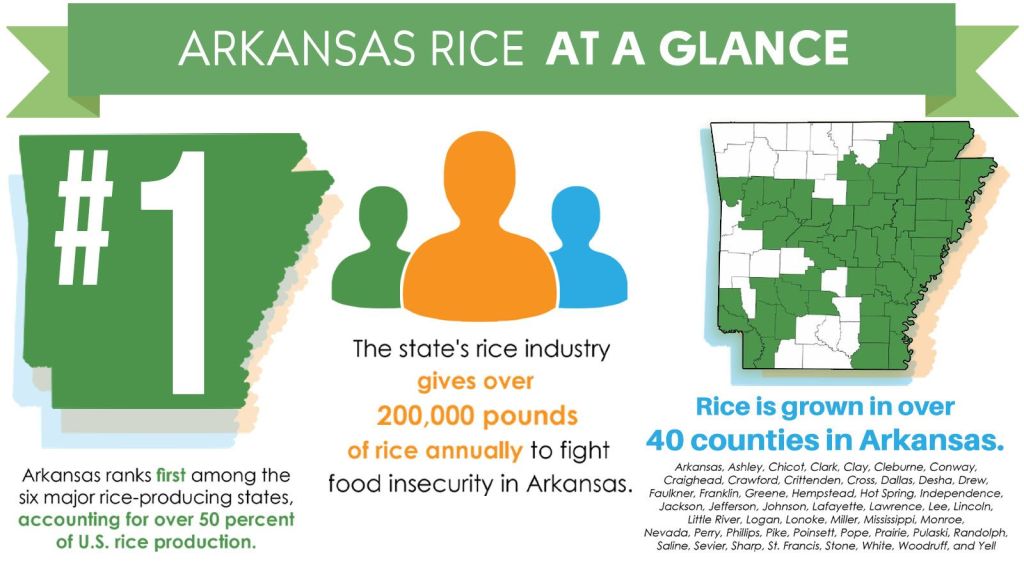
Arkansas is the largest rice-producing state, accounting for more than 40% of rice production in the United States, according to Arkansas Rice. Tell said a majority of this rice is produced in Arkansas’ northeast region. 

A graphic presents quick facts about Arkansas rice production. Arkansas is the largest rice-producing state, accounting for more than 40% of rice production in the United States, according to Arkansas Rice. GRAPHIC COURTESY OF ARAKNAS HOUSE OF REPRESENTATIVES

Almost 20 Arkansas schools and districts are scheduled to participate in the program’s pilot phase, which began in February at Ward Central Elementary in Cabot, Arkansas. The pilot will wrap up in May at Forest Park Elementary in Little Rock.

As part of the program, Tell travels to participating schools with a team to involve students in cooking demonstrations and interactive educational lessons. She also introduces meals with local rice to school menus and trains cafeteria staff in preparing them.

On April 9, Tell traveled to Newport, Arkansas, to introduce the program to students at Newport High School.

Leanne Bradley, the family and consumer science teacher at Newport High School, said Rice in Schools was a beneficial experience for her students. 

Bradley said rice’s significance to Arkansas demonstrates the program’s importance.

“I think everybody is aware that if you don’t take care of what you have, you can lose it,” Bradley said. “(Rice) is something that we have that not every other state has.”

Bradley said her food production and culinary students passed out stir-fried rice samples Tell made for elementary students. After sampling different meals made using rice, students placed stickers on a bulletin board to indicate how much or little they enjoyed the meals.

Tell said they compile student opinion data from every participating school. Then, in June, she said they will analyze the data to determine which recipes students liked most and least and make appropriate changes.

Bradley said the students greatly enjoyed the Rice in Schools program. She said her students cooked with rice before, but Tell’s contributions provided them with new ways to use the grain.

The family and consumer science teacher said she appreciated how the program helped her students realize how much rice Jackson County, where the Newport School District is located, produces.

According to the 2022 USDA Census of Agriculture, Jackson County produced almost 80,000 acres of rice, second only to soybeans.

“So just for the kids to realize this is a huge staple that Arkansas provides for the state, and it’s easy and it does not have to be Minute Rice,” Bradley said. “It really doesn’t take that much longer to actually cook your own rice and the quality is just so much better.”

Julie Isbell, superintendent at the Harrisburg School District, where Tell visited in March,

also said she loved how the program connected her students with local rice production.

Poinsett County, where Harrisburg is located, produced about 90,000 acres of rice, according to the same USDA census.

Tell also brought the program to the Nettleton School District in March. Nettleton School Board Vice President, Donnie Hauge, said he supported the program and thinks helping kids learn cooking skills and understand where their food comes from is an important undertaking.

Wes Ward, Arkansas secretary of agriculture, said the program emphasizes how Arkansas’ dominance over rice production could be used to support students and education. He said the program is a good step toward getting Arkansas to buy and use more of its own rice.

Bradley said rice is also versatile and can be stretched further than other ingredients. She said this is especially important for those who cannot afford as much food.  

“It’s a very quick and easy staple that you can keep in your pantry and it can go for a wide variety of different types of food,” Bradley said. “If your family is financially disadvantaged, you can pair beans and rice together, and that actually makes a complete protein.”

Bradley said her favorite part of the program was how it helped students interact with and cook rice in different ways than they’re used to. For some, Bradley said this program represents an introduction to rice as an ingredient.

However, the family and consumer science teacher said Tell’s visit to Newport was not without challenges. 

Tell was scheduled to return to Newport High School on April 10, but Bradley said she fell ill and missed the second day. 

“She could have talked so much more and given the information about it. She did not get to go into depth like she would at other places,” Bradley said.

In the time they did spend together, Bradley said Tell was a very energetic and fun, but professional person to work with.

“I think she’s phenomenal and I liked having the opportunity,” Bradley said. “I hope that this is something that takes off and is able to be utilized in schools across Arkansas.”

Tell said the student feedback, recipe evaluations and participation data gathered in the pilot will refine the program and prepare it for statewide expansion.

In the final iteration of the program, Bradley said she would like to see taste testing and activities for all grade levels.

Tell said the program continuously searches for and develops new and more effective methods of engaging schools.

Bradley said the school will continue building on the foundation laid by Tell and the Rice in Schools Program. She said the school’s student-run restaurant, the Hungry Hound Cafe, started implementing rice meals based on what they learned from the program.

Tell said she is a teacher at heart and loves to cook, so working with students to prepare recipes in the classroom was a great combination.

“We are bringing Arkansas-grown rice to schools across the state,” Tell said. “One plate at a time.”
More information about the Rice in Schools program may be found on the Arkansas Department of Agriculture’s website. Program organizers also created a digital guide featuring rice data and recipes from USA Rice.

Earth Day: A great time to review the natural state’s environmental practices, policies

Story by DDNS Reporter Jerry Don Burton

April 16, 2026

From city-wide cleanups to research demonstrations, several organizations are gearing up to host events for Earth Day in Arkansas.

Earth Day, held on April 22 every year since 1970, is a global event observed to spread awareness and support for environmental issues and practices.  

Melissa Dooley, director of the Arkansas State University environmental, health and safety office, said Earth Day assigns a specific day in which people can sit down and talk about what they are doing or could be doing to help the environment.

“Earth Day is a kind of celebration and a recognition and awareness of things that we can do to help maintain and improve our environment,” Dooley said. “But it’s also a celebration of the Earth as a whole and that we all are here sharing this big rock floating in space together and it’s all our home.”

EARTHDAY.ORG, the global coordinator for Earth Day events, announces a unique theme for Earth Day every year. This year, they chose “Our Power, Our Planet.”

Dooley said centering Earth Day around a theme keeps everyone on their toes and prevents the same events from happening each year. 

Upcoming events

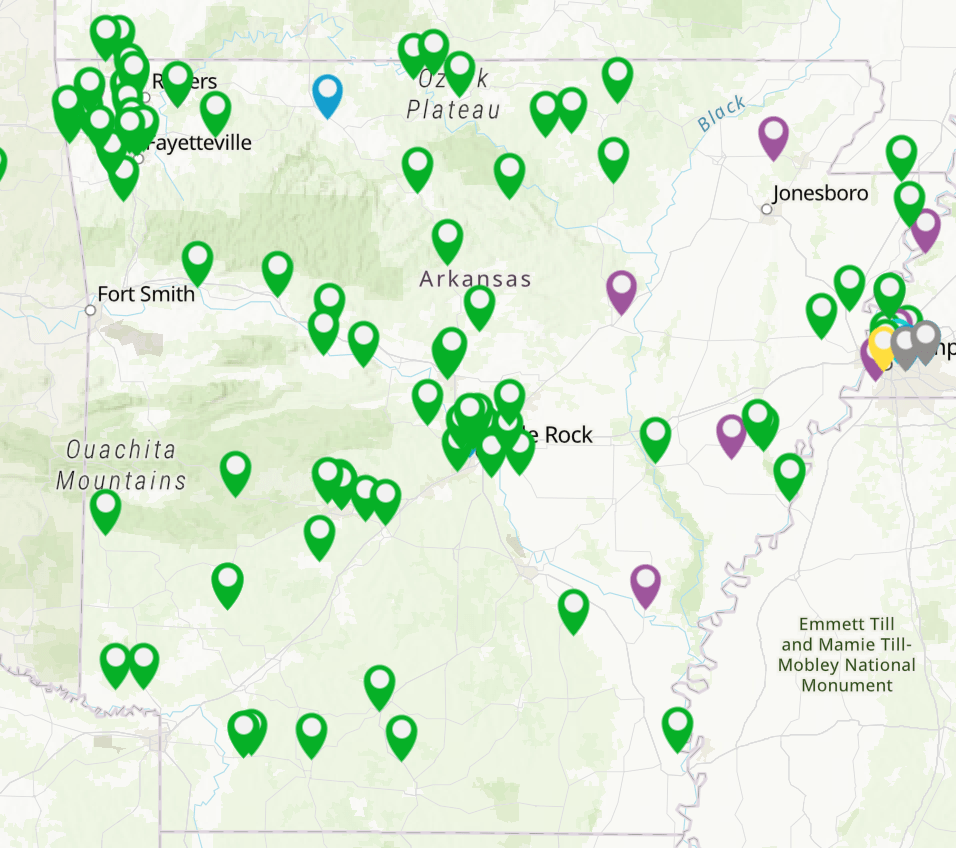
Over 10,000 Earth Day events are scheduled worldwide. More than 60 official EARTHDAY.ORG events are registered in Arkansas alone. 

EARTHDAY.ORG offers an interactive map on its website with the locations and dates of all registered events.

A map of Arkansas with pins denote Earth Day events registered through EARTHDAY.ORG. Organizers registered over 60 events in Arkansas as of April 16, 2026. MAP GRAPHIC COURTESY OF EARTHDAY.ORG.

Keep Arkansas Beautiful lists seven pages of environmentally focused events across Arkansas on its website, though not all are organized specifically for Earth Day. 

Keep Arkansas Beautiful is a division of the Arkansas Department of Parks, Heritage and Tourism and a certified affiliate of Keep America Beautiful Inc.

In Jonesboro, an Earth Day event is scheduled from 10 a.m. to 2 p.m., April 22, at the Heritage Plaza Lawn on the A-State campus. 

Several clubs and organizations will table at the annual event to spread awareness on several topics related to Earth Day. Dooley said some participants will even present their research. 

“We also invite a lot of local vendors who might be interested in setting up a table and talking about what they’re doing for environmental progress, sustainability and whether they have a focus on that this year,” Dooley said. 

An art contest is also scheduled, which will feature works made from recycled materials by local primary school students.

Dooley said the main goal of the event is to reach out to the younger generation and open their eyes to their impact on the world and the importance of sustainability. 

“It’s making them knowledgeable, so as they grow up, and they see mom and dad throw something out the window, they’re like, ‘you shouldn’t litter, mom and dad,’” Dooley said. “If we get everybody as they’re young, they grow up with these good responsibilities of being a steward for this planet and that also gives an opportunity to start thinking of things outside the box that this generation didn’t think of.”

Beverly Parker, Keep Jonesboro Beautiful commission chair, said giving children early experience with practices like litter removal and proper trash maintenance will establish more eco-friendly habits in the future.

Dooley said while the event is generally geared toward elementary and middle school students, anyone can come out and learn something.

The event is funded entirely by donations and volunteering. The EHS director said her department sponsors the event alongside Jennifer Bouldin, dean of the science and mathematics department and director of the ecotoxicology research facility. Dooley said this event represents a significant collaboration between several campus organizations. 

One town over and three days later, Paragould will host a city-wide cleanup from 8 a.m. to noon. The event is led by volunteers and designed to bring together residents and local businesses to improve public areas.

More Earth Day events across the Arkansas Delta are listed below:

  • Marianna/Lee County cleanup
    • When: April 18, 2026, from 8:30 a.m. to 12:30 p.m.
    • Where: No. 1 Court Square, Marianna, Arkansas
    • What: Volunteers will clean up litter in downtown Marianna
    • Coordinator: Pat Audirsch, 870-821-1403, pataud@sbcglobal.net 
  • Lake Chicot cleanup
    • When: April 18, 2026, at 9 a.m.
    • Where: Lake Chicot State Park
    • What: Volunteers will clean up areas across Lake Chicot State Park 
    • Coordinator: Brandi Hanson, 870-265-5480, brandi.hanson@arkansas.gov 
  • Helen-West Helena cleanup
    • When: April 25, 2026, from 9 a.m. to 1 p.m.
    • Where: 319 Philips St., Helena-West Helena, Arkansas
    • What: Volunteers will engage in a city-wide cleanup across Helena-West Helena
    • Coordinator: Chris Schaffhauser, 501-410-5562, schaffhauserchris@gmail.com 

More important than ever

Cherie O’Mary, executive director of the Arkansas Recycling Coalition, said Earth Day excels at highlighting advancements in environmental policies, practices and issues. 

Dooley said one of the biggest environmental issues facing Arkansas now is the amount of trash on the interstates, highways and parking lots.

“You can go anywhere, there’s just trash everywhere,” Dooley said. “All of that trash eventually makes it ways into our stormwater systems and our rivers, our streams, our lakes, where it clogs up the heavy, dense areas in the woods where animals are, and it affects their habitats as well.”

Parker said areas with poor litter or debris management give off an unsafe feeling. 

Arkansas Department of Transportation assistance chief engineer for maintenance, Steve Frisbee, said litter is a problem, from the largest interstate to the smallest back road.

Emma Goad, a writer for ARDOT, said the department spent about $8 million on cleanup efforts. She said the cost comes from several programs, contracts and other services intended to keep Arkansas highways litter-free.

Frisbee said organizations like Keep Arkansas Beautiful help engage the community in cleanup efforts and reduce the environmental damage litter causes.

A litter report form may be filed on the IDrive Arkansas website here.

Recent environmental policy also highlights the significance of Earth Day. 

On July 25, 2025, Arkansas Republican Representative Bruce Westerman introduced the Standardizing Permitting and Expediting Economic Development Act

The SPEED Act limits the scope of the National Environmental Policy Act and changes the environmental review of major federal actions under NEPA to restrict the number of federal actions that trigger NEPA review and expedite the review process. 

According to House Majority Whip Tom Emmer, more than 300 stakeholders support the bill. Organizations like the Aluminum Association, Steel Manufacturers Association, Data Center Coalition and even Google state they support the SPEED Act because it will accelerate projects and lower costs.

Despite this support, the bill remains controversial legislation.

David Watkins, director of government affairs for the climate and energy program at the Union of Concerned Scientists, said this bill means bad news for the environment.

“It includes goodies like shielding fossil fuel projects from meaningful review or public input before they are permitted, then shielding them from legal recourse after they are approved,” Watkins wrote in a UCS article. “Circumventing science and denying reality will only lead to greater harm to our environment and worse outcomes for communities.”

The SPEED Act is pending approval from the Senate after the House of Representatives voted to pass the SPEED Act on Dec. 18, 2025.

Despite the controversy surrounding this bill and others, Dooley said she thinks, generally, Arkansas does its fair share for the environment.

“We have beautiful parks, beautiful places to go and visit, enjoy and we have some rules in place,” Dooley said. “Could we do better? Yeah, I mean, there’s always room for improvement. But I think we’re headed in a good direction.”

Dooley said stormwater permit requirements are an example of good policy in Arkansas.

The Arkansas Division of Environmental Quality requires any construction project over one acre to apply for a stormwater permit under the National Pollutant Discharge Elimination System program. 

An infographic illustrates how rain or melted snow carries construction waste like concrete, oils and pesticides, into stormwater drains. These construction pollutants cause ecological damage when they drain into bodies of water. INFOGRAPHIC COURTESY OF NEVADA DIVISION OF ENVIRONMENTAL PROTECTION.

According to the ADEQ website, stormwater carries dirt, chemicals and other pollutants that could harm water quality. Stormwater permits regulate this runoff and prevent pollutants from entering streams, creeks, ditches and other waterways.

While Dooley said the laws in place and penalties for breaking them are effective, she knows there will always be bad actors. She said this is why speaking up is important.

The ADEQ pollution complaint form may be found here.

O’Mary said Arkansas’ glass recycling programs are another example of how Arkansas is leading the charge in certain areas of sustainability.

The ARC executive director said the real impact of Earth Day may only be felt in the future. Still, O’Mary said now is always the best time to get involved.

Keep the conversation going

Although Earth Day is only celebrated on a single day, Dooley said awareness should continue year-round. She said people are constantly interacting with the environment, making Earth Day an everyday conversation. 

O’Mary, who has served the recycling industry for 15 years, said she feels Earth Day is more prevalent now than in previous years. 

In her five years as the EHS director, Dooley said she noticed younger people becoming more interested in sustainability. Dooley, who also sits on the Keep Jonesboro Beautiful commission, said the community has expressed interest in Earth Day events like city cleanups.

“I was relatively surprised with the amount of people that really want those types of things,” Dooley said.

O’Mary and Dooley said one does not have to wait until Earth Day to start taking care of the planet. 

Dooley said many people do not realize all the different ways they can participate in Earth Day.

O’Mary said calling the local solid waste district and asking how to offer support is a good first step for those interested in recycling but unsure how to start.

The ARC executive director said she is constantly on the phone, helping direct people to where they can recycle unwanted items.

“That’s the ultimate goal, keep it out of the landfill,” O’Mary said. “Reuse, reuse, reuse.”

The ARC may be contacted by calling 866-290-1429 or emailing mail@recycleark.org.

Dooley said events like clothing swaps and practices like electronic recycling are things people don’t think about often, but still help the environment.

The EHS director said, even if Earth Day did not exist, people would still raise awareness for environmental issues and engage in eco-friendly practices. 

“I think we, as a race, as a human race, all recognize that something should be done,” Dooley said.

More information about Earth Day, local events and environmental issues may be found linked below:

Nettleton School Board discuss educational rice program, effective AI usage

Photos and Story from DDNS Reporter Jerry Don Burton

March 18, 2026

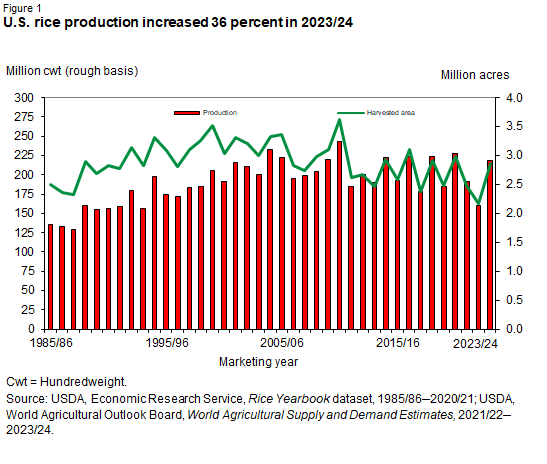
Bar graph depicts U.S. rice production (red) and harvested area (green) from the years 1985 to 2024. Rice production increased by nearly 1 million acres between 2023 and 2024. Courtesy of the United States Department of Agriculture.

The Nettleton School Board heard presentations on an initiative to educate students about rice and effective AI use in classrooms at its monthly meeting.

Rice in Schools Pilot Initiative

(Left) Leslie Tell, farm-to-school coordinator for the United States Department of Agriculture, explains the Rice in School program at the Tuesday, March 17, Nettleton School Board Meeting. According to the USDA website, the program, which is in a pilot phase, gives schools the tools to serve locally grown rice in healthy meals. Photo by Jerry Don Burton.

Leslee Tell, farm-to-school coordinator for the United States Department of Agriculture, addressed the board at the meeting Tuesday, March 17, to provide an overview of the Rice in Schools program.

Tell said the initiative aims to provide schools with the resources to serve local rice and educate students about the significance of rice in Arkansas. She said Arkansas Governor Sarah Sanders saw the importance of rice in the state and developed the initiative in fall 2025.

“So her idea was that, number one, students know where their food is coming from. Number two, that it’s local food as much as possible,” Tell said. “If we’re growing this much rice, then we should probably be serving rice and teaching kids to love rice as well.”

According to the USDA, the United States accounts for less than 2% of global rice production, but ships 5% of global exports. Arkansas is the largest rice-producing state, accounting for more than 40% of rice production in the U.S.

Tell said a majority of rice production in Arkansas is concentrated in the state’s northeast region. 

(Third from left) Donnie Hague, Nettleton School Board vice president, asks USDA Farm-To-School Coordinator Leslee Tell a question about the Rice in Schools program. Photo by Jerry Don Burton.

Donnie Hauge, Nettleton School Board vice president, said a program for helping kids understand where rice comes from and how to cook with it is a great idea.

The farm-to-school coordinator said about 20 schools have signed up for the program. 

Participating schools will introduce classroom lessons on Arkansas agriculture, participate in hands-on cooking demonstrations, train cafeteria staff and include local rice in school meals at least once a month.

Tell said schools may also engage in taste tests and interactive experiences. She said the program is continuously expanding and introducing new ways to highlight Arkansas rice. 

One such development is the creation of a cookbook containing 50 rice recipes for students to take home and prepare with their family. 

“In the food banks and blessing boxes, there’s a lot of rice,” Tell said. “ If you have kids wanting to eat rice at school and they’ve made it at school, they get their recipe book, and they can go home, and maybe that bridge can happen between the parent and the child, and we could encourage that.”

Tell said the program also engages with the current national interest in eating real food. 

“You can’t get any more real than this,” Tell said. “We’re eating real food, we’re eating real rice, real chicken, real vegetables and we’re making it right here from scratch, in front of the kids.”

Currently, the initiative is in a pilot phase. Tell said feedback from participating schools will be used to improve the program and shape future expansions.

Effective AI Usage in Classrooms

Following Tell’s presentation, the Nettleton High School principal, elementary school principal and three junior high school students addressed the school board to explain how they’ve implemented artificial intelligence in their respective fields.

Philip Cook, Nettleton High School career and technical academy principal, said he and other educators use AI to increase productivity and generate content. He said he uses AI to outsource elements of his workflow. 

(Right) Philip Cook, Nettleton High School career and technical academy principal, explains how the high school uses AI coaching assistant Edia to those in attendance at the Nettleton School Board meeting. Cook said AI, when used properly, helps educator lessen their workload. Photo by Jerry Don Burton.

“What we do at NHS right now is we have teachers that use it to generate worksheets. We use it for coaching students and to help with our summative evaluations,” Cook said. “Then also, to look at and align some of our different curriculum with each other.”

Using the Arkansas academic standards and ATLAS achievement level descriptors for geometry as an example, Cook demonstrated how AI can be used to parse and summarize dense information. 

The high school principal said projects like creating curricula that meet various standards, something which could take all summer to complete, are achievable in a single weekend with AI like ChatGPT. 

Cook said Nettleton High School is also incorporating Edia, an AI coaching assistant, in the classroom.

Despite embracing AI, Cook said education will always need a human element. 

“That’s what we’re trying to do in our critical algebra is not just turn it over to the AI–because then we become a facilitator–but use that where it’s appropriate to support that learning and then go ahead and let the teacher break kids into small groups, interact with them, give them those alternative learning methods,” Cook said. “I think it takes a good marriage of both to really be as effective as we can.”

University Heights Elementary Principal Sarah George said she uses Upraiser, an AI software designed to enhance teacher evaluations, in her administrative duties.

(Right) Sarah Geoge, University Heights Elementary principal, explains how she uses Upraiser AI when giving teacher evaluations. She said she uses Upraiser to provide actionable feedback to teachers. Photo by Jerry Don Burton.

“This platform has really helped, because it’s narrowed down the feedback that is given to teachers because it’s directly aligned to standards,” George said.

Garrett Andrews, the newest member of the Nettleton School Board, asked George if the AI she uses is accurate. George said Upraiser is mostly accurate, but agreed with Cook that a human element will always be necessary.

The elementary school principal said she is transparent with teachers and lets them know when the feedback they receive is partially AI-generated.

After George’s report, Nettleton Junior High School students Collins Baker, Jace Stegall and Brik Hogan presented a slideshow to detail how they use AI.

Baker said she learned how to use AI in 2025 and mostly utilizes it as a search engine, like Google. She said, while a helpful tool, AI can nonetheless introduce biases in its responses.

Stegall said he uses AI for coding help and in certain class assignments, specifically one project using drones to map hazardous conditions in Jonesboro.

“We want to know how to use it right, how to use it responsibly and how to use it for our school work instead of cheating,” Stegall said.

Hauge said the students’ presentation taught him how they use AI not for short answers or cheating, but productively and responsibly.

Other business 

In other business, Athletics Director Tommy Raffo announced several upgrades and additions to the athletic facilities:

  • New track and field sand pit
  • New baseball bullpen
  • New televisions installed near concession stands
  • New and updated spirit banners installed in gym

Raffo also said he was proud of the boys and girls basketball teams, who were seeded fourth and second in the state, respectively.

Finally, the Nettleton High School Choir performed three songs ahead of the school’s production of “Hairspray.” Showings will be held April 24 and 25 at 7 p.m. and April 26 at 2 p.m. More information may be found on The Raider Spotlight’s Facebook page.
The next school board meeting will be held at 6 p.m., April 21, at the Nettleton Central Office.

Pollution Control and Ecology Commission adopts new business plan for Used Tire Program

Story by DDNS Reporter Jerry Don Burton

March 1, 2026

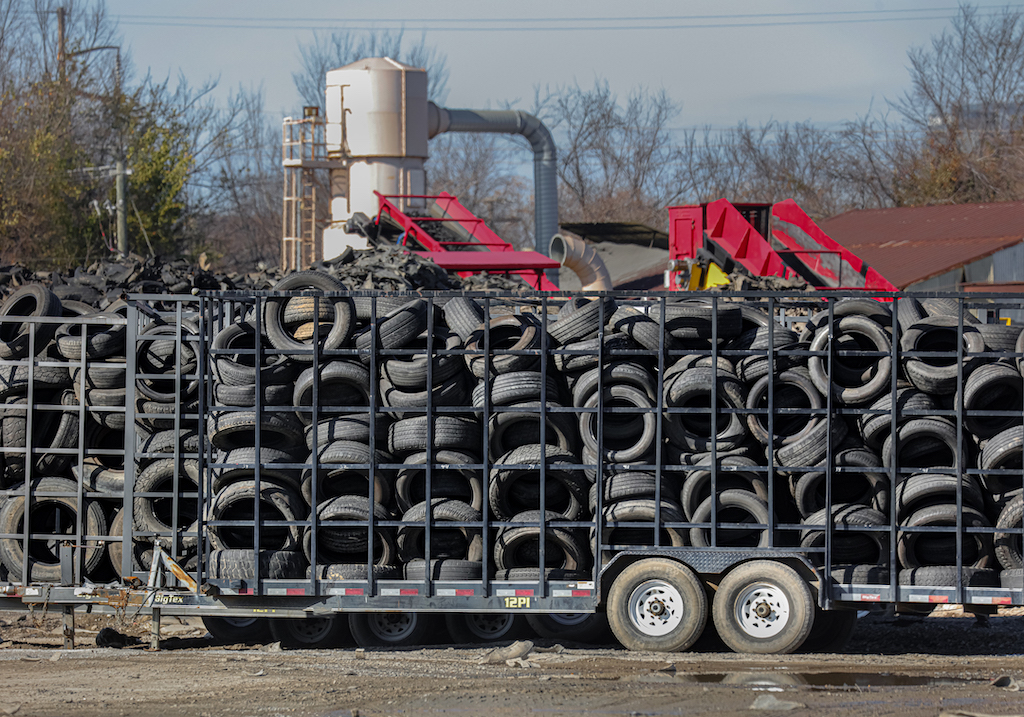
Loads of tires sit on trailers at the Davis Rubber Company facility in east Little Rock in December 2022.

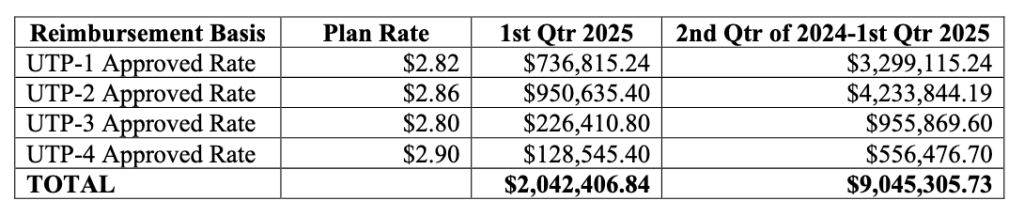
The Arkansas Pollution Control and Ecology Commission (PC&EC) adopted a new business plan for the District 4 Used Tire Program (UTP-4), increasing reimbursement rates to $4.84 per tire in Southeast Arkansas.

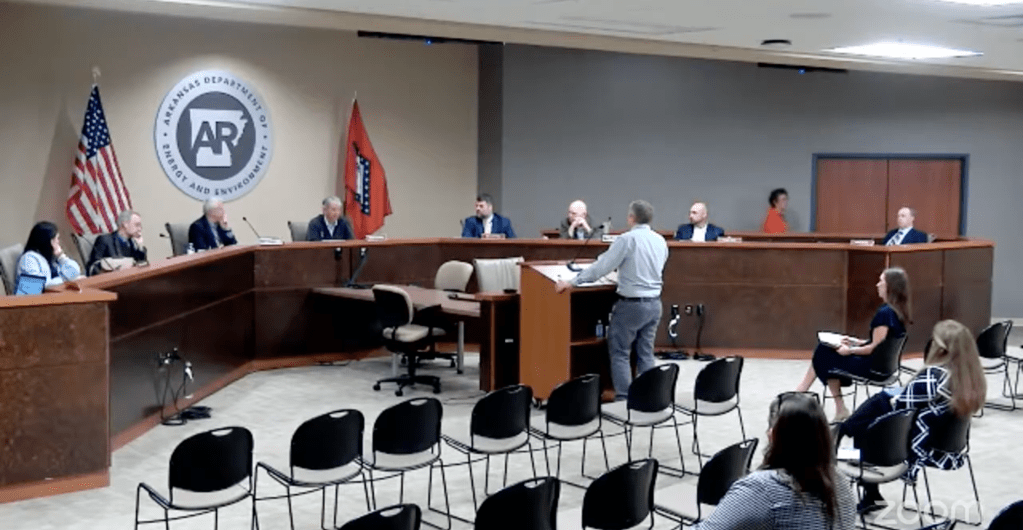
Bailey Taylor, chief environment administrator for the Arkansas Division of Environmental Quality, presented the UTP-4 business plan at the Friday, Feb. 27, PC&EC meeting.

Taylor said the plan is structured to address the backlog in Southeast Arkansas tire processing and resulting health and environmental concerns.

“For human health and the environment, we’re looking at getting these tires off the ground,” Taylor said. “There’s been almost two full quarters that tires have not been picked up. We’re getting lots of calls that tires are stacking up all over the district.”

The plan proposes increasing the reimbursement rate per tire from $2.90 to $4.84 in District 4, which encompasses Southeast Arkansas. Taylor said this increase is based on administrative, processing and transportation costs, including costs for an out-of-state contracted processor.

Courtesy of the Arkansas Pollution Control and Ecology Commission.

Taylor said she recommended the plan only be approved temporarily for one or two quarters to establish a collector, transporter and processor to manage the tires in Southeast Arkansas. Then, she said, they would evaluate how to save costs and return with a revised plan.

“We’re hopeful that with just a quarter that they can pick up the backlog and also what is produced this quarter,” Taylor said. “And then go out for bid at a much more reasonable rate.”

However, Justin Sparrow, director of the West River Valley Solid Waste District in Clarksville, Arkansas, said this plan may do more harm than good.

Justin Sparrow, director of the West River Valley Solid Waste District in Clarksville, Arkansas, presents his concerns regarding the new business plan to the PC&EC.

“My major concern with the proposed reimbursement rate for UTP-4 being $4.84 is that this will quickly deplete a fund that is already in the red,” Sparrow said. “By statute, once that money runs out, DEQ has to prorate what they send out to all four districts.”

Prorate is a verb, meaning to allocate or distribute funds pro rata, or proportionally. Taylor said she wants to avoid prorating if possible.

Sparrow said if the fund runs out, the other three districts will feel the effect. 

Sparrow operates in District 1, Northwest Arkansas, where the reimbursement rate is $2.82 per tire. He said his district collects and processes 360,000 tires annually from 11 counties.

“I think UTP-4 should probably reopen the bid process and take another look at this before this commission approves a rate of $4.84,” Sparrow said.

Following Sparrow’s comments, PC&EC Chair Al Eckert III asked Taylor if the new reimbursement rate would result in a quicker shortfall, or deficit.

Taylor said they already see a shortfall between $300,000 and $400,000 every quarter with the current rates. She said any reimbursement rate over $2.31 per tire will result in a shortfall and the new rate would contribute to an extra $150,000 deficit for two quarters. 

Charlie Spakes, district 4 commission member, said the out-of-state contractor might be taking advantage of the situation. 

“It just seems like the cost is way higher, they have us kind of over a barrel where we have to get these tires picked up and they kind of have us hostage at this $4.90, compared to everyone else,” Spakes said.

Taylor said while the processing cost per tire is higher than other districts, the extra transportation cost inflates the rate much more.

Once the discussion concluded, the PC&EC passed a minute order adopting the business plan.

In other business, Angela Russell, mayor of Tontitown, Arkansas, continued asking the commission for help with her city.

Aerial view of the Eco-Vista Landfill in Tontitown, Arkansas. Many Tontitown residents claim the landfill produces dangerous fumes.

Tontitown citizens and government officials, including Russell, have attended several PC&EC meetings to seek help regarding declining air quality from the nearby Eco-Vista Landfill.

Russell said she will keep voicing her concerns and asking for stricter rules or regulations. She said if something catastrophic does happen, someone will be held accountable. 

“I want it recorded that citizens have come here to ask for help,” Russell said. “Nothing has been done to alleviate the problem.”

She said her grandson has made multiple hospital visits as a result of the dangerous fumes emitted from the landfill. 

“I myself have had to go to the hospital in the middle of the night because I woke up and the fumes were so strong in my bedroom I couldn’t breathe,” Russell said.

After the mayor’s comments, Eckert asked Taylor to address Russell’s concerns and prepare an update for the next meeting.

The PC&EC will meet again at 10 a.m. March 27, in the Arkansas Department of Energy and Environment’s Commission Room. Meetings are also livestreamed on YouTube.

Severe weather preparedness vital as Arkansas tornado season reaches peak

Story by DDNS Reporter Jerry Don Burton.

April 6, 2026

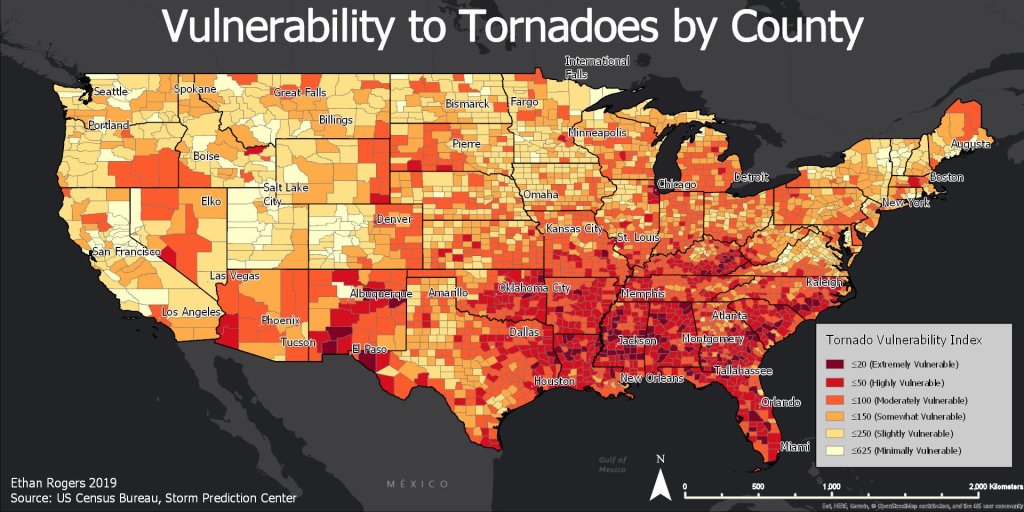
A graphic depicts the vulnerability of tornadoes in each county in the United States. Areas of greater vulnerability largely concentrate in the southeastern portion of the U.S. GRAPHIC COURTESY OF ETHAN ROGERS

 Severe weather preparedness remains vital as Arkansas enters the peak of tornado season.

Kory Ward, fire chief for Wynne, Arkansas, said those who don’t take severe weather seriously are making a bad move.

“There’s people that think, ‘oh it’ll never hit here,’ and it’s been very true to hit here within the last two years,” Ward said. “I say it all the time, stay weather aware. Pay attention to the news. Pay attention to your local radio station. Don’t be surprised by it.”

How can I stay safe during tornado season?

Anthony Coy, director of the Craighead County Office of Emergency Management (OEM), said always knowing the location of a nearby safe spot is vital for tornado season preparedness. 

A list of public storm shelters across Arkansas may be found at https://arkansasstormshelterlist.phonesites.com/. This list was last updated March 2025.

Coy said those living in manufactured homes or mobile homes, also called trailers, should especially take advantage of these community safe rooms. 

Manufactured homes are particularly susceptible to tornado damage because they are usually constructed with lighter, less durable materials. 

In a 2018 research article published by the American Meteorological Society’s Weather, Climate, and Society journal, Stephen Strader and Walker Ashley found that 72% of all tornado fatalities occur in homes and 54% of these deaths occur in mobile or manufactured homes. 

Amber Schlessiger, a National Weather Service (NWS) meteorologist, said overnight tornadoes are another distinct threat because they strike when most people are asleep. She said those who find themselves in the path of an overnight storm should set up multiple methods to receive warnings and be ready to wake up if a threat approaches.

Ward echoed this sentiment and said having some form of early warning system, such as phone notifications or a crank radio, is indispensable. 

Coy said keeping up-to-date with the weather is always good advice.

“There are a hundred different ways you can get those weather warnings on your phone,” Coy said. “But almost every county has some sort of information platform. In Craighead County, we use CodeRED.”

CodeRED, a community emergency notification system, allows individuals to sign up for alerts on Jonesboro’s website. The CodeRED mobile app may also be downloaded on the Apple App Store and Google Play Store.

Coy also said to exercise caution when determining trusted sources. He said some severe weather information, especially on social media, may be misleading or originate from questionable sources. 

The OEM director said creating and maintaining a preparedness kit is another step in staying safe. 

A well-prepared kit may include the following items: Several days’ worth of food and water, a flashlight, batteries, first-aid, a change of clothes, a whistle, maps, hygiene items, prescription medicines and pet food, if applicable.

Ultimately, Coy said, even the most seasoned preppers will overlook something. Still, even small acts of preparation will make a lasting impact, he said.

“Each time you chip away at that, you’ll become more prepared than you were before,” Coy said. “Don’t ever let it become a back-burner item.”

What are the impacts of tornado season?

Tornadoes are one of the deadliest and most costly natural disasters in the United States.

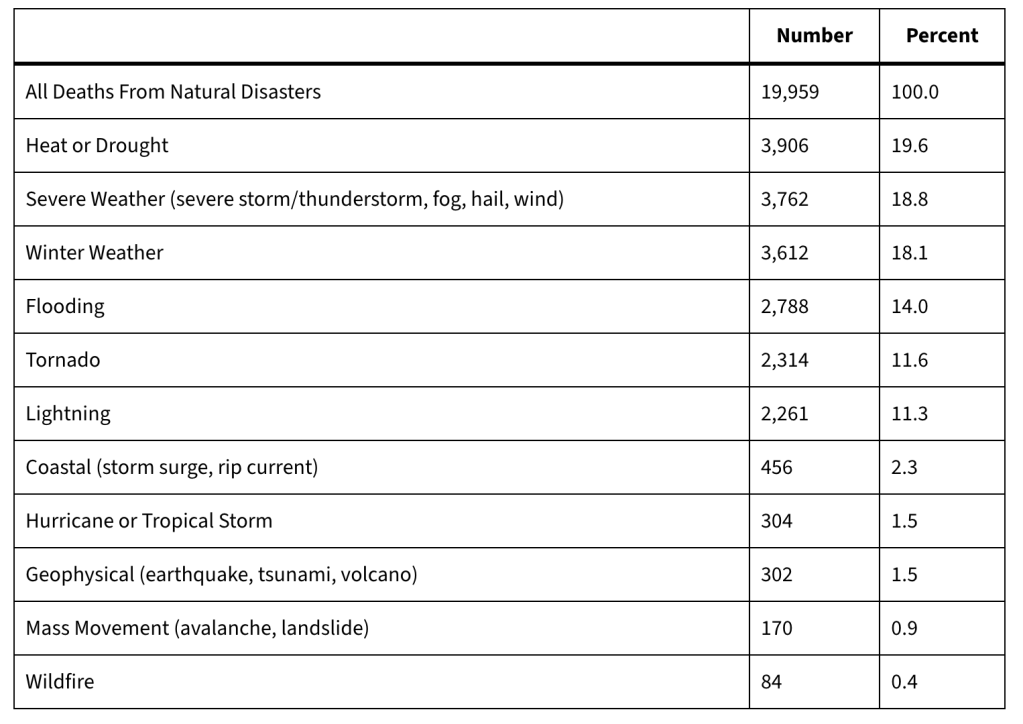
In a 2008 research article concerning patterns among natural disasters and mortality, Kevin Borden and Susan Cutter found, of 11 disasters researched, tornadoes accounted for the fifth-highest deaths in the U.S. between 1970 and 2004.

A list of natural disaster-related deaths recorded in the United States between 1970 and 2004. Tornadoes accounted for the fifth-most deaths in this list. LIST COURTESY OF KEVIN BORDEN AND SUSAN CUTTER

The article, published in the International Journal of Health Geographics, reported deaths caused by tornadoes constituted almost 12% of all natural disaster-related deaths in the U.S. during the same time.

Arkansas, in particular, shares a lengthy history with tornadoes.

From 1950 to 2024, 2,478 tornadoes hit Arkansas, killing 412 people, according to the NWS Little Rock office.

A study conducted by the National Oceanic and Atmospheric Administration (NOAA) found, from 1950 to 2025, tornadoes in Arkansas caused 5,567 direct injuries, $3.5 billion in property damage and $4 million in crop damage.

Northeast Arkansas is no stranger to lethal tornadoes either.

On March 31, 2023, an EF3 tornado tore through Wynne, Arkansas, killing 4 and causing over $150 million in property damage, according to the NWS Memphis office. The Wynne High School, which found itself directly in the center of the tornado’s path, was razed.

Three years prior, on March 28, 2020, another EF3 tornado damaged about 300 buildings, caused an estimated $300 million in damages and injured 200 people in Craighead County. 

However, despite the destruction they cause, Coy said, blessings exist in every disaster.

For example, Coy said the COVID-19 pandemic actually saved lives during the aforementioned 2020 tornado. He said the pandemic kept people at home rather than in commercial buildings, like The Mall at Turtle Creek in Jonesboro, which the tornado almost completely destroyed.

View of The Mall at Turtle Creek in Jonesboro after a tornado nearly destroyed the entire 73-acre plot. The tornado hit Craighead County on March 28, 2020. PHOTO COURTESY OF JONESBORO POLICE DEPARTMENT FACEBOOK

He said the tornado also taught him to have plans in place before disaster strikes.

“I was very new in the position at that time, I didn’t have my volunteer teams gathered yet, didn’t have changes to our emergency operations plan, none of that,” Coy said. “And here I am sitting at home on a Saturday and I watch a tornado drop down in the middle of Jonesboro. That’ll get your attention.”

An aerial view shows ongoing construction at the site of the new Wynne High School. A tornado that struck Wynne, Arkansas on March 31, 2023, destroyed the previous high school. Nabholz Construction Corporation was contracted to lead construction on the high school. PHOTO COURTESY OF NABHOLZ CORPORATION FACEBOOK

As for Wynne, the company contracted to build a new campus for the high school, Nabholz Construction Corporation, stated in a Jan. 13 Facebook post that progress is moving steadily. 

“It’s exciting to see this project transition from structure to the spaces that will soon support learning, creativity, and community,” Nabholz Corporation wrote.

Why is there a tornado season, anyway?

According to the NWS, the months of peak tornado occurrence, also known as tornado season, last from March to May in Arkansas.

As temperatures transition from colder to warmer in the spring, atmospheric instability creates conditions favorable for the formation of tornadoes. Since this transition happens at slightly different times throughout the country, tornado season varies depending on the state.

Other climate factors also play a role in creating a tornado season.

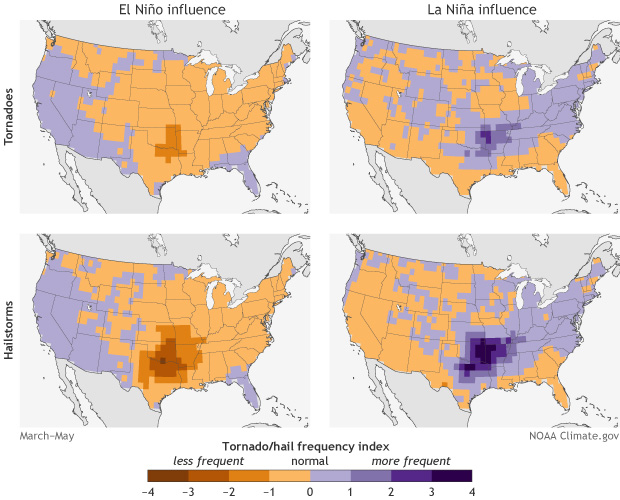
In a 2015 feature published by the NOAA, Michon Scott reported a relationship between tornado frequency and the natural weather patterns El Niño and La Niña.

Graphic depicts maps of the United States, representing the influence La Niña and El Niño have on the frequency of tornadoes and hailstorms in March and May, the peak months of tornado occurrences in Arkansas. The maps suggest La Niña increases the frequency of such severe weather in the southern U.S. GRAPHIC COURTESY OF NOAA

“Specifics vary, but in general, springtime tornadoes and hailstorms are less frequent in the southern central United States during El Niño and more frequent during La Niña,” Scott wrote.

El Niño is a natural weather pattern, usually lasting about a year, that occurs when warm water accumulates in the central and eastern Pacific Ocean. La Niña is the opposite and happens when cool water develops in the Pacific Ocean.

Coy, however, said Arkansas experiences severe weather regardless.

“The meteorologist will explain it has to do with whether you are in a El Niño or a La Nina and, I’ll be honest, they’ve explained it to me and I don’t always understand it,” Coy said. “It seems like we get severe weather regardless of which one we’re in.”

According to the NOAA’s National Severe Storms Laboratory, while tornado season denotes the period in which tornadoes are more frequent, a twister can form at any time of the year and in any location. Tornadoes occurred during all 12 months and in all 50 states.

According to a 2025 article published in the research database EBSCO, Mark Dziak wrote that “Tornado Alley” can be a misleading term because those living outside of its poorly-defined boundaries may believe they are less vulnerable to tornadoes.

Tornado Alley is a common geographic term used to define areas in the central U.S. where tornadoes are more frequent.

“Despite the focus on Tornado Alley, experts note that tornadoes can and do occur in every state, highlighting a phenomenon known as Dixie Alley in the southeastern U.S., where tornadoes may even be more frequent and damaging than in Tornado Alley,” Dziak wrote. 

Is tornado season getting worse?

As of April 3, 2026, the NWS confirmed nine tornadoes in Arkansas, near the average for that time of year.

Coy said, in his time working in emergency management, he experienced increasingly frequent and deadly weather. Coy, who is also the treasurer of the Arkansas Emergency Management Association, has worked in the industry since 2006. 

Research supports Coy’s experience. 

The Arkansas Tornado Database, using data from all NWS offices serving Arkansas, found that between 1970 and 1999, Arkansas averaged 25 tornadoes per year. 

Between 1991 and 2020, that number rose to an average of 37 tornadoes a year.

In a 2018 journal article published in the npj Climate and Atmospheric Science journal, Vittorio Gensini and Harold Brooks found while the national annual frequencies of tornado reports remained relatively constant, they documented positive trends in the Midwest and Southeast U.S. 

While no definite reason exists for this increase in tornado sightings, several theories offer possible hints.

Hazards geographer and meteorologist Stephen Strader, in a 2024 interview with NPR, told host Ari Shapiro that advancements in detection technology contribute to the apparent increase in tornadoes. Strader said tornadoes – especially weaker, short-lived ones – posted on social media are sometimes added to severe weather databases, which also increases the statistics.

Strader said population growth and urban development may also be partly responsible for the increasing severity of tornadoes. Many areas once forested or used for farmland developed into dense population centers, thus increasing the likelihood of a tornado causing significant damage.

“There’s just more things to hit, which means more potential disasters,” Strader said.

A 2021 journal article published in Scientific Reports found population density and the installation of Doppler Radar systems contribute to the increasing trend of damaging tornadoes.

Another possible culprit, climate change, may offer more complex impacts on tornado season.

Climate change, a hotly politicized and controversial weather phenomenon, refers to long-term changes to Earth’s average weather patterns, according to NASA.

Strader said, while the connection between climate change and tornadoes is not fully understood, many researchers suspect tornado sightings will increase as the impacts of climate change create environments conducive to severe weather.

Data from the NOAA reports a greater risk of off-season tornadoes in a future warmer climate. However, the various intricate weather conditions at play during the formation of tornadoes make it difficult for scientists to determine the impact climate change is having or will have on tornado season.

A report from the Center for Climate and Energy Solutions (C2ES) also states factors such as limited data collection methods, high variability and the relatively small geographic size of tornadoes as challenges for attributing climate change to a worsening tornado season.

“As scientists improve their physical understanding of the processes that cause tornadoes, and as climate models are run at higher spatial resolutions, our understanding of the climate change influence on tornadoes will improve,” the C2ES report stated. “Likewise, as the observational record increases over time, trends will likely become more obvious.”

Coy said while some people debate whether climate change is to blame, he focuses more on preparation.

“Whatever reason that is, I don’t know and I don’t have to know,” Coy said. “I just need to know when’s the next one and how strong do we think it might be.”

Coy said Craighead County is due for a break from severe weather. He said every year he hopes the weather is better than the year before.

However, the OEM director said he will never suggest any particular tornado season might be less severe because that might encourage people to let their guard down.

“I don’t want to cry wolf, I’d rather people be prepared and then not need to use that preparedness as the other way around,” Coy said.

Where can I find more tornado season resources?

The Craighead County Office of Emergency Management may be called at (870) 933-4575, found online at craigheadcountyar.gov/oem, or visited in person at the Craighead County Courthouse Annex. 

More local information about tornado preparedness from Craighead County may be found here.

Arkansas Weather Watchers, a digital media platform offering real-time coverage and community-driven reports from across the state, may be found here.

Food insecurity remains challenge for Food Bank of NEA

Story by DDNS Reporter Jerry Don Burton

JONESBORO – Following the government shutdown and with the holiday season approaching, food insecurity in Northeast Arkansas (NEA) remains a challenge for food banks.

Arkansas faces the highest rate of food insecurity in the nation, according to a since-discontinued annual report published in 2024 from the U.S. Department of Agriculture (USDA). The USDA defines food insecurity as a household-level economic and social condition of limited or uncertain access to adequate food.

Terry Austin, development officer at the Food Bank of NEA, said the rural nature of Northeast Arkansas contributes to the high rates of food insecurity. Many areas of Arkansas are also classified as food deserts.

Food deserts are areas where access to affordable, healthy food is restricted or nonexistent due to the absence of grocery stories within convenient distances, as defined by Food Empowerment Project.

“Statistically speaking, 21% of Northeast Arkansas citizens are in food insecure households,” Austin said. “Which is a staggering statistic to me.”

The Food Bank of NEA entrance, located at 3414 One Place in Jonesboro. Photo courtesy of Food Bank of NEA Facebook.

Food deserts are not the only elements worsening food security in NEA, though. National factors have further increased demand for food banks.

Lingering Impacts of Government Shutdown
Austin said the latest government shutdown, which lasted from Oct. 1 to Nov. 12 put a spotlight on food insecurity. He said those who depend on food assistance, such as the Supplemental Nutrition Assistance Program (SNAP) and federal employees, were particularly impacted.

The Food Bank of NEA saw a 16% increase in SNAP recipients who received food assistance during the shutdown compared to that same period in 2024. 8% of those served were new households that had never received assistance from the Food Bank of NEA before.

The One Big Beautiful Bill Act, signed into law by President Donald Trump on July 4, is also expected to impact food security nationwide.

President Donald Trump displays the One Big Beautiful Bill Act, after signing it. Photo Courtesy of Leah Millis, Reuters.

“[The act] is estimated to reduce the number of meals for SNAP beneficiaries in the nation by some six billion meals year to year over the next 10 years,” Austin said. “We’re gonna see that kind of cut in food assistance and that’s going to mean a very steady rise in demand.”

Another factor influencing the increased pressure on food banks is the approaching holiday season.

Holiday Season Challenges
“Regardless of what your family’s financial picture may be, you still want to have those holiday gatherings,” Austin said. “You want to have a table of food to share with your loved ones.”

The holiday season further contributes to an increase in demand because, since many children will be on break, they’ll miss out on school-provided meals. One in three children are at risk for hunger in NEA.

Austin said the Food Bank of NEA orders traditional seasonal food during this time of year to give families in need the food to make a holiday meal.
Food insecurity is not an issue limited to NEA, either.

The River Valley Regional Food Bank entrance, located a 1617 Zero Street in Fort Smith.

Food Insecurity Affects Arkansans Everywhere
On the opposite side of the state, the River Valley Regional Food Bank in Fort Smith serves 140 pantries across eight counties in Western Arkansas.

Hattie Hamilton, interim food bank director and operations manager for the River Valley Regional Food Bank, said they have reached out to Feeding America for extra food. She said the additional product will help the food bank better supply the pantries as need increases.

Feeding America is a non-profit network of food banks nationwide that helps feed more than 46 million people.

“Our battle here to help fight against it is just to get the food in to help get to the neighbors in need,” Hamilton said.

State Funding Support
In an effort to combat SNAP cuts and relieve pressure on food banks, state funds have provided support to food banks across Arkansas.

On Oct. 31, Arkansas Governor Sarah Sanders directed $500,000 to be split among the six Feeding America partnered food banks in the state. On Nov. 9, with the shutdown still in effect, Sanders assigned $500,000 more to food banks.

“As the shutdown continues, my administration will stand with our partners in the legislature, at churches and in food banks to help Arkansans stay fed,” Sanders said.

Back in NEA, Austin said their food bank received about $83,000 from the state. He said the Food Bank of NEA priortized buying protein products with the funds.

“Protein is a critical part of a diet and it’s also part of a diet that’s hard for us to provide enough of in our distributions,” Austin said. “We get a lot of canned goods and a lot of dry goods. Protein can be tricky to fit into that parameter, so that’s why we focused using those dollars on protein purchases.”

Austin said he wants to stress that the food bank is grateful for the money, but more help is needed to meet the rising need.

Demand Rising in Northeast Arkansas
One of six food banks in Arkansas, the Food Bank of NEA serves a 12-county area in the northeast region of the state, serving about 8,000 square miles.

Austin said the Food Bank of NEA primarily raises money and food and then distributes products to 176 partner agencies. These agencies include churches, schools, food pantries and homeless shelters.

In 2024, the Food Bank of NEA distributed 8.2 million pounds of food to those facing food insecurity. 25% of that food was fresh products like meat, vegetables and fruit.

A Food Bank of NEA delivery truck, parked in the loading dock of the Food Bank of NEA. Photo Courtesy of the Food Bank of NEA website.

In addition to distributing food to partner agencies, Austin said the Food Bank of NEA travels to each of the 12 counties as least four times a year to hold a mobile distribution.

Through these distributions, Austin said the food bank arrives to a central location and hands out food themselves. He said the increased demand is felt even in these mobile distributions.

During a mobile distribution held in Craighead County in early October, Austin said the food bank brought 24 more boxes of food than normal and still had to turn away about 30 households because they ran out of food.
Similarly, during a distribution in Lawrence County, Austin said they brought 64 additional boxes of food and had to turn away 42 households.

“We simply ran out of food,” Austin said. “The demand has definitely spiked and it spiked in part because of the shutdown, but honestly, the demand was already beginning to climb.”

How to Receive Assistance and Offer Support
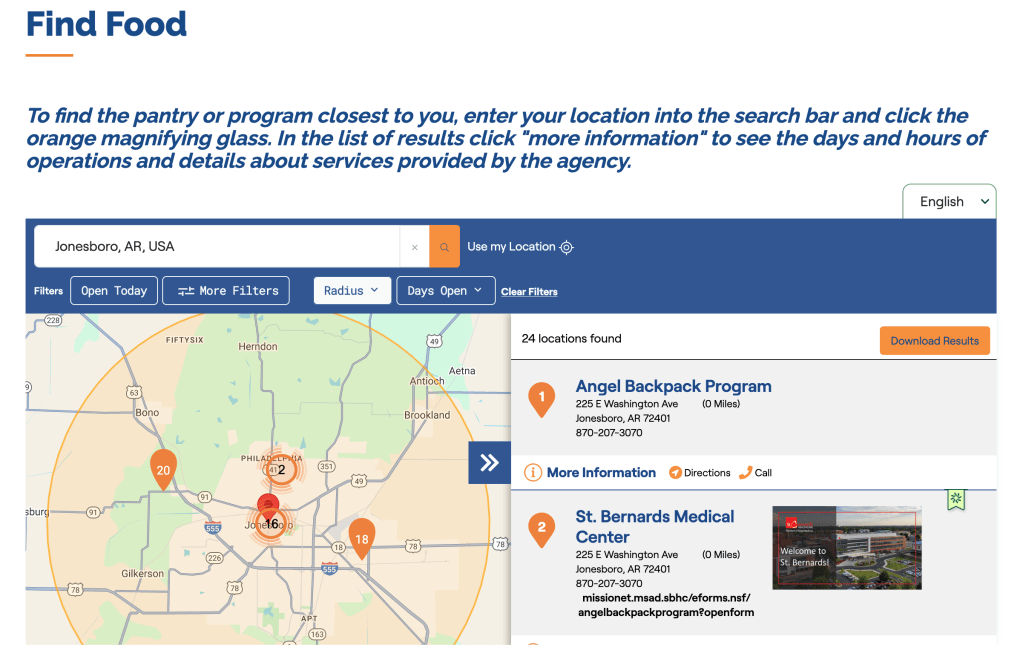
For those in need of food assistance, Austin said one of the best resources they offer is an interactive map on their website that allows users to find what food distributors in NEA are closest to them. Phone numbers, addresses and more information is included in the map to help guide users to help they need.

A screenshot of the Food Bank of NEA interactive map. The map allows users to search for food distributors in their location. Screenshot retrieved from the Food Bank of NEA website.


“We have done this a long time and we know all the ins and outs and the best way, the most efficient ways to get food to people who need it,” Austin said. “We stand ready to help if we need to.”

The Food Bank of NEA also has links under the “How to Help” section of their website for those interested in donating or volunteering. 1,157 volunteers donated 3,847 hours in 2024 to support the Food Bank of NEA.

Some of the most needed food items include peanut butter, canned soups, pasta, cereal, boxed meals, canned meats, and canned fruits and vegetables.

Austin said fresh food is always a challenge, so shelf-stable products are preferred. He also said popular foods that are flexible in meal prep are favored, such as spaghetti, corn, green beans and macaroni and cheese.

More than food, though, Austin said the Food Bank of NEA–and most food banks in general–actually prefer money donations.

Austin said donating money directly would serve the food bank more than canned goods, as the food bank buys product in bulk at reduced prices.
“We typically say that $1 donated can provide up to three meals,” Austin said. “We’re able to really stretch those dollars a long way.”

Austin said money donations can be used to pay for freight costs and other fees needed to keep the food bank running, too.

Still, Austin said any form of support–food donations, money donations, volunteer work or otherwise–is greatly appreciated.

The Food Bank of NEA is open from 8 a.m. to 5 p.m. weekdays and is located at 3414 One Place in Jonesboro. The food bank can also be reached by phone by calling 870-932-3663.
-30-

A-State, NYIT to Train More Doctors for Arkansas

Wilson Hall at Arkansas State, home of NYIT College of Osteopathic Medicine. Story and photo courtesy of Arkansas State University.

JONESBORO – Arkansas State University and the NYIT College of Osteopathic Medicine (NYITCOM) at A-State today announced the launch of the Freshman to Physician Pathway, a new opportunity for Arkansas students to secure early admission to medical school and begin preparing for careers in healthcare from the first day of college.

The initiative is designed to grow the number of physicians serving rural and underserved areas of Arkansas. Since opening its Jonesboro campus in Wilson Hall in 2016, NYITCOM has graduated 650 new doctors in six classes — and nearly 70 percent of those from Arkansas have chosen to stay and practice in the state.

“This is a game-changer for the health of Arkansas,” said A-State Chancellor Todd Shields. “By eliminating traditional barriers and offering early admission assurance, we’re making medical education more accessible for high-achieving students who want to stay and serve right here at home. This is about investing in the next generation of healthcare leaders — and in the well-being of every corner of our state.”

A Streamlined Pathway to a Medical Degree

The Freshman to Physician Pathway offers a direct route from undergraduate enrollment at A-State to NYITCOM, provided students meet clearly defined academic and professional standards. Participants pursue a Bachelor of Science in biological sciences with a pre-professional studies emphasis and apply for admission to NYITCOM during their third year.

To qualify, students must maintain a 3.5 GPA in science and overall coursework (with a one-time waiver option for a single semester), complete all required pre-med classes, receive a favorable recommendation from A-State’s pre-medical committee and pass an admissions interview with NYITCOM faculty. Students who meet these criteria will not be required to take the MCAT, significantly reducing the cost and complexity of applying to medical school.

“The path to medical school is difficult and challenging, however there are hurdles that can be overcome when we have strong academic partners at the collegiate level that are preparing the students for the rigor of medical education,” said Dr. Shane Speights, dean of NYIT College of Osteopathic Medicine at Arkansas State. “Leveraging our higher education relationships creates a stronger university, medical school, and most importantly, future physicians.”

A Proven Commitment to Arkansas

NYITCOM’s osteopathic philosophy emphasizes whole-person wellness, prevention and community health — making it particularly aligned with the needs of Arkansas. Graduates go on to pursue a wide range of specialties, with many choosing family medicine, internal medicine, emergency care and OB-GYN — fields in especially high demand throughout the state.

With access to world-class instruction, early clinical experience and the full resources of the A-State campus, students in the pathway program are well prepared for the demands of medical school and a future of serving Arkansas communities.

“At most colleges, the path to becoming a doctor feels far removed from the undergraduate experience. But at A-State, it’s a part of everyday life,” said Chancellor Shields. “Having a medical school in the heart of campus creates a culture that few universities can offer.  It sets A-State apart, giving our students a front-row seat to the next chapter of healthcare, and in many cases, the inspiration to pursue their own bold career path.”

Applications for the Freshman to Physician Pathway open this fall for students entering A-State in 2025. A similar program is in development for A-State’s College of Veterinary Medicine, expected to launch in fall 2026.

For more details, one may visit AState.edu/FreshmanToPhysician.

Historic Football Game Saturday in Little Rock

Story by DDNS Reporter Jared Burton

On September 6th, 2025, for the first time, the Arkansas Razorbacks will take on the Arkansas State Red Wolves at War Memorial Stadium in Little Rock, with kickoff scheduled for 4:00 pm. This is a historic matchup as it is the first time that the FBS schools in the state of Arkansas will finally play each other. Many people would not have thought it would happen because of a statement made by the previous Arkansas Razorbacks Athletic Director John Barnhill, who said that the hogs would not play against in-state schools like A-State, UCA, UALR, and UAPB. This policy was continued by his successors, Frank Broyles and Jeff Long.

But Jeff Long’s successor, Hunter Yurachek, broke this policy in 2018 by having Arkansas play against in-state schools for the first time in Arkansas Athletics history. Still, those games were scheduled for sports outside of football and basketball. However, on February 3, 2021, a jaw-dropping announcement was made, stating that hogs and red wolves would play a football game against each other on September 6, 2025, in Little Rock. Finally, the game that everyone has been waiting for in the entire state of Arkansas has a date. Fans of both programs were split on this, as A-State fans wanted this game to happen in the early 2010s when both Arkansas and Arkansas State were doing really well in football, with the hogs ranking inside the top 25, while the Red Wolves were winning conference titles and going to bowl games with a new head coach every single season.

Coach of the University of Arkansas Sam Pittman (left) and Coach of the Arkansas State Butch Jones (right) will coach the Arkansas-Arkansas State game.

Butch Jones and his players, Jaylon Raynor and Brandon Barnes, were asked about this matchup at the 2025 Sun Belt media days in New Orleans, LA.

“ Being able to go play in our state capital against the University of Arkansas, and you look at the excitement, you look at the revenue that it’s going to bring to the entire state comes to one place for a weekend, it is going to be a great challenge for us, but I think it is a great opportunity for us, and it’s truly a great opportunity for the entire state of Arkansas” said Coach Jones.

Junior Quarterback Jaylon Raynor said,” Definitely, it is a great opportunity for us to play Arkansas.” Sophomore safety Brandon Barnes said,” I would say that there is some excitement about being able to play a team like Arkansas.” Both players are excited for the game, but are focused on the fall camp and the first game against Southeast Missouri. Coach Jones was asked again about this matchup at the Sun Belt media day with the host of the Locked-on Sun Belt podcast, Dave Schultz.

“I will say it is in the world of college football expansion and conference expansion and coast to coast for two in-state schools to come together at a neutral site in Little Rock or the state capitol and play. That’s as big for our players or their players, it is for the entire state and the fan bases, but also the economic value that it brings to the state in Little Rock, AR.

Before the Sun Belt Media Days this year, Coach Jones was asked about the game between the Hogs and the Red Wolves back in March of this year on the Coaches and the Mouth Show with hosts Jeff Williams and Brey Cook.

“Obviously it’s a great challenge for us and it’s an uphill battle for us, but have so much respect uh, you know for everyone in that program, but when you look at what it does to the entire state of Arkansas, the excitement, the economy, you know, everybody going to Little Rock for the weekend, I think it’s really going to be a unique atmosphere and it’ll be a great experience for really both of our players, but especially our players playing a program and a team that’s, you know, been very, very competitive in the Southeastern Conference in terms of our program.” Said Coach Butch Jones.

Fans, players, and coaches of either team are not the only ones excited about this game; media members are excited about this game as well. One of the media members who is excited about this game is Chris Hudgison of Kait8 Sports, where he covers both the Razorbacks and the Red Wolves. Chris was asked about this matchup on Aug. 6 on the Chuck and Bo show with hosts Chuck Barrett and Bo Mattingly.

“It’s been fascinating, I think it was 2021 when the game first got announced, and it has been kind of like a snowball that slowly kind of getting down the hill, and then once it got closer, okay, now it’s 2025, now it’s actually happening, it’s been a combination of things.” Said Chris Hudgison of Kait8 Sports. Later in the show, Chris was asked about the matchup and whether could A-State pull off the upset against Arkansas. “It is possible, yes, because in college football, anything could happen. I think matchup wise, I think a-state has a decent chance offensively against the Razorback defense just because of all the experience coming back, obviously there is a big question mark at offensive line, but in terms of the skill position, there’s a lot of depth there, and having a essentially a 3-year quarterback, which doesn’t happen very often in the sunbelt with Jaylon Raynor, having experience in these type of settings against power 4 is gonna help. What I’m gonna be interested to see is the matchup between the very new A-State defense goes up against the Razorback offense, and special teams has been an ace in the hole for A-State, so if the game is close on the sixth, A-State has a definite more than a puncher’s chance to pull it off.” Said Chris Hudgison.

War Memorial Stadium will be the site of this first-ever game between the hogs and red wolves.

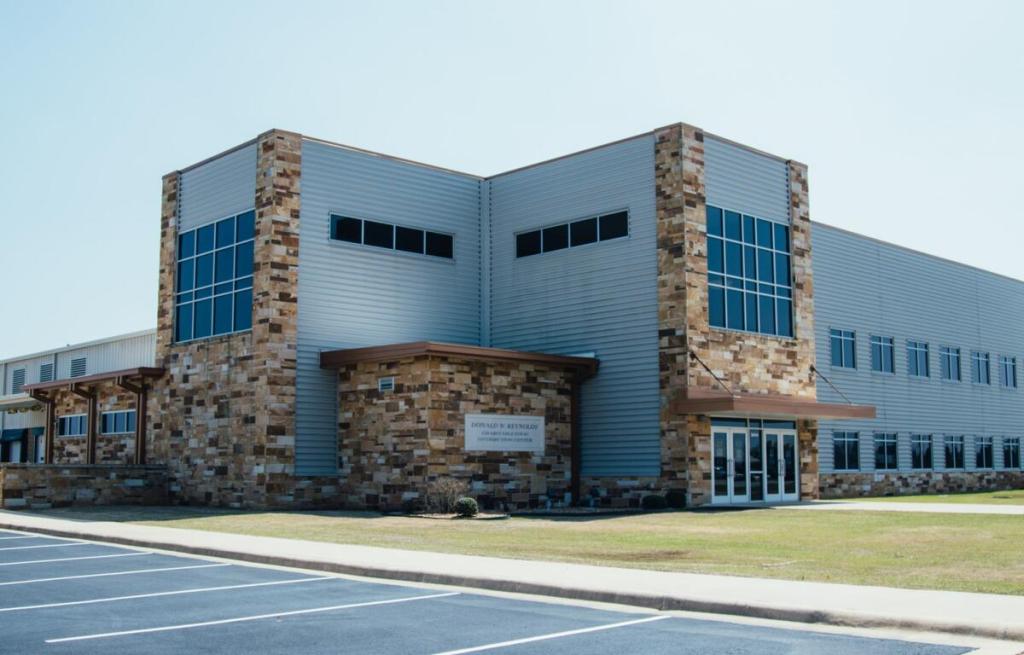
War Memorial Stadium in Little Rock will be the site of this first-ever meeting between the hogs and red wolves. Both teams have a history of playing in this stadium. Razorbacks have played at War Memorial more often than the Red Wolves, which has led fans to call the stadium the Razorbacks’ second home stadium, with Donald W. Reynolds Razorback Stadium in Fayetteville being the primary home stadium for the Hogs. The Red Wolves have not played at War Memorial Stadium since 2006, and have played their home games at Centennial Bank Stadium in Jonesboro. The game on September 6th will be the first Red Wolves game at War Memorial Stadium in 19 years.

Everyone in the state of Arkansas is excited about this game. Fans of both programs will be divided when the game kicks off on September 6th, but they can all agree that September 6th will be a historic day for college football in the Natural State.

Northeast Arkansas Career and Technical Center celebrates 50 years

Story by DDNS Reporter Shailey Wooldridge

Photo courtesy of the Northeast Arkansas Career and Technical Center

The Northeast Arkansas Career and Technical Center (NEACTC) celebrated 50 years of opening doors for students on Friday, March 14.

“It’s just nice that I’m able to contribute to the legacy of the place. So this is, this is most definitely a very special place in Northeast Arkansas,” Alex Ragsdale, special projects manager for the NEACTC, said.

The career technical school serves 14 school districts across Northeast Arkansas, it has undergone multiple name changes over the years but its purpose of preparing students for a variety of career skills remains constant.

Ragsdale said the center offers free college credit to high school students, free industry certifications, and clubs.

“This is a good place for students to get experience in the job field that they’re thinking about going into because we know how costly college can be, so it’s nice to kind of get your feet wet in this situation,” Ragsdale said. “Just an amazing place for students just to kind of fill out what they want to be.”

Robert Stephens and Mell Stephens attended the celebration. Robert taught computer-aided drafting at the technical school for 27 years, and Mell taught a parenting skills class for three years.

Robert Stephens and Mell Stephens look at a photo of themselves from their time at the Northeast Arkansas Career and Technical Center. Robert Stephens taught computer aided drafting for 27 years and Mell Stephens taught parenting skills for three years. Photo by DDNS Reporter Shailey Wooldridge.

“We had a great time,” Robert Stephens said. “I have a lot of students I see around town in places that appreciate what they learned here. Had several state winners.”

Mell Stephens said that many Roberts students became architects.

“It’s good that kids are getting recognized that come here. For years, we always said that more kids ought to be taking because they would be needed later on, and now, today, that’s exactly what’s happened. More and more folks in these classes are needed out on the job,” Robert Stephens said.

Mell Stephens said she enjoyed her time teaching at the NEACTC.

“I loved it. I loved the girls. Yeah, I had some challenges, but boy, I loved the girls. Loved teaching, and I had a couple of boys that came to it,” Mell Stephens said.

Isabella Stanton, a senior at Jonesboro High School and the president of the NEACTC SkillsUSA chapter said she discovered her passion for the EMT program through NEACTC.

“I did not know what I wanted my job or anything I was interested in until I learned this is here. I spoke with all the teachers, but I fell in love with the EMT program. I think it’s really why many people can figure out what they want to do,” Stanton said.

She said the NEACTC has supported her in many ways.

“I’m in EMT school, but Medic One wants to hire me already. It’s given me many opportunities, and I’ve made many friends and mentors from here as well. So, the NEACTC is a good place to find what you want to do,”

I-55 Bridge Replacement in Memphis to Start in 20206

Images courtesy of Adobe Stock

Memphis, Tennessee – The Tennessee Department of Transportation (TDOT) has selected Kiewit Infrastructure South Co. as the construction manager for the I-55 bridge replacement project.

In July 2024, the U.S. Department of Transportation awarded a landmark federal investment in Tennessee of nearly $400 million towards half the cost of replacing the I-55 Bridge over the Mississippi River. In addition to the nearly $400 million from the Rebuilding American Infrastructure with Sustainability and Equity (RAISE) program, TDOT, utilizing a state general fund allocation provided through the Transportation Modernization Act, and the Arkansas Department of Transportation (ARDOT) have each committed up to $200 million demonstrating a collaborative effort to fund this bridge replacement. This marks the single-largest transportation investment in Tennessee state history.

Courtesy of the Tennessee Department of Transportation.

The I-55 Bridge, a vital link for national commerce, is set to undergo a comprehensive overhaul to add capacity, improve safety standards, ensure route resiliency, and maintain optimal operational conditions. The existing bridge, which has served travelers for 75 years since its construction, will be replaced with a larger structure designed to meet modern seismic codes as it sits on the New Madrid fault line.

“This project is building a stronger future for Tennessee,” said Deputy Governor and TDOT Commissioner Butch Eley. “We are thrilled to partner with the U.S. Department of Transportation, Arkansas, and now Kiewit, whose proven track record will be invaluable to the success of this transformative project to enhance regional and national connectivity and safety significantly. We look forward to its positive impact on our state and country for decades to come.”

“The Arkansas Department of Transportation is pleased to partner with TDOT to construct a modern structure on a corridor that conveys many critical goods and services through the heart of our nation each day,” said ARDOT Director Jared Wiley. “We are thankful that TDOT was able to secure this historic grant award and are confident in Kiewit’s ability to deliver the project on time and budget.” 

“Kiewit is very pleased to have been selected to help deliver the bridge replacement project for the Tennessee and Arkansas Departments of Transportation,” said Dave Miles, Executive Vice President of Kiewit Corporation. “We have a long history of safely building and engineering complex bridge and transportation projects across the United States, including in both states. We are excited to bring our experience and skilled workforce to this project, which importantly connects both states for people within and traveling through the region.” The environmental process is wrapping up on the I-55 Bridge Replacement project. Design is underway, and Right-of-Way coordination should begin later this year. Construction is estimated to start in fiscal year 2026.

While finalizing the contract with Kiewit for the construction manager, the department will continue to deliver this project. This decision is another progressive step utilizing an Alternative Delivery method, the Construction Manager/General Contractor (CMGC). CM/GC is used for complex projects, aligning technical direction, organizational structure, and budgets with the department’s strategic vision.

For more information about the proposed project, visit America’s River Crossing.

A-State College of Veterinary Medicine to Open Fall 2026

Rendering of the forthcoming College of Veterinary Medicine at Arkansas State University.

Story by DDNS Reporter Shailey Wooldridge.

The Arkansas State University College of Veterinary Medicine (CVM) will open in Fall 2026, pending accreditation, giving students an experience differing from the average veterinary medical school. 

Heidi Banse, dean of the College of Veterinary Medicine, said the college will have unique aspects based on how they have structured their curriculum, such as using a distributive model where students participate in clinicals in their final year of schooling. 

Dr. Heidi Banse, Dean for the College of Veterinary Medicine at Arkansas State University

“It’s a very community-centered program, which I think fits the state of Arkansas and does position us with some educational elements that other programs may not be able to offer. All programs have their niches and own areas that they emphasize, and for us, it’s community.“ Banse said. 

Banse formerly served as associate dean for educational strategy at Louisiana State University School of Veterinary Medicine (LSU Vet Med).

At LSU Vet Med, Banse led implementation of a new competency-based veterinary program by restructuring the educational framework to ensure students are prepared to enter practice when they graduate. 

“The thing that enticed me here at Arkansas State University was the opportunity to build a program, really starting at the ground floor,” Banse said. “Having just built a new curriculum at LSU, it seemed the next logical step in a career progression to build an entire program.”

In the first three years, Banse said A-State’s vet school curriculum will focus on developing skills, communication, ethics, practice management, and clinical reasoning. In the final year, students will go out into community practices across Arkansas and in other states to hone their skills and prepare to enter into practice.

Len Frey, senior advisor for strategic initiatives and senior associate dean of the CVM, said the distributive model of structuring veterinary medical schools is becoming more common. 

“We’re very comfortable with the distributed model because we saw it work at NYIT (New York Institute of Technology),” Frey said. “Again, it’s not the norm. It’s not the way it’s always been done. It’s a newer theory on delivering practice-ready doctors or practice-ready veterinary medicine physicians.”

Banse said one of the college’s primary goals is to train veterinarians across the breadth of species to prepare them to enter general practice. To accomplish this, something she wants to leave behind as much as they can is the traditional lecture format of education. 

“Our goal is to ensure that our students are engaged in learning and have active learning experiences,” Banse said. “Our classrooms that we’re constructing in our new building are flexible-use classrooms so they can be used for lectures, but we hope we’re doing a lot of small group learning to support some of the clinical reasoning.” 

Banse said around 190 practices, 85 in Arkansas, have signed up to be part of the clinical year teaching network. 

Since there is no veterinary school in Arkansas, students hoping to become veterinarians must go to college out of state to finish their schooling in veterinary medicine.  

“We are one of the most underserved states regarding the number of veterinarians per capita. We have 10 counties currently with no veterinarians, making it harder for clients to seek care,” Banse said. 

Amy Schmidt, director of the Northeast Arkansas Humane Society (NEAHS), said one of the reasons veterinary costs are so high right now is the lack of veterinarians. She said one of the problems in the community they see often is people who love their animals but can’t afford to take care of them. 

“The more vets we have in the area, the more we’ll be able to service the community in an accessible way,” Schmidt said. “I think there’s a great need to have a vet school in the area, and I’m super excited that we’re getting it here in Jonesboro.” 

NEAHS is one practice that will partner with the veterinary school for students in clinicals to give them hands-on experience. 

Banse said students will be able to practice doing physical exams on dogs and cats at the shelter and learn to provide veterinary care under the oversight of a practicing veterinarian. 

“They’ll get lots of experience talking to clients, working with animals in the community to make the quality of life for animals and hopefully make client experiences meaningful,” Banse said. 

Schmidt said a room in the isolation building on-site at NEAHS will be explicitly remodeled so students can learn isolation protocols. 

The NEAHS does a low-cost clinic three days a week that offers spays, neuters, and vaccinations. Schmidt said they have difficulty keeping up with the demand, with low-cost surgeries booked until May. 

“The vet school is going to help us with some of that volume so that they will be helping with low-cost surgeries. Not just helping us, but helping the community,” Schmidt said. “We also have that indoor dog kennel area; they’ve talked about using that to teach students how to make clinical rounds and assess everyone, especially post op.”

Banse said the vet school will include two flexible-use classrooms with tables that can be set up in multiple ways to easily change the room’s configuration. 

The building will also feature an almost 3000-square-foot clinical skills lab where students will learn procedures, an anatomy lab, cooler, freezer, a place to store anatomy specimens, a clinical skills laboratory space, storage for models from suture pads to full sized horses and cows, a practice lab for students that will be set up with 24/7 key-card access, a surgical skills training suite with a pre operative area, a sterile surgical area for their spay experience, for their spay surgeries and kennels for dogs and cats in case they need to be housed overnight.

Banse said plans for continuous improvement include collecting feedback from students, instructors, and course coordinators as the program is built and as students go through and making adjustments as needed. She said they will also use the national standardized exams, the veterinary education assessment, and the North American Veterinary Licensing Examination, all veterinarians take as part of their licensure, to help inform changes immediately.

 “One of the things that’s important for us too is once our students go out into the community, we then collect feedback from them one year out and five years out as well as from their employers one year out, to see how prepared they were when they entered into practice,” Banse said. 

She said it will also be vital for them to keep tabs on the changes and anticipated changes in the field of veterinary medicine and industry trends to ensure they’re responding to any needs within Arkansas.

The college has collaborated with the College of Agriculture and will continue to do so. Banse said they will use the Equine Center and one of the bovine barns to teach students skills-based training. 

“Hopefully, that creates better facilities for animal science students, too. It’s not like those are ours only; we share all of that,” Banse said. “I’m grateful that the College of Ag has invited us in. And feel like part of the same part of the same team training students.”

Sarah Hooper, associate dean for student programs and admissions, joined the CVM on February 27.  She will oversee student programs from recruitment through graduation and refine admission processes and the recruitment of students when that time comes. 

Hooper said she will be working on creating new website content for admissions. 

“I’m just excited to be able to help start the first state vet school in Arkansas. I had the advantage of going to a state university with a vet school in my home state, and it’s beneficial and advantageous when students like myself have our support systems,” Hooper said. “It’s exciting in my mind to help initiate this new school and to give the residents of Arkansas something that they’ve not been able to access before.”

The proposed class size is 120 students admitted once per year in the fall. In-state tuition will be $35,000 yearly, and out-of-state tuition will be $55,000 yearly. 

The groundbreaking ceremony for the CVM was held today at 11 a.m., and construction will begin later this month to early April. 

Banse said they can start recruiting students after receiving a letter of reasonable assurance from the Council of Education, which they may receive after a comprehensive visit this summer. 

“I’m most excited to have students. It’s exciting to build a program and think about how we construct a student-centered curriculum, but ultimately, it doesn’t feel real until the students are on site,” Banse said. “We’re doing it for the students, and it’s really fun to hear the excitement on campus from our students about the vet school, and I just can’t wait for them to get here.” 

Arkansas Dr. Martin Luther King Junior Commission to be Honored in Las Vegas

Officials with the Arkansas Martin Luther King Junior Commission will celebrate the King Holiday in both Las Vegas and Arkansas, honoring the legacy of the late Dr. Martin Luther King, Jr.  The Arkansas Martin Luther King, Jr. Commission is recognized as one of the most active commissions in the nation. In recognition of the service of the Arkansas Commission, an invitation was extended for the Arkansas Commission to come to Las Vegas to participate in the world’s largest King Holiday Parade, which occurs on Monday, January 20.

            The national partnership will bring the MLK Tech Summit to Arkansas, introducing high school students to technology careers. The Las Vegas City Council will also honor the Arkansas Martin Luther King Junior Commission for its work, with a special salute from the city of North Las Vegas and a presentation of the city’s key.

            Some of the events that will occur in Las Vegas involving the Arkansas Martin Luther King Junior Commission include:

  • The Ultimate Measure of a Man at the West Las Vegas Library on Thursday, January 16
  • The 7th Annual MLK Tech Summit at the Las Vegas City Hall on Friday, January 17
  • The Interfaith Service at the Nehemiah Ministries Christian Church in Las Vegas on Friday, January 17
  • 43rd annual Dr. Martin Luther King, Junior Scholarship Banquet at the Orleans Hotel and Casino, Las Vegas, Friday, January 17
  • 43rd annual Dr. Martin Luther King Junior Parade in Downtown Las Vegas on January 20

Additionally, the Executive Director of the Arkansas Martin Luther King Junior Commission, Dushun Scarbrough, will be recognized for his work with the commission. KASU and DDNS will cover these events from Las Vegas across multiple platforms starting Friday, January 17th, and running through Monday, January 20th.

This year’s events theme is “Living the Dream: Honoring the Past, Embracing the Future.”

Brent Floating Farms aims to “revolutionize agriculture”

Brent Floating Farms, a local agricultural initiative started by a husband-and-wife duo, is the beginning of a dream to discover more sustainable methods of farming

Delta Digital News Service

Monday, May 13, 2024

By Avery Jones | Editor

PARAGOULD, Ar. — Brent Floating Farms, a company headquartered in Paragould, is experimenting with sustainable agricultural methods. Headed by husband-and-wife duo Frank and Cinda Brent, the goal is to grow food in a way that is environmentally conscious and organic while at the same time profitable and accessible.

According to Frank Brent, their method is aquaponics, which he describes as “hydroponics and aquaculture mixed together.” 

Frank (right) and Cinda (left) Brent.

Essentially, they grow plants in repurposed shipping containers, and the plants are grown in water without soil which is fertilized by fish. The water is cleaned by the plants. This results in a “closed-loop” system.

The Brents have been studying this method for at least 25 years. When they first started, they were living in Marianna, Arkansas, and were “avid gardeners.” They decided to move their garden inside a greenhouse to do aquaponics because they didn’t want to use pesticides anymore. 

They also researched and worked for 7 years at University of Arkansas Pine Bluff on aquaponic methods, where their systems are still in use. They did many tests, including on what to feed the fish and how this affects plant growth.

Frank Brent has been a farmer since 1979, so he has much experience with traditional farming methods. He says that he “gave up” on row crop farming because he didn’t think it was very profitable due to the equipment costs. Less conventional methods of growing food offered a new perspective.

“I really enjoyed the symbiotic relationship…and circular agriculture,” Frank Brent said.

Chemical drift, also known as pesticide drift, became a problem for them. Pesticide drift happens when pesticides negatively or unintentionally affect humans, environment, and crops.

They decided to expand their operation by moving to Paragould and buying a 100-acre farm. However, they knew that pests would always be an issue and wanted a way to circumvent that. 

The Brents don’t believe in using chemicals for growing plants. They want their crops to be organic. However, it can be difficult to grow this way and remain profitable.

According to Frank Brent, commercial farms produce about 40% waste but organic farms produce 70% waste. This is why organic produce can be so expensive. 

“So I decided that, what would be better than taking it inside a container and taking it to sea?” Frank Brent said.

This was how the idea of Brent Floating Farms was born. Growing plants inside a container using only water and fish works well to prevent pests, and the temperature-controlled containers have the added bonus of allowing the growth of off-season crops.

However, there can still be issues with unintentionally letting insects inside the container when the door is opened. Furthermore, air still needs to be provided for the plants, and pests come with that as well. Their first year at Paragould, their plants were completely wiped out due to these issues. 

1 week old test crop with the Brents’ new design.

“Everything was perfect, it was beautiful, it was huge. We grew so much more per square foot than…any other method of farming,” Frank Brent said. “It was a pretty sore and sad moment to watch our produce all go down the tubes.”

“Everything was perfect, it was beautiful, it was huge. We grew so much more per square foot than…any other method of farming…It was a pretty sore and sad moment to watch our produce all go down the tubes.”

— Frank Brent

Brent had another idea for their farm which would avoid the problem of pests altogether. He used to work in the Navy and noticed that there were no pests at sea. By putting the aquaponic farms in the shipping containers on ships at sea, they would have no more problems with pests.

Of course, neither aquaponics nor “floating farms” are a new concept. Both of these methods can be traced back to the Aztecs who practiced an early form of this type of agriculture, called “chinampas.” Currently, this method has been revived in Mexico City, and the world’s first large-scale floating farm was conceived in the Netherlands.

The Brents, however, hope to eventually take their operation to a larger scale. They used to be set up in Louisiana, but when they were finally starting to gain traction, the COVID-19 pandemic and Hurricane Ida took them out.

They’re still working on rebuilding. They recently purchased another farm called Chicken Town Egg Farm, which was in trouble financially, and are in the process of doubling that operation. 

When they’re able to get Brent Floating Farms back on track, their goal is to manufacture 350 containers for their crops on land in Louisiana and eventually put some containers at sea as well. 

On land, their hope is that waste will be at 15% while at sea, expected waste will be between 3% to 5%. Aquaponics also uses 90% less water than traditional soil and irrigation methods. The Brents recognize that energy usage can be an environmental issue, but they have looked into alternative energy methods.

Furthermore, their method doesn’t have to just use water and fish. With the use of black soldier fly larva, they can use any type of organic waste, and the insects will break that down. Insects that are beneficial to plants rather than pests can also be introduced inside the container.

Leigh Ann Weidner, CEO of Brent Floating Farms.

Because the crops won’t be subject to the environment, they will be able to produce a higher yield as well. According to Frank Brent, they can produce 12,000 heads of lettuce in 30 days in an average container.

The team behind Brent Floating Farms includes co-founders Frank and Cinda Brent as well as Leigh Ann Weidner, their CEO. Frank is the COO, and his focus is the technical, agricultural aspects while Cinda is the CAO and focuses on marketing. Weidner, who is working remotely from Wisconsin due to another job, specializes in sales.

-30-


Note: Featured image provided by Shutterstock.