Category Archives: Transportation

City Trolleys Offer Free Transportation to A-State Students

Story by DDNS Reporter Kinley Rainwater
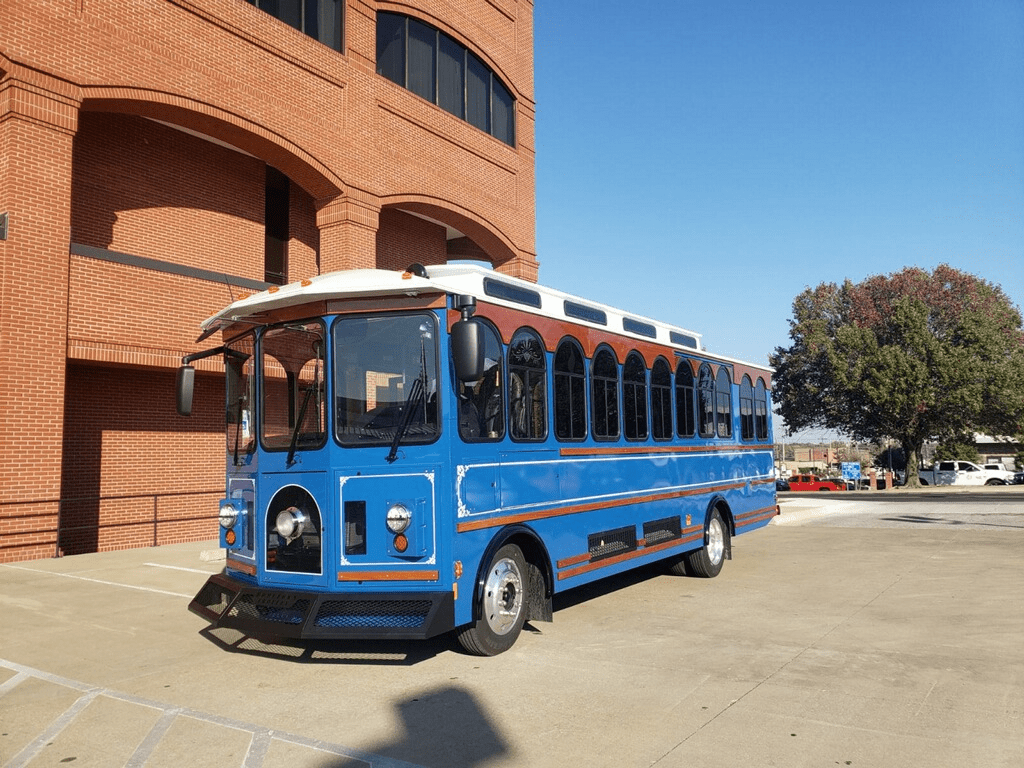
A blue trolley-style bus parked at the Jonesboro City Hall building. These buses offer transportation services using the GoJo Transportation System. Photo courtesy of the City of Jonesboro website.

JONESBORO, Ark. — The City of Jonesboro’s new GoJo Transportation System provides a convenient service to Arkansas State University students, offering free, campus-wide transportation. However, limited outreach to students has kept many from using the service.

The new GoJo system, previously JET, provides service to A-State and the surrounding Jonesboro area. It features six routes, ranging from on-campus hotspots to countless places in the city. The new Let’s GOJO! The app and website provide a map of all stops and routes to help users locate the nearest available transportation, as well as live tracking of all buses and trolleys.

The service is free to students with a valid student ID, providing an accessible alternative to driving or walking.

One of the most notable features of the system is the new Trolley-style buses. These vehicles provide classic aesthetics with modern functionality, which gives students a comfortable ride that is also more visually appealing than traditional transportation options.
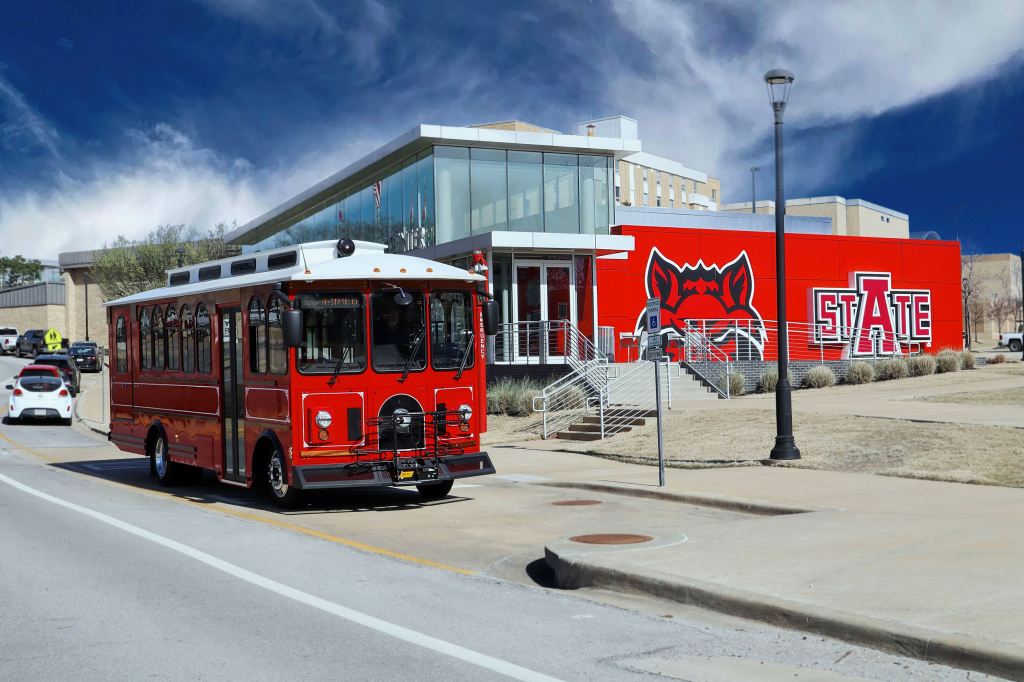
A red trolley-style bus parked in front of the Arkansas State University Welcome Center. Photo courtesy of the City of Jonesboro website.

City officials and transportation coordinators said GoJo is meant to connect residents, visitors and students to the city of Jonesboro through expanded connections throughout the city, including A-State.

Despite the advantages to students, GoJo is relatively unknown amongst them. International student Boaz Muteba said she followed the news surrounding the new system.

“In the fall of 2024, when public transportation options were expected to increase, I was one of the individuals who participated in the meeting to get more buses,” Muteba said. “Recently, when the idea took shape, I spotted the bus on campus and even saw it featured on Instagram. Unfortunately, I never got the chance to utilize it.”

The system’s impact goes beyond convenience. By encouraging students to use public transit, Gojo supports sustainable efforts and accessibility for those without personal vehicles and eases parking demand that comes with a growing campus.

As Jonesboro and student enrollment at A-State continue to grow, GoJo presents an opportunity to strengthen connections between the city and it’s academia scene. However, its success will depend on public awareness of this new system.

New I-55 Bridge Named after Local Legends

Information from the Tennessee Department of Transportation

MEMPHIS, TENNESSEE—In a powerful celebration of culture and history, the Tennessee Department of Transportation (TDOT) and the Arkansas Department of Transportation (ARDOT) proudly announce that the new iconic Interstate 55 (I-55) bridge spanning the Mississippi River between Memphis, Tennessee, and West Memphis, Arkansas, will now be known as Kings’ Crossing.

This new name, officially adopted by the Tennessee General Assembly and the Arkansas Highway Commission, honors three transformative figures known as “Kings”: Dr. Martin Luther King, Jr.; B.B. King; and Elvis Presley.

“Kings’ Crossing is more than just a piece of infrastructure; it is a symbol of our collective history, heritage, and the enduring spirit of unity that defines this region,” said TDOT Commissioner Will Reid. “Naming this bridge in honor of these gentlemen pays tribute to their extraordinary legacies – individuals who transcended barriers, fostered cultural exchange, and used their talents to build bridges between people.”

“It’s only fitting to name this vital crossing after three historic figures from this region,” said ARDOT Director Jared Wiley. “We’re grateful for the partnership and collaboration with TDOT on this project. It truly is the result of a regional effort that will benefit industry across this national corridor and the thousands of individuals who depend on this connection each day.”

In July 2024, the U.S. Department of Transportation awarded a landmark federal investment in Tennessee and Arkansas of nearly $400 million toward half the cost of replacing the I-55 Bridge over the Mississippi River. In addition to the nearly $400 million from the Rebuilding American Infrastructure with Sustainability and Equity (RAISE) program, TDOT, utilizing a state general fund allocation provided through the Transportation Modernization Act, and the Arkansas Department of Transportation (ARDOT) have each committed up to $200 million, demonstrating a collaborative effort to fund this bridge replacement. This marks the single-largest transportation investment in Tennessee and Arkansas’ state history.

The I-55 Bridge, a vital link for national commerce, is set to undergo a comprehensive overhaul to add capacity, improve safety standards, ensure route resiliency, and maintain optimal operational conditions. The existing bridge, which has served travelers for 75 years since its construction, will be replaced with a larger structure designed to meet modern seismic codes, as it sits on the New Madrid fault line.

The environmental process is wrapping up on the I-55 Bridge Replacement project. Design is underway, and Right-of-Way coordination should begin later this year. Construction is estimated to start in fiscal year 2026. TDOT and ARDOT are partnering to design and construct the bridge utilizing the Construction Manager/General Contractor (CM/GC) project delivery method. CM/GC is used for complex projects, aligning technical direction, organizational structure, and budgets with the department’s strategic vision.

For more information about the proposed project, visit TDOT’s website.

I-55 Bridge Replacement in Memphis to Start in 20206

Images courtesy of Adobe Stock

Memphis, Tennessee – The Tennessee Department of Transportation (TDOT) has selected Kiewit Infrastructure South Co. as the construction manager for the I-55 bridge replacement project.

In July 2024, the U.S. Department of Transportation awarded a landmark federal investment in Tennessee of nearly $400 million towards half the cost of replacing the I-55 Bridge over the Mississippi River. In addition to the nearly $400 million from the Rebuilding American Infrastructure with Sustainability and Equity (RAISE) program, TDOT, utilizing a state general fund allocation provided through the Transportation Modernization Act, and the Arkansas Department of Transportation (ARDOT) have each committed up to $200 million demonstrating a collaborative effort to fund this bridge replacement. This marks the single-largest transportation investment in Tennessee state history.

Courtesy of the Tennessee Department of Transportation.

The I-55 Bridge, a vital link for national commerce, is set to undergo a comprehensive overhaul to add capacity, improve safety standards, ensure route resiliency, and maintain optimal operational conditions. The existing bridge, which has served travelers for 75 years since its construction, will be replaced with a larger structure designed to meet modern seismic codes as it sits on the New Madrid fault line.

“This project is building a stronger future for Tennessee,” said Deputy Governor and TDOT Commissioner Butch Eley. “We are thrilled to partner with the U.S. Department of Transportation, Arkansas, and now Kiewit, whose proven track record will be invaluable to the success of this transformative project to enhance regional and national connectivity and safety significantly. We look forward to its positive impact on our state and country for decades to come.”

“The Arkansas Department of Transportation is pleased to partner with TDOT to construct a modern structure on a corridor that conveys many critical goods and services through the heart of our nation each day,” said ARDOT Director Jared Wiley. “We are thankful that TDOT was able to secure this historic grant award and are confident in Kiewit’s ability to deliver the project on time and budget.” 

“Kiewit is very pleased to have been selected to help deliver the bridge replacement project for the Tennessee and Arkansas Departments of Transportation,” said Dave Miles, Executive Vice President of Kiewit Corporation. “We have a long history of safely building and engineering complex bridge and transportation projects across the United States, including in both states. We are excited to bring our experience and skilled workforce to this project, which importantly connects both states for people within and traveling through the region.” The environmental process is wrapping up on the I-55 Bridge Replacement project. Design is underway, and Right-of-Way coordination should begin later this year. Construction is estimated to start in fiscal year 2026.

While finalizing the contract with Kiewit for the construction manager, the department will continue to deliver this project. This decision is another progressive step utilizing an Alternative Delivery method, the Construction Manager/General Contractor (CMGC). CM/GC is used for complex projects, aligning technical direction, organizational structure, and budgets with the department’s strategic vision.

For more information about the proposed project, visit America’s River Crossing.

Keeping Roads Clear in Lawrence County

Delta Digital News Service

By Claire Fisher | Contributor

Feb. 3, 2023

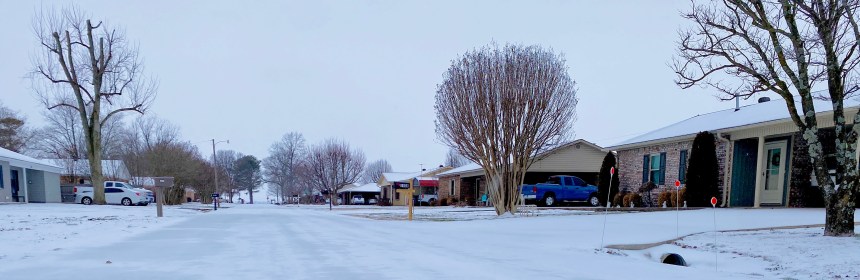
WALNUT RIDGE, Ark. – As winter weather pushes through Arkansas, city and state road crews are taking all precautions as they treat primary roads to keep transportation from freezing up.

            Arkansas sees its fair share of winter weather. The winter system that made its way into eastern Arkansas is no exception. The first round of sleet and snow began falling Monday night and continued with a second and third round Tuesday. When roads are in prime condition to freeze over, preparation by road crews keeps them from being unusable.

            Lawrence County has many highly trafficked highways leading to bigger cities. During inclement weather, the Arkansas Department of Transportation sends out crews in District 10 to treat these roads. Brad Smithee, District 10 engineer for ARDOT, said crews try to treat roads 24 hours in advance to get the best results.

            “We look at a lot of forecasting in order to keep up with the weather. We have close connections with National Weather Service, and we send out crews as soon as we get word of bad weather,” Smithee said. Treating roads when the weather has begun is not ideal, but weather is unpredictable, and crews will do whatever it takes to keep transportation running.

            According to Smithee, the roads are pretreated with a brine. “The brine is a saltwater solution that forms a barrier between the pavement and the snow, making it easier to plow.” When the brine is put onto a road it forms a crust, and the crust forms best when the solution is dispersed when it is raining “low and slow.” ARDOT crews also use rock salt to treat roads, but it is not the best treatment when there are a lot of roads to cover.

            While ARDOT focuses on main highways, city road departments take care of almost everything else. Walnut Ridge Mayor Charles Snapp said the city owns two salt trucks that are sent to treat roads when bad weather is coming. However, salt trucks release another useful ingredient when running their routes.

            “We use beet juice as a pretreatment for our roads,” Snapp said. “Beet juice is a gooey substance and it sticks to the roads better. If it is windy, the wind will just blow the salt away.” Beet juice comes in handy when treating roads because it can be cheaper than salt at some times. Walnut Ridge received three shipments of salt in December, and they only have about one-fourth left to last the rest of winter.

            According to Snapp, treating roads with beet juice first, then rock salt is proving to be the best way to clear the primary roads of the city. Road crews first clear roads leading to the hospital, then primary roads leading to Williams Baptist University, then the courthouse and lastly the sheriff’s office. Snapp said he plans to keep using this treatment as it works best for Walnut Ridge.

            Once the road crews have treated the roads, they do routine maintenance to keep them clear. But even these treatments will not be completely effective. Drivers still need to be cautious while driving in winter weather. The smallest ice patches can cause an accident. Reece Archer, a dispatcher for the Walnut Ridge Police, said accident reports rise at least 30% during winter weather. Drivers need to know which roads are unsafe for travel during ice or snow. Checking IDrive Arkansas before traveling is a good way to see if there are any road closings or roads to avoid.


$95M Highway funding bill impacts Arkansas roads

Bill brings road construction, repairs and reconstruction across the state

Delta Digital News Service

By Chloe Short | Aspiring Journalist

JONESBORO, Ark. – Interstates, major highways and other roads receive will receive improvements with the $95 million highway-funding bill signed by the governor. The bill helps fix unsafe roads, repair potholes and mend other road problems. 

   Dave Parker, public information officer for the Arkansas Department of Transportation, said growing concerns about congestion and pavement preservation factor into the plans when deciding what areas to focus on. Congestion causes slower traffic or traffic back-ups, while pavement preservation keeps the current roads maintained so drivers experience less deterrents while on the road. 

   “About 76% of our total money goes toward just maintaining the highways and bridges we currently have. The remaining 24% is spent on new projects,” Parker said. 

   “About 76% of our total money goes toward just maintaining the highways and bridges we currently have. The remaining 24% is spent on new projects.”

ARDOT PIO Dave Parker

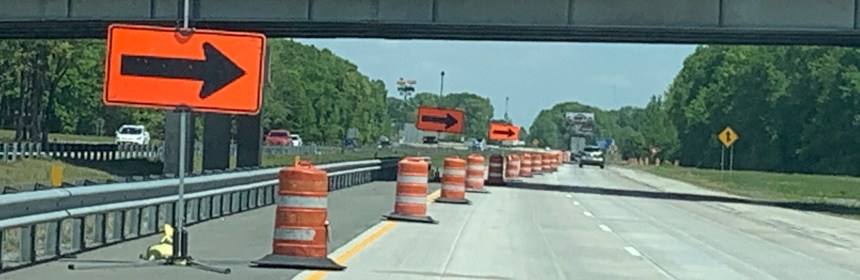
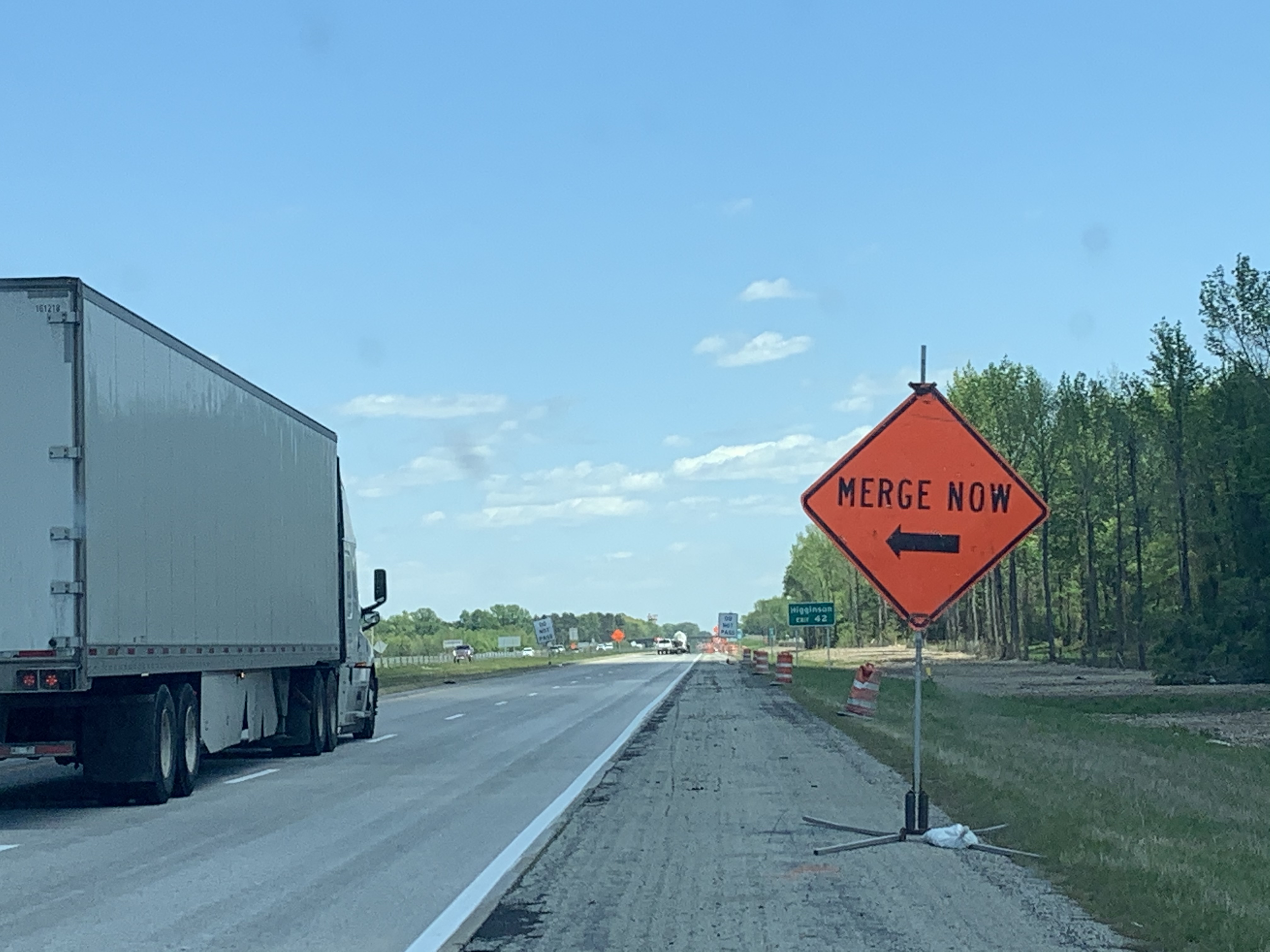
   ARDOT plans for Jonesboro residents and drivers passing through to experience road construction on I-555 that started April 14 and will continue until later this year. Road work involves reconstructing and overlaying pavement for five bridges. 

   Parker said, “Construction is in full-swing all over the state. ARDOT’s current plans aim at  improving many sections of downtown Little Rock, mending and widening I-30 in Saline County and widening Highway 10 in Pulaski County from a four-lane road to six. Those projects will take two years to complete with a cost of around $80 million,” Parker said.

Big projects like the Bella Vista Bypass in Northwest Arkansas see a predicted opening this fall.  Parker said to make sure the budget gets followed, ARDOT hires contractors who present good reputations with proven track records to deliver quality work on time.

   Joe Quinn, executive director of the Arkansas Good Roads Foundation, said the highway-funding bill won 72 out of 75 counties, making the sales tax allotted to road improvements permanent. Construction starts where the most traffic takes place. Quinn said he and others pushed for voter approval because this bill helps keep state roads safe for all drivers. 

   “If voters had not voted in support of this bill, then every county in Arkansas would have lost 30% of its road budget and every city in Arkansas would have lost 30% of its road budget. For instance cities would have lost $46 million for road repairs,” Quinn said.

Shannon Newton, president of the Arkansas Trucking Association, pushed voter approval for the bill, primarily issue 1 of it and pressed state residents to care about the future safety of their roads and bridges. Newton said the governor’s leadership and the support of stakeholder groups representing all types of Arkansans made for strong voices contributing to the cause.  

“The trucking industry relies on all types of infrastructure throughout the state, which is one of the great things about Issue One. Issue One will help make our state highway system safer by improving over 7,000 miles of roads and repairing dangerous bridges, relieve heavy traffic congestion on highly traveled roads and support over 3,600 jobs annually and provide $8.2 billion in economic activity over 10 years,” Newton said.

Pedestrian bike path nears finish line

By Chloe Short/Aspiring Reporter
Delta Digital News Service

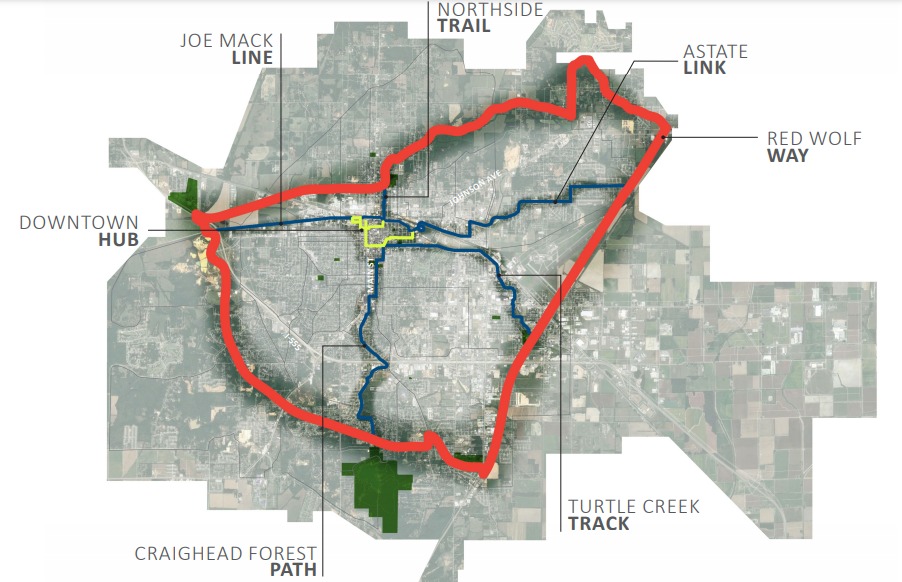
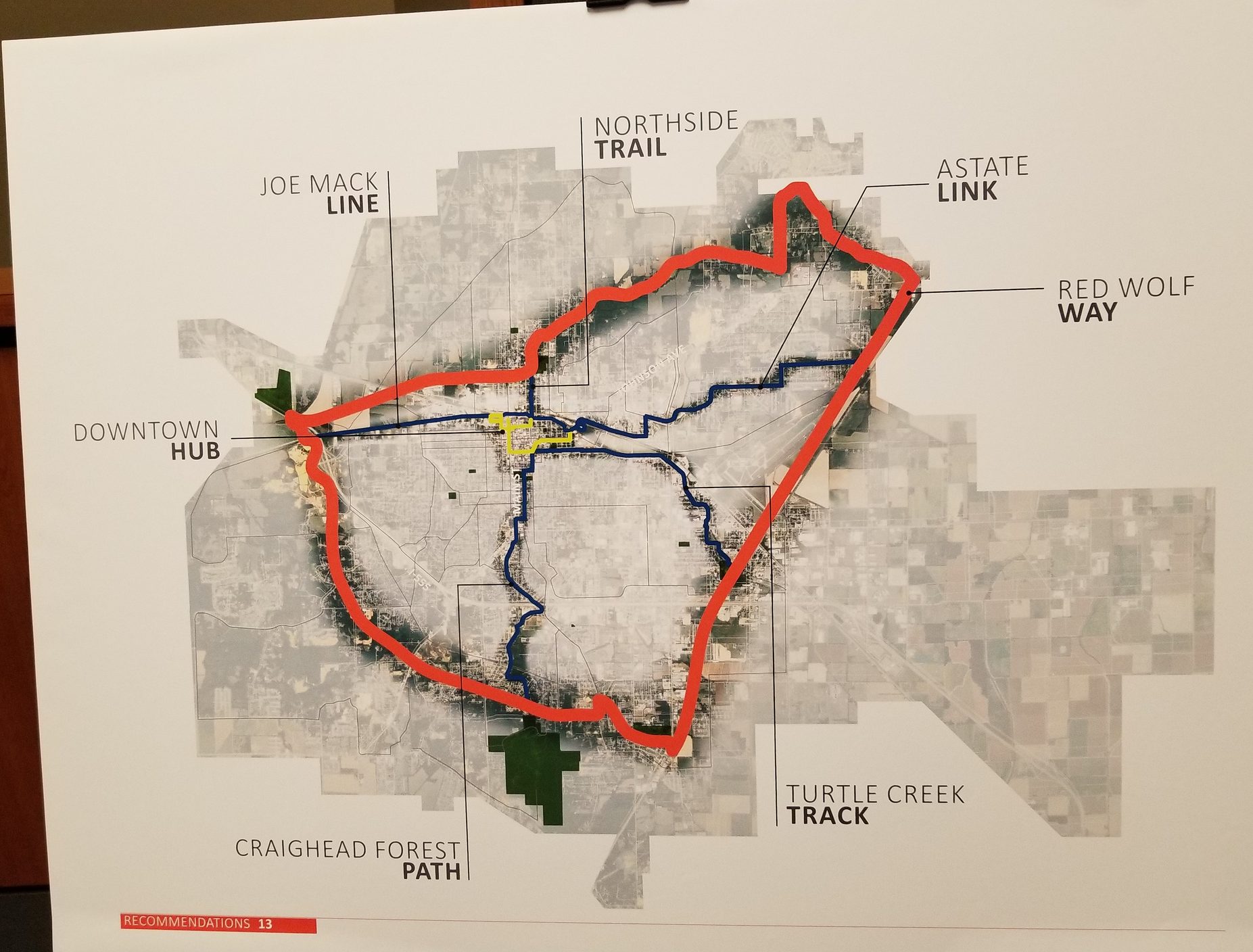
The city comes close to finished plans for the bike path project. Residents will witness construction soon, bringing bike lanes and bridges to connect all the city. The bike pedestrian trail will make one large circle around Jonesboro to allow all areas within the city to experience different ways of traveling.

Danny Kapales, director of Parks and Recreation in Jonesboro, said plans for the bike path are close to finishing. Currently, the design and property acquisition requires completion, then plans move forward to starting construction. Kapales said the project needs scouted property for purchase and further design touches.

“We’re hoping to be starting by the end of this year with the construction or at least by the following year with construction. We should be done with at least land acquisition and design by the end of this year,”  Kapales said.

Final decisions made to design arrangements will then allow progress to finding the construction company. Kapales said when the project releases, construction companies will place bids and once finalized, the project will move to construction.

Earlier in planning, the project awaited clearance for grants to work the University Heights phase, which gives access to open the east side of Jonesboro and will allow safe travel along Aggie Road. Updates revealed the plans received clearance, Kapales said.

Bill Campbell, director of communications for Jonesboro, said the bike path proposal sits at 90% completion. The parks and recreation, engineering, and grants department received the grant money of $500,000 from the Arkansas Department of Transportation and the Transportation Alternatives Program needed to proceed with construction and to continue the bike path phases.

The project plans continued for almost two years after being released to the public. Campbell said after speaking to city Director of Engineering Craig Light, he found money as the hold up in the schedule.

“The project was slowed originally as we looked for additional funding to complete the first phase of construction.  This was ultimately obtained through a second TAP Grant from ARDOT. We just recently received a third TAP Grant from ARDOT to build the final piece of this project which will tie the trail to the A-State campus at the Marion Berry Parkway. We have opted to combine these two project phases into one single project for construction. This decision was made based on a couple of factors, the primary one being that the right-of-way acquisition and utility relocation pieces of the project are expected to take most of the year to complete anyway,” Light said.

New construction brings uncertainty to wildlife in the area, especially if tampered with. Campbell assured that with planning, The parks and recreation, engineering, and grants department must perform environmental studies anytime working with untampered land. Kapales said the bike roads will follow along roads already made, so they do not see any wildlife being interfered with.

Charles Fox, of Gearhead Cycle House, said the community will benefit from the new bike path. Fox said cycling creates a natural high that comes from physical activity, whether the activity runs light or heavy. Active lifestyles can be more conducive to happy living and overall wellness, he said.

“I feel as if it will offer people an opportunity to get out and exercise on their bicycles in a way that they might not have current access to. For a lot of people riding on the streets with automobiles isn’t the most comfortable activity and safer bike paths should give people an entry into the world of cycling,” Fox said.

https://www.jonesboro.org/DocumentCenter/View/4321/BikePedestrian-Plan?bidId=

JET Helps People Get Around

By Jessica Ladd
Delta Digital News Service

JONESBORO — A Jonesboro transit service changed public transportation, one trip at a time. Jonesboro Economical Transit offers fixed routes and paratransit service.

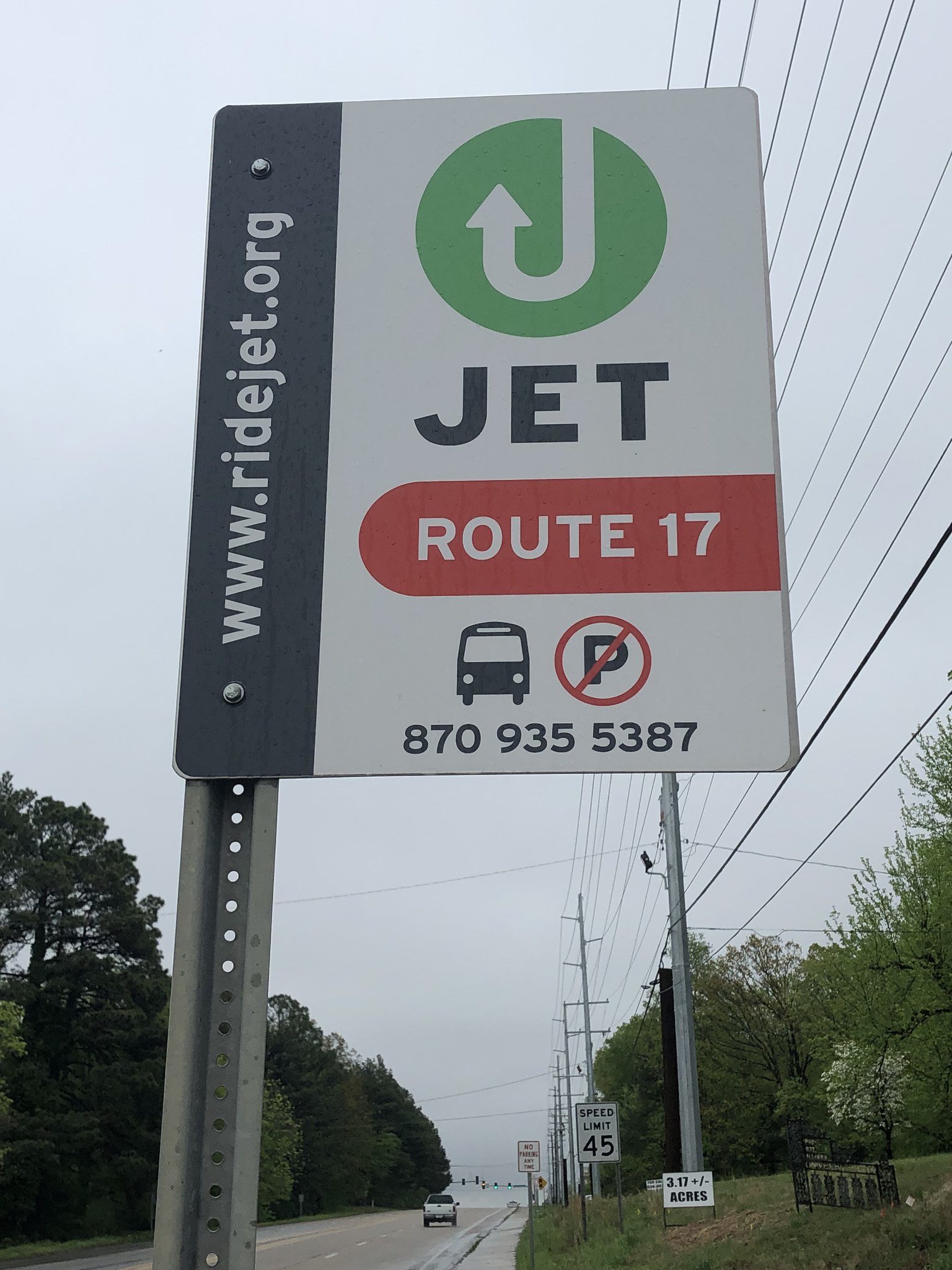
Fixed routes, the set routes the buses travel every day, now cover the entire incorporated city limits of Jonesboro. The buses operate Monday-Friday 5:30 a.m.-7:30 p.m. and Saturday from 9 a.m.-4 p.m. JET buses do not run on Sunday.

“Mr. Dave” drives a bus for JET. He’s been with the company for 12 years. He said JET is a service people need.

“They (JET) take people to work every day. They rely on JET every day. You see the same people every day,” Dave said.

He said JET is an important service and people are grateful for it. Transit Director Michael Black said about 4,000 people ride the fixed routes every week.

Shantara Gilliam and Louis Crawford think highly of JET. The two are repeat users of the service. Gilliam and Crawford said so far they’ve had good service. Both plan to continue riding with the transit organization.

Gilliam does not own a car and said, “I used to use my sister’s car and my mom’s.”

Now she can use public transportation to get where she needs to be. She said JET makes getting around easier. Crawford said he likes JET’s service because it’s cheap.  They offer the lowest fare in the city. It cost $1.25 per way or $2.50 per trip. Students and senior citizens can ride at cheaper rates.

32735204337_91eb12a8dd_k

A sign posted inside a JET bus explains the bus rates. (photo by Jessica Ladd)

A 10-year transit study conducted by JET shows only 44 percent of citizens drive. Thirty-eight percent ride the bus daily. Twenty-eight percent of riders are going to and from work. Twenty-five percent ride the bus for medical purposes.

The study also found 25 percent of JET users suffer from a disability. JET’s paratransit service makes 70-85 trips a week. Black calls paratransit “a door-to-door service.” Those with a severe disability can arrange to be picked up at their home.  The disability can be permanent or temporary.

The application comes in two parts. The first part is to be filled out by the client. The second part will be filled out by a primary caregiver, such as a physician. The application is sent back to JET for review. Once approved, the client must call to set up a pickup time the day before the pickup date. If a client needs to be picked up on Tuesday they must call Monday by 5 p.m. to set up a time for pickup.  Black said there are nine individuals who use the service to get to dialysis appointments.

Black started working in transit in 2008. He became transit director in 2016. He said he’s worked hard to extend JET’s fixed routes and hours of operation. He pushed for bus routes on Saturdays and two years ago, he opened the incorporated city limits of Jonesboro up to JET. He continues to work to make JET a better service. Black said he loves his job.

“It’s different every day. We’re helping people,” he said.

Black said in the near future he would like to change the Saturday routes. Currently, three buses run on Saturdays. Black wants to have five buses driving the routes, like Monday-Friday. Saturday hours will remain the same.  He also said there are no plans for a Sunday route.

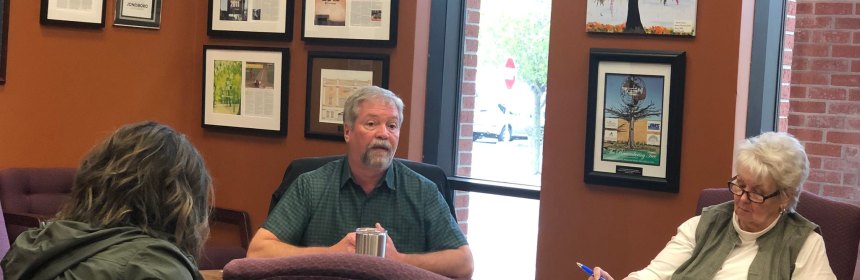
(NOTE: Featured photo shows Michael Black and members of the Advisory Board during a meeting. Photo by Jessica Ladd)

Bike Trail Would Connect Jonesboro

By Denton Postlewait
Delta Digital News Service

A proposed bike trail would circle the city. (Photo by Denton Postlewait)

JONESBORO — Citizens and cyclist will soon be able to access the city easier and get safe exercise for the whole family with the Jonesboro Quality of Life and Connectivity Master Plan bike and pedestrian plan.

The A-State link is part of the greater biking and walking trail plan proposed by the city with funding coming from grant money. If approved, the grants would be an 80-20% match for a total of $500,000 from the Arkansas Department of Transportation and the Transportation Alternatives Program. The grants would provide $400,000 or 80%, while the city would provide the additional $100,000 or 20%.

Arkansas State Vice Chancellor for Marketing and Communications Bill Smith said the proposed plan will strengthen the bond between the university and the Jonesboro community.

“With Arkansas State, you have a lot of park space. There are trails on campus, there are places for families to come and visit and the A-State Museum,” Smith said. “Having a way for people to come into campus from the east is extremely impactful.”

Not only would the A-State link be helpful for students and employees of the university, but it would also give residents with children a safe and fun place to get exercise on the east side of the city. With the proposed link, citizens would pass through the A-State campus on a path to downtown Jonesboro.

Smith said the northeast corner of the city happens to be the only place in Jonesboro without access to a park. The University Heights phase would give citizens and students the opportunity to use active modes of transportation to travel to work or school.

Jonesboro Parks and Recreation Director Danny Kapalas said the city would start construction on the University Heights link in late 2020. It will be the first phase of a 68-page master street plan that passed a city council vote. From there, the community selected which phase would be completed first.

“We went to the public about which section needed to be the first phase,” Kapalas said. “This phase was unanimously picked.”

The impact of the plan will not provide road cyclists much in the way of safe riding. The plan’s design caters to modes of active transportation to citizens. Brent Walker, a local cycling instructor, said it will give people who walk or ride their bike a safe route to travel on.

“It will provide a safe environment for families, especially young children to ride,” he said. “Not everyone drives, so I think it will be good.”

The plan for the University Heights phase will be designed to give citizens safe access along Aggie Road, a notoriously dangerous road with many blind turns and narrow lanes. If approved, Smith said the path would open the entire east side of Jonesboro. The one benefit for road cyclists would be access to gravel and farm riding outside the city limits.

47503336301_34cde99678_k

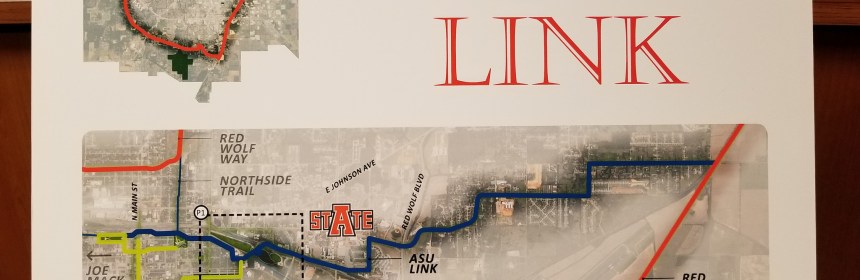
The University Heights phase as planned. (Photo by Denton Postlewait)

Click here to find out more about the proposed link or to read the entire 68-page master road plan proposal.

Service Provides Safe Trip Home

by Jessica Ladd
Delta Digital News Service

Driving service Uber is helping eliminate drunk driving one trip at a time. The app allows users to go out and enjoy themselves without having to worry about getting home safely.

The mobile app is simple to use and fair in price. Some citizens think highly of the service.

“Uber is a hot topic right now,” said Melissa Herman, a customer at Brickhouse Bar and Grill in downtown Jonesboro. She said she is grateful for Uber’s service to the community.

Taylor Cagle, who was with Herman at the bar, also had nothing but positive reviews. She even considered driving for the company. She said her boss swears by Uber.

Downtown Jonesboro businesses also approve of the app. Uber is helping transport their customers safely and it’s helping reduce their employee’s stress.

“It’s great,” said Krysti Breyette, a bartender at Cregeen’s Irish Pub. “A lot of people drink and use Uber. It’s not uncommon to see an Uber or Lyft outside waiting to pick someone up. It has cut down on drinking and driving.”

Breyette said Uber is saving lives by offering its service.

BrickHouse

Jordan Wooten enjoys the “calm before the storm” on a slow Saturday afternoon at Brickhouse Bar and Grill. (Photo by Jessica Ladd)

Brickhouse Bar and Grill bartender Jordan Wooten has more than six years of experience working in downtown Jonesboro’s bars.

“Uber absolutely is preventing drunk driving,” he said. “You can see someone get into an Uber and know they’ll make it home safely. It’s an app. Even in your worst state, you can use it.”

Uber breaks down the process of using its app into five steps on its website:

  1. A rider opens the app. The rider can enter their destination and view prices, car sizes and wait times. The rider confirms the pickup location and taps request.
  2. The rider is matched with a driver. A nearby driver accepts the trip request. The rider is notified when the driver is a minute away.
  3. The driver picks up the rider. The driver verifies the driver’s name along with the destination.
  4. The driver takes the rider to destination.
  5. The driver and rider leave ratings for each other. Riders can also leave reviews for the driver as well as tips.

Wendell Vovo started driving for Uber in August 2017. He also claimed Uber is cutting down on drunk driving. He said the community appreciates Uber’s service.

“A lot of people are so thankful for it because they have gotten tickets in the past,” he said. “You go and spend $60 on a drink and wind up paying over $2,500.”

In the United States, two out of three people will be involved in a drunk-driving incident within their lifetime. Partnering with Mothers Against Drunk Driving and creating the hashtag #DesignatedRider, Uber is encouraging people to make safer choices.

A-State Grants Target Bike and Pedestrian Pathway

By Jessica Ladd
Delta Digital News Service

JONESBORO— A new bike and pedestrian pathway will be built on Arkansas State University’s campus. The pathway will improve safety and connectivity across campus.

This new pathway comes as a breath of fresh air to some university students.

A-State student Christina Huynh said, “It is a good thing since we did have that accident recently here. I think anything we do to help make things safer, will make things safer.”

She also said she won’t feel completely safe on campus until drivers start obeying the university’s traffic laws.

The latest pathway project consists of two phases. According to Bill Smith, the associate vice chancellor for marketing and communication at A-State, the university received a $450,000 grant from the Arkansas Department of Transportation for the first phase. ARDOT will provide an additional $370,000, possibly $390,000, for the second phase of the project.

Bill Smith

Bill Smith, the associate vice chancellor for marketing and communication (photo by Jessica Ladd)

Phase one will create a multi-use path for pedestrians and bicycle riders along Aggie Road on the western side of campus. The path will also continue under Marion Berry Parkway along University Loop West. Construction on phase one began in February 2018 and finished in July 2018.

Phase two will extend the path from behind the library and continue east. It will then turn north to circle back to Aggie Road. Once completed, students will be able to make a loop around campus. The second phase is approaching the design and bid. The university hopes to start on phase two in the late spring and summer of this year. However, bid results and weather could cause delays.

Smith said these pathways are part of a master plan to link campus together. It will be easier for pedestrians and cyclist to get around. Eventually, the university wants to add more trails to connect the east side of campus to the farming area located on the other side of Red Wolf Boulevard. Smith said he hopes Jonesboro will connect its pedestrian pathways with A-State’s in the future. This will multiply the pathways for the city.

These grants come from the Transportation Alternatives Program. The money goes directly into the project and is used for engineering, materials and construction. These grants work as matching 80/20 grants: ARDOT will provide 80 percent of the funds and ASU will cover the other 20 percent. On the $450,000 dollar grant, ASU paid $120,000. The same arrangement will be applied to the grant for the second phase.

Aggie Road Bridge

Aggie Road Bridge — An Arkansas State University student uses the new portion of the pathway along Aggie Road. (photo by Jessica Ladd)

Aaron Vowell, a resident engineer for ARDOT, said his job is to oversee construction, bids to contractors and the building plans in Jonesboro. Every couple of weeks, he receives a payment request from the University. He then reviews it to ensure the work listed has been completed. Once he has inspected the request, he sends it on to the corporate office in Little Rock, where the grant process is handled.

Although the pathway isn’t completed, many students still enjoy it.

A-State student Latoya Taylor said, “I think it is a good project because you don’t want to be in the road so close to traffic,” she said.

The University is installing lights on the dark western side of campus along the completed portion of the path. Smith predicted the path will have more foot traffic then, especially at night. Smith said he knows what it is like to maneuver around campus without with pathway.

“I’ve lived west of campus and I ride to work almost every day,” he said. “Having that new path has allowed me to step off of the road and have fewer incidents with traffic.”

He said in the past, drivers have not been willing to give him 3 feet of the road. Smith said safety must be a top priority. Drivers must stop at crosswalks. Drivers should also pay attention to the speed limit. He urged pedestrians to make sure the driver sees them before crossing at a crosswalk; they should never assume a driver will see them and stop. Smith said the new pathway will be designed to give pedestrians the right of way with the streets it intersects.

New Overpasses Coming to Jonesboro

by Kayce Wilson
Delta Digital News Service

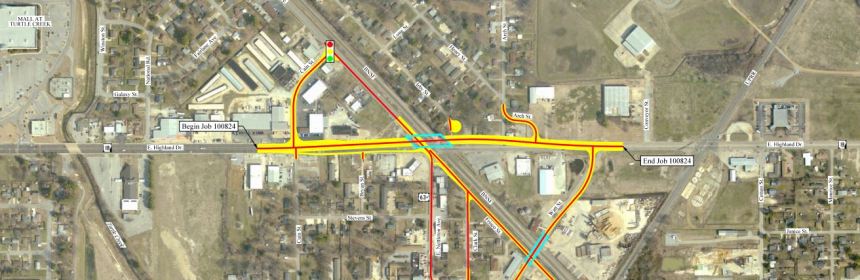
JONESBORO — The Jonesboro City Council-approved plans for new overpasses off Highland Drive and Nettleton Avenue will commence construction after July 2018.

Arkansas Department of Transportation Area 10 Engineer Brad Smithee said the financial aspect was the main reason for the wait.

“Discussion with Jonesboro, BNSF Railway, (Arkansas Department of Transportation) and other parties involved have been around for a number of years regarding this project,” Smithee said. “More direct project developments began when a funding mechanism was identified and the city of Jonesboro received a (Transportation Investment Generating Economic Recovery) grant for $1.2 million to perform environmental and design work on the project back in 2014.”

Smithee said the overpass will bring many changes to the community, many of which would affect safety.

“They would increase access to industry, increase safety for school-age children and increase the traffic flow that is currently congested by the railroad crossings,” Smithee said.

Aside from the businesses affected, the Nettleton School District could see some changes in the near future.

Nettleton graduate Jacquelyn Young said she believes construction could require more police supervision.

“I think that the overpasses will help after-school traffic and provide a new way to get around the school, but it also might make the traffic before school more hectic,” Young said.

Since the project is very complex and in a populated area of town, Smithee said there is not an exact time frame for completion. They must consider the cost of construction items and the number of possible construction days to figure up a bid. This is then paired with a building schedule figured up with a construction cost so that they can determine how many workers they will need.

The new overpasses will not only cut back on train and vehicular incidents, but will cut back on the traffic around the tracks.

Public Transit Provides Cheapest Option

by Kayce Wilson
Delta Digital News Service

JONESBORO – With transportation apps like Uber and Lyft bringing services to the Delta, pre-existing businesses may feel the need to change their operations.

Jonesboro Economical Transit System transportation supervisor Keith Michael said the company does not feel threatened by the new services.

“The difference that JET has from other transportation options is that we are able to set our fares at lower rates than other services because we are federally funded,” Michael said. “It will cost you $10 and higher to ride a local cab, UBER or Lyft one way, in comparison to $1.25 one way for JET.”

JET of Jonesboro began operating in 2006. JET’s routes reach across the Central, East, North and West regions of Jonesboro, with a hub at 713 S. Caraway Road.

Since the city runs the public transit, its maintenance department and JET employees provide maintenance. The amount of riders per day varies. Many people use this service to get to work, the grocery store and various appointments.

“I don’t believe the newer forms of transportation will affect our JET ridership. Because we can offer lower fares, this alone will keep our ridership numbers steadily growing,” Michael said.

Craighead County Cab Company was unable to comment at this time.

Edward Harthorn, a graduate assistant in history at Arkansas State, said it is important for people to know about all of the forms of Jonesboro transportation.

“While there’s a lot that I don’t know about Uber or Lyft, I am optimistic that they will quickly play an important role in local transportation,” Harthorn said. “Single-car families, international students and many other constituencies may find that ride-sharing provides a convenient alternative when running errands, traveling across town or waiting for a vehicle to be serviced. It will be interesting to see how these companies and Jonesboro’s public transit co-exist.”

(Photo courtesy of A-State Media Relations)

Uber Serves Northeast Arkansas

by Kayce Wilson
Delta Digital News Service

JONESBORO- Northeast Arkansas welcomed Uber in early August, with the Uber-friendly area reaching over 15 cities.

Jonesboro’s new development reaches toward Memphis, the first hub near the Delta region. Drivers can take people out of the region, such as if a Jonesboro resident needs a ride to the Memphis airport. However, drivers cannot pick up someone in Memphis and bring them back to Jonesboro.  

Uber began during a taxi ride in France in 2009 when the creators, Travis Kalanick and Garrett Camp, wanted simpler options for travel. UberCab started the next June.

Starting as an idea about a simple phone app, Uber now acts as a new way to get around. With Uber, users can now receive packages or takeout with expanded service.

Uber operates in over 633 cities worldwide, with the 1 billionth ride occurring in 2015.

With Jonesboro being a college town, Uber acts as a newer way to limit the number of unsafe drivers on the road. Rides are mainly requested on Thursday, Friday and Saturday nights.

Uber driver Austin Sandy in front of his Kia Soul. Sandy uses his primary vehicle while working for Uber. (Photo courtesy of Austin Sandy)

Austin Sandy, a Jonesboro Uber driver, said, “I would much rather someone act a fool in my car than them get behind the wheel of their own car while they’re under the influence.”

A-State junior Gianna Confer used this service during her travels to Australia, Indonesia and Mexico. She mentioned the lack of confusion regarding your destination as a beneficial aspect.

“You put your pickup location and the destination into the app. If you can’t speak the language of the driver, they still know where you are trying to go,” Confer said.

Compared to taxis or traveling in foreign countries, Uber gives you a preset estimation and automatically selects the shortest route. Credit or debit card information is already entered in the app for direct deposit, and riders can tip their driver through the app as well.

Sandy said the flexibility of working for Uber makes it a great job. He works a full-time job and makes extra money on the weekends by turning on his Uber location. Once the location is on, passengers can see nearby drivers and request a ride.

“As a driver, you don’t have to worry about making change for your riders or people targeting you or trying to steal from you,” Sandy said.

As for ride safety, all drivers must go through a background and motor vehicle report check. When requesting a ride, the app displays a small picture of your driver alongside a description of their car and a license plate number.

Uber’s rating service ensures that other experiences will improve by letting both parties rate each other after a ride.  

To request a ride, download the app and then make an account. Once location is synced, riders can see the nearby cars in their area. Payment information is entered into the app and then all payments will be done digitally. After the passenger enters the current location and destination, the only thing left to do is hit request.