Author Archives: Avery Jones

New football teams coming to NEA

Delta Digital News Service

Monday, July 29, 2024

By Avery Jones | Editor

BLYTHEVILLE and PARAGOULD, Ark. — Joshua Hall, a store manager in Blytheville and semi-professional football player, is bringing a new semi-professional football team to Northeast Arkansas. Called the NEA Knights, the team will help represent the Northeast Arkansas region in the Triumph Football League.

The Triumph Football League is a group of semi-professional football teams that encompasses the tri-state area of Arkansas, Louisiana, and Texas. It was established in 2018 by Pat Patterson. However, teams in the league often change as they drop out or switch to another league.

According to Hall, he played in other semi-pro football teams for five years before becoming inspired to start his own. He wanted to bring a team to his own area.

Joshua Hall, owner of NEA Knights.

“I know there’s a lot of talent that goes unnoticed, and there’s a lot of talent that can be brought from this area to do even greater things,” Hall stated.

More specifically, a semi-pro football team could be a stepping stone for players to join college teams, a bigger league, or even professional teams. Joining a semi-pro team could also just be for fun and bringing together the community.

“Why not just try to bring that locally and try to push the talent that’s out here to make them succeed in the long run and let them know there’s still people out here that care and maybe eventually help you get to that next level,” Hall said.

Hall started playing football in the Missco Junior Football League in high school and then moved on to semi-pro teams as an adult. He has also coached Little League.

Tryouts for the team begin on August 3 from 2 PM to 5 PM at the Missco League Field in Blytheville. There might also be a second tryout which is to be determined. Experience isn’t needed, and all who want to play are welcome, from those just out of high school to veteran players.

Tryouts will consist of various drills, including position drills to determine what position in the team would fit best. Preferred position and experience will be taken into account. Drills will include a 40-yard dash, a 100-yard dash, shuttle runs, etc.

The team also currently hiring for leadership positions like head coach, offensive coordinator, defensive coordinator, position coaches, and more. Hall is currently working by himself, but has had help from others with experience, including the owner of the Arkansas Punishers who has reached out with encouragement and advice.

The league’s season starts in April 2025 and will most likely run until mid-summer. Both practices and home games are on Saturday nights and will be at the Missco League Field. Practices will be from 2 PM to 5 PM.

The team will largely be funded by donations and sponsorships. Players need to pay a $25 fee to join and need to pay for their jersey as well. They’re encouraged to bring their own shoulder pads and helmet. Opportunities for sponsorships will soon be available.

Another team known as the NEA Galaxy, which was established last year, will also be participating in the Triumph Football League for the upcoming season. The NEA Galaxy was started in Paragould by co-owners Kristopher Moss and Cody Boyd.

Moss and Boyd played football together in high school and had the opportunity to do college football but turned it down. Moss has been playing football since he was five. In 2015, he started playing on semi-professional teams but stopped in 2020.

Kristopher Moss, co-owner of NEA Galaxy.

Both Moss and Boyd later decided they wanted to play again, but at the time, there were no semi-pro teams near them. The idea of starting their own team began as a joke but as they discussed it more, they started taking it seriously.

“Semi-pro minor league…exists for the purpose of giving young adult athletes and sometimes even older adult athletes a second chance in playing the sport…” Moss said. “One of the goals that we want to use it for is to help…the younger adult athletes that want to pursue a career in football…”

Moss said that they not only want to have fun, they can also help adult athletes who may not have gotten enough notoriety in high school by reaching out to colleges on their behalf to get them on a roster. They can also help players out of college who want to go pro by working on their football resume and reaching out to scouts.

The size of the team each season can be unpredictable; in Moss’s experience, he’s seen teams that have as few as fifteen players to as many as fifty. According to the league rules, however, they can have no more than sixty players. Currently, the NEA Galaxy has forty-four players, but this is subject to change.

The team started tryouts in March and are considering doing another tryout closer to the fall. Prospective players have to be at least eighteen and graduated from high school. Tryouts consist of agility drills, position drills, a forty-yard dash and shuttle runs.

There is a fee to join, but currently Moss is working on ways to allow people to join for free. He wants to be able to provide equipment and uniforms at no cost. Right now, players have to provide their own equipment and a fee which pays for their uniform.

However, the rest of the cost of the team comes of Moss’s and Boyd’s pockets. They also are a registered nonprofit organization and just got their first team sponsorship. They’re currently looking for more sponsors. They also plan to sell their own merchandise at some point for more revenue.

The team usually practices on Saturdays starting at 6 PM at the old Harmon football field in Paragould. The location of home games is still up in the air, however. Moss is currently talking with both the Paragould and Jonesboro Parks and Recreation departments as well as local schools to find a new field.

Currently, the team staff consists of head coach Jordan Hightower and a defensive line coach. Moss is taking the position of offensive coordinator this season, and they’re looking to fill other leadership positions.

“We’re wanting to bring a new atmosphere to Northeast Arkansas,” Moss said. “There’s not a lot of adult activities around here…there’s not much stuff for young adults to participate in…We’re doing it because of our passion for the sport and to help these young adult athletes out.”

He wants to put their name out there in the community, arrange some community activities, and do some fundraising. Not only is he looking to invest in his team, he also wants to invest in the community and help bring people together.

Legends BBQ a thriving figure of the NEA black community

Delta Digital News Service

Friday, May 31, 2024

By Avery Jones | Editor

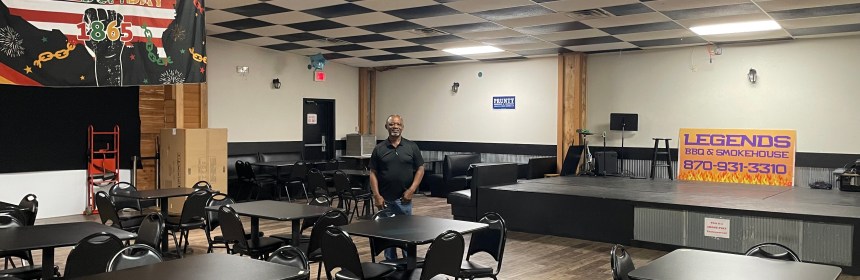
JONESBORO, Ark. — The restaurant Legends BBQ Smokehouse & Lounge in Jonesboro has had quite the journey to get where they are today. Owned by husband and wife duo Reginald and Ruthie Prunty, the business has been running for around thirty years.

Reginald Prunty, born and raised in Jonesboro, is a prominent figure in the Jonesboro African-American community. He and Ruthie—who is originally from Dumas, Arkansas–have donated to, contributed to, and volunteered for many local community efforts over the years.

For example, Reginald was the founder of Jonesboro CityYouth Ministries, a Christian after-school program for young children. Before it was established, Reginald stated, there was no place for African-American kids to get together and have activities.

In addition, Reginald has been chairman for Crowley’s Ridge Development Council, a board member of Crimestoppers and the community transportation committee JETS, and a member of Community-Oriented Policing (COPS). He has even ran for State Representative of District 59 twice.

Reginald (right) and Ruthie (left) Prunty.

“I grew up in the community, and I cared a lot to make a change,” Reginald said.

The Legends restaurant is another culmination of the Pruntys’ community efforts. Originally, the business started out as a private club called Envision. However, the official name of the business was Arkansas Scholarship Fund, doing business as Legends 1025.

The Pruntys established this club because they saw a good opportunity to give back to the community, according to Reginald. People of course enjoy drinking alcohol, so why not turn that into money to benefit others?

The money that was paid for a club membership was later put into a scholarship fund. Every year, the Pruntys would give a scholarship, funded by this money, to a student who needed it. The money made at the bar was used to provide food for CityYouth.

The scholarship effort was retired when the state stopped requiring that businesses have a certain amount of members in order to retain a liquor license. However, the Pruntys still donate to various community services, in addition to catering for many community events.

The Pruntys had to work day jobs while they were running their business until they retired recently. Reginald worked as a technician for Xerox and frequently traveled, while Ruthie worked for St. Bernards in catering. Reginald has an associate’s degree in electrical engineering, and Ruthie has a bachelor’s and master’s degree in management along with a certification in dietary management.

When the Pruntys first opened their club back in the ‘90s, it was the first business owned by an African-American in Jonesboro to have a liquor license. Prunty believes that this is what opened up the rest of the clubs in Jonesboro to accepting more African-Americans.

However, the club faced many difficulties, as trailblazers often do.

“Jonesboro wasn’t ready for an African-American to have a liquor license or a club,” Reginald said.

There was some negative press surrounding their business. It was even printed in the Jonesboro Sun at one point that “There’s no way that the young man can make a private club successful on West Johnson, not even one of the Rockefellers could,” according to Reginald.

“Well, I’ve been here thirty years…if I could tell him now, maybe I’m not a Rockefeller, maybe a cousin…” Reginald said, and laughed.

In addition, even though they had all the qualifications for a liquor license, they didn’t get the license until much later than they should have. First, they were accused of not being in the right location, said Ruthie—even though it’s clear that their building on West Johnson is very far from any churches or schools—and then they were told that they had to get their business up and running within six months or the license would be revoked.

However, this proved to be an issue because at the time, according to Reginald, very few people in Jonesboro were willing to come work for an African-American. For example, the people who did the electrical work kept their vehicles hidden. The people who worked on the walls would only work at night.

Furthermore, when picking up alcohol, Reginald was frequently pulled over and forced to show his permit. They would unload the truck on the side of the road as if he was carrying drugs. The club was subjected to frequent shakedowns, as well, in which customers were patted down and told to show their IDs.

“They would come in when we got customers…they were running through the building…and tell us ‘Turn the lights on right now, right now!’” Ruthie said. “A lot of nights, they’ll set up over here across the street in the fields with the police lights off on the vehicles…they were sitting out there, waiting to see what they can get us for.”

According to Reginald, before his club opened, there was no other club in Jonesboro that African-Americans could go to. It wasn’t socially accepted for African-Americans to attend any of the other private clubs.

Reginald Prunty in front of his bar.

His club paved the way for African-Americans to be accepted into other clubs because it was becoming so popular that it was attracting customers from other clubs. Reginald emphasized that his business wasn’t just for black people but for everyone. He called it “the neutral zone.”

The club used to host themed nights based on types of music they would play on those nights which would attract different crowds. For instance, there was blues night, rock night, R’n’B night, and Hispanic music night. As a result, they had a good turnout of not just African-Americans, but also white people and Hispanic people.

“They came out in droves,” Ruthie said.

“Everybody would leave the 501, everybody would leave Sage Meadows, everybody left Ridgepointe, and they were here, because this is what the happening was,” Reginald said.

However, this is when everything started to go downhill for the club. It was because the club was affecting the other clubs’ business, according to Reginald.

In 2010, the Pruntys had to go to a public safety hearing as a result of allegations about violence near the club. The owner of Brickhouse was also there due to violence around his club as well. KAIT8 aired the hearing on TV.

The Jonesboro City Councilman at the time, Chris Moore, gave the owner of Brickhouse, Dr. Dan Johnson, a warning that if he appeared again before the committee, he was in danger of having his business shut down.

However, when it was aired on TV, KAIT8 made it seem like the councilman was talking to Reginald rather than Johnson. They replaced the clip of Johnson with a clip of Reginald.

“Now how fair is that?” Ruthie said. “I was so upset…To shine a bad light on him, they aired it on TV.”

In addition, Reginald said that when he was asked if he overserved alcohol and answered in the negative, the police chief jumped up and accused him of lying, claiming that he overserved and that his club always smelled of marijuana.

The committee decided to suspend the Pruntys’ license for three months and put them on probation for a year, but they later contested this and sued the city, claiming that they were in compliance with the alcohol regulations and that he was being treated unfairly due to his race. A restraining order was granted to prevent the suspension.

“It happened in front of the entire city of Jonesboro. The city of Jonesboro allowed that to happen, the city attorney allowed it to happen, and we had a full house like it was a lynching,” Reginald said. “That’s exactly what it felt like.”

According to Reginald, there hasn’t been another hearing bringing in private clubs for any similar incidents since then.

Once the other clubs got wind of the fact that the Pruntys’ club was actually making a significant amount of money and had a strong clientele base, they started recruiting customers from the club, according to Reginald. As a result, the Pruntys were later forced to close their business for three months to rebrand themselves and renovate their building due to a loss of customers.

In 2017, their business reopened as a BBQ restaurant which also has a bar. They have their own smoker and process their own meats, so everything is made in-house. They even have their own seasoning mix that took five years to develop, which became so popular that many people asked if they would sell it.

They’ve also catered for many events, such as the grand opening of Natural Grocers in 2017. The event was supposed to be small, and they didn’t originally plan to cook very much, but more people started arriving because word got around that it was so good. They were supposed to only be there for two hours, but five hours later, Reginald said, people were still coming.

They also host events at the restaurant. On this upcoming June 1, they’re hosting the kickoff for the Juneteenth in Jonesboro celebration from three p.m. to six p.m. There’s going to be vendor popups, food, music, and a couple of speeches.

Reginald says he wants to eventually publish a book in which he tells his story along with the controversy it inspired, of course using all the required documentation and evidence. However, he also plans to include and give due credit to all of the people who have supported him throughout the years.

-30-


NEA celebrates local diversity with cultural expo

Delta Digital News Service

Thursday, May 23, 2024

By Avery Jones | Editor

JONESBORO, Ark. — On Saturday, May 18, the local nonprofit organization Research Solutions hosted their first NEA Cultural Expo. The event lasted from 10 AM to 7 PM at the Centennial Plaza in downtown Jonesboro and was free to attend.

The event featured crafts, food, and other goods from various local vendors and small businesses as well as live music. According to the executive director of Research Solutions, the purpose of the event was to display the variety of different cultures thriving in Northeast Arkansas.

“We have so many people from around the country and around the world who live in this area, and we all bring something that contributes to the community but we don’t interact a lot,” stated Lisa Perry. “I’d like to see something that celebrates all that everyone brings to the area.”

Although this was only the first time this event has happened, they’re hoping that they’ll be able to arrange it next year as well and are already making plans to do so. Perry used to live in another city–Columbus, Indiana–that hosted a cultural expo every year, which is how she came up with the idea.

When Perry moved here to Jonesboro, she noticed that this area has just as much diversity as Columbus, but there was no similar event. In her last city, the cultural expo was a great way to connect people of different backgrounds, ethnicities, and religions.

“We really don’t have anything that kind of tries to bridge that gap, and having the other city as an example of something that was working, I thought, why not try it here?” Perry said.

Their hope is that although the expo was instigated by Research Solutions and they plan to remain involved, it will eventually become a community-led event. However, even though this first event was mainly run by Research Solutions, there were many people in the community who did help, such as sponsorship from local businesses.

Research Solutions, established in 2022, does research on social sciences and public services. They work primarily on substance abuse and overdose prevention. They’re the fiscal agent for the Arkansas HOPE Coalition, a group of organizations that supports programs for underprivileged youth.

Some of the cultures that were to be represented at the Cultural Expo included Southern, Hawaiian, African-American, Muslim, Mexican, Filipino, and others. There were at least thirty vendors slated to be there.

One of the many culturally diverse vendors at the event was NowaraCo, a scarf and hijab company owned by Dr. Nora Bouzihay. It’s the first hijab company in Arkansas and was established in 2018.

Dr. Bouzihay, who has a doctorate in education, currently works at Southeast Missouri State University. Her grandmother used to call her “Nowara,” which means flower in Arabic. This is how her company got its name.

All of the scarves are handmade, and the fabric is imported from Morocco. For every three scarves sold, NowaraCo donates a scarf to a refugee in the Middle East. NowaraCo also sells no-snag magnets as a substitute for safety pins.

Bouzihay started wearing a hijab herself in 2016. She says that she never felt “beautiful” until she started wearing it. Additionally, after her grandmother passed away, she wanted a way to keep her legacy alive.

“Because I felt so beautiful with scarves, I thought what better way to bring all women and young girls together and feel beauty through scarves in all forms?” Bouzihay said. 

Although the scarves are frequently bought as hijabs, they can be used for any purpose, says Bouzihay. Women who are suffering from hair loss also enjoy these scarves, and of course, they can be used as neck scarves as well.

Bouzihay is originally from Morocco but grew up in Jonesboro. During college, she studied abroad in Dubai and Morocco, which is what inspired her to assist women in the Middle East.

Another vendor at the expo was KO Treats: Taste of the Valley, an independent candy company ran by duo Kiara Riojas and Oliver Quiroz. It was first established in 2022. 

KO Treats sells chamoy-covered candy. Chamoy is a type of sauce often used in Mexican cuisine, made from pickled fruit and blended with chili peppers, lime, and spices. 

When she moved to Jonesboro from South Texas, Riojas found herself missing all of the authentic Mexican snacks that could easily be found in any convenience store down there. Riojas decided to remedy this problem herself and sell her own Mexican snacks, bringing the unique flavor of the Rio Grande Valley to Jonesboro.

Riojas and Quiroz currently sell the candy from home in Lake City, but they provide delivery for Jonesboro and surrounding areas. They also frequently sell at events in Jonesboro similar to the expo.

Graceful Threads, an inspirational apparel business owned by Ninmah Wallace, was also at the expo. The shop sells clothing featuring Christian and inspirational quotes.

Wallace is originally from Chicago. She has a bachelor’s degree in business management. 

Wallace started her business in 2020; she loved designing faith-based apparel for herself, so this business was the natural next step for her. Additionally, she’s a Christian, so she prays and feels inspired about what to design.

“It was something I knew that I wanted to do because I love to create and design different apparel,” Wallace said. “It’s just something that I was inspired to do…just to be able to support and provide something for families to wear.”

She has another similar business called SheMadeYaLook, of which Graceful Threads is an extension. SheMadeYaLook is a personal styling service that helps people to find pieces that suit them, match their personal taste, and look good together. Wallace puts together a “StyleBox” and delivers it to the client.
Graceful Threads sells online and ships the purchases. New designs are released every season. 

There were several other small businesses featured at the Cultural Expo, including the food truck Filipino Chow, Wise Women Crafts, Vaughn’s Pit Stop BBQ, the bakery Delightful Bites, and much more.

-30-


Mama 2 Mama, a local nonprofit organization and podcast, provides free diapers and shelter to needy mothers

Delta Digital News Service

Wednesday, May 1, 2024

By Avery Jones | Editor

JONESBORO, Ark. – Mama 2 Mama, a new nonprofit organization in Jonesboro, recently celebrated their one year anniversary. They were officially established in 2023 on International Women’s Day, March 8. 

Mama 2 Mama provides services, advice, and connection for mothers, especially those who struggle financially. They also host a podcast in which they discuss the struggles of motherhood and promote resources for mothers.

“Mama 2 Mama was established to lift the physical, psychological, and financial wellbeings of mothers,” said Brionna Palmer, the executive director. “Regardless of their hardship, we are aiming to help with their development and create a path to motherhood success. We want to lift those barriers and be able to provide services and supplies for immediate and long-term needs.”

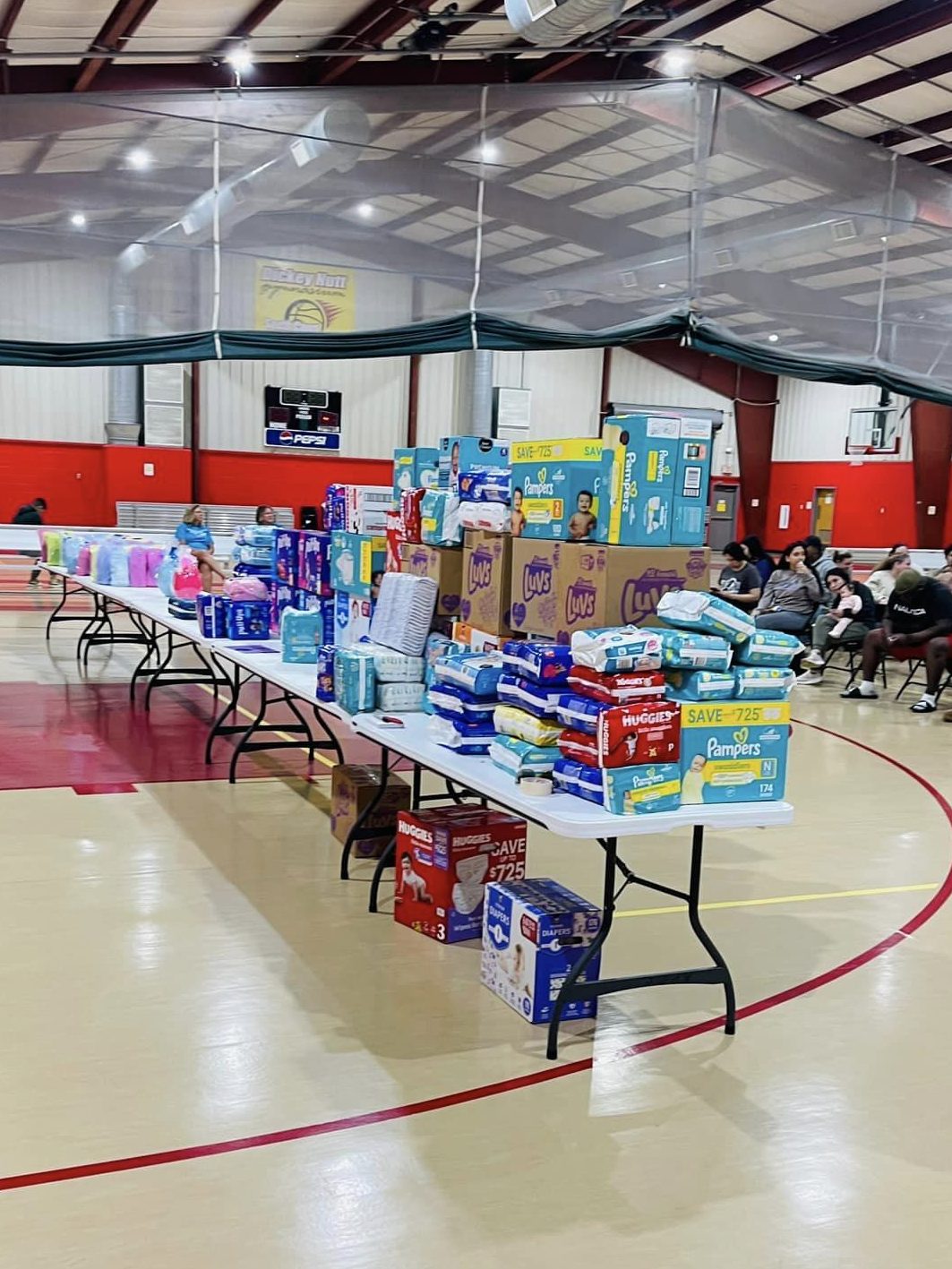
Diaper drive on March 30.

Currently, Mama 2 Mama has a diaper assistance program and a rapid rehousing rental assistance program. The diaper assistance program provides free diapers to those who need them, and the rehousing assistance helps to get struggling mothers a place to live.

The diaper assistance program began as a diaper drive in which they collected donations to provide free diapers to the local community, which they still do frequently. Palmer wanted to not only alleviate the need, but also spread awareness about it.

According to Palmer, one in two U.S. families struggle to afford diapers. The cost of diapers has increased from $80 to $100 per month for most families. She wants to eventually be able to provide enough diapers for up to three months at a time for each family that needs it.

At their most recent diaper drive on March 30, they were able to provide diapers for over 66 families. Altogether, from their first diaper drive, they have been able to serve 154 families.

Their rehousing assistance program aims to help mothers get their own place to live. Most of their participants rent, not own, so it can sometimes be a struggle to stay stably housed, especially considering inflation. 

“It’s always a mother’s dream to have a room set aside and decorate it for her child,” Palmer said.

Palmer (left) with Ms. Garza (right), the mother who they rehoused.

The program provides the deposit and the first month’s rent to allow the mother to find her bearings. It’s a very new program, so they’ve only had one beneficiary so far. The mother, who has three children, was staying with a relative. Mama 2 Mama partnered with Cox-Wortham Real Estate to help her find affordable housing.

“Staying on someone’s couch was not appropriate for her family,” Palmer stated. 

Mama 2 Mama started out with a podcast, of which they still periodically release episodes. Palmer launched the podcast with her cohost and current business partner, Jada Alloway. They collaborated with KLEK, a local radio station. 

“We just started inviting other local business owners, entrepreneurs, women, mothers that are out serving the community of Northeast Arkansas,” Palmer said. “We just bring them all to uplift and encourage other mothers that it is possible to obtain your dreams and be around like minded women, individuals in Jonesboro and other counties as well.”

On the podcasts, they typically discuss the daily life of being a mother, their dreams, their faith, ways to network, and their upcoming events. They also bring awareness to other organizations, businesses, and resources for mothers.

Palmer was inspired to start Mama 2 Mama because she was feeling overwhelmed herself due to her career and her job as a mother. Palmer previously worked for another nonprofit organization at which she began to feel overloaded.

“I just felt like I was limited to the resources here,” Palmer said. “I started doing some research and trying to find some mom groups and some organizations that help mothers…I saw that there wasn’t too many.”

From here, she branched out and researched the diaper need as well. She realized that this was something she could do herself; she had the skills from her previous job and didn’t see any reason why she couldn’t found her own organization for mothers.

She wanted for mothers like her to feel connected and appreciated, regardless of their financial situation or employment status. As a mother, she knows that motherhood is a full-time job in itself. Her goal is to help mothers reach their best life.

Currently, Mama 2 Mama is funded primarily by banks and other local businesses and organizations that engage in community reinvestment. They haven’t received any grants as of yet, but hope to soon and are preparing to be grant-ready.

Palmer’s future vision for Mama 2 Mama is to have their own facility, which will be called a “community hub.” She wants to offer childbirth education, therapy and counseling services especially for postpartum depression, financial literacy courses, and a computer lab for mothers to do research and apply for jobs.

-30-


Note: Featured image shows Jada Alloway (left) and Brionna Palmer (right).

Brent Floating Farms aims to “revolutionize agriculture”

Brent Floating Farms, a local agricultural initiative started by a husband-and-wife duo, is the beginning of a dream to discover more sustainable methods of farming

Delta Digital News Service

Monday, May 13, 2024

By Avery Jones | Editor

PARAGOULD, Ar. — Brent Floating Farms, a company headquartered in Paragould, is experimenting with sustainable agricultural methods. Headed by husband-and-wife duo Frank and Cinda Brent, the goal is to grow food in a way that is environmentally conscious and organic while at the same time profitable and accessible.

According to Frank Brent, their method is aquaponics, which he describes as “hydroponics and aquaculture mixed together.” 

Frank (right) and Cinda (left) Brent.

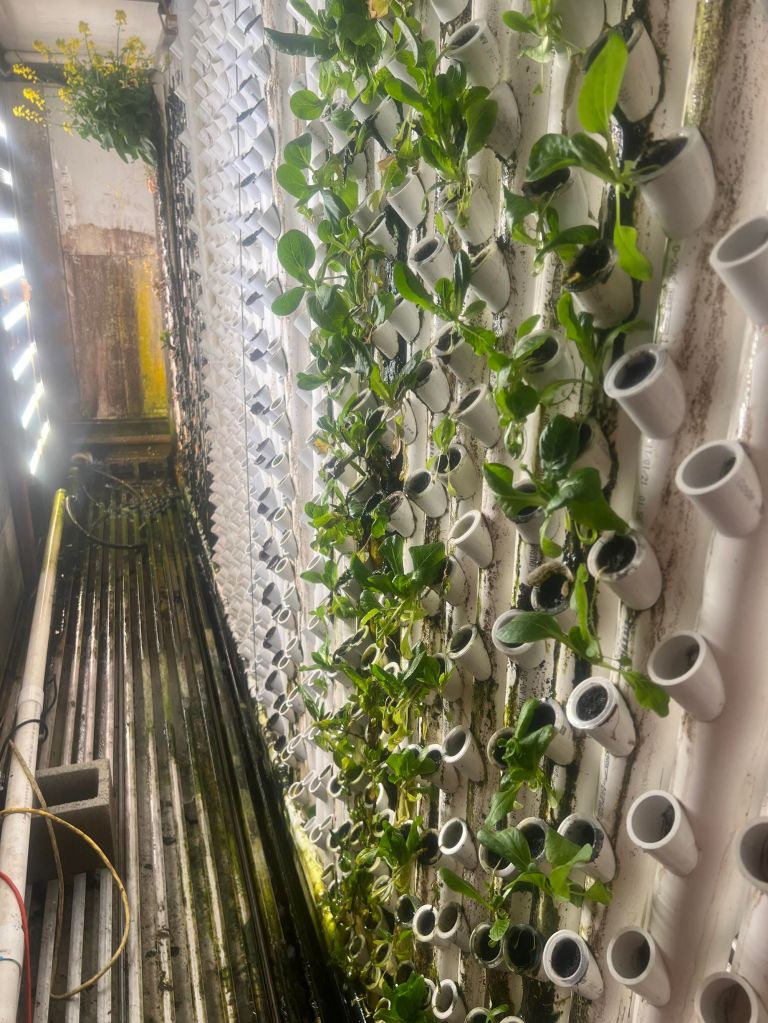
Essentially, they grow plants in repurposed shipping containers, and the plants are grown in water without soil which is fertilized by fish. The water is cleaned by the plants. This results in a “closed-loop” system.

The Brents have been studying this method for at least 25 years. When they first started, they were living in Marianna, Arkansas, and were “avid gardeners.” They decided to move their garden inside a greenhouse to do aquaponics because they didn’t want to use pesticides anymore. 

They also researched and worked for 7 years at University of Arkansas Pine Bluff on aquaponic methods, where their systems are still in use. They did many tests, including on what to feed the fish and how this affects plant growth.

Frank Brent has been a farmer since 1979, so he has much experience with traditional farming methods. He says that he “gave up” on row crop farming because he didn’t think it was very profitable due to the equipment costs. Less conventional methods of growing food offered a new perspective.

“I really enjoyed the symbiotic relationship…and circular agriculture,” Frank Brent said.

Chemical drift, also known as pesticide drift, became a problem for them. Pesticide drift happens when pesticides negatively or unintentionally affect humans, environment, and crops.

They decided to expand their operation by moving to Paragould and buying a 100-acre farm. However, they knew that pests would always be an issue and wanted a way to circumvent that. 

The Brents don’t believe in using chemicals for growing plants. They want their crops to be organic. However, it can be difficult to grow this way and remain profitable.

According to Frank Brent, commercial farms produce about 40% waste but organic farms produce 70% waste. This is why organic produce can be so expensive. 

“So I decided that, what would be better than taking it inside a container and taking it to sea?” Frank Brent said.

This was how the idea of Brent Floating Farms was born. Growing plants inside a container using only water and fish works well to prevent pests, and the temperature-controlled containers have the added bonus of allowing the growth of off-season crops.

However, there can still be issues with unintentionally letting insects inside the container when the door is opened. Furthermore, air still needs to be provided for the plants, and pests come with that as well. Their first year at Paragould, their plants were completely wiped out due to these issues. 

1 week old test crop with the Brents’ new design.

“Everything was perfect, it was beautiful, it was huge. We grew so much more per square foot than…any other method of farming,” Frank Brent said. “It was a pretty sore and sad moment to watch our produce all go down the tubes.”

“Everything was perfect, it was beautiful, it was huge. We grew so much more per square foot than…any other method of farming…It was a pretty sore and sad moment to watch our produce all go down the tubes.”

— Frank Brent

Brent had another idea for their farm which would avoid the problem of pests altogether. He used to work in the Navy and noticed that there were no pests at sea. By putting the aquaponic farms in the shipping containers on ships at sea, they would have no more problems with pests.

Of course, neither aquaponics nor “floating farms” are a new concept. Both of these methods can be traced back to the Aztecs who practiced an early form of this type of agriculture, called “chinampas.” Currently, this method has been revived in Mexico City, and the world’s first large-scale floating farm was conceived in the Netherlands.

The Brents, however, hope to eventually take their operation to a larger scale. They used to be set up in Louisiana, but when they were finally starting to gain traction, the COVID-19 pandemic and Hurricane Ida took them out.

They’re still working on rebuilding. They recently purchased another farm called Chicken Town Egg Farm, which was in trouble financially, and are in the process of doubling that operation. 

When they’re able to get Brent Floating Farms back on track, their goal is to manufacture 350 containers for their crops on land in Louisiana and eventually put some containers at sea as well. 

On land, their hope is that waste will be at 15% while at sea, expected waste will be between 3% to 5%. Aquaponics also uses 90% less water than traditional soil and irrigation methods. The Brents recognize that energy usage can be an environmental issue, but they have looked into alternative energy methods.

Furthermore, their method doesn’t have to just use water and fish. With the use of black soldier fly larva, they can use any type of organic waste, and the insects will break that down. Insects that are beneficial to plants rather than pests can also be introduced inside the container.

Leigh Ann Weidner, CEO of Brent Floating Farms.

Because the crops won’t be subject to the environment, they will be able to produce a higher yield as well. According to Frank Brent, they can produce 12,000 heads of lettuce in 30 days in an average container.

The team behind Brent Floating Farms includes co-founders Frank and Cinda Brent as well as Leigh Ann Weidner, their CEO. Frank is the COO, and his focus is the technical, agricultural aspects while Cinda is the CAO and focuses on marketing. Weidner, who is working remotely from Wisconsin due to another job, specializes in sales.

-30-


Note: Featured image provided by Shutterstock.

Local resident proposes alternative method of growing food

Delta Digital News Service

Thursday, April 11, 2024

By Avery Jones | Editor

JONESBORO, Ark. – Permaculture, an agricultural practice focused on sustainable land management and design, has become a growing topic of conversation in recent years. The concept itself has been around since the 1970s, but thanks to rising concerns over climate change, food insecurity, and similar issues, many people are discussing various approaches to such problems.

There are a few farms and communities in Arkansas that are growing using sustainable methods like permaculture, such as the Lucky Star Farm near Rush and the Wilken Creek Farm in Huntsville. However, organizations like these are primarily located in Northwest Arkansas, and there isn’t currently much of a permaculture effort in Northeast Arkansas, where commercial agriculture dominates.

David Corbett, a local resident, is looking to change that. He’s been studying permaculture for 10 years. Corbett grew up in Alicia on a rice farm and has been living in Northeast Arkansas ever since. He has a bachelor’s degree in psychology, a permaculture design certificate, and has worked in healthcare and information technology.

Corbett’s main concern about permaculture and related issues is that it’s less of a “topic of action” than it is a topic of conversation. He sees people talking about it, but not many willing to take action. 

He’s attempted to gather people like him who are interested in permaculture, to start a garden or to teach them, but he’s discovered that most people want him “to do it for them” rather than putting in the work themselves. For instance, he once had a Facebook group with 200 people in it for a community garden, but very few people actually wanted to participate.

As for himself, Corbett has been actively gardening for the past 10 to 15 years. He started out using conventional methods with tilling, pesticides, and fertilizers. By the time the pandemic had started in 2020, however, he had switched completely to more sustainable methods.

He first became interested in permaculture after doing some research on sustainable gardening methods. From there, he started eliminating his use of chemicals and tillage. During the pandemic, Corbett had up to 30 laying hens, 15 beehives, and was growing fruit, vegetables, and berries.

“Between my home garden, a community garden…I did pretty much solo for three years, and another three-acre plot I could use…for free on a handshake deal…while others feared empty shelves and little to eat, I barely noticed,” Corbett stated.

Later, Corbett earned a permaculture design certificate from Oregon State University and received soil food web and essential rainwater harvesting training under professionals, in addition to self-study over the last 10 to 15 years.

What is the Soil Food Web? | Soil Food Web School by Dr. Elaine’s Soil Food Web School

Corbett proposes that permaculture could be part of the solution to what people call “food insecurity” or “food deserts.”

“It doesn’t make sense that there can be a hunger problem while there’s also an obesity epidemic at the same time,” he said

According to Corbett, the problem is not a lack of food but a lack of proper nutrition. In most other countries, he says, the definition of “the hunger problem” is lacking enough food to survive. Here, though, while many people may lack access to fresh food and produce, there’s no shortage of processed and prepared food.

“Most people think that permaculture is a gardening method,” Corbett said. “But it’s not. That’s where it started, in raising food. But it’s actually a design system based on ethics and principles…whether you’re doing a garden, a homestead, a business, a family, a church, a community, a city, you can take those principles and ethics to help guide you…in designing whatever that is to keep you going in the direction that’s going to be regenerative and abundant as opposed to consumer and extractive and degrading, which is what our current agriculture is.”

Corbett has an intimate knowledge of the farming industry due to growing up in it. He explained that the focus of commercial agriculture is always on bulk and yield. There’s rarely a discussion of quality. 

When they test the harvest at the mill, they’re testing for anything that’s not rice; they’re not doing any nutritional analysis. There’s not a question of quality because it’s a commodity. Average consumers aren’t looking for quality, but for quantity and consistency.

However, Corbett says that we should eat not just for filler but for nutrition. When he first became interested in permaculture, it just made more sense to him. He feels that what he puts inside his body matters, and if that’s the case, then where it comes from and how it’s grown also matters.

“I’m not going to say it was a religious conversion, but it’s kind of on that level,” Corbett said. “Because a lot of religion and religious conversions really to me seems to boil down to the why. What’s the meaning, what’s the purpose, why does it matter, why should I care?”

According to Corbett, if you don’t know how or where something is produced, it’s the equivalent of unknowingly putting chemicals into your body. Just because the pesticide or fertilizer used can’t be seen or tasted doesn’t mean it’s not there or not having effects.

The original patent of RoundUp, a pesticide, was as an antibacterial. While “bad” bacteria does exist, bacteria is also very important to the human body; without bacteria, we would die. RoundUp also binds to certain nutrients in the soil, such as magnesium, to get rid of them. Such nutrients are essential for plant health.

Preventing “pests” is about a change in perspective, Corbett says. Pesticides are a fairly recent invention, and most of human history has gotten along without them. What people often consider pests or weeds are often “indicators.”

Weeds and pests often indicate a lack or excess of a nutrient that’s needed for the plants. It may take a while, but if the “pests” are left alone, they’ll eventually fix the problem and work themselves out. 

For example, aphids feed on sap, which is high in nitrogen, so that means there’s an excess in nitrogen. If left alone, the aphids will get rid of the excess.

“They’re not the problem, they’re telling you there’s a problem,” Corbett said. “And just killing them doesn’t fix the problem.”

Furthermore, with a lack of habitat, other benefits such as ladybugs that could help control the aphids won’t appear. Planting in meticulous rows and cleaning out the leaves and weeds drives away predators that control the pests. 

When attacked by pests or fungi, plants produce a defense mechanism called phytochemicals, which to us are nutrients and antioxidants. If a plant never has to produce those chemicals, it’s not going to be as nutritious.

With this in mind, Corbett’s overall goal is to eventually have a farm designed using permaculture so that he can help feed the small community of Alicia where he grew up. He says that people who live there have to drive 20 miles or more to the nearest grocery store for fresh food.

“They live in the middle of millions of acres of farmland, but even the farmers can’t eat because none of them garden. They can’t eat unless they come to [bigger towns]…” Corbett stated. “If you’re having to drive twenty miles through farmland, and there’s nothing there to eat, what are you growing? Is it food? I don’t think it is.”

Corbett pointed out that the rice has to be industrially processed. The same goes for some other commercially grown crops, like grains or soybeans. Grains and soybeans could be processed at home, but most people don’t have the resources or time for that.

Right now, he’s got a small property in Jonesboro which he hopes to eventually turn into a market garden with a nursery and classroom to teach others about gardening. He hasn’t been able to fully execute his ideas yet because he has to take care of family.

There’s also 900 acres of riceland around Lawrence County and Jackson County which he’ll eventually inherit. He wants to keep using it as farmland, but not as it currently is. He hopes to eventually use less chemicals and tillage. One of the fields is a mile outside of Alicia, which is the field he wants to use for the town.

In order to better execute his plans, Corbett hopes to start a nonprofit organization. He already has an LLC called Hippocrates’s Garden. With his organization, he wants to gather a group of like-minded people which will help him with his permaculture farm and to educate others about alternative farming.

However, he realizes that he probably won’t be able to execute his ideas in full for many years. In addition to caring for family, he’s also restricted by being unable to find people willing to participate or agree on anything long enough to get something done.

With a nonprofit organization, it’s easier to gain visibility and access to more resources. As an individual, it’s difficult to fund and run a community garden and similar projects, but nonprofits have more influence and benefits like tax write-offs.

“Right now, the first step would just be trying to find some truly dedicated, like-minded people who would be willing to go through the process with me, put their name on the line,” Corbett said.

He’s attempted before to bring attention to other community gardens around the Delta region. He said there’s one in Manila, Trumann, and at least three in Jonesboro. He tried helping in a community garden in Jonesboro, but with certain restrictions, his ideas didn’t fit with their project.

He believes that gardening should be a cycle. Rather than constantly taking from the soil for crops, the nutrients in the soil need to be renewed using other plants such as fungi, food scraps, and waste. 

Furthermore, he wants to be more focused on teaching people to garden rather than simply providing food. Community gardens are no doubt beneficial, but he says it would be more beneficial if there was a bigger focus on teaching people to grow their own. 

“There’s just so many ways of…tightening that cycle…We need to repair what we’ve done,” Corbett said.

He emphasizes that he doesn’t want to “feed the world”; he’s concerned about his immediate family and community. He doesn’t think the solution is to put the control of food supply into fewer hands, but instead empower others to grow their own food in a sustainable way.

-30-


NOTE: Feature photo is of Corbett teaching a Cub Scout troop at a community garden in Marion, Ar.

ASU Feminist Union to host women’s rights rally

Delta Digital News Service

Friday, Mar. 29, 2024

By Avery Jones | Editor

JONESBORO, Ark. – The Feminist Union at Arkansas State University in Jonesboro will be hosting their first women’s rights rally this Saturday. It will be held from noon to 3 PM in the courtyard of the Craighead County Courthouse.

The event is open to the community, and those who attend can choose to sign for the Arkansas Abortion Amendment and Period Tax Petition. They will also hear from several female speakers who are important figures in the community. 

“Essentially, this rally is to…celebrate the advancement of women’s rights across the years but also to celebrate the women now who are making basically their mark on history, specifically women’s history,” said Christina Smith, the president of the Feminist Union and a student at ASU Jonesboro.

The Arkansas Right to Abortion Initiative–more popularly known as the Arkansas Abortion Amendment–is a movement that aims to get the amendment on the ballot for 2024 as a constitutional amendment in Arkansas. If instated, the amendment would allow abortion within 18 weeks of conception; in the cases of rape, incest, or fatal anomalies; or when the life of the mother is in danger.

The movement was started by Arkansans for Limited Government, a nonprofit organization that advocates for personal liberties and limiting government involvement, especially in regards to healthcare. They must collect at least 90,000 signatures by this July 5 in order for the amendment to be placed on the November 2024 ballot.

An Act to Exempt Feminine Hygiene Products and Diapers from Sales and Use Tax is being spearheaded by the Arkansas Period Poverty Project, which aims to increase access to feminine hygiene products in Arkansas, especially for those in poverty, by ending sales tax on feminine hygiene products and getting free menstrual products in public schools. They need 72,500 signatures by this July in order to make it on the November 2024 ballot.

Those are the two main movements that the Feminist Union is currently promoting, but Smith said there may be other causes represented at the rally. The speakers at the rally will be talking in general about women’s rights, but they also will most likely promote their own causes.

There will be four speakers: State Senate candidate Erika Askeland, who is running for District 20; Young Democrats of Arkansas president Allison Sweatman; Alison Guthrie, a community advocate from Little Rock; and another community advocate, Rebekah Pruitt, from Jonesboro.

Specifically, Askeland will probably speak about her campaign. Sweatman will most likely speak about the importance of voting, especially for women. Guthrie stated that she would be talking about disability rights. Pruitt, as a transgender woman, will most likely speak on transgender rights.

While it’s their first rally, Smith said that it wasn’t difficult to arrange. Since the courthouse’s courtyard is public property, she just had to call the courthouse to ask permission to use it and make sure no one else was using it at that time. Then she started promoting the event.

As for the speakers, Smith already had connections to them. She reached out to Guthrie and Pruitt and asked them specifically to speak. Meanwhile, Askeland and Sweatman volunteered when they heard about the event.

“I reached out to Alison Guthrie and Rebekah Pruitt because I’m a very big fan of their work within their own communities,” Smith said.

Smith works on Askeland’s campaign, so when Askeland heard of the rally, she offered to speak. Similarly, Smith is the president for the Jonesboro chapter of the Young Democrats of Arkansas, so when she mentioned the event to Sweatman, Sweatman also volunteered.

The ASU Feminist Union itself has only recently become active again. It was first established in 2018 but shut down due to the COVID-19 pandemic. Inactivity after the campus opened again caused the organization to die out. 

However, in fall 2023, Smith wanted to revive the Feminist Union. She had to register it again as a student organization and then recruit more members. Currently, the Union has around 60 to 70 members, but only about 10 to 15 members regularly attend meetings and activities.

“The hardest part was getting members…active members,” Smith said.

They have meetings every two weeks on Wednesdays and events every month. They have hosted panel events, in which they invite community advocates, elected officials, or female candidates for discussion; readings and movie nights about feminism; and tabling events where they hand out free condoms. Next semester, they’re also planning to start handing out emergency contraceptives.

-30-


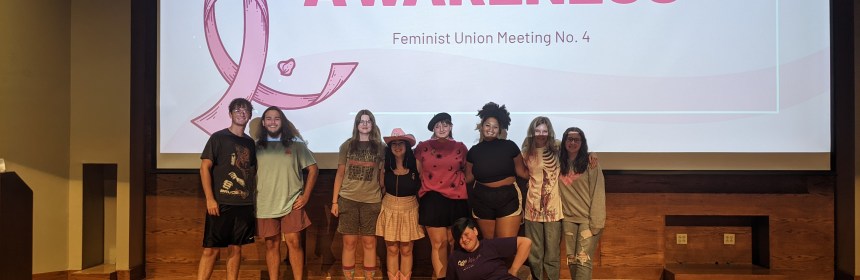
Note: Featured image is from one of the Feminist Union’s previous events.

Lake Frierson State Park hosts ‘Women In The Woods’ workshops

Program teaches camping and outdoor skills

Delta Digital News Service

Friday, Mar. 13, 2024

By Avery Jones | Editor

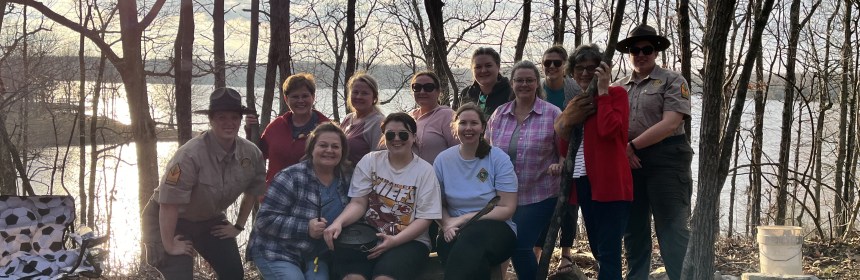
JONESBORO, Ark. – Women in the Woods, a new outdoors program hosted by Lake Frierson State Park, recently started in February. They will meet every first Sunday of the month (except for April due to the eclipse). Their most recent meeting was held on March 3 from 2 p.m. to 6 p.m. at Lake Frierson State Park. 

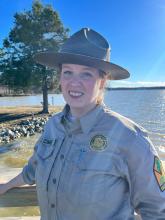
Cathy Combs

Each meeting focuses on a different outdoors skill. The first meeting, originally planned for February 4 but postponed, was about backpacking. This most recent meeting taught Dutch oven cooking. Future events will teach foraging, fishing, kayaking, canning, geocaching, horseback riding, and camping.

According to Cathy Combs, the park superintendent at Lake Frierson State Park who arranged the event, the purpose of Women in the Woods is for women to “grow their roots” at the park. 

“The entire series aims to grow closer to the park, grow friendships with friends new and old, and grow outwards towards adventures that can be found in other parks in our area,” Combs stated.

She and other employees at the park wanted to start programs that are geared towards certain groups. They typically host several programs that are open to everyone in the Jonesboro and Paragould communities. 

The wide variety of their activities is meant to be an example of the diversity available at not only Lake Frierson, but also other parks across the state. They also hope to foster community connections.

The events are free to attend, and there’s no limit on attendance, unless supplies are being provided in which case there’s a small fee and a limit on the number of attendees. The Dutch oven class had a limit of fifteen people and cost $15 due to the Dutch ovens and food being provided.

The series is planned to end in November, but it will return next year. They might change some activities depending on which were the most popular, but the essential concept will remain the same.

According to Combs, this event is specific to women because there’s a large network in Northeast Arkansas of women who enjoy outdoor activities and are looking for activities to do and to make new friends. 

“This is really just the park opening up its doors and saying, hey, our backyard is your backyard,” Combs said. “Come hang out, have fun, try something new, and then make new friends.”

However, Combs emphasized that women are welcome at all events held at the park, and there are also several events for other demographics. In addition, if someone has an idea for an event, they can call the park, and it will be taken into consideration.

When determining what activities should be included in this event, the park sent out a survey to the community asking what outdoor activities women would be most interested in learning. From the results, they chose the activities that had the most votes for Women in the Woods.

“It was really important that everything that we chose not only fit in with the resources that we had here and in our area, but also what people were wanting to explore for themselves,” Combs said.

At the Dutch oven cooking class, the women made chili, broccoli cheddar soup, soda bread, cornbread, and dump cakes. The class was full with at least fifteen attendees. None of the women who came were familiar with Dutch oven cooking, which is partially why they wanted to participate.

Ali Smith, who was there with her mother-in-law, had never been to Lake Frierson before and only heard of it because she was invited to the Dutch oven class. However, she and her mother-in-law love doing outdoor activities, and Smith was excited to visit a park she had never been to before.

“I’m not much of a cook, but I was down to come along to see basically the lake because I’ve never been out here before,” Smith said.

Kim Quinn and Tammy Stevens are also both outdoor enthusiasts and enjoy activities like hiking, kayaking, camping, and biking. They’re familiar with Lake Frierson, as well as many other state and national parks. They attended because they were interested in learning about Dutch oven cooking.

Laura Newberry, another attendee, is also an outdoorsy person and goes to Crowley’s Ridge State Park every day since it’s near her house. She wanted to come to the Dutch oven class because she wants to be more prepared.

“I was planning on doing more camping, so I was like, this’ll be great,” Newberry said. “And I might be by myself sometimes, so it’d be good to know.”

Martha Bunch isn’t usually an outdoorsy person, but she wants to be. She’s also always thought that food cooked directly over a fire looks very appetizing, so she wants to find out and be able to do it herself.

“I’ll be booked camping most of the time completely by myself, and I’d like to have the confidence to do what I need to do,” Bunch said.

“I think it’s great that they’re doing it for women only because it’s not as intimidating to come to something if you know that it’s just going to be women,” Stevens said. 

“We’re a community, too,” Newberry added.

-30-


The 2nd annual “African-Americans and the Arts” planned for this weekend

Delta Digital News Service

Friday, Feb. 23, 2024

By Avery Jones | Editor

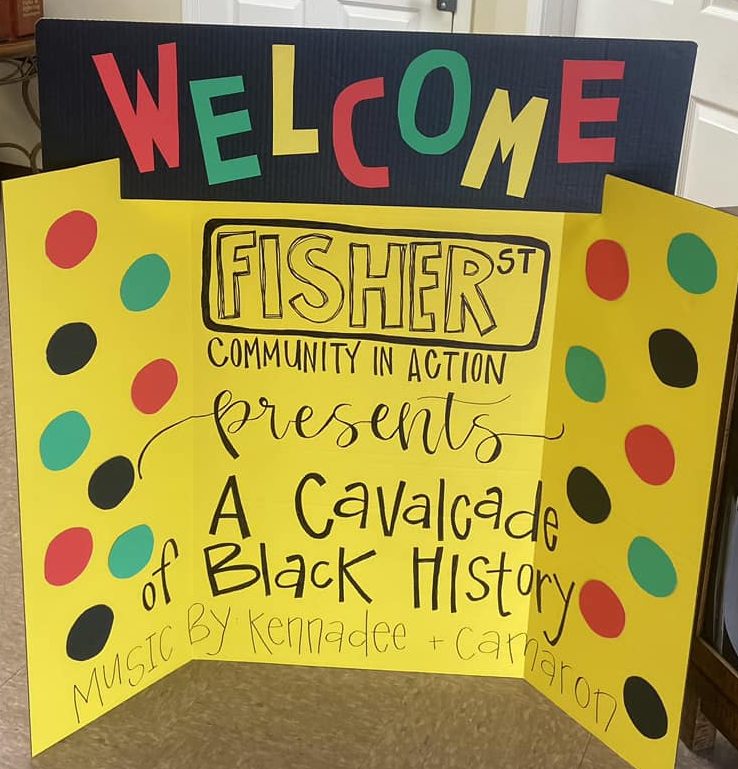
The theme of 2023’s Black History Month celebration.

JONESBORO, Ark. – Jonesboro nonprofit Fisher Street Community in Action will host the 2nd annual “African American and The Arts” event in recognition of Black History Month from 3 p.m. to 5 p.m. on Saturday, February 24. Last year, they had about 50 attendees and hope to have more this year. 

According to event organizer Ruby McKinley, event participants will portray various African-American actors, both alive and deceased as attendees guess which famous person is being portrayed. Refreshments will be provided.

“The purpose of the activity is to get the community involved in Black history and to inform them of Black history then and now as to how things have evolved from slavery to now,” McKinley said. 

The event will also feature Dr. Lonnie Williams as its guest speaker. Williams, who is the vice-chancellor of diversity, inclusion, and community engagement at Arkansas State University in Jonesboro, will discuss the history and impact of African-Americans in the arts.

Alongside Williams, other guests will be in attendance including Jonesboro Mayor Harold Copenhaver, who plans to give a proclamation during the festivity. 

FSCIA was started by Rev. Dr. Charles Coleman, who operates as its CEO. The organization’s goal was to get the students from the Success Achievement Academy involved in gardening, an alternative learning program, in the organization’s community garden.

“The first year we did that, we had a group of students that was so excited about the garden…they chose the type of vegetables that they wanted to plant and they had their own space,” McKinley said.

FSCIA is funded by donations and has been providing help in the community for 13 years. The organization participates in the Toys for Tots program, conducts its own toy giveaway, provide community clean-up services twice a year and hosts the “National Night Out” every year, where they inform and spread awareness about community programs and services, provide free food, games, and more.

-30-


NOTE: Feature photo is of 2023’s Black History Month celebration from the FSCIA.

Year of the Dragon-NEA residents celebrate Chinese New Year

Delta Digital News Service

Friday, Feb. 9, 2024

By Avery Jones | Editor

JONESBORO, Ark. – Chinese New Year is a celebration based on the lunar calendar rather than the Gregorian calendar, which is the calendar used in the U.S. as well as many other parts of the world. 

The year begins with the first new moon of the year, which falls around the end of January and into February, and lasts for several days until the moon is full again. Each year is represented by a different animal of the Chinese zodiac; this year is the Year of the Dragon.

This year, the first day of Lunar New Year is on February 10. However, it’s not only celebrated in China, but in many East Asian communities around the world, including here in Jonesboro.

This year the Jonesboro Chinese Baptist Church will host a New Year’s party on February 10 at the Baptist Collegiate Ministry building on the ASU Jonesboro campus from 5 p.m. to 8:30 p.m. There is no entry fee and the event is open to anyone.

Greg Meeks is pastor of the church and helped to start the celebration. In Taiwan, he was the superintendent of an international Christian English-speaking school. Meeks worked in Taiwan for over 20 years as a missionary before moving back to Arkansas to teach at Arkansas State University.

At ASU, Meeks taught a classes with many international students, mostly Chinese. It was this class that gave birth to the Chinese Church.

“It just kind of morphed into a Chinese class, and as time [went] on, it grew larger and ended up starting services and just continued from there,” Meeks stated.

The celebration is adorned with food, traditional Chinese customs, a musical program, Bingo and gift card drawings. Children often perform songs or play musical instruments.

Members find out about the event through various venues such as the Chinese grocery store, Chinese restaurants, and Chinese university students.

Meeks describes the event as a “social ministry.” In the past, they have attempted to get contact information from attendees and encourage them to visit the church. However, it’s a very relaxed event for celebrating the New Year and not for evangelizing.

“One of our core purposes is to give Chinese a sense of family because there are expats here in the U.S…most of them still have family in China and other places,” he said. 

There are many traditional customs associated with Chinese New Year, and those who attend the church’s party usually adhere to a few of them. For instance, many of the attendees will wear more traditional Chinese dress, and many also wear red as well since red is considered a celebratory color.

In addition, fish is commonly served during Chinese New Year meals in accordance with the Chinese saying–literally translated–“Always have fish.” Fish is considered a blessing for prosperity. Another common custom is to gift their children red envelopes containing money.

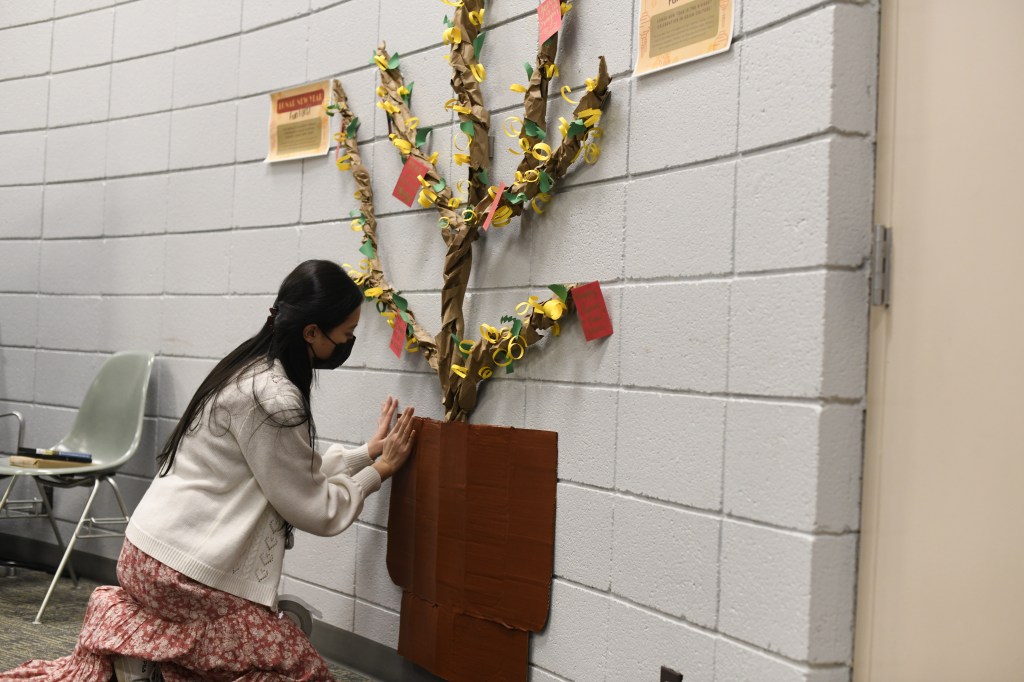
Ali Tran of Craighead County-Jonesboro Public Library prepares for the Chinese New Year celebration.

The Craighead County Jonesboro Public Library also hosted a celebration for Lunar New Year. Friday, February 9, starting at 4:30 p.m. in the Round Room. Festivities included two sessions of story time followed by crafts with light refreshments.

This was the first in-person version of the program that the library hosted. According to Ali Tran, adult services staff at the library, the library is trying to host more events that showcase the diversity of the local community.

“It’s a learning experience for parts of our community who may not know about this cultural celebration, but it also provides a safe space for our minority groups to come in and celebrate parts of their culture,” Tran said. “We want to try to reach out to more diverse groups in our community and uplift them, raise awareness about the different cultures we have even here in Jonesboro.”

-30-


NOTE: Feature photo by Ivan Aleksic on Unsplash

Hundreds attend Barnes & Noble grand opening

Delta Digital News Service

Thursday, Feb. 8, 2024

By Avery Jones | Editor

JONESBORO, Ark. – The long-awaited grand opening for the new Barnes & Noble bookstore was held in Jonesboro on Wednesday from 9 a.m. to 8 p.m. Jonesboro has been without the chain bookstore for four years, ever since the former Barnes & Noble in the Turtle Creek Mall was destroyed by a tornado in March 2020.

In 2020, Barnes & Noble announced that it wouldn’t be returning anytime soon to Jonesboro because of the unfavorable economic climate. Store business was destroyed during the COVID-19 pandemic. However, the company stated that they would search for alternative locations when “normal retail conditions return.”

A few small locally owned bookstores such as Verb Bookstore in Jonesboro, Weber’s Book House in Paragould, and Eclectic Geekery in Walnut Ridge popped up during Barnes & Noble absence. While many people missed Barnes & Noble with its large selection and variety, Northeast Arkansas didn’t suffer a lack for literature.

Haag Brown Commercial stated in January 2023 that Barnes & Noble was slated to return soon. They had closed a deal on the former Pier 1 building. Originally, the opening was planned for November 2023. However, due to delays in construction, it was pushed back until February.

Hundreds of customers packed the store during the grand opening. The new venue possess many of the features of big box stores are known for including signature coffee shops such as Starbucks.

Ella McMasters, 13, Barnes & Noble patron

Thirteen-year-old Ella McMasters, a book lover who used to shop at the Barnes & Noble in the Turtle Creek Mall, was enthusiastic about the bookstore opening again. When the bookstore wasn’t around, she would go to the library for books.

“I’m super excited because there’s some books here that wouldn’t normally be at the library…” McMasters said.

Another shopper, Solicia Little, was there with her son Jordan Wilson. She said they had missed Barnes & Noble and had been waiting for a while for its return. When it was gone, they mainly shopped at Target for their books.

Solicia Little (right) and Jordan Wilson (left), patrons

“We’ve been waiting, we’d drive by every so often and kind of peep. When I saw all the cars today, I was like, Yes, they’re open, we’ve got to go!” Little said.

Linda Vinson, a frequent patron of the former Barnes & Noble before it closed, also missed the bookstore. She shopped at Target for her books as well after Barnes & Noble closed. She also went to the Barnes & Noble in Little Rock sometimes.

“That’s why everybody’s here today,” Vinson said. “We all missed it. A college town without a bookstore, I mean, what’s up with that?”

Chris Bolick, the store manager, has worked with Barnes & Noble for six years. According to him, the process of getting the store ready was a year in the making and took about three weeks after the store was ready to prepare it for opening. 

“Once COVID passed, they had always wanted to come back to this community ever since the tornado, so when the opportunity came up, Barnes and Noble jumped on it,” Bolick said.

-30-


ASU hosts robotics competition for middle schoolers

Delta Digital News Service

Friday, Dec. 1, 2023

By Avery Jones | Editor

On Friday, November 10, the ASU mechanical engineering department hosted a robotics competition for local middle school students. The event took place at Centennial Hall in the Student Union from 9:30 AM to 1 PM. 

The competition was mostly for eighth grade students that are participating in their schools’ EAST program. EAST (Environmental and Spatial Technology) is a national education model, first established in Arkansas, that fosters technology training, teamwork, problem solving, and service projects.

Nine teams from nearby schools were expected to show up, including Buffalo Island Central Junior High, Annie Camp Junior High, Jonesboro Visual and Performing Arts School, Highland Middle School, Marked Tree Elementary, and East Poinsett County High School.

The purpose of the event was to reach out to local schools, promote ASU, and foster a love of engineering, according to mechanical engineering student ambassador Morgan Diamond. It was completely arranged by mechanical engineering students and supported by the Kays Foundation.

“We want to reach out to the schools, tell them about Arkansas State University, but also foster hopefully a love for engineering and robotics, STEM careers,” Diamond said. “Getting them involved…in a design-oriented competition pretty early on is big for development…”

“So even if they don’t go here, they go somewhere else,” said Landon Perdue, another student ambassador. “We want to foster the next generation.”

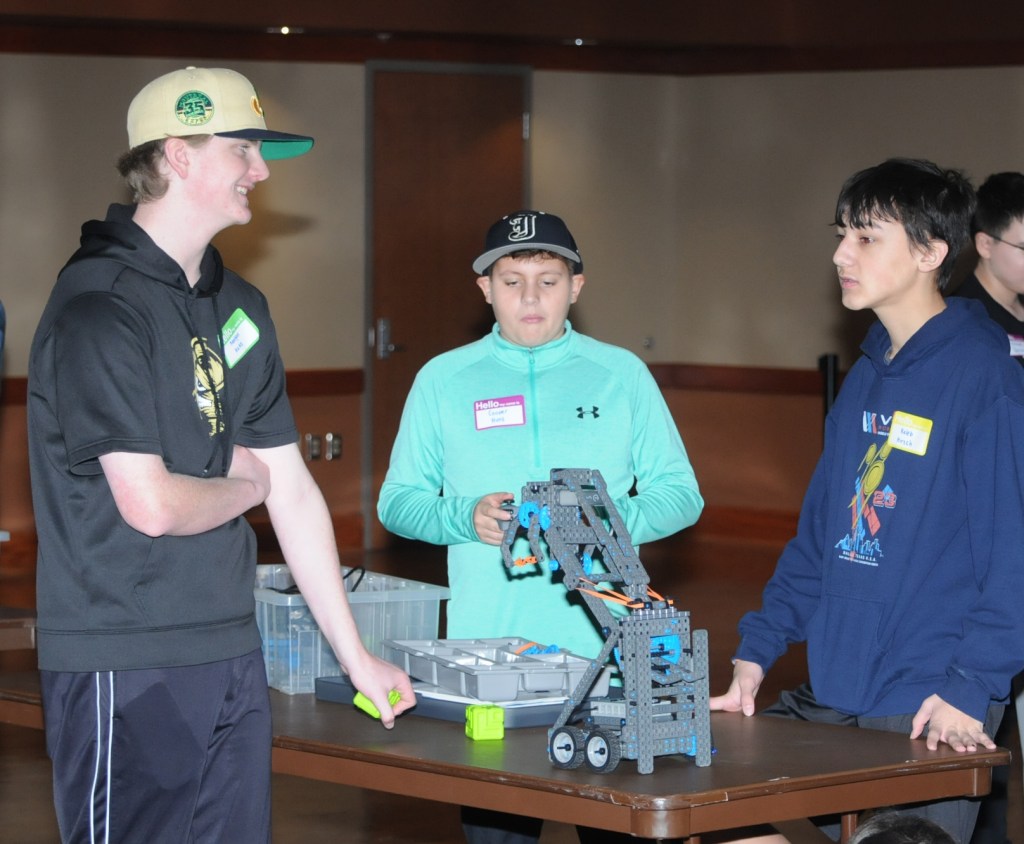
Students Keagan Hicks, Cooper Hunt, and Kaleb Hirsch work on their robot.

The competition is usually held every year during fall. It was previously hosted at other local schools for several years, but they decided to have it on campus this year. They wanted for the event to be more accessible to other schools that are further away.

Every school attending is allowed two teams consisting of four students. Some chose to only bring one team. Altogether, they expected around thirty-five to forty students to show up. Teachers, family members, and friends were also allowed to attend for support.

Each of the teams is provided with a kit a couple of weeks before the competition that they can use to build a robot. At the competition, they have to use that robot to pick up blocks and navigate an obstacle course to drop the blocks in a basket. 

“There are several schools that do not have a robotics program, they’re starting fresh, so we are most happy to help,” said Dr. Shivan Haran, the director and a professor of mechanical engineering overseeing the event. “We even told them…come by, we’ll even show your kids how to put this together…”

Whichever team deposits the most blocks wins the competition. Points are deducted if the robot breaks things. The blocks are strategically placed, some in areas that are difficult to reach and some that are easier. 

“The goal of that was actually to maybe help develop critical thinking skills and time management and time management, like we don’t want to go for that block, that’s in a hard spot, instead we’re going to try and take a route to get all the easy ones,” Diamond said.

Additionally, because every team designs their robot in a different way, some blocks will be hard to get for one team while they will be easy for another, and vice-versa. The top three teams that get the most blocks each win a trophy.

“We don’t want them to think robotics is something stressful and hard. We want them to think of it as easy and fun, something accessible,” Diamond said. 

“The goal here is to get a basic foundation of what robotics is like,” Perdue said.

For a student there from Buffalo Island Central named Henry Sills, it was his second time competing. He’s in eighth grade and learned about robotics in his EAST class, which he has been in for a year.

“Robotics has always been something I’ve been interested in, the actual building of it and the coding,” Sills said.

A group of students from East Poinsett–Christopher, Dalton, Bella, and Jumaro–was there for the first time. They’re also all in the eighth grade, and it’s their first year learning robotics in their EAST program.

“Building stuff is cool,” Christopher said.

-30-


NOTE: Feature photo by Atsuki Ohbuchi of students Annie Shepherd and Vignesh Nair. Other photo in article also by Atsuki Ohbuchi.

Microschools all the new rave

Along with others across the nation, families in Arkansas have become interested in a more independent approach to their children’s education

Delta Digital News Service

Friday, Dec. 1, 2023

By Avery Jones | Editor

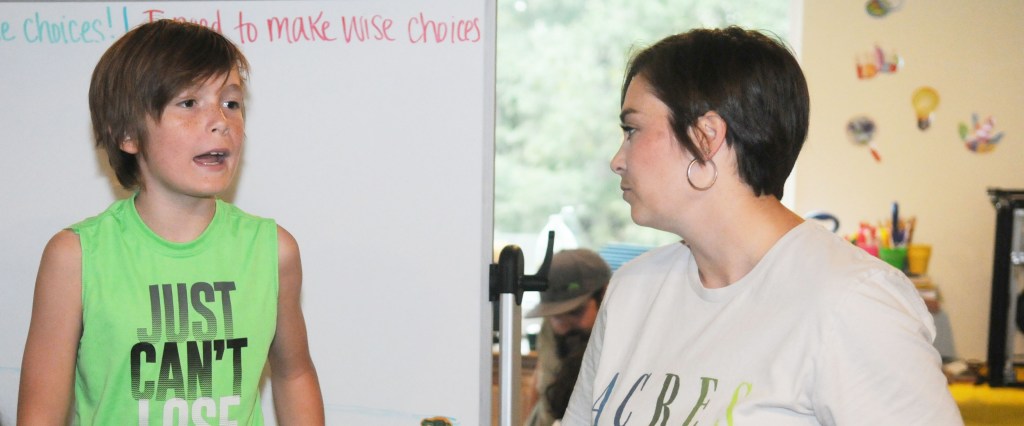
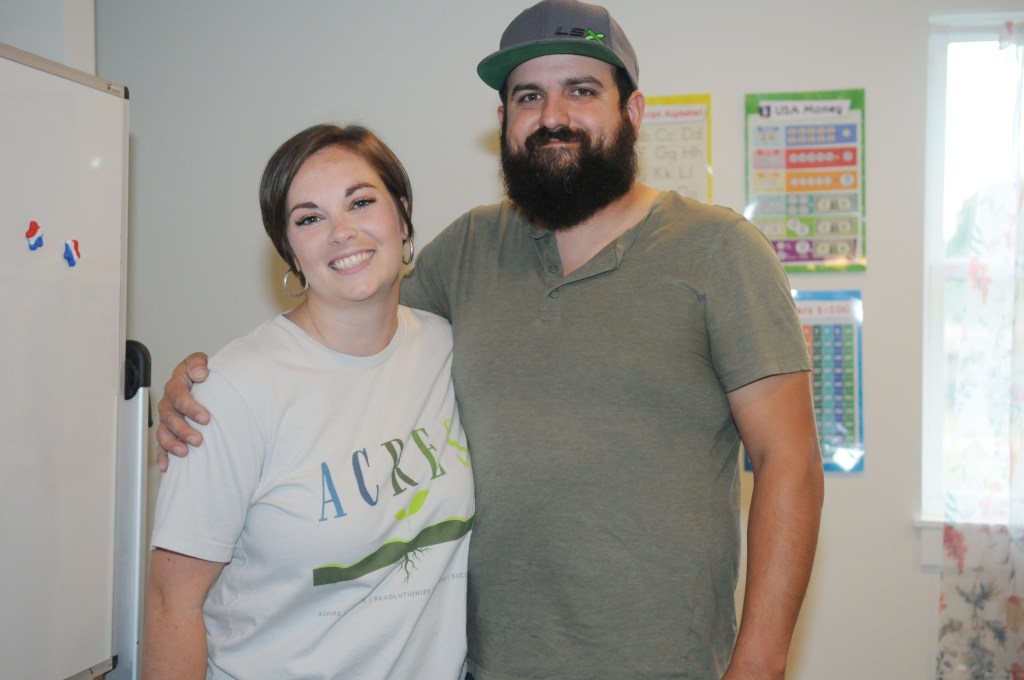
Lauren McDaniel-Carter, founder of ACRES, with a student, Jonah Sharma.

Microschooling is a growing trend in education. According to The Reform Alliance, a nonprofit in Arkansas concerned with connecting families with education options, microschooling is comparable to the one-room schoolhouse concept. In a microschool, a small group of students meets for a certain amount of days a week to learn together.

It’s separate from a public or private school and falls under the category of homeschooling. Microschooling can either be a child’s main form of learning or a supplement to their homeschooling.

Laurie Lee from The Reform Alliance said that microschooling is becoming more popular because of the past closures of schools due to the recent pandemic; parents have also become more concerned with the state of education. Families want to have a stronger role in their children’s education.

“The great thing about a microschool is that you can’t put it in a box…It’s truly family, community-led,” Lee said.

There’s no definite beginning point for when microschools became a concept. There have been communities and homeschool families who have engaged in group learning before microschooling became popular. However, Lee states that a significant turning point in the microschool movement was the establishment of Prenda, an organization that helps to start microschools.

Prenda was inadvertently started by Kelly Smith in Arizona. He thought students needed a bigger emphasis on STEM in their education. His group grew, and now the organization helps other microschools by providing curricula and advice regarding the technicalities of microschooling.

“I think the verbiage, microschool, the name, might be more new than the concept,” Lee said.

According to Lauren McDaniel-Carter, founder of ACRES, a local microschool, there’s no strict definition of a microschool because the group gets to define it for themselves. There’s a lot of gray area.

“I’ve been calling mine somewhere between a homeschool co-op and a private school,” McDaniel-Carter said. 

Her school opened this August. She planned to take no more than fifteen students from the age groups of kindergarteners to fourth graders.

Lauren McDaniel-Carter and her husband, Nathan Carter.

According to Lee, microschools aren’t limited by age group. Some of the schools that The Reform Alliance has helped to set up only take students from kindergarten to third grade whereas others are K-12. The kids usually aren’t separated by age group or grade, either; they all learn together.

“I think the environment breeds a different day every day,” Lee said. “This model is set up to fit the needs of the people that are using it…We’ve seen extreme growth in students in these models over the last three or four years we’ve been actively working in them.”

McDaniel-Carter’s ACRES will focus on the core subjects of language arts and math. The students will use mainly online curricula and depending on the individual’s pace, it will probably take about two hours a day.

The programs used will be completely secular. McDaniel-Carter doesn’t plan to incorporate any religious teachings into the students’ work.

The students will work on computers, but they will be allowed to take breaks and go at their own pace. Additionally, the students don’t have to work on the same subject or curriculum at the same time.

“Rather than [having] these long, extended blocks where kids have to sit still in desks…they can be kind of where they want, they can take breaks…” McDaniel-Carter said. “They may be working on different programs, too. It’s not a one-size-fits-all curriculum…It’s just whatever the kids kind of need at that moment.”

For other subjects like science and social studies, she plans to use a projects-based and hands-on approach. She will also offer “enrichment” subjects like arts and language learning as well as time for unstructured socialization and play.

Her vision is to have the kids “take ownership of their learning.” She wants to have them determine what subject they want to master in a certain amount of time. 

“This is the stuff that gets kids excited about school and learning, when they get to do stuff that they’re interested in, and a lot of the times in public school, you only see those opportunities being given to the kids who are excelling,” McDaniel-Carter said. “That kind of learning should not be just reserved for the ‘gifted’ kids. Anybody should have access to it. The fact that kids don’t like school is not a reflection of them, it’s a reflection of the school.” 

Nathan Carter with students Skyler Armitage and Hazel Sharma.

   McDaniel-Carter will guide the kids in the learning process. According to The Reform Alliance, it’s normal for microschools to have “learning guides,” but they don’t have to be certified teachers. McDaniel-Carter wants to eventually be able to hire a part-time learning guide to help. 

Unlike public or private school, mastery will not be determined by a score on a standardized test. Students will move on when they’re ready instead of whenever the teacher determines they can move on.

In this way, the kids will not be compared to each other. They aren’t competing with grades, and since each student will be allowed to go at their own pace, they won’t be pulled out of the class for intervention or forced to move on before they’re ready.

Lee said that “Educators are starting to understand that student-focused and student-led days are more productive for kids to learn than a very rote, lecture-style classroom.”

She further stated that children should be taught like they’re going to be adults, which they will be eventually. Adults get to structure their own day and have to prioritize. 

If they don’t complete their tasks for the day, those tasks have to roll over into the next day. Children need to learn these skills in environments which will teach them real-life consequences.

At ACRES, to measure her students’ progress, McDaniel-Carter will be able to see how they’re doing on their online programs and what they’re struggling with. She can share progress reports with the students’ families to keep them involved.

Additionally, everything the students do in their project-based learning time will be compiled in a portfolio. She also hopes to implement a badge system in which students will earn badges for certain achievements. Eventually, she wants to be able to host an end-of-the-year showcase to share the students’ accomplishments.

Measuring progress is usually up to the learning guide, according to Lee, but with the new LEARNS act, any school taking EFA funds will have to test students every year with a test set up at the national level. These tests will determine the sustainability of that program.

At ACRES, families will be able to determine how many days their children will attend. Some people might want to only come two days a week as a way to supplement their education at home, while others will want to come all five days as their main source of education.

Additionally, the tuition cost depends on how many days they want to attend. This makes it more accessible for even low-income families. 

McDaniel-Carter has also invested much of her personal funds into the school. The school is located at her house in a room they built specifically to be multipurpose.

Lee at The Reform Alliance stated that microschools can be hosted virtually anywhere. She’s seen schools held in someone’s kitchen, repurposed buildings, and churches.

Before McDaniel-Carter decided to start a microschool, she worked as a public school teacher for eleven years. However, it wasn’t for her, and when her husband suggested that she start a “pod school,” she liked the concept of that.

“I can’t believe I lasted that long,” McDaniel-Carter said. “Honestly, I can remember doing my student teaching and thinking, I can’t do this for thirty years.”

She posted in a Facebook group to ask if anyone would be interested in a microschool, and in a couple of hours, she had around eighty responses. The process of starting a microschool has been “surprisingly smooth” for her. She said that she felt like she was following a path instead of trying to carve one. 

The most difficult part was trying to get people to commit to the school. People are often reluctant to try something new. In June, she had eleven applications, but people are often prone to drop out or apply at the last minute.

Also, there’s not much clarity on the mandates regarding homeschooling, especially with the added confusion of the new Arkansas LEARNS act. The money provided by the act would be beneficial for her school.

“It would be nice, I feel like, if there was some clarity on what a microschool is and what governs it,” McDaniel-Carter said. “I would love to have access to that money. How that’s going to happen, I don’t know because there’s so little clarity in the act…if the financial barrier is removed, that opens us up to a lot more people.”

According to Lee, The Reform Alliance has set up and assisted in setting up several microschools. On July 22, they hosted a microschool conference in Little Rock where attendees learned about microschooling from the National Microschooling Center.
-30-


NOTE: Feature photo of Lauren McDaniel-Carter and her students at ACRES by Atsuki Ohbuchi. All other photos in article also by Atsuki Ohbuchi.

« Older Entries