JONESBORO, Ark. – Constitution Day was on Sept. 17. The holiday celebrates the adoption of the U.S. Constitution. The day is especially important for public schools because they must recognize the day and use the opportunity to teach students about the Constitution according to a federal requirement.
Local schools in Jonesboro are no different and had some activities planned for Constitution Day. According to Jon Newman, an Advanced Placement U.S. History and Government teacher from The Academies at Jonesboro High School, his school didn’t have a school-wide event planned but each teacher covered the topic in their classrooms.
Since Constitution Day was on a Sunday, Newman chose to recognize the day on Tuesday. He and his students were discussing the development of the Constitution. He also brought in Senator Dan Sullivan to talk about his role in the government and our state legislature’s role in the system that was created by the Constitution.
According to Newman, the goal of this day in schools is to “help students to see how the document that established our current government was created out of a need that arose with Shay’s Rebellion.” He makes sure that he stresses to students the importance of how the Constitution was created to adapt to the country as it grew and changed.
In past years, the high school used to invite the Arkansas National Guard to speak to all of the classes about the importance of the National Guard. However, because the requirements for what must be taught has increased, more teachers are unwilling to give up an entire day for such a presentation. Newman doesn’t mind occasionally using a day, though, to allow an elected official to come talk to his students.
Newman says that his students usually respond pretty well to the day. Because of his classes’ subject matter, it’s easy to fit in the lesson.
However, one problem that comes up for other classes not about history and government is that they have to pause their usual lessons to teach about the Constitution for only one day. This lesson can seem arbitrary to students since it doesn’t flow well with the usual subject matter.
At Valley View Schools, the teachers are all doing different activities in their classrooms as well. Matt Mink, a social studies teacher at the junior high school, recognized Constitution Day on Monday the 18th.
He put together a “Constitution Day Escape Room” for his students. Each student works with a partner to decipher four clues which will provide a four-digit code. This code unlocks a lockbox that contains the “stolen” Constitution.
Mink’s goal of this activity is to allow the students to experience something different and to learn from it while having fun. He and his class discussed the Constitution prior to the activity. Mink has been doing this activity for four or five years.
“The students love this activity,” Mink said. “Once they figure out how to decipher each clue, it becomes real competitive. They all want to be the first ones done.”
Melissa Mayfield, a history and government teacher at Valley View High School, also planned special activities for Constitution Day. The school rolled Constitution Day into Freedom Week, which is celebrated during the last week of September.
The purpose of Freedom Week is to emphasize teachings on the development of the U.S. and its founding documents, including the Constitution. It’s an official holiday only in Arkansas, Florida, Kansas, Oklahoma, and Texas.
The social studies department at Valley View High School, which Mayfield is a part of, planned a recital of the Bill of Rights during lunch on Sept. 25. It was recited by students from the American History and Government classes on the balcony that overlooks the school cafeteria.
The students from Mayfield’s AP World History class made posters with the amendments on them to display in the hallways of the social studies department. Additionally, Mayfield taught about different constitutions from around the world and compared them to that of the U.S.
Mayfield does the constitution comparison each year, but this is the first time that the social studies department has collaborated for the Bill of Rights recital. Mayfield said that in general, some students are more engaged than others.
The sophomores have a basic understanding of government structure, but haven’t extensively learned about the amendments. As a result, the teachings of Freedom Week focus on the individual rights that come from the Bill of Rights and comparing our government structure with that of other countries’.
“I want students to understand our Constitution, but I also want them to see how it influenced the creation of other constitutions and how other documents, like the English Bill of Rights, influenced the creation of our state,” Mayfield said.
Avery Jonesis a junior in the Department of English and Philosophy at Arkansas State University in Jonesboro. She can be reached at: avery.jones@smail.astate.edu
Emergency services, such as police departments, fire departments, and ambulances, often require foreign language resources at hand if they need to help someone who speaks little to no English. Bilingual employees can be highly valuable as a result.
In Jonesboro, this is especially relevant because of the large Hispanic population. While many Hispanic people can speak English fluently, there are also many who don’t.
The Jonesboro Police Department works most directly with Spanish speakers. According to Mary Oliver, who works in the records division, many people come to request a copy of their report or file a report, including Hispanics.
The records division deals with all of the paperwork that comes through, including accident reports, arrest reports, and tickets. Belinda Rodriguez, a translator who speaks fluently in both English and Spanish, helps those who need translation to communicate when they come to request or file a report.
“With the language barrier with the rest of the clerks, sometimes it’s hard to figure out their need, what they’re requesting, and so she fills that gap for us,” Oliver said.
They rarely get witness statements in Spanish since there’s usually an English speaker there who can translate for them if needed. However, on the occasions that this does happen, Rodriguez will translate the document for them when there’s a need.
Additionally, the criminal investigation division sometimes interviews people who only speak Spanish, so in those cases, Rodriguez translates for them during the interview.
“We have a large need here. We’re here Monday through Friday, eight to five…I would say daily, she is translating for us in some form or fashion,” Oliver said.
Before Rodriguez was hired in July 2022, the records division worked for several years without a translator. According to Fodor, it was a struggle, and they had to reach out to other resources in order to get the translation they needed.
Rodriguez is Hispanic and grew up in the U.S. learning Spanish alongside English. Even before she worked as a translator, she found herself translating wherever there was a need.
For example, she has helped people to communicate at the ER, the revenue office, and in a former job as a dental assistant. The first two instances weren’t in a professional capacity; Rodriguez says it’s in her nature to help where she sees it’s necessary.
“My mother struggled a lot growing up, so I know firsthand what it’s like to be in that situation,” she said.
Additionally, many Hispanic people are scared to file reports, according to Rodriguez, because they think that nobody will be able to understand them or even fear getting deported. She hopes to help bring in more Hispanic people, especially women who need to report domestic violence.
The police department also has two bilingual police officers who speak both English and Spanish fluently. One such officer is Corey Obregon. He has worked with the department for almost five years.
He grew up in El Paso, Texas, and only spoke Spanish in his household, so he’s fluent in conversational Spanish. In the field, he mostly speaks Spanish when dealing with DUI (driving under the influence) and domestic violence cases.
“I’m pretty much one of the people they call quite often,” Obregon said.
The other bilingual officer in the department is Homero Gonzalez. He’s been working with the JPD for nearly two years.
Gonzalez believes there’s definitely a need for Spanish speakers in the department. He’s been called to many different parts of the city to help translate and has assisted detectives with translation as well.
He meets people who speak little to no English at least once or twice during his work week. It’s usually during the evening when people are going home from work and mostly cases of thefts, accidents, and domestic violence.
“I find Hispanic subjects are more willing to give me information due to me being able to communicate in their native tongue,” Gonzalez said. “I can always see the relief on people’s faces when they find out I speak Spanish. It’s just one less thing to worry about.”
Usually, the only foreign language the department works with frequently is Spanish. However, they have occasionally encountered others, such as Romanian, Nepali, and Marshallese.
The department has a variety of resources they can use when confronting a language barrier. There are translators they can contact for help communicating, and some officers like Gonzalez use Google Translate.
There’s currently an incentive program in the works for officers who speak a second language. There used to be an incentive program in place but after officers tried to fight for a pay raise, it was taken away in 2015.
However, after the recent fight for a pay raise in the department over the summer, a new incentive program is being established. According to Obregon, it will be incorporated next year.
The Jonesboro Fire Department also occasionally needs to communicate with Spanish speakers. According to Martin Hamrick, the fire chief, they sometimes have to use basic phrases and questions when doing EMS calls, wrecks, and fires, and it can be difficult to communicate.
In cases where the individual speaks little to no English, the department has been able to get assistance with translation from the police or from another person there who can speak both languages. Mostly, the only foreign language they encounter is Spanish, but they have dealt with some Asian languages on occasion.
“But it’s definitely better if we speak one-to-one, we get a faster response that way,” Hamrick said.
None of the firefighters are bilingual, but some know basic phrases. El Centro Hispano, the Hispanic center of Jonesboro, offers a basic Spanish class, and some of the firefighters have taken it.
Because the fire department has to follow the civil service guidelines set by the state, they don’t offer any incentives for bilingual firefighters nor is it considered a requirement or advantage when hiring.
Emerson, a local ambulance service, also occasionally helps people who speak little to no English. In these cases, the EMTs usually communicate with others on the scene who speak English or use Google Translate, according to Eric White, who’s an EMT at Emerson and also works in public relations there.
The EMTs can also use a chart using symbols that the patient can point to indicate how they’re feeling. As a last resort, they have a number they can contact for translations.
Once at the hospital, there’s usually translators on-site who can help both the EMTs and the patient once the ambulance arrives. Besides Spanish, other foreign languages Emerson has encountered include German and Russian.
There are a couple of EMTs at Emerson who can speak Spanish to a certain extent. Having a second language as an EMT does come in handy, according to White, and is a standout skill on a resume when they’re hiring.
Avery Jonesis a junior in the Department of English and Philosophy at Arkansas State University in Jonesboro. She can be reached at: avery.jones@smail.astate.edu
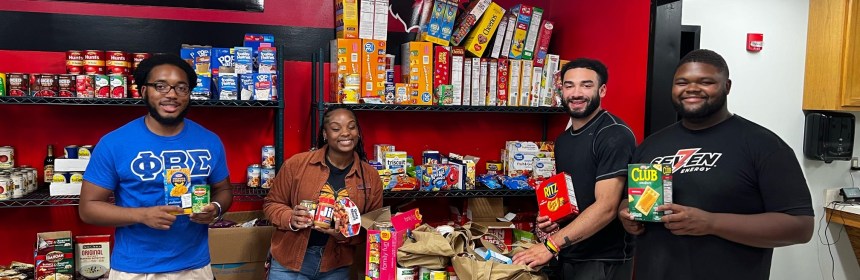
Recently, the Jonesboro Walmart on Highland has been donating to the food pantry on the Arkansas State University Jonesboro campus. The partnership was arranged by Every Child Is Ours, a nonprofit organization headquartered in Tuckerman.
Use of the food pantry is available to anyone with an ASU ID–student, faculty, or otherwise. With the large number of people in need, it can be difficult to keep up with demand, according to Jameson Archer, an ASU student and the president of the volunteer council.
Every year, the food pantry serves 3,000 to 4,000 students and employees. In July of last year, they served 700 people. Usually during summer break, that number would be around 200 since most students are off-campus at that time, so the demand has seemingly increased.
“There are a lot of times where they’re really having to strap to get people food,” said Dean MacDonald, a graduate student at ASU who also works with Every Child Is Ours.
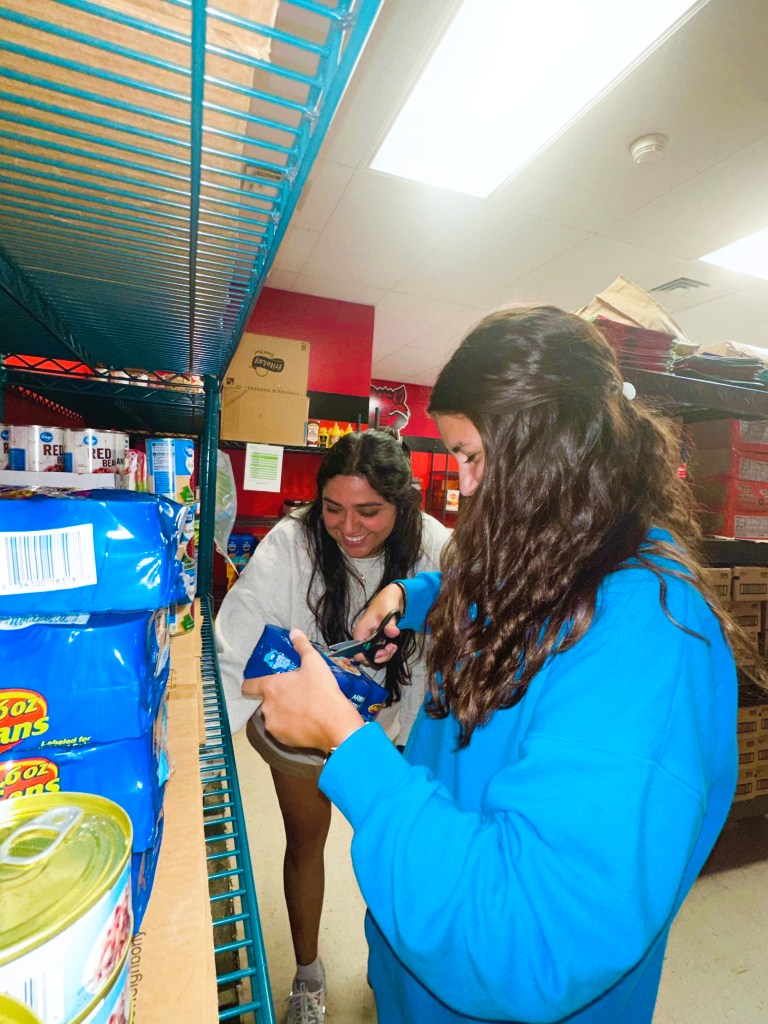
Volunteers Kennadie Hobson and Ericka Hernandez at the food pantry.
Over the summer of this year, they started developing the idea of Walmart donating to the food pantry. The pantry was in need of volunteers since most students had left for the summer. Raven Person, who works in Student Affairs, started volunteering there.
According to Person, she and Bekah Herring, the assistant director of Career Development who also manages the food pantry, started discussing the need for donations. Herring said that almost all of the pantry’s resources come from individual donations.
Both MacDonald and Person personally know Jan Paschal, the owner of Every Child Is Ours. Along with another student, a history major named Alandria Maddox, they set up a meeting with her on June 2 at the ECIO food pantry to discuss what they could do for the community.
Maddox works as an ambassador for Every Child Is Ours. She brings awareness to the cause and helps Paschal whenever she’s needed. She’s been working with them since May when she was introduced to Paschal by Person.
According to Maddox, Person came up with the idea that Walmart might donate to the food pantry on campus. Paschal had collaborated with Walmart before on other projects, and Walmart also often donates to similar causes.
“A lot of hard work was done by Dr. Hogue, Dean, Raven, and Mrs. Jan,” Maddox said.
Paschal said at the meeting that Walmart wanted to donate to ECIO, but it would be better if the donations went to ASU instead. Paschal contacted an executive at Walmart, Carolyn Hembrey, to set it up.
Hembrey said that she has worked with Paschal many times. She approved the new project and helped to coordinate times for when the volunteers come to pick up the donations.
“I just did not realize that there was a need. I guess we just assume if they’re going to college, they must have the funds to eat, and I was just like floored at the need that there was…” Hembrey said. “I’ve really been encouraged by the participation from the volunteers and just the excitement that they’ve had about the project also.”
The donations occur once weekly. They consist of canned items and other preserved food but also fresh food, such as vegetables, fruit, meat, and dairy. These donations offer a bigger variety than what the food pantry is usually able to provide.
“It’s widened our variety,” said Archer. “It’s always nice because we’re serving so many people, it just gives us something else that we don’t have to personally buy.”
Avery Jonesis a junior in the Department of English and Philosophy at Arkansas State University in Jonesboro. She can be reached at: avery.jones@smail.astate.edu
Note: Feature photo showsvolunteers at the food pantry.
Divine Intervention hosts “Together We Can Stop the Stigma” to discuss how stigma attached to addiction affects those struggling with and recovering from addiction
JONESBORO, Ark. – NEA Divine Intervention, a peer community center for those struggling with addiction, hosted a conference with various similar organizations around the state. The conference was called Together We Can Stop the Stigma, and its intention was to discuss and combat the kind of stigmas that are attached to addiction.
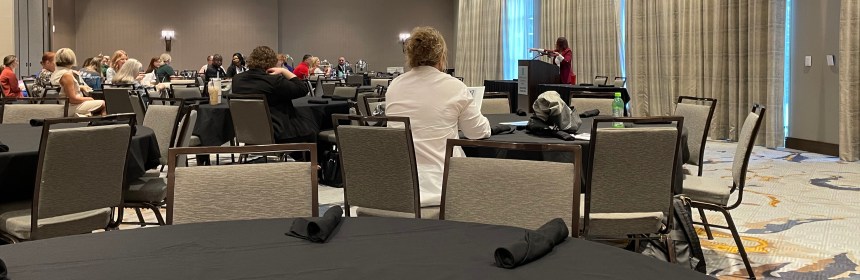
The conference was held at Embassy Suites in Jonesboro on September 11 from 9 AM to 4 PM. Several organizations that deal with addiction were in attendance. There were also several people scheduled to speak, as well as a few panels. Refreshments and lunch were provided.
The speakers included Chief Operating Officer Tony Thomas on behalf of the mayor, discussing community support; Casey Copeland, a peer recovery specialist on The Arkansas Peer Advisory Committee for the DHS Recovery Unit, discussing the beginnings of peer support in Arkansas; and Paula Cunningham, who had a son now deceased of an overdose, discussing prevention and recovery.
The discussion panels included Difficult Questions, a Q&A provided by people working in recovery programs; Surviving the Other Side, a conversation from some who have grown up around people who have struggled with addiction; and Fighting for the Right to Belong, perspectives from those who are in recovery and advocating for themselves and others like them.
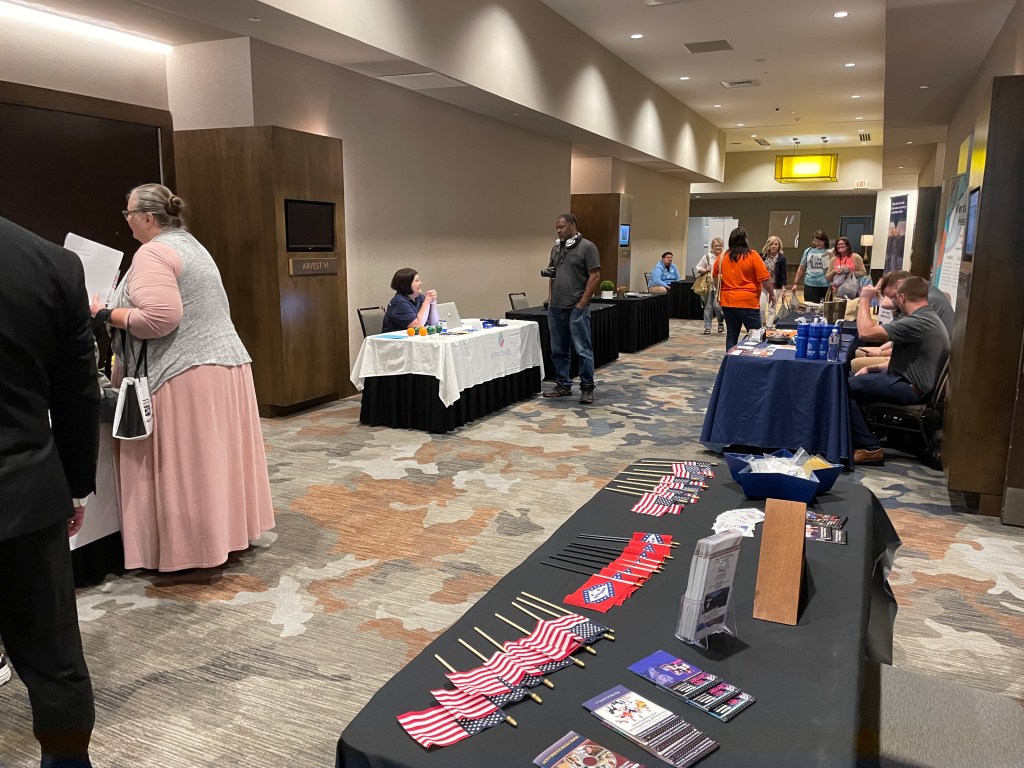
Various businesses and nonprofits displaying their services at the convention.
Some organizations in attendance were Arisa Health, NewVision Withdrawal Management, Longbranch Recovery Center, Engaging Arkansas Communities, and the Wolf Street Foundation. Many of these organizations had set up tables outside the convention room to introduce themselves and their services. All of them had worked with Divine Intervention or the director at some point.
“In my line of work, I come across a lot of different types of people from a lot of different types of backgrounds,” said Kimberly Nail of Engaging Arkansas Communities. “I just want to be able to help anyone I can and share my lived experience.”
Shalinda Woolbright, the director of NEA Divine Intervention and the host of the event, said she originally wanted to arrange an event called “Recovery in the Streets,” but because she didn’t want to wait on approval from the mayor’s office, she decided to do something different.
Her original intention was to gather different recovery resources from around the community so that others could benefit, but the result transformed into something new. This is the first time that Divine Intervention has hosted an event of this type. Woolbright hopes to learn from this event for next year.
“I have been doing this for the last six years, and I have ran into a lot of stigma. To the point where somebody made the statement, ‘Well, maybe they need to die.’ Another statement, ‘They just need to grow up,’” Woolbright said.
“I have been doing this for the last six years, and I have ran into a lot of stigma. To the point where somebody made the statement, ‘Well, maybe they need to die.’ Another statement, ‘They just need to grow up.’”
– Shalinda Woolbright, the director of NEA Divine Intervention
Woolbright believes that this kind of stigma comes from a lack of knowledge. With this event, she wanted to bring knowledge to the table, not just from recovering addicts but also from families of these addicts. She hopes that if people see the issue from the family’s side, they would have more empathy and compassion.
The inspiration for the event was an article written by Paula Cunningham in the Arkansas Democrat-Gazette on Nov. 12, 2018, titled “The last heartbeat.” The mother writes about how her son became consumed with addiction, and now she’s watching him die of an opioid overdose.
However, the main point of the article was that her son had faced so much shame and stigma, and Cunningham, one of the speakers at the event, wants to be the voice for her son that will fight this stigma. Copies of this article were printed out and laid on every table in the convention room for everyone to read.
NEA Divine Intervention in Jonesboro is a nonprofit organization that has been providing support and resources to anyone struggling with addiction, mental illness, and intellectual disabilities since 2021. They essentially help these people to get back on their feet with jobs, housing, and treatment.
Woolbright is in long-term recovery herself, so she knows what others like her struggle with and why it’s so difficult to recover and get back on your feet. The purpose of her organization is to help others face those struggles with better support and resources at their disposal.
“Honestly, I found it to be so overwhelming to have a record, look for a job, ask for help, go back to school, and I just crashed and burned so many times,” Woolbright said. “The purpose is to walk alongside somebody that’s going through the same thing that I’ve been through so that they won’t have to go through the struggles that I did and so that they will be given an option to…start recovery and not become overwhelmed and stressed out and give up.”
Divine Intervention hosts other community events as well and connects with people to make themselves known to those who need help. They meet with people from probation and parole, drug court, DHS, and other places where those struggling with drugs and mental illnesses might be.
They have hosted free haircuts, homeless drives where they give away care packages, art therapy, a “Grill ‘n Chill” with an art contest and dancing, and a back-to-school event in August where they gave away free backpacks for kids.
Mary Tolliver, a volunteer, came to Divine Intervention also because she was struggling to find a place to live. She has been working with them for about four or five months because she wants to give back.
“To see somebody be able to get jobs that they haven’t been able to or to find homes…it’s a sense of satisfaction,” Tolliver said. “You get to watch that here because [Divine Intervention] offers so many services to help people do that.”
Avery Jonesis a junior in the Department of English and Philosophy at Arkansas State University in Jonesboro. She can be reached at: avery.jones@smail.astate.edu
JONESBORO, Ark. – On June 14, the Southern Baptist Convention voted against allowing female pastors in churches associated with the convention during their annual meeting in New Orleans, Louisiana, according to a press release from the Baptist Press. They have also voted to expel three churches that have female pastors from the convention.
While female spiritual leadership is becoming more and more prevalent in churches today across several denominations and sects, it’s still relatively uncommon in Northeast Arkansas.
According to the Pew Research Center, only certain denominations allow women to be ordained, the most relevant for this area being Methodists, Church of Christ, Episcopals, Lutherans, and Presbyterians. Southern Baptists generally do not allow female preachers.
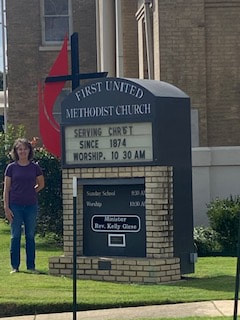
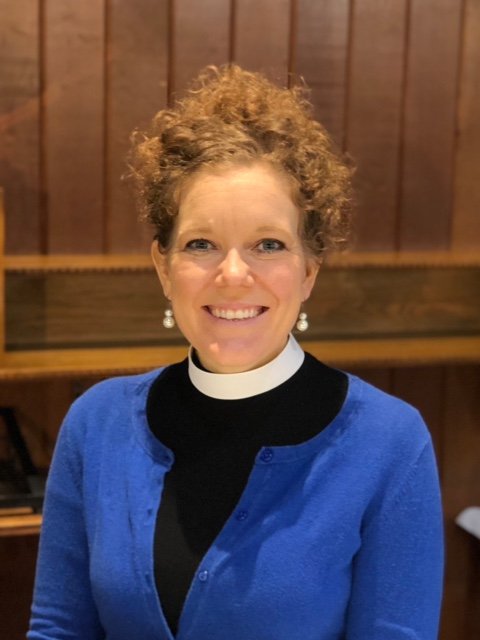
While it’s still relatively uncommon, there are a few female pastors in the area. Reverend Kelly Giese is the head pastor at the First United Methodist Church in Newport.
She’s been serving as a pastor for twenty-six years and at her current church for two years. She’s originally from Arkansas and currently living in Newport.
Reverend Kelly Giese
She was drawn to community service growing up. After she graduated from high school, she was very involved in vacation Bible school and Sunday school.
She also started working with disabled children from a group home. She worked in education for twelve years and has a master’s degree in education. A friend of the people from the group home died, and she was asked to preach at the funeral.
“I got a hold of my pastor at the time, and I said, here’s what’s going on,” Giese stated. “And that person said, you can preach this service better than I can. You know this person…From there, I just started exploring ministry.”
She described her decision to pursue ministry as a “calling.” She followed one of the usual pathways to ordination.
Her church held a conference to verify that she had been called and voted to receive her. She was assigned a mentor and decided what path she was interested in. She went through a process to become licensed which made her a local pastor.
“There’s a lot of other avenues out of there. I just happened to choose to go to seminary and then work through towards ordination after that, but there’s other pathways,” Giese said.
She attended the Duke Divinity School in North Carolina which was founded by the Methodist Church. By that point, she said, it had become fairly common for women to go to seminary and become pastors.
“I graduated from high school in 1978, and I had never met a female pastor at that point,” she said. “From that time forward…it became much more common…All of the women who went before me helped me.”
“I graduated from high school in 1978, and I had never met a female pastor at that point,” she said. “From that time forward…it became much more common…All of the women who went before me helped me.”
– Reverend Kelly Giese, Head pastor at the First United Methodist Church in Newport.
Her duties as a pastor vary from day to day. While she of course preaches and leads worship, she also has many other responsibilities.
She does a lot of community service, like visiting people in the hospital or nursing home, mentoring children, or helping with the food pantry. In the church, she helps with ordering curriculum for Sunday school, preparing for worship, and church maintenance as well as administration.
“I can’t say that that’s my job, but it’s what’s needed by the congregation…” Giese said. “I’ve caught three birds, there was a possum in the toilet, and we caught a raccoon.”
Another pastor, Reverend Annie Jones, is the rector of St. Paul’s Episcopal Church in Newport. She’s been serving there since 2021. She’s been a priest since 2020 and is originally from Iowa.
Rev. Annie Jones
Like Giese, she also experienced a “calling.” Before she was a priest, Jones was working as an elementary school teacher.
“Callings are very interesting and tricky things…I tried to ignore it, and that didn’t work out well for me,” Jones said.
She felt called to ministry since she was thirteen years old, but in college, she chose to go a different direction because, according to her, first-generation college students are generally expected to choose a “safe” path–a career that’s stable and provides a comfortable living. However, when Jones went on a trip to Eswatini, Africa (formerly Swaziland), she could no longer ignore the call.
In Eswatini, Jones was listening to several speakers, and one speaker was talking about callings. Jones felt like she couldn’t keep running from what she felt was the “internal voice of God” telling her to become a priest.
She had to do three years of seminary to become an Episcopal priest. She attended Church Divinity School of the Pacific in Berkeley, California. She also did clinical pastoral education, or CPE, which is 400 hours of hands-on chaplaincy work.
Most people do their CPE in hospital settings, but Jones had the opportunity to work with San Francisco Night Ministry where she walked the San Francisco streets from ten p.m. to two a.m. ministering to anyone who needed it.
Like Giese, Jones is expected to keep up with many duties as a priest. Jones said that because churches don’t usually have a large staff, pastors and priests are expected to be a jack of all trades.
It’s relatively common for women to be pastors in the Episcopal Church. According to Jones, they started ordaining women in the 1970s. In the diocese where she came from, the percentage of ordained women was well over fifty percent.
Here in this region, the percentage is much lower. However, Jones says that it’s changing.
Jones said that what she most loves about her job is the people.
“Being able to walk with people in the hardest and the happiest times, and being permitted to be in those spaces with them,” Jones stated. “And to help hold them and support them and pray with them and be an encouragement…we see the highest of highs and the lowest of lows in ways that many family members don’t actually even see of others, and that is a huge, huge responsibility, but also one of the amazing parts of the job.”
“Being able to walk with people in the hardest and the happiest times, and being permitted to be in those spaces with them,” …
– Rev. Annie Jones, St. Paul’s Episcopal Church in Newport
Captain Teri Smith is another local female pastor from the Salvation Army Church in Jonesboro. She’s part of a Protestant sect called the Salvationists, who have similar beliefs to Methodists.
Captain Teri Smith
She has been working with the Salvation Army since 2010 and has been an ordained minister since 2015. She was working as a youth pastor before she was ordained.
Smith and her husband, Captain Charles, decided to pursue ministry together. In the Salvation Army, both husband and wife have to become ordained together, not just one of them. Furthermore, if a single person is ordained, they can’t marry anyone unless the other person is also ordained or in the process of becoming ordained.
To become ordained, Smith attended the Salvation Army’s training center in Atlanta, Georgia, where she studied for two years. It’s similar to a seminary, but also teaches how to run a shelter and other practical aspects of working with the Salvation Army.
As a minister, Smith is also considered one of the commanding officers of the Salvation Army’s Jonesboro region. She and her husband direct eight counties. Her duties depend on how many volunteers and employees they have at the moment.
Currently, Smith’s duties include administration, like human resources and finances, and she and her husband share the duties of preaching. She also oversees Safe From Harm, which is a child protective training program that all of the volunteers and teachers in their church have to undergo.
In addition, Smith is the director of the women’s and youth ministry program. She teaches the lessons most of the time. She also is a part of the disaster services unit; whenever and wherever there’s a disaster, Smith is deployed with a team of other officers to assist.
“There are a lot of arms. As commanding officers, we are charged to ensure that things will run smoothly and sometimes, that means we are the ones that have to head it up,” Smith said. “Other times, we hope to train someone, or help encourage others to be a part of that, and then we just oversee it, but if there is no one to fill in that duty, as I’ve had to do right now with our finances…I’m having to fill that duty.”
“There are a lot of arms. As commanding officers, we are charged to ensure that things will run smoothly and sometimes, that means we are the ones that have to head it up,” Smith said.
– Capt. Teri Smith, Salvation Army Church in Jonesboro
Additionally, as officers, Captains Teri and Charles Smith can be deployed or moved at any time. They’re currently living in Jonesboro, but if they get called to move to another region, they will have to leave. Teri is originally from Ohio.
Similar to other denominations, women ministers are very common in the Salvationist Church. In their doctrine, they believe that it’s better for married couples to be ministers together. The couple is supposed to act as a unit.
“There’s no difference between male or female in that,” Smith said. “If you feel called, that is something that the Salvation Army will pursue.”
In the 1800s, when the Salvation Army was first established, Catherine Booth, the wife of the founder, felt the call to ministry. She wrote many articles, pamphlets, and books advocating for female ministers.
However, Smith still faces much prejudice as a female minister. According to her, it’s still not widely accepted in many circles for women to be ministers. For example, it’s difficult for her to be part of ministerial alliances where there are many ministers that don’t believe women should be ministers.
“My job isn’t to make anyone feel uncomfortable,” Smith said. “If that’s where I feel God has called me, then no matter if people agree or disagree, I don’t need that affirmation…”
Smith said many people believe that women shouldn’t be pastors because theological beliefs and certain interpretations of the Bible. However, Smith believes that because there were some women in the Bible who were in positions of authority, women are permitted to be ministers.
Additionally, some people even refuse to acknowledge her authority as a commanding officer of the Salvation Army. In her experience, sometimes people will ask for the captain, and when she says that she’s a captain, they’ll ask for “the man.”
However, at the end of the day, Smith said that “our heart is to be able to help people.” Because of the nature of her work, sometimes when people come to them, it’s because they’re having the worst day of their lives. What she truly wants is to help people, and the hardest things are the occasions when she’s unable to help.
-30-
Avery Jonesis a junior in the Department of English and Philosophy at Arkansas State University in Jonesboro. She can be reached at: avery.jones@smail.astate.edu
JONESBORO, Ark. — This Thanksgiving, some local small businesses and nonprofit organizations offered free community Thanksgiving meals open to all in Jonesboro. These events are hosted for the homeless, those without family, those without the money for a Thanksgiving meal, or simply those who want to engage with the community.
The Hope House, a nonprofit organization that provides for the homeless and low-income population, hosted a Thanksgiving dinner on Thursday, November 16, from 11 AM to 1 PM and then 2 PM to 4 PM. The event was held at their location.
“Our goal is…to be able to be a blessing to those in the community who may be struggling at this time to just have a simple Thanksgiving meal, especially for those who are less fortunate,” said Terri James, the director of Hope House. “Sometimes those of us who are blessed, we kind of get [blind], and we just don’t realize how fortunate we are. To be able to give back to the community is also a way we can say thank you for supporting the Hope House.”
However, the event wasn’t intended just for those less fortunate, but for anyone who wanted to come and partake. They hoped to feed at least 200 to 250 people. They had at least twenty-five volunteers helping out, five of which were staff members at Hope House, but more were welcome to help.
This was the first time the Hope House was able to host a community Thanksgiving. The meal was entirely arranged by them and provided for by donations from the local community.
They planned to serve chicken, ham, dressing, green beans, corn, potato salad, macaroni salad, and desserts. Carry-out was offered for anyone who was unable to stay.
The city of Jonesboro arranged a community Thanksgiving at the St. Bernards Auditorium on Thanksgiving day starting at 10:30 “for the hungry, the homeless, and the lonely,” according to the event’s Facebook page. Home delivery within the city limits was offered for anyone who couldn’t come.
The food was provided by members of the community. Donations for non-refrigerated desserts were taken from 1 to 5:30 PM on the Wednesday before. Volunteers arrived at 9:30 the next morning, and anyone was welcome to help without former notice.
The Jonesboro community Thanksgiving has been hosted almost every year since at least 2014. They usually serve around 1,800 or more meals, with around 1,200 of those being home delivery. The amount of volunteers varies between 500 to 750.
The VFW (Veterans of Foreign Wars) in Jonesboro hosted a Thanksgiving at their location on Thanksgiving day from 12 to 2 PM. They have hosted community Thanksgivings for many years.
According to Kay Baker, who works at the VFW, the purpose of the meal was to offer to everyone who doesn’t have a place to go for Thanksgiving an opportunity for friendship and fellowship. The meal was not just for veterans, but for everyone who wanted to participate.
The food was provided for by donations from the community of food and funds, as well as from fundraisers. Most of the food was donated directly, and the food was prepared by volunteers at the location that day.
“There is a big turnout. There’s a lot of veterans that have no place to go and a lot of other people that don’t have a place to go, so they come here,” Baker said.
They served turkey, dressing, gravy, mashed potatoes, green bean casserole, sweet potatoes, corn, cranberry sauce, rolls, and desserts. To-go plates were offered for anyone who was unable to stay.
Marie Turner, owner of Billie Marie’s Auction, hosted a community Thanksgiving at her store on Thanksgiving day from 3 to 5 PM. This was her first time hosting a meal, but she has given out Thanksgiving boxes before.
“I always wanted to serve hot meals to people on Thanksgiving, [but] was never able to until this year, and I am so excited,” Turner said.
According to Turner, the event was for anyone who needed a hot meal or was alone on Thanksgiving, and also for any police officers or EMTs that were on duty during Thanksgiving and in need of a meal. She arranged the event herself, using donations from family, friends, and customers.
They had at least fourteen volunteers helping with the meal, including some of her family members. Delivery in the Jonesboro area was offered for anyone who needed it; they already had fifty deliveries scheduled by November 15. They served turkey, dressing, green beans, mashed potatoes, sweet potatoes, corn, pumpkin pie, rolls, and tea.
Avery Jonesis a junior in the Department of English and Philosophy at Arkansas State University in Jonesboro. She can be reached at: avery.jones@smail.astate.edu
JONESBORO, Ark. – Two churches have recently begun meeting on the Arkansas State University campus for their weekly services. First Methodist Church and Word Baptist Church have had to move out of their original buildings, but for different reasons.
First Methodist Church, formerly a part of the First United Methodist Church, now meets at the Fowler Center every Sunday morning. The children’s Sunday school service is held in the Cooper Alumni Center. Their regular Wednesday night service is resumed on September 13th in the Cooper Alumni Center.
Lead Pastor Jamar Andrews of Word Baptist Church preaches. The church meets on the campus of Arkansas State University.
Additionally, their Wednesday night youth group meetings are now held in the Wildflower Event Venue in town. Breaking Bonds Ministry also meets in town at the Southwest Church of Christ on Tuesday nights.
They were forced to leave their original building as a result of the current nationwide schism in the United Methodist Church. The Church is split over the theological issue of the legitimacy of LGBTQ+ marriage and ordination.
In July 2022, 900 members of FUMC Jonesboro voted to leave the Arkansas Conference of the United Methodist Church, almost 70% of the church. However, the conference denied their disaffiliation request.
As a result, the conference took control of the original building on 801 S. Main, and the group who wanted to disaffiliate filed a lawsuit against them. However, the Craighead County Circuit Court determined that the loyalists should get the building while the disaffiliates need to leave.
The members in favor of disaffiliation were told to leave by August 1. They’re currently still in legal dispute over the building and will continue to use the Fowler Center until further notice. Pastor John Miles has anticipated that the dispute could potentially go on for years.
“I was seventeen years at the church,” Miles said. “When that judge threw us out weeks ago, I thought we were done for. It’s just worked out so great.”
Miles had his ordination removed by the Conference and is officially no longer a part of it, even though he’s still leading the church at the Fowler Center. Even before they left, they had teams of people calling around and searching for a new temporary home. They were very happy when A-State agreed to let them use their building.
They’re currently paying $3,000 per week to rent it. However, for a large church such as theirs that receives a lot of donations, that’s much cheaper than maintaining an entire city block like the building on 801 S. Main St.
“Riceland Hall has worked out really well for us…we’re having a good time there,” Miles said. “We’re not in any hurry to rebuild. We can hold out to see what the courts decide.”
“Riceland Hall has worked out really well for us…we’re having a good time there,” Miles said. “We’re not in any hurry to rebuild. We can hold out to see what the courts decide.”
– Pastor John Miles,
Word Baptist had to move into the Student Union because they’re outgrowing their original building at 416 Calion St. They have been in that building since 2013, but felt that they needed a bigger building to continue growing.
They needed a space that was close to their original home and was big enough to house everybody, with the right facilities for children as well. They already had an established relationship with the university, too.
“We felt like in order to continue to grow in a healthy way that the Union would be a good place to help us with that,” Jamar Andrews, the pastor, stated. “And then also we just felt like not only the space would be great, it would also give us an opportunity to make connections, be in proximity for students to be able to walk over…”
They’re currently building a new church near their former one. During the construction, they’re planning to remain at the Union until they’re finished. However, if things continue to go well, they might continue meeting on the campus in some capacity.
They’re also planning to keep their original building. During construction, they’re using the building for their food pantry, children’s space, women’s worship night, counseling center, and tutoring for which they partner with Jonesboro public schools.
They also want to help start a Spanish and English bilingual church in the original building. When the construction on their new building is over, they hope to keep the original building and continue to use it.
“We want to use this facility to be a help to the community,” Andrews said. “We would love to see this become a place where students can come and be together. We’d love to use it to help train up the next generation of missionaries.”
“We want to use this facility to be a help to the community.” “We would love to see this become a place where students can come and be together. We’d love to use it to help train up the next generation of missionaries.”
– Lead Pastor Jamar Andrews, Word Baptist Church
According to Andrews, the move has been relatively smooth. They hold two services in order to fit everyone. They’ve been able to get a storage unit in the garage to hold all of the things they need for the children.
They have to get there usually around 6:30 in the morning in order to set up. The worship, media, and sound team need to set up the instruments and speakers. Additionally, unlike the Methodist church, it costs more for them to rent that space than it does to maintain their current building.
However, as Andrews said, it’s not uncommon for churches to meet in unconventional places. The space is needed and has been working out great for them. They’re not eager to move out anytime soon.
“We’ve already had an opportunity to see just the impact of being on campus. We have students and individuals from South America, North America, Asia, Africa, and Europe,” Andrews. “Out of the seven continents, five of them in one room…was really special. That’s a big part of why we decided to be there.”
Avery Jonesis a sophomore in the Department of English and Philosophy at Arkansas State University in Jonesboro. She can be reached at: avery.jones@smail.astate.edu
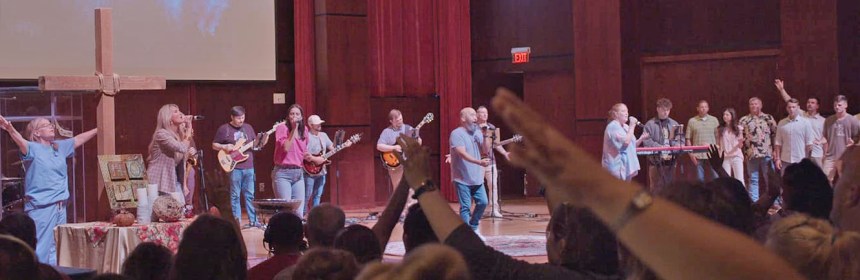
Note: Feature photo shows members of of First Methodist Church worshipping on the campus of Arkansas State University.
JONESBORO, Ark. – Caraway Market Days, a new farmers’ market arranged and hosted by South Caraway Baptist Church in Jonesboro, opened for the first time last Saturday. The event which lasted from 8 a.m. to 1 p.m. featured many local vendors and food trucks.
Caraway Market Days at the new farmers’ market.
According to Caraway Market Days Administrator Anna Powell who is a member of the church, the idea for the event begin developing in mid-September. According to Powell, the church has an extra fellowship building that wasn’t being used much which prompted congregants to brainstorming ways to utilize the space.
Several church members craft their own goods and have small businesses and decided a farmers’ market would be a good way to help sell their goods and connect with the community.
“We thought hey, let’s invite people in, provide this safe space and this regular environment where we could have events on the weekends, and allow local small businesses to sell their items here,” Powell said.
“We thought hey, let’s invite people in, provide this safe space and this regular environment where we could have events on the weekends, and allow local small businesses to sell their items here,”
– Caraway Market Days Administrator Anna Powell
Additionally, the group wanted to provide a way for people to “shop small” during the season in which other farmers’ markets are usually closed. The church plans to continue hosting the market every Saturday through April, excepting holidays.
“As a small business myself, I know that it’s really difficult in between market seasons when the local markets end in the fall, and they don’t start back up until May or June,” Powell said. “We really wanted this to be an opportunity to serve our community in between and allow a space for people to sell because so many of us know what that’s like to be kind of stuck through the winter season.”
In early October, Powell expected at least 30 vendors to show up; however the group unexpectedly was still receiving applications by that time and eventually became confident the space would be filled.
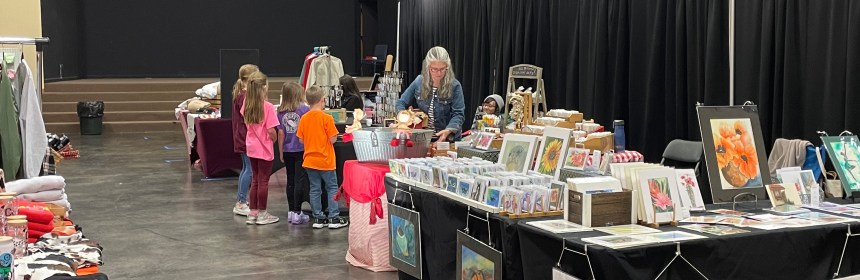
Only three or four vendors were from the church. Most of the expected vendors came from the outside community. In addition to handcrafted goods like clothes, some vendors were selling baked goods and candy; there was also availability offered for fresh produce and flowers.
All of the vendors’ tables were set up inside the Family Life Center. The food trucks were outside in the parking lot. Powell said that there may be some overflow of vendors outside on days of nice weather.
“It’s just going to be a really relaxed atmosphere,” Powell said. “We encourage families, friends, and groups of people to come just check it out, interact with all of our vendors and all of us that are going to be volunteering there. We’re just hoping for a really fun day.”
A large variety of homemade goods such as jewelry, clothes, art, embroidery, charcuterie boards, were featured, along with baked goods and candy.
Candace Brailsford owner of Charis Cottage Bakery in Jonesboro sells artisan sourdough, such as loaves, buns, rolls, and sandwich bread baked from her home daily. She also makes sweet treats like cinnamon rolls, scones, and cookies.
Brailsford started selling her bread in January of this year after receiving feedback that people loved eating it and were interested in buying it. Along with farmers’ markets, she sells from home and takes requests online.
One of the younger vendors at the market, a 19-year-old Abigail Sanchez, who sells a variety of handmade crafts like jewelry, keychains, and more. Sanchez started her business, Nightmareclaw’s Creatives, a little over a year ago.
Sanchez is mostly self-taught, while picking tips from her grandmother. She usually sells online and recently started selling at the Judd Hill Farmers’ Market before she heard about Caraway Market Days.
Coming from a family of seven, Sanchez uses the money from the business to help support them as well as her pet pig.
Stephanie Gibson of Momma G’s Embroidery was there to sell her handmade embroidered crafts. Gibson has been in business for about a year and doing embroidery for three years.
She primarily embroiders shirts, bags, blankets, and baby items, and sells them either at markets or online. She does it on the side along with her full-time job. She taught herself to embroider from YouTube.
“I’ve sewn since I was a kid when my grandmother taught me, so it was just a shift,” Gibson said.
Trisha Gooch, a watercolor artist, was selling her artwork. Her table displayed several originals as well as prints. Gooch paints mostly nature, including animals and landscapes.
She’s been painting for 25 years and selling her work for 20 years. She primarily sells on the Fine Art America website as well as her own website. She also does commissions.
In 2021, she moved from Hawaii where she was retired. She’s been selling at fairs in addition the Judd Hill Farmers’ Market, the Delta Arts Festival in Newport, and festivals at the Craighead County Jonesboro Library.
Doula Kara Pifer was there to advertise her services. Her business is called Cultivating Arrows Doula Services. She’s studied to be a doula for 2 years and got her certification at the end of 2022.
Originally from West Virginia, Pifer moved to Jonesboro last June and started her business in October. She has 6 children of her own and birthed the last 2 at home with the help of a midwife and another doula.
“I’ve seen how much of a big difference that it made, and I have such a passion for children and babies and pregnancy,” Pifer said. “When I saw that I could easily do a certification program myself, I immediately started after the birth of my second child at home.”
Along with delivering emotional and physical support during labor and delivery, she provides postpartum support, which means she assists with the baby after birth. Pifer gives encouragement and and provides education to new mothers while teaching pain management and relaxation techniques.
Avery Jones is a junior in the department of English and Philosophy at Arkansas State University in Jonesboro. She can be reached at: avery.jones@smail.astate.edu
JONESBORO, Ark. – On Saturday, July 22, Ag for Autism held its first Autism Community Fest from 10 a.m. to 2 p.m. at Central Baptist Church. The purpose of the event was to connect families with service providers and award the nonprofit’s annual grants.
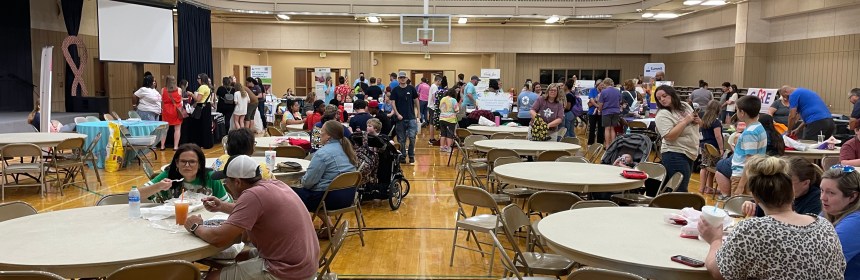
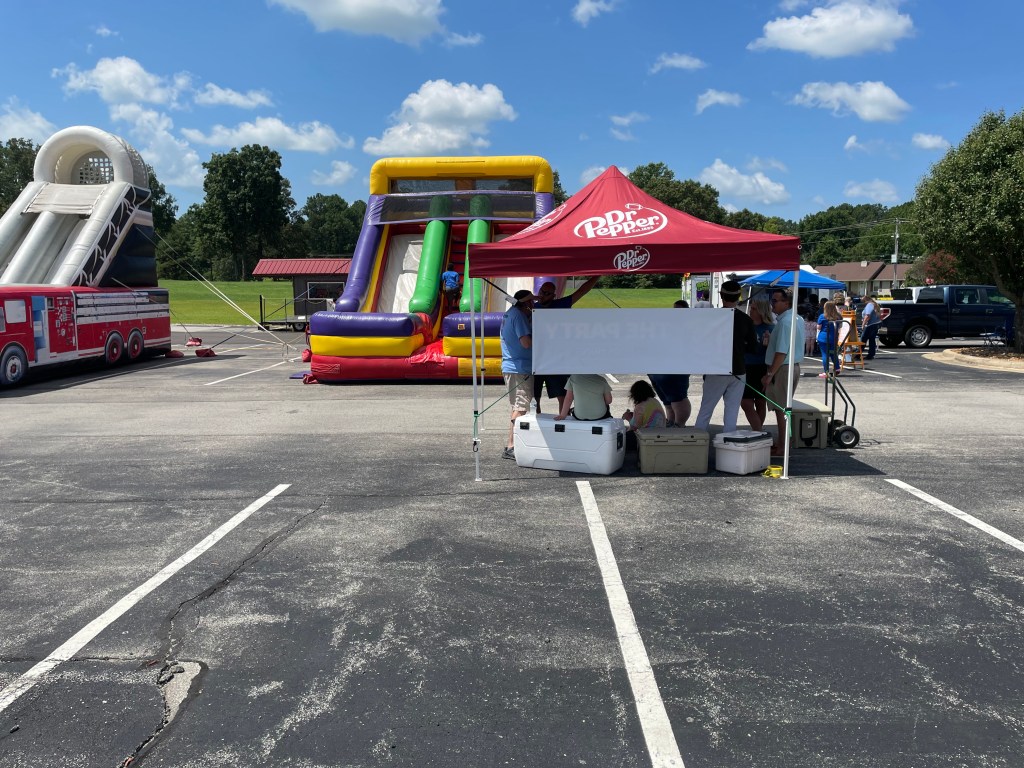
During the event, families dealing with autism got a chance to meet and connect with representatives of various service providers. The event included several food vendors and a variety of entertainments geared toward those with autistic family members. Along with festival staples such as bounce houses, the event included a “sensory tent” to offer to kids who needed a break from the noise and other stimulation.
Several grants were awarded to families and those aiding the autistic community. Families receiving aid and guest speakers discussed the way in which Ag for Autism impacted their lives.
According to Daniel Pieroni, an Ag for Autism board member, the organization was established in 2012 by a small group of agriculture businesses, which has since expanded. Armor Seed initiated it because they had many employees with children who have autism. They partnered with Farm Credit of Mid-America and Cache River Valley Seed.
“I have a son with autism, so the cause is near to my heart,” Pieroni said.
The main purpose of the organization is to raise money for families who have children with autism and to connect such families with available resources. The group arranges events every year, such as their Super Bowl Sunday event where they partner with the Make-a-Wish Foundation.
All of the group’s proceeds go to fund their grants and endeavors to help the autism community. This year, they received 91 grant applications and approved 75 of them. Overall, a little over $172,000 in grants were awarded. To date, the organization has awarded $1 million dollars in grants.
“We’ve gained a lot of traction in only two years,” said Danny Graham, the president of Ag for Autism. “Just three years ago, we didn’t have nearly that much money.”
“We’ve gained a lot of traction in only two years. Just three years ago, we didn’t have nearly that much money.”
– Danny Graham, President of Ag for Autism
The group also partners with fraternities and sororities like Alpha Gamma Rho at Arkansas State University. Several of the Greek members often volunteer and host fundraisers such as rodeos which raised $8,000 for the organization.
Members of the Fortenberry familys have benefited from the organization for their own kids as well as an organization they’re involved with called the Lighthouse Education Cooperative.
“We’ve been getting grants since 2018,” said Rhiannon Fortenberry, an attendee at the event and employee at the Lighthouse Education Cooperative. “When I was in grad school, I received an individual grant…to continue my master’s degree in ABA. My son…this will be his third grant that he’s received, and then the company I work for also receives a grant every year…”
ABA (applied behavior analysis,) is a type of therapy that treats autism in which the child works one-on-one with a therapist to reinforce positive behaviors. ABA studies how behavior works in real life situations to determine which behaviors are positive and which are harmful in school, work, and relationships.
Service providers included Social Space, a new ABA therapy clinic in Paragould designed specifically for kids and teenagers.
They do mental health counseling as well as ABA therapy. Their main goal is to provide a fun and engaging safe space for children with ABA needs to learn and play alongside others with the same needs. Additionally, they provide an after-school teen program and one-on-one support from therapists for teens.
The H.O.W.L Transition Programfrom Arkansas State University provides support and tutoring for students with intellectual disabilities who need help transitioning to independent lives.
The David E. Puryear Center in Jonesboro provided by The Learning Center. The Center is a long-term care facility for adults of varying ages with developmental disabilities.
The Center provides 24-7 care and support that includes domestic skills training, social activities, leisure activities, and vocational training. All of the patients are expected to keep up with cleaning, cooking, and laundry to the best of their ability.
There are also a couple of programs available for those who are low-income. The Arkansas Autism Partnershipin Little Rock is a Medicaid waiver program that provides in-home intervention for young children with autism.
Parents will also be trained in this program to use the same strategies; they’re expected to be active in their child’s treatment. They also get to select the agency that they work with.
A similar program is Summit Community Care The organization helps those who are eligible for Medicaid figure out the resources they need and form a care plan. They work with anyone who needs it, including those with mental disabilities.
The patient can choose their provider, and they get unlimited medicine and doctor visits without copays. Additionally, the patient can get training and support for an independent life, like getting guidance with housing, employment, school, relationships, and mental health.
There were several other organizations in attendance, all of which work in some capacity with children who have autism. By noon, the entire gymnasium was almost entirely full of not only businesses displaying their support, but also attendees learning about resources and enjoying the food and games.
Avery Jonesis a junior in the Department of English and Philosophy at Arkansas State University in Jonesboro. She can be reached at: avery.jones@smail.astate.edu
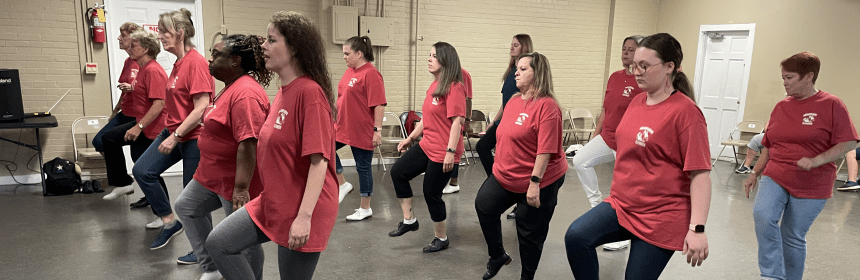
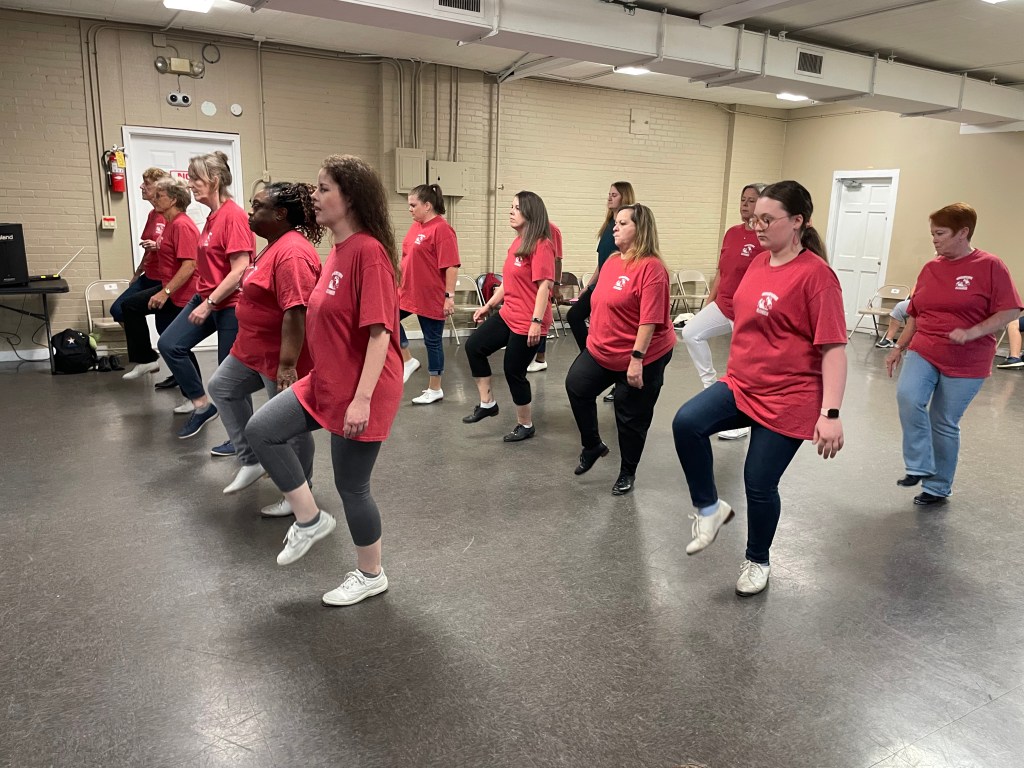
JONESBORO, Ark. – The Crowley Ridge Cloggers have began an 8-week cycle of beginner classes for people interested in the dance stye. The first held last month is just the first in an 8-week session of lessons that will prepare dancers for upcoming events.
First established in 1980, the dance group competes at both the regional and national level. events and competitions. The group transitioned to clogging from square dancing.
Leona Miller and Kathey Wilson are the instructors of the group. They are both certified clogging instructors by the National Clogging Organization. Both have been with the group since its inception.
Every Tuesday, the group meets to practice at the Earl Bell Community Center in Jonesboro. Practice begins at 6 p.m. and usually last a couple of hours.
“We’re trying to teach these young ones…” Wilson said. “It is an American folk dance, a tradition that we love.”
“It’s a good family activity that typically anybody can do,” Miller said. “You can do it on any level. Start out as a beginner, and some people never get past that and they don’t want to.”
Before the COVID-19 pandemic, the group had a seniors only group . Most participants within the group were 70 years old and up.
Although seniors continue to perform, clogging is not age-specific. Miller said they have had hundreds of people cycling through the group. They don’t have many kids right now but have had them in the past.
In the beginner classes, students learn the basic steps that are the foundation of clogging. Upon completion, participants earn a graduation certificate and the opportunity to join the team for events, workshops, and competitions.
Currently, the group consists of 14 active dancers that put on community performances and workshops, alongside competitions.
They do several events per year. They most recently attended The Arkansas Traveler Workshop in Mountain View and did a performance at The Bungalows, a senior living community in Jonesboro.
Th is fall, the group is set to perform at the Arkansas Rice Festival in Weiner, the Arkansas State Fair in Little Rock, The Harvest Festival in Bono, and the Foothills Festival in Black Rock.
Veteran member Shaina Morgan is pursuing her certification as a clogging instructor. She’s been clogging for 32 years and has been with the team since she was a kid.
Morgan developed a love for the dance while clogging as a child alongside her mother. The duo will often pair together in competitions.
As an instructor, Morgan hopes to not only teach, but share the love of clogging. “I think the main thing is…being able to share my love for clogging and just how fun it can be,” she said. ” I don’t think anyone realizes just how good it is to dance…clogging has always kind of been like a therapy for me.”
“I think the main thing is…being able to share my love for clogging and just how fun it can be. I don’t think anyone realizes just how good it is to dance…clogging has always kind of been like a therapy for me.”
– Shaina Morgan, NEA Clogger
After certification, Morgan plans to stay with the Crowley Ridge Cloggers and become involved with teaching workshops at bluegrass festivals.
“[I just want to] keep it relevant, keep it where people actually know what clogging is and be able to partake…in that whole experience, even if it doesn’t mean that they get to go dance with the team,” Morgan said. “…Maybe it will get them motivated to go find a team in their town to just bring some attention to it.”
-30-
Avery Jones is a junior in the Department of English and Philosophy at Arkansas State University in Jonesboro. She can be reached at: averysjones@protonmail.com