Category Archives: Wellness

NEA Divine Intervention hosts conference to fight stigma
Delta Digital News Service

Friday, Dec. 1, 2023

By Avery Jones | Editor

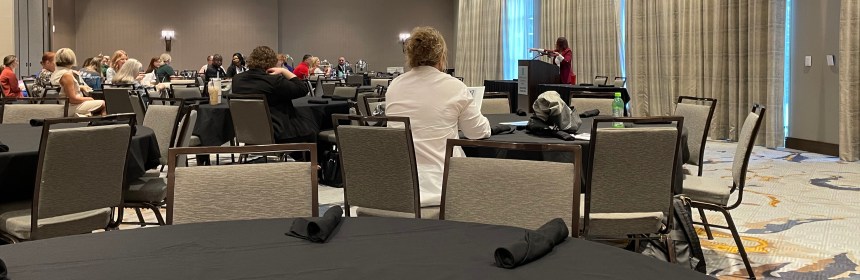
JONESBORO, Ark. – NEA Divine Intervention, a peer community center for those struggling with addiction, hosted a conference with various similar organizations around the state. The conference was called Together We Can Stop the Stigma, and its intention was to discuss and combat the kind of stigmas that are attached to addiction.

The conference was held at Embassy Suites in Jonesboro on September 11 from 9 AM to 4 PM. Several organizations that deal with addiction were in attendance. There were also several people scheduled to speak, as well as a few panels. Refreshments and lunch were provided.

The speakers included Chief Operating Officer Tony Thomas on behalf of the mayor, discussing community support; Casey Copeland, a peer recovery specialist on The Arkansas Peer Advisory Committee for the DHS Recovery Unit, discussing the beginnings of peer support in Arkansas; and Paula Cunningham, who had a son now deceased of an overdose, discussing prevention and recovery.

The discussion panels included Difficult Questions, a Q&A provided by people working in recovery programs; Surviving the Other Side, a conversation from some who have grown up around people who have struggled with addiction; and Fighting for the Right to Belong, perspectives from those who are in recovery and advocating for themselves and others like them.
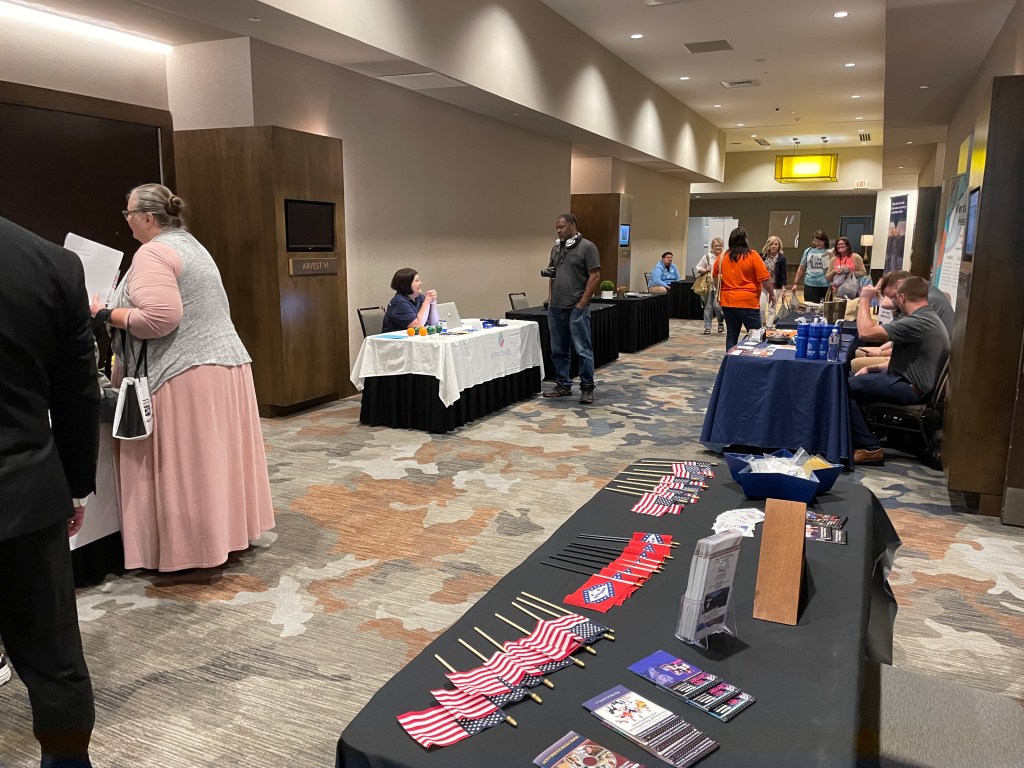
Various businesses and nonprofits displaying their services at the convention.

Some organizations in attendance were Arisa Health, NewVision Withdrawal Management, Longbranch Recovery Center, Engaging Arkansas Communities, and the Wolf Street Foundation. Many of these organizations had set up tables outside the convention room to introduce themselves and their services. All of them had worked with Divine Intervention or the director at some point.

“In my line of work, I come across a lot of different types of people from a lot of different types of backgrounds,” said Kimberly Nail of Engaging Arkansas Communities. “I just want to be able to help anyone I can and share my lived experience.”

Shalinda Woolbright, the director of NEA Divine Intervention and the host of the event, said she originally wanted to arrange an event called “Recovery in the Streets,” but because she didn’t want to wait on approval from the mayor’s office, she decided to do something different.

Her original intention was to gather different recovery resources from around the community so that others could benefit, but the result transformed into something new. This is the first time that Divine Intervention has hosted an event of this type. Woolbright hopes to learn from this event for next year.

“I have been doing this for the last six years, and I have ran into a lot of stigma. To the point where somebody made the statement, ‘Well, maybe they need to die.’ Another statement, ‘They just need to grow up,’” Woolbright said.

– Shalinda Woolbright, the director of NEA Divine Intervention

Woolbright believes that this kind of stigma comes from a lack of knowledge. With this event, she wanted to bring knowledge to the table, not just from recovering addicts but also from families of these addicts. She hopes that if people see the issue from the family’s side, they would have more empathy and compassion.

The inspiration for the event was an article written by Paula Cunningham in the Arkansas Democrat-Gazette on Nov. 12, 2018, titled “The last heartbeat.” The mother writes about how her son became consumed with addiction, and now she’s watching him die of an opioid overdose.

However, the main point of the article was that her son had faced so much shame and stigma, and Cunningham, one of the speakers at the event, wants to be the voice for her son that will fight this stigma. Copies of this article were printed out and laid on every table in the convention room for everyone to read.

NEA Divine Intervention in Jonesboro is a nonprofit organization that has been providing support and resources to anyone struggling with addiction, mental illness, and intellectual disabilities since 2021. They essentially help these people to get back on their feet with jobs, housing, and treatment.

Woolbright is in long-term recovery herself, so she knows what others like her struggle with and why it’s so difficult to recover and get back on your feet. The purpose of her organization is to help others face those struggles with better support and resources at their disposal.

“Honestly, I found it to be so overwhelming to have a record, look for a job, ask for help, go back to school, and I just crashed and burned so many times,” Woolbright said. “The purpose is to walk alongside somebody that’s going through the same thing that I’ve been through so that they won’t have to go through the struggles that I did and so that they will be given an option to…start recovery and not become overwhelmed and stressed out and give up.”

Divine Intervention hosts other community events as well and connects with people to make themselves known to those who need help. They meet with people from probation and parole, drug court, DHS, and other places where those struggling with drugs and mental illnesses might be.

They have hosted free haircuts, homeless drives where they give away care packages, art therapy, a “Grill ‘n Chill” with an art contest and dancing, and a back-to-school event in August where they gave away free backpacks for kids.

Mary Tolliver, a volunteer, came to Divine Intervention also because she was struggling to find a place to live. She has been working with them for about four or five months because she wants to give back.

“To see somebody be able to get jobs that they haven’t been able to or to find homes…it’s a sense of satisfaction,” Tolliver said. “You get to watch that here because [Divine Intervention] offers so many services to help people do that.”

-30-


Note: Feature photo shows Shalina Woolbright speaking.

Autism Community Fest makes debut

Delta Digital News Service

Oct. 8, 2023

By Avery Jones | Editor


JONESBORO, Ark. – On Saturday, July 22, Ag for Autism held its first Autism Community Fest from 10 a.m. to 2 p.m. at Central Baptist Church. The purpose of the event was to connect families with service providers and award the nonprofit’s annual grants.

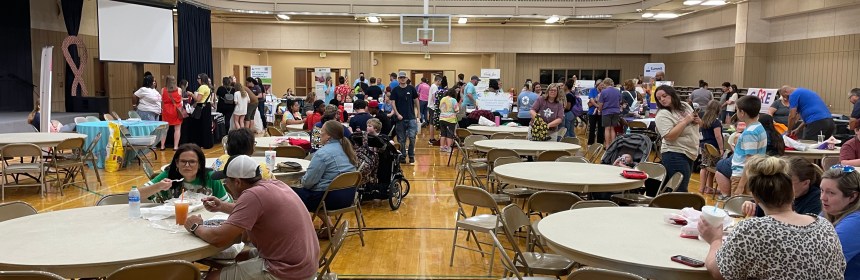
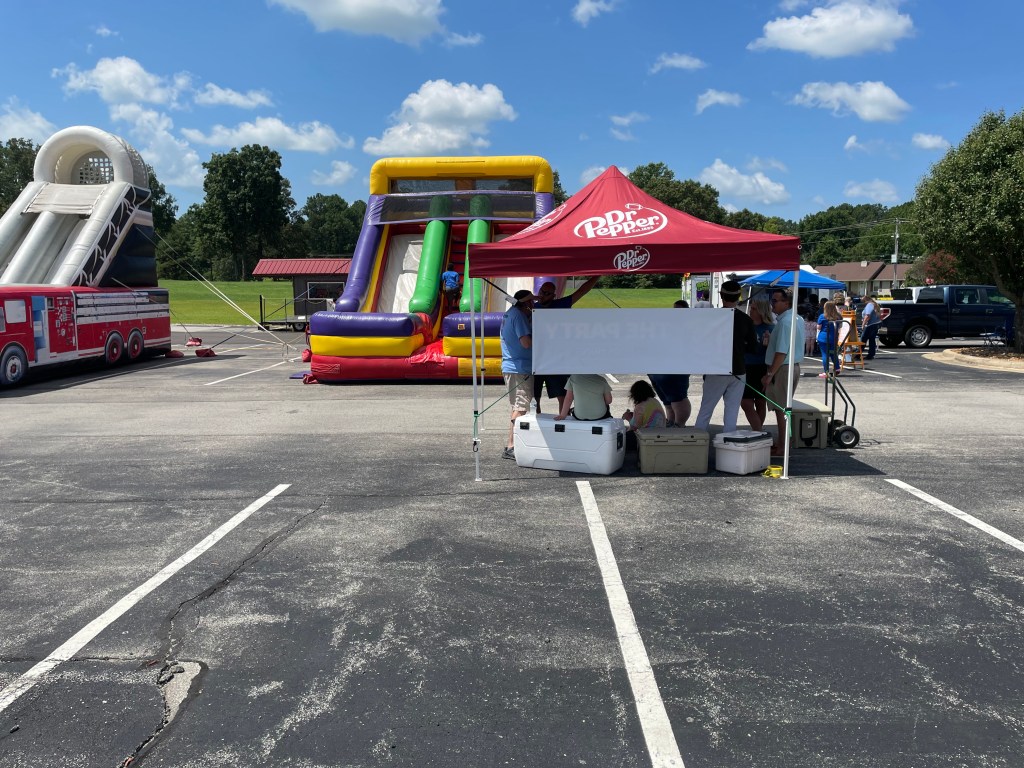
During the event, families dealing with autism got a chance to meet and connect with representatives of various service providers. The event included several food vendors and a variety of entertainments geared toward those with autistic family members. Along with festival staples such as bounce houses, the event included a “sensory tent” to offer to kids who needed a break from the noise and other stimulation.

Several grants were awarded to families and those aiding the autistic community. Families receiving aid and guest speakers discussed the way in which Ag for Autism impacted their lives.

According to Daniel Pieroni, an Ag for Autism board member, the organization was established in 2012 by a small group of agriculture businesses, which has since expanded. Armor Seed initiated it because they had many employees with children who have autism. They partnered with Farm Credit of Mid-America and Cache River Valley Seed.

“I have a son with autism, so the cause is near to my heart,” Pieroni said.

The main purpose of the organization is to raise money for families who have children with autism and to connect such families with available resources. The group arranges events every year, such as their Super Bowl Sunday event where they partner with the Make-a-Wish Foundation.

All of the group’s proceeds go to fund their grants and endeavors to help the autism community. This year, they received 91 grant applications and approved 75 of them. Overall, a little over $172,000 in grants were awarded. To date, the organization has awarded $1 million dollars in grants.

“We’ve gained a lot of traction in only two years,” said Danny Graham, the president of Ag for Autism. “Just three years ago, we didn’t have nearly that much money.”

– Danny Graham, President of Ag for Autism

The group also partners with fraternities and sororities like Alpha Gamma Rho at Arkansas State University. Several of the Greek members often volunteer and host fundraisers such as rodeos which raised $8,000 for the organization.

Members of the Fortenberry familys have benefited from the organization for their own kids as well as an organization they’re involved with called the Lighthouse Education Cooperative.

“We’ve been getting grants since 2018,” said Rhiannon Fortenberry, an attendee at the event and employee at the Lighthouse Education Cooperative. “When I was in grad school, I received an individual grant…to continue my master’s degree in ABA. My son…this will be his third grant that he’s received, and then the company I work for also receives a grant every year…”

ABA (applied behavior analysis,) is a type of therapy that treats autism in which the child works one-on-one with a therapist to reinforce positive behaviors. ABA studies how behavior works in real life situations to determine which behaviors are positive and which are harmful in school, work, and relationships.

Service providers included Social Space, a new ABA therapy clinic in Paragould designed specifically for kids and teenagers.

They do mental health counseling as well as ABA therapy. Their main goal is to provide a fun and engaging safe space for children with ABA needs to learn and play alongside others with the same needs. Additionally, they provide an after-school teen program and one-on-one support from therapists for teens.

The H.O.W.L Transition Program from Arkansas State University provides support and tutoring for students with intellectual disabilities who need help transitioning to independent lives. 

The David E. Puryear Center in Jonesboro provided by The Learning Center. The Center is a long-term care facility for adults of varying ages with developmental disabilities. 

The Center provides 24-7 care and support that includes domestic skills training, social activities, leisure activities, and vocational training. All of the patients are expected to keep up with cleaning, cooking, and laundry to the best of their ability.

There are also a couple of programs available for those who are low-income. The Arkansas Autism Partnership in Little Rock is a Medicaid waiver program that provides in-home intervention for young children with autism.

Parents will also be trained in this program to use the same strategies; they’re expected to be active in their child’s treatment. They also get to select the agency that they work with.

A similar program is Summit Community Care The organization helps those who are eligible for Medicaid figure out the resources they need and form a care plan. They work with anyone who needs it, including those with mental disabilities.

The patient can choose their provider, and they get unlimited medicine and doctor visits without copays. Additionally, the patient can get training and support for an independent life, like getting guidance with housing, employment, school, relationships, and mental health.

There were several other organizations in attendance, all of which work in some capacity with children who have autism. By noon, the entire gymnasium was almost entirely full of not only businesses displaying their support, but also attendees learning about resources and enjoying the food and games.

-30-


LISTEN: Emotional Support Animals Improve Owners’ Lives

By Shelby Russom
Delta Digital News Service

Joshua VanDon sits with his ESA, Keena. (photo courtesy of Joshua VanDon)

JONESBORO, Ark. — People with diagnosed mental illnesses often benefit from emotional-support animals. These registered animals provide emotional support and love, alleviate stress and loneliness, and even ease the effects of mental illnesses to support their owners.

   Kellie Davison of Jonesboro, therapist, and co-founder of Courage Counseling said ESAs are wonderful and help people with mental illnesses like anxiety and post-traumatic stress disorder. She said she always recommends her clients who do not have an ESA look into getting one.

   As someone with PTSD and anxiety, Joshua VanDon of Paragould said people notice a change in him since getting his ESA, Keena, a four-year-old Belgian Malinois.

   “My wife’s seen first-hand like the difference in myself once I got Keena and you know, having her here,” he said.  

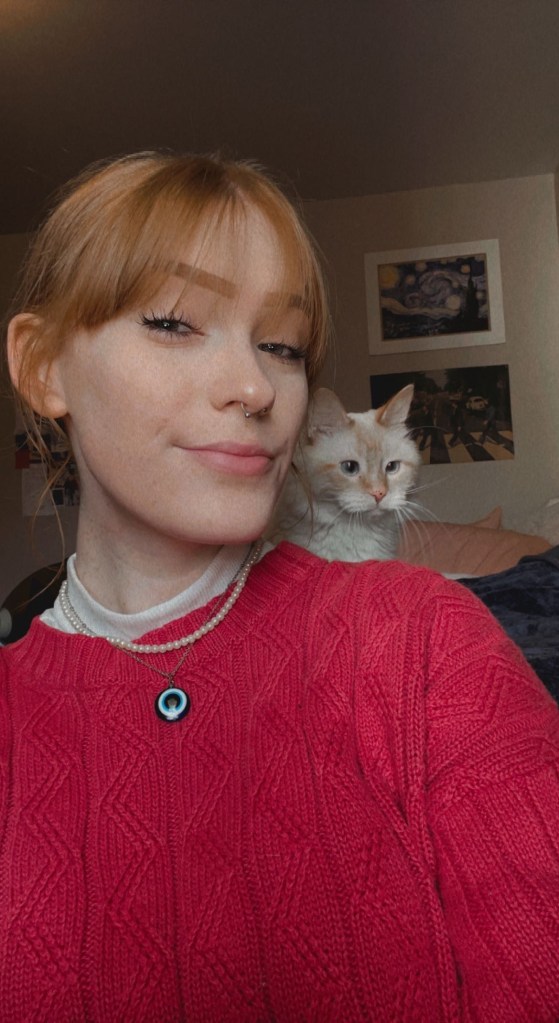
   Maya Saala, an Arkansas State University first-year student from Pocahontas studying elementary education, said she initially did not realize just how helpful having her ESA registered cat, Obi, would be. She said she knew being around him made it easier to deal with her anxiety, but did not realize the extent of the emotional help he provided. Saala said she recommends ESAs to anyone who struggles with mental illness.

Maya Saala and her ESA, Obi. (Photo courtesy of Maya Saala)

   “It’s just one of those things where it’s like, even if you don’t think you could benefit from one, you probably could,” she said.

   Legally recognized as support systems, ESAs can travel with their owners, attend events, go into stores and much more. Davison said this was helpful for her mother, Sarah Simmons, who suffered from anxiety and bipolar disorder.

   “She was able to travel with them and so it helped her get to do a lot of things she would have never been able to do,” Davison said.

   To register an animal as an ESA, an emotional support animal owner needs a letter from their mental health provider stating the owner requires the assistance of the animal. Traveling and entering certain places, as well as living on a college campus with an animal, requires an ESA letter.

   Davison said people should not abuse the ability to have an ESA. She, as well as other therapists, will not give the necessary documents to register an animal as an ESA to just anyone. She said she wants to ensure everyone who has an ESA is someone who truly needs it and will take care of the animal.

   “When I think of an emotional support animal, I think of it as if you’re going to maintain your own mental health, you also need to maintain your dog’s health as well or your cat or whatever animal you’re utilizing as your emotional support animal,” Davison said.

Natural healing is choice for some

By Blaze Cantrell
Delta Digital News Service

CAPE GIRARDEAU, Mo. — Lora Borgfield of PC Wellness Centers, says getting a chiropractic adjustment solves daily physical ailments for people.

Borgfield has been the office manager for PC Wellness Centers in Cape Girardeau for a few years. She has seen people come in for many reasons and believes that a visit to the PC office could really help someone.

“People want to use a more natural way to heal their body. We treat infants and all the way to older people in their 90s,” said Borgfield.

Borgfield said people come in for a handful of reason. Some people come in because they have been in serious accidents and a back alignment will help with their recovery, while others just come in because they did not sleep well and they feel “out of whack.”

“My entire family comes in occasionally,” said Borgfield. “I like to make sure everything is going well and they feel good.”

Borgfield said getting your back adjusted can boost your immune system, help relieve migraines, as well as neck, back and joint pain.

Tim Borgfield, Lora’s husband, has made many visits to PC Wellness Centers. He races motorcycles and dirt bikes with his son and he feels like a visit to his wife’s place of employment does the trick.

“If my son and I have been at a race all weekend, I make a point to call Lora and schedule an appointment on Monday to get my back realigned,” he said.

He said there is nothing like hearing his back pop all over and feeling instant relief upon leaving the office. Tim is a firm believer that his visits to PC Wellness Centers allow him to continue to do what he loves.

People of all ages go to the chiropractor, so Lora sees college students every day. She says a lot of college students come in because they have been in car accidents or had major problems their entire life.

Tori Davis has had chronic pain in her back since she was a child. She is now 22 and still experiencing the pain.

“I have realized the pain will more than likely never go away but at least it feels better for a little while after I leave the chiropractor,” she said.

Lora thinks a visit to the chiropractor is the best and most natural way to heal your body and says she thinks everyone should make an appointment and visit as regularly as needed.


Editor’s Note: Photo by Jesper Aggergaard on Unsplash