Courtesy of the City of Jonesboro/Johnathan Reaves, Delta Digital News Service
Copenhaver said the funding would provide additional resources to prevent and fight crime in the city and keep Jonesboro on the leading edge of incorporating technology into its policing efforts. “When we talk about improving Jonesboro, public safety is a top priority,” he said. “This is reinforcement that we are on the right track, and I thank Senator Boozman for his efforts and for the hours he and his staff have dedicated to meeting with our Jonesboro team to discuss the wins and benefits of the system. He believes in it, and it shows.”
Jonesboro’s innovative Real-Time Crime and Intelligence Center now boasts more than 700 cameras strategically positioned around the area and has been referenced more than 600 times in cases this year alone. Data collected and retained also provides a valuable resource in building evidence to close cases, helping resolve accident disputes and identifying needed traffic and safety improvements, according to Jonesboro Police Chief Rick Elliott, “Our system provides officers and detectives with critical information that saves lives, immediately alerts us when a vehicle of interest enters the region and provides helpful information on the scene of an active incident or operation. The technology investment in policing is making a difference, and it shows.”
Craighead County Sheriff Marty Boyd talked about the importance of information sharing between agencies, “We work closely with the City of Jonesboro and share 911 facilities. Quickly transferring data, license plate alerts and video information is a huge benefit toward the safety of our area.”
JONESBORO, Ark. – The Hot Check Program from the Craighead County Deputy Prosecuting Attorney’s office in accordance with ACA 16-21-120(c) presented the 2023 annual report of attorney fees and restitution fees on Feb. 12.
The Hot Check program was terminated in April 2021. Keith Chrestman, former Craighead County prosecuting attorney, terminated the program when realizing few people write checks anymore. It was costing Chrestman more than he was getting out of it.
Charlene Davidson, Managing Deputy Prosecuting Attorney for Craighead County, presented the 2023 annual report.
“During the 2023 calendar year, our office received $13,011.21 from the Craighead County Sheriff’s Office to be entered as payments received from the defendants in the Hot Check Program,” Davidson said.
“During the 2023 calendar year, our office received $13,011.21 from the Craighead County Sheriff’s Office to be entered as payments received from the defendants in the Hot Check Program.”
Craighead County Managing Deputy Prosecuting Attorney Charlene Davidson
The Craighead County Prosecutor’s Office disbursed $32,991.73 towards victim restitution and $11,813.25 towards merchant fees that defendants were charged for the hot checks. The office also disbursed $8,259.09 in prosecuting attorneys fees.
The prosecuting attorney fees are entitled to the prosecuting attorneys by statute for managing the Hot Check program.
Davidson shared that money is still coming in despite termination of the program, when a committee member asked about the money situation and how it works.
“There is money still coming in. The defendants pleaded guilty and got on a payment plan. Some of them pay and some do not. Sheriff Marty Boyd has been really good about getting their tax refunds. We get money that has been owed for 10-15-20 years. There is still money coming in that needs to go out to the victims. I think money will come in for quite some time,” she said.
Once a defendant is found guilty of violating the hot check law, they enter a guilty plea. The defendant is ordered to pay restitution. The collection of restitution fees is managed by the Sheriff’s office.
“Until it is paid in full, it is still owed. It will continue to come in even though we are no longer prosecuting those types of cases,” Davidson said.
Now that the program does not exist, if someone sees suspicion of a hot check, they will present them to the law enforcement agency for investigation.
If the law enforcement agency finds probable cause for an arrest, they will forward it to the Craighead County Prosecutor’s Office.
In other business, Craighead County Judge Marvin Day announced Barbara Weinstock’s retirement after 27 years as Justice of the Peace for District Five at the Craighead County Quorum Court meeting on Monday.
Weinstock was responsible for $30,549,485 of grants of free money, helping people of Craighead County. The grants were used for mental health courts, veteran’s courts, drug courts, etc.
Weinstock shared her thoughts on her appreciation of the committee and her time as part of the Justice of the Peace.
“I’ve learned a lot, I really have. Thank you, it has been a pleasure,” Weinstock said.
“I’ve learned a lot, I really have. Thank you, it has been a pleasure,”
District 5 JP Barbara Weinstock
Judge Day said Weinstock would retire Friday but continue to help. He also shared his appreciation of Weinstock and the future of her replacement.
“We are looking for a replacement. We are excited for her,” Day said.
Craighead County quorum court will meet again Feb. 26.
Brayden Morse is a junior in the multimedia journalism program in the School of Media and Journalism at Arkansas State University in Jonesboro. He can be reached at brayden.morse@smail.astate.edu.
Emergency services, such as police departments, fire departments, and ambulances, often require foreign language resources at hand if they need to help someone who speaks little to no English. Bilingual employees can be highly valuable as a result.
In Jonesboro, this is especially relevant because of the large Hispanic population. While many Hispanic people can speak English fluently, there are also many who don’t.
The Jonesboro Police Department works most directly with Spanish speakers. According to Mary Oliver, who works in the records division, many people come to request a copy of their report or file a report, including Hispanics.
The records division deals with all of the paperwork that comes through, including accident reports, arrest reports, and tickets. Belinda Rodriguez, a translator who speaks fluently in both English and Spanish, helps those who need translation to communicate when they come to request or file a report.
“With the language barrier with the rest of the clerks, sometimes it’s hard to figure out their need, what they’re requesting, and so she fills that gap for us,” Oliver said.
They rarely get witness statements in Spanish since there’s usually an English speaker there who can translate for them if needed. However, on the occasions that this does happen, Rodriguez will translate the document for them when there’s a need.
Additionally, the criminal investigation division sometimes interviews people who only speak Spanish, so in those cases, Rodriguez translates for them during the interview.
“We have a large need here. We’re here Monday through Friday, eight to five…I would say daily, she is translating for us in some form or fashion,” Oliver said.
Before Rodriguez was hired in July 2022, the records division worked for several years without a translator. According to Fodor, it was a struggle, and they had to reach out to other resources in order to get the translation they needed.
Rodriguez is Hispanic and grew up in the U.S. learning Spanish alongside English. Even before she worked as a translator, she found herself translating wherever there was a need.
For example, she has helped people to communicate at the ER, the revenue office, and in a former job as a dental assistant. The first two instances weren’t in a professional capacity; Rodriguez says it’s in her nature to help where she sees it’s necessary.
“My mother struggled a lot growing up, so I know firsthand what it’s like to be in that situation,” she said.
Additionally, many Hispanic people are scared to file reports, according to Rodriguez, because they think that nobody will be able to understand them or even fear getting deported. She hopes to help bring in more Hispanic people, especially women who need to report domestic violence.
The police department also has two bilingual police officers who speak both English and Spanish fluently. One such officer is Corey Obregon. He has worked with the department for almost five years.
He grew up in El Paso, Texas, and only spoke Spanish in his household, so he’s fluent in conversational Spanish. In the field, he mostly speaks Spanish when dealing with DUI (driving under the influence) and domestic violence cases.
“I’m pretty much one of the people they call quite often,” Obregon said.
The other bilingual officer in the department is Homero Gonzalez. He’s been working with the JPD for nearly two years.
Gonzalez believes there’s definitely a need for Spanish speakers in the department. He’s been called to many different parts of the city to help translate and has assisted detectives with translation as well.
He meets people who speak little to no English at least once or twice during his work week. It’s usually during the evening when people are going home from work and mostly cases of thefts, accidents, and domestic violence.
“I find Hispanic subjects are more willing to give me information due to me being able to communicate in their native tongue,” Gonzalez said. “I can always see the relief on people’s faces when they find out I speak Spanish. It’s just one less thing to worry about.”
Usually, the only foreign language the department works with frequently is Spanish. However, they have occasionally encountered others, such as Romanian, Nepali, and Marshallese.
The department has a variety of resources they can use when confronting a language barrier. There are translators they can contact for help communicating, and some officers like Gonzalez use Google Translate.
There’s currently an incentive program in the works for officers who speak a second language. There used to be an incentive program in place but after officers tried to fight for a pay raise, it was taken away in 2015.
However, after the recent fight for a pay raise in the department over the summer, a new incentive program is being established. According to Obregon, it will be incorporated next year.
The Jonesboro Fire Department also occasionally needs to communicate with Spanish speakers. According to Martin Hamrick, the fire chief, they sometimes have to use basic phrases and questions when doing EMS calls, wrecks, and fires, and it can be difficult to communicate.
In cases where the individual speaks little to no English, the department has been able to get assistance with translation from the police or from another person there who can speak both languages. Mostly, the only foreign language they encounter is Spanish, but they have dealt with some Asian languages on occasion.
“But it’s definitely better if we speak one-to-one, we get a faster response that way,” Hamrick said.
None of the firefighters are bilingual, but some know basic phrases. El Centro Hispano, the Hispanic center of Jonesboro, offers a basic Spanish class, and some of the firefighters have taken it.
Because the fire department has to follow the civil service guidelines set by the state, they don’t offer any incentives for bilingual firefighters nor is it considered a requirement or advantage when hiring.
Emerson, a local ambulance service, also occasionally helps people who speak little to no English. In these cases, the EMTs usually communicate with others on the scene who speak English or use Google Translate, according to Eric White, who’s an EMT at Emerson and also works in public relations there.
The EMTs can also use a chart using symbols that the patient can point to indicate how they’re feeling. As a last resort, they have a number they can contact for translations.
Once at the hospital, there’s usually translators on-site who can help both the EMTs and the patient once the ambulance arrives. Besides Spanish, other foreign languages Emerson has encountered include German and Russian.
There are a couple of EMTs at Emerson who can speak Spanish to a certain extent. Having a second language as an EMT does come in handy, according to White, and is a standout skill on a resume when they’re hiring.
Avery Jonesis a junior in the Department of English and Philosophy at Arkansas State University in Jonesboro. She can be reached at: avery.jones@smail.astate.edu
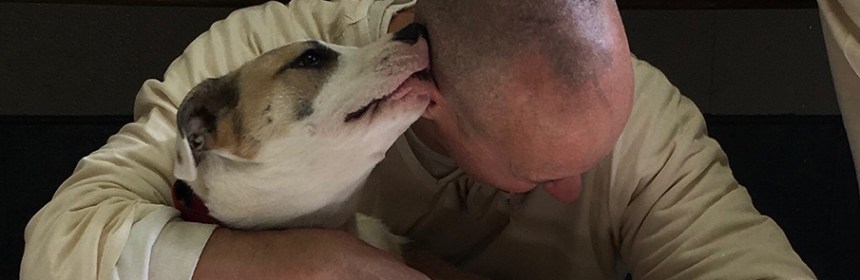
JONESBORO, Ark. – Michelle Hill of Michelle Hill Dog Training Academy is a local certified professional dog trainer that has been volunteering for a program called Paws in Prison since 2021. Arkansas Paws in Prison is a nonprofit program started by the Arkansas Department of Corrections to rehabilitate inmates while also training dogs for adoption.
The program partners with dog shelters to bring in untrained dogs for the inmates to train with the mentorship of a professional trainer. The inmates get work experience, and the dogs have a better chance of getting adopted after they’re trained.
“We have a large overpopulation problem in Arkansas for unwanted dogs…what better to do than pair them up with people that have nothing but time?” said Victoria Schilden, the director of the program. “It saves the dogs’ lives, it gives the inmates a skill that they can walk out the door with and get a job right off the bat where typically it doesn’t matter if you check that box, ‘convicted felon.’”
Schilden also explained that the program provides them with a sense of normalcy, teaches compassion and unconditional love, helps them to maintain good behavior and gives them an incentive to be a different person than they had been.
Hill has been a dog trainer for 16 years. The director reached out to her personally and asked Hill if she would been interested in volunteering. Hill had done some research on the program and was eager to be involved.
“Not only are the dogs getting a second chance, but the inmate trainers are getting a second chance, too,” Hill said.
She works for the program 2 days per week. She’s at the McPherson Women’s Prison in Newport on Tuesdays and Tucker Unit for men and Maximum Security Unit on Thursdays.
The trainers pilot an apprenticeship program through the Department of Labor. Hill teaches the inmates different ways to train dogs and what they would need to know to pass a dog training certification exam in the outside world.
Hill creates a lesson plan for each class. She sometimes brings her dog to demonstrate what she wants the inmates to do with the dogs and after they watch her, they copy the action. The dogs are typically in the units for 8 weeks of training; this can vary depending on the needs of the adopter or the shelter.
The dogs learn basic obedience like sitting, leash and crate training, as well as tricks such as rolling over, spinning and even flipping light switches and retrieving TV remotes.
At the end of the training, the dogs complete a final exam to show that they’re trained. The trainers use the American Kennel Club Canine Good Citizen Ready program which terminates in a test that evaluates whether the dog has learned all the skills the program teaches.
The trainers teach all the skills the dog would need to pass the test and then do a mock test. After the dog is adopted, the owners can contact the trainer to have the dog officially certified.
Not only does being trained increase the dogs’ chances of getting adopted, but it also helps them to stay in their homes. According to Schilden, untrained dogs are often returned to the shelter by their owners because of their behavior. Some dogs from this program even go on to be service dogs.
“They’re far less likely to be returned for behavioral issues because they’ve got that socialization and the basic obedience training,” Schilden said. “Sometimes the dogs end up right back where they came from after the family gets them home and they start chewing things up or they’re not potty-trained, so we try to mitigate that and make sure that it’s a successful adoption and that the dogs stay with the person who adopts them.”
According to Hill, almost every single dog has been adopted by graduation because of this program. Schilden said that more than 2,200 dogs have been adopted in this program’s duration. Additionally, many inmates have gone on to become dog trainers; one former inmate now works for the program as well.
Hill is a “positive reinforcement” trainer, which means she doesn’t believe in using pain or fear as a training method. She’s certified under the Certification Counsel of Professional Dog Trainers, so she has to take continuing education classes and build up to a certain amount of credits every three years.
However, not every dog trainer is certified, and nobody has to be certified to become a dog trainer, so the field isn’t regulated. As a result, it’s very common for dogs to be mistreated during training, according to Hill.
“Everything that I do is focused on building the physical, mental, social, and emotional aspect of the dog, so being able to impart those skills and that knowledge onto someone else that can later on build that same mindset and mentality in the dog training industry is a very important thing for me,” Hill said.
The Paws in Prison program was originally started by a group of women, some from the DOC and some interested in inmate rehabilitation. They were inspired by a similar program in Missouri called Puppies for Parole. They appealed to the governor and the director of the DOC to initiate it.
Schilden has been with the program for 7 years. She originally started as a volunteer for a capstone project while she was getting her master’s degree from the Clinton School of Public Service. She now works full-time as the director of the program and the program coordinator for the DOC.
The program currently operates in seven correctional facilities: McPherson Women’s Unit in Newport, Hawkins Women’s Unit in Wrightsville, Randall L. Williams in Pine Bluff, Ouachita River Unit in Malvern, North central Unit in Calico Rock, Tucker Unit and Maximum Security Unit.
They currently partner with five dog shelters: Care for Animals in Little Rock, Last Chance Arkansas in Little Rock, Adopt-A-Stray Rescue in Alexander, Stone County Humane Society in Mountain View, and Humane Society of Independence County in Batesville.
They also work with two other dog trainers besides Michelle Hill. Tracy Owen is a former inmate who went on to become a successful dog trainer due to the program and now works alongside them. Sandy Olivera is another volunteer who has been training dogs for over 20 years.
“It’s such a privilege to…see not only what it does for these animals and our rescue partners, but what it does for these inmates,” Schilden said. “I’ve seen this program truly change lives and change somebody from a hardened criminal into somebody who gets down on the floor and makes baby-talk with little puppies.”
Avery Jonesis a sophomore in the Department of English and Philosophy at Arkansas State University in Jonesboro. She can be reached at: avery.jones@smail.astate.edu
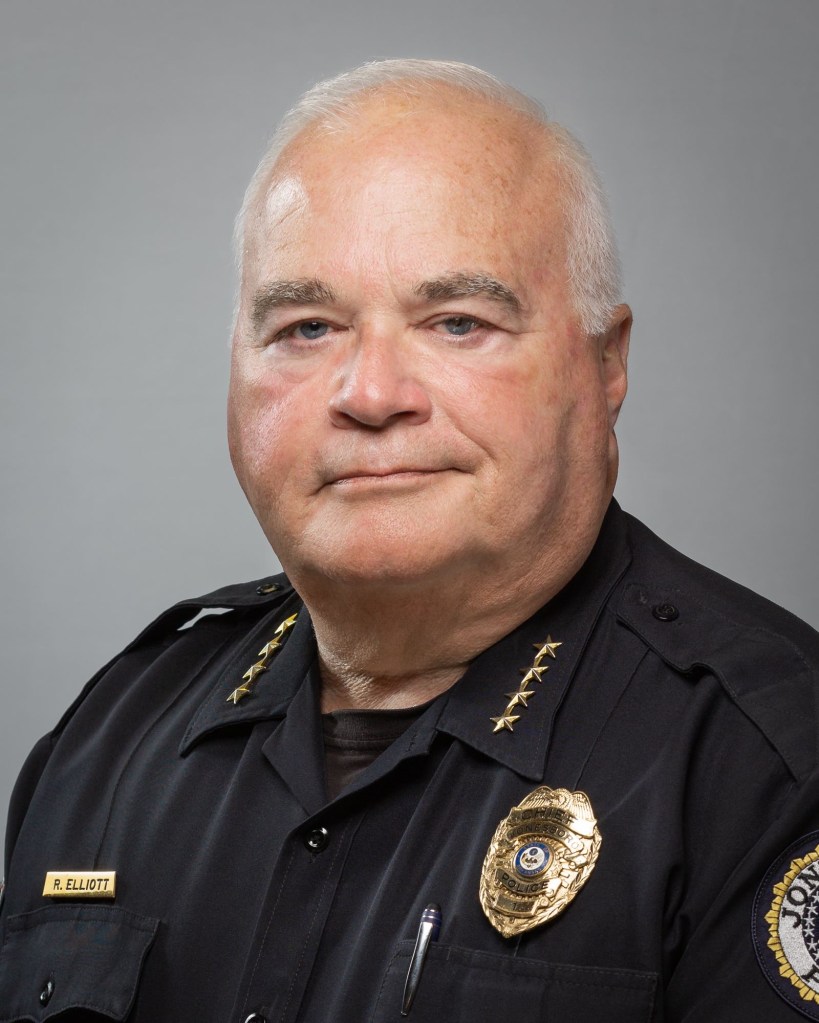
JONESBORO, Ark. – Jonesboro Police Department Chief Rick Elliott requested the city increase the salaries for police officers due to inflation, salary changes across the state and recruitment problems.
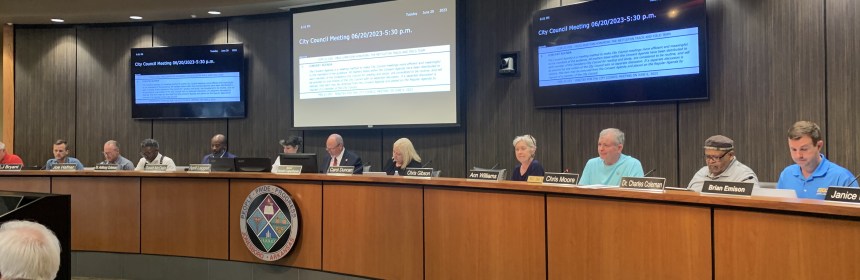
Elliott spoke made the requests during the Public Safety Council Committee meeting to discuss the Police Pay and Retention Plan on Tuesday.
“We’re seeing the same problem here in Jonesboro, trying to recruit and retain quality officers. So, we just kind of laid out tonight, the makeup of the department, the number of losses over the past several years and what can be done to address that,” Elliott said.
“We’re seeing the same problem here in Jonesboro, trying to recruit and retain quality officers.”…
– Rick Elliott, JPD Police Chief
JPD Chief Rick Elliott
Elliott said over the past 18 months, 35 officers left the department. Some quit, others retired and a few were fired. He said he believes many officers left because of pay.
“I know several officers that have applied with the Arkansas State Police and again, their pay scale compared to any other state in the state is as off the chart. And you know, I can’t necessarily compete with that,” he said.
He said he wants to provide competitive salaries in order to keep officers, not only from leaving for other forces, but also for leaving to work other jobs that pay more than law enforcement.
Mayor Harold Copenhaver said police salaries have increased since his election.
“We have the largest police force in this part of the state of Arkansas with 175 officers, and I take pride in that. So, when I became mayor, then we have made substantial adjustments to police pay,” he said.
“We have the largest police force in this part of the state of Arkansas with 175 officers, and I take pride in that. So, when I became mayor, then we have made substantial adjustments to police pay.”
– Harold Copenhaver, Mayor of the City of Jonesboro
Jonesboro Mayor Harold Copenhaver
Even with these adjustments, Elliott said salaries still need to be raised in order to compete with other Arkansas police departments that also are making adjustments to salaries.
“Not five months ago, we were in the top five when it came to starting pay in the state of Arkansas, and now we’re in the middle to lower area of that just in four months,” he said.
The police department is also dealing with issues regarding applicants. Out of the 130 applicants this year, only six have met the department standards.
“We see a lot of applicants. But at the end of the day, they don’t meet our standards to go to work here,” Elliot said.
Additionally, Elliot said some officers leave the force due to the traumatic nature of the job. “These officers go to work and the things that they see day in and day out, is very troubling to them. I mean, we’re seeing bad accidents, we’re seeing death cases. You know, and it’s hard for them to emotionally process,” he said.
Councilman Brian Emison, Ward 1, Position 2 seat, attended the Public Safety Council Committee meeting. He said he believes police salaries need to be adjusted.
“The world has dramatically changed, especially in regards to inflation and in pay, and these are the individuals that allow us to go to sleep at night and able to rest in our beds and not have to worry,” Emison said.
“The world has dramatically changed, especially in regards to inflation and in pay, and these are the individuals that allow us to go to sleep at night and able to rest in our beds and not have to worry.”
– Brian Emison, Public Safety Councilman
He said, as a councilman, he wants to do what he can to address issues and take care of the needs of law enforcement and first responders.
Councilman Brian Emison, Ward 1, Position 2 seat
“No matter how much money we ever pay them, it’ll never be enough for what they do and the sacrifices their family makes. So, just being able to show our appreciation to them and also being able to provide safety to the citizens of Jonesboro, I think should be the utmost priority, because what is a quality of life if you can’t preserve life at the end of the day,” he said.
Elliott said he feels hopeful his issues will be addressed.
“Now, I’m a realist about things and I think we can come to a compromise to have something that will suit the needs of our people,” Elliott said.
The Public Safety Committee Council plans to either begin the next meeting earlier or call a special session in order to have more time to address the department’s issues.
“I believe in our police officers and I believe in public safety,” Copenhaver said.
Caroline Cherry Averittis a junior at Arkansas State University from Jonesboro, Arkansas. Her major is multimedia journalism with a minor in writing studies concentrating in creative writing. She can be reached at: caroline.averitt@smail.astate.edu
JONESBORO, Ark. – A nearly two weeks after Hurricane Hilary brought torrential rain and gusty winds to Baja Mexico and Southern California, Floridians take shelter as they brace for Hurricane Idalia to hit the state. This year National Oceanic and Atmospheric Administration (NOAA) forecasters with the Climate Prediction Center, a division of the National Weather Service, predict near-normal hurricane activity in the Atlantic. The hurricane season runs from June 1 to November 30.
Although hurricanes form in the Oceans and primarily the Atlantic, thunderstorms and tornadoes are often spun into neighboring states. Earlier this year, two tornadoes, both EF3s, hit the Little Rock area and later the city of Wynne on March 31, causing extensive damage.
Although there wasn’t much severe damage from the storms in northeast Arkansas region, the area received plenty of weather alerts. However, a late season outbreak of tornadoes on December 10, 2021 caused extensive damage to the city of Monette. Along with the previous year’s EF3 tornado on March 28, 2020 which hit the city of Jonesboro and including the Mall at Turtle Creek in Jonesboro, severe weather preparation is more pertinent than ever.
There are multiple ways to prepare for severe weather, and finding the proper shelter as well as insurance in case of damage to personal property are among the most important.
Craighead County Judge, Marvin Day, stated that when the county is under a severe weather warning, especially for tornadoes, they activate the Emergency Operations Center. During severe weather, the center monitors weather conditions so they’ll be able to alert proper officials or departments that need to take action.
Officials regularly make sure that highway and road departments is prepared so that they can clear roadways of debris and fallen trees if needed. They also keep the general public informed of weather conditions and significant damage.
Another significant aspect of severe storm preparation is insurance. Depending on the individual policy, insurance could possibly help a person to get back on their feet if their personal property is damaged by a severe storm.
INSURANCE
According to local insurance agent Randy Smith, insurance rates and claims generally increase after a natural disaster. However, factors of rates and claims vary significantly across agencies and policies, and one important factor is based on losses and how much the company has to pay out.
Additionally, severe storms can cause claims to still come in years after the fact. For instance, Smith’s office is still seeing claims from a hailstorm on April 15, 2022. This is usually due to the recent high winds which can blow off roof shingles, and when roofers repair the damage, they may find additional hail damage that hadn’t been seen before.
“Make sure that your company but even more so that your agent that you have, that they are preparing you to make sure that you at least have the opportunity to have the coverages that you are going to need when this event occurs.” Smith said in order to prepare for a severe weather event.
“Make sure that your company but even more so that your agent that you have, that they are preparing you to make sure that you at least have the opportunity to have the coverages that you are going to need when this event occurs.” Smith said in order to prepare for a severe weather event.”
– Randy Smith, Insurance Agent
He explained that his office uses “the doctor’s approach.” They begin by asking a series of questions, the customer explains their situation, and the agent gives their professional opinion about what they believe the customer needs.
The price is never discussed as the agent is often focused on customer needs for a particular situation. It’s entirely up to the customer whether or not the price is worth what the agent offers them.
According to Smith, most customers are only concerned with getting the best product for the least money, but it’s also important for the person to consider what kind of situation they’ll be in with whatever they bought if they suffer a disaster. The agent’s intention should be to educate the customer about that situation and prepare them.
After a disaster, the customer can go through the claims process. If a house is uninhabitable due to severe weather, and if it’s offered in the policy, the person can be given some money to live in a hotel or apartment: this is called additional living expenses. Also, if a car is damaged and the person has rental car coverage, they can get a rental car for the amount that the specific policy offers.
In his office, Smith says that customers can call the agent to have them involved in the process by filing the claim for the customer and then the agent can continue to check up on the customer after the fact. However, the office doesn’t have the authority to make determinations on claims or pay out money. That happens from the company; the agent acts as a liaison between the company and the customer.
FOOD NEEDS
However, insurance isn’t the only way to recover after a disaster. There are many charity and nonprofit organizations that offer relief to victims of severe weather in the Northeast Arkansas area.
According to chief executive director Christie Jordan, the Food Bank of Northeast Arkansas makes sure that affected families have food after disasters. They reach out to the community to supply water and snacks to victims and volunteers helping clean up. During the recovery period, they provide families that are rebuilding their lives with food.
Their response changes based on what the community in question needs. They often work through their network of partner agencies and local churches to distribute food. They currently have a distribution center set up in Wynne to receive and donate food to victims of the recent tornado. They work with city officials to ensure that resources get to the right places.
The Food Bank of NEA works closely with other Feeding America food banks in Arkansas and other states and are part of a disaster preparation cohort to work together and plan in advance. They make sure that supplies are already staged in various locations so they can respond quickly as they did in Wynne.
Another organization that helps after disasters in the general area is the Arkansas Southern Baptist Convention Disaster Relief. They’re based in Little Rock, but they have units situated all over the state, including several in the Northeast Arkansas area.
According to Randy Garrett, the disaster relief director for the Arkansas Baptist State Convention, their main job is to supply resources to the public after a disaster. Primarily, they do feeding as well as chainsaw work and flood recovery. They also have incident command to provide leadership and guidance after a disaster.
Randy Garrett
The organization is part of the North American Mission Board Send Relief. They can reach out to other organizations across the state or in other states for help if needed. There are several thousand of these organizations. The Arkansas Baptist Disaster Relief has traveled to help other states as well, such as during Hurricane Sandy.
They also have chaplains, and they provide the training for the chaplains themselves. The chaplains talk to the public during a crisis to listen to the survivors and help them work through it.
They have a new program called the Box Ministry where they help victims sort through the wreckage of their home after a disaster to find keepsakes and other important belongings. They bring boxes to contain the findings. While they’re helping, they spread the message of Christ.
Sometimes this process can take several days. They help to put the box in a safe place until the victims can start to rebuild their lives.
Arkansas Baptist Disaster Relief usually comes in right after the first responders. They stay in that community for as long as it takes to get people taken care of. Currently, they’re still sending teams into Central Arkansas and Wynne to help after the tornadoes.
Each worker has to get trained. Arkansas Baptist Disaster Relief hosts training events across the state. They also provide all the necessary personal protective equipment. They currently have over 2,500 volunteers. They also work alongside other churches in the local area of the disaster that want to help.
“There’s other avenues to help people in times of crisis, but I think the main thing is faith is very important. I’ve seen it move mountains,” Garrett said.
“There’s other avenues to help people in times of crisis, but I think the main thing is faith is very important. I’ve seen it move mountains,” Garrett said.
– Randy Garrett, Director of Disaster Relief
“People of Arkansas are very resilient. You think…how will they ever recover? And you go back maybe six months later and you see the rebuild process…they really bounced back and they’ve got their lives back. It’s just a tribute to the guys and ladies of Arkansas…when something happens, we’re down, but we’re not out.”
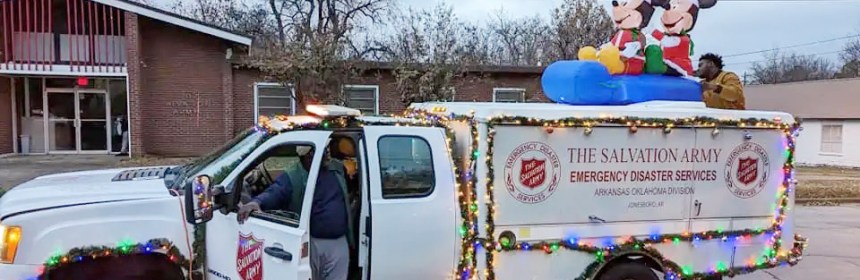
The Salvation Army in Jonesboro is another organization that offers disaster relief. They serve eight surrounding counties with a staff of three, and usually about fifty to sixty volunteers during the holiday season and fifteen to twenty-five the rest of the year.
Captain Charles Smith and his wife Captain Teri Smith are the commanding officers. According to Charles Smith, his team goes on on-site as soon as a natural disaster happens. They offer food to both victims and first-responders. Their Disaster Mobile Canteens also provide things like water and coffee.
They also offer emotional and spiritual care. They go out and talk to people to encourage them and listen to them.
After an initial hit, they help do long-term recovery work. For instance, the divisional disaster director Laurie Fried and her team based in Oklahoma City have been traveling several times a year to visit those affected by the tornadoes in the Trumann area a couple of years ago.
“What they offer is solutions to help people get back on their feet,” Smith said. “Whether it’s through monetary donations or gift cards or other ways to help meet their needs. We work alongside…other agencies…to help get people back on their feet and get them established again, getting them into homes, getting them relief, whether it’s through food, financial assistance with rent or utilities, things of that nature.”
The agencies that Salvation Army works alongside include Samaritan’s Purse, Red Cross, and the Baptist Foundation.
Although natural disasters are undoubtedly devastating, there are many organizations willing to help those affected and also ways to help oneself be prepared before a storm.
Avery Jonesis a sophomore in the Department of English and Philosophy at Arkansas State University in Jonesboro. She can be reached at: avery.jones@smail.astate.edu
JONESBORO, Ark. – Local journalist and author George Jared is set to deliver a presentation on investigative journalism at Arkansas State University in the auditorium of the Rent Student Union Center on Tuesday, February 7. The public event is from 6 to 8 pm and coincides with the 50th anniversary of the U.S. Senate’s unanimous vote to create the select committee to investigate the Watergate break-in.
As a journalist, Jared has been covering topics like crime, business, politics, government, healthcare, entertainment, and agriculture for nearly 20 years.
Journalist and Author George Jared
He has won several awards for his writings, including first place awards from the Associated Press Media Editors. He has also written novels, hosted podcasts, and been interviewed by a variety of newspapers and podcasts. Jared has given two presentations at CrimeCon, an immersive, weekend-long true crime convention that brings together thousands of fans of the genre.
He has written most extensively about the Rebekah Gould murder case and the West Memphis Three. The Gould case was featured in two of his books, The Creek Side Bones and Whispers in the Willows, as well as news articles. Jared wrote 100 articles about the West Memphis Three and chronicled his experiences in another book, Witches in West Memphis.
Jared started his career as a journalist in 2004. He is a graduate of Lyon College with a major in history and a minor in political science. He originally thought he wanted to be a lawyer.
He won awards participating in moot court during college and enjoyed it. However, he stated that he met “some miserable lawyers” and became disillusioned with the career. He always knew, though, that he wanted to be a writer of some kind.
Born in Lubbock, Texas, Jared spent his childhood in Salem, Ore. as a kid, where he loved reading and writing. When he was a teenager, he lived in Salem, Ark., and wrote for the newspaper at his high school.
After he graduated college, he started writing for the newspaper in Salem, Arkansas, then soon got a job with Gannett, where he worked for a year. However, he missed his former boss, David Cox, so he decided to return to Salem.
Unfortunately, there were no writing jobs available, so he had to take a sales job, and he wrote on the side. He worked in sales for a couple years, then took a writing job with the Jonesboro Sun.
In 2004, while working at the newspaper in Salem, Arkansas, he began covering the Rebekah Gould murder case from Melbourne, Arkansas. This would be the first murder case he would cover.
When Gould’s murderer, William Miller, confessed in 2020, he said that he hated Jared. He confessed on November 7, Jared’s birthday, and was in Cottage Grove, Oregon, near where Jared grew up.
“That was very ironic for me,” Jared said.
Jared covered Miller’s trial in court. He was sitting with Dr. Gould, Rebekah Gould’s father, when Gould gave his victim impact statement. According to Jared, Miller didn’t look at Dr. Gould, but stared at Jared instead.
The case Jared has written about the most is the ‘West Memphis Three’. “That case has taken me all over the country and the world because of how insane it is,” he said.
He interviewed Damien Echols on Death Row in 2010 and is still keeps in contact with him today. The pair ate dinner together in Memphis in June of last year.
He also interviewed Terry Hobbs, the stepfather of one of the victims, who has been a suspect in the case. According to Jared, Hobbs rarely agrees to interviews. Jared recorded the interview over Zoom so that he could present the video at CrimeCon 2020, where it was analyzed by Jim Clemente, the executive producer of the TV show “Criminal Minds.”
While Jared’s investigative journalism has been a significant part of his career, he has reported on a variety of subjects. His areas of expertise are business, politics, entertainment, and even agriculture. He said that his favorite thing to write is feature stories.
Currently Jared writes for a company called Talk Business & Politics based in Little Rock, where he covers mostly business and politics in northeast Arkansas. A significant part of that is agriculture.
According to Jared, the Arkansas Farm Bureau told him that he’s the only reporter in the state who still covers subjects like soybeans, rice, and cotton. Jared can also sometimes be heard on early morning agriculture talk radio shows.
He has also interviewed several high profile politicians such as Sen. Tom Cotton (R) , former Gov. Asa Hutchinson, and has met a few presidents. He has done stories with celebrities like William Shatner, Barbara Eden, Johnny Depp, Eddie Vedder, and Natalie Maines.
Jared also interviewed Bob Dorough, famous jazz pianist and composer and performer of several Schoolhouse Rock! songs, a week before he died in 2018. Dorough was an Arkansas native, but had been all over the world. According to Jared, Dorough refused at first to do the interview with Jared, but called him not much later to take up the offer.
Jared wrote a series of articles about Holocaust survivors and included their stories in his book Whispers in the Willows. The Black River Technical College in Pocahontas, Arkansas, would host a Holocaust survivor for presentations once a year.
Jared covered Henry Greenbaum and Estelle Laughlin. He had visited some concentration camps during college and admired Greenbaum’s story.
“That story ripped my guts out,” Jared said.
Today, Jared rarely writes crime stories for work since the newspaper he currently writes for doesn’t cover that. However, he’s currently partnering with a criminology professor named Jennifer Bucholtz to cover crime on the side.
Bucholtz currently works for the American Military University. She was previously a counterintelligence officer in the U.S. Army. Bucholtz once heard Jared on a podcast discussing the Gould case and wanted to use it for a case study in her classroom.
She emailed him to talk, and the first time they called each other, they talked for over 3 hours, according to Jared. They decided to work together because their areas of expertise are different enough that they’re able to supplement each other’s work.
“Immediately I knew that she was a deadly serious human being,” Jared said. “She’s a wonderful writer…and very well-spoken.”
Together, they developed a criteria for deciding what cases to pursue. They also have a network of people to consult–for example, a knife expert and an arson expert. People send them cases, and they put them through their vetting process.
The criteria they use include solvability, family buy-in, and access to case files. According to Jared, if a case is’t solved, it’s usually because an investigator missed an important detail. If the case meets all the criteria, they’ll start investigating it.
They worked together on Gould’s case and made a Facebook page for discussion. A year before he was arrested, the killer had been posting theories about her death on the page and even direct messaging both Jared and Bucholtz. They presented the Gould case at CrimeCon 2021.
They’re currently working on two new cases: the murder of Judy Petty from West Virginia and the murder of Linda Malcom from Washington, both in 2008. They’ll host a podcast covering it, and Bucholtz is planning to write a series of articles about it for the American Military University magazine.
Jared has worked with a few other people in addition to Bucholtz who have furthered his career. He stated that his first boss, the editor of the newspaper in Salem, Arkansas, David Cox, taught him how to be a journalist.
“He kind of took me under his wing,” Jared said. “He taught me how to write. One thing I learned early on in journalism…is always tell a good story.”
“He kind of took me under his wing,” Jared said. “He taught me how to write. One thing I learned early on in journalism…is always tell a good story.”
– George Jared
He also admired two professors he knew at Lyon College, Dr. Scott Roulier and Dr. David Harrison. Roulier was his moot court coach and constitutional law professor, and Harrison taught him about writing and history.
Jared also finds inspiration in literature. James Michener and Sir Conan Doyle are among his favorite authors. The novels Raintree County by Ross Lockridge Jr. and Dracula by Bram Stoker are significant for him.
Jared’s education at Lyon College and brief interlude as a salesman were beneficial for his career as well. He finds that he’s able to use his skills in history and political science for his stories. He likes to do research on the background of a story and then incorporate that into his writing.
“I wrote a story about rice one time, and what I did to start the story is I went into the history of humans cultivating rice,” Jared said. “I would find some nuanced way to get into the story.”
He uses the skills he learned as a salesman when he’s interviewing and getting information out of sources. He found that the aggression used to get someone to buy something they don’t want is necessary when talking with people who don’t want to talk.
Jared stated that when he’s faced with difficult situations, he never hesitates to do what’s important. For instance, he’s not afraid to ask tough questions during interviews or take pictures of people mourning over their loved ones.
“People have asked me, ‘Don’t you feel callous in those moments?’” Jared said. “And I’m like, ‘No.’ I said, ‘We have to document that type of history…sometimes you gotta do the tough thing.’”
“People have asked me, ‘Don’t you feel callous in those moments?’” Jared said. “And I’m like, ‘No.’ I said, ‘We have to document that type of history…sometimes you gotta do the tough thing.’”
– George Jared
To aspiring journalists, Jared said to write for their reader and think about what the reader would find interesting. It’s important to open the story with a good hook or the “magic moment” that would pull the reader in.
Jared will be hosting a presentation at Arkansas State University on Tuesday February 7 for anyone who’s interested in his work. He plans to talk about his experiences as a journalist and his two most prominent cases, the Gould case and the West Memphis Three.
Two professors from the faculty are planning to attend. Mr. Terrence Armstard, a journalism instructor, will be introducing Jared and Dr. Angelo Brown, a criminology professor, will be doing the Q&A at the end.
“I think it’s great for Mr. Jared to come and share his experiences as a professional journalist with our students,” Armstard said. “His background as a true investigative journalist and author as well as having a podcast reveals to students the plethora of career possibilities available as a journalist.”
“Journalists like George Jared can greatly impact the criminal justice system in a positive way as it can help highlight errors in the system to push reform forward and highlight bad actors within the system,” Brown said. “As Jared’s work has highlighted the errors in the West Memphis case and the violation of the civil rights of the defendants, there are countless examples of justice being brought through the help of journalism.”
Avery Jones is a sophomore in The Department of English and Philosophy at Arkansas State University in Jonesboro, Arkansas. She can be reached at avery.jones@smail.astate.edu
JONESBORO, Ark. – On Monday, in Sacramento Cali., David Mora Rojas walked into The Church in Sacramento and killed his three daughters, Samarah Mora Gutierrez, 9, Samantha Mora Gutierrez, 10, and Samia Mora Gutierrez , 13, along with their court appointed chaperone, 59-year-old Nathaniel Kong, before killing himself.
Rojas had a restraining order at the time of the shooting, which did not allow him to see his children without supervision. Currently, no clear motive has yet been discovered or confirmed.
Earlier this year, in Colleyville, Tx., 44-year old Malik Faisal Akram, a British citizen had taken a rabbi and three other hostages at the Congregation Beth Israel synagogue. Akram demanded the release of convicted terrorist Aafia Siddiqui who was being held at Carswell Air Force Base near Fort Worth. After a 10-hour long standoff, the hostages were rescued and Akram was dead.
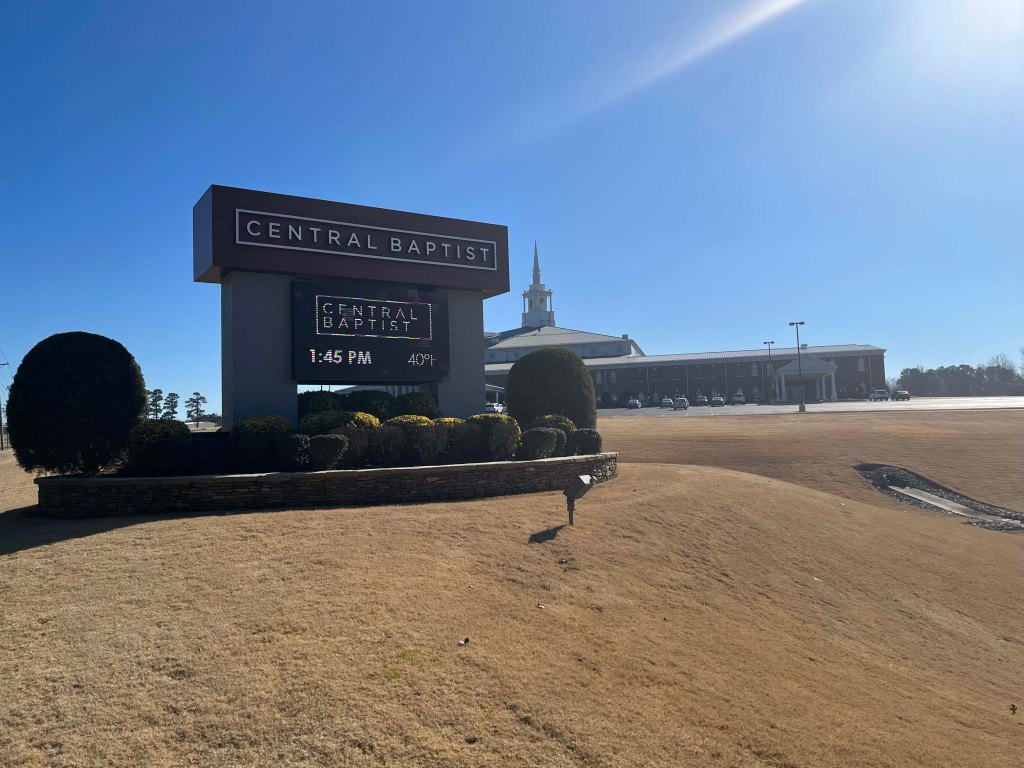
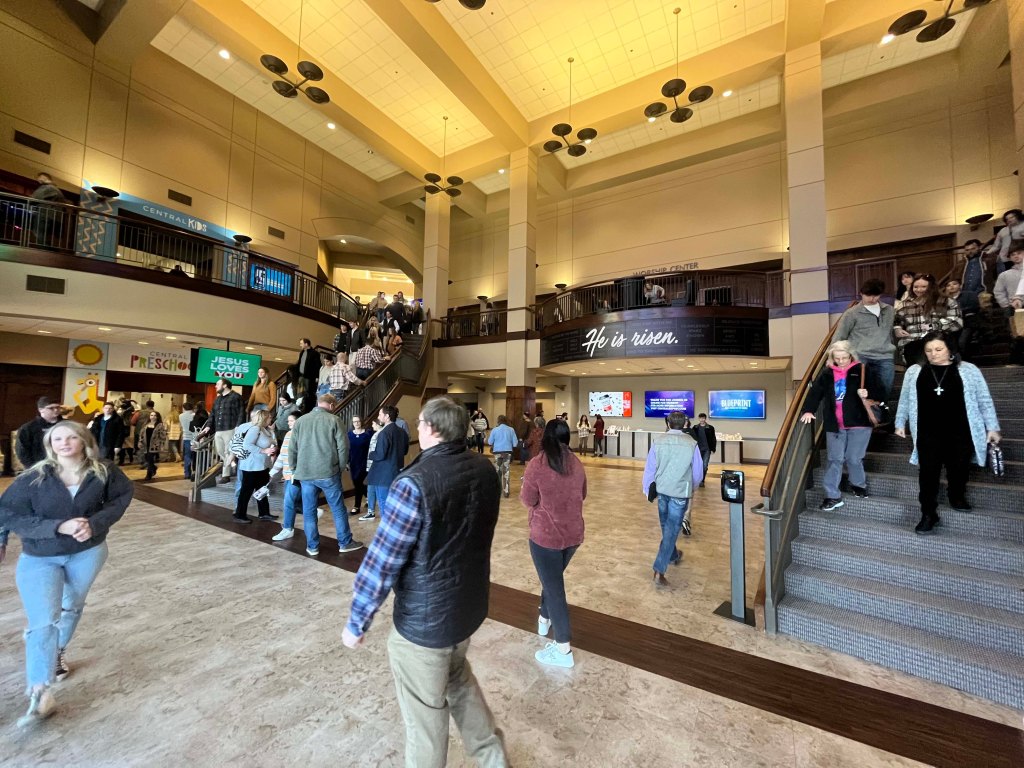
Central Baptist Church in Jonesboro, Arkansas. Photo by Garrett Hatcher
According to an FBI database, in 2020 around 1244 cases of anti-religion hate crime incidents occurred in the United States with anti-Jewish crime having 683 incidents alone. An earlier FBI report, stated crime against places of worship have surged by 34.8% between 2014 and 2018.
With increased crime against and on the grounds of many religious institutions, people of faith have decided are deciding be more proactive by taken preventive measures. In northeast Arkansas many churches have turned to the police and specialized training for protective measures and security.
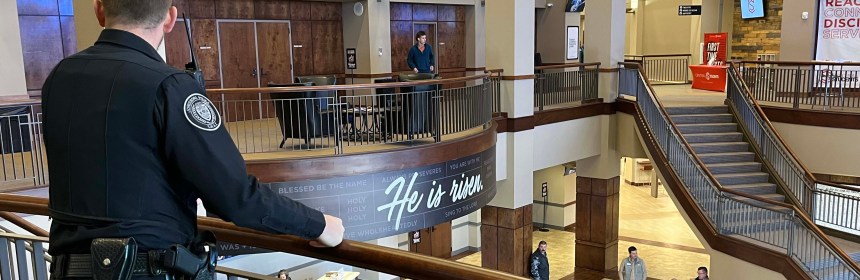
According to Patrol Sgt. Rodney Smith of Jonesboro Police Department some churches have contracted off duty officers to serve as “traffic control officers and figureheads of force” at local places of worship. Local churches such as First Baptist Church of Jonesboro, Journey, Central Baptist, First United Methodist Church, Highland Drive Nettleton Baptist Church and Southwest Church of Christ contract off-duty officers. The contracted officers are typically members of their respective congregations. JPD Police Officer Patrolman First Class Colton Brown attends Central Baptist and is one of the rotating officers for Sunday and Wednesday worship services. Smith said that Brown, along with the officers, are paid by their places of worships.
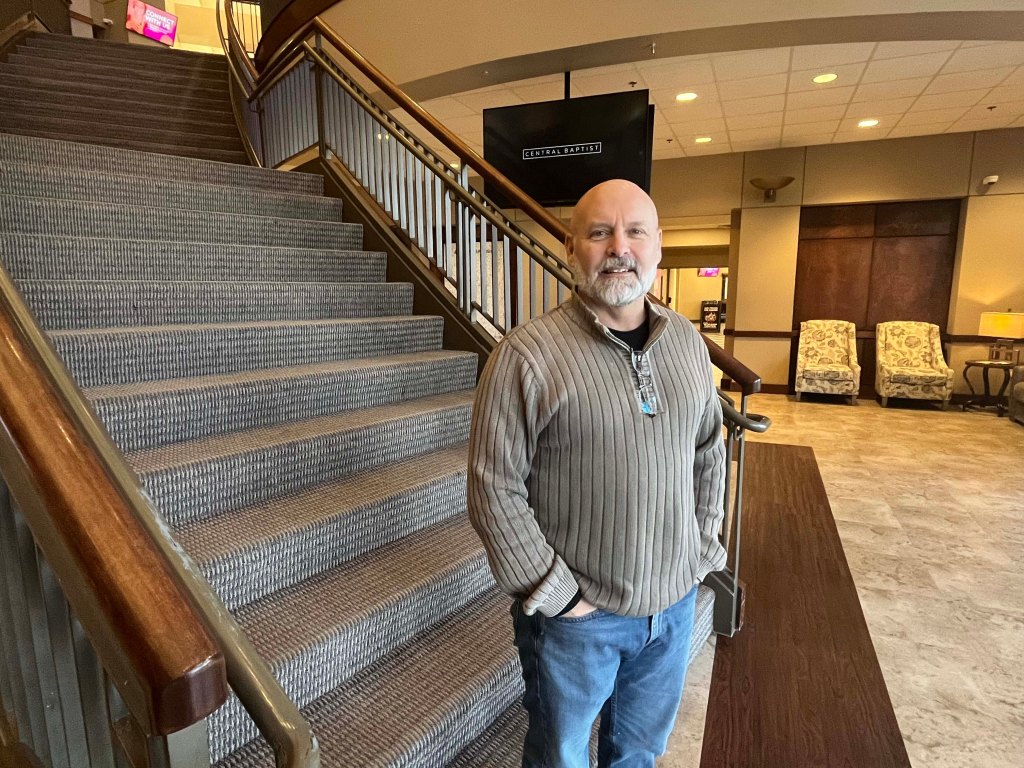
Don Blackmore, adult discipleship pastor at Central Baptist Church in Jonesboro.
Central Baptist takes their security a step further with more elements of security along with cameras and contracted officers. According Adult Discipleship Pastor Don Blackmore, the church may have up to six rotating non-paid safety teams made up of off-duty officers, former military, paramedics, doctors and civilian members of Central Baptist. Known as a safety team, the group also undergoes training by local instructors from JPD, Craighead Sheriff’s Department and Black River Technical College.
“We try and prepare them for knowing what to look for, how to respond, how to deescalate and how to manage things properly,” said Blackmore. He said that the volunteers must go through periodic training before and after becoming part of the safety team.
Central Baptist also hires the Stop the Bleed organization to train people to learn how to stop and control serious bleeding. Central Baptist volunteers undergo an extensive background checks and must fill out a questioner before being accepted for training.
Members attend service at Central Baptist Church in Jonesboro, Arkansas. Photo by Garrett Hatcher
“I don’t know if anyone takes it more seriously than we do. The safety of our congregation and making sure that we want to do everything we can to ensure a safe worship environment,” Blackmore said.
“I don’t know if anyone takes it more seriously than we do. The safety of our congregation and making sure that we want to do everything we can to ensure a safe worship environment,” Blackmore said.
– Adult Discipleship Pastor Don Blackmore, Central Baptist Church
As for how others feel about the safety team, Senior Adult Pastor Jay Jacobs stated, “I think they feel very safe also, our security team not only gets just people that come in, but also handle emergencies and when you see a team of people going to somebody’s aid, its makes us feel very secure.”
Members also feel secure and support from the volunteers while in attendance. “Generally, I think most of the members appreciate the fact there’s greeters and we always feel very supported,” said Central Baptist member and volunteer.
Fullness of Joy Ministries has a similar system when it comes to their security as they also have a volunteer training program. The volunteers are instructed and trained by a local police officer on what to look for and how to handle certain situations.
According to Pastor Adrian Rodgers the security volunteers are allowed to conceal and carry firearms. However, volunteers must undergo a background check and have a valid gun permit if they wish to conceal and carry at Fullness of Joy Ministries.
“I think it’s sad that we’re in the place now where we have to have them, but I do understand that we are in the place where we have to have them, but I certainly do think it’s sad,” said Rodgers. “I certainly wish that we did not have them.”
Religious institutions may have varying ways of defending and securing the safety of their members and institutions from manmade threats, but they all do pray for a day they won’t have to anymore.
Note: Featured Photo shows JPD Patrolman First Class Colton Brown standing watch at Central Baptist Church in during worship service. Photo by Garrett Hatcher
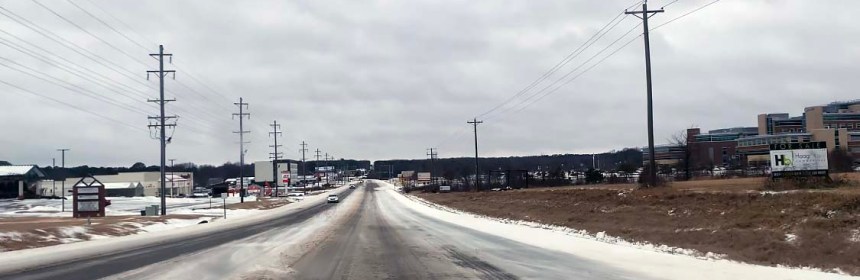
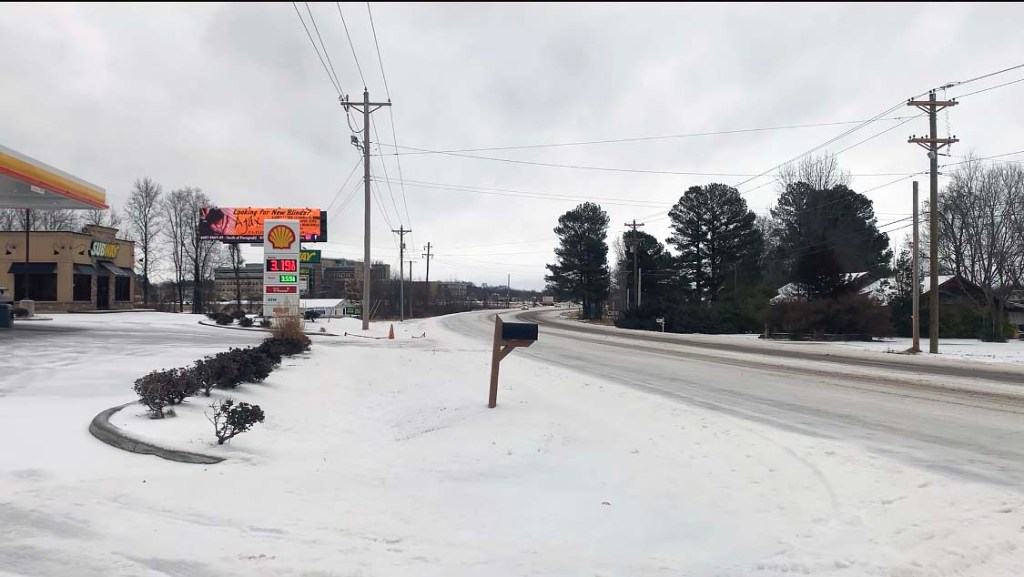
City employees work clearing the roads of ice during winter ice storms.
East Johnson Avenue is made accessible to traffic after members of the Public Works Department cleared the roadway of ice following a round of recent ice storms. Emma Allen/Delta Digital News Service
JONESBORO, Ark. – Before winter weather struck Northeast Arkansas last week, many people panicked to get to the grocery store. Others were preparing to help out the community in the storm.
There are essential workers that have the main goal of keeping the community safe. The Jonesboro Fire Department and the Jonesboro Street Department work in many ways to help enforce safety. By laying down salt and moving snow away from the roads, the street department and fire department stay busy during winter weather storms.
City of Jonesboro Street Director Steve Tippitt
Steve Tippitt, Jonesboro street director, described the process the street department goes through when dealing with winter weather.
“We put a chemical out that is magnesium chloride that sprays in our sand, and we spread the sand out for traction,” Tippitt said. “We will do that until we get to thinking we have to start plowing the streets, and then we will plow until we get it to where it is down thin, to where the sun will melt it.”
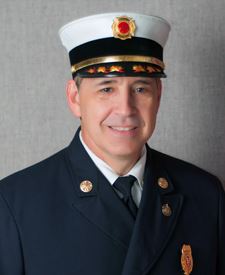
Jonesboro Fire Chief Kevin Miller said his department runs preparations with a lot of their equipment, trying to make sure everything is ready to go winterized. They follow procedures to make sure the firefighters are ready for anything as well.
“The main goal is to make sure we are able to respond. Plain and simple,” he said.
City of Jonesboro Fire Chief Kevin Miller
Arkansas weather is unpredictable. The public safety departments throughout Jonesboro have to be ready for anything, at any given moment.
Caitlynn Hill, junior at A-State, explained, “I commute to campus every day, so I knew it was going to be tough when the storm came to get to school. I am thankful for the essential workers that help clear the roads and make safety a priority in this community.”
Arkansas State University opened up for school again today following the second round of winter weather. The hard work and efforts of the public safety departments allowed citizens to stay safe during the winter weather storm.
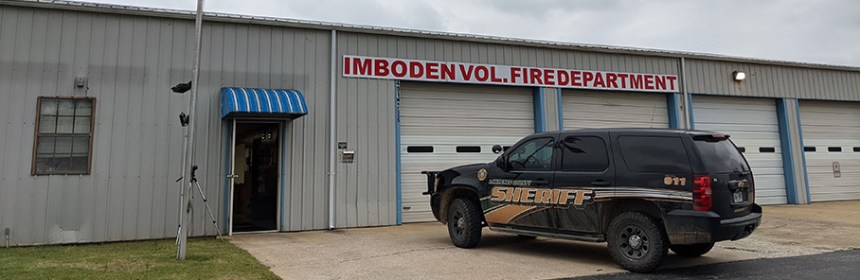
IMBODEN, Ark. — The Imboden Fire Department will achieve the second lowest rating possible from the Insurance Services Office (ISO).
“An ISO rating is your ability to do things with your fire department,” said Imboden Fire Chief Jim Jones.
“Based on those ratings, you get a score and that affects the insurance on your homes, businesses, and those types of things,” he said.
The Imboden Fire Department lowered its ISO rating from three to two. The new rating will take effect Dec. 1.
ISO ranks fire departments from one to 10, with one being the best and 10 not meeting basic requirements. A score of five or higher is good, three is great, and one or two places the department among the best in the nation.
This means property owners in Imboden could see lower rates in the coming year. Insurance companies use ISO’s ratings to determine homeowner insurance rates.
Imboden Mayor Chris Jones said, “It saves people money because of our ability to put out structure fires. It also saves on property losses.”
ISO judges fire departments all across the nation on four categories: fire equipment and staffing/training (50 %), water supply (40 %), and efficiency of emergency communication (10 %). The mayor said the fire department improved in all four categories since the last time they received an ISO rating five years ago.
“If there should be an incident,” Jones said, “I think they’d feel comfortable that we’re going to be there as quick as we can with good equipment that’s going to work, we’re going to have a water supply, and the firemen are going to do their job and save their property.”
The Imboden Fire Department has 25 volunteer fire fighters. None are full-time, so many are retirees or work other jobs. Jones said they all care about the community and work hard to protect it. The fire department hosts training meetings once a month along with occasional special training.
“It makes me feel good as the mayor that we have one of the best fire departments in the state, especially for our size,” the mayor said.
It’s uncommon for a small town to reach such a low ISO rating. Maumelle has a population of over 18,000 and the Maumelle Fire Department was given an ISO rating of 2 in 2017, while Imboden’s population is under 700.
The Imboden Fire Department has gone through a few changes since the COVID-19 pandemic began. Along with wearing masks and socially distancing at meetings, Jones said they sometimes get paged to medical calls for which they don’t have the proper equipment to protect themselves. They worry about exposing their families as well. Jones and the mayor are very proud of the volunteers for achieving such an accomplishment even through the struggles the year has brought.
“I’ve been here for about 56 years,” Jones said. “I saw it basically from the beginning to now, and obviously, I’m very proud.”
Jones joined the Imboden Fire Department at 16 years old. After watching the fire fighters, he became interested in participating. He’s been involved with the fire department ever since with an exception to the time he spent in the military.
“Back then we didn’t have any equipment to wear,” Jones said. “We didn’t have any training. It was just a bunch of citizens that wanted to help the community.”
Note: Featured photo and video by Courtney Edwards.
By Crystal Carter Harrell
Delta Digital News Service
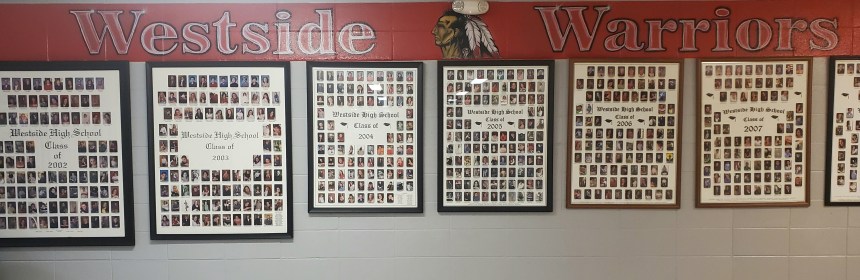
JONESBORO – Two 17-year-old male students at Westside High School exchanged a loaded .22 revolver at school on Jan. 23 and are now said to be expelled.
School Supt. Scott Gauntt said the school district has strict procedures about what can be done and when it can be done. Those procedures have not yet been met.
“We have not been able to hold a hearing. We can’t hold a hearing without them having the ability to come and stand up for themselves,” Gauntt said.
Dakota Hays gave a gun to fellow schoolmate Patrick Houston in the boys’ bathroom. Houston allegedly wanted to kill a 16-year-old co-worker who also attended the school according to a previous KAIT8 report.
Craighead County Division 4 Second Judicial Circuit Judge Cindy Thyer found probable cause to charge them both with conspiracy to commit capital murder and possession of a firearm on school property. Judge Thyer set bond at $250,000 each and ordered them on house arrest should they make bond.
Hays and Houston still remain in jail and have not made bond.
Ryan Tolbert, Westside Schools security director, began employment in the school district four years after the 1998 Westside Middle School shooting. Tolbert said the situation started and began within seven minutes.
“In this particular situation, no students were injured. Everyone was safe. It happened quick. It ended quickly,” Tolbert said. “It’s stressful. You have to make the best decision possible in a short period of time.”
District Treasurer Bill Breeden said the two students will no longer be part of the school district.
LONOKE – With the holiday season upon us, large fire hazards enter homes across America in the form of festive decorations.
The tradition of the Christmas tree dates back to the 16th century, and many still prefer a live tree over today’s artificial models. Truth is, both could be a hazard in homes. Jennifer Winchell, a Little Rock firefighter, experiences many fires each year due to holiday decorations.
She said, “Christmas tree fires are a huge issue because most people consider them to be safe and do not educate themselves about the dangers.”
Read on for some tips from the pros on how to stay safe this holiday season.
Hydrate your tree
Live trees need near-constant watering. Patty Hibbs’ husband owns Schilling’s Family Christmas Tree Farm in Lonoke, and she works in their office. She said they work all year to ensure the freshness of each tree on the lot.
“It’s a year-round job. We have to water them, fertilize them; my husband has to sheer them three times a year,” Hibbs said.
After cutting the tree from its roots, the job becomes much harder. Hibbs said cutting causes the sap in trees to seal the trunk, making it more difficult to get water in.
Get your tree in water as soon as possible to keep it from sealing and drying out. The drier the branches become, the higher the chance of a fire. Most purchase tree stands that hold water to help with this, but the owner must remember to keep the stand filled with fresh water. Pets may also get into a tree’s water supply, so be sure to keep an eye on them.
Becky Smith and her family purchase a live tree each year from Schilling’s.
“We keep it watered. Sometimes I put Sprite in the water,” she said. “It gets dry by the end of the year, but we’ve never had any problems with it.”
The citric acid and sugar in Sprite may help preserve the tree longer, and it is not harmful to pets.
Be sure to dispose of the tree properly as soon as possible after the holidays.
Keep away from heat sources
The traditional picture of the Christmas tree next to a crackling fireplace may be the cause of many holiday fires. According to the National Fire Protection Association, one in four holiday fires occurs because of a heat source too close to a tree.
One stray ember could send the whole tree up in flames, so make sure to leave adequate room between any fire, including candles and the tree.
Hibbs recommends not placing your tree under a heating vent as well. Hot air dries out branches as it heats, making the chances of a fire increase.
Winchell said, “If you’re using a space heater, try to buy one with an automatic shut-off or tip over feature. Keep it at least three to four feet away from anything that could catch fire.”
She also said blowing out candles and unplugging lights when going to sleep or traveling helps to prevent overheating, which may cause fires.
Look for electrical hazards
The holidays often lead to crowded houses full of loved ones, but never crowd outlets. Circuits within those outlets only hold so much electricity, so plugging in one too many strings of lights may cause overheating in the wires. As the insulation on the wire melts, sparks may appear.
If the spark happens near a Christmas tree, whether live or artificial, it could ignite.
Winchell said, “It is very important to never overload a wall outlet or an outlet strip. Less is best!”
The NFPA recommends immediately replacing strings of lights with worn or broken cords or loose bulb connections and only connecting the number of strands recommended by the manufacturer of the lights.
Consider flocking
Flocking not only helps achieve the look of a snowy Christmas tree indoors, but it also protects against fires when done with the correct products.
Hibbs said, “It’s not like the spray can you get. It’s a commercial based flocking we use, and it does have a flame retardant in it.”
Schilling’s charges $9 per foot to flock a tree with their high-quality materials, but if someone wants to do it on their own, they should look for a product with a flame retardant included.
Be prepared
Christmas tree fires prove damaging nearly every time and sometimes even deadly. If something goes wrong, stay calm.
Winchell said, “If there is a fire, immediately remove anything you can (outside is best), and always have a charged fire extinguisher in reach.”
She also said look at batteries in remotes and light strings to check for corrosion.
The NFPA recommends regularly checking smoke detectors and sharing an escape plan with holiday guests. Ask guests who smoke to step outside and keep their materials on them and out of reach from children as well.
Note: Feature photo shows Schilling’s Family Christmas Tree Farm. The farm has been operated by the family for over 33 years. Photo by Tristan Bennett
POCAHONTAS – Law enforcement will be present during the first inaugural Novemberfest, making residents feel safer. The city will hold its first inaugural Novemberfest in historic downtown Pocahontas on November 1 through 2.
Co-Chairmen of the Novemberfest John Allen French said there will be law enforcement present during the festival. Pocahontas Chief of Police David Edington said there will be full-time officers, part-time officers and volunteer reserve officers at the festival. “Just for the general safety. It’s not anything dealing with the fact that we are afraid it’s going to get out of hand; there is still traffic around those areas, so it’s about safety and being visible.”
The streets that will be blocked off:
North Marr Street
West Pyburn Street
North Van Bibbber Street
West Everett Street
North Bettis Street
French agreed that there is a need for law enforcement at the festival, but doesn’t expect there will be any real need for them. “The last festival we had a police presence and nothing happened.”
Gypsy Girl owner Carrie Barnes said, “Its always good to have the police around during something like this; in case someone gets hurt or if something happens.” Barnes also said that Gypsy Girl will be opened during the festival and are expecting nothing to happen.
Another committee member Linda Bowling said, “We expect a large crowd. We have always coordinated with the city for any of our festivals in the event there is a problem.”
There will also be alcohol sold at the festival. Edington said he believes there will be an officer that will be assigned for alcohol beverage control.
“With regard to the festival tavern, we have all the proper permits, temporary alcohol sales and we’ve complied fully with the Alcoholic Beverage Control.” Bowling said, “I believe there will be paramedics there or at least easy access to our paramedics.”
French said there will be a lost and found and it will be held in the old court house. There will also be a member of the Novemberfest committee inside at all times.
Editor’s Note: Feature photo shows Pocahontas Courthouse Square. Photo by Maddison Smith