Category Archives: Public Safety

Medical Marijuana Forces Law Enforcement Changes

by Chase Gage
Delta Digital News Service

JONESBORO — The Arkansas Medical Marijuana Amendment passed during the 2016 election cycle. With implementation beginning, law enforcement agencies are shuffling to prepare for the changes they will soon experience.

In Arkansas, the medical use of marijuana is legal. However, the use, possession and distribution of marijuana for any purpose still remains illegal at the federal level in the United States. That alone causes issues for the legal implementation of medical cannabis.

“It’s still illegal federally and we don’t have it (recreationally) legal at the state level so we’ll continue to enforce the laws until they change,” said Jonesboro Chief of Police Rick Elliott. “You’re going to have to have your medical card with you if you get caught with it. If you’re medically qualified and all documentation is in order, you’ll be fine.”

Elliott said if a person has a medical card, they will face no issues if caught with legally obtained marijuana. However, impaired drivers will face repercussions, just as they would with other drugs or alcohol.

In simpler terms, don’t drive high, even with a prescription.

“We’re bringing the officers up to speed on recognizing driving while high. There’s technology being developed similar to the breathalyzer that can detect THC levels,” Elliott said. “These new strains are very high in THC content, which is impairing. We expect an increase in traffic accidents because of it.”

Currently, prescribed patients cannot legally possess marijuana. Patients must purchase the drug at a dispensary within the state of Arkansas for it to be legal. Two Hot Springs dispensaries have opened since May, selling 169 pounds of medical marijuana and earning more than $1 million in the first month of business. A Northeast Arkansas dispensary isn’t open for business yet.

13999431743_9854e1cab1_k

A cannabis prescription is just like any other prescription. Arkansans voted to legalize the plant medicinally in 2016. (Photo by Kyle Butler licensed under CC BY 2.0)

Corey Seats, Coordinator and Deputy Prosecuting Attorney for the 2nd Judicial District Drug Task Force, said the opening of the dispensaries, and thus the beginning of legal marijuana, will pose several issues for law enforcement.

“Normally you can search (a vehicle) if you smell marijuana,” Seats said. “If someone is pulled over and the officer smells marijuana inside the vehicle, his first question will be, ‘Do you have a medical marijuana card?’ If they say yes, can you search? How is that going to impact probable cause?”

Drug dogs and K-9 units will face similar problems. Drug dogs are trained to detect illegal controlled substances, but now marijuana will be legal in certain situations.

Seats said law enforcement officers run into similar problems with prescription pain medication such as hydrocodone.

“If you have a marijuana card, as long as you have less than 2.5 ounces, it’s not illegal to possess. How do you train a dog not to smell less than 2.5 ounces of marijuana? You can’t,” Seats said.

At the federal level, marijuana legalization is — for lack of a better term — a mess.

The Obama administration was rather hands-off on the subject, letting states decide how to regulate both medicinal and recreational marijuana through the Cole memoranda. However, in January 2018, Attorney General Jeff Sessions issued a new memo on marijuana enforcement that essentially gave the federal government the ability to intervene in any situation involving the sale or possession of marijuana, despite the legality at the state level.

Current Attorney General William Barr has a different tone toward the cannabis industry. Barr said he did not think it was appropriate to upset the legally licensed cannabis businesses just because the federal government could.

“I’m not going to go after companies that have relied on the Cole memoranda,” Barr said during his Senate confirmation hearing.

Special Agent Stephen Cupp from the FBI’s field office in Jonesboro declined to comment on the issue due to the ever-changing political climate.

Patients with medical marijuana cards cannot freely smoke the drug as they please. There are several rules in place for the usage of the substance.

For Arkansas residents, there are currently 19 “debilitating medical conditions” listed that qualify an individual for a marijuana prescription, including AIDS, cancer, Alzheimers, intractable pain and more. Over 7,000 Arkansans currently possess medical marijuana cards.

Use of medical cannabis will be prohibited in most non-private areas. Examples include all public areas, school grounds, correctional facilities, motor vehicles, health care facilities, private residences used for licensed child care and any other place where smoking is prohibited.

In Arkansas, possession of marijuana less than 4 ounces is a Class A misdemeanor with a maximum sentence of one year in jail and up to a $2,500 fine for a first offense. Any subsequent offense is a Class D felony, which carries a maximum of six years in jail and up to a $10,000 fine. Possession of between 4 ounces and 10 pounds carries a mandatory minimum of three years in jail.

Marijuana is legal medicinally in Arkansas, but recreational use or possession is still against the law. Medicate responsibly.

EDITOR’S NOTE: Featured photo of “pre ’98 bubba” by Mark is licensed under CC BY 2.0

Concealed Carry Price Lowered

by Chloe Short
Delta Digital News Service

CHERRY VALLEY — A new law in Arkansas brings down the price of obtaining a concealed carry license.

Arkansas law originally charged citizens $100 to obtain a concealed carry. Following the passage of HB1036, the price decreased to $50 or only $25 for those 65 years or older. Renewal prices for concealed carry license decreased from $35 to $25.

In Arkansas a person does not need a concealed carry license to carry, it does help when entering into federal prohibited places and carrying to different states if they’re in compliance with Arkansas.

Jim Dotson, the state representative from Bentonville behind the law, said the price decrease opens doors for more individuals to attain a concealed carry license. Dotson said the act will go into full effect sometime around August.

“It makes it easier for folks that have limited means to exercise their right of self defense in a legal manner by getting a concealed carry license,” Dotson said.

Dotson said with a concealed carry license, citizens can skip the background check when purchasing firearms since a concealed-carry license requires all background conditions to be met. This makes purchasing firearms an easier process.

Buck Morris, a concealed-carry class instructor from Wynne, said the price decrease allows more people to get their license. He touted the benefits of taking the course.

“You will get hands-on, know how to shoot your gun, and the law states that you have to have six hours of classroom experience,” Morris said.

Citizens fill out an application during a concealed carry class or they can register for a concealed carry license online through usconcealedonline.com for $150. If registered online, they must still fulfill the requirement of completing classes, which is an additional fee.

Concern over the Arkansas State Police’s revenue brought in by the money spent on concealed carry license can be put to rest.

EDITOR’S NOTE: Featured photo of “Phalanx Defense Stealth Operator OWB Holster with Gun” by huntingmark is licensed under CC BY 2.0

Colorful Run Funds D.A.R.E

By Denton Postlewait
Delta Digital News Service

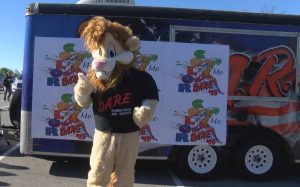
JONESBORO – Citizens young and old participated in the third annual Color Me D.A.R.E. 5K run at Joe Mack Campbell Park to raise money for the Jonesboro Police Department D.A.R.E program.

The D.A.R.E program educates all fifth-grade students in all Jonesboro schools. This includes all public and private schools.  The money raised goes towards a student T-shirt, books and miscellaneous items used in the D.A.R.E program. During the first year of the race, 80 runners signed up. Three years later, over 170 runners signed up either online or at the starting line. DJ Buzzkill played music before, during and after the race, while members of JPD barbecued for the runners after they finished.

33813349988_a3b77d1ca3_b

D.A.R.E. stands for Drug Abuse Resistance Education. The JPD program educated all fifth-grade students in Jonesboro. (Photo by Denton Postlewait)

Sgt. Morshaydrick Racy thanked the community for its support and said the lessons the D.A.R.E program teaches are life-long.

“It’s things that can stick with them and that their parent can reiterate to them at home,” he said. “It means a lot that this many people would support our program.”

Chief Rick Elliot attended the April 20 event and said the Jonesboro community keeps the program alive. Funding for the D.A.R.E. program comes from fundraising and donations.

“Jonesboro is a very giving community. Any time we have an event like this the people of Jonesboro always comes out and support it,” he said. “It takes fundraisers like this to support this program.”

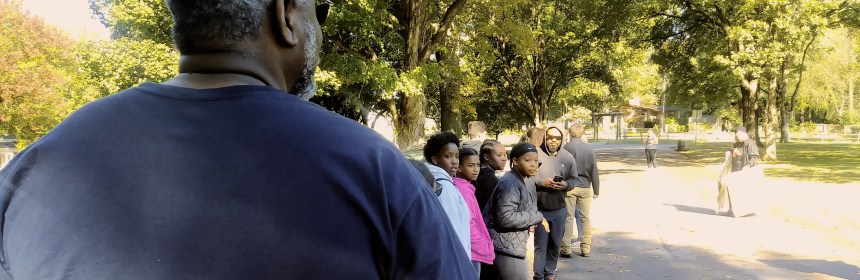
Before the race, participants started with a Zumba class to warm up. Then, they gathered at the starting line and threw paint into the air to create a plume of brightly colored smoke.

47690783131_4030b1c03c_b

Runners warm up with a Zumba class prior to the start. (Photo by Denton Postlewait)

JPD Record Supervisor Mary Oliver said the event helps raise money to keep the D.A.R.E. program in the schools.

“D.A.R.E. is a good program for our kids in the schools,” she said. “We’ve got to keep the community together in supporting D.A.R.E.”

After a rainy week, the weather cooperated and provided a perfect day for the run. During the 5K, serval community businesses set up stations along the route and threw color as runners passed by. Participants finished the race covered in paint.

For anyone who missed the event but would like to support the JPD D.A.R.E. program, visit the Jonesboro D.A.R.E Facebook page.

Walking For A Purpose

by Caleb Booker
Delta Digital News Service

CAPE GIRARDEAU, Mo. — A21’s fifth annual “Walk For Freedom” raised awareness about global human trafficking.

A21’s march took place in over 20 countries and in six continents around the world. The nonprofit organization aims to stop sex trafficking globally.

Lanley Scroggins organized the “Walk For Freedom” at Capaha Park in Cape Girardeau this year. She is looking forward to helping the community better understand what sex trafficking is and why it needs to be stopped.

“I want to do my part to bring awareness to those around me and I hope that others catch a flame that compels them to be a part of the solution,” Scroggins said.

Brittany Smith participated in the event. She said this topic and the walk is important to her.

“It can draw the community closer together and help them take a stand for something that affects the whole world,” Smith said.

Participant Willie Brown said this event can help the community.

“From my perspective, we need to stop human trafficking. It really needs to be done and it will make our community a lot stronger,” he said.

Cellphones Pinpoint Emergencies

by Miranda Reynolds
Delta Digital News Service

JONESBORO – In a life-threatening situation where seconds matter, Craighead County’s dispatch service uses advances in technology to find someone’s location and provide them help.

Cellphones allow people across the nation to quickly access information at a touch of a button. In an emergency, it provides a lifeline to help. E911 Director Jeff Presley said GPS technology is vital for first responders in the line of duty.

“With smartphones that we’re using today, they’ve actually got GPS readers built into that phone. So when you activate a call for service or a 911 call, it automatically tracks that cellphone,” Presley said.

Dispatchers in Craighead County work around the clock, seven days a week. Mellenee Bennett actively works in emergency services and began her career in 2001. The public’s access to cellphones sometimes overflows the dispatchers.

“The thing is, if you’re going to take the time to call, give us pertinent information because our phone will just be ringing off the hook with everybody that has a cellphone,” Bennett said.

Last month, 90 percent of 911 calls came in from cellphones, Presley said. Sprint store sales associate Zach Vickers said the E911-texting option gives people another way to contact 911, but with a cost.

“It wasn’t just an inconvenience on consumers. I know it did raise cellphone bills up a small margin. But in doing so, it enabled consumers to be able to make emergency phone calls,” Vickers said.

Downloading emergency cellphone apps onto phones allow for third parties to be involved, not putting you directly with emergency services.

“I would be really weary of any third-party apps or anything that does not connect directly to your local 911 center because it could delay services getting to you,” Presley said.

The dispatchers in Craighead County rely on training and experience and are ready to take emergency calls, Bennett said.

“We’ve got probably 60-to-70 years of experience in here. So if I don’t know where they’re at, somebody’s going to know,” Bennett said.

When an emergency arises, remain calm and pay attention to surroundings, Bennett said. By listing personal information on smart911.com, first responders can use that to help police, fire and EMS in an emergency.

Westside: 20 years later

Westside Middle School Memorial Garden

Students from the Spring 2018 Advanced Reporting and Reporting for Electronic Media courses investigated the 20th anniversary of the Westside Middle School shootings and the ramifications of Arkansas’ soon-to-be-implemented college campus concealed-carry law.

  • Miranda Reynolds details remembrances from the Westside School Board, a student and a former A-State faculty member.
  • Seth Cleveland examines how Westside survivors continue to help other victims of school shootings.
  • Katie Woodall examines how the Westside shootings changed active-shooter procedures.
  • Tucker Crain details Arkansas’ Congressional leaders’ stances on gun violence and school safety.
  • Christopher Lee examines contention at Arkansas State over the new campus concealed-carry law.
  • DDNS Editor-in-Chief Kimberely Blackburn examines regional reactions to the campus concealed-carry law.

Ammar Taqi of the Advanced Photography class provided featured pictures of the Westside Middle School Memorial Garden. View the full pictures below.

This slideshow requires JavaScript.

Texts can wait

By Savannah Strickland
Special to the Delta Digital News Service

Lisa Strickland

JONESBORO – The Arkansas Legislature passed Paul’s Law to harshly punish those who text and drive because they are putting other drivers and passengers in danger.

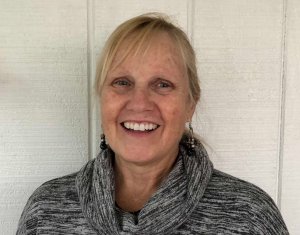
Even though a year has passed, Lisa Strickland still reflects on a near-fatal accident back in November 2016. The 57-year-old Jonesboro native and employee at Joe’s Tire and Auto survived a head-on collision due to a woman typing out a text message to a friend.

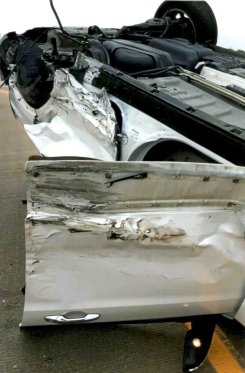
Strickland traveled across the Windover overpass on a Sunday afternoon. She said she remembers seeing a woman coming towards her, clearly distracted. The car drove over the center line and hit Strickland head-on, knocking off her SUV’s rear tire, flipping and spinning her vehicle, and leaving her hanging upside down by her seat belt for 8 minutes.

The wreckage of Strickland’s SUV. She keeps pictures on her cellphone as a testament to not text-and-drive and to wear a seat belt. Photo courtesy of the Strickland family

Strickland purchased her vehicle just nine days before the accident. When police arrived on the scene, officers told Strickland the wreck would have killed her immediately had her vehicle been smaller.

Strickland said before the accident occurred, she used to text while driving. But now she keeps her phone zipped inside of her purse in her back seat. She stays more aware of her surroundings, and makes sure those driving around her are paying attention to the road and not their phone.

Hannah Aldridge, a 21-year-old Arkansas State University senior, drives for Uber. Her job affected her views on texting while driving.

“Before I was an Uber driver, I would text and drive,” Aldridge said, although noting she wouldn’t do it while baby-sitting. “I am very grateful to be driving with Uber because it taught me that texting and driving is not safe, and that getting a text sent to one of my friends can wait until I have arrived safely at my destination.”

Hailey Wright, a 19-year-old freshman from Paragould, has not been a a victim of a texting-and-driving accident. But she has heard horror stories from family members and friends who knew people who had been injured as a result from another driver texting while driving.

“I think texting and driving is extremely ridiculous,” she said. “There is no text worth endangering and possibly killing yourself and other people. Choosing to text and drive is choosing to put yourself and others at risk.”

Retired Arkansas State Police Lt. Robert Speer saw many driving accidents caused by a driver texting while driving.

“Once I was called to the scene of an accident because I was the closest officer,” he recalled. “Upon arrival, I learned that the car had crashed because the passenger had received a funny picture through text and was showing it to the driver of the vehicle, which caused the car to veer off the road and run head-on into a telephone pole.

“Neither passenger sustained injuries, but it taught them a lesson on the distractions that cellphones can cause when inside of a vehicle.”

DeltaYou: EMTs Serve the Community

by Miranda Reynolds
Delta Digital News Service

Andrea Yates

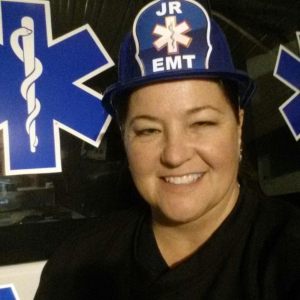
Angela Yates at work. Yates first became interested in becoming an EMT while working in Wynne. Photo courtesy of Angela Yates.

AUGUSTA, Arkansas – When medical emergencies arise in rural areas, Emergency Medical Technicians are responding to the life-threatening calls.

EMTs certifications depend on their level of education. A Basic EMT requires the least amount of schooling, whereas Intermediate EMT and a Paramedic EMT require more. Angela Yates, a Basic EMT,  received her certification at East Arkansas Community College, located in Forrest City. Yates said her certification prepared her for real-life emergencies.

“I think for the most part it did. But — also because I’m older than most people who enter this field — I did it when I was already turning 40 and most people are doing this in their 20s,” Yates said. “I had more life experience behind me already.”

Yates said paramedics and EMTs working in the Wynne hospital influenced her with their exciting stories of helping people. Yates said she believes being a woman is not a challenge in her line of work.

Yates said within rural areas, emergency airlift systems are something to consider.

“Because of my standpoint in EMS, I know it’s important to have (an emergency airlift system),” Yates said. “Being rural, we have different helicopter services available, and not everybody will accept the other’s insurance or the other’s coverage. It’s not feasible to have a membership with every service, but you never know what service you are going to get.”

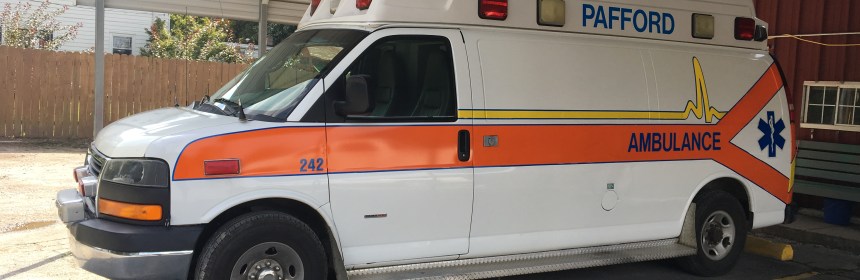
Emergency Medical Technicians are vital to all communities because of their role in the emergency response chain. Yates said a patient’s medical insurance does not impact the work she does. Members of Pafford Emergency Medical Service provide emergency care while the hospital collects information; insurance comes after that.

The duties of an EMT vary among its members. Yates explained her duties to provide a full understanding of her everyday tasks.

Recertification for all EMTs is inevitable. As a Pafford EMS employee, Yates’ re-certification can be completed online by entering in her numbers, information and amount of hours taken. As far as original certification goes, members of Pafford EMS must meet in hands-on classes or groups.

Yates said prevention of accidents in emergency vehicles is important to the certification process. During an emergency that requires lights and horns to be activated, Yates is only allowed to drive 10 miles per hour over the speed limit.

Jay Atkins, police officer for Augusta and McCrory, said drivers on the highway do not pull over when meeting oncoming traffic and even drive close behind vehicles in pursuit of an emergency.

Yates said she built an endurance for coping with traumatizing calls after six years in the field. Yates’ husband, in his 25th year in the EMT field, helps her cope. Yates said having someone to confide in and someone who can relate to what she goes through is helpful.

Atkins said he finds other methods of coping.

“Separate myself from that call or if it’s ending my day … when I’m off, I’m off. I do not have a radio on, I don’t associate with this place,” Atkins said.


Undocumented Women Fear to Report Abuse

by Kimberely Blackburn
Delta Digital News Service

JONESBORO – Immigration and Customs Enforcement detained a woman inside a courthouse to obtain a protective order against her allegedly abusive boyfriend earlier this year in Texas.

This, along with reports of increased immigration investigations, results in many undocumented women being afraid to report abuse. In trying to remedy the situation, many organizations strive to help those undocumented victims of domestic violence.

“It’s complicated because there aren’t any specific solutions,” said Marium Durrani, public policy attorney for the National Network to End Domestic Violence. “There is a bill in the House and the Senate that protects them in community locations like courthouses, rape crisis centers and medical service providers, from immigration forces.”

Current Fears

This year, seven national abuse advocacy organizations performed a survey to help better understand how current immigration policies affect such immigrants.

Sixty-two percent of respondents reported an increase to the question, “Is your agency observing a change in the number of immigration-related questions from survivors?” Feedback sent with the survey reported many abuse survivors simply question how to plan under the new immigration policies. Some question if they should apply to immigration under the Violence Against Women Act.

When asked, “Are immigrant survivors sharing with your agency that they have concerns about contacting police?” 78 percent responded yes.

One respondent said: “Clients are afraid of calling the police because they believe that they will be deported if they do, especially if their abuser is a U.S. citizen. They think law enforcement will listen to someone who is a citizen of this country more than an undocumented person.”

When asked, “Are survivors reporting to your agency that they have concerns about going to court for a matter related to the abuser/offended?” three out of four answered yes.  Some respondents said that after media outlets reported a woman’s deportation while filing for an order of protection, many clients feared the same.

Forty-three percent responded yes when asked, “Are you or your organization working with immigrant survivors in your community who have decided to drop civil or criminal cases because they are fearful to continue with their cases?”

Durrani said some women find themselves in this situation after being brought to the country under false pretenses. Some come under a fiancée visa with the promise they will have help in obtaining citizenship. She said many abusers then withhold vital documentation and the women find themselves stuck after their visa expires.

Durrani said these undocumented victims often need special protection. A woman may look for work to escape her abuser but cannot work legally. Some employers, Durrani said, will take advantage of her status and pay a much lower wage. Other abusers will file other charges against their victim.

For these reasons, in addition to reports of victims being arrested after reporting their abuser, many stay silent.

Help Available

Rebekah Stewart, program communications associate with Tahirih Justice Center, said organizations exist to help those suffering from abuse to apply for protections under the law, including:

  • Gender-based asylum for those who suffer or may suffer violence in their home countries.
  • Violence Against Women’s Act Petitions for spouses, parents or children enduring abuse.
  • T Visas for those surviving being brought to the United States for human trafficking.
  • U Visas for those surviving crimes involving mental and physical abuse in the United States.
  • Special Immigrant Juvenile Status for abused, abandoned or neglected children.

Protecting yourself when asking for help

Durrani said she believes the protections came from Congress understanding the control abusers have over their victims.

“Congress has understood that sometimes people are not brought here under their own  volition and that doesn’t mean they should be disregarded under the protections of the law,” Durrani said.

However, obtaining these documented statuses often proves difficult.  Stewart said Tarihi Justice Center provides legal assistance for those seeking these protections, as well as social services assistance.

Working with legal assistance continues to be very important. Durrani said obtaining these statuses remains complicated. She said women can be declined from these protections for a variety of reasons.

The U Visa, for example, require women to work with police. Thus putting themselves at risk, especially if immigration enforcement considers them to be a priority.

Durrani said this fear often impacts the community as well. If a victim fears to work with law enforcement, more crimes affecting others often go unreported.

Assistance in NEA

Many victim assistance programs exist in Northeast Arkansas. Nanette Heard, executive director of The United Way of Northeast Arkansas, said such programs include everything from shelters to support groups. Organizations exist that provide monetary assistance as well.

David McDaniel, public information officer for the Jonesboro Police Department, said helping the victim remains the priority for JPD. After 20 years of service, he said he cannot remember a single time immigration investigated a victim in a domestic violence case.

McDaniel said protecting the victim, no matter their immigration status, continues to be JPD’s concern.

“If you’re here illegally, if you’re here on a visa, that makes no difference to us,” McDaniel said. “You’re not supposed to live that way. No one deserves to live that way.”

Editor’s Note: Featured photo by Jeffrey [CC BY-SA 2.0]

A-State Board Considers Weapons Policy

by Keith Turner
Delta Digital News Service

JONESBORO — The Arkansas State University System board of trustees considered an updated weapons policy, helping transfer students and disaster preparation during its first fall meeting.

ASU System President Chuck Welch described the new weapons policy as a “reaction” to a bill passed by Arkansas legislature. The bill allows, to a degree, concealed carry on college campuses.

Welch said the Arkansas State Police have not yet completed its enhanced training program, meaning no one can legally carry a handgun on campus yet.

“We anticipate that it will be sometime in 2018 – January, February, March – sometime in that time frame before an individual will be able to legally carry a weapon on our campuses,” Welch said.

Helping Transfers

Welch and A-State Chancellor Kelly Damphousse announced a study of transfer students beginning in October or November. The goal of the study is to analyze the relationship between ASU campuses and students who transfer or wish to transfer from two-year schools.

“We have a large number of students in community colleges in the state of Arkansas. Unfortunately, we don’t have a large percentage transferring to a university,” Welch said.

Damphousse said he is passionate about transfer students.

“The next step is to make sure we get more transfer students from our sister schools to come here,” Damphousse said.

Disaster Preparedness

The board approved long-term lease agreements for ASU disaster preparedness training facilities in Walnut Ridge and Imboden. The school will seek grants and private funding for the project, which will train participants to respond to a variety of natural disasters. Fewer than 10 similar facilities exist nationwide.

Representatives of ASU and the cities of Walnut Ridge and Imboden signed 50-year leases for the facilities the following week.

In Walnut Ridge, ASU will pay $12,500 a year to rent 100 acres of land, with a 3 percent increase every five years. Walnut Ridge will pay the rent on behalf of ASU for the first two years. The Walnut Ridge site will have training zones specific to certain disasters, such as tornadoes and floods.

ASU will pay $10,000 a year to rent 183 acres in Imboden. The Imboden site will allow for “wilderness scenarios.”

Susan Hanrahan, dean of ASU-Jonesboro’s College of Nursing and Health Professions, assisted in the push for the training facilities.

“With the opportunity to have land in two different spaces, we can start working on getting funding to help build those things and bring people to our region for that type of education,” Hanrahan said.

Walnut Ridge Mayor Charles Snapp told the Jonesboro Sun this “might be the biggest economic boom” in the history of his city and Lawrence County.

System Review

Welch announced plans to hire a firm for reviewing the ASU System and campuses. The review will analyze staffing, programming and resources to determine the overall efficiency of the office.

The review should take around 12 weeks, but it could be up to six months before the results are known.

Other items considered included:

  • Celebrating the anniversaries of two ASU System campuses: ASU Beebe, now in its 90th year, and ASU Mid-South, now in its 25th year.
  • Accepting a resolution to rename the ASU-Newport criminal justice department in honor of the late Lt. Patrick Weatherford, who was killed in the line of duty in June. Weatherford worked for the Newport Police Department, and was a graduate of ASU-Newport and ASU-Jonesboro. His wife, Kristen, attended the meeting.
  • Approving restructuring amendments to the faculty handbook.
  • Approving new policies on internal controls and investments.
  • Approving a resolution to change the name of the lounge area on the third floor of the Reng Student Union to the Vaughn Student Lounge.
  • Approving a request by ASU-Newport to offer additional automotive-mechanical certificates (automotive mechanical systems, automotive transmissions and axles, engine performance, and heating and air conditioning).
  • The efficiency of the employee health care plan.

(Board of Trustees photo courtesy of A-State Media Relations)

Pocahontas Relief Efforts Continue

POCAHONTAS, Arkansas — Clean-up efforts continue after flooding caused severe damage.

Randolph County Judge David Jansen said three major and several minor breaches occurred in the levee designed by the Arkansas Corps of Engineers. Flood waters flowed over the levee at a span of 3-4 miles for 4-5 hours, he said. It caused the levee to “churn” and eventually resulted in the breaches.

Although the property damage proved to be extensive, Jansen said the county’s first priority remained resident’s lives.

“Our No. 1 goal when this event started was no loss of life, and we’ve achieved that,” Jansen said.

Jeff Harris looks at flood damage in his Pocahontas home. Pocahontas suffered extensive flood damage after breaches in levee breech. (Photo by Kimberely Blackburn)

The Aftermath

Pocahontas resident Jeff Harris lost almost everything in the flood. After the call to evacuate came, his family prepared as best they could. He and his 10-year-old son Colton put the kitchen appliances on cinder blocks to help shield them from the water. This task proved difficult as Harris experiences health problems that cause difficulty with his daily movements.

Harris is no stranger to struggle. He said he’s lived through a brain tumor, being electrocuted and watching his father suffer the effects of being hit by a drunk driver. Most recently, his 7-year-old daughter Lorraine underwent open-heart surgery at Arkansas Children’s Hospital to correct a heart murmur.

Harris, wife Stephanie and their family currently live with his grandmother in a small home outside the flood zone. He said they will rebuild.

Neighbor Laura Williford said her house took 7 inches of water; her enclosed patio held 18 inches. She said her family put their possessions high enough by stacking them on the deep freeze. But the water flipped the freezer, which was on the patio. She said she will rebuild.

“Where else can you go? We don’t have any houses around here,” she said.

While staying at the American Red Cross shelter until she can move back into her house, someone gave her a small travel trailer.

A Community Unites

In his 13th year as judge, Jansen said he has served through many natural disasters, but this one hit him hard. Yet the influx of help from within and outside the community encourages him. As of May 22, Jansen said 33 residents resided at the Red Cross shelter.

Red Cross volunteer Stan Rosenzweig said those displaced receive everything from shelter and food to just a warm hug and blanket. Volunteers arrived from all over the country to help with the relief efforts; he came from Salt Lake City, Utah. Other volunteers in the relief effort hail from Minnesota, Massachusetts, and California.

Rosenzweig said volunteers do 91 percent of work done by the Red Cross. He said currently over 70,000 volunteers nationwide assist with disaster relief.

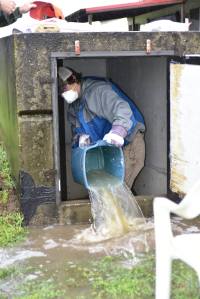
A member of the Arkansas Baptist State Convention Disaster Relief team helps remove water from flood-damaged homes. Other team members brought supplies to assist with the flood relief. (Photo by Darryl J. Kelley, courtesy of ABSC Disaster Relief)

Arkansas Baptist State Convention Disaster Relief unit commander Jack Chandler said the team works closely with the Red Cross to feed residents, and provide hot showers and laundry services at the shelter. Several ABSC Disaster Relief teams helped remove damaged housing materials after the flood. Chandler said after the homes dry, the teams return to spray mold killer to help protect the homeowner.

ABSC Disaster Relief team member Steve Thomas said all team leaders train in specialized areas to help assist with the efforts. Other volunteers train in various areas, e.g. food safety, to best help the community hit by a natural disaster.

Harris said he received help from a variety of places. Cody Walker arrived with Reach out Worldwide, an organization started by his deceased brother, actor Paul Walker. Harris said the organization provided $18,000 in removal assistance. He said many others came to help him remove damaged furniture and housing materials.

“Everyone who has come to my house and helped me have been angels,” Harris said.

Jansen said Pocahontas officials, concerned with possible scammers taking advantage of residents, required all contractors to register with the city. The city compliance officer and Pocahontas police patrolled the area to ensure compliance.

Jansen said the city and county opted to not handle monetary donations. Instead, the Pocahontas Ministerial Alliance works with the Salvation Army to take donations. He said they placed a series of checks and balances to ensure residents receive all donations.

“I want to thank everyone who has helped from the bottom of my heart,” Jansen said.

Future Planning

The Corps of Engineers hired an engineer to study possible solutions to the Black River water problem. Jansen said all the water goes under the Black River Bridge, but the bridge cannot adequately handle the influx of water from floods of this type.

The engineer will present the findings of the study to the levee board, which will then determine the best course of action. No date has been set for the study completion.

Jansen said possible solutions include flood relief gates and restructuring the Black River Bridge. For flood relief gates to work properly, a dam would need to be constructed, continue through Lawrence County and cross three state highways. Jansen said such a project would require the acquisition of land and several overpasses to work properly, which is a large undertaking for a small county.

Jansen said his concern lies in funding such a project. He estimates the cost to be a minimum of $6 million and Randolph County does not possess the funds to cover such a project. He said he has contacted the county’s Congressional leadership for help.

***

(Editor’s Note: The featured image at the top of the page shows soldiers from the Arkansas National Guard’s 87th Troop Command assisting Randolph County authorities with evacuation assistance in Pocahontas Tuesday, May 2, 2017. The soldiers were activated in response to flooding in the area from multiple rivers. (Courtesy of the Arkansas National Guard) [CC BY 2.0 (http://creativecommons.org/licenses/by/2.0)], via Wikimedia Commons)

Controversy Surrounds Death Penalty Drug

By Kimberely Blackburn
Delta Digital News Service

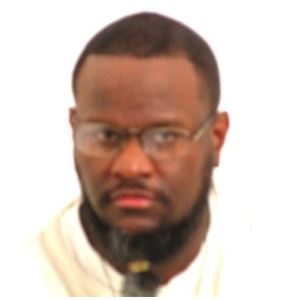
Kenneth Williams (photo courtesy of Arkansas Department of Corrections)

VARNER, Ark. — The last man Arkansas plans to execute in April is not a saint.

Sentenced to life for the 1998 death of University of Arkansas at Pine Bluff cheerleader Dominique Hurd, Kenneth Williams escaped in 1999 after 19 days in prison.

Williams robbed and killed Cecil Boren of Grady, who lived not far outside of the prison. A high-speed chase while evading police in Boren’s stolen truck led to an accident and death of delivery driver Michael Greenwood of Culligan, Missouri. Williams later confessed to killing Jerrell Jenkins on the same day as Hurd.

The state sentenced Williams to die by lethal injection April 27. But his and four other inmates’ fates remain uncertain following the United States Supreme Court refusal late Monday night to vacate the Arkansas Supreme Court’s stay of execution for Don Davis.

STATE MOVING FORWARD

Arkansas Gov. Asa Hutchinson said in a statement following the SCOTUS decision that the state would proceed in carrying out the sentences of the other inmates. The SCOTUS decision came just hours after a temporary restraining order barring the state from carrying out a controversial seven executions in 11 days was overturned by the 8th U.S. Circuit Court of Appeals.

That decision prompted McKesson Corp., which manufactures one of three drugs — vecuronium bromide — used in Arkansas’ lethal injections, to pursue further legal action Tuesday.

“McKesson has filed a new action in Pulaski County Circuit Court for review by the new judge who has now been assigned to these matters and again seeks a restraining order to prevent the use of our product for something other than a legitimate medical purpose. McKesson is committed to ensuring that its property is only used in a manner consistent with our supplier agreement,” said Kristin Hunter, director of Corporate Public Relations for McKesson.

DRUG COCKTAIL CONTROVERSY

The drug cocktail slated for use in the lethal injections contains a drug encompassed in a political firestorm.

The ACLU claims one of the drugs used in Arkansas’ lethal injections may violate the ban on cruel and unusual punishment by causing a long and painful death. An Alabama inmate given the drug experienced painful, burning sensations before death.

The McKesson Corp. claimed the state misled the drug manufacturer to obtain vecuronium bromide. A prepared statement said McKesson believed its drug would be used for medicinal purposes in the Department of Correction’s in-house medical facility. After learning of the drug’s true intention, McKesson asked for the product’s return.

“Upon learning that ADC was potentially holding the product for lethal injection purposes, McKesson immediately requested and was assured by ADC that the product would be returned. McKesson issued a full refund to ADC and made several additional requests for the product, but the product was never returned,” Hunter said.

Requests for comments from the Department of Corrections remain unanswered.

Brandon White, a Paragould pharmacist with Arkansas Methodist Medical Center said vecuronium bromide is used in long-term paralysis cases such as a patient being placed on a respirator. He said usually, healthcare professionals administer the drug with a strong pain reliever due to the potential of an internal burning sensation.

If McKesson’s vecuronium bromide is used for lethal injection, it could result in legal action against the state. Joseph Rukus, assistant professor of Criminology at Arkansas State University, said McKesson could sue Arkansas for damages to its reputation and as an example to other states considering using their drug for lethal injections.

“Bottom line,” he said, “this could cost the state some money.”

Ruckus said the state’s lack of transparency in such cases concerns him. He said when it comes to a penalty as final as death, all parts of due process must be transparent.

By not being truthful to obtain this drug for lethal injections, he said the state’s behavior resembles one as an addict.

“If an individual wants to get oxycodone, but can’t get them through legal means, the state would put someone in prison for getting them through illegal means. The state is doing the same thing,” Rukus said.

DEATH PENALTY SUPPORT

National public support for the death penalty has waned in the past five-to-10 years partially due to the Innocence Project, an organization that attempts to exonerate those wrongly convicted through DNA testing. Rukus said the project resulted in those who believe in the death penalty in principle but are wary of innocents being put to death.

Ruckus said the appeals process takes 10-15 years and results in the death penalty being more costly than an inmate being incarcerated for life without the possibility of parole. Proponents of the death penalty support a shorter appeals process as a result, he said.

Considering convictions overturned after 10-15 years, Ruckus said the state is not always getting death penalty convictions right. However, a recent Talk Business & Politics-Hendrix College poll shows 61 percent of Arkansans support the death penalty, while only 29 percent support life without parole.

Sen. Tom Cotton praised the death penalty at a Town Hall and condemned the pharmaceutical companies “trying to interfere with the justice system n the state of Arkansas.” Sen. John Boozman did not wish to comment. Arkansas Attorney General Leslie Rutledge issued a tweet.

Meanwhile, Williams awaits his fate. In a “Life Inside” series article penned earlier this month, he wrote of his mindset, apologized to the victim’s families, claimed to be transformed by religion, and discussed the drugs to be used to kill him. As far as the upcoming date?

“Death, one step closer. Tick, tick.”


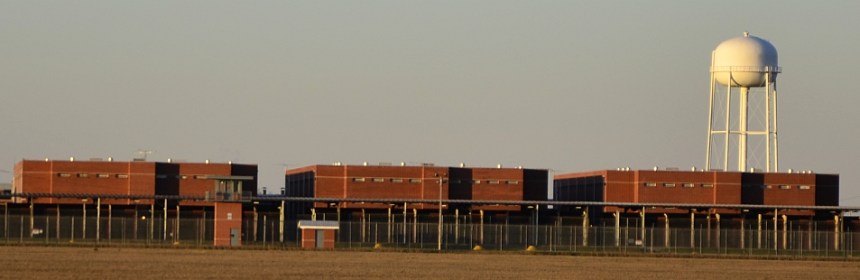
Photo of Varner Unit Supermax by Richard Apple (Own work) [CC BY-SA 3.0], via Wikimedia Commons

EDITOR’s NOTE: A previous version of this story used 2016 poll data; the article has been updated to include more recent poll data from Talk Business & Politics – Hendrix College poll.

Vigorous Training Benefits K-9s, Handlers, Community

By Jorge Quiquivix
Delta Digital News Service

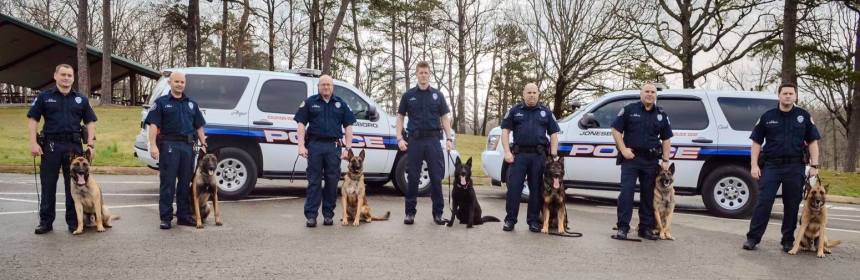
JONESBORO, Ark.- K-9s are part of several law enforcement agencies in the Delta. These animals even have a presence in smaller police departments.

Jonesboro Police Sgt. Cassandra Brandon spent five years as a canine handler and says these dogs help them sniff out drugs.

Her K-9’s name was Mick and she quickly found out this assignment was going to be different than being a patrol officer. Unlike patrol officers, canine handlers go home but they are technically still working.

“I had to pay not only attention to what was going on out there, but I had to pay attention to him too and make sure he was okay. That he was comfortable. That he didn’t need to go potty or anything like that. It’s just a lot of extra responsibility as a K-9 handler,” Brandon said.

She also had to train constantly as required by Case Law, which is what the police world operates by. Among the requirements is 16 hours of training a month.

“If there was not a whole lot going on, me and him would go out and we’d just train on our own,” she said. “Mainly that was for him to keep him fresh. Especially for the drugs. I know where they are. I just need to see where they could find him.”

Blake Bristow owns BlueStreak K9, a business where he trains and sells dogs to Delta police departments. He helps set up some of the training required by Case Law.

“Some of these agencies don’t have the time and manpower to be able to train all the time,” Bristow said. “They don’t have the people there that can help them so they come to us.”

One of the handlers struggled during the training, which he says happens when the K-9 and officer are not used to each other yet.

“They’re new. The dog’s good. The handler is figuring things out but we got to get them working together. So that’s what this is for. It’s a team deal,” Bristow said.

He also stressed how crucial the training is and what it means for hard-working citizens if these K-9 handlers don’t do what they are supposed to.

“When they go to court, it’s going to be hard to win that case,” he said. “The more they practice, the better they’re going to deploy in the streets and in a real-lifetime situation. So you know it could save the officer’s life.”

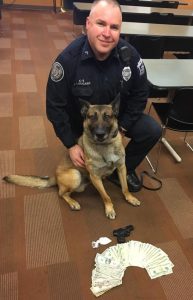
Officer Heath Loggains and his K-9 partner, Cash, pose with bounty from an arrest. (photo courtesy of Jonesboro PD)

The Jonesboro Police Department understands the importance of these dogs. Most of their K-9s sniff out drugs only, but they also have a bomb sniffing K-9. Brandon says she cannot overstate what the K-9s mean to the officers.

“They can go to a house we don’t want to send an officer into, or a building, or in the woods, or wherever they can go in and try to find a person. If we didn’t have the dogs, we would have to send a person and put that person in harm’s way,” she said.

Bristow said he agrees with Brandon.

Despite knowing they’re a tool for the department, these officers have developed a relationship with their canines.

“Of all the jobs I’ve done, this is one of the most rewarding to be able to see your dog come out and perform when it’s supposed to,” Bristow said.

“We know that’s what they are doing for us. That alone makes having the canine program worth having,” Brandon said.

BlueStreak K9 can be found on Facebook for anyone interested in purchasing a K-9.

« Older Entries Recent Entries »