Author Archives: Chase Gage

Jonesboro City Council Holds First Online Meeting Amid COVID-19 Pandemic

By Chase Gage
Delta Digital News Service

JONESBORO – Amid a global pandemic and the aftermath of a natural disaster, the city of Jonesboro had somewhat of a return to normalcy with a remote city council meeting Tuesday night.

The meeting was the first held since the state of Arkansas declared a national emergency regarding COVID-19, also known as the coronavirus. It was also the first meeting held since an EF3 tornado tore through Jonesboro on March 28.

“Before we get started, I’d like to take a moment to praise the people of Jonesboro and the workers for the City of Jonesboro. We’ve been through a lot as a citizenry and a government,” Jonesboro Mayor Harold Perrin said in his opening statement. “The citizens of Jonesboro have been strong and come to each other’s rescue. We are a loving people.”

This image has an empty alt attribute; its file name is 4c1be74c-fbe2-4c05-9df0-14b060af113d.jpeg

The Jonesboro City Council held their meeting virtually amid the COVID-19 pandemic. The new format led to a unique viewer experience, though. it had its faults as well. Screenshot by Chase Gage.

It was far from a typical city council meeting, though, as the members were forced to meet online via video chat in response to social distancing policies in effect across the state and nation. The meeting was then broadcast on local television and Facebook Live so citizens could attend and participate from home.

Residents had several communication options for the meeting, including a special phone line and email address to contact as well as live comments on Facebook during the meeting.

The shift came with a handful of downfalls, as technical difficulties plagued some segments of the meeting. Resident participation was also relatively limited compared to in-person participation, but the council seemingly did the best they could with their available options.

“The coronavirus and tornado have created a new landscape, and our duty is to adjust. I ask for patience as we do so. This is not a new future, it is simply a temporary fix,” Perrin said on the shift to online meetings. “It isn’t going to be perfect. Any change this drastic is going to have glitches, so please be kind and patient.”

Councilman Gene Vance said several improvements needed to be made for the council to continue to hold online meetings, adding that he struggled to hear other members even with his volume cranked up.

Virtually all members of the council were adamant in praising the emergency response of both city employees and the public in the aftermath of the tornado that struck just over a week before the meeting. Miraculously, there were only 22 injuries and no deaths due to the storm.

“The citizens of Jonesboro have been strong and come to each other’s rescue. We are a loving people.”

Jonesboro Mayor Harold Perrin

Perhaps the most impactful topic of the night dealt with the mayor’s power to enact a city-wide curfew in times of declared state emergencies. Previously, a curfew could only be enacted for 48 before the city council had to meet to approve any extension.

However, the members voted unanimously to overturn that precedent, allowing the mayor to enact a curfew for up to 120 days — or until the next scheduled meeting — the maximum number of days allowed under state law.

As a direct result of the motion passing, Perrin will meet with city officials including Chief of Police Rick Elliot and Jonesboro Chief of Staff Mike Downing on Wednesday to iron out the details of a forthcoming curfew. Perrin said a curfew is “coming soon,” and that citizens should be prepared to follow it during the COVID-19 pandemic.

“I want everyone to wear a mask. Protect yourselves and your loved ones. This is no time to worry about appearances. You look better with a mask. Please help your city by being responsible,” Perrin said.

Ironically, the first order of business was to pass a motion allowing the online meeting to happen, overturning an in-person requirement in times of a state emergency. Of course, the motion passed unanimously.

Several other issues brought up were related to re-zoning, but most were postponed to be discussed at a later date. Councilman David McClain insisted suspending a vote on ORD-20:010 until citizens could participate in person to discuss the details.

Unlike typical meetings, resident interactions were very few throughout the evening. There was one call-in and only a handful of emails and Facebook comments.

The viewer count peaked around 100, but dipped as low as 50 viewers toward the end of the meeting, likely much lower than in-person attendance would have been under normal circumstances.

A decent number of comments related to how well the city has handled not one, but two emergency situations in the past month.

“I appreciate that the city is continuing to operate in this fashion. Different and dark times require creative solutions,” Jonesboro resident Scott McDaniel commented on the live stream. “Keep it up.”

Watch the full meeting here.

Suddenlink Reps Miss Connection with Disgruntled Customers

By Chase Gage
Delta Digital News Service

JONESBORO — The City of Jonesboro held a joint meeting with Suddenlink Thursday night to address numerous complaints by citizens. The St. Bernards Auditorium was at capacity; in fact, it was standing-room-only for disgruntled residents.

Hundreds of Jonesboro residents showed up to voice their complaints to media giant Suddenlink. Complaints ranged from wrongful charges to lack of competent service and were never in short supply.

“Our company has not delivered as it should. I want to apologize that it’s come to this. The crowd is evidence of how serious it is,” Brad Ayers — senior director of governmental affairs for Altice USA, the company that owns Suddenlink — said.

Hundreds filled the St. Bernard’s Auditorium for the meeting. Photo by Chase Gage.

Representatives from both Jonesboro and Suddenlink were available from 6 p.m. to 8 p.m. to answer questions and complaints submitted by customers. Ayers “promised” the company would address every complaint “within a week” of the meeting. Jonesboro’s communications director Bill Campbell read several of the complaints to the crowd.

The majority of the meeting consisted of Suddenlink representatives attempting to answer specific questions by residents, though they often received “corporate” answers instead of legitimate solutions. The crowd tried their best not to let the company off the hook.

Perhaps the loudest reaction of the night came when the company reluctantly revealed one of their call centers was located in South Africa; multiple complaints included call center employees not speaking fluent English.

“I can never get a real person on the phone, and when I do, they’re foreign and I can’t understand them,” Campbell read from a submitted complaint.

Further unrest ensued when a customer proclaimed “if you’re billing for services that aren’t provided, that’s a problem.” The statement was met with applause and a very audible “amen” from the back of the room.

“I’ve gotten your calls and emails. This (crowd) is evidence of what’s going on.” – Jonesboro Mayor Harold Perrin

State Senator John Cooper was in attendance as well to address his constituents and their frustrations.

“It looks to me like you’re trying to handle this with management. Personally, I would like to see highly trained people here to take care of this. It’s probably a little bigger than what you have here at this meeting tonight,” Cooper said to the Suddenlink representatives.

Cooper suggested a “task force” approach to solving the problems Jonesboro residents are facing.

“You’re welcome to contact me at any time over these issues. I will work with this company to improve the service,” Cooper said. Cooper can be contacted by phone at 870-761-0130 or by email at john.cooper@senate.ar.gov.

20200227_182421-1.jpg

An upset customer voiced their opinion on Suddenlink during the meeting Thursday night. Photo by Chase Gage.

Jonesboro Mayor Harold Perrin arranged the town-hall-style meeting after a Nov. 7 meeting with Suddenlink representatives. Prior to the initial meeting, Perrin receiving numerous calls and emails complaining about the company and “immediately” got on the phone to fix them. Perrin assured citizens that their voices were being heard and their issues would be addressed.

Perrin also made sure to point out Suddenlink does not have a franchise with the City of Jonesboro and that any claims otherwise are misinformation. Instead, Suddenlink has a franchise with the state of Arkansas. There are multiple cable and internet providers in the city, though Suddenlink serves the majority of the area.

“Send any unanswered questions to my office. This is a serious issue we need to resolve,” Jonesboro Mayor Harold Perrin said to open the meeting. “I’ve gotten your calls and emails. This (crowd) is evidence of what’s going on.”

The Jonesboro Mayor’s Office is located at 300 S. Church St. and can be contacted by phone at 870-932-1052 and via email at hperrin@jonesboro.org.

In the end, the meeting did little to resolve any issues despite the best efforts of the Suddenlink representatives. However, if their promise is fulfilled, the residents of Jonesboro will be taken care of in the near future.

“We’ve heard you loud and clear,” Ayers said in his closing statement. Whether or not they listened, though, is yet to be determined.

Black History is Bigger than a Month: A-State Museum Hosts Traveling Exhibit

By Chase Gage
Delta Digital News Service

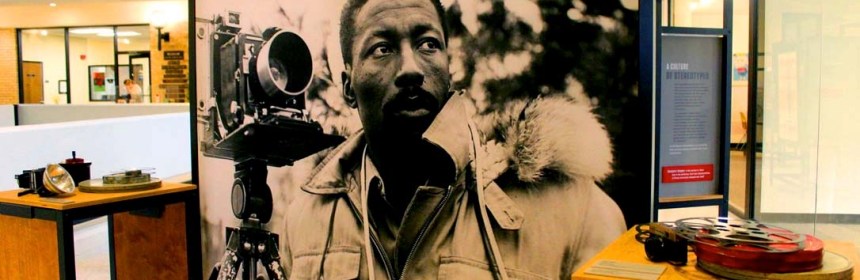
JONESBORO — The Arkansas State University Museum is hosting a black history exhibit, “For All the World to See” until March 15. The museum held a meeting for the local NAACP chapter to accompany the exhibit.

The National Endowment for the Humanities’ traveling exhibit “For All the World to See” is an in-depth display of the media depiction of African Americans throughout the civil rights movement, though it doesn’t start in the 1950s. According to Craighead County NAACP President Emma Agnew, the civil rights movement is a living history, dating back decades before it truly came to light.

“During a lot of the earlier periods, there was no media to cover the stories. Martin Luther King Jr. and others knew how to use the media. Before that, a lot of people only knew about black people based on what they saw on television,” Agnew said. “During the civil rights movement, they saw intelligent, motivated black people fighting for a cause. The media can be your friend or your enemy.”

The exhibit showcased both positive — relatively, for the time — and negative representations of African Americans in mass media, from historic television performances to the horrific tragedy of Emmitt Till, a 14-year-old black child that was brutally murdered in Mississippi on Aug. 28, 1955.

2D082F22-114E-4CB1-B661-CC4B6732F1DE

“I Am a Man” sign from a Memphis sanitation protest in 1968 on display. The protest caught the attention of Martin Luther King Jr., ultimately leading to his assassination. Photo by Chase Gage.

Though the newspapers did not want to publish the grotesque photos of Till’s body, his mother Mamie Bradley wanted her son’s story shown, not just told. Bradley responded by sending the photos of her son’s open casket funeral to “Jet” Magazine, an African American publication, and soon, the nation took notice.

Sandra Combs, associate professor at Arkansas State, spoke at the NAACP event — whose audience was nearly split evenly between black and white listeners — and recalled the putrid incident. She spoke of the courage it took to have an open casket for a child that was desecrated and castrated; a child whose eyes were gouged out and penis cut off and shoved in his mouth.

“We saw that and grieved with (Bradley). When we saw that, we got a little hopeful, a little courageous. If that little woman can go through that, we can make it,” Combs said.

The exhibit does not solely focus on tragedy, though, as it also offers triumphant breakthroughs for the black community during the Civil Rights era. It boasts black athletes such as Jackie Robinson and Muhammad Ali who completely shifted the landscape of their respective sports while also documenting the early days of black entertainers like the Jackson 5 and Richard Pryor.

“A lot of people only knew about black people based on what they saw on television.” – Emma Agnew

However, many people already know the stories on the extreme ends of the spectrum. The lowest trenches and highest peaks of the civil rights movement have been well-documented. What often falls between the cracks are the “smaller” struggles that still persist today.

One such instance is displayed between Till’s story and those of sports heroes. African Americans have historically been portrayed through negative stereotypes that have been either missed or dismissed by non-black viewers.

Even as times progressed, these negative images bled through into mainstream culture. Whether it be the image of a child eating a watermelon for an advertisement— as opposed to an overly racist caricature — or Aunt Jemima feeding white families her famous pancakes, these often subtle jabs at the image of African Americans did serious damage to black history and has yet to be completely eradicated in the United States.

Exhibits like “For All the World to See” exist to bring these issues to light for audiences that may have been uninformed. The fact is, black history and the fight for civil rights has more of a history than can be learned in a lifetime.

8B27714F-BAC0-4AFF-82DA-D8F3DE140842

Top: A Shell Gasoline advertisement. Bottom: a postcard depicting southern African Americans. Photo of display by Chase Gage.

Virtually everyone knows the stories of King, Rosa Parks, Malcolm X, and others, but the vast majority of stories fall through the cracks. Cherisse Jones-Branch, professor of history at A-State, spent her time at the meeting shining a light on these little-known stories.

“There are all kinds of stories that we don’t see. We miss the texture and the complexity of the stories we know,” Jones-Branch said. “Think beyond what the civil rights movement is. Black people have been fighting for their rights, this is nothing new.”

Jones-Branch opened her speech with a joke that African Americans didn’t “suddenly wake up in 1950” to realize things weren’t right for their communities, demonstrating the fight for civil rights dates back throughout black history in the United States.

The story of the Montgomery Bus Boycott is rather famous in terms of black history teachings, but transportation boycotts actually outdate busses. In 1903, the state of Arkansas issued Act 104, mandating segregation of streetcars. Just a year later, there was a streetcar boycott in the state. It would be half a century before Parks was arrested for not giving up her seat.

Viola Desmond, a Canadian civil rights warrior, was arrested for sitting in the “white” section of a movie theater in 1946. In the same year, Laverne Cook, a black girl, was enrolled in a white school in Huntsville, Arkansas. Claudette Colvin was arrested in Montgomery, Alabama for refusing to give up her bus seat nine months prior to Parks. Colvin was only 15 years old at the time.

In reality, so much of black history during the civil rights movement was built on precedent. The famous stories are often not the first of their kind, but the first to break into the mainstream.

Black history is a living, breathing document of the lives of African Americans throughout history. Only through education can these issues be brought to life. Without knowing our history, we are doomed to repeat it. Perhaps King said it best in a letter to Harold Courlander in 1961.

“The world seldom believes the horror stories of history until they are documented via the mass media.”

Medical Marijuana Forces Law Enforcement Changes

by Chase Gage
Delta Digital News Service

JONESBORO — The Arkansas Medical Marijuana Amendment passed during the 2016 election cycle. With implementation beginning, law enforcement agencies are shuffling to prepare for the changes they will soon experience.

In Arkansas, the medical use of marijuana is legal. However, the use, possession and distribution of marijuana for any purpose still remains illegal at the federal level in the United States. That alone causes issues for the legal implementation of medical cannabis.

“It’s still illegal federally and we don’t have it (recreationally) legal at the state level so we’ll continue to enforce the laws until they change,” said Jonesboro Chief of Police Rick Elliott. “You’re going to have to have your medical card with you if you get caught with it. If you’re medically qualified and all documentation is in order, you’ll be fine.”

Elliott said if a person has a medical card, they will face no issues if caught with legally obtained marijuana. However, impaired drivers will face repercussions, just as they would with other drugs or alcohol.

In simpler terms, don’t drive high, even with a prescription.

“We’re bringing the officers up to speed on recognizing driving while high. There’s technology being developed similar to the breathalyzer that can detect THC levels,” Elliott said. “These new strains are very high in THC content, which is impairing. We expect an increase in traffic accidents because of it.”

Currently, prescribed patients cannot legally possess marijuana. Patients must purchase the drug at a dispensary within the state of Arkansas for it to be legal. Two Hot Springs dispensaries have opened since May, selling 169 pounds of medical marijuana and earning more than $1 million in the first month of business. A Northeast Arkansas dispensary isn’t open for business yet.

13999431743_9854e1cab1_k

A cannabis prescription is just like any other prescription. Arkansans voted to legalize the plant medicinally in 2016. (Photo by Kyle Butler licensed under CC BY 2.0)

Corey Seats, Coordinator and Deputy Prosecuting Attorney for the 2nd Judicial District Drug Task Force, said the opening of the dispensaries, and thus the beginning of legal marijuana, will pose several issues for law enforcement.

“Normally you can search (a vehicle) if you smell marijuana,” Seats said. “If someone is pulled over and the officer smells marijuana inside the vehicle, his first question will be, ‘Do you have a medical marijuana card?’ If they say yes, can you search? How is that going to impact probable cause?”

Drug dogs and K-9 units will face similar problems. Drug dogs are trained to detect illegal controlled substances, but now marijuana will be legal in certain situations.

Seats said law enforcement officers run into similar problems with prescription pain medication such as hydrocodone.

“If you have a marijuana card, as long as you have less than 2.5 ounces, it’s not illegal to possess. How do you train a dog not to smell less than 2.5 ounces of marijuana? You can’t,” Seats said.

At the federal level, marijuana legalization is — for lack of a better term — a mess.

The Obama administration was rather hands-off on the subject, letting states decide how to regulate both medicinal and recreational marijuana through the Cole memoranda. However, in January 2018, Attorney General Jeff Sessions issued a new memo on marijuana enforcement that essentially gave the federal government the ability to intervene in any situation involving the sale or possession of marijuana, despite the legality at the state level.

Current Attorney General William Barr has a different tone toward the cannabis industry. Barr said he did not think it was appropriate to upset the legally licensed cannabis businesses just because the federal government could.

“I’m not going to go after companies that have relied on the Cole memoranda,” Barr said during his Senate confirmation hearing.

Special Agent Stephen Cupp from the FBI’s field office in Jonesboro declined to comment on the issue due to the ever-changing political climate.

Patients with medical marijuana cards cannot freely smoke the drug as they please. There are several rules in place for the usage of the substance.

For Arkansas residents, there are currently 19 “debilitating medical conditions” listed that qualify an individual for a marijuana prescription, including AIDS, cancer, Alzheimers, intractable pain and more. Over 7,000 Arkansans currently possess medical marijuana cards.

Use of medical cannabis will be prohibited in most non-private areas. Examples include all public areas, school grounds, correctional facilities, motor vehicles, health care facilities, private residences used for licensed child care and any other place where smoking is prohibited.

In Arkansas, possession of marijuana less than 4 ounces is a Class A misdemeanor with a maximum sentence of one year in jail and up to a $2,500 fine for a first offense. Any subsequent offense is a Class D felony, which carries a maximum of six years in jail and up to a $10,000 fine. Possession of between 4 ounces and 10 pounds carries a mandatory minimum of three years in jail.

Marijuana is legal medicinally in Arkansas, but recreational use or possession is still against the law. Medicate responsibly.

EDITOR’S NOTE: Featured photo of “pre ’98 bubba” by Mark is licensed under CC BY 2.0

Nature Center Promotes Outdoor Education

by Chase Gage
Delta Digital News Service

JONESBORO — Summer is coming and children across the nation need activities to fill their time other than cellphones and tablets. The Crowley’s Ridge Nature Center offers several educational programs for children and adults alike over the break.

In a world of technological overload, screens dominate while nature sits on the backburner. The Forrest L. Wood Crowley’s Ridge Nature center is combating this issue through various educational programs in hunting, fishing, trapping and more.

Lifelong outdoor enthusiast and Education Program Specialist Cody Walker said he hopes to spread his passion for the outdoors through programs at the nature center.

32724966407_03b063bcf5_k

One of the many animals on display at the Crowley’s Ridge Nature Center is a coyote, a canine species found in Northeast Arkansas. This display, along with several others, functions as a learning mechanism for visitors at the center. (Photo by Chase Gage)

“I didn’t have a cellphone until college. I went outside to play. My parents wouldn’t allow me to stay inside and I see that trend declining. It’s important to get kids and adults outside doing these activities not because it’s my job, but because it’s a passion for me. I like passing that (passion) on to other folks,” Walker said.

The nature center provides programs across the outdoor spectrum, from Hunter and Boating Education courses to simple fish feedings. Two programs available during the spring were the “Crankin’ Good Time” introduction to fishing course, where participants learned the basics of fishing and get to create a unique fishing lure to take home, and a “Turkey Fan Seminar” that taught hunters how to mount their trophy gobblers.  

Watching screens can be addictive. Studies conducted by Dr. Piush Mandane, associate professor of pediatrics at the University of Alberta, conclude that screen time in children can be directly linked to ADHD.

“Children should develop a healthy relationship with screens as young as 3-to-5 years of age,” Mandhane said in an interview with ABC News. “Our data suggests that between zero and 30 minutes per day is the optimal amount of screen time.”

With screens dominating American society, it can be hard to escape them. Televisions, tablets, cellphones and more have made their way into nearly every aspect of life. 

Some local parents are facing this issue head-on, using the nature center as an outlet for education and an escape from the digital world. Kalob Welch, a history teacher at Blytheville High School, took his 4-year-old daughter, Arden, to the center as a Saturday getaway.

“She loves being outside, she loves animals. I think it’s important for kids to get outside. We need a healthy balance (of outdoors and technology). It’s definitely nice to bring her out here to exert some of her energy,” Welch said.

The nature center provides several classes every Saturday and Sunday year-round.

This summer, residents of Northeast Arkansas have the opportunity to go outside and experience the beauty of the natural world around them, or to stay inside and strengthen addictions to screens.

Watch the full interview with Walker here.

‘Race for the Cure’ more than just a 5K

By Chase Gage
Delta Digital News Service

JONESBORO — The third annual Northeast Arkansas Susan G. Komen Race for the Cure at Arkansas State University will take place April 27. For breast cancer survivors, the race hits close to home.

The Race for the Cure nation-wide event raises money for breast cancer research. In 2017, the race found its way to Jonesboro for the first time. The 5K is primarily a fundraiser, but it also inspires hope.

Elizabeth Forehand, a local breast cancer survivor, will be participating in her fourth Race for the Cure this year. She survived her 2014 diagnosis after four surgeries.

“It was a shock to hear. No one wants to hear ‘cancer.’ I had the attitude that I have to fight this. I have a life to live, so let’s do this,” Forehand said. “Just being around other survivors and sharing our stories and being able to see that all these people have beaten cancer, it’s just awesome. It’s very encouraging.”

The race encourages survivors to participate by hosting a survivor breakfast at 7 a.m. followed by a survivor parade just prior to the race. The race itself will start at 9 a.m.

KODAK Digital Still Camera

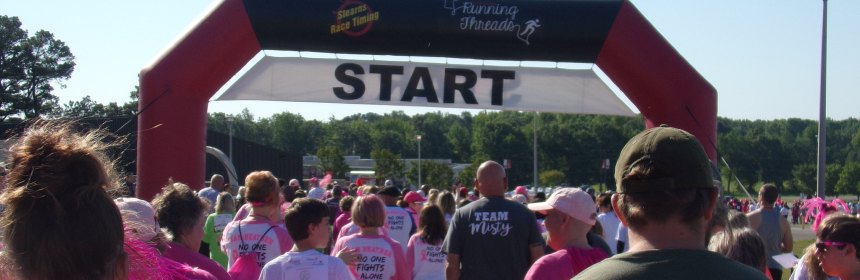
Participants walk in the 2018 Race for the Cure in Jonesboro. The 2018 race raised over $330,000. (Photo by Chase Gage)

Other pre-race events include a “pink pasta party” and the “Men’s Walk a Mile in Her Shoes” race, where men “run” a mile in heels.

Contributions are welcomed in several forms, including participation and donation. Donations of any amount are welcomed, with registration costing at least $25.

Northeast Arkansas race chair Amanda Herget said the goal is to raise $400,000 this year.

“Our goal with this race is to get awareness out, not just to Jonesboro but to all of the communities (in Northeast Arkansas),” Herget said. “The money that we raise gets sent to Komen and then redistributed to Northeast Arkansas through grants to purchase things such as mammography machines and buses for transportation (for those that need it).”

Several local entities, such as St. Bernards Healthcare, Gearhead Outfitters, East Arkansas Broadcasters and others, are fundraising through the race’s website. Kara Richey, host of The Weekday Red Zone” on 95.3 The Ticket, is fundraising for the third consecutive year. With this years’ donations, her fundraising total has exceeded $5,000 in total.

“They’ll use a lot of this money to fund things like free mammograms early testing in Northeast Arkansas and around the state. I love that our money stays local,” Richey said.

Breast cancer has played a large role in Richey’s life. At 12 years old, she lost her mother to breast cancer, and her aunt is a survivor of the deadly disease. These personal experiences fuel her fundraising efforts.

“Unfortunately, this disease has been in my life for a very long time, and I hope that one day we can finally cure it so we don’t have to do this anymore,” she said.

Women are diagnosed with breast cancer at a rate of one out of eight. Every 13 minutes, a woman in the United States dies from the disease. Worldwide, that number jumps to one per minute. Every little bit makes a difference.

Bill Clinton Speaks at A-State

President Bill Clinton

by Chase Gage
Delta Digital News Service

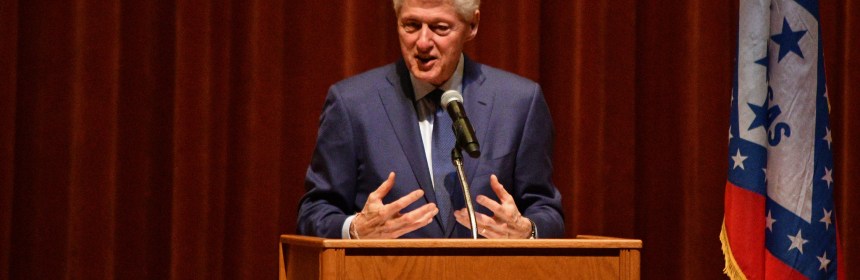
JONESBORO – Former President Bill Clinton spoke to a near-capacity crowd at the Fowler Center Monday night. The man from Hope delivered a speech about hope for the future.

At a time when America is arguably more politically divided than ever, Clinton urged listeners to love one another like human beings, not opposition. He drove home the message of treating people like people and getting rid of resentment and anger towards others.

Arkansas State University Chancellor Kelly Damphousse introduced the 42nd president to approximately 950 people.

“If you live in resentment and anger, it disempowers you. You want to be empowered,” Clinton said. “You have to open your heart and ears before you can open new doors. You’ll waste a lot of your life living in resentment and anger.”

Clinton, founder of the Clinton Foundation, said the current political discourse does not lay the foundation for citizens to have the types of conversations they need to be having. Instead of discussing economic inequality and how to fix it, or the emergence of artificial intelligence (an advancement that may kill more jobs than it creates), people are more worried about tearing each other down.

He proposed Americans should be more concerned about their grandchildren’s future instead of winning the next fight on a television talk show. People in disagreement are still people, and sometimes that is forgotten.

Bryant Moy, a graduate political science student at Washington University in St. Louis, said before the event that he hoped to hear the former president speak on civil discourse in the United States. He got his wish.

“He talked about trying to treat people as people. You can still have these deeply held, strong beliefs and resentment, but you have to cooperate with one another. I loved it. It was exactly what I wanted,” Moy said after the event.

Kaylee Bauman, a medical student at New York Institute of Technology from Michigan, said the speech was refreshing.

“(Clinton) talked about bringing everyone together, and then seeing all the different types of people in the room, it was great. I wasn’t sure what to expect, but I thought his overall message was something that could apply to everyone in the room. I found it fascinating,” Bauman said.

President Bill Clinton

President Bill Clinton spoke for about an hour Feb. 11 to more than 900 people in Riceland Hall at Arkansas State University as part of the “Riceland Distinguished Presentation Series.” The 42nd U.S. President previously spoke at A-State on three different occasions. (Photos by Ammar Taqi)

Monday night was not the first time Clinton spoke in Jonesboro. He recounted the story of when he spoke at the Arkansas State University Commencement ceremony in the late 1970s while he was Attorney General of the state. Due to rainy conditions, the ceremony was moved into the field house, where Clinton cut his speech off after only six minutes due to the hot, humid conditions. He most recently visited the university during the 2014 election cycle while campaigning on behalf of Mike Ross for the Arkansas gubernatorial election. He also dedicated the Dean B. Ellis Library in 1995 while in office as president.

Clinton told many stories that showcased examples of people treating others with love and respect. One such story involved fellow former president, George W. Bush and how the duo was able to put partisanship aside to work on creating a better world for the American people. Another story told of how Clinton’s grandfather would give food to those in need. The differences between the two examples demonstrated how respect for others can work on any level, in any situation.

“If you want America to lead the world to a better and more peaceful place, we have to think about empowering people, not putting them down,” Clinton said. “This is not a (partisan) issue. This is not a racial issue. This is a challenge.”

His message of a hopeful tomorrow rang throughout the hour-long speech. The future is up for grabs, for whoever wants to take it.

“We all have our resentments and regrets, but all we really have is tomorrow. You only become old when the weight of all your yesterdays outweigh your hope for tomorrow,” Clinton said. “There will never be a time free of problems. We have possibilities, but you have to face them and the problems they present not with resentment, but with an open hand, a listening ear and a loving heart.”

Listen to the full speech, courtesy of KASU’s Johnathan Reaves:

Save Pets From Frigid Temps

By Chase Gage
Delta Digital News Service

JONESBORO – Frigid temperatures may be inconvenient for humans but pets have a tougher time combating the weather.

When temperatures plummet into the teens and single digits, commuters don extra layers of warm clothing such as scarves and mittens to stay warm. But pets do not have the same options.

The Humane Society changes much of its routine when temperatures get so harsh.

“It’s definitely an issue,” said Kelly Pickering, kennel manager at the NEA Humane Society. “On Jan. 31, it was 18 degrees with a windchill of 8, so we couldn’t even take out two rows of animals at a time. We would only take out about two dogs apiece, clean two kennels, get them dry and bring those two back in. They weren’t outside more than 15 minutes.”

Weather permitting, these animals typically stay outside from breakfast to lunch (around 1:30 p.m.) while their kennels get cleaned. The cold weather forces the process to speed up and keeps the animals caged longer than normal.

Some dogs have the luxury of taking human-like precautions, but they need a bit of assistance.

cagedPups

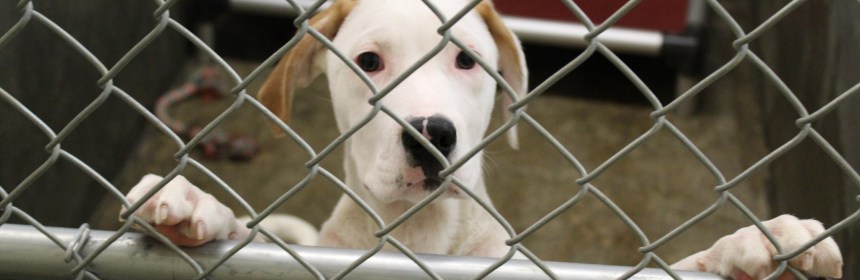
Caged puppies wanting attention during the polar vortex. Too young to be put with the general population, they got a cage all to themselves. (Photo by Chase Gage)

“With some of our smaller or malnutrition dogs, we put sweaters and jackets on them. I’ve never had a crew that likes to dress dogs up as much as our current crew. It’s not a chore to them. They thoroughly enjoy it,” Pickering said.

Homeless pets may be regulated during these conditions, but pets with homes face similar dangers. Depending on the breed of the dog, warm and cool temperatures will affect them differently.

“Any time the weather gets below freezing, there should be some serious consideration on bringing your dogs inside,” said Ancel Jines, a local dog trainer. “It varies based on what breed of dog you have and how acclimated it is to the weather.”

Jines said some breeds, such as huskies and German shepherds, have multi-layered coats that keep them warm during harsh conditions. However, dogs such as beagles and dachshunds have single-layered coats that aren’t much longer than a human eyelash. These animals struggle to stay warm in the cold, especially when it gets below freezing.

The weather itself is of great concern to pets, but diseases during cold weather may be more dangerous. The polar vortex itself may not cause direct harm to animals in the region, but its effects very well could.

“The key to animal health is cleanliness,”” Pickering said. “We have to be really cautious about overcrowding. When we have a large population and they’re not getting out and just being confined, that’s when you’re set up for an outbreak of disease. We just have to watch out for abnormal behavior. At the first sign of anything unusual we get them to our medical team.”

Melissa Grigsby, a veterinary kinesiologist at Hilltop Veterinary Hospital, said there have been no reported cases cold-related injury but claims the weather is still very much a concern.

“We haven’t had any specific cases recently (directly attributed to the cold weather). However, due to the rain and the cold, we have had a lot of parvo cases come up,” Grigsby said. “Just because we haven’t seen any cases yet doesn’t mean they’re not out there. We would worry about shelter, water being frozen, stuff like that if they’re outside.”

During harsh weather, make sure to take care of loved ones, especially the four-pawed kind that cannot care for themselves.