The Arkansas Dr. Martin Luther King Junior Commission partners with the Dr. Martin Luther King Junior Commission in Nevada. This partnership bridges the most active commission in the nation (Arkansas) and the world’s largest Dr. Martin Luther King Junior parade in Las Vegas. The parade in Las Vegas started in 1981 and has attracted commissions from across the nation to Las Vegas for the parade.
As part of the work done in Nevada around the celebration of the late Dr. Martin Luther King Junior, a technology summit is held annually to inform freshman through high school seniors about job opportunities. The technology summit was started seven years ago by Duana Malone, known as the Tech Queen.
“We wanted to serve by letting students know about the technology opportunities available,” says Malone. “This was especially important for outreach to go toward students who are in underserved and underrepresented communities. Back then, students did not know about high-tech opportunities, robotics, and other areas. We want to ensure that today’s students know about all available technological opportunities”.
Malone said that when the community started learning about the technology summit, it grew exponentially. One challenge was finding a space large enough to hold it. The Friday summit was held at Las Vegas City Hall in the city council chambers, which was large enough to hold a couple hundred students from area high schools to learn about technology and jobs.
The Arkansas Dr. Martin Luthe King Junior Commission is one of the most active commissions in the nation. Executive Director of the Commission Dushun Scarbrough has been excited about the partnership between Arkansas and Nevada.
“We have one of the largest days of service on Dr. Martin Luther King, Junior’s Day, and we participate in over 70 activities statewide through the year,” says Scarbrough. Scarbrough has been grateful for the partnership and says the Technology Summit coming to Arkansas will be a game changer. “Just as this did for Nevada, we are going to do the same thing in Arkansas and positively impact the children in Arkansas.”
Malone expects to be in Arkansas later this year to help with the establishment of a technology summit in Arkansas. More details on the technology summit in Arkansas will be released as soon as everything is finalized.
Arkansas State University is in the process of creating the next Astate.edu website which is set to launch summer 2025.
Todd Clark, chief marketing and communications officer and member of the website redesign committee, said the website is the front door of A-State.
“Oftentimes it’s our students’ first experience with A-State, so we want to make sure we’re showcasing the university in the best light,” Clark said.
Clark said a university website lasts five to six years, and Astate.edu was last redesigned in 2012.
The committee is building the website from the ground up with external partner iFactory, a digital marketing agency specializing in higher education. They are also in collaboration with Modern Campus, a company that provides software and web content management services for higher education institutions.
“We’ve just so radically changed in the last twelve years that we had to go back and just kind of, for lack of a better word, blow it up and start over,” Melanie Wicinski, associate vice chancellor for accreditation and assessment and member of the website redesign committee, said.
Justin Coats, a junior computer science major from Cherry Valley, Arkansas, said the current website is good at overall presentation, but does a lackluster job at purveying information.
“I find that I often get lost on it. So when I heard that they were recreating the website I was certainly happy about it, because it definitely needs updating,” Coats said.
Coats said he often goes on the website to look for his class bulletins but can’t find them because they’re hidden so deep within sub pages. He said it’s difficult to find databases on the website unless his professors link directly them.
“The databases and the bulletins are both so important and they’re just kind of sandwiched in the middle of nowhere in the website,” Coats said. “I think that definitely is a symptom of having so many pages that are just thrown about and added post making a main framework of the website, as opposed to considering all of that at one time and then designing the website.”
Priorities for the new website include having program pages with more dynamic information, the ability for faculty to update these pages with ease, an accessible mobile-first design and removing the a-z index.
Wicinski said the a-z index is a crutch for faculty and staff and a well-designed website shouldn’t need one.
“I would die on the hill that we should not have to have an A to Z index,” Wicinski said.
Clark said the biggest issue with the current website is its age and how bloated it is. He said the Astate.edu domain has about 40,000 pages of information.
Clark and Wicinski hosted an open forum to provide an update on the project and share prototype designs.
Jim Washam, Neil Griffin College of Business dean, attended the open forum. He said he wanted to see what the new website was going to look like so he could start planning a layout for the new College of Business page.
Washam said the current website has too much clutter.
“I think building the new website will help us clean out a whole lot of that clutter and streamline things,” Washam said. “So I’m excited about that.”
Clark said iFactory audited every page of content on the A-State website.
“We went through and inventoried our content and audited as a committee to figure out how we can try to really reduce the amount of pages,” Clark said. “There’s no need for A-State to have 40,000 pages. If we can cut that down to 10,000 it’d be great, 5000 would be even better.”
Washam said the website redesign committee should prioritize a combination of design and content to catch people’s eye and lead them to the information they need.
Wicinski said the redesign in 2012 cost over $200,000 and the committee will keep the new website continually updated to avoid having to redesign the website in five years.
To increase governance among faculty, the committee will implement transparent rules, expectations and guidelines for updating the website.
“Modern campus has tools that will remind faculty and staff when content is dated. The new system we’re migrating to will really help us make sure that we can keep this website current,” Clark said. “If we see a section of the website hasn’t been maintained properly or is way out of date, we’ll know who on campus is responsible for updating that information and we can work with them, work with those people to get updated.”
Clark said faculty and staff can prepare for the website launch by taking a look at the pages they have now, taking inventory of outdated information or broken links, auditing employees, getting involved in building directories and putting together a small team who have ownership accountability for their pages.
The chief marketing and communications officer said hosting the open forums is important for transparency and so the committee can receive feedback.
“The university website has so many different layers and audiences, everything from the department of biological science to the library to the A-State museum, all these users use the website differently and have different types of content,” Clark said. “It’s good to get that kind of open opinion from everyone so, as we move forward with the project, we’re best informed.”
Clark said the feedback so far has been overwhelmingly positive.
“I think people are excited about the new website, the new look and I know our campus users are excited about the ease and functionality,” Clark said.
JONESBORO — The City of Jonesboro held a joint meeting with Suddenlink Thursday night to address numerous complaints by citizens. The St. Bernards Auditorium was at capacity; in fact, it was standing-room-only for disgruntled residents.
Hundreds of Jonesboro residents showed up to voice their complaints to media giant Suddenlink. Complaints ranged from wrongful charges to lack of competent service and were never in short supply.
“Our company has not delivered as it should. I want to apologize that it’s come to this. The crowd is evidence of how serious it is,” Brad Ayers — senior director of governmental affairs for Altice USA, the company that owns Suddenlink — said.
Hundreds filled the St. Bernard’s Auditorium for the meeting. Photo by Chase Gage.
Representatives from both Jonesboro and Suddenlink were available from 6 p.m. to 8 p.m. to answer questions and complaints submitted by customers. Ayers “promised” the company would address every complaint “within a week” of the meeting. Jonesboro’s communications director Bill Campbell read several of the complaints to the crowd.
The majority of the meeting consisted of Suddenlink representatives attempting to answer specific questions by residents, though they often received “corporate” answers instead of legitimate solutions. The crowd tried their best not to let the company off the hook.
Perhaps the loudest reaction of the night came when the company reluctantly revealed one of their call centers was located in South Africa; multiple complaints included call center employees not speaking fluent English.
“I can never get a real person on the phone, and when I do, they’re foreign and I can’t understand them,” Campbell read from a submitted complaint.
Further unrest ensued when a customer proclaimed “if you’re billing for services that aren’t provided, that’s a problem.” The statement was met with applause and a very audible “amen” from the back of the room.
“I’ve gotten your calls and emails. This (crowd) is evidence of what’s going on.” – Jonesboro Mayor Harold Perrin
State Senator John Cooper was in attendance as well to address his constituents and their frustrations.
“It looks to me like you’re trying to handle this with management. Personally, I would like to see highly trained people here to take care of this. It’s probably a little bigger than what you have here at this meeting tonight,” Cooper said to the Suddenlink representatives.
Cooper suggested a “task force” approach to solving the problems Jonesboro residents are facing.
“You’re welcome to contact me at any time over these issues. I will work with this company to improve the service,” Cooper said. Cooper can be contacted by phone at 870-761-0130 or by email at john.cooper@senate.ar.gov.
An upset customer voiced their opinion on Suddenlink during the meeting Thursday night. Photo by Chase Gage.
Jonesboro Mayor Harold Perrin arranged the town-hall-style meeting after a Nov. 7 meeting with Suddenlink representatives. Prior to the initial meeting, Perrin receiving numerous calls and emails complaining about the company and “immediately” got on the phone to fix them. Perrin assured citizens that their voices were being heard and their issues would be addressed.
Perrin also made sure to point out Suddenlink does not have a franchise with the City of Jonesboro and that any claims otherwise are misinformation. Instead, Suddenlink has a franchise with the state of Arkansas. There are multiple cable and internet providers in the city, though Suddenlink serves the majority of the area.
“Send any unanswered questions to my office. This is a serious issue we need to resolve,” Jonesboro Mayor Harold Perrin said to open the meeting. “I’ve gotten your calls and emails. This (crowd) is evidence of what’s going on.”
The Jonesboro Mayor’s Office is located at 300 S. Church St. and can be contacted by phone at 870-932-1052 and via email at hperrin@jonesboro.org.
In the end, the meeting did little to resolve any issues despite the best efforts of the Suddenlink representatives. However, if their promise is fulfilled, the residents of Jonesboro will be taken care of in the near future.
“We’ve heard you loud and clear,” Ayers said in his closing statement. Whether or not they listened, though, is yet to be determined.
JONESBORO – The Foundation for Jonesboro Public Schools awarded a Jonesboro High School art teacher $1,000 so he could provide drawing tablets for his class and expand the abilities of his students.
David Leggett used the money he received from a grant to purchase Huion 610pro tablets for his digital art media class. Although the tablets are a staple of the digital art media class, Leggett said other art classes should eventually be able to use them.
After applying for a grant from the foundation, Leggett did not find out he won until foundation members visited his class during a school day. The awarding of the money surprised the art teacher. Members of the foundation walked through the halls of JHS ringing a cowbell as they approached his door.
“They don’t tell you you’re awarded,” Leggett said. “You submit your thing and then you wait. If you’re lucky enough to hear the cowbell come to your door, then you’re like OK. I didn’t realize it until they opened the door. It was right outside the door, I was like, that noise seems to be getting louder. Then it dawned on me, it clicked. I might’ve won. I can be excited now.”
Leggett bought 17 tablets with the grant money and the tablets helped students achieve goals they might not have been able to achieve in the past.
“It helps a lot of the kids,” Leggett said. “A lot of kids feel like they can’t draw. So, they get into the computer side of it and know they can undo stuff and redo. They feel like they have a little bit more control over their media.”
In classes like digital art media, students now approach projects with more confidence.
“In the digital classes, if I was to set a piece of paper in front of them and say we’re going to draw a face, a lot of the kids would say I can’t do that,” Leggett said. “So what we’re doing right now is practicing on using the tools and then we’re learning how to trace the face and the contours of the face.”
Maddy Grubb, a junior at JHS, said she never really used a lot of technology in her art classes in the past and the tablets were her first experience with high-tech equipment when it comes to art. She noted how the tablets changed the game in her art classes recently.
“I feel like it definitely makes it easier for us,” Grubb said about the tablets. “When we have to use computers in our art class, it’s a little bit harder. It’s not as accessible as when you can use a tablet. The tablets definitely make it easier for us to draw and trace for our art projects.”
Grubb said she was nervous at first using technology to create art, but in the end, she realized how helpful the tablets were to use.
“I was a little nervous because I wasn’t really sure what it was going to be about,” Grubb said. “But it’s actually a lot easier than you think. You just plug it up to the computer and press a couple buttons. It’s very easy.”
Another student, Brian Holmes, held more experience with high tech art equipment. The JHS sophomore used other tablets in the past and commented on why tablets are so important for art students.
“Being able to undo and redo and free transform objects is really helpful,” Holmes said. “So I don’t have to manually go back and erase it.”
Holmes used a variety of tablets in the past and mentioned some of the advantages of the Huion tablets in Leggett’s art class.
“The hot keys are really simple and the pressure sensitivity is pretty good too,” Holmes said. “Overall it’s just a really nice, simple tablet.” JHS offers a variety of different art classes and both Grubb and Holmes acknowledged the focus on technology at JHS. The technology helps improve the classroom.
“The classes do care about the quality of the classes and what they give out,” Holmes said. “They know that higher quality things can help students produce higher quality work.”
The impact of the tablets on students shows in the classroom. Leggett noted how the tablets help create art in ways that just takes a lot of pressure away from his students.
“I do think it will actually help them in observation,” Leggett said. “(It will help them) in drawing something that they can always go back and undo a line and redo a line. They can do this much easier when they have a tablet in front of them by pushing a button. There are so many options they can do. Their anxiety is so much lower.”
Even with the success of the tablets in the classroom so far, Leggett still looked into the future and saw more ways to improve his classroom.
“Anytime I can get money for my kids, I’m definitely going to try and do that,” Leggett said. “I was not able to provide a classroom set of tablets this year. We got 17 with the money we got. I would love to be able to have a class set of 30. I would love to go back and just keep getting tablets or really anything.”
Leggett applied for a foundation grant for the first time when he applied for the tablet money. He noted how the foundation’s impact really matters.
“I think it’s great,” Leggett said. “We’re given a budget. We have 1,500 kids. We try our best and buy everything we can. When we needed to get something like those tablets, I was able to write that grant. They were able to get me the grant money to do that. (It’s great) to see the kids working with these things and just my overall excitement for being able to provide these for the kids.”
Leggett’s passion for teaching showed when he talked about the impact of the grant. It is clear JHS and the district as a whole has an organization on its side ready to chip in when needed most.
“They’ve provided grant, after grant, after grant,” Leggett said. It’s been great, that’s what we’re here for, we’re here to provide for the students.”
Editor’s Note: Art teacher David Leggett looks at a Huion 610Pro tablet. Leggett purchased the tablets for his class with money he received from a Foundation for Jonesboro Public Schools grant.
JONESBORO — Anticipation of the next generation of fitness earbuds and Apple AirPods is at an all-time high.
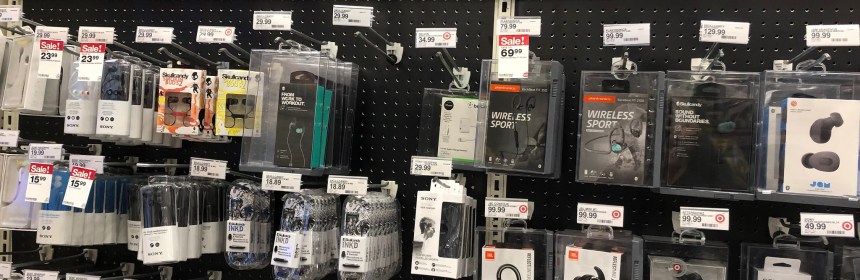
Fitness earbuds are wireless earbuds that have Bluetooth capabilities. Walmart employee Katherine Martin said, “Fitness earbuds are only called fitness to appeal to the fitness crowd… it is good advertising.”
The perks of fitness earbuds are that they are convenient for those with disabilities. The devices are water resistant and because of their design, stay in your ears well.
Martin not only sells earbuds at the retail store, but also uses the product. However, Martin said she chooses to wear normal earbuds because she hasn’t found the need to wear the wireless ones.
Logan Bonner, an AirPods owner, said he prefers fitness earbuds because they are more convenient, especially when he travels.
Bonner thinks people buy fitness earbuds like AirPods more than regular earbuds because, “even if they are not into fitness, they are more convenient.”
AirPods are compatible with most phones and have a microphone in each bud. This allows for voice calls while wearing them.
Bonner said when he works out, he prefers wearing beats wireless headphones because they are better at staying in place during intense movement.
Bonner said he would recommend AirPods because they are quick and easy to operate.
Target store employee Billy Simpson said although the fitness earbuds don’t have wires and are more portable with noise cancellation, he uses regular earbuds and thinks his store sells more of the regular type compared to the fitness.
Simpson predicts they will sell more of the next generation AirPods, once they are released, instead of the original AirPods and that he would recommend Beats brand to somebody looking to purchase fitness earbuds.
JONESBORO — Google has introduced a video game streaming service that only requires a controller.
The difference between the new game system called Google Stadia, and the Microsoft Xbox or Sony Playstation is that it is streamed and does not have a bulky console that uses discs. It relies on a Wi-Fi signal to stream games, much like Netflix does with movies and TV shows.
Google Stadia is convenient because you can play games on any device— smartphone, laptop, tablet or television.
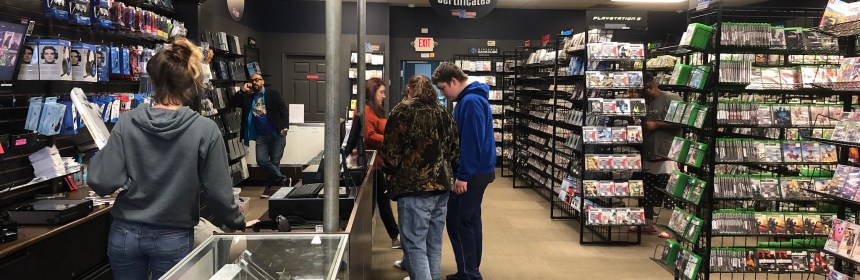
In regards to specific age appeal, Matt Shimasaki of Game X Change said, “I guess it wouldn’t be a success for like my generation and older generations.” Shimasaki said he could see this product being sold at places like Game Stop and Walmart because Game X Change doesn’t sell new products because they are a buy, sell and trade business.
Shimasaki said that he would not invest his money into the Google Stadia because he has always been an Xbox fan and nothing will change that.
James Mcquay, an Xbox owner, said he prefers Xbox because, “I would rather have a physical disc and have it on hand.” When something is being streamed over the internet, there is a chance the server could crash and the game could lag. That is another reason why people feel more comfortable having a physical disc inside a game console.
Mcquay also said that he believes Google Stadia will take away sales from businesses like Game X Change because there won’t be a need for trading game discs anymore when all the games are available on a digital streaming service.
Kieron Sims at Greenback Games said he could see the Google Stadia being a success because, “it will catch on to the trend of digital media.”
Sims also said he would invest in the Google Stadia because he thinks it has good potential. He also said that Greenback Games doesn’t sell new products just like Game X Change.
Sims said he doesn’t think it would affect his business because they primarily sell retro games and he doesn’t think Google Stadia will make that big of an impact in the video game world because big companies will run them out.
Google Stadia is set to be released this November.
JONESBORO — Phone companies are creating what they call waterproof phones, but not all of them are necessarily waterproof.
The difference between waterproof smartphones and water-resistant smartphones is that water is incapable of getting inside a waterproof phone, however, a water-resistant phone may get water inside of it.
Sprint employee Ken Daley said they sell more water-resistant phones than non-water-resistant phones and he would rather splurge and buy a water-resistant phone instead of buying an ordinary one and getting a water-proof case for it.
“I would say the Samsung Note 9 is the best when it comes to water-resistant phones,” said Daley.
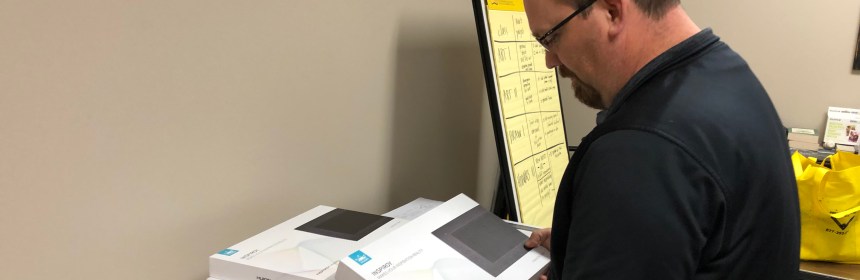
If you are looking to buy a waterproof phone case, he said Lifeproof is the only fully waterproof one. When it comes to waterproof cases, he said they sell the most of Insipio and Otterbox brands.
Stevie Ivy at T-Mobile said, “The resistance for iPhone and Samsung is 6 feet for 30 minutes,” which is pretty good, but he still doesn’t recommend that people take their phones in the shower.
Ivy said there is a big price difference between water-resistant phones and ordinary phones and he would be willing to pay more money to have a water-resistant phone rather than buying a non-water-resistant phone and getting a fancy phone case for it.
T-Mobile has a selection of phone cases to pick from and Ivy said, “We sell most of Otterbox cases.”
Bishal Verma from Neha Wireless gave a few tips on how to try to fix a phone with water damage. He said don’t try to charge it and to try and dry it as much as possible.
JONESBORO — The world of Electronic Sports continues to expand into pop culture in the United States and around the world, but it includes more than just playing video games.
According to www.statista.com, over 1.435 billion people knew about esports in 2018, but the number could grow to 1.57 billion in 2019. At the collegiate level, over 130 schools and more than 3,000 students participate in esports, according to www.nacesports.org, the governing body of college esports. A large number of the worldwide population know about esports and the number grows every year.
In fall 2015, Matthew Strack started the Arkansas State Rocket League Club with some friends. It started as something innocent; just a way to blow off steam after class. However, he quickly realized that it could become something more, especially at the collegiate level. The professional esports ranks featured players who make money playing games like “League of Legends,” “Counter Strike: Go” and of course, “Rocket League.” Strack tried to find collegiate “Rocket League” competition but realized it had not yet been created. So Strack, along with help from students at Purdue University and Rochester Institute of Technology, decided to create it and thus the “College Carball League” began in spring 2016.
“We really just played for fun. Our first real scrimmage was against Purdue’s team and we won,” Strack said. “As esports grew, ‘Rocket League’ grew, and we formed the College Carball Association, which helped found the ‘College Rocket League.’ It’s the official body for ‘Rocket League.'”
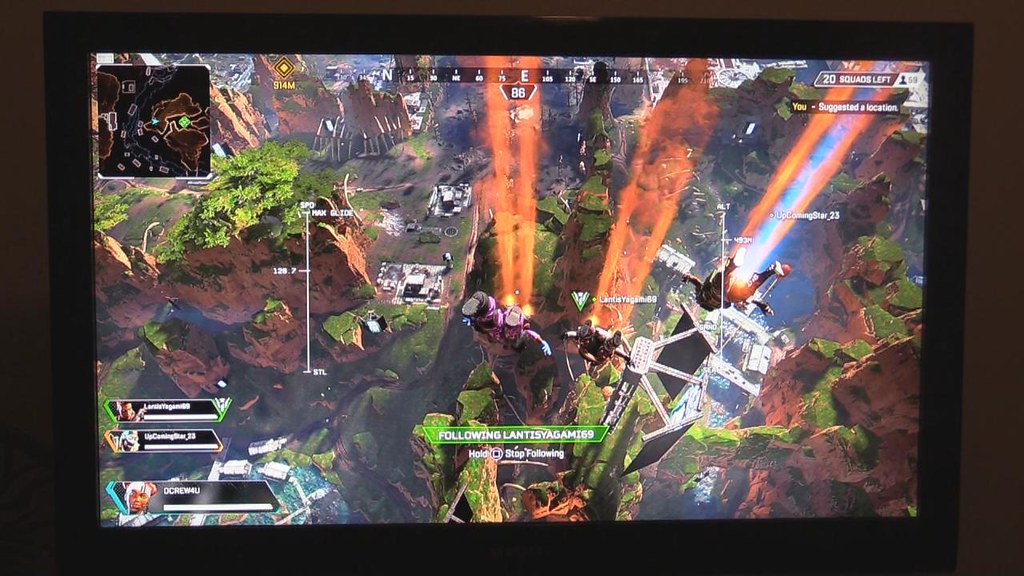
“Rocket League” is one of the newer esports on the rise with the likes of “Fortnite” and “Apex Legends,” among others. It may be easy to think competitive gaming formed recently, but quite the opposite occurred. According to www.medium.com, the first-ever esports competition began in 1972 at Stamford University, with the game of choice being “Spacewar!” From then on, the United States and the world became hooked on video games.
Arkansas State senior Jakobe Hardee trains extensively to stay on top of his game. (Photo by Denton Postlewait)
A-State “Rocket League” President Jakobe Hardee said he started his esports career by wanting to become a professional “Call of Duty” player. However, after discovering “Rocket League,” his gaming path changed. Hardee played video games as a child and knew early on that if he really worked hard at them, it would pay off.
“I played a lot of ‘Call of Duty’ and had hopes and dreams of becoming a professional,” Hardee said. “The first time I played ‘Rocket League,’ I enjoyed it, but it really didn’t catch my eye.”
While certainly not love at first sight, Hardee gave “Rocket League” another chance a few months later.
“I went back to ‘Call of Duty’ for a couple more months, but decided I wanted to play something else,” he said. “One day I saw it in my game library, played it again and I was hooked. I’ve been playing it ever since.”
Hardee said it takes a lot of hard work to become competitive in esports. Some days he plays for 10 hours or more, working on different skills to stay atop his game. Aside from physically playing the game, Hardee says he does a lot of replay analysis to see what areas of the game he can improve on and then practices those skills, while also learning new mechanics of the game. With “Rocket League” only being a few years old, the way the game is played is constantly evolving.
“You have to split your time between playing the game and reviewing the clips to see where you can improve,” he said.
When he’s not going to class or training, Hardee runs a practice discord (an app that allows for communication between users in a chat) for aspiring players. Hardee says what makes “Rocket League” so intriguing is players do not form preconceptions about what the game is like. Players who compete in “Rocket League” started from the same level.
From the outside, esports may not seem to be expanding. However, the Arkansas Athletic Association recently partnered with Play Vs, an esports league from California that primarily focuses on high schools. With this partnership, over 80 schools in the Natural State have formed esports teams and will begin competition in the fall of 2019. This announcement marked a huge win for the esports community, especially in Arkansas. Within weeks of the announcement, Arkansas State University announced the launch of an esports team and over 200 interested students reached out.
Another avenue for players in Arkansas who want to become competitive is The Southern Amateur Esports League. Based out of Little Rock, SAE allows players from Arkansas a chance to grow as players and gain valuable “big stage” gaming experience. Co-Founder and Community Director of Southern Amateur Esports Drew Foote said his company formed to be basically AAU for gamers.
Launched Feb. 4, 2019, Apex Legends boasts over 25 million active players. Photo by Denton Postlewait
“The Amateur Athletic Union is known for one thing, but they govern a lot of different sports,” he said. “With esports, each game is a different sport. I based SAE off of the AAU system.”
SAE continues to grow exponentially since its inception. Foote said the first event held only brought in about 30 people. However, the last event hosted by SAE brought in over 120 people and only 60 were players. Foote said the goal of SAE will be to give players an experience like the professional players that they’ll never forget. Foote does not just want to help players grow, he wants to grow the industry.
“I want to bring the esports experience and economy to Arkansas,” he said. “I want to create jobs in this industry. For me, it is about providing an opportunity to change lives through esports.”
Today video games seem to be more popular than ever. With revenue expected to topple $1 billion in 2019, the gaming community will see an even larger influx of interested players. Connectivity and competition form the foundation for the growth of esports. Esports represent the future of competition.
In addition to getting luxury recliner seats and a new grill, select auditoriums are upgrading their sound to Dolby Atmos.
Seasonal employee Zachary Ridgeway said movie watchers will be able to tell it apart from standard sound systems because the bass is much more defined. With surround speakers, it should provide the best movie experience.
Crystal Richard from Best Buy called Dolby Atmos one of the top brands for sound because it features a new audio format for playing back multichannel soundtracks.
“Dolby Atmos uses three-dimensional effect for sound, which allows surround sound to your device,” she said.
Dolby is used in much more than just movie theaters. Many brands like Pioneer, Marantz, Denon, Yamaha, Definitive Technology, Onkyo, MartinLogan, Samsung and Sony use Dolby sound in their products.
Richard said the Dolby products that aren’t used in movie theaters are typically sound bars and subwoofers.
According to the Dolby website, Dolby Atmos redefines moves sound all around, adds an overhead dimension, produces breathtaking sound quality and creates a moving entertainment experience.
The renovation at Malco Hollywood Cinema in Jonesboro will be completed by this summer.
BROOKLAND, Ark. – With the progression of modern technology and increasing use of electricity, Craighead Electric Cooperative spread its initiatives in solar panels to help power part of Craighead County.
The ongoing project located off Highway 230 involves a total of 3,888 panels. From these panels, the power will supply 135 homes with electricity. The area chosen by Craighead Electric Cooperative did not happen by chance. Craighead Electric Cooperative predominately supplies Brookland’s electricity and met the criteria for the placement. Jon Carmack, communications coordinator with Craighead Electric Cooperative, gives the company’s outlook on the project.
“The goal is to provide a cheaper source of electricity for our members and to kind of get into this idea of community solar,” Carmack said.
In the near future, the company plans on leasing or renting solar panels out to specific homes in the area. This will allow for that panel’s electricity generated to go directly to the home owner’s electricity bill. A unique aspect of rented or leased solar panels resides in the maintenance and upkeep of the equipment. Craighead Electric will be solely responsible for the panels, meaning residents can rest assured with the rental.
For those interested in at-home panels, the company also has net metering to be installed on the side a house. This meter measures electricity used and the solar electricity a household is using in excess. Some homes in Craighead County run entirely from solar panels, Carmack said.
Steven Evans owns VanGuard Mechanical in Jonesboro, a company that installs solar panels for at-home use. An issue for solar panels revolves around supply and demand. Evans sees potential in the solar panels, but there must be demand from the public for it to become what he works on regularly.
“If enough people get behind and push this, yes, I see it’s coming and I know we have to make the change,” Evans said.
Tommy Sims, a 40-year resident of Brookland, said he appreciates Craighead Electric Cooperative’s efforts to reduce the town’s electricity use.
“I think it could be good for it if it works. They’ve got to do something to keep up with all of the technology nowadays. This world is so high-tech, they have to move forward,” Sims said.
JONESBORO – ConnectNEA’s mission allows local small- and medium-sized businesses to connect with the Northeast Arkansas community.
Kent Wilson
Kent Wilson owns and markets ConnectNEA, which reaches across the Northeast Arkansas Delta. The application mirrors Village Vesl, which runs in some major cities in America. Wilson said seeing the app take off excites him.
“Once it begins to grow, the social aspect will begin to multiply among itself. It grows really fast, I think it will have a really nice impact on Northeast Arkansas,” Wilson said. “The flags that businesses will post will reach the NEA users in ways they couldn’t before.”
The app, available on iTunes or Google Play, allows businesses to post multiple geoflags at their chosen locations, which could include coupons or advertisements. Wilson said when a ConnectNEA user passes by a geoflag, their phone will “wake up” and show them the discount or ad posted at that location.
“People will be shopping at stores that they may not have known existed until now,” Wilson said.
Nonprofit organizations can also partner with the app. During each month, ConnectNEA users can vote for nonprofits they would like to see receive donations from the money the app has made.
The app also shows where construction is taking place in the area. NEA Parking Lot Maintenance keeps users updated with where they are doing renovations in the area.
Bono resident Whitney Welch said this should really help to bring together all kinds of businesses.
“I haven’t heard about this until just now, but I think it sounds great! I’m excited to know information about traffic or construction before I leave the house,” Welch said. “I feel like since technology is such a big part of our lives now, this app will only help things to improve.”
Since the app launched in October, very few businesses have created accounts. A “New Member November” contest encouraged users to invite friends to be entered into a contest to win a gift certificate.
Arkansas State University student Jazmin Selvy said this app will be a big help in Jonesboro.
“Since it’s a college town, I feel like everybody will benefit from this once they hear about it. I’m definitely going to be looking out for discounts and sales while I can,” Selvy said.
Wilson said a big reason he wanted to bring ConnectNEA to Northeast Arkansas was that he didn’t like hearing about people taking trips to Little Rock or Memphis for things that are already in this region.
JONESBORO — “I think that we do use it in every single class, except for P.E.,” Samuel Creekmore said.
Instead of flipping the pages of a book, kids are scrolling to the next page on iPads. And that could be affecting their eyesight.
“More and more I’m seeing earlier and earlier detection of visual problems in children,” Dr. Megan Moll of Hilltop Eyecare & Optical said.
Moll said the increase in “screen time” for kids is causing some serious vision problems.
“A lot of times, it’s the increased near-point activities with the devices and increased screen time, holding things a little bit too close has shown to increase the amount of nearsightedness over time,” she said.
Mother of two Shaila Creekmore said her children had vision problems at an early age.
“Both of my boys do wear glasses. Samuel started wearing glasses in third grade; he’s now in seventh. Tyler started wearing glasses right at the beginning of third grade,” she said.
Creekmore’s children aren’t just using devices too often. Findings from VSP Vision Care suggest by the time the average American child reaches the age of 17, they’ve spent nearly six years looking at digital devices.
“Computers and devices aren’t going away; technology is excellent. It’s definitely helped a lot with schools, but some things they can do is make sure the child takes breaks — every 20 minutes do something else,” Moll said.
She also suggests using a blue-light filter for children already wearing glasses or using night mode, a setting available on the iPhone. Another excellent option: spending time outdoors.