Category Archives: Public Safety

Police Department Offers Transparency Despite Tensions
By Jorge Quiquivix
Delta Digital News Service

TRUMANN, Ark. — The tensions between police and Americans have escalated in the last couple of years and it’s something that even smaller towns in the South are having to deal with.

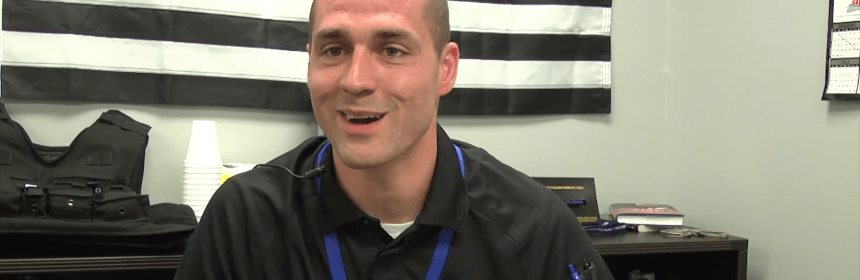
Sgt. Chad Mason works as a detective with the Trumann Police Department. He doesn’t like the way police officers are portrayed in the media recently.

“We don’t put the badge and the gun on every day just to come to work and do bad and do harm against the community and the citizens,” he said. “It’s a constant negative about law enforcement doesn’t care, they’re just there to arrest you and take you to jail, so on and so forth.”

Deadly Shootings Impact Views

A factor that plays into this negative view is the number of deadly shootings by police in the United States.

According to The Washington Post’s Fatal Force database, officers killed 963 people in 2016. The database collects data from news reports, law enforcement websites and even social media reports. The number barely decreased from 2015, when there were about 2015 killings reported. So far, there have been 284 deaths in 2017.

In Arkansas, the database reports five people died in 2015, 15 in 2016, and four by April 2017. Mason realizes where the concerns come from, but he has an issue with those concerns.

“It’s a long line of bad stuff, so that the good stuff doesn’t get seen,” he said.

Stepping Out for Change

Mason and other members of the police department have taken steps to change that perspective, at least in his community.

“Every negative thing that society may see that a police officer does, I try to turn that into a positive,” he said.

To do that, the Trumann Police Department has started community-oriented policing. That means officers take time during patrols to stop and talk to people, to find out what problems they have and try to help them out.

Trumann police officers interact with children as part of community policing. It provides an opportunity for residents to see police in a positive light. (photo courtesy of Sgt. Chad Mason)

One main audience for this approach: children.

“Kids that are growing up, they need to see that positive role model. They need to see that positive side of law enforcement in the community so that whenever they’re in need and they need help, they’ll be secure and they’ll feel like they’re secure,” Mason said.

He said he feels those kids need to see the officers as people behind the badge. During a citizen ride-along across town, Mason explained there isn’t a lot of recreational activities for children to do in Trumann.

“Some of that may or may not contribute to kids running out of stuff to do and getting in trouble,” he said.

He said he hopes their officers can show them there are better ways to spend their time.

“We try to be that mentor; we try to be that positive figure in their life,” Mason said. “Me and many officers are on a first-name basis with a lot of the kids and they see us driving around and they’re like, ‘Hey, hey Officer Mason or hey Officer Cook.'”

Another way they do it is being there for those in need. Mason said a girl once reported a bike stolen, so he and a couple of other officers pitched in to help her.

“I saw that she did everything right. She locked it down and someone still managed to get away with it,” he said.

Doubt Remains Among Residents

People in Trumann have noticed that police are taking their time to build those relationships, including 21-year-old Dee Crockett.

“I see them if kids are out playing basketball they will get out of the trucks and play a couple games or something,” Crockett said. “It makes me feel like they actually care about it.”

However, he still doesn’t trust the police and he wouldn’t give a specific reason.

“They’re kinda crooked,” Crockett said. “I mean … it’s just, I know people and I’ve seen things. And you know, once you see it, you know.”

Mason doesn’t let that critique get to him. In fact, he welcomes critiques and is willing to talk to anyone who doubts what they’re doing.

“If you don’t understand something or if you want to see kinda what we do, come up here and fill out a form for a ride-along,” he said. “I’ll be more than happy to take you for a ride-along and you can see what deal with on a day-to-day basis.”

Distracted Driving Affects Everyone

By Katie Woodall
Delta Digital News Service

JONESBORO, Ark. – The National Safety Council observes April as Distracted Driving Awareness month in an effort to educate drivers and create awareness about the dangers of distracted driving.

Distracted driving can be any form of driving while engaging in another activity, but the most commonly thought of form is texting and driving. Currently, 46 states feature a texting and driving law with all but five having primary enforcement.

The Arkansas Legislature enacted Paul’s Law in 2009 after a Jonesboro man died in a texting-and-driving related accident. The friends and family of Paul Davidson pushed the legislation in an attempt to educate others about the dangers of texting and driving.

Matt Roberson played a key part in working on Paul’s Law and said it was created in an attempt to deter texting and driving more than anything.

“If there was ever anything positive about this situation, we felt creating a law that might save others and remembering Paul would be the best way to do it. While it was difficult and tragic at the time, we can look back on it all now and know that we did something that might help someone from experiencing the same tragedy,” Roberson said.

While the law hasn’t had the preferred deterring effect, Roberson said he believes people are more aware of the dangers now because of all the organizations dedicated to educating people about it.

“The more awareness there is, the more likely people will listen and stop. Unfortunately, it just takes time for people to learn and sometimes it takes learning the hard way,” Roberson said.

Paul Holmes, a public information specialist for the Jonesboro Police Department, said teaching motorists the laws and what qualifies as distracted driving could help with the texting and driving incidents in Jonesboro.

“Distracted driving can mean anything from looking for a song to listen to while going down the highway, to sitting at a red light and checking a message. It’s the driver’s responsibility to themselves as well as other motorists to be safe,” Holmes said.

Last year, in an effort to reduce the number of distracted-driving accidents in Jonesboro, JPD set up traffic stops at Red Wolf Boulevard and Caraway Road and actually walked through traffic during red lights, ticketing drivers who were on their phones.

“We did see a reduction in accidents fairly quickly after doing the traffic stop. It may be something we do again in the future,” Holmes said.

The Jonesboro Police Department documented 164 car crashes involving texting and driving specifically over the past three years.

Becca Studebaker has experience on both ends of a texting and driving accident. Her first accident happened when she was driving distracted in a construction zone.

“I looked down to my phone for one second and then all the sudden I was hitting signs,” Studebaker said.

While she was ticketed for distracted driving, Studebaker said she’s thankful only her car was hurt in the accident and she learned her lesson when it comes to texting and driving.

Yet just because Studebaker said she doesn’t text and drive anymore, that doesn’t make other drivers follow the law.

Last month, Studebaker was involved in another texting and driving accident, this time being rear-ended by another driver who was distracted. Studebaker said she suffered a concussion and whiplash, and her car was totaled in the accident.

Ultimately, Studebaker said she hopes the person that rear-ended her learned the same lesson about texting and driving that she did.

“You think it’s OK; you’re fine the majority of the time you think, but there’s that one time that you could end up hurting yourself or someone else,” Studebaker said.

(Editor’s Note: Photo of texting and driving by Intel Free Press [CC BY-SA 2.0 (http://creativecommons.org/licenses/by-sa/2.0)%5D, via Wikimedia Commons)

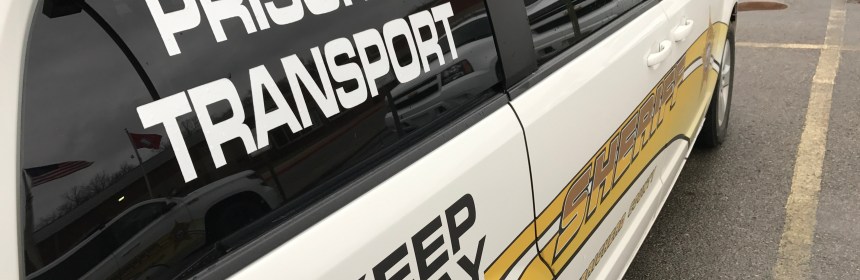
Sheriff: Offenders Treat Prison As ‘Revolving Door’

By Jorge Quiquivix
Delta Digital News Service

MOUNTAIN HOME, Ark. – One of the main problems in Arkansas’ judicial system is prison overcrowding. While many work to fix the issue, an Arkansas sheriff explained who is reaping the benefits of this situation.

Baxter County Sheriff John Montgomery said repeat offenders take advantage of the efforts to decrease the prison population. As a mid-sized county, Montgomery said the number of repeat offenders is drastic.

“We’ve had people paroled from prison who have already been to prison three, five, eight, 11, 15 times. I believe that it’s almost just like a revolving door,” he said. “They’re letting them out so fast that there’s no deterrent. They’re out hurting society and committing new crimes against the citizens of this state.”

According to findings from a 2012 release cohort by the Arkansas Department of Correction, 53 percent of the inmates released in 2012 returned to jail in three years.

He said when the prison fills, some of the inmates get housed in county jails. It puts a strain on county jails across Arkansas including those in the Delta, which has him begging for help.

“Please! You got to get them out of there because I got them sleeping on the floor or whatever the case may be,” he said. “So the prisons are under a lot of pressure to create bed space. How they are creating it is by kicking folks out early.”

Solomon Graves, public information officer and legislative liaison for the Arkansas Department of Corrections, released a statewide population report that states Arkansas has 1,340 inmates backed up in county jails.

“We also have 336 inmates housed in a Texas facility,” Graves said.

The population report states even the ADC facilities have more inmates than the capacity listed.

Following the Council of State Governments report in April 2015, a bipartisan Legislative Criminal Justice Oversight Task Force was formed to combat the overcrowding. Montgomery said he feels the task force did a lot of great work, but none of it reflected what he suggested when he testified before them in Little Rock.

“When I cornered them and asked if their recommendations were done, would they still need more prison beds and they said yes. Yet, none of that was a part of the recommendations,” he said. “The department requested funding for 576 beds. As of now, we have not received any indication that we will receive the necessary funding.”

Graves said prison overcrowding could be lessened with the passage of Senate Bill 136, which has been proposed in this year’s legislative session.

“The department is supportive of the reforms in SB136,” he said. “The reforms within that bill will help to divert low-level offenders to Community Correction Centers, thereby freeing up prison beds while maintaining the public’s safety.”

That could also set up a way for repeat offenders to not cheat the system. However, Montgomery said Arkansas should look at how Missouri is fighting its ever-growing population system.

According to the Missouri General Assembly, if an offender has already been in prison once then the offender must now serve 40 percent of their sentence. Those who have been in prison twice before would have to serve 50 percent of their sentence. Those who have three or more previous prison sentences must serve at least 80 percent of their sentence.

State Sen. Bryan King filed Senate Bill 177 in this year’s session. It would require someone who’s been sentenced three or more times to serve at least 80 percent of their sentence in Arkansas.

Montgomery said King’s bill may not pass because it should be staggered more like Missouri’s law.

“But I very much agree with his thinking,” he said. “He is like us. He is sick and tired of the repeat offenders that continue to get in and out of prison over and over again.”

Operation D.E.T.E.R. Causes Mixed Reaction

By Jorge Quiquivix
Delta Digital News Service

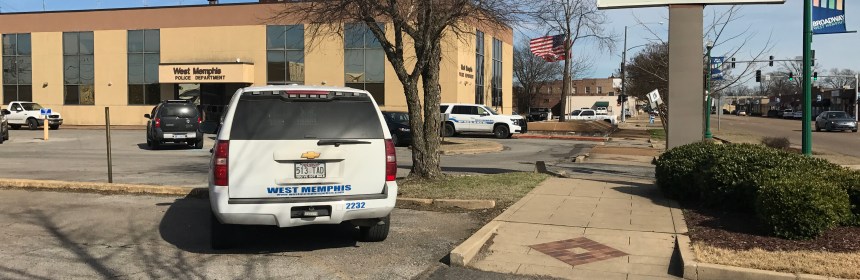
WEST MEMPHIS — Even though this city has more than 25,000 residents, a police captain said it experiences violent crimes more than any other small town. That is something police hope to change.

Maisha Spears has lived in the Delta community for seven years and has seen crime get worse each year, especially when it comes to murders. West Memphis Police reported 11 murders in 2016.

“It’s actually scary because I have children of my own growing up in this neighborhood,” Spears said.

As a mother of three, Spears is one of many in the city who welcome the newly enacted crime crackdown by the West Memphis Police Department. Both the patrol and investigate units restructured so they could enact Operation Data Enhanced Targeted Enforcement and Restoration at the start of February.

Capt. Joe Baker said after being a member of the Violence Reduction Network for just more than a year, the police department visited Los Angeles to see LAPD’s Operation LASER in effect.

“We liked the elements of the program. So, we replicated the program to bring it back to West Memphis,” Baker said.

The department looked at the last three years of reporting data and searched for an area with a large concentration of violent crimes like homicides, battery, aggravated assault and terroristic acts. After an analysis, police focused on the southwest part of the city for the operation.

“It’s a really targeted effort,” Baker said. “It’s targeted based on the people committing these crimes. It’s not a suppression effort. It’s not a corner jump street effort.”

Spears agreed that particular side of the community was known for violent crimes.

“Hopefully, they’ll straighten it up because there have been a lot of killings going on in the last couple of months,” she said.

However, not everyone agrees with the crackdown. A man, who did not want to be named, was standing across the street from Maddux Elementary School. He said there’s no crackdown on crime because there is no crime.

“They’re harassing people,” he said. “The police say they are cracking down and they are setting up speed traps right in front of the school just to catch innocent parents who have nothing to do with anything.”

He said he feels violent crime in the southwest part of town is all lies because people can drive through the neighborhood without coming across gangs.

“In big cities, gangs huddle up. You see them everywhere; that’s not the case here,” the man said.

Nevertheless, Baker said the data speaks for itself. The department set a goal after the program has been in place for nine to 12 months.

“I know in a city like L.A. where we copied this from, a 3 to 5 percent decrease in their violent crime and a 10 percent decrease in their homicides is a big deal,” he said.

With more than 10 homicides last year, Baker said the odds look well for the small town.

“Ten percent, that’s one person’s life that is being saved,” he said.

The West Memphis Police Department is a pilot test for small-town adaptions of Operation LASER. If their version works, not only would the program expand to other parts of the city, Baker said his colleagues would teach other Delta communities how to incorporate it in their municipality.

Bus Drivers Keep Students Safe

by Austin Hayslip
Courtesy of A-State Department of Media

JONESBORO — “It’s a challenge. It’s a big challenge driving a school bus,” school bus driver Barney Totten said.

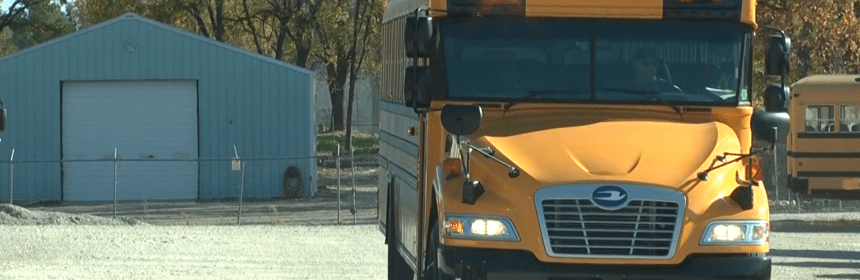
The most precious cargo you could ever transport. Fifty anxious kids sitting on the bus with their friends, waiting for their stop; the bus driver with one mission on his mind — getting them home safely. But before any driver is allowed behind the wheel, they go through pretty extensive training.

“You hit two cones, you fail,” Jonesboro Public Schools’ Transportation Director Mickey Long said.

After applying for the job, you immediately take a test.

“They have to take a written test, which is four parts. They have to take a general knowledge, air brakes, passenger and school bus, that’s the four sections,” Long said.

Then if you pass the test, you begin training for the district to ensure you can actually handle the bus. But before you’re allowed to drive on your own, you ride with the trainer. Then the trainer rides with you — this all before kids are even on the bus.

“Until those people feel good and the new person feels good, they’re not turned loose on their own,” Long said.

Totten said you’re doing more than just driving the bus.

“As a bus driver, you probably spend the biggest majority of your time looking at the student mirror up here in the front to see what the kids are doing in the back,” he said.

While there is a lot of attention on school bus drivers right now, Long is confident students are safe on his busses.

Bicyclist Voices Safety Concerns

by Kirsten May
Courtesy of A-State Department of Media

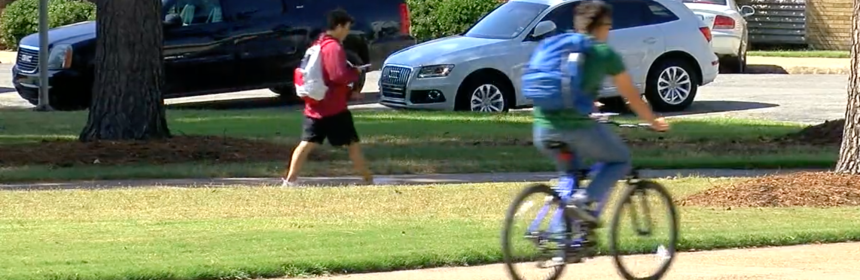
There are a growing number of cyclists in Jonesboro, but there are still no roads with designated bike lanes in the city and some cyclists feel there are not many safe places to ride. 
ASU TV’s Kirsten May looked into what is being done in Jonesboro to make it more bike-friendly.

JONESBORO, Ark. — “We need to wrap our heads as a community around the concept of a bicycle being part of our transportation mix.”

Bill Smith is the marketing and communications director for Arkansas State University and he is a cyclist.

Many people in Jonesboro are students or work in town who are now using a bicycle as their main form of transportation, and he said he thinks the city needs to focus on helping them ride safer.

“Certainly I think that we could see a greater commitment to bicycle infrastructure in our town, a greater commitment to a plan for how that will be moved around town, and not just in a parks and (recreation) mode,” Smith said. “I think that’s the future and I think that’s what millennials want.”

Jonesboro Parks and Recreation director Wixon Huffstetler said bike safety is a priority for the city and they are working to improve it.

“You know, the new trail obviously at Craighead Forrest that we are building that’ll connect eventually to the greenway that’s in town and we’re definitely looking at bike lanes on the outskirts of Jonesboro and on the bigger roads that we can fit them on,” he said.

Huffstetler understands cyclists want more done on the roads and said the city is looking at how to make that work.

“It’s just that Jonesboro is so grown together on the inside of the city, inner city, that it’s hard to figure out how to put bike lanes in without having to buy property or acquire ride away and stuff like that, which is a long process,” he said.

He said the city is constantly looking for grants to help improve infrastructure for bicyclists.

Both Huffstetler and Smith agree the best thing is for both riders and drivers to be aware of their surroundings and obey all traffic laws.

***

Smith said cyclists fare best when they act like drivers and are predictable.

Smith is teaching a vehicular riding course that teaches experienced cyclists how to be safer when riding in traffic. He said to message the Arkansas State University Facebook page or email him if you are interested in taking the class.

Community, Police Join Forces

by Kirsten May
Courtesy of A-State Department of Media

Across the nation, tensions continue to rise between law enforcement and community members. Officers in Jonesboro hope to avoid those situations by strengthening relationships with citizens. ASUTV News’ Kirsten May attended an event to bring them together and has more details about what people thought of it.

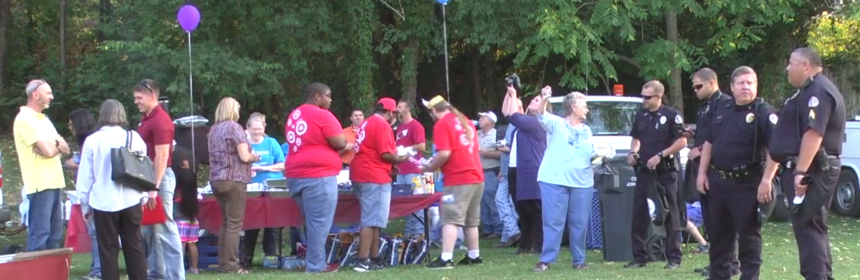
JONESBORO, Ark. — The event at City Water and Light Park on Cherry Street was just one of four National Night Out events held Oct. 4 in Jonesboro.

Several West End community members attended with their children and families to enjoy some time with local police officers.

Patrolman David Stout has been with the Jonesboro Police Department for nine years and says social events help residents see the person behind the badge.

“It brings people out and we get to interact with the community and they get to see us as human beings and not necessarily just in the cars that, you know, pull them over and have to go on calls and stuff like that and deal with them,” he said.

Sometimes it is hard to break that barrier with residents, Stout said, but it’s something the department pushes officers and new recruits to do.

“That’s one thing I try to impress upon the new guys. Get to know the people in your communities, get to know the people you deal with on a daily basis. Once you do you’ll be accepted more in the community and they’ll tell you stuff if they need to,” Stout said.

In 2015, 16,752 crimes were reported in Jonesboro, which is a 2 percent decrease from 2014. Officers and community members, like Jonathan Adams, both expressed hope that outreach events can help the number continue to decrease.

“I think they really do need to have something like this everywhere because it just brings everybody together. I mean, with all the violence that’s going on in the world, I think something like this once or twice, once or twice a month. I think it would be a good thing for everybody,” Adams said.

***

Another outreach program the department offers is the citizen police academy, where community members can learn about procedures and different areas of law enforcement. They are currently in their fourth session of the program. Applications for the next session can be found at Jonesboropolice.com.

Sexual Predators Often Avoid Prosecution

by Kirsten May
Courtesy of A-State Department of Media

Out of every 1,000 rapes, very few ever lead to a conviction. That is partly because less than 350 are reported, leading to an average of 63 arrests, according to the Rape, Abuse and Incest National Network. Of those, only 20 percent of cases are referred to a prosecutor. ASU TV’s Kirsten May spoke with a prosecuting attorney to find out why those numbers are so low.

JONESBORO, Ark. — When a victim of sexual assault comes forward, they face many questions. If an arrest is made, the victim must decide with law enforcement if they want to press charges.

The prosecuting attorney for the second judicial district of Arkansas, Scott Ellington said that is not always a straightforward process.

“When it is a forcible rape where there is an unknown perpetrator, those are easier to prosecute. Because it’s a foreign situation,” he said.

Ellington said things can get more complicated when it is assault by a friend or acquaintance.

“Where is the level of consent? That is the primary issue is where is the level of consent. And those issues are looked at closely,” the prosecuting attorney said.

He said victims can decide not to press charges for various reasons, including the fear of going public with such a private violation.

“We do have cases where victims decide they would prefer not to prosecute, and understandably so, because generally they make a report and they maintain pretty much anonymity,” Ellington said.

A licensed professional counselor in administration at Mid-South Health Systems, Matthew Knight said some victims just cannot stand to keep retelling their story to lawyers, judges and jurors because they are just trying to move forward in their life.

“‘And I don’t think I want to go through the public part of this again, I will just heal with myself,'” he said victims tell themselves.

But Knight said, in his experience, those victims often get stronger and decide they do want to tell somebody.

“They don’t want that person who has been the perpetrator to continue to do that with other people,” he said.

Whether or not a person decides to follow through with charges, Ellington said there is one important thing to do as soon as you discover the assault.

“Collect the evidence, collect anything that might have DNA on it,” he said.

Ellington said time is very important because if a victim changes their mind a few days later, that evidence might already be gone.

***

Ellington also said he understand victims are often scared or nervous while going through the prosecution process, so his office does have a designated victim-witness coordinator who visits with victims and helps them through the process.

Learn more about how the system helps sexual assault victims in this previous installment.

System Helps Sexual Assault Victims

by Kirsten May
Courtesy of A-State Department of Media

A person is sexually assaulted every two minutes in the United States, which means an average of 288,820 victims face rape or sexual assault. A sexual assault occurred on Arkansas State’s main campus earlier this month. ASU TV News’s Kirsten May investigates how a sexual assault affects mental health.

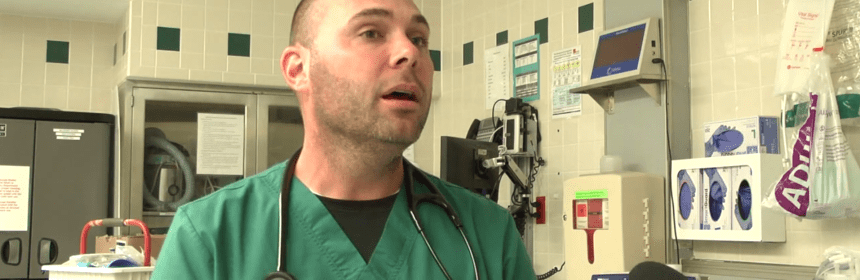
JONESBORO, Ark. — Many sexual assault victims first end up in an emergency room where Dr. Brandon Lane works.

“First, as a physician, we will assess the patient from a physical standpoint to make sure they have no injuries,” Lane said.

Then, as long as the patient consents, St. Bernards Regional Medical Center Emergency Room doctors will begin the process of collecting evidence that could be used in a later criminal case.

“And then we will go ahead and take that evidence to the appropriate law enforcement agency,” Lane said. “If the patient wants us to, not by law. If the patient is agreeable to that. That’s the sticky point sometimes that we see here in the emergency room.”

Although doctors cannot always give evidence to police though Lane said they often want to, physicians can ensure the patient gets any other help he or she might need, like a referral to a therapist.

“Especially if the patient is by him or herself, so that we can get them to be supported early on in their care,” he said. “I think the main thing is to know that they are supported.”

Matthew Knight is a licensed professional counselor who is now in administration at Midsouth Health Systems. He said conveying “someone is there” is the most important thing to do for any trauma victim.

“That someone believes their story. That someone is in a sense in their corner or at least is listening to what they have to say,” he said.

Knight said for many victims, there are thoughts of guilt and self-doubt about what they could have done differently. He wants them to know this assault is not their fault and they don’t have to try and heal by themselves.

“There are probably a lot of woman who deal with this alone, who never told anybody else and just went home,” Knight said. “So I think that there are probably woman who this becomes their secret and secrets have so much power, particularly secrets that are kept about trauma.”

Knight said another difficult thing for victims to do is decide whether or not they want to press charges against the perpetrator.

***

How difficult is it to prosecute sexual assault cases? Prosecuting Attorney Scott Ellington speaks with Kirsten May next week on ASU TV News.

N. Jonesboro Residents Disagree with Critics

by Kirsten May
Courtesy A-State Department of Media

Stop When the School Bus Stops

A school bus stops, via Wikimedia Commons

A school bus stops and warns drivers not to pass. But some drivers fail to pay attention. Photo by Infrogmation [CC BY 2.5], via Wikimedia Commons

JONESBORO, Ark. – Every day thousands of area school children board school buses. However, many drivers do not stop when the school bus stops.

Jonesboro Police Department’s public information officer Paul Holmes said the city issued 23 citations in the past 12 months to drivers caught passing stopped school buses. He said the penalties often shock drivers.

According to Arkansas state law, the fines range from $250 to $1,000. The penalty also affects your motor vehicle report similarly as reckless driving and driving under the influence. A driver’s motor vehicle report also directly affects insurance rates.

Jonesboro Police Department Sgt. Doug Formon said those who will pass a stopped school bus often amazes him.

“I’ve stopped several school teachers, not only locally from here, but from other school districts,” Formon said. “I’ve stopped a school bus driver one day who was off work from Missouri.”

Formon said when he follows a school bus, drivers attempting to pass the stopped bus will often pass him first. He said many drivers claim to not have seen the bus while others simply did not pay attention. Formon said after the passing of no-texting laws, many drivers now look down at their phones as an attempt to keep them hidden, which he believes also contributes to a rise of violations.

A lack of education causes many drivers to pass stopped school buses. Formon said many drivers he stops thought they didn’t have to stop due to them traveling in the opposite direction, i.e. many said they believed they don’t have to stop because of the two lanes and an additional passing lane divide them and the stopped school bus.

Arkansas state law 27-51-2004 states, “When a school bus stops and displays its alternating red warning lights for the purpose of loading or unloading passengers, every operator of a motor vehicle or motorcycle meeting or overtaking the school bus from any direction shall bring the motor vehicle or motorcycle to a complete stop before reaching the school bus. The operator of the motor vehicle or motorcycle shall not start up or attempt to pass in any direction until the school bus vehicle has finished receiving or discharging its passengers and is in motion again.” You can read the state laws regarding school buses in their entirety here.

Formon said all drivers on all of Jonesboro’s roads must always stop for school buses with no exception. He said he can only catch one per bus, but more than 20 vehicles often pass.

Forman said he remembers a time they took more officers out to follow school buses, and they stopped over 30 vehicles because enough officers patrolled that day.

Jonesboro School District transportation director Mickey Long said be believes the problem also lies with the parents of the bus riders. He said while dropping their children off at the bus stop, many parents will stop long enough to watch their children board the bus, and then pass the bus illegally.

Long said this remains a chronic problem. He said he turns in at least three reports from bus drivers a week. He said he believes simply holding people accountable will help bring awareness. His department works closely with Jonesboro police to combat this ongoing issue.

Long said it’s not uncommon to see several officers come to the bus yard and follow the drivers on their routes. Holmes said they remain in constant communication with the transportation department to find problem areas.

Long said he hears reports of drivers passing stopped buses from his drivers every day. He said many times the drivers said they believe if the children did not pay attention, they would have been hit.

Long said the wind blowing a dropped piece of paper into traffic could potentially cause a tragedy, i.e. some children will give chase without stopping to consider if everyone will stop.

“The risk and reward are not there because the risk is you’re going to run over a kid,” Long said.

Holmes said they try to educate the public through the media and also social media. He said they try to do everything they can to better educate the public. Formon said they placed an electronic billboard at the beginning of every school year.

The Arkansas State Board of Education annually holds a Flashing Red. Kids Ahead. campaign, designed to educate Arkansas drivers on school bus safety. 

“ADE encourages students and schools to get involved in the campaign by sharing videos and pictures of why school bus safety is important,” ADE’s Kimberly Friedman said. “Videos and pictures can be posted to social media using #2016Flashing Red”

Long said he doesn’t want to get anyone in trouble. He said he simply believes prosecution of drivers who do not stop brings awareness to the problem.

Holmes said the best thing would be for drivers simply to comply. He said he hopes the public will become better educated because eventually they will be caught.

“They’ll get educated when you say, ‘Sign here,'” he said.

Long said one driver can make a difference in protecting the children.

“It just takes that one person to stop,” Long said. “You stop for the bus and everyone behind you is going to stop.”

Recent Entries »