Author Archives: Tristan Bennett

The arts prove to be vital throughout pandemic

By Tristan Bennett
Delta Digital News Service

Jonesboro, Ark. — Hidden in the midst of the Delta lies an unexpectedly thriving arts scene with a goal to enrich the community in which it resides.

Even with the addition of masks, extra disinfecting and social distancing required by the new normal of the pandemic, arts organizations around Jonesboro remain open as a haven for local artists and lovers of the arts alike.

As the pandemic drags on, so does the anxiety surrounding the still-unknowns of the coronavirus. The arts are proven to alleviate stress and calm the brain. While it is impossible to see a Broadway show right now, local organizations continue to be an outlet for the community.

Learn

A quick temperature check, a mask, a squirt of hand sanitizer and an open mind is all it takes to learn a new craft in the age of COVID.

The Foundation of Arts operates in Jonesboro as a communal space for new and experienced artists to learn and perfect their craft. Kristi Pulliam, FOA executive director, said the arts are a vital part of life.
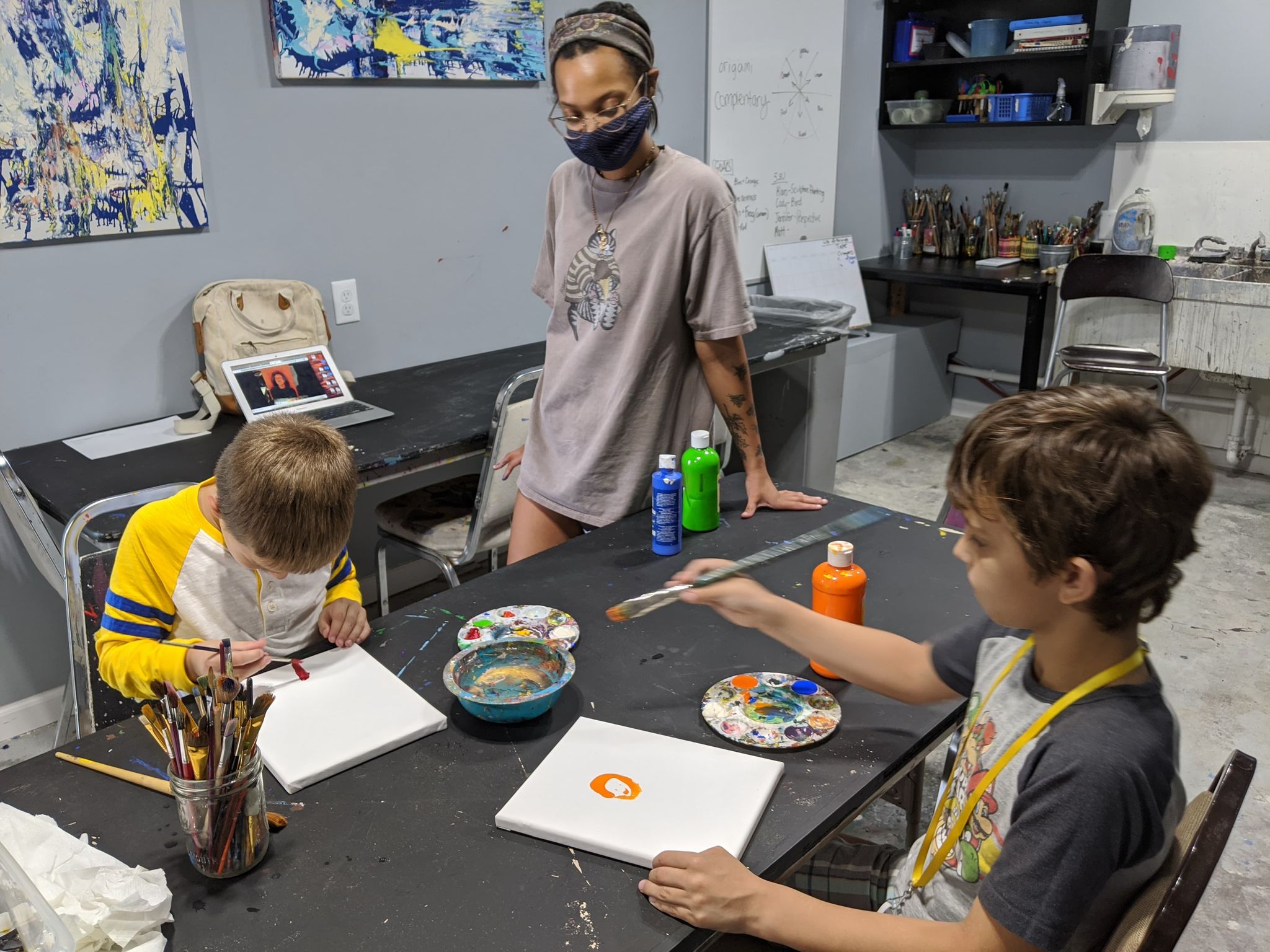
Kids participate in an FOA art class. Photo by Tristan Bennett

“The arts can improve your life in so many ways, Pulliam said. “The participation in the arts makes you better at almost every other thing you do. You’re a better communicator, you’re more self-confident, you’re more able to experiment and grow in all kinds of areas of life.”

The FOA offers classes in a wide range of arts disciplines. While learning an art may look different than in a pre-COVID world, Pulliam said the FOA staff strive for a safe environment for all their students. Enrollment numbers took a dive due to the pandemic, but classes are growing each week, and endorsement of the safety measures enacted by the Foundation.

As a space to learn, the FOA strives to improve the quality of life for everyone in Northeast Arkansas.

“The programming at the Foundation of Arts is really about people,” Pulliam said. “It starts with people, it ends with people, and it has arts all in between.”

Students of dance can learn to arabesque in ballet class, shuffle in tap or pirouette in jazz. After learning their new skills, they have the opportunity to showcase them in competitions across the region.

“It allows them to strut their stuff, and they’ll be judged against other dancers,” Pulliam said.

In addition to dance, students can train to be the next Broadway star in the FOA theatre arts classes or learn to paint like Picasso in their visual arts classes.

The FOA continues to provide opportunities for the general public to engage in the performing arts as well. Coming up, the FOA is hosting a House of Villains at their Forum theatre for Halloween, and their production of “Dreamgirls” hits the stage in November.

Immerse

   There is a certain calmness that can only be achieved by visiting an art museum. Jonesboro is fortunate to have one right at its heart on the Arkansas State University campus.

The artworks that grace the walls of the Bradbury Art Museum silently serve as a cultural steward to enhance the lives of Northeast Arkansas citizens.

Even in a pandemic, people of the community can immerse themselves within the quiet elegance of the museum. Garry Holstein, BAM director, said the art museum adjusted to the new protocols with relative ease.

“We’re a fortunate space in that we’re set up for people to come and enjoy artwork by themselves or with close friends, and not to touch,” Holstein said. “We’re kind of built for a going out safe experience.”

After a temporary closure, BAM reopened with a small, socially-distant reception and a brand new exhibit.

Currently, the museum houses an exhibition entitled “Radius 1.” It showcases artwork created by artists who live and work within a 180-mile radius of BAM. The show not only gives local artists a chance to showcase their work regionally, it gives the community the opportunity to see the talent growing in their own backyard.

Holstein said, “The amazing thing about this is you have so many talented artists here. A lot of people think you have to go to New York or somewhere far away to see amazing work, but we have people that have shown in Venice in this exhibition.”

The Delta is crawling with artistic talent, and through places like BAM, the residents of the community have the opportunity to dive into prestigious art right from home.

“Creative exploration of our shared cultural dialogue is what we do,” Holstein said. “It just reinforces our role in the community and our dedication to serve as a cultural steward and collaborate to create a shared sense of place.”

The coronavirus forced BAM to limit its hours to noon to 5 p.m. on Tuesdays through Saturdays, but the artwork still waits in its regal silence for someone to come brood over the artist’s true intention.

Experience

As devastating as the pandemic could have been on the arts, it only brought more creativity into the delivery of artistic experiences. Before, no one could have ever imagined listening to a live symphony from the comfort of their couch, but current circumstances made it possible for fine music to be available outside of the auditorium.

The Delta Symphony Orchestra is rooted in heritage and strives to meet an underserved need in the community. Neale Bartee, music director and conductor, said the orchestra formed in 1975 to give professional musicians in the area a chance to perform.

“There were really strong band programs and choirs, but there were no orchestra programs, and that’s an entirely different thing with the string section,” Bartee said. “We were providing a need that had not been fulfilled at that time.”

45 years later, the music scene in Jonesboro has expanded greatly. However, orchestra music still lags behind. The Arkansas State music department focuses mainly on instruments commonly played in marching bands, but Bartee, during his time on faculty with the department, helped to create the university orchestra program. As far as professional orchestra music in the region, the Delta Symphony Orchestra still operates alone.

“There’s a whole heritage of orchestra music that goes back 300 years with Bach through Beethoven, and there is no other group that performs that,” Bartee said.

COVID-19 forced live orchestra performances to a grinding halt, but in a way, it is now easier than ever for everyone to experience symphony music. The Delta Symphony Orchestra began livestreaming their performances on Facebook, making it possible to listen to a live professional orchestra on a couch, at the dinner table or in a car.

Bartee and the orchestra even began digging through past, recorded performances in order to provide the community with music during this time.

Now, anyone in Jonesboro can experience the sounds of the orchestra on cable channel 24. Previously recorded performances are broadcast regularly on the City of Jonesboro’s channel as a service to the community.

The Delta Symphony Orchestra not only provides a historically rich music to the community, it invests in the next generation of artists.

“We’ve brought Broadway stars to Jonesboro,” Bartee said. “We brought those guest artists that did some great work coaching the kids on how to do musicals.”

Hearing the orchestra through a screen may not be the ideal experience, but it expands the opportunity to more of the community and provides a chance to the general public to broaden their horizons.

Grow

As Pulliam said, involvement in the arts is a pillar of any quality society. Whether it be learning a new craft, immersing in a visual art or experiencing an orchestra, all work to enhance the quality of life of all those who enjoy it. In the extra stressful era of COVID-19, art can serve as an escape. Many think great art lives in far off places, but Jonesboro is home to a thriving art scene just waiting for the community to join.

NOTE: Feature photo by Tristan Bennett.

Nurse practitioner fulfills dream with art gallery business

By Tristan Bennett
Delta Digital News Service

JONESBORO — Local artists have an avenue to profit from their craft thanks to one very busy business woman with a passion for art.

As a college freshman, Angela “Angie” Jones first declared her major as art before ultimately ending up in the healthcare field. Now a nurse practitioner, it is not surprising that her love of art stuck with her.

Artist Angela “Angie” Jones owns the Art House art gallery in downtown Jonesboro. Jones opened the gallery during the pandemic.

“I’ve always gone back to it,” Jones said. “Painting walls and furniture when my kids were growing up, always having a craft project.”

Now an empty-nester, Jones decided to dive back in to her love of art in the time she used to spend at ballgames, dance and choir performances. She began taking art lessons with Gussi Causey, a retired Jonesboro Public Schools art teacher, and a big problem gave her a big idea.

“She had mentioned one day that there was really nowhere for her students to exhibit their work,” Jones said. “We had just moved downtown, and we had a commercial space below us that was empty.”

In June 2019, she opened Art House, a gallery in downtown Jonesboro for local artists to showcase and sell their work.

“So what started out as being something that maybe 10 to 15 artists could use to have a random art show here and there turned into the Art House,” Jones said.

Today, Art House has hosted 11 art shows and represented over 50 local artists.

One of those artists, Braden Walls, considers himself to be a drawer. He bases his style on that of Picasso: cubism. He said his involvement with the Art House has been a great experience.

Walls said before Art House opened, other galleries operated in the area but were selective about whose art they showcased.

“Angie opened up Art House and was like, ‘Everybody come put your work in and display it,’” Walls said. “Which, nothing like that has ever happened in Jonesboro before.”

Jones gave all local artists a chance to profit from their passion, and for that, local artist Sheila Guinn is thankful.

“We’ve needed this. We have other art galleries in town, but this one seems to be targeted to everybody. Every age. Every walk of life. All kinds of art and all kinds of people” Guinn said.

When her Art House journey began, Jones was shocked at the number of artists in Jonesboro as well as the lack of opportunities those artists had to showcase their creations.

“We have a lot of resources, we just don’t have a lot of avenues for local artists to get their work out there,” Jones said. “I believe we created that avenue for people to display their work, sell it and get it in the public’s view, and for people to realize that there are talented artists.”

Even in the middle of a pandemic, Jones continued to serve Jonesboro’s artists. She shifted from hosting large public shows to online galleries and private viewings. Jones said she thinks that will expand in the future on top of the traditional shows.

Not only does Art House support local artists, but Jones used art to help her community as well. When the pandemic hit, many restaurants downtown went to curbside-only dining. This meant fewer people on the sidewalks and fewer people visiting other businesses. She assembled a team of five local artists to create murals downtown designed specifically for selfies. That team was dubbed “The Mural Squad.”

“Our goal was to get more traffic downtown, and it’s something fun for people to do when they come down here as well,” Jones said.

The murals’ success led to a contest for more artists to add their own selfie backdrop to the wall, and the Squad has more plans to paint downtown in the future.

The work Jones does for the community requires a delicate balance in her life, and she said she could not do it without her husband, Scotty.

“He will do anything I ask him to and take on any project I ask,” Jones said. “He has been there to hang the art, there to help me with all the other stuff and give support as well.”

Her efforts do not go unseen by the artists she represents.

“She’s doing what a lot of people have wanted to do but just didn’t,” Guinn said. “It takes a lot of effort to do what she does, and we all really admire her for doing this.”

Jones is in the midst of moving the Art House to a new space downtown and plans to continue to advocate for local artists as well as bring art into the Jonesboro community.

Note: Featured photo submitted.


City Council Sings Praises Amid Crises

By Tristan Bennett
Delta Digital News Service

JONESBORO – The Jonesboro city council showered the mayor, first responders and residences with praises in the wake of the EF-3 tornado and amid the COVID-19 outbreak.

The council held their first virtual meeting on April 7, 2020, in order to comply with social distancing guidelines. Councilmembers and residents alike shared their praises to the Jonesboro community for its resilience in these unprecedented times.

Councilmember John Street said, “The response from our neighbors in Northeast Arkansas was just unbelievable, overwhelming, and the spirit of the people in this city is not to be matched anywhere.”

Mayor Herald Perrin said in his mayor’s report that he has spoken with AML insurance adjusters about the condition of city property. It was determined that the flight station building, several traffic signals and a few vehicles were considered “total losses.”

The council along with the mayor’s office continue to work to provide support for residents following the March 28 tornado.

“There are a few homes in one section of the tornado area that did not have insurance on their homes, and we will be picking that debris up as well for public safety, peace, safety and health,” Perrin said. “Also, when they get ready to build and come back on that there will be no fee for the permits to get going on the property.”

The Arkansas Department of Environmental Quality approved a new landfill site on Strawfloor Road to help the city dispose of the debris from the storm. Jonesboro will be receiving $362,524 from the CARE Act, and Perrin has asked the Arkansas Economic Development Commission for special consideration in regard to their $7.8 million fund for emergency services.

Councilmember David McClain said, “The Saturday that the tornado hit, our neighborhood was affected drastically, am I am truly grateful for everything you (Perrin) have helped us with as far as getting extra patrols out here and whatever we asked. I think you’ve helped make us feel safe.”

Also discussed in the meeting was the rezoning of 400 E. Highland in order to build a new hardware store to be built by Ditta Enterprises. There had been opposition from the public in previous council meetings, but the parties involved came to a compromise, and many from the neighborhood expressed support for the new store.

Carolyn Ponce, a resident of the neighborhood phoned in during the meeting to share her thoughts.

She said, “I think it’s wonderful that Jonesboro is trying to bring more small businesses to the town and not big box stores, and would absolutely love to see a smaller, home business in the Highland area.”

After some discussion, the amendment to the ordinance passed unanimously.

Other issues discussed included:

  • Condemning the property at 304 Warner St.
  • The purchase of the land at 409 N. Fisher St. from the Arkansas State Land Commissioner for $2,243.36 plus closing costs
  • Postponing the vote on the rezoning of 1130 Greensboro Rd. for 60 days as to accommodate public comments

U.S. Census could potentially bring important funds to Jonesboro

By Tristan Bennett
Delta Digital News Service

JONESBORO – The U.S. Census has occurred without fail since 1790 despite obstacles like war, natural disaster, and now, a pandemic.

The United States conducts a census every 10 years to get an accurate count of residents. In 2020, it is once again time for gather information from around the nation.

Article I, Section 2 of the United States Constitution mandates the count and legally requires residents in all 50 states and five territories to respond. The U.S. Census Bureau makes it fairly simple to fulfill the requirement.

According to the Bureau’s website, invitations to respond have already been sent to homes around the country. This year, anyone can respond by mail, phone or online by the April 1 deadline. After that, census takers may be dispatched to collect answers.

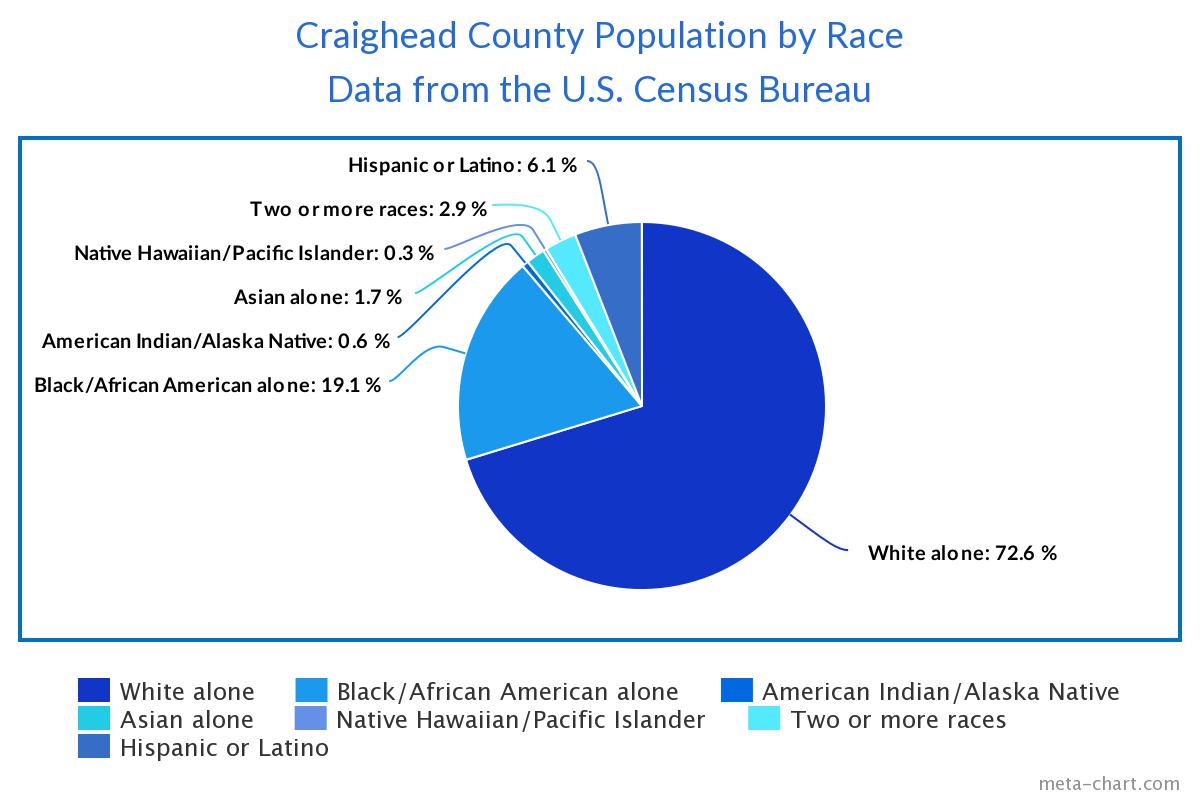
The survey asks a few simple questions about who lives in the home and how they are related as well as their races and sexes. There is no question about American citizenship.

These questions may seem simple to some, but Kade Holliday, Craighead County clerk, said they hold a great importance to the city and county.

“The U.S. Census is one of the biggest ways that federal money is dispersed out,” Holliday said. “You want the most people to be counted so that your area gets more of those tax dollars.”

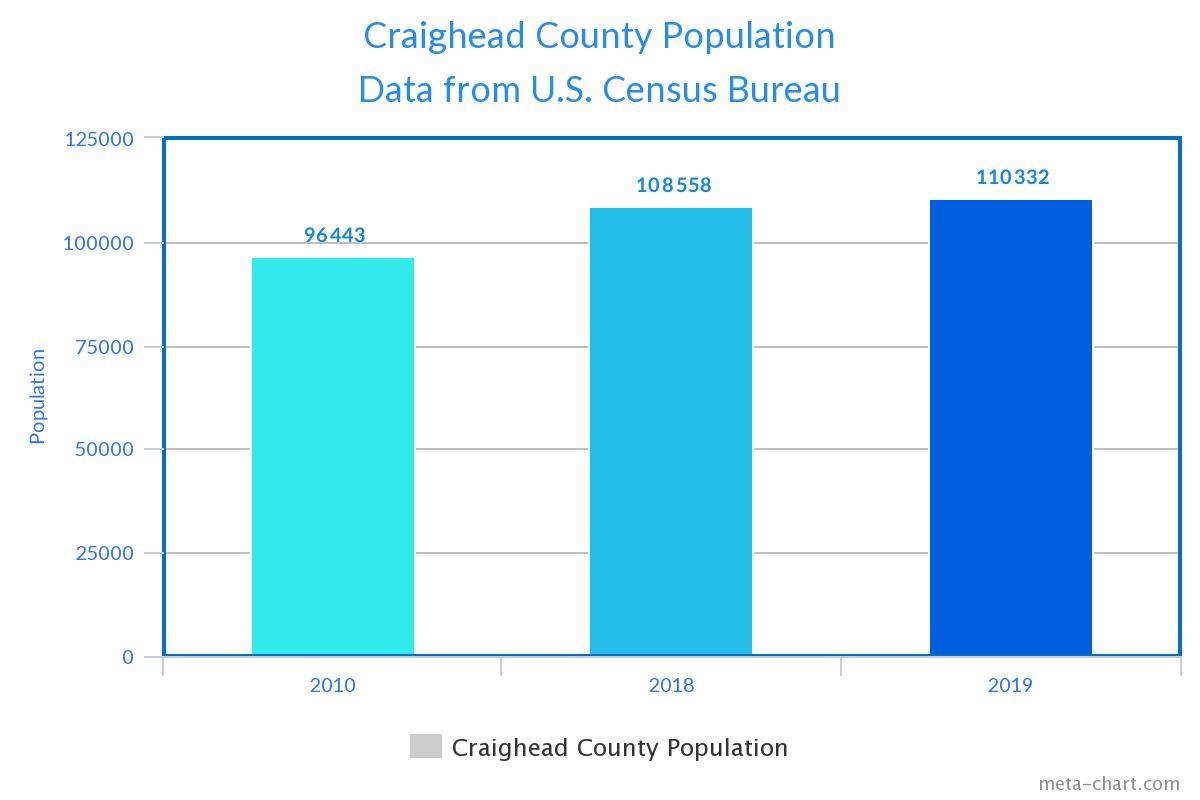
Holliday said because Jonesboro experienced a population boom since the last census in 2010, the city can expect a significant jump in federal funds, and that money will be used to build parks, bridges and roads as well as add to the police, fire and sanitation departments.

An accurate count is also important for elected officials. Shifts in population or growth can significantly change areas they represent.

“Let’s say there’s a situation where in Arkansas we picked up a fifth (congressman), or we lost one because the population went up so greatly in another part of the country. We would have to redraw the lines to create those districts to make sure they were equal in population, so one district doesn’t have more people in it than another,” Holliday said.

While some may be hesitant to give information to a government agency, Title 13 of the U.S. Code strictly prohibits the Census Bureau from sharing personal information. Responses can only be used to produce statistics, and no information can be used against the responder. The Supreme Court has even ruled that the Patriot Act does not override the law of confidentiality on the census, and addresses cannot be discovered through the Freedom of Information Act.

Nettleton School Board honors special member

By Tristan Bennett
Delta Digital News Service

JONESBORO – The Nettleton School Board honored a special member of the district’s team at a meeting Monday night.

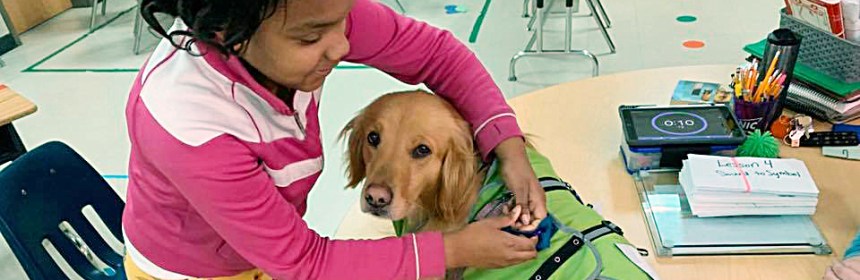
The board recognized Abby the therapy dog for the work she and her handler, Bryce Holmes, do with the students at University Heights School for Medical Arts.

“We do a lot of things with the kids from going down the slides to literacy and emotional control,” Holmes said.

Abby and Holmes began going to the school since December 2019 and immediately became popular among the students. Abby spends every Tuesday and Wednesday encouraging young readers and bringing smiles to classrooms. Debbie Bean, UHSMA principal, said she already noticed an improvement in her building.

“You can just kind of feel it,” Bean said. “When she walks in, the kids are just drawn to the dog, and the dog is just perfect.”

Abby is a resource for every student, but works especially with the special education program. She wears a vest that was designed with snaps, zippers, buttons and ties to help teach fine motor skills.

She also works with UHSMA reading interventionists. Students read aloud to Abby to help build their confidence and ability.

“There are kids that stop and go ‘I will read to Abby,’ and to have our interventionist say ‘We never thought we’d hear them say that,’ that’s a huge encouragement for me,” Holmes said. “That’s one less kid that has to go through the hum-drum of reading out loud.”

According to Holmes, therapy dogs in schools improve test scores, increase attendance, help with emotional stability and bring down stress hormones.

Also on the agenda, James Dunivan, superintendent, recommended the addition of a $50 non-refundable registration fee for the district’s three Pre-K programs. If accepted, the fee would be applied to the first tuition payment.

“With so many Pre-Ks in the area, understandably, parents will go around and put their names on multiple lists,” Dunivan said. “We hold that spot, we don’t get to fill it. So, we hope that the $50 registration fee will make it more serious and more important before they put their names on the list.”

The board, with all members present, voted unanimously to accept the recommendation.

Next, Grace Petersen, elementary curriculum director, and Lacy Baker, secondary curriculum director, gave reports highlighting student accomplishments from across the district.

Elementary students attended the Arkansas Junior Beta Club Convention in January. A Fox Meadow School of Creative Media student was elected president of Arkansas Junior Beta Club, and 100 more students attended and competed at the convention.

The Jr. High Quiz Bowl Team took fourth place at the state tournament and received an invitation to nationals, and a Nettleton High School student won the Crowley’s Ridge Reading Council writing contest with his essay about the impact “Harry Potter” as had on his life.

Other issues discussed in the meeting were:

  • The purchase of a new school bus
  • Discarding inventory items no longer on site at the district
  • Student transfers
  • A salary schedule amendment to add the technical events director

All recommendations passed unanimously.

Local downtowns experience a business renaissance

By Tristan Bennett
Delta Digital News Service

PARAGOULD – Downtowns in the Delta undergo a renaissance thanks to local businesses.

Paragould’s Main Street houses many local businesses. Photo by Tristan Bennett

The resurgence of boutique-style shopping led to a growth in the downtown areas of Jonesboro and Paragould. They became destinations for both local and national businesses that work together to attract customers to the area. Lindsey Wingo, Downtown Jonesboro Alliance executive director, assists downtown business owners by promoting them to the public.

She said, “Downtown is the heart of Jonesboro, in my opinion. Five years ago, the main thing was shopping malls and different things like that, and really you see downtown on the uphill trend of things.”

In both cities, local owners occupy almost all of the downtown buildings; Only one Dollar General sits on the outskirts of downtown Paragould. Gina Jarrett, Main Street Paragould executive director, said local businesses occupied downtown since its beginning.

“Downtown started when Paragould started, and there weren’t franchises then,” Jarrett said. “We’ve always been mom-and-pops.”

While many of downtown Paragould’s businesses continue to survive after decades and ownership changes, Jonesboro’s downtown just flourished in the past 10 years. Many of the businesses followed Gearhead Outfitters and other developers into the area.

Jonesboro’s Main Street became a destination about 10 years ago. Photo by Tristan Bennett

From its humble beginnings in Jonesboro, Gearhead owner Ted Herget grew his company into a regional company quickly, and recently, the company bought Rock/Creek Outfitters and Uncle Dan’s Outdoor Store to further expand their reach to Chicagoland, Illinois.

Gearhead marketing director Whitney Eldridge said, “Downtown businesses and the boutique retail format have made a resurgence in recent years. The environment tends to be more personalized and close-knit. While we try to provide this environment whether in a mall setting or not, a downtown or neighborhood business tends to have a more pronounced presence in the community, which contributes to the neighborly and warmer feel that a mall store may not be able to provide.”

National businesses in downtown spaces can be helpful to small businesses. They possess the potential to draw more customers to the area, and hopefully, to the stores around them.

Wingo said, “All of the places that are down here, just like any other business started in a local community. It’s so important to not see people as competition always but also as help.”

Even with all the help chains bring, local downtown owners feel the effects of national business in their stores. Cynthia Allison Jones owns Addie’s Soul Food & Grill located in downtown Jonesboro. She said she sees chain restaurants negatively affecting her business

“I think they take business away from us,” Jones said. “It’s hard, but I’ve cut down on staff and hours of operation.”

Kayla Gramling, owner of The Tiny Twig Boutique, sells homemade gifts and offers services such as flower preservation in her downtown Paragould shop. National businesses caused her to adjust her pricing strategy.

“We charge what we have to have but try to keep it as low as we can, too, and we try to offer different stuff that you can’t find anywhere else,” Gramling said.

Creating an environment like a downtown takes planning and hard work. The DJA and Main Street Paragould exist to ensure these areas continue to draw customers to the businesses there. Walkability and catering to pedestrians continues to be a crucial of a part of the downtown experience.

Jarrett said, “Because downtown is walkable, everything is brought down to the pedestrian’s level. The signage, the window displays, everything is for the pedestrian, and that’s what people want nowadays. They want that comfortable, strolling feel.”

Customers cannot have that comfortable feeling without feeling safe. Recently, Wingo and the JDA took part in an initiative to add lighting to downtown Jonesboro so customers could feel more relaxed while in the area at night.

“We felt like there was definitely a stigma that downtown wasn’t safe,” Wingo said. “We felt that the reason people thought that was because it was dark down here, and when things are dark people don’t feel safe.”

In the past two years, over $20,000 worth of lights came to the downtown Jonesboro area because of the JDA along with $60,000 more from the city of Jonesboro.

The JDA and Main Street Paragould offer a way for owners to work together to promote the area and drive traffic to businesses downtown by planning events to take place in the downtown areas.

Gramling said, “There’s a lot of different events that are held downtown, so that kind of gives us an advantage. People walk around more than if you were just a free-standing building out in the middle of town.”

Both cities belong to the Main Street Arkansas organization, so downtown business owners can take advantage of an interior and exterior designer and small business consultant at any time. Both also receive grant money to help with improvements to the area and certain businesses.

Jarrett said, “We can mini-grant out that grant funding to help people make improvements in their buildings. It’s for what you can see: exterior improvements, and we go as far as the inside of the storefront windows.”

Improvements happening in both downtowns work to preserve the areas’ history. This revitalization of the downtown couples with a revitalization of the two cities’ histories. Downtowns once served as the only marketplace in small towns across the Delta, and this seems to be becoming more common again.

Wingo said, “Whenever you visit somewhere, you want to know what their downtown is like. That’s where the history of the city is, it’s the heart of the town, and in my opinion, for it to be a vibrant community there needs to be a vibrant downtown.”

Editor’s Note: Feature Photo – Main Street Paragould operates out of an old train caboose. Photo by Tristan Bennett

Christmas trees bring holiday fire hazards

By Tristan Bennett
Delta Digital News Service

LONOKE – With the holiday season upon us, large fire hazards enter homes across America in the form of festive decorations.

The tradition of the Christmas tree dates back to the 16th century, and many still prefer a live tree over today’s artificial models. Truth is, both could be a hazard in homes. Jennifer Winchell, a Little Rock firefighter, experiences many fires each year due to holiday decorations.

She said, “Christmas tree fires are a huge issue because most people consider them to be safe and do not educate themselves about the dangers.”

Read on for some tips from the pros on how to stay safe this holiday season.

Hydrate your tree

   Live trees need near-constant watering. Patty Hibbs’ husband owns Schilling’s Family Christmas Tree Farm in Lonoke, and she works in their office. She said they work all year to ensure the freshness of each tree on the lot.

“It’s a year-round job. We have to water them, fertilize them; my husband has to sheer them three times a year,” Hibbs said.

After cutting the tree from its roots, the job becomes much harder. Hibbs said cutting causes the sap in trees to seal the trunk, making it more difficult to get water in.

Get your tree in water as soon as possible to keep it from sealing and drying out. The drier the branches become, the higher the chance of a fire. Most purchase tree stands that hold water to help with this, but the owner must remember to keep the stand filled with fresh water. Pets may also get into a tree’s water supply, so be sure to keep an eye on them.

Becky Smith and her family purchase a live tree each year from Schilling’s.

“We keep it watered. Sometimes I put Sprite in the water,” she said. “It gets dry by the end of the year, but we’ve never had any problems with it.”

The citric acid and sugar in Sprite may help preserve the tree longer, and it is not harmful to pets.

Be sure to dispose of the tree properly as soon as possible after the holidays.

Keep away from heat sources

The traditional picture of the Christmas tree next to a crackling fireplace may be the cause of many holiday fires. According to the National Fire Protection Association, one in four holiday fires occurs because of a heat source too close to a tree.

One stray ember could send the whole tree up in flames, so make sure to leave adequate room between any fire, including candles and the tree.

Hibbs recommends not placing your tree under a heating vent as well. Hot air dries out branches as it heats, making the chances of a fire increase.

Winchell said, “If you’re using a space heater, try to buy one with an automatic shut-off or tip over feature. Keep it at least three to four feet away from anything that could catch fire.”

She also said blowing out candles and unplugging lights when going to sleep or traveling helps to prevent overheating, which may cause fires.

Look for electrical hazards

The holidays often lead to crowded houses full of loved ones, but never crowd outlets. Circuits within those outlets only hold so much electricity, so plugging in one too many strings of lights may cause overheating in the wires. As the insulation on the wire melts, sparks may appear.

If the spark happens near a Christmas tree, whether live or artificial, it could ignite.

Winchell said, “It is very important to never overload a wall outlet or an outlet strip. Less is best!”

The NFPA recommends immediately replacing strings of lights with worn or broken cords or loose bulb connections and only connecting the number of strands recommended by the manufacturer of the lights.

Consider flocking

Flocking not only helps achieve the look of a snowy Christmas tree indoors, but it also protects against fires when done with the correct products.

Hibbs said, “It’s not like the spray can you get. It’s a commercial based flocking we use, and it does have a flame retardant in it.”

Schilling’s charges $9 per foot to flock a tree with their high-quality materials, but if someone wants to do it on their own, they should look for a product with a flame retardant included.

Be prepared

Christmas tree fires prove damaging nearly every time and sometimes even deadly. If something goes wrong, stay calm.

Winchell said, “If there is a fire, immediately remove anything you can (outside is best), and always have a charged fire extinguisher in reach.”

She also said look at batteries in remotes and light strings to check for corrosion.

The NFPA recommends regularly checking smoke detectors and sharing an escape plan with holiday guests. Ask guests who smoke to step outside and keep their materials on them and out of reach from children as well.

Note: Feature photo shows Schilling’s Family Christmas Tree Farm. The farm has been operated by the family for over 33 years. Photo by Tristan Bennett

Female farmer acts as spokesperson for industry

By Tristan Bennett
Delta Digital News Service

WALDENBURG – A young, female farmer is taking the Arkansas agricultural world by storm by acting as an ambassador and a role model for others like her.

Originally adopted from Russia, Jenna Martin grew up on her father’s, Dennis Martin, farm in Hickory Ridge, Arkansas. She went on to pursue a degree in agriculture business and continued her work in an industry dominated by men.

“This is just something in my gut. It’s just what I want to do,” Jenna said. “It’s what I think about all the time, it’s what I want to learn about, it’s what I talk to Dad about all the time.”

Men dominated the agriculture field for centuries, so a stigma surrounds women who work in the industry. However, the 2017 census stated 36% of U.S. farmers are female, and that number continues to rise. Jenna works as a role model for many young girls wishing to pursue a career in agriculture.

Both of her parents grew up around agriculture, so it became a part of Jenna’s life early on. She began helping Dennis on the family farm as soon as she could walk. Her mother homeschooled her, so the flexible schedule gave her plenty of time to spend where she said she really wanted to be: on the farm.

“When she first started, she would help us move equipment from field to field, and as she got a little bit older, she started driving tractors and putting out all the Polypipe,” Dennis said.

She solidified her choice to stay in agriculture while still in high school and began learning as much as she could and promoting the industry. Along with staying active in 4-H for 15 years, Martin also held the title of 2013 Miss Arkansas Rice. The Miss Rice program encourages agriculture education and promotes rice as a major part of Arkansas’ economy.

After graduation, Jenna chose to attend East Arkansas Community College in Wynne before transferring to Arkansas State University to pursue a degree in agriculture business and minor in strategic communication. Even though she wanted to farm, she said her parents wanted her to have a degree to fall back on.

“I chose community college because it was close to home and closer to the farm,” Jenna said. “EACC was a good transition before I went to A-State.”

During her time at A-State, Jenna remained involved in the College of Agriculture, held many leadership positions and created good working relationships with her classmates and professors. Bert Greenwalt, professor of agricultural economics at A-State, worked closely with Jenna during her time at A-State.

“She immediately became involved in all activities of the college,” Greenwalt said. “The thing about Jenna to me is she’s just so enthusiastic. Very positive, very enthusiastic and always ready to jump in, lend a hand and make a difference.”

Jenna served as the president of the A-State Collegiate Farm Bureau during her senior year, and worked as a teacher’s assistant under Greenwalt, assisting with the annual A-State Agribusiness Conference as well.

Jenna explored different careers in agriculture during her internships with Farm Credit Midsouth and Pioneer Seed, but ultimately returned to Dennis’ farm and chose to remain in production agriculture. During harvest, Jenna handles the grain carts as Dennis mans the combine.

“Usually day-to-day I go out to the shop, get everything ready and then go out to the field and stay there until 8:30 or 9,” Jenna said. “In the summer I go around and help Dad with all the water. Like I said, irrigation is huge.”

While she feels perfectly confident with her work in the field, Jenna still struggles with the business aspects of running a farm. Dennis runs his operation the old school way: everything on paper, and Jenna learned about how to handle finances on the farm from him. However, in a world where technology reigns, even farmers must adapt to new equipment and tools.

“Something I wish I could have done more of in my degree is more on the technology side,” Jenna said. “It’s growing so much, and I think that’s a big thing.”

As far as being a woman in a traditionally male industry, Jenna is not intimidated.

“I’m pretty good about just jumping in with the guys, and they’re pretty cool about responding,” she said.

More women pursue careers in agriculture today than ever before, and Jenna acts as a role model for each young girl.

“Jenna has an interest, ability and a passion for speaking about our industry,” Greenwalt said. “She is someone I know will continue to be a leader in the industry.”

Jenna said she hopes to take over the family farm someday. In the meantime, she continues to help Dennis on the farm and work on acquiring land to cultivate on her own.

“We’re leaving that 100% up to her,” Dennis said. “If she wants to pursue a future in farming, we’re behind her.”

Editor’s Note: Feature Photo shows Dennis, left, and Jenna Martin. Photo taken by Tristan Bennett

Trade War Brings Struggles to Farmers

By Tristan Bennett
Delta Digital News Service

JONESBORO – Arkansas farmers continue a fight with a competitor halfway across the world. The trade war with China drags on with steady impact.

For the second harvest season, Arkansas farmers experienced lower prices for their crops as a result of a tariff war with China. Joe Christian, owner and operator of JOC Farms Partnership, sees first-hand the negative impact of the trade war.

“This summer, prices were down to $8.50 a bushel for soybeans and even less. That’s $2 below production costs,” he said.

The low prices stem from a decrease in demand for exporting agricultural commodities. Farmers across the nation struggle to make ends meet in the wake of harsh tariffs imposed by China to specifically hurt American agriculture.

Scott Stiles, an economist with the Cooperative Extension Service, said this all began when the Trump administration added tariffs to aluminum and steel imports in April 2018. In response, China imposed a 25% import tariff on U.S. soybeans, grain sorghum, cotton and several more agricultural commodities as well as several other industries.

“They chose to go after a segment of the U.S. population that would really get the president’s attention,” he said. “Hitting the ag (agriculture) sector could be something that could really be detrimental to the president’s political future,” Stiles reiterated.

As the top U.S. export market, China bought one-third of all U.S. soybeans before the trade war began. Arkansas grows around 3.4 million acres of soybeans each year and 610,000 acres of cotton, most specifically to be exported. Now, China buys hardly purchases any Arkansan crops.

“We can’t sell them commodities, but they want to sell us everything, and they don’t want tariffs,” Christian said. “So, in other words, they can put tariffs coming into our country but we can’t on ours.”

Because agriculture makes up a large part of the Arkansas economy, the effects can be felt in several more industries. Patrick Lenderman, Paragould Farm Credit Midsouth branch manager and vice president, works directly with Arkansas Delta farmers to finance their farms.

“This is kind of a trickle effect. When a farmer spends a dollar, it affects a lot of different people, whether it’s going to retail sales at the local Walmart or buying a new tractor or truck,” Lenderman said.

Stiles said the government cannot quantify the effects of the trade war beyond the growers because too many industries intertwine with the agriculture industry.

The federal government began providing trade aid to farmers in 2018 to help compensate for the low prices. According to the Congressional Research Service, the Market Facilitation Program offers farmers payments for “trade damaged” commodities. Arkansas farmers received $281 million in trade aid in 2018.

The U.S. Department of Agriculture increased funding to $14.5 billion and added many more crops to the list of those eligible for aid in 2019. Farmers may continue to sign up for these payments through Dec. 6.

“I think if every grower participated in that, then the amount of aid out of this 2019 round would be about $435 million,” Stiles said. “The payment rates are structured a little bit differently in 2019, and it covers more commodities, so there’s more aid available.”

Currently engaged in trade talks, the Trump administration and Chinese leaders began thawing their relationship, but export numbers remain lower than before the trade war.

Christian said other countries buy soybeans from the United States and then sell them to China to avoid the tariffs, so they still get the products. This could make it difficult to strike a deal between the countries.

He also said farmers in the area appreciate the actions of the Trump administration so far.

“We’ve been 20 plus years in the WTO (World Trade Organization) agreement, and we get rulings that are not far and against the United States all the time, and it’s time to do something different,” Christian said. “If we got to hurt a little bit to hopefully do some good, we’re willing to do it.”

Because many factors must be agreed upon by all countries involved for trade to resume, a solution to the trade war isn’t likely come soon.

“The solution will take time. There is no overnight solution to this,” Lenderman said.

The countries find themselves in a stalemate because the Trump administration interposed issues such as intellectual property disputes along with many others between the two countries over the past many years.

Negotiation talks were broken down into phases to address each issue, with agriculture as phase one.

Stiles said, “Ag is wrapped up in issues that are not ag-related, and it could be a casualty if we don’t ultimately get a complete, comprehensive trade deal.”

In the meantime, farmers continue the struggle to make ends meet. Arkansas growers, no matter how small the operation, cannot escape happenings halfway across the world and must fight through the current economic challenges.

Editor’s Note/Feature Photo: Joe Christian, owner/operator of JOC Farms Partnership, is one of many local farmers affected by the U.S.-China trade war. Photo by Tristan Bennett.
Farmers bring fall fun to the Delta

By Tristan Bennett
Delta Digital News Service

BROOKLAND – Autumn in the Delta brought a business opportunity to many small family farmers.

Many farms in the area set up pumpkin patches and corn mazes as a family fall attraction to make a little extra cash after harvest. These farms draw in everyone from families to groups of college students. Jerry Whitten, who owns WF Mootown Corn Maze in Brookland, runs his business as a way to stay in the agriculture industry after retirement.

“I grew up on a farm, had cattle, my parents farmed, and I worked in the agriculture industry. So when I got a chance to retire from that job, this was something I thought I could do,” Whitten said.

Mootown offers a pick-your-own pumpkin patch, corn maze, bonfires, hayrides and a program for school children. Whitten credited great weather for the high turnout so far this year.

Matt and Anna Beth Presley visited Mootown to complete the corn maze and choose pumpkins to carve.

“She’s a nurse and I’m a cop, so our schedules are kind of busy. So this is date night,” Matt said.

The couple said they came to enjoy the fall festivity and the cool weather.

Whitten’s school program, “Spookley the Square Pumpkin,” tackles problems of bullying among young children and promotes agriculture.

Whitten said, “We have a trail set up in the woods, and it’s basically the book on boards that they read as they go through the woods, and they do a challenge at the end.”

When children visit the farm, they learn the process of growing pumpkins as well. Whitten talks to them about production and how to plant the seeds. Many teachers also prepare their students for the visit by actually growing a pumpkin in class.

Farmers who run these fall farms must start planning early in order to pull it off by the beginning of the season. Pumpkins can be especially difficult to grow. The Farmer’s Almanac suggests farmers wait until all threat of a frost is gone and water and fertilize often throughout the growing season.

“My analogy is they’re like a goat. They’re born looking for a reason to die,” Whitten said, “But they’re a lot of fun to watch because you always think there’s none there until the leaves start dropping, and you think, ‘wow there’s a lot of pumpkins out there.’”

The corn maze also draws people to the farm. Arkansas State University’s Catholic Newman Center brings a group of students to Mootown each fall. Zachary Ridgeway serves as the president of the CNC student organization.

“We do it to get all the new students to get to know each other better and have fun at the same time,” he said. “We’re doing the corn maze, which some of us have already successfully completed. We’re going to carve some pumpkins, and later we’re going to have a bonfire and hot dogs.”

Planning the corn maze also takes some time for Whitten to complete. In Arkansas, farmers plant corn in April or May and harvested in September. In order to keep it green throughout maze season, Whitten does not plant his corn until after the Fourth of July. Then, the maze must be cut out of the corn

“For years I did it the old-style way. Basically, the design is on graph paper, and every row of corn corresponds to a row on the graph paper. You just take marking paint and a lawn mower and start counting rows,” Whitten said.

Nowadays, professional corn maze cutters do the work for the farmer. They use GPS systems to mark the design in the field and cut it using a tractor and a tiller.

While a lot of hard work goes into it, Whitten said he enjoys the work he does.

He said, “I like raising it, but to me, watching the kids and the families come enjoy it and make memories. We’ve had several who have been with us every year, and it’s kind of a family tradition. That’s a lot of fun.”

Many farms like Mootown close for the season soon. Visit for family fun as well as to support local agriculture.

Editor’s Note: Feature photo and video by Tristan Bennettt.

Delta farmers begin harvest after a difficult growing season

By Tristan Bennett
Delta Digital News Service

JONESBORO – Arkansas Delta farmers harvested their crops and took them to market after a difficult growing season.

Farmers experienced many challenges this season as they planted crops and tended to their fields all summer. Chris Grimes, Craighead County Cooperative Extension agent, works with these farmers to ensure they use the most efficient growing methods possible.

“Right now, we are harvesting cotton, soybeans, peanuts, and there’s still a little bit of rice and corn,” he said. “We were delayed planting, which in turn pushed our harvest a little later than normal.”

Other than a few hiccups with rainfall, the harvest continues moving rather smoothly. Many rice farmers like Terry Gray, owner of Thomas Gray Farms, already finished cutting.

“We were probably off 15 bushels an acre from last year. Not a bad crop, but nothing to brag about,” he said.

The wet spring and late planting affected Gray’s crop just as it did many other growers in the area. Some, including Gray, even skipped out on growing soybeans all together rather than plant late.

The U.S. Department of Agriculture reported in the October Crop Production report a 14.3% nationwide drop in soybean acres planted from last season and a 7.3% drop in yield. Rice harvested experienced a 15% drop from last season.

While yields may be lower, growers report high qualities in their rice crop. Sample houses look at characteristics such as grain length, aroma and stickiness to determine the quality. Factors such as the amount of rainfall, heat and pests affect the quality of the finished product.

“The early part of the crop, the quality is good,” Gray said. “The middle part of the crop got so dry in the field the moisture content got down to 12%. As that grain sits in the bin, it’ll age and come up.”


“The early part of the crop, the quality is good…The middle part of the crop got so dry in the field the moisture content got down to 12%. As that grain sits in the bin, it’ll age and come up.” – Terry Gray, owner of Thomas Gray Farms


After harvesting the crops, farmers take truckloads of grain to driers so it can be properly stored and milled. Rice comes out of the field at a higher moisture content than it can be stored, so it must first be dried before it can be milled.

Riceland Foods markets agricultural commodities for its 6,000 member-owners in Arkansas and Missouri. The Jonesboro Grain Drier accepts both rice and soybeans from their members.

Freddie Gahr, drier manager, handles rice for the Jonesboro area and the mill.

“There was so much rain this past spring and so many acres that went into preventive planting acres that it really hurt our harvest receipts on rice this year,” Gahr said.

In Jonesboro, growers can take advantage of early sign up. They tell Riceland how many acres they intend to market through them, and they might get a better price than they would during the season.

“We can take those acres and convert them to bushels per acre, and we can determine, on rice, what we are going to get during harvest,” Gahr said. “We take soybeans basically as a service for our members.”

For rice, the Jonesboro mill includes four different processes. The parboil mill precooks and steams rice, and the traditional white rice mill removes the hull and polishes the rice. Rivland, a partnership between Riviana and Riceland, produces rice flour, and the by-products division takes bran, sends it to Riceland headquarters in Stuttgart, and they make rice bran cooking oil.

Riceland offers the farmer a certain price per bushel for their crop, and it takes care of drying the grain and milling it to be consumed by the public. The price they give changes daily, but on Friday, Oct. 11, they offered $5.51 per bushel of rough rice, an OK price.

“The prices could be a lot better,” Grimes said. “They vary depending on where they deliver, and they may have it contracted.”

Low prices mean especially difficult times for farm families. Overhead costs such as insurance, taxes and equipment payments never stop, so a low yield could lead to a financial stress for families who rely on farming.

Stress on a farmer could also contribute to family issues.

“When things aren’t going right, I’m sure my kids don’t think I’m quite as nice a dad,” Gray said. “You try not to take that home with you, but sometimes you just come home and you’re really frustrated.”

Despite tough seasons, low prices and stress, farmers like Gray continue to grow year after year.

He said, “Two famous words that come out of a farmer’s house are ‘next year.’ As a farmer, we love what we do, we love taking care of the soil and land, and we are always wanting to promote our vocation.”

Gray said next season may bring higher prices due to the interruption in the market, and many farmers will start out with land already worked, making it an easy planting season.

Editor’s Note: Feature photo by Scott Goodwill on Unsplash

Copy

Local 4-H Clubs showcase work at fair

By Tristan Bennett
Delta Digital News Service

JONESBORO, Ark. – Members of local 4-H Clubs participated in animal competitions at the Northeast Arkansas District Fair. The organization uses fair shows as a way to showcase members’ hands-on projects to the public.

The University of Arkansas Cooperative Extension Service runs the 4-H program across the state. The organization encourages young people to take on societal issues and work to make their communities better. Club members choose their own projects and must take on the responsibility of the project, whether it takes weeks or years to finish.

Greene County Cooperative Extension agent Lance Blythe said, “It’s a learn by doing organization. Kids learn by project work that they do on their own time. An animal or a project is a way to teach kids life skills.”

Arkansas 4-H members can choose projects in areas such as agriculture, animal science and plant science. Many members of the Greene and Craighead County 4-H Clubs chose projects in the animal science category, and they raised animals to compete at the fair.

Members choose projects based on the time commitment they are willing to contribute as well as their financial abilities.

Blythe said, “These projects range anywhere from a few weeks along with chickens and rabbits all the way to cattle and horse projects, which can last for years. It’s a time dedication and financial as well.”

After choosing a project, members must find the animal they would like to raise. Members receive help from the club and the Cooperative Extension to find one, but many buy locally with some buying from all over the country.

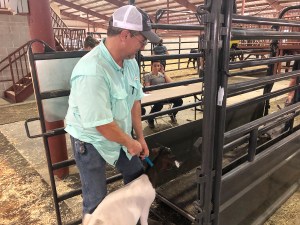
Lance Blythe, Greene County Cooperative Extension agent, leads a goat to the scale for weigh-in before the showing. Photo by Tristan Bennett

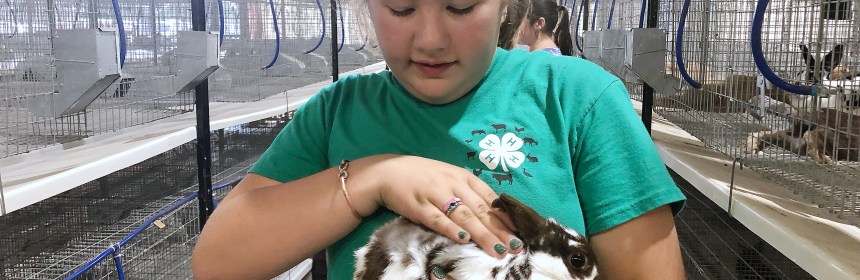
Lainey Walling, a member of the Craighead County 4-H, raised a Polish rabbit for her project. She worked with her rabbit for several months before the fair.

“You have to make sure they are not shedding, and you have to brush them out,” Lainey said. “You also have to make sure that they’re not sick because that will put them out of the competition.”

Members learn how to properly care for the animal they are raising, including feeding, maintaining health and training.

“They learn about health and nutrition and train the animal to lead so they can show the animal to a judge when it comes time,” Blythe said. “They are taking care of something besides their self.”

When it comes time to showcase the animal, judges look for certain characteristics in every species and breed. Rabbits compete in classes based on breed, age and gender. Members must enter their rabbit in the correct class or it may be disqualified.

Carrie Walling, Lainey’s mother and a 4-H Club alumna said, “Each rabbit breed has its own set of expectations. For example, our rabbits are Polish, and a big characteristic is little ears and big eyes.”

As they raise their animal, members must also keep a record book. It shows their goals for the project, what they learned, how they managed their project on a daily basis and the opportunities they took to learn more about their project.

Members of 4-H show their animals at fairs as a way to showcase their work, and judging tells them how good they did. Blythe said 4-H members are not necessarily at an advantage in competition against other animals.

“The advantage comes from how well you do all the things involved in a project. Beginning with genetics. Where did you get the animal? How well did you feed it, train it, take care of it?” Blythe said.

Depending on which project they choose, members also have opportunities to go on to compete in more 4-H competitions. They can show off their projects in other ways such as 4-H O-Rama, a district and statewide program. Members who raise animals for their projects qualify for several 4-H O-Rama competitions such as the speaking contest, livestock judging and quiz bowls.

Arkansas 4-H helps more than 134,000 young people acquire new skills and develop healthy lifestyles that they will need for the rest of their lives. Members not only learn about livestock, but also have opportunities to learn about science, citizenship, leadership, public speaking and many more topics.

“They do a lot of public speaking, so I learned to get over my shyness and a love of animals,” Carrie said.

Four-H clubs in areas such as baking and dogs allow the organization to reach more young people outside of the traditional clubs. Arkansas 4-H offers free participation in all 75 state counties.

Editor’s Note: Lainey Walling, Craighead County 4-H member, demonstrates how rabbits are judged at the fair. Photo by Tristan Bennett

State fish hatchery prepares for upcoming fishing derby

By Tristan Bennett
DELTA DIGITAL NEWS SERVICE

CORNING, Ark. — A local fish hatchery prepares to celebrate as National Hunting and Fishing Day approaches.

For the first time, Donham State Fish Hatchery, along with the other five state hatcheries, will host a fishing derby to celebrate National Hunting and Fishing Day.

The holiday began as a day of thanks for sportsmen who contributed to conservation and sustainable use of fish and game, according to the National Fishing and Hunting Day website. President Richard Nixon first proclaimed the holiday in 1972 as a day to enjoy the outdoors and encourage proper management of natural resources.

This year, National Hunting and Fishing Day falls on Sept. 28.

The employees at Donham hatchery work year-round to ensure derbies such as this one go off without a hitch. They must plan ahead each year to ensure each derby site gets the proper amount of fish.

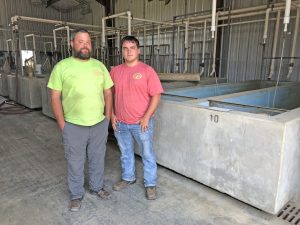
Robert Zimmer, left, and Erik Jordan pose by fish vats. Photo by Tristan Bennett

Mark Harness, hatchery manager, said, “In January or February, I’ll know how many fish I’ve got to produce for the whole year.”

Preparing these fish is no small task. The technicians keep themselves busy taking care of the fish and helping maintain the hatchery itself.

Robert Zimmer, senior technician, said, “We do everything from mowing to cleaning the bathrooms and everything in between.”

In the fall, the employees rework the ponds by draining them and mowing the grass in them down as well as work on their second round of fish harvesting for the year. In the spring, they put fish in spawning nests and usually begin harvesting by June or July.

“Checking all the oxygen levels is the first thing we have to do every morning,” said Erik Jordan, a technician at the hatchery.

The technicians keep a close eye on oxygen levels to ensure the fish are in a healthy environment. Fish must also be fed and checked on regularly to confirm proper growth.

When the time comes to send those fish out into the community, the hatchery employees harvest the ponds using a method called dragging.

“We have a seine that reaches across one of our 1 1/2-acre ponds, and we’ll drag the whole pond to a corner and slowly pull it in,” Harness said.

From there, they take a sample to get an approximate weight of the fish.

“Let’s say these fish are one pound,” Harness said, “that means one fish weighs one pound, so if we’ve got to have 500 fish, we know we’ve got to have 500 pounds.”

Then, technicians load the fish onto trucks and take them to their new homes for communities to enjoy.

Harness’s hatchery stocks catchable catfish, one pound or over, in many of the Family and Community Fishing Ponds in Northeast Arkansas. Several of these ponds will hold derbies throughout the summer and fall.

Family and Community Fishing Ponds get stocked with catfish in April, May, June, September and October. Trout come to the ponds in November through February. Lakes and ponds get stocked according to what the biologist wants, so it varies from year to year.

Zimmer said, “We may stock Lake Charles this year, but we may not stock it next year.”

The biologist is in charge of deciding how many fish and of what species a lake needs.

The hatchery’s job does not always stop there. Donham holds its own derby at the hatchery every year as well as the National Hunting and Fishing Day derby, which will take place on the Arkansas State University campus.

“We are not doing it here (at the hatchery) because we reach the local people with our derby in June. So, we are going to move to Jonesboro with this one to see about getting a different group of people,” Harness said.

Hatchery employees will be there working educational booths and a casting contest to teach people how to cast correctly. The A-State American Fisheries Society will also be there with information on endangered species. In the past, Donham hatchery has also done a BB gun range, a knot-tying station and kayaking at their derbies, Jordan said.

Admission to the derby is free, and anyone is welcome to fish from 8 a.m. to noon at the Pavilion Pond on the A-State campus. Family and Community Fishing Program rules apply, so someone could even go by themselves to the derby. There is a three fish limit per person.

“It’s designed to get families back to fishing or even get the young kids interested in fishing,” said Harness.

National Hunt and Fishing Day is all about enjoying the outdoors, and Harness hopes this derby will provide Northeast Arkansas with a chance to do so as well as learn about conservation and wildlife.

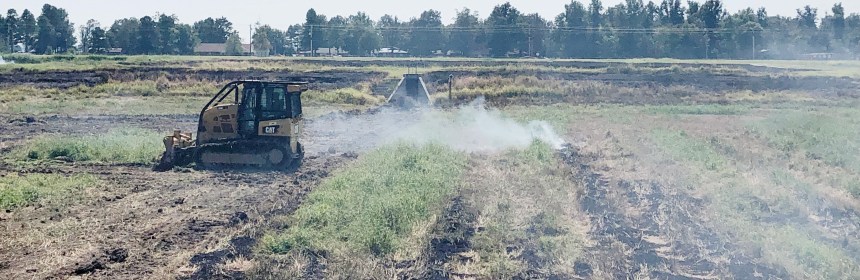
Editor’s Note: Featured photo shows hatchery staff reworking ponds in preparation of spawning season. Photo by Tristan Bennett