Tag Archives: Economy

City Trolleys Offer Free Transportation to A-State Students

Story by DDNS Reporter Kinley Rainwater
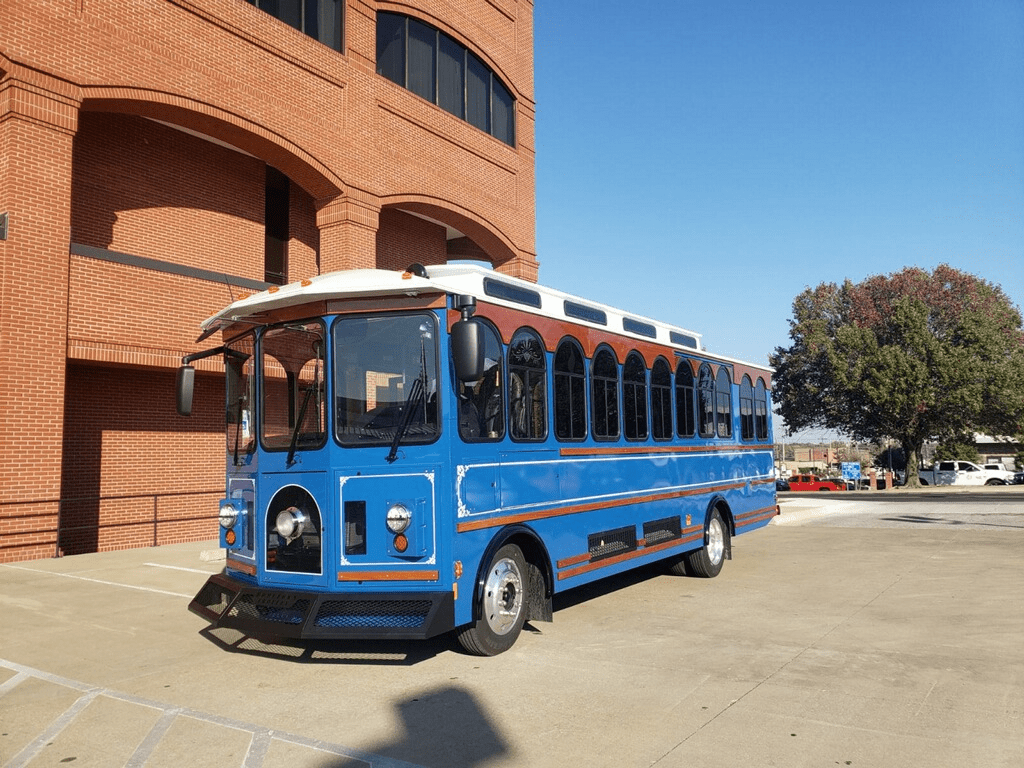
A blue trolley-style bus parked at the Jonesboro City Hall building. These buses offer transportation services using the GoJo Transportation System. Photo courtesy of the City of Jonesboro website.

JONESBORO, Ark. — The City of Jonesboro’s new GoJo Transportation System provides a convenient service to Arkansas State University students, offering free, campus-wide transportation. However, limited outreach to students has kept many from using the service.

The new GoJo system, previously JET, provides service to A-State and the surrounding Jonesboro area. It features six routes, ranging from on-campus hotspots to countless places in the city. The new Let’s GOJO! The app and website provide a map of all stops and routes to help users locate the nearest available transportation, as well as live tracking of all buses and trolleys.

The service is free to students with a valid student ID, providing an accessible alternative to driving or walking.

One of the most notable features of the system is the new Trolley-style buses. These vehicles provide classic aesthetics with modern functionality, which gives students a comfortable ride that is also more visually appealing than traditional transportation options.

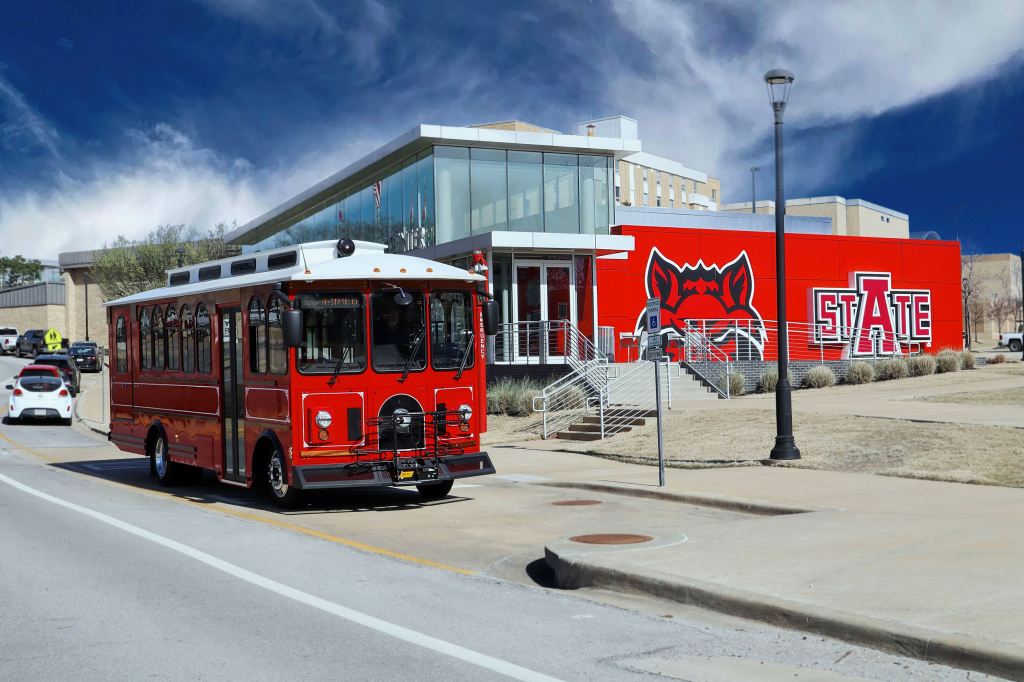
A red trolley-style bus parked in front of the Arkansas State University Welcome Center. Photo courtesy of the City of Jonesboro website.

City officials and transportation coordinators said GoJo is meant to connect residents, visitors and students to the city of Jonesboro through expanded connections throughout the city, including A-State.

Despite the advantages to students, GoJo is relatively unknown amongst them. International student Boaz Muteba said she followed the news surrounding the new system.

“In the fall of 2024, when public transportation options were expected to increase, I was one of the individuals who participated in the meeting to get more buses,” Muteba said. “Recently, when the idea took shape, I spotted the bus on campus and even saw it featured on Instagram. Unfortunately, I never got the chance to utilize it.”

The system’s impact goes beyond convenience. By encouraging students to use public transit, Gojo supports sustainable efforts and accessibility for those without personal vehicles and eases parking demand that comes with a growing campus.

As Jonesboro and student enrollment at A-State continue to grow, GoJo presents an opportunity to strengthen connections between the city and it’s academia scene. However, its success will depend on public awareness of this new system.

Students Provide Help, Seek Outlets

by Benjamin McDowell
Delta Digital News Service

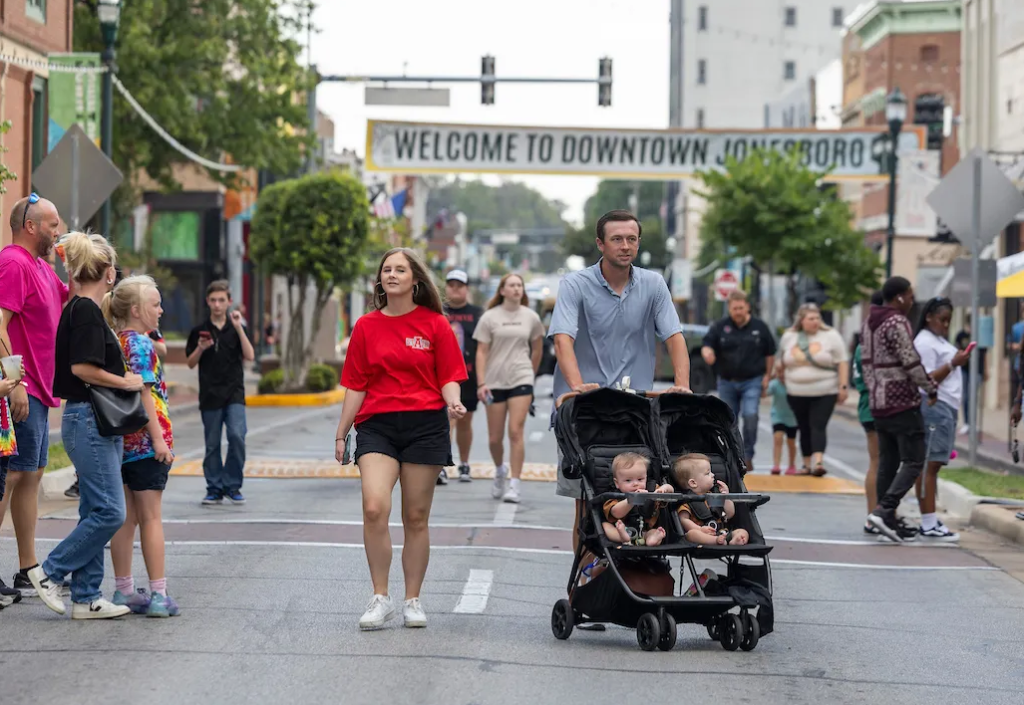
Pedestrians walk through downtown Jonesboro beneath a “Welcome to Downtown Jonesboro” banner, highlighting the connection between Arkansas State University and the local community. Photo courtesy of Arkansas State University.

JONESBORO, Ark. — As Arkansas State University continues to grow alongside the city of Jonesboro, students and community leaders say the relationship between campus and community is evolving, but not without challenges.

From economic inequality to shifting social values, both groups are working to better understand their roles in a shared space. While students often focus on academics, identity and campus life, many Jonesboro residents are more concerned with jobs, healthcare and the rising cost of living, highlighting a need for stronger collaboration.

Local organizations say collaboration is critical as community needs continue to grow.

At the Jonesboro Human Development Center, officials say demand for services has increased in recent years, creating new challenges for staffing and care.

“We are struggling to hire people to provide hands-on care for adults with disabilities,” said Diane Keith, a nursing home administrator at the facility. “We need employees with a CNA license.”

Keith said the center also maintains a waiting list for services, reflecting a broader need for support across Northeast Arkansas. She said A-State students help fill some of those gaps through internships in nursing, dietetics and speech therapy.

“We receive several A-State students for internships,” Keith said.

She said the organization remains active in the community through events like Oasis Fest, blood drives and the United Way’s Day of Caring.

Volunteers request roadside donations for the 2022 United Way Day of Caring. More than 500 volunteers attended the event in 2022. Photo courtesy of UWNEA Jonesboro YouTube Channel.

Community leaders say those partnerships are key, but there is still room to grow.

Heather Coats, executive director of United Way, said A-State has already made strong efforts to connect students with the community.

“I think what’s important, and A-State already does a great job of this, is letting students, especially young adults, know what resources are available,” Coats said.

However, she believes the responsibility does not fall solely on the university.

“I think the community could do a better job of being present on campus when it’s not just for sporting events,” Coats said. “We need to have more of a presence that isn’t just about our own entertainment.”

Coats said increased engagement from Jonesboro residents could help integrate students into the community and encourage long-term involvement.

Erin Calhoon, development director for United Way, said improving awareness is essential to strengthening that connection.

“I would say finding ways for people on A-State’s campus to be more aware of what’s available in the community,” Calhoon said.

Student leaders agree that awareness remains one of the biggest barriers.

Jaycee Davis, president of Volunteer A-State, said her organization has made it a priority to connect students with local opportunities.

“Our mission last year was to connect campus to the community,” Davis said. “We had organizations from Jonesboro come to campus, and we introduced ourselves and shared how we could help each other.’

Volunteer A-State works with organizations such as United Way, the Northeast Arkansas Food Bank and the Craighead County Public Library, helping students find ways to give back through service and outreach.

“Our goal this year is to have students make a bigger impact in the Jonesboro community by making them more aware of volunteer opportunities,” Davis said. “So many students don’t know what’s available in Jonesboro.”

Davis said students can get involved through activities like packing food boxes, participating in community events and supporting organizations like Hope Found, which raises awareness about human trafficking.

“Right now, the community gives a lot to the campus, which is great,” Davis said. “But I think our mission moving forward is to give that same energy back.”

Lavonda Evans, an instructor of sociology and criminology at Arkansas State, said differences in age and life experience often shape priorities.

“Students are in that space between being supported by their families and stepping into the real world,” Evans said.

Evans said campus conversations often focus on identity and diversity, while broader community concerns center on economic stability and infrastructure. She said there is a growing shift toward individualism.

“Everything is more individualized and specialized, which creates less collective support,” Evans said. “People tend to focus on their immediate circles rather than the community as a whole.”

Despite those differences, Evans said collaboration is both possible and necessary.

Click to View!

“Jonesboro is already making efforts to connect the campus with the city,” Evans said.

She said projects like walking trails and plans to better link the university to downtown are some examples of this effort.

Evans said expanding paid internships or job-shadowing opportunities could help students gain early experience while strengthening ties to the community.

“Overall, both city and university leaders are making strong efforts to connect students and the community, but there is always room for improvement,” Evans said.

As both sides continue to grow, leaders agree that bridging the gap will require greater awareness, stronger partnerships and a shared commitment to engagement on campus and in the community they will eventually call their own.

Local Hospital Navigates Rising Costs, Growing Demand

Stethoscope with dark blue tubing and metallic chest piece on a white background

Story by DDNS Reporter Benjamin McDowell

St. Bernard’s health care physician Dr. Christina Carl (right) performs a heart and lung auscultation for a patient during a routine wellness exam in Jonesboro, Arkansas. Photo courtesy of St. Bernard’s.

JONESBORO, Ark. — As St. Bernard’s Health Care approaches its 126th anniversary on July 5, leaders say the oganization is balancing a legacy of community care with the growing challenges of modern health care.

St. Bernard’s has been in medicine for 125 years, evolving alongside the social service industry rather than the city, economy, or technology. Kevin Hodges, senior vice president, said rising costs and increasing insurance requirements continue to strain providers in the post-COVID era.

“Every time they add requirements, it adds cost to us,” Hodges said. “Someone has to make sure those requirements are met just for us to get paid. Those are uncompensated burdens.”

Health care systems face high operational costs, including labor, transportation, utilities, and food insecurity. Hodges said balancing expenses while navigating reimbursement challenges has become increasingly difficult. Hodges also noted funding for social service programs has stagnated, often coming from federal and state sources, and emphasized the importance of volunteers from churches, students, and other community groups.

“To have high-level social services in communities, you have to have strong volunteer programs,” he said.

Michael Givens, administrator and chief operating officer, said the vision of the Sisters who founded St. Bernard’s 126 years ago continues to guide the hospital. Over his 25 years, Givens has seen growth in heart care, stroke care, robotic surgery, and technology, including artificial intelligence.

“We already use a system called Rapidan. It works with our CAT scanners to analyze brain scans and quickly identify strokes or aneurysms,” Givens said. “That kind of speed can save lives.”

Givens said St. Bernard’s aims to expand services further, recruit specialists, and become a top-10% hospital in the U.S.
Kevin Byron, assistant vice president for Behavioral Health Services, said the rise in mental health issues has driven growth in inpatient and outpatient care. The hospital has 108 beds serving patients with a wide range of needs, from severe psychosis to depression and suicidal thoughts.

Mental health remains central to St. Bernard’s mission, he said, inspired by the founding Sisters. Programs like the recuperative care program at the CSU allow patients to stay up to three months post-discharge, supporting those experiencing homelessness.

“I’ve been in health care for about 27 years, and Jonesboro has grown significantly. As the population grows, so does the need for infrastructure and services,” Byron said. He hopes to create a crisis response team that works with law enforcement and 911 and a psychiatric residency program to train new psychiatrists locally.

Mitchell Nail, media relations manager, said his role has shifted since the pandemic from health guidance to encouraging residents to address health issues early, including finding primary care providers and attending screenings.

Increased awareness of social services has led St. Bernard’s to provide prenatal and postpartum care regardless of a patient’s ability to pay. Nail said patient stories remain the hospital’s most effective way to connect with the community.

“I want people to see St. Bernard’s as their trusted source for health information and care,” he said. “I want them to feel confident they can find expert guidance and treatment right here in their community.”

-30

Food insecurity rises in northeast Arkansas as costs climb

Story by DDNS reporter Benjamin McDowell

Photo courtesy of the Food Bank of Northeast Arkansas

As grocery prices climb and paychecks fall short, more Northeast Arkansas families are waiting in food bank lines to make ends meet.

Food insecurity is rising in northeast Arkansas as inflation drives up the cost of groceries, gas and housing, putting increased pressure on local food banks.

The Food Bank of Northeast Arkansas secures donations from food and grocery industries, government agencies, individuals and other organizations to provide for people in need. The food is stored in the organization’s 59,600-square-foot distribution facility in Jonesboro.

Terry Austin, a development officer focused on fundraising and communications, said demand for food assistance has increased over the past year due to inflation, rising gas prices and cuts to federal support programs such as the Supplemental Nutrition Assistance Program, or SNAP.

“Demand has risen already just from the cuts that we’ve taken so far from the economy being in rough shape,” Austin said.

Austin said donors are also feeling financial strain, forcing them to be more cautious with their contributions as they balance their own household expenses. He said the food bank has seen an increase in senior citizens and families seeking assistance.

“Everybody right now is watching gas prices go through the roof,” Austin said. “Everything is more expensive at the grocery store.”

According to Feeding America, about 240,000 people in Arkansas benefit from SNAP, including 113,000 children and 36,000 senior citizens. A University of Arkansas study estimates that 28.8% of Arkansans face food insecurity.
“The price of one pound of ground beef is now higher than the federal hourly minimum wage,” Austin said, describing the current conditions as a “perfect storm” of rising costs and reduced assistance.

Austin said he is concerned about the food bank’s ability to meet growing demand as grocery prices continue to rise and federal assistance programs face potential cuts.

“I’m honestly worried about making sure that we’re able to meet the needs that may be coming our way,” Austin said.
Feeding America estimates that cuts to SNAP benefits could result in a loss of up to 41 million meals for Arkansas families.

Laura Dunivan, who works on the programs team managing fundraising and grant efforts, said rising costs are bringing more first-time clients to food pantries.

“What used to be occasional support for some families is now something they rely on more heavily,” Dunivan said. “We’re consistently serving more households each month.”

Dunivan said many families use food assistance to fill gaps during financial hardship, allowing them to afford other essentials such as gas, rent or medication.

“Would you sit in a car line for an hour for a box of food if you could just go to Walmart and get it in 10 minutes?” Dunivan said.

She said transportation remains a major barrier in rural communities, where access to food pantries can be limited. To address this, the food bank operates the Nourish Mobile, which delivers fresh produce at no cost to underserved areas.
“Some of the people can’t come to the pantries, we have to go out to them,” Dunivan said.

Natalie Neal, the USDA coordinator for the food bank, said federal food programs play a critical role in addressing hunger across the state.

“With the rising price of food, it is more expensive to purchase food, and our neighbors can’t afford everything they need,” Neal said. “It really starts to feel like there’s a greater gap.”

Neal said the food bank has seen a decrease in USDA food shipments, limiting the amount of food available for distribution.

“We are seeing less come into the food bank, so we have less to go out to the community,” Neal said.

She said the organization works with mayors, churches and community partners to expand access and reach new households.

“USDA foods provide a pivotal source of food,” Neal said. “It helps keep food in the pantry to help us all get through difficult times.”

Bonnie Mamula, office manager at the food bank, said rising food costs combined with stagnant incomes are key drivers of food insecurity.

She said senior citizens are especially vulnerable because many live on fixed incomes while expenses continue to rise.
“Some counties only have a few pantries, and they’re only open a couple of times a month,” Mamula said. “People in more remote areas have fewer choices.”

Mamula said the food bank is also seeing more working individuals and recently unemployed residents seeking assistance.

“Even people with jobs can’t make ends meet,” Mamula said.

Jennifer Hannah, chief program officer, said inflation has affected not only how many people the organization serves but also the quality of food it can provide.

“If we look at our data over the last few years, what we’re seeing is consistently serving more people,” Hannah said. “Demand is always there; it’s just how urgent it is.”

Hannah said many families fall into a gap where they earn too much to qualify for assistance programs but not enough to consistently support their households.

“It’s not so much changing the services we deliver, it’s changing how much we’re able to deliver,” Hannah said. “When prices go up, the quality of people’s food is going to decrease.”

-30-

Rice in Schools plants seeds of learning statewide

Story by DDNS Reporter Jerry Don Burton

Schools across Arkansas are learning to embrace the natural state’s top crop as the Rice in Schools program pilot run continues.

The Arkansas Rice in Schools program, launched by the Arkansas Department of Agriculture in collaboration with Arkansas Rice and USA Rice, is an initiative to teach students how to cook with rice and educate them on the significance of the grain.

Leslee Tell, the farm-to-school coordinator for the United States Department of Agriculture, directs the program. She said Rice in Schools will teach students where their food comes from.

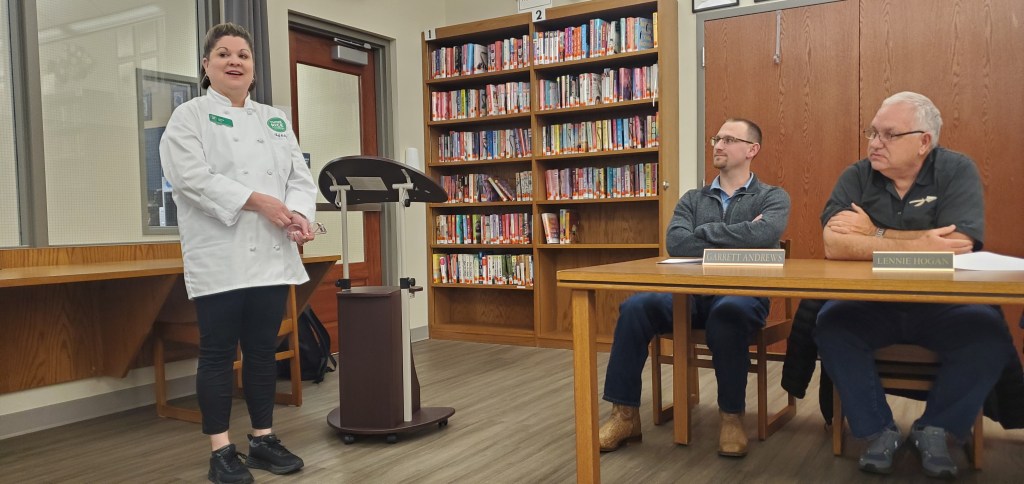
(Left) Leslee Tell, farm-to-school coordinator for the United States Department of Agriculture, describes the Rice in School Program to the Nettleton School Board at a March 17 meeting. According to the USDA website, the program, which is in a pilot phase, gives schools the tools to serve locally grown rice in healthy meals. PHOTO COURTESY OF JERRY DON BURTON

“Our goal is simple, increase the use of Arkansas-grown rice in schools, while helping students learn about agriculture, nutrition and where their food comes from,” Tell said in a YouTube video introducing the program. “This program is about more than just meals, it’s about connecting students to Arkansas agriculture and supporting our local farmers.”

Arkansas Governor Sarah Sanders developed the program in fall 2025, following the transition of nutrition programs to the Arkansas Department of Agriculture.

In December 2025, the Arkansas Rice Research and Promotion Board approved $15,000 in funding to support the program’s implementation. These funds provided schools with equipment to encourage the usage of Arkansas rice in their menus.

Sanders said the new program will teach students how farmers use rice to feed families around the world. She said students will use food made in Arkansas to develop healthy eating habits.

“Rice isn’t just part of Arkansas’ economy; it’s part of who we are,” Sanders said in a press release published Nov. 13, 2025.

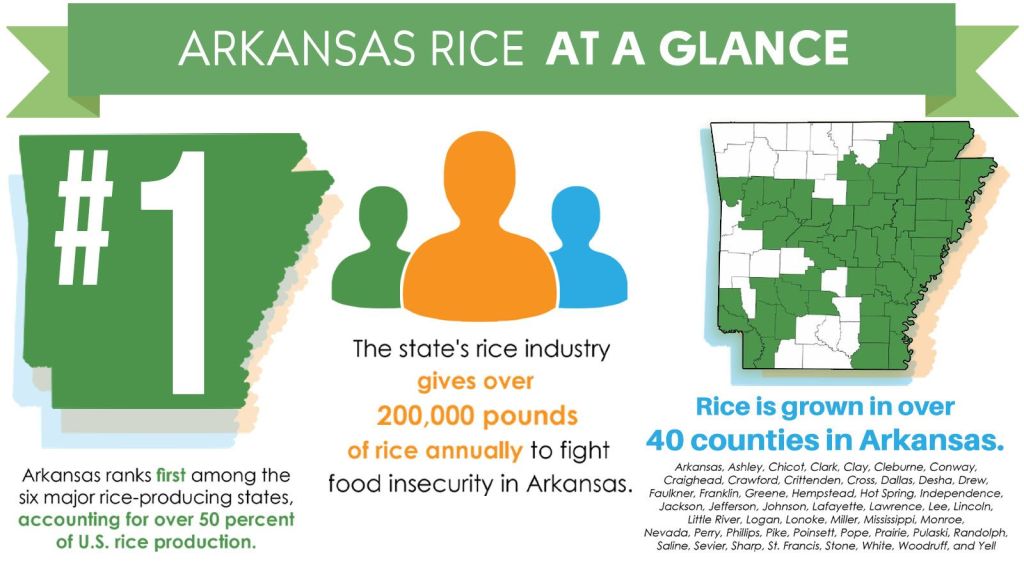
Arkansas is the largest rice-producing state, accounting for more than 40% of rice production in the United States, according to Arkansas Rice. Tell said a majority of this rice is produced in Arkansas’ northeast region. 

A graphic presents quick facts about Arkansas rice production. Arkansas is the largest rice-producing state, accounting for more than 40% of rice production in the United States, according to Arkansas Rice. GRAPHIC COURTESY OF ARAKNAS HOUSE OF REPRESENTATIVES

Almost 20 Arkansas schools and districts are scheduled to participate in the program’s pilot phase, which began in February at Ward Central Elementary in Cabot, Arkansas. The pilot will wrap up in May at Forest Park Elementary in Little Rock.

As part of the program, Tell travels to participating schools with a team to involve students in cooking demonstrations and interactive educational lessons. She also introduces meals with local rice to school menus and trains cafeteria staff in preparing them.

On April 9, Tell traveled to Newport, Arkansas, to introduce the program to students at Newport High School.

Leanne Bradley, the family and consumer science teacher at Newport High School, said Rice in Schools was a beneficial experience for her students. 

Bradley said rice’s significance to Arkansas demonstrates the program’s importance.

“I think everybody is aware that if you don’t take care of what you have, you can lose it,” Bradley said. “(Rice) is something that we have that not every other state has.”

Bradley said her food production and culinary students passed out stir-fried rice samples Tell made for elementary students. After sampling different meals made using rice, students placed stickers on a bulletin board to indicate how much or little they enjoyed the meals.

Tell said they compile student opinion data from every participating school. Then, in June, she said they will analyze the data to determine which recipes students liked most and least and make appropriate changes.

Bradley said the students greatly enjoyed the Rice in Schools program. She said her students cooked with rice before, but Tell’s contributions provided them with new ways to use the grain.

The family and consumer science teacher said she appreciated how the program helped her students realize how much rice Jackson County, where the Newport School District is located, produces.

According to the 2022 USDA Census of Agriculture, Jackson County produced almost 80,000 acres of rice, second only to soybeans.

“So just for the kids to realize this is a huge staple that Arkansas provides for the state, and it’s easy and it does not have to be Minute Rice,” Bradley said. “It really doesn’t take that much longer to actually cook your own rice and the quality is just so much better.”

Julie Isbell, superintendent at the Harrisburg School District, where Tell visited in March,

also said she loved how the program connected her students with local rice production.

Poinsett County, where Harrisburg is located, produced about 90,000 acres of rice, according to the same USDA census.

Tell also brought the program to the Nettleton School District in March. Nettleton School Board Vice President, Donnie Hauge, said he supported the program and thinks helping kids learn cooking skills and understand where their food comes from is an important undertaking.

Wes Ward, Arkansas secretary of agriculture, said the program emphasizes how Arkansas’ dominance over rice production could be used to support students and education. He said the program is a good step toward getting Arkansas to buy and use more of its own rice.

Bradley said rice is also versatile and can be stretched further than other ingredients. She said this is especially important for those who cannot afford as much food.  

“It’s a very quick and easy staple that you can keep in your pantry and it can go for a wide variety of different types of food,” Bradley said. “If your family is financially disadvantaged, you can pair beans and rice together, and that actually makes a complete protein.”

Bradley said her favorite part of the program was how it helped students interact with and cook rice in different ways than they’re used to. For some, Bradley said this program represents an introduction to rice as an ingredient.

However, the family and consumer science teacher said Tell’s visit to Newport was not without challenges. 

Tell was scheduled to return to Newport High School on April 10, but Bradley said she fell ill and missed the second day. 

“She could have talked so much more and given the information about it. She did not get to go into depth like she would at other places,” Bradley said.

In the time they did spend together, Bradley said Tell was a very energetic and fun, but professional person to work with.

“I think she’s phenomenal and I liked having the opportunity,” Bradley said. “I hope that this is something that takes off and is able to be utilized in schools across Arkansas.”

Tell said the student feedback, recipe evaluations and participation data gathered in the pilot will refine the program and prepare it for statewide expansion.

In the final iteration of the program, Bradley said she would like to see taste testing and activities for all grade levels.

Tell said the program continuously searches for and develops new and more effective methods of engaging schools.

Bradley said the school will continue building on the foundation laid by Tell and the Rice in Schools Program. She said the school’s student-run restaurant, the Hungry Hound Cafe, started implementing rice meals based on what they learned from the program.

Tell said she is a teacher at heart and loves to cook, so working with students to prepare recipes in the classroom was a great combination.

“We are bringing Arkansas-grown rice to schools across the state,” Tell said. “One plate at a time.”
More information about the Rice in Schools program may be found on the Arkansas Department of Agriculture’s website. Program organizers also created a digital guide featuring rice data and recipes from USA Rice.

New I-55 Bridge Named after Local Legends

Information from the Tennessee Department of Transportation

MEMPHIS, TENNESSEE—In a powerful celebration of culture and history, the Tennessee Department of Transportation (TDOT) and the Arkansas Department of Transportation (ARDOT) proudly announce that the new iconic Interstate 55 (I-55) bridge spanning the Mississippi River between Memphis, Tennessee, and West Memphis, Arkansas, will now be known as Kings’ Crossing.

This new name, officially adopted by the Tennessee General Assembly and the Arkansas Highway Commission, honors three transformative figures known as “Kings”: Dr. Martin Luther King, Jr.; B.B. King; and Elvis Presley.

“Kings’ Crossing is more than just a piece of infrastructure; it is a symbol of our collective history, heritage, and the enduring spirit of unity that defines this region,” said TDOT Commissioner Will Reid. “Naming this bridge in honor of these gentlemen pays tribute to their extraordinary legacies – individuals who transcended barriers, fostered cultural exchange, and used their talents to build bridges between people.”

“It’s only fitting to name this vital crossing after three historic figures from this region,” said ARDOT Director Jared Wiley. “We’re grateful for the partnership and collaboration with TDOT on this project. It truly is the result of a regional effort that will benefit industry across this national corridor and the thousands of individuals who depend on this connection each day.”

In July 2024, the U.S. Department of Transportation awarded a landmark federal investment in Tennessee and Arkansas of nearly $400 million toward half the cost of replacing the I-55 Bridge over the Mississippi River. In addition to the nearly $400 million from the Rebuilding American Infrastructure with Sustainability and Equity (RAISE) program, TDOT, utilizing a state general fund allocation provided through the Transportation Modernization Act, and the Arkansas Department of Transportation (ARDOT) have each committed up to $200 million, demonstrating a collaborative effort to fund this bridge replacement. This marks the single-largest transportation investment in Tennessee and Arkansas’ state history.

The I-55 Bridge, a vital link for national commerce, is set to undergo a comprehensive overhaul to add capacity, improve safety standards, ensure route resiliency, and maintain optimal operational conditions. The existing bridge, which has served travelers for 75 years since its construction, will be replaced with a larger structure designed to meet modern seismic codes, as it sits on the New Madrid fault line.

The environmental process is wrapping up on the I-55 Bridge Replacement project. Design is underway, and Right-of-Way coordination should begin later this year. Construction is estimated to start in fiscal year 2026. TDOT and ARDOT are partnering to design and construct the bridge utilizing the Construction Manager/General Contractor (CM/GC) project delivery method. CM/GC is used for complex projects, aligning technical direction, organizational structure, and budgets with the department’s strategic vision.

For more information about the proposed project, visit TDOT’s website.

Northeast Arkansas Career and Technical Center celebrates 50 years

Story by DDNS Reporter Shailey Wooldridge

Photo courtesy of the Northeast Arkansas Career and Technical Center

The Northeast Arkansas Career and Technical Center (NEACTC) celebrated 50 years of opening doors for students on Friday, March 14.

“It’s just nice that I’m able to contribute to the legacy of the place. So this is, this is most definitely a very special place in Northeast Arkansas,” Alex Ragsdale, special projects manager for the NEACTC, said.

The career technical school serves 14 school districts across Northeast Arkansas, it has undergone multiple name changes over the years but its purpose of preparing students for a variety of career skills remains constant.

Ragsdale said the center offers free college credit to high school students, free industry certifications, and clubs.

“This is a good place for students to get experience in the job field that they’re thinking about going into because we know how costly college can be, so it’s nice to kind of get your feet wet in this situation,” Ragsdale said. “Just an amazing place for students just to kind of fill out what they want to be.”

Robert Stephens and Mell Stephens attended the celebration. Robert taught computer-aided drafting at the technical school for 27 years, and Mell taught a parenting skills class for three years.

Robert Stephens and Mell Stephens look at a photo of themselves from their time at the Northeast Arkansas Career and Technical Center. Robert Stephens taught computer aided drafting for 27 years and Mell Stephens taught parenting skills for three years. Photo by DDNS Reporter Shailey Wooldridge.

“We had a great time,” Robert Stephens said. “I have a lot of students I see around town in places that appreciate what they learned here. Had several state winners.”

Mell Stephens said that many Roberts students became architects.

“It’s good that kids are getting recognized that come here. For years, we always said that more kids ought to be taking because they would be needed later on, and now, today, that’s exactly what’s happened. More and more folks in these classes are needed out on the job,” Robert Stephens said.

Mell Stephens said she enjoyed her time teaching at the NEACTC.

“I loved it. I loved the girls. Yeah, I had some challenges, but boy, I loved the girls. Loved teaching, and I had a couple of boys that came to it,” Mell Stephens said.

Isabella Stanton, a senior at Jonesboro High School and the president of the NEACTC SkillsUSA chapter said she discovered her passion for the EMT program through NEACTC.

“I did not know what I wanted my job or anything I was interested in until I learned this is here. I spoke with all the teachers, but I fell in love with the EMT program. I think it’s really why many people can figure out what they want to do,” Stanton said.

She said the NEACTC has supported her in many ways.

“I’m in EMT school, but Medic One wants to hire me already. It’s given me many opportunities, and I’ve made many friends and mentors from here as well. So, the NEACTC is a good place to find what you want to do,”

Hybar Steel Expands Footprint in Arkansas

MISSISSIPPI COUNTY, Ark. (March 11, 2024) – Hybar Steel has joined the “Work Here. Live Here.” (WHLH) housing incentive program in Mississippi County as an industry partner. With an investment of $500,000 to help its employees purchase homes in the county, Hybar becomes the 15th employer to participate in WHLH. Since the program launched in 2023, it has generated $36.1 million in new home value and facilitated 122 home purchases.

WHLH was created to strengthen Mississippi County’s workforce by making homeownership more accessible for employees of participating companies. Overseen by the Grow Mississippi County Community Foundation, WHLH is a cooperative partnership between the foundation, participating industries and several Mississippi County financial institutions. ​Funded by the participating industries, the program offers up to $50,000 toward the cost of a new home and up to $25,000 toward an existing home. 

“The program takes us one step further in terms of attractive benefits at Hybar,” said David Stickler, CEO of Hybar. “We pay great wages, have a robust healthcare program, a bonus for perfect attendance, a partnership with Arkansas Northeastern College (ANC) and, now, housing incentives through ‘Work Here. Live Here.’”

Hybar is nearing completion of its state-of-the-art steel rebar mill in Osceola, which is designed to be powered by 100% renewable energy, making it the most environmentally sustainable facility of its kind. Expected to begin production in May of this year, the steel mill is joined by Hybar’s adjacent solar field and its port facility on the Mississippi River, which, according to Stickler, could one day become the largest port between New Orleans and St. Louis. 

The company currently employs more than 100 people, with plans to expand to 200 direct employees and 50-60 indirect workers. While recognized for its competitive pay — aiming to have the highest-paid steel workers in the world — Hybar’s career opportunities and benefits also extend to employees in human resources, marketing, IT, logistics and more.

“We’re very pleased that Hybar has joined the growing number of companies who have contributed to the Grow Mississippi County Community Foundation and embraced the WHLH program,” said Clif Chitwood, president of Mississippi County Economic Development. “Their participation will help us continue to attract and retain the high-quality employees necessary to fill the increasing number of excellent jobs here in the county.”

WHLH has already made a measurable impact in Mississippi County, with 38% of homeowners in the program moving in from outside the county and 60% being first-time homebuyers. WHLH continues to expand its reach beyond the steel industry as participation from companies across manufacturing, logistics and other key sectors continues to grow. 

“Arkansas is a great place to do business, and Mississippi County, in particular, is a great place to do steel business,” said Stickler. 

For more information about “Work Here. Live Here.”, visit workhereliveherear.com.

About Hybar: Hybar Steel is a steel manufacturer based in Osceola, Ark., focused on producing high-quality rebar using renewable energy. The company is developing a modern steel mill in Mississippi County designed for efficiency and environmental sustainability. With access to the Mississippi River and other key transportation routes, Hybar is positioned to serve customers across various markets. Learn more at hybarsteel.com.

About “Work Here. Live Here.”: “Work Here. Live Here.” (WHLH) is a pioneering housing incentive and relocation initiative designed to attract and retain workers within Mississippi County, particularly those in the manufacturing sector. Launched two years ago, the program has successfully facilitated the sale of over 120 homes, contributing to $36.1 million in new home construction across Mississippi County. WHLH currently partners with 15 employers. Employees of those 15 businesses are eligible to receive up to $50,000 toward the cost of a new home or up to $25,000 for an existing home, making first-time homeownership a reality for 60% of participants.

Overseen by the Grow Mississippi County Community Foundation, Work Here. Live Here. is a cooperative partnership between the foundation, cooperating industries, and cooperating Mississippi County financial institutions. The cooperative industries invest in the program to incentivize their employees to build new homes or purchase existing homes in Mississippi County. The program is funded by the cooperating industries in the Work Here. Live Here. Program.

# # #

Farm Bureau Concerned Over Tariffs

Press release courtesy of the American Farm Bureau
photo credit: AFBF Photo, Mike Tomko

The American Farm Bureau sent President Donald Trump a letter Jan. 31 expressing concern that new tariffs levied against Canada, Mexico and China may inadvertently create financial hardships on U.S. farmers and ranchers. Historically, retaliatory actions often target U.S. agriculture but then ripple throughout the U.S. economy. 

“Last year, the U.S. exported over $30 billion in agricultural products to Mexico, $29 billion to Canada and $26 billion to China – our top three markets by value combined for half of total agricultural exports,” the letter states. “Any effort to impose additional tariffs on these nations’ imports runs the risk of significant retaliatory measures against U.S. agricultural exports. We ask that you carefully consider the impact on American farmers and ranchers, associated businesses and rural communities when determining potential trade actions. For decades, American agriculture has strongly supported efforts to open the world to our agricultural and other trade products.” 

The letter also provides broader context about the importance of international markets to U.S. farmers and ranchers, stating, “Ninety-five percent of the world’s consumers live outside the borders of the United States and over twenty percent of U.S. farm income is based on agricultural exports. Expanding opportunities for U.S. crop and livestock producers to access international markets will boost farm income in the United States, while preserving existing access is critical to maintaining farm income. U.S. agricultural exports amounted to $174.5 billion in FY2024, and – historically – every $1 of U.S. agricultural exports results in over $2 in additional domestic economic activity.” 

Over 20% of U.S. agricultural products are exported. For many commodities, the percentage is significantly higher. U.S. actions, including implementing tariffs, that ultimately increase costs and drive down prices for farmers and ranchers would be especially difficult at a moment when so many are already facing insolvency.

The letter continues, “We urge your Administration to make certain that any action taken in the near- or long-term with Canada, Mexico and China does not make it more difficult for American farm families to raise a safe and affordable crop on domestic soil.”

Read the full letter here.

Bakeries across the region cope with COVID-19

By Krishnan Collins
Delta Digital News Service

Jonesboro, Ark. – When the pandemic started, locally owned bakeries around the region felt the blow of COVID-19 and those businesses in Northeast Arkansas have had to continually adapt to keep producing delicious sweets for the community.

Deep in the heart of downtown Paragould 

   Looking at cake decorating supplies at an overseas military base, Tracy Mothershed answered yes when a woman approached her and asked if she was a cake decorator. Although she did not have a shop at the time or much professional experience, Mothershed always had an artsy side and liked to decorate cakes for her children. 

   “I don’t know where that answer came from,” Mothershed said. “So she asked me to help her with her daughter’s birthday cake and it just started from there. I just started doing cakes for people and I feel in love with doing it. Gosh, that was almost 30 years ago.”

   Born and raised in Paragould, she swore she would never return home after she left. Mothershed did just that and eventually started her own bakery in 2011, Something Sweet, in downtown Paragould.

   “To me, downtown is the heart of your community,” Mothershed said. “You have to have a thriving downtown to create that community and I just always wanted to be a part of that.”

   When Mothershed returned from overseas with her husband, she made cakes for friends and family out of her home. Although she also worked full time, Mothershed’s cake production kept increasing. Eventually, her husband told her she had outgrown the house. 

   “I had cakes on the kitchen bar, had them on the kitchen table, had them on the dining room table,” Mothershed said. “He was like, ‘We can’t even sit down and have dinner because it’s everywhere.’ (I was) getting over the fear of opening your own place and just jumping in with both feet and (I) haven’t ever looked back.” 

   In the first year Something Sweet opened, sales were so good they shocked Mothershed’s accountant. The business grew every year since opening, but when the coronavirus hit in March, things got a little rough. 

   “Up until this year, it has grown every year since. I’m not going to lie, this year has been rough,” Mothershed said. “You know, we’re doing enough to keep the doors open and doing OK. I haven’t had the nerve to look at all my numbers. My accountant just sent me my quarterly reports and I haven’t even looked at them yet.” 

   Throughout the pandemic, Mothershed said she’s had plenty of low morale moments. Although she is someone that usually does not stress, the pandemic definitely produced some harrowing days. 

   “I was just telling my girls this morning I’m mentally and physically just exhausted,” Mothershed said. “In August my mom passed away. Not from COVID, she had a stroke and didn’t recover. Just all of this, I’m physically and mentally exhausted. So those low points, yeah I’ve had those.”

   Despite those low points, Mothershed said she’s too stubborn to throw in the towel and give it all up. Although the store folding crossed her mind, Something Sweet is her baby and her stubbornness persisted. 

   “My husband just says they’re going to have my funeral in here,” Mothershed said. “I’ve always been of the mindset as long as the bakery is paying for itself, I don’t have to pay myself. As long as everything is paid for and taken care of then no, I’m not shutting the doors. I’m not going to lie, there’s been a few times the past couple of months I’ve been like, ‘How much longer can we keep going?’ Right now, we seem to be at a good point.”

   Something Sweet misses the income that came from wedding cakes. With many weddings canceled and postponed due to the pandemic, one of the shop’s biggest income sources has not been as prolific as it was in a pre-pandemic world. 

   However, it’s not just weddings that the store lost potential income from during the pandemic. 

   “Life events are postponed,” Mothershed said. “Birthday parties have been canceled. Custom designed cakes are the biggest portion of our profit. That’s where our profit margin is. That side of it has taken a big hit.”

   The store also lost income from walk-in traffic. The store’s lobby remained closed throughout the pandemic but reopened in November. Before reopening, those non-regular customers who would have stopped by just for a look and happened to leave with a dozen cupcakes did not get the opportunity to do so from March through October. However, the store did allow curbside delivery and customers could call ahead to order.

   With walk-in customers not allowed into the store and the baking business being such a visual thing, Mothershed said advertising increased across social media, the store’s website, print and radio to keep the brand of the store going strong since the start of the pandemic.  

   The store made many preparations before reopening its lobby, including hand sanitizing stations, social distancing dots on the floor, multiple tongs, gloves and other measures to make sure the reopening is safe. 

   “I really wanted to be open for the holiday season,” Mothershed said. 

Right off campus in Jonesboro 

   Just a seconds drive away from Arkansas State University, right in the reach of students, Bliss Cupcake Cafe on Red Wolf Boulevard actually got its start in another part of the state. Bliss originally opened in Fayetteville in 2009, but Pocahontas native Breanna Walton wanted to bring something that gave her so much joy in college at the University of Arkansas back home with her. 

   “My roommate and I, we loved Bliss,” Walton said. “We would go there on a good day, go there on a bad day. It was like, ‘Hey we need a cupcake to feel better’ or ‘Let’s celebrate and eat a cupcake.’” 

   Walton, a nurse, ran down to the Fayetteville store before college graduation in hopes of winning a giveaway and the owner of Bliss happened to be there. Walton told him she was moving back home and that he should open a store in Jonesboro. He responded by telling Walton she should open it herself. 

   “It was just kind of a real nonchalant conversation that turned into a reality,” Walton said. 

   Bliss opened its doors in Jonesboro July 12, 2014.

   When the pandemic hit in March, Walton said the hardest thing initially was dealing with the uncertainty of the situation. In the beginning, Walton and her mother, who was also instrumental in bringing Bliss to Jonesboro, decided they would not take a paycheck from Bliss to ensure Bliss’ employees could continue to work and be paid. 

   In terms of social distancing, Bliss’ very wide cupcake case made social distancing almost automatic in the store between the person behind the counter and the customer. Bliss was already mostly a takeout business anyway, so the store was naturally acclimated to pandemic procedures.

   Despite the pandemic, Bliss found ways to maintain its brand and give the community fun options. 

   “For Easter this year one of the fun things we did was we delivered boxes from the Easter bunny to people’s doorsteps just so they didn’t have to get out,” Walton said. “So early Sunday Easter morning my mom and I got up at 3 a.m. and literally drove all over Jonesboro to deliver treats on people’s doorsteps. It was pouring rain that morning so that was interesting.”

   The store also made cookie decorating kits that people could use at home so they did not have to get out to have fun. 

   Walton said Bliss has always placed a pretty big importance on giving back to the community. The community reciprocates that energy. 

   Back in May, a customer ordered a large custom cake ahead of time but did not want to pay until she could pay with cash in person, Walton said. The customer never appeared to pick up the cake, but when Bliss posted the situation on social media many people reached out to the store saying they would purchase it despite its very custom nature. 

   “Without their support, we wouldn’t have made it through the last three months,” Walton said. “I think people realize that especially now more than ever, with the tornado and the timing of it all, that kind of all we have is each other. We’re local people owning local businesses. So if we don’t support each other, then our community doesn’t rise as a whole.”

   A-State alum Drew Roberson liked Bliss from the first time he tried their products.

   “I first went to Bliss Cupcake Cafe because I just wanted to visit my friend who worked there,” Roberson said. “I left with two cupcakes and a coke in my hands and loved every bit of it. After that, if I ever wanted to surprise a friend with something sweet, I would go to Bliss because I knew their cupcakes, and presentations of them, were always impressive. They’re really good and I don’t even like sweets.”

   The pandemic came at a terrible time for the store. Bliss saw a decline in sales initially, and the pandemic happened during what would usually be one of Bliss’ busiest seasons around Easter and Mother’s Day. Also, just like Something Sweet, Bliss lost a lot of income from canceled weddings. Despite those tough times, just like Something Sweet, the idea of going out of business never gained much traction. 

   “It was never a thought that was given any kind of fuel or action,” Walton said. “As soon as that crossed our minds, it’s not going to happen. We’re not going to let it happen.”

   The baking community 

   Mothershed said she knows she cannot bake enough cakes for everyone in Northeast Arkansas no matter how much she wants to, she has to sleep. 

   Even with a good amount of bakeries across the region, Mothershed said there is room for more bakeries in the region. 

   “Everybody loves sweets,” Mothershed said. “They make you happy. (Bakeries) just create part of your community, part of that family feeling.”

   Walton emphasized how Jonesboro is a hub for all the small surrounding towns in the area, so there are plenty of customers to go around for all the bakeries. 

   “My favorite thing to say is, ‘We’re a mouth full of happy,’” Walton said. “Just for the same reason I fell in love with Bliss, is what I want to provide for other people.”

COVID-19 hampers holiday, economy

By Yu Bai
Delta Digital News Service

The first Monday in September is the traditional Labor Day in the United States. However, due to the impact of COVID-19, most people recognized the holiday at home rather than attending public settings.

Jonesboro physician Chance Smith stayed home for the holiday. “I did have a barbecue, and I swam with friends and family only on Labor Day,” said Smith.

Smith practiced safety precautions by staying home and only being close to those familiar to him.

To contain the spread of COVID-19, the city Jonesboro strongly encourages residents to keep social distance and avoid gatherings of more than 10 people.

Businesses such as restaurants and bars are limited to takeout or delivery while personal care services, and gyms have been closed.

Slowing customer traffic has caused small businesses to have limited profits limiting funds for overhead costs. The city provides some grants and loans to help these companies survive the temporary closures and loss of customers.

Director of Communications for Jonesboro Bill Campbell said, “We have built reserves to get through what we call ‘rainy days,’ which means the periods of emergency or catastrophe or anything like that.”

Employment in the leisure and hospitality industry has always been a dominant area of Jonesboro’s economy, and the permanent closure of these businesses will make many people in Jonesboro unemployed.

Labor Finders is a temporary staffing and employment agency in Jonesboro, which provides good short-term services for those who are unemployed. It can immediately provide jobs for people who need to find a job and pay a daily salary.

Debra Dunaway, the assistant manager of Labor Finders, said, “ We provide construction workers and construction clean up, and we give them money right away when they’re in need.”

However, Dunaway said that they did not recruit too many workers to work in recent days compared with before because so many things are shut down right now.

Jessica Tran is a local resident whose parents have a business. “My parents were forced to close their business for a few months due to a mandate ordered by the governor. As for me, I actually had a job as a desk assistant. However, when the virus started spreading more, everyone was sent home, including me.”

The epidemic has suppressed the development of many private small businesses, and it also has diminished the government sales tax. Companies continue to develop their business while expanding social distancing requirements to stimulate economic recovery.