Local Hospital Navigates Rising Costs, Growing Demand

Story by DDNS Reporter Benjamin McDowell
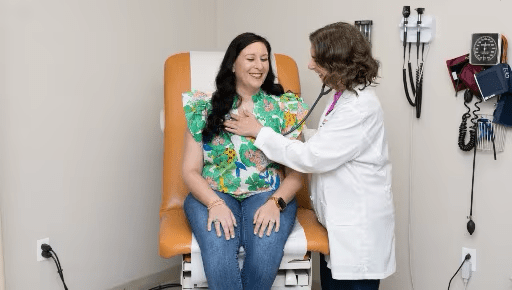
JONESBORO, Ark. — As St. Bernard’s Health Care approaches its 126th anniversary on July 5, leaders say the oganization is balancing a legacy of community care with the growing challenges of modern health care.
St. Bernard’s has been in medicine for 125 years, evolving alongside the social service industry rather than the city, economy, or technology. Kevin Hodges, senior vice president, said rising costs and increasing insurance requirements continue to strain providers in the post-COVID era.
“Every time they add requirements, it adds cost to us,” Hodges said. “Someone has to make sure those requirements are met just for us to get paid. Those are uncompensated burdens.”
Health care systems face high operational costs, including labor, transportation, utilities, and food insecurity. Hodges said balancing expenses while navigating reimbursement challenges has become increasingly difficult. Hodges also noted funding for social service programs has stagnated, often coming from federal and state sources, and emphasized the importance of volunteers from churches, students, and other community groups.
“To have high-level social services in communities, you have to have strong volunteer programs,” he said.
Michael Givens, administrator and chief operating officer, said the vision of the Sisters who founded St. Bernard’s 126 years ago continues to guide the hospital. Over his 25 years, Givens has seen growth in heart care, stroke care, robotic surgery, and technology, including artificial intelligence.
“We already use a system called Rapidan. It works with our CAT scanners to analyze brain scans and quickly identify strokes or aneurysms,” Givens said. “That kind of speed can save lives.”
Givens said St. Bernard’s aims to expand services further, recruit specialists, and become a top-10% hospital in the U.S.
Kevin Byron, assistant vice president for Behavioral Health Services, said the rise in mental health issues has driven growth in inpatient and outpatient care. The hospital has 108 beds serving patients with a wide range of needs, from severe psychosis to depression and suicidal thoughts.
Mental health remains central to St. Bernard’s mission, he said, inspired by the founding Sisters. Programs like the recuperative care program at the CSU allow patients to stay up to three months post-discharge, supporting those experiencing homelessness.
“I’ve been in health care for about 27 years, and Jonesboro has grown significantly. As the population grows, so does the need for infrastructure and services,” Byron said. He hopes to create a crisis response team that works with law enforcement and 911 and a psychiatric residency program to train new psychiatrists locally.
Mitchell Nail, media relations manager, said his role has shifted since the pandemic from health guidance to encouraging residents to address health issues early, including finding primary care providers and attending screenings.
Increased awareness of social services has led St. Bernard’s to provide prenatal and postpartum care regardless of a patient’s ability to pay. Nail said patient stories remain the hospital’s most effective way to connect with the community.
“I want people to see St. Bernard’s as their trusted source for health information and care,” he said. “I want them to feel confident they can find expert guidance and treatment right here in their community.”
-30


