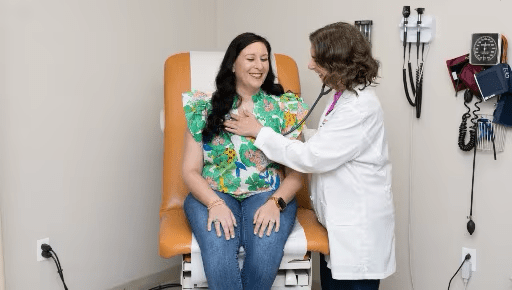
St. Bernard’s health care physician Dr. Christina Carl (right) performs a heart and lung auscultation for a patient during a routine wellness exam in Jonesboro, Arkansas. Photo courtesy of St. Bernard’s.
JONESBORO, Ark. — As St. Bernard’s Health Care approaches its 126th anniversary on July 5, leaders say the oganization is balancing a legacy of community care with the growing challenges of modern health care.
St. Bernard’s has been in medicine for 125 years, evolving alongside the social service industry rather than the city, economy, or technology. Kevin Hodges, senior vice president, said rising costs and increasing insurance requirements continue to strain providers in the post-COVID era.
“Every time they add requirements, it adds cost to us,” Hodges said. “Someone has to make sure those requirements are met just for us to get paid. Those are uncompensated burdens.”
Health care systems face high operational costs, including labor, transportation, utilities, and food insecurity. Hodges said balancing expenses while navigating reimbursement challenges has become increasingly difficult. Hodges also noted funding for social service programs has stagnated, often coming from federal and state sources, and emphasized the importance of volunteers from churches, students, and other community groups.
“To have high-level social services in communities, you have to have strong volunteer programs,” he said.
Michael Givens, administrator and chief operating officer, said the vision of the Sisters who founded St. Bernard’s 126 years ago continues to guide the hospital. Over his 25 years, Givens has seen growth in heart care, stroke care, robotic surgery, and technology, including artificial intelligence.
“We already use a system called Rapidan. It works with our CAT scanners to analyze brain scans and quickly identify strokes or aneurysms,” Givens said. “That kind of speed can save lives.”
Givens said St. Bernard’s aims to expand services further, recruit specialists, and become a top-10% hospital in the U.S. Kevin Byron, assistant vice president for Behavioral Health Services, said the rise in mental health issues has driven growth in inpatient and outpatient care. The hospital has 108 beds serving patients with a wide range of needs, from severe psychosis to depression and suicidal thoughts.
Mental health remains central to St. Bernard’s mission, he said, inspired by the founding Sisters. Programs like the recuperative care program at the CSU allow patients to stay up to three months post-discharge, supporting those experiencing homelessness.
“I’ve been in health care for about 27 years, and Jonesboro has grown significantly. As the population grows, so does the need for infrastructure and services,” Byron said. He hopes to create a crisis response team that works with law enforcement and 911 and a psychiatric residency program to train new psychiatrists locally.
Mitchell Nail, media relations manager, said his role has shifted since the pandemic from health guidance to encouraging residents to address health issues early, including finding primary care providers and attending screenings.
Increased awareness of social services has led St. Bernard’s to provide prenatal and postpartum care regardless of a patient’s ability to pay. Nail said patient stories remain the hospital’s most effective way to connect with the community.
“I want people to see St. Bernard’s as their trusted source for health information and care,” he said. “I want them to feel confident they can find expert guidance and treatment right here in their community.”
Schools across Arkansas are learning to embrace the natural state’s top crop as the Rice in Schools program pilot run continues.
The Arkansas Rice in Schools program, launched by the Arkansas Department of Agriculture in collaboration with Arkansas Rice and USA Rice, is an initiative to teach students how to cook with rice and educate them on the significance of the grain.
Leslee Tell, the farm-to-school coordinator for the United States Department of Agriculture, directs the program. She said Rice in Schools will teach students where their food comes from.
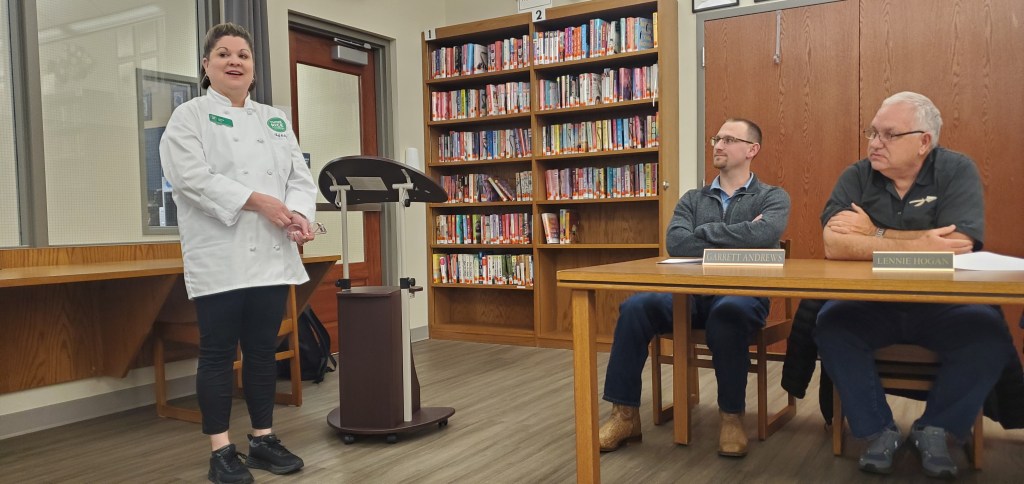
(Left) Leslee Tell, farm-to-school coordinator for the United States Department of Agriculture, describes the Rice in School Program to the Nettleton School Board at a March 17 meeting. According to the USDA website, the program, which is in a pilot phase, gives schools the tools to serve locally grown rice in healthy meals. PHOTO COURTESY OF JERRY DON BURTON
“Our goal is simple, increase the use of Arkansas-grown rice in schools, while helping students learn about agriculture, nutrition and where their food comes from,” Tell said in a YouTube video introducing the program. “This program is about more than just meals, it’s about connecting students to Arkansas agriculture and supporting our local farmers.”
Arkansas Governor Sarah Sanders developed the program in fall 2025, following the transition of nutrition programs to the Arkansas Department of Agriculture.
In December 2025, the Arkansas Rice Research and Promotion Board approved $15,000 in funding to support the program’s implementation. These funds provided schools with equipment to encourage the usage of Arkansas rice in their menus.
Sanders said the new program will teach students how farmers use rice to feed families around the world. She said students will use food made in Arkansas to develop healthy eating habits.
“Rice isn’t just part of Arkansas’ economy; it’s part of who we are,” Sanders said in a press release published Nov. 13, 2025.
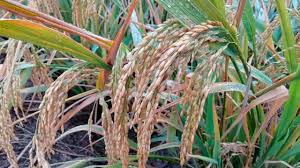
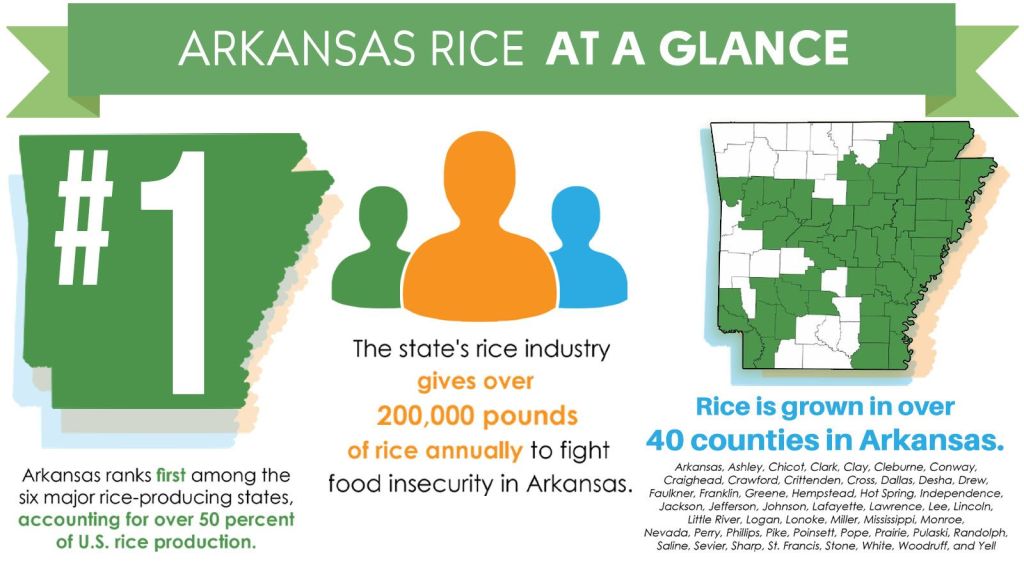
Arkansas is the largest rice-producing state, accounting for more than 40% of rice production in the United States, according to Arkansas Rice. Tell said a majority of this rice is produced in Arkansas’ northeast region.
A graphic presents quick facts about Arkansas rice production. Arkansas is the largest rice-producing state, accounting for more than 40% of rice production in the United States, according to Arkansas Rice. GRAPHIC COURTESY OF ARAKNAS HOUSE OF REPRESENTATIVES
Almost 20 Arkansas schools and districts are scheduled to participate in the program’s pilot phase, which began in February at Ward Central Elementary in Cabot, Arkansas. The pilot will wrap up in May at Forest Park Elementary in Little Rock.
As part of the program, Tell travels to participating schools with a team to involve students in cooking demonstrations and interactive educational lessons. She also introduces meals with local rice to school menus and trains cafeteria staff in preparing them.
On April 9, Tell traveled to Newport, Arkansas, to introduce the program to students at Newport High School.
Leanne Bradley, the family and consumer science teacher at Newport High School, said Rice in Schools was a beneficial experience for her students.
Bradley said rice’s significance to Arkansas demonstrates the program’s importance.
“I think everybody is aware that if you don’t take care of what you have, you can lose it,” Bradley said. “(Rice) is something that we have that not every other state has.”
Bradley said her food production and culinary students passed out stir-fried rice samples Tell made for elementary students. After sampling different meals made using rice, students placed stickers on a bulletin board to indicate how much or little they enjoyed the meals.
Tell said they compile student opinion data from every participating school. Then, in June, she said they will analyze the data to determine which recipes students liked most and least and make appropriate changes.
Bradley said the students greatly enjoyed the Rice in Schools program. She said her students cooked with rice before, but Tell’s contributions provided them with new ways to use the grain.
The family and consumer science teacher said she appreciated how the program helped her students realize how much rice Jackson County, where the Newport School District is located, produces.
According to the 2022 USDA Census of Agriculture, Jackson County produced almost 80,000 acres of rice, second only to soybeans.
“So just for the kids to realize this is a huge staple that Arkansas provides for the state, and it’s easy and it does not have to be Minute Rice,” Bradley said. “It really doesn’t take that much longer to actually cook your own rice and the quality is just so much better.”
Julie Isbell, superintendent at the Harrisburg School District, where Tell visited in March,
also said she loved how the program connected her students with local rice production.
Poinsett County, where Harrisburg is located, produced about 90,000 acres of rice, according to the same USDA census.
Tell also brought the program to the Nettleton School District in March. Nettleton School Board Vice President, Donnie Hauge, said he supported the program and thinks helping kids learn cooking skills and understand where their food comes from is an important undertaking.
Wes Ward, Arkansas secretary of agriculture, said the program emphasizes how Arkansas’ dominance over rice production could be used to support students and education. He said the program is a good step toward getting Arkansas to buy and use more of its own rice.
Bradley said rice is also versatile and can be stretched further than other ingredients. She said this is especially important for those who cannot afford as much food.
“It’s a very quick and easy staple that you can keep in your pantry and it can go for a wide variety of different types of food,” Bradley said. “If your family is financially disadvantaged, you can pair beans and rice together, and that actually makes a complete protein.”
Bradley said her favorite part of the program was how it helped students interact with and cook rice in different ways than they’re used to. For some, Bradley said this program represents an introduction to rice as an ingredient.
However, the family and consumer science teacher said Tell’s visit to Newport was not without challenges.
Tell was scheduled to return to Newport High School on April 10, but Bradley said she fell ill and missed the second day.
“She could have talked so much more and given the information about it. She did not get to go into depth like she would at other places,” Bradley said.
In the time they did spend together, Bradley said Tell was a very energetic and fun, but professional person to work with.
“I think she’s phenomenal and I liked having the opportunity,” Bradley said. “I hope that this is something that takes off and is able to be utilized in schools across Arkansas.”
Tell said the student feedback, recipe evaluations and participation data gathered in the pilot will refine the program and prepare it for statewide expansion.
In the final iteration of the program, Bradley said she would like to see taste testing and activities for all grade levels.
Tell said the program continuously searches for and develops new and more effective methods of engaging schools.
Bradley said the school will continue building on the foundation laid by Tell and the Rice in Schools Program. She said the school’s student-run restaurant, the Hungry Hound Cafe, started implementing rice meals based on what they learned from the program.
Tell said she is a teacher at heart and loves to cook, so working with students to prepare recipes in the classroom was a great combination.
“We are bringing Arkansas-grown rice to schools across the state,” Tell said. “One plate at a time.” More information about the Rice in Schools program may be found on the Arkansas Department of Agriculture’s website. Program organizers also created a digital guide featuring rice data and recipes from USA Rice.
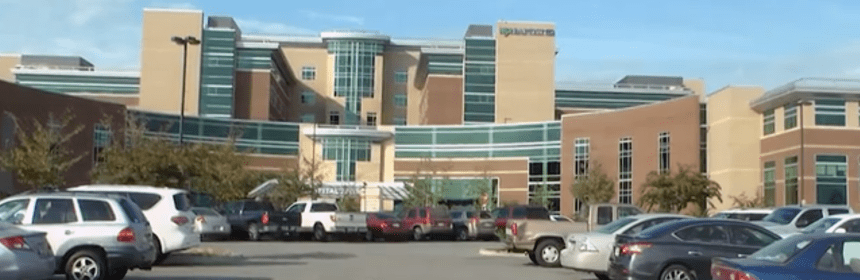
NEA Baptist hosts programs that promote heart-healthy behaviors through community screenings and educational programs that raise awareness of risk factors and promote healthy lifestyle choices.
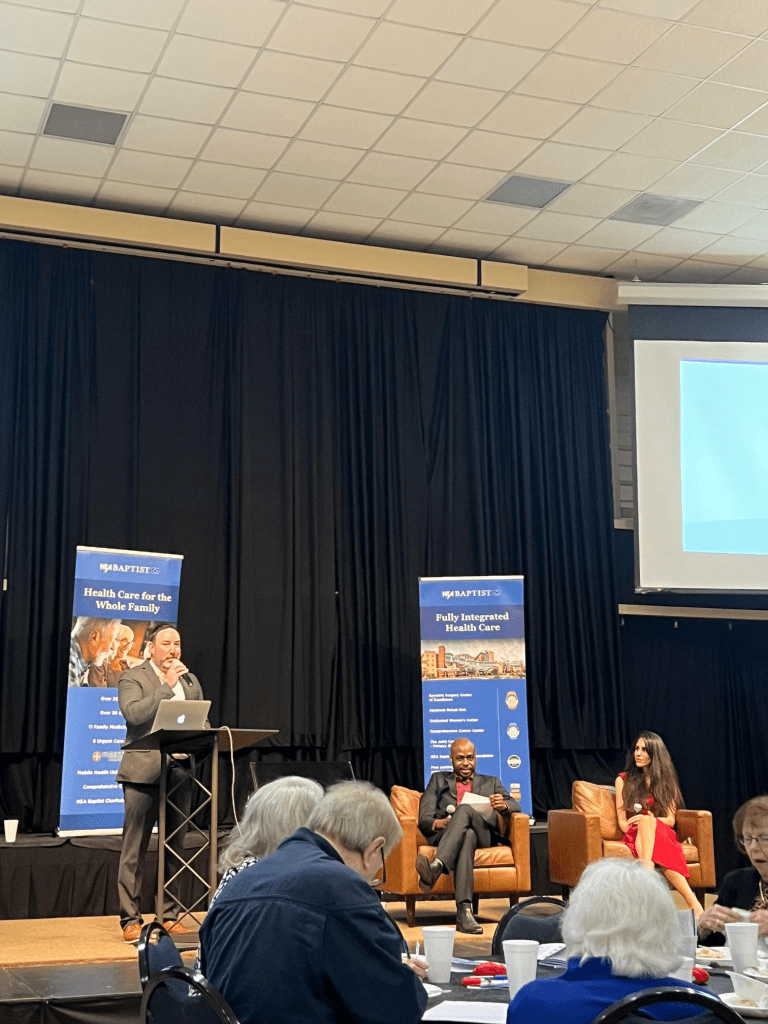
NEA Baptist hosted a Heart Talk on Feb. 26, 2026, at Southwest Baptist Church.
Ty Jones, director of marketing at NEA Baptist, said his goal is to create opportunities for community engagement and education.
The organization focuses on community engagement and education through health screenings and risk-factor education. Outreach efforts include digital marketing, terrestrial radio, and television advertisements. Jones said balancing medical accuracy with creativity is crucial.
“As a company, we seek perfection every day, whether or not perfection is ever really attainable,” Jones said. “As human beings, we try to seek that in everything that we do. When you balance that with marketing and making sure you’re staying inside the box — which a lot of people find more difficult than just going with any creative whim — it’s a lot of fun.”
Jones said NEA Baptist always strives to partner with local schools, churches, and organizations to promote heart health and target the next generation of cardiologists.
“The big thing for us is making sure that we’re engaging students at a young age, letting them know not only what clinical health care careers look like — physicians and nursing — but also letting them meet residents to see what that educational track looks like from school to becoming a doctor,” Jones said.
Jones said balancing medical accuracy with creativity in marketing campaigns and materials helps convey heart health information in an engaging and impactful way.
“Understanding the roles in health care that may be behind the scenes — laboratory scientists who run tests to help physicians determine a patient’s root cause, as well as financial, billing, and marketing staff — is also important,” Jones said.
“Our goal at the end of the day is to take care of our community, whether that’s patients admitted to our emergency room, patients seeing primary care providers, establishing a baseline for preventive medicine, or providing free education,” Jones said.
Jones said community impact is measured by individualized patient care and tailoring medical services to each person. Lena Awar, an interventional cardiologist at NEA Baptist, said it is important to educate people to recognize and not ignore early warning signs of heart disease, such as fatigue, leg swelling, and chest pain.
“Coronary artery disease is very prevalent in this area,” Awar said. “We live in what’s called the Stroke Belt, and part of this talk discusses risk factors that contribute to that, including hypertension, obesity, and a sedentary lifestyle. All of that increases heart disease risk.”
Awar said stress management techniques such as walking in nature, reading, taking a hot bath, or practicing yoga or meditation can improve heart health.
“In our community, recommending smoking cessation is probably the most important thing, followed by getting in those 10,000 steps a day,” Awar said.
Awar said about 50% of health outcomes are genetically inherited and cannot be controlled. However, lifestyle choices can make a significant difference.
“One thing we can control is how we live our lives — diet, exercise, and routine checkups,” she said.
She also addressed misconceptions about heart medications.
“A lot of people think of us as drug pushers who just want to prescribe another medicine,” Awar said. “We wish all our patients could achieve their goals with diet and exercise alone, but sometimes that’s not enough. Some medications, like statins, have a bad reputation, but they save lives. We work with patients to tailor medications so they maintain a good quality of life.”
Oreoluwa Oladiran, a cardiac electrophysiologist at NEA Baptist, said it is important to recognize heart disease symptoms such as chest pain and heartburn, which are often overlooked.
He stressed the need for early heart health management beginning in a person’s 30s and highlighted preventive measures such as maintaining a healthy weight, eating well, and avoiding smoking.
“Heart disease is the most common cause of mortality not only in the United States, but worldwide,” Oladiran said. “In the United States, it kills nearly a million people every year,” Oladiran said.
Oladiran said monitoring blood pressure and blood sugar levels is an effective way to track heart health.
“We see patients in their 30s having heart attacks,” he said. “The earlier, the better. Don’t wait until you’re 40 to establish care with a primary care provider and pay attention to your health. Many of these issues are lifestyle-related, not necessarily medication-related.”
Young: Arkansas State University and the NYIT College of Osteopathic Medicine are working together to make the path to becoming a doctor a little bit smoother for Arkansas State students. The Freshman to Physician Pathway is a new partnership this year between A-State and NYITCOM that lets qualified students secure early admission to medical school while they are still undergraduates. Jennifer Wharton, media contact for the program, knows the ins and outs of the program and how it can help students. [0:31]
Wharton: Our goal is to help students who are interested in going into healthcare, specifically becoming a physician, become more confident and a more competitive applicant for medical school. We’re seeing a lot of need in the delta region for students who not just have an education, but have a quality education. And one of the things we know about medical education is that students who are from an area, who are able to stay in that area and go to school are going to be more likely to in turn, practice medicine in that area. [0:34]
Young: Students in the pathway will major in biological sciences with a pre-professional emphasis. If they maintain at least a 3.5 GPA, complete the required coursework, and pass an interview, they will earn a spot in NYITCOM after graduation. Program leaders say the collaboration between the two schools will give students extra mentoring, academic support, and confidence, along with peace of mind about their medical future. Jamie Howell is a prospective student for the Freshman to Physician pathway. [0:30]
Howell: I would like to do this program because it provides me with a quicker opportunity to pursue my dream of becoming a doctor. I also believe, if I understand the program correctly, that it can help you get into med school without taking the Mcat. This can be beneficial to me because I typically struggle with test anxiety and tend to not do as well as I should or as well as I believe my knowledge permits. [0:23]
For more information about the program go to AState.edu/FreshmanToPhysician. I’m Mia Young and you’re listening to KASU. [0:09]
Wilson Hall at Arkansas State, home of NYIT College of Osteopathic Medicine. Story and photo courtesy of Arkansas State University.
JONESBORO – Arkansas State University and the NYIT College of Osteopathic Medicine (NYITCOM) at A-State today announced the launch of the Freshman to Physician Pathway, a new opportunity for Arkansas students to secure early admission to medical school and begin preparing for careers in healthcare from the first day of college.
The initiative is designed to grow the number of physicians serving rural and underserved areas of Arkansas. Since opening its Jonesboro campus in Wilson Hall in 2016, NYITCOM has graduated 650 new doctors in six classes — and nearly 70 percent of those from Arkansas have chosen to stay and practice in the state.
“This is a game-changer for the health of Arkansas,” said A-State Chancellor Todd Shields. “By eliminating traditional barriers and offering early admission assurance, we’re making medical education more accessible for high-achieving students who want to stay and serve right here at home. This is about investing in the next generation of healthcare leaders — and in the well-being of every corner of our state.”
A Streamlined Pathway to a Medical Degree
The Freshman to Physician Pathway offers a direct route from undergraduate enrollment at A-State to NYITCOM, provided students meet clearly defined academic and professional standards. Participants pursue a Bachelor of Science in biological sciences with a pre-professional studies emphasis and apply for admission to NYITCOM during their third year.
To qualify, students must maintain a 3.5 GPA in science and overall coursework (with a one-time waiver option for a single semester), complete all required pre-med classes, receive a favorable recommendation from A-State’s pre-medical committee and pass an admissions interview with NYITCOM faculty. Students who meet these criteria will not be required to take the MCAT, significantly reducing the cost and complexity of applying to medical school.
“The path to medical school is difficult and challenging, however there are hurdles that can be overcome when we have strong academic partners at the collegiate level that are preparing the students for the rigor of medical education,” said Dr. Shane Speights, dean of NYIT College of Osteopathic Medicine at Arkansas State. “Leveraging our higher education relationships creates a stronger university, medical school, and most importantly, future physicians.”
A Proven Commitment to Arkansas
NYITCOM’s osteopathic philosophy emphasizes whole-person wellness, prevention and community health — making it particularly aligned with the needs of Arkansas. Graduates go on to pursue a wide range of specialties, with many choosing family medicine, internal medicine, emergency care and OB-GYN — fields in especially high demand throughout the state.
With access to world-class instruction, early clinical experience and the full resources of the A-State campus, students in the pathway program are well prepared for the demands of medical school and a future of serving Arkansas communities.
“At most colleges, the path to becoming a doctor feels far removed from the undergraduate experience. But at A-State, it’s a part of everyday life,” said Chancellor Shields. “Having a medical school in the heart of campus creates a culture that few universities can offer. It sets A-State apart, giving our students a front-row seat to the next chapter of healthcare, and in many cases, the inspiration to pursue their own bold career path.”
Applications for the Freshman to Physician Pathway open this fall for students entering A-State in 2025. A similar program is in development for A-State’s College of Veterinary Medicine, expected to launch in fall 2026.
Carole Farmer, ASU System Board of Trustees. Image courtesy of the ASU System.
LITTLE ROCK — Gov. Sarah Huckabee Sanders has appointed Carole Farmer of Fayetteville to a seven-year term on the Arkansas State University System Board of Trustees.
Farmer succeeds immediate past board chair Christy Clark of Little Rock, who served seven years after being appointed by Gov. Asa Hutchinson in 2018 and reappointed by Gov. Sanders in 2023.
ASU System President Brendan Kelly said he welcomes Farmer to the board.
“Carole Farmer will be an outstanding addition to our Board of Trustees,” Kelly said. “Her experiences in health care, management and finance will be welcome on the board and in the ASU System. We look forward to working with her in the years ahead.”
“I’m also grateful to Christy Clark for her service during the past seven years,” Kelly added. “She has been part of many significant achievements in the ASU System, and I worked closely with her as board chair during the last six months as I came on board as president. She’s been a tremendous resource and asset to the ASU System.”
Farmer is a Certified Medical Practice Executive (CMPE) and owns Arkansas Medical Management Consulting, LLC, a medical consulting firm that provides support for physician-owned practices. She worked 17 years for the largest multi-specialty physician medical clinic in northeast Arkansas. Her last seven years, she served as the clinic’s administrator and managed more than 120 employees.
She served for five years on the Board of Directors for Arkansas Medical Group Managers Association, her last year as chair of the organization. Prior to her medical management career, she worked in the banking industry focusing on internal auditing and regulatory compliance. She is a member of the board of directors of Farmer Enterprises Inc.
“First, I want to thank Governor Sanders for her confidence in me,” Farmer said. “I look forward to working with President Kelly and the other trustees to improve educational and workforce opportunities for our students and all Arkansans.”
Farmer is a graduate of Arkansas State University with both her bachelor’s degree in accounting (2005) and master’s in business administration (2008). She also served as an adjunct professor of accounting at A-State for two years, primarily focused on managerial accounting.
A native of Palestine, she is married to Alec Farmer, a 1986 Arkansas State University graduate. They are 1924 Sustaining Life Members of the A-State Alumni Association and endowed the Dalton A. Farmer Family Scholarship in 2015.
Together they have four adult daughters. Emily, their youngest daughter, is an A-State graduate. The ASU System, based in Little Rock, serves 35,000 students annually through on-site and online options. Member institutions include Arkansas State University in Jonesboro with an additional campus in Queretaro, Mexico; ASU-Beebe, with additional campuses in Heber Springs and Searcy and an instructional site at the Little Rock Air Force Base; ASU-Mountain Home; ASU-Newport, with additional campuses in Jonesboro and Marked Tree; ASU Mid-South in West Memphis; ASU Three Rivers in Malvern; and Henderson State University in Arkadelphia. For more information about the ASU System, visit ASUSystem.edu or follow on X @ASUSystem.
Rendering of the forthcoming College of Veterinary Medicine at Arkansas State University.
Story by DDNS Reporter Shailey Wooldridge.
The Arkansas State University College of Veterinary Medicine (CVM) will open in Fall 2026, pending accreditation, giving students an experience differing from the average veterinary medical school.
Heidi Banse, dean of the College of Veterinary Medicine, said the college will have unique aspects based on how they have structured their curriculum, such as using a distributive model where students participate in clinicals in their final year of schooling.
Dr. Heidi Banse, Dean for the College of Veterinary Medicine at Arkansas State University
“It’s a very community-centered program, which I think fits the state of Arkansas and does position us with some educational elements that other programs may not be able to offer. All programs have their niches and own areas that they emphasize, and for us, it’s community.“ Banse said.
Banse formerly served as associate dean for educational strategy at Louisiana State University School of Veterinary Medicine (LSU Vet Med).
At LSU Vet Med, Banse led implementation of a new competency-based veterinary program by restructuring the educational framework to ensure students are prepared to enter practice when they graduate.
“The thing that enticed me here at Arkansas State University was the opportunity to build a program, really starting at the ground floor,” Banse said. “Having just built a new curriculum at LSU, it seemed the next logical step in a career progression to build an entire program.”
In the first three years, Banse said A-State’s vet school curriculum will focus on developing skills, communication, ethics, practice management, and clinical reasoning. In the final year, students will go out into community practices across Arkansas and in other states to hone their skills and prepare to enter into practice.
Len Frey, senior advisor for strategic initiatives and senior associate dean of the CVM, said the distributive model of structuring veterinary medical schools is becoming more common.
“We’re very comfortable with the distributed model because we saw it work at NYIT (New York Institute of Technology),” Frey said. “Again, it’s not the norm. It’s not the way it’s always been done. It’s a newer theory on delivering practice-ready doctors or practice-ready veterinary medicine physicians.”
Banse said one of the college’s primary goals is to train veterinarians across the breadth of species to prepare them to enter general practice. To accomplish this, something she wants to leave behind as much as they can is the traditional lecture format of education.
“Our goal is to ensure that our students are engaged in learning and have active learning experiences,” Banse said. “Our classrooms that we’re constructing in our new building are flexible-use classrooms so they can be used for lectures, but we hope we’re doing a lot of small group learning to support some of the clinical reasoning.”
Banse said around 190 practices, 85 in Arkansas, have signed up to be part of the clinical year teaching network.
Since there is no veterinary school in Arkansas, students hoping to become veterinarians must go to college out of state to finish their schooling in veterinary medicine.
“We are one of the most underserved states regarding the number of veterinarians per capita. We have 10 counties currently with no veterinarians, making it harder for clients to seek care,” Banse said.
Amy Schmidt, director of the Northeast Arkansas Humane Society (NEAHS), said one of the reasons veterinary costs are so high right now is the lack of veterinarians. She said one of the problems in the community they see often is people who love their animals but can’t afford to take care of them.
“The more vets we have in the area, the more we’ll be able to service the community in an accessible way,” Schmidt said. “I think there’s a great need to have a vet school in the area, and I’m super excited that we’re getting it here in Jonesboro.”
NEAHS is one practice that will partner with the veterinary school for students in clinicals to give them hands-on experience.
Banse said students will be able to practice doing physical exams on dogs and cats at the shelter and learn to provide veterinary care under the oversight of a practicing veterinarian.
“They’ll get lots of experience talking to clients, working with animals in the community to make the quality of life for animals and hopefully make client experiences meaningful,” Banse said.
Schmidt said a room in the isolation building on-site at NEAHS will be explicitly remodeled so students can learn isolation protocols.
The NEAHS does a low-cost clinic three days a week that offers spays, neuters, and vaccinations. Schmidt said they have difficulty keeping up with the demand, with low-cost surgeries booked until May.
“The vet school is going to help us with some of that volume so that they will be helping with low-cost surgeries. Not just helping us, but helping the community,” Schmidt said. “We also have that indoor dog kennel area; they’ve talked about using that to teach students how to make clinical rounds and assess everyone, especially post op.”
Banse said the vet school will include two flexible-use classrooms with tables that can be set up in multiple ways to easily change the room’s configuration.
The building will also feature an almost 3000-square-foot clinical skills lab where students will learn procedures, an anatomy lab, cooler, freezer, a place to store anatomy specimens, a clinical skills laboratory space, storage for models from suture pads to full sized horses and cows, a practice lab for students that will be set up with 24/7 key-card access, a surgical skills training suite with a pre operative area, a sterile surgical area for their spay experience, for their spay surgeries and kennels for dogs and cats in case they need to be housed overnight.
Banse said plans for continuous improvement include collecting feedback from students, instructors, and course coordinators as the program is built and as students go through and making adjustments as needed. She said they will also use the national standardized exams, the veterinary education assessment, and the North American Veterinary Licensing Examination, all veterinarians take as part of their licensure, to help inform changes immediately.
“One of the things that’s important for us too is once our students go out into the community, we then collect feedback from them one year out and five years out as well as from their employers one year out, to see how prepared they were when they entered into practice,” Banse said.
She said it will also be vital for them to keep tabs on the changes and anticipated changes in the field of veterinary medicine and industry trends to ensure they’re responding to any needs within Arkansas.
The college has collaborated with the College of Agriculture and will continue to do so. Banse said they will use the Equine Center and one of the bovine barns to teach students skills-based training.
“Hopefully, that creates better facilities for animal science students, too. It’s not like those are ours only; we share all of that,” Banse said. “I’m grateful that the College of Ag has invited us in. And feel like part of the same part of the same team training students.”
Sarah Hooper, associate dean for student programs and admissions, joined the CVM on February 27. She will oversee student programs from recruitment through graduation and refine admission processes and the recruitment of students when that time comes.
Hooper said she will be working on creating new website content for admissions.
“I’m just excited to be able to help start the first state vet school in Arkansas. I had the advantage of going to a state university with a vet school in my home state, and it’s beneficial and advantageous when students like myself have our support systems,” Hooper said. “It’s exciting in my mind to help initiate this new school and to give the residents of Arkansas something that they’ve not been able to access before.”
The proposed class size is 120 students admitted once per year in the fall. In-state tuition will be $35,000 yearly, and out-of-state tuition will be $55,000 yearly.
The groundbreaking ceremony for the CVM was held today at 11 a.m., and construction will begin later this month to early April.
Banse said they can start recruiting students after receiving a letter of reasonable assurance from the Council of Education, which they may receive after a comprehensive visit this summer.
“I’m most excited to have students. It’s exciting to build a program and think about how we construct a student-centered curriculum, but ultimately, it doesn’t feel real until the students are on site,” Banse said. “We’re doing it for the students, and it’s really fun to hear the excitement on campus from our students about the vet school, and I just can’t wait for them to get here.”