Tag Archives: Agriculture

Aggie Market Helps Feed NEARK

by Levi Collins
Delta Digital News Service

JONESBORO — The Arkansas State University Aggie Market is doing more than selling locally processed meat. The market to many students and community members provides a visible connection between A-State and the larger city.

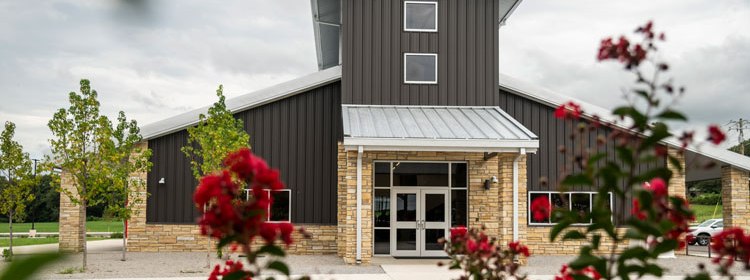
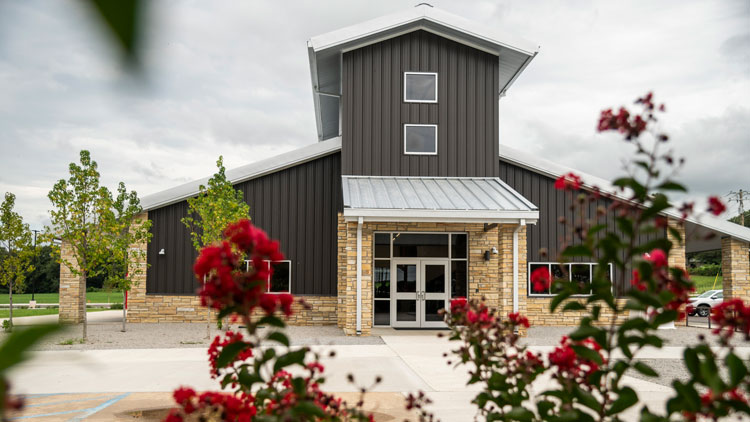
View of the front of the Arkansas State University Aggie Market. Photo courtesy of Arkansas State University


Part of the College of Agriculture, the Aggie Market serves as both a student learning facility and a public retail space. Students help process, market and sell products while interacting directly with Jonesboro residents during weekly retail hours and community events.

Richard Readnour, meat laboratory manager, said the market’s role extends beyond education by creating direct interaction between students and the Jonesboro community.

“The Aggie Market’s target audience is anyone within the Jonesboro community, or surrounding areas. We seek to build relationships with students, staff, faculty, and strengthen our community ties,” Readnour said.

The Aggie Market first opened in 1971 as the ASU Meat Lab under the leadership of Raymond Hostetler. The meat lab originally focused primarily on teaching and USDA-inspected processing.

In 2021, the College of Agriculture received grant funding from the Arkansas Department of Agriculture that allowed the facility to undergo major renovations. The market reopened in 2023 under the new name A-State Aggie Market as the first state-inspected facility in Arkansas.

The renovation also expanded opportunities for students beyond meat processing. Students can now participate in nearly every step of production, from raising livestock at the university farm to developing and marketing retail products sold to the public. Students working inside the market are often the face of those interactions.

Hannah Johns, a student employee at the Aggie Market, said they provide hands-on learning opportunities and even employment for students.

“We are committed to producing products handmade by students and being engaged with the community,” Johns said.

The market opens weekly to the public, allowing residents to purchase products directly from students working in the facility. Readnour said those face-to-face interactions help students gain experience while also giving customers a better understanding of agriculture and food production.

According to Readnour, the market isn’t a one-time stop.

“We have several repeat customers who come back often to pick up their favorite products. We use this as an opportunity to tell them about the importance of agriculture, and our students who help us through every stage of
production,” Readnour said.

Still, awareness of the Aggie Market itself may not be widespread throughout Jonesboro.

Craig Rickert of the Jonesboro Advertising and Promotion Commission said he was more familiar with the broader Judd Hill Farmers’ Market than the Aggie Market specifically. Rickert said community-centered agriculture events hosted through A-State play an important role in connecting the university with Jonesboro residents.

“The great appeal of the Judd Hill Farmers’ Market is that it brings people to campus,” Rickert said. “Those Saturday morning and Tuesday afternoon trips can be as much about being social as shopping. You can get great local products in a lot of places. But the farmers’ market gives you community on top of that.”

Click to View!

Rickert said the Aggie Market should be viewed as a community resource and not exclusive to the university.

“When you see the full parking lot, the families, the kids running around snagging a free taste of something, that’s special,” Rickert said. This most definitely strengthens the connection between the city and the university. A-State is the heart of our city.”

While the Aggie Market operates on a relatively small scale compared to other university outreach efforts, it continues to provide one of the few spaces where students and Jonesboro residents regularly interact through a shared local experience.

“We need to drop the sentiment that something is only A-State or only Jonesboro. The city and the university live together hand-in-hand,” Rickert said.

Rice in Schools plants seeds of learning statewide

Story by DDNS Reporter Jerry Don Burton

Schools across Arkansas are learning to embrace the natural state’s top crop as the Rice in Schools program pilot run continues.

The Arkansas Rice in Schools program, launched by the Arkansas Department of Agriculture in collaboration with Arkansas Rice and USA Rice, is an initiative to teach students how to cook with rice and educate them on the significance of the grain.

Leslee Tell, the farm-to-school coordinator for the United States Department of Agriculture, directs the program. She said Rice in Schools will teach students where their food comes from.

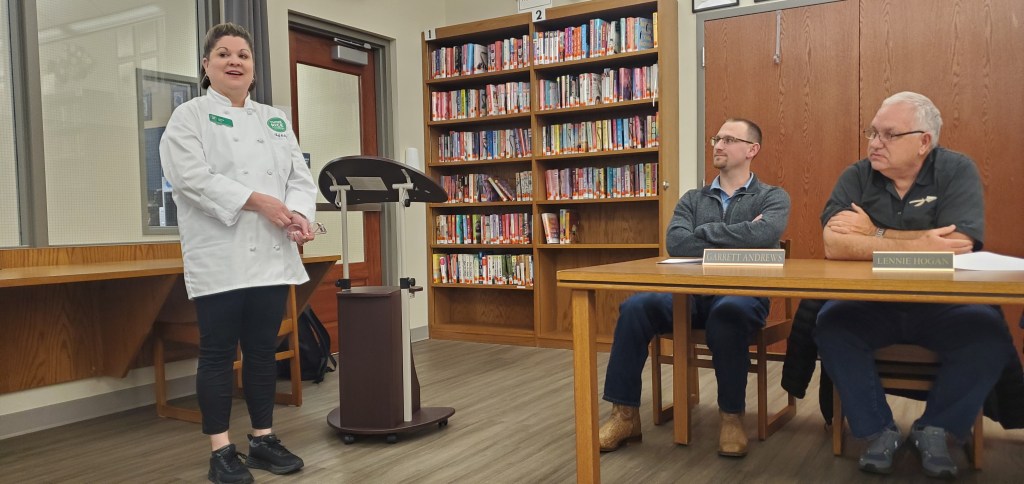
(Left) Leslee Tell, farm-to-school coordinator for the United States Department of Agriculture, describes the Rice in School Program to the Nettleton School Board at a March 17 meeting. According to the USDA website, the program, which is in a pilot phase, gives schools the tools to serve locally grown rice in healthy meals. PHOTO COURTESY OF JERRY DON BURTON

“Our goal is simple, increase the use of Arkansas-grown rice in schools, while helping students learn about agriculture, nutrition and where their food comes from,” Tell said in a YouTube video introducing the program. “This program is about more than just meals, it’s about connecting students to Arkansas agriculture and supporting our local farmers.”

Arkansas Governor Sarah Sanders developed the program in fall 2025, following the transition of nutrition programs to the Arkansas Department of Agriculture.

In December 2025, the Arkansas Rice Research and Promotion Board approved $15,000 in funding to support the program’s implementation. These funds provided schools with equipment to encourage the usage of Arkansas rice in their menus.

Sanders said the new program will teach students how farmers use rice to feed families around the world. She said students will use food made in Arkansas to develop healthy eating habits.

“Rice isn’t just part of Arkansas’ economy; it’s part of who we are,” Sanders said in a press release published Nov. 13, 2025.

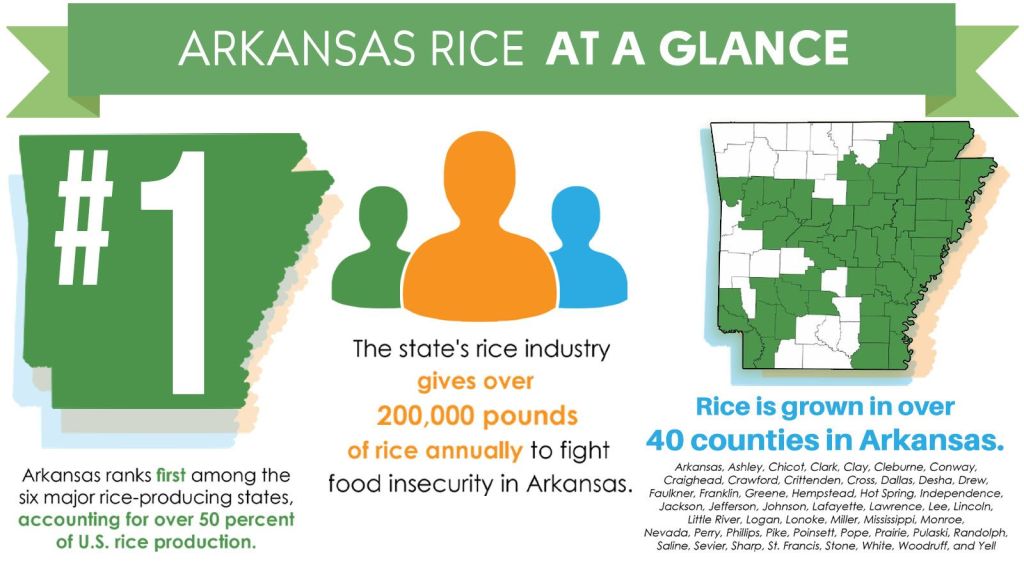
Arkansas is the largest rice-producing state, accounting for more than 40% of rice production in the United States, according to Arkansas Rice. Tell said a majority of this rice is produced in Arkansas’ northeast region. 

A graphic presents quick facts about Arkansas rice production. Arkansas is the largest rice-producing state, accounting for more than 40% of rice production in the United States, according to Arkansas Rice. GRAPHIC COURTESY OF ARAKNAS HOUSE OF REPRESENTATIVES

Almost 20 Arkansas schools and districts are scheduled to participate in the program’s pilot phase, which began in February at Ward Central Elementary in Cabot, Arkansas. The pilot will wrap up in May at Forest Park Elementary in Little Rock.

As part of the program, Tell travels to participating schools with a team to involve students in cooking demonstrations and interactive educational lessons. She also introduces meals with local rice to school menus and trains cafeteria staff in preparing them.

On April 9, Tell traveled to Newport, Arkansas, to introduce the program to students at Newport High School.

Leanne Bradley, the family and consumer science teacher at Newport High School, said Rice in Schools was a beneficial experience for her students. 

Bradley said rice’s significance to Arkansas demonstrates the program’s importance.

“I think everybody is aware that if you don’t take care of what you have, you can lose it,” Bradley said. “(Rice) is something that we have that not every other state has.”

Bradley said her food production and culinary students passed out stir-fried rice samples Tell made for elementary students. After sampling different meals made using rice, students placed stickers on a bulletin board to indicate how much or little they enjoyed the meals.

Tell said they compile student opinion data from every participating school. Then, in June, she said they will analyze the data to determine which recipes students liked most and least and make appropriate changes.

Bradley said the students greatly enjoyed the Rice in Schools program. She said her students cooked with rice before, but Tell’s contributions provided them with new ways to use the grain.

The family and consumer science teacher said she appreciated how the program helped her students realize how much rice Jackson County, where the Newport School District is located, produces.

According to the 2022 USDA Census of Agriculture, Jackson County produced almost 80,000 acres of rice, second only to soybeans.

“So just for the kids to realize this is a huge staple that Arkansas provides for the state, and it’s easy and it does not have to be Minute Rice,” Bradley said. “It really doesn’t take that much longer to actually cook your own rice and the quality is just so much better.”

Julie Isbell, superintendent at the Harrisburg School District, where Tell visited in March,

also said she loved how the program connected her students with local rice production.

Poinsett County, where Harrisburg is located, produced about 90,000 acres of rice, according to the same USDA census.

Tell also brought the program to the Nettleton School District in March. Nettleton School Board Vice President, Donnie Hauge, said he supported the program and thinks helping kids learn cooking skills and understand where their food comes from is an important undertaking.

Wes Ward, Arkansas secretary of agriculture, said the program emphasizes how Arkansas’ dominance over rice production could be used to support students and education. He said the program is a good step toward getting Arkansas to buy and use more of its own rice.

Bradley said rice is also versatile and can be stretched further than other ingredients. She said this is especially important for those who cannot afford as much food.  

“It’s a very quick and easy staple that you can keep in your pantry and it can go for a wide variety of different types of food,” Bradley said. “If your family is financially disadvantaged, you can pair beans and rice together, and that actually makes a complete protein.”

Bradley said her favorite part of the program was how it helped students interact with and cook rice in different ways than they’re used to. For some, Bradley said this program represents an introduction to rice as an ingredient.

However, the family and consumer science teacher said Tell’s visit to Newport was not without challenges. 

Tell was scheduled to return to Newport High School on April 10, but Bradley said she fell ill and missed the second day. 

“She could have talked so much more and given the information about it. She did not get to go into depth like she would at other places,” Bradley said.

In the time they did spend together, Bradley said Tell was a very energetic and fun, but professional person to work with.

“I think she’s phenomenal and I liked having the opportunity,” Bradley said. “I hope that this is something that takes off and is able to be utilized in schools across Arkansas.”

Tell said the student feedback, recipe evaluations and participation data gathered in the pilot will refine the program and prepare it for statewide expansion.

In the final iteration of the program, Bradley said she would like to see taste testing and activities for all grade levels.

Tell said the program continuously searches for and develops new and more effective methods of engaging schools.

Bradley said the school will continue building on the foundation laid by Tell and the Rice in Schools Program. She said the school’s student-run restaurant, the Hungry Hound Cafe, started implementing rice meals based on what they learned from the program.

Tell said she is a teacher at heart and loves to cook, so working with students to prepare recipes in the classroom was a great combination.

“We are bringing Arkansas-grown rice to schools across the state,” Tell said. “One plate at a time.”
More information about the Rice in Schools program may be found on the Arkansas Department of Agriculture’s website. Program organizers also created a digital guide featuring rice data and recipes from USA Rice.

Nettleton School Board discuss educational rice program, effective AI usage

Photos and Story from DDNS Reporter Jerry Don Burton

March 18, 2026

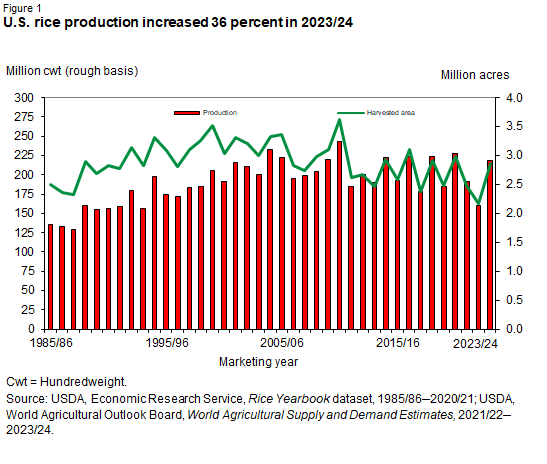
Bar graph depicts U.S. rice production (red) and harvested area (green) from the years 1985 to 2024. Rice production increased by nearly 1 million acres between 2023 and 2024. Courtesy of the United States Department of Agriculture.

The Nettleton School Board heard presentations on an initiative to educate students about rice and effective AI use in classrooms at its monthly meeting.

Rice in Schools Pilot Initiative

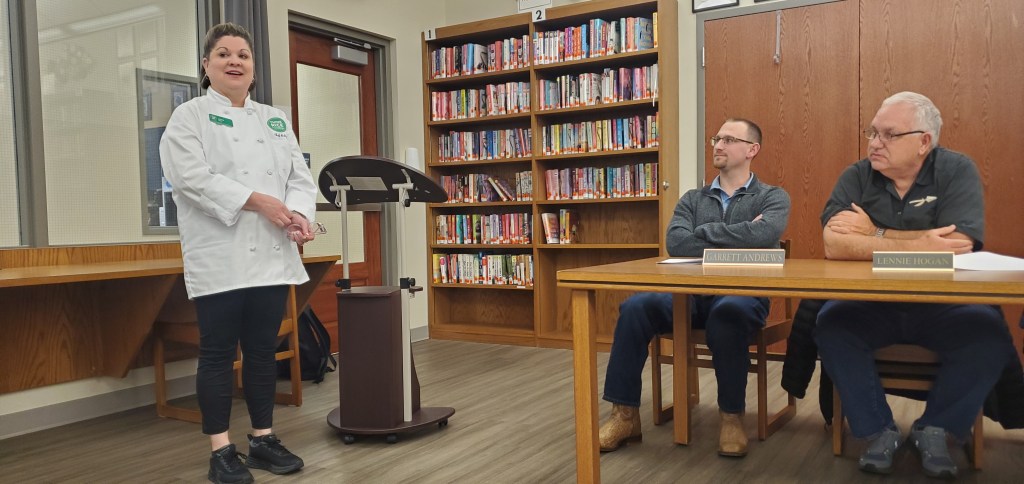
(Left) Leslie Tell, farm-to-school coordinator for the United States Department of Agriculture, explains the Rice in School program at the Tuesday, March 17, Nettleton School Board Meeting. According to the USDA website, the program, which is in a pilot phase, gives schools the tools to serve locally grown rice in healthy meals. Photo by Jerry Don Burton.

Leslee Tell, farm-to-school coordinator for the United States Department of Agriculture, addressed the board at the meeting Tuesday, March 17, to provide an overview of the Rice in Schools program.

Tell said the initiative aims to provide schools with the resources to serve local rice and educate students about the significance of rice in Arkansas. She said Arkansas Governor Sarah Sanders saw the importance of rice in the state and developed the initiative in fall 2025.

“So her idea was that, number one, students know where their food is coming from. Number two, that it’s local food as much as possible,” Tell said. “If we’re growing this much rice, then we should probably be serving rice and teaching kids to love rice as well.”

According to the USDA, the United States accounts for less than 2% of global rice production, but ships 5% of global exports. Arkansas is the largest rice-producing state, accounting for more than 40% of rice production in the U.S.

Tell said a majority of rice production in Arkansas is concentrated in the state’s northeast region. 

(Third from left) Donnie Hague, Nettleton School Board vice president, asks USDA Farm-To-School Coordinator Leslee Tell a question about the Rice in Schools program. Photo by Jerry Don Burton.

Donnie Hauge, Nettleton School Board vice president, said a program for helping kids understand where rice comes from and how to cook with it is a great idea.

The farm-to-school coordinator said about 20 schools have signed up for the program. 

Participating schools will introduce classroom lessons on Arkansas agriculture, participate in hands-on cooking demonstrations, train cafeteria staff and include local rice in school meals at least once a month.

Tell said schools may also engage in taste tests and interactive experiences. She said the program is continuously expanding and introducing new ways to highlight Arkansas rice. 

One such development is the creation of a cookbook containing 50 rice recipes for students to take home and prepare with their family. 

“In the food banks and blessing boxes, there’s a lot of rice,” Tell said. “ If you have kids wanting to eat rice at school and they’ve made it at school, they get their recipe book, and they can go home, and maybe that bridge can happen between the parent and the child, and we could encourage that.”

Tell said the program also engages with the current national interest in eating real food. 

“You can’t get any more real than this,” Tell said. “We’re eating real food, we’re eating real rice, real chicken, real vegetables and we’re making it right here from scratch, in front of the kids.”

Currently, the initiative is in a pilot phase. Tell said feedback from participating schools will be used to improve the program and shape future expansions.

Effective AI Usage in Classrooms

Following Tell’s presentation, the Nettleton High School principal, elementary school principal and three junior high school students addressed the school board to explain how they’ve implemented artificial intelligence in their respective fields.

Philip Cook, Nettleton High School career and technical academy principal, said he and other educators use AI to increase productivity and generate content. He said he uses AI to outsource elements of his workflow. 

(Right) Philip Cook, Nettleton High School career and technical academy principal, explains how the high school uses AI coaching assistant Edia to those in attendance at the Nettleton School Board meeting. Cook said AI, when used properly, helps educator lessen their workload. Photo by Jerry Don Burton.

“What we do at NHS right now is we have teachers that use it to generate worksheets. We use it for coaching students and to help with our summative evaluations,” Cook said. “Then also, to look at and align some of our different curriculum with each other.”

Using the Arkansas academic standards and ATLAS achievement level descriptors for geometry as an example, Cook demonstrated how AI can be used to parse and summarize dense information. 

The high school principal said projects like creating curricula that meet various standards, something which could take all summer to complete, are achievable in a single weekend with AI like ChatGPT. 

Cook said Nettleton High School is also incorporating Edia, an AI coaching assistant, in the classroom.

Despite embracing AI, Cook said education will always need a human element. 

“That’s what we’re trying to do in our critical algebra is not just turn it over to the AI–because then we become a facilitator–but use that where it’s appropriate to support that learning and then go ahead and let the teacher break kids into small groups, interact with them, give them those alternative learning methods,” Cook said. “I think it takes a good marriage of both to really be as effective as we can.”

University Heights Elementary Principal Sarah George said she uses Upraiser, an AI software designed to enhance teacher evaluations, in her administrative duties.

(Right) Sarah Geoge, University Heights Elementary principal, explains how she uses Upraiser AI when giving teacher evaluations. She said she uses Upraiser to provide actionable feedback to teachers. Photo by Jerry Don Burton.

“This platform has really helped, because it’s narrowed down the feedback that is given to teachers because it’s directly aligned to standards,” George said.

Garrett Andrews, the newest member of the Nettleton School Board, asked George if the AI she uses is accurate. George said Upraiser is mostly accurate, but agreed with Cook that a human element will always be necessary.

The elementary school principal said she is transparent with teachers and lets them know when the feedback they receive is partially AI-generated.

After George’s report, Nettleton Junior High School students Collins Baker, Jace Stegall and Brik Hogan presented a slideshow to detail how they use AI.

Baker said she learned how to use AI in 2025 and mostly utilizes it as a search engine, like Google. She said, while a helpful tool, AI can nonetheless introduce biases in its responses.

Stegall said he uses AI for coding help and in certain class assignments, specifically one project using drones to map hazardous conditions in Jonesboro.

“We want to know how to use it right, how to use it responsibly and how to use it for our school work instead of cheating,” Stegall said.

Hauge said the students’ presentation taught him how they use AI not for short answers or cheating, but productively and responsibly.

Other business 

In other business, Athletics Director Tommy Raffo announced several upgrades and additions to the athletic facilities:

  • New track and field sand pit
  • New baseball bullpen
  • New televisions installed near concession stands
  • New and updated spirit banners installed in gym

Raffo also said he was proud of the boys and girls basketball teams, who were seeded fourth and second in the state, respectively.

Finally, the Nettleton High School Choir performed three songs ahead of the school’s production of “Hairspray.” Showings will be held April 24 and 25 at 7 p.m. and April 26 at 2 p.m. More information may be found on The Raider Spotlight’s Facebook page.
The next school board meeting will be held at 6 p.m., April 21, at the Nettleton Central Office.

Arkansas Farmers Face Significant Challenges This Season

This report from DDNS Reporter Shailey Wooldridge

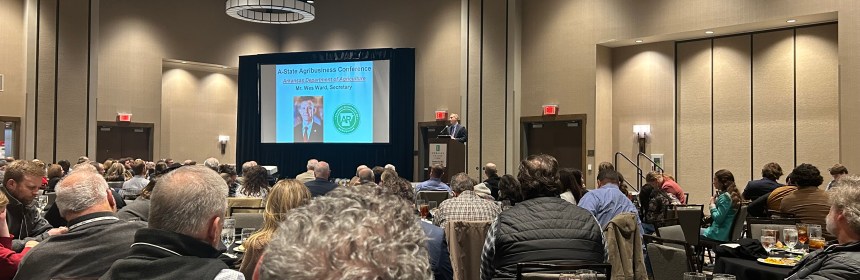
Keynote speaker, Arkansas Department of Agriculture secretary, Wes Wardaddresses water infrastructure, food insecurity and trade initiatives at the Agribusiness Conference. Photo by DDNS Reporter Shailey Wooldridge.

Agriculture officials at Arkansas State University predict a challenging year for Arkansas agriculture. Farmers are expected to face difficulties in three areas: farm economy, agricultural and trade policy, and commodity markets.

Bert Greenwalt is a professor of agricultural economics at Arkansas State University. He said Arkansas agriculture is facing headwinds this year as farmers struggle with commodity prices decreasing over past years while farm input prices have declined very little.

“Farmers are in a cost-price squeeze situation, as it’s referred to, low profitability, struggling to make ends meet and looking to government, farm policy, the farm bill for some assistance,” Greenwalt said. “Unfortunately, our Farm Bill expired a couple of years ago and Congress has yet to address updates in the farm bill that would address the current situation.”

The Farm Bill is federal legislation passed by Congress governing various agricultural and food policies. It’s passed approximately every five years and covers a wide range of topics, from farm subsidies to food assistance programs. The bill affects farmers, ranchers, rural communities, consumers, and the environment.

“Agriculture is a cyclical business. Historically, there are ups and downs, like in some other businesses, and so we’re going through that downturn down cycle right now,” Greenwalt said. “Agriculture will continue to be an important industry in the United States and globally, but not all producers will remain in the industry over time.”

Greenwalt said one of the factors contributing to uncertainty in the agricultural economy today is the shifting trade policy in Washington. Since U.S. agriculture relies heavily on export markets, any disruptions, such as tariffs or trade wars, that affect trade or access to global markets are a significant concern for the industry.

“Farmers this time of year are making many plans for the coming year, what to plant, how to renew their lines of credit with lenders. So hopefully, some of this information will be useful to them as they complete their business planning for the season,” Greenwalt said.

Greenwalt is the co-founder and director of the annual Agribusiness Conference at Arkansas State University, which was held earlier in February. Keynote speaker at the conference Wes Ward addressed water infrastructure, food insecurity, and trade initiatives.

The Arkansas Department of Agriculture (ADA) secretary highlighted problems with water and wastewater systems across the state, including broken systems that have made it hard for people to access clean water.

He also addressed a decline in groundwater levels and the importance of ensuring enough water for irrigation in agriculture, which is crucial for the state’s economy.

“In August last year, we signed an executive order to update the state water plan. The deal is a comprehensive way to look at the needs for water resources throughout the state, both short term and long term,” Ward said. “Right now, there’s about $13 billion in water and wastewater infrastructure needs that impact every single one of us throughout the entire state.”

To address this, he said the state is working on two large irrigation projects to shift water use from groundwater to surface water for agriculture in eastern Arkansas. This will help ensure farmers have the water they need to grow crops.

In 2023, the USDA ranked Arkansas the worst state for food insecurity. Ward said the ADA staff is working to address this.

“A lot of what we’re focusing on this legislative session is just efficiency. We are working a lot about ensuring we’re working on food insecurity issues, but more so trying to identify and correct inefficiencies in government,” Ward said. “I would just ask if people are aware of issues on the state level, if there are things that we can do differently from an agriculture department, please don’t hesitate to visit us.”

Ward said there have been discussions about improving trade relations and access to markets for U.S. agricultural products. The ADA is working with NASDA and USDA to overcome barriers in international trade.

In January, a group from several U.S. states, including Arkansas, Montana, South Dakota, and Connecticut, traveled to India. Ward said the trip aimed to help open markets for U.S. agriculture, tackle trade challenges, and advocate for U.S. farmers.

“We can have a long conversation about India and what that might mean, but India’s the most populated country in the world; hopefully, in the future, there will be some good market opportunities, “ Ward said.

Haleigh Jackson, a graduate student majoring in Agriculture Business and Economics from Leachville, Arkansas, said staying current on agricultural issues and policy is crucial because they affect everyone in the farm sector.

“Agriculture touches everything,” Jackson said. “I think it’s good for everybody to come and learn about the things they use in everyday life.”

Scott Adams, land manager for Adams Land Company in Leachville, Arkansas, and owner of Buffalo Island Farms in Manila, Arkansas, has attended this conference for the past 19 years.

“The major take from it is, we’re going to have to get creative on restructuring entities, market, our crop during rallies, watch our inputs, where we can watch our inputs and just mind the situation and do our best to weather the storm if this is what we’re going to continue to try o do,” Adams said. “My biggest concern is the family farmer going away, smaller farms being dissolved into bigger farms, and it affecting our direct economy.”

######


Brent Floating Farms aims to “revolutionize agriculture”

Brent Floating Farms, a local agricultural initiative started by a husband-and-wife duo, is the beginning of a dream to discover more sustainable methods of farming

Delta Digital News Service

Monday, May 13, 2024

By Avery Jones | Editor

PARAGOULD, Ar. — Brent Floating Farms, a company headquartered in Paragould, is experimenting with sustainable agricultural methods. Headed by husband-and-wife duo Frank and Cinda Brent, the goal is to grow food in a way that is environmentally conscious and organic while at the same time profitable and accessible.

According to Frank Brent, their method is aquaponics, which he describes as “hydroponics and aquaculture mixed together.” 

Frank (right) and Cinda (left) Brent.

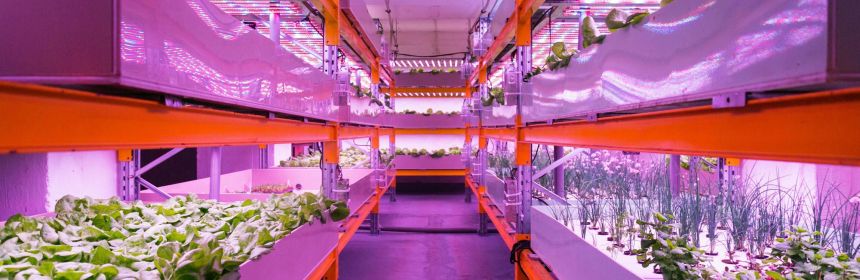
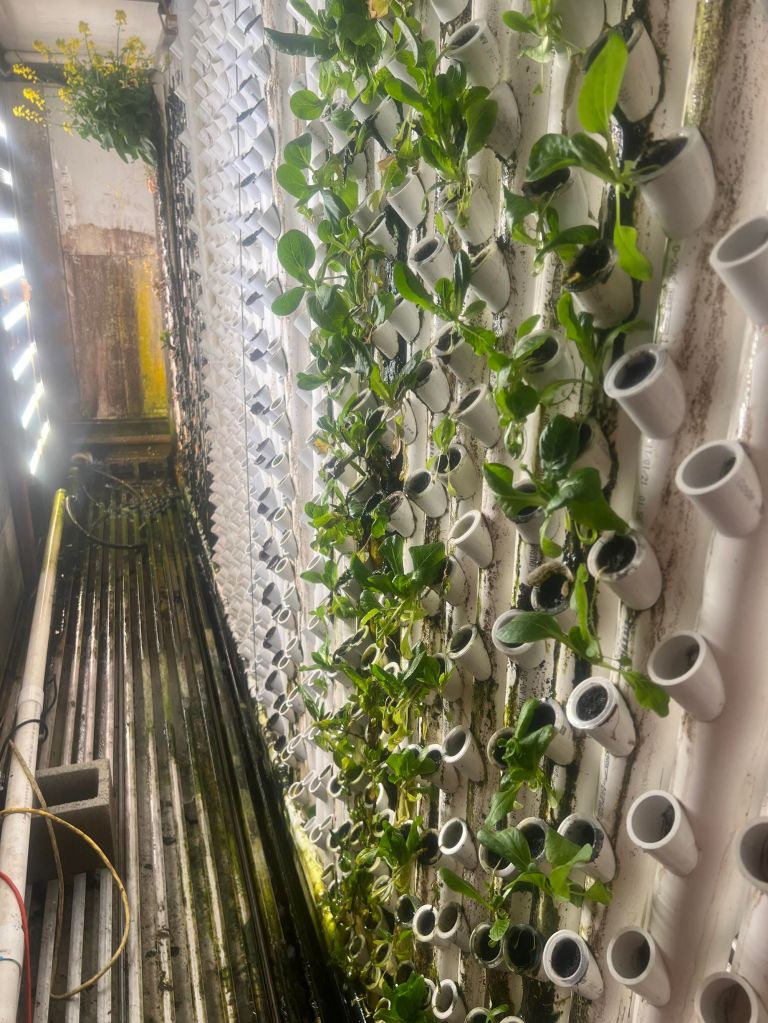
Essentially, they grow plants in repurposed shipping containers, and the plants are grown in water without soil which is fertilized by fish. The water is cleaned by the plants. This results in a “closed-loop” system.

The Brents have been studying this method for at least 25 years. When they first started, they were living in Marianna, Arkansas, and were “avid gardeners.” They decided to move their garden inside a greenhouse to do aquaponics because they didn’t want to use pesticides anymore. 

They also researched and worked for 7 years at University of Arkansas Pine Bluff on aquaponic methods, where their systems are still in use. They did many tests, including on what to feed the fish and how this affects plant growth.

Frank Brent has been a farmer since 1979, so he has much experience with traditional farming methods. He says that he “gave up” on row crop farming because he didn’t think it was very profitable due to the equipment costs. Less conventional methods of growing food offered a new perspective.

“I really enjoyed the symbiotic relationship…and circular agriculture,” Frank Brent said.

Chemical drift, also known as pesticide drift, became a problem for them. Pesticide drift happens when pesticides negatively or unintentionally affect humans, environment, and crops.

They decided to expand their operation by moving to Paragould and buying a 100-acre farm. However, they knew that pests would always be an issue and wanted a way to circumvent that. 

The Brents don’t believe in using chemicals for growing plants. They want their crops to be organic. However, it can be difficult to grow this way and remain profitable.

According to Frank Brent, commercial farms produce about 40% waste but organic farms produce 70% waste. This is why organic produce can be so expensive. 

“So I decided that, what would be better than taking it inside a container and taking it to sea?” Frank Brent said.

This was how the idea of Brent Floating Farms was born. Growing plants inside a container using only water and fish works well to prevent pests, and the temperature-controlled containers have the added bonus of allowing the growth of off-season crops.

However, there can still be issues with unintentionally letting insects inside the container when the door is opened. Furthermore, air still needs to be provided for the plants, and pests come with that as well. Their first year at Paragould, their plants were completely wiped out due to these issues. 

1 week old test crop with the Brents’ new design.

“Everything was perfect, it was beautiful, it was huge. We grew so much more per square foot than…any other method of farming,” Frank Brent said. “It was a pretty sore and sad moment to watch our produce all go down the tubes.”

“Everything was perfect, it was beautiful, it was huge. We grew so much more per square foot than…any other method of farming…It was a pretty sore and sad moment to watch our produce all go down the tubes.”

— Frank Brent

Brent had another idea for their farm which would avoid the problem of pests altogether. He used to work in the Navy and noticed that there were no pests at sea. By putting the aquaponic farms in the shipping containers on ships at sea, they would have no more problems with pests.

Of course, neither aquaponics nor “floating farms” are a new concept. Both of these methods can be traced back to the Aztecs who practiced an early form of this type of agriculture, called “chinampas.” Currently, this method has been revived in Mexico City, and the world’s first large-scale floating farm was conceived in the Netherlands.

The Brents, however, hope to eventually take their operation to a larger scale. They used to be set up in Louisiana, but when they were finally starting to gain traction, the COVID-19 pandemic and Hurricane Ida took them out.

They’re still working on rebuilding. They recently purchased another farm called Chicken Town Egg Farm, which was in trouble financially, and are in the process of doubling that operation. 

When they’re able to get Brent Floating Farms back on track, their goal is to manufacture 350 containers for their crops on land in Louisiana and eventually put some containers at sea as well. 

On land, their hope is that waste will be at 15% while at sea, expected waste will be between 3% to 5%. Aquaponics also uses 90% less water than traditional soil and irrigation methods. The Brents recognize that energy usage can be an environmental issue, but they have looked into alternative energy methods.

Furthermore, their method doesn’t have to just use water and fish. With the use of black soldier fly larva, they can use any type of organic waste, and the insects will break that down. Insects that are beneficial to plants rather than pests can also be introduced inside the container.

Leigh Ann Weidner, CEO of Brent Floating Farms.

Because the crops won’t be subject to the environment, they will be able to produce a higher yield as well. According to Frank Brent, they can produce 12,000 heads of lettuce in 30 days in an average container.

The team behind Brent Floating Farms includes co-founders Frank and Cinda Brent as well as Leigh Ann Weidner, their CEO. Frank is the COO, and his focus is the technical, agricultural aspects while Cinda is the CAO and focuses on marketing. Weidner, who is working remotely from Wisconsin due to another job, specializes in sales.

-30-


Note: Featured image provided by Shutterstock.

Winter weather provides challenges for Arkansas agriculture

Extreme weather provides little help, many challenges

By Garrett Hatcher | Delta Digital News Service

As cold winter temperatures and storms continue to hinder Arkansans, some cannot help but wonder how Arkansas’ agricultural workers and organizations have been braving the extreme climates.

While some people face problems like power outages, icy roads and a lack of winterization, livestock ranchers appear to be having the most immediate problems as they try to keep their livestock warm and feed while keeping up with the industry demands.

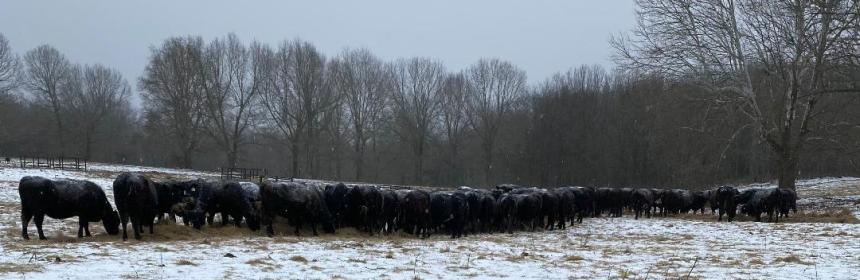
“As a livestock producer, this is hard on the animals that are out there in this weather. The rate of gain on the cattle is going to be definitely less. They’re gonna have to have a lot more feed just to generate body heat just to maintain themselves, much less gain any weight,” said David Hodges, a northeast Arkansas beef cattle farmer.

“….They’re gonna have to have a lot more feed just to generate body heat just to maintain themselves, much less gain any weight.”

– Beef Cattle Farmer David Hodges

Hodges said that despite the problems winter brings for farmers and ranchers, it does have one upside – the extermination of insects that would normally affect crops. Due to the very cold temperatures and storms, they keep off and away from farmer’s crops. This leads to cold temperatures being especially helpful to row crop farmers who have little trouble during the winter months.

Branon Thiesse, County Extension Agent – Staff Chair
UADA | CES | Craighead County

Hodges also mentioned how many farmers have taken up growing less nitrogen-dependent crops during the winter and overall during the seasons as prices for nitrogen and other farming chemicals rise. He said winter could cause financial issues to a farmer if a high maintenance and expensive upkeep crop were to die due to ice or snow.   

Branon Thiesse, a county extension agent – staff chair at Craighead County Cooperative Extension Service said ice could cause farmers issues. 

Craighead County Cooperative Extension Service is an organization that provides research-based information through non-formal education to help Arkansans with their economics and well-being in consumer science, community development and agriculture.

Bill Shannon of Farmers National Co.

“As far as an ice storm is concerned, loss of electricity, damage to buildings and farm shops and things like that can cause problems, broken pipes in the farm shops and different things like that because they don’t have an alternative heating method, as most of them use gas,” Thiesse said. He said that while some farmers may have kerosene heaters to heat their shops, many farmers have electric fans that when stopped could stop heat from circulating in their shops. This can damage equipment that hasn’t yet been winterized or protected and halts any future progress toward preparing for the next proper farming season.

“We don’t get dry soil that we can get out and farm. This is pretty much a dead time of the year; field work will typically begin in March unless we just happen to have an unusual dry period during the winter,” Bill Shannon of Farmers National Co. said. “Anytime they’re not able work in their fields, they work in their shops winterizing equipment, making repairs for the upcoming season and just getting ready to start another crop.”

“Anytime they’re not able work in their fields, they work in their shops winterizing equipment, making repairs for the upcoming season and just getting ready to start another crop.”

– Bill Shannon of Farmers National Co.

Farmers National Co. is an organization that manages land for absentee landowners, bank trust departments and charitable foundations, while also leasing farmland to operators so it can be farmed.

As winter drags on, many workers and organizations are planning out and maintaining their equipment as they prepare for the next season of growing rather than worrying about the cold and the troubles it tends to bring. 


NOTE: Feature photo: A herd of cattle at the Eric Eaves Cattle Farm stand in an ice covered field Friday. During extreme weather cattle need to be feed more to gain weight for protection against cold temperatures. Submitted Photo

Grocery store offers all-natural foods

By Melissa A. Palumbo
Delta Digital News Service

MOUNTAIN HOME – Local grocery store Truck Patch offers bulk foods and spices, all-natural beauty products and plant-based meals. 

Named after small farmers’ markets from the 1800s, the Truck Patch grocery store opened May 23, 2010 in Mountain Home. From there, the store added a larger Jonesboro location.

“We don’t currently have plans for another location, but we’re always open to expand,” said Mountain Home Manager Virginia Embry. 

Truck Patch sells ingredients by bulk, allowing customers to bring their own reusable jars, bags and containers with which to shop. 

Tori Forkum, assistant manager at the Truck Patch Jonesboro, said they tare the container before the customer shops. 

“You can bring your own jar and we weigh it,” she said. “Then we take the weight of the container off the final price.”

Many ingredients cost less to to buy in bulk than in individually packaged portions, such as spices and grains.

Olivia Simpson, an employee who works in the kitchen at the Jonesboro location, suggests reusable glass bottles and jars to cut back on waste.

“Buy bulk and ditch plastic,” she said. “Use glass whenever you can.”

The store carries plastic-free, plant-based and biodegradable household products. Products made from plants have a lower environmental impact than hard plastics made from oil, and paper packaging decomposes much faster than plastic wrapping. 

They also sell pet products, like biodegradable doggie bags, organic treats and food.

Truck Patch focuses not only on reducing plastic packaging, but also increasing healthy eating. Employees at Truck Patch help customers find ingredients to suit any diet, from vegan to paleo. They also help those with allergies, diabetes and other health needs find appropriate meals.

“Our staff is well versed in different diets, and we are more than happy to help,” Embry said.

Camron Collins began working at Truck Patch as a cashier about four months ago. He said he was drawn to his job because of his interest in health-conscious eating and reducing environmental impact.
“When we started damaging our environment, it was fast,” he said. “We’re starting to revert that now. It took a lifetime to realize it, but we’re a force.”

Truck Patch strives for zero-waste within the business and community, according to Embry. Because of the large population of farmers in the area, the Mountain Home location established a composting system. 

“We are considerably smaller than the Jonesboro location, but we do pack a big punch,” Embry said. 

The Truck Patch Jonesboro plans to carry composting supplies in the future.

When the Jonesboro location opened in 2015, the Stem and Spoon Cafe was added within the store. The cafe offers a variety of sandwiches, salads, sides and drinks. All the ingredients Truck Patch uses stay organic and hormone-free.

“We use ingredients from the store,” Forkum said. “The kitchen workers will ‘grocery shop’ for the cafe.”

To avoid waste, fruits and vegetables that aren’t as pretty as the rest are turned into smoothies. Food that doesn’t sell is often given to employees.

“We don’t throw anything away,” Embry said. 

Editor’s Note: Photos by Melissa Palumbo.