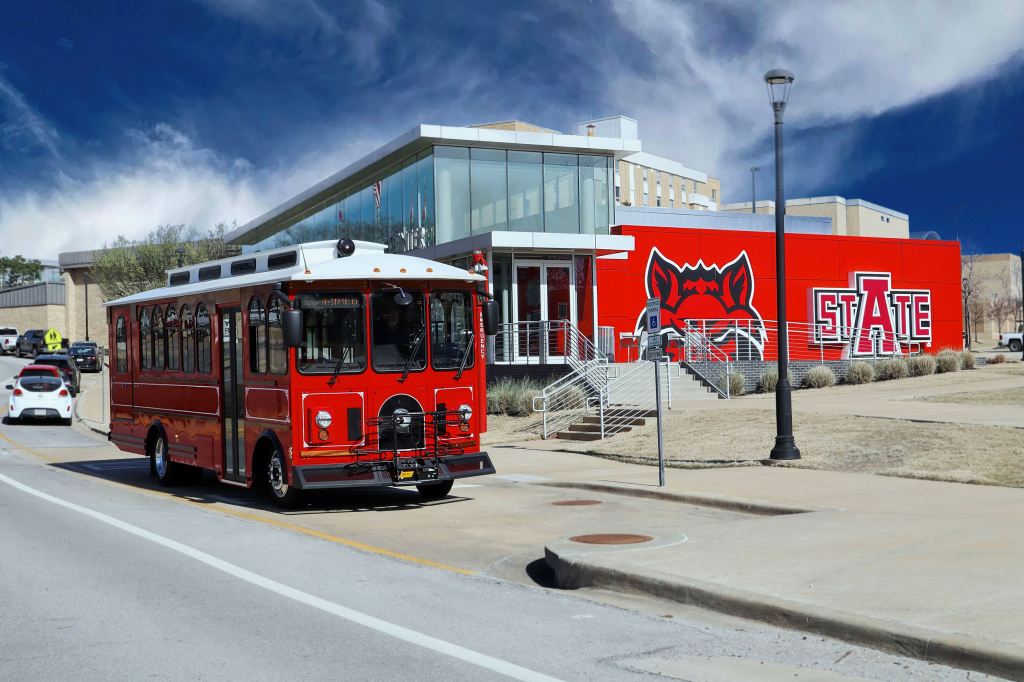
A blue trolley-style bus parked at the Jonesboro City Hall building. These buses offer transportation services using the GoJo Transportation System. Photo courtesy of the City of Jonesboro website.
JONESBORO, Ark. — The City of Jonesboro’s new GoJo Transportation System provides a convenient service to Arkansas State University students, offering free, campus-wide transportation. However, limited outreach to students has kept many from using the service.
The new GoJo system, previously JET, provides service to A-State and the surrounding Jonesboro area. It features six routes, ranging from on-campus hotspots to countless places in the city. The new Let’s GOJO! The app and website provide a map of all stops and routes to help users locate the nearest available transportation, as well as live tracking of all buses and trolleys.
The service is free to students with a valid student ID, providing an accessible alternative to driving or walking.
One of the most notable features of the system is the new Trolley-style buses. These vehicles provide classic aesthetics with modern functionality, which gives students a comfortable ride that is also more visually appealing than traditional transportation options.
A red trolley-style bus parked in front of the Arkansas State University Welcome Center. Photo courtesy of the City of Jonesboro website.
City officials and transportation coordinators said GoJo is meant to connect residents, visitors and students to the city of Jonesboro through expanded connections throughout the city, including A-State.
Despite the advantages to students, GoJo is relatively unknown amongst them. International student Boaz Muteba said she followed the news surrounding the new system.
“In the fall of 2024, when public transportation options were expected to increase, I was one of the individuals who participated in the meeting to get more buses,” Muteba said. “Recently, when the idea took shape, I spotted the bus on campus and even saw it featured on Instagram. Unfortunately, I never got the chance to utilize it.”
The system’s impact goes beyond convenience. By encouraging students to use public transit, Gojo supports sustainable efforts and accessibility for those without personal vehicles and eases parking demand that comes with a growing campus.
As Jonesboro and student enrollment at A-State continue to grow, GoJo presents an opportunity to strengthen connections between the city and it’s academia scene. However, its success will depend on public awareness of this new system.
Pedestrians walk through downtown Jonesboro beneath a “Welcome to Downtown Jonesboro” banner, highlighting the connection between Arkansas State University and the local community. Photo courtesy of Arkansas State University.
JONESBORO, Ark. — As Arkansas State University continues to grow alongside the city of Jonesboro, students and community leaders say the relationship between campus and community is evolving, but not without challenges.
From economic inequality to shifting social values, both groups are working to better understand their roles in a shared space. While students often focus on academics, identity and campus life, many Jonesboro residents are more concerned with jobs, healthcare and the rising cost of living, highlighting a need for stronger collaboration.
Local organizations say collaboration is critical as community needs continue to grow.
At the Jonesboro Human Development Center, officials say demand for services has increased in recent years, creating new challenges for staffing and care.
“We are struggling to hire people to provide hands-on care for adults with disabilities,” said Diane Keith, a nursing home administrator at the facility. “We need employees with a CNA license.”
Keith said the center also maintains a waiting list for services, reflecting a broader need for support across Northeast Arkansas. She said A-State students help fill some of those gaps through internships in nursing, dietetics and speech therapy.
“We receive several A-State students for internships,” Keith said.
Volunteers request roadside donations for the 2022 United Way Day of Caring. More than 500 volunteers attended the event in 2022. Photo courtesy of UWNEA Jonesboro YouTube Channel.
Community leaders say those partnerships are key, but there is still room to grow.
Heather Coats, executive director of United Way, said A-State has already made strong efforts to connect students with the community.
“I think what’s important, and A-State already does a great job of this, is letting students, especially young adults, know what resources are available,” Coats said.
However, she believes the responsibility does not fall solely on the university.
“I think the community could do a better job of being present on campus when it’s not just for sporting events,” Coats said. “We need to have more of a presence that isn’t just about our own entertainment.”
Coats said increased engagement from Jonesboro residents could help integrate students into the community and encourage long-term involvement.
Erin Calhoon, development director for United Way, said improving awareness is essential to strengthening that connection.
“I would say finding ways for people on A-State’s campus to be more aware of what’s available in the community,” Calhoon said.
Student leaders agree that awareness remains one of the biggest barriers.
Jaycee Davis, president of Volunteer A-State, said her organization has made it a priority to connect students with local opportunities.
“Our mission last year was to connect campus to the community,” Davis said. “We had organizations from Jonesboro come to campus, and we introduced ourselves and shared how we could help each other.’
“Our goal this year is to have students make a bigger impact in the Jonesboro community by making them more aware of volunteer opportunities,” Davis said. “So many students don’t know what’s available in Jonesboro.”
Davis said students can get involved through activities like packing food boxes, participating in community events and supporting organizations like Hope Found, which raises awareness about human trafficking.
“Right now, the community gives a lot to the campus, which is great,” Davis said. “But I think our mission moving forward is to give that same energy back.”
Lavonda Evans, an instructor of sociology and criminology at Arkansas State, said differences in age and life experience often shape priorities.
“Students are in that space between being supported by their families and stepping into the real world,” Evans said.
Evans said campus conversations often focus on identity and diversity, while broader community concerns center on economic stability and infrastructure. She said there is a growing shift toward individualism.
“Everything is more individualized and specialized, which creates less collective support,” Evans said. “People tend to focus on their immediate circles rather than the community as a whole.”
Despite those differences, Evans said collaboration is both possible and necessary.
Click to View!
“Jonesboro is already making efforts to connect the campus with the city,” Evans said.
She said projects like walking trails and plans to better link the university to downtown are some examples of this effort.
Evans said expanding paid internships or job-shadowing opportunities could help students gain early experience while strengthening ties to the community.
“Overall, both city and university leaders are making strong efforts to connect students and the community, but there is always room for improvement,” Evans said.
As both sides continue to grow, leaders agree that bridging the gap will require greater awareness, stronger partnerships and a shared commitment to engagement on campus and in the community they will eventually call their own.
Schools across Arkansas are learning to embrace the natural state’s top crop as the Rice in Schools program pilot run continues.
The Arkansas Rice in Schools program, launched by the Arkansas Department of Agriculture in collaboration with Arkansas Rice and USA Rice, is an initiative to teach students how to cook with rice and educate them on the significance of the grain.
Leslee Tell, the farm-to-school coordinator for the United States Department of Agriculture, directs the program. She said Rice in Schools will teach students where their food comes from.
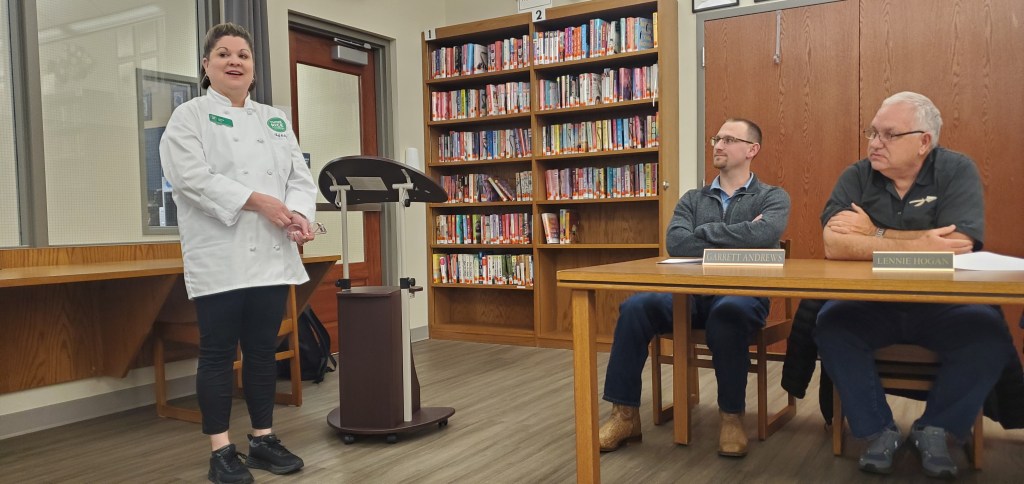
(Left) Leslee Tell, farm-to-school coordinator for the United States Department of Agriculture, describes the Rice in School Program to the Nettleton School Board at a March 17 meeting. According to the USDA website, the program, which is in a pilot phase, gives schools the tools to serve locally grown rice in healthy meals. PHOTO COURTESY OF JERRY DON BURTON
“Our goal is simple, increase the use of Arkansas-grown rice in schools, while helping students learn about agriculture, nutrition and where their food comes from,” Tell said in a YouTube video introducing the program. “This program is about more than just meals, it’s about connecting students to Arkansas agriculture and supporting our local farmers.”
Arkansas Governor Sarah Sanders developed the program in fall 2025, following the transition of nutrition programs to the Arkansas Department of Agriculture.
In December 2025, the Arkansas Rice Research and Promotion Board approved $15,000 in funding to support the program’s implementation. These funds provided schools with equipment to encourage the usage of Arkansas rice in their menus.
Sanders said the new program will teach students how farmers use rice to feed families around the world. She said students will use food made in Arkansas to develop healthy eating habits.
“Rice isn’t just part of Arkansas’ economy; it’s part of who we are,” Sanders said in a press release published Nov. 13, 2025.
Arkansas is the largest rice-producing state, accounting for more than 40% of rice production in the United States, according to Arkansas Rice. Tell said a majority of this rice is produced in Arkansas’ northeast region.
A graphic presents quick facts about Arkansas rice production. Arkansas is the largest rice-producing state, accounting for more than 40% of rice production in the United States, according to Arkansas Rice. GRAPHIC COURTESY OF ARAKNAS HOUSE OF REPRESENTATIVES
Almost 20 Arkansas schools and districts are scheduled to participate in the program’s pilot phase, which began in February at Ward Central Elementary in Cabot, Arkansas. The pilot will wrap up in May at Forest Park Elementary in Little Rock.
As part of the program, Tell travels to participating schools with a team to involve students in cooking demonstrations and interactive educational lessons. She also introduces meals with local rice to school menus and trains cafeteria staff in preparing them.
On April 9, Tell traveled to Newport, Arkansas, to introduce the program to students at Newport High School.
Leanne Bradley, the family and consumer science teacher at Newport High School, said Rice in Schools was a beneficial experience for her students.
Bradley said rice’s significance to Arkansas demonstrates the program’s importance.
“I think everybody is aware that if you don’t take care of what you have, you can lose it,” Bradley said. “(Rice) is something that we have that not every other state has.”
Bradley said her food production and culinary students passed out stir-fried rice samples Tell made for elementary students. After sampling different meals made using rice, students placed stickers on a bulletin board to indicate how much or little they enjoyed the meals.
Tell said they compile student opinion data from every participating school. Then, in June, she said they will analyze the data to determine which recipes students liked most and least and make appropriate changes.
Bradley said the students greatly enjoyed the Rice in Schools program. She said her students cooked with rice before, but Tell’s contributions provided them with new ways to use the grain.
The family and consumer science teacher said she appreciated how the program helped her students realize how much rice Jackson County, where the Newport School District is located, produces.
According to the 2022 USDA Census of Agriculture, Jackson County produced almost 80,000 acres of rice, second only to soybeans.
“So just for the kids to realize this is a huge staple that Arkansas provides for the state, and it’s easy and it does not have to be Minute Rice,” Bradley said. “It really doesn’t take that much longer to actually cook your own rice and the quality is just so much better.”
Julie Isbell, superintendent at the Harrisburg School District, where Tell visited in March,
also said she loved how the program connected her students with local rice production.
Poinsett County, where Harrisburg is located, produced about 90,000 acres of rice, according to the same USDA census.
Tell also brought the program to the Nettleton School District in March. Nettleton School Board Vice President, Donnie Hauge, said he supported the program and thinks helping kids learn cooking skills and understand where their food comes from is an important undertaking.
Wes Ward, Arkansas secretary of agriculture, said the program emphasizes how Arkansas’ dominance over rice production could be used to support students and education. He said the program is a good step toward getting Arkansas to buy and use more of its own rice.
Bradley said rice is also versatile and can be stretched further than other ingredients. She said this is especially important for those who cannot afford as much food.
“It’s a very quick and easy staple that you can keep in your pantry and it can go for a wide variety of different types of food,” Bradley said. “If your family is financially disadvantaged, you can pair beans and rice together, and that actually makes a complete protein.”
Bradley said her favorite part of the program was how it helped students interact with and cook rice in different ways than they’re used to. For some, Bradley said this program represents an introduction to rice as an ingredient.
However, the family and consumer science teacher said Tell’s visit to Newport was not without challenges.
Tell was scheduled to return to Newport High School on April 10, but Bradley said she fell ill and missed the second day.
“She could have talked so much more and given the information about it. She did not get to go into depth like she would at other places,” Bradley said.
In the time they did spend together, Bradley said Tell was a very energetic and fun, but professional person to work with.
“I think she’s phenomenal and I liked having the opportunity,” Bradley said. “I hope that this is something that takes off and is able to be utilized in schools across Arkansas.”
Tell said the student feedback, recipe evaluations and participation data gathered in the pilot will refine the program and prepare it for statewide expansion.
In the final iteration of the program, Bradley said she would like to see taste testing and activities for all grade levels.
Tell said the program continuously searches for and develops new and more effective methods of engaging schools.
Bradley said the school will continue building on the foundation laid by Tell and the Rice in Schools Program. She said the school’s student-run restaurant, the Hungry Hound Cafe, started implementing rice meals based on what they learned from the program.
Tell said she is a teacher at heart and loves to cook, so working with students to prepare recipes in the classroom was a great combination.
“We are bringing Arkansas-grown rice to schools across the state,” Tell said. “One plate at a time.” More information about the Rice in Schools program may be found on the Arkansas Department of Agriculture’s website. Program organizers also created a digital guide featuring rice data and recipes from USA Rice.
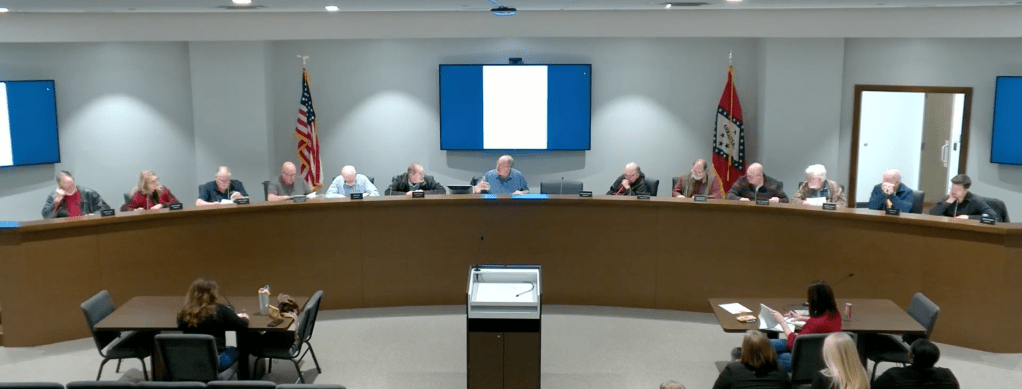
Craighead County Judge Marvin Day (center) explains one of the large ticket items on the annual transfer ordinance to District 4 Justice of the Peace Linda Allison (second from left). The item concerned a $2.5 million transfer from the county general fund to the capital fund to support department operations. Photo by Jerry Don Burton.
The Craighead County Quorum Court adopted an annual transfer ordinance, heard a hot check report and responded to a public comment regarding rising poverty.
Annual transfer appropriation ordinance
The annual transfer appropriation ordinance, adopted unanimously at the Tuesday, Feb. 23, Craighead County Quorum Court meeting, appropriated funds from special revenue accounts into the county general fund.
Craighead County Judge Marvin Day said the transfer ordinance is the first step of an annual cleanup process.
“So that’s basically what we’re doing is we transfer money from one spot to the other to keep those balances whole, and the quorum court, on an annual basis, has to acknowledge, you’re not spending any new money, any additional money,” Day said. “Just acknowledging what we’ve done to keep the budget afloat.”
Day said, to think of it in simpler terms, it’s like they have 50 different checking accounts and the court appropriates money out of each of those accounts based upon an estimated revenue.
“Somebody may want to spend something in February, but their money doesn’t necessarily come in until September, October, and so we move money around to keep those balances in the positive, best we can,” Day said.
Hot check report
Also in new business, Charlene Davidson, a prosecuting attorney for the second judicial district of Arkansas, presented a hot check report, as required by state law.
Craighead County Judge Marvin Day (center top) introduces Charlene Davidson (center) and Sarah Burnett (right) before they give the hot check report. The report is required by state law. Photo by Jerry Don Burton.
Davidson said while terminated in April 2021, the hot check program still takes in money the Craighead County Sheriff’s Office receives.
In 2025, Davidson said the hot check program:
Received $10,217.51 from the Craighead County Sheriff’s Office, to be entered as payments received from defendants for the hot check program prior to 2021.
Dispersed $3,770 toward merchant fees, which is a fee that merchants can charge the defendant if they write a hot check.
$2,899.95 in prosecutor fees, a statutory fee the office can charge for maintaining the program.
Davidson said the preceding fees were all previously ordered prior to 2021. She said the total check amount for 2025, not including journal entries, was $26,054.41. The current account balance for the hot check trust account is $28,653.41.
The court unanimously accepted the report as prepared.
Public comments
After Day opened the meeting for public comments, Jonesboro resident Robin Martin said she was concerned about rising poverty in Craighead County.
She said the poverty rate in Craighead County is 21.5%, almost double the 11% national rate and much higher than the 15.3% Arkansas poverty rate.
Martin said similarly sized Arkansas counties, such as Garland, Sebastian, Saline and Faulkner, also have poverty rates lower than Craighead.
Her data is nearly accurate with the latest census data from the American Community Survey. The national official poverty measure is 10.6%, while the Arkansas poverty rate is 15.5%.
“I don’t want to live in a district or a county that has a poverty rate of 20%,” Martin said. “I like Saline County’s 9% a whole lot better.”
District 11 Justice of the Peace Dan Pasmore said Craighead County’s rising population could be correlated to the rise in poverty.
“If you’ll check the population that moves into Jonesboro, there’s a lot of people that move from areas that are depressed, moving here for better opportunities,” Pasmore said. “They don’t always find it, but they’re coming here from other areas that are in worse shape than we are, and that’s driving ours up also.”
According to the United States Census Bureau, the estimated population in Craighead County rose from 111,242 in 2020 to 115,852 in 2024, an increase of 4,610.
Darrel Cook, district six justice of the peace, said he agreed with Pasmore.
“There’s a lot of rental opportunities here and there’s a lot of job opportunities, but sadly, some of the people moving here from other towns don’t want to take those jobs,” Cook said.
District Four Justice of the Peace Linda Allison said people with low income are attracted to Jonesboro when the city approves apartment complexes. She said this could also drive the poverty rate up.
Other business
In other business, the transportation and finance committees gave their reports.
Transportation Committee Chair and District 10 Justice of the Peace Steve Cline said the transportation committee met on Feb. 9. He said the committee, run by justices Garrett Barnes, David Tennison and Terry Couch, spoke with John James, the Craighead County road department superintendent, about current work projects and county road conditions following the recent snowstorm.
The committee reviewed and approved a motion for a construction plan on Highway 141.
Finance Committee Chair and District Nine Justice of the Peace Josh Longmire said the finance committee also met on Feb. 9. Longmire said, at the meeting, Craighead County Tax Collector Wes Eddington provided a tax collection report. The report stated tax collection rose 16%, while delinquent personal taxes fell 12.7%.
Craighead County Treasurer Terry McNatt presented the January 2026 financial report and 2025 annual financial report at this meeting as well.
Tennison, district eight justice of the peace, motioned to move the next quorum court meeting date, originally scheduled for March 23, to avoid it falling during spring break week. The motion passed unanimously.
The Craighead County Quorum Court will meet again at 5:30 p.m., March 16, after spring break.
Jonesboro Mayor Harold Copenhaver addressed previous concerns and responded to new complaints about the City Stars booster club during the City Council meeting.
Public and council interest in City Stars remained high at the Tuesday, Feb. 3 city council meeting. Discussion began with Copenhaver’s response to Public Facilities Board Chairman Matt Modelevsky’s presentation at the last meeting.
Copenhaver’s response
“ My responsibility as mayor is to administer city-operated programs, which City Stars was not, in accordance with city council-approved budgets,” Copenhaver said. “I presented verifiable facts, not feelings, not understandings or beliefs like many of the documents presented at the previous city council meeting contained.”
At the previous meeting, Modelevsky said Copenhaver failed to respond to past concerns he raised about City Stars and Danny Kapales, the now-resigned parks director who ran the program.
The City Stars booster club, a youth sports program, was created in 2001. Copenhaver said the original agreement between Jonesboro and the booster club was approved by the council in 2004. He said this contract established mutual agreements, such as the shared goal of providing athletics at no cost for Jonesboro youth.
Despite a shared vision for youth athletics in Jonesboro, Copenhaver said City Stars operated independently.
“Their revenue was their money, their business, not the city’s,” Copenhaver said. “ Fiduciary duties fall to the boards and management of private nonprofit organizations and cannot be delegated, giving them full and exclusive authority over their own money and how it is handled and how their chart of accounts is organized and how their accounting entries are made. Look it up.”
Copenhaver said he asked the management of City Stars to voluntarily undergo an audit, to which they agreed. The Thomas Speight and Noble firm completed the audit and presented it in June 2025.
“ The independent auditor’s report expressed the opinion that the City Stars financial statements present fairly in all material respects and assets, liabilities, net assets of the City Stars Booster Club,” Copenhaver said. “ In other words, clean audit.”
On Dec. 5, 2025, the City Stars board announced the club will cease operations as a private, 501(c)(3) nonprofit and will transfer operational responsibilities, including banking accounts, funds and sports equipment, to the city of Jonesboro.
Copenhaver said now should be an exciting time for the program and the upcoming generations who will make use of City Stars.
“Moving forward means moving beyond the past, and now we need to focus,” Copenhaver said.
However, in the public comments that followed, several citizens expressed a desire to stay on the topic of City Stars.
Public comments
Jeremy Terrell, who ran for Jonesboro mayor in 2024, addressed Copenhaver and said he does not understand why some act like the investigation is not a big deal. He said the mayor has the responsibility to ensure taxpayer money goes to organizations that act in the best interest of the public.
“This is about the responsibility that you hold and that the city council hold to make sure that taxpayer’s money is being dealt with in a manner that is proper and legal,” Terrell said. “So those of us that are asking questions, we deserve answers, period.”
Bill Campbell, who previously served as the mayor’s communication director, said citizens should exercise patience and not jump to conclusions during a federal investigation.
“I don’t know what the answers are. I do know that you have a mayor who has had clean audits every time,” Campbell said. “So I think I would lean on that and we can’t pretend we know something different.”
Dean Macdonald, a Jonesboro native, said he agrees with Terrell that any allegations of misconduct are serious and should be investigated. However, he said some of the discourse surrounding the investigation has broken down recently.
Following comments from the public, many city council members voiced support for Copenhaver, but agreed communication must be improved.
Council member comments
LJ Bryant, Ward 5, Position 1 council member, said the public clearly cares and the situation should not be dismissed as something minor.
“Despite any of the gaslighting going on tonight, the FBI didn’t show up for no reason. So we’re in a very serious situation and as the stewards of the taxpayer’s resources, I feel like we have to take action,” Bryant said.
Joe Hafner, Ward 5, Position 2 council member, said while he supports Copenhaver, the mayor should not have let concerns go unresolved for so long.
“I think that’s one thing that definitely needs to be improved and that’s let something fester, it turned from a little snowball into a big avalanche,” Hafner said. “And now that we got the public here with eroded public trust, just frustrated, the problems have escalated. I don’t take that lightly.”
Ward 2, Position 2 City Council Member Chris Moore said many issues would be absent today if Copenhaver addressed concerns sooner. He said trust should be restored between the council, mayor and community.
Hafner said the relationship between the mayor and council is built on trust. He said they must be transparent with each other.
Copenhaver said he understands many people had honest questions about the City Stars operation. He said while he never meant to come off as dismissive of these questions, the city council never had the answers.
“Those questions should be properly directed to its own officers and board of directors, which had the full fiduciary responsibilities and duties. The mayor’s office did not have answers about the accounting or handling of money of City Stars,” Copenhaver said. “Part of all the confusion has come from people asking questions or emailing or texting complaints and concerns about City Stars to the wrong place.”
Anthony Coleman, Ward 6, Position 1 council member, said while he appreciated Copenhaver sharing his side at the meeting, he believes the council does have a responsibility to ask questions and look into City Stars.
“ Maybe not handling a lot of it fiduciarily, but we do have a responsibility to share, to talk, to ask questions, to make certain that we are doing what’s right for our children,” Coleman said.
Chris Gibson, Ward 3, Position 2 council member, said the council has a good platform to build on moving forward and the future is optimistic.
Copenhaver said he appreciated the input from the council and is always up for constructive criticism.
“I apologize to this city council because the last thing I ever want to do is draw a wedge between us because that does not benefit our community,” Copenhaver said.
Looking ahead, Copenhaver said he is excited for the future of City Stars under the leadership of Jim Stearns, interim director of parks and recreation.
Other business
In other business, Copenhaver announced InnovAsian Cuisine Enterprise Inc. will construct a frozen food manufacturing facility in Jonesboro. He said this development will create about 200 jobs.
The council also read the following ordinances:
On first reading:
Ordinance 26:004 would amend a zoning ordinance providing for changes in zoning boundaries from R-1 to RS-7 for a property at 1306 Charles Drive.
On second reading:
Ordinance 26:001 would change the zoning boundaries from R-1 to C-3 general commercial district for a property at 2620 Alexander Drive.
Ordinance 26:002 requested approval of a private club permit for Monarca’s Mexican restaurant.
Ordinance 26:003 requested approval of a private club permit for Walk-On’s Sports Bistreaux.
The Jonesboro City Council meets at 5:30 p.m. on the first and third Tuesdays of each month at the Jonesboro Municipal Center. Meetings are also livestreamed on the City of Jonesboro Facebook page.
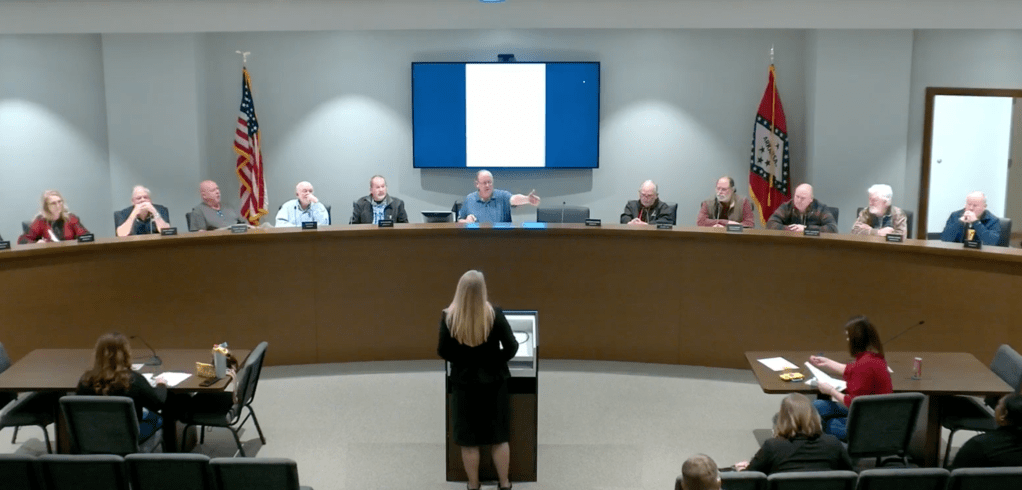
Members of the Craighead County Quorum Court meet. Photo by DDNS Reporter Mia Young.
JONESBORO, Ark. – The Craighead County Quorum Court advanced two ordinances to their next readings to amend the county’s salary administration policy and job classifications in the County Judge’s Office during its meeting on April 13.
During old business, the court held the second reading of an ordinance amending the county’s salary administration policy to include cost-of-living increases. The ordinance proposes employees would be eligible for cost-of-living raises after one year of employment. Supervisors, however, would be able to approve the increases after 90 days based on performance. The policy would be guided by the Consumer Price Index, but not a specific rate.
The 13 justices also voted to untable a recommendation from the Job Evaluation and Salary Administration Policy committee involving the County Judge’s office, which Judge Marvin Day previously tabled. The ordinance will reclassify and restructure the Secretary Coordinator I position as an Administrative Coordinator I position.
“We’re not changing the budget. This is just going to change the position,” Day said. “If we do decide we want to change the budget, we will come to finance.”
Wendy French previously served as Administrative Coordinator I, in which she worked with elected officials and department leaders to help with daily operations and coordinate internal processes. However, officials appointed French as Craighead County Administrator in January 2026. Since leaving the position, Day said French held skills the Judge’s Office would like to mandate and look for.
The county presented the changes as part of its efforts to retain employees, recognize and support their work and improve the county as a whole. Day said if there was a possibility of hiring someone with the skills in place, he would come back and ask for a salary adjustment.
Once the court broke into committee meetings, Shannon Kee made a second attempt before the Public Service Committee to open a restaurant and obtain a liquor license after the committee rejected his previous application last year. Kee plans to open 141 Prime at Sterling Springs, 2761 County Road 766, near the Highway 141 intersection.
“Born and raised, I’m 53 years old and never had anything out there other than a gas station,” Kee said. “Nowadays, we don’t really have a gas station because all the gas stations are shut down.”
He said North Jonesboro has no restaurants and if he wants customers to choose to come to his restaurant and not just “drive right past,” they will expect a beer with their dinner. The committee, after hearing no additional public comments, voted 3-1 to advance the proposal to the full Quorum Court for a vote when it meets again on April 28.
During public comments from the full Quorum Court, Robin Martin raised the issue that a recent Freedom of Information Act request showed Day’s email was included in the list of people emailed when someone emails quorumcourtmembers@craigheadcounty.org. However, Day’s name did not appear anywhere on the list of email recipients.
“That seems a little deceptive,” Martin said.
Martin also said there is no way for citizens to email Quorum Court members individually, as the only email address provided is the group email. Day said it would be possible for him to be removed. But the role was already set up that way when he took office, and he would not commit to anything during the meeting.
Staff members from the Hispanic Center pose outside their facility in Jonesboro, highlighting the organization’s role in supporting local families amid growing community concerns. Photo courtesy of The Hispanic Center via Facebook.
JONESBORO, Ark. — As immigration enforcement concerns grow in Jonesboro and across the country, leaders at the Hispanic Center say fear keeps some families from going to school, seeking medical care or accessing basic services. Immigration enforcement policies and increased activity by Immigration and Customs Enforcement have created uncertainty for many immigrant families, including those in northeast Arkansas.
The Hispanic Center is a nonprofit organization that serves the Hispanic community in Jonesboro, as well as others in need. The center offers services such as after-school programs, interpretation, translation, English classes, computer training and health fairs. The center also provides legal consultations, mental health sessions, and community events, while assisting families with food, transportation and housing support.
Carolina Elmore, assistant director at the Hispanic Center, said, “We serve the Hispanic community primarily, but we help anyone in need regardless of ethnicity, religion or race.”
Elmore said the Hispanic Center is a place she wants people to feel they could depend on anytime.
“We provide interpretation in hospitals, schools and legal settings so people who don’t speak English can still access essential services. Language is one of the biggest barriers, and we try to bridge that gap every day,” Elmore said.
Elmore said the Hispanic Center acts as a bridge between schools, the Hispanic community and local institutions. The center partners with local universities and organizations to provide students with educational support and expose them to career opportunities.
Elmore said one of the biggest challenges for the Hispanic Center has been increased activity by Immigration and Customs Enforcement.
“A lot of people are afraid to seek services because of immigration concerns. Some parents are even scared to send their kids to school or go to the doctor. We try to create a safe space where families feel supported despite those fears,” Elmore said.
Due to concerns about ICE, many community members are afraid to seek help or services at the Hispanic Center out of fear of being detained. That fear reflects what many immigrant communities are experiencing across the country, where enforcement actions can affect access to education, health care and other essential services. The center often works with churches and community partners to provide safe spaces and trusted environments for families.
“We help families with everything, from enrolling their kids in school to making doctor’s appointments. Sometimes it’s as simple as helping fill out a form, but that can change everything for a family,” Elmore said.
Elmore said she wants to continue serving her community during challenging times tied to immigration enforcement.
“Everything we do is about helping families feel supported, connected and valued in this community,” Elmore said.
Leo Hernández, program coordinator, helps facilitate the after-school program, which allows children to catch up on homework and receive tutoring.
“La Escuelita is here to support kids from kindergarten through ninth grade with their homework and academics. A lot of parents can’t help their kids with schoolwork, so we step in to guide them,” Hernández said.
La Escuelita runs Monday through Thursday during the school year and is divided into groups by age, allowing younger and older students to receive the support they need. Students work on subjects such as math, reading, writing, Spanish and public speaking, while also building communication and teamwork skills. The program also includes a summer component that helps students stay on track in a more engaging environment.
Hernández said the Hispanic Center also has a program called HELP, which gives high school students opportunities to explore life after high school. He said the program allows students to complete community service hours while visiting college campuses and local institutions.
“We’re not just helping with homework, we’re giving kids opportunities they might not have otherwise. It’s about building a foundation for their future,” Hernández said.
Hernández said education and guidance are some of the biggest needs in the Hispanic community, especially for students who struggle with English and need additional support.
Hernández said he wants the community to feel like a safe place where families can feel at home and that many people simply need direction.
“What’s happening with immigration affects families, especially the kids. We always encourage people to seek legal advice and handle things the right way. At the end of the day, we’re here to help people grow and succeed,” Hernández said.
Yesenia Dixon serves as a front desk receptionist, interpreter and after-school teacher at the Hispanic Center.
Dixon said many children struggle to express their emotions, and the center helps them build communication skills.
“It’s rewarding to see their faces light up when they realize they can do something,” Dixon said.
Dixon said she enjoys interpreting people but she also knows it is serious because she serves as the voice for others.
“I’m usually the first person people see, and they come in upset or needing help. I try to calm them down and let them know they’re in a safe place,” Dixon said.
Dixon said increased ICE activity has heightened fear in the Hispanic community, with some people choosing to handle everything virtually.
“During stressful times, we focus on giving people factual information so they don’t panic. There’s a lot of fear, so it’s important we don’t spread misinformation,” Dixon said.
Dixon said even if she does not have an immediate answer, she works to help people find one.
“We’re not just a place for handouts, we’re here to support people. We want to be known as a place where people can come without feeling judged,” Dixon said.
JONESBORO, Ark.- Mayor Harold Copenhaver gave his sixth State of the City address to the Jonesboro City Council on Tuesday evening, featuring major growth in the economy, finances and infrastructure, lower crime rates, and a bright future for the city.
Amid the city’s acquisition of CityStars’ finances, Copenhaver highlighted the 15 consecutive audits. He said Jonesboro is thriving and, at the end of 2025, had $28.1 million in reserves and $15 million in capital improvements.
He mentioned the growth in nearly every aspect of the city, including the 150 businesses that opened last year, 10% more calls firefighters responded to, and numerous projects ready to start. Not only projects “built for wheels,” but for pedestrians. Funds awarded to Jonesboro through the Transportation Alternatives Program will go toward new pedestrian infrastructure on the Marion Berry overpass. This will not only make the overpass safer and more walkable but will also help connect Arkansas State to the rest of Jonesboro.
“Jonesboro’s future is bright, but we’d better prepare for it now,” Copenhaver said.
He highlighted that even with the large population growth over the last decade, statistics recently released by the FBI show that violent crime is the lowest it has been in at least a decade.
More than 100,000calls were answered by dispatchers through the city’s emergency medical dispatch program. Seven calls helped guide people through CPR, and one even helped deliver a baby. Copenhaver also noted that 63% of firefighters’ and 52% of police officers’ salaries have increased.
The city also won three Trendsetter awards for Jonesboro connecting efforts, emergency medical dispatch, and the city park ranger program, and was also named Volunteer City of the Year. Copenhaver knew the council was not the only one responsible for helping win these awards; the public was a big help. He called upon citizens to make an effort to get involved and help craft a blueprint for a better city.
“But all those numbers can add up to an overall total of one. One goal, one responsibility to make Jonesboro the best city,” Copenhaver said to close his address.
After the State of the City address, business continued as usual. A few Council members raised additional concerns regarding the handling of CityStars. Questions were raised regarding Freedom of Information Act (FOIA) requests, missing paperwork and invoices for individuals working the tournaments, and making sure all aspects of taking over CityStars’ finances were done legally.
Efforts are underway to move toward partial- or fully cashless events in youth sports. IT is making strides to handle this issue. The first phase of this process is to assess the cost of the required infrastructure and ensure that locations have the Wi-Fi capabilities needed to run the program.
Matt Daniel, former executive director of the Arkansas Revolution Soccer Club, spoke during public comment. He stated during the Feb. 3 City Council meeting, Copenhaver directly named him and incorrectly quoted both his CityStars resignation letter, which did not mention anyone by name, and his proposal. Daniel went on to correct Copenhaver and state what he actually said in his letter. He stated the city has maintained that CityStars operated independently, but contracts, payroll involvement, event insurance filings, and more “show a far more entangled relationship,” and people deserve to know the truth.
“Mayor Copenhaver, I have lost all confidence in your leadership for our city,” Daniel said, after stating the aforementioned documents were not any type of confidential record but documents he was a part of.
Daniel closed his public comment, giving a call to action to the council, saying, “If you have confidence in this administration, say so. If you do not, say so. Jonesboro deserves clarity.”
State Senator Dan Sullivan (R) speaks during a town hall meeting in Jonesboro. Photo courtesy of DDNS reporter Shailey Wooldridge.
State Sen. Dan Sullivan hosted a town hall on May 3 at the Craighead County Jonesboro Public Library. The conversation centered on Diversity, Equity, and Inclusion, emergency funding for severe weather victims, and library funding.
Robert Steinbuch, professor of law at the William H. School of Law at the University of Arkansas Little Rock and columnist for the Arkansas Democrat-Gazette, co-hosted the event with Sullivan.
Some attendees expressed a disinterest in hearing Steinbuch’s answers to their questions, calling only for Sullivan to speak.
“We want to hear from Senator Sullivan,” Kimberly Warmth said to Steinbuch. “We didn’t vote for you. Your opinion doesn’t matter.”
The Jonesboro Police Department (JPD) was called early on into the meeting during a discussion about DEI, and officers stayed throughout the meeting.
“If it’s going to be this way, I want JPD here,” Sullivan said.
Sullivan asked for the removal of one attendee who left of their own volition.
Library funding
Kimberly Warmth, a NEA Regional Library Board chairperson, asked Sullivan about Senate Bill 184, which he had filed. The bill was unsuccessful and would have abolished the Arkansas Educational Television Commission and the State Library Board and placed them under the Arkansas Department of Education.
“I would like to know how you saw that as being something that was supportive of your district and what your thought process behind that was because I do not understand that,” Warmth said.
In response, Sullivan said PBS had a terrible audit, and the board refused to take action regarding the results. He asked the board to release a statement that it would protect children from sexually explicit content, and he said the board refused to do that.
DEI
A post made by Sullivan regarding free rides on Jonesboro buses for Social Justice and Equality Day, as well as legislation sponsored by Sullivan to end DEI initiatives in local government were discussed in length at this event.
“Why is the city using your tax $$ honoring a divisive concept such as Social Justice & Equality Day?” Sullivan said in a Facebook post regarding the free rides.
Sullivan said he questioned multiple City of Jonesboro Officials, including Mayor Harold Copenhaver, four members of the city council and Jonesboro director of communications, Donna Malone, about the free rides and didn’t get a response.
Shamal Carter, President of the Craighead County Chapter of the National Association for the Advancement of Colored People (NAACP) and a guest speaker at the Social Justice and Equality Day event, attended the town hall. Sullivan said his remarks at the event were partisan.
Carter defended his comments during the town hall. He said the event was inclusive and had nothing to do with race, party or gender.
“As you (referring to Sullivan) went to social media, you made sure you pointed out it was more party-affiliated and had nothing to do with party,” Carter said. “I understand that it may not be comfortable, but we have to have uncomfortable conversations because you are, whether we elect you or not, and you represent us.”
John Thompson, a student at Arkansas State University, also attended this event. He asked Sullivan about his vote in support of Act 116, which ends DEI in public schools and higher education.
“I’m sure you know DEI stands for diversity, equity, and inclusion. I know that you and I may not ever agree on the equity part, but I just want to get some reassurance that you did not vote for that bill because you didn’t agree with diversity and inclusion on college campuses like Arkansas State,” Thompson said.
He also invited Sullivan to visit the A-State Black Student Association (BSA) and Multicultural Center, which Sullivan accepted and said he would.
Thompson voiced concern that organizations like the BSA might be banned from college campuses under Act 116. Sullivan said the bill states that universities cannot give preferential treatment, but students can form organizations as long as they are student-led.
Thompson then asked for assurance that the university wouldn’t face repercussions for allowing groups like the BSA if they were perceived as giving preferential treatment.
“You asked me to assure you that nobody will take action. I can’t do that,” Sullivan said.
Emergency funding for natural disaster relief
One attendee, Kimberly Roberts, asked Sullivan what his plan was regarding funding for those affected by severe weather as Gov. Sarah Huckabee-Sanders’s request for federal emergency aid (FEMA) from President Donald Trump was denied.
“How are you going to help? Since we’re moving back towards states’ rights and smaller government, what is your plan to help all these completely devastated people who now have no plan because nobody else is trying to help them,” Roberts said.
Sullivan said a caucus was scheduled for May 5, in which legislators would discuss using state emergency funds for disaster relief. He said there would be no vote on this issue, but he would provide an update on social media after the meeting.
During the annual meeting, Jonesboro Mayor Harold Copenhaver addressed plans to grow the city’s population to 100,000 people, the city’s strong financial health, and projected 2025 projects and revenues.
The mayor spoke for around 30 minutes to a packed crowd at Embassy Suites.
“The state of the city of Jonesboro, Arkansas is strong. It’s filled with potential because of the people it’s filled with,” Copehaver said. “Jonesboro is anything but static.”
Copenhaver said the city has $33 million in reserves and projected 2025 revenues of $93 million. Its achievements in 2024 include a 106-ton neighborhood cleanup, a revived glass recycling program, and numerous park and infrastructure improvements.
He said preparing for 100,000 people will require constant effort to maintain the city’s growth and prosperity.
This month, Jonesboro will break ground on the $70 million Sportsplex, which Copenhaver said will increase revenue for Jonesboro businesses.
Additionally, he said plans for repairing and adding miscellaneous streets, sidewalks, and road overlay projects will cost another seven figures.
“Among the most critical projects that need funding is extensive work on South Caraway Road and the associated pedestrian accommodations,” Coperhaver said.
The city will fund foundational pieces of the master parks plan, provide new vehicles and equipment for the police and fire departments, and update the Jonesboro E-911 center.
He said community engagement is necessary to address crime, provide opportunities for youth, and support local nonprofits and businesses.
Copenhaver said quality of life for parents is knowing their kids can safely cross streets, call 911 in an emergency, and receive a kind and experienced dispatcher on the other end.
“We all love to think big, but we can’t overlook the basic responsibility as leaders of this community. I believe, like you, we have a moral responsibility, a moral mandate, to prioritize projects that will save lives,” Copenhaver said. “Kids can’t be it if they can’t see it.”
Rendering of the forthcoming College of Veterinary Medicine at Arkansas State University.
Story by DDNS Reporter Shailey Wooldridge.
The Arkansas State University College of Veterinary Medicine (CVM) will open in Fall 2026, pending accreditation, giving students an experience differing from the average veterinary medical school.
Heidi Banse, dean of the College of Veterinary Medicine, said the college will have unique aspects based on how they have structured their curriculum, such as using a distributive model where students participate in clinicals in their final year of schooling.
Dr. Heidi Banse, Dean for the College of Veterinary Medicine at Arkansas State University
“It’s a very community-centered program, which I think fits the state of Arkansas and does position us with some educational elements that other programs may not be able to offer. All programs have their niches and own areas that they emphasize, and for us, it’s community.“ Banse said.
Banse formerly served as associate dean for educational strategy at Louisiana State University School of Veterinary Medicine (LSU Vet Med).
At LSU Vet Med, Banse led implementation of a new competency-based veterinary program by restructuring the educational framework to ensure students are prepared to enter practice when they graduate.
“The thing that enticed me here at Arkansas State University was the opportunity to build a program, really starting at the ground floor,” Banse said. “Having just built a new curriculum at LSU, it seemed the next logical step in a career progression to build an entire program.”
In the first three years, Banse said A-State’s vet school curriculum will focus on developing skills, communication, ethics, practice management, and clinical reasoning. In the final year, students will go out into community practices across Arkansas and in other states to hone their skills and prepare to enter into practice.
Len Frey, senior advisor for strategic initiatives and senior associate dean of the CVM, said the distributive model of structuring veterinary medical schools is becoming more common.
“We’re very comfortable with the distributed model because we saw it work at NYIT (New York Institute of Technology),” Frey said. “Again, it’s not the norm. It’s not the way it’s always been done. It’s a newer theory on delivering practice-ready doctors or practice-ready veterinary medicine physicians.”
Banse said one of the college’s primary goals is to train veterinarians across the breadth of species to prepare them to enter general practice. To accomplish this, something she wants to leave behind as much as they can is the traditional lecture format of education.
“Our goal is to ensure that our students are engaged in learning and have active learning experiences,” Banse said. “Our classrooms that we’re constructing in our new building are flexible-use classrooms so they can be used for lectures, but we hope we’re doing a lot of small group learning to support some of the clinical reasoning.”
Banse said around 190 practices, 85 in Arkansas, have signed up to be part of the clinical year teaching network.
Since there is no veterinary school in Arkansas, students hoping to become veterinarians must go to college out of state to finish their schooling in veterinary medicine.
“We are one of the most underserved states regarding the number of veterinarians per capita. We have 10 counties currently with no veterinarians, making it harder for clients to seek care,” Banse said.
Amy Schmidt, director of the Northeast Arkansas Humane Society (NEAHS), said one of the reasons veterinary costs are so high right now is the lack of veterinarians. She said one of the problems in the community they see often is people who love their animals but can’t afford to take care of them.
“The more vets we have in the area, the more we’ll be able to service the community in an accessible way,” Schmidt said. “I think there’s a great need to have a vet school in the area, and I’m super excited that we’re getting it here in Jonesboro.”
NEAHS is one practice that will partner with the veterinary school for students in clinicals to give them hands-on experience.
Banse said students will be able to practice doing physical exams on dogs and cats at the shelter and learn to provide veterinary care under the oversight of a practicing veterinarian.
“They’ll get lots of experience talking to clients, working with animals in the community to make the quality of life for animals and hopefully make client experiences meaningful,” Banse said.
Schmidt said a room in the isolation building on-site at NEAHS will be explicitly remodeled so students can learn isolation protocols.
The NEAHS does a low-cost clinic three days a week that offers spays, neuters, and vaccinations. Schmidt said they have difficulty keeping up with the demand, with low-cost surgeries booked until May.
“The vet school is going to help us with some of that volume so that they will be helping with low-cost surgeries. Not just helping us, but helping the community,” Schmidt said. “We also have that indoor dog kennel area; they’ve talked about using that to teach students how to make clinical rounds and assess everyone, especially post op.”
Banse said the vet school will include two flexible-use classrooms with tables that can be set up in multiple ways to easily change the room’s configuration.
The building will also feature an almost 3000-square-foot clinical skills lab where students will learn procedures, an anatomy lab, cooler, freezer, a place to store anatomy specimens, a clinical skills laboratory space, storage for models from suture pads to full sized horses and cows, a practice lab for students that will be set up with 24/7 key-card access, a surgical skills training suite with a pre operative area, a sterile surgical area for their spay experience, for their spay surgeries and kennels for dogs and cats in case they need to be housed overnight.
Banse said plans for continuous improvement include collecting feedback from students, instructors, and course coordinators as the program is built and as students go through and making adjustments as needed. She said they will also use the national standardized exams, the veterinary education assessment, and the North American Veterinary Licensing Examination, all veterinarians take as part of their licensure, to help inform changes immediately.
“One of the things that’s important for us too is once our students go out into the community, we then collect feedback from them one year out and five years out as well as from their employers one year out, to see how prepared they were when they entered into practice,” Banse said.
She said it will also be vital for them to keep tabs on the changes and anticipated changes in the field of veterinary medicine and industry trends to ensure they’re responding to any needs within Arkansas.
The college has collaborated with the College of Agriculture and will continue to do so. Banse said they will use the Equine Center and one of the bovine barns to teach students skills-based training.
“Hopefully, that creates better facilities for animal science students, too. It’s not like those are ours only; we share all of that,” Banse said. “I’m grateful that the College of Ag has invited us in. And feel like part of the same part of the same team training students.”
Sarah Hooper, associate dean for student programs and admissions, joined the CVM on February 27. She will oversee student programs from recruitment through graduation and refine admission processes and the recruitment of students when that time comes.
Hooper said she will be working on creating new website content for admissions.
“I’m just excited to be able to help start the first state vet school in Arkansas. I had the advantage of going to a state university with a vet school in my home state, and it’s beneficial and advantageous when students like myself have our support systems,” Hooper said. “It’s exciting in my mind to help initiate this new school and to give the residents of Arkansas something that they’ve not been able to access before.”
The proposed class size is 120 students admitted once per year in the fall. In-state tuition will be $35,000 yearly, and out-of-state tuition will be $55,000 yearly.
The groundbreaking ceremony for the CVM was held today at 11 a.m., and construction will begin later this month to early April.
Banse said they can start recruiting students after receiving a letter of reasonable assurance from the Council of Education, which they may receive after a comprehensive visit this summer.
“I’m most excited to have students. It’s exciting to build a program and think about how we construct a student-centered curriculum, but ultimately, it doesn’t feel real until the students are on site,” Banse said. “We’re doing it for the students, and it’s really fun to hear the excitement on campus from our students about the vet school, and I just can’t wait for them to get here.”
JONESBORO – The Women’s Business Leadership Center (WBLC) at Arkansas State University strives to positively impact the lives and futures of young women on campus. The center, founded in 2016, provides many opportunities for ladies attending the university including mentoring, scholarships, internships and other educational opportunities.
“This year has been one of rapid growth and change,” said Dr. Patricia Quinn Robertson Johnston, executive director of the Women’s Business Leadership Center.
Johnston said they have added Gwennette Confer in a new position as director of student engagement and outreach.
“I want to focus on building strong, meaningful connections between students, mentors and the broader community,” said Confer.
Confer said she will work to create and facilitate a wide range of opportunities for student engagement, including leadership academies, mentoring events, conferences, workshops and retreats.
“A significant part of my work will be leading initiatives that connect university students, high school and junior high girls to participate in leadership development at an early stage. Additionally, I will oversee WBLC service projects, ensuring leadership interns gain valuable, hands-on learning experiences,” she continued.
The number of students who participate in the variety of programs offered by WBLC has quadrupled. Students across campus from different majors have been part of programs such as step up, reach back; career readiness; service project “Leadership Interns” and scholarships.
This year, 23 students traveled to New York and 11 students traveled to Atlanta for a conference this month.
“Since 2016 we have provided thousands of hours of mentoring and career preparation for WBLC Leadership Interns who are A-State students,” Johnston added.
The annual Women’s Leadership Conference, which is free for all attendees, usually hosts about 500 people including high school students, college students and professionals.
“I want students to know that the WBLC is a welcoming and inclusive space where they can grow both personally and professionally, regardless of their major. While the center focuses on leadership development, it is open to all students, not just those in business-related fields,” Confer added.
She added that they typically award more than 20 scholarships each year and expect the funding for those scholarships to continue to grow.
More information on the WBLC may be found at AState.edu/wblc.
The cube-shaped robots on wheels autonomously deliver from Godfather’s Pizza, Einstein Bros Bagels and Freshens to over 60 locations on campus. The Kiwibots also deliver food from virtual dining services including Mr. Beast Burger and AQ BBQ.
Richard Matthews, Sodexo interim general manager, said Arkansas State University is the first college in Arkansas to use the Kiwibot service.
“This was the technology that Sodexo suggested that might benefit the campus,” Matthews said. “We want to make sure this is something that is not only utilized but something that you guys want here.”
Around 300 Kiwibot deliveries have been completed since the semester began. Matthews said A-State’s current fleet of 15 Kiwibots could comfortably handle 500 to 700 deliveries every day.
Luke Caldwell, a senior history major from Conway, Arkansas, used the Kiwibot service during the first week of school.
“I heard about it, I downloaded the app and I gave it a shot,” Caldwell said. “It was fairly user friendly.”
Orders are placed using the Everyday app. From the app, users can select a delivery location, arrange a time for pickup and choose a payment method. The Everyday app accepts payment via Flex dollars.
Caldwell said his order was cheaper than he anticipated. He said his order cost the same as it would if he had ordered in person because there was no delivery fee.
Justin Lewandowski, retail operations manager for Sodexo, said Sodexo uses Everyday as their food hub app. Kiwibots cannot deliver food from Chick-Fil-A and Starbucks because they partner with Grub Hub, a competitor food delivery app.
Caldwell said his experience ordering with Kiwibot was pleasant overall, but the wait time was slower than expected.
“I think the estimated time was 15 or 20 minutes. An hour and a half later, it had not even left the Union yet,” Caldwell said.
Matthews said Kiwibots may encounter issues in very cloudy conditions or when the network is busy or slow. He said they ordered network boosters to increase the effectiveness of Kiwibots in areas that may see disruptions.
Caldwell said he submitted a support ticket concerning his delayed order. He said a Kiwibot customer employee messaged him apologizing for the wait and offered free orders as compensation.
He said when he received his order, the Kiwibot stopped at a designated location outside his dorm at North Park Quads. Caldwell said he scanned a QR code on the Kiwibot to open the chassis and retrieve his food.
Caldwell said he will keep using the Kiwibot service, but would like to see more accurate wait times in the app.
According to Kiwibot’s website, the bots can detect people, cars, and other bots. Kiwibots utilize GPS, artificial intelligence, cameras and sensors to travel autonomously, plan routes and avoid obstructions.
Matthews said Kiwi Campus, the company that owns the Kiwibot service, sent an employee to A-State for two weeks over the summer to help create routes for the Kiwibots. He said they utilized geo-mapping to plot out optimal pickup locations and delivery routes.
Sodexo employees underwent training over the summer to learn how to use the Kiwibots. Matthews said there are also two Kiwi Campus employees stationed at A-State.
“Each employee has been trained on how to load it, how to accept the orders, how to open the bot and load the food in,” Matthews said.
Lewandowski said employees use a tablet to accept orders and open the Kiwibot. Employees then load the order, close the bot and the rest of the process is hands-off.
Matthews said Sodexo is looking to promote the Kiwibots across campus. He said he wants to raise awareness by having the Kiwibots participate in events like football games and hosting giveaways.
“We are going to make things fun with Kiwi. This October, coming up, you should start seeing more,” Matthews said. “We are going to have you guys name the robots so instead of them having a number they would have a name and they can respond to their name.”
Lewandowski said they run their ideas and plans through Kiwi Campus. He said the two Kiwi Campus employees at A-State also help with planning.
Lewandowski said he wants Kiwibot to become another member of the A-State community.
“We really want it to be a part of this campus where it is a reliable resource for the students,” Lewandowski said. “This is a partnership with Kiwi that we want to see grow and expand in the future.”