Tag Archives: writing

Partnership Engages Jr. High Students

by Mia Young
Delta Digital News Service
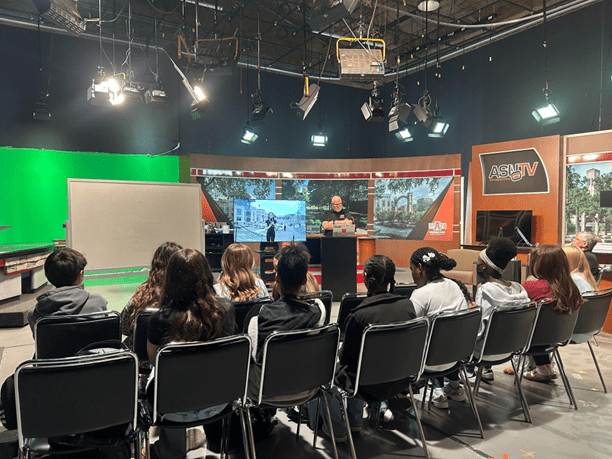
Nettleton BRIDGE program students presenting and watching their final video projects about Nelson Mandela and Zodwa Dlamini. Photo by Mia Young.

JONESBORO, Ark.- The Nettleton BRIDGE program introduces middle school students at Nettleton Junior High to the learning environment of a college student by teaching them about multimedia journalism in the School of Media & Journalism.

The Nettleton BRIDGE program began as a way to help Nettleton Junior High students experience what it is like on a university campus, so they can imagine themselves as a student at Arkansas State University or any other university. Many first-generation college students struggle to imagine college life.

Chris Moss, principal of Nettleton Junior High, contacted Gina Houge, associate dean for the College of Liberal Arts and Communication, because he wanted to target his eighth-grade students young enough to benefit from an experience that could encourage them to become college students. Last year, the program began by bringing in a small group of Nettleton students who were interested in multimedia journalism, especially the media aspect.

“I mean, that’s what students know, right? They have their phones, and they’re engaged in media constantly,” Hogue said. “But to get an experience within an academic field was what Mr. Moss wanted them to experience.”

Hogue and Moss also wanted to add a historical component to the program, as they are both passionate about history. But last year’s pilot program focused on building the students’ multimedia journalism skills, and they were unable to build out any historical component. Jonathan Reaves, instructor in the school of media and journalism, played a critical role in working with the students and developing their multimedia journalism skills.

“The first year of the program (last year) was a challenge in that we were developing a program from scratch,” Reaves said. “In the first year, we had to decide which media we wanted to use.  We primarily focused on video packages, and I have been working on audio podcasts separately.  I expect we will incorporate more audio podcasting next year.”

The program changed significantly from the first year to the second. Last year, the group of students interested in media activities merged with the group who were interested in STEM activities. This meant some Mondays, the group would work on multimedia projects and other Mondays, they would work on STEM projects.

This year, the two groups remained separate, and they focused on adding a historical component along with learning the elements of writing, audio and video.

“So we wanted to continue with street talks, and we wanted to expand and add the audio component in so they could do more audio editing. Then Alina and Jonathan wanted them this semester to do an actual video report that encompassed all of these elements of interview, audio and also video,” Hogue said. “To build in the historical component, we wanted students to be able to meet people from many places around the world and learn about the culture in other places and to interview people, so that they’re doing their research, ’cause when you research like a journalist, you’re researching like a historian.”

Throughout the last year, students completed several multimedia projects based on what they learned about different historical topics in the Nettleton BRIDGE program class.

One of the first things Alina Sakayeva taught the students about was her hometown of Kazan, Russia. Sakayeva talked about her family traditions, the food they eat and the relationship between her and her family. She showed them some of the historic buildings and contemporary athletic facilities where they host global soccer matches, and taught the students about the ancient culture and the traditions there.

“The students sat on the edge of their seats, listening and looking at the images, and watching the videos of the cultural dancers in Kazan, conveying the history of that region of the world to these young people, these eighth graders, from Nettleton Jr. High School,” Hogue said.

At the end of the nine weeks, the students created their video story about Kazan and something from Sakayeva’s culture they were interested in, and then presented it to the class.

“The Kazan video (was my favorite), it gave us a lot of freedom to do whatever with the video, and it was super fun to learn about,” Brylin Smallman, eighth grader in the Nettleton BRIDGE program, said.

During the second nine weeks, the students learned about the Pine Ridge Indian Reservation in South Dakota. They also individually created videos on the topic using interviews with Alice Phelps, a former educator on the reservation, and their own research.

During the third nine weeks, they read “The Story of Nelson Mandela” by Floyd Stokes and learned about him, and Zodwa Dlamini, who was in his administration in South Africa and who brought several school districts together there. The students also interviewed Dlamini over Zoom.

For their final projects in the fourth nine weeks, the students spent time in the K-labs learning about audio production and editing their videos about what they learned from their reading, their research and the interview with Dlamini.

Not only are the students learning audio, video, storytelling and a little bit about history but they are also learning life lessons they will carry with them throughout their lives.

“(I learned) to be open-minded. I wasn’t very open-minded at the beginning, and now I’m just like ‘OK, this is what’s going to happen, and that’s OK,’” Fielder Franks, an eighth grader in the Nettleton BRIDGE program, said. “Sometimes life happens, and it doesn’t go your way, and sometimes that’s just how it works, and so, you’ve just gotta be OK with that and move on.”

Every Monday, the group of 12 students would meet in the TV studio in the A-State College of Media and Journalism for two hours. This means these students would be missing three class periods and would be responsible for making up the classwork they missed. To be in the BRIDGE program, the students have to meet certain requirements, like having good grades (because they miss a lot of work) and not having any behavioral issues at school.

Karley Barnes incorporates multimedia elements into her EAST class, which each of the students attends. Barnes, an A-State alum, also travels with the students to and from the A-State campus and gives students a participation grade based on whether or not they came out and did their best.

“I think it benefits them because they get out of the classroom, they get to be challenged. It might be kind of taboo to say, but public school education is very watered down, and it’s not watered down out here,” Barnes said. 

Click to View!

Next year, the program will see a new group of eighth graders with many of the same and many different projects. Each year the students move up in school, the program continues to support them, but they have less time to visit campus. Reaves and Hogue are still excited for what next year will bring, even though the current eighth graders may not be on campus as much next year as they are now.

“I would tell these students to stay curious, keep working on their editing skills and be proud of what they have done,” Reaves said.

The Nettleton BRIDGE program does not just give students a chance to learn and improve their media skills, but “to help them, to inspire their learning, and to find their pathway in life. That’s the goal,” Hogue said.


City Trolleys Offer Free Transportation to A-State Students

Story by DDNS Reporter Kinley Rainwater

A blue trolley-style bus parked at the Jonesboro City Hall building. These buses offer transportation services using the GoJo Transportation System. Photo courtesy of the City of Jonesboro website.

JONESBORO, Ark. — The City of Jonesboro’s new GoJo Transportation System provides a convenient service to Arkansas State University students, offering free, campus-wide transportation. However, limited outreach to students has kept many from using the service.

The new GoJo system, previously JET, provides service to A-State and the surrounding Jonesboro area. It features six routes, ranging from on-campus hotspots to countless places in the city. The new Let’s GOJO! The app and website provide a map of all stops and routes to help users locate the nearest available transportation, as well as live tracking of all buses and trolleys.

The service is free to students with a valid student ID, providing an accessible alternative to driving or walking.

One of the most notable features of the system is the new Trolley-style buses. These vehicles provide classic aesthetics with modern functionality, which gives students a comfortable ride that is also more visually appealing than traditional transportation options.

A red trolley-style bus parked in front of the Arkansas State University Welcome Center. Photo courtesy of the City of Jonesboro website.

City officials and transportation coordinators said GoJo is meant to connect residents, visitors and students to the city of Jonesboro through expanded connections throughout the city, including A-State.

Despite the advantages to students, GoJo is relatively unknown amongst them. International student Boaz Muteba said she followed the news surrounding the new system.

“In the fall of 2024, when public transportation options were expected to increase, I was one of the individuals who participated in the meeting to get more buses,” Muteba said. “Recently, when the idea took shape, I spotted the bus on campus and even saw it featured on Instagram. Unfortunately, I never got the chance to utilize it.”

The system’s impact goes beyond convenience. By encouraging students to use public transit, Gojo supports sustainable efforts and accessibility for those without personal vehicles and eases parking demand that comes with a growing campus.

As Jonesboro and student enrollment at A-State continue to grow, GoJo presents an opportunity to strengthen connections between the city and it’s academia scene. However, its success will depend on public awareness of this new system.

Rice in Schools plants seeds of learning statewide

Story by DDNS Reporter Jerry Don Burton

Schools across Arkansas are learning to embrace the natural state’s top crop as the Rice in Schools program pilot run continues.

The Arkansas Rice in Schools program, launched by the Arkansas Department of Agriculture in collaboration with Arkansas Rice and USA Rice, is an initiative to teach students how to cook with rice and educate them on the significance of the grain.

Leslee Tell, the farm-to-school coordinator for the United States Department of Agriculture, directs the program. She said Rice in Schools will teach students where their food comes from.

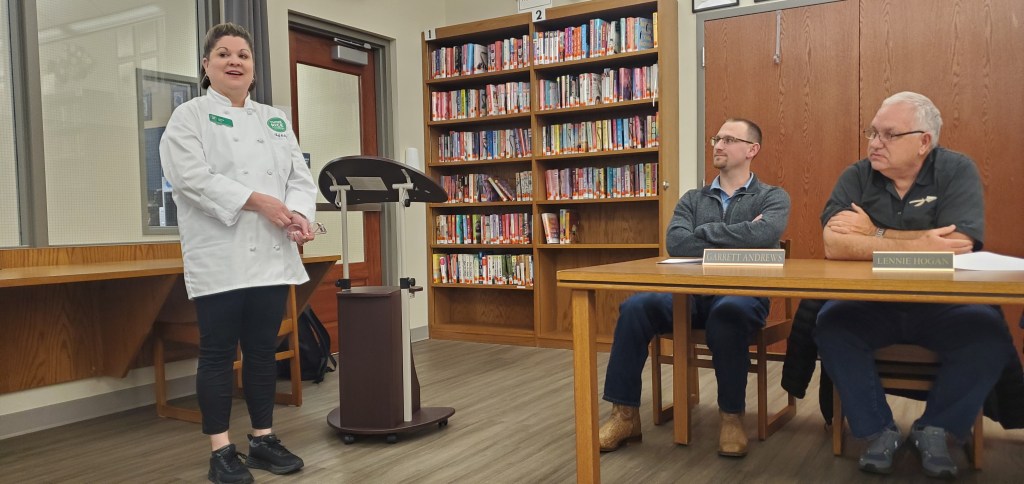
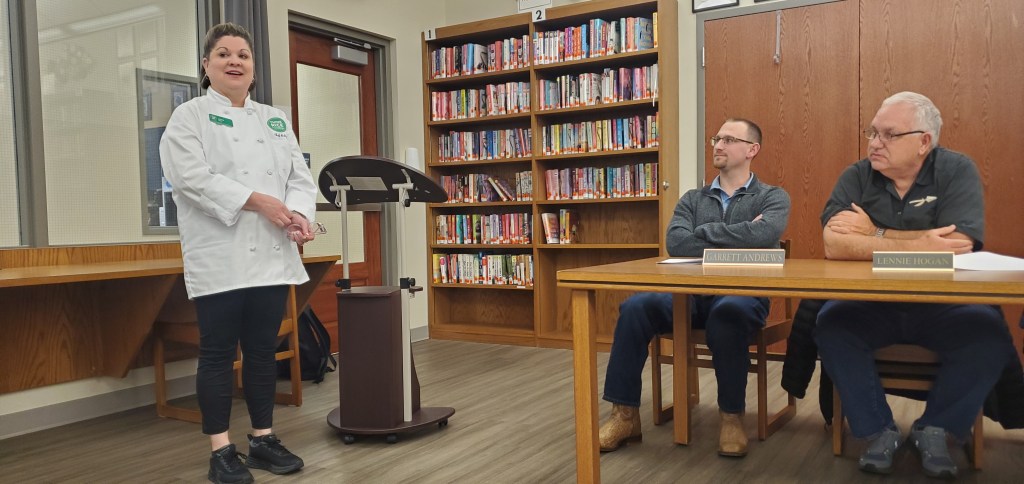
(Left) Leslee Tell, farm-to-school coordinator for the United States Department of Agriculture, describes the Rice in School Program to the Nettleton School Board at a March 17 meeting. According to the USDA website, the program, which is in a pilot phase, gives schools the tools to serve locally grown rice in healthy meals. PHOTO COURTESY OF JERRY DON BURTON

“Our goal is simple, increase the use of Arkansas-grown rice in schools, while helping students learn about agriculture, nutrition and where their food comes from,” Tell said in a YouTube video introducing the program. “This program is about more than just meals, it’s about connecting students to Arkansas agriculture and supporting our local farmers.”

Arkansas Governor Sarah Sanders developed the program in fall 2025, following the transition of nutrition programs to the Arkansas Department of Agriculture.

In December 2025, the Arkansas Rice Research and Promotion Board approved $15,000 in funding to support the program’s implementation. These funds provided schools with equipment to encourage the usage of Arkansas rice in their menus.

Sanders said the new program will teach students how farmers use rice to feed families around the world. She said students will use food made in Arkansas to develop healthy eating habits.

“Rice isn’t just part of Arkansas’ economy; it’s part of who we are,” Sanders said in a press release published Nov. 13, 2025.

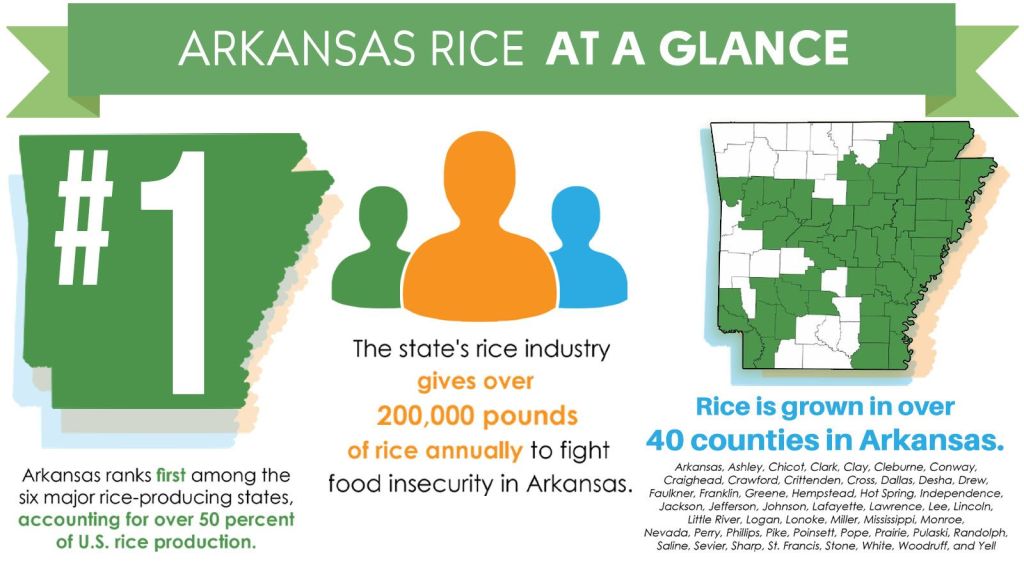
Arkansas is the largest rice-producing state, accounting for more than 40% of rice production in the United States, according to Arkansas Rice. Tell said a majority of this rice is produced in Arkansas’ northeast region. 

A graphic presents quick facts about Arkansas rice production. Arkansas is the largest rice-producing state, accounting for more than 40% of rice production in the United States, according to Arkansas Rice. GRAPHIC COURTESY OF ARAKNAS HOUSE OF REPRESENTATIVES

Almost 20 Arkansas schools and districts are scheduled to participate in the program’s pilot phase, which began in February at Ward Central Elementary in Cabot, Arkansas. The pilot will wrap up in May at Forest Park Elementary in Little Rock.

As part of the program, Tell travels to participating schools with a team to involve students in cooking demonstrations and interactive educational lessons. She also introduces meals with local rice to school menus and trains cafeteria staff in preparing them.

On April 9, Tell traveled to Newport, Arkansas, to introduce the program to students at Newport High School.

Leanne Bradley, the family and consumer science teacher at Newport High School, said Rice in Schools was a beneficial experience for her students. 

Bradley said rice’s significance to Arkansas demonstrates the program’s importance.

“I think everybody is aware that if you don’t take care of what you have, you can lose it,” Bradley said. “(Rice) is something that we have that not every other state has.”

Bradley said her food production and culinary students passed out stir-fried rice samples Tell made for elementary students. After sampling different meals made using rice, students placed stickers on a bulletin board to indicate how much or little they enjoyed the meals.

Tell said they compile student opinion data from every participating school. Then, in June, she said they will analyze the data to determine which recipes students liked most and least and make appropriate changes.

Bradley said the students greatly enjoyed the Rice in Schools program. She said her students cooked with rice before, but Tell’s contributions provided them with new ways to use the grain.

The family and consumer science teacher said she appreciated how the program helped her students realize how much rice Jackson County, where the Newport School District is located, produces.

According to the 2022 USDA Census of Agriculture, Jackson County produced almost 80,000 acres of rice, second only to soybeans.

“So just for the kids to realize this is a huge staple that Arkansas provides for the state, and it’s easy and it does not have to be Minute Rice,” Bradley said. “It really doesn’t take that much longer to actually cook your own rice and the quality is just so much better.”

Julie Isbell, superintendent at the Harrisburg School District, where Tell visited in March,

also said she loved how the program connected her students with local rice production.

Poinsett County, where Harrisburg is located, produced about 90,000 acres of rice, according to the same USDA census.

Tell also brought the program to the Nettleton School District in March. Nettleton School Board Vice President, Donnie Hauge, said he supported the program and thinks helping kids learn cooking skills and understand where their food comes from is an important undertaking.

Wes Ward, Arkansas secretary of agriculture, said the program emphasizes how Arkansas’ dominance over rice production could be used to support students and education. He said the program is a good step toward getting Arkansas to buy and use more of its own rice.

Bradley said rice is also versatile and can be stretched further than other ingredients. She said this is especially important for those who cannot afford as much food.  

“It’s a very quick and easy staple that you can keep in your pantry and it can go for a wide variety of different types of food,” Bradley said. “If your family is financially disadvantaged, you can pair beans and rice together, and that actually makes a complete protein.”

Bradley said her favorite part of the program was how it helped students interact with and cook rice in different ways than they’re used to. For some, Bradley said this program represents an introduction to rice as an ingredient.

However, the family and consumer science teacher said Tell’s visit to Newport was not without challenges. 

Tell was scheduled to return to Newport High School on April 10, but Bradley said she fell ill and missed the second day. 

“She could have talked so much more and given the information about it. She did not get to go into depth like she would at other places,” Bradley said.

In the time they did spend together, Bradley said Tell was a very energetic and fun, but professional person to work with.

“I think she’s phenomenal and I liked having the opportunity,” Bradley said. “I hope that this is something that takes off and is able to be utilized in schools across Arkansas.”

Tell said the student feedback, recipe evaluations and participation data gathered in the pilot will refine the program and prepare it for statewide expansion.

In the final iteration of the program, Bradley said she would like to see taste testing and activities for all grade levels.

Tell said the program continuously searches for and develops new and more effective methods of engaging schools.

Bradley said the school will continue building on the foundation laid by Tell and the Rice in Schools Program. She said the school’s student-run restaurant, the Hungry Hound Cafe, started implementing rice meals based on what they learned from the program.

Tell said she is a teacher at heart and loves to cook, so working with students to prepare recipes in the classroom was a great combination.

“We are bringing Arkansas-grown rice to schools across the state,” Tell said. “One plate at a time.”
More information about the Rice in Schools program may be found on the Arkansas Department of Agriculture’s website. Program organizers also created a digital guide featuring rice data and recipes from USA Rice.

Nettleton School Board discuss educational rice program, effective AI usage

Photos and Story from DDNS Reporter Jerry Don Burton

March 18, 2026

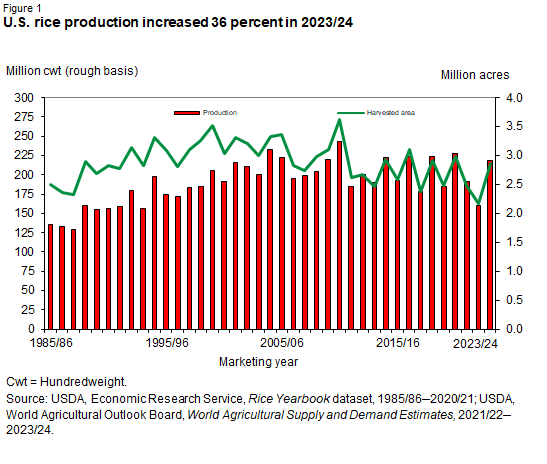
Bar graph depicts U.S. rice production (red) and harvested area (green) from the years 1985 to 2024. Rice production increased by nearly 1 million acres between 2023 and 2024. Courtesy of the United States Department of Agriculture.

The Nettleton School Board heard presentations on an initiative to educate students about rice and effective AI use in classrooms at its monthly meeting.

Rice in Schools Pilot Initiative

(Left) Leslie Tell, farm-to-school coordinator for the United States Department of Agriculture, explains the Rice in School program at the Tuesday, March 17, Nettleton School Board Meeting. According to the USDA website, the program, which is in a pilot phase, gives schools the tools to serve locally grown rice in healthy meals. Photo by Jerry Don Burton.

Leslee Tell, farm-to-school coordinator for the United States Department of Agriculture, addressed the board at the meeting Tuesday, March 17, to provide an overview of the Rice in Schools program.

Tell said the initiative aims to provide schools with the resources to serve local rice and educate students about the significance of rice in Arkansas. She said Arkansas Governor Sarah Sanders saw the importance of rice in the state and developed the initiative in fall 2025.

“So her idea was that, number one, students know where their food is coming from. Number two, that it’s local food as much as possible,” Tell said. “If we’re growing this much rice, then we should probably be serving rice and teaching kids to love rice as well.”

According to the USDA, the United States accounts for less than 2% of global rice production, but ships 5% of global exports. Arkansas is the largest rice-producing state, accounting for more than 40% of rice production in the U.S.

Tell said a majority of rice production in Arkansas is concentrated in the state’s northeast region. 

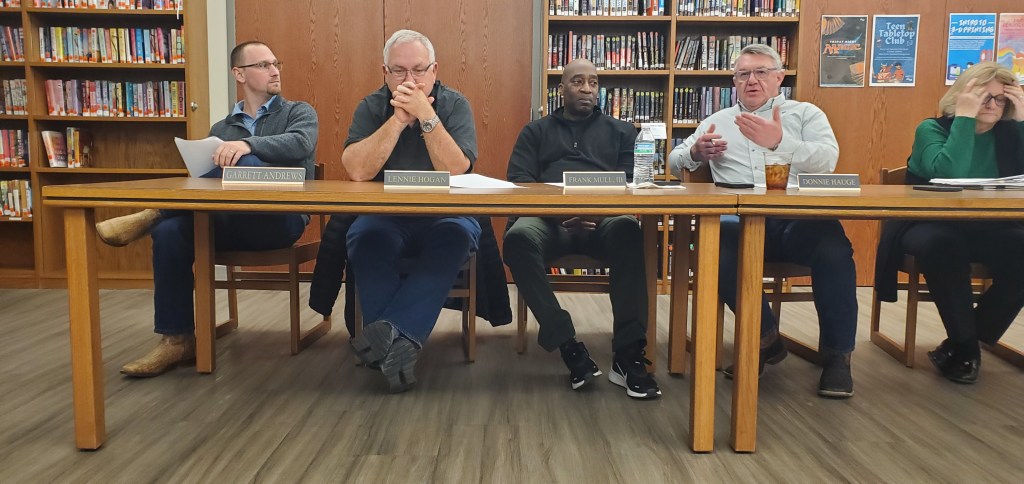
(Third from left) Donnie Hague, Nettleton School Board vice president, asks USDA Farm-To-School Coordinator Leslee Tell a question about the Rice in Schools program. Photo by Jerry Don Burton.

Donnie Hauge, Nettleton School Board vice president, said a program for helping kids understand where rice comes from and how to cook with it is a great idea.

The farm-to-school coordinator said about 20 schools have signed up for the program. 

Participating schools will introduce classroom lessons on Arkansas agriculture, participate in hands-on cooking demonstrations, train cafeteria staff and include local rice in school meals at least once a month.

Tell said schools may also engage in taste tests and interactive experiences. She said the program is continuously expanding and introducing new ways to highlight Arkansas rice. 

One such development is the creation of a cookbook containing 50 rice recipes for students to take home and prepare with their family. 

“In the food banks and blessing boxes, there’s a lot of rice,” Tell said. “ If you have kids wanting to eat rice at school and they’ve made it at school, they get their recipe book, and they can go home, and maybe that bridge can happen between the parent and the child, and we could encourage that.”

Tell said the program also engages with the current national interest in eating real food. 

“You can’t get any more real than this,” Tell said. “We’re eating real food, we’re eating real rice, real chicken, real vegetables and we’re making it right here from scratch, in front of the kids.”

Currently, the initiative is in a pilot phase. Tell said feedback from participating schools will be used to improve the program and shape future expansions.

Effective AI Usage in Classrooms

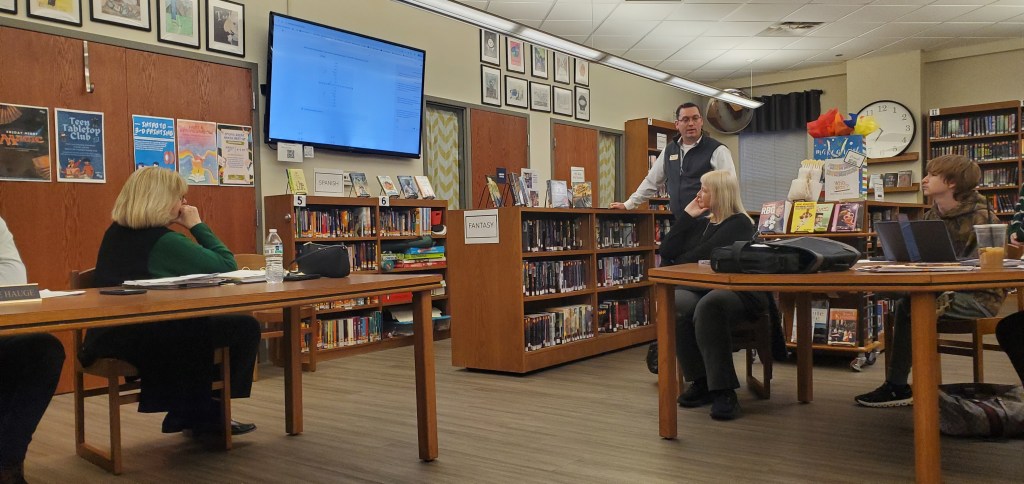
Following Tell’s presentation, the Nettleton High School principal, elementary school principal and three junior high school students addressed the school board to explain how they’ve implemented artificial intelligence in their respective fields.

Philip Cook, Nettleton High School career and technical academy principal, said he and other educators use AI to increase productivity and generate content. He said he uses AI to outsource elements of his workflow. 

(Right) Philip Cook, Nettleton High School career and technical academy principal, explains how the high school uses AI coaching assistant Edia to those in attendance at the Nettleton School Board meeting. Cook said AI, when used properly, helps educator lessen their workload. Photo by Jerry Don Burton.

“What we do at NHS right now is we have teachers that use it to generate worksheets. We use it for coaching students and to help with our summative evaluations,” Cook said. “Then also, to look at and align some of our different curriculum with each other.”

Using the Arkansas academic standards and ATLAS achievement level descriptors for geometry as an example, Cook demonstrated how AI can be used to parse and summarize dense information. 

The high school principal said projects like creating curricula that meet various standards, something which could take all summer to complete, are achievable in a single weekend with AI like ChatGPT. 

Cook said Nettleton High School is also incorporating Edia, an AI coaching assistant, in the classroom.

Despite embracing AI, Cook said education will always need a human element. 

“That’s what we’re trying to do in our critical algebra is not just turn it over to the AI–because then we become a facilitator–but use that where it’s appropriate to support that learning and then go ahead and let the teacher break kids into small groups, interact with them, give them those alternative learning methods,” Cook said. “I think it takes a good marriage of both to really be as effective as we can.”

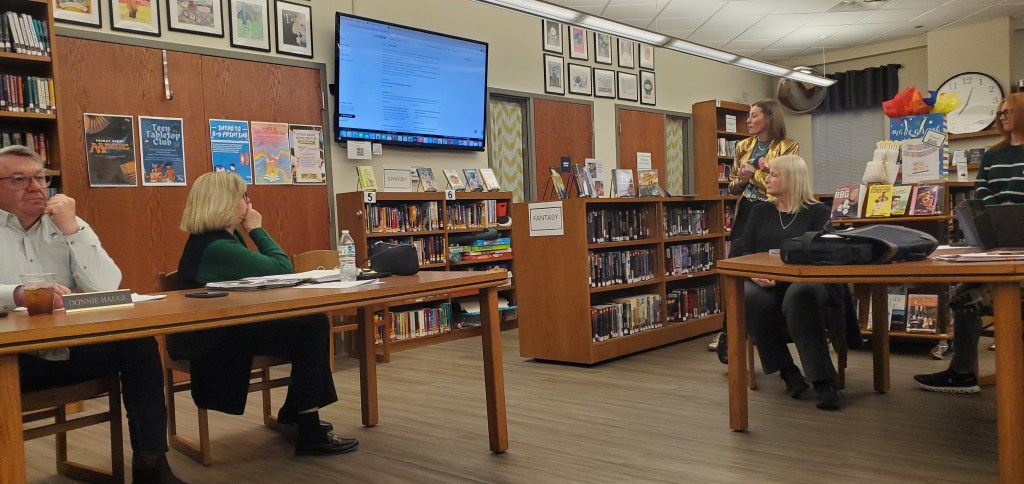
University Heights Elementary Principal Sarah George said she uses Upraiser, an AI software designed to enhance teacher evaluations, in her administrative duties.

(Right) Sarah Geoge, University Heights Elementary principal, explains how she uses Upraiser AI when giving teacher evaluations. She said she uses Upraiser to provide actionable feedback to teachers. Photo by Jerry Don Burton.

“This platform has really helped, because it’s narrowed down the feedback that is given to teachers because it’s directly aligned to standards,” George said.

Garrett Andrews, the newest member of the Nettleton School Board, asked George if the AI she uses is accurate. George said Upraiser is mostly accurate, but agreed with Cook that a human element will always be necessary.

The elementary school principal said she is transparent with teachers and lets them know when the feedback they receive is partially AI-generated.

After George’s report, Nettleton Junior High School students Collins Baker, Jace Stegall and Brik Hogan presented a slideshow to detail how they use AI.

Baker said she learned how to use AI in 2025 and mostly utilizes it as a search engine, like Google. She said, while a helpful tool, AI can nonetheless introduce biases in its responses.

Stegall said he uses AI for coding help and in certain class assignments, specifically one project using drones to map hazardous conditions in Jonesboro.

“We want to know how to use it right, how to use it responsibly and how to use it for our school work instead of cheating,” Stegall said.

Hauge said the students’ presentation taught him how they use AI not for short answers or cheating, but productively and responsibly.

Other business 

In other business, Athletics Director Tommy Raffo announced several upgrades and additions to the athletic facilities:

  • New track and field sand pit
  • New baseball bullpen
  • New televisions installed near concession stands
  • New and updated spirit banners installed in gym

Raffo also said he was proud of the boys and girls basketball teams, who were seeded fourth and second in the state, respectively.

Finally, the Nettleton High School Choir performed three songs ahead of the school’s production of “Hairspray.” Showings will be held April 24 and 25 at 7 p.m. and April 26 at 2 p.m. More information may be found on The Raider Spotlight’s Facebook page.
The next school board meeting will be held at 6 p.m., April 21, at the Nettleton Central Office.

West Memphis Three attorneys participate in panel discussion

DDNS Story by Jerry Don Burton

(From left) Jeff Rosenzweig and Paul Ford listen as Dan Stidham speaks during the West Memphis Three panel discussion. All three men were attorneys involved in the defense of the West Memphis Three and were invited by the Arkansas State University Sociology and Criminology Association to attend the panel. Photo by Jerry Don Burton.

JONESBORO – Attorneys who defended three freed men convicted as teenagers, known as the West Memphis Three, spoke in a panel discussion at Arkansas State University to share insight, advice, and theories regarding the case.

The highly publicized and controversial case originated from the murders of three boys in West Memphis, Arkansas, in 1993. Damien Echols, Jessie Miskelley Jr., and Jason Baldwin were convicted of the murders, despite questionable evidence.

The A-State Sociology and Criminology Association (SCA) hosted the public panel on Thursday, Nov. 6, in the Reng Student Union Auditorium.

Stacy Dewald, faculty co-adviser for the SCA, said she wanted the event to bring attention that the criminal justice system is flawed, show wrongful convictions exist and offer new perspectives for those who still think the West Memphis Three are guilty. She said she believes the panel discussion achieved this goal.

The three attorneys who participated in the panel, Jeff Rosenzweig, Paul Ford, and Dan Stidham, began the discussion by detailing their connection to the case. Rosenzweig was on the team responsible for releasing the West Memphis Three in 2011, Ford was on the original defense team for Baldwin, and Stidham represented Miskelley as an attorney.
Ford said this case highlights the power of confirmation bias.

“Once you have this notion, all new information is going to be sorted to reaffirm whatever that notion is. If your first notion is ‘they’re guilty,’ you’re going to hold on to that,” Ford said. “So when you meet people who are less than 40 years of age and their first involvement in this proceeding was to watch the HBO documentaries, they can’t believe they were convicted. Because that was the first story that they heard, but that was not the first story that people heard in 1993.”

Ford said the citizens of West Memphis needed somebody to blame so they could feel their community was safe.
The existence of multiple potential suspects other than the West Memphis Three contributes to the controversial nature of the case and is the topic of many ongoing debates.

The three panelists said they are confident the West Memphis Three are innocent and have their own theories as to who committed the murders.

Rosenzweig said one valid suspect is “Mr.Bojangles,” referring to a bleeding man who was seen entering the nearby Bojangles restaurant about two hours after the boys were reported missing. Witnesses said the man was mentally disoriented and entered the women’s restroom. The next day, police took blood samples from the restroom that were later lost.

Ford said he has always been suspicious of Chris Morgan, a teenager who unexpectedly traveled to California with Brian Holland, another teenager, four days after the bodies were found. During questioning, Morgan said he had a history of drug and alcohol use and experienced blackouts and memory lapses. He said he might have killed the victims, but recanted this statement. This recanted statement was debated in the trial, but was found inadmissible as evidence.

Stidham said he has a suspect, a serial killer, whom he can place in the vicinity of the murders. He said he will explore the lead further and hopefully have more information to present before he retires.

Prevalent media coverage represents another element that generated controversy for the case.

Ford said national attention in the case, specifically from the media, was a double-edged sword.

“To have a CNN truck pull up outside of the courthouse in Corning, Arkansas, that’s like finding Bigfoot,” Ford said. “It was a big deal. Everywhere you went, there were reporters, cameras, people wanting interviews, producers from talk shows.”

Ford said if he could do anything differently in the trial, he would trust the media less. However, without a relationship with the media, he said, there would never have been a documentary and the West Memphis Three would still be in prison.

Dewald said the 1996 HBO documentary, “Paradise Lost: The Child Murders at Robin Hood Hills,” saved Echol’s life. Echols was the only teenager sentenced to death in the trial.

The case is also associated with the Satanic panic, due to the prosecution’s assertion that the children were murdered as part of a Satanic ritual. The Satanic panic was a social panic that began in the 1980s and continued throughout the late 1990s, involving widespread cases and accusations of Satanic ritual abuse.

Rosenzweig said some still believe the West Memphis Three are guilty for a number of reasons, ranging from having personal connections to being ill-informed.

“You’re never going to convince everyone, no matter what,” Rosenzweig said. “You just have to move on and go to the next person.”

Stidham said the use of the Alford Plea in the case is a common source of confusion that many people struggle to understand.

In 2011, the West Memphis Three entered an Alford Plea, meaning they pleaded guilty while maintaining their innocence. Judge David Laser accepted the plea, which simultaneously freed the men after serving 18 years in prison and put the case to rest.

Rosenzweig said he agrees with Stidham that the Alford Plea is a confusing part of the case and is controversial in its own right. Rosenzweig said if the state really thought the West Memphis Three killed the boys, they would still be in prison.

Ford said if the prosecution felt the teenagers actually killed the three eight-year-old boys, they should feel ashamed for letting them go free.

“Why would you ever agree to let people you think killed eight-year-olds walk free?” Ford said. “That, to me, is the greatest evidence that they really didn’t believe it.”

Scott Ellington, the prosecuting attorney at the time, said he recognized the compromise was not ideal. Still, he said, it gave the state the guilty plea it wanted and the defendants the ability to continue asserting their innocence.

“It certainly was not a perfect resolution to the case for the state, but it was much better than having three trials, trying to convince 36 jurors of the defendants’ guilt using old evidence, failed memories, changed minds, dead witnesses and the parents of two of the victims who now say they believe the defendants are innocent of the crimes,” Ellington said in a 2011 article from the Thomas Jefferson School of Law.

Rosenzweig said procedural mechanisms, which are rules designed to secure a fair and consistent application of due process, have not improved in Arkansas since the original West Memphis Three trial. He said forensic advancements make scientific evidence much more precise, but misunderstandings still persist and proliferate on social media.

Stidham said documenting is important, and interrogations should be recorded in their entirety. Ford said what he found egregious about the case was that adolescents were questioned by law enforcement without a parent present or knowledge.

The discussion ended after the panelists advised the audience on what to do if they are ever falsely accused of a crime. Stidham and Ford said to stay quiet and get a good lawyer, and Rosenzweig said to recognize that the exoneration process takes time.

Dewald, who is also an assistant professor of criminology, said planning for the event began in August, when A-State students Lesleigh Sullivan and Anna Hartley expressed an interest in the West Memphis Three for their honors project.
Dewald said she feels a connection to the West Memphis Three because she grew up around the same time and shared similar interests in music and books.

“I kind of felt connected to them, but what was different is they grew up in the South, I grew up in the North,” Dewald said. “So it wasn’t so frowned upon in the North to like Metallica and Stephen King.”

The assistant professor of criminology said the case remains nationally relevant because DNA evidence remains to be tested and many questions remain unanswered. She said community interest endures because many people feel a local connection to the case.

Stidham said interest in the case will persist for many years.

“People are going to be talking about this case in 300 years, like we talked about the Salem witch trials,” Stidham said. “It’s essentially the same thing.”

Dewald said she didn’t think the panel would draw as many attendees as it did. Nevertheless, she said she appreciates the interest and hopes the event raises awareness and helps dispel some myths surrounding the West Memphis Three and the criminal justice system.

On Aug. 1, 2025, new DNA testing for evidence from the original crime scene was ordered by Crittenden County Circuit Court Judge Tonya Alexander. At the time of writing, however, no other updates have been announced.


-30-

A-State Media Students Win 60 Awards at State Conference

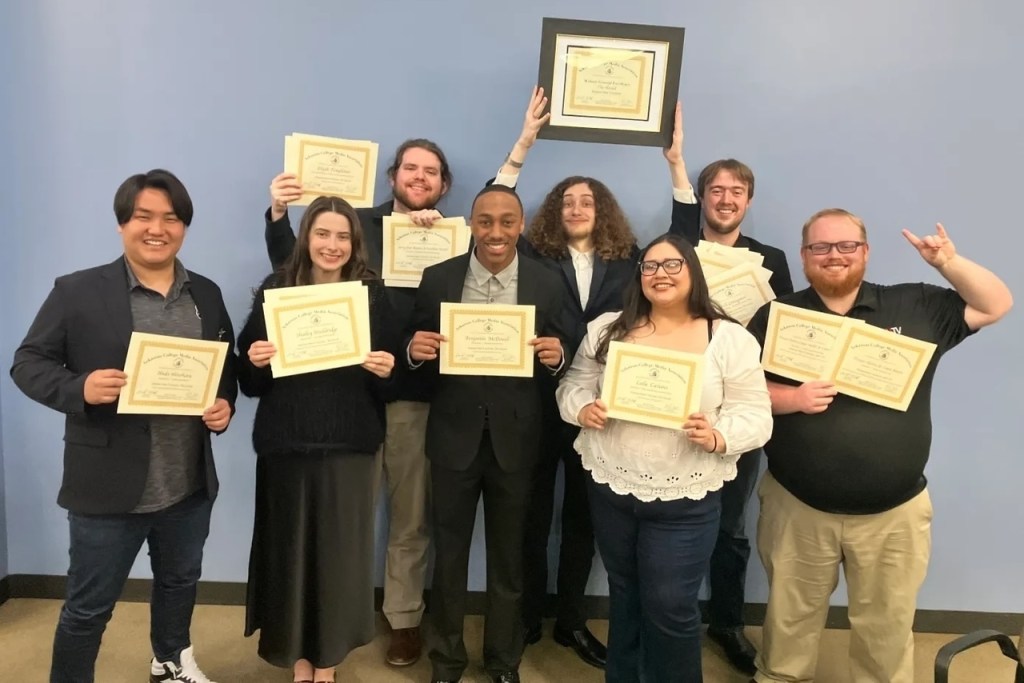
Students (from left) Ibuki Hinohara, Herald photo editor; Shailey Wooldridge, Herald news editor; Elijah Templeton, Herald life editor; Benjamin McDowell, Herald staff writer; Jerry Don Burton, Herald editor-in-chief; Laila Casiano, Herald opinion editor; Will Livingston, Herald sports editor; and Tristan Harlen, ASU-TV station manager, celebrate with their awards received at ACMA.
BENTONVILLE, Ark. — Arkansas State University’s student media outlets from the School of Media and Journalism earned 60 awards at the Arkansas College Media Association’s annual spring conference and awards banquet.  

The Herald, A-State’s student newspaper, won 52 awards, including Website of the Year and honorable mention as Newspaper of the Year in the General Excellence categories.  

“This is exciting!” Herald adviser Sandra Combs said. “The students worked hard and it showed. They had big smiles and great hope that they would come away with a big win.”  

Retiring after 17 years of service to A-State, Combs has served as adviser to The Herald since 2015. Gretchen Hunt of NEA Premiere Magazine assisted as Herald adviser in the fall 2024 semester.  

“The Herald staff members are already putting into practice real-world journalism skills as they produce a weekly newspaper and maintain a website and social media accounts, and they are doing it very well,” Hunt said. “They are already learning that having multiple skill sets is advantageous and provides them with the ability to present the news in a variety of forms. Obviously, I’m very proud of them for the work they do and the accolades they have earned.”  

ASU-TV and Red Wolf Radio won four awards each. ASU-TV adviser Dustin Sullivan also praised the student work.  

“We are proud and honored that students involved with ASU-TV and Red Wolf Radio were recognized for their hard work and efforts in providing professional and entertaining content for our viewers and listeners,” Sullivan said. “We thank ACMA for the opportunity to have our students recognized as award winners.”  

Students attending the conference hosted by Northwest Arkansas Community College went through breakout sessions covering media job opportunities, sports reporting, audio reporting/producing, the business beat, magazine visual storytelling, entertainment, breaking TV news in digital formats, yearbook publication, and magazines in the digital age.  

Award winners included:  

Laila Casiano of Paragould won first place for newspaper election/political coverage, newspaper headlines, online arts and entertainment article, social media breaking news, and social media promotion; second place for audio podcast, online election/political coverage, online meeting/speech coverage, editorial page layout and online feature writing; third place for in-depth news and editorial page layout; and honorable mention for online newswriting.  

Shailey Wooldridge of Caraway won second place for newspaper meeting/speech coverage, newspaper newswriting, online breaking news (within 24 hours), online election/political coverage, and online personality profile; and third place for online breaking news (within 24 hours) and online meeting/speech coverage.  

Caroline Averitt of Jonesboro won first place for newspaper meeting/speech coverage and online headlines; second place for newspaper personality profile, in-depth news, and social media promotion; and honorable mention for newspaper feature page layout.  

Former editor Rachel Rudd of Searcy won first place for online news photo, second place for newspaper election/political coverage, newspaper feature writing, and online feature writing, as well as third place for online personality profile.  

Editor-in-Chief Jerry Don Burton of Vanndale won first place for newspaper meeting/speech coverage; second place for in-depth news; and third place for editorials/commentary/blogs and online breaking news (within 24 hours).  

Anna Cox of Paragould won first place for personality profile and sports feature writing, and second place for online breaking news (within 24 hours), and newspaper meeting/speech coverage; and third place for sports page layout.  

Will Livingston of Hot Springs won first place for sports feature writing; second place for sports feature writing; and honorable mention in online editorials/commentary/blogs.  

Shelby Russom of Paragould won second place for newspaper news photo, online news photo, and audio podcast.  

Elijah Templeton of Jonesboro won second place for newspaper review writing and honorable mention for online arts and entertainment review and online arts and entertainment article.  

Abigail Leggett of Jonesboro won first place for online sports photo and third place for newspaper sports photo.  

Allie Carson of Jonesboro won third place for online headlines, and Jack Douglas of Paragould won third place for online news photo.  

Ibuki Hinohara of Nagano, Japan, won second place for online sports photo, and Benjamin McDowell of Wynne won second place for newspaper sports story.  

Luke Morse of Jonesboro won first place for best specialty music show, while MacKenzie White of Trumann won first place for best radio documentary.  

Emily Pilkington of Clinton won second place for best radio documentary. and Christian Sandoval of Jonesboro won second place for best specialty music show.  

ASU-TV’s Tristan Harlen, Cooper Melder and Caton Marsh, all of Cabot, won first place in television sports reporting. Harlen and Marsh also took first place in television sports feature.  

ASU-TV’s Makenzie Cutler of Harrison, Carson Campbell of Jonesboro, Pilkington and Christian Wilcox of Jackson, Tenn., won second place for television political coverage.  

ASU-TV’s Colby Thompson of Conway, Jack Roach of Paragould, Markell McCoy of Clarksdale, Miss., and Mehr Aslam of Garden West Karachi, Pakistan, won third place in television feature.

Applications Open for Hemingway-Pfeiffer Writer-In-Residence Program

PIGGOTT – The Hemingway-Pfeiffer Museum and Educational Center in Piggott is announcing its 2025 writer-in-residence position.

The residency will be for June 1-30, 2025, and includes lodging at a loft apartment over the City Market coffee shop on the downtown square in Piggott.

The writer-in-residence will be able to work in the studio where Ernest Hemingway worked on “A Farewell to Arms” during an extended stay with his wife’s family in 1928. The residency includes a $1,000 stipend to help cover food and transportation.

“The writer-in-residence will be expected to serve as a mentor for a week-long retreat for writers at the educational center,” stated Dr. Adam Long, executive director of the A-State heritage sites.

This retreat will be open to eight to 10 writers from the region. The recipient may be asked to hold one or two readings of his/her work. The remainder of the month will be free to the writer-in-residence to work on his/her work.

Candidates with a Master of Arts or Master of Fine Arts in a relevant field are preferred.

Applicants should send a cover letter, curriculum vitae (CV), and writing sample of roughly 20 pages, in any genre, to Long at adamlong@AState.edu by Feb. 28, 2025.

Questions about the program can be directed to Long. For more information about the museum or lodging (the Inn at Piggott), one may visit Hemingway.AState.edu.

Incomplete applications cannot be accepted. Due to the expected high volume of applications, confirmation of receipt of applications cannot be guaranteed.

The writer-in-residence program is made possible through underwriting sponsorship by Piggott State Bank.

The Hemingway-Pfeiffer Museum and Educational Center, an Arkansas State University Heritage Site, contributes to the understanding of the regional, national and global history of the 1920s and 1930s eras by focusing on the internationally connected Pfeiffer family of Piggott and their son-in-law and regular guest Ernest Hemingway.

This includes drawing on Hemingway’s influence as a noted American author to foster interest in literature and the arts and promote excellence in both.