Tag Archives: NEA Baptist

NEA Baptist Brings Awareness to Heart Health Through Heart Talk

Story by DDNS Reporter Benjamin McDowell
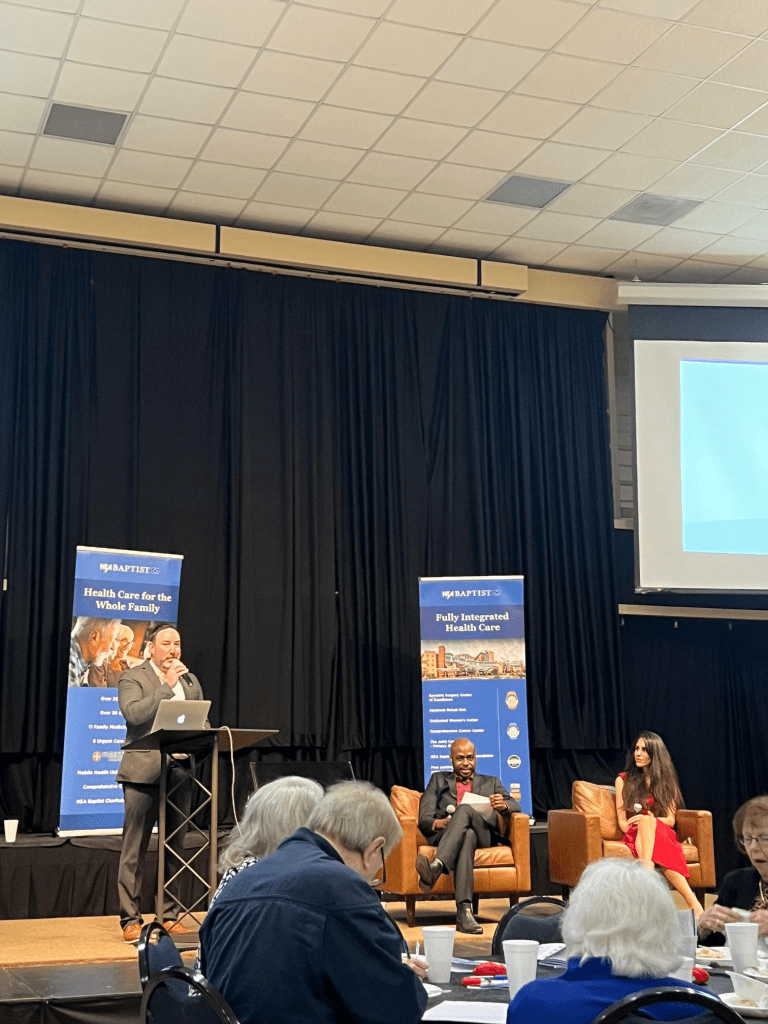
Picture courtesy of Jacob Still.

NEA Baptist hosts programs that promote heart-healthy behaviors through community screenings and educational programs that raise awareness of risk factors and promote healthy lifestyle choices.

NEA Baptist hosted a Heart Talk on Feb. 26, 2026, at Southwest Baptist Church.

Ty Jones, director of marketing at NEA Baptist, said his goal is to create opportunities for community engagement and education.

The organization focuses on community engagement and education through health screenings and risk-factor education. Outreach efforts include digital marketing, terrestrial radio, and television advertisements. Jones said balancing medical accuracy with creativity is crucial.

“As a company, we seek perfection every day, whether or not perfection is ever really attainable,” Jones said. “As human beings, we try to seek that in everything that we do. When you balance that with marketing and making sure you’re staying inside the box — which a lot of people find more difficult than just going with any creative whim — it’s a lot of fun.”

Jones said NEA Baptist always strives to partner with local schools, churches, and organizations to promote heart health and target the next generation of cardiologists.

“The big thing for us is making sure that we’re engaging students at a young age, letting them know not only what clinical health care careers look like — physicians and nursing — but also letting them meet residents to see what that educational track looks like from school to becoming a doctor,” Jones said.

Jones said balancing medical accuracy with creativity in marketing campaigns and materials helps convey heart health information in an engaging and impactful way.

“Understanding the roles in health care that may be behind the scenes — laboratory scientists who run tests to help physicians determine a patient’s root cause, as well as financial, billing, and marketing staff — is also important,” Jones said.

“Our goal at the end of the day is to take care of our community, whether that’s patients admitted to our emergency room, patients seeing primary care providers, establishing a baseline for preventive medicine, or providing free education,” Jones said.

Jones said community impact is measured by individualized patient care and tailoring medical services to each person.
Lena Awar, an interventional cardiologist at NEA Baptist, said it is important to educate people to recognize and not ignore early warning signs of heart disease, such as fatigue, leg swelling, and chest pain.

“Coronary artery disease is very prevalent in this area,” Awar said. “We live in what’s called the Stroke Belt, and part of this talk discusses risk factors that contribute to that, including hypertension, obesity, and a sedentary lifestyle. All of that increases heart disease risk.”

Awar said stress management techniques such as walking in nature, reading, taking a hot bath, or practicing yoga or meditation can improve heart health.

“In our community, recommending smoking cessation is probably the most important thing, followed by getting in those 10,000 steps a day,” Awar said.

Awar said about 50% of health outcomes are genetically inherited and cannot be controlled. However, lifestyle choices can make a significant difference.

“One thing we can control is how we live our lives — diet, exercise, and routine checkups,” she said.

She also addressed misconceptions about heart medications.

“A lot of people think of us as drug pushers who just want to prescribe another medicine,” Awar said. “We wish all our patients could achieve their goals with diet and exercise alone, but sometimes that’s not enough. Some medications, like statins, have a bad reputation, but they save lives. We work with patients to tailor medications so they maintain a good quality of life.”

Oreoluwa Oladiran, a cardiac electrophysiologist at NEA Baptist, said it is important to recognize heart disease symptoms such as chest pain and heartburn, which are often overlooked.

He stressed the need for early heart health management beginning in a person’s 30s and highlighted preventive measures such as maintaining a healthy weight, eating well, and avoiding smoking.

“Heart disease is the most common cause of mortality not only in the United States, but worldwide,” Oladiran said. “In the United States, it kills nearly a million people every year,” Oladiran said.

Oladiran said monitoring blood pressure and blood sugar levels is an effective way to track heart health.

“We see patients in their 30s having heart attacks,” he said. “The earlier, the better. Don’t wait until you’re 40 to establish care with a primary care provider and pay attention to your health. Many of these issues are lifestyle-related, not necessarily medication-related.”


-30-

Female physicians challenge the status quo

Local doctors discuss gender perceptions and career challenges

Delta Digital News Service

By Courtney Edwards | Aspiring Journalist

JONESBORO, Ark. – It’s no secret the medical profession is male dominated. However, women outnumber men in six out of 43 medical specialties in the U.S., according to the Association of American Medical Colleges (AAMC). Those specialties include pediatrics, OB-GYN, ped hematology/oncology, child psychiatry, internal med/pediatrics and geriatrics.

Stereotypes in the Medical Field

When it comes to the stereotype of men pursuing careers as doctors while women go only into nursing, A-State Professor of Philosophy Michele Merritt, PhD, states that although not entirely untrue, the inaccurate notion behind the stereotype could be causing more women to pursue nursing rather than more advanced medical degrees.

“The thing about stereotypes is that they are not entirely false,” Merritt said. “They are overblown and oversimplified depictions of something based in reality. This doesn’t mean that all women ​in the medical field go into nursing, of course. In any case, there is definitely an imbalance. This is changing, but change happens gradually.”

Merritt explained a phenomenon called “stereotype threat.” It involves a prevailing stereotype actually affecting someone’s performance in a specific field.

“So, for example, if you keep pushing the stereotype that girls cannot do math, and girls hear this message, they do not do well in math in school,” Merritt said. “If you instead empower them and build them up, their scores go up.

Merritt says she doesn’t have definitive evidence that’s why more women go into the field of nursing, but believe that the ‘men are doctors and women are nurses’ prevailing stereotype hampers the pursuit of women into field.

“I don’t have any proof that this is occurring in nursing, but my guess is that stereotype threat is keeping women from pursuing more advanced medical careers because many of them don’t believe they are capable.”

Equality During Training

Although men outnumber women in advanced medical practices, it doesn’t mean women aren’t treated equally among them.

Dr. Stacy Wilbanks specializes in wound care at NEA Baptist Hospital in Jonesboro. She said she felt was always treated equally during her training.

“I didn’t feel that I was at any disadvantage for being a female,” Wilbanks said.

Two other female physicians from NEA Baptist also said they never felt they were at any disadvantage, but they also recognize they live in a time of change.

Dr. Lauren Barr, a resident specializing in internal medicine, said she feels lucky to live in a time where she is able to choose to pursue a professional career in medicine.

“I think that medicine traditionally has been a very male-dominated field,” Barr said. “I’m fortunate enough to pursue medicine at a time that’s starting to shift. I do think some of those old attitudes of ‘women are the homemakers. They are supposed to have children’ are still there.”

Barr also said even though these attitudes still exist, they are much less prominent than she originally thought they would be. Considering some of the stories she’s heard from her older colleagues, she said she feels fortunate she hasn’t had to go through some of the things they have.

As an OBG/YN, Dr. Jodi Turano said she felt being a female has actually helped her professionally rather than hinder her. Still, she said she’s experienced some gender discrimination in her career.

“I have had run-ins with certain people post residency that kind of treated me slightly different because I’m a female,” Turano said. “I don’t know if that’s definitely the case, but that’s how I took it.”

The Gender Pay Gap

According to the AAMC, in 2019, women working in medical institutions were still being paid less than their male counterparts. The gender pay gap can be explained by women leading towards careers in lower-paying medical specialties.  Women are also more likely to choose flexibility over higher salaries, especially if they have children.  

“Because I want to spend as much time with my kids, I recognize that I am not going to make as much money as the guy who’s willing to spend every other weekend working extra shifts,” Wilbanks said.

Turano said if women go through the same training as men, the pay gap shouldn’t be there. “We go through the same training as a male physician,” she said. “We shouldn’t be treated any differently.”

Although women still face challenges in the medical field, times are changing. Change is gradual, but as more women enter the medical field, the more represented and equal they feel.

“We are already busting this stereotype mentally, but our practices are slow to catch up,” Merritt said. “I think one thing that we need to be constantly reminded of is that ‘men’ and ‘women’ are terms that describe two gender identities and do not have much (if anything) to do with capabilities or aptitude.”

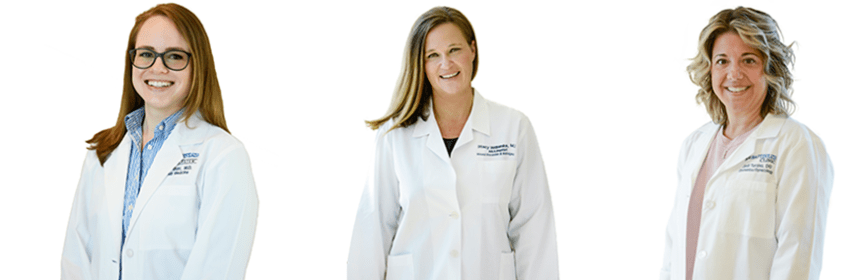
Note: Featured image shows from left, physicians Lauren Barr, Stacy Wilbanks and Jodi Turano.

Trunk ‘r Treat event provides safe Halloween participation

By Yoshika Shibata
Delta Digital News Service

JONESBORO, Ark. – In the shadow of the upcoming Halloween holiday, coronavirus cases continue to surge in Northeast Arkansas.

According to the White House Coronavirus Task Force’s weekly report, Craighead and five other NEA counties remain in the “red zone” for COVID cases.

Craighead was third in the state, behind Pulaski and Washington, with the highest number of new cases over the last three weeks.

However, Halloween celebrations continued despite the rise.

Halloween this year looked a little different in order to keep everyone safe.

After much thought and consideration, organizers with Miracle Kids Success Academy decided to provide something fun for the Jonesboro community that also followed social distancing guidelines.

The event was a ‘Drive-Thru Trunk or Treat’ where participants experienced a Halloween trick or treating experience with a twist.

Samantha Goodwin of Miracle Kids Success Academy said, “This is actually the first year that we are doing the Trunk or Treat, and the reason we did it is because we wanted to provide a little bit normalcy for the Jonesboro Community during pandemic that we have.”

All volunteers wore costumes and masks and sanitized their hands after distributing candy and treats to each car.

“We asked businesses about it and to kind of see where they are at, where their heads were at and if they wanted to participate. The overwhelmingness of everybody wanting to have that normalcy… was really what drove us to this,” Goodwin said.

Several businesses and organizations such as NEA Baptist Clinic, Premiere Auto, Alpha Omicron Pi and Diego Ranch participated in the event along with Miracle Kids.

Volunteers decorated vehicles and provided candies for visitors.

Lynn Elliott of NEA Baptist Clinic said, “We are just wanting to support Miracle Kids and also to let people know about our clinic as well as about NEA Baptist Clinic Pediatrics, about doctors and providers there.”

Volunteers wore costumes while dancing to a music as carloads drove by.

Note: Feature photo by Yoshika Shibata

Maintaining a Hospital: Behind the Scenes at NEA Baptist

by Austin Hyslip

Courtesy of A-State Department of Media

550,000 square feet, over 150 beds — all taken care of by 14 guys.

“Those folks who keep the building up and running are as important as the doctors and the nurses and the other staff who are there,” patient Richard Carvell said.

He said without the people who keep NEA Baptist up and running, there would be no hospital.

“Well, the most important people in an institution like a hospital, a school are the janitors and the maintenance people,” he said.

NEA Baptist

NEA Baptist

NEA Baptist and its six stories feature a crew of 14 who work around the clock to make sure every patient is comfortable. Mark Ward, director of plant operations, said there’s a lot of things going on.

“We’re the guys who have to watch heating, cooling, water, sewer … everything that has to do with that basic function,” he said. “But then we also we also have those intricate functions of medical gases, electrical systems, pretty much any electrical system that has to do with medical equipment as well as just your normal outlets in the rooms and things like that.”

Ward said the job is never the same.

“We do everything from hanging a picture for someone in an office, to going up and checking what’s called isolation power monitors in an (operating room) suite to make sure that it’s safe providing power to that room,” he said.

NEA Baptist is prepared to handle multiple different healthcare situations. One thing most wouldn’t think of is an earthquake.

“This building is built under zone 4 earthquake standards,” he said.

All of pipes under NEA are built with braided line and sitting on rollers that allow the pipes to move without breaking. There are also shocks under all of the large appliances to allow them to absorb some of the shaking.

“The whole operation is a 24-hour, seven-day-a-week operation,” he said.

Ward and his team work every day to ensure the lights come on and the hospital is comfortable for every single guest.

Growth Brings Jobs, Citizens

by Austin Hyslip
Courtesy of A-State Department of Media

The town of Jonesboro is growing at an exponential rate. Big retail companies are moving in as well as new developments being built. Newk’s Eatery owner Wade Quinn said he has noticed the growth.

“Jonesboro is growing and they’re not a small town anymore, so with that comes opportunities,” he said.

The U.S. Census Bureau estimates the Jonesboro population has grown over 6,000 people in the last five years. Vice President of the Chamber of Commerce Cari White said it’s because people are able to find jobs in town.

“When you have people moving in to either go to school or work, whether it’s in the healthcare industry or our manufacturing industries, the housing market goes crazy as well as retail,” she said.

The market is booming and businesses are opening faster than ever. White said it’s all a domino effect.

White said another contributor is the town itself isn’t able to build large-scale buildings all on its own. The amount of workers that were needed to construct NEA Baptist caused quite the growth a couple of years ago.

“When your community gets the largest project in Arkansas being built in your community … when NEA was built, it was the No. 1 largest investment in Arkansas in one fell swoop. Now you’ve got to consider everybody who came in to work on that,” she said.

The future of Jonesboro is also on an upward trend. The Jonesboro Chamber of Commerce projects that the town will grow to around 75,000 people in 2017.