Tag Archives: sustainable-agriculture

Arkansas Farmers Face Significant Challenges This Season
This report from DDNS Reporter Shailey Wooldridge

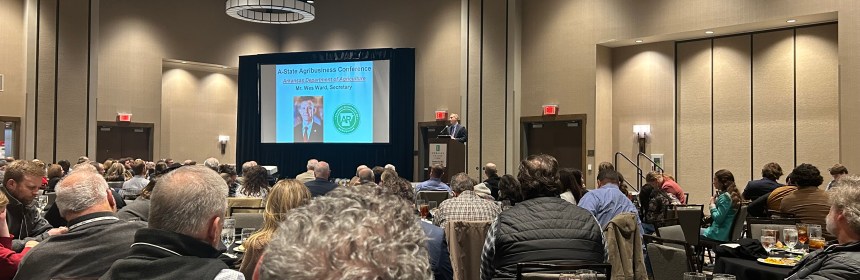
Keynote speaker, Arkansas Department of Agriculture secretary, Wes Wardaddresses water infrastructure, food insecurity and trade initiatives at the Agribusiness Conference. Photo by DDNS Reporter Shailey Wooldridge.

Agriculture officials at Arkansas State University predict a challenging year for Arkansas agriculture. Farmers are expected to face difficulties in three areas: farm economy, agricultural and trade policy, and commodity markets.

Bert Greenwalt is a professor of agricultural economics at Arkansas State University. He said Arkansas agriculture is facing headwinds this year as farmers struggle with commodity prices decreasing over past years while farm input prices have declined very little.

“Farmers are in a cost-price squeeze situation, as it’s referred to, low profitability, struggling to make ends meet and looking to government, farm policy, the farm bill for some assistance,” Greenwalt said. “Unfortunately, our Farm Bill expired a couple of years ago and Congress has yet to address updates in the farm bill that would address the current situation.”

The Farm Bill is federal legislation passed by Congress governing various agricultural and food policies. It’s passed approximately every five years and covers a wide range of topics, from farm subsidies to food assistance programs. The bill affects farmers, ranchers, rural communities, consumers, and the environment.

“Agriculture is a cyclical business. Historically, there are ups and downs, like in some other businesses, and so we’re going through that downturn down cycle right now,” Greenwalt said. “Agriculture will continue to be an important industry in the United States and globally, but not all producers will remain in the industry over time.”

Greenwalt said one of the factors contributing to uncertainty in the agricultural economy today is the shifting trade policy in Washington. Since U.S. agriculture relies heavily on export markets, any disruptions, such as tariffs or trade wars, that affect trade or access to global markets are a significant concern for the industry.

“Farmers this time of year are making many plans for the coming year, what to plant, how to renew their lines of credit with lenders. So hopefully, some of this information will be useful to them as they complete their business planning for the season,” Greenwalt said.

Greenwalt is the co-founder and director of the annual Agribusiness Conference at Arkansas State University, which was held earlier in February. Keynote speaker at the conference Wes Ward addressed water infrastructure, food insecurity, and trade initiatives.

The Arkansas Department of Agriculture (ADA) secretary highlighted problems with water and wastewater systems across the state, including broken systems that have made it hard for people to access clean water.

He also addressed a decline in groundwater levels and the importance of ensuring enough water for irrigation in agriculture, which is crucial for the state’s economy.

“In August last year, we signed an executive order to update the state water plan. The deal is a comprehensive way to look at the needs for water resources throughout the state, both short term and long term,” Ward said. “Right now, there’s about $13 billion in water and wastewater infrastructure needs that impact every single one of us throughout the entire state.”

To address this, he said the state is working on two large irrigation projects to shift water use from groundwater to surface water for agriculture in eastern Arkansas. This will help ensure farmers have the water they need to grow crops.

In 2023, the USDA ranked Arkansas the worst state for food insecurity. Ward said the ADA staff is working to address this.

“A lot of what we’re focusing on this legislative session is just efficiency. We are working a lot about ensuring we’re working on food insecurity issues, but more so trying to identify and correct inefficiencies in government,” Ward said. “I would just ask if people are aware of issues on the state level, if there are things that we can do differently from an agriculture department, please don’t hesitate to visit us.”

Ward said there have been discussions about improving trade relations and access to markets for U.S. agricultural products. The ADA is working with NASDA and USDA to overcome barriers in international trade.

In January, a group from several U.S. states, including Arkansas, Montana, South Dakota, and Connecticut, traveled to India. Ward said the trip aimed to help open markets for U.S. agriculture, tackle trade challenges, and advocate for U.S. farmers.

“We can have a long conversation about India and what that might mean, but India’s the most populated country in the world; hopefully, in the future, there will be some good market opportunities, “ Ward said.

Haleigh Jackson, a graduate student majoring in Agriculture Business and Economics from Leachville, Arkansas, said staying current on agricultural issues and policy is crucial because they affect everyone in the farm sector.

“Agriculture touches everything,” Jackson said. “I think it’s good for everybody to come and learn about the things they use in everyday life.”

Scott Adams, land manager for Adams Land Company in Leachville, Arkansas, and owner of Buffalo Island Farms in Manila, Arkansas, has attended this conference for the past 19 years.

“The major take from it is, we’re going to have to get creative on restructuring entities, market, our crop during rallies, watch our inputs, where we can watch our inputs and just mind the situation and do our best to weather the storm if this is what we’re going to continue to try o do,” Adams said. “My biggest concern is the family farmer going away, smaller farms being dissolved into bigger farms, and it affecting our direct economy.”

######


Brent Floating Farms aims to “revolutionize agriculture”

Brent Floating Farms, a local agricultural initiative started by a husband-and-wife duo, is the beginning of a dream to discover more sustainable methods of farming

Delta Digital News Service

Monday, May 13, 2024

By Avery Jones | Editor

PARAGOULD, Ar. — Brent Floating Farms, a company headquartered in Paragould, is experimenting with sustainable agricultural methods. Headed by husband-and-wife duo Frank and Cinda Brent, the goal is to grow food in a way that is environmentally conscious and organic while at the same time profitable and accessible.

According to Frank Brent, their method is aquaponics, which he describes as “hydroponics and aquaculture mixed together.” 

Frank (right) and Cinda (left) Brent.

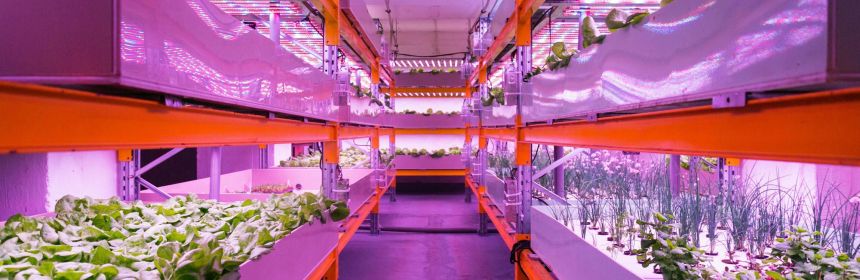
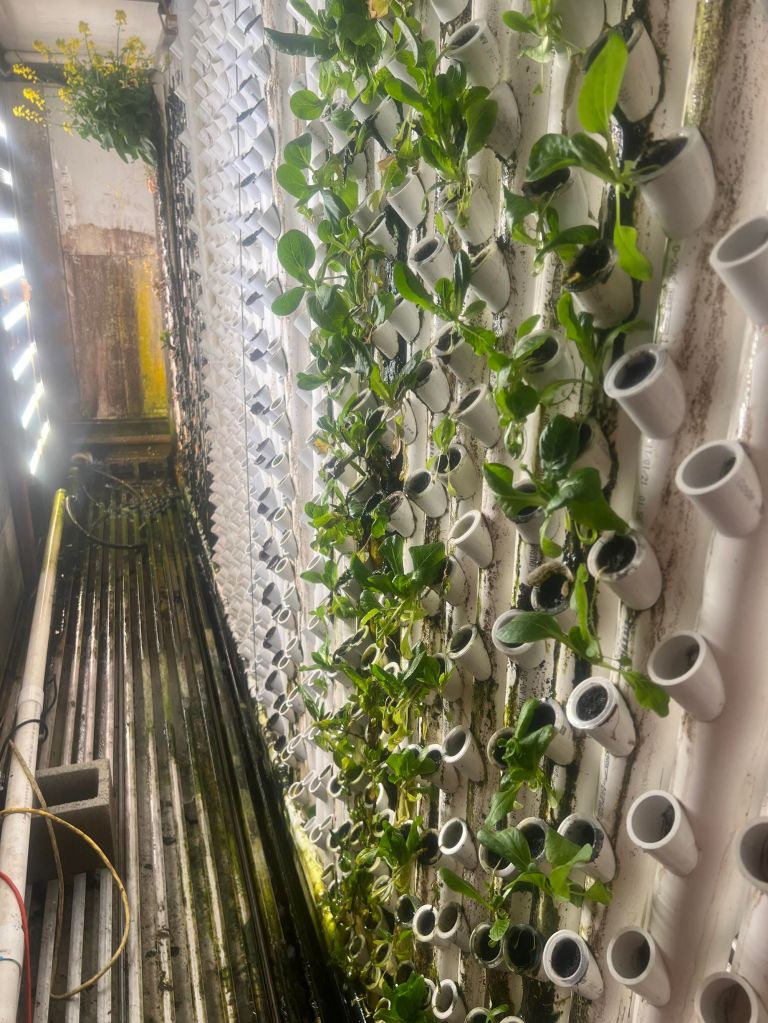
Essentially, they grow plants in repurposed shipping containers, and the plants are grown in water without soil which is fertilized by fish. The water is cleaned by the plants. This results in a “closed-loop” system.

The Brents have been studying this method for at least 25 years. When they first started, they were living in Marianna, Arkansas, and were “avid gardeners.” They decided to move their garden inside a greenhouse to do aquaponics because they didn’t want to use pesticides anymore. 

They also researched and worked for 7 years at University of Arkansas Pine Bluff on aquaponic methods, where their systems are still in use. They did many tests, including on what to feed the fish and how this affects plant growth.

Frank Brent has been a farmer since 1979, so he has much experience with traditional farming methods. He says that he “gave up” on row crop farming because he didn’t think it was very profitable due to the equipment costs. Less conventional methods of growing food offered a new perspective.

“I really enjoyed the symbiotic relationship…and circular agriculture,” Frank Brent said.

Chemical drift, also known as pesticide drift, became a problem for them. Pesticide drift happens when pesticides negatively or unintentionally affect humans, environment, and crops.

They decided to expand their operation by moving to Paragould and buying a 100-acre farm. However, they knew that pests would always be an issue and wanted a way to circumvent that. 

The Brents don’t believe in using chemicals for growing plants. They want their crops to be organic. However, it can be difficult to grow this way and remain profitable.

According to Frank Brent, commercial farms produce about 40% waste but organic farms produce 70% waste. This is why organic produce can be so expensive. 

“So I decided that, what would be better than taking it inside a container and taking it to sea?” Frank Brent said.

This was how the idea of Brent Floating Farms was born. Growing plants inside a container using only water and fish works well to prevent pests, and the temperature-controlled containers have the added bonus of allowing the growth of off-season crops.

However, there can still be issues with unintentionally letting insects inside the container when the door is opened. Furthermore, air still needs to be provided for the plants, and pests come with that as well. Their first year at Paragould, their plants were completely wiped out due to these issues. 

1 week old test crop with the Brents’ new design.

“Everything was perfect, it was beautiful, it was huge. We grew so much more per square foot than…any other method of farming,” Frank Brent said. “It was a pretty sore and sad moment to watch our produce all go down the tubes.”

“Everything was perfect, it was beautiful, it was huge. We grew so much more per square foot than…any other method of farming…It was a pretty sore and sad moment to watch our produce all go down the tubes.”

— Frank Brent

Brent had another idea for their farm which would avoid the problem of pests altogether. He used to work in the Navy and noticed that there were no pests at sea. By putting the aquaponic farms in the shipping containers on ships at sea, they would have no more problems with pests.

Of course, neither aquaponics nor “floating farms” are a new concept. Both of these methods can be traced back to the Aztecs who practiced an early form of this type of agriculture, called “chinampas.” Currently, this method has been revived in Mexico City, and the world’s first large-scale floating farm was conceived in the Netherlands.

The Brents, however, hope to eventually take their operation to a larger scale. They used to be set up in Louisiana, but when they were finally starting to gain traction, the COVID-19 pandemic and Hurricane Ida took them out.

They’re still working on rebuilding. They recently purchased another farm called Chicken Town Egg Farm, which was in trouble financially, and are in the process of doubling that operation. 

When they’re able to get Brent Floating Farms back on track, their goal is to manufacture 350 containers for their crops on land in Louisiana and eventually put some containers at sea as well. 

On land, their hope is that waste will be at 15% while at sea, expected waste will be between 3% to 5%. Aquaponics also uses 90% less water than traditional soil and irrigation methods. The Brents recognize that energy usage can be an environmental issue, but they have looked into alternative energy methods.

Furthermore, their method doesn’t have to just use water and fish. With the use of black soldier fly larva, they can use any type of organic waste, and the insects will break that down. Insects that are beneficial to plants rather than pests can also be introduced inside the container.

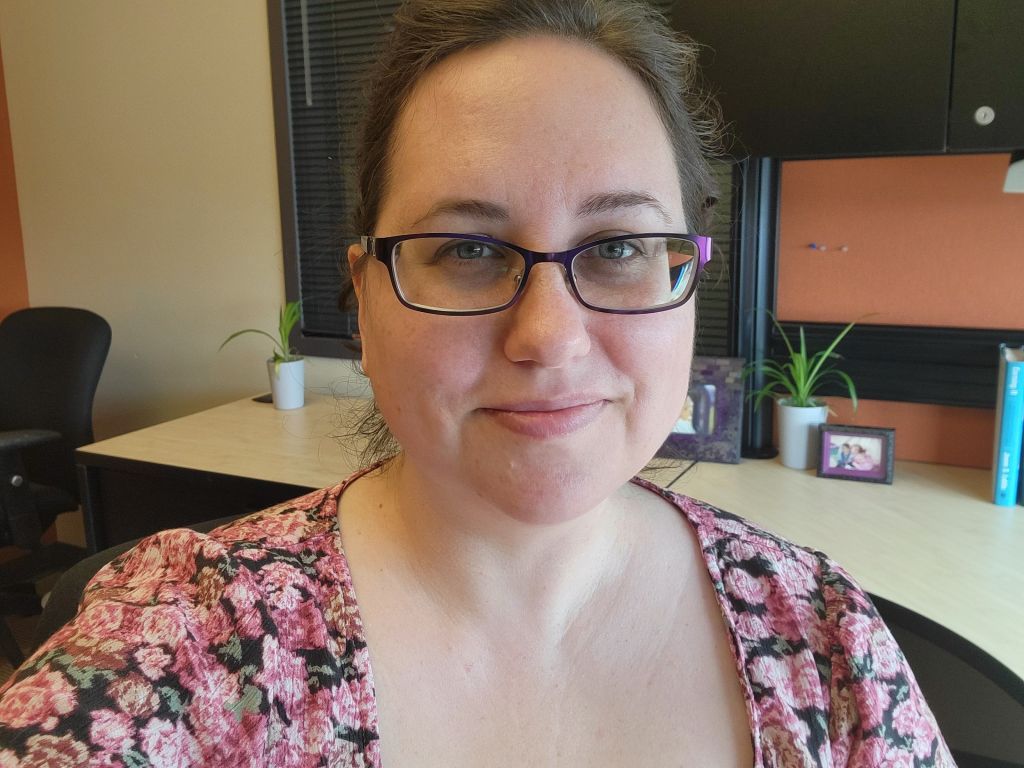
Leigh Ann Weidner, CEO of Brent Floating Farms.

Because the crops won’t be subject to the environment, they will be able to produce a higher yield as well. According to Frank Brent, they can produce 12,000 heads of lettuce in 30 days in an average container.

The team behind Brent Floating Farms includes co-founders Frank and Cinda Brent as well as Leigh Ann Weidner, their CEO. Frank is the COO, and his focus is the technical, agricultural aspects while Cinda is the CAO and focuses on marketing. Weidner, who is working remotely from Wisconsin due to another job, specializes in sales.

-30-


Note: Featured image provided by Shutterstock.