Tag Archives: Tristan Bennett

The arts prove to be vital throughout pandemic
By Tristan Bennett
Delta Digital News Service

Jonesboro, Ark. — Hidden in the midst of the Delta lies an unexpectedly thriving arts scene with a goal to enrich the community in which it resides.

Even with the addition of masks, extra disinfecting and social distancing required by the new normal of the pandemic, arts organizations around Jonesboro remain open as a haven for local artists and lovers of the arts alike.
As the pandemic drags on, so does the anxiety surrounding the still-unknowns of the coronavirus. The arts are proven to alleviate stress and calm the brain. While it is impossible to see a Broadway show right now, local organizations continue to be an outlet for the community.

Learn

A quick temperature check, a mask, a squirt of hand sanitizer and an open mind is all it takes to learn a new craft in the age of COVID.

The Foundation of Arts operates in Jonesboro as a communal space for new and experienced artists to learn and perfect their craft. Kristi Pulliam, FOA executive director, said the arts are a vital part of life.
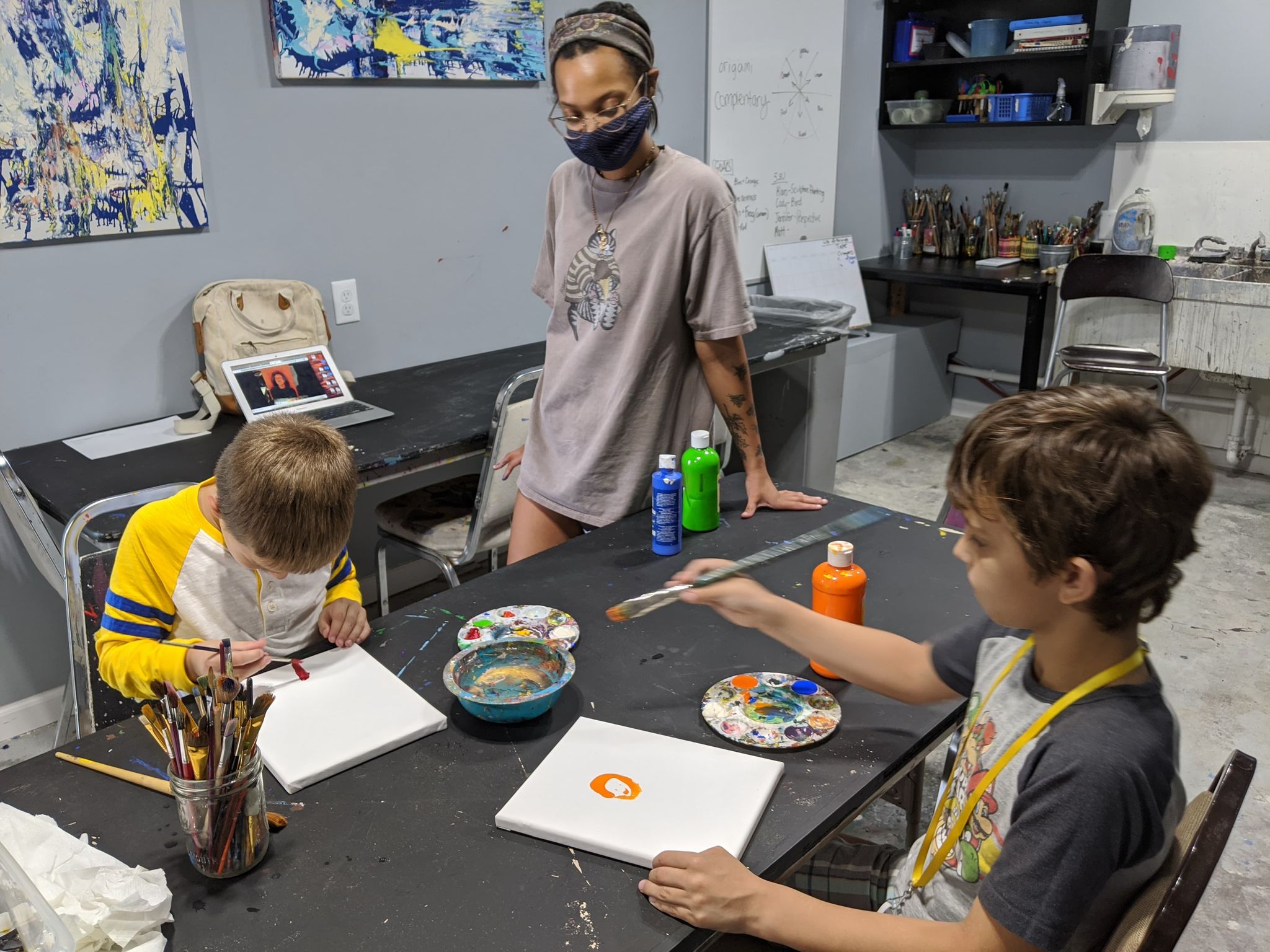
Kids participate in an FOA art class. Photo by Tristan Bennett

“The arts can improve your life in so many ways, Pulliam said. “The participation in the arts makes you better at almost every other thing you do. You’re a better communicator, you’re more self-confident, you’re more able to experiment and grow in all kinds of areas of life.”

The FOA offers classes in a wide range of arts disciplines. While learning an art may look different than in a pre-COVID world, Pulliam said the FOA staff strive for a safe environment for all their students. Enrollment numbers took a dive due to the pandemic, but classes are growing each week, and endorsement of the safety measures enacted by the Foundation.

As a space to learn, the FOA strives to improve the quality of life for everyone in Northeast Arkansas.

“The programming at the Foundation of Arts is really about people,” Pulliam said. “It starts with people, it ends with people, and it has arts all in between.”

Students of dance can learn to arabesque in ballet class, shuffle in tap or pirouette in jazz. After learning their new skills, they have the opportunity to showcase them in competitions across the region.

“It allows them to strut their stuff, and they’ll be judged against other dancers,” Pulliam said.

In addition to dance, students can train to be the next Broadway star in the FOA theatre arts classes or learn to paint like Picasso in their visual arts classes.

The FOA continues to provide opportunities for the general public to engage in the performing arts as well. Coming up, the FOA is hosting a House of Villains at their Forum theatre for Halloween, and their production of “Dreamgirls” hits the stage in November.

Immerse

   There is a certain calmness that can only be achieved by visiting an art museum. Jonesboro is fortunate to have one right at its heart on the Arkansas State University campus.

The artworks that grace the walls of the Bradbury Art Museum silently serve as a cultural steward to enhance the lives of Northeast Arkansas citizens.

Even in a pandemic, people of the community can immerse themselves within the quiet elegance of the museum. Garry Holstein, BAM director, said the art museum adjusted to the new protocols with relative ease.

“We’re a fortunate space in that we’re set up for people to come and enjoy artwork by themselves or with close friends, and not to touch,” Holstein said. “We’re kind of built for a going out safe experience.”

After a temporary closure, BAM reopened with a small, socially-distant reception and a brand new exhibit.

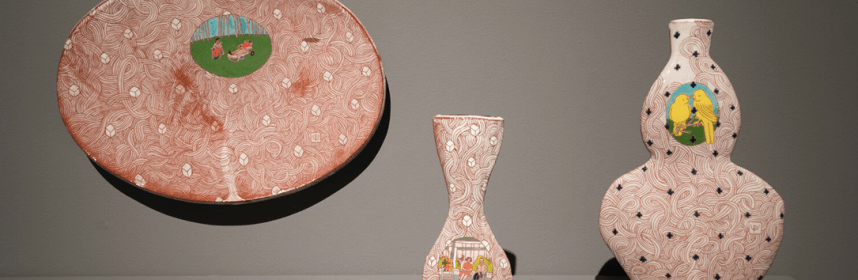
Currently, the museum houses an exhibition entitled “Radius 1.” It showcases artwork created by artists who live and work within a 180-mile radius of BAM. The show not only gives local artists a chance to showcase their work regionally, it gives the community the opportunity to see the talent growing in their own backyard.

Holstein said, “The amazing thing about this is you have so many talented artists here. A lot of people think you have to go to New York or somewhere far away to see amazing work, but we have people that have shown in Venice in this exhibition.”

The Delta is crawling with artistic talent, and through places like BAM, the residents of the community have the opportunity to dive into prestigious art right from home.

“Creative exploration of our shared cultural dialogue is what we do,” Holstein said. “It just reinforces our role in the community and our dedication to serve as a cultural steward and collaborate to create a shared sense of place.”

The coronavirus forced BAM to limit its hours to noon to 5 p.m. on Tuesdays through Saturdays, but the artwork still waits in its regal silence for someone to come brood over the artist’s true intention.

Experience

As devastating as the pandemic could have been on the arts, it only brought more creativity into the delivery of artistic experiences. Before, no one could have ever imagined listening to a live symphony from the comfort of their couch, but current circumstances made it possible for fine music to be available outside of the auditorium.

The Delta Symphony Orchestra is rooted in heritage and strives to meet an underserved need in the community. Neale Bartee, music director and conductor, said the orchestra formed in 1975 to give professional musicians in the area a chance to perform.

“There were really strong band programs and choirs, but there were no orchestra programs, and that’s an entirely different thing with the string section,” Bartee said. “We were providing a need that had not been fulfilled at that time.”

45 years later, the music scene in Jonesboro has expanded greatly. However, orchestra music still lags behind. The Arkansas State music department focuses mainly on instruments commonly played in marching bands, but Bartee, during his time on faculty with the department, helped to create the university orchestra program. As far as professional orchestra music in the region, the Delta Symphony Orchestra still operates alone.

“There’s a whole heritage of orchestra music that goes back 300 years with Bach through Beethoven, and there is no other group that performs that,” Bartee said.

COVID-19 forced live orchestra performances to a grinding halt, but in a way, it is now easier than ever for everyone to experience symphony music. The Delta Symphony Orchestra began livestreaming their performances on Facebook, making it possible to listen to a live professional orchestra on a couch, at the dinner table or in a car.

Bartee and the orchestra even began digging through past, recorded performances in order to provide the community with music during this time.

Now, anyone in Jonesboro can experience the sounds of the orchestra on cable channel 24. Previously recorded performances are broadcast regularly on the City of Jonesboro’s channel as a service to the community.

The Delta Symphony Orchestra not only provides a historically rich music to the community, it invests in the next generation of artists.

“We’ve brought Broadway stars to Jonesboro,” Bartee said. “We brought those guest artists that did some great work coaching the kids on how to do musicals.”

Hearing the orchestra through a screen may not be the ideal experience, but it expands the opportunity to more of the community and provides a chance to the general public to broaden their horizons.

Grow

As Pulliam said, involvement in the arts is a pillar of any quality society. Whether it be learning a new craft, immersing in a visual art or experiencing an orchestra, all work to enhance the quality of life of all those who enjoy it. In the extra stressful era of COVID-19, art can serve as an escape. Many think great art lives in far off places, but Jonesboro is home to a thriving art scene just waiting for the community to join.

NOTE: Feature photo by Tristan Bennett.

Nurse practitioner fulfills dream with art gallery business

By Tristan Bennett
Delta Digital News Service

JONESBORO — Local artists have an avenue to profit from their craft thanks to one very busy business woman with a passion for art.

As a college freshman, Angela “Angie” Jones first declared her major as art before ultimately ending up in the healthcare field. Now a nurse practitioner, it is not surprising that her love of art stuck with her.

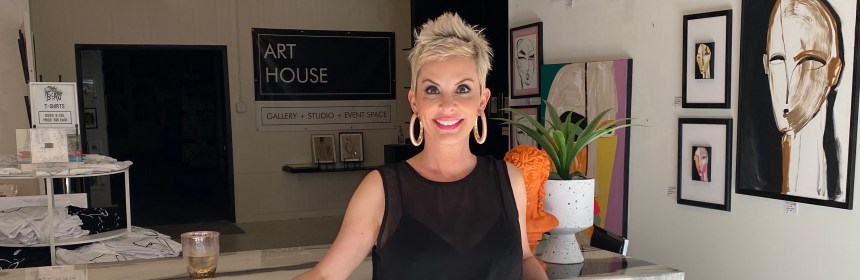
Artist Angela “Angie” Jones owns the Art House art gallery in downtown Jonesboro. Jones opened the gallery during the pandemic.

“I’ve always gone back to it,” Jones said. “Painting walls and furniture when my kids were growing up, always having a craft project.”

Now an empty-nester, Jones decided to dive back in to her love of art in the time she used to spend at ballgames, dance and choir performances. She began taking art lessons with Gussi Causey, a retired Jonesboro Public Schools art teacher, and a big problem gave her a big idea.

“She had mentioned one day that there was really nowhere for her students to exhibit their work,” Jones said. “We had just moved downtown, and we had a commercial space below us that was empty.”

In June 2019, she opened Art House, a gallery in downtown Jonesboro for local artists to showcase and sell their work.

“So what started out as being something that maybe 10 to 15 artists could use to have a random art show here and there turned into the Art House,” Jones said.

Today, Art House has hosted 11 art shows and represented over 50 local artists.

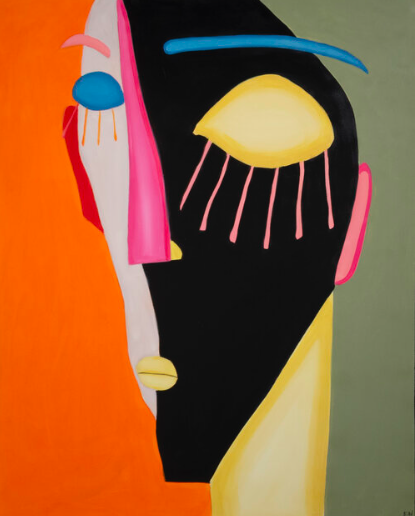
One of those artists, Braden Walls, considers himself to be a drawer. He bases his style on that of Picasso: cubism. He said his involvement with the Art House has been a great experience.

Walls said before Art House opened, other galleries operated in the area but were selective about whose art they showcased.

“Angie opened up Art House and was like, ‘Everybody come put your work in and display it,’” Walls said. “Which, nothing like that has ever happened in Jonesboro before.”

Jones gave all local artists a chance to profit from their passion, and for that, local artist Sheila Guinn is thankful.

“We’ve needed this. We have other art galleries in town, but this one seems to be targeted to everybody. Every age. Every walk of life. All kinds of art and all kinds of people” Guinn said.

When her Art House journey began, Jones was shocked at the number of artists in Jonesboro as well as the lack of opportunities those artists had to showcase their creations.

“We have a lot of resources, we just don’t have a lot of avenues for local artists to get their work out there,” Jones said. “I believe we created that avenue for people to display their work, sell it and get it in the public’s view, and for people to realize that there are talented artists.”

Even in the middle of a pandemic, Jones continued to serve Jonesboro’s artists. She shifted from hosting large public shows to online galleries and private viewings. Jones said she thinks that will expand in the future on top of the traditional shows.

Not only does Art House support local artists, but Jones used art to help her community as well. When the pandemic hit, many restaurants downtown went to curbside-only dining. This meant fewer people on the sidewalks and fewer people visiting other businesses. She assembled a team of five local artists to create murals downtown designed specifically for selfies. That team was dubbed “The Mural Squad.”

“Our goal was to get more traffic downtown, and it’s something fun for people to do when they come down here as well,” Jones said.

The murals’ success led to a contest for more artists to add their own selfie backdrop to the wall, and the Squad has more plans to paint downtown in the future.

The work Jones does for the community requires a delicate balance in her life, and she said she could not do it without her husband, Scotty.

“He will do anything I ask him to and take on any project I ask,” Jones said. “He has been there to hang the art, there to help me with all the other stuff and give support as well.”

Her efforts do not go unseen by the artists she represents.

“She’s doing what a lot of people have wanted to do but just didn’t,” Guinn said. “It takes a lot of effort to do what she does, and we all really admire her for doing this.”

Jones is in the midst of moving the Art House to a new space downtown and plans to continue to advocate for local artists as well as bring art into the Jonesboro community.

Note: Featured photo submitted.


Farmers bring fall fun to the Delta

By Tristan Bennett
Delta Digital News Service

BROOKLAND – Autumn in the Delta brought a business opportunity to many small family farmers.

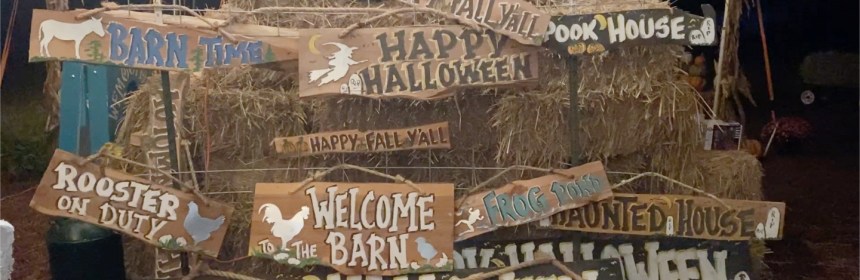
Many farms in the area set up pumpkin patches and corn mazes as a family fall attraction to make a little extra cash after harvest. These farms draw in everyone from families to groups of college students. Jerry Whitten, who owns WF Mootown Corn Maze in Brookland, runs his business as a way to stay in the agriculture industry after retirement.

“I grew up on a farm, had cattle, my parents farmed, and I worked in the agriculture industry. So when I got a chance to retire from that job, this was something I thought I could do,” Whitten said.

Mootown offers a pick-your-own pumpkin patch, corn maze, bonfires, hayrides and a program for school children. Whitten credited great weather for the high turnout so far this year.

Matt and Anna Beth Presley visited Mootown to complete the corn maze and choose pumpkins to carve.

“She’s a nurse and I’m a cop, so our schedules are kind of busy. So this is date night,” Matt said.

The couple said they came to enjoy the fall festivity and the cool weather.

Whitten’s school program, “Spookley the Square Pumpkin,” tackles problems of bullying among young children and promotes agriculture.

Whitten said, “We have a trail set up in the woods, and it’s basically the book on boards that they read as they go through the woods, and they do a challenge at the end.”

When children visit the farm, they learn the process of growing pumpkins as well. Whitten talks to them about production and how to plant the seeds. Many teachers also prepare their students for the visit by actually growing a pumpkin in class.

Farmers who run these fall farms must start planning early in order to pull it off by the beginning of the season. Pumpkins can be especially difficult to grow. The Farmer’s Almanac suggests farmers wait until all threat of a frost is gone and water and fertilize often throughout the growing season.

“My analogy is they’re like a goat. They’re born looking for a reason to die,” Whitten said, “But they’re a lot of fun to watch because you always think there’s none there until the leaves start dropping, and you think, ‘wow there’s a lot of pumpkins out there.’”

The corn maze also draws people to the farm. Arkansas State University’s Catholic Newman Center brings a group of students to Mootown each fall. Zachary Ridgeway serves as the president of the CNC student organization.

“We do it to get all the new students to get to know each other better and have fun at the same time,” he said. “We’re doing the corn maze, which some of us have already successfully completed. We’re going to carve some pumpkins, and later we’re going to have a bonfire and hot dogs.”

Planning the corn maze also takes some time for Whitten to complete. In Arkansas, farmers plant corn in April or May and harvested in September. In order to keep it green throughout maze season, Whitten does not plant his corn until after the Fourth of July. Then, the maze must be cut out of the corn

“For years I did it the old-style way. Basically, the design is on graph paper, and every row of corn corresponds to a row on the graph paper. You just take marking paint and a lawn mower and start counting rows,” Whitten said.

Nowadays, professional corn maze cutters do the work for the farmer. They use GPS systems to mark the design in the field and cut it using a tractor and a tiller.

While a lot of hard work goes into it, Whitten said he enjoys the work he does.

He said, “I like raising it, but to me, watching the kids and the families come enjoy it and make memories. We’ve had several who have been with us every year, and it’s kind of a family tradition. That’s a lot of fun.”

Many farms like Mootown close for the season soon. Visit for family fun as well as to support local agriculture.

Editor’s Note: Feature photo and video by Tristan Bennettt.

Delta farmers begin harvest after a difficult growing season

By Tristan Bennett
Delta Digital News Service

JONESBORO – Arkansas Delta farmers harvested their crops and took them to market after a difficult growing season.

Farmers experienced many challenges this season as they planted crops and tended to their fields all summer. Chris Grimes, Craighead County Cooperative Extension agent, works with these farmers to ensure they use the most efficient growing methods possible.

“Right now, we are harvesting cotton, soybeans, peanuts, and there’s still a little bit of rice and corn,” he said. “We were delayed planting, which in turn pushed our harvest a little later than normal.”

Other than a few hiccups with rainfall, the harvest continues moving rather smoothly. Many rice farmers like Terry Gray, owner of Thomas Gray Farms, already finished cutting.

“We were probably off 15 bushels an acre from last year. Not a bad crop, but nothing to brag about,” he said.

The wet spring and late planting affected Gray’s crop just as it did many other growers in the area. Some, including Gray, even skipped out on growing soybeans all together rather than plant late.

The U.S. Department of Agriculture reported in the October Crop Production report a 14.3% nationwide drop in soybean acres planted from last season and a 7.3% drop in yield. Rice harvested experienced a 15% drop from last season.

While yields may be lower, growers report high qualities in their rice crop. Sample houses look at characteristics such as grain length, aroma and stickiness to determine the quality. Factors such as the amount of rainfall, heat and pests affect the quality of the finished product.

“The early part of the crop, the quality is good,” Gray said. “The middle part of the crop got so dry in the field the moisture content got down to 12%. As that grain sits in the bin, it’ll age and come up.”


“The early part of the crop, the quality is good…The middle part of the crop got so dry in the field the moisture content got down to 12%. As that grain sits in the bin, it’ll age and come up.” – Terry Gray, owner of Thomas Gray Farms


After harvesting the crops, farmers take truckloads of grain to driers so it can be properly stored and milled. Rice comes out of the field at a higher moisture content than it can be stored, so it must first be dried before it can be milled.

Riceland Foods markets agricultural commodities for its 6,000 member-owners in Arkansas and Missouri. The Jonesboro Grain Drier accepts both rice and soybeans from their members.

Freddie Gahr, drier manager, handles rice for the Jonesboro area and the mill.

“There was so much rain this past spring and so many acres that went into preventive planting acres that it really hurt our harvest receipts on rice this year,” Gahr said.

In Jonesboro, growers can take advantage of early sign up. They tell Riceland how many acres they intend to market through them, and they might get a better price than they would during the season.

“We can take those acres and convert them to bushels per acre, and we can determine, on rice, what we are going to get during harvest,” Gahr said. “We take soybeans basically as a service for our members.”

For rice, the Jonesboro mill includes four different processes. The parboil mill precooks and steams rice, and the traditional white rice mill removes the hull and polishes the rice. Rivland, a partnership between Riviana and Riceland, produces rice flour, and the by-products division takes bran, sends it to Riceland headquarters in Stuttgart, and they make rice bran cooking oil.

Riceland offers the farmer a certain price per bushel for their crop, and it takes care of drying the grain and milling it to be consumed by the public. The price they give changes daily, but on Friday, Oct. 11, they offered $5.51 per bushel of rough rice, an OK price.

“The prices could be a lot better,” Grimes said. “They vary depending on where they deliver, and they may have it contracted.”

Low prices mean especially difficult times for farm families. Overhead costs such as insurance, taxes and equipment payments never stop, so a low yield could lead to a financial stress for families who rely on farming.

Stress on a farmer could also contribute to family issues.

“When things aren’t going right, I’m sure my kids don’t think I’m quite as nice a dad,” Gray said. “You try not to take that home with you, but sometimes you just come home and you’re really frustrated.”

Despite tough seasons, low prices and stress, farmers like Gray continue to grow year after year.

He said, “Two famous words that come out of a farmer’s house are ‘next year.’ As a farmer, we love what we do, we love taking care of the soil and land, and we are always wanting to promote our vocation.”

Gray said next season may bring higher prices due to the interruption in the market, and many farmers will start out with land already worked, making it an easy planting season.

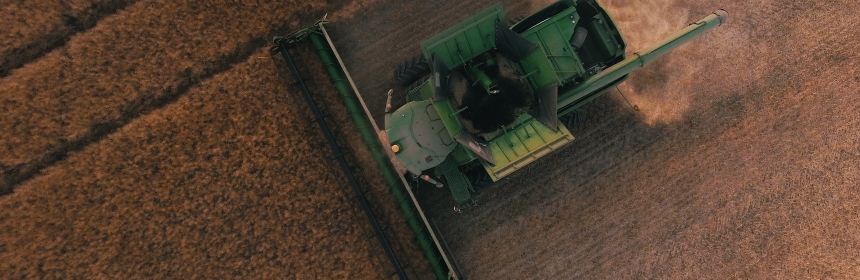
Editor’s Note: Feature photo by Scott Goodwill on Unsplash

Copy

State fish hatchery prepares for upcoming fishing derby

By Tristan Bennett
DELTA DIGITAL NEWS SERVICE

CORNING, Ark. — A local fish hatchery prepares to celebrate as National Hunting and Fishing Day approaches.

For the first time, Donham State Fish Hatchery, along with the other five state hatcheries, will host a fishing derby to celebrate National Hunting and Fishing Day.

The holiday began as a day of thanks for sportsmen who contributed to conservation and sustainable use of fish and game, according to the National Fishing and Hunting Day website. President Richard Nixon first proclaimed the holiday in 1972 as a day to enjoy the outdoors and encourage proper management of natural resources.

This year, National Hunting and Fishing Day falls on Sept. 28.

The employees at Donham hatchery work year-round to ensure derbies such as this one go off without a hitch. They must plan ahead each year to ensure each derby site gets the proper amount of fish.

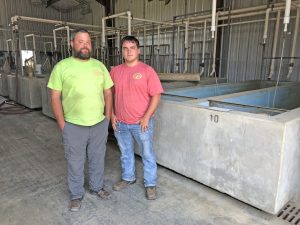
Robert Zimmer, left, and Erik Jordan pose by fish vats. Photo by Tristan Bennett

Mark Harness, hatchery manager, said, “In January or February, I’ll know how many fish I’ve got to produce for the whole year.”

Preparing these fish is no small task. The technicians keep themselves busy taking care of the fish and helping maintain the hatchery itself.

Robert Zimmer, senior technician, said, “We do everything from mowing to cleaning the bathrooms and everything in between.”

In the fall, the employees rework the ponds by draining them and mowing the grass in them down as well as work on their second round of fish harvesting for the year. In the spring, they put fish in spawning nests and usually begin harvesting by June or July.

“Checking all the oxygen levels is the first thing we have to do every morning,” said Erik Jordan, a technician at the hatchery.

The technicians keep a close eye on oxygen levels to ensure the fish are in a healthy environment. Fish must also be fed and checked on regularly to confirm proper growth.

When the time comes to send those fish out into the community, the hatchery employees harvest the ponds using a method called dragging.

“We have a seine that reaches across one of our 1 1/2-acre ponds, and we’ll drag the whole pond to a corner and slowly pull it in,” Harness said.

From there, they take a sample to get an approximate weight of the fish.

“Let’s say these fish are one pound,” Harness said, “that means one fish weighs one pound, so if we’ve got to have 500 fish, we know we’ve got to have 500 pounds.”

Then, technicians load the fish onto trucks and take them to their new homes for communities to enjoy.

Harness’s hatchery stocks catchable catfish, one pound or over, in many of the Family and Community Fishing Ponds in Northeast Arkansas. Several of these ponds will hold derbies throughout the summer and fall.

Family and Community Fishing Ponds get stocked with catfish in April, May, June, September and October. Trout come to the ponds in November through February. Lakes and ponds get stocked according to what the biologist wants, so it varies from year to year.

Zimmer said, “We may stock Lake Charles this year, but we may not stock it next year.”

The biologist is in charge of deciding how many fish and of what species a lake needs.

The hatchery’s job does not always stop there. Donham holds its own derby at the hatchery every year as well as the National Hunting and Fishing Day derby, which will take place on the Arkansas State University campus.

“We are not doing it here (at the hatchery) because we reach the local people with our derby in June. So, we are going to move to Jonesboro with this one to see about getting a different group of people,” Harness said.

Hatchery employees will be there working educational booths and a casting contest to teach people how to cast correctly. The A-State American Fisheries Society will also be there with information on endangered species. In the past, Donham hatchery has also done a BB gun range, a knot-tying station and kayaking at their derbies, Jordan said.

Admission to the derby is free, and anyone is welcome to fish from 8 a.m. to noon at the Pavilion Pond on the A-State campus. Family and Community Fishing Program rules apply, so someone could even go by themselves to the derby. There is a three fish limit per person.

“It’s designed to get families back to fishing or even get the young kids interested in fishing,” said Harness.

National Hunt and Fishing Day is all about enjoying the outdoors, and Harness hopes this derby will provide Northeast Arkansas with a chance to do so as well as learn about conservation and wildlife.

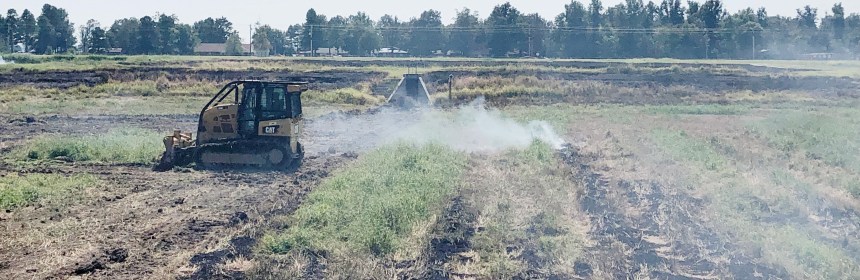
Editor’s Note: Featured photo shows hatchery staff reworking ponds in preparation of spawning season. Photo by Tristan Bennett