Severe weather preparedness vital as Arkansas tornado season reaches peak
Story by DDNS Reporter Jerry Don Burton.
April 6, 2026
Severe weather preparedness remains vital as Arkansas enters the peak of tornado season.
Kory Ward, fire chief for Wynne, Arkansas, said those who don’t take severe weather seriously are making a bad move.
“There’s people that think, ‘oh it’ll never hit here,’ and it’s been very true to hit here within the last two years,” Ward said. “I say it all the time, stay weather aware. Pay attention to the news. Pay attention to your local radio station. Don’t be surprised by it.”
How can I stay safe during tornado season?
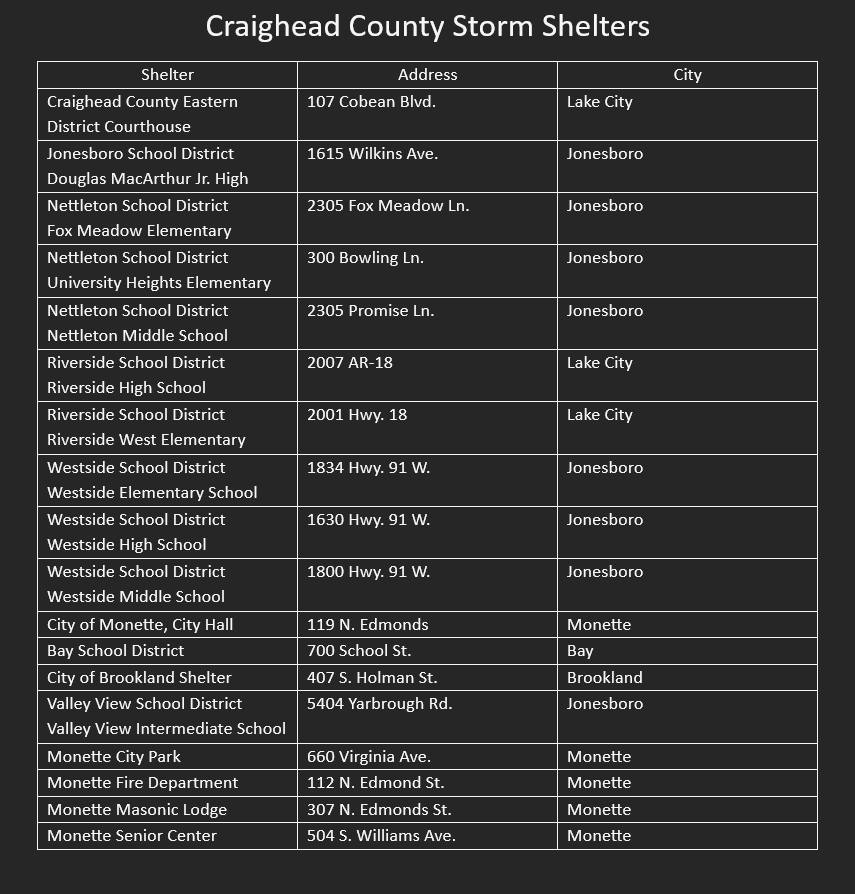
Anthony Coy, director of the Craighead County Office of Emergency Management (OEM), said always knowing the location of a nearby safe spot is vital for tornado season preparedness.
A list of public storm shelters across Arkansas may be found at https://arkansasstormshelterlist.phonesites.com/. This list was last updated March 2025.
Coy said those living in manufactured homes or mobile homes, also called trailers, should especially take advantage of these community safe rooms.
Manufactured homes are particularly susceptible to tornado damage because they are usually constructed with lighter, less durable materials.
In a 2018 research article published by the American Meteorological Society’s Weather, Climate, and Society journal, Stephen Strader and Walker Ashley found that 72% of all tornado fatalities occur in homes and 54% of these deaths occur in mobile or manufactured homes.
Amber Schlessiger, a National Weather Service (NWS) meteorologist, said overnight tornadoes are another distinct threat because they strike when most people are asleep. She said those who find themselves in the path of an overnight storm should set up multiple methods to receive warnings and be ready to wake up if a threat approaches.
Ward echoed this sentiment and said having some form of early warning system, such as phone notifications or a crank radio, is indispensable.
Coy said keeping up-to-date with the weather is always good advice.
“There are a hundred different ways you can get those weather warnings on your phone,” Coy said. “But almost every county has some sort of information platform. In Craighead County, we use CodeRED.”
CodeRED, a community emergency notification system, allows individuals to sign up for alerts on Jonesboro’s website. The CodeRED mobile app may also be downloaded on the Apple App Store and Google Play Store.
Coy also said to exercise caution when determining trusted sources. He said some severe weather information, especially on social media, may be misleading or originate from questionable sources.
The OEM director said creating and maintaining a preparedness kit is another step in staying safe.
A well-prepared kit may include the following items: Several days’ worth of food and water, a flashlight, batteries, first-aid, a change of clothes, a whistle, maps, hygiene items, prescription medicines and pet food, if applicable.
Ultimately, Coy said, even the most seasoned preppers will overlook something. Still, even small acts of preparation will make a lasting impact, he said.
“Each time you chip away at that, you’ll become more prepared than you were before,” Coy said. “Don’t ever let it become a back-burner item.”
What are the impacts of tornado season?
Tornadoes are one of the deadliest and most costly natural disasters in the United States.
In a 2008 research article concerning patterns among natural disasters and mortality, Kevin Borden and Susan Cutter found, of 11 disasters researched, tornadoes accounted for the fifth-highest deaths in the U.S. between 1970 and 2004.
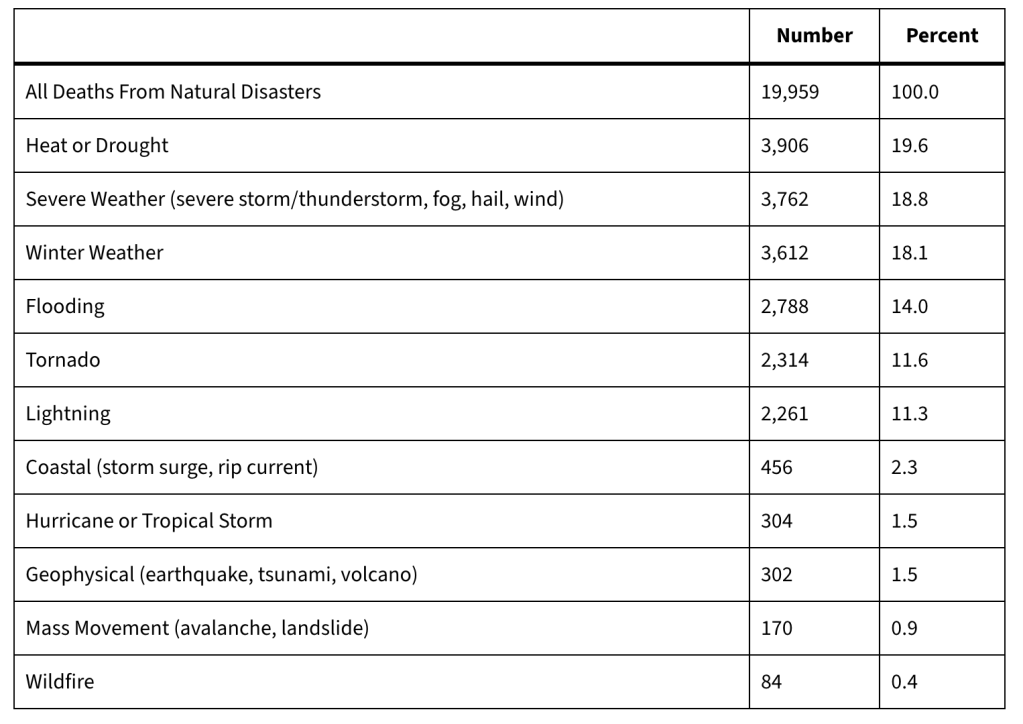
The article, published in the International Journal of Health Geographics, reported deaths caused by tornadoes constituted almost 12% of all natural disaster-related deaths in the U.S. during the same time.
Arkansas, in particular, shares a lengthy history with tornadoes.
From 1950 to 2024, 2,478 tornadoes hit Arkansas, killing 412 people, according to the NWS Little Rock office.
A study conducted by the National Oceanic and Atmospheric Administration (NOAA) found, from 1950 to 2025, tornadoes in Arkansas caused 5,567 direct injuries, $3.5 billion in property damage and $4 million in crop damage.
Northeast Arkansas is no stranger to lethal tornadoes either.
On March 31, 2023, an EF3 tornado tore through Wynne, Arkansas, killing 4 and causing over $150 million in property damage, according to the NWS Memphis office. The Wynne High School, which found itself directly in the center of the tornado’s path, was razed.
Three years prior, on March 28, 2020, another EF3 tornado damaged about 300 buildings, caused an estimated $300 million in damages and injured 200 people in Craighead County.
However, despite the destruction they cause, Coy said, blessings exist in every disaster.
For example, Coy said the COVID-19 pandemic actually saved lives during the aforementioned 2020 tornado. He said the pandemic kept people at home rather than in commercial buildings, like The Mall at Turtle Creek in Jonesboro, which the tornado almost completely destroyed.
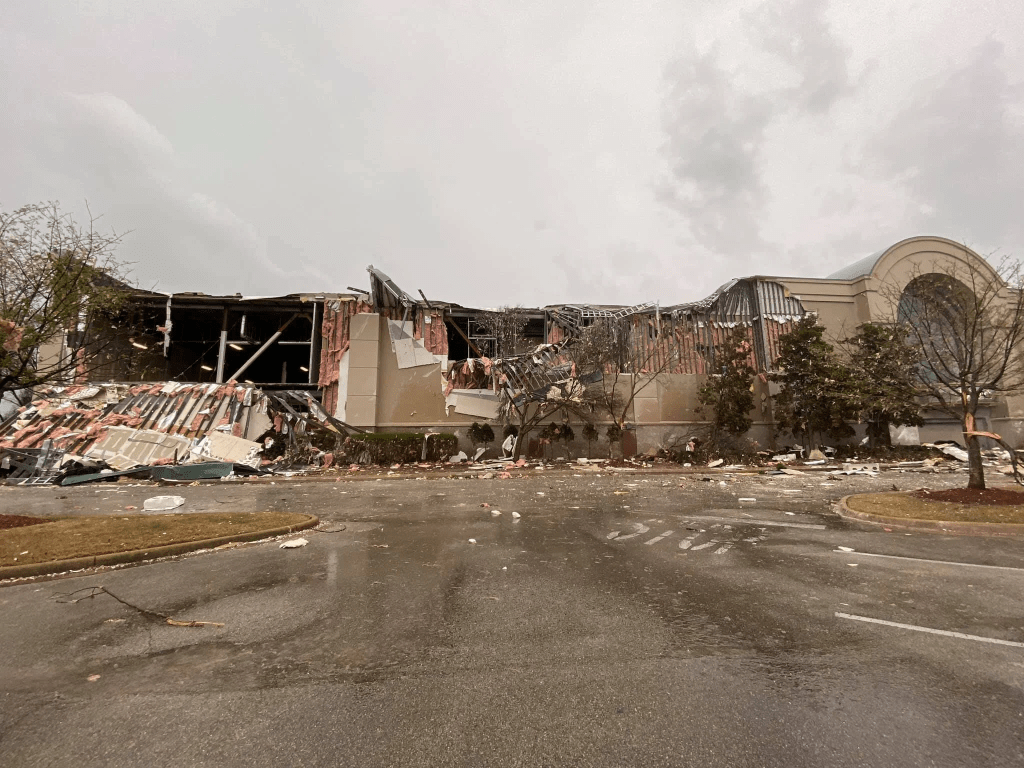
He said the tornado also taught him to have plans in place before disaster strikes.
“I was very new in the position at that time, I didn’t have my volunteer teams gathered yet, didn’t have changes to our emergency operations plan, none of that,” Coy said. “And here I am sitting at home on a Saturday and I watch a tornado drop down in the middle of Jonesboro. That’ll get your attention.”
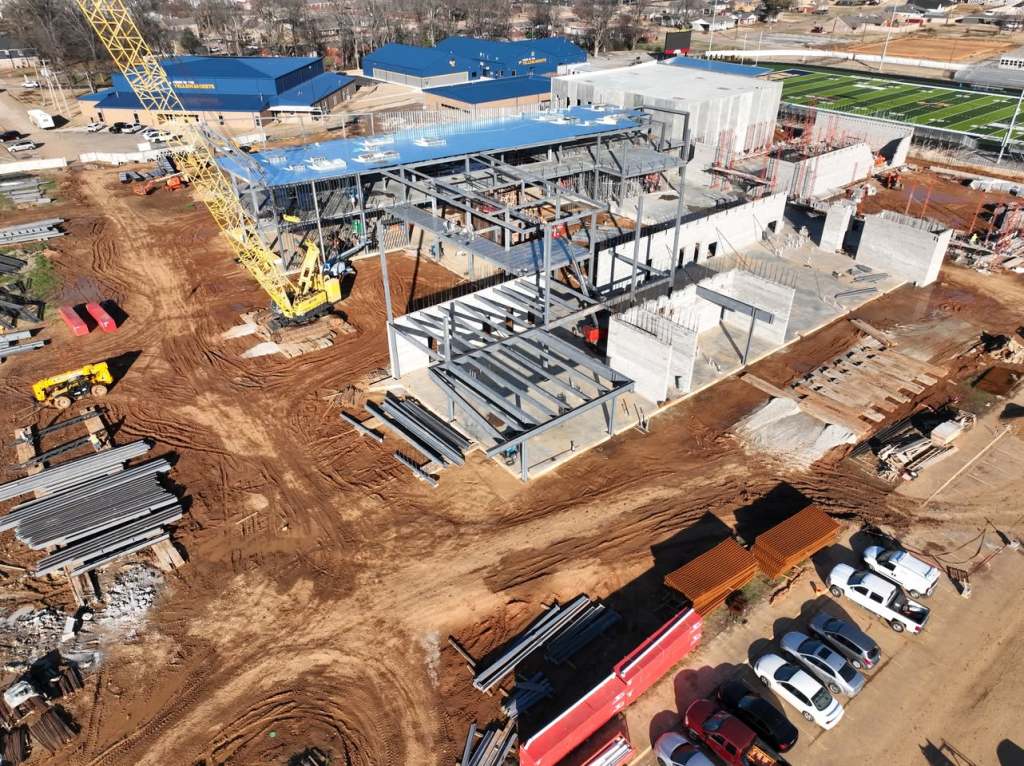
As for Wynne, the company contracted to build a new campus for the high school, Nabholz Construction Corporation, stated in a Jan. 13 Facebook post that progress is moving steadily.
“It’s exciting to see this project transition from structure to the spaces that will soon support learning, creativity, and community,” Nabholz Corporation wrote.
Why is there a tornado season, anyway?
According to the NWS, the months of peak tornado occurrence, also known as tornado season, last from March to May in Arkansas.
As temperatures transition from colder to warmer in the spring, atmospheric instability creates conditions favorable for the formation of tornadoes. Since this transition happens at slightly different times throughout the country, tornado season varies depending on the state.
Other climate factors also play a role in creating a tornado season.
In a 2015 feature published by the NOAA, Michon Scott reported a relationship between tornado frequency and the natural weather patterns El Niño and La Niña.
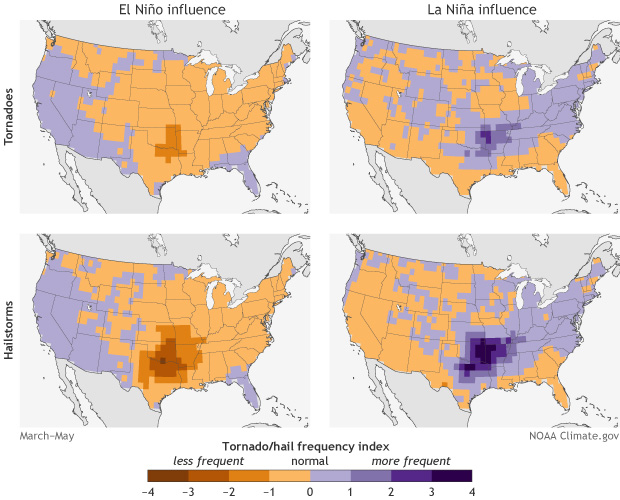
“Specifics vary, but in general, springtime tornadoes and hailstorms are less frequent in the southern central United States during El Niño and more frequent during La Niña,” Scott wrote.
El Niño is a natural weather pattern, usually lasting about a year, that occurs when warm water accumulates in the central and eastern Pacific Ocean. La Niña is the opposite and happens when cool water develops in the Pacific Ocean.
Coy, however, said Arkansas experiences severe weather regardless.
“The meteorologist will explain it has to do with whether you are in a El Niño or a La Nina and, I’ll be honest, they’ve explained it to me and I don’t always understand it,” Coy said. “It seems like we get severe weather regardless of which one we’re in.”
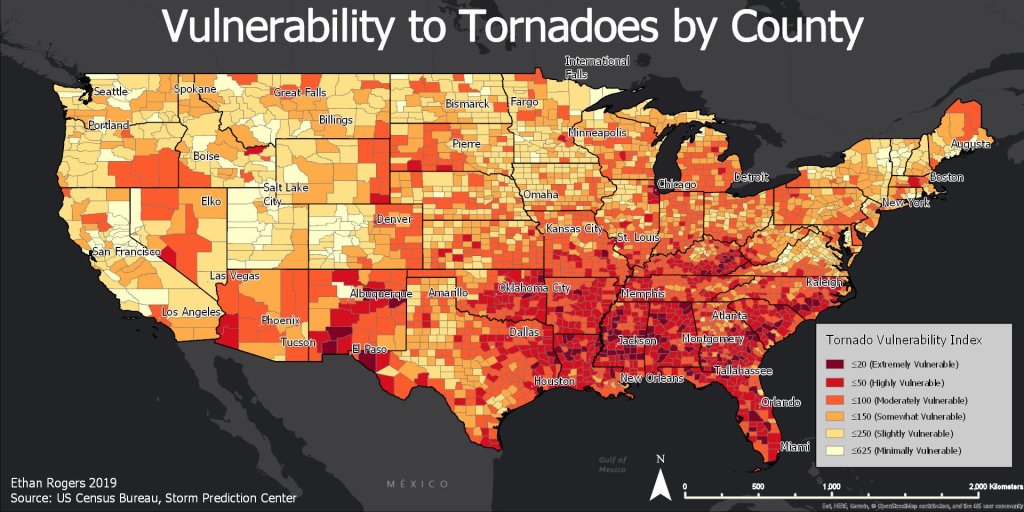
According to the NOAA’s National Severe Storms Laboratory, while tornado season denotes the period in which tornadoes are more frequent, a twister can form at any time of the year and in any location. Tornadoes occurred during all 12 months and in all 50 states.
According to a 2025 article published in the research database EBSCO, Mark Dziak wrote that “Tornado Alley” can be a misleading term because those living outside of its poorly-defined boundaries may believe they are less vulnerable to tornadoes.
Tornado Alley is a common geographic term used to define areas in the central U.S. where tornadoes are more frequent.
“Despite the focus on Tornado Alley, experts note that tornadoes can and do occur in every state, highlighting a phenomenon known as Dixie Alley in the southeastern U.S., where tornadoes may even be more frequent and damaging than in Tornado Alley,” Dziak wrote.
Is tornado season getting worse?
As of April 3, 2026, the NWS confirmed nine tornadoes in Arkansas, near the average for that time of year.
Coy said, in his time working in emergency management, he experienced increasingly frequent and deadly weather. Coy, who is also the treasurer of the Arkansas Emergency Management Association, has worked in the industry since 2006.
Research supports Coy’s experience.
The Arkansas Tornado Database, using data from all NWS offices serving Arkansas, found that between 1970 and 1999, Arkansas averaged 25 tornadoes per year.
Between 1991 and 2020, that number rose to an average of 37 tornadoes a year.
In a 2018 journal article published in the npj Climate and Atmospheric Science journal, Vittorio Gensini and Harold Brooks found while the national annual frequencies of tornado reports remained relatively constant, they documented positive trends in the Midwest and Southeast U.S.
While no definite reason exists for this increase in tornado sightings, several theories offer possible hints.
Hazards geographer and meteorologist Stephen Strader, in a 2024 interview with NPR, told host Ari Shapiro that advancements in detection technology contribute to the apparent increase in tornadoes. Strader said tornadoes – especially weaker, short-lived ones – posted on social media are sometimes added to severe weather databases, which also increases the statistics.
Strader said population growth and urban development may also be partly responsible for the increasing severity of tornadoes. Many areas once forested or used for farmland developed into dense population centers, thus increasing the likelihood of a tornado causing significant damage.
“There’s just more things to hit, which means more potential disasters,” Strader said.
A 2021 journal article published in Scientific Reports found population density and the installation of Doppler Radar systems contribute to the increasing trend of damaging tornadoes.
Another possible culprit, climate change, may offer more complex impacts on tornado season.
Climate change, a hotly politicized and controversial weather phenomenon, refers to long-term changes to Earth’s average weather patterns, according to NASA.
Strader said, while the connection between climate change and tornadoes is not fully understood, many researchers suspect tornado sightings will increase as the impacts of climate change create environments conducive to severe weather.
Data from the NOAA reports a greater risk of off-season tornadoes in a future warmer climate. However, the various intricate weather conditions at play during the formation of tornadoes make it difficult for scientists to determine the impact climate change is having or will have on tornado season.
A report from the Center for Climate and Energy Solutions (C2ES) also states factors such as limited data collection methods, high variability and the relatively small geographic size of tornadoes as challenges for attributing climate change to a worsening tornado season.
“As scientists improve their physical understanding of the processes that cause tornadoes, and as climate models are run at higher spatial resolutions, our understanding of the climate change influence on tornadoes will improve,” the C2ES report stated. “Likewise, as the observational record increases over time, trends will likely become more obvious.”
Coy said while some people debate whether climate change is to blame, he focuses more on preparation.
“Whatever reason that is, I don’t know and I don’t have to know,” Coy said. “I just need to know when’s the next one and how strong do we think it might be.”
Coy said Craighead County is due for a break from severe weather. He said every year he hopes the weather is better than the year before.
However, the OEM director said he will never suggest any particular tornado season might be less severe because that might encourage people to let their guard down.
“I don’t want to cry wolf, I’d rather people be prepared and then not need to use that preparedness as the other way around,” Coy said.
Where can I find more tornado season resources?
The Craighead County Office of Emergency Management may be called at (870) 933-4575, found online at craigheadcountyar.gov/oem, or visited in person at the Craighead County Courthouse Annex.
More local information about tornado preparedness from Craighead County may be found here.
Arkansas Weather Watchers, a digital media platform offering real-time coverage and community-driven reports from across the state, may be found here.