Young Agricultural Workers Face Challenges That Drive Many Out of Arkansas
Delta Digital News Service
By Garrett Hatcher | Contributor
JONESBORO, Ark. – The younger population of Arkansas appears to be leaving and even the agricultural business of Arkansas cannot persuade many to stay as the challenges ahead drive many new and younger generations of possible workers away.
According to the U.S. 2020 census results on PopulationU.com, Arkansas’ current population is around 3,042,231 people. The population is slowly rising over the year, however according to Arkansas Census Data: Age & Sex by County (a database created from the U.S. Census Bureau of 2000) stated only 9.4% of the total population of the 2000 census was 18-24. So, while the population is slowly rising, the number of younger residents and generations who stay is very low. This could be for a variety of reasons. Arkansas being ranked 13th place in agriculture, one may think the agriculture business would be able to keep younger generations interested in agriculture. That does not seem to be the case though as challenges and issues regarding agricultural business could be persuading them to look elsewhere for work in other states or even professions.
These ideas of challenges and problems are not all rumor as even those who have been working agriculture for years have seen some of them.
“There’s a lot of competition for land. Because it is a productive area, it’s real competitive and so people might be leaving this area because they’re just not finding opportunities here. It’s hard for someone who’s not established and it’s hard to find land to farm” said David Hodges, a retired Northeast Arkansas cattle and row crop farmer.
Hodges has been in the agricultural business for 40 years all the way back in the 1980s. Hodges developed a fascination for agriculture when he was young working on his parent’s farms and many others over the course of his life then he started his own after graduating from A-State and getting the loans needed to start his own farm.
Hodges said issues with loans when he was a student were different, as student debt today
is higher today than Hodge’s student debt when he was a student. Hodges said a challenge of newer farmers is finding land that can be used due to the competitive market agriculture has. Hodges mentions the market is competitive due to Arkansas’ good soil and agricultural status.
Hodges does not believe he was offered any advantage over anyone except a college degree in agriculture and being a local with expertise in farm work. Hodges said he believes that should be expected of any good agriculture worker looking to thrive.
Hodges does see the issues newer farmers face in such a competitive setting and that the financial challenges he faced are now far greater as the years have passed. Hodges is not alone in that thought process as other agricultural experts think the same about Arkansas farming loans.
“It’s very difficult for a young person to get started in agriculture it’s extremely expensive loans aren’t always available for them to fund an operation. You almost have to be an operation that’s owned by your family to work into a position” said Bill Shannon of Farmers National Co.
Shannon said loans and money just as much of a massive issue like Hodges said, but mentioned a loan can have up to $1,000,000 for most people just to get off the ground.
Shannon said all the money a newer agriculture worker would need to start a business would be hard to get for a newer worker. Most of them would need to have a form of collateral to even get the loan, which many would most likely not have, said Shannon.
Shannon said it’s easy to get a loan however, as many banks and operations like Arkansas Farm Services offer various loans to those in need of them. Shannon warned of loans and their ability to leave someone in debt, especially an agriculture college student who are the likely candidates for newer farmers in need of a loan.
It’s not just people like Shannon and Hodges who believe these problems exist. As even the Arkansas Department of Agriculture agreed with what they say.
“It’s a huge financial commitment. If they’re just getting started and don’t have the ability to borrow money or don’t want to borrow the huge sums, it’s just a lot” said Cynthia Edwards, deputy secretary of the Arkansas Department of Agriculture.
Edwards brought up a way to lessen the effects newer farmers could experience. Edwards said at the Arkansas Department of Agriculture has seen newer farmers start out in smaller operations that go away from the more competitive and abundant row crop business that many Arkansas farmers have. These operations include smaller livestock or specialty crop business like fruits and vegetables.
So, whether it be financial issues, a competitive environment, lack of land or even college debt that keeps newer and younger farmers from staying in Arkansas, hope remains in the Arkansas agriculture community. As the experts have said, they need to understand the challenges the will face and how to overcome them. Whether it be through family, experience or starting small and working their way up. People might be leaving, but perhaps in the future agriculture will be the reason they stay.
-30-
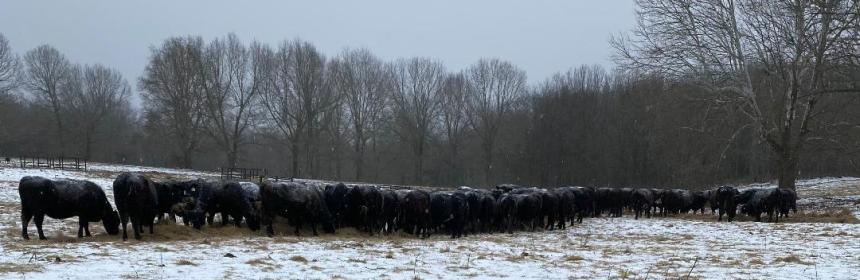
NOTE: Featured Photo | A herd of cattle at the Eric Eaves Cattle Farm. These cattle are the kinds of cattle agricultural experts like Bill Shannon and Cynthia Edwards say newer agriculture business should invest in. (Photo by Kenneth Lucas)