Monthly Archives: June 2023

Craighead County Jonesboro Public Library celebrates Asian American Pacific Islander Heritage Month
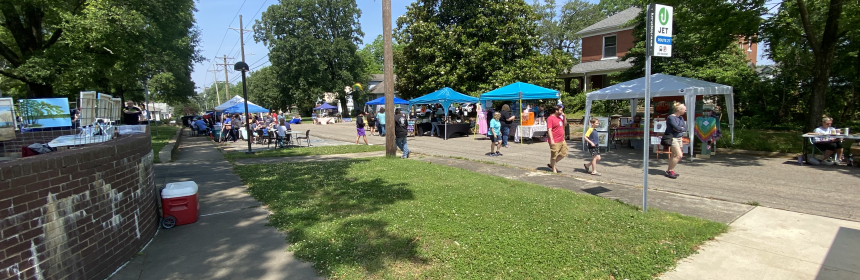
Library sponsored children’s author Thanhhà Lai for a talk, Q&A,

By Avery Jones | Editor

Delta Digital News Service

June 6, 2023

JONESBORO, Ark. – On the weekend of May 19 through 20, the Craighead County Jonesboro Public Library celebrated Asian American Pacific Islander Heritage Month. The Friends of the Library sponsored children’s author Thanhhà Lai for a talk, Q&A, and book signing from 5:30-7 PM. She also did a presentation earlier in the day for students.

 Lai discussed her books and how they connect to her life as a child when she fled the Vietnamese War with her family. She signed copies of her newest book, When Clouds Touch Us, published this month. It’s the sequel to her highly successful first book, Inside Out & Back Again, published in 2011.

The library hosted the Asian American Pacific Islander Heritage Festival from 10 AM – 2 PM on the front lawn. Many crafts and food vendors came to celebrate, and the library gave away free copies of When Clouds Touch Us. International students from ASU-Jonesboro kicked off the festival with a drum performance, and later, there was karate lessons, a cosplay contest, and a tai chi demonstration.

A variety of arts and crafts vendors attended, including art, jewelry, cosmetics, and clothes designers. Almost all of the vendors were small businesses local to Arkansas. 

Marissa Clark from True North Designs featured her artistic engravings. She does her work with laser engravers and has been doing engravings for three years. She has enjoyed drawing and working with wood since she was young, however. 

She has her own shop and can engrave any design and customize anything of any material. A few of the items featured at her stand included home decor, wall hangings, and earrings.
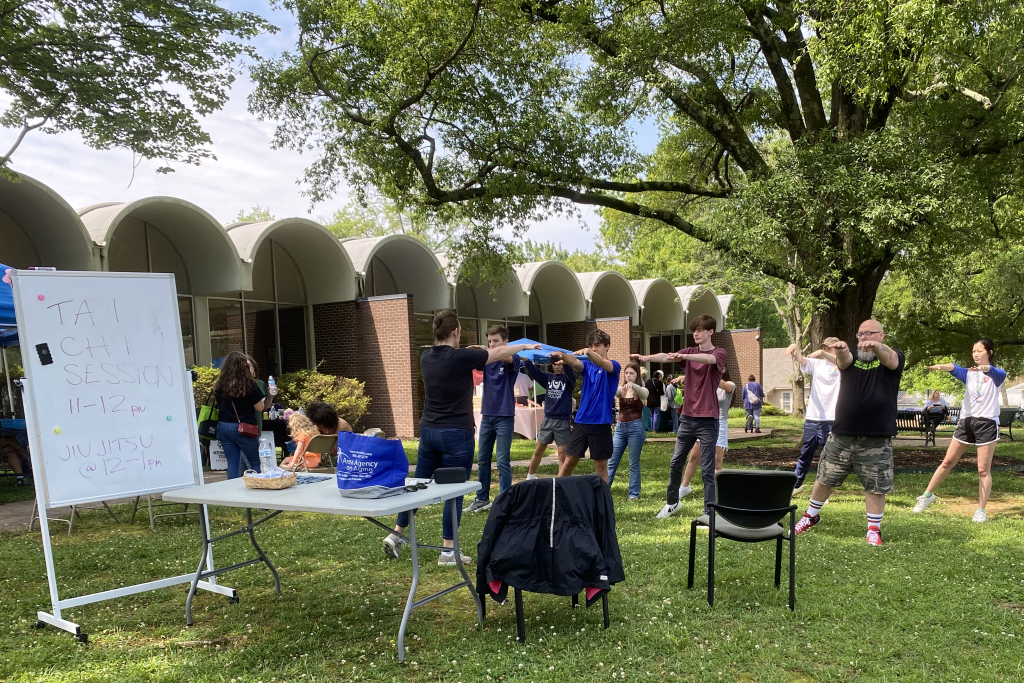
A tai chi demonstration by the East Arkansas Area Agency on Aging during the AAPI Festival at the library. Photo by Avery Jones

Chenoa Summers of Anthropocenic Art was there to display her paintings. The name is in reference to how her artwork reflects the current period of the Earth whereas her earlier work mostly focused on prehistoric animal life. 

Summers is a biologist who likes to paint the nature that she studies. She has three degrees in science and is currently working on a biology degree. She mostly does watercolor paintings but also crochets. She primarily sells her work online.

Britni from Rosemore Creative displayed her homemade cosmetic and hygienic products. She sells facial care, bath salts and bombs, wax melts, candles, hand and body soap, among other things. 

She’s been coming to the library’s festivals for many years, but previously sold bags and other crochet crafts. She wanted to expand the kind of products she made, so she started teaching herself to make hygienic and cosmetic products last year. She primarily sells online.

Glitter Critter Studios was selling handmade clothes, earrings, stickers, and more. Their designs were very colorful and bright, almost cartoon-like. 

Heather, one of the artists, said that her work is inspired by things from her childhood and also the exotic animals she rescues in her spare time. She has been a professional freelance artist for the past five years.

Glitter Critter Studios is an artist collective studio made up of three friends, including Heather, located in Memphis. This was their first time in Arkansas and first time at one of the library’s festivals.

Another designer, Alexandra of Xandra Page Co., displayed her handmade jewelry. She started making and selling her jewelry in 2020, looking for a creative outlet during the COVID-19 pandemic, but she’s been crafty from a young age and is self-taught.

Right now, Xandra Page Co. has turned into a full-time job for her. She also has a graduate degree in English but is enjoying where she’s at for the moment. She primarily sells online and also at some festivals. 

There were also some organizations there to represent themselves. The International Students Association from ASU-Jonesboro were there to talk about the kind of opportunities they offer for international students. This is the first time the association has been to the library’s festival, but they’ve been to lots of other events to represent and promote themselves.

They help to bring together international students on campus through various activities so that they can connect with others they have something in common with, get to know each other’s cultures, and become more comfortable in a culture that’s new to them.

The three international students from the association at the festival—Nihal, Mahita, and Pauline–showcased the diverse interests of the association, one being a computer science major, one a wildlife conservation major, and one having just graduated with a master’s in psychology, respectively.

A nonprofit organization called The Reform Alliance was also in attendance. Their focus is education equity for K-12 students in Arkansas. 

They raise awareness for all types of education options, including public, private, homeschool, and microschool. They also offer scholarships.

There were also a few food vendors there, such as Spice Girls Thai Street Food which soft-opened just this May. The food truck is an offshoot of the Sai Thai restaurant which closed in April. Spice Girls’ official grand opening will be June 1.

According to Valerie Carroll from Friends of the Library, the Craighead County Library hosts two festivals per year, and they choose a different theme each time. This is the first time AAPI Month has been the theme.

“I think that some of the folks from the Multicultural Committee are probably here at the event, but they do have a new committee where they’ve been trying to do some different things to widen out the cultural net, bring in some more people, and teach people who are here about different cultures,” Carroll said.


Avery Jones is a sophomore in the Department of English and Philosophy at Arkansas State University in Jonesboro. She can be reached at: avery.jones@smail.astate.edu


Note: Feature photo by Avery Jones 

Valley View School Board discusses new state legislation impact

Board tackles Arkansas Learns Act during summer meeting

June 12, 2023

Delta Digital News Service

By Caroline Cherry Averitt | Contributor

JONESBORO, Ark. – Last week, the Valley View School Board responded to the new Arkansas legislation by revising its board policies at the final board meeting for the 2022-2023 school year. 

   The Arkansas LEARNS Act, legislation signed into law in March, made changes to many policies in Arkansas schools. This legislation, a priority for Governor Sarah Huckabee Sanders since she took office, became controversial across the state. 

   Due to its impact on schools, Supt. Roland Popejoy introduced Arkansas LEARNS as, “the elephant in the room.” 

   Arkansas LEARNS raised the minimum salary for teachers to $50,000 and requires each certified teacher receive a raise of $2,000. The state provides some of the money needed to supply these pay increases. 

   Sara Osment, the assistant superintendent, said, “The school district did have to provide additional financial support to provide some differentiation between what we were provided by the state just to make it a competitive salary schedule.” 

   School board secretary Lee Lane said the biggest change the LEARNS Act will make for Valley View will be the pay raise for teachers. 

   “We’re not as funded as other schools within the region, and so we have to look at every penny,” Lane said. 

   “We’re not as funded as other schools within the region, and so we have to look at every penny,”

– Lee Lane, Valley View School Board Secretary

   Since Arkansas LEARNS requires a minimum salary of $50,000, schools like Valley View must provide competitive salaries for veteran teachers from other parts of the budget, rather than the state provided money. 

   “That law, really kind of took 15-year teachers and bumped everybody up to possibly what they were making. So, it gave no incentive or increase for those teachers that had seniority. So, we had to sit down and really look at our budget. Because that’s got to come from somewhere,” Lane said. 

   “That law, really kind of took 15-year teachers and bumped everybody up to possibly what they were making. So, it gave no incentive or increase for those teachers that had seniority. So, we had to sit down and really look at our budget. Because that’s got to come from somewhere,”

– Lee Lane, Valley View School Board Secretary

   He said he hopes in years to come, the board will be able to continue to give raises to experienced teachers. 

   In other business, the board voted to revise its policy due to Arkansas legislation concerning preferred names and pronouns of students, specifically with students identifying as transgender. 

   The new law requires teachers to call students by the name and pronouns listed on their birth certificate. The legislation allows parents to approve a name or pronoun change for their children.

   “We have had students that have wanted to or identified differently and wanted to change their names, but we have used a similar process to what is now going to be in law with regard to how (the legislation) addressed it,” Popejoy said. 

  “We have had students that have wanted to or identified differently and wanted to change their names, but we have used a similar process to what is now going to be in law with regard to how (the legislation) addressed it,”  

– Valley View School Board Superintendent Roland Popejoy

   He said the legislation required the board to approve a specific policy, but it will not cause a major change in the districts existing procedure. 

   “We always want to actively involve our parents in that process, and help to make sure our children feel apart and welcome, but it’s very important that the parents are involved in that process,” Popejoy said. 

   The Arkansas legislation included some optional policies the board could approve or deny at its discretion. The only optional policy the board rejected would change requirements for parental leave for teachers. 

   The legislation increased maternity leave, for new biological mothers and foster mothers of children younger than 12 months old, from four to 12 weeks. 

   The board decided against the approval of this optional policy due to budget concerns. The board will revisit the regulations when clearer rules and regulations become available. 

   “There may be items that have fiscal impact on the district that we are not privy to or aware of as an unintended consequence of the law. And so, we want to make sure that we are watching that and not obligate ourselves to funding that benefit whenever there is going to be a shortfall on what the state will provide,” Popejoy said. 

   He said the state would provide the wages for substitutes for teachers taking parental leave, but would not pay the teacher’s salary, which would need to be paid by the district. 

   “We want to provide benefits that meet the needs of our staff, but also focus on what everybody is eligible for. So, if we have staff members that have already had their children, then they would not be eligible for that necessarily,” Popejoy said. “If we have individual staff members that are not able to have children, you know, that would not really be equitable for them.” 

   Both Popejoy and Osment began their roles as superintendent and assistant superintendent this academic year.  

   “(There have been) lots of changes and learning a lot of things but overall, I thought it was very successful year and we’re glad to have one year and our belts,” Osment said. 

   Popejoy said he feels optimistic about next school year, despite the many changes. 

   “I’m excited for the opportunity to keep making good impact on our kiddos,” Popejoy said. 


Caroline Cherry Averitt is a junior at Arkansas State University from Jonesboro, Arkansas. Her major is multimedia journalism with a minor in writing studies concentrating in creative writing. She can be reached at: caroline.averitt@smail.astate.edu


Note: Feature photo by Caroline Cherry Averitt.

Emergency services, nonprofits provide NEA with much needed care during emergencies

Prepping for severe weather has become standard amongst service providers

Delta Digital News Service

UPADATED August 29, 2023

By Avery Jones | Editor

JONESBORO, Ark. – A nearly two weeks after Hurricane Hilary brought torrential rain and gusty winds to Baja Mexico and Southern California, Floridians take shelter as they brace for Hurricane Idalia to hit the state. This year National Oceanic and Atmospheric Administration (NOAA) forecasters with the Climate Prediction Center, a division of the National Weather Service, predict near-normal hurricane activity in the Atlantic. The hurricane season runs from June 1 to November 30.

Although hurricanes form in the Oceans and primarily the Atlantic, thunderstorms and tornadoes are often spun into neighboring states. Earlier this year, two tornadoes, both EF3s, hit the Little Rock area and later the city of Wynne on March 31, causing extensive damage.  

Although there wasn’t much severe damage from the storms in northeast Arkansas region, the area received plenty of weather alerts. However, a late season outbreak of tornadoes on December 10, 2021 caused extensive damage to the city of Monette. Along with the previous year’s EF3 tornado on March 28, 2020 which hit the city of Jonesboro and including the Mall at Turtle Creek in Jonesboro, severe weather preparation is more pertinent than ever.

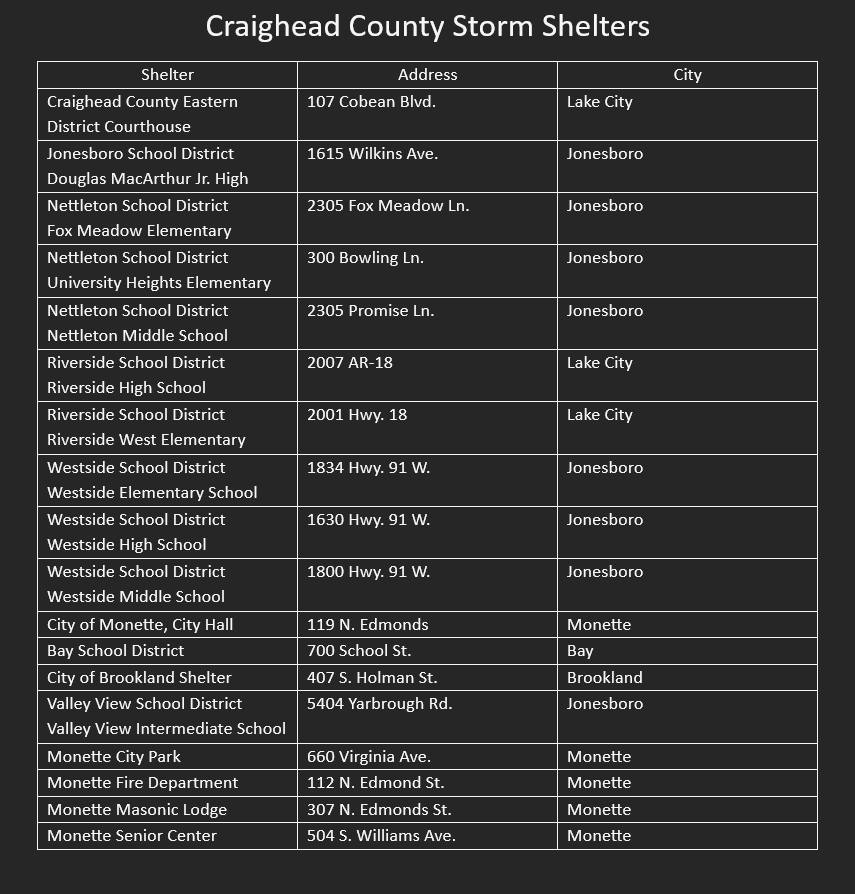
There are multiple ways to prepare for severe weather, and finding the proper shelter as well as insurance in case of damage to personal property are among the most important.  

Craighead County Judge, Marvin Day, stated that when the county is under a severe weather warning, especially for tornadoes, they activate the Emergency Operations Center. During severe weather, the center monitors weather conditions so they’ll be able to alert proper officials or departments that need to take action.

Officials regularly make sure that highway and road departments is prepared so that they can clear roadways of debris and fallen trees if needed. They also keep the general public informed of weather conditions and significant damage.

Another significant aspect of severe storm preparation is insurance. Depending on the individual policy, insurance could possibly help a person to get back on their feet if their personal property is damaged by a severe storm.

INSURANCE

According to local insurance agent Randy Smith, insurance rates and claims generally increase after a natural disaster. However, factors of rates and claims vary significantly across agencies and policies, and one important factor is based on losses and how much the company has to pay out.

Additionally, severe storms can cause claims to still come in years after the fact. For instance, Smith’s office is still seeing claims from a hailstorm on April 15, 2022. This is usually due to the recent high winds which can blow off roof shingles, and when roofers repair the damage, they may find additional hail damage that hadn’t been seen before.

“Make sure that your company but even more so that your agent that you have, that they are preparing you to make sure that you at least have the opportunity to have the coverages that you are going to need when this event occurs.” Smith said in order to prepare for a severe weather event.

– Randy Smith, Insurance Agent

He explained that his office uses “the doctor’s approach.” They begin by asking a series of questions, the customer explains their situation, and the agent gives their professional opinion about what they believe the customer needs. 

The price is never discussed as the agent is often focused on customer needs for a particular situation. It’s entirely up to the customer whether or not the price is worth what the agent offers them.

According to Smith, most customers are only concerned with getting the best product for the least money, but it’s also important for the person to consider what kind of situation they’ll be in with whatever they bought if they suffer a disaster. The agent’s intention should be to educate the customer about that situation and prepare them.

After a disaster, the customer can go through the claims process. If a house is uninhabitable due to severe weather, and if it’s offered in the policy, the person can be given some money to live in a hotel or apartment: this is called additional living expenses. Also, if a car is damaged and the person has rental car coverage, they can get a rental car for the amount that the specific policy offers. 

In his office, Smith says that customers can call the agent to have them involved in the process by filing the claim for the customer and then the agent can continue to check up on the customer after the fact. However, the office doesn’t have the authority to make determinations on claims or pay out money. That happens from the company; the agent acts as a liaison between the company and the customer.

FOOD NEEDS

However, insurance isn’t the only way to recover after a disaster. There are many charity and nonprofit organizations that offer relief to victims of severe weather in the Northeast Arkansas area.  

According to chief executive director Christie Jordan, the Food Bank of Northeast Arkansas makes sure that affected families have food after disasters. They reach out to the community to supply water and snacks to victims and volunteers helping clean up. During the recovery period, they provide families that are rebuilding their lives with food.

Their response changes based on what the community in question needs. They often work through their network of partner agencies and local churches to distribute food. They currently have a distribution center set up in Wynne to receive and donate food to victims of the recent tornado. They work with city officials to ensure that resources get to the right places.

The Food Bank of NEA works closely with other Feeding America food banks in Arkansas and other states and are part of a disaster preparation cohort to work together and plan in advance. They make sure that supplies are already staged in various locations so they can respond quickly as they did in Wynne.

Another organization that helps after disasters in the general area is the Arkansas Southern Baptist Convention Disaster Relief. They’re based in Little Rock, but they have units situated all over the state, including several in the Northeast Arkansas area.

According to Randy Garrett, the disaster relief director for the Arkansas Baptist State Convention, their main job is to supply resources to the public after a disaster. Primarily, they do feeding as well as chainsaw work and flood recovery. They also have incident command to provide leadership and guidance after a disaster.

Randy Garrett

The organization is part of the North American Mission Board Send Relief. They can reach out to other organizations across the state or in other states for help if needed. There are several thousand of these organizations. The Arkansas Baptist Disaster Relief has traveled to help other states as well, such as during Hurricane Sandy.

They also have chaplains, and they provide the training for the chaplains themselves. The chaplains talk to the public during a crisis to listen to the survivors and help them work through it.

They have a new program called the Box Ministry where they help victims sort through the wreckage of their home after a disaster to find keepsakes and other important belongings. They bring boxes to contain the findings. While they’re helping, they spread the message of Christ.

Sometimes this process can take several days. They help to put the box in a safe place until the victims can start to rebuild their lives.

Arkansas Baptist Disaster Relief usually comes in right after the first responders. They stay in that community for as long as it takes to get people taken care of. Currently, they’re still sending teams into Central Arkansas and Wynne to help after the tornadoes.

Each worker has to get trained. Arkansas Baptist Disaster Relief hosts training events across the state. They also provide all the necessary personal protective equipment. They currently have over 2,500 volunteers. They also work alongside other churches in the local area of the disaster that want to help.

“There’s other avenues to help people in times of crisis, but I think the main thing is faith is very important. I’ve seen it move mountains,” Garrett said.

“There’s other avenues to help people in times of crisis, but I think the main thing is faith is very important. I’ve seen it move mountains,” Garrett said.

– Randy Garrett, Director of Disaster Relief

“People of Arkansas are very resilient. You think…how will they ever recover? And you go back maybe six months later and you see the rebuild process…they really bounced back and they’ve got their lives back. It’s just a tribute to the guys and ladies of Arkansas…when something happens, we’re down, but we’re not out.”

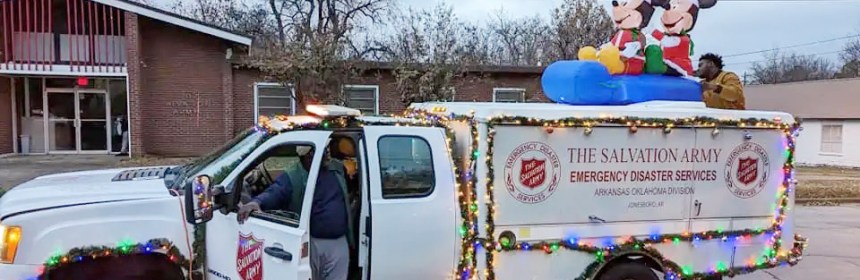
The Salvation Army in Jonesboro is another organization that offers disaster relief. They serve eight surrounding counties with a staff of three, and usually about fifty to sixty volunteers during the holiday season and fifteen to twenty-five the rest of the year.

Captain Charles Smith and his wife Captain Teri Smith are the commanding officers. According to Charles Smith, his team goes on on-site as soon as a natural disaster happens. They offer food to both victims and first-responders. Their Disaster Mobile Canteens also provide things like water and coffee.

They also offer emotional and spiritual care. They go out and talk to people to encourage them and listen to them. 

After an initial hit, they help do long-term recovery work. For instance, the divisional disaster director Laurie Fried and her team based in Oklahoma City have been traveling several times a year to visit those affected by the tornadoes in the Trumann area a couple of years ago.

“What they offer is solutions to help people get back on their feet,” Smith said. “Whether it’s through monetary donations or gift cards or other ways to help meet their needs. We work alongside…other agencies…to help get people back on their feet and get them established again, getting them into homes, getting them relief, whether it’s through food, financial assistance with rent or utilities, things of that nature.”

The agencies that Salvation Army works alongside include Samaritan’s Purse, Red Cross, and the Baptist Foundation.

Although natural disasters are undoubtedly devastating, there are many organizations willing to help those affected and also ways to help oneself be prepared before a storm. 

-30-


Avery Jones is a sophomore in the Department of English and Philosophy at Arkansas State University in Jonesboro. She can be reached at: avery.jones@smail.astate.edu