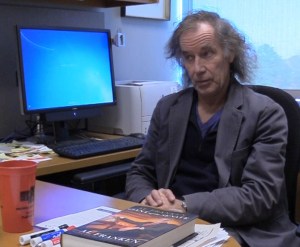
Meet Robin Myers, the “calm, steady force” named to return as ASU system interim president.

Story by DDNS Reporter Jerry Don Burton
January 25, 2026
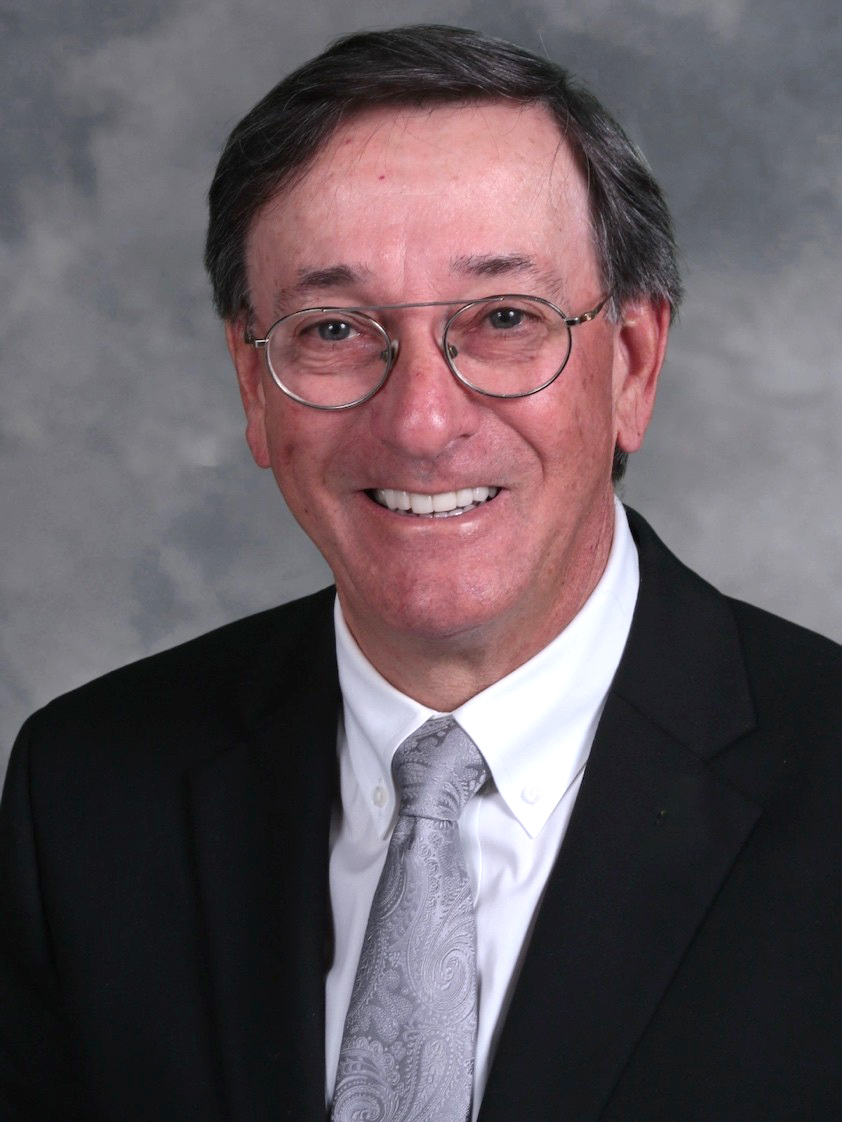
The Arkansas State University (ASU) System Board of Trustees named Robin Myers to return as interim president.
Myers, who previously served as ASU system interim president in 2024, was again named to the position on Dec. 12, 2025, following the previous president’s resignation. He said he was honored to return.
Jeff Hankins, ASU system vice president for strategic communications and economic development, said the chancellors and system staff were relieved by Myers’ second appointment. He said they are confident he was the best individual to step back into the interim president role.
“Dr. Myers is a calm, steady force who’s very experienced,” Hankins said.
In his role, Myers said he is responsible for enacting board policies and overseeing the operation of the system office as it interacts with each campus under the ASU system.
The ASU system oversees the educational, cultural and economic development of six campuses across Arkansas (Arkansas State University, Henderson State, ASU-Beebe, ASU-Newport, ASU-Mountain Home, ASU Mid-South and ASU Three Rivers) and several other satellite institutions.
Regardless which campus they belong to, Myers said, students should know the ASU system works on their behalf to support and assist them.
“There is a group of people working on their behalf and I think that’s important to understand for students,” Myers said. “Unfortunately, because we are remote from the campuses, it is hard to have that interaction with students.”
Despite this limited contact, Myers said over 30 years of interactions with students in various educational positions gave him the experience needed to succeed as interim president.
Myers served as chancellor of ASU-Mountain Home for 11 years from 2012 to 2023, where he said he learned how students integrate and work together with campus operations.
“I think those are the things, just having that exposure and experience over the years, that provide me with a good background to understand what our campuses are going through on a day-to-day basis and the kinds of support and conversations that they need from me,” Myers said.
As a child, Myers said he worked closely with his dad’s business, gaining experiences and opportunities that shaped his current skill set.
The interim president said his greatest strength is his ability to listen to people and understand their perspective. He said he is not quick to judge or make decisions, but instead exhausts all information on a topic before moving forward.
However, Myers said his methodical nature is sometimes a weakness.
“I try to maybe do too much or get too involved sometimes, just because I want to help and assist,” Myers said. “Maybe I should take a step back occasionally.”
Jerry Morgan, ASU system board of trustees chair, said the board named Myers because of his previous experience as interim president and comprehension of system priorities.
Hankins said the board of trustees turning to Myers again is a significant compliment. He said he does not recall any particular challenges from Myers’ first appointment as interim president.
“If anything, we came away disappointed that he couldn’t have stayed on as president,” Hankins said.
The interim president said it’s too soon to tell if his current appointment will be different or similar to his first, although the circumstances are similar.
Myers was first named interim president in 2023, following the resignation of the second system president, Chuck Welch.
In 2024, Myers stepped down after the board completed its search for a permanent system president, naming Brendan Kelly to fill the position. However, Kelly resigned in early December 2025 upon being offered to serve as president of Eastern Michigan University, his alma mater.

Myers said he enjoyed his time working with Kelly through both transitions.
“Just an exceptional person, incredible skills and ability,” Myers said. “To be able to go back to his hometown and the school in which he graduated and be the president of that, no one can blame him.”
Hankins said the board of trustees held a special meeting to accept Kelly’s resignation. Soon after, at the next scheduled meeting, the board named Myers to be interim president.
Myers said the timing of the transition required him to pivot quickly.
“In addition to trying to transition and get an apartment and get moved to Little Rock, I had to also try to celebrate the holidays with my family,” Myers said. “It was a challenge, but it was also exciting and it worked out perfectly.”
In a statement published after Kelly’s resignation, A-State Chancellor Todd Shields said continuity of purpose is vital during system president transitions.
“As the trustees identify a new system president, our job is to stay the course and stick to the vital mission of educating tomorrow’s leaders and bridging our four-year and two-year colleges, industry and workforce needs for the ultimate good of Northeast Arkansas and the entire state,” Shields said.
Myers said he wants to be remembered as someone who cared about people, supported students and worked on behalf of everyone to find the best solutions for every issue presented to him.
“In the end, everything we do is focused on providing the best educational experience and opportunities we can for our students,” Myers said. “It is both an honor and a privilege to get to work with these folks.”
Myers will serve as interim president until the board of trustees completes its search for someone to fill the position in a long-term capacity. The board will meet again Feb. 13 to outline next steps in the search for an ASU system president.