Tag Archives: Environment

Earth Day: A great time to review the natural state’s environmental practices, policies

Story by DDNS Reporter Jerry Don Burton

April 16, 2026

From city-wide cleanups to research demonstrations, several organizations are gearing up to host events for Earth Day in Arkansas.

Earth Day, held on April 22 every year since 1970, is a global event observed to spread awareness and support for environmental issues and practices.  

Melissa Dooley, director of the Arkansas State University environmental, health and safety office, said Earth Day assigns a specific day in which people can sit down and talk about what they are doing or could be doing to help the environment.

“Earth Day is a kind of celebration and a recognition and awareness of things that we can do to help maintain and improve our environment,” Dooley said. “But it’s also a celebration of the Earth as a whole and that we all are here sharing this big rock floating in space together and it’s all our home.”

EARTHDAY.ORG, the global coordinator for Earth Day events, announces a unique theme for Earth Day every year. This year, they chose “Our Power, Our Planet.”

Dooley said centering Earth Day around a theme keeps everyone on their toes and prevents the same events from happening each year. 

Upcoming events

Over 10,000 Earth Day events are scheduled worldwide. More than 60 official EARTHDAY.ORG events are registered in Arkansas alone. 

EARTHDAY.ORG offers an interactive map on its website with the locations and dates of all registered events.
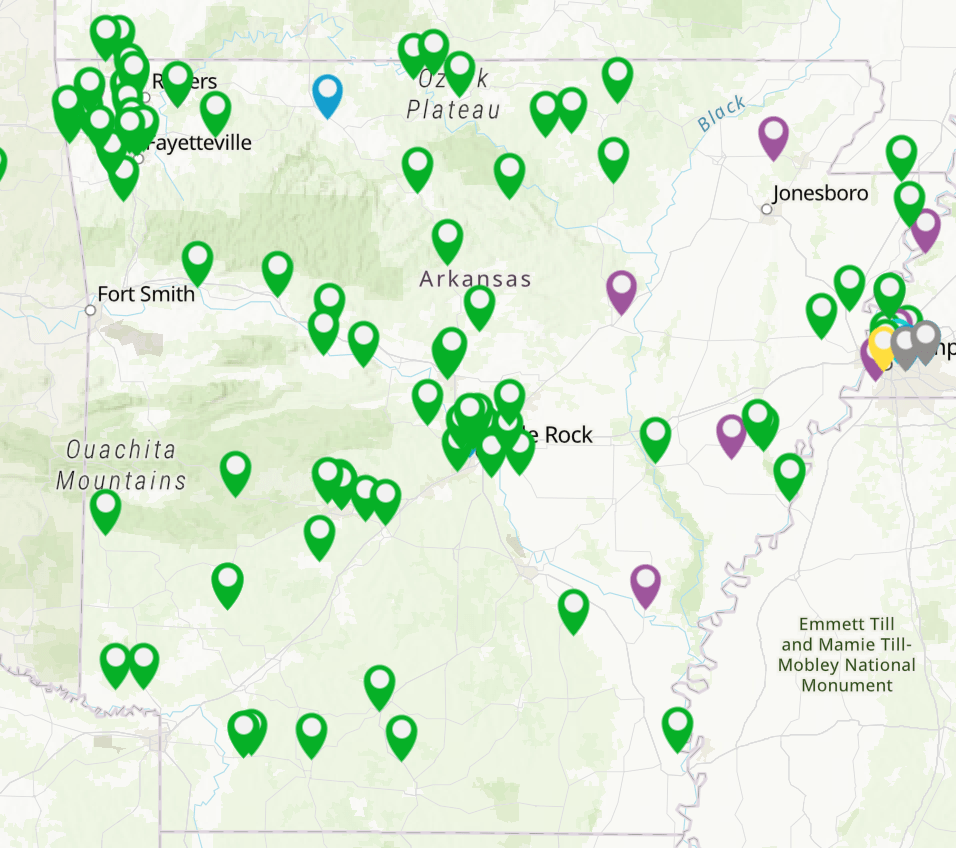
A map of Arkansas with pins denote Earth Day events registered through EARTHDAY.ORG. Organizers registered over 60 events in Arkansas as of April 16, 2026. MAP GRAPHIC COURTESY OF EARTHDAY.ORG.

Keep Arkansas Beautiful lists seven pages of environmentally focused events across Arkansas on its website, though not all are organized specifically for Earth Day. 

Keep Arkansas Beautiful is a division of the Arkansas Department of Parks, Heritage and Tourism and a certified affiliate of Keep America Beautiful Inc.

In Jonesboro, an Earth Day event is scheduled from 10 a.m. to 2 p.m., April 22, at the Heritage Plaza Lawn on the A-State campus. 

Several clubs and organizations will table at the annual event to spread awareness on several topics related to Earth Day. Dooley said some participants will even present their research. 

“We also invite a lot of local vendors who might be interested in setting up a table and talking about what they’re doing for environmental progress, sustainability and whether they have a focus on that this year,” Dooley said. 

An art contest is also scheduled, which will feature works made from recycled materials by local primary school students.

Dooley said the main goal of the event is to reach out to the younger generation and open their eyes to their impact on the world and the importance of sustainability. 

“It’s making them knowledgeable, so as they grow up, and they see mom and dad throw something out the window, they’re like, ‘you shouldn’t litter, mom and dad,’” Dooley said. “If we get everybody as they’re young, they grow up with these good responsibilities of being a steward for this planet and that also gives an opportunity to start thinking of things outside the box that this generation didn’t think of.”

Beverly Parker, Keep Jonesboro Beautiful commission chair, said giving children early experience with practices like litter removal and proper trash maintenance will establish more eco-friendly habits in the future.

Dooley said while the event is generally geared toward elementary and middle school students, anyone can come out and learn something.

The event is funded entirely by donations and volunteering. The EHS director said her department sponsors the event alongside Jennifer Bouldin, dean of the science and mathematics department and director of the ecotoxicology research facility. Dooley said this event represents a significant collaboration between several campus organizations. 

One town over and three days later, Paragould will host a city-wide cleanup from 8 a.m. to noon. The event is led by volunteers and designed to bring together residents and local businesses to improve public areas.

More Earth Day events across the Arkansas Delta are listed below:

  • Marianna/Lee County cleanup
    • When: April 18, 2026, from 8:30 a.m. to 12:30 p.m.
    • Where: No. 1 Court Square, Marianna, Arkansas
    • What: Volunteers will clean up litter in downtown Marianna
    • Coordinator: Pat Audirsch, 870-821-1403, pataud@sbcglobal.net 
  • Lake Chicot cleanup
    • When: April 18, 2026, at 9 a.m.
    • Where: Lake Chicot State Park
    • What: Volunteers will clean up areas across Lake Chicot State Park 
    • Coordinator: Brandi Hanson, 870-265-5480, brandi.hanson@arkansas.gov 
  • Helen-West Helena cleanup
    • When: April 25, 2026, from 9 a.m. to 1 p.m.
    • Where: 319 Philips St., Helena-West Helena, Arkansas
    • What: Volunteers will engage in a city-wide cleanup across Helena-West Helena
    • Coordinator: Chris Schaffhauser, 501-410-5562, schaffhauserchris@gmail.com 

More important than ever

Cherie O’Mary, executive director of the Arkansas Recycling Coalition, said Earth Day excels at highlighting advancements in environmental policies, practices and issues. 

Dooley said one of the biggest environmental issues facing Arkansas now is the amount of trash on the interstates, highways and parking lots.

“You can go anywhere, there’s just trash everywhere,” Dooley said. “All of that trash eventually makes it ways into our stormwater systems and our rivers, our streams, our lakes, where it clogs up the heavy, dense areas in the woods where animals are, and it affects their habitats as well.”

Parker said areas with poor litter or debris management give off an unsafe feeling. 

Arkansas Department of Transportation assistance chief engineer for maintenance, Steve Frisbee, said litter is a problem, from the largest interstate to the smallest back road.

Emma Goad, a writer for ARDOT, said the department spent about $8 million on cleanup efforts. She said the cost comes from several programs, contracts and other services intended to keep Arkansas highways litter-free.

Frisbee said organizations like Keep Arkansas Beautiful help engage the community in cleanup efforts and reduce the environmental damage litter causes.

A litter report form may be filed on the IDrive Arkansas website here.

Recent environmental policy also highlights the significance of Earth Day. 

On July 25, 2025, Arkansas Republican Representative Bruce Westerman introduced the Standardizing Permitting and Expediting Economic Development Act

The SPEED Act limits the scope of the National Environmental Policy Act and changes the environmental review of major federal actions under NEPA to restrict the number of federal actions that trigger NEPA review and expedite the review process. 

According to House Majority Whip Tom Emmer, more than 300 stakeholders support the bill. Organizations like the Aluminum Association, Steel Manufacturers Association, Data Center Coalition and even Google state they support the SPEED Act because it will accelerate projects and lower costs.

Despite this support, the bill remains controversial legislation.

David Watkins, director of government affairs for the climate and energy program at the Union of Concerned Scientists, said this bill means bad news for the environment.

“It includes goodies like shielding fossil fuel projects from meaningful review or public input before they are permitted, then shielding them from legal recourse after they are approved,” Watkins wrote in a UCS article. “Circumventing science and denying reality will only lead to greater harm to our environment and worse outcomes for communities.”

The SPEED Act is pending approval from the Senate after the House of Representatives voted to pass the SPEED Act on Dec. 18, 2025.

Despite the controversy surrounding this bill and others, Dooley said she thinks, generally, Arkansas does its fair share for the environment.

“We have beautiful parks, beautiful places to go and visit, enjoy and we have some rules in place,” Dooley said. “Could we do better? Yeah, I mean, there’s always room for improvement. But I think we’re headed in a good direction.”

Dooley said stormwater permit requirements are an example of good policy in Arkansas.

The Arkansas Division of Environmental Quality requires any construction project over one acre to apply for a stormwater permit under the National Pollutant Discharge Elimination System program. 
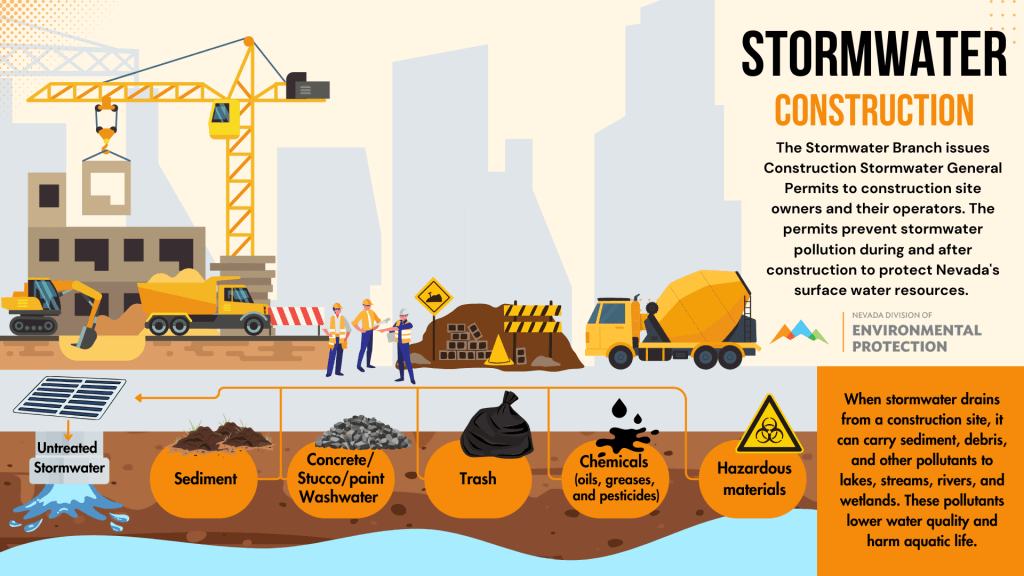
An infographic illustrates how rain or melted snow carries construction waste like concrete, oils and pesticides, into stormwater drains. These construction pollutants cause ecological damage when they drain into bodies of water. INFOGRAPHIC COURTESY OF NEVADA DIVISION OF ENVIRONMENTAL PROTECTION.

According to the ADEQ website, stormwater carries dirt, chemicals and other pollutants that could harm water quality. Stormwater permits regulate this runoff and prevent pollutants from entering streams, creeks, ditches and other waterways.

While Dooley said the laws in place and penalties for breaking them are effective, she knows there will always be bad actors. She said this is why speaking up is important.

The ADEQ pollution complaint form may be found here.

O’Mary said Arkansas’ glass recycling programs are another example of how Arkansas is leading the charge in certain areas of sustainability.

The ARC executive director said the real impact of Earth Day may only be felt in the future. Still, O’Mary said now is always the best time to get involved.

Keep the conversation going

Although Earth Day is only celebrated on a single day, Dooley said awareness should continue year-round. She said people are constantly interacting with the environment, making Earth Day an everyday conversation. 

O’Mary, who has served the recycling industry for 15 years, said she feels Earth Day is more prevalent now than in previous years. 

In her five years as the EHS director, Dooley said she noticed younger people becoming more interested in sustainability. Dooley, who also sits on the Keep Jonesboro Beautiful commission, said the community has expressed interest in Earth Day events like city cleanups.

“I was relatively surprised with the amount of people that really want those types of things,” Dooley said.

O’Mary and Dooley said one does not have to wait until Earth Day to start taking care of the planet. 

Dooley said many people do not realize all the different ways they can participate in Earth Day.

O’Mary said calling the local solid waste district and asking how to offer support is a good first step for those interested in recycling but unsure how to start.

The ARC executive director said she is constantly on the phone, helping direct people to where they can recycle unwanted items.

“That’s the ultimate goal, keep it out of the landfill,” O’Mary said. “Reuse, reuse, reuse.”

The ARC may be contacted by calling 866-290-1429 or emailing mail@recycleark.org.

Dooley said events like clothing swaps and practices like electronic recycling are things people don’t think about often, but still help the environment.

The EHS director said, even if Earth Day did not exist, people would still raise awareness for environmental issues and engage in eco-friendly practices. 

“I think we, as a race, as a human race, all recognize that something should be done,” Dooley said.

More information about Earth Day, local events and environmental issues may be found linked below:

Pollution Control and Ecology Commission adopts new business plan for Used Tire Program

Story by DDNS Reporter Jerry Don Burton

March 1, 2026

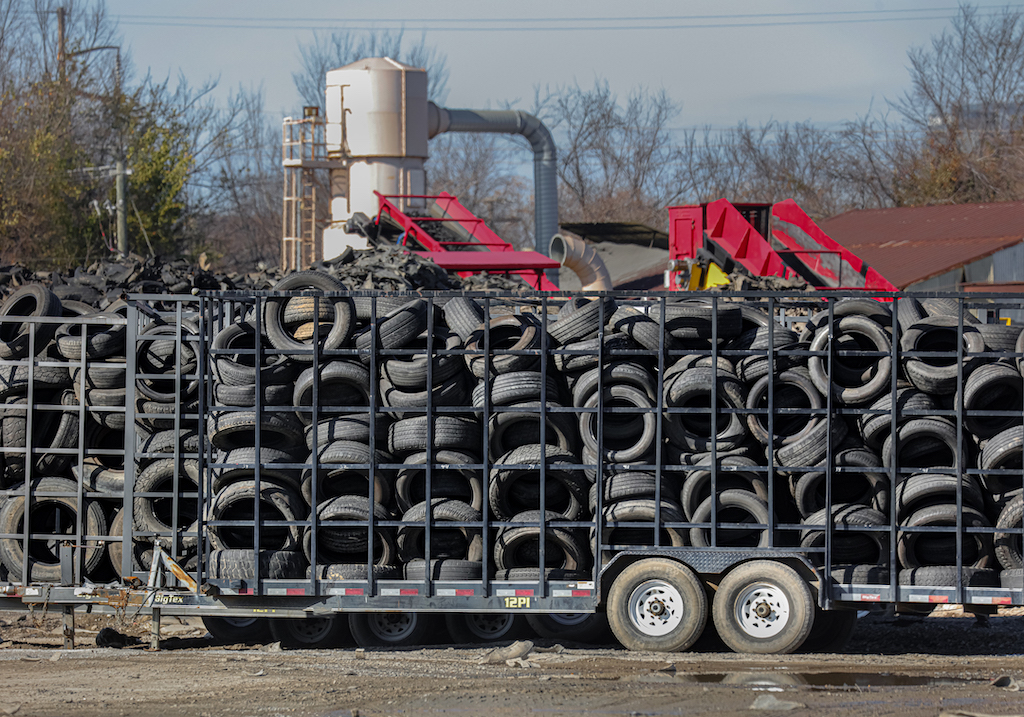
Loads of tires sit on trailers at the Davis Rubber Company facility in east Little Rock in December 2022.

The Arkansas Pollution Control and Ecology Commission (PC&EC) adopted a new business plan for the District 4 Used Tire Program (UTP-4), increasing reimbursement rates to $4.84 per tire in Southeast Arkansas.

Bailey Taylor, chief environment administrator for the Arkansas Division of Environmental Quality, presented the UTP-4 business plan at the Friday, Feb. 27, PC&EC meeting.

Taylor said the plan is structured to address the backlog in Southeast Arkansas tire processing and resulting health and environmental concerns.

“For human health and the environment, we’re looking at getting these tires off the ground,” Taylor said. “There’s been almost two full quarters that tires have not been picked up. We’re getting lots of calls that tires are stacking up all over the district.”

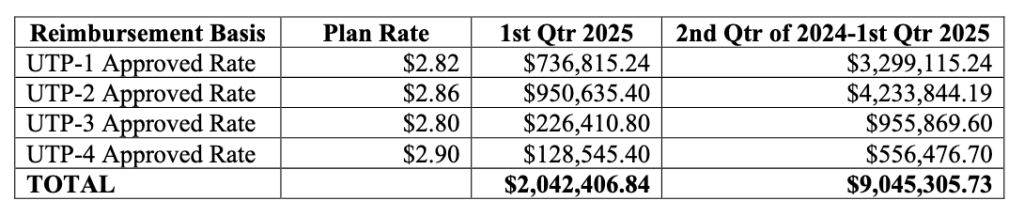
The plan proposes increasing the reimbursement rate per tire from $2.90 to $4.84 in District 4, which encompasses Southeast Arkansas. Taylor said this increase is based on administrative, processing and transportation costs, including costs for an out-of-state contracted processor.

Courtesy of the Arkansas Pollution Control and Ecology Commission.

Taylor said she recommended the plan only be approved temporarily for one or two quarters to establish a collector, transporter and processor to manage the tires in Southeast Arkansas. Then, she said, they would evaluate how to save costs and return with a revised plan.

“We’re hopeful that with just a quarter that they can pick up the backlog and also what is produced this quarter,” Taylor said. “And then go out for bid at a much more reasonable rate.”

However, Justin Sparrow, director of the West River Valley Solid Waste District in Clarksville, Arkansas, said this plan may do more harm than good.

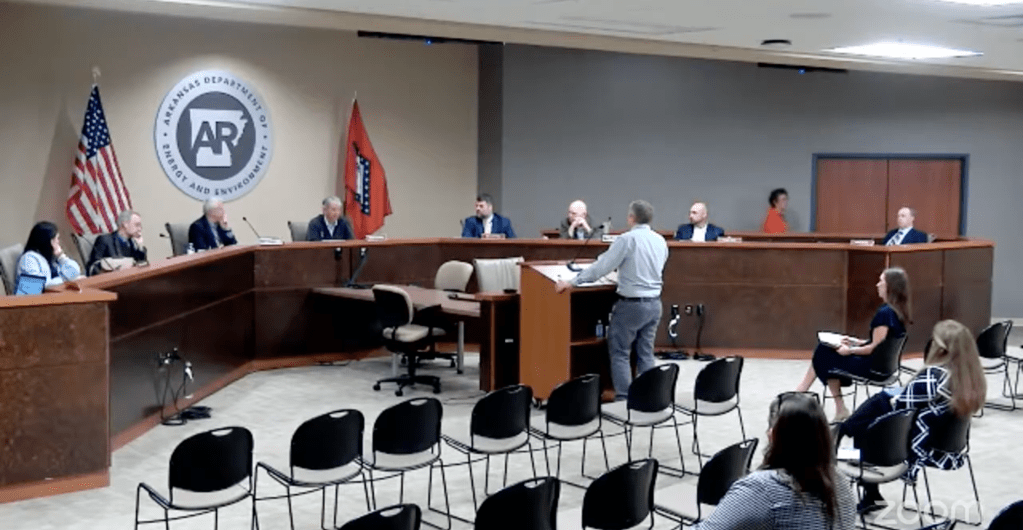
Justin Sparrow, director of the West River Valley Solid Waste District in Clarksville, Arkansas, presents his concerns regarding the new business plan to the PC&EC.

“My major concern with the proposed reimbursement rate for UTP-4 being $4.84 is that this will quickly deplete a fund that is already in the red,” Sparrow said. “By statute, once that money runs out, DEQ has to prorate what they send out to all four districts.”

Prorate is a verb, meaning to allocate or distribute funds pro rata, or proportionally. Taylor said she wants to avoid prorating if possible.

Sparrow said if the fund runs out, the other three districts will feel the effect. 

Sparrow operates in District 1, Northwest Arkansas, where the reimbursement rate is $2.82 per tire. He said his district collects and processes 360,000 tires annually from 11 counties.

“I think UTP-4 should probably reopen the bid process and take another look at this before this commission approves a rate of $4.84,” Sparrow said.

Following Sparrow’s comments, PC&EC Chair Al Eckert III asked Taylor if the new reimbursement rate would result in a quicker shortfall, or deficit.

Taylor said they already see a shortfall between $300,000 and $400,000 every quarter with the current rates. She said any reimbursement rate over $2.31 per tire will result in a shortfall and the new rate would contribute to an extra $150,000 deficit for two quarters. 

Charlie Spakes, district 4 commission member, said the out-of-state contractor might be taking advantage of the situation. 

“It just seems like the cost is way higher, they have us kind of over a barrel where we have to get these tires picked up and they kind of have us hostage at this $4.90, compared to everyone else,” Spakes said.

Taylor said while the processing cost per tire is higher than other districts, the extra transportation cost inflates the rate much more.

Once the discussion concluded, the PC&EC passed a minute order adopting the business plan.

In other business, Angela Russell, mayor of Tontitown, Arkansas, continued asking the commission for help with her city.

Aerial view of the Eco-Vista Landfill in Tontitown, Arkansas. Many Tontitown residents claim the landfill produces dangerous fumes.

Tontitown citizens and government officials, including Russell, have attended several PC&EC meetings to seek help regarding declining air quality from the nearby Eco-Vista Landfill.

Russell said she will keep voicing her concerns and asking for stricter rules or regulations. She said if something catastrophic does happen, someone will be held accountable. 

“I want it recorded that citizens have come here to ask for help,” Russell said. “Nothing has been done to alleviate the problem.”

She said her grandson has made multiple hospital visits as a result of the dangerous fumes emitted from the landfill. 

“I myself have had to go to the hospital in the middle of the night because I woke up and the fumes were so strong in my bedroom I couldn’t breathe,” Russell said.

After the mayor’s comments, Eckert asked Taylor to address Russell’s concerns and prepare an update for the next meeting.

The PC&EC will meet again at 10 a.m. March 27, in the Arkansas Department of Energy and Environment’s Commission Room. Meetings are also livestreamed on YouTube.

Jonesboro Mayor Harold Copenhaver Provides State of the City

Story by DDNS Reporter Shailey Wooldridge.

Jonesboro Mayor Harold Copenhaver.

During the annual meeting, Jonesboro Mayor Harold Copenhaver addressed plans to grow the city’s population to 100,000 people, the city’s strong financial health, and projected 2025 projects and revenues.

The mayor spoke for around 30 minutes to a packed crowd at Embassy Suites.

“The state of the city of Jonesboro, Arkansas is strong. It’s filled with potential because of the people it’s filled with,” Copehaver said. “Jonesboro is anything but static.”

Copenhaver said the city has $33 million in reserves and projected 2025 revenues of $93 million. Its achievements in 2024 include a 106-ton neighborhood cleanup, a revived glass recycling program, and numerous park and infrastructure improvements.

He said preparing for 100,000 people will require constant effort to maintain the city’s growth and prosperity.

This month, Jonesboro will break ground on the $70 million Sportsplex, which Copenhaver said will increase revenue for Jonesboro businesses.

Additionally, he said plans for repairing and adding miscellaneous streets, sidewalks, and road overlay projects will cost another seven figures.

“Among the most critical projects that need funding is extensive work on South Caraway Road and the associated pedestrian accommodations,” Coperhaver said.

The city will fund foundational pieces of the master parks plan, provide new vehicles and equipment for the police and fire departments, and update the Jonesboro E-911 center.

 He said community engagement is necessary to address crime, provide opportunities for youth, and support local nonprofits and businesses.

Copenhaver said quality of life for parents is knowing their kids can safely cross streets, call 911 in an emergency, and receive a kind and experienced dispatcher on the other end.

“We all love to think big, but we can’t overlook the basic responsibility as leaders of this community. I believe, like you, we have a moral responsibility, a moral mandate, to prioritize projects that will save lives,” Copenhaver said. “Kids can’t be it if they can’t see it.”

Brent Floating Farms aims to “revolutionize agriculture”

Brent Floating Farms, a local agricultural initiative started by a husband-and-wife duo, is the beginning of a dream to discover more sustainable methods of farming

Delta Digital News Service

Monday, May 13, 2024

By Avery Jones | Editor

PARAGOULD, Ar. — Brent Floating Farms, a company headquartered in Paragould, is experimenting with sustainable agricultural methods. Headed by husband-and-wife duo Frank and Cinda Brent, the goal is to grow food in a way that is environmentally conscious and organic while at the same time profitable and accessible.

According to Frank Brent, their method is aquaponics, which he describes as “hydroponics and aquaculture mixed together.” 

Frank (right) and Cinda (left) Brent.

Essentially, they grow plants in repurposed shipping containers, and the plants are grown in water without soil which is fertilized by fish. The water is cleaned by the plants. This results in a “closed-loop” system.

The Brents have been studying this method for at least 25 years. When they first started, they were living in Marianna, Arkansas, and were “avid gardeners.” They decided to move their garden inside a greenhouse to do aquaponics because they didn’t want to use pesticides anymore. 

They also researched and worked for 7 years at University of Arkansas Pine Bluff on aquaponic methods, where their systems are still in use. They did many tests, including on what to feed the fish and how this affects plant growth.

Frank Brent has been a farmer since 1979, so he has much experience with traditional farming methods. He says that he “gave up” on row crop farming because he didn’t think it was very profitable due to the equipment costs. Less conventional methods of growing food offered a new perspective.

“I really enjoyed the symbiotic relationship…and circular agriculture,” Frank Brent said.

Chemical drift, also known as pesticide drift, became a problem for them. Pesticide drift happens when pesticides negatively or unintentionally affect humans, environment, and crops.

They decided to expand their operation by moving to Paragould and buying a 100-acre farm. However, they knew that pests would always be an issue and wanted a way to circumvent that. 

The Brents don’t believe in using chemicals for growing plants. They want their crops to be organic. However, it can be difficult to grow this way and remain profitable.

According to Frank Brent, commercial farms produce about 40% waste but organic farms produce 70% waste. This is why organic produce can be so expensive. 

“So I decided that, what would be better than taking it inside a container and taking it to sea?” Frank Brent said.

This was how the idea of Brent Floating Farms was born. Growing plants inside a container using only water and fish works well to prevent pests, and the temperature-controlled containers have the added bonus of allowing the growth of off-season crops.

However, there can still be issues with unintentionally letting insects inside the container when the door is opened. Furthermore, air still needs to be provided for the plants, and pests come with that as well. Their first year at Paragould, their plants were completely wiped out due to these issues. 

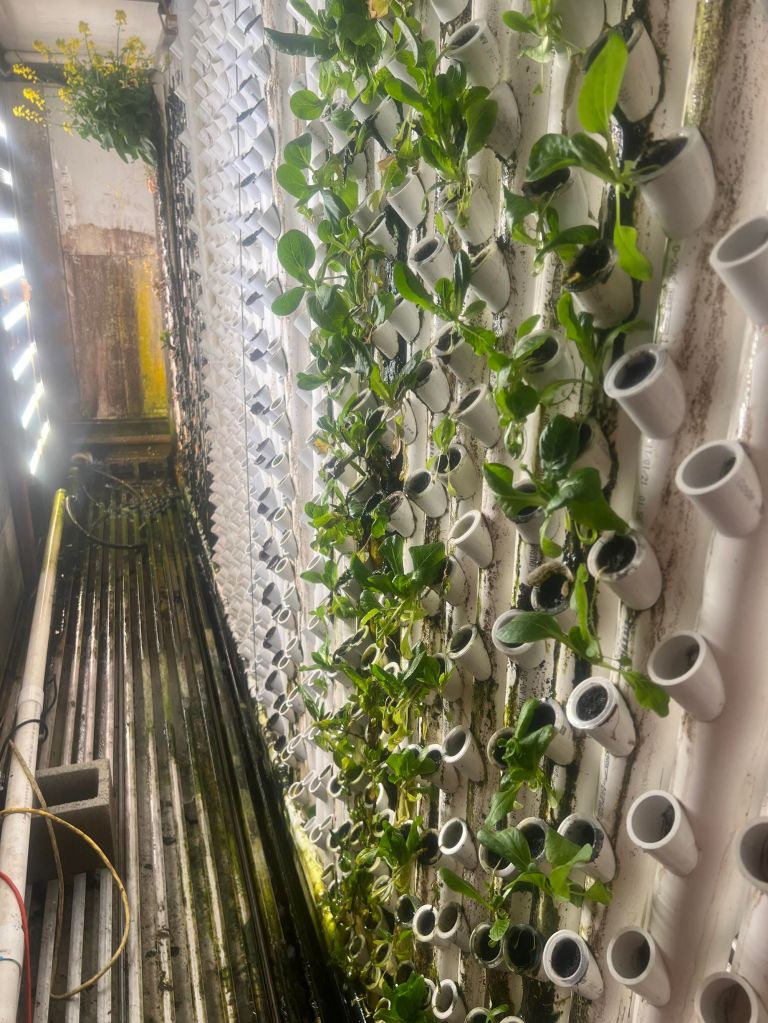
1 week old test crop with the Brents’ new design.

“Everything was perfect, it was beautiful, it was huge. We grew so much more per square foot than…any other method of farming,” Frank Brent said. “It was a pretty sore and sad moment to watch our produce all go down the tubes.”

“Everything was perfect, it was beautiful, it was huge. We grew so much more per square foot than…any other method of farming…It was a pretty sore and sad moment to watch our produce all go down the tubes.”

— Frank Brent

Brent had another idea for their farm which would avoid the problem of pests altogether. He used to work in the Navy and noticed that there were no pests at sea. By putting the aquaponic farms in the shipping containers on ships at sea, they would have no more problems with pests.

Of course, neither aquaponics nor “floating farms” are a new concept. Both of these methods can be traced back to the Aztecs who practiced an early form of this type of agriculture, called “chinampas.” Currently, this method has been revived in Mexico City, and the world’s first large-scale floating farm was conceived in the Netherlands.

The Brents, however, hope to eventually take their operation to a larger scale. They used to be set up in Louisiana, but when they were finally starting to gain traction, the COVID-19 pandemic and Hurricane Ida took them out.

They’re still working on rebuilding. They recently purchased another farm called Chicken Town Egg Farm, which was in trouble financially, and are in the process of doubling that operation. 

When they’re able to get Brent Floating Farms back on track, their goal is to manufacture 350 containers for their crops on land in Louisiana and eventually put some containers at sea as well. 

On land, their hope is that waste will be at 15% while at sea, expected waste will be between 3% to 5%. Aquaponics also uses 90% less water than traditional soil and irrigation methods. The Brents recognize that energy usage can be an environmental issue, but they have looked into alternative energy methods.

Furthermore, their method doesn’t have to just use water and fish. With the use of black soldier fly larva, they can use any type of organic waste, and the insects will break that down. Insects that are beneficial to plants rather than pests can also be introduced inside the container.

Leigh Ann Weidner, CEO of Brent Floating Farms.

Because the crops won’t be subject to the environment, they will be able to produce a higher yield as well. According to Frank Brent, they can produce 12,000 heads of lettuce in 30 days in an average container.

The team behind Brent Floating Farms includes co-founders Frank and Cinda Brent as well as Leigh Ann Weidner, their CEO. Frank is the COO, and his focus is the technical, agricultural aspects while Cinda is the CAO and focuses on marketing. Weidner, who is working remotely from Wisconsin due to another job, specializes in sales.

-30-


Note: Featured image provided by Shutterstock.

Grocery store offers all-natural foods

By Melissa A. Palumbo
Delta Digital News Service

MOUNTAIN HOME – Local grocery store Truck Patch offers bulk foods and spices, all-natural beauty products and plant-based meals. 

Named after small farmers’ markets from the 1800s, the Truck Patch grocery store opened May 23, 2010 in Mountain Home. From there, the store added a larger Jonesboro location.

“We don’t currently have plans for another location, but we’re always open to expand,” said Mountain Home Manager Virginia Embry. 

Truck Patch sells ingredients by bulk, allowing customers to bring their own reusable jars, bags and containers with which to shop. 

Tori Forkum, assistant manager at the Truck Patch Jonesboro, said they tare the container before the customer shops. 

“You can bring your own jar and we weigh it,” she said. “Then we take the weight of the container off the final price.”

Many ingredients cost less to to buy in bulk than in individually packaged portions, such as spices and grains.

Olivia Simpson, an employee who works in the kitchen at the Jonesboro location, suggests reusable glass bottles and jars to cut back on waste.

“Buy bulk and ditch plastic,” she said. “Use glass whenever you can.”

The store carries plastic-free, plant-based and biodegradable household products. Products made from plants have a lower environmental impact than hard plastics made from oil, and paper packaging decomposes much faster than plastic wrapping. 

They also sell pet products, like biodegradable doggie bags, organic treats and food.

Truck Patch focuses not only on reducing plastic packaging, but also increasing healthy eating. Employees at Truck Patch help customers find ingredients to suit any diet, from vegan to paleo. They also help those with allergies, diabetes and other health needs find appropriate meals.

“Our staff is well versed in different diets, and we are more than happy to help,” Embry said.

Camron Collins began working at Truck Patch as a cashier about four months ago. He said he was drawn to his job because of his interest in health-conscious eating and reducing environmental impact.
“When we started damaging our environment, it was fast,” he said. “We’re starting to revert that now. It took a lifetime to realize it, but we’re a force.”

Truck Patch strives for zero-waste within the business and community, according to Embry. Because of the large population of farmers in the area, the Mountain Home location established a composting system. 

“We are considerably smaller than the Jonesboro location, but we do pack a big punch,” Embry said. 

The Truck Patch Jonesboro plans to carry composting supplies in the future.

When the Jonesboro location opened in 2015, the Stem and Spoon Cafe was added within the store. The cafe offers a variety of sandwiches, salads, sides and drinks. All the ingredients Truck Patch uses stay organic and hormone-free.

“We use ingredients from the store,” Forkum said. “The kitchen workers will ‘grocery shop’ for the cafe.”

To avoid waste, fruits and vegetables that aren’t as pretty as the rest are turned into smoothies. Food that doesn’t sell is often given to employees.

“We don’t throw anything away,” Embry said. 

Editor’s Note: Photos by Melissa Palumbo.