Tag Archives: Gov. Asa Hutchinson

$95M Highway funding bill impacts Arkansas roads
Bill brings road construction, repairs and reconstruction across the state

Delta Digital News Service

By Chloe Short | Aspiring Journalist

JONESBORO, Ark. – Interstates, major highways and other roads receive will receive improvements with the $95 million highway-funding bill signed by the governor. The bill helps fix unsafe roads, repair potholes and mend other road problems. 

   Dave Parker, public information officer for the Arkansas Department of Transportation, said growing concerns about congestion and pavement preservation factor into the plans when deciding what areas to focus on. Congestion causes slower traffic or traffic back-ups, while pavement preservation keeps the current roads maintained so drivers experience less deterrents while on the road. 
   “About 76% of our total money goes toward just maintaining the highways and bridges we currently have. The remaining 24% is spent on new projects,” Parker said. 

   “About 76% of our total money goes toward just maintaining the highways and bridges we currently have. The remaining 24% is spent on new projects.”

ARDOT PIO Dave Parker

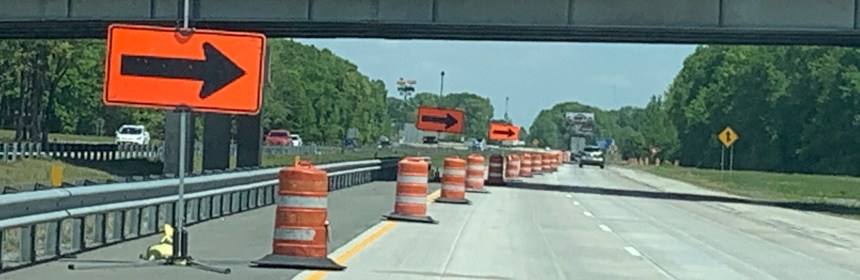
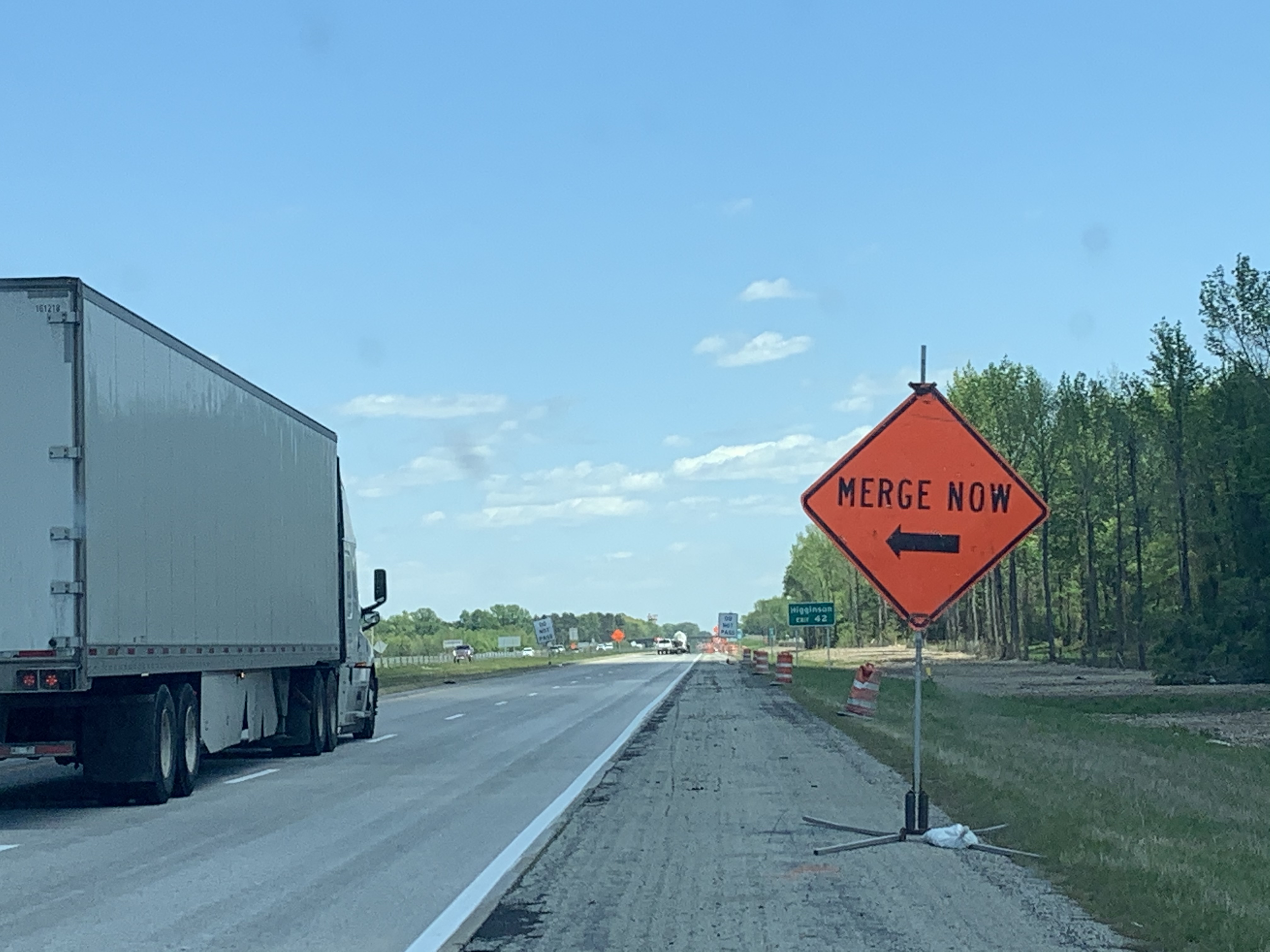
   ARDOT plans for Jonesboro residents and drivers passing through to experience road construction on I-555 that started April 14 and will continue until later this year. Road work involves reconstructing and overlaying pavement for five bridges. 

   Parker said, “Construction is in full-swing all over the state. ARDOT’s current plans aim at  improving many sections of downtown Little Rock, mending and widening I-30 in Saline County and widening Highway 10 in Pulaski County from a four-lane road to six. Those projects will take two years to complete with a cost of around $80 million,” Parker said.

Big projects like the Bella Vista Bypass in Northwest Arkansas see a predicted opening this fall.  Parker said to make sure the budget gets followed, ARDOT hires contractors who present good reputations with proven track records to deliver quality work on time.

   Joe Quinn, executive director of the Arkansas Good Roads Foundation, said the highway-funding bill won 72 out of 75 counties, making the sales tax allotted to road improvements permanent. Construction starts where the most traffic takes place. Quinn said he and others pushed for voter approval because this bill helps keep state roads safe for all drivers. 

   “If voters had not voted in support of this bill, then every county in Arkansas would have lost 30% of its road budget and every city in Arkansas would have lost 30% of its road budget. For instance cities would have lost $46 million for road repairs,” Quinn said.

Shannon Newton, president of the Arkansas Trucking Association, pushed voter approval for the bill, primarily issue 1 of it and pressed state residents to care about the future safety of their roads and bridges. Newton said the governor’s leadership and the support of stakeholder groups representing all types of Arkansans made for strong voices contributing to the cause.  

“The trucking industry relies on all types of infrastructure throughout the state, which is one of the great things about Issue One. Issue One will help make our state highway system safer by improving over 7,000 miles of roads and repairing dangerous bridges, relieve heavy traffic congestion on highly traveled roads and support over 3,600 jobs annually and provide $8.2 billion in economic activity over 10 years,” Newton said.

Controversy Surrounds Death Penalty Drug

By Kimberely Blackburn
Delta Digital News Service

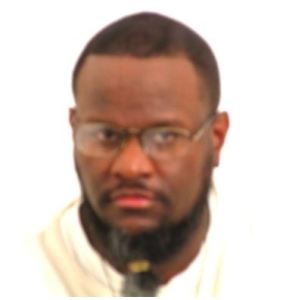
Kenneth Williams (photo courtesy of Arkansas Department of Corrections)

VARNER, Ark. — The last man Arkansas plans to execute in April is not a saint.

Sentenced to life for the 1998 death of University of Arkansas at Pine Bluff cheerleader Dominique Hurd, Kenneth Williams escaped in 1999 after 19 days in prison.

Williams robbed and killed Cecil Boren of Grady, who lived not far outside of the prison. A high-speed chase while evading police in Boren’s stolen truck led to an accident and death of delivery driver Michael Greenwood of Culligan, Missouri. Williams later confessed to killing Jerrell Jenkins on the same day as Hurd.

The state sentenced Williams to die by lethal injection April 27. But his and four other inmates’ fates remain uncertain following the United States Supreme Court refusal late Monday night to vacate the Arkansas Supreme Court’s stay of execution for Don Davis.

STATE MOVING FORWARD

Arkansas Gov. Asa Hutchinson said in a statement following the SCOTUS decision that the state would proceed in carrying out the sentences of the other inmates. The SCOTUS decision came just hours after a temporary restraining order barring the state from carrying out a controversial seven executions in 11 days was overturned by the 8th U.S. Circuit Court of Appeals.

That decision prompted McKesson Corp., which manufactures one of three drugs — vecuronium bromide — used in Arkansas’ lethal injections, to pursue further legal action Tuesday.

“McKesson has filed a new action in Pulaski County Circuit Court for review by the new judge who has now been assigned to these matters and again seeks a restraining order to prevent the use of our product for something other than a legitimate medical purpose. McKesson is committed to ensuring that its property is only used in a manner consistent with our supplier agreement,” said Kristin Hunter, director of Corporate Public Relations for McKesson.

DRUG COCKTAIL CONTROVERSY

The drug cocktail slated for use in the lethal injections contains a drug encompassed in a political firestorm.

The ACLU claims one of the drugs used in Arkansas’ lethal injections may violate the ban on cruel and unusual punishment by causing a long and painful death. An Alabama inmate given the drug experienced painful, burning sensations before death.

The McKesson Corp. claimed the state misled the drug manufacturer to obtain vecuronium bromide. A prepared statement said McKesson believed its drug would be used for medicinal purposes in the Department of Correction’s in-house medical facility. After learning of the drug’s true intention, McKesson asked for the product’s return.

“Upon learning that ADC was potentially holding the product for lethal injection purposes, McKesson immediately requested and was assured by ADC that the product would be returned. McKesson issued a full refund to ADC and made several additional requests for the product, but the product was never returned,” Hunter said.

Requests for comments from the Department of Corrections remain unanswered.

Brandon White, a Paragould pharmacist with Arkansas Methodist Medical Center said vecuronium bromide is used in long-term paralysis cases such as a patient being placed on a respirator. He said usually, healthcare professionals administer the drug with a strong pain reliever due to the potential of an internal burning sensation.

If McKesson’s vecuronium bromide is used for lethal injection, it could result in legal action against the state. Joseph Rukus, assistant professor of Criminology at Arkansas State University, said McKesson could sue Arkansas for damages to its reputation and as an example to other states considering using their drug for lethal injections.

“Bottom line,” he said, “this could cost the state some money.”

Ruckus said the state’s lack of transparency in such cases concerns him. He said when it comes to a penalty as final as death, all parts of due process must be transparent.

By not being truthful to obtain this drug for lethal injections, he said the state’s behavior resembles one as an addict.

“If an individual wants to get oxycodone, but can’t get them through legal means, the state would put someone in prison for getting them through illegal means. The state is doing the same thing,” Rukus said.

DEATH PENALTY SUPPORT

National public support for the death penalty has waned in the past five-to-10 years partially due to the Innocence Project, an organization that attempts to exonerate those wrongly convicted through DNA testing. Rukus said the project resulted in those who believe in the death penalty in principle but are wary of innocents being put to death.

Ruckus said the appeals process takes 10-15 years and results in the death penalty being more costly than an inmate being incarcerated for life without the possibility of parole. Proponents of the death penalty support a shorter appeals process as a result, he said.

Considering convictions overturned after 10-15 years, Ruckus said the state is not always getting death penalty convictions right. However, a recent Talk Business & Politics-Hendrix College poll shows 61 percent of Arkansans support the death penalty, while only 29 percent support life without parole.

Sen. Tom Cotton praised the death penalty at a Town Hall and condemned the pharmaceutical companies “trying to interfere with the justice system n the state of Arkansas.” Sen. John Boozman did not wish to comment. Arkansas Attorney General Leslie Rutledge issued a tweet.

Meanwhile, Williams awaits his fate. In a “Life Inside” series article penned earlier this month, he wrote of his mindset, apologized to the victim’s families, claimed to be transformed by religion, and discussed the drugs to be used to kill him. As far as the upcoming date?

“Death, one step closer. Tick, tick.”


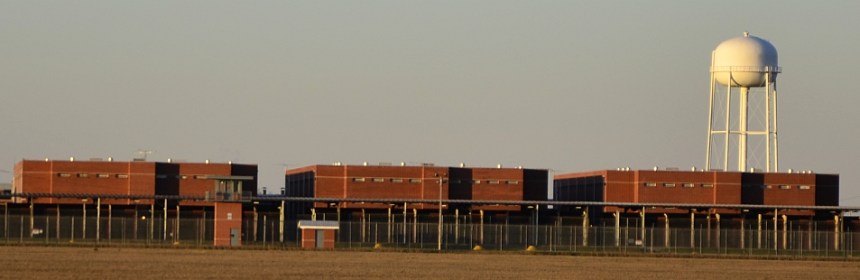
Photo of Varner Unit Supermax by Richard Apple (Own work) [CC BY-SA 3.0], via Wikimedia Commons

EDITOR’s NOTE: A previous version of this story used 2016 poll data; the article has been updated to include more recent poll data from Talk Business & Politics – Hendrix College poll.