Tag Archives: Immigration and Customs Enforcement

Hispanic Center Addresses Fear as Immigration Concerns Rise in Jonesboro
Story by DDNS Reporter Benjamin McDowell
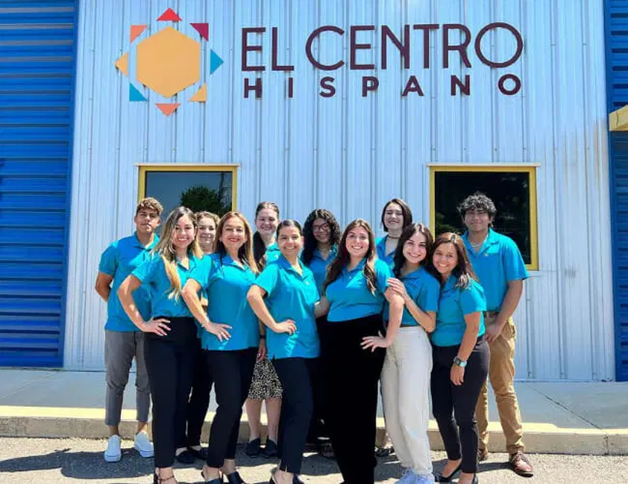
Staff members from the Hispanic Center pose outside their facility in Jonesboro, highlighting the organization’s role in supporting local families amid growing community concerns. Photo courtesy of The Hispanic Center via Facebook.

JONESBORO, Ark. — As immigration enforcement concerns grow in Jonesboro and across the country, leaders at the Hispanic Center say fear keeps some families from going to school, seeking medical care or accessing basic services. Immigration enforcement policies and increased activity by Immigration and Customs Enforcement have created uncertainty for many immigrant families, including those in northeast Arkansas.

The Hispanic Center is a nonprofit organization that serves the Hispanic community in Jonesboro, as well as others in need. The center offers services such as after-school programs, interpretation, translation, English classes, computer training and health fairs. The center also provides legal consultations, mental health sessions, and community events, while assisting families with food, transportation and housing support.

Carolina Elmore, assistant director at the Hispanic Center, said, “We serve the Hispanic community primarily, but we help anyone in need regardless of ethnicity, religion or race.”

Elmore said the Hispanic Center is a place she wants people to feel they could depend on anytime.

“We provide interpretation in hospitals, schools and legal settings so people who don’t speak English can still access essential services. Language is one of the biggest barriers, and we try to bridge that gap every day,” Elmore said.

Elmore said the Hispanic Center acts as a bridge between schools, the Hispanic community and local institutions. The center partners with local universities and organizations to provide students with educational support and expose them to career opportunities.

Elmore said one of the biggest challenges for the Hispanic Center has been increased activity by Immigration and Customs Enforcement.

“A lot of people are afraid to seek services because of immigration concerns. Some parents are even scared to send their kids to school or go to the doctor. We try to create a safe space where families feel supported despite those fears,” Elmore said.

Due to concerns about ICE, many community members are afraid to seek help or services at the Hispanic Center out of fear of being detained. That fear reflects what many immigrant communities are experiencing across the country, where enforcement actions can affect access to education, health care and other essential services. The center often works with churches and community partners to provide safe spaces and trusted environments for families.

“We help families with everything, from enrolling their kids in school to making doctor’s appointments. Sometimes it’s as simple as helping fill out a form, but that can change everything for a family,” Elmore said.

Elmore said she wants to continue serving her community during challenging times tied to immigration enforcement.

“Everything we do is about helping families feel supported, connected and valued in this community,” Elmore said.

Leo Hernández, program coordinator, helps facilitate the after-school program, which allows children to catch up on homework and receive tutoring.

“La Escuelita is here to support kids from kindergarten through ninth grade with their homework and academics. A lot of parents can’t help their kids with schoolwork, so we step in to guide them,” Hernández said.

La Escuelita runs Monday through Thursday during the school year and is divided into groups by age, allowing younger and older students to receive the support they need. Students work on subjects such as math, reading, writing, Spanish and public speaking, while also building communication and teamwork skills. The program also includes a summer component that helps students stay on track in a more engaging environment.

Hernández said the Hispanic Center also has a program called HELP, which gives high school students opportunities to explore life after high school. He said the program allows students to complete community service hours while visiting college campuses and local institutions.

“We’re not just helping with homework, we’re giving kids opportunities they might not have otherwise. It’s about building a foundation for their future,” Hernández said.

Hernández said education and guidance are some of the biggest needs in the Hispanic community, especially for students who struggle with English and need additional support.

Hernández said he wants the community to feel like a safe place where families can feel at home and that many people simply need direction.

“What’s happening with immigration affects families, especially the kids. We always encourage people to seek legal advice and handle things the right way. At the end of the day, we’re here to help people grow and succeed,” Hernández said.

Yesenia Dixon serves as a front desk receptionist, interpreter and after-school teacher at the Hispanic Center.

Dixon said many children struggle to express their emotions, and the center helps them build communication skills.

“It’s rewarding to see their faces light up when they realize they can do something,” Dixon said.

Dixon said she enjoys interpreting people but she also knows it is serious because she serves as the voice for others.

“I’m usually the first person people see, and they come in upset or needing help. I try to calm them down and let them know they’re in a safe place,” Dixon said.

Dixon said increased ICE activity has heightened fear in the Hispanic community, with some people choosing to handle everything virtually.

“During stressful times, we focus on giving people factual information so they don’t panic. There’s a lot of fear, so it’s important we don’t spread misinformation,” Dixon said.

Dixon said even if she does not have an immediate answer, she works to help people find one.

“We’re not just a place for handouts, we’re here to support people. We want to be known as a place where people can come without feeling judged,” Dixon said.

.

-30-

Undocumented Women Fear to Report Abuse

by Kimberely Blackburn
Delta Digital News Service

JONESBORO – Immigration and Customs Enforcement detained a woman inside a courthouse to obtain a protective order against her allegedly abusive boyfriend earlier this year in Texas.

This, along with reports of increased immigration investigations, results in many undocumented women being afraid to report abuse. In trying to remedy the situation, many organizations strive to help those undocumented victims of domestic violence.

“It’s complicated because there aren’t any specific solutions,” said Marium Durrani, public policy attorney for the National Network to End Domestic Violence. “There is a bill in the House and the Senate that protects them in community locations like courthouses, rape crisis centers and medical service providers, from immigration forces.”

Current Fears

This year, seven national abuse advocacy organizations performed a survey to help better understand how current immigration policies affect such immigrants.

Sixty-two percent of respondents reported an increase to the question, “Is your agency observing a change in the number of immigration-related questions from survivors?” Feedback sent with the survey reported many abuse survivors simply question how to plan under the new immigration policies. Some question if they should apply to immigration under the Violence Against Women Act.

When asked, “Are immigrant survivors sharing with your agency that they have concerns about contacting police?” 78 percent responded yes.

One respondent said: “Clients are afraid of calling the police because they believe that they will be deported if they do, especially if their abuser is a U.S. citizen. They think law enforcement will listen to someone who is a citizen of this country more than an undocumented person.”

When asked, “Are survivors reporting to your agency that they have concerns about going to court for a matter related to the abuser/offended?” three out of four answered yes.  Some respondents said that after media outlets reported a woman’s deportation while filing for an order of protection, many clients feared the same.

Forty-three percent responded yes when asked, “Are you or your organization working with immigrant survivors in your community who have decided to drop civil or criminal cases because they are fearful to continue with their cases?”

Durrani said some women find themselves in this situation after being brought to the country under false pretenses. Some come under a fiancée visa with the promise they will have help in obtaining citizenship. She said many abusers then withhold vital documentation and the women find themselves stuck after their visa expires.

Durrani said these undocumented victims often need special protection. A woman may look for work to escape her abuser but cannot work legally. Some employers, Durrani said, will take advantage of her status and pay a much lower wage. Other abusers will file other charges against their victim.

For these reasons, in addition to reports of victims being arrested after reporting their abuser, many stay silent.

Help Available

Rebekah Stewart, program communications associate with Tahirih Justice Center, said organizations exist to help those suffering from abuse to apply for protections under the law, including:

  • Gender-based asylum for those who suffer or may suffer violence in their home countries.
  • Violence Against Women’s Act Petitions for spouses, parents or children enduring abuse.
  • T Visas for those surviving being brought to the United States for human trafficking.
  • U Visas for those surviving crimes involving mental and physical abuse in the United States.
  • Special Immigrant Juvenile Status for abused, abandoned or neglected children.

Protecting yourself when asking for help

Durrani said she believes the protections came from Congress understanding the control abusers have over their victims.

“Congress has understood that sometimes people are not brought here under their own  volition and that doesn’t mean they should be disregarded under the protections of the law,” Durrani said.

However, obtaining these documented statuses often proves difficult.  Stewart said Tarihi Justice Center provides legal assistance for those seeking these protections, as well as social services assistance.

Working with legal assistance continues to be very important. Durrani said obtaining these statuses remains complicated. She said women can be declined from these protections for a variety of reasons.

The U Visa, for example, require women to work with police. Thus putting themselves at risk, especially if immigration enforcement considers them to be a priority.

Durrani said this fear often impacts the community as well. If a victim fears to work with law enforcement, more crimes affecting others often go unreported.

Assistance in NEA

Many victim assistance programs exist in Northeast Arkansas. Nanette Heard, executive director of The United Way of Northeast Arkansas, said such programs include everything from shelters to support groups. Organizations exist that provide monetary assistance as well.

David McDaniel, public information officer for the Jonesboro Police Department, said helping the victim remains the priority for JPD. After 20 years of service, he said he cannot remember a single time immigration investigated a victim in a domestic violence case.

McDaniel said protecting the victim, no matter their immigration status, continues to be JPD’s concern.

“If you’re here illegally, if you’re here on a visa, that makes no difference to us,” McDaniel said. “You’re not supposed to live that way. No one deserves to live that way.”

Editor’s Note: Featured photo by Jeffrey [CC BY-SA 2.0]