Monthly Archives: November 2019

New travel center opens in Pocahontas
By Christine Miyawa
Delta Digital News Service

POCAHONTAS – A new convenience store opened its second location in Pocahontas.

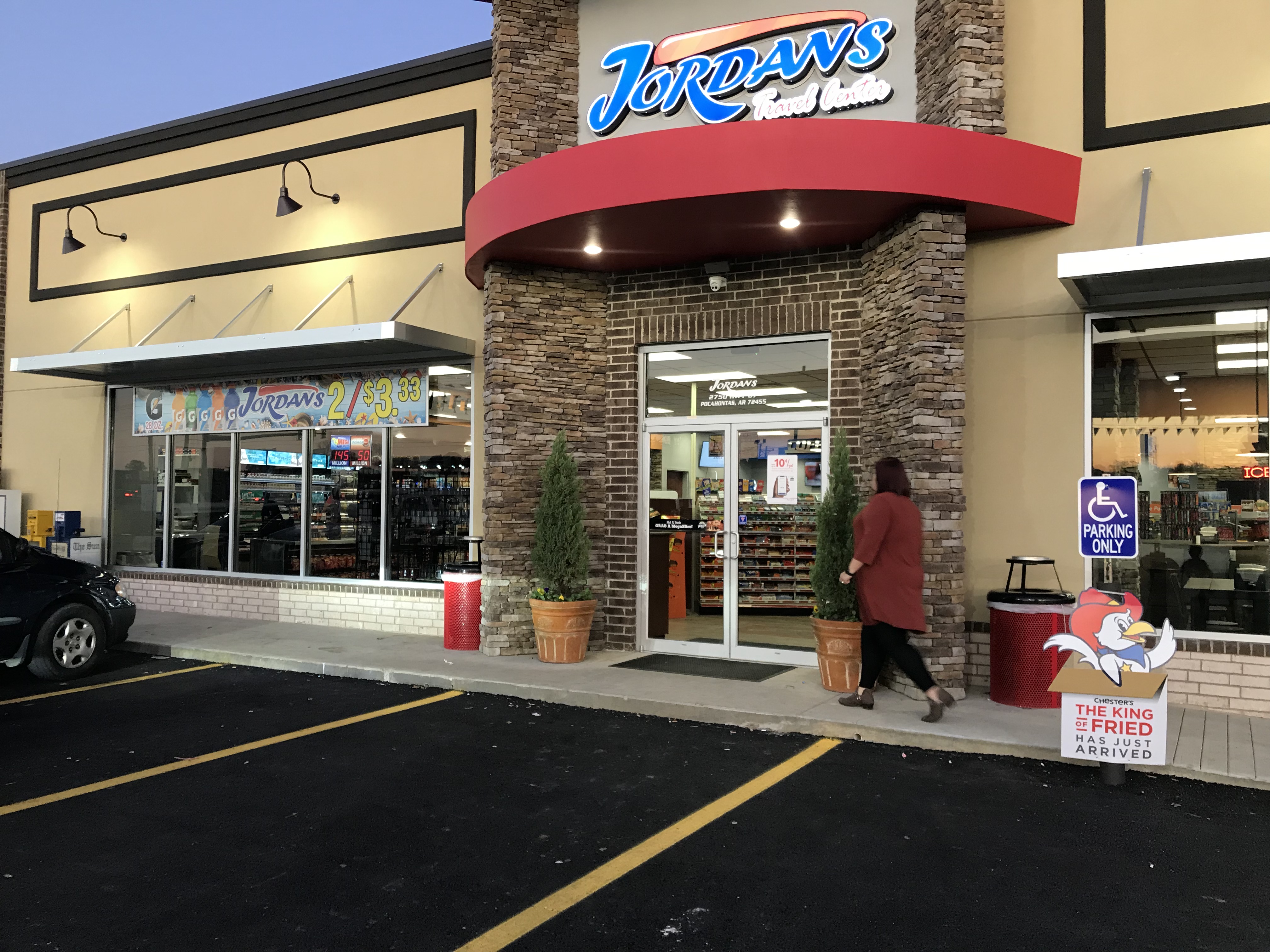
The Jordans Kwik Stop #52 is located at Highway 67 and Carter Lane in uptown Pocahontas, beside Randolph Memorial Gardens Cemetery. Unlike the current convenience store, the new travel center contains a diesel truck stop, however, no showers are included.
Although the first store is still operating, Jordan’s Kwik Stop #52 Manager Devin Soles said more people are coming into the new travel center since it opened Nov. 1.

“It’s crazy. Many people are walking in from all the doors. They say they like the store because it’s new, clean and a family environment, so it’s good,” Soles said.

The store side doors open to a lounge with black leather couches where customers can relax and watch television or sit at the dining area next to the lounge with a restaurant-style setting. The service center has four diesel pumps and over 20 spaces for big trucks to park. Soles said they take Comdata, EFS, T- check and a variety of fuel cards.

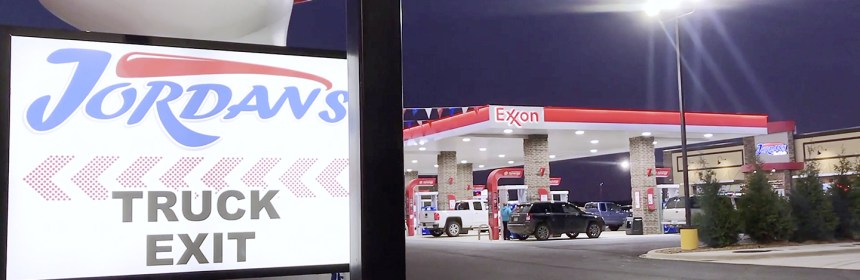
Kenny Rasmussen, a driver associate working for Crete Carrier Trucking Company said he liked the travel center because it’s clean, the workers are friendly, the center has a large parking space for trucks as well as a clearly marked truck entrance and exit.

“It’s nice to have a place to park a big truck. There are not enough places to do that. This is our first time at this center; we definitely will keep it in the memory bank for being able to park here safely,” Rasmussen said.

Soles said, “Unlike a regular truckstop, the downside to the center is we currently do not have showers for the trucker.”

A.J. Parker, a customer traveling on his way to Texas, stopped at the store to charge his phone on the available plug-ins the store provides for customers.

Soles said store 52 is the first of the Jordans’ stores to sell Big Rock Pizza in its food deli inside the store while all its other stores are selling Hunts Pizza.

“People are loving the food and pizza. Our pizza is quick and takes only three minutes to make from scratch.  Before those in the trucking business are even done fueling, we’ve made a fresh high-quality pizza. That’s hard to beat; people here are loving it,” Soles said.

He said they can custom make the pizza for a customer. The deli also makes specialty pizza with beer sauce wings. Pizza price ranges from $7.99 to $11.99.

The store offers free coffee for police officers on duty, so more police officers are visiting and helping with security.

Sara Caster, the nightshift lead at the store said it’s her first time working at a convenience store. She works with 20 other co-workers. She said the store runs three shifts.

“We get so busy at the deli; we are open 24 hours. There is a rush hour when Peco employees come to the store; they come in groups and they want hot food and energy drinks,” Caster said.

Peco is a chicken plant just a few blocks away from the store.

Caster said the minimum wage the store pays is $9.65 an hour but she is not worried about the salary competiton from Peco, which pays a minimum of over $13 an hour.

“Peco is a factory, they are mass producing and the workload is just not the same. Besides, I don’t and have not earned a minimum wage in a long time,” Caster said.

Soles said so far, the travel center filled all the employee positions.

T’Ricks, the closest convenience store is located just on the opposite side of the road to the new Jordans currently faces a lot of competition from the new Jordans Travel Center. T’Ricks also hosts the Citgo gas station. Citgo changed all its old and slow fuel pumps and replaced them with new ones a few weeks before the opening of the new Jordan’s Kwik Stop.

“The old pumps dispensed gas slowly. We went 50/50 with Citgo company on the new pumps,” Mohamed Zoro, the T’Ricks manager said.

With the more efficient fuel pumps, they may keep their old customers from running away to the new Jordans.

“Business is slow, we are headed to the holidays,” Zoro said.

Rancho Bravo, a Mexican restaurant and store also opposite the new Jordans gave its building a new face-look keeping up with the competition.

All three stores serve hot meals and are competing for the same customers, especially the customers from Peco food processing plant.

Presently, Exxon, the oil and gas company stationed at the new travel center, has a reward program giving its customers a discount of $.50 per gallon on gas. The station sells gas cheapest compared to all other fueling stations in Pocahontas.

“Everyone seems to be going to the new travel center, but, after the novelty dies down, we know they will be back,” Zoro said.

Soles said they foresee a brighter future for the travel center because it’s the only one currently in Pocahontas. They also look forward to getting a liquor license Nov. 13 and are expecting more customers to come to the store to utilize their lounge and dining area.

Editor’s Note-Feature Photo taken by Christine Miyawa

Trade War Brings Struggles to Farmers

By Tristan Bennett
Delta Digital News Service

JONESBORO – Arkansas farmers continue a fight with a competitor halfway across the world. The trade war with China drags on with steady impact.

For the second harvest season, Arkansas farmers experienced lower prices for their crops as a result of a tariff war with China. Joe Christian, owner and operator of JOC Farms Partnership, sees first-hand the negative impact of the trade war.

“This summer, prices were down to $8.50 a bushel for soybeans and even less. That’s $2 below production costs,” he said.

The low prices stem from a decrease in demand for exporting agricultural commodities. Farmers across the nation struggle to make ends meet in the wake of harsh tariffs imposed by China to specifically hurt American agriculture.

Scott Stiles, an economist with the Cooperative Extension Service, said this all began when the Trump administration added tariffs to aluminum and steel imports in April 2018. In response, China imposed a 25% import tariff on U.S. soybeans, grain sorghum, cotton and several more agricultural commodities as well as several other industries.

“They chose to go after a segment of the U.S. population that would really get the president’s attention,” he said. “Hitting the ag (agriculture) sector could be something that could really be detrimental to the president’s political future,” Stiles reiterated.

As the top U.S. export market, China bought one-third of all U.S. soybeans before the trade war began. Arkansas grows around 3.4 million acres of soybeans each year and 610,000 acres of cotton, most specifically to be exported. Now, China buys hardly purchases any Arkansan crops.

“We can’t sell them commodities, but they want to sell us everything, and they don’t want tariffs,” Christian said. “So, in other words, they can put tariffs coming into our country but we can’t on ours.”

Because agriculture makes up a large part of the Arkansas economy, the effects can be felt in several more industries. Patrick Lenderman, Paragould Farm Credit Midsouth branch manager and vice president, works directly with Arkansas Delta farmers to finance their farms.

“This is kind of a trickle effect. When a farmer spends a dollar, it affects a lot of different people, whether it’s going to retail sales at the local Walmart or buying a new tractor or truck,” Lenderman said.

Stiles said the government cannot quantify the effects of the trade war beyond the growers because too many industries intertwine with the agriculture industry.

The federal government began providing trade aid to farmers in 2018 to help compensate for the low prices. According to the Congressional Research Service, the Market Facilitation Program offers farmers payments for “trade damaged” commodities. Arkansas farmers received $281 million in trade aid in 2018.

The U.S. Department of Agriculture increased funding to $14.5 billion and added many more crops to the list of those eligible for aid in 2019. Farmers may continue to sign up for these payments through Dec. 6.

“I think if every grower participated in that, then the amount of aid out of this 2019 round would be about $435 million,” Stiles said. “The payment rates are structured a little bit differently in 2019, and it covers more commodities, so there’s more aid available.”

Currently engaged in trade talks, the Trump administration and Chinese leaders began thawing their relationship, but export numbers remain lower than before the trade war.

Christian said other countries buy soybeans from the United States and then sell them to China to avoid the tariffs, so they still get the products. This could make it difficult to strike a deal between the countries.

He also said farmers in the area appreciate the actions of the Trump administration so far.

“We’ve been 20 plus years in the WTO (World Trade Organization) agreement, and we get rulings that are not far and against the United States all the time, and it’s time to do something different,” Christian said. “If we got to hurt a little bit to hopefully do some good, we’re willing to do it.”

Because many factors must be agreed upon by all countries involved for trade to resume, a solution to the trade war isn’t likely come soon.

“The solution will take time. There is no overnight solution to this,” Lenderman said.

The countries find themselves in a stalemate because the Trump administration interposed issues such as intellectual property disputes along with many others between the two countries over the past many years.

Negotiation talks were broken down into phases to address each issue, with agriculture as phase one.

Stiles said, “Ag is wrapped up in issues that are not ag-related, and it could be a casualty if we don’t ultimately get a complete, comprehensive trade deal.”

In the meantime, farmers continue the struggle to make ends meet. Arkansas growers, no matter how small the operation, cannot escape happenings halfway across the world and must fight through the current economic challenges.

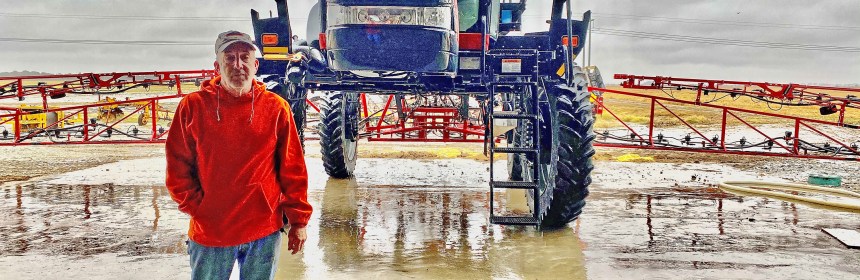
Editor’s Note/Feature Photo: Joe Christian, owner/operator of JOC Farms Partnership, is one of many local farmers affected by the U.S.-China trade war. Photo by Tristan Bennett.