Monthly Archives: February 2022

Essential workers provide much needed care during winter weather

Preparation and precaution is needed during winter weather

Delta Digital News Service

By Cameron Bandy | Contributor

JONESBORO, Ark. – Business and public services are especially important during winter weather because crime and hunger don’t stop during extreme conditions. People need police, nurses and businesses like grocery stores to help them survive the cold.

   Winter weather pummeled Northeast Arkansas bringing an abundance of snow, sleet and freezing rain which caused multiple power outages and traveling issues. Inclement weather prompted many businesses like Pak Mail, Cracker Barrel, Jets Transit and surrounding schools to close. Police Officers, nurses and grocery stores are necessities in cold weather and must stay open to assist the public. These professions don’t get the choice of staying home.  

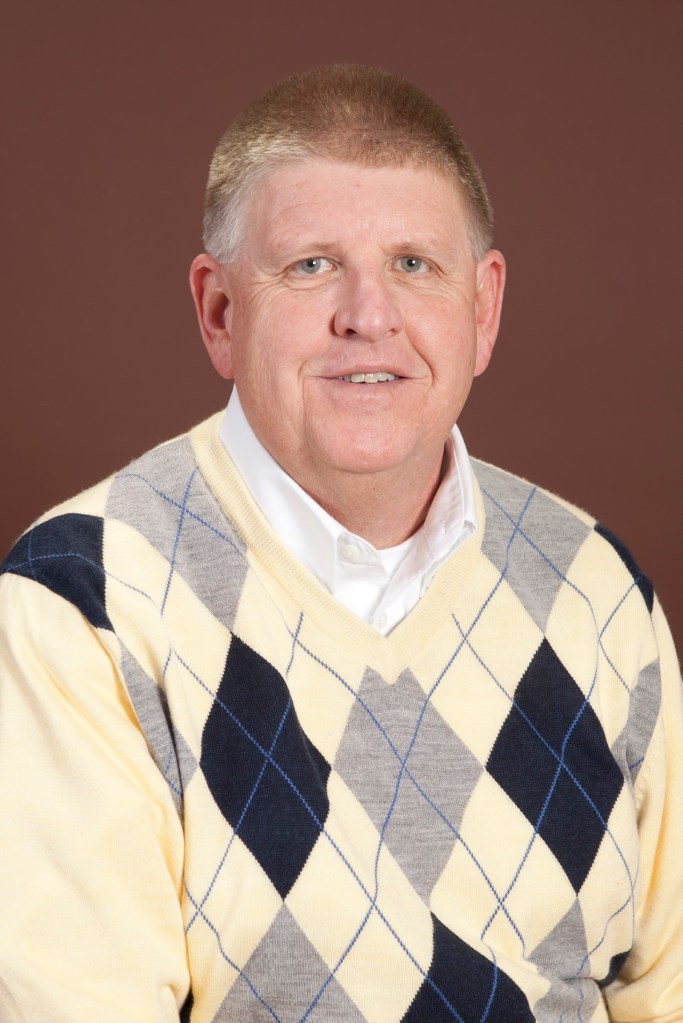
   Bill Brown has worked as a police officer 14 years on patrol and is now a detective for the department. Winter weather can be a struggle for police officers and preparation for any type of weather is important.

   Brown said, “When it gets closer to fall, officers will get prepared by getting their cold-weather gear out.  The cold-weather gear is different for different officers.  Mine consists of thermal layers to keep in my vehicle along with gloves, thermal beanie, coat and HotHands hand warmers.  I will also keep a blanket or two just in case I have a call where people are stuck in the weather, till they’re able to get back indoors.”

I will also keep a blanket or two just in case I have a call where people are stuck in the weather, till they’re able to get back indoors.”

– JPD Detective Bill Brown

   Brown expressed the importance that all officers should become acclimated to all weather conditions. At any time of the year, officers have no idea what the next call will be or how long they will be in the elements with the number one goal of providing safety. 

Being prepared for the weather is part of the officers’ responsibility. During winter weather accidents, officers will do what they can to keep the drivers warm and dry. Some calls might be to direct traffic at an accident scene where the temperature is cold while containing many forms or precipitation, or out looking for a lost juvenile or an elderly patient that walked away from the nursing home.

   Hanna Koons is a respiratory therapist at St. Bernards Hospital and has been for about 15 years. Hospitals are essential for those needing medical assistance during car accidents, the current pandemic and with helping other medical emergencies.

   Koons said, “Generally, falls and wrecks are the most reported incidents in snowy weather.”

   During winter weather, the hospital allows all staff to use rooms that are available to sleep if they’re not comfortable driving home during winter weather. Koons expressed the importance of getting to work during winter weather, “With the option of staying at the hospital, there is no excuse not to make it to work, she said.” Medical emergencies don’t stop during winter weather, so doctors and nurses can’t either.

“With the option of staying at the hospital, there is no excuse not to make it to work, she said.”

– Respiratory Therapist Hanna Koons, St. Bernards Hospital

   Danny Phillips has been an asset manager at Walmart on Parker Road for nearly eight years. Grocery stores must stay open because people must be able to get groceries in case of weather-related emergencies like the 2009 ice storm that left many residents without power for weeks. People always rush to grocery stores to pick up the usual milk and bread along with other necessities; so, these stores must be prepared.

   Phillips said, “we try to keep pallets out of customer’s way” to have efficiency as people shop for what they need. Safety is the main concern of grocery stores as they have an influx of people preparing for the storm.

 “The rugs get cleaned during rain and we have a snow-removal contract with a landscape company that helps clear the parking lot for customers,” he said.

   Preparation and efficiency for businesses and public services are vital to helping the public prepare for extreme weather. Without police, nurses and important businesses, people couldn’t survive, especially if an accident, injury or lack of food impacted someone. These professions can’t call into work because of road conditions or weather because they help others survive.

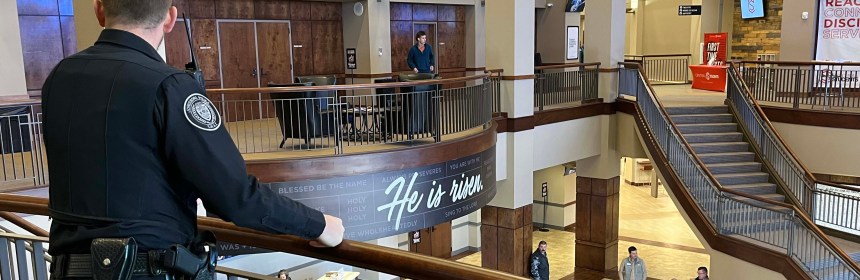
Local churches take extra measures to protect congregation

Worship institutions provide security training opportunities

By Garrett Hatcher | Delta Digital News Service

JONESBORO, Ark. – On Monday, in Sacramento Cali., David Mora Rojas walked into The Church in Sacramento and killed his three daughters, Samarah Mora Gutierrez, 9, Samantha Mora Gutierrez, 10, and Samia Mora Gutierrez , 13, along with their court appointed chaperone, 59-year-old Nathaniel Kong, before killing himself.

Rojas had a restraining order at the time of the shooting, which did not allow him to see his children without supervision.  Currently, no clear motive has yet been discovered or confirmed.

Earlier this year, in Colleyville, Tx., 44-year old Malik Faisal Akram, a British citizen had taken a rabbi and three other hostages at the Congregation Beth Israel synagogue.  Akram demanded the release of convicted terrorist Aafia Siddiqui who was being held at Carswell Air Force Base near Fort Worth. After a 10-hour long standoff, the hostages were rescued and Akram was dead.

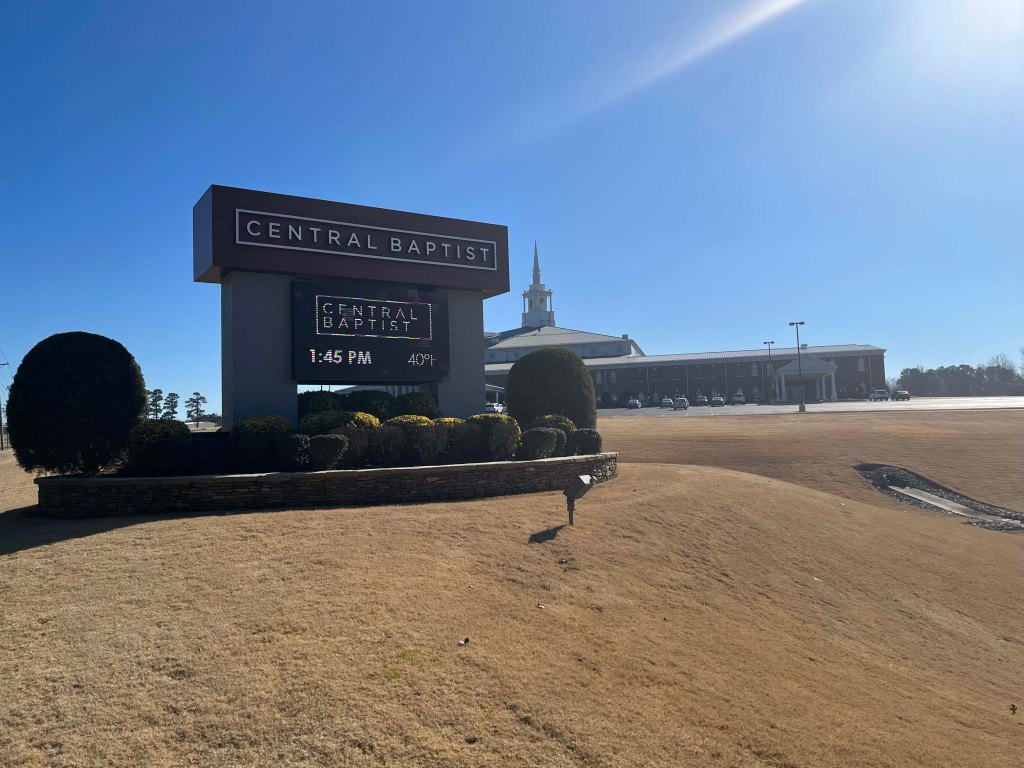
Central Baptist Church in Jonesboro, Arkansas. Photo by Garrett Hatcher

   According to an FBI database, in 2020 around 1244 cases of anti-religion hate crime incidents occurred in the United States with anti-Jewish crime having 683 incidents alone.  An earlier FBI report, stated crime against places of worship have surged by 34.8% between 2014 and 2018.

With increased crime against and on the grounds of many religious institutions, people of faith have decided are deciding be more proactive by taken preventive measures. In northeast Arkansas many churches have turned to the police and specialized training for protective measures and security.

   According to Patrol Sgt. Rodney Smith of Jonesboro Police Department some churches have contracted off duty officers to serve as “traffic control officers and figureheads of force” at local places of worship. Local churches such as First Baptist Church of Jonesboro, Journey, Central Baptist, First United Methodist Church, Highland Drive Nettleton Baptist Church and Southwest Church of Christ contract off-duty officers. The contracted officers are typically members of their respective congregations. JPD Police Officer Patrolman First Class Colton Brown attends Central Baptist and is one of the rotating officers for Sunday and Wednesday worship services. Smith said that Brown, along with the officers, are paid by their places of worships.

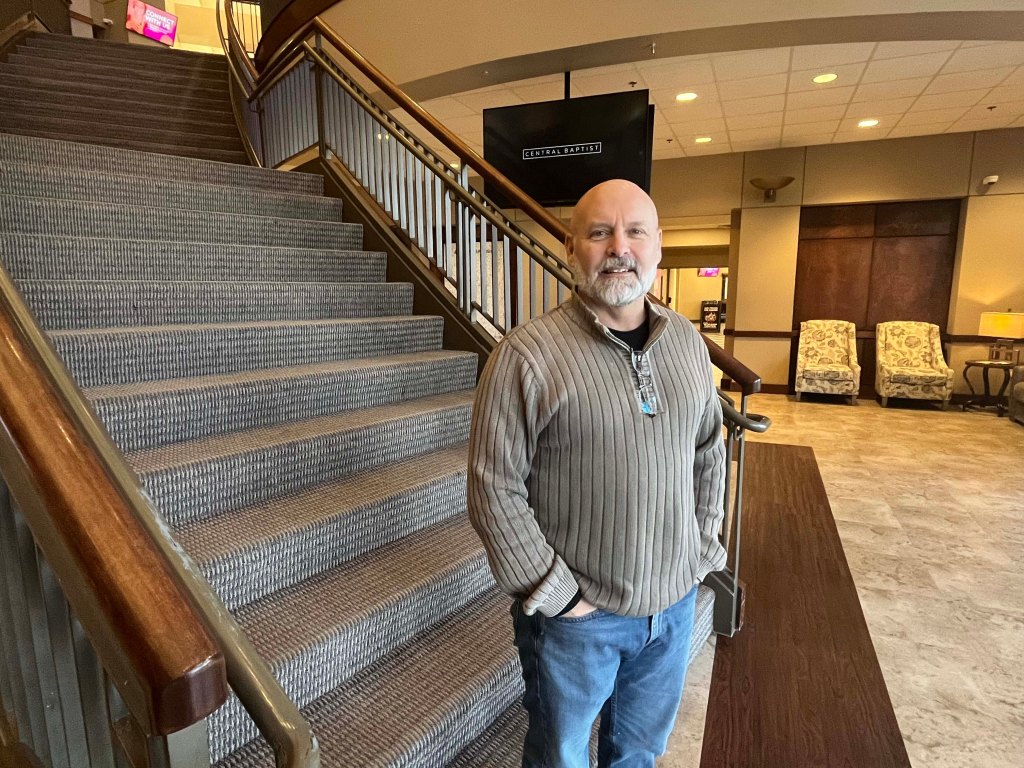
Don Blackmore, adult discipleship pastor at Central Baptist Church in Jonesboro.

   Central Baptist takes their security a step further with more elements of security along with cameras and contracted officers. According Adult Discipleship Pastor Don Blackmore, the church may have up to six rotating non-paid safety teams made up of off-duty officers, former military, paramedics, doctors and civilian members of Central Baptist. Known as a safety team, the group also undergoes training by local instructors from JPD, Craighead Sheriff’s Department and Black River Technical College.

   “We try and prepare them for knowing what to look for, how to respond, how to deescalate and how to manage things properly,” said Blackmore. He said that the volunteers must go through periodic training before and after becoming part of the safety team.

   Central Baptist also hires the Stop the Bleed organization to train people to learn how to stop and control serious bleeding. Central Baptist volunteers undergo an extensive background checks and must fill out a questioner before being accepted for training.

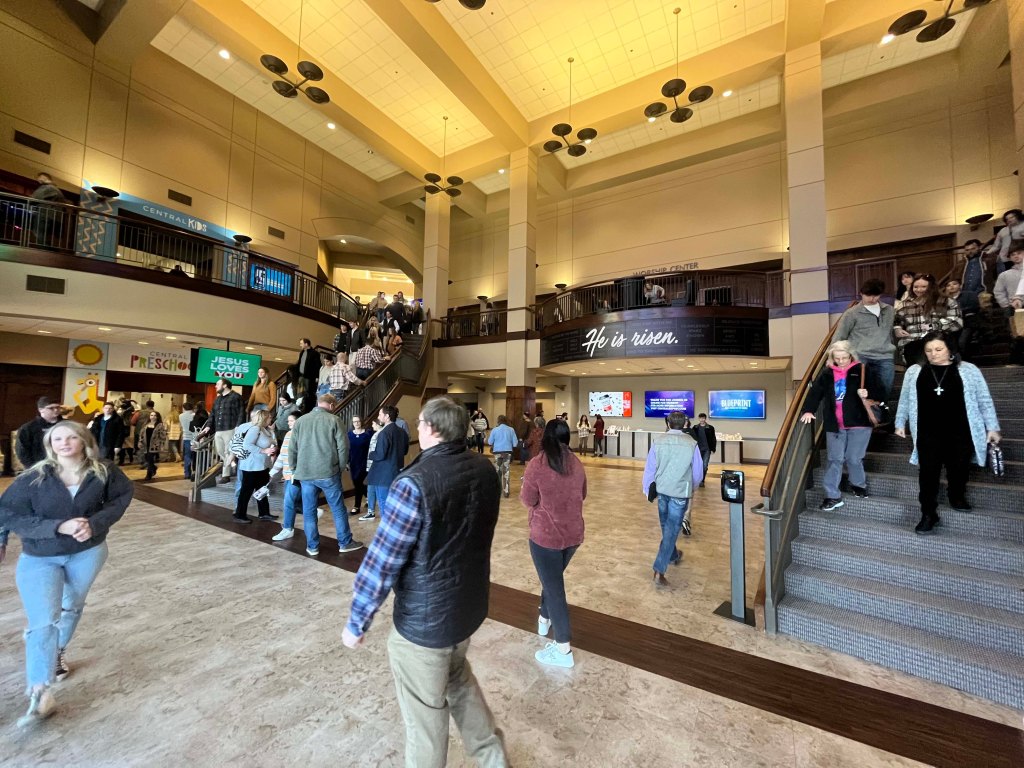
Members attend service at Central Baptist Church in Jonesboro, Arkansas. Photo by Garrett Hatcher

   “I don’t know if anyone takes it more seriously than we do. The safety of our congregation and making sure that we want to do everything we can to ensure a safe worship environment,” Blackmore said.

 “I don’t know if anyone takes it more seriously than we do. The safety of our congregation and making sure that we want to do everything we can to ensure a safe worship environment,” Blackmore said.

– Adult Discipleship Pastor Don Blackmore, Central Baptist Church

   As for how others feel about the safety team, Senior Adult Pastor Jay Jacobs stated, “I think they feel very safe also, our security team not only gets just people that come in, but also handle emergencies and when you see a team of people going to somebody’s aid, its makes us feel very secure.”

   Members also feel secure and support from the volunteers while in attendance. “Generally, I think most of the members appreciate the fact there’s greeters and we always feel very supported,” said Central Baptist member and volunteer.

   Fullness of Joy Ministries has a similar system when it comes to their security as they also have a volunteer training program. The volunteers are instructed and trained by a local police officer on what to look for and how to handle certain situations.

According to Pastor Adrian Rodgers the security volunteers are allowed to conceal and carry firearms. However, volunteers must undergo a background check and have a valid gun permit if they wish to conceal and carry at Fullness of Joy Ministries.

   “I think it’s sad that we’re in the place now where we have to have them, but I do understand that we are in the place where we have to have them, but I certainly do think it’s sad,” said Rodgers. “I certainly wish that we did not have them.”

   Religious institutions may have varying ways of defending and securing the safety of their members and institutions from manmade threats, but they all do pray for a day they won’t have to anymore. 


Note: Featured Photo shows JPD Patrolman First Class Colton Brown standing watch at Central Baptist Church in during worship service. Photo by Garrett Hatcher

Public housing residents shelter in place as extreme weather pounds the region

College students enjoy the extended break

By William Blake | Delta Digital News Service

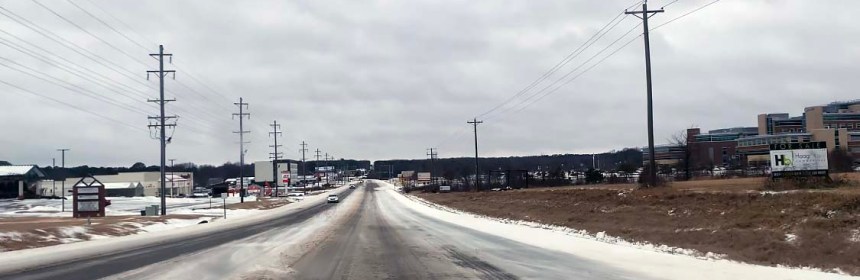
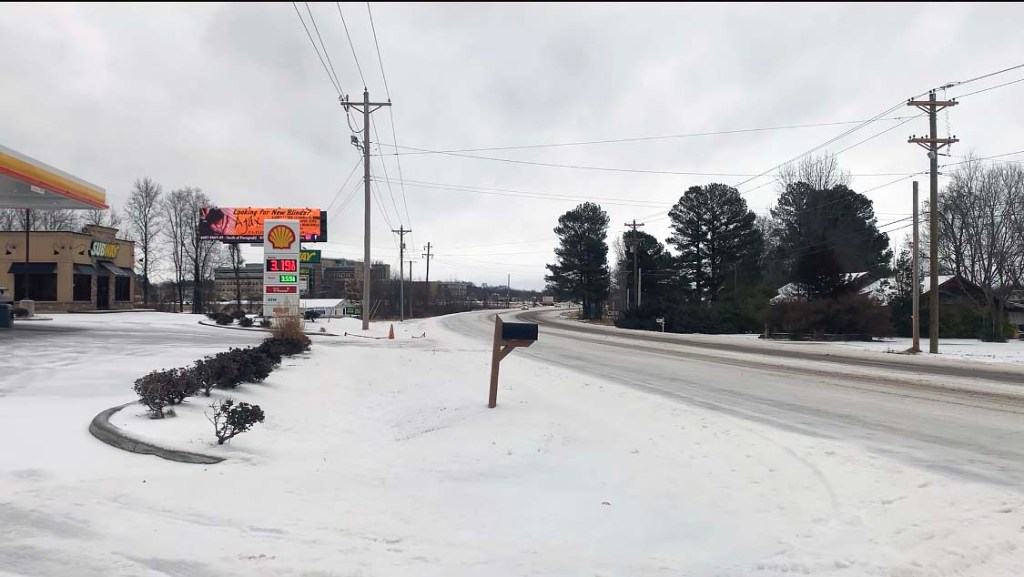
The first round of extreme weather hit Craighead County in earlier this month. The combination of ice and snow on the ground was enough to shut down the roads and other parts of the city.

   Even though extreme weather is a disturbance, people must be prepared to be shelter inside their home for a few days if they cannot drive. Carol Crawford, public housing manager for the Jonesboro Housing Authority said, “I try to get all my work done in case the weather is so bad in case we can’t come in.”  

    As a public housing manager, Crawford works with tenants and other staff to keep everything running smoothly. However, it can be hard to keep people happy when they go without power or food due to storms. 

   Crawford said, “[there are] many places that offer Hud housing in Jonesboro which have their own Hud contracts, which is where they may have a food pantry on site.”

   While some public housing may have food on site, the organization lacks the funds to supply resources like a generator or transportation to those without power who cannot leave their homes for work. This can be different from other housing options in the Jonesboro area.

   Callie Tosh works as an intern veterinarian and is a resident of Sage Meadows, a neighborhood on the east side of Jonesboro. Neighborhoods can be the worst place after a snowstorm because trucks do not come to salt the roads, which extends the melt time for ice.

   “It was so bad that I didn’t leave my house until Saturday. I didn’t trust my car to start or to make it down the driveway,” Tosh said. 

“It was so bad that I didn’t leave my house until Saturday. I didn’t trust my car to start or to make it down the driveway,” Tosh said. 

– Callie Tosh, intern veterinarian

   The extreme weather did not hit Jonesboro as hard as it hit other cities in the area. In Memphis, thousands of people lost power due to the freezing rain and ice knocking down power lines. 

   Tosh said, “Luckily we did not lose any power, but I was worried about running out of food.” 

   People first think about food when they hear a storm is coming. People flock to grocery stores and gas stations to buy anything and everything they might need. Since some public housing have a food pantry on-site, was this the best place to be during the snow?

   Jared Baltz, a junior animal science major at Arkansas State University, lives on campus in the North Park Quads. He could not leave campus due to the snow, but at the same time he enjoyed it.

   “The food options were still open, and I was able to go to the Union to get food. We also did not lose power which made it a lot more comfortable,” Baltz said. 

Essentially, everyone in the city got an extended weekend and an excuse to stay inside.

   Neither public housing, the Sage Meadows neighborhood, nor campus dorms had wide area power outages from the storms.


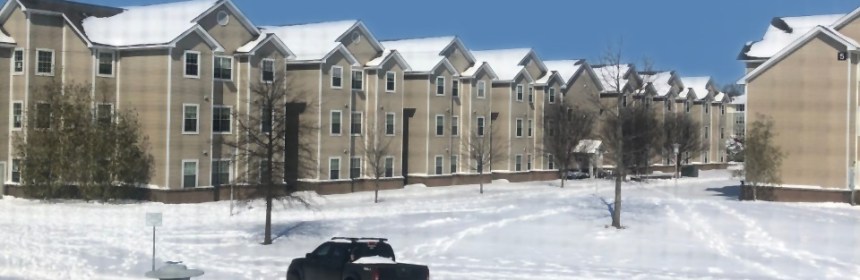
NOTE: Featured Photo: The North Park Quads on University Loop East is inundated with snow earlier this month. The dorms are comprised of five co-ed buildings which are home to first-year and upper-class students.

Winter weather provides challenges for Arkansas agriculture

Extreme weather provides little help, many challenges

By Garrett Hatcher | Delta Digital News Service

As cold winter temperatures and storms continue to hinder Arkansans, some cannot help but wonder how Arkansas’ agricultural workers and organizations have been braving the extreme climates.

While some people face problems like power outages, icy roads and a lack of winterization, livestock ranchers appear to be having the most immediate problems as they try to keep their livestock warm and feed while keeping up with the industry demands.

“As a livestock producer, this is hard on the animals that are out there in this weather. The rate of gain on the cattle is going to be definitely less. They’re gonna have to have a lot more feed just to generate body heat just to maintain themselves, much less gain any weight,” said David Hodges, a northeast Arkansas beef cattle farmer.

“….They’re gonna have to have a lot more feed just to generate body heat just to maintain themselves, much less gain any weight.”

– Beef Cattle Farmer David Hodges

Hodges said that despite the problems winter brings for farmers and ranchers, it does have one upside – the extermination of insects that would normally affect crops. Due to the very cold temperatures and storms, they keep off and away from farmer’s crops. This leads to cold temperatures being especially helpful to row crop farmers who have little trouble during the winter months.

Branon Thiesse, County Extension Agent – Staff Chair
UADA | CES | Craighead County

Hodges also mentioned how many farmers have taken up growing less nitrogen-dependent crops during the winter and overall during the seasons as prices for nitrogen and other farming chemicals rise. He said winter could cause financial issues to a farmer if a high maintenance and expensive upkeep crop were to die due to ice or snow.   

Branon Thiesse, a county extension agent – staff chair at Craighead County Cooperative Extension Service said ice could cause farmers issues. 

Craighead County Cooperative Extension Service is an organization that provides research-based information through non-formal education to help Arkansans with their economics and well-being in consumer science, community development and agriculture.

Bill Shannon of Farmers National Co.

“As far as an ice storm is concerned, loss of electricity, damage to buildings and farm shops and things like that can cause problems, broken pipes in the farm shops and different things like that because they don’t have an alternative heating method, as most of them use gas,” Thiesse said. He said that while some farmers may have kerosene heaters to heat their shops, many farmers have electric fans that when stopped could stop heat from circulating in their shops. This can damage equipment that hasn’t yet been winterized or protected and halts any future progress toward preparing for the next proper farming season.

“We don’t get dry soil that we can get out and farm. This is pretty much a dead time of the year; field work will typically begin in March unless we just happen to have an unusual dry period during the winter,” Bill Shannon of Farmers National Co. said. “Anytime they’re not able work in their fields, they work in their shops winterizing equipment, making repairs for the upcoming season and just getting ready to start another crop.”

“Anytime they’re not able work in their fields, they work in their shops winterizing equipment, making repairs for the upcoming season and just getting ready to start another crop.”

– Bill Shannon of Farmers National Co.

Farmers National Co. is an organization that manages land for absentee landowners, bank trust departments and charitable foundations, while also leasing farmland to operators so it can be farmed.

As winter drags on, many workers and organizations are planning out and maintaining their equipment as they prepare for the next season of growing rather than worrying about the cold and the troubles it tends to bring. 


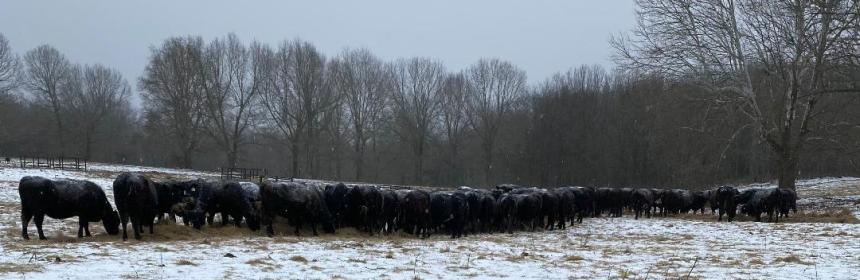
NOTE: Feature photo: A herd of cattle at the Eric Eaves Cattle Farm stand in an ice covered field Friday. During extreme weather cattle need to be feed more to gain weight for protection against cold temperatures. Submitted Photo

Public workers become ice storm heroes

Feb. 28th, 2022

Emma Allen | Delta Digital News Service

City employees work clearing the roads of ice during winter ice storms.

East Johnson Avenue is made accessible to traffic after members of the Public Works Department cleared the roadway of ice following a round of recent ice storms. Emma Allen/Delta Digital News Service

JONESBORO, Ark. – Before winter weather struck Northeast Arkansas last week, many people panicked to get to the grocery store.  Others were preparing to help out the community in the storm. 

   There are essential workers that have the main goal of keeping the community safe.  The Jonesboro Fire Department and the Jonesboro Street Department work in many ways to help enforce safety.  By laying down salt and moving snow away from the roads, the street department and fire department stay busy during winter weather storms.    

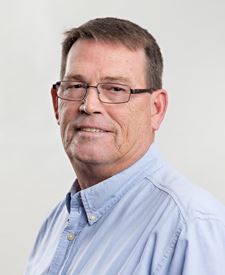
City of Jonesboro Street Director Steve Tippitt

   Steve Tippitt, Jonesboro street director, described the process the street department goes through when dealing with winter weather. 

   “We put a chemical out that is magnesium chloride that sprays in our sand, and we spread the sand out for traction,” Tippitt said. “We will do that until we get to thinking we have to start plowing the streets, and then we will plow until we get it to where it is down thin, to where the sun will melt it.” 

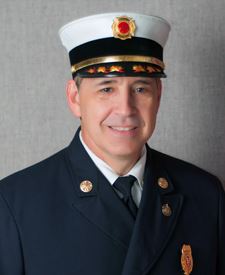
   Jonesboro Fire Chief Kevin Miller said his department runs preparations with a lot of their equipment, trying to make sure everything is ready to go winterized.  They follow procedures to make sure the firefighters are ready for anything as well. 

   “The main goal is to make sure we are able to respond.  Plain and simple,” he said.   

City of Jonesboro Fire Chief Kevin Miller

   Arkansas weather is unpredictable.  The public safety departments throughout Jonesboro have to be ready for anything, at any given moment. 

   Caitlynn Hill, junior at A-State, explained, “I commute to campus every day, so I knew it was going to be tough when the storm came to get to school.  I am thankful for the essential workers that help clear the roads and make safety a priority in this community.”

   Arkansas State University opened up for school again today following the second round of winter weather.  The hard work and efforts of the public safety departments allowed citizens to stay safe during the winter weather storm. 

Poet challenges social prejudices and misconceptions

Gomez delivers encouragement through engagement.

By Emma Allen | Delta Digital News Service

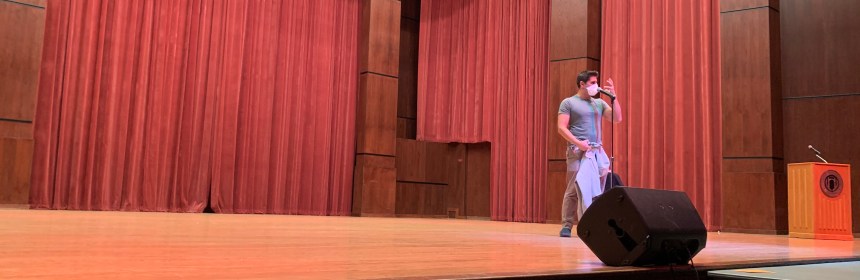
JONESBORO, Ark. – Cold weather bearing 30-degree temperatures were no match for the itching ears of a crowd wanting to hear the words of Poet Carlos Andrés Gómez on Thursday, January 25th  at Arkansas State University.

The event, which was free to the public, was slated to be held in the Drama Theatre with a seating capacity of 344, but was changed to Riceland Hall, a 970-seat auditorium in the Fowler Center, due to social distancing guidelines for COVID-19. 

Gómez, a Colombian American poet, actor, and educator from New York City, stars in HBO’s “Def Poetry Jam” and has acted in films such as Spike Lee’s award-winning movie, “Inside Man”, with Denzel Washington. 

Gómez was invited to campus by the A-State Department of Theatre and its Office of Diversity and Community Engagement. 

“The faculty met with the theatre students last year and one of the things that we talked about was diversity issues,” said Associate Professor of Theatre Jeff Mclaughlin.

Mclaughlin said, “It became clear in that conversation that our students were interested in having more tools in their tool kit to deal with microaggression and social injustices that they didn’t really know how to deal with.” 

According to Mclaughlin, the department spent time this summer looking for someone they could bring in to discuss those issues.  He said Gomez was recommended by another group they had contacted during the search. The group was told they should “bring in Carlos.” 

Gómez has conducted workshops in the past that cover “Antiracism as Action”, “Diversity, Equity, and Inclusion”, “Healthy Masculinity and Gender Equity”, and “Tools for Self-Care: Mental Wellness & Emotional Resilience.”  He covers some of the topics in his poems during his performance.

Sharon Lee, director of the Office of Diversity and Community Engagement really liked the idea of bringing in Gomez.

“We thought it was great,” Lee said.  “We wanted to be a part of it too.” 

Although colleges and universities are part of Gomez’s circuit, this was his first time performing at A-State and visiting Jonesboro.

“I mean, I think for me, the thing that I love most about visiting colleges and universities is, I feel like it’s a rare time that you encounter a human being when they are in this moment of tremendous change instead of flux and figuring out who they are,” he said.

Gomez said that he was very honored and humbled to have been invited to perform. “The city has been great and I’m really excited to be here,” he said.

Gomez’s  poems included such titles as, “Above The Speed Limit”, “Gifted”, and “Where Are You Really From?”

Although the event was attended by people within the community, the venue was packed with students.

Madison Stewart, a senior from Trumann appreciated Gomez’s attempt to connect with the audience during his performance.

“I think that Carlos was such a kind and genuine person. Having a conversation with his audience and turning us into a part of the performance was very important to him, and you could tell throughout,” Stewart said.

“I think that Carlos was such a kind and genuine person. Having a conversation with his audience and turning us into a part of the performance was very important to him, and you could tell throughout”.

Madison Stewart, A-State theatre major

“In between all of his poems, he took the time to talk to the audience about their personal life experiences and was genuinely interested in what we all had to say. I have never seen a poet as engaging as him, ”she explained.

Gómez said that human moments is what inspired him to write. “I don’t know if you have ever experienced a moment that feels really profound, but you’re the only person that seems to either see it, or appreciate it?  So, I think creating snapshots of really profound moments of being a human being, and also bringing some of those things that we don’t talk about to the surface, so we can deal with them,” he said.

            “I don’t know of another moment, and definitely another moment in adulthood, when I think people are as open and receptive to considering perspective so different from their own,” he elaborated.

Gómez said that he really relishes going into places and often being in spaces with people who may come from a different life experience, or have different ideas about the world.

Freshman Norah Wilborn of Jonesboro attended the event. Wilburn said she often encounters situations where her ethnicity and her behavior don’t match other’s expectations.

“I’m constantly told that I sound ‘white’….I’m not exactly sure what that means,” Wilborn said.  She said that Gomez’s poems helped her to understand about stereotypes people often encounter.

Juanita Acosta, Community Navigator with El Centro Hispano,  a community-based nonprofit organization serving the Latino community within the city also attended the event.

            “I think it was a really good opportunity to see that not everyone is there to judge you for who you are,” Acosta said.  “It was also special because he is of Colombian decent, and I am actually from Colombia as well.”

Acosta attended the event with friends and family members. “There were a few of us that went because we saw that he was going to be there.  We were happy about that.  It was nice because you don’t normally see that in such a small town in Arkansas, especially for such a famous poet like himself,” she said. 

After his performance, Goméz mentioned on Instagram, “Last night in Jonesboro, Arkansas at A-State was one of the most generous and vulnerable audience I’ve ever had.  The electricity of that experience was beyond words.”

Gomez met with attendees while signing several copies of his award-winning book, “Fractures” after his performance. Gomez was treated with an afterparty by event organizers before continuing on his tour to share.