Monthly Archives: April 2023

Delta Writers provide opportunities for NEA poets

Poetry readings are performed at various venues within the region

Delta Digital News Service

April 19, 2023

By Avery Jones | Editor

Writer and poet Scott McDaniel reads his poetry during open mic.

JONESBORO, Ark. – Delta Writers, formerly known as Delta Poets, is a nonprofit organization that supports writers and poets in the Northeast Arkansas community. It was established in 2021 by Scott McDaniel and Nicole Sylvia after the COVID-19 restrictions started to lift.

Poets McDaniel and Sylvia are originally from Jonesboro. They have been widely published in various literary magazines and have presented their work at formal readings and open mics. 

Both attended college. McDaniel went to University of Arkansas-Fayetteville and received a bachelor’s in psychology and sociology. Sylvia attended both Black River Technical College and Arkansas State University-Jonesboro.

Aside from writing, McDaniel works as a contractor while Sylvia is a supply chain coordinator for a farm. They met at a poetry reading and wanted to collaborate creatively.

While collaborating, the duo decided to start Delta Writers because they felt that an outlet for creative writing was necessary for the Northeast Arkansas area since none had been established yet. They wanted there to be consistent events for writers to be able to expose their work. 

“I was going to New York a lot for workshops and things like that, and I just kind of thought there was no reason for there not to be quality spoken word events here,” McDaniel said. “If you look at Arkansas, believe it or not, Arkansas is a hub for literature.”

“I was going to New York a lot for workshops and things like that, and I just kind of thought there was no reason for there not to be quality spoken word events here,” McDaniel said.

– Scott McDaniel, writer-poet
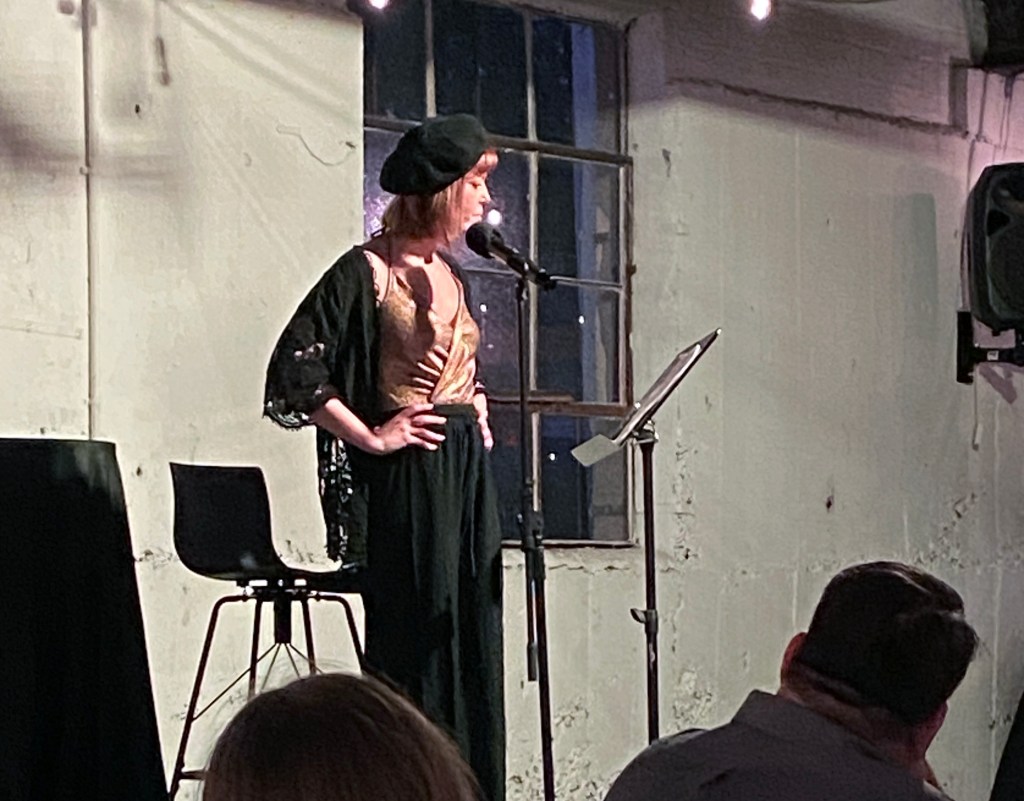
Nicole Sylvia reads during a poetry reading.

Detailing the states literary relationship, McDaniel noted that the longest-running spoken word event in the country, Wednesday Night Poetry, is in Hot Springs; one of the most respected presses, Sibling Rivalry, is in Little Rock; one of the most respected literary magazines, Oxford American, is in Conway.

The group’s focus right now is to build a writing community by hosting events. They organize spoken word events that are open to the public at various local businesses. In the future, they hope to host workshops.

Currently, two kinds of spoken word events are held by the group, open mics and features. The group recently started an open mic event called Final Friday which is held on the last Friday of every month at Story Coffeehouse. They’ve also had open mics at Cregeens, an Irish Pub in downtown Jonesboro. The events are open for anyone to come speak.

During feature events, which can boasts anywhere from 50 to 80 attendees, well-known poets are brought in for more formal and organized readings. Former Virginia Poet Laureate Tim Seibles was recently invited to speak at the Recovery Room Coffeehouse & Bistro. Tickets are sold for these events so that the poet gets paid.

“It’s about the audience, and we really want to make sure that they’re comfortable and that they are enjoying their time,” Sylvia said. “It may not seem like it has any rhyme or reason to it, but us putting…Tim at the Recovery Room, there’s a reason for those environments…we’re not just sending them blindly to somewhere that doesn’t suit what they’re trying to do.”

“It’s about the audience, and we really want to make sure that they’re comfortable and that they are enjoying their time.”

Nicole Sylvia

Ideally, they want to have four quarterly features a year. Once they’re able to hit four features per year consistently, they plan to add workshops in which a group regularly meets to read and critique each other’s work, and a feature writer will be there to instruct.

Alexandra Oliver reads during a poetry reading.

Their latest feature was held on Saturday, April 15, at the Glass Factory with Alexandra Oliver. Oliver is a well-known poet from Canada. She has published three collections and has presented her poetry at Lollapalooza, Paris Fashion Week, among many other events.

McDaniel and Oliver met at a Writers’ Hotel conference in New York City, where she was an instructor for the conference, and they hit it off. McDaniel invited her to be in one of the Delta Writers’ features.

Oliver is originally from Vancouver, and now lives in Burlington, Ontario. She’s been writing poetry professionally for 30 years. She also teaches poetry at universities. 

Oliver attended college and has a bachelor’s and master’s in drama from the University of Toronto, an MFA in creative writing from the University of Southern Maine, and a PhD in English from McMaster University in Canada.

Rayna Kingston reads during a poetry reading.

The poetry reading at the Glass Factory was from 6 to 10 p.m. and was catered by Urban Organics. Opening music was supplied by classical guitarist Adrian Little during the mingling.

Poet Rayna Kingston was the opener. Kingston is also involved with the Delta Writers. She works for KASU and has a master’s degree in English from Arkansas State University Jonesboro. She’s done reading for Delta Writers before and is published in literary magazines.

Kingston was followed by Sylvia, and McDaniel was the last to speak before Oliver, who ended the night. She gave out signed copies of her published collections.

According to McDaniel and Sylvia, the best way for a writer to get involved with the group is to come read at one of their open mics. The Final Fridays would be the most convenient since they happen regularly. Both McDaniel and Sylvia can also be contacted through email: scott@mcdanielpoetry.com and anicolesylvia@gmail.com respectively.


Avery Jones is a sophomore in the Department of English and Philosophy at Arkansas State University in Jonesboro. She can be reached at avery.jones@smail.astate.edu


NOTE: Feature photo by Álvaro Serrano on Unsplash

Author Profile:

Youth proves no obstacle for Paragould historian and author Erik J. Wright

Historian researches century-old murder case in book

By Avery Jones | Editor

Delta Digital News Service

April 14, 2023

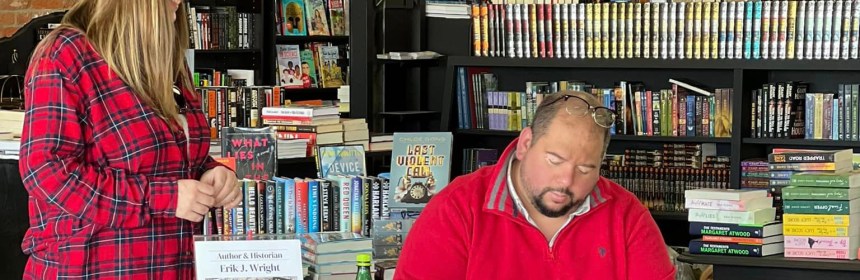
PARAGOULD, Ark. – On March 25, local historian Erik J. Wright signed copies of his 2016 book, “Main Street Mayhem”, at Weber’s Book House in Paragould. The book investigates the 1909 murder case of local resident Charles Gragg and the 1911 disappearance of suspect James Trammell.

 Wright has been an independent historian for more than 15 years. He’s 38 and currently lives in Paragould with a wife and two children. He’s originally from Tucson, Arizona, and was raised in Texas. 

He studied in an archaeology program from Pima College in Tucson, but decided not to finish since he was already working in archaeology without the degree. 

“I thought I was too good for it,” Wright said. “At that time, archaeology, and I was doing it, and so I thought, what do I need college for?”

He worked with various organizations to conduct archaeological surveys and provide public education. At one point, he was a safety manager for a geophysical company. He worked in this field in Arizona until the 2008 recession killed the local industry.

In 2014, he moved to Paragould where he started working with the local newspaper. Now, along with his independent work as a historian, he’s the director for the Greene County Office of Emergency Management.

Wright became interested in writing on Paragould’s history after locals started to ask him about it. They knew he was a historian and wanted him to write about local history. He was skeptical at first, but after doing some research, he discovered what would become the topic of his book. 

“They kept bugging me about, well, why don’t you do something local?” Wright said. “And I thought, just, like what? And they kept pestering me and pestering me, and finally, I started digging into Paragould’s history…and that’s when I started finding a lot of the violent episodes, and that was kind of the genesis of that book.”

“They kept bugging me about, well, why don’t you do something local?” …they kept pestering me and pestering me, and finally, I started digging into Paragould’s history…and that’s when I started finding a lot of the violent episodes…”

– Erik J. Wright, author & historian

Wright first became interested in history as a child. His father read books about Western history, so that’s what Wright liked to read as well. He also had good history teachers. When he was a teenager, his parents took him to Tombstone, Arizona, where he met the town historian.

“I was encouraged by my parents to go talk to him,” Wright said. “He learned I was from the Dallas-Fort Worth area, and he was like, if this is something you’re interested in, why don’t you go back and research some aspect of this story back in Dallas-Fort Worth?”

The historian told Wright that he should do some research on a story if he was interested. A year later, he published his first article in True West magazine about Doc Holliday and his history with Dallas, Texas.

He was 16 years old at the time and enjoyed the feeling of being published. He went on to say that his favorite part about being a historian is the research.

“Writing is a consequence of the research,” Wright said. “The research is fun…when you’re able to flesh out an event or a person that happened that people either have forgotten about or didn’t know about that adds to the contextual story of the Western movement, I think that’s a big deal.”

…“The research is fun…when you’re able to flesh out an event or a person that happened that people either have forgotten about or didn’t know about that adds to the contextual story of the Western movement, I think that’s a big deal.

– Erik J. Wright, author & historian

He had good mentors at True West who taught him how to do research and that he has to take into consideration global factors and how they motivate people in past eras. According to Wright, a lot of researchers who write about history make the mistake of not taking into account the events that are driving people’s decisions.

“I was fortunate to have some very good mentors,” Wright said. “They took me under their wing and showed me the right sources and taught me that if you want to understand ‘X’, you also have to understand everything around it. So I spent a long time not just focusing on this over here, but globally, what was going on to motivate the people I was writing about.”

His mentors recommended books that were important to read, and Wright built an extensive library. In addition, at the time, someone had populated the Wyatt Earp research with false documents, so all of that had to be rewritten. Wright’s reputation was made on writing about Earp and the Apache Wars.

“I came into the field in an era when…there was a gentleman around that time roughly…who had populated a lot of the Earp stuff with false documents,” Wright said. “When I came into it, they had just realized that this had happened, and everything had to be basically rewritten.”

Due to his youth and inexperience, Wright faced some struggles that other historians usually don’t have to deal with. Most of his peers were much older than him.

“While I had a lot of good mentors…there were some people that saw me as…a 20-something-year-old kid that doesn’t know what he’s doing, and that was a challenge,” Wright said. “I never had any formal writing classes, so I’ve kind of had to be self-taught with everything.”

“While I had a lot of good mentors…there were some people that saw me as…a 20-something-year-old kid that doesn’t know what he’s doing, and that was a challenge,” Wright said. “I never had any formal writing classes, so I’ve kind of had to be self-taught with everything.”

– Erik J. Wright, author & historian

He was never interested in teaching history or going back to school to get his degree because he’d already found success without it. In addition, he’s more interested in independence than being restricted by the world of academia, and his interests are too varied for teaching.

Today, Wright is the assistant editor of the “Tombstone Epitaph” and a contributing editor for “True West”. He mostly writes book reviews, contacts publishers, interviews other historians, helps other historians with their research, along with doing his own research.

However, even though his work with these publications is nearly ideal for him, he doesn’t get as much time as he’d like to work on independent projects. Right now, he’s interested in violence and how justice was served on the Oregon and California trails, and also the Mountain Meadows Massacre. 

According to The Church of Jesus Christ of Latter Day Saints, in September 1857, a branch of territorial militia in southern Utah composed entirely of Latter-day Saints, along with some American Indians they recruited, laid siege to a wagon train of emigrants traveling from Arkansas to California. The militiamen carried out a deliberate massacre, killing 120 men, women, and children in a valley known as Mountain Meadows. Only 17 small children—those believed to be too young to be able to tell what had happened there—were spared. This event is perhaps the most tragic episode in the history of the Church.

Wright said that in his research, one thing leads to another. He becomes interested in something because he’s researching something else, and he discovers another topic that connects to it. What he writes about might not have been his original area of interest, but something he found a lot of material about along the way.

“I could be researching the history of lemons, and then that leads me to the history of limes, which leads me to the history of oranges,” Wright said. “I’ve had numerous articles that have come out that have been just a chain reaction of looking into this guy, then, oh, I’ve got a lot on this guy, and now I’ve got a lot on this guy.”

His work as a historian can be frustrating when encountering misinformation about Western history in the media. According to Wright, most easily accessible sources, such as Wikipedia articles, are usually inaccurate. Views on the “Wild West” tend to be rather mythological.

However, Wright also said that forms of media like movies aren’t meant to be historically accurate. He believes that if it gets somebody interested enough in a historical event to go and do research of their own, that’s great. 

“If it gets some young kid out there interested in whatever historical event…and it makes him think and maybe go to the library and get a book on that subject, I think that’s fantastic,” Wright said.

“If it gets some young kid out there interested in whatever historical event…and it makes him think and maybe go to the library and get a book on that subject, I think that’s fantastic.”

– Erik J. Wright, author & historian

He said that there aren’t many people his age who are historians and interested in his area of expertise. When he goes to Western history conventions, most people there are much older than him. According to Wright, it’s vital that more young people get interested in history.

Wright believes that most people are bored by history because they had negligible history teachers in high school. He doesn’t want people to discredit history just because of this.

“You don’t have to just be crazy about history,” Wright said. “But if you can go and stand where something happened and have somebody credible explain that to you, I think that that’s a huge thing.”


Avery Jones is a sophomore in the Department of English and Philosophy at Arkansas State University in Jonesboro. She can be reached at avery.jones@smail.astate.edu


Women’s History Month:

NEA women-led businesses continue to grow and contribute to the region

A variety of businesses are owned, started and/or led by women providing much needed regional products and services.

By Avery Jones

Delta Digital News-Service

April 3, 2023

JONESBORO – March was Women’s History Month. It’s a recognition of women’s contributions to culture, history, and society. The annual celebration began in 1987. It first started as Women’s Day on Feb. 28, 1909. 

In northeast Arkansas, many women serve in leadership positions and have started their own business. In Jonesboro, several small, independent businesses are owned and operated by women. They range from medical practices to art schools.  

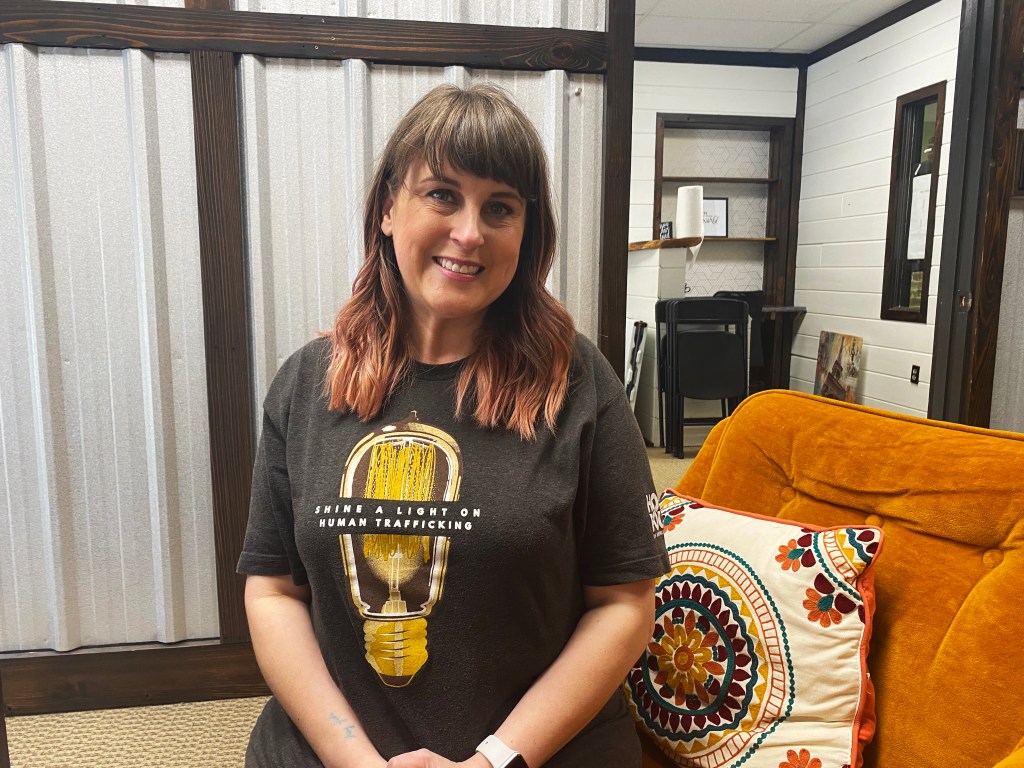
One such business is Hope Found of Northeast Arkansas, a nonprofit organization focused on raising awareness to fight against sex trafficking. It officially became a nonprofit in 2019. Megan Brown co-founded it with Audra King, Mary Sellers, and Miranda Ballard.  

Megan Brown of Hope Found NEA.

Brown has been involved with anti-trafficking since 2009. She was living in Nashville and saw a documentary about trafficking, then felt called to help. She first worked with local organizations as an intern or volunteer.  

Brown is originally from Jonesboro and decided to move back in 2011. Back then, there was only one anti-trafficking organization in the state, PATH (Partners Against Trafficking Humans) in Little Rock. She volunteered with them until 2015 and became a stay-at-home mom until 2018. 

In 2018, Brown and the other co-founders first came together to discuss opening their organization. Brown and King had worked together before at PATH. Brown was always interested in starting her own nonprofit, but after three big trafficking cases around northeast Arkansas came to light, she became inspired to pursue it for the first time. 

“We just really recognized there’s a need for an organization to serve these victims and also educate the community,” Brown said. 

“We just really recognized there’s a need for an organization to serve these victims and also educate the community,” Brown said. 

– Megan Brown

They struggled to find time to dedicate to the project because Brown was a stay-at-home mom, and the other co-founders had their own jobs and projects to deal with. However, because it was her dream, Brown continued pursuing it. 

“When you’re walking in God’s calling, you’re going to constantly have the devil try to knock you down or try to create challenges or barriers,” Brown said. “Just kind of navigating that through it all is difficult as well.” 

Brown graduated from Arkansas State University Jonesboro with a bachelor’s degree and was a licensed social worker. When she was living in Nashville, she worked at a restaurant and became a bartender as well as a corporate trainer and opened restaurants in New England.  

Her best friend at the time ran a nonprofit in northwest Arkansas, and Brown asked her if she would’ve worked with a nonprofit consultant if she could do everything over again. The friend confirmed this, and Brown decided to pursue this path. 

When she was starting to think about opening a nonprofit, Brown worked with a local company called KHARIS Group Consulting. She learned from a consultant named Shunquetta Cunningham about how to manage a nonprofit. 

Today, Hope Found NEA has two employees, one of them being Brown. They give sex trafficking awareness presentations for professionals, and they have a curriculum for youth. The curriculum teaches the red flags to look for in someone who might have been trafficked, how to avoid being trafficked, and how to identify positive influences in one’s life. They also set up booths at various events. 

Tanya Eddy, 53, owns and runs Jonesboro Art School, a small, independent school for children. She opened the school in 2009. Before the COVID-19 pandemic, she used to teach in-person classes for children, but now she teaches exclusively online. 

She has been teaching for 20 years. She used to teach private lessons with the Foundation of Arts and decided at 40 years old that she wanted to open her own school.  

She’s originally from Pocahontas and went to school at Arkansas State University. She started out pre-med, but decided later that she wanted to be a teacher. She got her teaching degree with a major in biology and a minor in art.  

While in college, she worked at a bank for 10 years and had become a supervisor by the time she graduated. She left banking 25 years ago. 

Within the first year of her art school opening, her class grew from 6 students to 50 students. About 3 years ago, they went completely online.  

Eddy enjoys teaching online because she gets to teach students who live in other states and who have moved away. She also works with her daughter, Maya Eddy, 24, who teaches elementary art and creative writing at their school. 

Eddy also does digital art and has a YouTube channel where she records demonstrations. Online lessons and digital art work much better for her than traditional art due to her arthritis. 

“I love working with the kids,” Eddy said. “I love those moments when they’re learning to do something, and they get it. You can tell that they realize they understand how to do it.” 

“I love working with the kids…I love those moments when they’re learning to do something, and they get it. You can tell that they realize they understand how to do it.” 

– Tanya Eddy

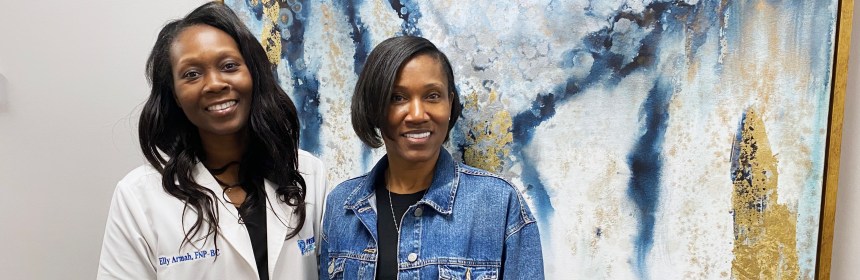
Premiere Family Practice is a small clinic run by Carolyn Coleman, 49, and Elly Armah, 41, nurse practitioners. Armah has been practicing for over 10 years, and Coleman has been practicing for over 20 years.  

Elly Armah (left), Carolyn Coleman (right) of Premiere Family Practice.

Coleman is originally from Marked Tree while Armah is originally from Ghana. Armah lived there until she was 2, then moved with her family to Britain, then to the U.S. where she graduated high school. She’s been in Jonesboro since 1996. 

Both attended Arkansas State University Jonesboro. Coleman earned her bachelor’s degree in nursing from ASU, then her master’s in nursing from University of Memphis. Armah earned both her bachelor’s and master’s degrees in nursing from ASU. 

They both currently work as trauma hospitalist nurse practitioners as well as running their clinic. They first opened their clinic in April 2021. They wanted to have more autonomy and give back to the Jonesboro community. 

“I enjoy building up those relationships with my patients,” Armah said. “We pride ourselves on allowing our patients to have access to us. Most physicians don’t give their patients access, and our patients can call the clinic and speak to us, they can call our cellphones and speak to us, so we pride ourselves on giving that personal touch when it comes to their care.” 

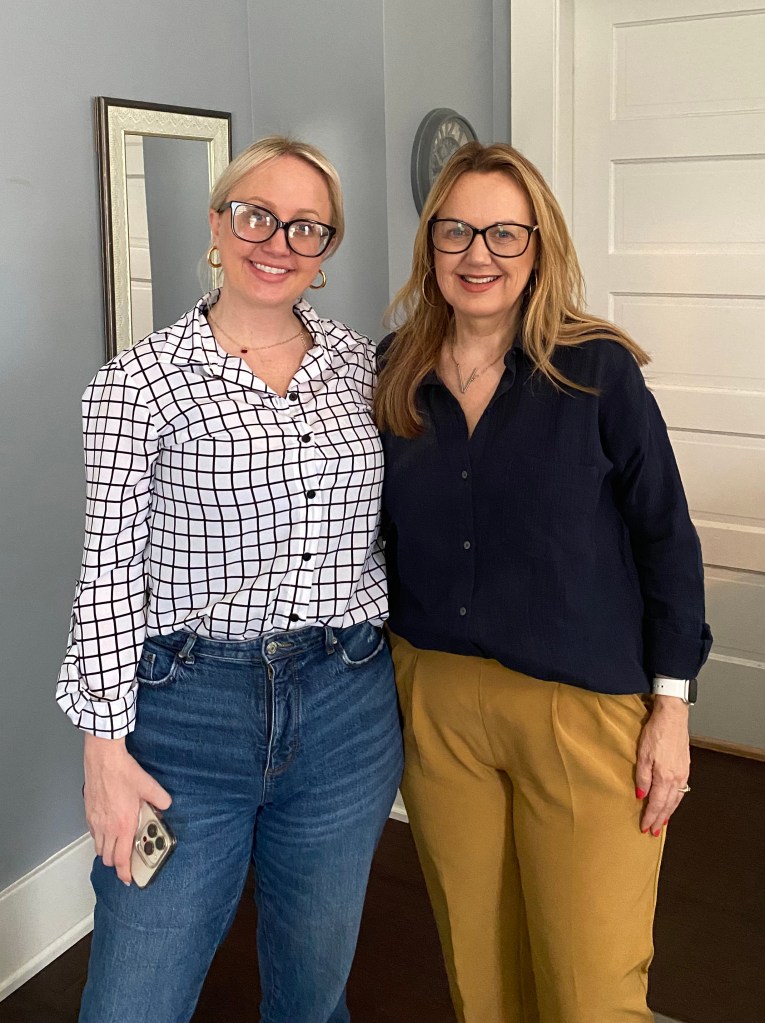
Foundation – A Wellness Practice is a therapy center owned by Vicki White, 60, and Lauren Hannah, 37. They’re a mother and daughter duo who have been running their business for 5 years. They both worked previously as therapists in nonprofit community mental health centers.  

Lauren Hannah (left), Vicki White (right) of Foundation therapy center.

White is originally from Missouri, and Hannah is from Massachusetts. They’re both married, and Hannah currently has four children. When not at school, they stay upstairs in the Foundation building. Hannah’s husband also works for Foundation. 

White is a licensed social worker with a bachelor’s degree from University of Tennessee and a master’s in social work from University of Missouri. Hannah is also a licensed social worker with a bachelor’s from Arkansas State University Jonesboro and a doctorate in social work from University of Tennessee.  

They decided to open their business because they wanted to offer more specialized care to patients. Their focus is on holistic treatments that prioritize therapy and other natural methods over medication, although they do still offer medication.  

They also recently bought the building across the street from theirs in order to open another business, associated with their therapy center, that will offer several wellness treatments: a wellness spa, cryotherapy, halotherapy, IV therapy, a sensory deprivation tank, proactive health treatments, a wellness boutique, and more. 

Foundation currently has five full-time therapists and three part-time therapists, as well as a psychiatric nurse practitioner that handles medication. Each therapist has their own specialty. White specializes in couples therapy, while Hannah specializes in anxiety and women.  

When asked what she likes about owning their own business, White said, “One thing I really like about it is we have the flexibility to meet people’s needs. If someone we’ve been working with for a while loses their insurance, we can say, Hey, we’ll still see you, we’ll figure it out together. Whereas if you’re working in a bigger business, sometimes you can’t make those types of decisions for yourself.” 

Women in northeast Arkansas continue to own, open and operate many businesses which contribute significantly to their communities. The presence of female business ownership and leadership continues to grow, revealing the importance of their existence to society. 


Avery Jones is a sophomore in the Department of English and Philosophy at Arkansas State University in Jonesboro. She can be reached at avery.jones@smail.astate.edu


Coping with Seasonal Allergies

By Shelby Russom
Delta Digital News Service

JONESBORO, Ark. — Spring. Plants are blooming, and the weather is finally warming. For some, spring is wonderful time of year. For others, spring means coping with seasonal allergies.

   According to the Asthma and Allergy Foundation of America, allergies are reactions to allergens people come into contact with. Allergens, like pollen, cause seasonal allergies that affect approximately 81 million people in the United States and vary depending on location and time of year.

   Dr. Debra Schulte, a part-time nurse practitioner in Mountain Home and full-time assistant professor of nursing at Arkansas State University, said seasonal allergies are more common in the spring months but can affect people all year round.  

   “You see a lot more because you have your typical spring pollen,” Schulte said.

   A-State sophomore Sarah Purcell studying studio art said she does not believe her allergies are severe but does notice that the symptoms worsen during the warmer months of the year. Purcell said her allergies cause her to get mucus, but the symptoms of seasonal allergies can range from runny nose and sneezing to watery eyes and itchy throat.

   Dr. Audrey Folsom, A-State assistant professor of clinical laboratory, said preventing seasonal allergies is nearly impossible because people cannot avoid things like trees, flowers and pollen that release allergens into the air. However, people can manage their seasonal allergies through lifestyle and diet changes.

   To combat allergy symptoms, Schulte said people should change their surroundings by replacing carpet with hardwood in their homes, frequently washing their curtains and even putting plastic covers on their pillows and mattresses. Folsom said changing the foods people eat and adding vitamin D supplements to their daily routine can help the body fight against allergens.

   “It is ultimately tied to gut health,” Folsom said. “Because I would say, probably 80% of your immune system is around your gut. So the worse your gut health is, the more likely you are to have allergies.”

   Folsom herself battles with allergies. To combat her allergy symptoms, she cut out the big five foods that trigger allergies: wheat, gluten, dairy, soy and corn. Folsom said if people have very bad problems with allergies they should try to cut all five of those food groups out of their diet. Folsom said it is necessary to cut all five food groups out for at least a month and then reintroduce them back into the diet one at a time to properly find which is causing a spike in a person’s seasonal allergies.

Multiple medications
Because of the wide range of options, buying allergy medication can be a daunting task. People should do their research before deciding which medication is right for them. (Photo re-enactment by Shelby Russom)

   Several medications are available to combat seasonal allergies. These medications include over-the-counter antihistamines, prescription medications, as well as allergy shots.

   “If those classifications of medications are not good options, there’s definitely different families of medications that your provider can prescribe,” Schulte said.

   Schulte said all these medications are easy to access, but all require a few uses before a noticeable change will occur.

   In Northeast Arkansas, it is common for farmers to burn their fields to clearf any leftover crops to prepare for planting new crops. This practice releases copious amounts of smoke into the air that people will breathe in. Folsom said burning fields severely worsens everyone’s breathing and allergies.

   “It’s horrible and I wish they would stop it,” she said. “People think it’s normal, but there’s other places in the nation that do not do that.”