WALNUT RIDGE, Ark. – After an absence of nearly three years, Barnes & Noble is returning to the Jonesboro area. Previously located at the Turtle Creek Mall, the bookstore was one of several retail properties destroyed on Saturday, March 28, 2020, when a tornado ripped through the city.
According to a press release from local real estate developer Haag Brown Commercial, the new Barnes & Noble is slated to move into the former Pier 1, and most recently Spirit Halloween, location.
In the wake of the Jonesboro Barnes & Noble’s closure, a few independent bookstores popped up in the Northeast Arkansas area, including Eclectic Geekery in downtown Walnut Ridge. While the return of Barnes & Noble is exciting, fear the large chain could negatively impact the smaller local bookstores is rising.
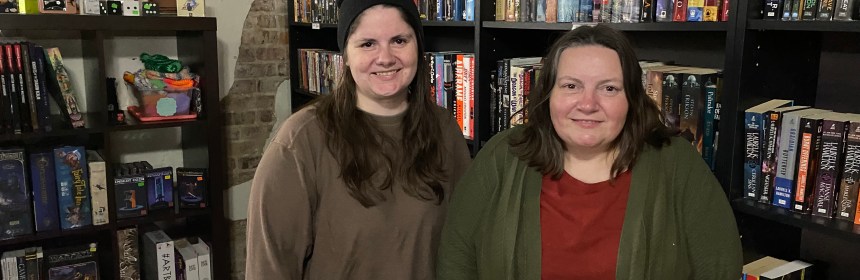
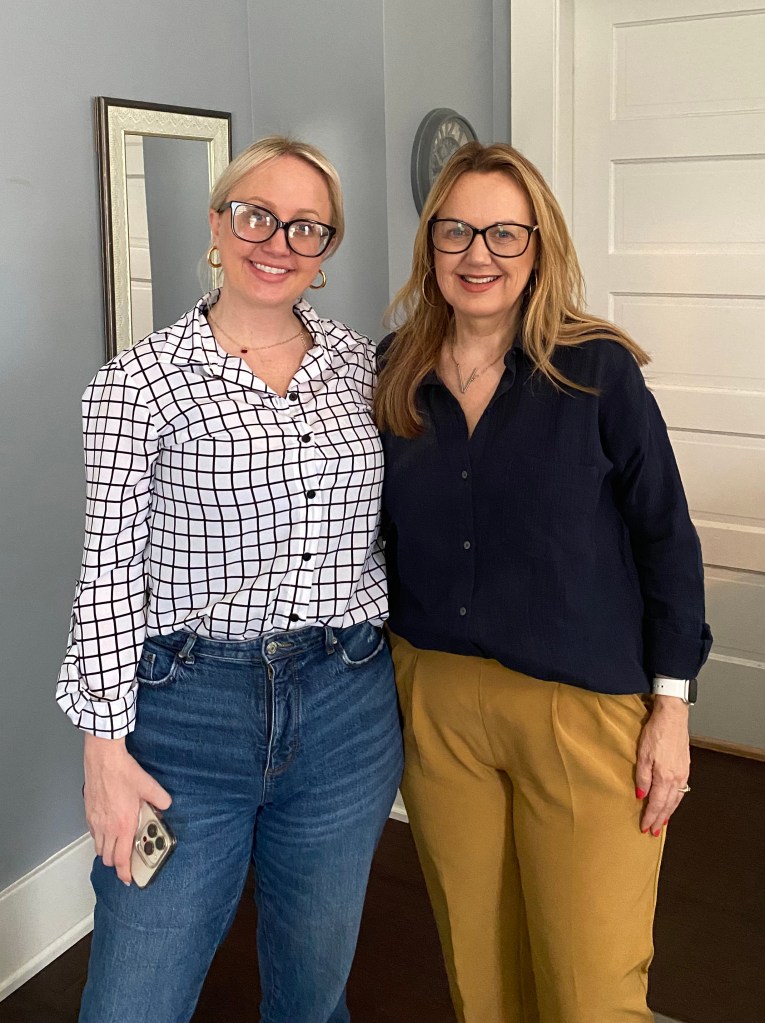
Eclectic Geekery is run by two sisters, Megan Heyl and Sarah Brown. It opened in February 2022, and the store offers both new and used books, as well as things considered “geeky” such as graphic novels, manga and fantasy and board games.
The sisters started working on their bookstore when Brown called Heyl to tell her about the location space becoming available. They decided to combine a book and game store because Brown had always wanted to open a game store, while Heyl had dreamed of opening a bookstore.
Heyl had always wanted to work for herself and also wanted to make a space tailored to underrepresented communities in the area. She had planned to start working on a bookstore in 2020 but decided to postpone it when the pandemic arrived.
Their primary struggles when first starting work on their bookstore was renovating the old building. A damaging roof leak was the worst of the issues. Their supply of books and games began out of what they had in their houses. They were able to open in about a month thanks to their frugality. “We are very passionate about what we do, which is being pretty selective in our books and offering event space and things for people to do locally,” Brown said. “Our new books are pretty much curated towards LGBTQ and black and indigenous voices.”
“We are very passionate about what we do, which is being pretty selective in our books and offering event space and things for people to do locally” …
Sarah Brown, co-owner Eclectic Geekry
Because of their specially curated collection and community support, Heyl and Brown believe that they’ll be able to compete with Barnes & Noble. They sell many things that Barnes & Noble doesn’t have. They’re able to curate their selection specifically for their community because they personally know many of these people and know what they want, which is something a big bookstore isn’t able to do. They have to curate for the general population.
“With small bookstores, you get to know your patrons and the patrons get to know the employees better,” Anthony Tillman, an Eclectic Geekery patron, said. “They actually can get a feel for what everyone in the area prefers. The big ones, they just stock what’s popular.”
“With small bookstores, you get to know your patrons and the patrons get to know the employees better”…
Tillman, an Eclectic Geekery patron
While Barnes & Noble may have the advantage of the larger scale of business, small independent bookstore owners like Brown and Heyl are confident that their specialized services will continue to be vital for local communities.
Avery Jones is a sophomore in the Department of English and Philosophy at Arkansas State University in Jonesboro. She can be reached at: avery.jones@smail.astate.edu
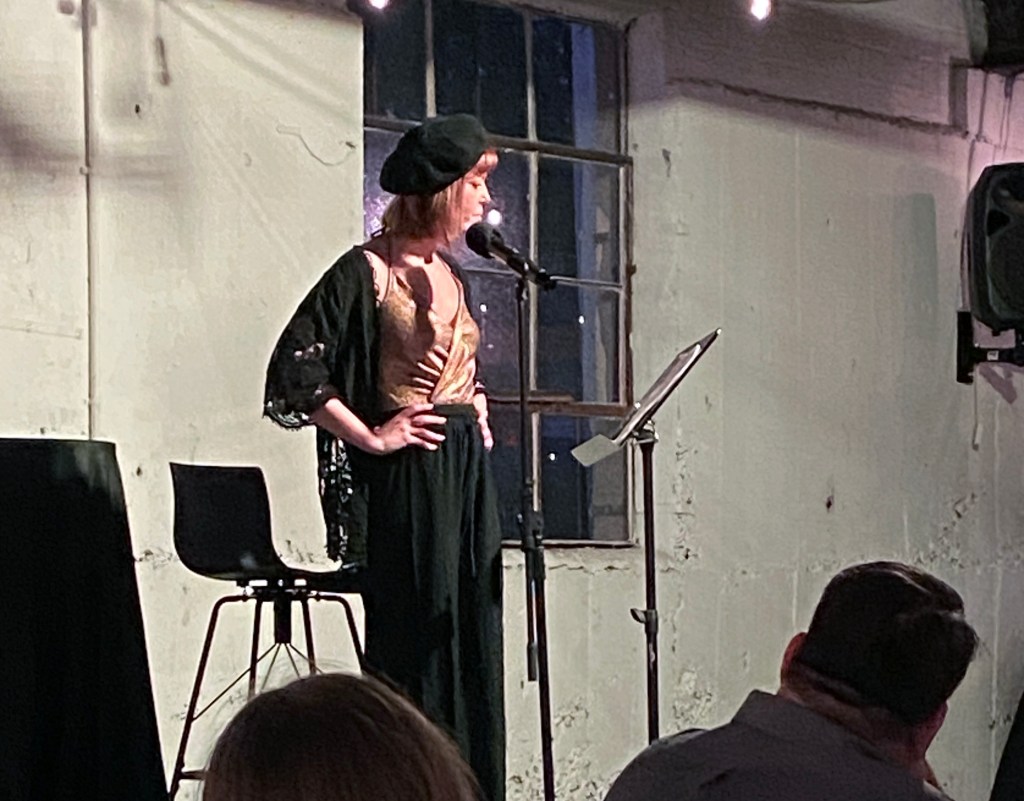
Writer and poet Scott McDaniel reads his poetry during open mic.
JONESBORO, Ark. – Delta Writers, formerly known as Delta Poets, is a nonprofit organization that supports writers and poets in the Northeast Arkansas community. It was established in 2021 by Scott McDaniel and Nicole Sylvia after the COVID-19 restrictions started to lift.
Poets McDaniel and Sylvia are originally from Jonesboro. They have been widely published in various literary magazines and have presented their work at formal readings and open mics.
Both attended college. McDaniel went to University of Arkansas-Fayetteville and received a bachelor’s in psychology and sociology.Sylvia attended both Black River Technical College and Arkansas State University-Jonesboro.
Aside from writing, McDaniel works as a contractor while Sylvia is a supply chain coordinator for a farm. They met at a poetry reading and wanted to collaborate creatively.
While collaborating, the duo decided to start Delta Writers because they felt that an outlet for creative writing was necessary for the Northeast Arkansas area since none had been established yet. They wanted there to be consistent events for writers to be able to expose their work.
“I was going to New York a lot for workshops and things like that, and I just kind of thought there was no reason for there not to be quality spoken word events here,” McDaniel said. “If you look at Arkansas, believe it or not, Arkansas is a hub for literature.”
“I was going to New York a lot for workshops and things like that, and I just kind of thought there was no reason for there not to be quality spoken word events here,” McDaniel said.
– Scott McDaniel, writer-poet
Nicole Sylvia reads during a poetry reading.
Detailing the states literary relationship, McDaniel noted that the longest-running spoken word event in the country, Wednesday Night Poetry, is in Hot Springs; one of the most respected presses, Sibling Rivalry, is in Little Rock; one of the most respected literary magazines, Oxford American, is in Conway.
The group’s focus right now is to build a writing community by hosting events. They organize spoken word events that are open to the public at various local businesses. In the future, they hope to host workshops.
Currently, two kinds of spoken word events are held by the group, open mics and features. The group recently started an open mic event called Final Friday which is held on the last Friday of every month at Story Coffeehouse. They’ve also had open mics at Cregeens, an Irish Pub in downtown Jonesboro. The events are open for anyone to come speak.
During feature events, which can boasts anywhere from 50 to 80 attendees, well-known poets are brought in for more formal and organized readings. Former Virginia Poet Laureate Tim Seibles was recently invited to speak at the Recovery Room Coffeehouse & Bistro. Tickets are sold for these events so that the poet gets paid.
“It’s about the audience, and we really want to make sure that they’re comfortable and that they are enjoying their time,” Sylvia said. “It may not seem like it has any rhyme or reason to it, but us putting…Tim at the Recovery Room, there’s a reason for those environments…we’re not just sending them blindly to somewhere that doesn’t suit what they’re trying to do.”
“It’s about the audience, and we really want to make sure that they’re comfortable and that they are enjoying their time.”
Nicole Sylvia
Ideally, they want to have four quarterly features a year. Once they’re able to hit four features per year consistently, they plan to add workshops in which a group regularly meets to read and critique each other’s work, and a feature writer will be there to instruct.
Alexandra Oliver reads during a poetry reading.
Their latest feature was held on Saturday, April 15, at the Glass Factory with Alexandra Oliver. Oliver is a well-known poet from Canada. She has published three collections and has presented her poetry at Lollapalooza, Paris Fashion Week, among many other events.
McDaniel and Oliver met at a Writers’ Hotel conference in New York City, where she was an instructor for the conference, and they hit it off. McDaniel invited her to be in one of the Delta Writers’ features.
Oliver is originally from Vancouver, and now lives in Burlington, Ontario. She’s been writing poetry professionally for 30 years. She also teaches poetry at universities.
Oliver attended college and has a bachelor’s and master’s in drama from the University of Toronto, an MFA in creative writing from the University of Southern Maine, and a PhD in English from McMaster University in Canada.
Rayna Kingston reads during a poetry reading.
The poetry reading at the Glass Factory was from 6 to 10 p.m. and was catered by Urban Organics. Opening music was supplied by classical guitarist Adrian Little during the mingling.
Poet Rayna Kingston was the opener. Kingston is also involved with the Delta Writers. She works for KASU and has a master’s degree in English from Arkansas State University Jonesboro. She’s done reading for Delta Writers before and is published in literary magazines.
Kingston was followed by Sylvia, and McDaniel was the last to speak before Oliver, who ended the night. She gave out signed copies of her published collections.
According to McDaniel and Sylvia, the best way for a writer to get involved with the group is to come read at one of their open mics. The Final Fridays would be the most convenient since they happen regularly. Both McDaniel and Sylvia can also be contacted through email: scott@mcdanielpoetry.com and anicolesylvia@gmail.com respectively.
Avery Jones is a sophomore in the Department of English and Philosophy at Arkansas State University in Jonesboro. She can be reached at avery.jones@smail.astate.edu
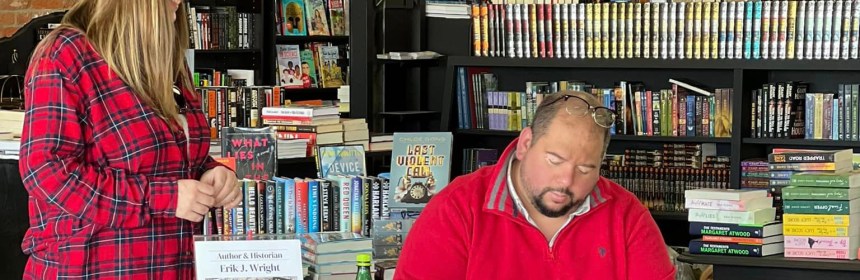
PARAGOULD, Ark. – On March 25, local historian Erik J. Wright signed copies of his 2016 book, “Main Street Mayhem”, at Weber’s Book House in Paragould. The book investigates the 1909 murder case of local resident Charles Gragg and the 1911 disappearance of suspect James Trammell.
Wright has been an independent historian for more than 15 years. He’s 38 and currently lives in Paragould with a wife and two children. He’s originally from Tucson, Arizona, and was raised in Texas.
He studied in an archaeology program from Pima College in Tucson, but decided not to finish since he was already working in archaeology without the degree.
“I thought I was too good for it,” Wright said. “At that time, archaeology, and I was doing it, and so I thought, what do I need college for?”
He worked with various organizations to conduct archaeological surveys and provide public education. At one point, he was a safety manager for a geophysical company. He worked in this field in Arizona until the 2008 recession killed the local industry.
In 2014, he moved to Paragould where he started working with the local newspaper. Now, along with his independent work as a historian, he’s the director for the Greene County Office of Emergency Management.
Wright became interested in writing on Paragould’s history after locals started to ask him about it. They knew he was a historian and wanted him to write about local history. He was skeptical at first, but after doing some research, he discovered what would become the topic of his book.
“They kept bugging me about, well, why don’t you do something local?” Wright said. “And I thought, just, like what? And they kept pestering me and pestering me, and finally, I started digging into Paragould’s history…and that’s when I started finding a lot of the violent episodes, and that was kind of the genesis of that book.”
“They kept bugging me about, well, why don’t you do something local?” …they kept pestering me and pestering me, and finally, I started digging into Paragould’s history…and that’s when I started finding a lot of the violent episodes…”
– Erik J. Wright, author & historian
Wright first became interested in history as a child. His father read books about Western history, so that’s what Wright liked to read as well. He also had good history teachers. When he was a teenager, his parents took him to Tombstone, Arizona, where he met the town historian.
“I was encouraged by my parents to go talk to him,” Wright said. “He learned I was from the Dallas-Fort Worth area, and he was like, if this is something you’re interested in, why don’t you go back and research some aspect of this story back in Dallas-Fort Worth?”
The historian told Wright that he should do some research on a story if he was interested. A year later, he published his first article in True West magazine about Doc Holliday and his history with Dallas, Texas.
He was 16 years old at the time and enjoyed the feeling of being published. He went on to say that his favorite part about being a historian is the research.
“Writing is a consequence of the research,” Wright said. “The research is fun…when you’re able to flesh out an event or a person that happened that people either have forgotten about or didn’t know about that adds to the contextual story of the Western movement, I think that’s a big deal.”
…“The research is fun…when you’re able to flesh out an event or a person that happened that people either have forgotten about or didn’t know about that adds to the contextual story of the Western movement, I think that’s a big deal.”
– Erik J. Wright, author & historian
He had good mentors at True West who taught him how to do research and that he has to take into consideration global factors and how they motivate people in past eras. According to Wright, a lot of researchers who write about history make the mistake of not taking into account the events that are driving people’s decisions.
“I was fortunate to have some very good mentors,” Wright said. “They took me under their wing and showed me the right sources and taught me that if you want to understand ‘X’, you also have to understand everything around it. So I spent a long time not just focusing on this over here, but globally, what was going on to motivate the people I was writing about.”
His mentors recommended books that were important to read, and Wright built an extensive library. In addition, at the time, someone had populated the Wyatt Earp research with false documents, so all of that had to be rewritten. Wright’s reputation was made on writing about Earp and the Apache Wars.
“I came into the field in an era when…there was a gentleman around that time roughly…who had populated a lot of the Earp stuff with false documents,” Wright said. “When I came into it, they had just realized that this had happened, and everything had to be basically rewritten.”
Due to his youth and inexperience, Wright faced some struggles that other historians usually don’t have to deal with. Most of his peers were much older than him.
“While I had a lot of good mentors…there were some people that saw me as…a 20-something-year-old kid that doesn’t know what he’s doing, and that was a challenge,” Wright said. “I never had any formal writing classes, so I’ve kind of had to be self-taught with everything.”
– Erik J. Wright, author & historian
He was never interested in teaching history or going back to school to get his degree because he’d already found success without it. In addition, he’s more interested in independence than being restricted by the world of academia, and his interests are too varied for teaching.
Today, Wright is the assistant editor of the “Tombstone Epitaph” and a contributing editor for “True West”. He mostly writes book reviews, contacts publishers, interviews other historians, helps other historians with their research, along with doing his own research.
However, even though his work with these publications is nearly ideal for him, he doesn’t get as much time as he’d like to work on independent projects. Right now, he’s interested in violence and how justice was served on the Oregon and California trails, and also the Mountain Meadows Massacre.
According to The Church of Jesus Christ of Latter Day Saints, in September 1857, a branch of territorial militia in southern Utah composed entirely of Latter-day Saints, along with some American Indians they recruited, laid siege to a wagon train of emigrants traveling from Arkansas to California. The militiamen carried out a deliberate massacre, killing 120 men, women, and children in a valley known as Mountain Meadows. Only 17 small children—those believed to be too young to be able to tell what had happened there—were spared. This event is perhaps the most tragic episode in the history of the Church.
Wright said that in his research, one thing leads to another. He becomes interested in something because he’s researching something else, and he discovers another topic that connects to it. What he writes about might not have been his original area of interest, but something he found a lot of material about along the way.
“I could be researching the history of lemons, and then that leads me to the history of limes, which leads me to the history of oranges,” Wright said. “I’ve had numerous articles that have come out that have been just a chain reaction of looking into this guy, then, oh, I’ve got a lot on this guy, and now I’ve got a lot on this guy.”
His work as a historian can be frustrating when encountering misinformation about Western history in the media. According to Wright, most easily accessible sources, such as Wikipedia articles, are usually inaccurate. Views on the “Wild West” tend to be rather mythological.
However, Wright also said that forms of media like movies aren’t meant to be historically accurate. He believes that if it gets somebody interested enough in a historical event to go and do research of their own, that’s great.
“If it gets some young kid out there interested in whatever historical event…and it makes him think and maybe go to the library and get a book on that subject, I think that’s fantastic,” Wright said.
“If it gets some young kid out there interested in whatever historical event…and it makes him think and maybe go to the library and get a book on that subject, I think that’s fantastic.”
– Erik J. Wright, author & historian
He said that there aren’t many people his age who are historians and interested in his area of expertise. When he goes to Western history conventions, most people there are much older than him. According to Wright, it’s vital that more young people get interested in history.
Wright believes that most people are bored by history because they had negligible history teachers in high school. He doesn’t want people to discredit history just because of this.
“You don’t have to just be crazy about history,” Wright said. “But if you can go and stand where something happened and have somebody credible explain that to you, I think that that’s a huge thing.”
Avery Jones is a sophomore in the Department of English and Philosophy at Arkansas State University in Jonesboro. She can be reached at avery.jones@smail.astate.edu
JONESBORO – March was Women’s History Month. It’s a recognition of women’s contributions to culture, history, and society. The annual celebration began in 1987. It first started as Women’s Day on Feb. 28, 1909.
In northeast Arkansas, many women serve in leadership positions and have started their own business. In Jonesboro, several small, independent businesses are owned and operated by women. They range from medical practices to art schools.
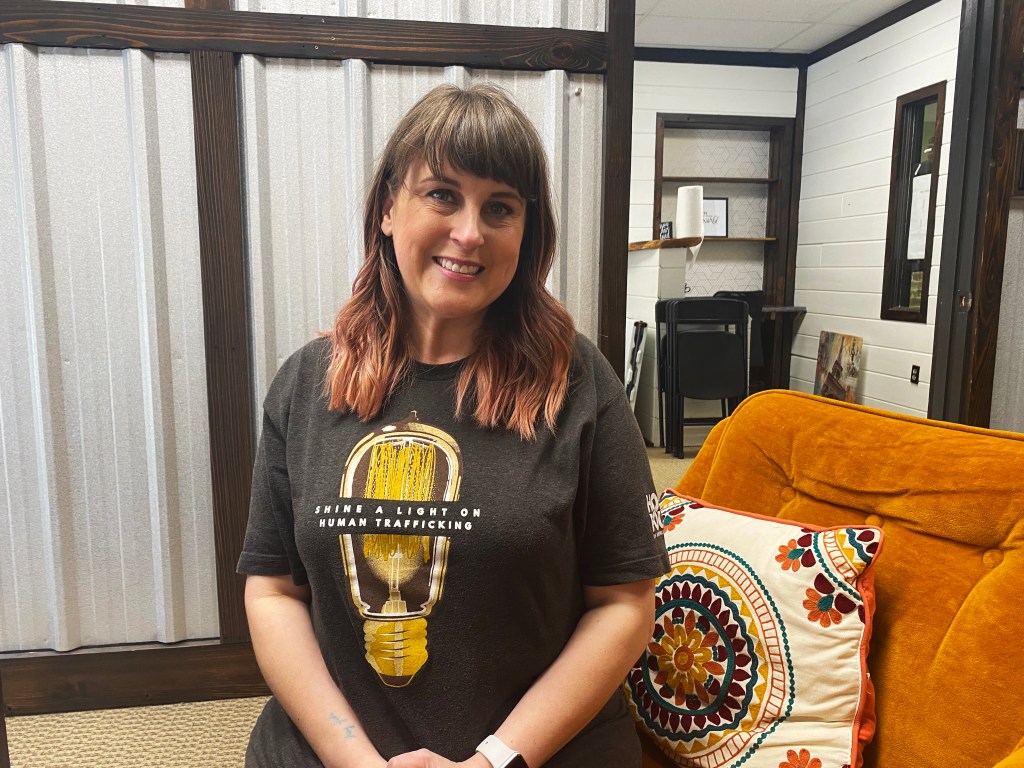
One such business is Hope Found of Northeast Arkansas, a nonprofit organization focused on raising awareness to fight against sex trafficking. It officially became a nonprofit in 2019. Megan Brown co-founded it with Audra King, Mary Sellers, and Miranda Ballard.
Megan Brown of Hope Found NEA.
Brown has been involved with anti-trafficking since 2009. She was living in Nashville and saw a documentary about trafficking, then felt called to help. She first worked with local organizations as an intern or volunteer.
Brown is originally from Jonesboro and decided to move back in 2011. Back then, there was only one anti-trafficking organization in the state, PATH (Partners Against Trafficking Humans) in Little Rock. She volunteered with them until 2015 and became a stay-at-home mom until 2018.
In 2018, Brown and the other co-founders first came together to discuss opening their organization. Brown and King had worked together before at PATH. Brown was always interested in starting her own nonprofit, but after three big trafficking cases around northeast Arkansas came to light, she became inspired to pursue it for the first time.
“We just really recognized there’s a need for an organization to serve these victims and also educate the community,” Brown said.
– Megan Brown
They struggled to find time to dedicate to the project because Brown was a stay-at-home mom, and the other co-founders had their own jobs and projects to deal with. However, because it was her dream, Brown continued pursuing it.
“When you’re walking in God’s calling, you’re going to constantly have the devil try to knock you down or try to create challenges or barriers,” Brown said. “Just kind of navigating that through it all is difficult as well.”
Brown graduated from Arkansas State University Jonesboro with a bachelor’s degree and was a licensed social worker. When she was living in Nashville, she worked at a restaurant and became a bartender as well as a corporate trainer and opened restaurants in New England.
Her best friend at the time ran a nonprofit in northwest Arkansas, and Brown asked her if she would’ve worked with a nonprofit consultant if she could do everything over again. The friend confirmed this, and Brown decided to pursue this path.
When she was starting to think about opening a nonprofit, Brown worked with a local company called KHARIS Group Consulting. She learned from a consultant named Shunquetta Cunningham about how to manage a nonprofit.
Today, Hope Found NEA has two employees, one of them being Brown. They give sex trafficking awareness presentations for professionals, and they have a curriculum for youth. The curriculum teaches the red flags to look for in someone who might have been trafficked, how to avoid being trafficked, and how to identify positive influences in one’s life. They also set up booths at various events.
Tanya Eddy, 53, owns and runs Jonesboro Art School, a small, independent school for children. She opened the school in 2009. Before the COVID-19 pandemic, she used to teach in-person classes for children, but now she teaches exclusively online.
She has been teaching for 20 years. She used to teach private lessons with the Foundation of Arts and decided at 40 years old that she wanted to open her own school.
She’s originally from Pocahontas and went to school at Arkansas State University. She started out pre-med, but decided later that she wanted to be a teacher. She got her teaching degree with a major in biology and a minor in art.
While in college, she worked at a bank for 10 years and had become a supervisor by the time she graduated. She left banking 25 years ago.
Within the first year of her art school opening, her class grew from 6 students to 50 students. About 3 years ago, they went completely online.
Eddy enjoys teaching online because she gets to teach students who live in other states and who have moved away. She also works with her daughter, Maya Eddy, 24, who teaches elementary art and creative writing at their school.
Eddy also does digital art and has a YouTube channel where she records demonstrations. Online lessons and digital art work much better for her than traditional art due to her arthritis.
“I love working with the kids,” Eddy said. “I love those moments when they’re learning to do something, and they get it. You can tell that they realize they understand how to do it.”
“I love working with the kids…I love those moments when they’re learning to do something, and they get it. You can tell that they realize they understand how to do it.”
– Tanya Eddy
Premiere Family Practice is a small clinic run by Carolyn Coleman, 49, and Elly Armah, 41, nurse practitioners. Armah has been practicing for over 10 years, and Coleman has been practicing for over 20 years.
Elly Armah (left), Carolyn Coleman (right) of Premiere Family Practice.
Coleman is originally from Marked Tree while Armah is originally from Ghana. Armah lived there until she was 2, then moved with her family to Britain, then to the U.S. where she graduated high school. She’s been in Jonesboro since 1996.
Both attended Arkansas State University Jonesboro. Coleman earned her bachelor’s degree in nursing from ASU, then her master’s in nursing from University of Memphis. Armah earned both her bachelor’s and master’s degrees in nursing from ASU.
They both currently work as trauma hospitalist nurse practitioners as well as running their clinic. They first opened their clinic in April 2021. They wanted to have more autonomy and give back to the Jonesboro community.
“I enjoy building up those relationships with my patients,” Armah said. “We pride ourselves on allowing our patients to have access to us. Most physicians don’t give their patients access, and our patients can call the clinic and speak to us, they can call our cellphones and speak to us, so we pride ourselves on giving that personal touch when it comes to their care.”
Foundation – A Wellness Practice is a therapy center owned by Vicki White, 60, and Lauren Hannah, 37. They’re a mother and daughter duo who have been running their business for 5 years. They both worked previously as therapists in nonprofit community mental health centers.
Lauren Hannah (left), Vicki White (right) of Foundation therapy center.
White is originally from Missouri, and Hannah is from Massachusetts. They’re both married, and Hannah currently has four children. When not at school, they stay upstairs in the Foundation building. Hannah’s husband also works for Foundation.
White is a licensed social worker with a bachelor’s degree from University of Tennessee and a master’s in social work from University of Missouri. Hannah is also a licensed social worker with a bachelor’s from Arkansas State University Jonesboro and a doctorate in social work from University of Tennessee.
They decided to open their business because they wanted to offer more specialized care to patients. Their focus is on holistic treatments that prioritize therapy and other natural methods over medication, although they do still offer medication.
They also recently bought the building across the street from theirs in order to open another business, associated with their therapy center, that will offer several wellness treatments: a wellness spa, cryotherapy, halotherapy, IV therapy, a sensory deprivation tank, proactive health treatments, a wellness boutique, and more.
Foundation currently has five full-time therapists and three part-time therapists, as well as a psychiatric nurse practitioner that handles medication. Each therapist has their own specialty. White specializes in couples therapy, while Hannah specializes in anxiety and women.
When asked what she likes about owning their own business, White said, “One thing I really like about it is we have the flexibility to meet people’s needs. If someone we’ve been working with for a while loses their insurance, we can say, Hey, we’ll still see you, we’ll figure it out together. Whereas if you’re working in a bigger business, sometimes you can’t make those types of decisions for yourself.”
Women in northeast Arkansas continue to own, open and operate many businesses which contribute significantly to their communities. The presence of female business ownership and leadership continues to grow, revealing the importance of their existence to society.
Avery Jones is a sophomore in the Department of English and Philosophy at Arkansas State University in Jonesboro. She can be reached at avery.jones@smail.astate.edu
JONESBORO, Ark – February is Black History Month. A celebration of black history was first established by African-American historian Carter G. Woodson, who started a black history week in February 1920 to celebrate African-American achievements, culture, and history.
February became the official Black History Month in 1986, when Congress passed the law designating it. However, African-American culture is celebrated in many ways throughout the year, and the Miss Black and Gold Pageant is one such way.
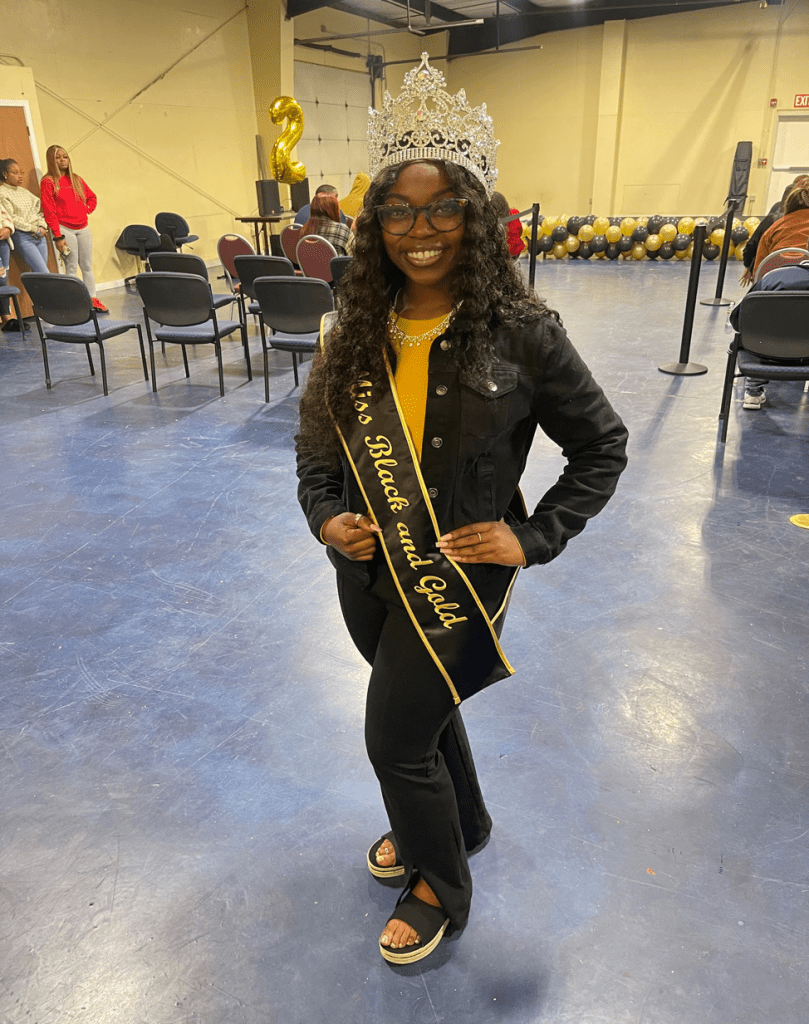
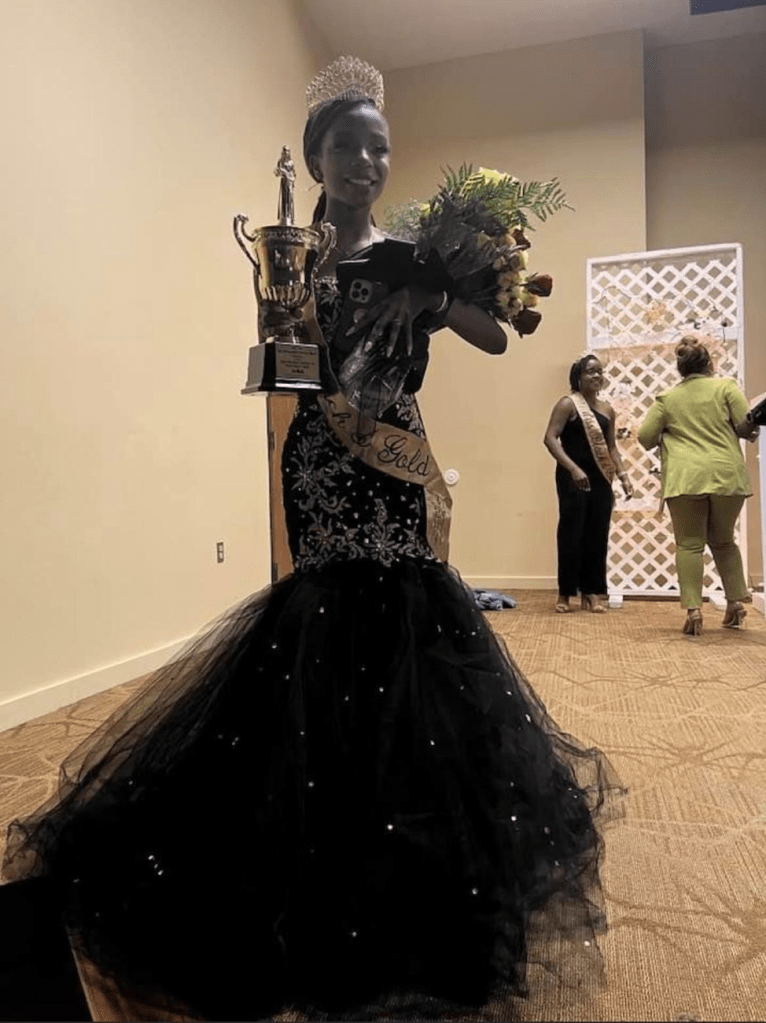
The Miss Black and Gold Scholarship Pageant is an event meant to celebrate the achievements and beauty of college-age black women. It is sponsored by the national Alpha Phi Alpha fraternity, the first intercollegiate fraternity established by African-American men.
The competition tests the young women’s beauty, poise, confidence, communication skills, and intelligence. The winners receive varying amounts in scholarship prizes, up to $1,000.
The Miss Black and Gold orientation guide dictates that each participant must pass an interview, a swimwear presentation, a creative talent presentation, and a public speaking presentation, as well as provide evidence of academic and professional achievements and goals.
According to the Alpha Phi Alpha Nu Beta chapter website, the first Miss Black and Gold Pageant was hosted in New York City in 1976 by the National Alpha Phi Alpha Convention. The pageant then became a national program in 1982.
It has been 41 years since then, and the tradition still lives on. Several Arkansan universities and colleges have Alpha Phi Alpha chapters that host the Miss Black and Gold Pageant once a year.
The Nu Alpha chapter at Arkansas Technological University in Russellville, Ar., was unfortunately unable to have a physical pageant, but they still selected a winner from their applications.
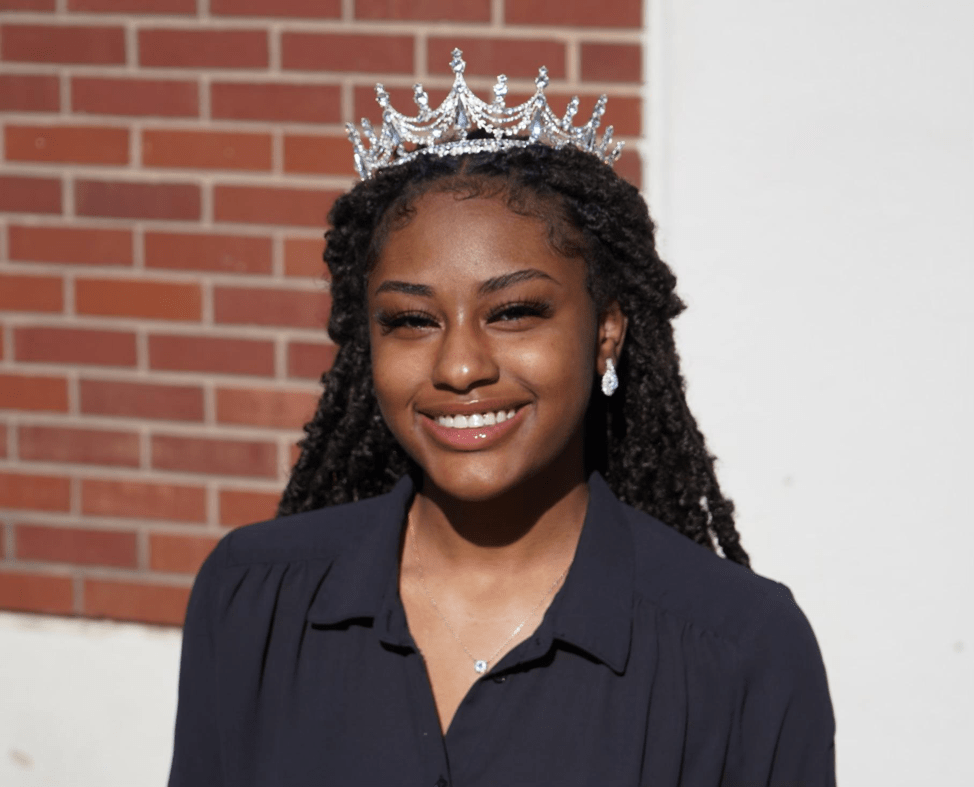
Zion Brassfield is the 2022-2023 Miss Black and Gold at ATU. She’s an 18-year-old sophomore majoring in nursing with a minor in leadership.
Zion Brassfield is the 2022-2023 Miss Black and Gold at ATU. She’s an 18-year-old sophomore majoring in nursing with a minor in leadership. She’s originally from Dumas, Ar. For her, winning means being given the opportunity to grow and learn.
Kiya Luster is the 2022-2023 Miss Black and Gold at SAU. She’s a 20-year-old sophomore majoring in business management.
The Kappa Iota chapter at Southern Arkansas University in Magnolia, Ar., hosted their pageant on Nov. 12, 2022.
Kiya Luster is the 2022-2023 Miss Black and Gold at SAU. She’s a 20-year-old sophomore majoring in business management. She’s originally from Stuttgart, Ar.
According to Luster, this was her first pageant. It meant the “absolute world” to her because it showed her that others see her beauty even when she doesn’t. She said, “On that stage I introduced myself to a new side of me that I always used to shy away from. Winning this pageant has taught me to embrace every part of myself, to never stop working towards what you want, and a few tears, silent prayers, and a smile can get you a long way.”
“On that stage I introduced myself to a new side of me that I always used to shy away from. Winning this pageant has taught me to embrace every part of myself, to never stop working towards what you want, and a few tears, silent prayers, and a smile can get you a long way.”
— Kiya Luster, Miss Black and Gold Southern Arkansas University
The Theta Upsilon chapter at Arkansas State University in Jonesboro, Ar., hosted their pageant on Dec. 3, 2022.
Deanna Jones is the 2022-2023 Miss Black and Gold at ASU Jonesboro.
Deanna Jones is the 2022-2023 Miss Black and Gold at ASU Jonesboro. She’s a 20-year-old sophomore majoring in communication disorders. Her hometown is Jonesboro. According to her, winning was a way to break out of her shell. She’s passionate about community projects and inspiring young girls to follow their dreams. She recently started a program called Empower in which she mentors young girls.
The Theta Kappa chapter at Henderson State University in Arkadelphia, Ar., hosted their pageant on Nov. 17, 2022.
McKenzie Sanders is the 2022-2023 Miss Black and Gold at HSU.
McKenzie Sanders is the 2022-2023 Miss Black and Gold at HSU. She’s a 19-year-old freshman majoring in biology. Her hometown is Little Rock, Ar. She said that she had always wanted to participate in pageants as a child, but was bullied into believing that she wasn’t pretty enough.
“Winning my first pageant…was a very emotional moment for me and my family…but to be crowned after all of those negative denotations and misfortune that felt like baggage just ceased to exist anymore,” Sanders said.
“Winning my first pageant…was a very emotional moment for me and my family…but to be crowned after all of those negative denotations and misfortune that felt like baggage just ceased to exist anymore.”
— McKenzie Sanders, Miss Black and Gold Henderson State University
The Kappa Kappa chapter at University of Arkansas Fayetteville held their pageant on Dec. 3, 2022.
India Young is the 2022-2023 Miss Black and Gold at UA Fayetteville.
India Young is the 2022-2023 Miss Black and Gold at UA Fayetteville. She’s a 20-year-old sophomore majoring in political science and journalism with a minor in African-American Studies. She’s originally from Warren, Ar. She said it’s an honor to represent the Arkansas District.
“Since winning I feel even more connected on campus and look forward to hosting events that bring us all even closer,” Young said. “Winning the pageant has also brought me a new level of self-confidence and poise.”
— India Young, Miss Black and Gold University of Arkansas at Fayetteville
The Beta Chi chapter at Philander Smith College in Little Rock, Ar., hosted their pageant on Jan. 22, 2023.
Ciara Jenkins is the 2022-2023 Miss Black and Gold at Philander Smith College. She’s a 20-year-old graduating senior majoring in biology and psychology. She’s originally from North Little Rock, Ar.
“To me, winning the pageant means I have the opportunity to display leadership on my campus and promote important values on our campus and reinforce the family culture on Philander Smith’s campus,” Jenkins said.
“To me, winning the pageant means I have the opportunity to display leadership on my campus and promote important values on our campus and reinforce the family culture on Philander Smith’s campus,”
— Ciara Jenkins, Miss Black and Gold Philander Smith College
The Pi Psi chapter at University of Arkansas Monticello hosted their pageant on Nov. 30, 2022, but the winner was unable to be reached for comment.
The Theta Psi chapter at University of Central Arkansas in Conway, Ar., hosted their pageant on Dec. 3, 2022. The winner was Jaidyn Simington, a junior radiography major, but she was unable to be reached for comment.
Avery Jones is a sophomore in The Department of English and Philosophy at Arkansas State University in Jonesboro, Arkansas. She can be reached at avery.jones@smail.astate.edu
JONESBORO, Ark. – Local journalist and author George Jared is set to deliver a presentation on investigative journalism at Arkansas State University in the auditorium of the Rent Student Union Center on Tuesday, February 7. The public event is from 6 to 8 pm and coincides with the 50th anniversary of the U.S. Senate’s unanimous vote to create the select committee to investigate the Watergate break-in.
As a journalist, Jared has been covering topics like crime, business, politics, government, healthcare, entertainment, and agriculture for nearly 20 years.
Journalist and Author George Jared
He has won several awards for his writings, including first place awards from the Associated Press Media Editors. He has also written novels, hosted podcasts, and been interviewed by a variety of newspapers and podcasts. Jared has given two presentations at CrimeCon, an immersive, weekend-long true crime convention that brings together thousands of fans of the genre.
He has written most extensively about the Rebekah Gould murder case and the West Memphis Three. The Gould case was featured in two of his books, The Creek Side Bones and Whispers in the Willows, as well as news articles. Jared wrote 100 articles about the West Memphis Three and chronicled his experiences in another book, Witches in West Memphis.
Jared started his career as a journalist in 2004. He is a graduate of Lyon College with a major in history and a minor in political science. He originally thought he wanted to be a lawyer.
He won awards participating in moot court during college and enjoyed it. However, he stated that he met “some miserable lawyers” and became disillusioned with the career. He always knew, though, that he wanted to be a writer of some kind.
Born in Lubbock, Texas, Jared spent his childhood in Salem, Ore. as a kid, where he loved reading and writing. When he was a teenager, he lived in Salem, Ark., and wrote for the newspaper at his high school.
After he graduated college, he started writing for the newspaper in Salem, Arkansas, then soon got a job with Gannett, where he worked for a year. However, he missed his former boss, David Cox, so he decided to return to Salem.
Unfortunately, there were no writing jobs available, so he had to take a sales job, and he wrote on the side. He worked in sales for a couple years, then took a writing job with the Jonesboro Sun.
In 2004, while working at the newspaper in Salem, Arkansas, he began covering the Rebekah Gould murder case from Melbourne, Arkansas. This would be the first murder case he would cover.
When Gould’s murderer, William Miller, confessed in 2020, he said that he hated Jared. He confessed on November 7, Jared’s birthday, and was in Cottage Grove, Oregon, near where Jared grew up.
“That was very ironic for me,” Jared said.
Jared covered Miller’s trial in court. He was sitting with Dr. Gould, Rebekah Gould’s father, when Gould gave his victim impact statement. According to Jared, Miller didn’t look at Dr. Gould, but stared at Jared instead.
The case Jared has written about the most is the ‘West Memphis Three’. “That case has taken me all over the country and the world because of how insane it is,” he said.
He interviewed Damien Echols on Death Row in 2010 and is still keeps in contact with him today. The pair ate dinner together in Memphis in June of last year.
He also interviewed Terry Hobbs, the stepfather of one of the victims, who has been a suspect in the case. According to Jared, Hobbs rarely agrees to interviews. Jared recorded the interview over Zoom so that he could present the video at CrimeCon 2020, where it was analyzed by Jim Clemente, the executive producer of the TV show “Criminal Minds.”
While Jared’s investigative journalism has been a significant part of his career, he has reported on a variety of subjects. His areas of expertise are business, politics, entertainment, and even agriculture. He said that his favorite thing to write is feature stories.
Currently Jared writes for a company called Talk Business & Politics based in Little Rock, where he covers mostly business and politics in northeast Arkansas. A significant part of that is agriculture.
According to Jared, the Arkansas Farm Bureau told him that he’s the only reporter in the state who still covers subjects like soybeans, rice, and cotton. Jared can also sometimes be heard on early morning agriculture talk radio shows.
He has also interviewed several high profile politicians such as Sen. Tom Cotton (R) , former Gov. Asa Hutchinson, and has met a few presidents. He has done stories with celebrities like William Shatner, Barbara Eden, Johnny Depp, Eddie Vedder, and Natalie Maines.
Jared also interviewed Bob Dorough, famous jazz pianist and composer and performer of several Schoolhouse Rock! songs, a week before he died in 2018. Dorough was an Arkansas native, but had been all over the world. According to Jared, Dorough refused at first to do the interview with Jared, but called him not much later to take up the offer.
Jared wrote a series of articles about Holocaust survivors and included their stories in his book Whispers in the Willows. The Black River Technical College in Pocahontas, Arkansas, would host a Holocaust survivor for presentations once a year.
Jared covered Henry Greenbaum and Estelle Laughlin. He had visited some concentration camps during college and admired Greenbaum’s story.
“That story ripped my guts out,” Jared said.
Today, Jared rarely writes crime stories for work since the newspaper he currently writes for doesn’t cover that. However, he’s currently partnering with a criminology professor named Jennifer Bucholtz to cover crime on the side.
Bucholtz currently works for the American Military University. She was previously a counterintelligence officer in the U.S. Army. Bucholtz once heard Jared on a podcast discussing the Gould case and wanted to use it for a case study in her classroom.
She emailed him to talk, and the first time they called each other, they talked for over 3 hours, according to Jared. They decided to work together because their areas of expertise are different enough that they’re able to supplement each other’s work.
“Immediately I knew that she was a deadly serious human being,” Jared said. “She’s a wonderful writer…and very well-spoken.”
Together, they developed a criteria for deciding what cases to pursue. They also have a network of people to consult–for example, a knife expert and an arson expert. People send them cases, and they put them through their vetting process.
The criteria they use include solvability, family buy-in, and access to case files. According to Jared, if a case is’t solved, it’s usually because an investigator missed an important detail. If the case meets all the criteria, they’ll start investigating it.
They worked together on Gould’s case and made a Facebook page for discussion. A year before he was arrested, the killer had been posting theories about her death on the page and even direct messaging both Jared and Bucholtz. They presented the Gould case at CrimeCon 2021.
They’re currently working on two new cases: the murder of Judy Petty from West Virginia and the murder of Linda Malcom from Washington, both in 2008. They’ll host a podcast covering it, and Bucholtz is planning to write a series of articles about it for the American Military University magazine.
Jared has worked with a few other people in addition to Bucholtz who have furthered his career. He stated that his first boss, the editor of the newspaper in Salem, Arkansas, David Cox, taught him how to be a journalist.
“He kind of took me under his wing,” Jared said. “He taught me how to write. One thing I learned early on in journalism…is always tell a good story.”
– George Jared
He also admired two professors he knew at Lyon College, Dr. Scott Roulier and Dr. David Harrison. Roulier was his moot court coach and constitutional law professor, and Harrison taught him about writing and history.
Jared also finds inspiration in literature. James Michener and Sir Conan Doyle are among his favorite authors. The novels Raintree County by Ross Lockridge Jr. and Dracula by Bram Stoker are significant for him.
Jared’s education at Lyon College and brief interlude as a salesman were beneficial for his career as well. He finds that he’s able to use his skills in history and political science for his stories. He likes to do research on the background of a story and then incorporate that into his writing.
“I wrote a story about rice one time, and what I did to start the story is I went into the history of humans cultivating rice,” Jared said. “I would find some nuanced way to get into the story.”
He uses the skills he learned as a salesman when he’s interviewing and getting information out of sources. He found that the aggression used to get someone to buy something they don’t want is necessary when talking with people who don’t want to talk.
Jared stated that when he’s faced with difficult situations, he never hesitates to do what’s important. For instance, he’s not afraid to ask tough questions during interviews or take pictures of people mourning over their loved ones.
“People have asked me, ‘Don’t you feel callous in those moments?’” Jared said. “And I’m like, ‘No.’ I said, ‘We have to document that type of history…sometimes you gotta do the tough thing.’”
– George Jared
To aspiring journalists, Jared said to write for their reader and think about what the reader would find interesting. It’s important to open the story with a good hook or the “magic moment” that would pull the reader in.
Jared will be hosting a presentation at Arkansas State University on Tuesday February 7 for anyone who’s interested in his work. He plans to talk about his experiences as a journalist and his two most prominent cases, the Gould case and the West Memphis Three.
Two professors from the faculty are planning to attend. Mr. Terrence Armstard, a journalism instructor, will be introducing Jared and Dr. Angelo Brown, a criminology professor, will be doing the Q&A at the end.
“I think it’s great for Mr. Jared to come and share his experiences as a professional journalist with our students,” Armstard said. “His background as a true investigative journalist and author as well as having a podcast reveals to students the plethora of career possibilities available as a journalist.”
“Journalists like George Jared can greatly impact the criminal justice system in a positive way as it can help highlight errors in the system to push reform forward and highlight bad actors within the system,” Brown said. “As Jared’s work has highlighted the errors in the West Memphis case and the violation of the civil rights of the defendants, there are countless examples of justice being brought through the help of journalism.”
Avery Jones is a sophomore in The Department of English and Philosophy at Arkansas State University in Jonesboro, Arkansas. She can be reached at avery.jones@smail.astate.edu
JONESBORO — The third annual Rani’s Run for Refugees is happening today. The marathon begins adjacent to Vineyard Plus in Leachville at the intersection of Highway 18 and North County Road 17. From there, runners will continue along the highway toward Jonesboro finishing near Chuck E. Cheese.
Event coordinator Rangsiya Faihin, who goes by Rani, has spent the last two years organizing the marathons.
An avid runner, Faihin, who is a college junior majoring in mechanical engineering at Arkansas State University, saw the event as a way to raise funds to aid Karen refugees affected by the civil war in the country of Myanmar, formerly known as Burma.
Faihin felt obligated to help the Karen people because she herself is also Karen.
The Karen are primarily located in Myanmar and on the Myanmar-Thailand border. Faihin was born in Thailand in a small village outside of the Chiang Mai province.
Faihin lived in this village until she was 12. According to her, there were less than 80 houses; everyone knew each other. The roads weren’t very good, and there was little electricity. They used solar energy instead. Furthermore, the whole village had only one or two cars.
“One of the things I miss about it is how simple life is,” Faihin said. “It’s more self-sufficient.”
Most days, Faihin and her family would wake up very early in the morning to prepare meals, then work in the fields planting and harvesting, and then prepare more food before the day was over.
The village school that Faihin attended until she was 12 had limited resources. She didn’t learn English or math. Most of the time, the children would play volleyball, plant vegetables and take care of chickens.
From ages 13 to 15, she attended another school in a larger city, and then went to the Ambassador Bilingual School in Chiang Mai before moving to the U.S. at 16.
She met her current host family while attending school at the age of 14. Candace and Gavin Brailsford, her host mom and dad, were her English teachers. They decided to help her transition to the U.S. when they found out that her birth parents wouldn’t be able to afford higher education.
“I was very talkative, very eager to learn English,” Faihin said.
Rangsiya Faihin is ethnically Karen and studies mechanical engineering at Arkansas State University in Jonesboro, Arkansas.
“We noticed how smart she was and how much she wanted to learn. She was the smartest girl in her class, blurting out every answer,” said Candace Brailsford. “She had a big smile on her face always and was so excited to be learning English. When we invited her to come live with us, we never dreamed it would lead us back to the U.S. and would be the start of such a wonderful journey.”
The move was difficult for her birth parents since they aren’t able to visit her here in the U.S., but they were very supportive of Faihin’s decision. Education has always been very important to her; she was the first person in her family to finish high school and go to college.
“I’m not saying that to brag on myself…[my family and I] are doing this together,” Faihin said. “It’s not just me. We’re doing this as a team, we’re seeking education.”
The hard work that she did with her family as a child built the foundation for her future studies. Her parents encouraged her to study hard so that she could have an easier life. She and her parents didn’t begrudge their work, but they wanted it to be possible for her to have a good future.
When Faihin came to the U.S., she attended high school at Ridgefield Christian School in Jonesboro. The adjustment was difficult at first because of the unfamiliar culture and peer pressure. She had trouble connecting with people.
“I think the hardest part was friendships,” Faihin said. “It took me a long time to find friends … It was lonely sometimes, but it gets better.”
Her host family was very supportive and encouraging, and Faihin believes that really helped. She also eventually found some friends.
Now attending college, Faihin finds it much different from high school. It’s easier to make friends because she and her peers in her major do a lot of projects together. She also enjoys her major. She chose mechanical engineering because she loves numbers.
“I honestly think that [my fondest memories from college] are the nights before tests,” Faihin said. “A bunch of future engineers will come together and we’re trying to study this and help each other out. Just seeing the teamwork is really motivating.”
Outside of class, Faihin enjoys running, photography, painting, drawing, and hanging out with family and friends. She started running as a hobby in 2018. She heard about a peer that ran a half-marathon and took it as a challenge. Her American dad is also a runner.
Now she practices almost every day; she usually takes one day off to rest. She enjoys running because it’s relaxing and releases stress. It allows for focus on something other than school.
To stay in shape, Faihin also does strength training and HIIT at a gym. She closely watches her diet. Sometimes she joins a running group that meets Saturday morning in downtown Jonesboro.
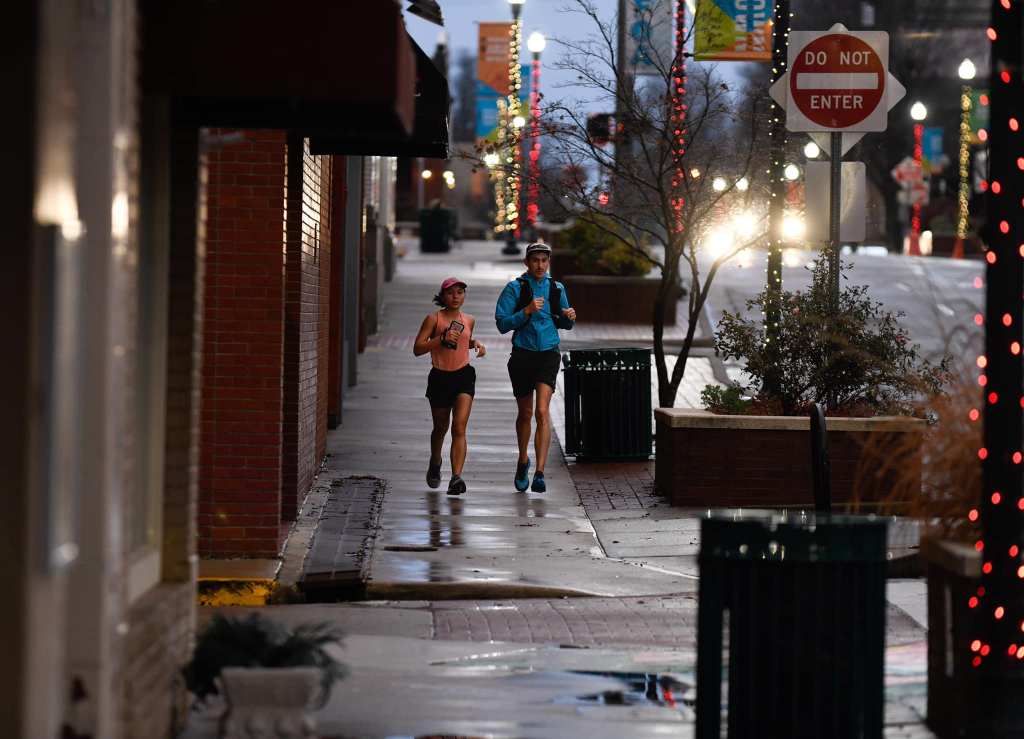
For both of the last runs, Faihin ran 26.2 miles and raised $2,000 from each. The first run took 4 and half hours while the second took 4 hours. Both times, it was freezing and rainy. A few people have joined her on the runs, but only one person, Seth Speer, ran with her the entire time.
“It was a cool run for a cause and nice to do something for someone else instead of selfish reasons,” Speer said.
“It is a very hard thing she is attempting to do, to run a marathon by herself. But we try to make it easy for her by following her in our car and making sure she has everything she needs,” Candace said. “We are so proud of her each time she does it.”
“I am very thankful that I am actually able to do it,” Faihin said. “I see it as a privilege. It’s an opportunity for me to talk about my tribe … My ultimate goal is to be able to help other people.”
Candace had previously been a missionary in Thailand for 10 years, from 2003 to 2013. She was working in a child trafficking prevention home with Lana Vasquez, founder of Life Impact International, a rescue organization that provides aid to refugees in Myanmar and Thailand. There are refugee camps on the border between Thailand and Myanmar where Life Impact delivers food and medicine to villagers living in the jungle who were driven from their homes.
Faihin asked her host parents how she could get involved, and they told her about Life Impact. She decided to raise money through her marathons for donation to the cause.
Faihin said she is very proud of her heritage and the Karen tribe. Karen people don’t live in one specific region, but are mostly concentrated in Myanmar and Thailand. They have their own language, clothing, foods and culture.
“My parents always taught me to not look down on my tribe,” Faihin said. “It’s you, it’s in your blood. Protect it, protect your language, protect your tradition.”
When she graduates from college, Faihin wants to move back to Thailand and get a job in the automotive industry. She also hopes to create an opportunity in engineering to help her village and her tribe.
“If you have a chance to help someone, do it,” Faihin said. “I can come here and just live for myself and forget about who I was. I have been praying that I would never forget who I was or where I come from … God brought me here for a reason, so why not do something that I can, while I’m here, get the most out of it?”
Lana Vasquez, the founder of Life Impact, expressed pride in Faihin for her efforts and her focus on remembering her roots.
“I’m so very proud of Rani, to come to the U.S. and have all the comforts but yet to never have forgotten her people or where she comes from says so much about her heart and life,” Vasquez said. “A modern-day advocate serving her generation well and saying from halfway around the world, ‘I won’t forget and I will be responsible to do something,’ echoes into the hearts and lives of us all that each one of us can do something to change a life and change the world.”
JONESBORO, Ark. – World Falconry Day, the day when falconry is recognized by UNESCO as an Intangible Cultural Heritage of Mankind, is recognized on Nov. 16. According to the North American Falconers Association, “Falconry can be defined as the taking of wild quarry in its natural state and habitat by means of a trained raptor.” In short, falconry is the practice of using birds of prey to hunt wild game.
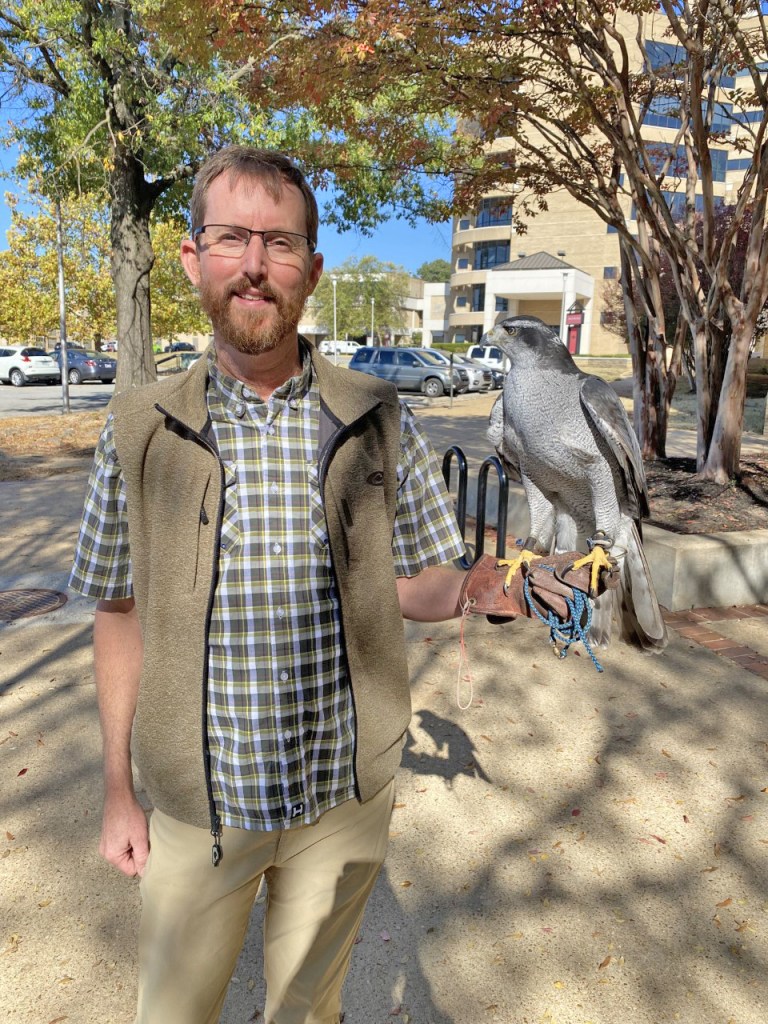
Heath Garner and José Martinez are two falconers located in Jonesboro. Garner has been a falconer for 34 years while Martinez has been one for three years. Garner was Martinez’s sponsor and guided him during his education as a falconer.
The two first met when Martinez was put in touch with Garner through the Arkansas Hawking Association. He was 26 years old when he spent a year shadowing Garner during hunting and got his permit afterwards at 27.
“It was just something I’ve always wanted to do,” Martinez said.
“It was just something I’ve always wanted to do.”
José Martinez, General Falconer
He said that he enjoys the outdoors. He also read the novel, “My Side of the Mountain” by Jean Craighead George as a child, which is about a young boy who raises a peregrine falcon to hunt.
Martinez is a designated as a general falconer with three years of experience. Garner is a master falconer with 34 years of experience.
Garner first started falconry when he was 17. According to Garner at that time there were only five licensed falconers in the entire state. Garner was unaware that falconry even existed, especially since this was back in 1988, pre-Internet.
However, Garner saw massive numbers of red-tailed hawks that migrated through town when he was young. Between Browns Lane and Windover Road, there was existed an area where he liked to play as a child.
General Falconer José Martinez
“The blackbirds would roost there…thousands and thousands of blackbirds,” Garner said. “And that attracted the red-tailed hawks and you could go out there at any given day and see 30 to 50 red-tailed hawks in that area.” A fan of the outdoors, he said as a child that it was fascinating to watch the raptors hunt.
While squirrel-hunting with a friend, the pair came across an injured great horned owl. Garner decided to take it home and nurse it back to health. It was during this event he discovered falconry.
Regulations on falconry in the U.S. as well as in Arkansas are very thorough. Since it’s a cultural heritage art, regulations specify that an aspiring falconer must learn from a sponsor. After they pass a written exam, the aspiring falconer must then find someone to sponsor them for two years.
“You can read as many books as you want and try to do it on your own, but it would probably be three times as long to try to start practicing it and have results,” Martinez said. “So, a good sponsor is very important and it’s…integral to the sport of falconry.”
“Anybody can catch and/or find a hawk and keep it alive, but it takes a lot of experience and mentorship to learn how to train one to actually hunt with you,” Garner said.
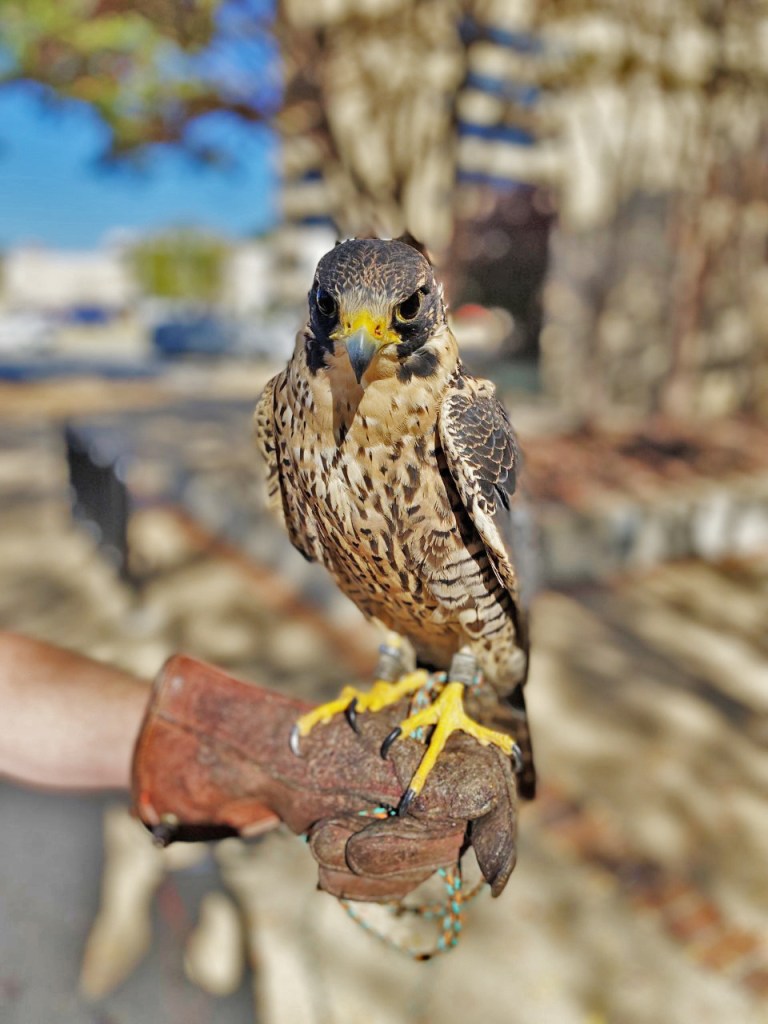
Master Falconer Heath Garner displays a peregrine falcon.
However, studying is also very important when learning falconry. The required exam provided through the Arkansas Game and Fish Commission is 100 questions and covers biology of raptors, training techniques, terminology, and raptor health and medicine. An aspiring falconer must pass with at least 80%.
Aspiring falconers also have to have a regular hunting license, as well as an indoor facility in which to keep their bird that has to pass an inspection. Finally, a sponsor must sign off an agreement to train the apprentice for two years. The entire process can take from 6-18 months before training begins.
Furthermore, the equipment needed for a bird as well as the fees for getting a license can be pretty expensive. Garner said that it’s unlikely for an apprentice to get into falconry without spending at least $2,500.
“It’s probably the most regulated form of hunting in North America,” Garner said. “Because you’re using another public natural resource to pursue game, so you have to make sure that whoever gets those licenses are qualified…”.
An apprentice has to have two years of experience before they can become a general falconer, and then they must be a general falconer for five years before they can become a master falconer.
To get their first bird, an apprentice is legally required to only trap a bird on its first passage south. They’re limited to a few specific breeds and only one bird at a time.
After they become a general, they can buy birds from a breeder and can have up to two birds. Master falconers can have up to five birds of any species that’s legal to acquire, although it’s rare to have five birds at one time.
The birds are trained using rewards. Every time the bird kills game, the falconer will teach it to “transfer off” by giving it a smaller piece of meat to eat so it will let go of the game.
A red-tailed hawk perches on a falconer’s glove.
The bird also gets to eat the parts of the game that the falconer doesn’t want. This encourages a partnership.
The bird learns that the falconer will provide food, and that’s the sole reason it comes back. The bird isn’t a pet and doesn’t have an emotional attachment to the falconer.
However, there are many instances in which the bird won’t return. Sometimes there will be an accident where the bird gets killed, or the bird will fly off and the falconer can’t find it again.
“There is no way to avoid loss in falconry,” Garner said.
Fortunately, falconers are able to use devices to keep track of their birds. Bells are attached to their ankles so they can be heard, and GPS transmitters are attached as well that have an audible beep and will communicate to a phone.
Falconers don’t keep their birds forever, though. According to Martinez, he’s generally ready to release his current bird after two or three years.
“It’s a wild bird,” Martinez said. “I feel like it deserves to be free again.”
Martinez currently has one bird named Negrita, while Garner has two birds named Gretel and Chance. Garner said he tried to have three birds at once.
“That just about kills you,” Garner said.
He went on to say that everything a falconer does revolves around their bird. Garner has to plan work and family activities around hunting.
“It’s not a hobby or lifestyle for people who work 8 to 5,” Garner said.
“It’s not a hobby or lifestyle for people who work eight to five.”
Heath Garner, Master Falconer
He said that many falconers quit their day jobs and work second- or third-shift jobs. Garner currently works as a senior project manager for SWCA Environmental Consultants. He said it’s not hard to write reports after dark.
In college, while he was earning his bachelor’s degree in wildlife management and later a master’s degree in biology, he was able to find time to hunt around his classes.
Martinez is currently a student at Arkansas State University studying wildlife conservation. He also works in hospital administration and as a part-time field tech for Garner. He often finds himself going straight from work to hunt without even changing his clothes.
According to Garner, some falconers are able to make a living with their practice. They’re often hired by airports, industrial hygiene facilities, vineyards, berry farms, and more for their birds to scare quarry away rather than hunt it.
Garner said that it’s difficult to juggle work, family, and falconry, so he’ll sometimes drop responsibilities for a day to go hunting. During any available time between Nov. 1 and March 15, he’s usually flying birds or working.
The difficulty of the practice is worth it, though, according to Garner and Martinez. Garner stated that falconry creates an “intimacy” with the environment that other types of hunting don’t.
Both Garner and Martinez said that falconry is a learning tool and helps them to become better conservationists and biologists. They engage with the environment because they’re able to observe their bird interacting with their natural habitat.
“It’s like interactive bird-watching,” Garner said.
In addition, Garner stated that the primary reason some bird species aren’t endangered anymore is falconry.
Wild birds have a very high mortality rate. Capturing and training a wild bird is actually beneficial to it because they enhance their hunting and survival skills. They have an increased chance of survival once they’re released again.
“It’s a way to expose the public to conservation and natural resources,” Garner said.
Falconry also brings people together. It’s a cultural heritage practice reaching back 4,000 years and today, people all over the world still engage in it.
“It’s really interesting to see falconry bridge those cultural gaps,” Garner said.
Garner is vice president of the North American Falconers Association, as well as the creator of the Arkansas Hawking Association. There are about 4,500 falconers in North America. There’s also an international association of falconers that meets every six years with falconers from 70 other countries.
The Arkansas Hawking Association currently has about 35 members. Back in 1991, when Garner started it, there were only seven. It meets once a year, and they have a summer picnic. They also have a raffle to raise money for their student grant as well as an apprentice workshop.
Falconry, while enjoyable, takes a lot of commitment. According to Garner, most people quit within the first three years because they can’t maintain it with their lifestyle. Those that do it for five or more years usually do it their entire lives.
Avery Jones is a sophomore in the Department of English and Philosophy at Arkansas State University in Jonesboro. She can be reached at: avery.jones@smail.astate.edu
JONESBORO, Ark. – On the Nov. 8 ballot, during the general election, voters will decide whether or not the Craighead County Jonesboro Public Library’s tax millage should be cut in half. Recently, more than a hundred library patrons gathered to silently protest the potential tax cut at a community event called, ‘Support Our Library Read-In.’ The streets and parking spaces surrounding the library were crowded with vehicles as patrons gathered on the front lawn as well as along sidewalks during the early evening of Monday, Oct. 10, 2022.
A petition was presented to the Craighead County Clerk on September 27 to advocate for reducing the mills of county property tax from 2 to 1, which would significantly cut the funding of the library.
The petition was proposed by a local political group known as Citizens Taxed Enough, who are upset about the amount of funds that the library receives from taxes.
Since the proposal was presented, there has been much controversy over the validity and effectiveness of the potential tax cut. Those against the motion argue that the cut would force the library to reduce many of its programs and community outreach activities and that the average person wouldn’t save that much in taxes from the change.
“I think [the tax cut] would affect the library’s ability to do what it does now drastically…half the employees, half the programs, half the services, half the branches available to people,” said Rebecca Mixon, who sits on the Friends of the Library board.
Mixon went on to say that many people don’t realize just how many services the library provides.
“It’s one of the only places in our community where you can go for the day and be in a heated and cooled environment and not spend anything,” Mixon said. “You could sit and make yourself better at the same time. That just doesn’t exist anywhere else in our community.”
Rebecca Mixon, Friends of the Library Board Member
Some of the programs that the library offers are after-school activities for kids, free classes, summer activities, and outreach to public schools and nursing homes.
Dawn Morgan and Hope, frequent patrons of the library, said that they take advantage of many of the library’s programs and support everything the library does for the community. Morgan’s children enjoy the children’s library section of the library as well as the after-school crafts.
Morgan herself has been attending the Jonesboro library since she was a teenager, when she also was in a young adult book discussion group.
In addition, her grandmother, who is retired, enjoys the knitting classes and often comes to the library because she feels safe there.
One library program that is especially vital to Morgan’s family is the craft fair. Morgan owns a small business, and one of the places she sells her products is at the fair.
“Without the craft fair, my small business would probably not exist. We honestly get the best turnout of anywhere here at the library,” Morgan said.
According to Chelsea Young, a 7th grade English teacher at Nettleton Junior High School, the literacy rates of children in Arkansas are currently at the lowest she has seen in her 10 years as a teacher.
“The library means so much to the community in terms of increasing the ability to read,” Young said. “Nothing will increase student reading scores like independent reading.”
Chelsea Young, Nettleton Junior High School English Teacher
She believes that a variety of resources needs to be available to encourage students to read more and that reducing these resources by cutting the library’s funding would be a huge mistake.
Not only does Young frequently use the library, she also takes advantage of the digital database and tells all of her students to sign for digital library cards as well. The library’s digital database provides resources for academic research, genealogy records, language learning, college and career preparation, and more.
“A lot of my students live in poverty. There is a lot of poverty especially in rural districts. Even if the funding cut doesn’t affect this particular branch of the library, it will affect rural districts, which are most at risk for literacy issues,” Young said. “People in rural districts might not have access in terms of being able to walk into this library…so it’s absolutely vital and critical that people especially in rural districts have continued access to [the digital database] to increase literacy.”
According to Eric McGee, a candidate for state representative, the current funding that the library receives has allowed them to open satellite branches within the county such as in Brookland, Monette, Caraway, and Lake City. “The only reason those libraries are open is because of that funding,” McGee said.
He stated that the people that are for cutting funding to the library are misrepresenting that information.
McGee explained that the money the library receives is forward funded, which means it’s slated to be used the next year in case something happens to their current funds.
Right now, the library is operating out of last year’s budget, and the money they’re receiving now will be saved for next year, which is how they have a “surplus.”
He said that although cutting the millage would supposedly reduce taxes, the average person would only save about $1.78.
Since the actual amount saved would be so low for the average citizen, many supporters of the library value the library’s services far more than they do the money they would save in taxes.
Stinson Burton, who goes by ‘Lee’, and Katrina Baureis, both college students at Arkansas State University, said that the library is so important because it’s the only place where you can be educated for free.
“I spent a large part of my teenhood in a library,” Baureis said. “I wouldn’t be the person I am today if I didn’t have access to a library, and I think everyone deserves that same opportunity.”
Katrina Baureis, Arkansas State University Student
Burton plans to be a librarian while Baureis wants to work in a museum. Burton currently works at the Harrisburg library and explained that smaller libraries always need more funding.
“The smaller town libraries in the region will be negatively affected because a lot of them are run by a handful of people and their cities don’t have a lot of money [for] their libraries to begin with,” Burton said. “The Jonesboro Library supplements a lot of that and without that, that hurts the whole region, not just this library.”
Erika Askeland, who had set up a voter registration booth, said that the petition for the funding cuts was occurring because of the politicians who had taken issue with the LGBTQ+ pride display set up at the library more than a year before.
Askeland attended several library board meetings, and said that Rep. Brandt Smith (R-Jonesboro) and Senator Dan Sullivan (R-Jonesboro) promised that if LGBTQ+ materials weren’t removed, they would bring the issue to a vote.
“I feel like it’s just them following through with what they said, and at this point, they turned it into a funding issue,” Askeland stated. “They’re really, really hoping for the voters to stay misinformed in an effort to cut funding.”
The purpose of the event at the library was for locals to show their support for the library and their disapproval of the potential tax cuts as November voting approaches.
Crowds of people of all ages were relaxed–reading, chatting, mingling, playing, and running around. One couple was even meditating and ringing Tibetan singing bowls. Most people were set up on blankets, lawn chairs, and under tents. Cotton candy was being handed out and a bubble machine was running; a blue inflatable tube man waved about, welcoming people to the event. The diverse group of attendees displayed the value of the library had to them.
Avery Jones is a sophomore in The Department of English and Philosophy at Arkansas State University in Jonesboro, Arkansas. She can be reached at avery.jones@smail.astate.edu
JONESBORO, Ark. – On Monday, in Sacramento Cali., David Mora Rojas walked into The Church in Sacramento and killed his three daughters, Samarah Mora Gutierrez, 9, Samantha Mora Gutierrez, 10, and Samia Mora Gutierrez , 13, along with their court appointed chaperone, 59-year-old Nathaniel Kong, before killing himself.
Rojas had a restraining order at the time of the shooting, which did not allow him to see his children without supervision. Currently, no clear motive has yet been discovered or confirmed.
Earlier this year, in Colleyville, Tx., 44-year old Malik Faisal Akram, a British citizen had taken a rabbi and three other hostages at the Congregation Beth Israel synagogue. Akram demanded the release of convicted terrorist Aafia Siddiqui who was being held at Carswell Air Force Base near Fort Worth. After a 10-hour long standoff, the hostages were rescued and Akram was dead.
Central Baptist Church in Jonesboro, Arkansas. Photo by Garrett Hatcher
According to an FBI database, in 2020 around 1244 cases of anti-religion hate crime incidents occurred in the United States with anti-Jewish crime having 683 incidents alone. An earlier FBI report, stated crime against places of worship have surged by 34.8% between 2014 and 2018.
With increased crime against and on the grounds of many religious institutions, people of faith have decided are deciding be more proactive by taken preventive measures. In northeast Arkansas many churches have turned to the police and specialized training for protective measures and security.
According to Patrol Sgt. Rodney Smith of Jonesboro Police Department some churches have contracted off duty officers to serve as “traffic control officers and figureheads of force” at local places of worship. Local churches such as First Baptist Church of Jonesboro, Journey, Central Baptist, First United Methodist Church, Highland Drive Nettleton Baptist Church and Southwest Church of Christ contract off-duty officers. The contracted officers are typically members of their respective congregations. JPD Police Officer Patrolman First Class Colton Brown attends Central Baptist and is one of the rotating officers for Sunday and Wednesday worship services. Smith said that Brown, along with the officers, are paid by their places of worships.
Don Blackmore, adult discipleship pastor at Central Baptist Church in Jonesboro.
Central Baptist takes their security a step further with more elements of security along with cameras and contracted officers. According Adult Discipleship Pastor Don Blackmore, the church may have up to six rotating non-paid safety teams made up of off-duty officers, former military, paramedics, doctors and civilian members of Central Baptist. Known as a safety team, the group also undergoes training by local instructors from JPD, Craighead Sheriff’s Department and Black River Technical College.
“We try and prepare them for knowing what to look for, how to respond, how to deescalate and how to manage things properly,” said Blackmore. He said that the volunteers must go through periodic training before and after becoming part of the safety team.
Central Baptist also hires the Stop the Bleed organization to train people to learn how to stop and control serious bleeding. Central Baptist volunteers undergo an extensive background checks and must fill out a questioner before being accepted for training.
Members attend service at Central Baptist Church in Jonesboro, Arkansas. Photo by Garrett Hatcher
“I don’t know if anyone takes it more seriously than we do. The safety of our congregation and making sure that we want to do everything we can to ensure a safe worship environment,” Blackmore said.
– Adult Discipleship Pastor Don Blackmore, Central Baptist Church
As for how others feel about the safety team, Senior Adult Pastor Jay Jacobs stated, “I think they feel very safe also, our security team not only gets just people that come in, but also handle emergencies and when you see a team of people going to somebody’s aid, its makes us feel very secure.”
Members also feel secure and support from the volunteers while in attendance. “Generally, I think most of the members appreciate the fact there’s greeters and we always feel very supported,” said Central Baptist member and volunteer.
Fullness of Joy Ministries has a similar system when it comes to their security as they also have a volunteer training program. The volunteers are instructed and trained by a local police officer on what to look for and how to handle certain situations.
According to Pastor Adrian Rodgers the security volunteers are allowed to conceal and carry firearms. However, volunteers must undergo a background check and have a valid gun permit if they wish to conceal and carry at Fullness of Joy Ministries.
“I think it’s sad that we’re in the place now where we have to have them, but I do understand that we are in the place where we have to have them, but I certainly do think it’s sad,” said Rodgers. “I certainly wish that we did not have them.”
Religious institutions may have varying ways of defending and securing the safety of their members and institutions from manmade threats, but they all do pray for a day they won’t have to anymore.
Note: Featured Photo shows JPD Patrolman First Class Colton Brown standing watch at Central Baptist Church in during worship service. Photo by Garrett Hatcher
JONESBORO, Ark. – With COVID cases still high and the pandemic in full bloom, people flock to Craighead Forest Park for Labor Day fun on the lake. Joshua Pruett/Delta Digital News Service
Photo Gallery | FUN AT THE LAKE
Jackie Jones enjoys kayaking on Labor Day with family members at Craighead Forest Park in Jonesboro on Monday, Sept. 6, 2021. Joshua Pruett/Delta Digital News Service
From left, Alexandria Cole, Tim Jones, and Jackie Jones enjoy kayaking on Labor Day at Craighead Forest Park in Jonesboro on Monday, Sept. 6, 2021. Joshua Pruett/Delta Digital News Service
Tim Jones enjoys kayaking on Labor Day with family members at Craighead Forest Park in Jonesboro on Monday, Sept. 6, 2021. Joshua Pruett/Delta Digital News Service
Family members kayak at Craighead Forest Park in Jonesboro on Monday, Sept. 6, 2021. Joshua Pruett/Delta Digital News Service
JONESBORO, Ark. – In the shadow of the upcoming Halloween holiday, coronavirus cases continue to surge in Northeast Arkansas.
According to the White House Coronavirus Task Force’s weekly report, Craighead and five other NEA counties remain in the “red zone” for COVID cases.
Craighead was third in the state, behind Pulaski and Washington, with the highest number of new cases over the last three weeks.
However, Halloween celebrations continued despite the rise.
Halloween this year looked a little different in order to keep everyone safe.
After much thought and consideration, organizers with Miracle Kids Success Academy decided to provide something fun for the Jonesboro community that also followed social distancing guidelines.
The event was a ‘Drive-Thru Trunk or Treat’ where participants experienced a Halloween trick or treating experience with a twist.
Samantha Goodwin of Miracle Kids Success Academy said, “This is actually the first year that we are doing the Trunk or Treat, and the reason we did it is because we wanted to provide a little bit normalcy for the Jonesboro Community during pandemic that we have.”
All volunteers wore costumes and masks and sanitized their hands after distributing candy and treats to each car.
“We asked businesses about it and to kind of see where they are at, where their heads were at and if they wanted to participate. The overwhelmingness of everybody wanting to have that normalcy… was really what drove us to this,” Goodwin said.
Several businesses and organizations such as NEA Baptist Clinic, Premiere Auto, Alpha Omicron Pi and Diego Ranch participated in the event along with Miracle Kids.
Volunteers decorated vehicles and provided candies for visitors.
Lynn Elliott of NEA Baptist Clinic said, “We are just wanting to support Miracle Kids and also to let people know about our clinic as well as about NEA Baptist Clinic Pediatrics, about doctors and providers there.”
Volunteers wore costumes while dancing to a music as carloads drove by.
JONESBORO, Ark. – Retail store Spirit Halloween filled with customers this weekend shopping for costumes for the Halloween season.
The store sells a wide variety of Halloween décor, animatronics, costumes and accessories for trick-or-treating or throwing a Halloween themed parties.
However, the coronavirus pandemic has interrupted traditional seasonal celebrations.
Like most businesses, Spirit Halloween has made adjustments in the way it does business to compensate during the pandemic.
The store limited its shopper capacity to encourage social distancing for customer’s safety.
Six-year veteran store Sales Clerk Jennifer Huggins has noticed certain challenges when shopping but says shoppers have adapted to the changes.
Huggins said, “It’s been a lot harder because we can’t open our fitting rooms and bathrooms, but it’s been pretty simple with the masks, and people are holding their masks and coming in with their masks, so that helps a lot.”
Huggins loves the themed environment she works in along with helping people. “It’s fun to see all the kids pick out their new costumes. Adults get excited about little things–It’s a whole lot of fun,” she said.
Shopper Ashley Sellers of Jonesboro came to the store to get some last-minute costumes to celebrate. Sellers lost her job due to the pandemic but still plans to celebrate.
“I think it’s going to be different, but I’m excited that we are still doing it. I just don’t think its many people that are going to be into it like normal,” she said concerning celebrations.
Josh and Bliss Hickerson of Tennessee shopped for costumes for their daughters.
“This year is definitely different cause there is not much going on. We don’t know of many in our area that are celebrating. We are probably taking them to the Memphis Zoo,” Bliss said.
Even though this year’s Halloween celebrations is a particular challenge to enjoy, many people in northeast Arkansas still planned to participate in traditional trick-or-treating events dressing as their favorite characters.