Medical Marijuana Forces Law Enforcement Changes
by Chase Gage
Delta Digital News Service
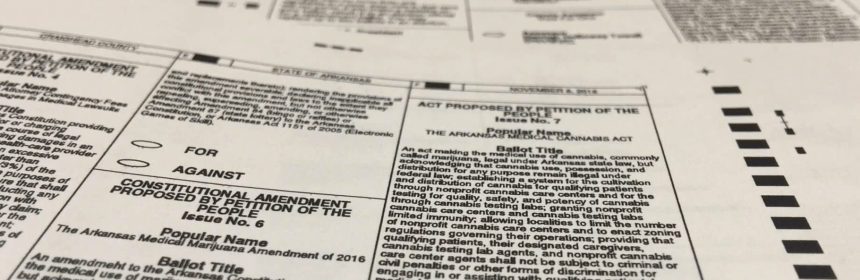
JONESBORO — The Arkansas Medical Marijuana Amendment passed during the 2016 election cycle. With implementation beginning, law enforcement agencies are shuffling to prepare for the changes they will soon experience.
In Arkansas, the medical use of marijuana is legal. However, the use, possession and distribution of marijuana for any purpose still remains illegal at the federal level in the United States. That alone causes issues for the legal implementation of medical cannabis.
“It’s still illegal federally and we don’t have it (recreationally) legal at the state level so we’ll continue to enforce the laws until they change,” said Jonesboro Chief of Police Rick Elliott. “You’re going to have to have your medical card with you if you get caught with it. If you’re medically qualified and all documentation is in order, you’ll be fine.”
Elliott said if a person has a medical card, they will face no issues if caught with legally obtained marijuana. However, impaired drivers will face repercussions, just as they would with other drugs or alcohol.
In simpler terms, don’t drive high, even with a prescription.
“We’re bringing the officers up to speed on recognizing driving while high. There’s technology being developed similar to the breathalyzer that can detect THC levels,” Elliott said. “These new strains are very high in THC content, which is impairing. We expect an increase in traffic accidents because of it.”
Currently, prescribed patients cannot legally possess marijuana. Patients must purchase the drug at a dispensary within the state of Arkansas for it to be legal. Two Hot Springs dispensaries have opened since May, selling 169 pounds of medical marijuana and earning more than $1 million in the first month of business. A Northeast Arkansas dispensary isn’t open for business yet.
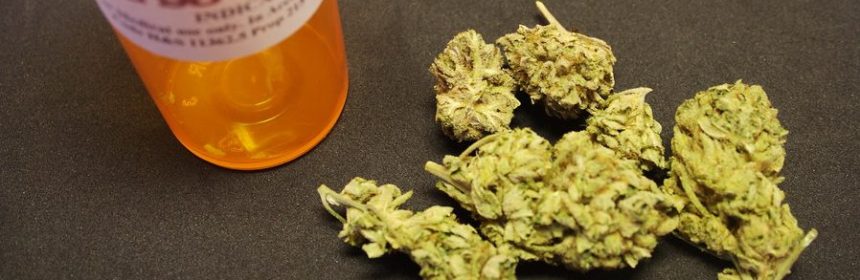
A cannabis prescription is just like any other prescription. Arkansans voted to legalize the plant medicinally in 2016. (Photo by Kyle Butler licensed under CC BY 2.0
 )
)
Corey Seats, Coordinator and Deputy Prosecuting Attorney for the 2nd Judicial District Drug Task Force, said the opening of the dispensaries, and thus the beginning of legal marijuana, will pose several issues for law enforcement.
“Normally you can search (a vehicle) if you smell marijuana,” Seats said. “If someone is pulled over and the officer smells marijuana inside the vehicle, his first question will be, ‘Do you have a medical marijuana card?’ If they say yes, can you search? How is that going to impact probable cause?”
Drug dogs and K-9 units will face similar problems. Drug dogs are trained to detect illegal controlled substances, but now marijuana will be legal in certain situations.
Seats said law enforcement officers run into similar problems with prescription pain medication such as hydrocodone.
“If you have a marijuana card, as long as you have less than 2.5 ounces, it’s not illegal to possess. How do you train a dog not to smell less than 2.5 ounces of marijuana? You can’t,” Seats said.
At the federal level, marijuana legalization is — for lack of a better term — a mess.
The Obama administration was rather hands-off on the subject, letting states decide how to regulate both medicinal and recreational marijuana through the Cole memoranda. However, in January 2018, Attorney General Jeff Sessions issued a new memo on marijuana enforcement that essentially gave the federal government the ability to intervene in any situation involving the sale or possession of marijuana, despite the legality at the state level.
Current Attorney General William Barr has a different tone toward the cannabis industry. Barr said he did not think it was appropriate to upset the legally licensed cannabis businesses just because the federal government could.
“I’m not going to go after companies that have relied on the Cole memoranda,” Barr said during his Senate confirmation hearing.
Special Agent Stephen Cupp from the FBI’s field office in Jonesboro declined to comment on the issue due to the ever-changing political climate.
Patients with medical marijuana cards cannot freely smoke the drug as they please. There are several rules in place for the usage of the substance.
For Arkansas residents, there are currently 19 “debilitating medical conditions” listed that qualify an individual for a marijuana prescription, including AIDS, cancer, Alzheimers, intractable pain and more. Over 7,000 Arkansans currently possess medical marijuana cards.
Use of medical cannabis will be prohibited in most non-private areas. Examples include all public areas, school grounds, correctional facilities, motor vehicles, health care facilities, private residences used for licensed child care and any other place where smoking is prohibited.
In Arkansas, possession of marijuana less than 4 ounces is a Class A misdemeanor with a maximum sentence of one year in jail and up to a $2,500 fine for a first offense. Any subsequent offense is a Class D felony, which carries a maximum of six years in jail and up to a $10,000 fine. Possession of between 4 ounces and 10 pounds carries a mandatory minimum of three years in jail.
Marijuana is legal medicinally in Arkansas, but recreational use or possession is still against the law. Medicate responsibly.
EDITOR’S NOTE: Featured photo of “pre ’98 bubba” by Mark is licensed under CC BY 2.0