Tag Archives: Nanette Heard

Nonprofits play pivotal role in helping homeless
By Brooke Buckner
Delta Digital News Service

JONESBORO — Nonprofits provide resources for the increasing homeless community.

The Salvation Army is the only homeless shelter in Jonesboro, but there are many other resources for the homeless.

United Way of Northeast Arkansas and The Hub help the homeless community, but don’t house them.
33855969068_5ecd1bb8ef_k

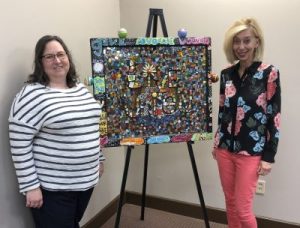
Nanette Heard and Shaila Creekmore at United Way of NEA. (photo by Brooke Buckner)

United Way helps the working people and serves eight counties. They provide a backpack program for kids in need of food with the Food Bank of Northeast Arkansas and fund a program called Homeless to Self-Sufficient with Mission Outreach of Northeast Arkansas.

Nanette Heard, executive director of United Way, said, “A lot of what we do is raise funds for programs. Unfortunately, there aren’t a lot of shelters in our area.”

UWNA helps people get back to work by providing work clothing, boots, childcare and transportation. Most of their programs are geared toward kids.

Gwendolyn Zugarek, executive director of The Hub, said the 2-year-old resource center provides a 90-day program for the homeless. The first step to helping people is tracking down their birth certificate or getting them an ID so that they can move forward from there.

HUB“The main thing that we do is we sit down with our guests and we talk to them about what is going on in their life,” Zugarek said.

The Hub offers a bike program allowing guests who don’t have transportation to ride a bike to their job. The guest’s responsibility is to buy the bike lock.

Currently, the Hub is a community-funded organization. They usually see an estimated 40 new homeless individuals every month and they helped 532 individuals in their first year of being open. Their mail center helps the less fortunate receive benefits.

Shelters Outside of Jonesboro

Shelters in Blytheville and Paragould provide help year-round for the homeless.

Blytheville’s Mississippi Union County Mission helps women, children and men. Most of the children who come in are 17 to 18 years of age. The majority of residents are single.

There’s no time restraint for living at the Mission, but the average time is three to four months.

Mission Outreach of Northeast Arkansas in Paragould takes all ages and people can live there for up to two years. Director Cheri Peters said she sees more single people coming into the shelter. In 2018, Mission Outreach of NEA provided shelter for 452 people.

The Mission houses 55 and Mission Outreach houses 58 people. Both of these shelters house increasing numbers during the winter and summer.

In addition to housing and feeding residents, Mission Outreach helps residents with birth certificates, employment and insurance.

Lisa Willard, executive director of The Mission, said they offer a work program consisting of yard work or odd jobs. The charge for the community is $10 per hour and the workers get paid $8.50 per hour.

Similarly, Mission Outreach offers jobs and provides transportation for their working residents like United Way does.

Both of these shelters feed the less fortunate by serving food boxes. The Mission serves 100 food boxes per week.

Mission Outreach’s food pantry feeds low-to-moderate income families. These families can come once a month to get food boxes. They also have a soup kitchen that prepares three meals per day.

“For the food box, you have to be a Greene County resident,” Peters said.

Willard and Peters said they enjoy working at these shelters because they watch lives transform.

The community can help each of these organizations by volunteering or donating toiletry items, canned goods, blankets and furniture.

Undocumented Women Fear to Report Abuse

by Kimberely Blackburn
Delta Digital News Service

JONESBORO – Immigration and Customs Enforcement detained a woman inside a courthouse to obtain a protective order against her allegedly abusive boyfriend earlier this year in Texas.

This, along with reports of increased immigration investigations, results in many undocumented women being afraid to report abuse. In trying to remedy the situation, many organizations strive to help those undocumented victims of domestic violence.

“It’s complicated because there aren’t any specific solutions,” said Marium Durrani, public policy attorney for the National Network to End Domestic Violence. “There is a bill in the House and the Senate that protects them in community locations like courthouses, rape crisis centers and medical service providers, from immigration forces.”

Current Fears

This year, seven national abuse advocacy organizations performed a survey to help better understand how current immigration policies affect such immigrants.

Sixty-two percent of respondents reported an increase to the question, “Is your agency observing a change in the number of immigration-related questions from survivors?” Feedback sent with the survey reported many abuse survivors simply question how to plan under the new immigration policies. Some question if they should apply to immigration under the Violence Against Women Act.

When asked, “Are immigrant survivors sharing with your agency that they have concerns about contacting police?” 78 percent responded yes.

One respondent said: “Clients are afraid of calling the police because they believe that they will be deported if they do, especially if their abuser is a U.S. citizen. They think law enforcement will listen to someone who is a citizen of this country more than an undocumented person.”

When asked, “Are survivors reporting to your agency that they have concerns about going to court for a matter related to the abuser/offended?” three out of four answered yes.  Some respondents said that after media outlets reported a woman’s deportation while filing for an order of protection, many clients feared the same.

Forty-three percent responded yes when asked, “Are you or your organization working with immigrant survivors in your community who have decided to drop civil or criminal cases because they are fearful to continue with their cases?”

Durrani said some women find themselves in this situation after being brought to the country under false pretenses. Some come under a fiancée visa with the promise they will have help in obtaining citizenship. She said many abusers then withhold vital documentation and the women find themselves stuck after their visa expires.

Durrani said these undocumented victims often need special protection. A woman may look for work to escape her abuser but cannot work legally. Some employers, Durrani said, will take advantage of her status and pay a much lower wage. Other abusers will file other charges against their victim.

For these reasons, in addition to reports of victims being arrested after reporting their abuser, many stay silent.

Help Available

Rebekah Stewart, program communications associate with Tahirih Justice Center, said organizations exist to help those suffering from abuse to apply for protections under the law, including:

  • Gender-based asylum for those who suffer or may suffer violence in their home countries.
  • Violence Against Women’s Act Petitions for spouses, parents or children enduring abuse.
  • T Visas for those surviving being brought to the United States for human trafficking.
  • U Visas for those surviving crimes involving mental and physical abuse in the United States.
  • Special Immigrant Juvenile Status for abused, abandoned or neglected children.

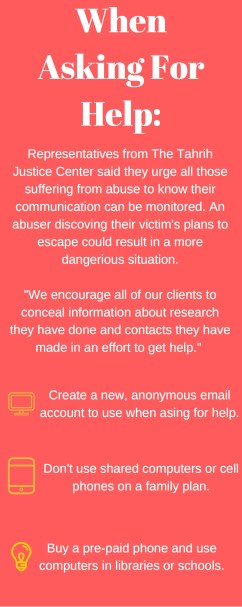
Protecting yourself when asking for help

Durrani said she believes the protections came from Congress understanding the control abusers have over their victims.

“Congress has understood that sometimes people are not brought here under their own  volition and that doesn’t mean they should be disregarded under the protections of the law,” Durrani said.

However, obtaining these documented statuses often proves difficult.  Stewart said Tarihi Justice Center provides legal assistance for those seeking these protections, as well as social services assistance.

Working with legal assistance continues to be very important. Durrani said obtaining these statuses remains complicated. She said women can be declined from these protections for a variety of reasons.

The U Visa, for example, require women to work with police. Thus putting themselves at risk, especially if immigration enforcement considers them to be a priority.

Durrani said this fear often impacts the community as well. If a victim fears to work with law enforcement, more crimes affecting others often go unreported.

Assistance in NEA

Many victim assistance programs exist in Northeast Arkansas. Nanette Heard, executive director of The United Way of Northeast Arkansas, said such programs include everything from shelters to support groups. Organizations exist that provide monetary assistance as well.

David McDaniel, public information officer for the Jonesboro Police Department, said helping the victim remains the priority for JPD. After 20 years of service, he said he cannot remember a single time immigration investigated a victim in a domestic violence case.

McDaniel said protecting the victim, no matter their immigration status, continues to be JPD’s concern.

“If you’re here illegally, if you’re here on a visa, that makes no difference to us,” McDaniel said. “You’re not supposed to live that way. No one deserves to live that way.”

Editor’s Note: Featured photo by Jeffrey [CC BY-SA 2.0]