Using the Arts to Change Lives
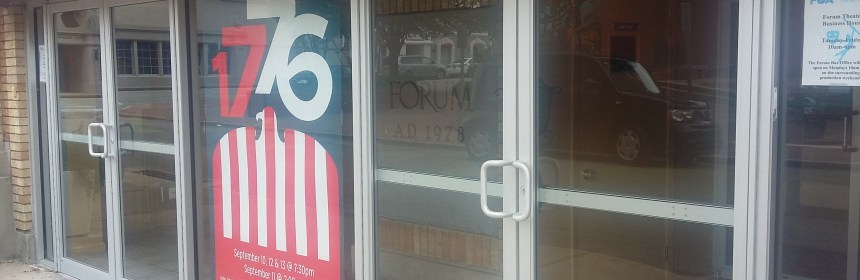
JONESBORO, Ark. – Premiering on Broadway in 1969, the musical “1776” showcases important events in American history. But even after the success of its latest show, members of the Foundation of Arts for Northeast Arkansas still consider bringing the community together to be its greatest endeavor.
FOA creative and artistic director Kristi Pulliam said “1776” draws the audience due to its humanization of heroes from American history. Set in the weeks leading up to the signing of the Declaration of Independence, “1776” shows the struggle in Congress as they prepare to declare independence.
While the musical features John Adams, Benjamin Franklin and Thomas Jefferson, there are actually 22 male characters total.
“I don’t know if we’ve ever had a show with that many men,” Pulliam said. “We only have three ladies in the cast.”
Pulliam said two cast members from two competing radio station performed together in this production. She said she found that interesting because it shows what the FOA does best: they bring people from all walks of life together.
LeeAnn King was 8 years old when she first came to the Foundation of Arts for Northeast Arkansas. Although dance was one of King’s passions, her family could not afford lessons. FOA’s scholarship assistance program allowed her to take a class. Later, as she rose through the classes, she became an assistant teacher.
“I was 14 and I assisted in my first class,” King said. “I was helping the 3-year-olds and all we did was run to the potty, but I was hooked.”
She became a dance teacher, and after three years became FOA’s education program manager. She said she would never be able to accomplish any of her dreams without the FOA. Now she dedicates her life to helping her “kiddos” accomplish their dreams.
The Foundation of Arts for Northeast Arkansas formed when three of Jonesboro’s artistic organizations united in 1983. Today, the root goal of the FOA remains the same: to educate and to change the lives of their students.
Pulliam said the central belief of the FOA encourages everyone to come, take part and give of themselves. One’s financial status, religion and race do not matter.
“We do art, but from my standpoint, it’s a conduit for making better people,” Pulliam said.
A love of people drew Pulliam to the FOA, not her love of theater. Pulliam said many are drawn to theater first, and then to people who can help them in the craft. She finds the opposite to be true for her.
Pulliam uses the theater for its storytelling capabilities. She said a theater production shows the audience, not only the story of the play but the stories of all those brought together by the production.
That provides the root of culture, Pulliam said. Lives are changed through each other’s stories. She said she feels everyone’s stories are intermingling and intersecting. That is how people change and grow, she said.
Pulliam said by putting everyone from completely different walks of life together, everyone walks away, no only with a renewed sense of what they can do, but also with new thoughts of what they can accomplish with their lives.
“That’s the beauty of having so many people from so many different walks of life,” Pulliam said. “We try to help everyone find a place.”
The FOA strives to provide educational opportunities for everyone, regardless of their ability to pay for classes. King said she estimates about 45 of the 250 students enrolled receive their classes for free. Even more receive some type of assistance.
Pulliam said all of the students work together to create, regardless of their ability to pay. The FOA turns no one away, and no one is singled out. She said only the staff knows who is on assistance.
The FOA benefits many in the Jonesboro community. It offers programs such as Learning Expressions through Art Programming. L.E.A.P. is available to those also enrolled in the Abilities Unlimited program that assists adults with disabilities.
Fine Arts and Me also greatly impacts the Jonesboro community. F.A.M.E., with the assistance of The United Way, reaches out to children with special needs.
According to FOA’s website, F.A.M.E. helps special-needs children become more confident through their exposure to art classes.
The FOA community also experiences great impact. As the mother of three daughters enrolled in classes, Jenny Box sees many effects on her daughters. She says she sees the biggest change in her eldest daughter.
Enrolled in dance classes since the age of 4, Box’s now 12-year-old daughter currently assists dance teachers in classes. FOA helps increase her daughter’s confidence, Box said.
“She is getting to see that she has the knowledge base and the capability to do what seems so huge for her,” Box said. “Now she is getting to be the leader and mentor.”
Describing her younger daughter as “full of confidence,” Box said the FOA provides her younger daughter a creative outlet. She can grow and learn in a safe place.
The FOA strives to provide a safe place for students to learn. They provide a place without competition.
“All (art) is about the expression of truth and beauty, and how we best can express that,” Pulliam said.
Pulliam said she believes something is lost in the competition. Many forget the submissions of others are also valid.
The sense of community draws Box in. She said she remembers a time where a child missed her cue. The FOA community rallied around her, calmed her down and got her back on stage. Box said she doesn’t feel as if the child would have come back for another show if the “FOA family” had not been there for her.
“It is kind of like a second family. There are people that know my children. I know other people’s children,” Box said. “It’s nice to just have that feeling of belonging.”
Multiple studies have shown test scores will improve and students are more likely to take more difficult courses. For more information on the benefits of an art education, you can visit National Endowment for the Arts
FOA students also learn the discipline of following through on their commitments. This opens many more doors of opportunity to them, Pulliam said. Pulliam’s greatest joy comes when a student learns they are capable of anything.
“(A student) Choosing to go into medicine because they met someone here that showed them that they could,” she said.
King said she loves all the little things about FOA. Children stand up and say their name just a little bit louder. They learn a sense of belonging.
“That’s why I come back. I get to see the faces of the kiddos that I get to see every week,” King said. “Even when they’re wearing me out, even when we have to keep going over a step that that just can’t seem to get, I love spending time with them.
For more information on future productions in the upcoming season or to buy tickets, check out the FOA’s website.
***
Editor’s Note: A previous version of this article incorrectly labeled the arts organization as the Jonesboro Foundation of Arts.